Posts

Learn How to Get the Most Out of Your Wearable Data with the Tri-State Dairy Exchange Team

By Amber Machia

How to Get the Most Out of Your Wearable Data 

Since January 2025, the Tri-State Dairy Exchange team has hosted live monthly webinars on the last Wednesday of each month, from 11:30 AM to 12:30 PM. Sessions have focused on current dairy research and program updates, including interviews, presentations, and roundtable discussions. 

The mission of the Tri-State Extension Dairy Team is to unite Maine, New Hampshire, and Vermont in advancing dairy management through collaborative educational programs, addressing shared industry challenges, and fostering innovation across northern New England. All recorded sessions are available to watch on the UVM Extension Northwest Crops & Soils  YouTube Channel.  

In March, the Tri-State Dairy Team hosted a conversation with Dr. Claira Seely, Assistant Professor at the University of New Hampshire, about using technology to monitor and manage cow health during the transition period. 

As cows move from the dry period into early and mid-lactation, rapid changes in energy demands lead to significant physiological shifts. Both internal and external stressors during this time can increase the risk of subclinical and clinical health issues. 

Animal health monitoring systems highlighted in previous webinars can help producers better manage these challenges by providing real-time metrics and alerts—information that traditionally required visual observation or blood testing and often came too late to prevent problems. Individual cow data from these systems can flag animals early, supporting more proactive and preventative health management. 

Dr. Seely explained how data from health monitoring systems helps translate existing research into practical, on-farm decision-making. A key concept is understanding what “normal” looks like for each herd and each individual cow. 

While herds have overall health metric benchmarks, every cow has her own baseline that should be used for comparison. Establishing this baseline requires collecting data for at least three to four weeks prior to calving. Even small deviations from an individual cow’s baseline may point to subclinical disorders. Monitoring these patterns—particularly changes in rumination and temperature, or a lack of return to normal levels—can help identify cows that may benefit from additional observation or supportive management. 

To learn more and to access the full recording of this webinars and all other webinars in this series, click here.   

Up Next: Integrated Farming Solutions with Dairy One, Inc.

The April session will feature speakers Dr. Ben Weikert, Director of the Agricultural Consulting Services (ACS) at Dairy One and Matt Newman, Director of Integrated Farming Solutions at Dairy One. Dairy One, Inc. provides an integrated suite of laboratory, data, and technology services designed to empower dairy and livestock producers with the information and tools needed to support decision making. From soil and forage analysis to milk testing, herd management software, and agronomic consulting, learn how their team uses data-driven tools and systems to help farms enhance productivity, animal health, and operational efficiency.Presenters will speak to systems that work from the barn to the field and that address lameness, feed management, and crop management.  View the webinar event flyer here and register now for April 29th, 2026.

2026 Tri-State Dairy Exchange: Advancing Dairy Systems Through Technology   

Join the team of Dairy Extension Professionals from UMaine, UNH, and UVM for live monthly webinars on the last Wednesday of each month from 11:30 a.m. – 12:30 p.m. In 2026, webinars focus on a different topic each quarter. Learn about innovative technology in the dairy sector, extension and industry research, and programs happening in the tri-state region. Enjoy interviews, panels, presentations, discussions, and more! Sessions in the second quarter of the year highlight precision agriculture technology and systems that support decision making from the field to the barn. 

Watch previous webinars

Register for upcoming webinars

Precision Payoff: Variable Rate Nitrogen Management Can Serve Financial and Environmental Goals

Harvesting corn at a Vermont farm in 2025. Credit: Andy Chamberlin

Nitrogen fertilizer has nearly doubled in price since December, but most farmers need to purchase it to grow a corn crop high in yield and quality. How can they get the best return on that investment and reduce the risk of losses to the environment?

One answer could be variable rate nitrogen management: strategic application of fertilizer that favors the more productive parts of a field and reduces inputs on the less productive ones. The UVM Extension Northwest Crops and Soils Program (NWCS) team has been evaluating this method on farms since 2024, and data show that farmers can reap savings and reduce potential for nitrogen losses without compromising yield and quality. 

“It’s the next phase of managing nutrients—going to a finer and finer scale,” says UVM Extension Professor Heather Darby, who’s co-leading the research. “Fields are variable, and current technology allows us to understand that variation and make better, more precise use of nutrients.” 

A Vermont corn field with poor drainage. Credit: UVM Extension Northwest Crops and Soils Program

If one area of a corn field has poor drainage, poor soil quality, and/or more compaction, it doesn’t have the capacity to produce high yield, regardless of nutrient inputs. Spreading high rates of nitrogen in such compromised areas doesn’t make economic or environmental sense. 

“We’re trying to match nutrient applications to the potential for plants to uptake the nutrients,” says UVM Extension Agronomy Specialist Jeffrey Sanders, a research co-leader. “In really healthy areas of a field, we want to apply more nutrients to try to get more yield, but in areas that are poor or less healthy or have less yield potential, we want to cut back on fertilizer so it’s not at risk of running off into surface waters.” 

The research team, which includes precision agriculture specialists with NWCS and the Franklin and Grand Isle Farmer’s Watershed Alliance, has been gathering data since the 2024 growing season on seven Vermont farms in Franklin County and will continue for the next few years. They’re focusing on corn because it has high nitrogen demands based on target yields, and yields can vary substantially throughout a field. Around July 4, farmers traditionally use a single rate of nitrogen to topdress (spread on the ground) corn fields, regardless of variation in yield potential. New technology provides opportunities to use nitrogen more precisely. 

For each field, the research team uses historical yield maps or Normalized Difference Vegetation Index (NDVI) data obtained from satellite imagery to establish management zones based on yield target. Image 1 shows an example of a field with zones of high, medium, and low yield potential. 

Image 1. Maps showing the yield analysis, NDVI image analysis, and resulting management zones for an on-farm research field. Low-production zones are red, medium-production zones are yellow, and high-production zones are green. Credit: Scott Magnan 

Participating farmers manage the research fields as they normally would until it’s time to topdress the corn with nitrogen. The team then conducts pre-sidedress nitrogen tests (PSNT) in each management zone in each field to establish baseline nitrogen needs. They adjust the rates based on realistic yield goals for each management zone, create prescription maps, and use Ag Leader software to program the Innotag 860 Euro high-precision spreader. The spreader, with an onboard computer connected to a GPS system, applies nitrogen at variable rates across the management zones in each field. 

At the end of the season, the farmer and research team collect yield data for each field to assess correlations between yield and nitrogen fertilizer rates. They also compare the amount of fertilizer used to how much the farmer would traditionally have applied to identify any reductions in cost or nutrient load. These data help them understand the return on investment of variable rate nitrogen application.  

Results so far vary by farm, likely due to differences in soil, moisture, and management practices. Erratic weather in 2024 and 2025 also complicated matters. Comparing the amount of nitrogen applied on fields with variable rate management to those with traditional (one-rate) management has shown mixed results. Most farms have shown a reduction in the amount of nitrogen applied to fields with variable rate management; however, some growers who historically used low rates of nitrogen in their fields saw an increase. Yields were also variable, though productivity was not drastically lower than yield goals for any of the fields.

In general, the total amount of fertilizer applied with variable rate management has been lower than fields with traditional management. A good example is the field shown in Images 2 through 4. Image 2 shows the management zones, based on historical yield data. Image 3 shows the amount of nitrogen applied on the field, which corresponds closely with the management zones. Image 4 shows how many bushels of corn were harvested from the field at the end of the season. 

Image 2: Management zones of an on-farm research field based on historical yield data. Low-productivity zones are red, medium-productivity zones are yellow, and high-productivity zones are green. Credit: Scott Magnan 
Image 3: Actual fertilizer application map of an on-farm research fieldLow fertilizer rates are red, medium fertilizer rates are yellow, and high fertilizer rates are green. Credit Scott Magnan 
Image 4: Corn dry matter yield from an on-farm research field. Low yields are red, medium yields are yellow, and high yields are green. Credit Scott Magnan 

The data collected show that, in general, the highest productivity zone (green) produced the greatest yield, and the lowest productivity zone (red) produced the least. The total amount of fertilizer applied was 1.62 tons, which is 0.58 tons less than the farmer would have traditionally applied. Despite the decreased amount of fertilizer, yields were not drastically lower than in previous years. The grower was able to reduce the amount they paid for fertilizer while maintaining yields—increasing profits while contributing to improved water quality. 

Though these results are promising, there is still work to do. A major challenge has been inconsistent yield data. Yield monitors are new technology that greatly improve our ability to track crop yield and quality. However, the monitors can be difficult to operate on farms using them for the first time, which has led to loss of yield data for several fields, preventing further analysis. To address this issue, Daniel Bliss, a precision agriculture specialist with NWCS, has begun mapping all the fields at each farm to ensure better yield data and lighten the load for hard-working farmers.  

Farmers have expressed strong interest in variable rate nitrogen management, especially this year. The cost of urea, a common nitrogen fertilizer made from natural gas, cost $530 per ton in December and now costs nearly $900 per ton. By saving on fertilizer, a farmer could cover the cost of an Innotag 860 Euro high-precision spreader in a few years, says  Sanders.  

“For people with yield monitors and other equipment, this is a next logical step,” Sanders explains. “If there’s a better way to do something, farmers will do it.”  

The research team has been providing education and outreach on variable rate nitrogen management at conferences and on-farm events and will provide detailed information at the NWCS Annual Field Day in Alburgh, VT, on Thursday, July 23. 

This research has been funded by the Agricultural Clean Water Initiative Program of the Vermont Agency of Agriculture, Food and Markets’ Water Quality Division (grant # 02200-WF-CWF-2023-005).  

For more information, please contact Jeff Sanders at 802-309-1315 or jeffrey.sanders@uvm.edu or Daniel Bliss at daniel.bliss@uvm.edu or 802-999-1657.  

A Watershed Moment: The Franklin and Grand Isle Farmer’s Watershed Alliance Celebrates 20 Years

Written by Elizabeth M. Seyler PhD

An FWA sign at Borderview Research Farm in Alburgh, VT

On a cold evening in February, a jovial group of farmers, UVM Extension agents, legislators, consultants, and agency personnel filed into the Elks Lodge in St. Albans. Eighty-two people in all, they gathered not to discuss drought challenges or farming policy but to celebrate the work of a devoted group of farmers: the Franklin and Grand Isle Farmer’s Watershed Alliance (FWA). After a presentation, testimonials, and dinner, they laughed at the antics of comedian Rusty “the Logger” DeWees and cheered for the winner of the 2026 Golden Goose Award: Heather Darby, a farmer, FWA member, and UVM Extension Professor.  

People laughing at Rusty DeWeese at the FWA 20th anniversary celebration 

There was a lot to celebrate. Since 2006, the FWA has been supporting farmers, building relationships with policy makers and funders, and informing the public about agriculture and its influence on the environment. Its mission is “to value and support farmers by cultivating environmentally positive and economically viable solutions through education, research, and advocacy to better the soil, air, and waters of Vermont.” In the past 20 years, the FWA has become a widely respected voice representing farmers who steward our natural resources and whose livelihoods depend on them.  

“We have a saying in the FWA: We’re not environmental activists, we’re active environmentalists,” says semi-retired Alburgh farmer Roger Rainville. He helped launch the FWA in 2005 and to establish it as a 501(c)5 in 2006, and he served as chair for the first ten years. The alliance now has more than 60 active members and a mailing list of 150, all of whom are invited to FWA events, such as the one this month.  

The FWA Precision Ag Workshop is on Thursday, March 12, from 10 am to 2 pm at Scott Magnan’s Custom Service, 13 Hudson St, St Albans City. Attendees will learn about precision-generated record keeping, granular fertilizer application, yield data usage, and preventative maintenance. Registration is recommended, and the public is welcome. 

The FWA’s activities and impacts are most impressive with a bit of history in mind. In the early 2000s, conflict regarding farming and water quality was roiling in Vermont. High phosphorus concentrations in Lake Champlain led to cyanobacteria blooms, also called blue-green algae, that sickened wildlife, killed pets, and prompted recreational beaches to close. Though nonpoint source pollution such as phosphorus comes from both developed areas and agricultural fields, Vermont communities, agencies, and the legislature began leaning hard on farmers to reduce their impacts. 

Farmers in the Lake Champlain Basin had long been working to manage water on their fields. The region’s finely textured, heavy clay soil doesn’t drain well after spring thaws and heavy rainfall, limiting crop yields and making fields impassable. Farmers had been investing in numerous water management practices, including reshaping fields, planting buffers, and installing tile drainage—but no one was collecting data on their efficacy. Without locally generated data, legislators responding to public concern relied on research from elsewhere in the country to guide programs and policies.  

Demonstrating a grassland manure injector in the Lake Carmi watershed 

That’s when the friction began. Farmers knew that some of the things they were being asked to do didn’t make sense in their fields, and they began to lose confidence and trust in the Vermont Agency of Agriculture, Food, and Markets (VAAFM); the USDA Natural Resources Conservation Service (NRCS); and other agencies. They also felt vilified by the public, which didn’t seem to understand their stewardship efforts.  

Rainville had an idea. He’d been following a group in the New York City Watershed and got in touch with them. “They brought farmers together to reduce phosphorus loading before they did any studies,” he recalls. “The farmers knew they needed to address water quality, and NYC backed them, funding their projects.” 

With French-Canadian heritage and a farm bordering Canada, Rainville also looked north for inspiration. In Quėbec, the government was helping farmers install buffers—vegetation planted at the edges of fields to absorb, filter, and slow water drainage.  

Rainville, Darby, and 14 other farmers decided to form a group to do similar work and to mend bridges between Vermont farmers and state agencies. “We wanted to be the go-between between agencies and farmers who were losing confidence in our agencies,” Rainville says. 

An FWA project that installed cattle crossings & fenced cattle out of waterways 

Since then, the FWA has provided farmers with education, training, and technical assistance to implement practices that protect water. Members have also conducted on-farm projects, testified before the legislature, provided information to policy makers and regulatory agencies, and informed the public about farming and the environment. 

For many years, the FWA received state funding to complete on-farm projects. “The key to success was getting the politicians on board,” Rainville recalls. “That was one of our greatest achievements.” More than 40 FWA projects improved water quality and documented that progress. The group helped farmers install laneways, fence off waterways, create clean water diversions, and improve mortality composting. On more than 14,000 acres of hay ground they implemented the practice of soil aeration, which pokes holes in soil before manure application to improve soil condition and reduce runoff. Farmers continue to use aerators to benefit their farms and the environment.  

Through these projects, the FWA built trust and connected with farmers who had previously been hesitant to work with the VAAFM, USDA-NRCS, and other agencies to address water quality. In about 2011, the FWA assisted with the administering a program that has become the VAAFM’s Farm Agronomic Practices (FAP) Program, which pays farmers to cover crop. 

“FWA has a very passionate board of farmers who care deeply about their community,” says Kate Wettergreen, agricultural programs manager for the Franklin County Natural Resources Conservation District (NRCD). “Both currently and throughout the history of the organization, they have led by example, implementing strategies on their farms to improve water quality while bringing their neighbors along with them.”  

FWA Vice Chair Darleen Reynolds (second from left) and Chair Roger Rainville (holding award) receiving the 2014 EPA Environmental Merit Award on behalf of the FWA for its outstanding efforts to preserve and protect New England’s environment

“Twenty years of FWA is so huge because of the fights farmers have fought just to do better by the environment,” says Darby. “Farmers have wanted to understand the impacts of their water management practices so they could make informed decisions and so that regulations were based on reliable data.”  

Over the years, the FWA inspired the formation of two similar groups: the Champlain Valley Farmer Coalition and the Connecticut River Watershed Farmers Alliance. Each conducts its own research and supports local action, but “there has been lots of communication among the three watershed groups,” says current FWA board chair Scott Magnan. For example, “We’ve collaborated on legislative bills to make sure we’re on the same page and take a uniform approach,” he said. Kate Longfield, executive director of the Champlain Valley coalition, recently launched monthly meetings to support communication and collaboration among the groups.

The FWA installed concrete pads in front of forage feed bunks to divert leachate to a holding area or filtration area

The FWA’s on-farm projects have dwindled over time as funding has become available to farmers directly for water quality projects. But the group remains focused on being a voice for farmers in the water quality world, such as in the debate about managing nonpoint source pollution from confined animal feed operations (CAFOs). The national model applies to farms in the Midwest with 5,000 cows but not to farms in Vermont, Magnan explains. “Here, the bigger bang for the buck is in field management, especially with higher rainfall,” he notes. 

The NRCD’s Wettergreen appreciates FWA farmers’ input. “They are…always well informed on the current challenges and happenings in the farming community and share that knowledge. Our organizations have very similar goals in a lot of ways, and collaborating with them has benefited all of us.”  

The FWA’s current work also focuses on education and outreach, particularly in precision agriculture. “It’s the next step in managing nutrients. It’s the most refined tool we have,” Magnan says. The FWA aims to help reduce knowledge gaps in the farming community regarding technology such as yield monitors, flow meters, and calibration of manure spreaders. “The more knowledge out there, the higher the rate of success,” Magnan adds.  

FWA Chair Scott Magnan setting up a corn planter with precision agriculture equipment at an FWA on-farm workshop

With funding from the VAAFM’s Agricultural Clean Water Initiative Program (AgCWIP), last year the FWA hired a part-time program coordinator and a full-time precision agriculture specialist who makes technical service visits, helps farmers with nutrient management plans and grant reporting, and conducts research on precision technology. In 2025 alone, the FWA consulted with more than 15 Vermont farmers and visited 35 farms. 

Flint Darby-Hermann and Heather Darby with her Golden Goose Award at the 20th anniversary celebration

But according to one late FWA member, no one has yet addressed a flighty yet intractable source of nonpoint source pollution: geese. Dick Longway was a farmer and avid hunter who, at most meetings, mentioned how many geese were out in the corn fields and how much they were pooping. “Why pick on just the cows?” he’d ask, recalls Jeff Sanders, a farmer, longtime FWA member, and UVM Extension agronomy specialist. After Dick died in his sleep one night, the FWA established the Golden Goose Award in his honor for people who’ve done a lot to help agriculture. It’s fitting that Darby was this year’s winner. She helped launch the FWA, is its secretary/treasurer, and is the longest-serving board member.  

“I feel so loved by the people we work so hard for,” Darby said of receiving the award. 

To learn more about the FWA, visit farmerswatershedalliance.com or email info@farmerswatershedalliance.com

Can Tile Drainage and Best Management Practices Improve Water Quality and Crop Yields in the Lake Champlain Basin?

Standing water after rainfall in the Discovery Acres research field at Bess-View Farm in St. Albans, Vermont

Though numerous famous groundhogs saw their shadows on February 2, predicting six more weeks of winter, this long, cold season will someday come to an end. Flowers will bloom, birds will sing, and farmers will wonder about precipitation. Will it be another dry year or a wet one? How big will storms be? What management practices will best support crop yields and water quality? 

UVM Extension’s Northwest Crops and Soils Program (NWCS) is on the case. At a dairy farm in the St. Albans Bay Watershed, farmers and researchers are conducting a multiyear study, called Discovery Acres, of the impacts of tile drainage and best management practices (BMPs) on runoff, soil health, and crop yields. The results will provide locally generated results that farmers can trust to help them grow healthy crops, meet state water quality requirements, and mitigate the impacts of climate change. 

“The project started from farmers’ desire to understand the impacts of tile drainage on water quality—for better or worse—so they could make informed decisions and so regulations could be based on reliable data,” says project leader UVM Extension Professor Heather Darby. Though tile drainage systems have helped farmers adopt no-till, cover cropping, and other conservation practices in the finely textured, heavy clay soil in the Lake Champlain Basin (LCB), policies for and beliefs about tile have been highly contentious. 

“So many of the decisions being made are based on models and findings not from Vermont data but from midwestern data,” says UVM Extension Associate Professor Joshua Faulkner, who’s working with Darby on the project. Those models and findings focus on nitrogen, not phosphorus, and don’t account for LCB soil nor for Vermont’s increasingly erratic and intensifying precipitation events. 

cracked soil
Dry, cracked soil at Discovery Acres, typical of the finely textured, heavy clay soil in the Lake Champlain Basin 

The frequency, size, and duration of algae blooms in Lake Champlain are increasing due to high phosphorus concentrations. This nutrient and others come from agricultural field runoff and other nonpoint source pollution, such as soil erosion, lawn fertilizers, failing septic systems, and urban stormwater. Though all Vermont residents are responsible for decreasing nonpoint source pollution, the state requires that farmers meet specific standards to reduce their impacts on water quality.  

Darby and Faulkner located their research on a working dairy farm to generate Vermont-based information, “to build trust with farmers around water quality data and to inform policy, programs, and education,” Faulkner says. The Bessette family’s Bess-View Farm in St. Albans was the perfect site. Decades ago, the family hired a contractor to shape a field into large berms separated by small valleys to encourage water drainage from the clay soil. These two- to four-acre micro-watersheds are perfect for collecting runoff. 

In the summer of 2020, Darby, Faulkner, and UVM Extension Agronomy Specialist Jeff Sanders began collaborating with the Bessettes to install tile drainage systems in two of the micro-watersheds, as well as solar-powered equipment to measure surface and subsurface (tile) runoff from all four fields. Some dairy and vegetable producers in the region already use tile drainage: plastic or clay perforated pipes buried 3 to 3.5 feet underground to help lower the water table to improve soil structure, growing conditions (by removing excess water from the root zone), and crop yields.

Diagram of subsurface tile
This diagram shows where the team installed surface and subsurface (tile drainage) water collection and measurement equipment across the undulating field. (Diagram not to scale.)

“It’s very difficult to reliably produce crops in this erratic climate, so farmers are turning to tile drainage to manage water and help provide more security,” Darby says. “We need to document benefits and tradeoffs of this practice and look at how to manage potential challenges from tile.” 

In January of 2021, the Discovery Acres project became part of the multistate Discovery Farms® Program. Founded in Wisconsin in 2001, Discovery Farms® is a farmer-led, on-farm research group working to better understand the impacts of conservation practices on water and soil quality. The group, located in Vermont, Arkansas, Minnesota, North Dakota, Washington, and Wisconsin, aims to educate and improve communication among members of the agricultural community, consumers, researchers, and policy makers. 

In 2021 and 2022, the Vermont research team collected calibration data from the four micro-watersheds to validate and ensure the accuracy of monitoring equipment and build a strong foundation for future statistical analyses.  

Since 2023, they have been using two management practices on the four micro-watersheds and collecting data. In the North Tile (has tile drainage) and North Surface (no tile) micro-watersheds, they’re using conservation BMPs: After harvest in the fall, they’re injecting manure and planting a winter rye cover crop (without tilling); and in the spring, they’re planting corn in the living cover crop (i.e., planting green) and using an herbicide to terminate the cover crop. In South Tile (has tile drainage) and South Surface (no tile) micro-watersheds, they’re using conventional management practices: After harvest in the fall, they’re broadcasting manure, tilling, and planting a winter rye cover crop; and in the spring, they’re terminating the cover crop with an herbicide and tilling, and then planting the corn. The team is harvesting corn in early fall from all four fields. Data they’re collecting include nitrogen and phosphorus loads, sediment loss, cover crop biomass, soil health characteristics, and corn yield. 

Field map
The four sections of the Discovery Acres research field and locations of the tile draining system and water collection stations

Little research has been conducted in the Northeast on the interactions of soil health characteristics, drainage, and BMPs, and no studies have quantified how tile drainage and multiple BMPs combine to affect water quality and crop productivity.  

Discovery Acres “is a very unique experimental design and location because of the field-sized plots and individual tile drainage systems,” Faulkner says. To his knowledge, it’s the only one of its kind in the country. “The million-dollar question,” he says, “is, What is the net effect of tile drainage on phosphorus loss?” Researchers know that phosphorus and other nutrients move through tile drains, but do these drains increase the total amount of runoff leaving fields? In other words, is the total runoff different between: a) fields only with surface runoff, and b) those with surface runoff and tile drainage? 

It will be another few years before the team can answer that question, both because of the quantity of data required to draw conclusions and because of extreme weather conditions. Heavy rainfall in 2023 and drought in 2025 that skewed field conditions have made it essential to have more years of data. Equipment breakdowns have also posed problems, particularly in the winter due to ice buildup. “We think winter runoff is pretty important in terms of its impact on water quality, but it’s really tough to catch those winter events,” Faulkner says.  

Ice jamming in edge-of-field water collection equipment at Discovery Acres

When complete, Discovery Acres will help the local agricultural community and other stakeholders make decisions based on data generated in their own proverbial backyard. The team hopes to increase adoption rates of water quality protection practices that both protect Lake Champlain and support farm viability. 

Water samples
Water samples collected at Discovery Acres from each of the sampling stations

Learn more about the research at the free “Discovery Farms Multi State Webinar” on Tuesday, March 24, at 10 am Eastern Time. Research teams from Vermont, Wisconsin, Arkansas, and Minnesota will present updates and highlight new data. Register here

Discovery Acres in Vermont has been funded by the Vermont Department of Environmental Conservation’s Clean Water Initiative Program (CWIP); the Vermont Agency of Agriculture, Food, and Markets; and the Lake Champlain Basin Program (LCBP). 

For more information, please contact UVM Extension Research Technician Claire Benning at claire.benning@uvm.edu.

When Knowledge Crosses Borders: How UVM Extension Research Inspired Soil Health Practices in Turkey

“If these sunflowers grow, I’ll shave my mustache,” a farmer joked when Dr. Metin Tuna asked him to try direct seeding sunflowers.

Dr. Tuna is a plant geneticist, breeding professor, and researcher at Tekirdağ Namık Kemal University in Tekirdağ, Turkey. In 2015, Dr. Tuna met UVM Extension Research Specialist Lindsey Ruhl while she was in Turkey on a Fulbright fellowship. Together, they researched cover crops in vineyards and have kept in touch ever since, often sharing new research and respective milestones. 

Inspired by these discussions, Dr. Tuna pioneered a groundbreaking, multi-year soil health experiment at Tekirdağ Namık Kemal University this year that examines the impact of no-till, cover cropping, and rotation on soil physical, chemical, and biological properties.  While developing this program, Dr. Tuna prioritized connecting research with the local agricultural community. This approach made the program especially noteworthy because it isn’t typical for researchers there to engage with farmers. 

Recently, Dr. Tuna shared that he convinced a farmer in his home village of Hacıköy to try direct seeding, a no-till practice where a farmer sows a field using a no-till planter or seed drill, leaving much of the soil structure intact. Minimizing tillage can encourage biological activity, reduce erosion and compaction, decrease labor requirements, and improve overall soil health.

The UVM Extension Northwest Crops & Soils team has conducted many research trials assessing the effectiveness of no-till practices, including direct seeding, at Borderview Research Farm and other sites throughout Vermont. Our research has proven that with a bit of patience and an open mind, implementing reduced-tillage practices enhances crop productivity and improves soil health over time. This research helped Dr. Tuna influence farmers in Turkey to try these practices on their farms. 

Across the globe, farmers are shifting their agricultural practices to rebuild and increase soil health, including integrating cover crops and reducing tillage.

Adaptation of cover cropping in field crop production has increased since the early 2000s because important field research, like that conducted by UVM Extension, has revealed the multitude of benefits it can provide. These benefits include reducing nutrient and soil loss, increasing soil organic matter, suppressing weeds, serving as extra sources of livestock forage, and even serving as habitat for pollinators and other beneficial insects. To Dr. Tuna’s knowledge, cover cropping hadn’t been practiced in his home village or in neighboring villages until he implemented his soil health program.

Another agricultural practice that Dr. Tuna helped to encourage is reduced tillage. Many farmers are moving toward reduced tillage practices because the negative effects of constant tillage are becoming increasingly evident globally. Conventionally, farmers use plows, harrows, cultivators, or rippers to prepare fields for planting, control weeds, terminate cover crops, or incorporate manure or other sources of fertility. Tilling fields season after season and year after year destroys soil structure and disrupts important microbial and fungal activity that supports healthy soil and plant growth. Researchers like Dr. Tuna and Lindsey Ruhl are researching reduced tillage practices to solve this problem.

Influenced by Dr. Tuna and promising research results generated by UVM Extension, the farmer direct-seeded sunflowers into his field in Hacıköy, Turkey, on March 19, 2025. The farmer’s friends joked that they would leave the village if this practice actually worked. It was completely new to them. They had confidence in the conventional tillage practices that had brought them success, but Dr. Tuna wanted to help them improve their operations and improve soil health. As the sunflowers began to germinate and flourish, people took notice. Dr. Tuna said that people even came from neighboring villages and counties to see the farming feat!

A cold snap hit the region, bringing freezing temperatures and snowfall. In a neighboring field, the wheat crop was lodged under the snow, but the sunflowers were resilient and stood strong. Sunflowers are known to be cold-weather resistant, and the no-till strategy used to plant them did not diminish their ability to withstand the winter. 

The sunflower yield after using reduced tillage was 210 kg/da (~1,875 pounds per acre), which was particularly good considering the dry conditions during the growing season. This yield was somewhat higher than that of sunflower crops cultivated in adjacent fields using conventional cultivation methods.  The sunflowers also produced seeds with an impressive oil content of 48%, a result that any farmer would be very happy with, especially one using no-till planting for the first time! Although there is no significant increase in yield, Dr. Tuna does not doubt that more farmers across Turkey will adopt no-till due to lower input costs and, consequently, higher net income.

sunflowers emerging from soil
Sunflowers emerging from the field.

“The whole village is looking forward to seeing the final result!” Dr. Tuna shared. “I believe that next year, the acreage of direct planting in our village will increase.” He remarked that the farmer who directly planted 2.5 acres of sunflowers on his farm this year plans to apply the direct-planting system on his entire farm (75 acres) next year. In addition, two farmers have already bought no-till planters in the village.

The connection between Dr. Tuna and UVM Extension’s Lindsey Ruhl shows how shared research can inspire meaningful change across continents. By sharing data and ideas, the collaboration between Dr. Tuna and UVM’s Ruhl improved the lives and land of farmers. 

Cross-cultural research is vital to agricultural innovation. We look forward to more mutually beneficial research collaborations with Dr. Tuna. This kind of partnership lies at the heart of UVM Extension’s mission, and, as this story shows, the impact of that work can reach far beyond Vermont’s borders.  

Farmer in sunflower field
A proud farmer and his sunflower crop.
Farmers in Turkey
Dr. Tuna and his team of researchers and farmers.

UVM Extension Attends the First Annual American Dairy Xpo

UVM Extension attended the first Annual American Dairy Xpo on November 5 and 6 in Essex Junction, Vermont. This new event was a dairy-specific showcase featuring more than 200 exhibitors from around the world who came together to share the latest innovations in education, technology, research, and business. The halls of the Champlain Valley Exposition were filled with farmers, researchers, educators, students, and 4-H members all coming together to celebrate and strengthen the dairy industry.

Throughout the event, educational presentations took place in the Dairy Delivers Classroom. UVM Extension Dairy Specialist Whitney Hull presented practical, research-based strategies for improving milk quality and farm profitability, offering tips farmers can apply directly on their operations.

Other Dairy Delivers Classroom speakers included Elle St. Pierre, Olympic gold medalist and Vermont dairy farmer; E.B. Flory, Dairy Program Manager with the Vermont Agency of Agriculture, Food and Markets (VAAFM); and Laura Ginsburg from VAAFM. Their talks highlighted the current state of the dairy industry as well as hopes and strategies for its future.

UVM Extension Staff at booth
UVM Extension staff man the booth at the American Dairy Xpo. From left: Carly Bass, Whitney Hull, Amber Machia.

At the UVM Extension booth, staff connected with local farmers and made new connections with industry professionals and students. We shared resources, promoted upcoming programs and events, and showcased the many ways UVM Extension supports Vermont farmers. Our team was especially inspired to see so many young attendees proudly wearing their Future Farmers of America jackets, reminding us how important it is to engage and support the next generation of agricultural leaders.

A heartfelt thank-you to the American Dairy Xpo team for organizing this wonderful event that brought together so many members of the dairy community to learn, connect, and collaborate. UVM Extension looks forward to attending again next year and, in the meantime, continuing to provide resources, technical assistance, and support to farmers across Vermont.

Sign at the American Dairy Xpo
The American Dairy Xpo wishing us well on our way out of the event. See you next year!

Milk Quality Matters: Lessons from Dr. Paul Virkler and the Tri-State Dairy Exchange Team

By Amber Machia

The mission of the Tri-State Extension Dairy Team is to unite Maine, New Hampshire, and Vermont in advancing dairy management through collaborative educational programs, addressing shared industry challenges, and fostering innovation across northern New England.  Since January 2025, the team has been hosting live monthly webinars on the last Wednesday of each month from 11:30 AM to 12:30 PM.  Sessions have focused on current dairy research and program updates, including interviews, presentations, and roundtable discussions.  All recorded sessions are available to watch on the UVM Extension Northwest Crops & Soils  YouTube Channel.

Milk Quality Management

In September, the Tri-State Extension Dairy Team hosted a webinar focusing on Milk Quality Management in the Northeast.  The session featured Dr. Paul Virkler from Cornell Quality Milk Production Services (QMPS).  Dr. Virkler shared his approach to evaluating milk quality challenges on farms and identified three areas of risk when it comes to managing for milk quality: transition cow management, milking procedure and teat health, and bedding management.

1. Transition Cow Management

The greatest risk of new infections occurs immediately after dry-off and again around calving (Figure 1). Bacteria can be introduced through improper administration of dry cow therapy or teat sealants. Factors such as the cleanliness of the dry-off environment, cow preparation (complete milk-out, low-stress handling, and overall comfort), as well as employee training, adherence to protocols, and ongoing monitoring all influence infection risk. Additionally, drying off and freshening often result in wetter stall conditions, making regular scraping and bedding redistribution for dry cow stalls, calving areas, and fresh cow pens essential for mastitis prevention.

Figure 1. Rate of new infections and stage of lactation.

2. Milking Procedure & Teat Health

Research from both Michigan State University and Cornell shows that farms lose milk when cows have poor let down or when milk let down is not effectively captured during the milking procedure.  Poorly timed milking routine may contribute to both poor milk let down and higher risk of teat damage.  There are three critical parts of the milking routine that should be regularly evaluated: 

  • Pre-dip contact time should be a minimum of 30 seconds.
  • Udder stimulation and/or fore stripping should last 5-10 seconds or more and result in 3-4 streams of milk from each quarter.
  • Lag time from start of stimulation to unit attachment should be 90-180 seconds. These benchmarks can be evaluated during a parlor audit.  If parlor data is available, the value for 2-minute milk (the pounds of milk within the first two minutes of milking) should be >18lbs for herds that milk twice and greater than 15lbs for herds that milk 3 times. 

Poor function of claw vacuum, pulsation, or take off settings can often contribute to teat injuries and inconsistent milking.  These should be evaluated and addressed on a routine basis. Post dip emollients can be used to support healthy teat skin condition.

Figure 2. Cows in a milking parlor.

3. Bedding management

Routine bedding management is the backbone of milk quality and needs to be adaptive to match changing bedding needs.  Bedding levels must be adequate to absorb moisture so that pools of milk, urine, and feces do not accumulate in stalls.  Stall size and brisket pipe must allow for a good lying position so that manure falls into the alley instead of onto the stall surface. Bedding quality in terms of bacterial load directly impacts bulk tank Somatic Cell Count (SCC) and new infection rate.

Dr. Virkler shared a valuable online resource with user-friendly, step-by-step, image-based protocols for collecting milk samples, treating cows at dry off, administering teat sealants, and more.  Access it here.

To learn more about Dr. Virkler’s approach to troubleshooting high bulk tank Somatic Cell Counts (hint: prevention is key) and to access the full recording of this webinar and all other webinars in this series, click here.  Register for upcoming Tri-State Dairy Exchange webinars here.

Updated Funding Information for Dairy and Crop Operations Available Now

Written by Amber Machia

Updated Information about Funding Opportunities for Dairy and Crop Operations

(Left to right) UVM Extension Outreach Specialist, Amber Machia, UVM Extension Grazing Specialist Amber Reed, and dairy producer Renee Baker at her farm in Albany, discussing grant opportunities and programs that might help Renee reach her farm goals. Photo by Andy Chamberlin.

Alternative funding streams have become important to Vermont dairy operations, often supporting access to technology, improvements to equipment or infrastructure, or opportunities to diversify.  Given the volatility of the milk market, every dollar counts.  Competitive grants and programs available in the Northeast may assist in improving environmental outcomes – especially water quality, support animal wellbeing and comfort improvements, or help to upgrade out-of-date systems. Navigating the organizations that facilitate these funding opportunities – as well as the guidelines and applications associated with them – can be a challenge.  We have recently updated our Funding Opportunities for Dairy & Crop Operations resource to help address this challenge.  View individual funding opportunity details “at-a-glance” and check out the clickable links to learn more about organizations that offer business support, competitive grants, or other programs.

Current and Upcoming Funding Opportunities

Currently, the Vermont Agency of Agriculture Food and Markets is accepting applications for the Capital Equipment Assistance Program (CEAP) for equipment used for precision agriculture, conservation tillage, cover cropping, waste management or feed management to improve water quality.  In October, the Northeast Dairy Business Innovation Center will begin accepting applications for the Dairy Farm Improvement & Modernization Grant, and the Working Lands Enterprise Initiative will begin accepting applications for the Business Enhancement Grant.  These applications are no small lift and require time, energy, quotes, and letters of support.

For more information or assistance with identifying which funding opportunities might be a good fit for you, contact Amber Machia at amber.machia@uvm.edu.

Managing Immature and Frosted Corn Silage

Written by Heather Darby

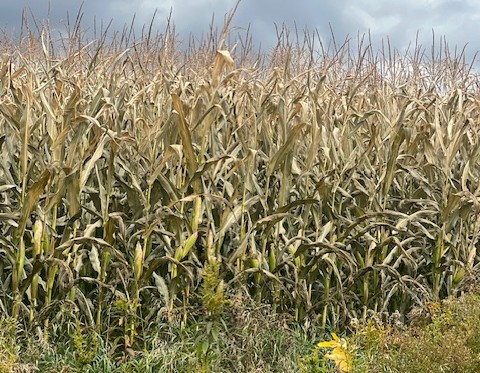
Timely harvest of corn silage is one of the most critical factors affecting forage quality. To ensure maximum yields of dry matter, nutrients per acre, palatability, intake, and minimize storage losses corn should be harvested at 35-30 % dry matter. In most years, an early planting date and proper hybrid selection will allow for a timely harvest in the fall before freezing weather occurs. However, in some years like 2025 in which corn planting was delayed due to extremely wet weather, much of the corn in Vermont ends up still too immature going into the fall. The following article provides some suggestions in dealing with immature and frost damaged corn when chopped for silage.

When should immature corn be harvested?

After frost, immature corn will most likely be too low in dry matter content (high in moisture) for direct chopping. If possible, harvesting should be delayed until the plant is below 30 % dry matter. Harvesting the plant at low dry matter content will alter fermentation, increase silage runoff, and could potentially decrease feed intake. To avoid seepage losses and risk of undesirable fermentation, it will be necessary to allow the immature crop to stand in the field for several days following a frost for further drying.

Determining the moisture content of the crop after it is frosted can be tricky. After the plant is frosted, the leaves turn brown and give the appearance of rapid dry down. However, since most of the moisture is in the stalk and ear the plant will be at a lower dry matter than it appears. Most experienced farmers can estimate moisture contents for normal maturity crops but will likely underestimate the moisture content of an immature crop. Remember frozen immature corn will not dry down any faster than unfrozen corn. The only sure method to determine dry matter is to chop a small amount of the crop with the chopper and obtain a moisture determination (microwave method or Koster Tester) to know when the crop is nearing the desired 35 – 30 % dry matter. As a rule of thumb, whole plant moisture normally decreases by 0.5 % per day. Plant material of 30 % or slightly higher dry matter can be more effectively stored in a horizontal bunker or stack without excessive seepage losses than in an upright silo structure.

Under the best of conditions, preservatives and inoculants are generally not necessary for corn silage, however, this is a year to consider their use. Be sure and use proven products and follow the manufacturer’s directions.

Frozen corn

How to store immature silage

Silage management practices are critical to harvesting and storing immature corn. Packing, covering, and particle size guidelines used in harvesting normal corn silage should be followed for immature corn silage. If possible, store immature corn separately from high quality corn silage. Very immature corn silage should be fed to animals with lower nutrient requirements.

Immature corn silage as a feed

Immature corn silage is a unique feed. Not surprisingly, immature corn can be expected to yield less silage. If the corn is at the dough stage it generally has anywhere from 65 – 85 % of normal silage yield. Slightly immature, frost damaged corn that has dented can still make good quality corn silage. As shown in Table 1, while yield is compromised the overall energy content is similar to more mature corn silage with kernels containing normal starch fill.

The decline in energy of slightly immature corn is not as great as one might expect because the stalk ADF and NDF is more available. The fiber (ADF and NDF) content of the plant will be higher but less lignified and therefore more digestible than in mature silage. In addition, the kernel texture and starch will be softer and more digestible. However, starch levels are likely to be lower.

After frost, if the leaf material is dead but the stalk and roots remain alive, there is a chance nitrates will accumulate in the lower stalk. Drought and frost stress combined increases the risk of nitrates accumulating in the corn. This can make the resulting silage dangerous for livestock. Increasing the cutting height will lower dry matter but increase silage quality since the lower stalk has the lowest digestibility and highest nitrate levels. To further manage this risk, ensile the crop for at least 21 days to reduce nitrate levels by 40-60% and test the silage for nitrates before feeding.

Field losses will increase with time, so producers need to balance harvest losses against fermentation loss and quality problems associated with wet silage. It will be essential to test forage made from immature corn as there will be a large variation from the nutrient content that might be expected. If you are going to feed a significant amount of this type of silage to lactating cows, it is worthwhile to obtain a fermentation analysis that includes silage pH, ammonia, titratable acidity, lactic, acetic, proprionic, butyric and isobutyric acids. Working closely with your nutritionist will help you develop the most useful rations with immature corn silage.

If you have questions or concerns about your corn, please contact the Northwest Crops and Soils office by calling (802) 656-7611 or emailing susan.brouillette@uvm.edu.

Healthier Herds: Tips from the Tri-State Dairy Exchange Team to Improve Heifer and Calf Management

Written by Amber Machia

The mission of the Tri-State Extension Dairy Team is to unite Maine, New Hampshire, and Vermont in advancing dairy management through collaborative educational programs, addressing shared industry challenges, and fostering innovation across northern New England. Since January 2025, the team has been hosting live monthly webinars on the last Wednesday of each month from 11:30 AM to 12:30 PM. Sessions have focused on current dairy research and program updates, including interviews, presentations, and roundtable discussions. All recorded sessions are available to watch on the UVM Extension Northwest Crops & Soils YouTube Channel.

In August, the Tri-State Extension Dairy Team hosted a webinar on calf and heifer management practices in New England. The session featured Dr. Glenda Pereira, University of Maine Extension, and Sarah Allen, University of New Hampshire Extension, who shared strategies to improve calf health, growth, and long-term productivity. Their discussion highlighted four critical areas that determine success: maternity management, colostrum, nutrition and feeding, and environment. The ultimate goal is to raise calves that grow steadily and enter the milking herd at two years of age.

  1.  Maternity & Dry Period: 70% of fetal growth occurs in the final trimester of pregnancy. Minimizing stressors – especially heat stress – reduces the risk of low birthweight and poor immunity. Nutritional support during the transition period can improve calf outcomes. Farm specific transition cow vaccination programs support antibody transfer through colostrum.
  2. Colostrum Management – “The 3 Q’s + C”- Quantity: Feed ≥10% of calf bodyweight in colostrum.- Quality: At least 50 g/L IgG; test with a refractometer. Thaw frozen colostrum below 140°F to protect proteins.– Quickness: Feed within 2–4 hours after birth for maximum antibody absorption.- Cleanliness: Establish good protocols for sanitizing feeding equipment. Verify with an ATP meter to monitor organic matter levels on surfaces.
  3. Early Life Nutrition & Feeding: Pre-weaned calves should consume 10–20% of bodyweight daily. Calf starter with 18–26% crude protein promotes the fermentation process which produces volatile fatty acids, driving papillae growth and rumen development. By weaning, calves should double birthweight and eat at least 2 lbs. of starter daily.
  4. Environment: Calves thrive in dry, clean, well-ventilated housing. Proper bedding, airflow, and hygiene reduce pathogen load and stress, supporting health and growth.

Heifer growth targets are farm specific.  Generally, heifers should be 55% of mature bodyweight at first conception and 85% of mature bodyweight at first calving.

Glenda & Sarah’s Colostrum Quality & Management Bulletin is accessible here.

To learn more about the calf and heifer management cohort project in New Hampshire and Maine and to access the full recording of this webinar and all other webinars in the series click here.  Register for upcoming Tri-State Dairy Exchange webinars here.

Skip to toolbar