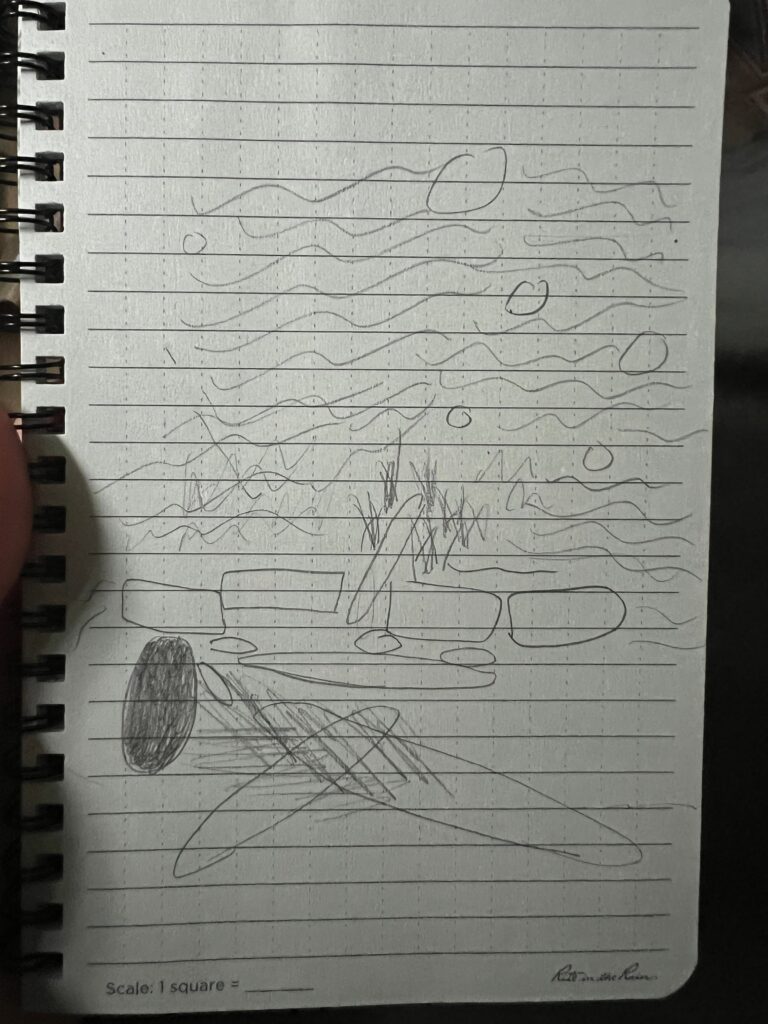
Over time, the main difference I noticed in my spot was the tall grass in bog dying, drying up, beaking off and then new grass coming up. The major storms did not do that much damage to my spot, because it is a bog, there aren’t many trees to knock down, and most of the ground is already saturated most of the time.
The two major landmarks for my spot were the dead tree that sticks out of the bog, and the large rock near the boardwalk trail. The dead tree is home to many isopods, but is also very visible both during the fall when the tall grass is still alive, and becomes especially visible in the spring when the tall grass is dead and the bog is mostly empty barring the new growth.
I do not think my spot was a place where a lot of culture and nature intertwine. It is a spot near a bog, with a trail that is hard to access. I would say at most, there is some shared hiking/adventuring culture and maybe it ties into the houses that are close to the trails. This is largely a spot that not a lot of people go to, and I think that is what makes it special. It’s a close spot that is just annoying enough to get to that it remains largely overlooked.
I do not consider myself a part of my place, though I will admit that I am likely contributing to a system that impacts it. I have only seen this place for a year, through periodic intervals, and I do not interact directly or frequently with my place so I do not think I am a part of it. That said, by simply being a UVM student I am impacting my place, through all the things that UVM funds. For example, I could take a cat bus, and by doing so I am funding a system that is putting more carbon into the air which will in one way or another impact my phenology spot.