Centennial Brook 5/4/25

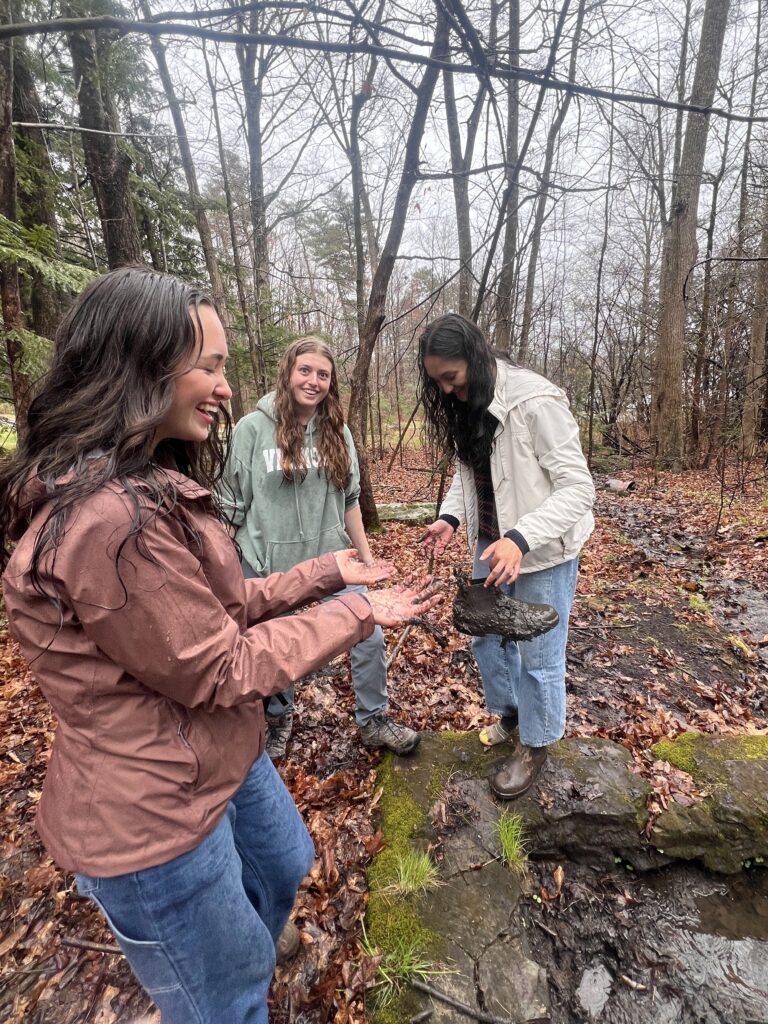
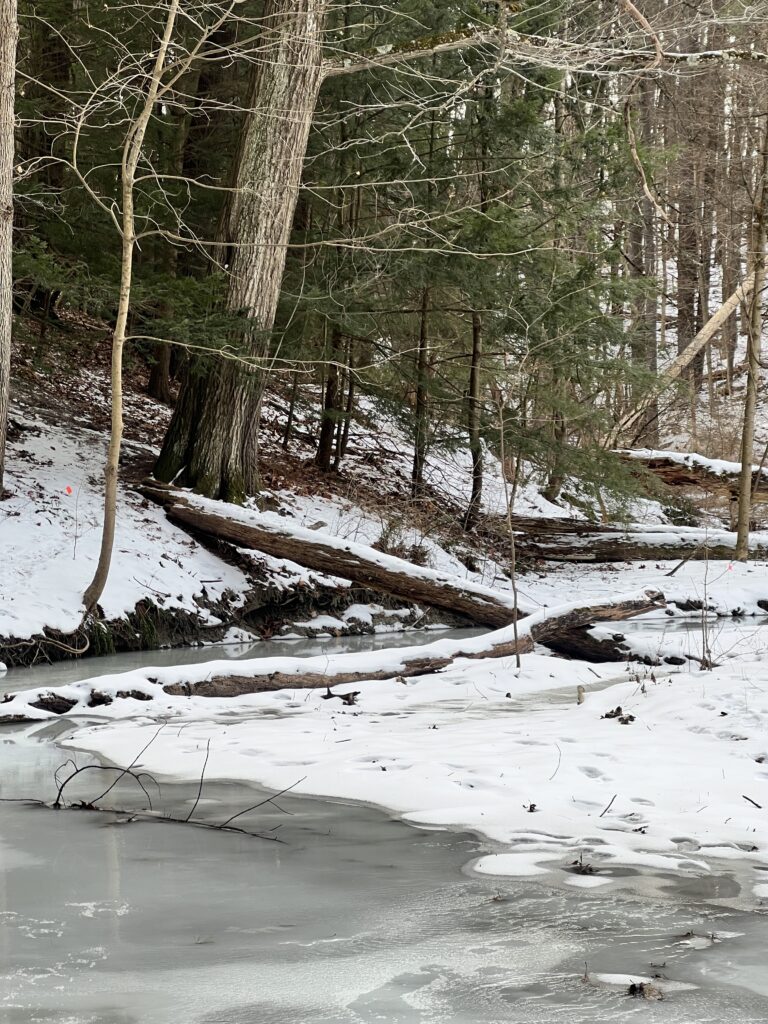
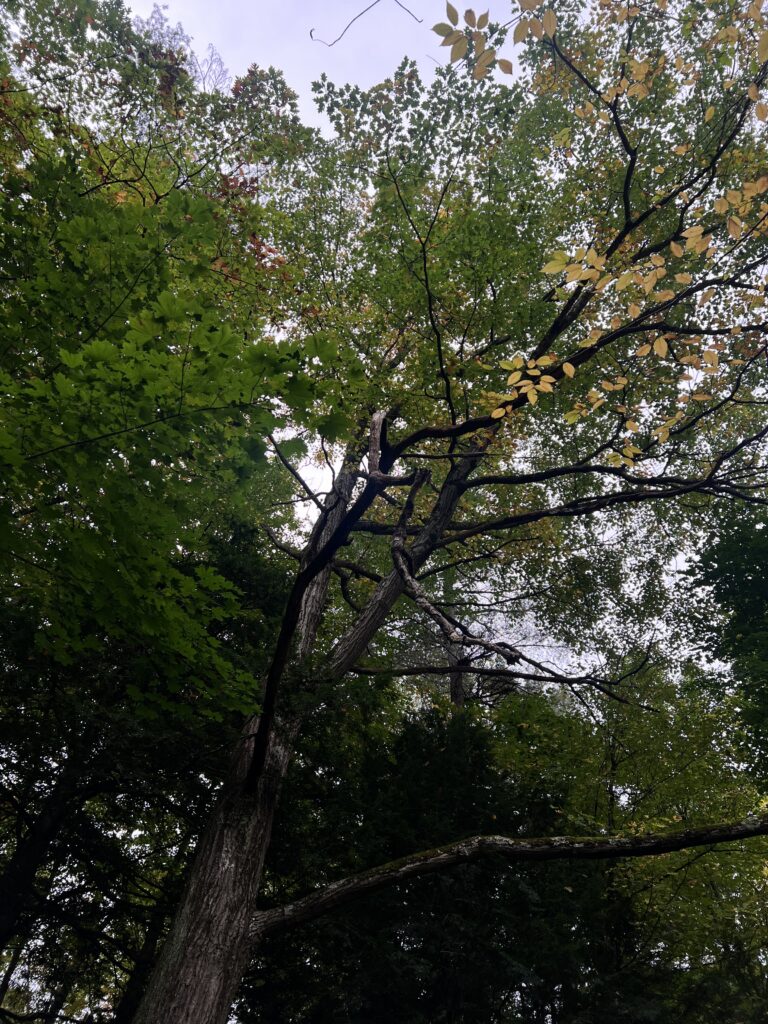
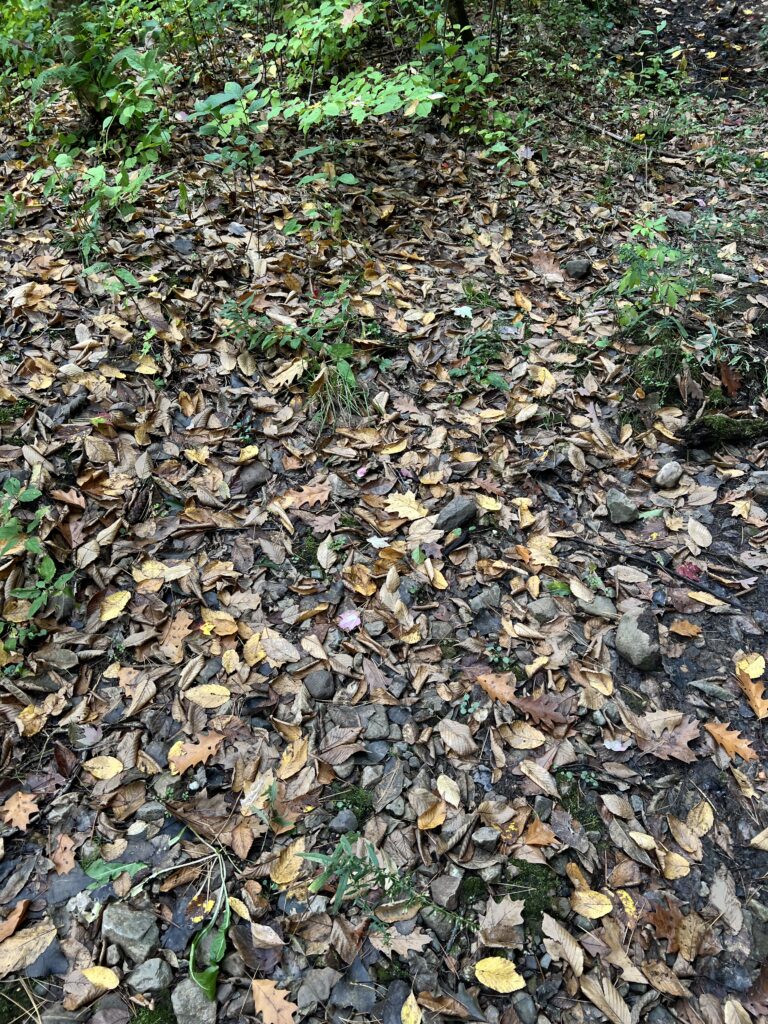
Throughout the different seasons, my site at Centennial Brook has had many different looks. From a lively green to vibrant fall colors to several inches of snow to new leaves breaking out from branch buds, there have been a lot of changes. Not only the plants underwent changes, but the water in the creek itself. If there was a lot of rain, it would get more turbid. During the winter months, it completely froze over allowing me to walk to the other side with ease. Also, with the amount of rain in the past few days, the surrounding area was very muddy in general, which prevented me from going all the way down the hill.

Some of the major landmarks I have gotten familiar with are the logs that lay over the brook, the eastern hemlocks to either sides of the fallen logs, and the different bridges across other parts of the brook on the way to my site. Other minor landmarks include the different bends in the brook, the yellow birch up the hill from the site, the white oak, and the area with tall grasses on the other side of of brook which can usually only be reached when a lot of the brush has died back.

Nature and culture intertwine here mostly in a recreational way. There are often people walking on the trail or going down to explore the brook, just as I often did. I also have seen some people birding or doing other assignments for classes which show this natural space’s many uses in our culture here at UVM and Burlington.

Throughout my time, I do feel like I have become a part of Centennial Brook. I have spent a lot of time there and got to know it like the back of my hand. Allowing myself take time to sit and notice things or explore things that other people may not have has also given me a different perspective and deeper appreciation for the area.
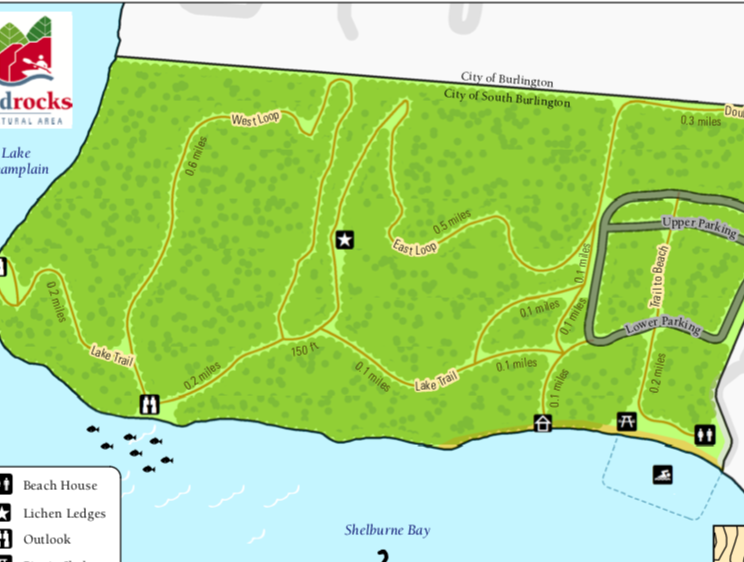
City Nature Challenge BioBlitz 4/28/25: Red Rocks Park

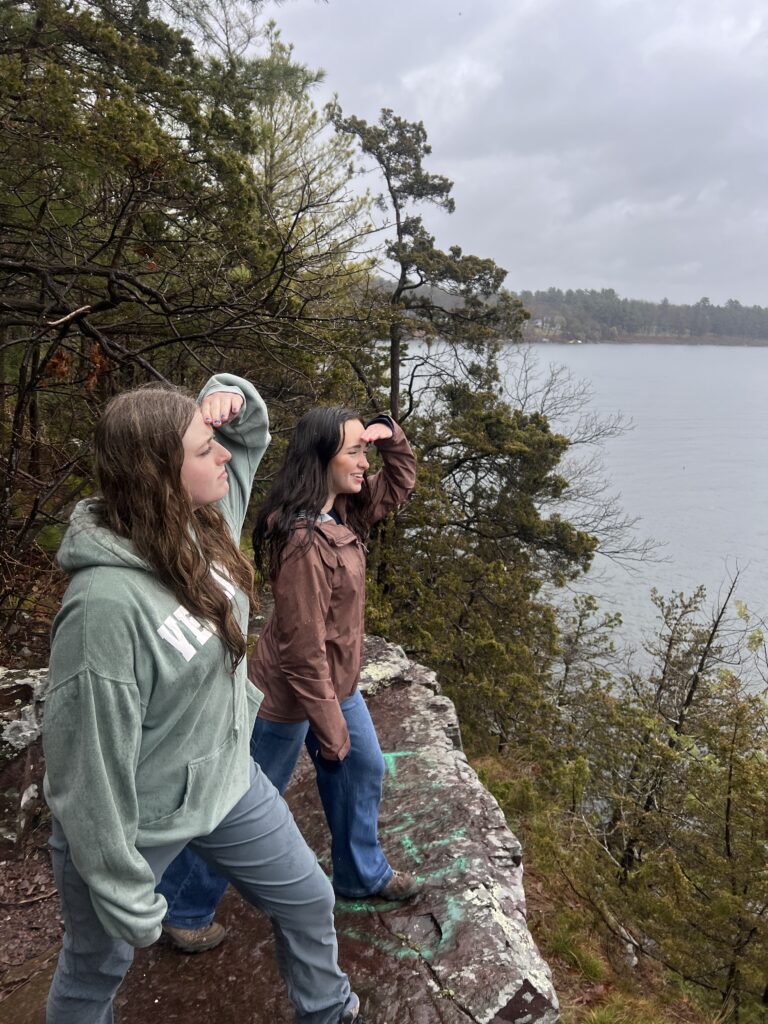
During the BioBlitz, I visited Red Rocks park. I took the Lake Trail and stopped along the beach access and a few lookout points. While walking, I stopped to identify as many plant species as I could, as well as a few other organisms amphibians, birds, and fungi.

My experience using iNaturalist went really well, and I enjoyed the simplicity of the app. I also really liked how I could use Seek to identify something and upload it directly from Seek to iNaturalist.

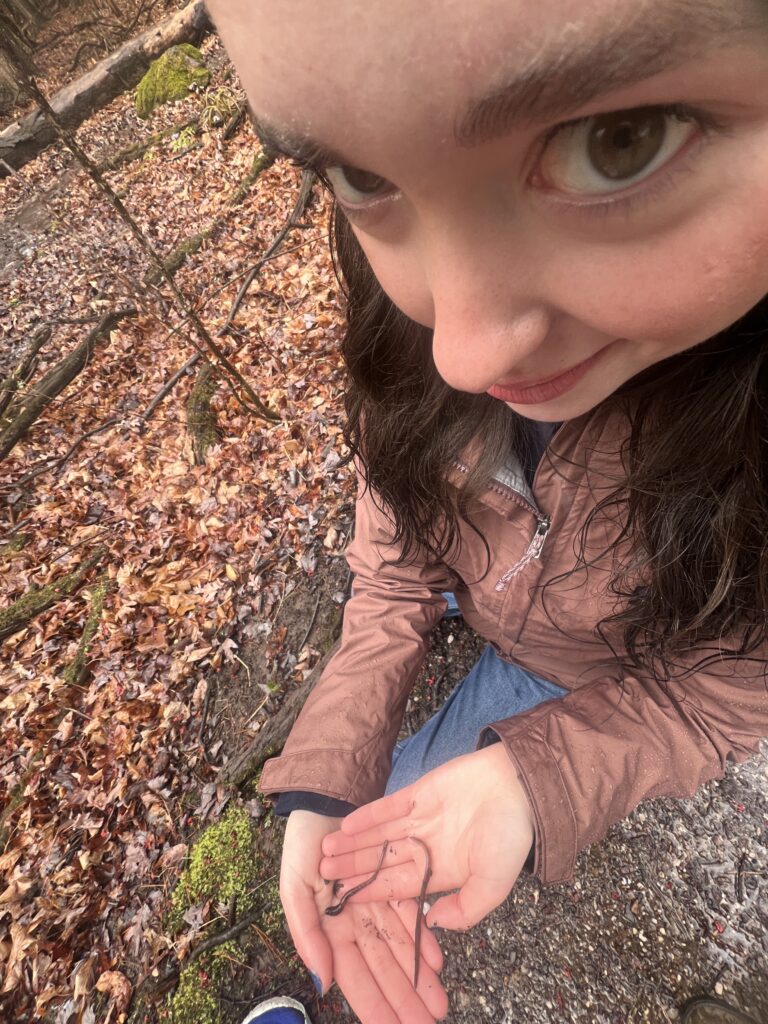
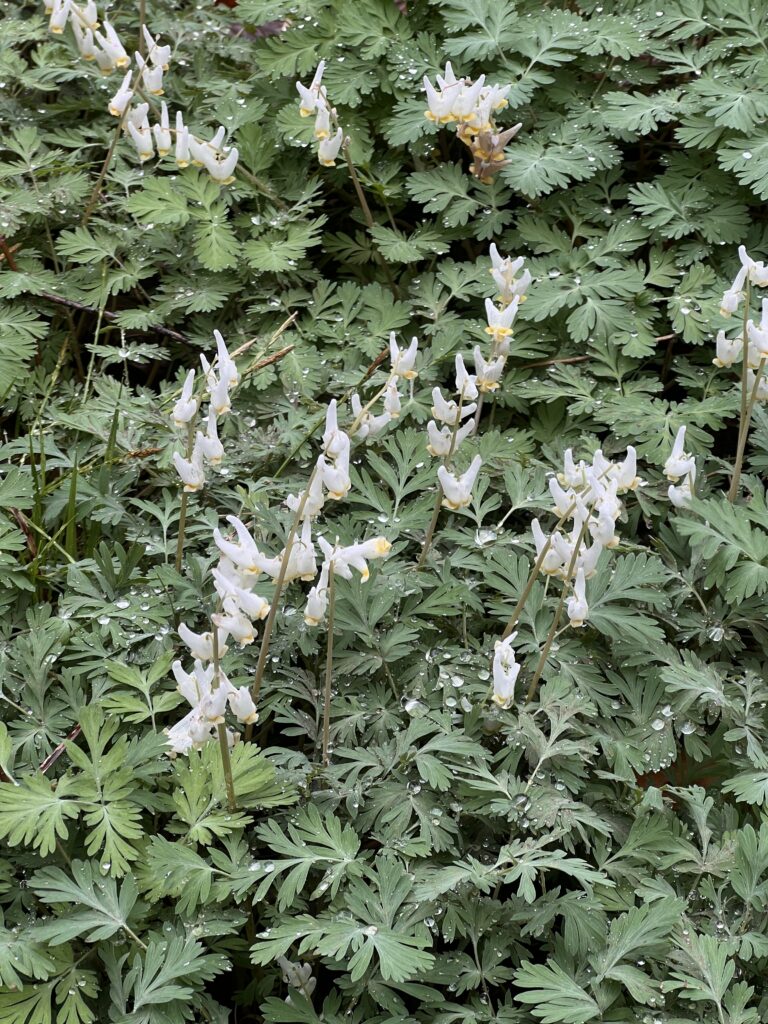
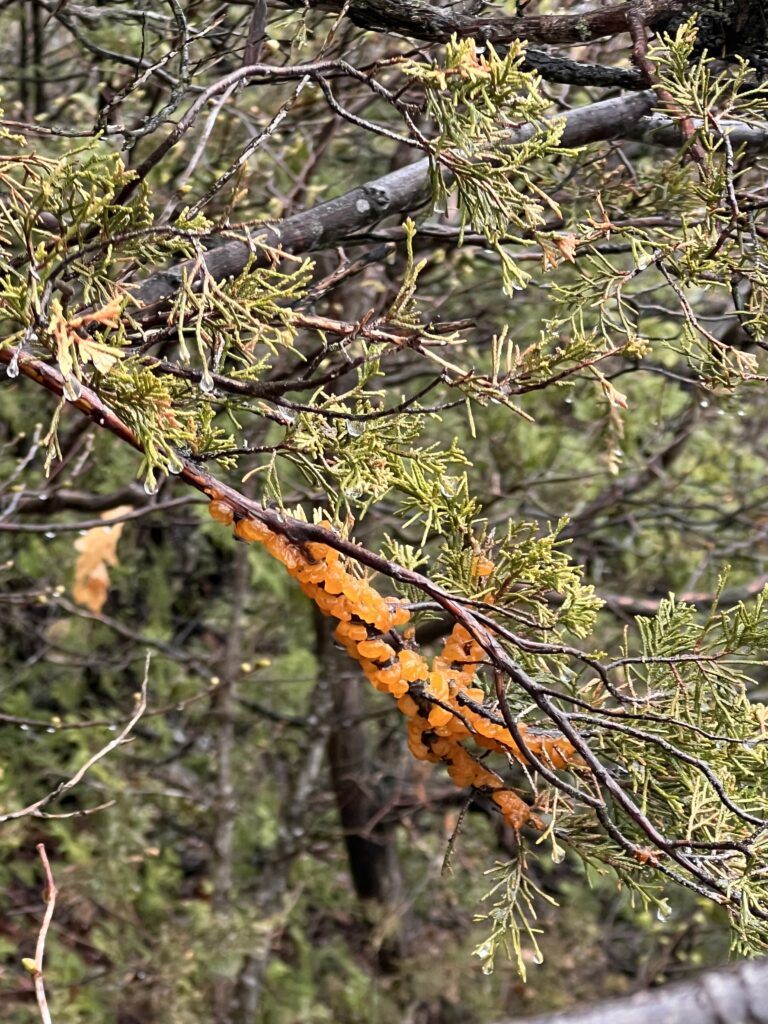
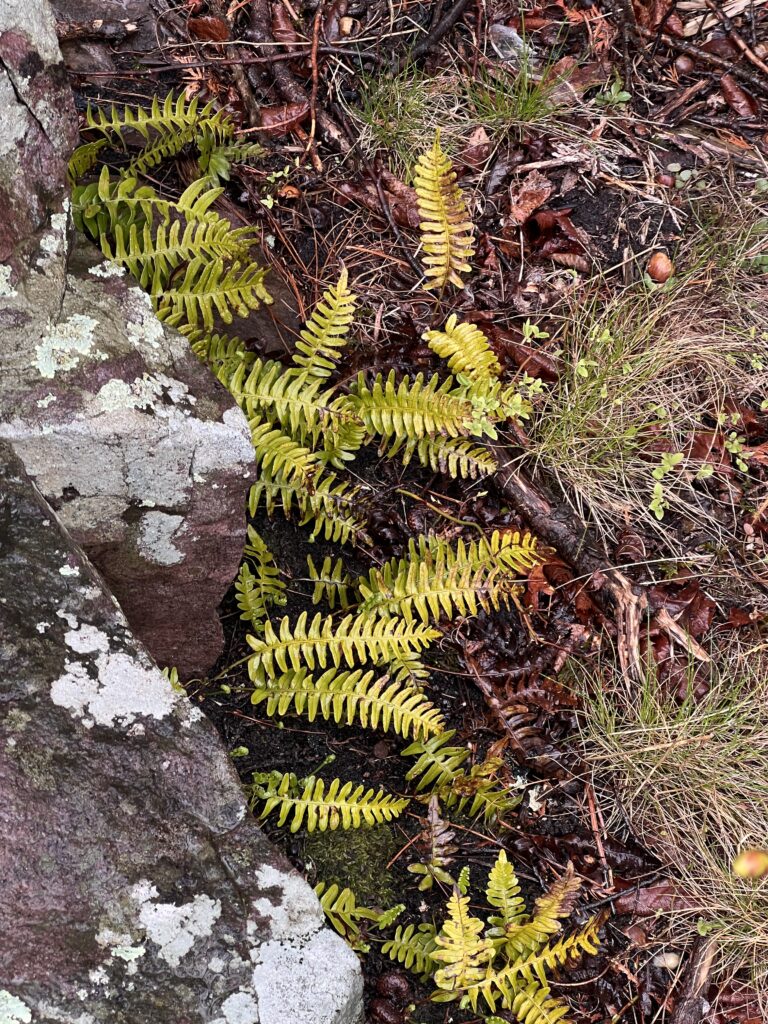
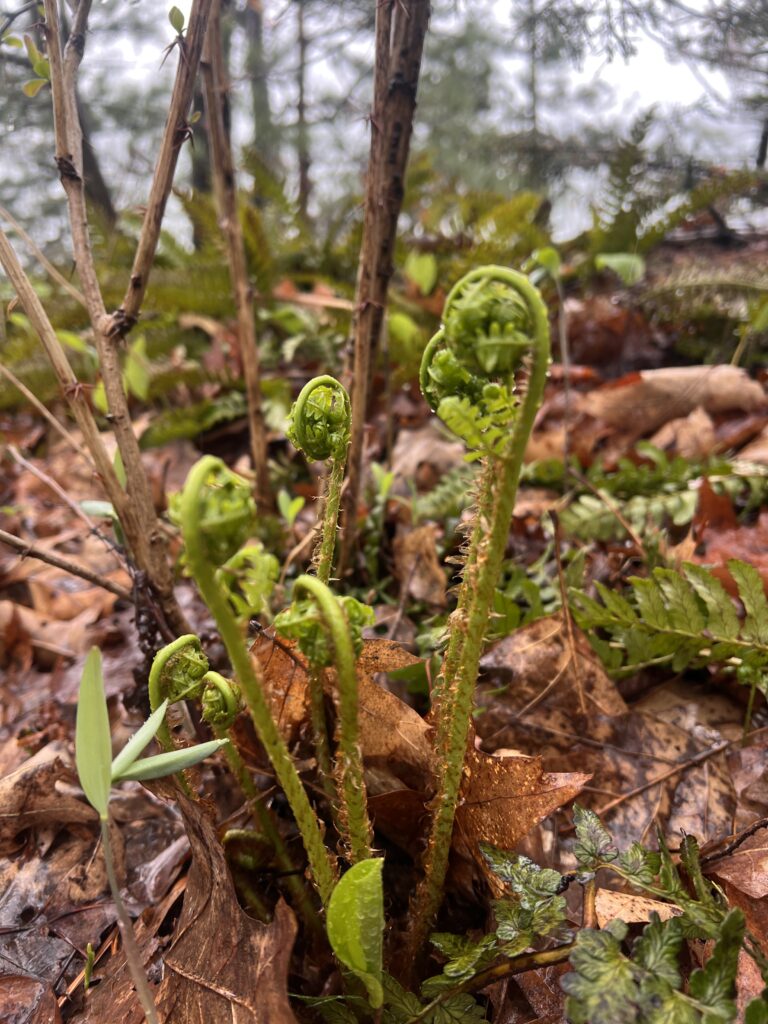
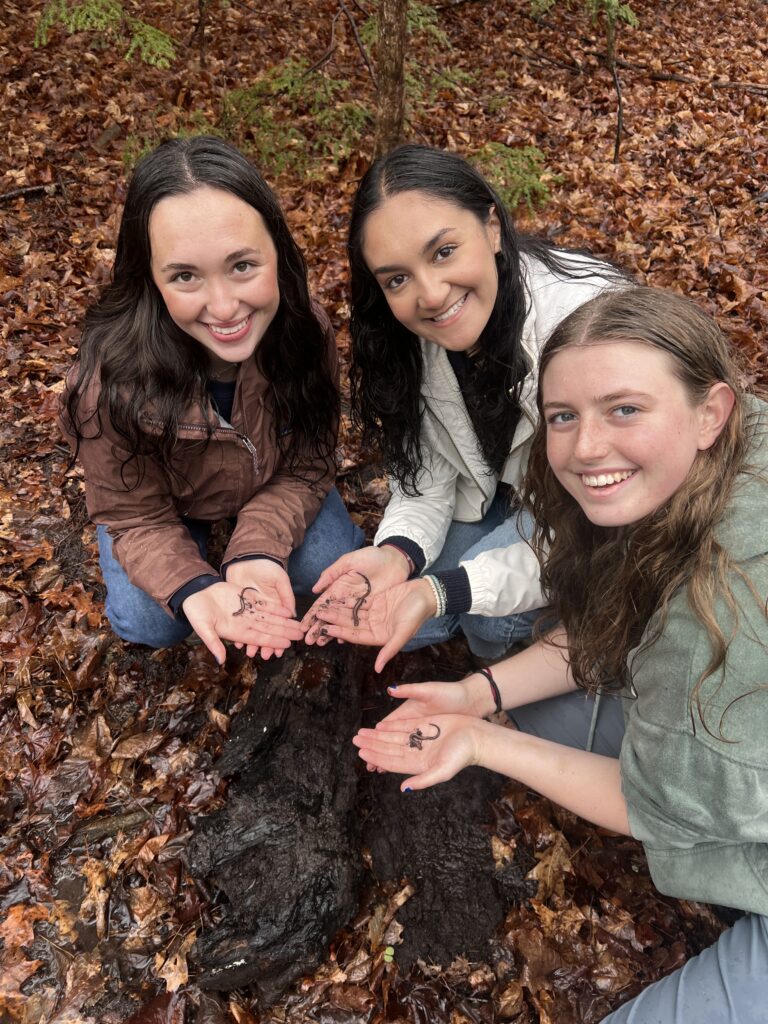
I was able to identify and upload 18 species to iNaturalist, including some that I was able to identify without using Seek or iNaturalist. This included red berried elder, eastern white pine, northern cedar, red oak, ostrich fern, lesser burdock, orange day-lily, purple crownvetch, eastern hemlock, cedar rusts, eastern red-back salamanders, rock polypody, dutchman’s breeches, black cherry, early meadow-rue, buffleheads, common earthworms, and yellow trout lily. I was not able to upload some bird species to iNaturalist, but I also encountered Black-capped Chickadees, American Crows, Song Sparrows, and Tufted Titmice.

One thing I found interesting in reports from other cities around the world is that because it’s a city nature challenge, the observations are often everyday sightings for people and can be found in their own back yard or in their neighborhood. Oftentimes, I myself feel like I have to go somewhere thats designated as a “natural area” to feel like I am “in nature,” but this challenge is a kind of a nice reminder that nature is all around us.

Phenology Walk 4/4/25

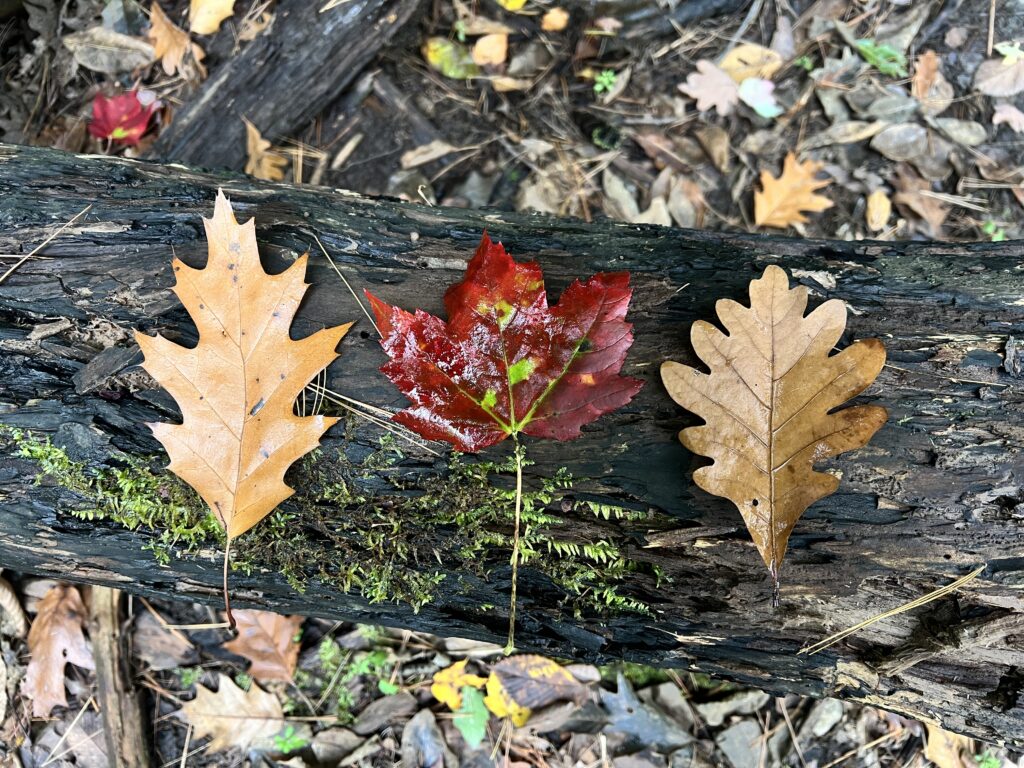
In general, the trees on the phenology walk were still in their dormancy phenophase from winter. This also means all of the trees did not yet have any breaking buds, flowers, leaves, or pollen. The Red Oak and the White Oak both still had colored leaves that had not yet fallen, but the rest of the trees had no leaves. The White Oak had significantly more leaves than the Red Oak, however this may have been due to the location of it being shielded from the wind by the building.

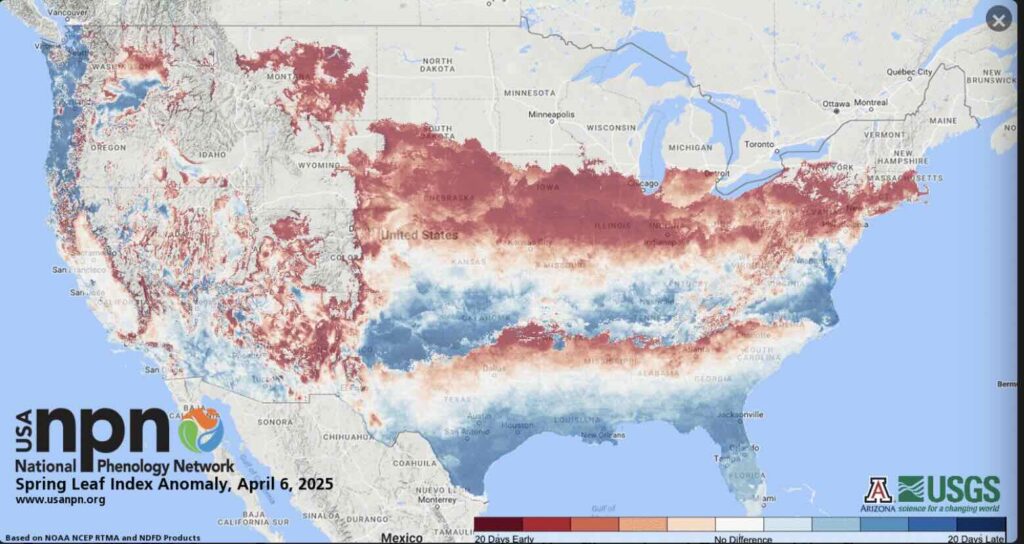
On the “Status of Spring” page I learned that depending on the region, the spring has come early in some locations and later in others around the country. The leaf arrival seemed to have a wave pattern of late, on time, early, and back to late, on time, and early (pictured below). The map also shows that spring (in terms of leaf arrival) has not yet happened in Vermont which matches what I observed on the phenology walk. This could also be relevant to broader discussions about climate change as we can see visible changes in the timing of spring arrival. People often anticipate the season, so having such physical and visual cues may bring more attention and awareness to climate change.

Screenshot

Greater Burlington Area Phenology Assignment 2/23/25

For this phenology assignment, I went with a couple friends to the Burlington Waterfront and walked north along the lake, slightly past the skate park and towards the more forested area. I enjoyed using the iNaturalist app to post about wildlife signs and found it easy to navigate. We mostly encountered birds, and though we expected to see other wildlife like rabbits and squirrels, we did not encounter many signs of them. Some images include links to the iNatural posts.

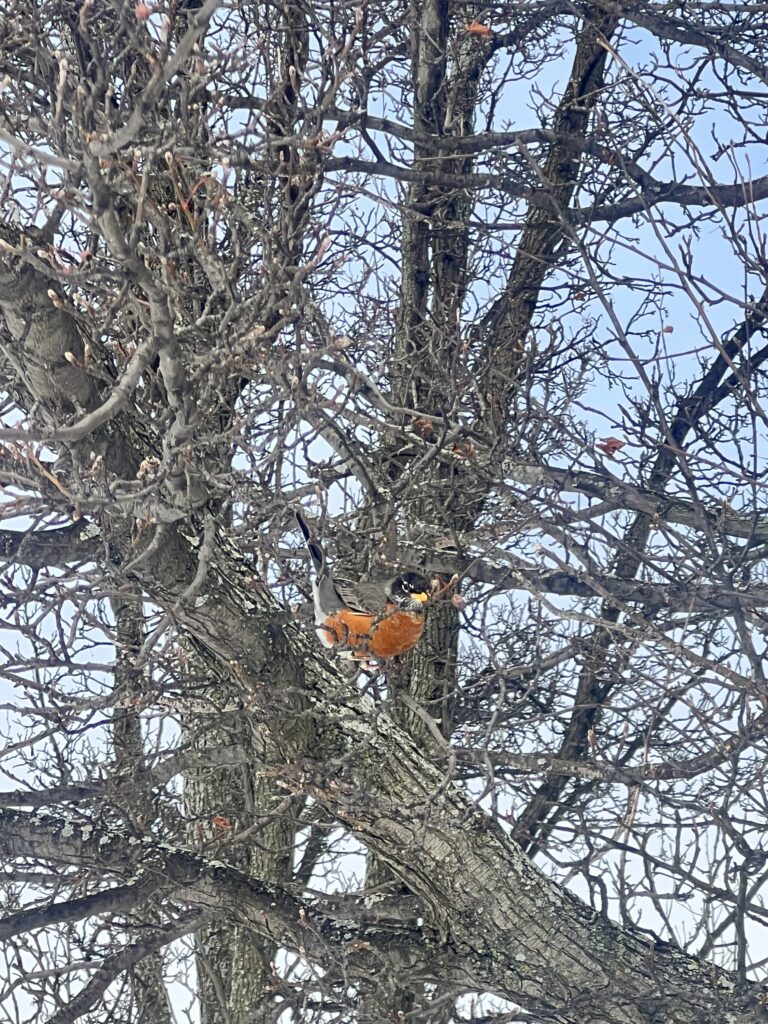
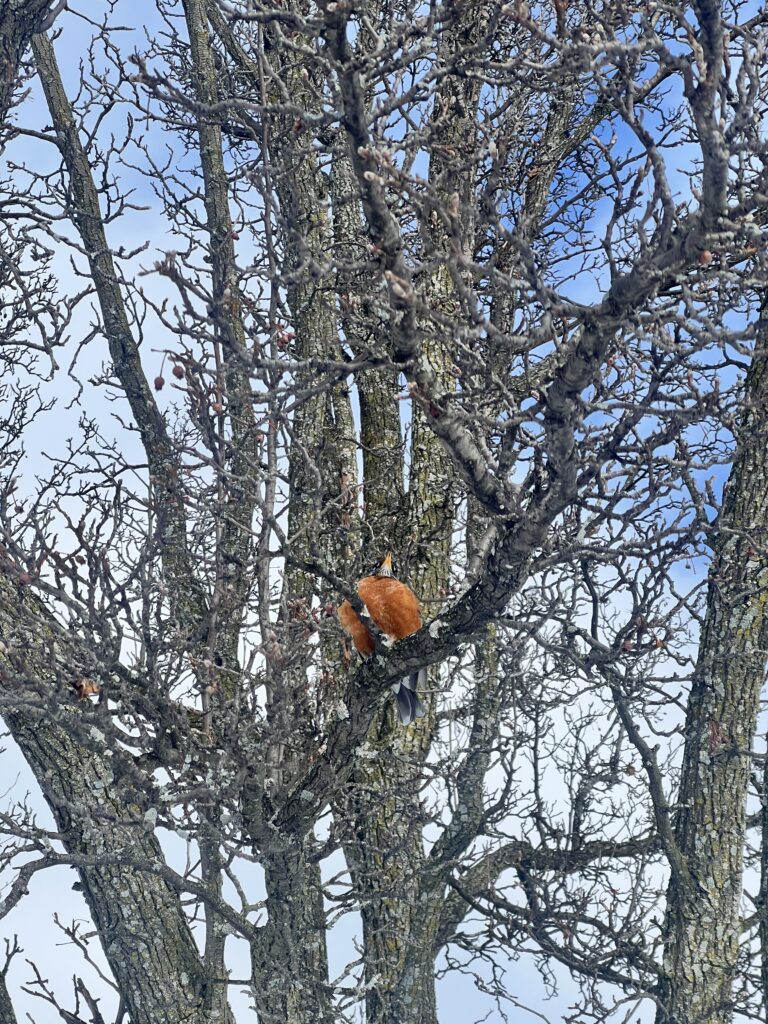
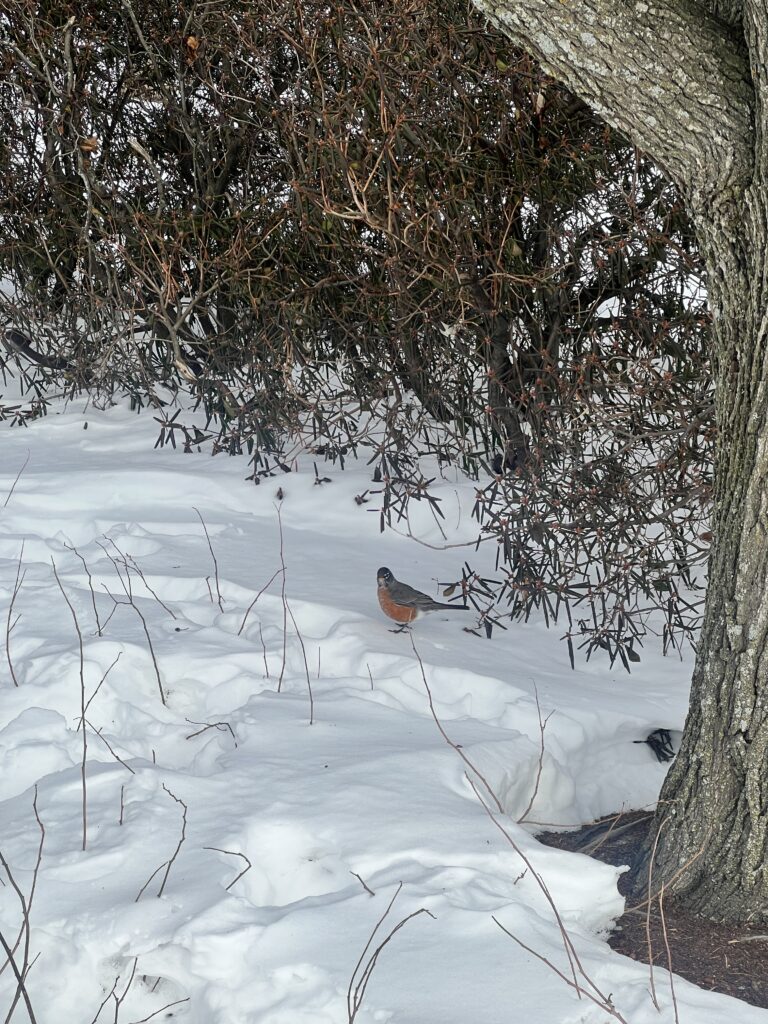
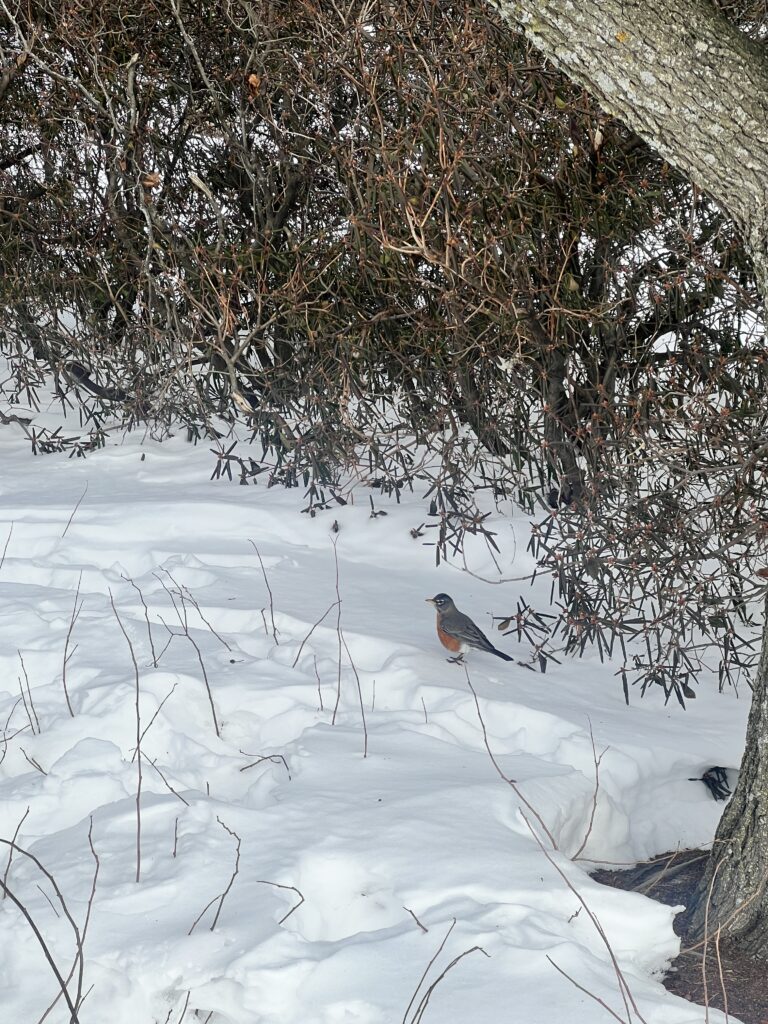
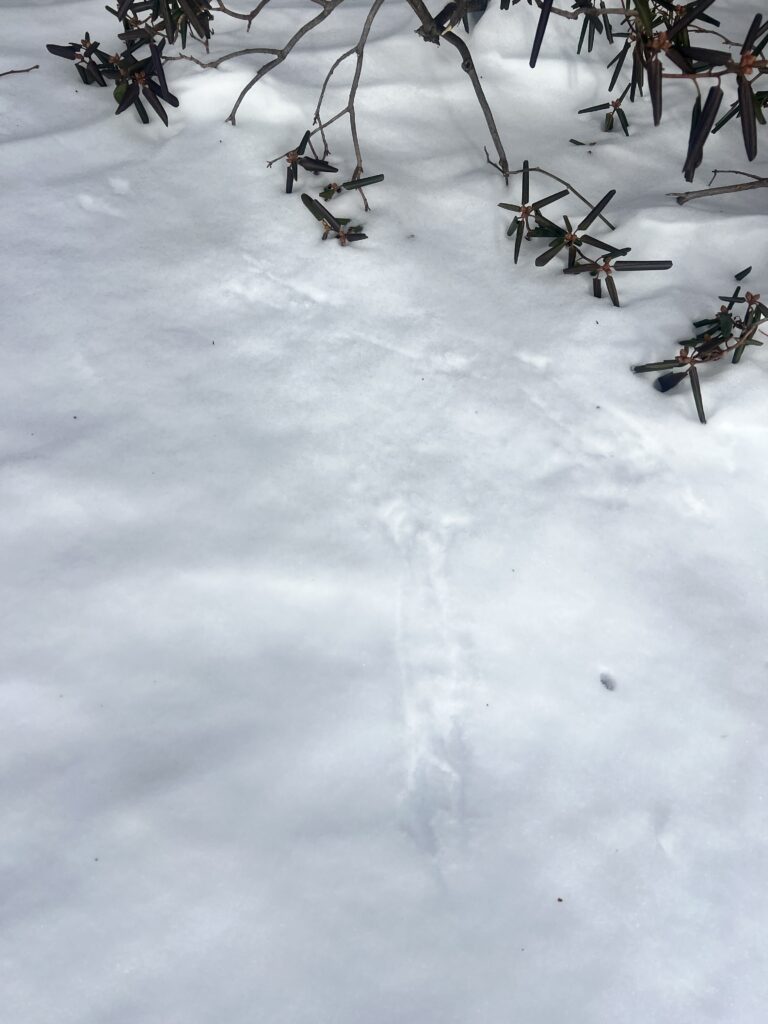
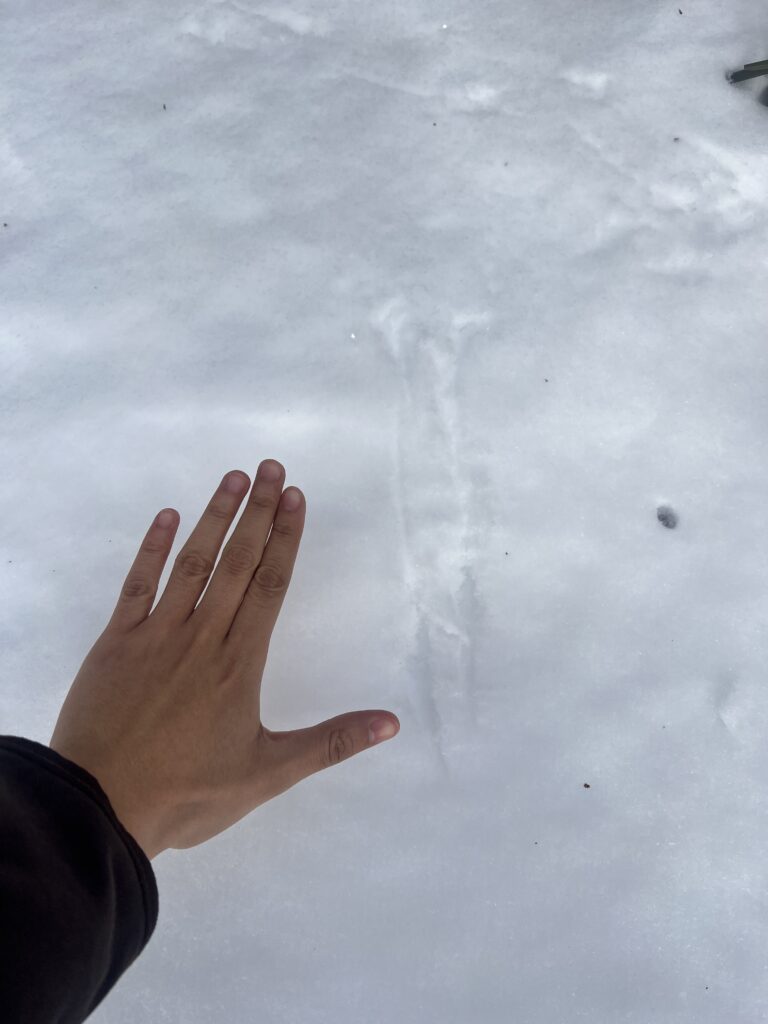
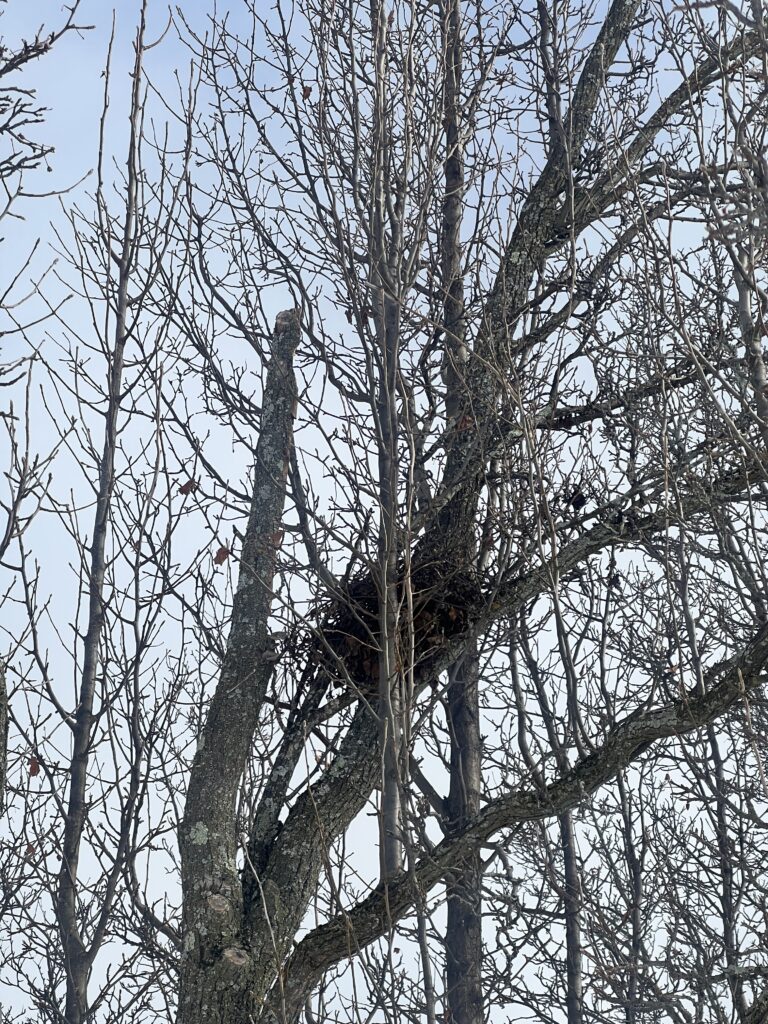
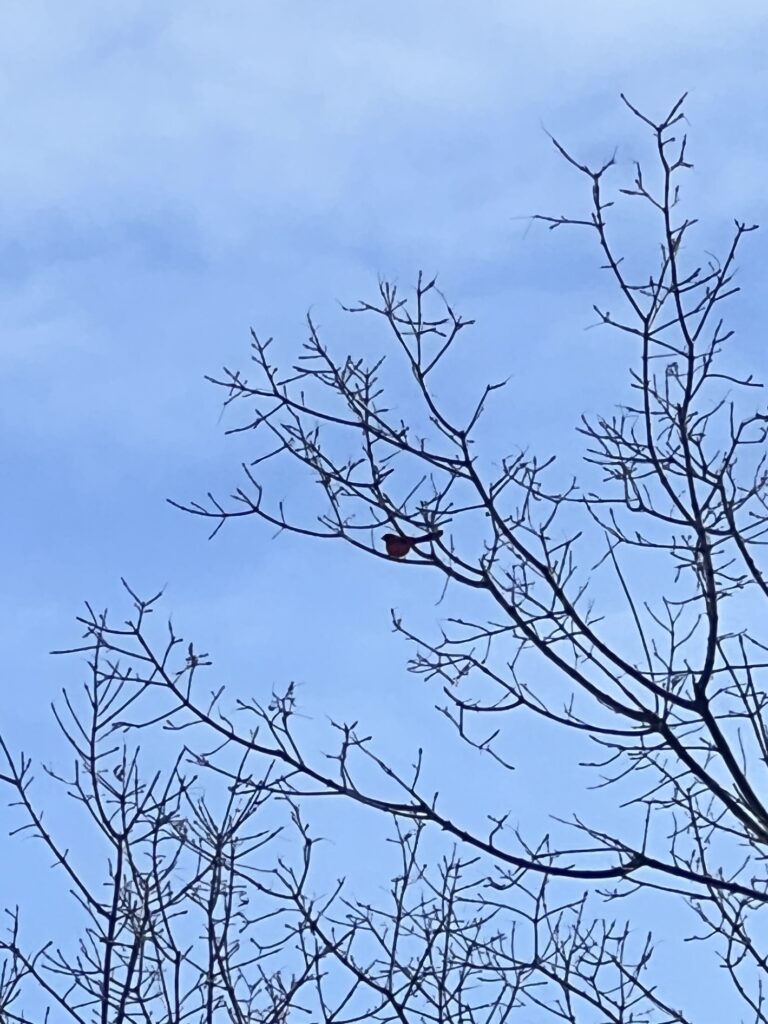
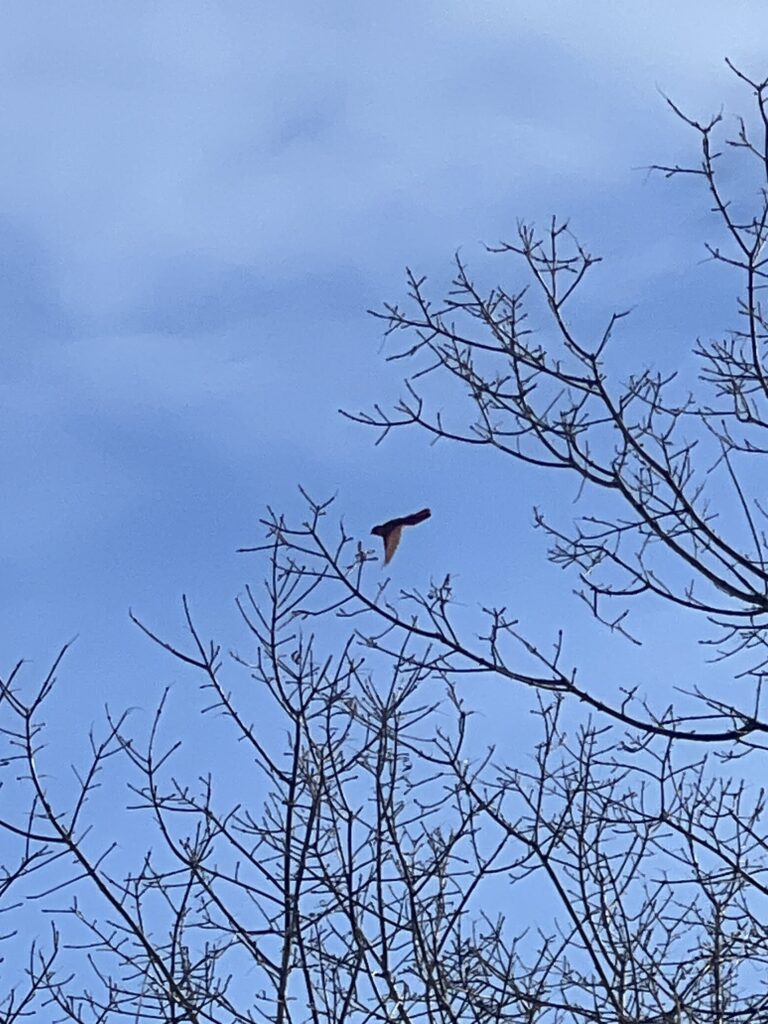
We saw many American Robins flying around and eating berries off of trees (unsure what type) on the waterfront. The robins were easy to identify by their orange and grey feathers, and we also took the time to observe their tracks in the snow. They had a hopping gait that had about 4 inches between each set of tracks. Walking along the bike path we also heard cardinals (we confirmed it with the Merlin Bird ID app) and saw one flying which was easy to spot due to the bright red color. We also did see a squirrel next but no squirrel tracks in the snow around it. I thought it was a bird nest at first, but it is most likely a squirrel’s because they tend to use more leaves whereas it is more rare for birds to use leaves in their nests, especially robins.

Centennial Brook 1/25/25

Centennial Brook looked fairly similar to the last time I visited it, however there was less snow than before. It has been over a week since it last snowed and temperatures have been slowly rising from the recent polar vortex. All of the leaves on the hardwood trees were fallen, but the conifers were still looking the same (as expected). There was still a lot of leaf litter, surprisingly, which was more noticeable in places where the snow had melted more. The brook has also completely frozen over now, enough to even walk on parts of it! I could see a bit of running water underneath the ice, which was also interesting to watch.

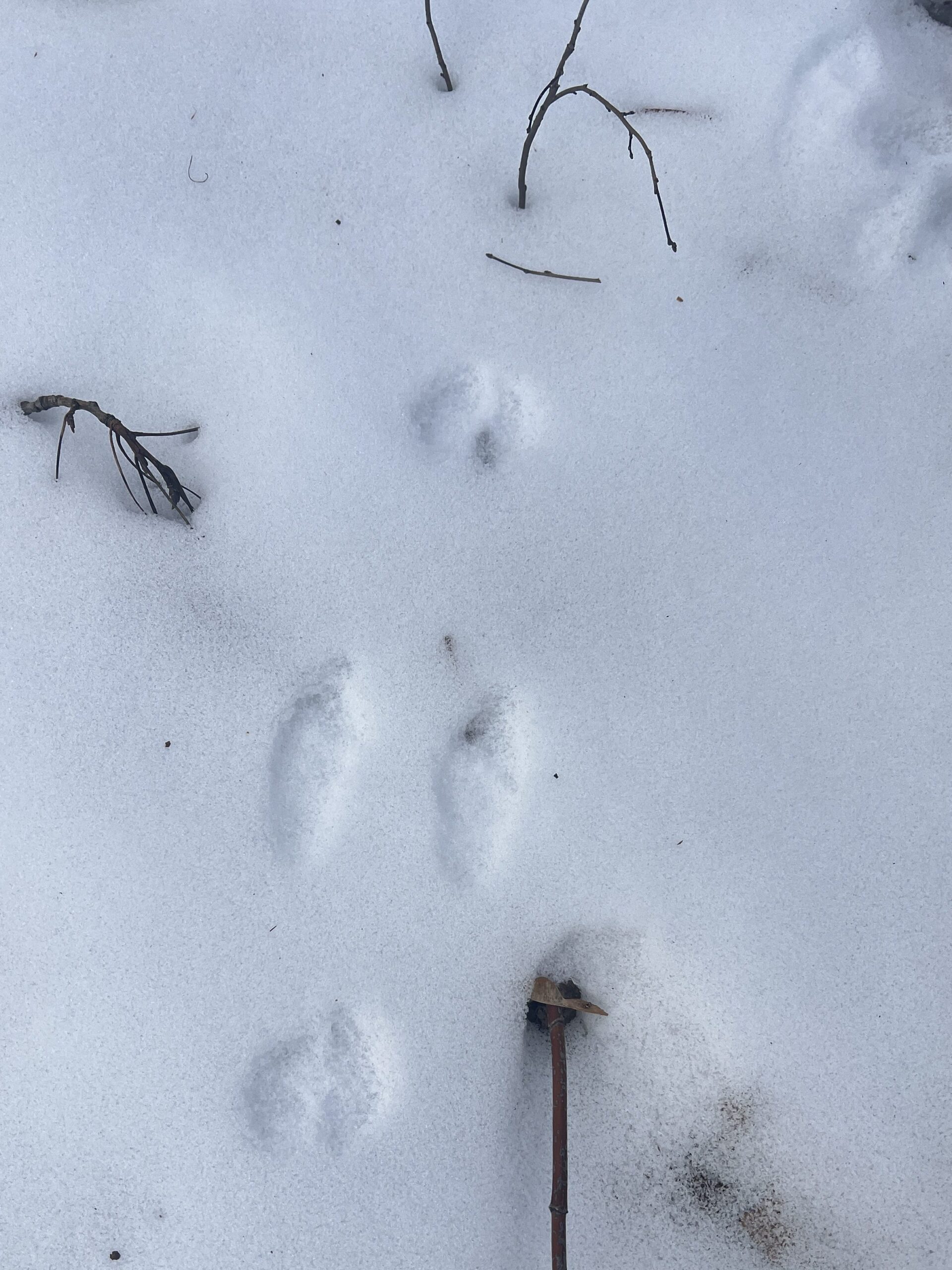
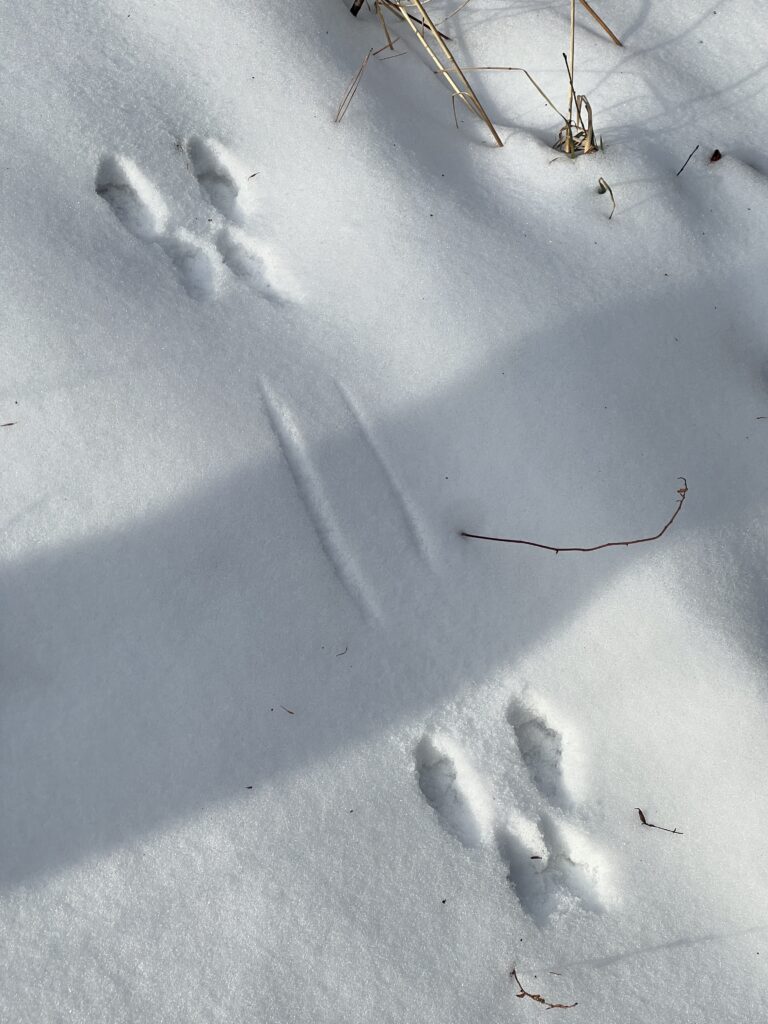
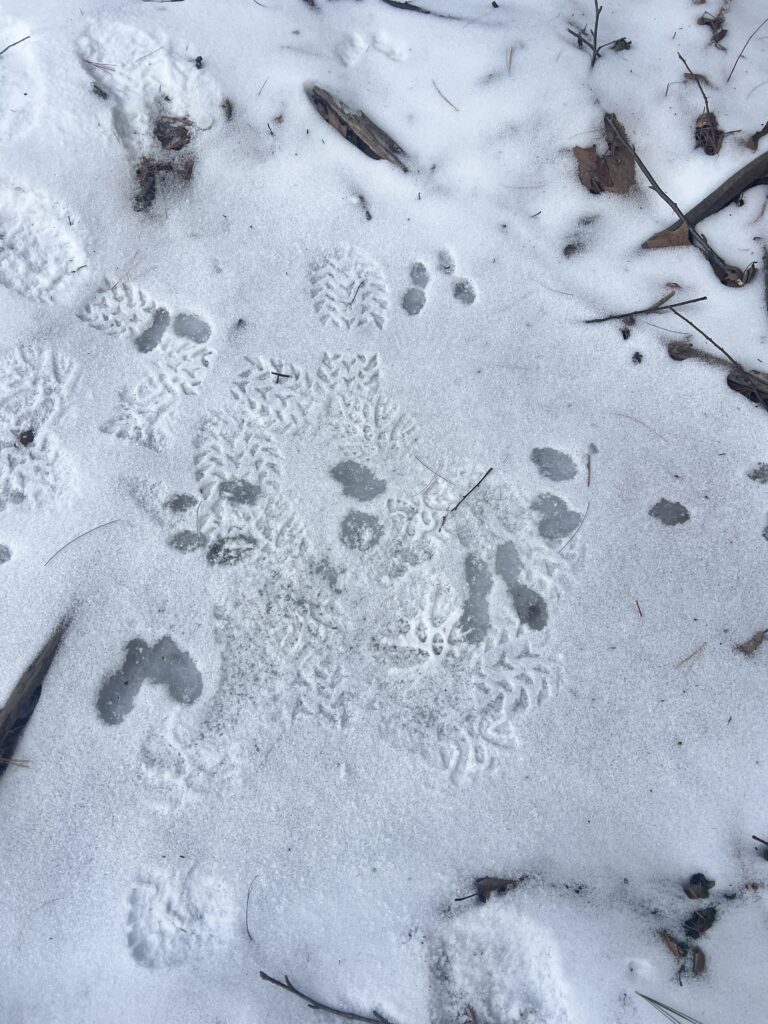
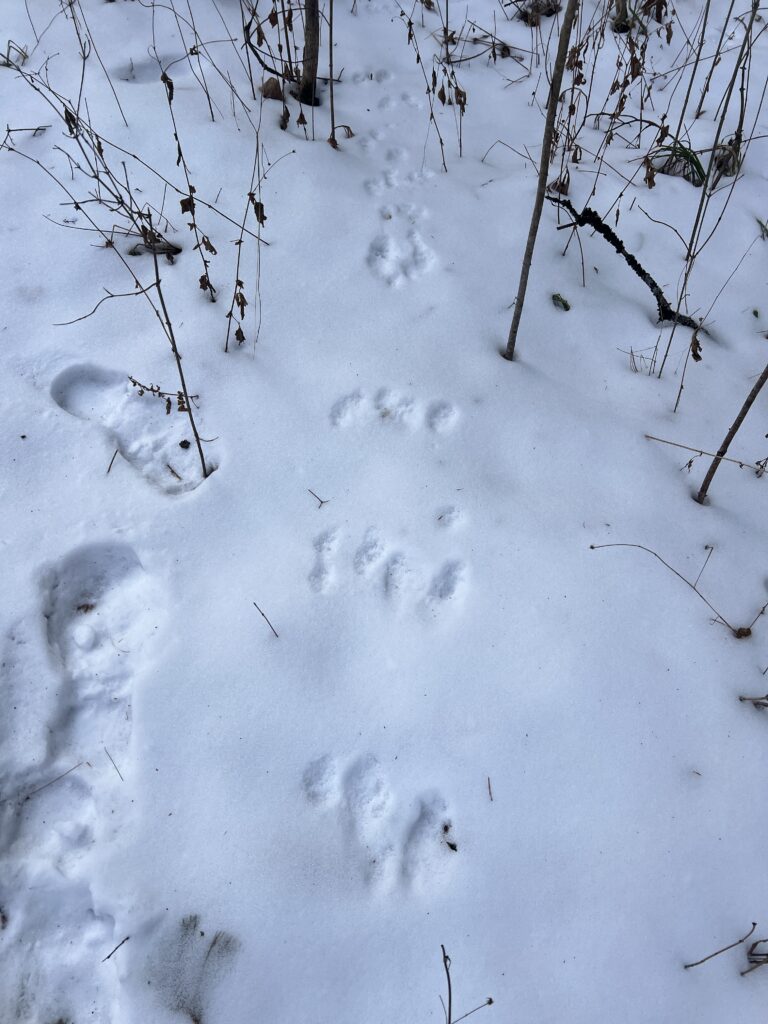
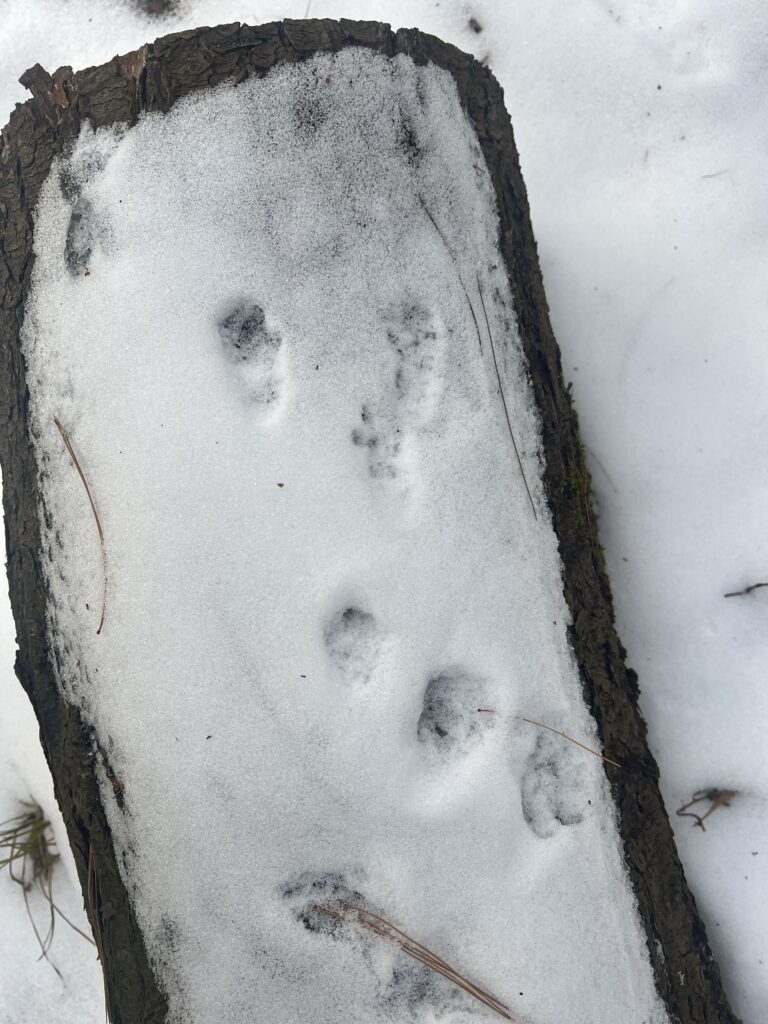
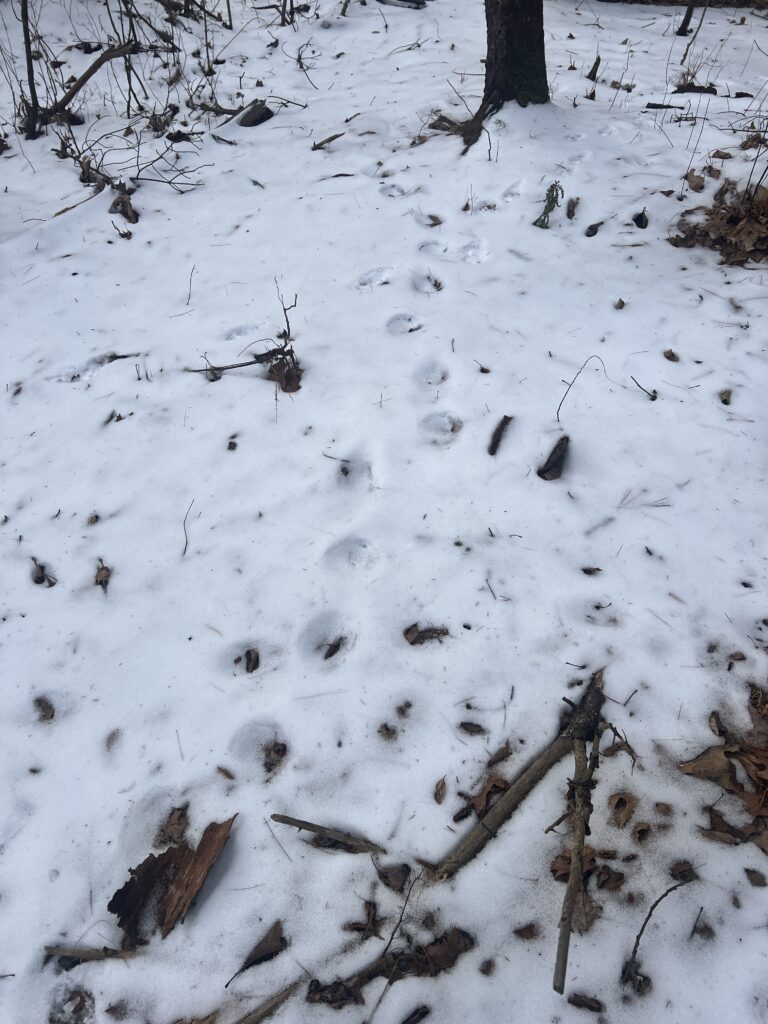
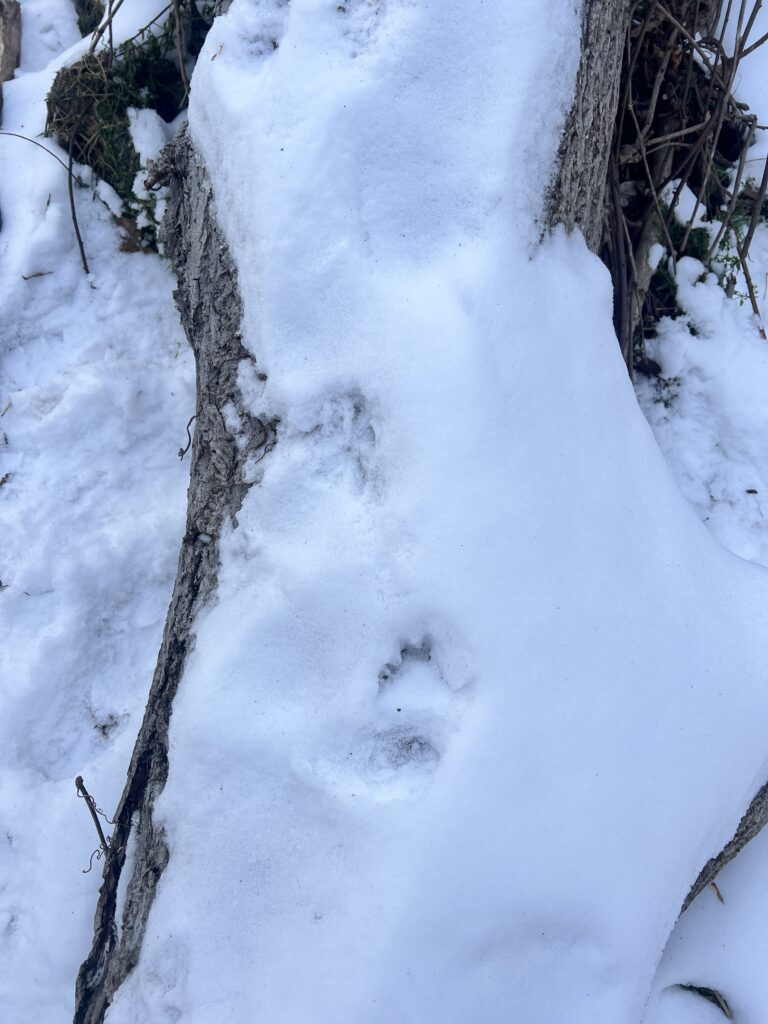
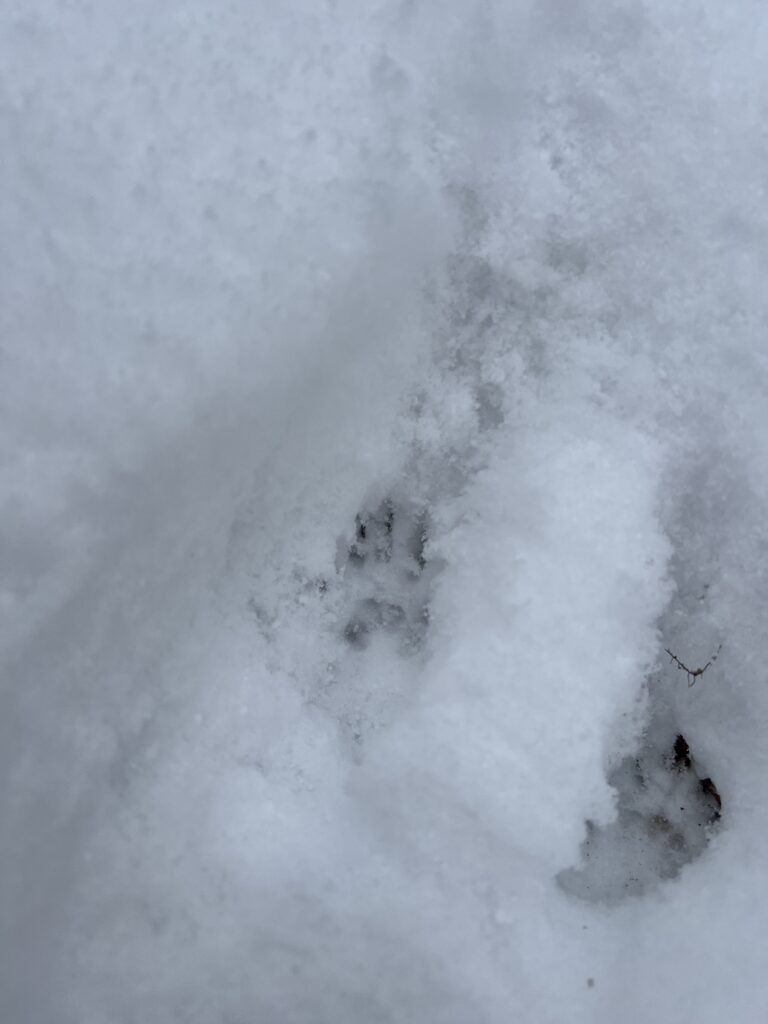
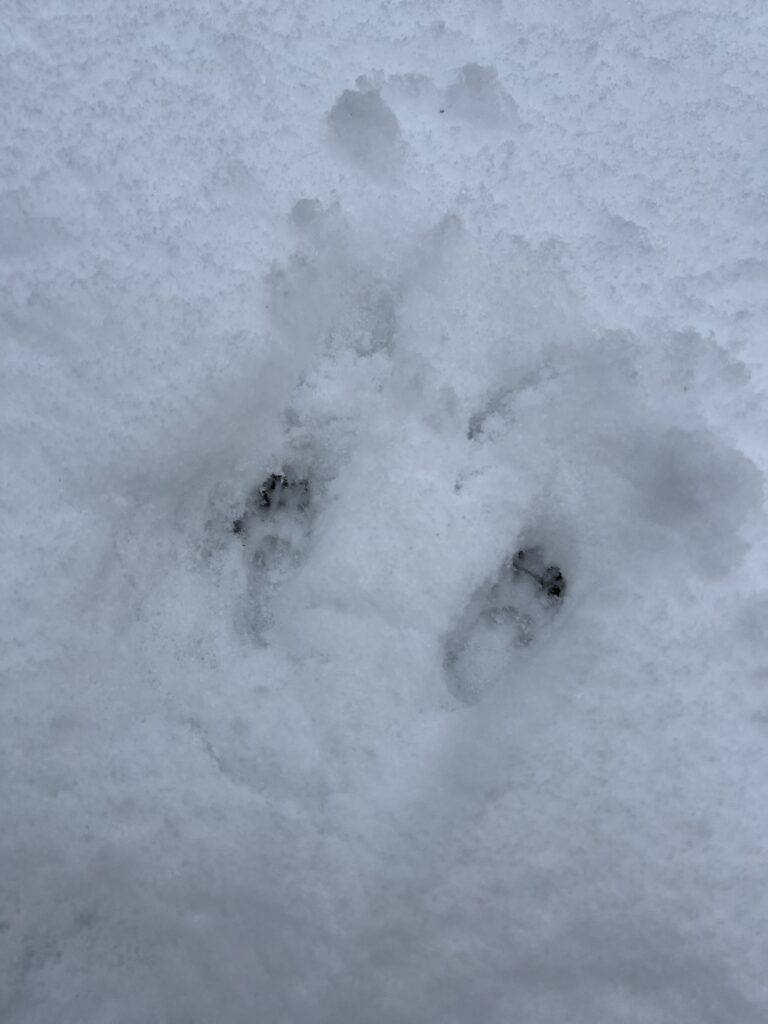
The ice and snow made it easy to see signs of wildlife, and I saw many squirrel, rabbit, and deer, tracks and possibly some others like raccoons and small rodents that I was not completely sure about. Also, similar to the last visit, there was no bird activity that I could hear or see. The many man-made tracks made it slightly difficult to find undisturbed animal tracks, but venturing further out than usual (following the brook downstream), I was able to get clear visuals and pictures both on top of the brook and just off the trail.

Centennial Brook Phenology Project

Centennial Brook 12/7/24

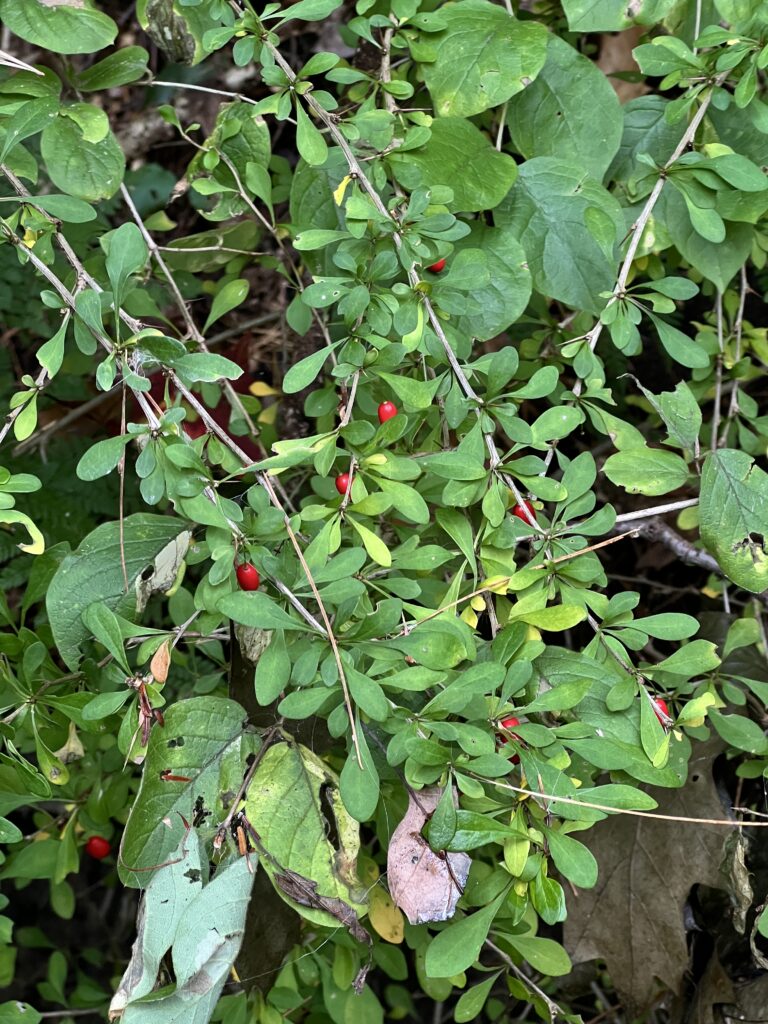
My phenology spot looked much different than the last time I visited. Snow covered most of the remaining vegetation and some of the brook itself. The leaves in the area were all gone except for on the conifers which were Eastern White Pine and Eastern Hemlock. Surprisingly, there were still some fruit left on the barberry and buckthorn. I checked if I could see any signs of decomposition, and upon digging up some snow I could still find leaf litter that seemed to be in the process of decomposing. It was darker than before and less of the leaves were fully intact.

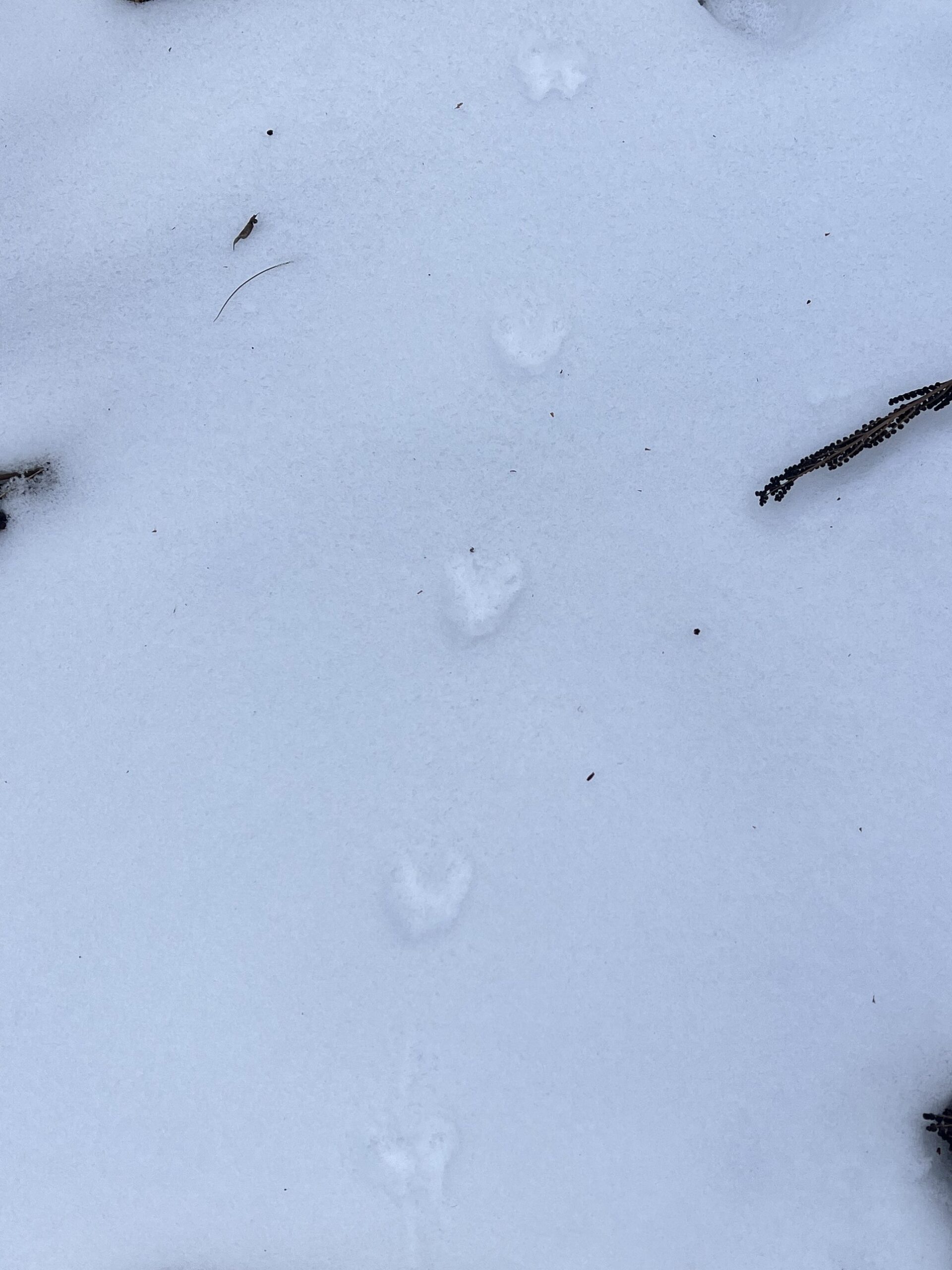
Though not very obvious, I could see a few trace of animals like squirrel marks on trees that I had seen in other areas of the forest before. It was a little hard to tell if animals had been through the area because of the human disturbance of the snow and the snow itself covering any marks that would have been in the mud/dirt, but I was able to find some squirrel tracks in the snow! It does seem like animal activity (at least birds) has decreased, however. I didn’t see or hear as many in the area.

Reflecting on all the characteristics of my phenology spot, I most enjoy the sounds of the brook itself; it is relaxing to be around. I also love how the fallen trees make a sort of bridge over the brook (even though I can no longer use it because of the snow/ice). It reminds me in a way that even when things fall or seem broken, they can still be repurposed.
El Yunque National Forest, PR, 11/30/24

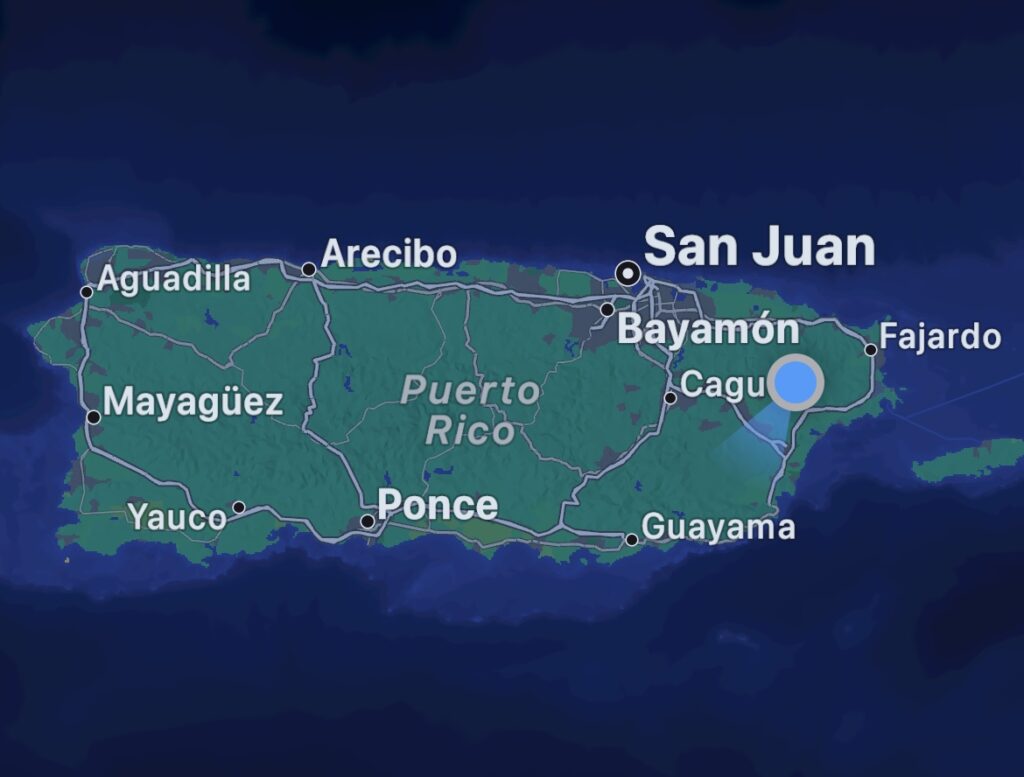
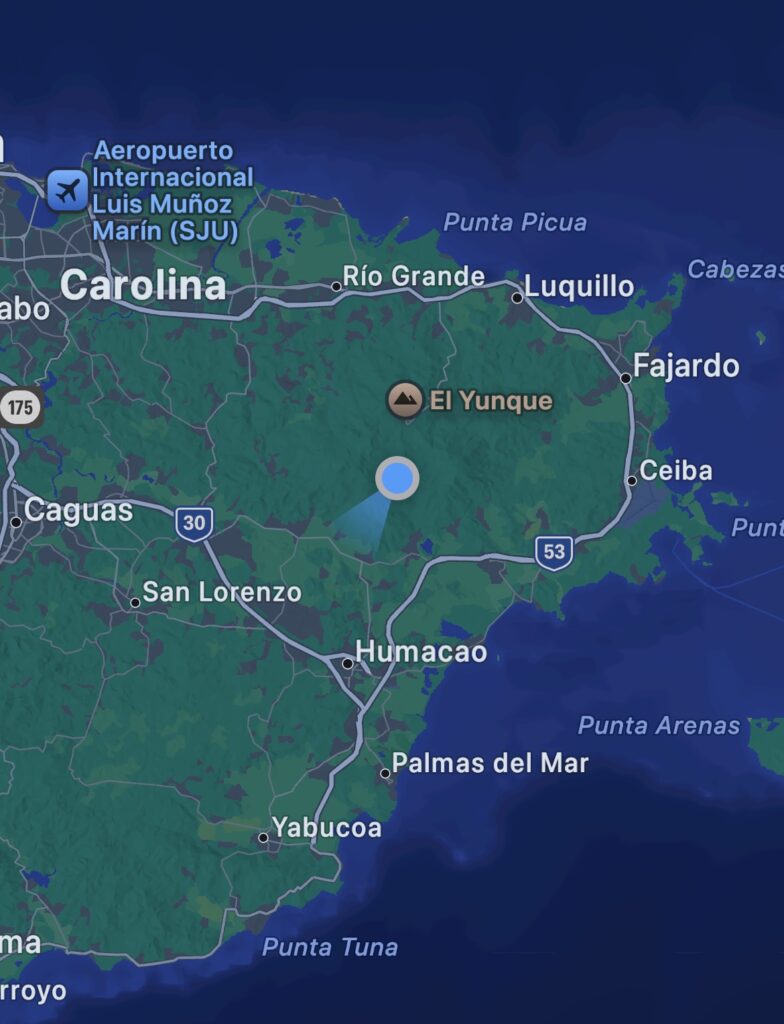
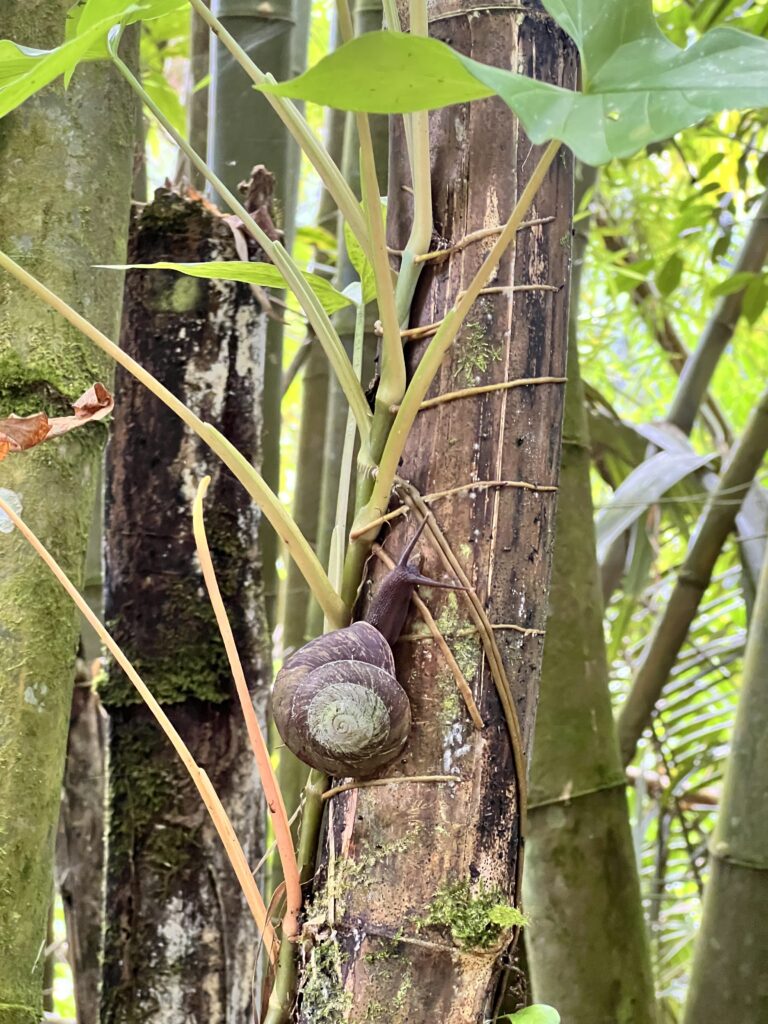
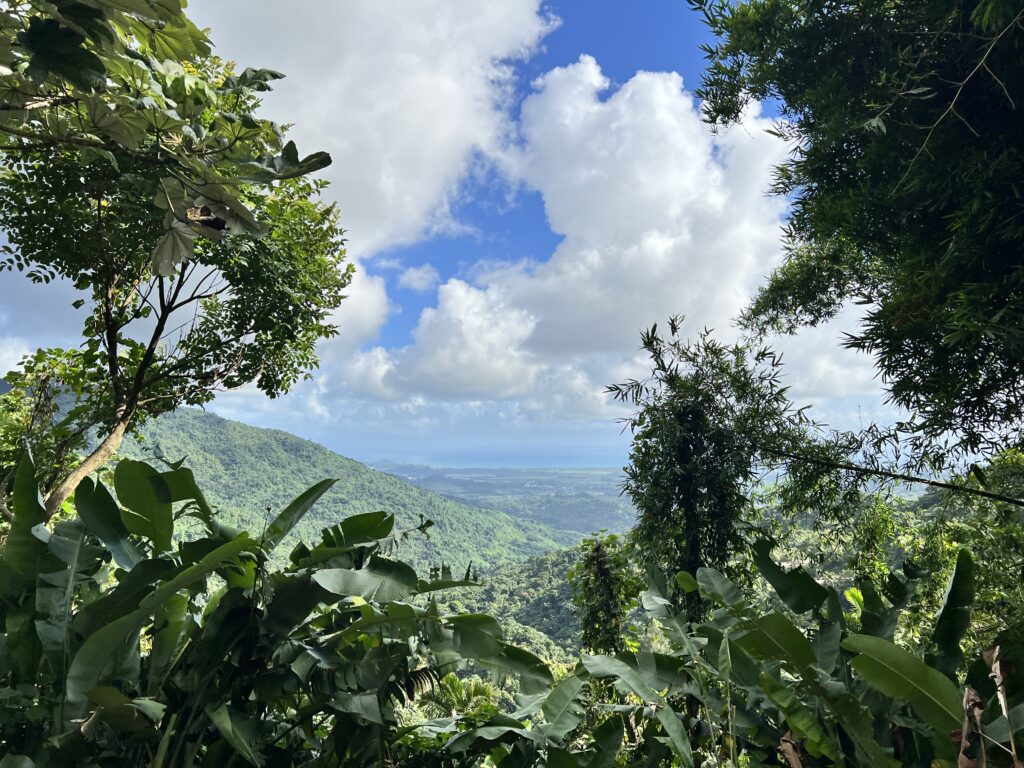
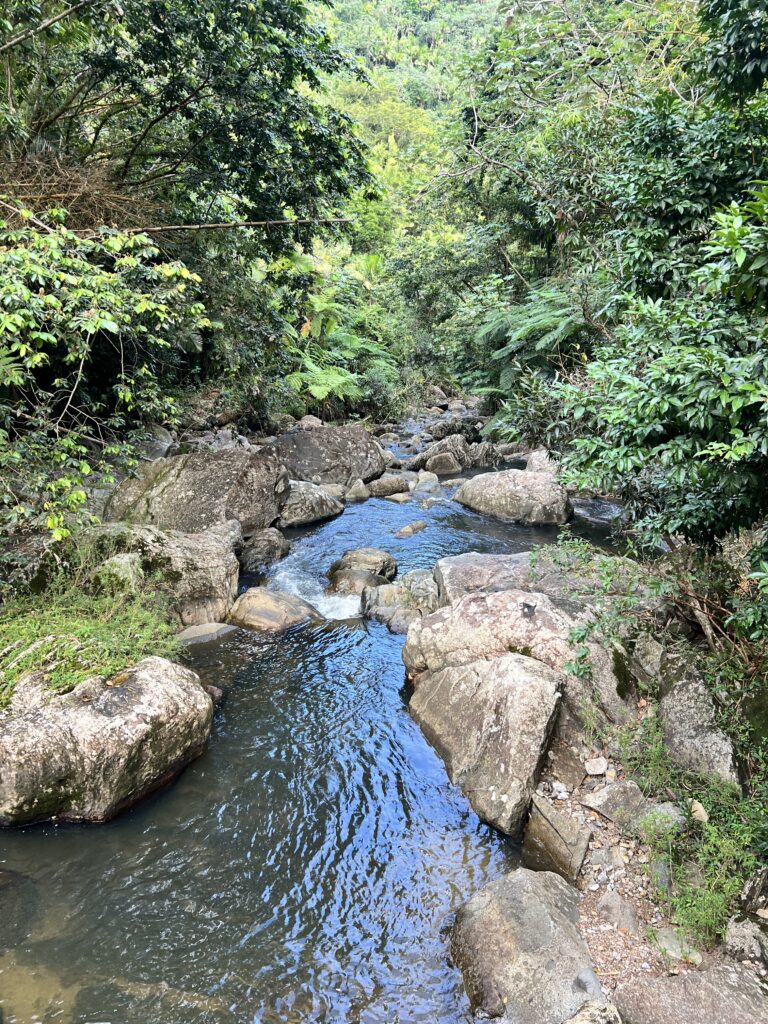
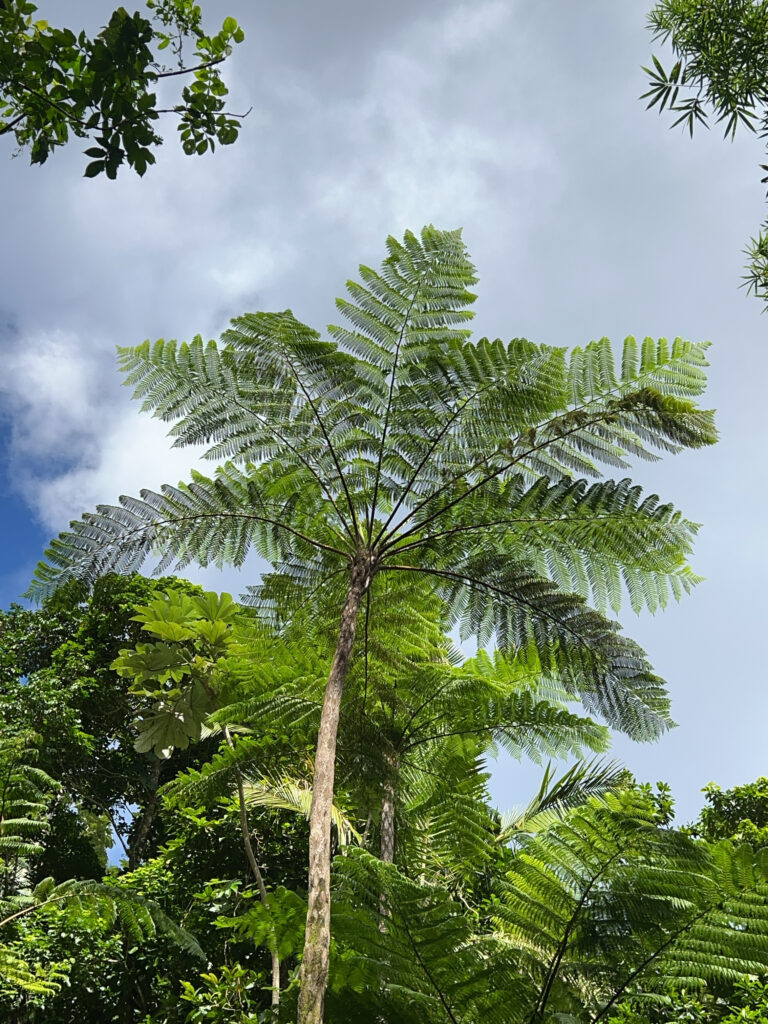
Over break, I chose to spend some time in El Yunque National Forest which is the only tropical rainforest in the U.S. National Forest System! I went through the “back” entrance to the park, which is near my grandparents house on the east side of the island.

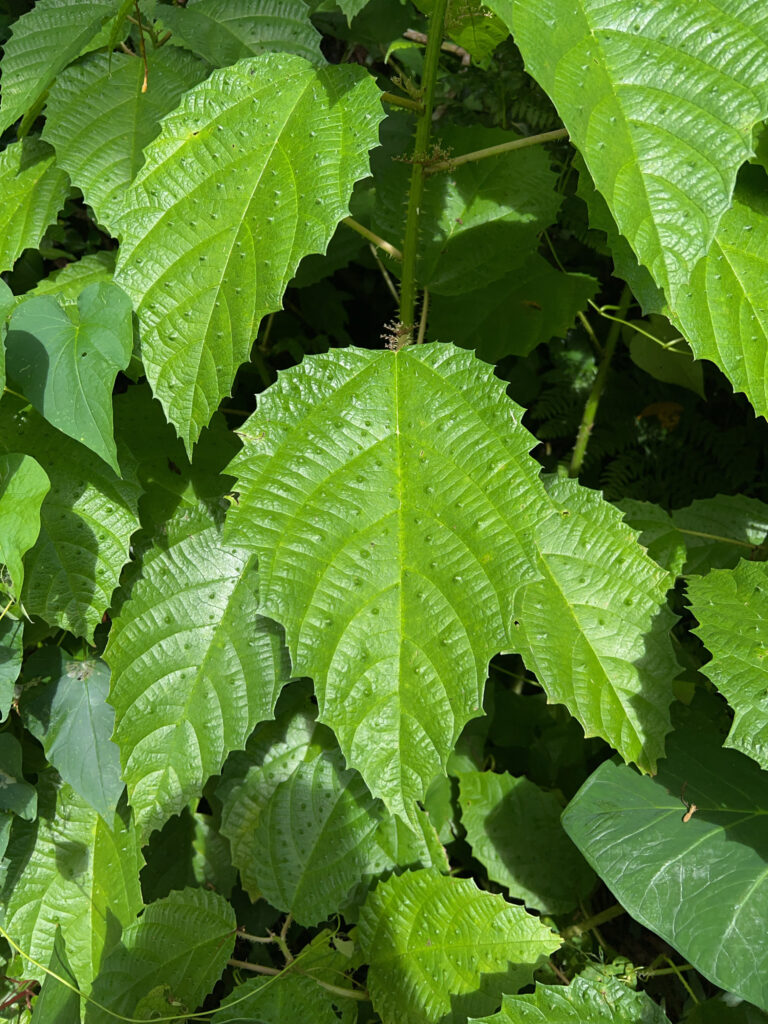
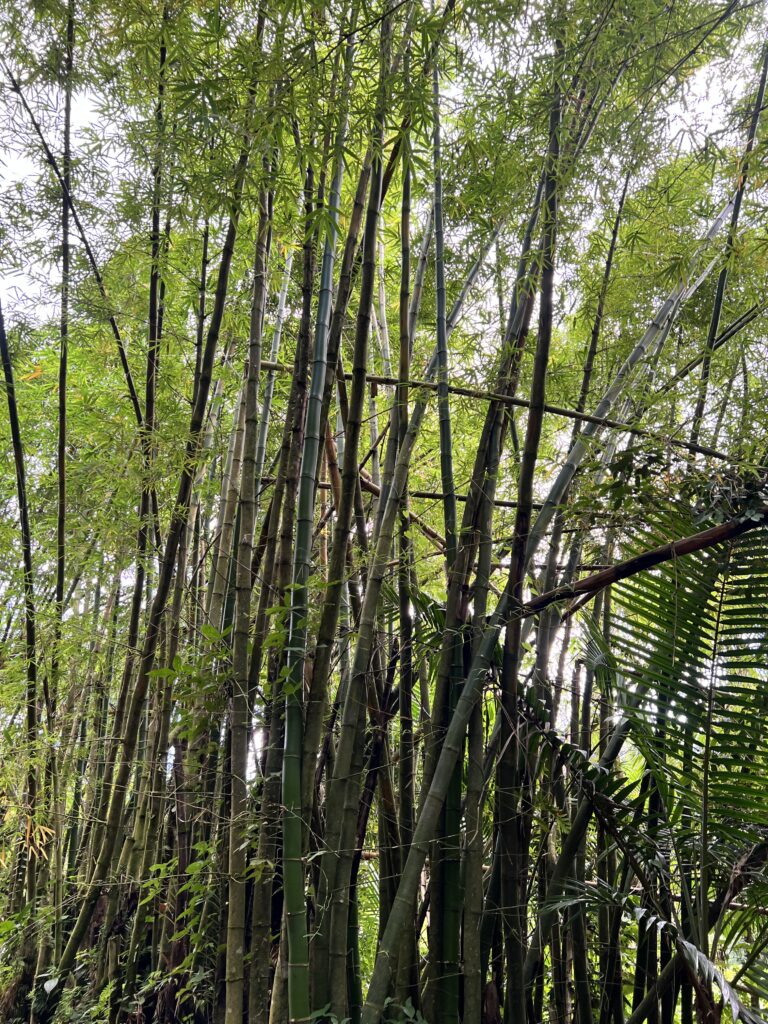
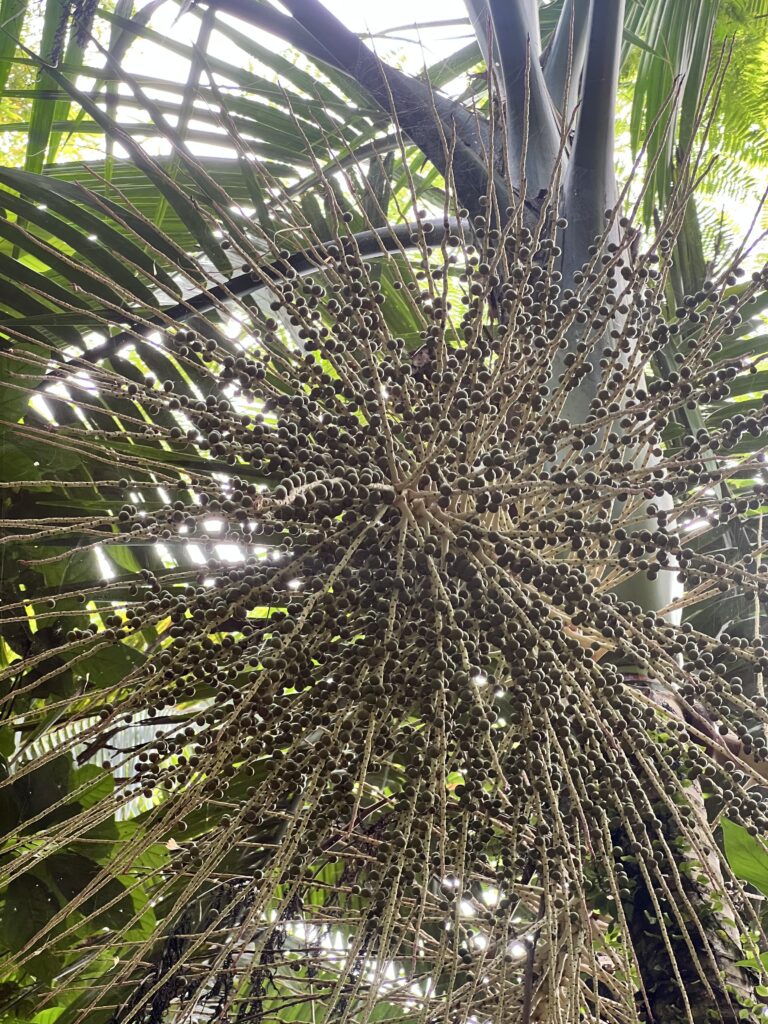
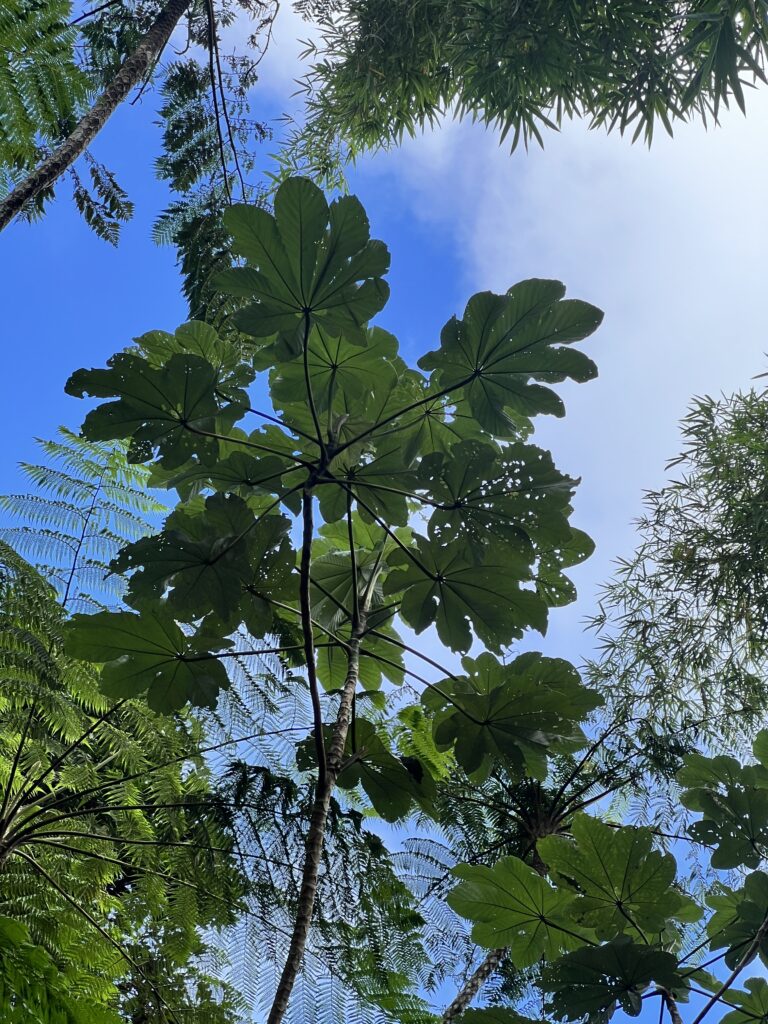
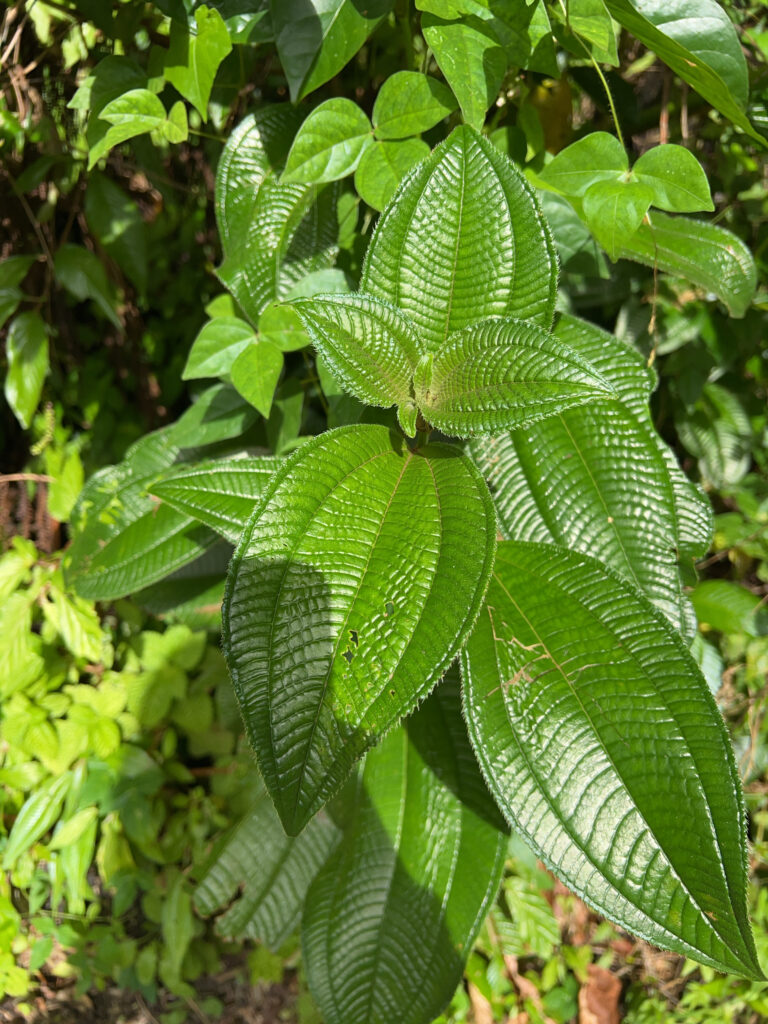
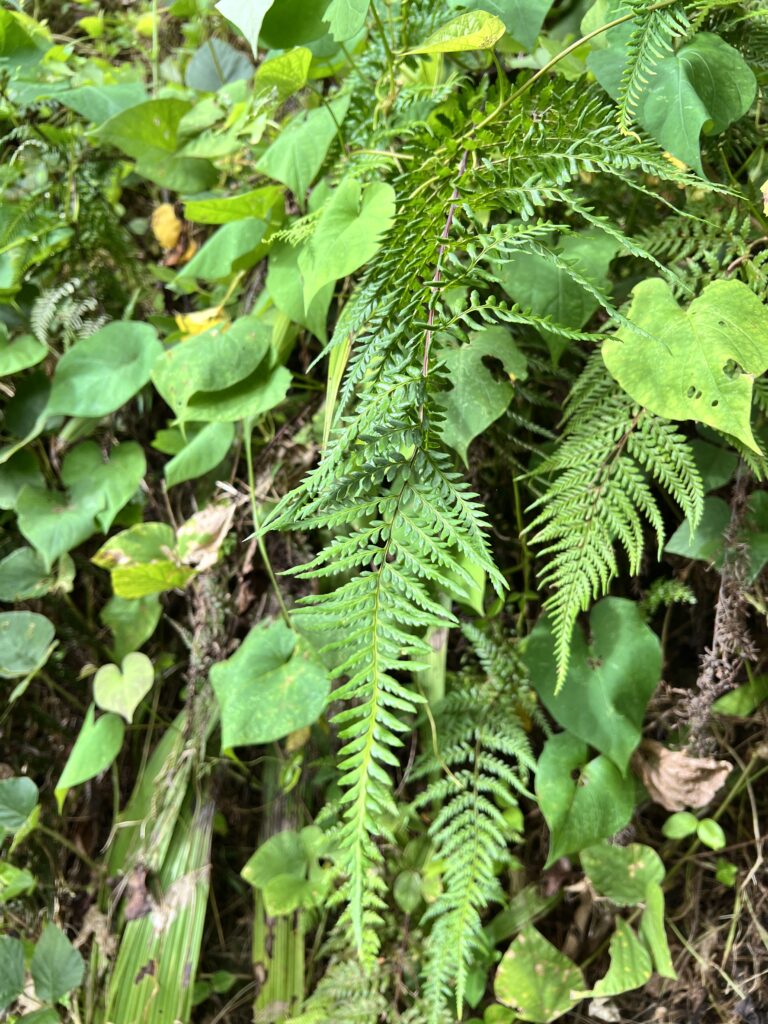
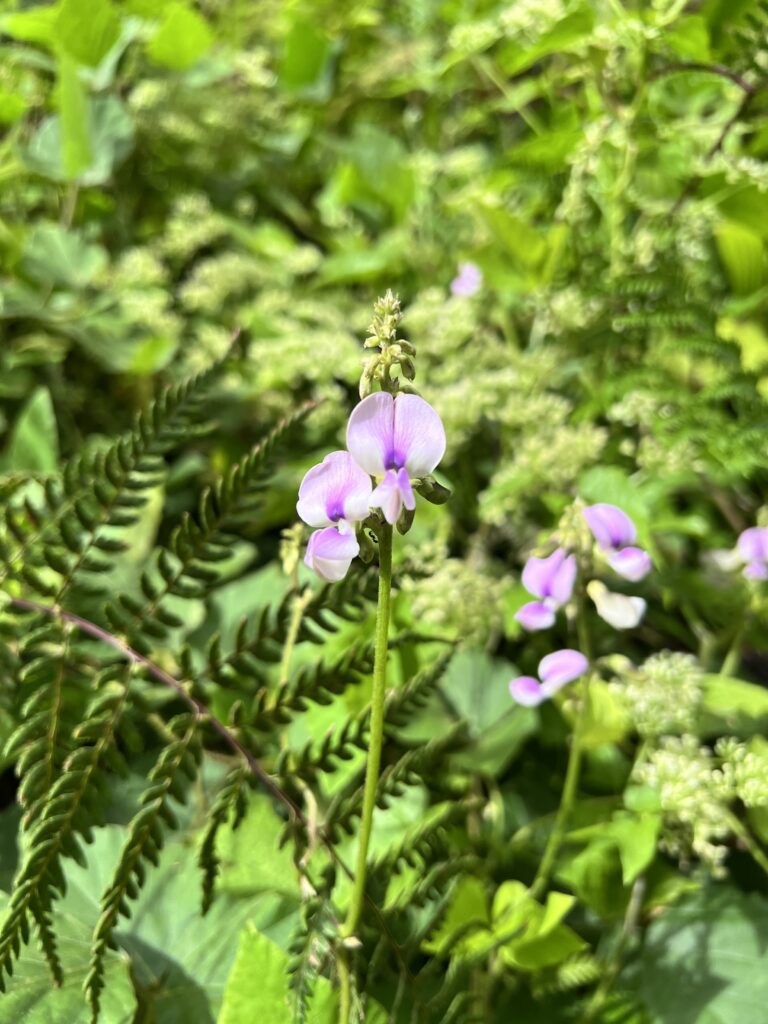
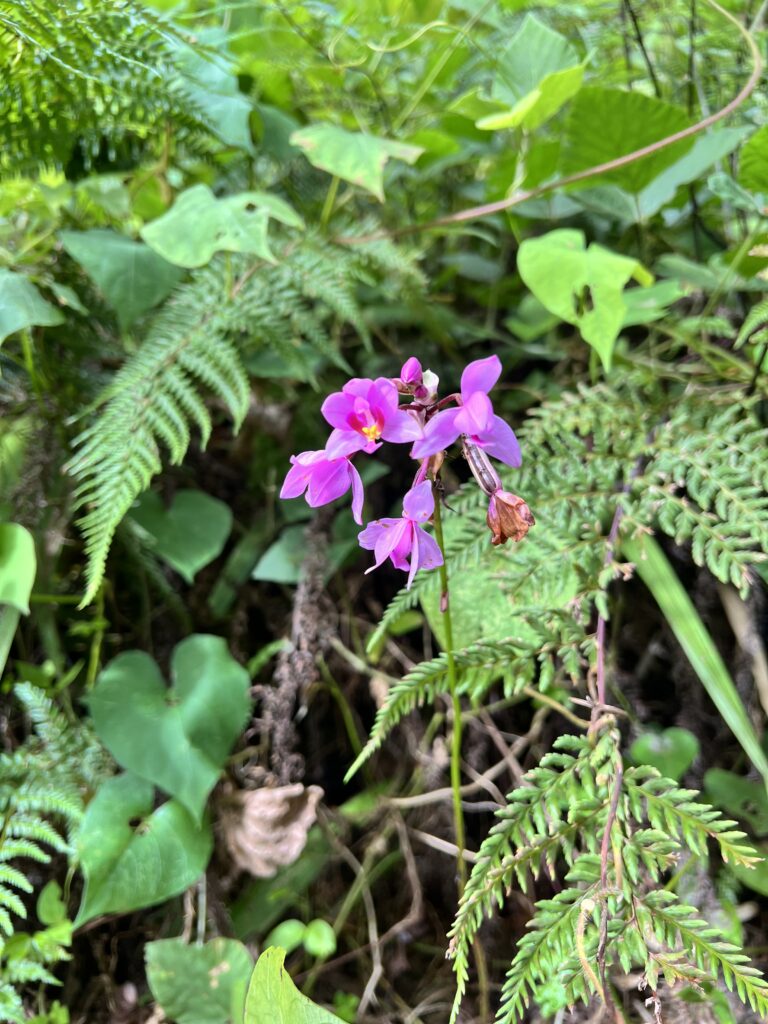
There is so much that is different in this location than Centennial Brook in Burlington, especially the species of plants and animals. I used Seek to learn what plant species were in the area and I found many interesting ones like scaly tree ferns, silverback ferns, yagrumo (“trumpet tree”), scratchbush, several types of palm trees, bamboo, orchids, and soapbush (a damaging invasive species in tropical regions).

It is interesting to note that the mountains of the El Yunque rainforest are at a similar elevation to the green mountains, with the tallest peak in the forest being around 3,400 feet. While both locations had ferns and various woody plants, they looked much different and thrive in vastly different climates, leaving me unable to identify any trees without the help of Seek or locals like my grandfather and dad. The climate stays relatively the same all year round, though I did visit at the end of the rain season.

According to my grandfather, this place has changed a lot in the past few years due to Hurricane Maria in 2017. The last time he visited, he recalled that much of the plants were still just saplings and there were many fallen trees. Today, we can see that the area has regained most of its life, though it is still recovering. The hurricanes that come with the rainy season and the subsequent regrowth are a natural part of the phenology here, but it was interesting to see and learn about how things have changed.

I also was able to hear many more animals like birds and frogs than in centennial brook. I previously mentioned how the airplanes drown out much of the natural noises, but here only the waterfalls were able to drown out the sounds of native birds (bananaquit, puerto rican plain pigeon, green parakeet) and coquís (enjoy this video of coquí calls).

Centennial Brook Phenology Project

Centennial Brook 11/3/24

While sitting for 15 minutes, it was easy to notice a lot of changes since the last visit to my spot. There was significantly more leaf litter, the temperature was much colder, and there was overall less greenery. The water level was also higher than before, so I couldn’t get to the exact spot I had been in last time. The Norway Maples were a bright yellow/light green, but the many Red/White Oaks had lost nearly all of their leaves. I also noticed that while there were lightly less ferns in the area, many of them still remained even though I had expected them to have been gone by now due to the cold and even snow. The barberry and buckthorn were also still looking as lively as before, though the buckthorn no longer had berries.

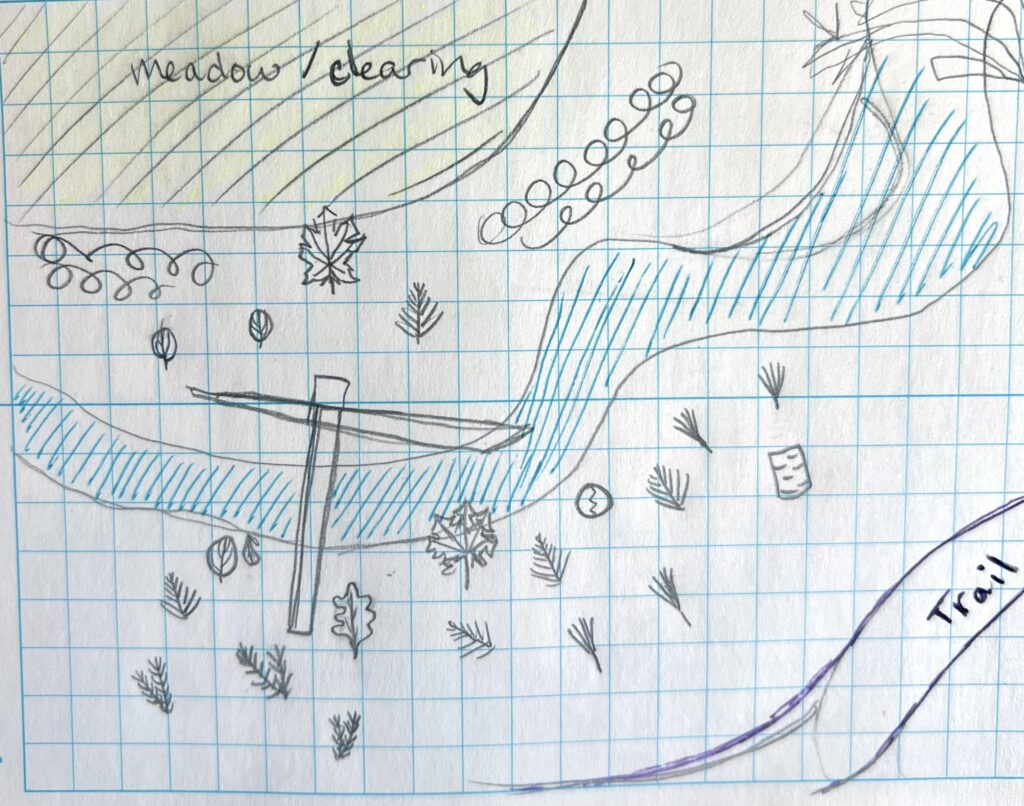
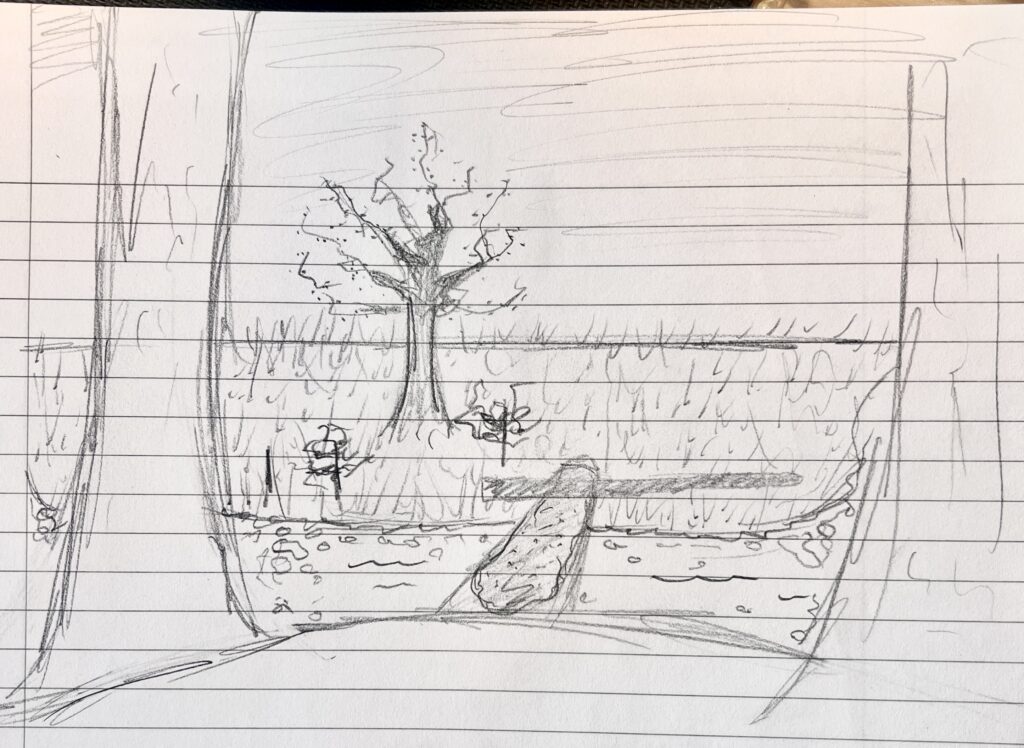
Overall my experience was very calming. I had gone into the woods feeling kind of rushed, and I was unable to sit still for the first few minutes of sitting quietly. After a bit, though, I tried paying closer attention to the smaller sounds rather than only on what I could see. While the noise from the airport dampened any noise at some points, I was also able to hear a few birds and squirrels chirping, the brook running, and some trees rustling which made me feel much more relaxed. It was a great experience to also draw out what I could see and make sense of my surroundings by seeing where everything is in relation to each other.

Animal noises (most likely a squirrel)

Centennial Brook Phenology Project

Centennial Brook 10/9/24

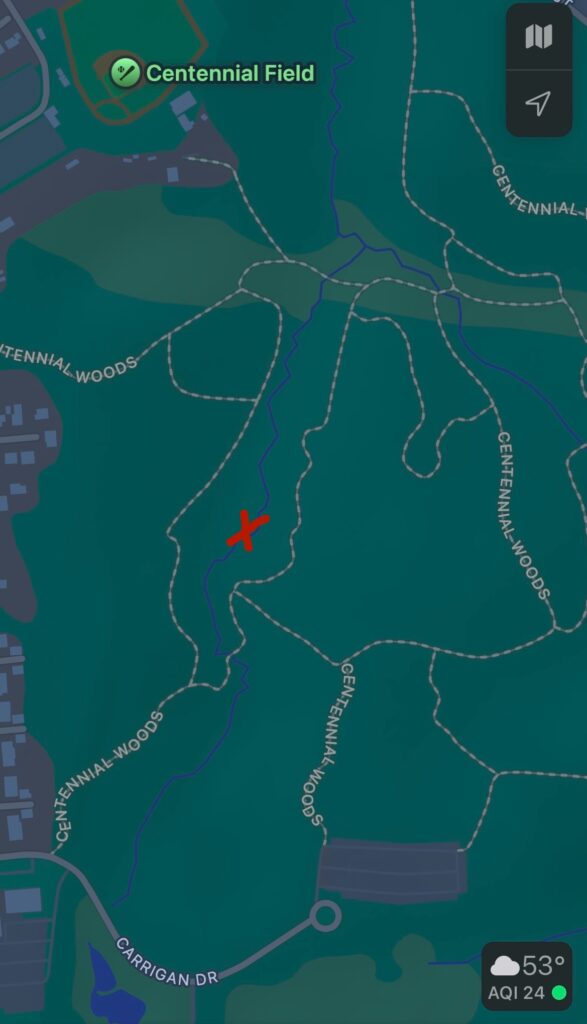
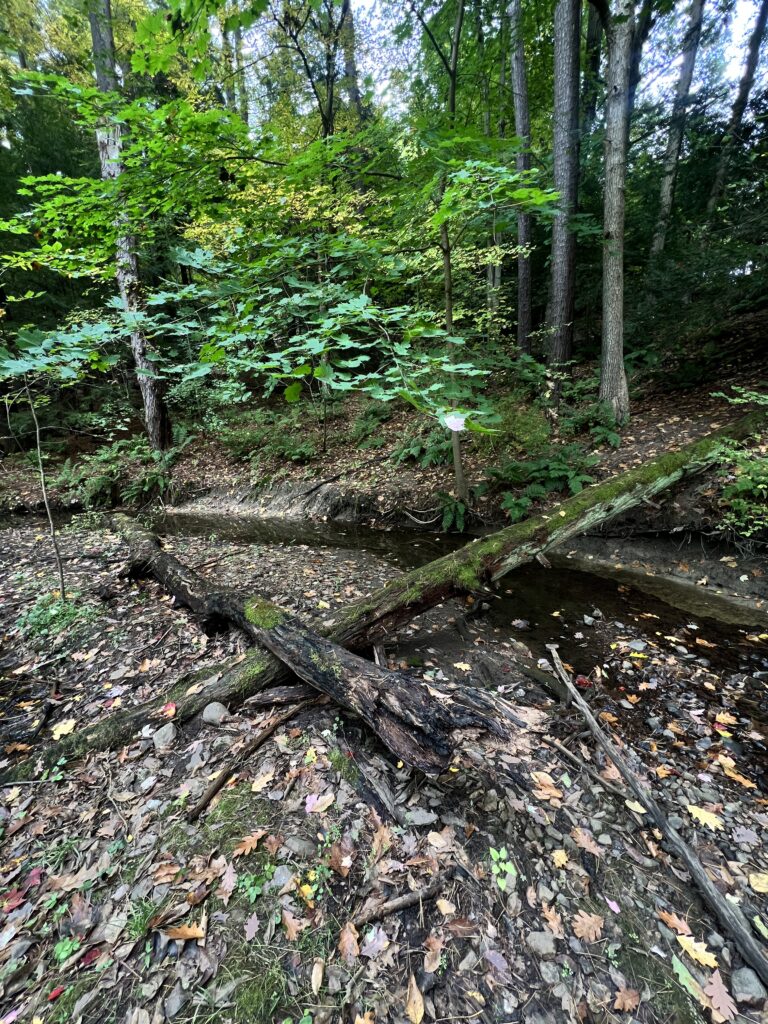
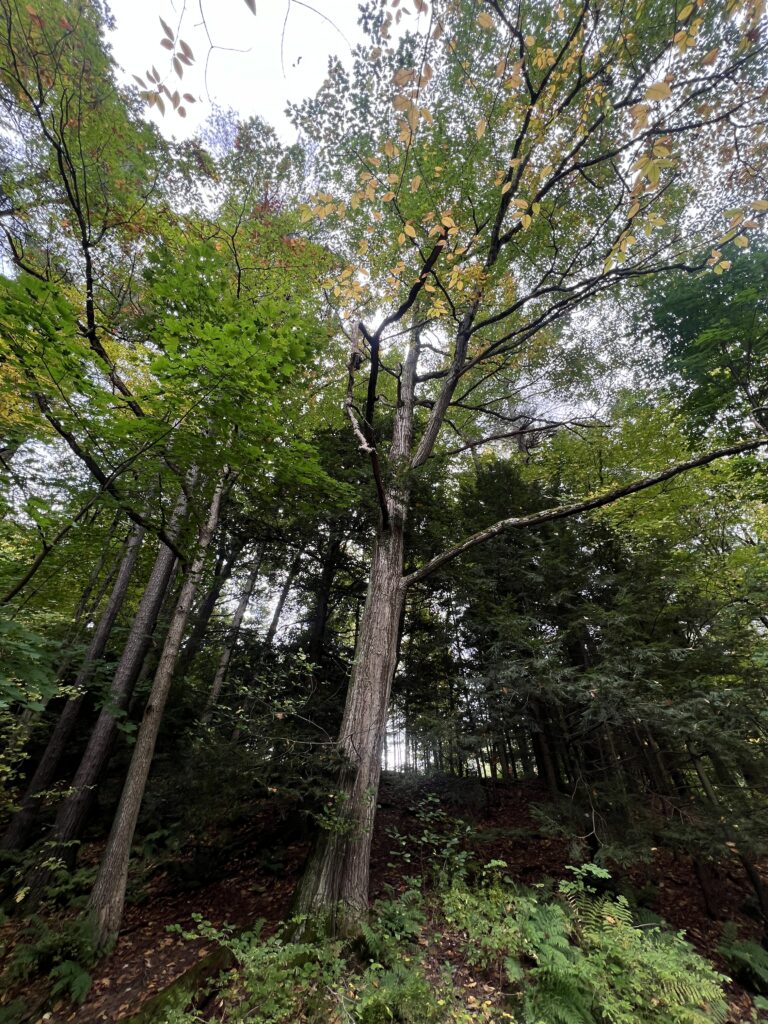
I chose a spot along Centennial Brook for this project. You can get to the exact spot by following the main trail, and once you reach the clearing, go slightly left and down the hill where you can see the brook perpendicular to you. You will know you reached the right spot when you see a large mossy fallen tree going down and across the brook, as pictured. I reached this spot while on a trip with the herping club and felt it would be interesting to come back and see how the vegetation and brook changed throughout the seasons.

Overall, most of the vegetation in the area still seemed to be alive despite the cooler temperatures recently. Trees still had most of their leaves, though it was obvious the hardwoods were starting to drop some, and the conifers appeared healthy.

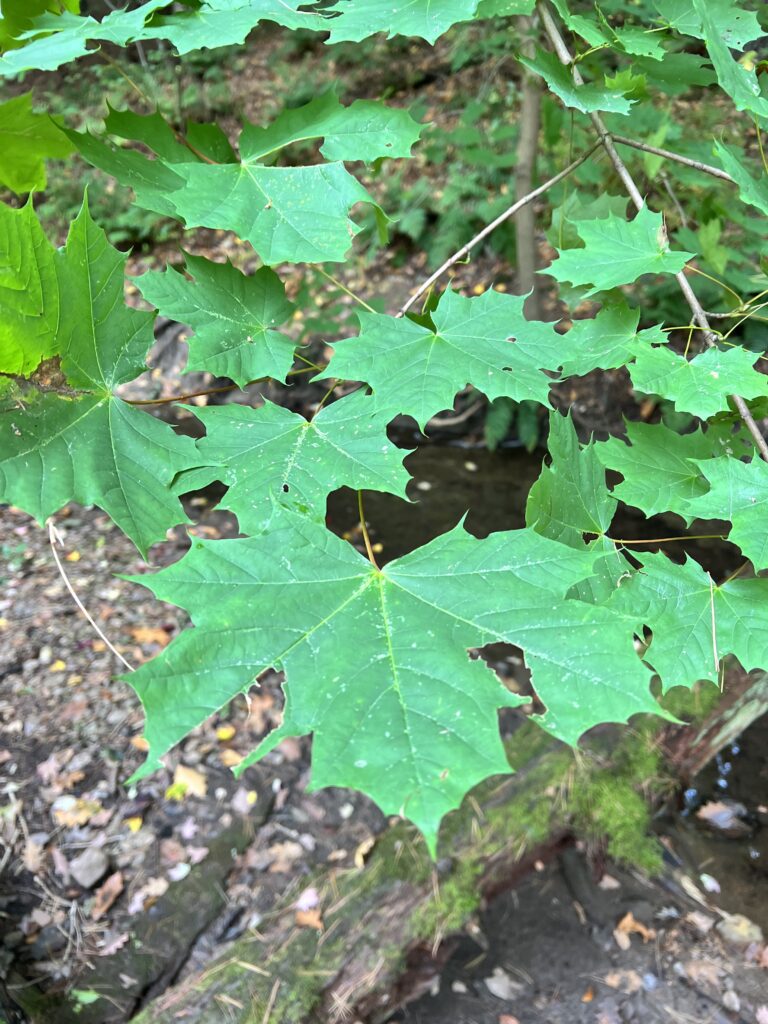
Some of the most common woody plants I saw in the area include:

  • Norway Maple
  • Eastern Hemlock
  • Northern Red Oak
  • Yellow Birch
  • Barberry
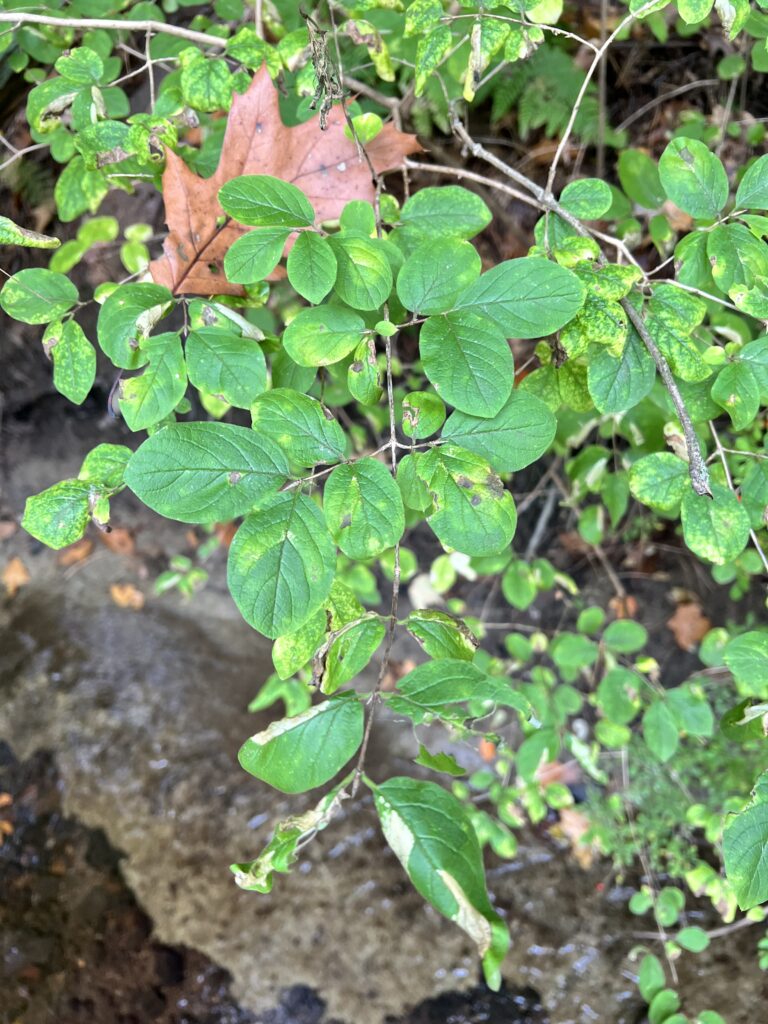
  • Buckthorn
  • Red Maple
  • Eastern White Pine

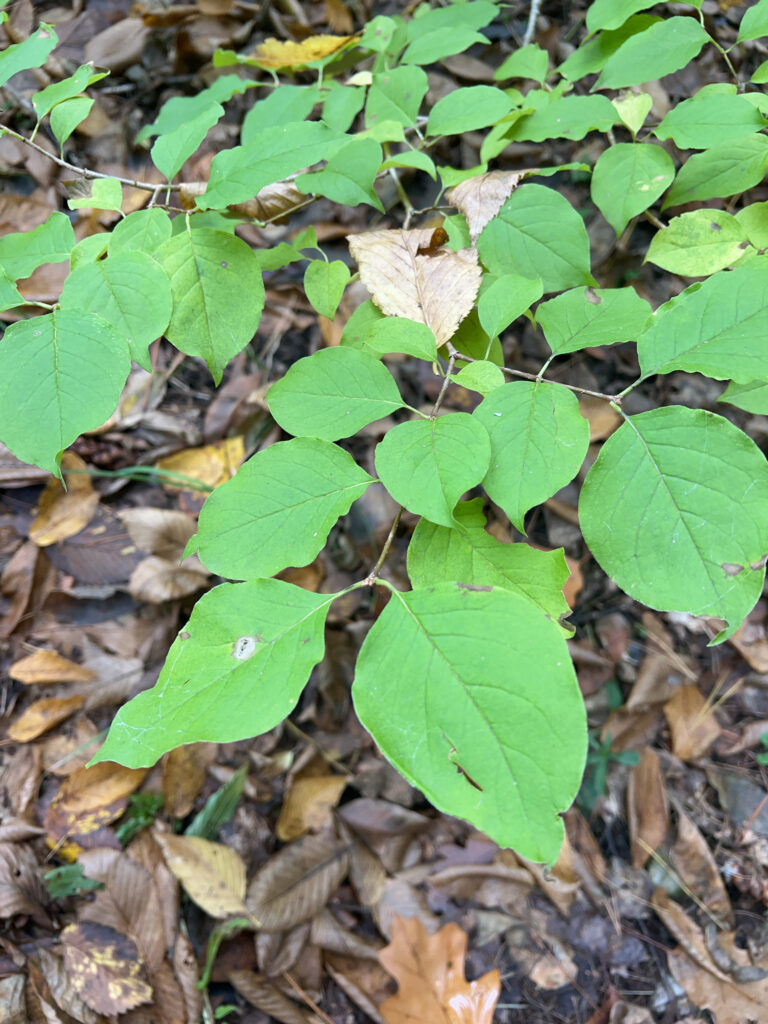
I also noticed a few new species that I had yet to ID like the Intermediate Wood Fern and Japanese Tree Lilac, which can be found on my iNaturalist page.

Other things that caught my eye include:

  • Most of the leaf litter is brown rather than bright colors (aside from red maple)
  • The fallen tree across the brook is rotting and is covered in moss
  • There appears to be some stream bank erosion
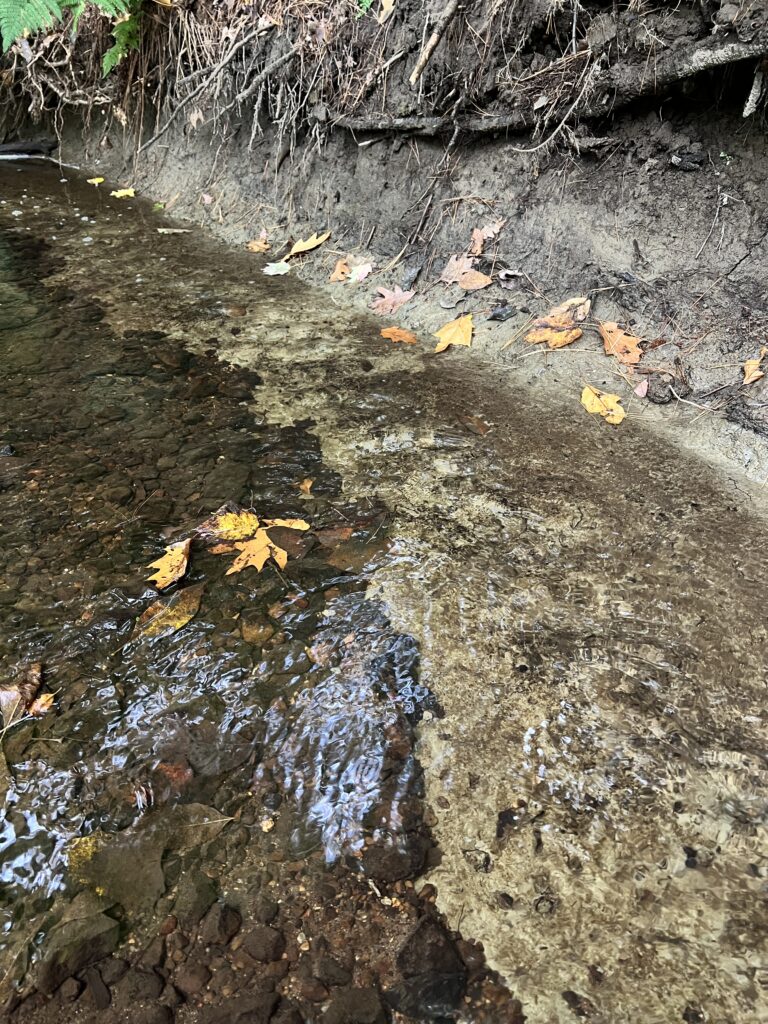
  • Sediments from erosion create a very obvious line of sedimentation in the brook (pictured below)
  • The higher water speed at the slight bend in the brook seems to be driving the erosion