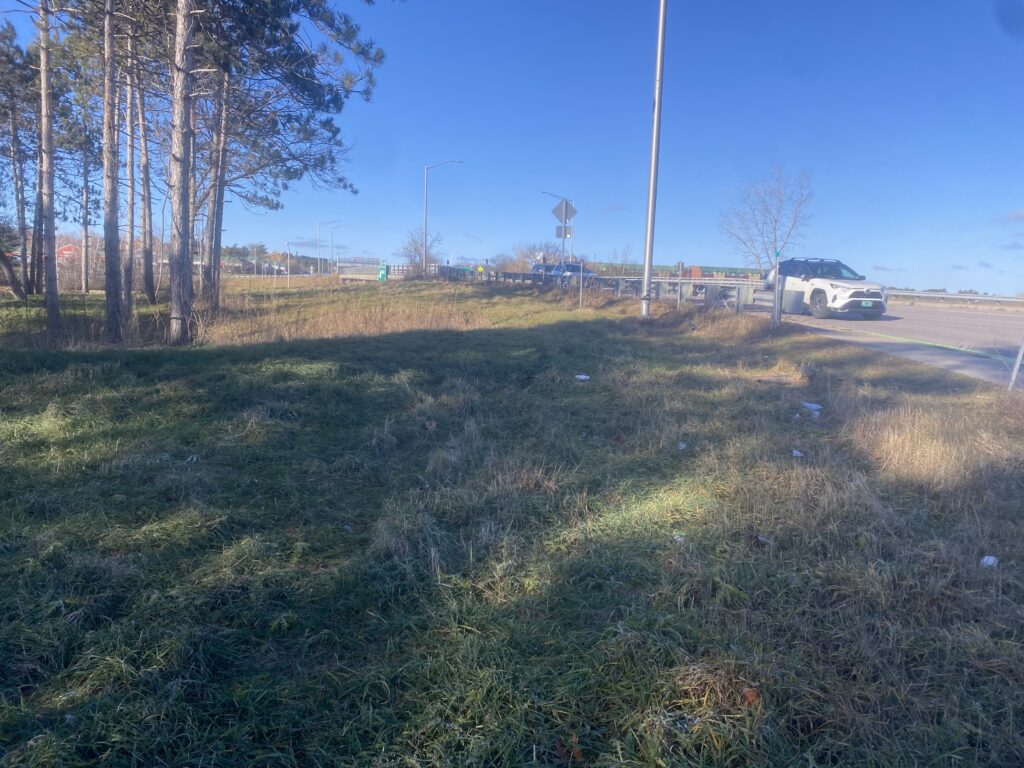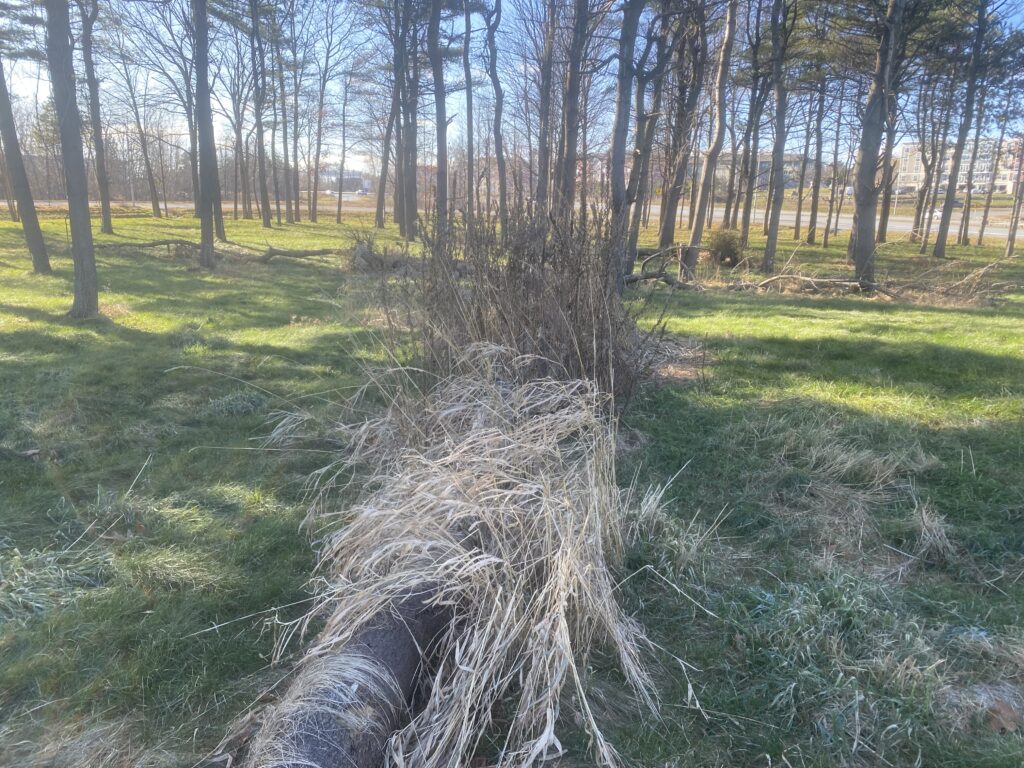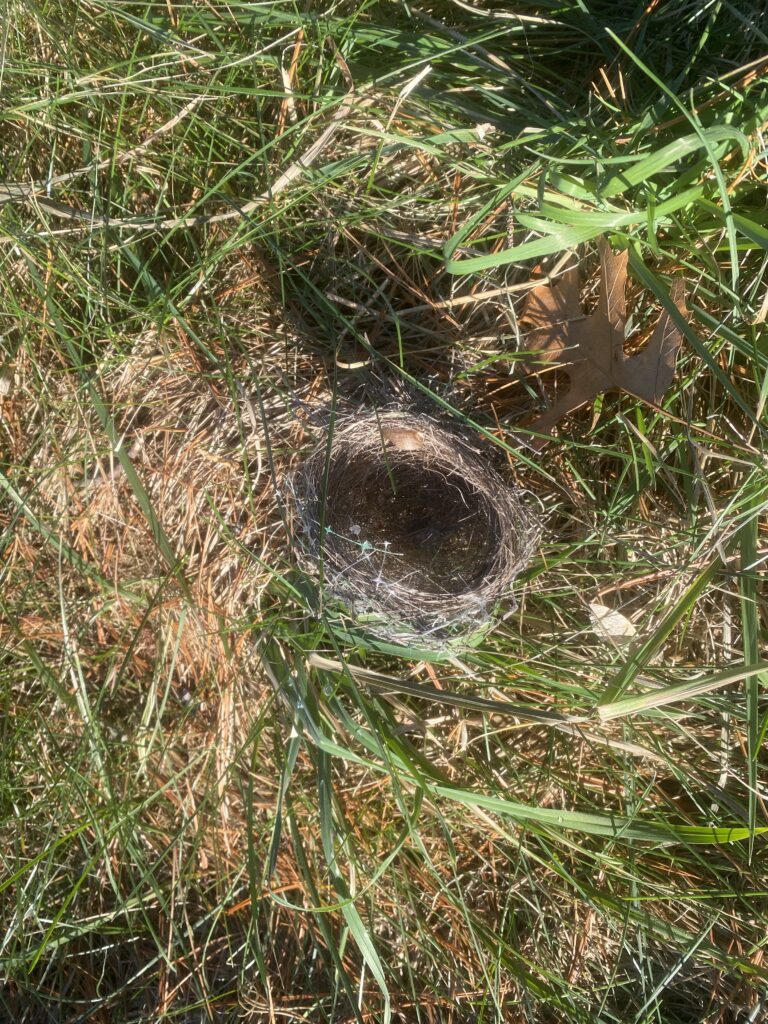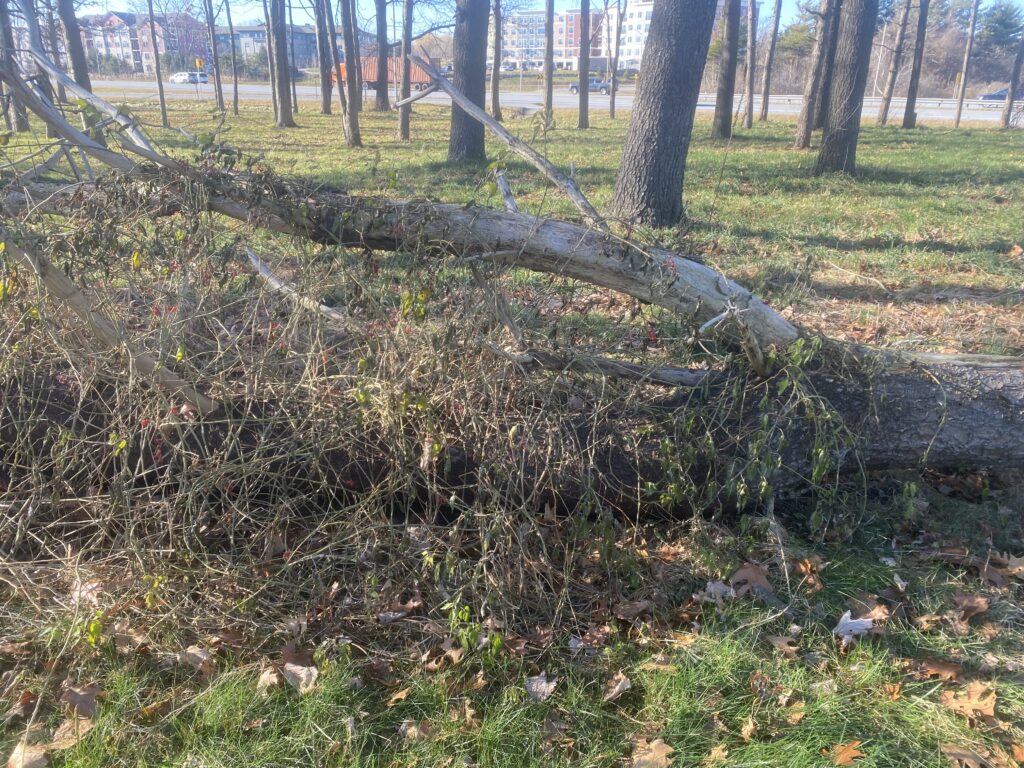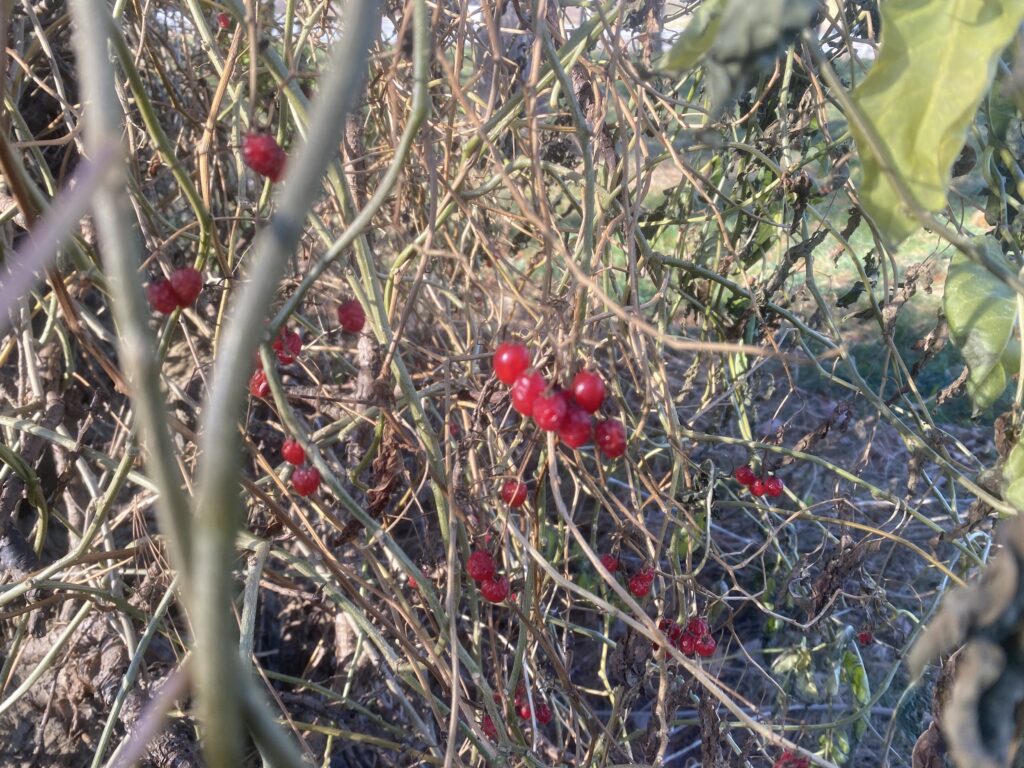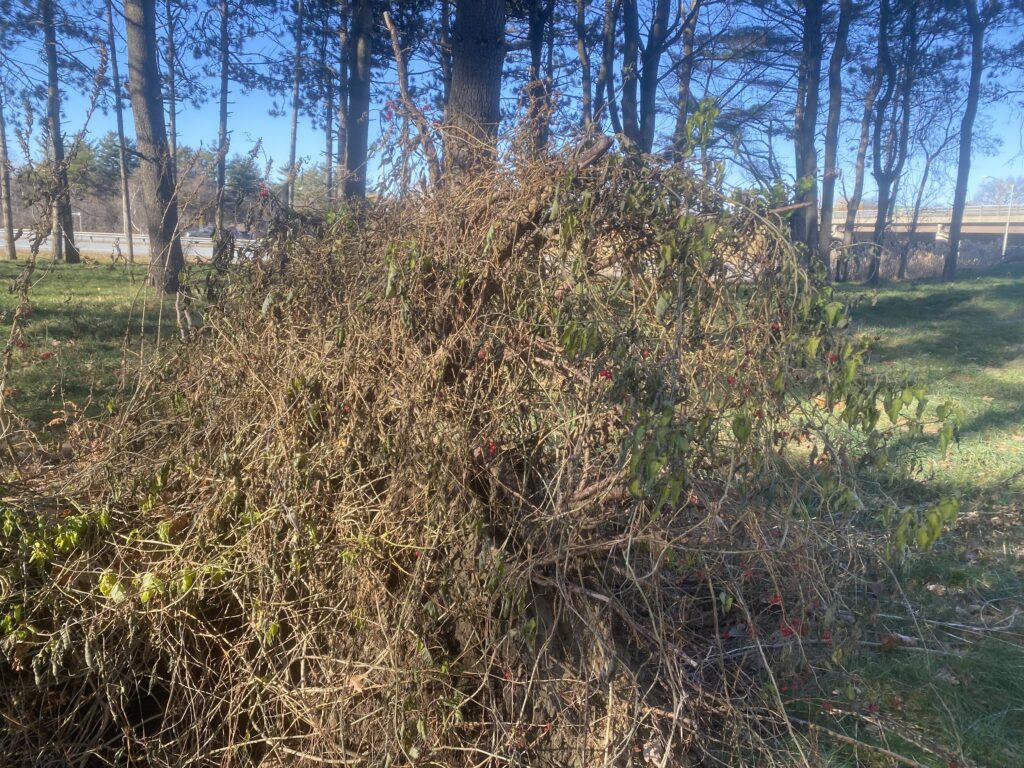
I took my final visit to my phenology site on Friday, December 9, 2022. The area had been mowed once again, reasserting the human impact that we have on this area. This repeated mowing leads to a lack of understory, save the lower lying wet areas and the areas and the fallen trees. These fallen trees had been refuge for any plants that wanted to grow in the area, including the red berried plant that seek identified as bittersweet nightshade. I had seen birds in the area, but today I saw a birds nest on the ground. The birds nest didn’t seem to have fallen, or if it did it must have been carried a ways by the wind because it was fairly far from any trees. The nest did have some plastic stringy components, evidence of the plastic pollution and litter that is all too common in the South Burlington area. As there was no snow, I wasn’t able to do any animal tracking, which I was hoping to be able to do at this point in the semester (sadly there probably aren’t many animals passing through a cloverleaf interchange either). It’s been a great semester visiting, and I’m glad to know that no one enforces the “no trespassing” that stands directly outside this area. I’d be interested to know who mows this plot, as it seems it is a part of the federally controlled highway corridor. The thing I like the most about this area is that is shows how nature persists. Despite mowing, the plants still grow. The birds in the area use plastic in their nests when it’s available. The highway ramp circling around the plot doesn’t prevent it from being an urban wild, an area where life persists against the will of the sureoundings.