12/3/2024
It was refreshing to return to my phenology place as it acts as a familiar place even when it is relentlessly in its seasonal ebb and flow. As I enter Centennial Woods, there is a blanketing stillness. A lack of movement defines every part of the landscape from the trees not shaking with the wind and an understory seemingly abandoned. Besides the tall pines that hold onto their majesty year round, all of the other trees are devoid of their flare and now their crooked branches on full display.
The only deciduous tree I see that holds its leaves is the Norway Maple but the leaves are more shriveled up as if the tree is embarrassed of its leaves which were once golden but are now the color of brass thats been exposed long enough to develop a patina.
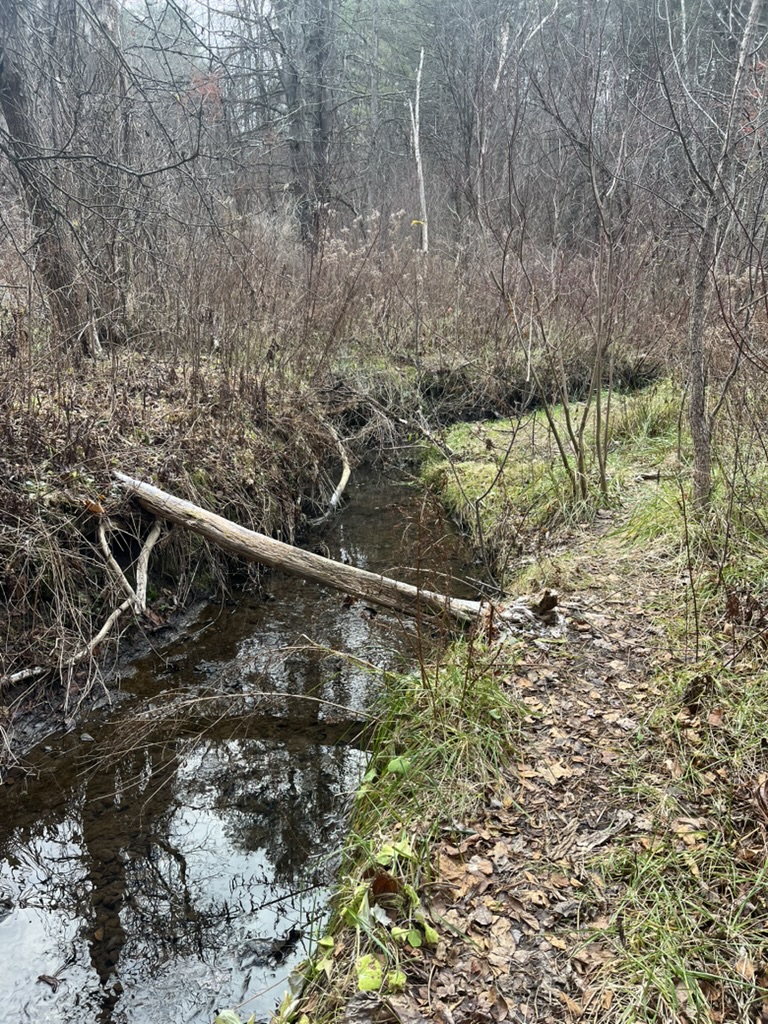
As if fighting back from the stillness that is almost universal, the bend of Centennial Brook i’ve been observing for this project has a rippled texture of movement on its surface that looks like the rolling hills that cover much of Vermont. Not all parts of Centennial Brook are equal in their movement, some unbending lengths one has to look very closely to find the current that makes Centennial Brook closer to a stream than a pond. Where there was the humming of frogs, there is only the sound of the current. In deeper holes by my bend Minnows can be seen as they always have been.
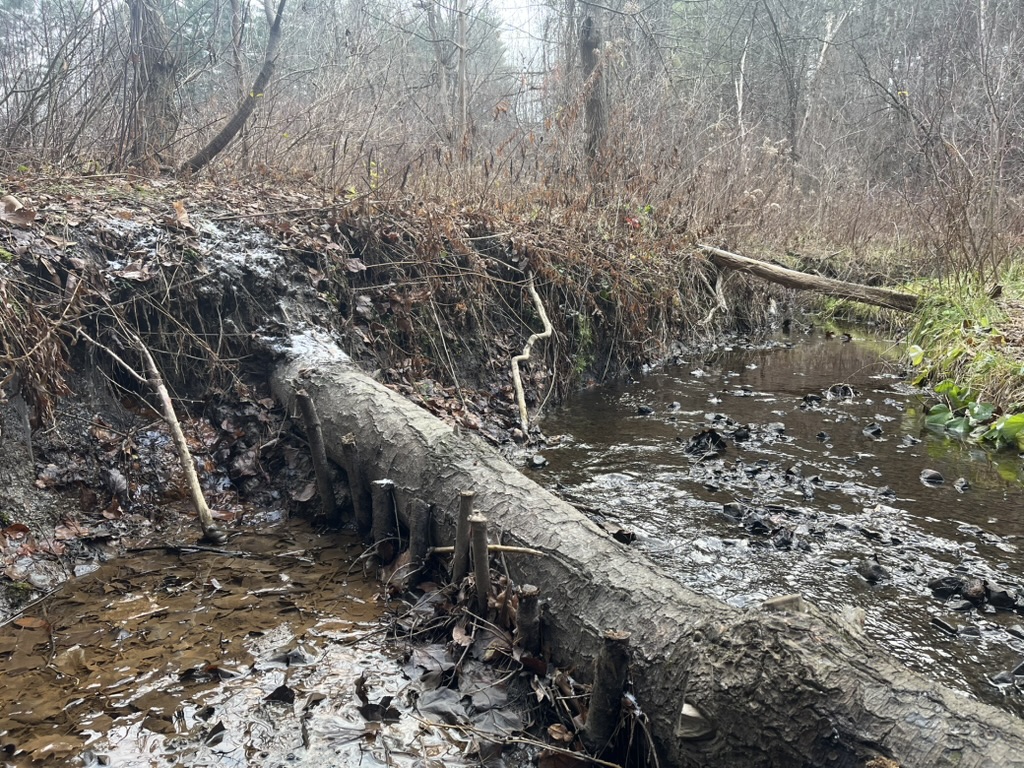
Many of the leaves that used to be one of Centennial Woods prime attractions now compile in Centennial Brook steering the flow of the water. The leaves in the water are devoid of their color as they all seem to take on a uniform shade of grayish brown.
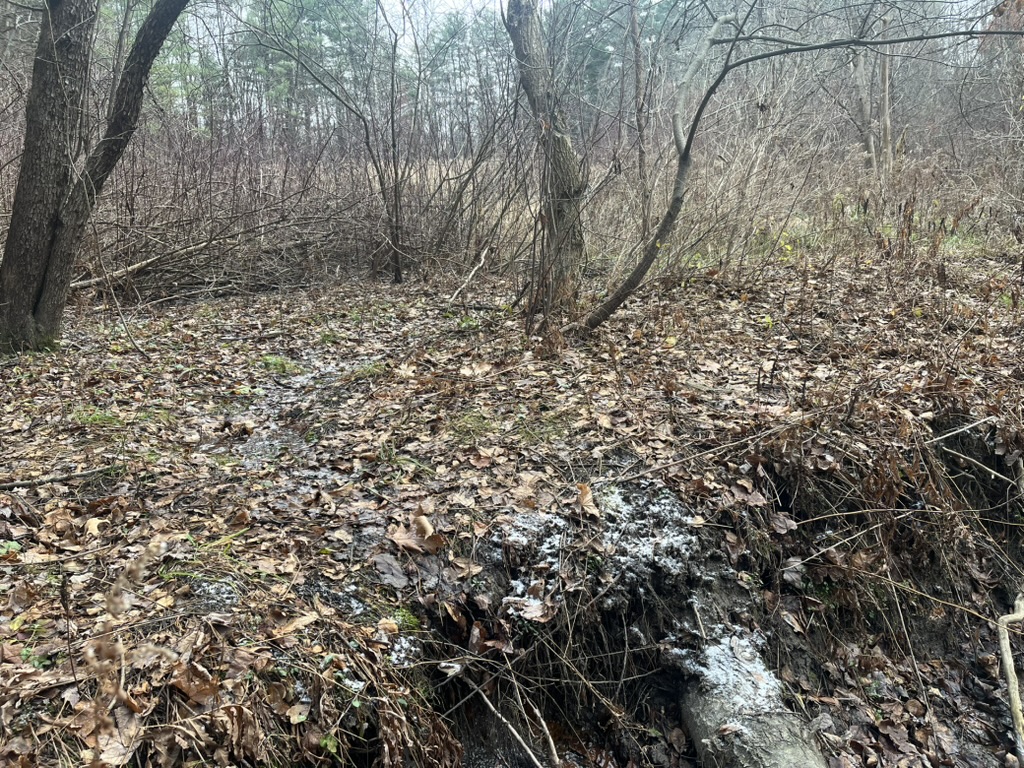
The most surprising change I noticed was by the downed log that aids in the waters bend west there are 2 new sources of water into Centennial Brook. One of them is above the ground and very shallows and the second seems to spring out from the side of the bank. The dirt around the new spout in the side of the bank is dyed a copper brown color as if the water is carrying either clay or iron with it.
I think the part of my phenology place that I enjoy is how the water has carved through the banks leading to its current path. It is interesting thinking of how the path the water takes will change in the future with clues hinting to this answer being found in differences in depths, obstructions changing flow of water, and where the drowned leaves can be found in abundance. This phenology project in general has been very rewarding as in reducing the scope of the area I am analyzing to just one section of a far greater environment, I am able to fluently understand the slow changes that occur to this area with the passing of time. I can not make any promises that I may not be able to deliver upon in the future but I do hope to continue the ritualistic observance of this small bend in a much larger stream.