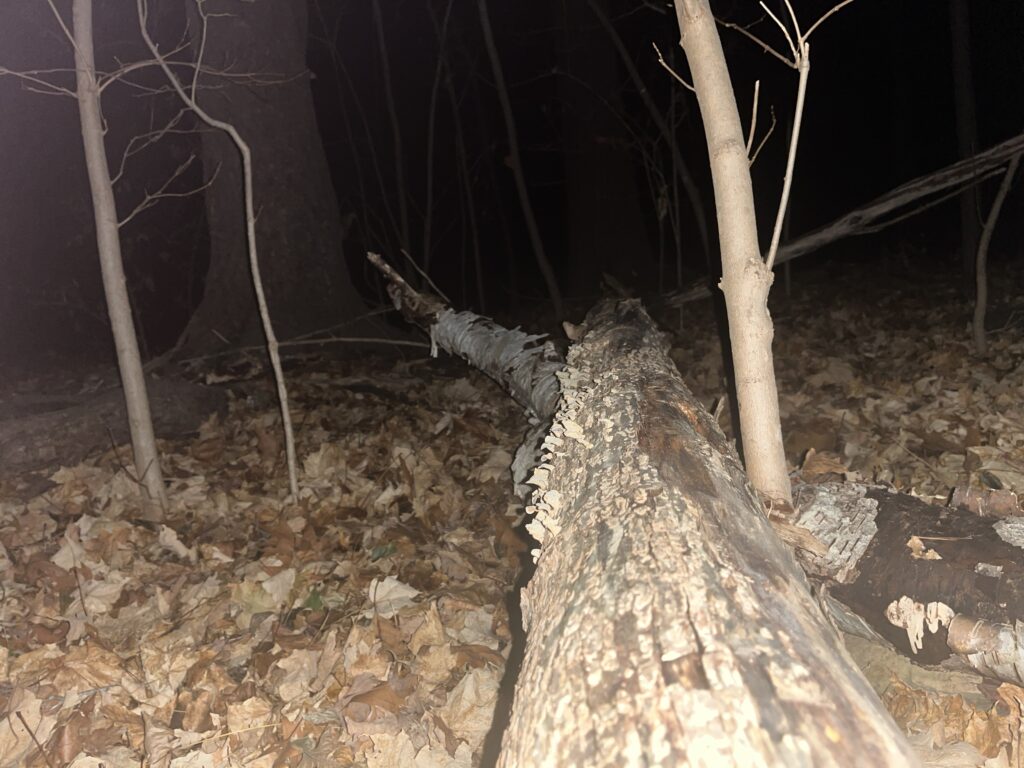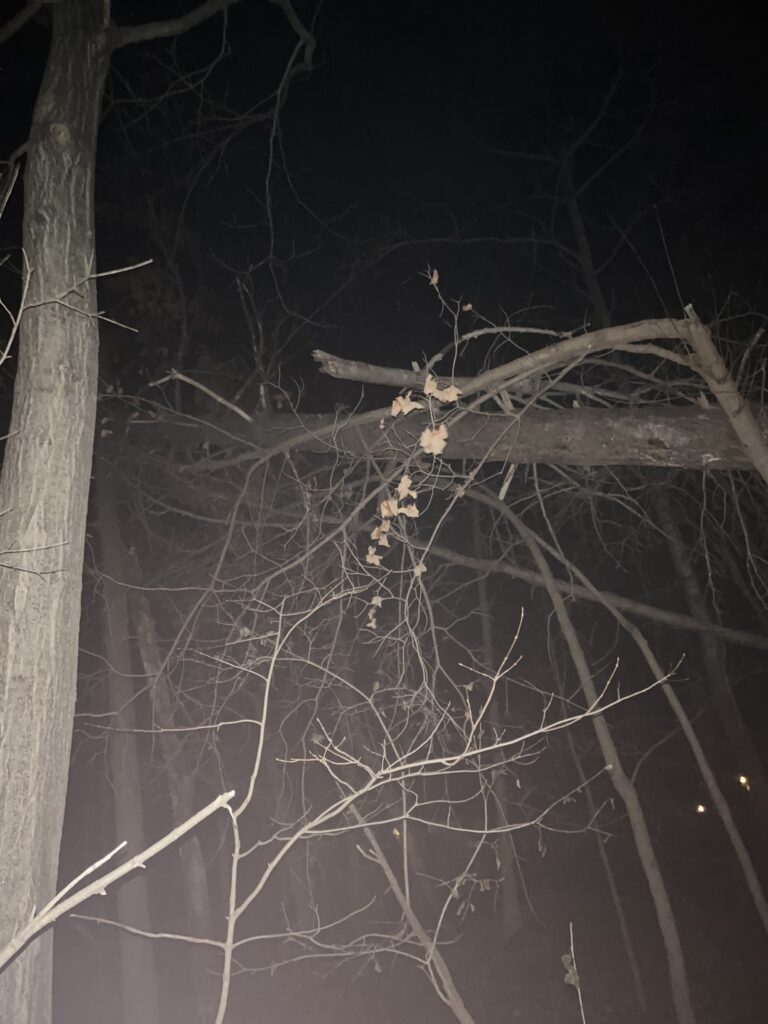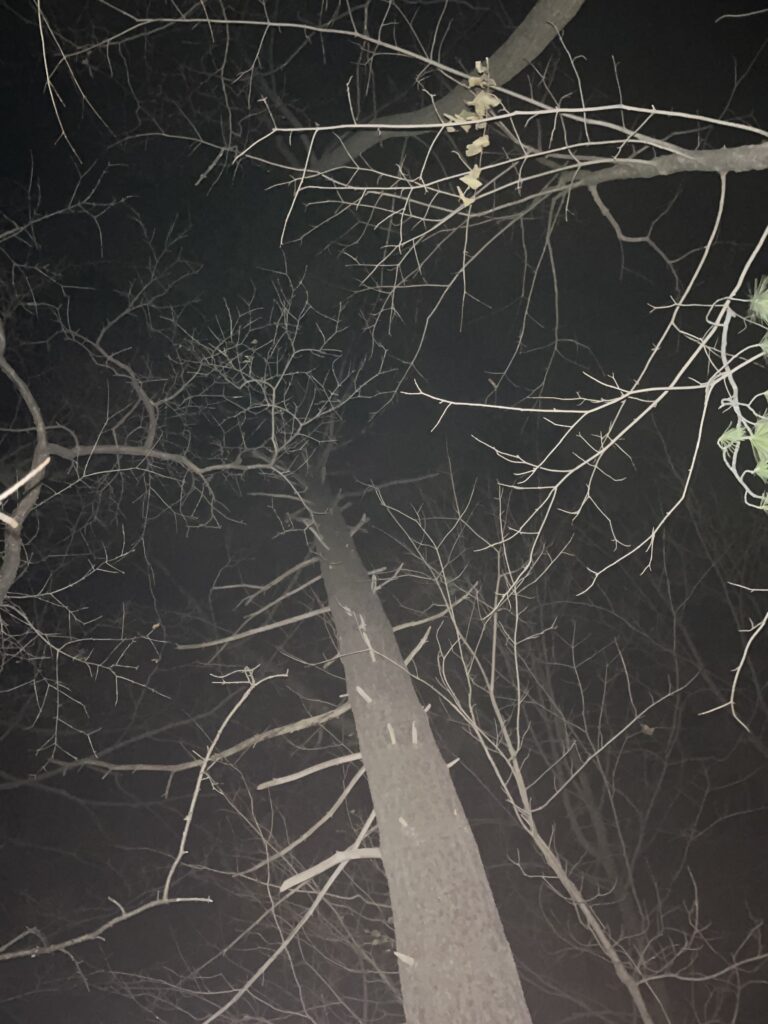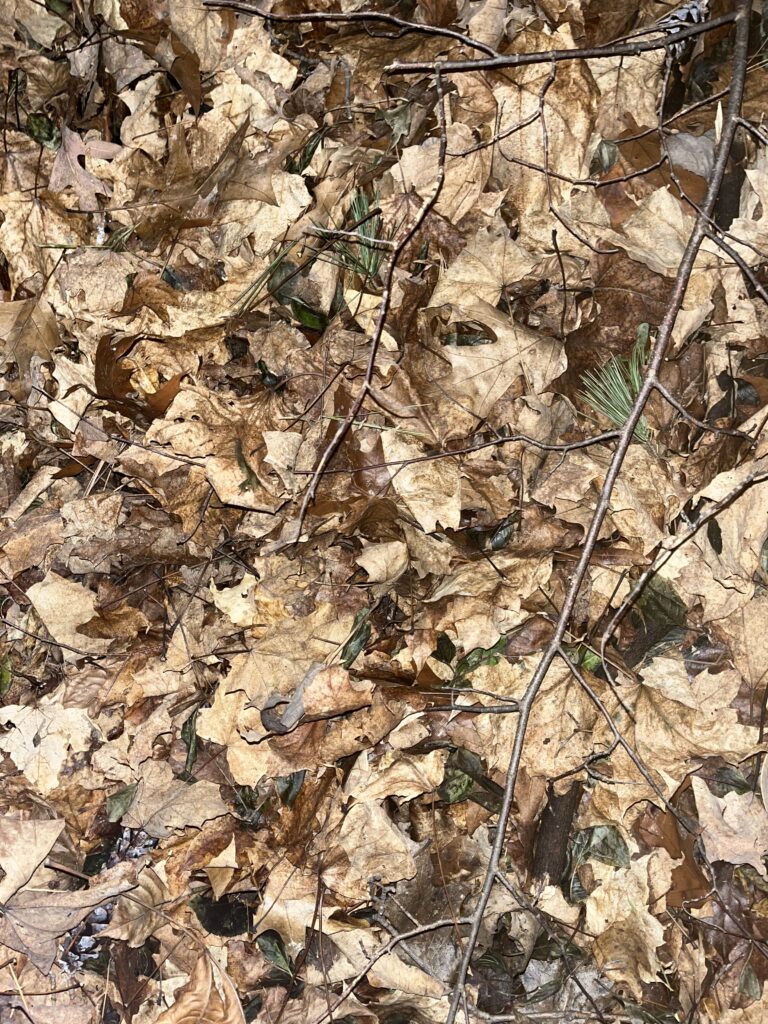
For the final phenology assignment of the semester, I decided to return to my location after sunset, to see if there were any major differences in wildlife behavior or presence. During my stay in the woods, no small animals or birds appeared, unlike my prior visits. If it wasn’t for the noise coming from the nearby Redstone Campus, the woods would be silent. Besides the very occasional small leaf on one of the younger sugar maple trees and the full canopies of the Eastern White Pines, there was no remaining foliage. All of the leaf fall has begun to decompose into the soil, especially on the path, where visitors’ boots break down leaf fibers and speed up decomposition. Underneath the condensing layers of leaves is mud. While the decision to visit the area at night was disappointing in terms of animal sightings, the darkness and lack of foliage created a rather ominous mood, as one can see in the pictures below. What I enjoy the most about this location is how while the intention when the area was first seeded was to (presumably) create a natural barrier between the Redstone Campus and the neighboring golf course, these woods have become a natural area convenient for students. On many of my visits, I have run into other students, and people from the Burlington community either sitting on a fallen log or just walking through on the path, which meshes well with UVM’s existing campus loop trail. Just like Redstone Pines, or the trees near CCRH, these woods are a place for people to engage with nature, even just for five minutes out of their day.