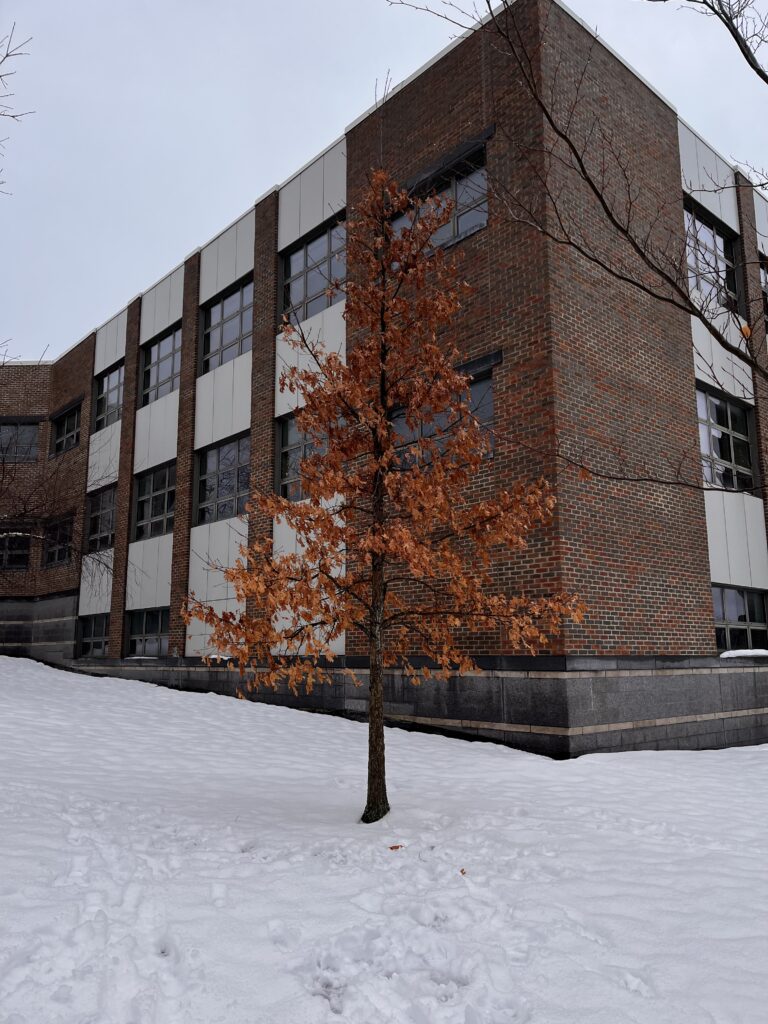
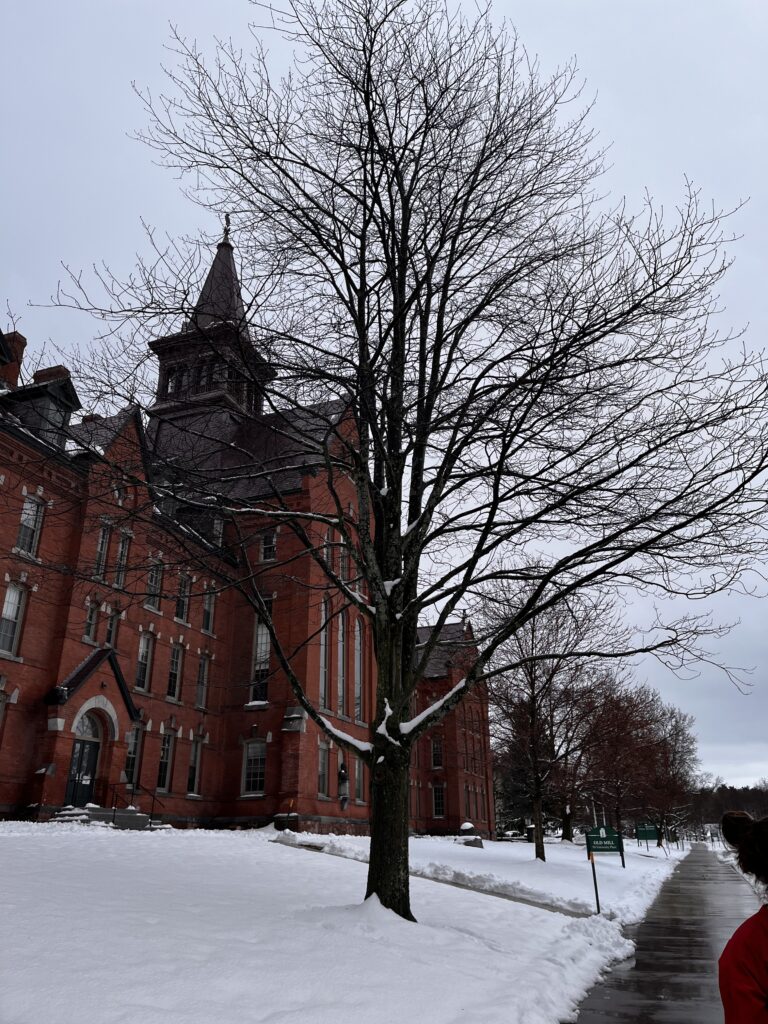
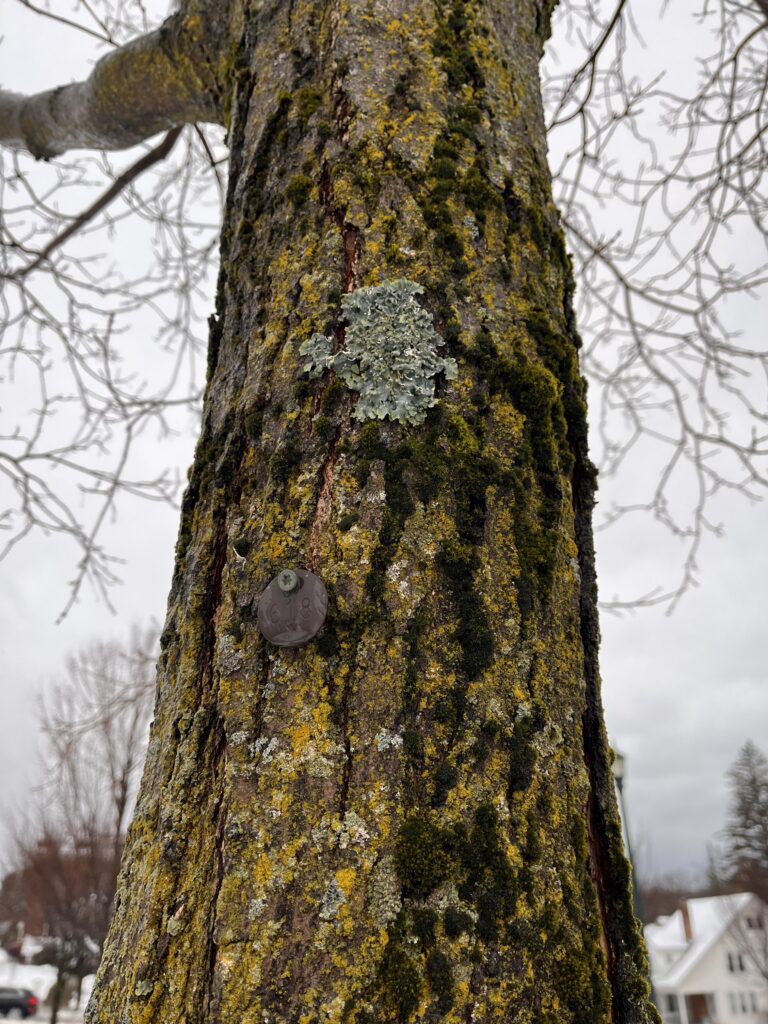
A few trees we recorded data on^^^
Our group went out to collect data on March 30th. The snow that had just melted a few days prior was replaced with a fresh coat overnight, which was a bit of a let down since I’m sick and tired of this winter thing. We did, however, still manage to collect our phenology data— albeit sparse.
There weren’t many buds breaking that we observed. Many of the trees still showed signs of dormancy. I guess it was good that they didn’t fully break yet considering the mixed signals Vermont weather gives this time of year. There were no flowers, and any leaves were remnants from the previous fall. I know back home the trees were beginning to show more signs of life, which made the activity a bit somber (I miss my warm PA spring weather man). Most trees were in the same phenophase, with some exceptions being the maples, which exhibited more signs of impending life. The oaks looked relatively dormant still. There was, however, life still kicking on the bark of many trees in the form of lichen.
While browsing the NPN’s website, I came across an article that asked whether understory or overstory plants were leafing out faster. Data from previous observations rendered the answer inconclusive, however, data from the study . The study examined plants along the Appalachian trail, and determined thar understory plants were leafing out earlier than canopy species. Overall, all plants showed earlier phenology. This data may have further implications for forest conservation in the midst of a changing climate.