For this phenology assignment, I decided to make the bulk of my observations at the Burlington waterfront area. Where there’s water, there’s typically wildlife, so I decided to follow that idea and record my sightings by Lake Champlain. Fortunately (or unfortunately depending on how you view it), the lake was frozen, and I’m not sure if the same principle applies in that case. It was really fun to see all of the people walking on the lake, however, the wildlife sightings were quite sparse. What was interesting, though, is that I feel like I viewed more wildlife in the more densely populated area of Burlington as opposed to my phenology spot in Centennial. Maybe it’s because the wildlife in the city are more accustomed to human activity? Who knows.
We started off by the ECHO center, where the amount of robins would make you think it’s spring. It has been warming up recently, though not by much. Robins (Turdus migratorius) are year-round residents, however, I seem to notice them more as the days warm.
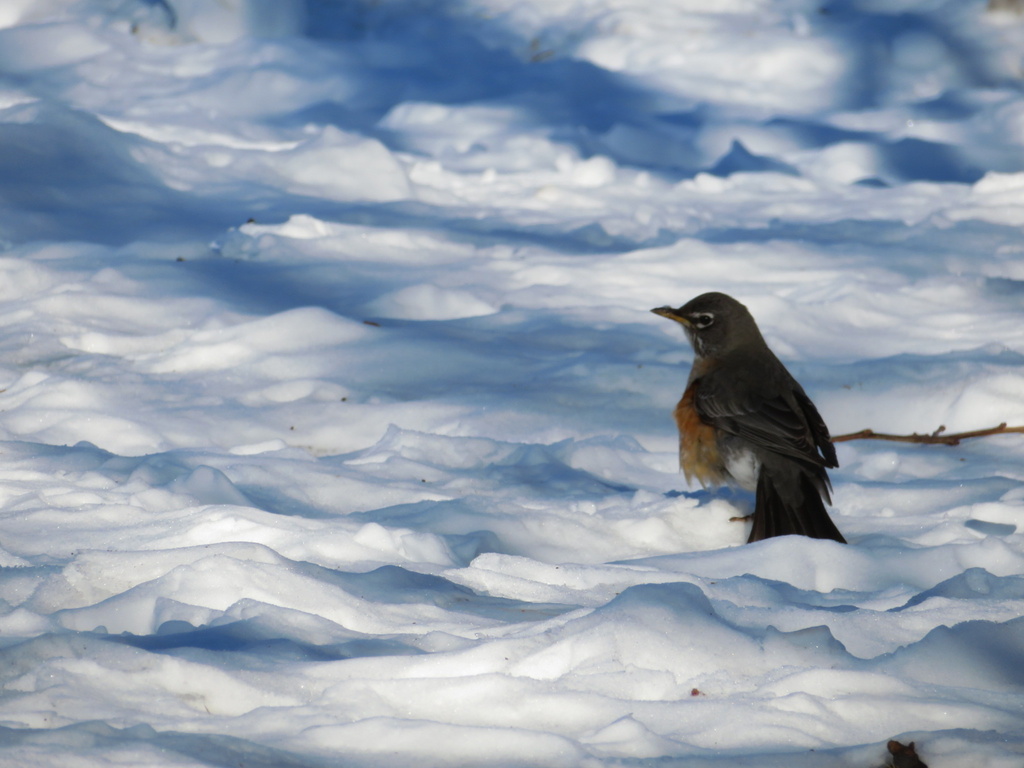
It’s always easiest to spot bird activity throughout each season, which is half the reason I love birding so much. When other animal observations are unreliable, birds are always around. Which brings me to my next few observations: gulls, cardinals, and sparrows (oh my).
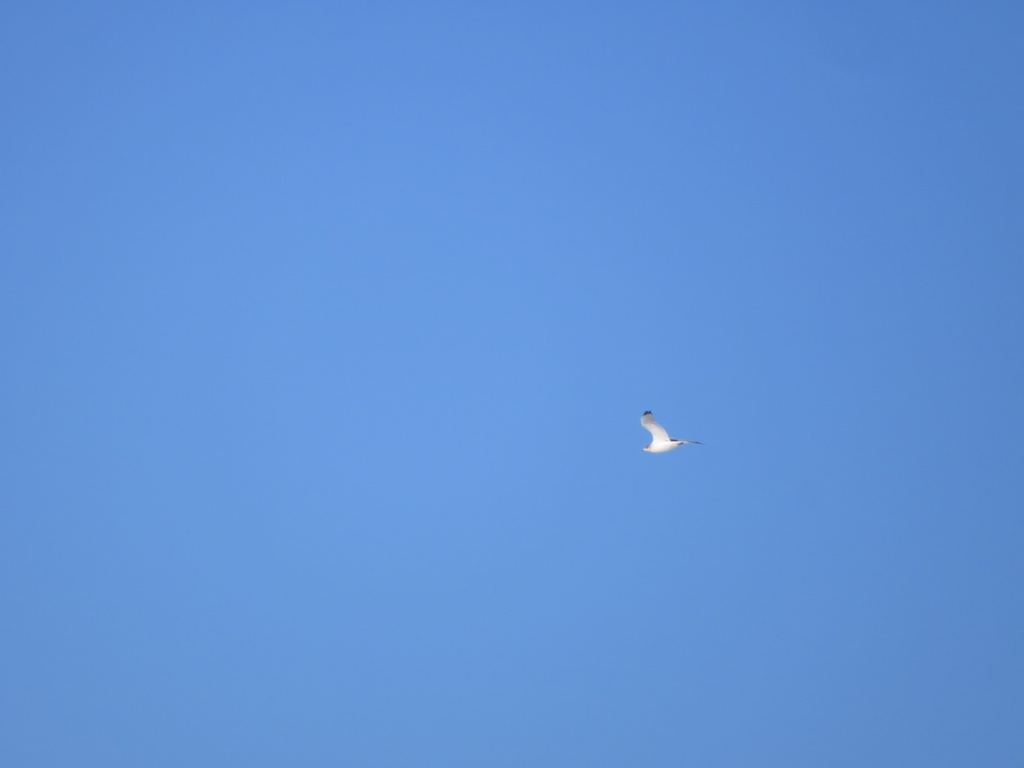
First up is this horrendous shot of a ring-billed gull (Larus delawarensis). Gulls have, much to my dismay, been apart of every season here in Vermont. Being situated next to such a large body of water has made these sightings much more common. I am curious, however, as to what these gulls eat in the winter time when the plants are dormant and the lake is frozen over. My online probing has not reared any answers to this yet.
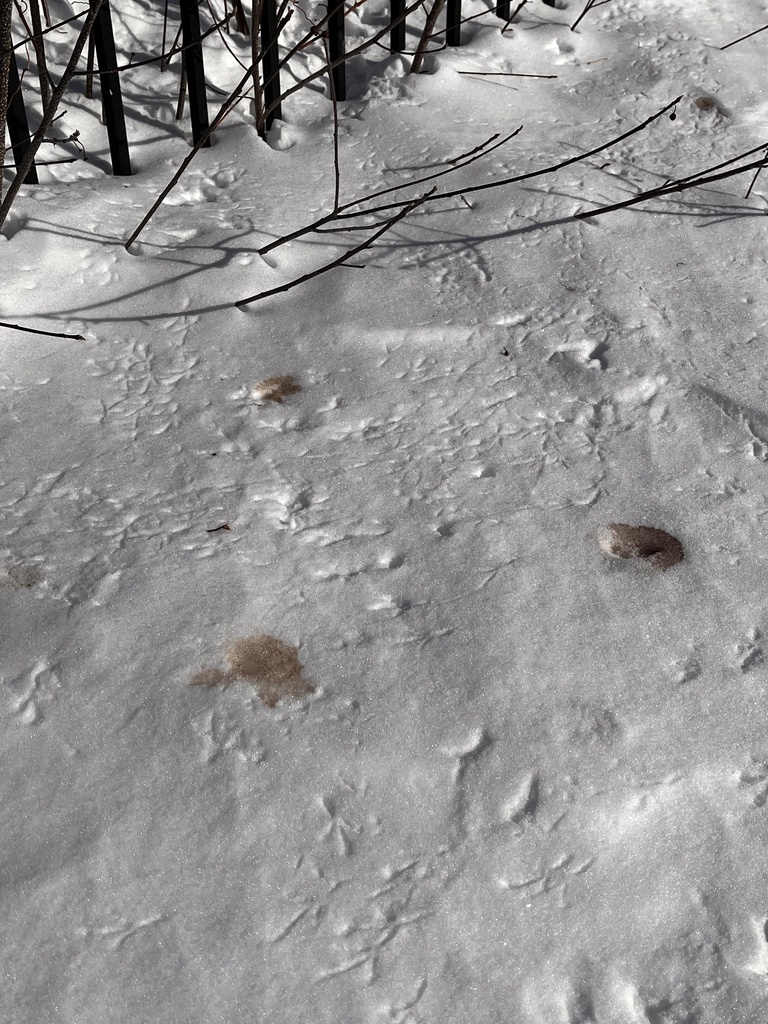
What I found next was a wildlife sign rather than a wildlife sighting. As we were walking along the bike path, we encountered various little bird tracks scattered in the snow. The were all concentrated underneath some small, fruiting shrubs, and there was evidence of eaten berries underneath. While robins are known frugivores in the winter, the tracks were of a smaller perching bird, as denoted by the back toe and size. I had posted it as a house sparrow (Passer domesticus), since I know they’re one of the more common ground foragers and know them to be fairly active in the wintertime. This, again, is totally speculative, as it’s incredibly difficult to tell between different species of sparrows or similar-sized songbirds just by feet. Cardinals, white-throated sparrows, song sparrows, and other small passerines fit the bill also.
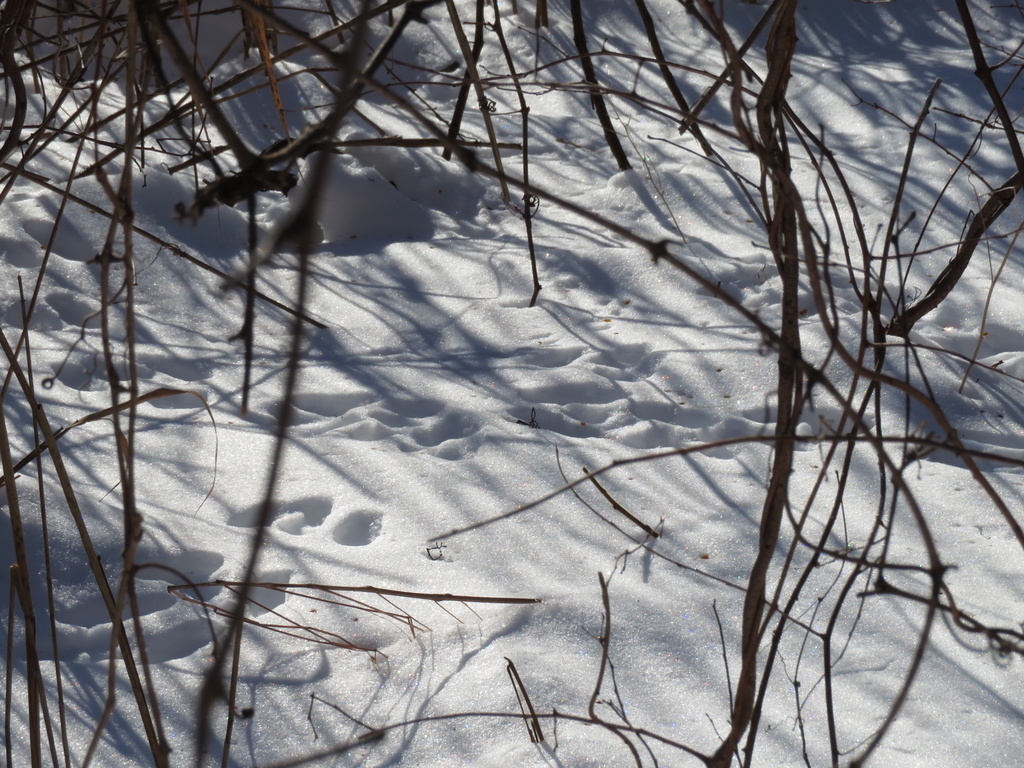
Next, were these tracks from what I presume is an eastern cottontail rabbit (Sylvilagus floridanus). While the tracks were a bit obscured under the brush, the location was my first clue. The rabbit may be denning in the area under the brush and decided to search around the area for food. There were some smaller twigs that may have been chewed, and the tracks show the larger hind feet as well as smaller prints made by the front feet. I was between rabbit and squirrel, however, squirrel would not register with the front feet staggered slightly.
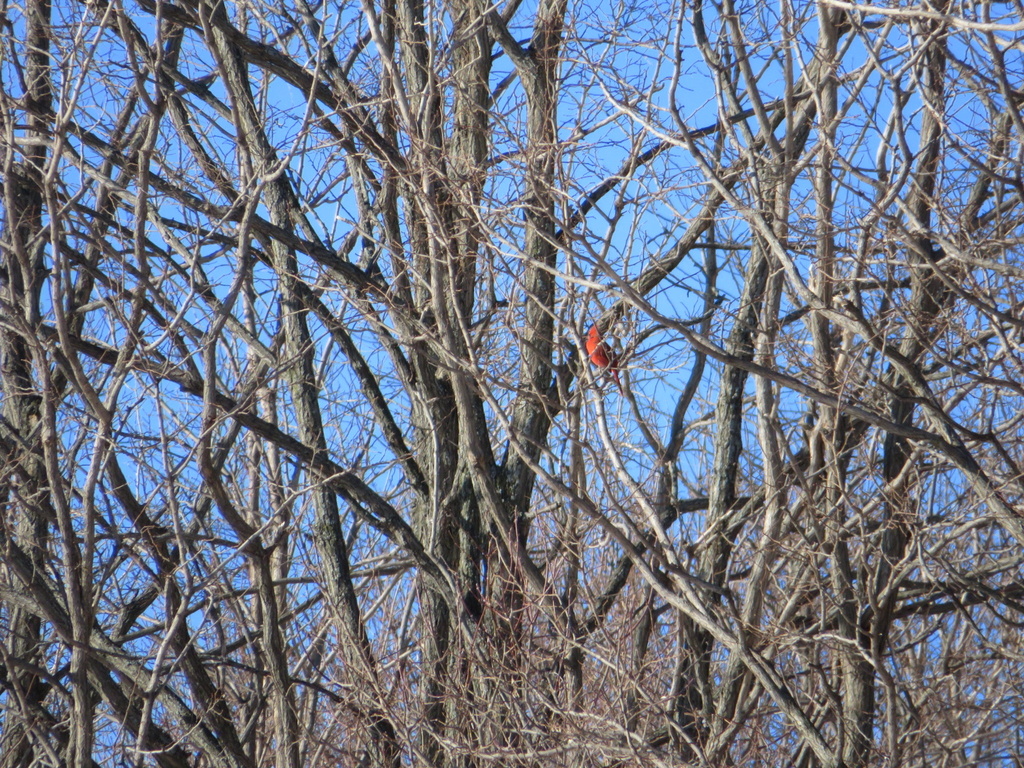
Last, was this sighting of a beautiful crimson cardinal (Cardinalis cardinalis) singing farther back in a tree line along the bike path. The whole area was erupting with cardinals singing back and forth. It was a welcome sound, as I hadn’t heard their voices in quite some time. Cardinals and other backyard birds are gearing up for spring now, and their calls are becoming more common.
While it still feels like we are in the trenches of winter, signs of spring are popping up. The day length, animal activity, budding, and other phenological signs within the landscape tell us that maybe Punxsutawny Phil was wrong yet again. Anyways, I’ve been enjoying witnessing these shifts as they occur, and can’t wait to update the blog with some green pictures soon.https://www.inaturalist.org/observations/262876635