Feeds:
Posts
Comments

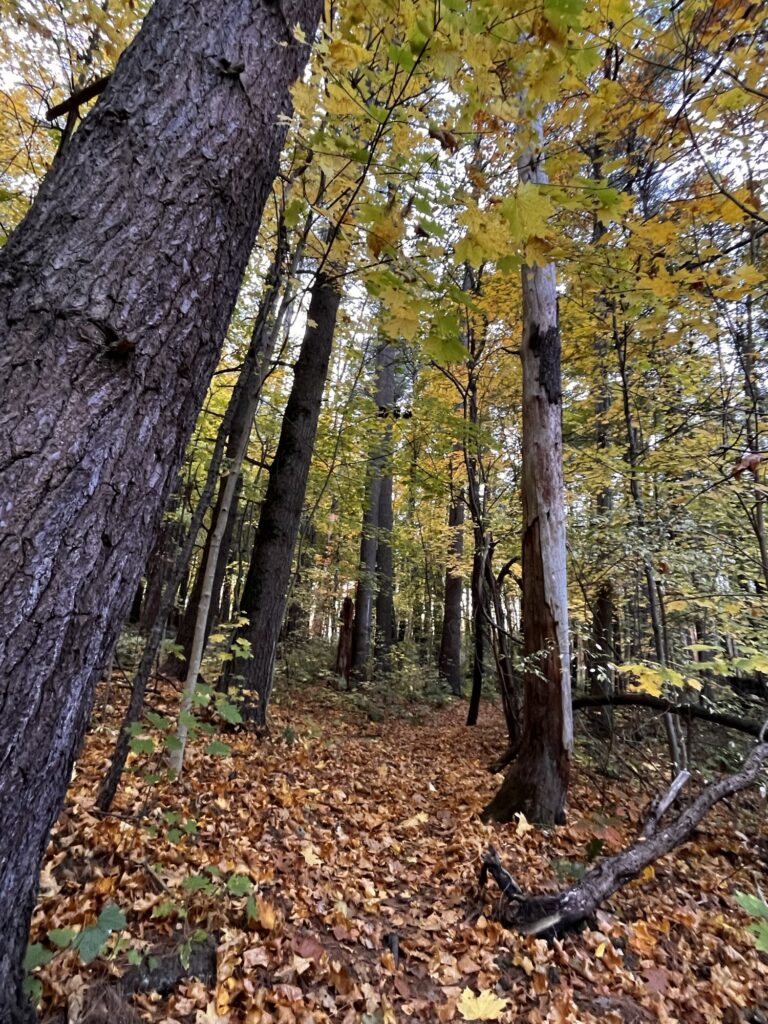
Today has been a day. This morning, I went to the quarry to see if I could find the first few catbirds of the season coming up from the tropics. Merlin told me they were my bird of the day, so I felt it was only fate. Luckily, the birding gods were on my side, and I saw about 5 flitting about the brambles. Their bubbly chatter bounced around the woods, and I felt like I was back home on my back porch again.

I await their arrival every year. I don’t know why, but they’ve always made me excited. Catbird arrival, mayapples pushing through the ground, and that sweet spring smell in the air has always triggered something deeply nostalgic in me. Typically, I can’t wait for this time of year, but this time it’s a bit more complicated. Spring means change, and wrapping up my first year of college makes this seasonal shift more bittersweet than usual. What more, I’ve watched Centennial in most of its forms; from the crisp autumn to the bitter, cold months of winter, life always persisted in some way. Now, deep in the throes of spring, I see it bounce to life once again.
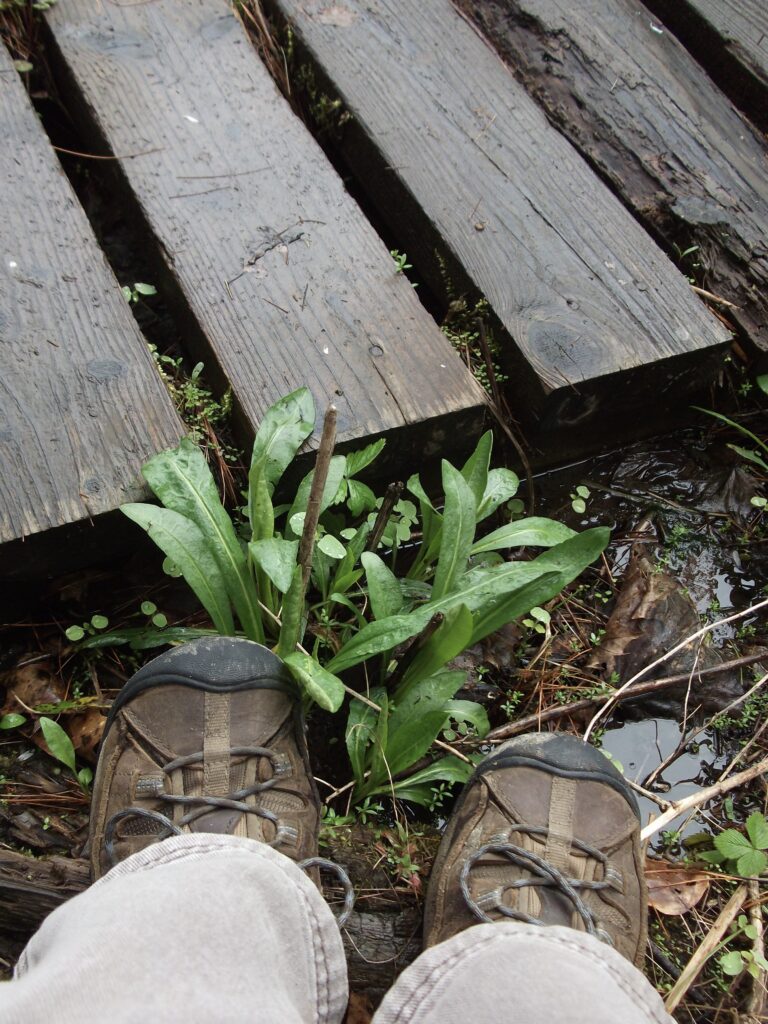
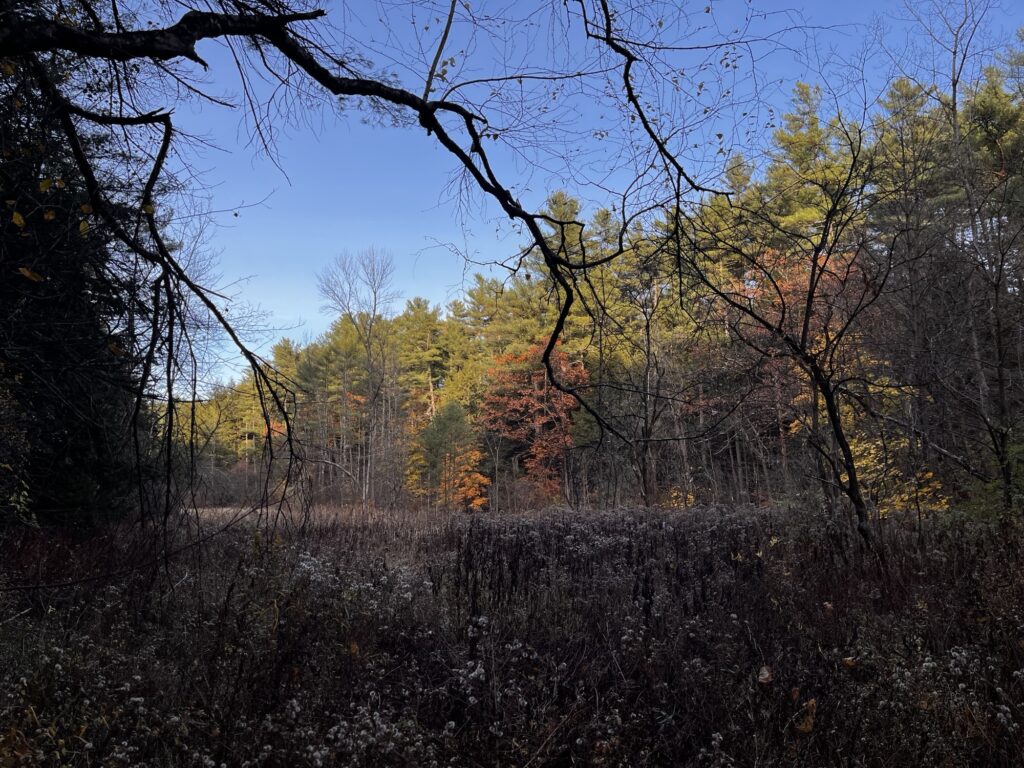
I recall the first time I visited my site. I chose it specifically because of the asters. They were in full bloom and the most encapsulating thing; I had never seen them in such high numbers. Things were starting to die back, but they persisted like little purple beacons.

Then, winter rolled around. I saw little life, but knew the subnivean was teeming with voles and other critters hunkered down. The stream that babbled so noisily nearby was reduced to a trickle. Nonetheless, I kept coming back, knowing that I had to keep coming back even when it was cold and I didn’t want to.

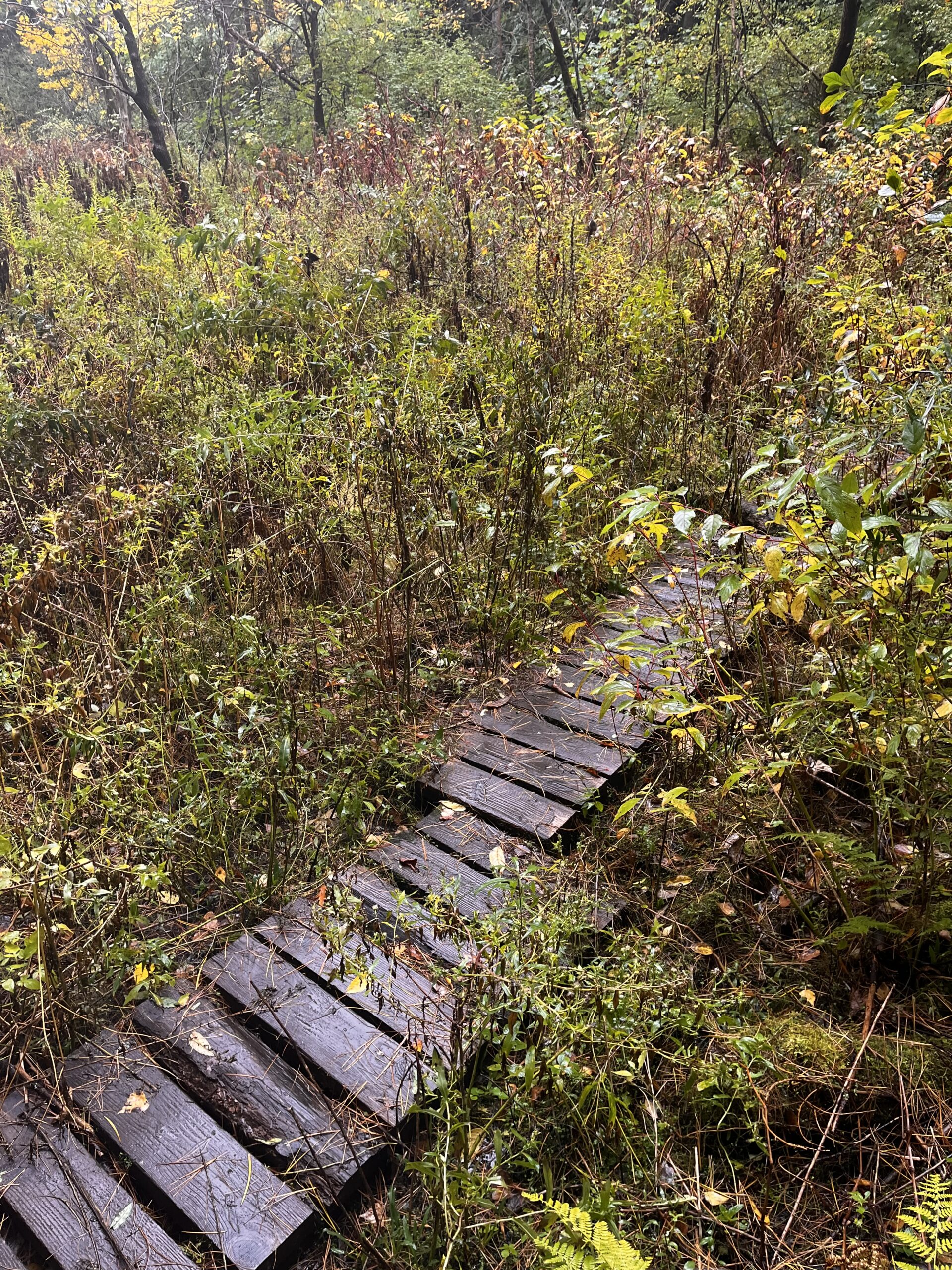
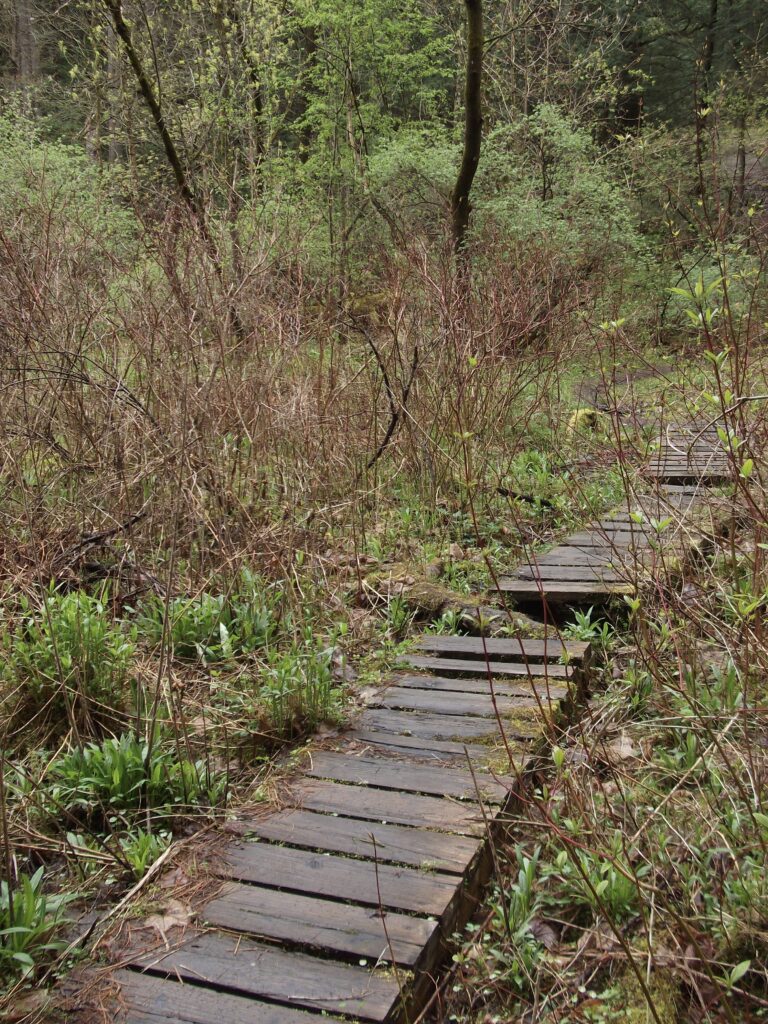
I guess, in that way, I’ve become attached to this place. I’ve witnessed it in many phases, and the fact that I kept coming back must mean I’m attached, right? Well, I’ve certainly explored more local places over the semester that inspired me more, but there’s a homely charm to the slippery boardwalk in Centennial that can’t be replaced. I will definitely miss this place.

While I was sitting in my spot, a dad and two kids walked by. They were bouncing around in the mud, filling their bogs with water and sloshing around. I started talking to them, and explained my phenology assignment. It was a pleasant exchange, and I realize it wouldn’t have been possible without that path. Nature and culture bleed together here. Centennial is beautiful example of social and ecological communities converging. Older residents of Burlington sharing a space with the college students is a unique opportunity to forge stronger community ties.
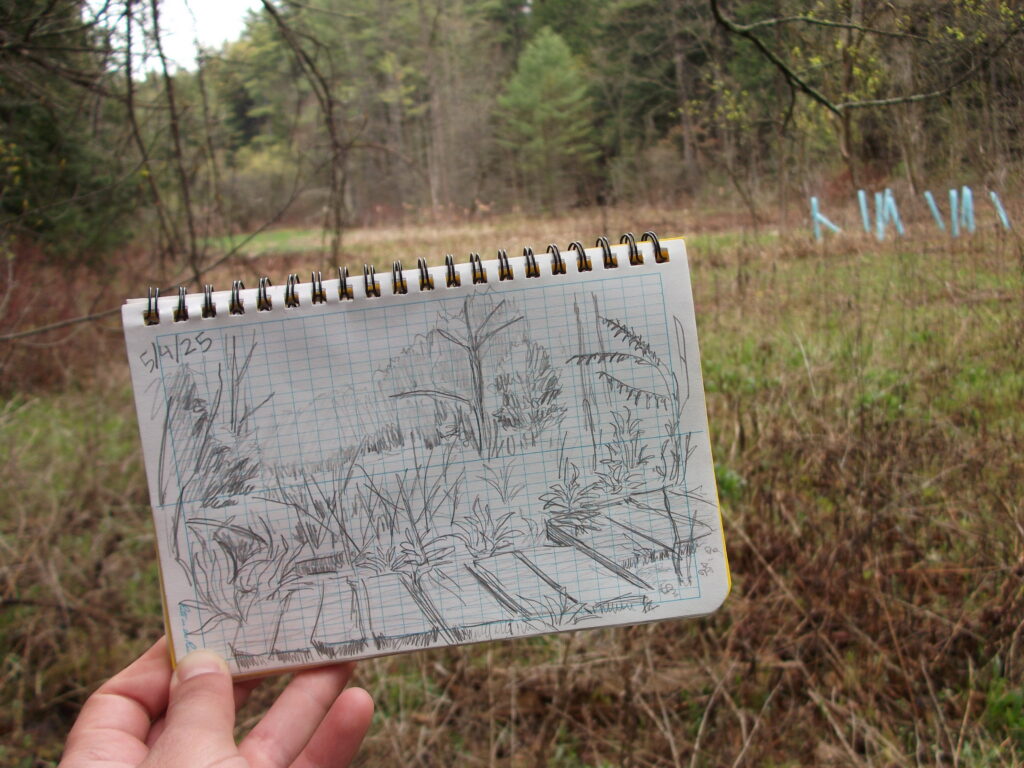
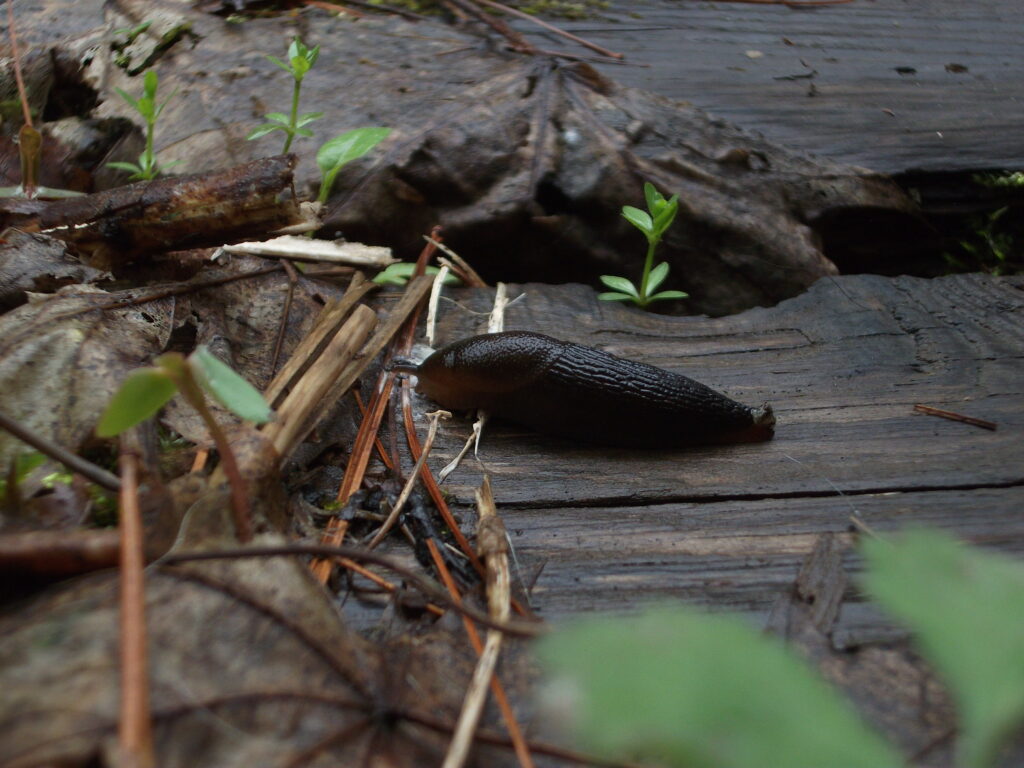
Of course, there is also the ecological community that thrives here. I have not had many wildlife encounters at my spot, but I know that there are still so many processes I can’t see. Maybe it was to my benefit that I chose a quieter spot. It’s made me really stop to look closely at what’s going on. I’ve been reminded that not everything beautiful is vast, and sometimes I just need to slow down to see the big picture.

Thank you for this opportunity to document the changes in the seasons, as well as in myself. I’ve realized how intertwined phenology is with our lives. We move with the seasons, and I know I must move on now to the warm embrace of summer and the experiences that await me now. However, just like the seasons, there are always remnants of the past scattered everywhere, and those sweet moments will never be forgotten.
Phenology Walk

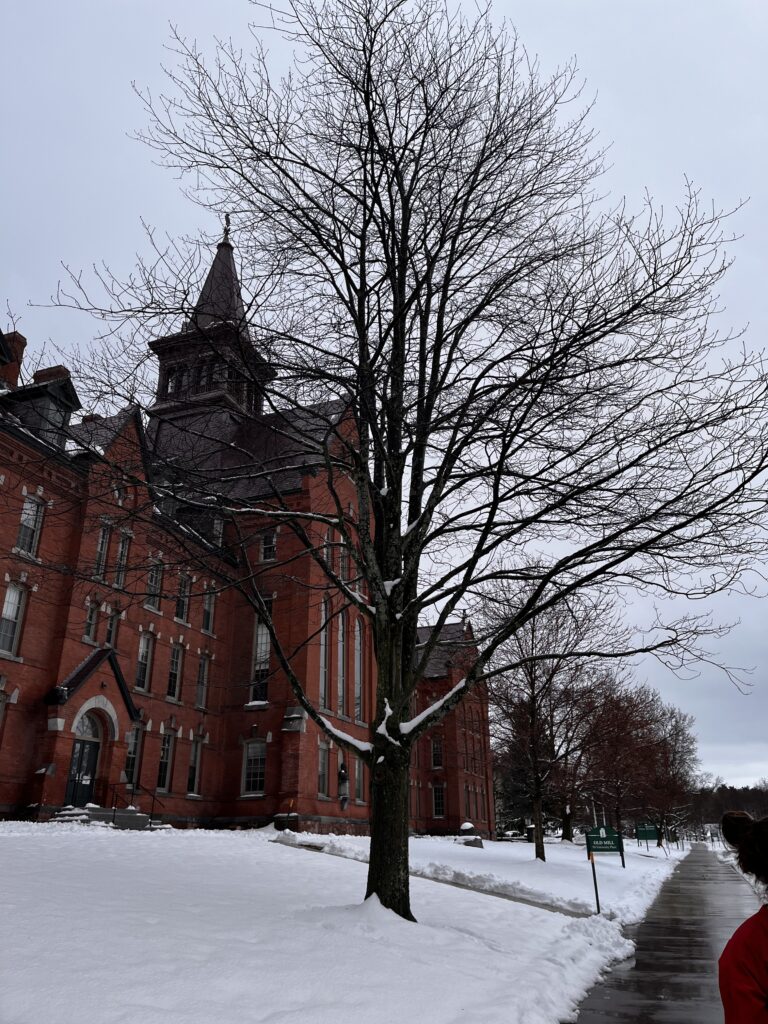
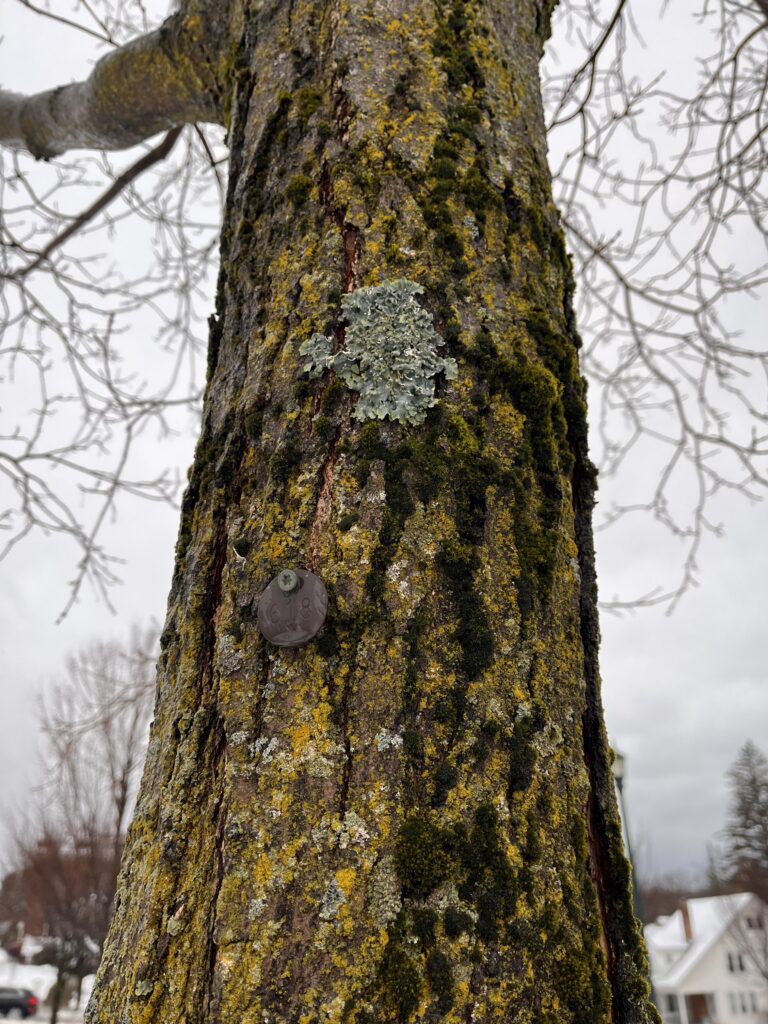
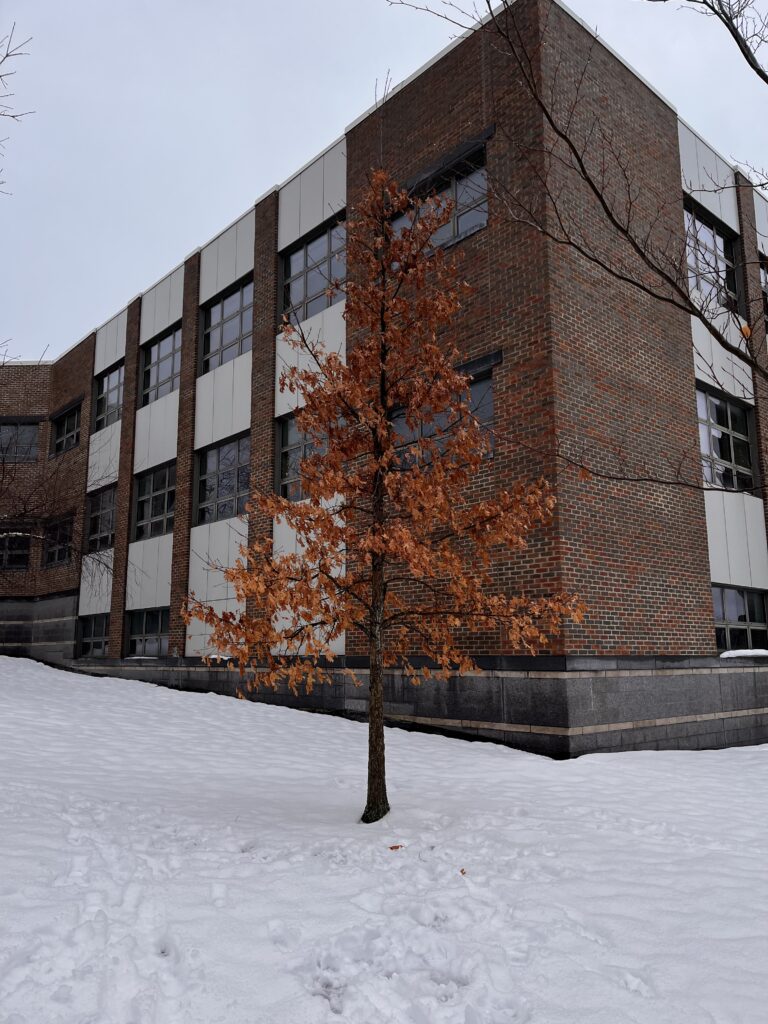
A few trees we recorded data on^^^

Our group went out to collect data on March 30th. The snow that had just melted a few days prior was replaced with a fresh coat overnight, which was a bit of a let down since I’m sick and tired of this winter thing. We did, however, still manage to collect our phenology data— albeit sparse.

There weren’t many buds breaking that we observed. Many of the trees still showed signs of dormancy. I guess it was good that they didn’t fully break yet considering the mixed signals Vermont weather gives this time of year. There were no flowers, and any leaves were remnants from the previous fall. I know back home the trees were beginning to show more signs of life, which made the activity a bit somber (I miss my warm PA spring weather man). Most trees were in the same phenophase, with some exceptions being the maples, which exhibited more signs of impending life. The oaks looked relatively dormant still. There was, however, life still kicking on the bark of many trees in the form of lichen.
While browsing the NPN’s website, I came across an article that asked whether understory or overstory plants were leafing out faster. Data from previous observations rendered the answer inconclusive, however, data from the study . The study examined plants along the Appalachian trail, and determined thar understory plants were leafing out earlier than canopy species. Overall, all plants showed earlier phenology. This data may have further implications for forest conservation in the midst of a changing climate.

Phenology Log #7

City Nature Challenge!

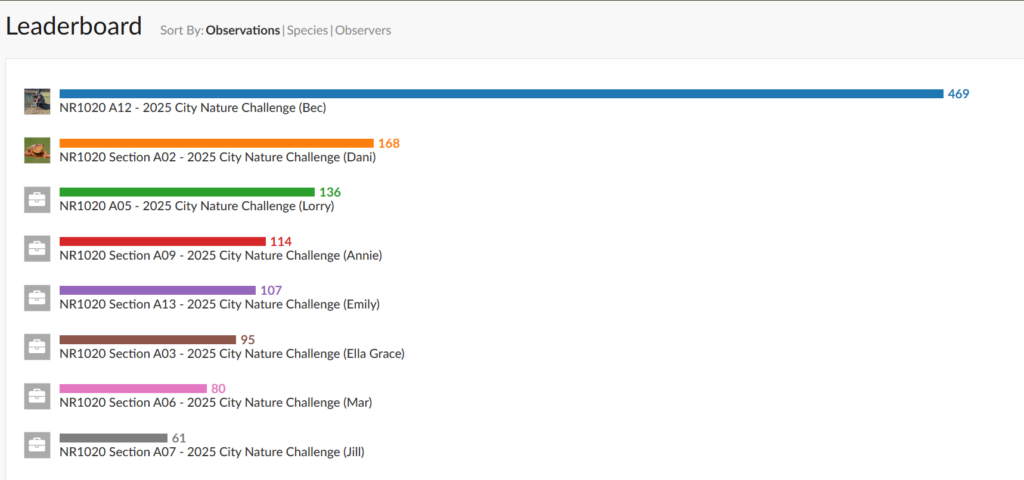
Our lab group (A12) dominating😎😎**UPDATE, we’ve surpassed 800 observations now

This was a very cool event. I loved the opportunity to go out and observe nature as part of a wider challenge. While the competitive spirit was in the air between lab groups, it became a good chance to spend time outdoors together with friends and rack in observations.

I’ve used iNaturalist before, but not like I have within the past 4 days. I usually don’t like to use my phone while out in nature, however, it’s fun to be able to make observations in the field and get real time feedback from the ai, then later have actual people identifying with you.

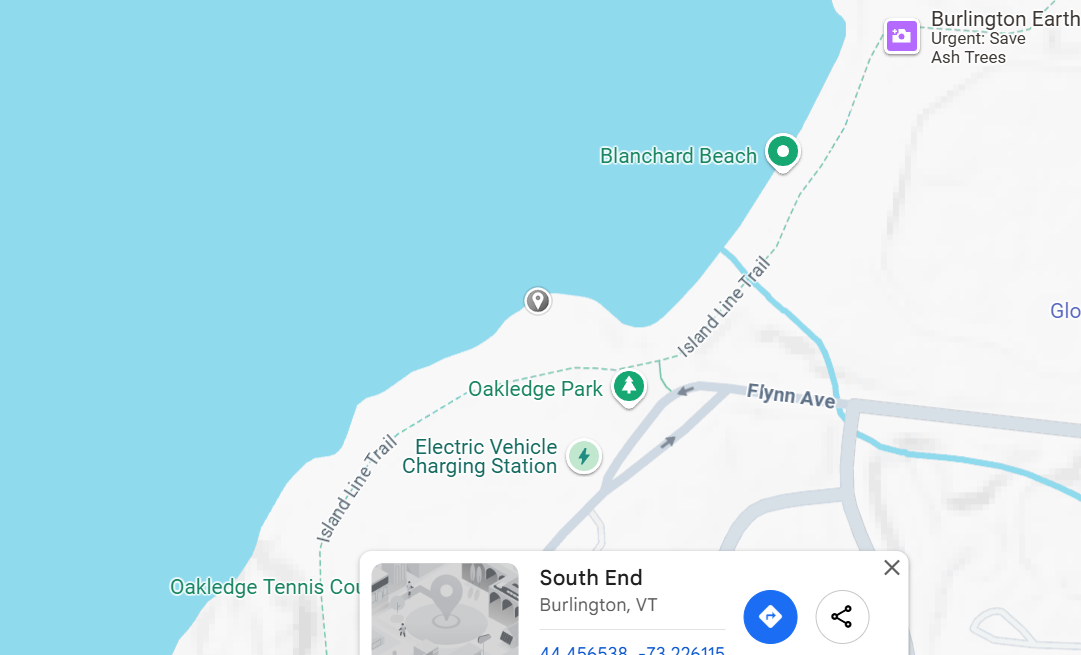
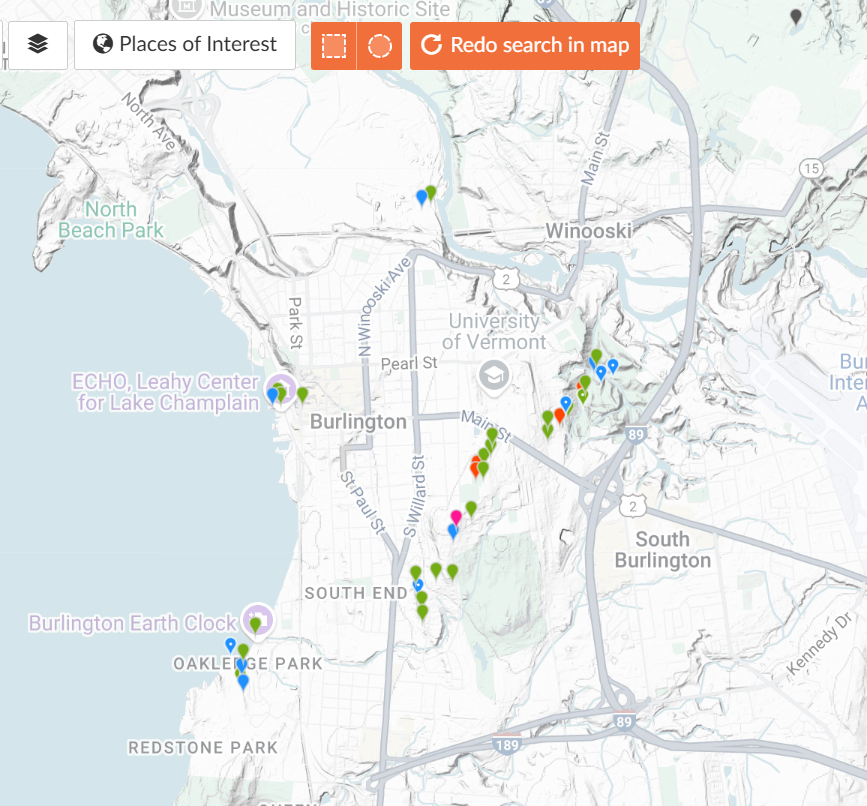
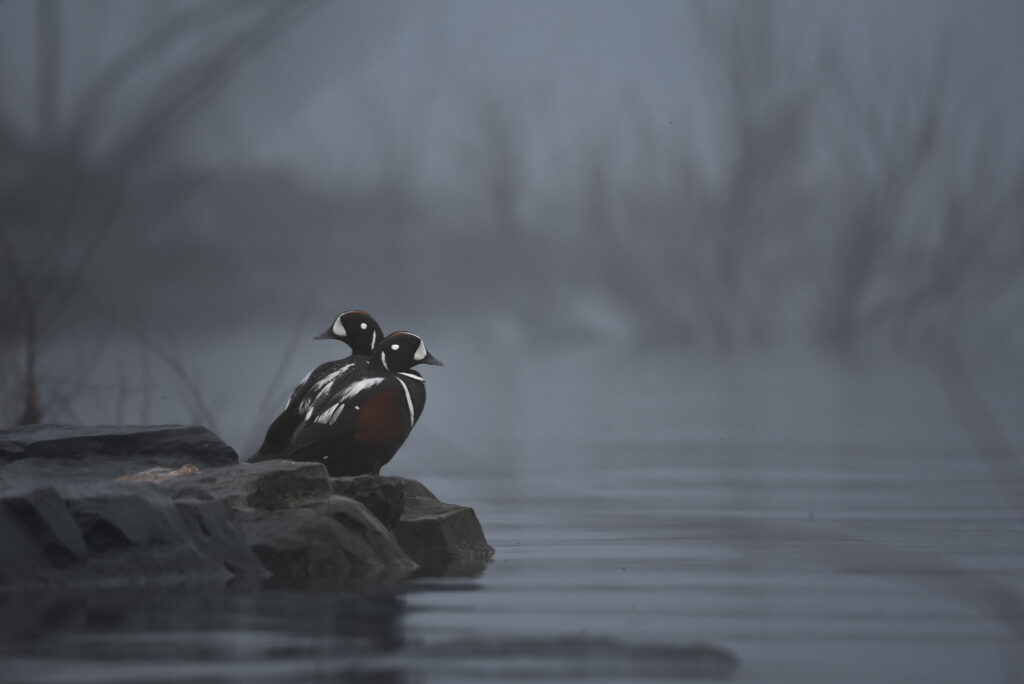
I made a good chunk of my observations at Oakledge Park. My friends and I went down there to spend the Saturday, and I took it as an opportunity to rack in some observations. While I wasn’t super hopeful that I would see any remarkable species, like the harlequin ducks reported in the area, I was pleasantly surprised

Overall, I think I covered a pretty wide area within Burlington. The bulk of my observations were recorded in Centennial and around campus, simply because I haven’t had much a change to go elsewhere. I was curious to see what other cities were recording, and saw that the Greater Philadelphia Area had more participation than I anticipated (around 13,500 observations and 1,900 species).
Observing some species, particularly birds, I also began noticing how certain species use different levels of the forest. In the Redstone pines, I saw many kinglets and yellow-rumped warblers in the canopy, but some chose to come down to the understory. Whereas the pine warbler and American redstart preferred to stay higher up. The redstart was more inclined to spend time in the oak, while the pine warbler- apt to its name- preferred the white pines. As of now, I’ve made 76 observations and identified 56 different species, which is humble in comparison to my friends (who are lowkey insane- they’re out hunting for more species as I write this at 8:58pm).

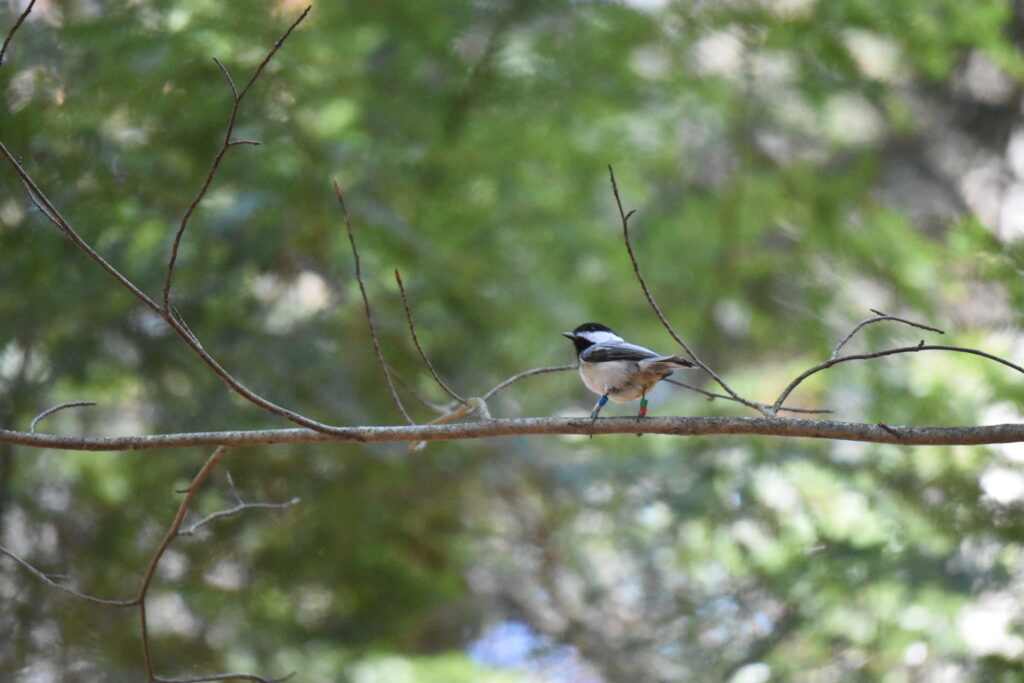
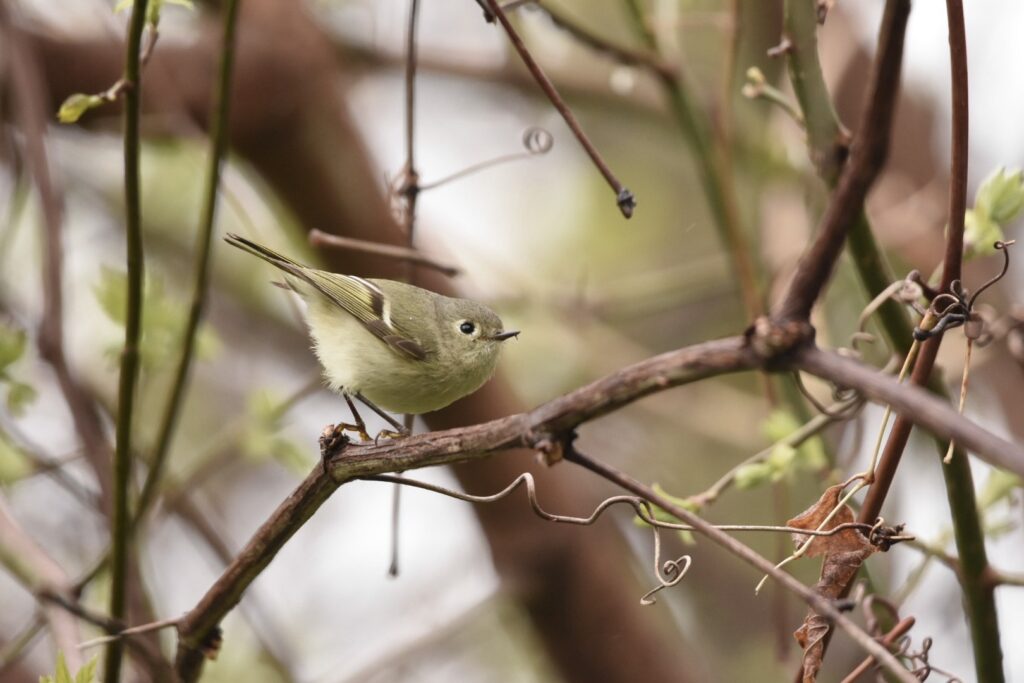
I’m thankful to the City Nature Challenge for getting me out of my rut indoors and forcing me outside. I’ve also used my camera more times this weekend than any other time of the semester. To commemorate that, I’ve included a bunch of shots taken during the course of the BioBlitz. I hope you enjoy!

American redstart! I’ve recorded many of my first warblers of the season during this challenge

Phenology Log #6

For this phenology assignment, I decided to make the bulk of my observations at the Burlington waterfront area. Where there’s water, there’s typically wildlife, so I decided to follow that idea and record my sightings by Lake Champlain. Fortunately (or unfortunately depending on how you view it), the lake was frozen, and I’m not sure if the same principle applies in that case. It was really fun to see all of the people walking on the lake, however, the wildlife sightings were quite sparse. What was interesting, though, is that I feel like I viewed more wildlife in the more densely populated area of Burlington as opposed to my phenology spot in Centennial. Maybe it’s because the wildlife in the city are more accustomed to human activity? Who knows.

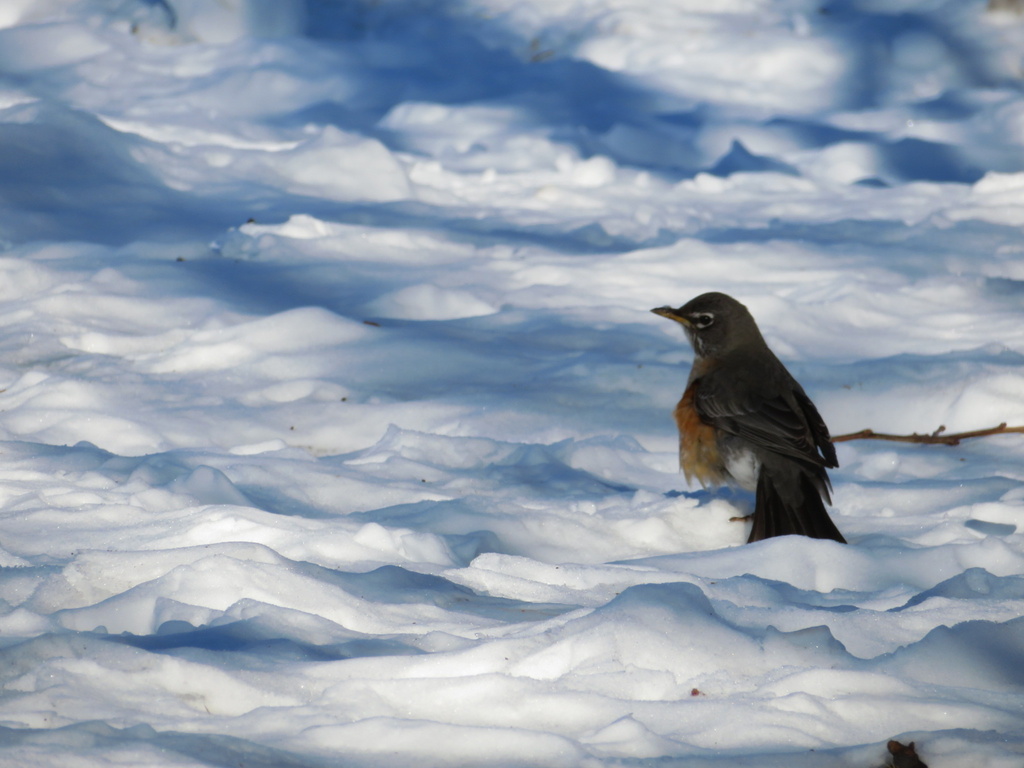
We started off by the ECHO center, where the amount of robins would make you think it’s spring. It has been warming up recently, though not by much. Robins (Turdus migratorius) are year-round residents, however, I seem to notice them more as the days warm.

One of the many robins bopping about the waterfront. Clicking the image will take you to the iNaturalist post!

It’s always easiest to spot bird activity throughout each season, which is half the reason I love birding so much. When other animal observations are unreliable, birds are always around. Which brings me to my next few observations: gulls, cardinals, and sparrows (oh my).

First up is this horrendous shot of a ring-billed gull (Larus delawarensis). Gulls have, much to my dismay, been apart of every season here in Vermont. Being situated next to such a large body of water has made these sightings much more common. I am curious, however, as to what these gulls eat in the winter time when the plants are dormant and the lake is frozen over. My online probing has not reared any answers to this yet.

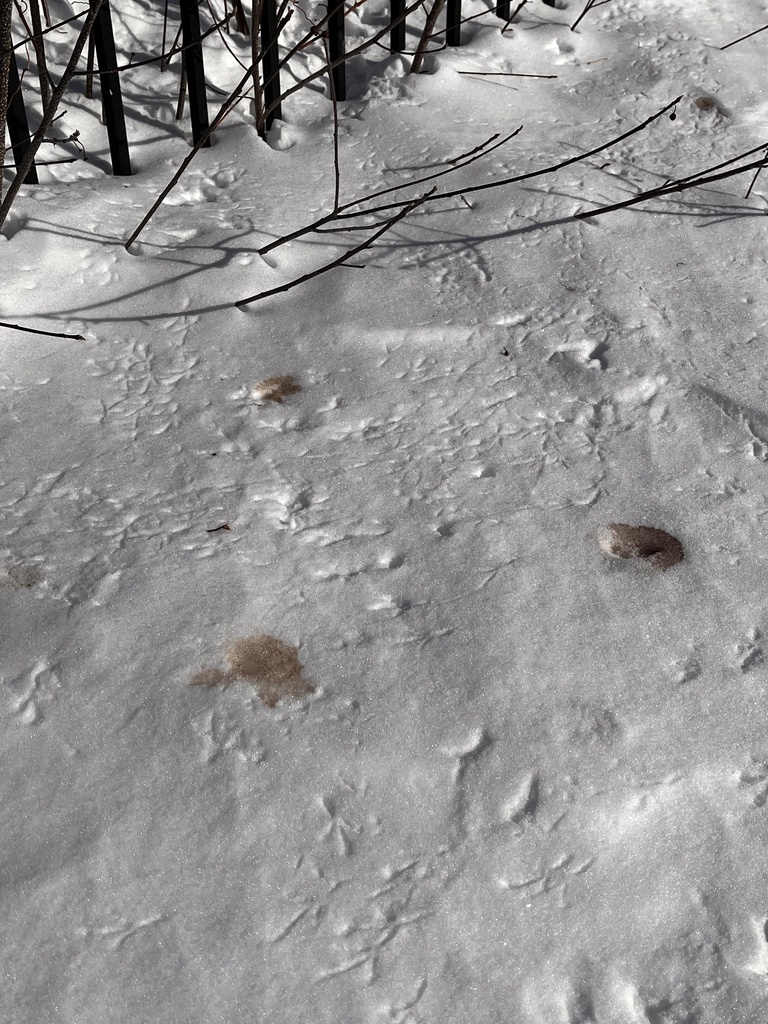
What I found next was a wildlife sign rather than a wildlife sighting. As we were walking along the bike path, we encountered various little bird tracks scattered in the snow. The were all concentrated underneath some small, fruiting shrubs, and there was evidence of eaten berries underneath. While robins are known frugivores in the winter, the tracks were of a smaller perching bird, as denoted by the back toe and size. I had posted it as a house sparrow (Passer domesticus), since I know they’re one of the more common ground foragers and know them to be fairly active in the wintertime. This, again, is totally speculative, as it’s incredibly difficult to tell between different species of sparrows or similar-sized songbirds just by feet. Cardinals, white-throated sparrows, song sparrows, and other small passerines fit the bill also.

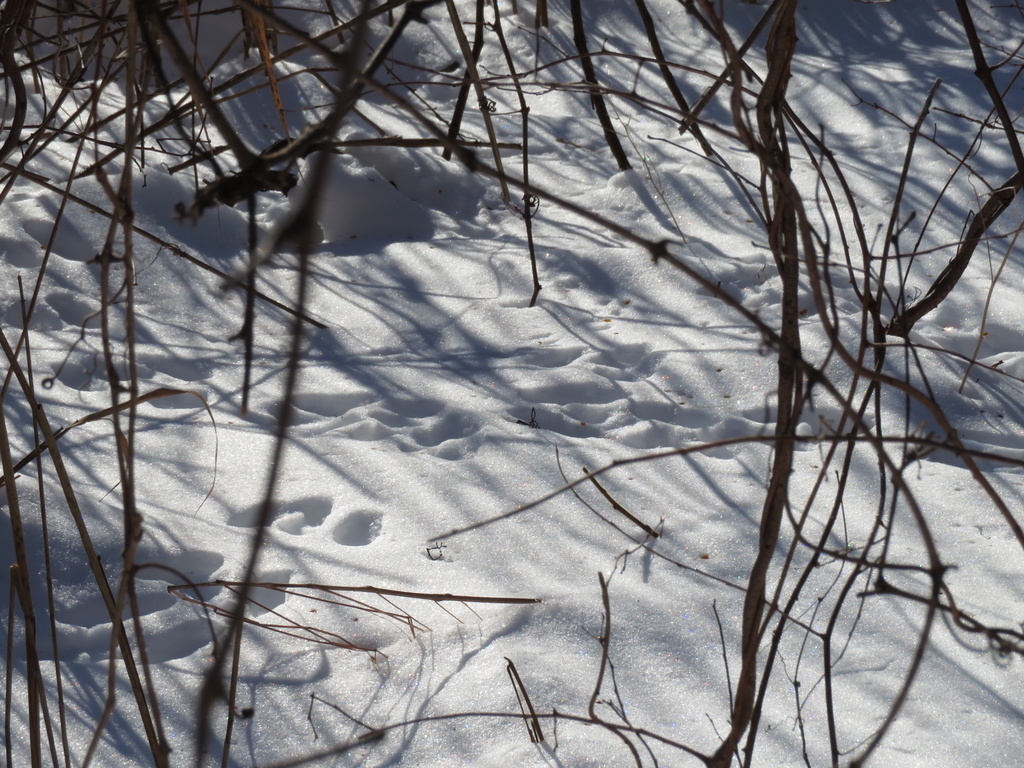
Next, were these tracks from what I presume is an eastern cottontail rabbit (Sylvilagus floridanus). While the tracks were a bit obscured under the brush, the location was my first clue. The rabbit may be denning in the area under the brush and decided to search around the area for food. There were some smaller twigs that may have been chewed, and the tracks show the larger hind feet as well as smaller prints made by the front feet. I was between rabbit and squirrel, however, squirrel would not register with the front feet staggered slightly.

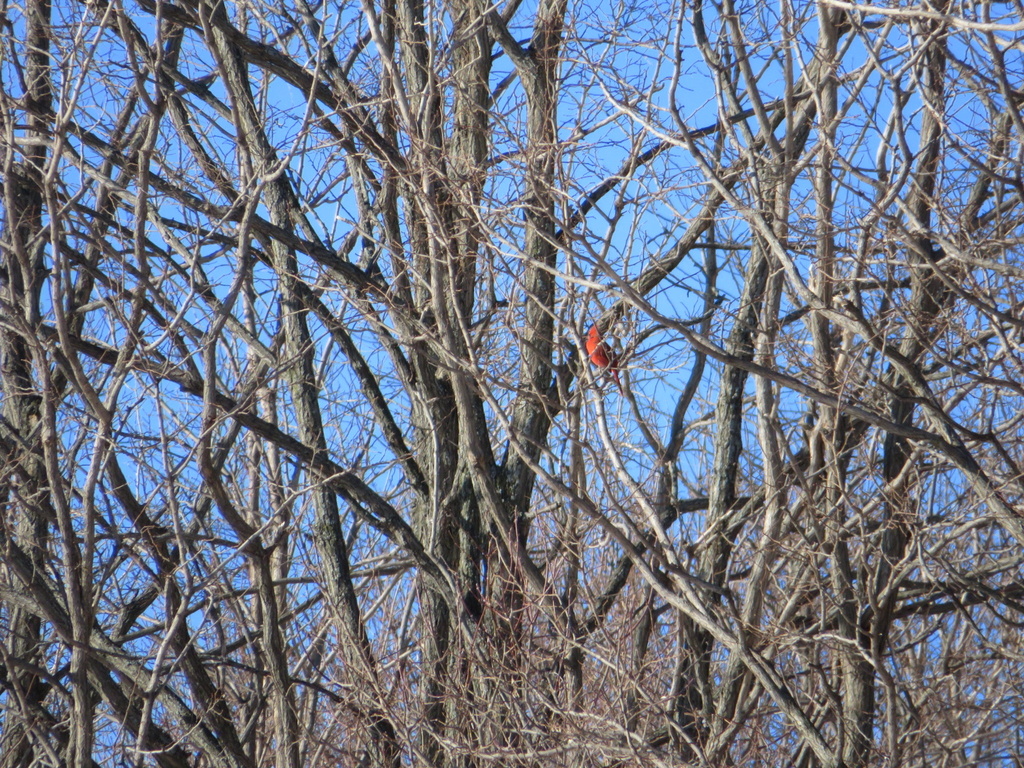
Last, was this sighting of a beautiful crimson cardinal (Cardinalis cardinalis) singing farther back in a tree line along the bike path. The whole area was erupting with cardinals singing back and forth. It was a welcome sound, as I hadn’t heard their voices in quite some time. Cardinals and other backyard birds are gearing up for spring now, and their calls are becoming more common.

While it still feels like we are in the trenches of winter, signs of spring are popping up. The day length, animal activity, budding, and other phenological signs within the landscape tell us that maybe Punxsutawny Phil was wrong yet again. Anyways, I’ve been enjoying witnessing these shifts as they occur, and can’t wait to update the blog with some green pictures soon.https://www.inaturalist.org/observations/262876635

Phenology Log #5

Hello again! Nice to be back at my spot after winter break, and to fully examine with fresh eyes the changes that occurred over that period of time.

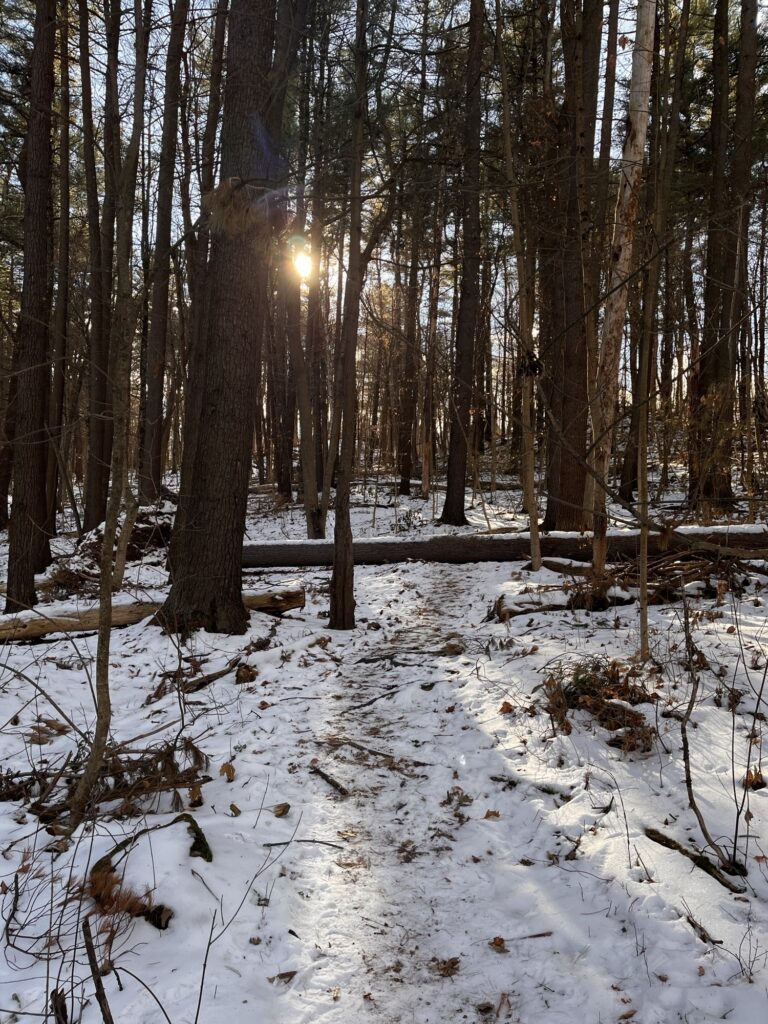
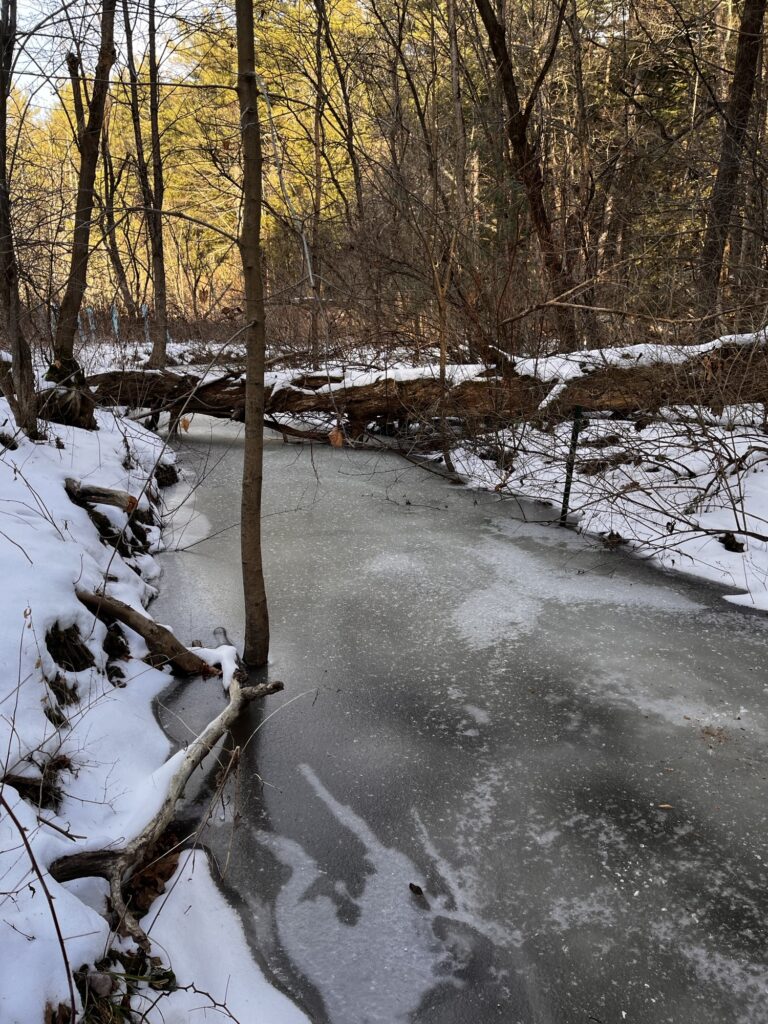
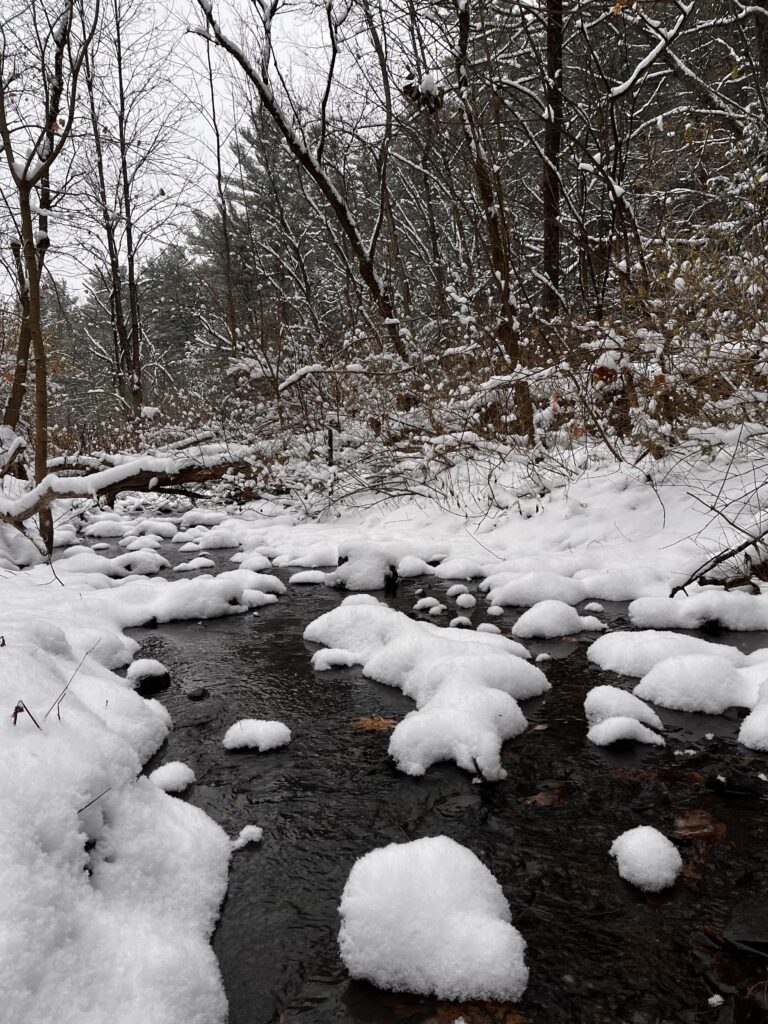
It’s 2pm and yet the light seems so low. Winters here are cold and dark, and while many of Vermont’s species are hardy and toughened for the conditions, I’d much prefer the warmth of the dorm room with some hot cocoa. Nonetheless, it’s undoubtedly beautiful out here. The freeze is everywhere, including Centennial Brook, which serves as the natural border between my phenology spot and the rest of the woods. I don’t think I had ever seen a brook quite frozen over like that, which was a marvel to say the least.

Despite the freeze, the snow isn’t as abundant on the ground as it was even a week ago. There have been occasional rises in temp over the past few days, and it’s been the only time I’ve looked at 30 degrees Fahrenheit and thought to myself “thank god it’s a warm day.”

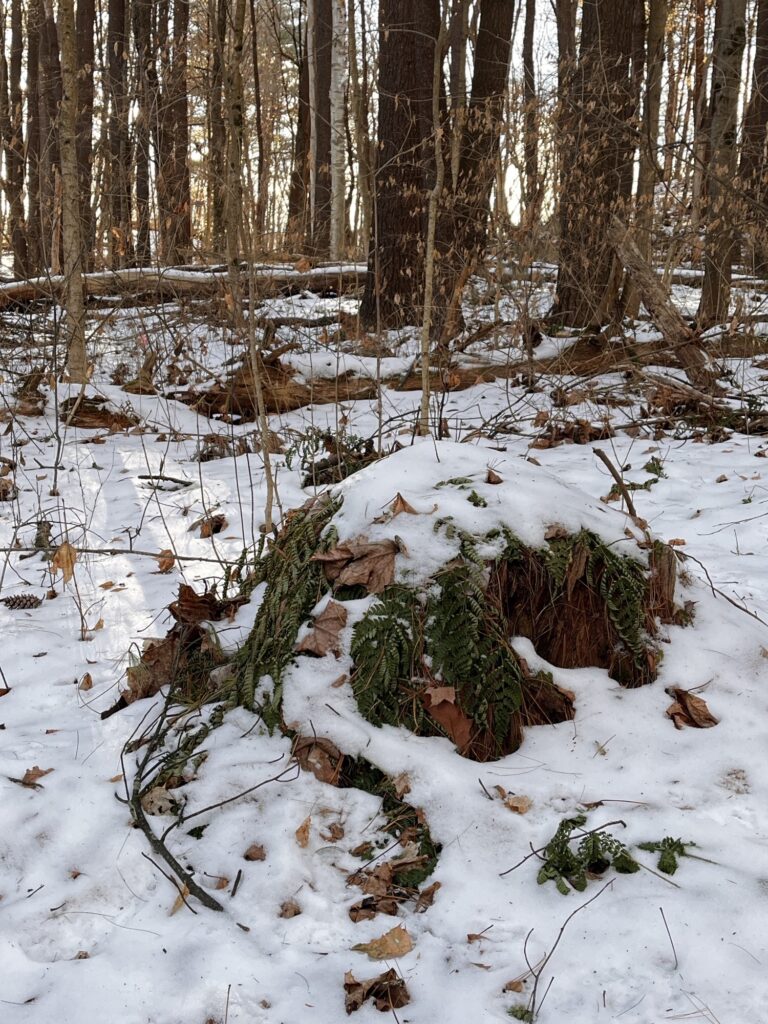
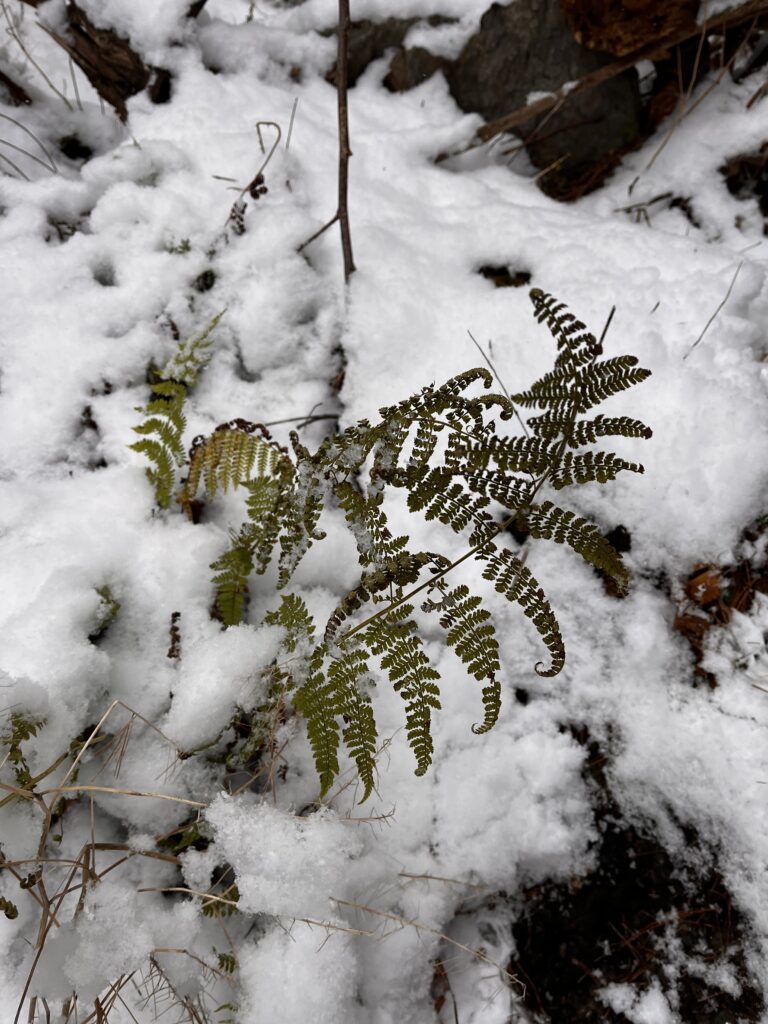
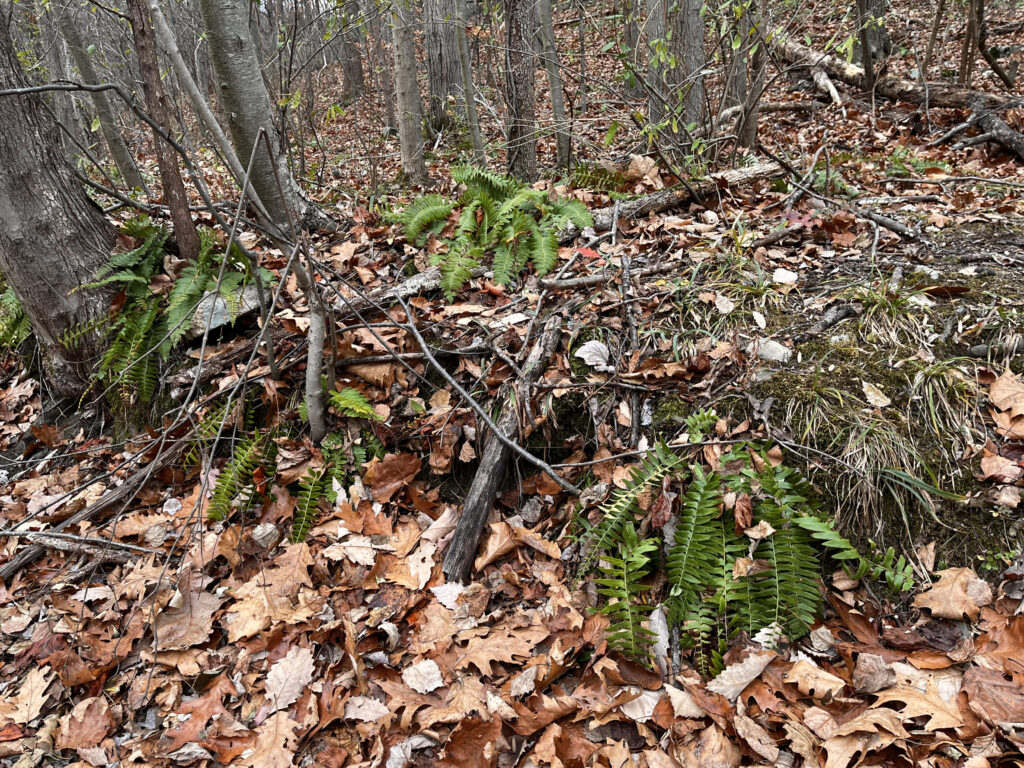
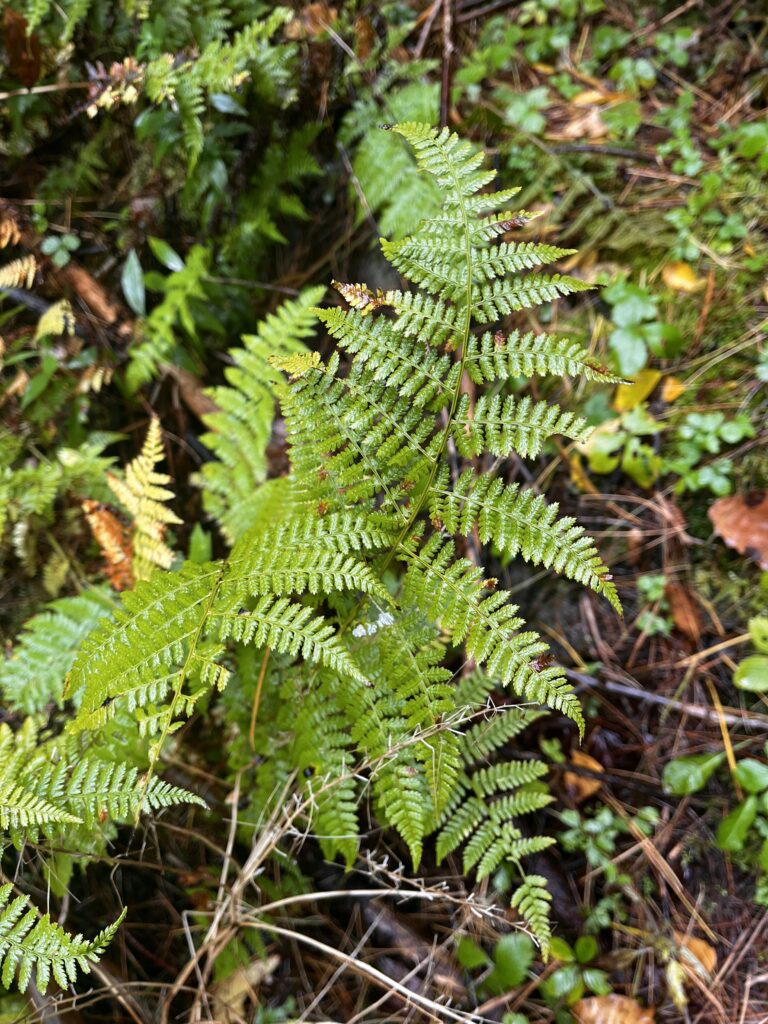
All the ferns which I’ve been observing over the span of these months have finally called it quits. They’re still green, however, but dry as crisps.

Cottontail perched upon a rock (?)

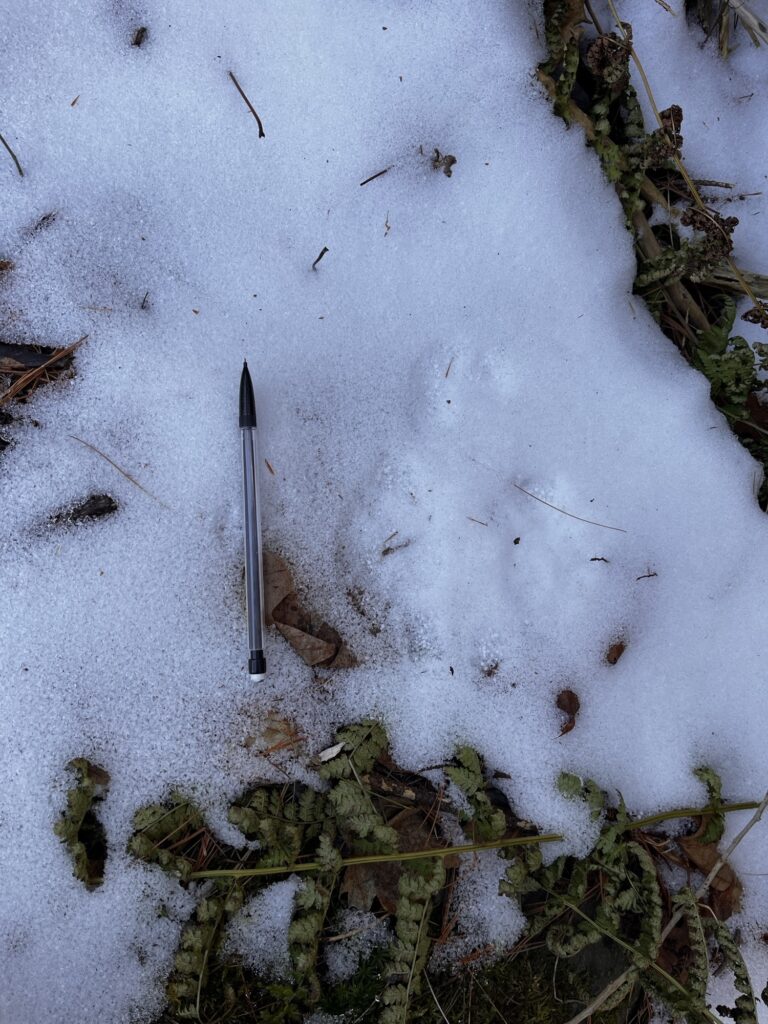
I had hoped to encounter more signs of wildlife on my trip, but I didn’t find too much. I saw a lot of dog and human tracks, which wasn’t exactly what I was searching for. I did, however, find a set of tracks which I feel confident enough to ID as Eastern Cottontail Rabbit. I didn’t have my guide with me while there, but checking it when I got back to the dorm proved to be a match in size.

I know a cottontail isn’t anything remarkable to most, but I am always indulged to see those fluffy rabbits, and knowing they’re out and about still is exciting nonetheless!

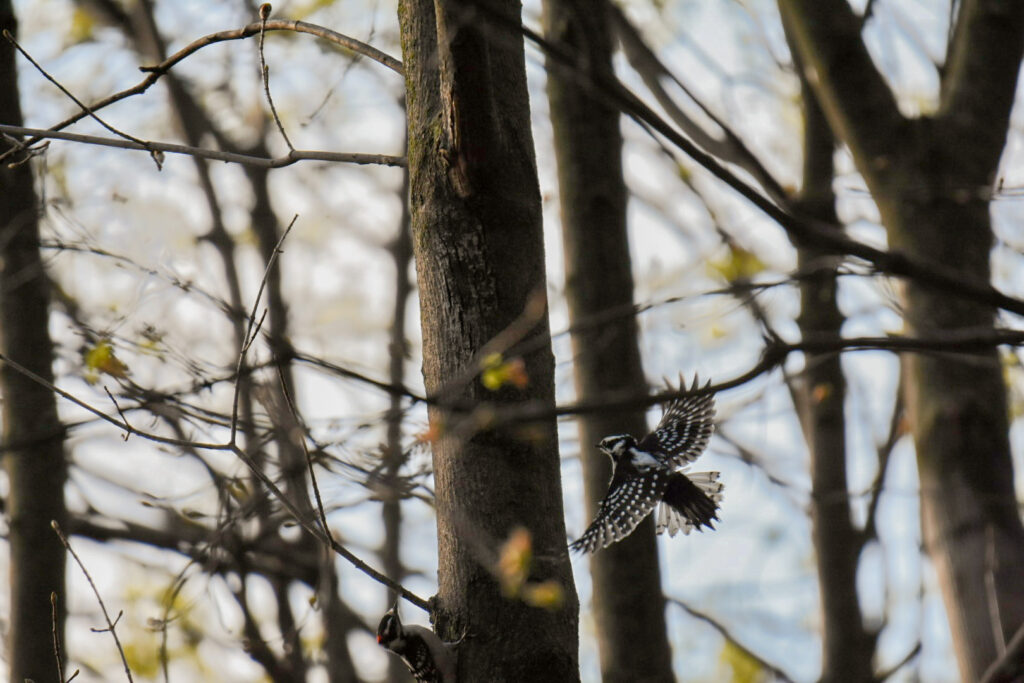
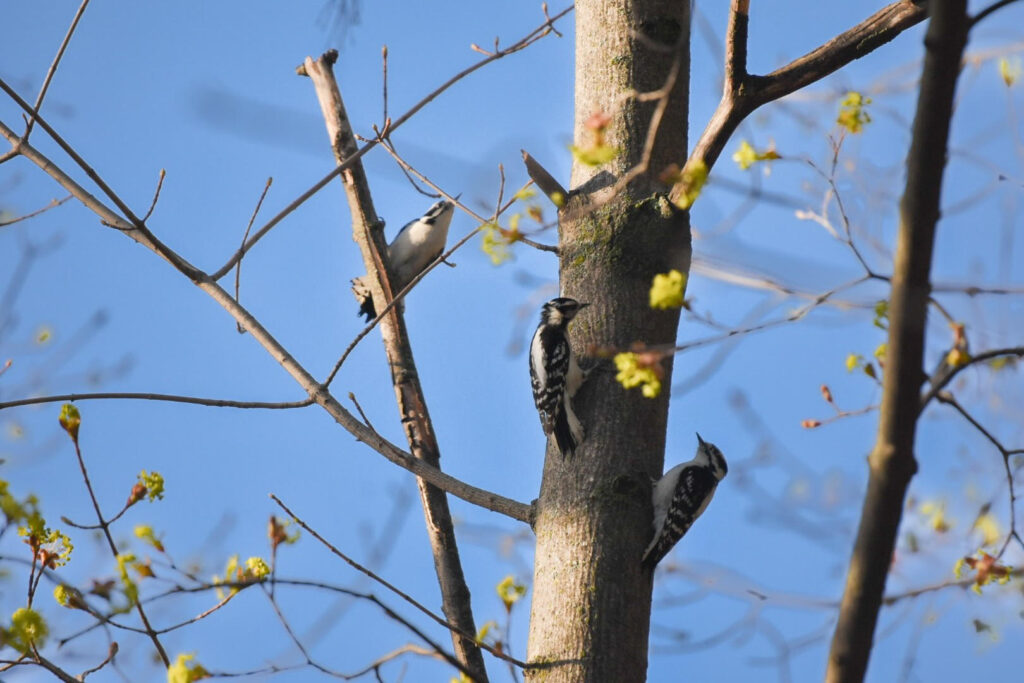
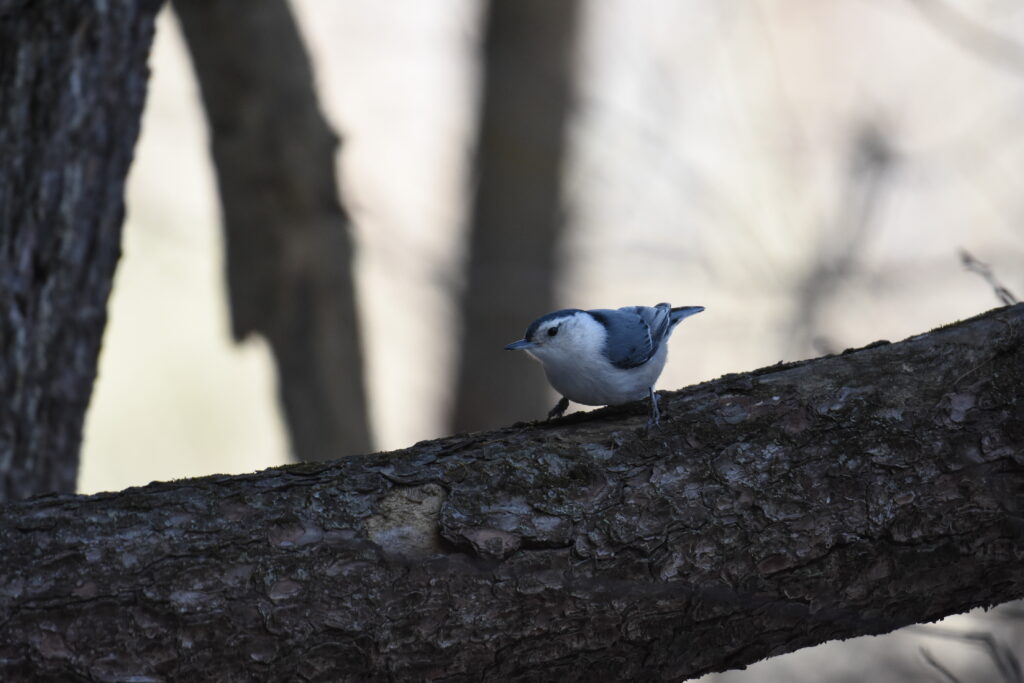
As for other wildlife, the winter avifauna was as I noted before on my last Centennial trip. There were plenty of Hairy Woodpeckers calling from between trees, and nuthatches giving their nasally nyuk calls on occasion. For these little birds, the work never stops, especially during brutally cold months as these. Nuthatches are accessing their caches they stored before the wintertime and staying in mixed flocks of chickadees and titmice.

In conclusion, it seems the landscape has truly become dormant this time. Many of the landscapes residents have slowed down or stopped altogether, but regardless, the severity of winter commands the resiliency of every living being, from the bundled-up college student to the hibernating tree frog, frozen until the thaw of spring.

Phenology Log #4

12/7, 1:15pm, Cloudy- Snowing, 27°F

This is the first substantial snow of the season!! I can’t believe how early it happened. I’m used to major snow events in January or February, but seldom in December. Everything seems quiet in the snow, and today was no exception. There was little in terms of wildlife activity, but maybe there was more going on beneath the snow’s surface that I wasn’t keen on. While walking to my spot, I observed many different flocks of geese, mostly Canada though I could’ve sworn that there was a flock of snow geese above as well.

While the world seems to slow after a snowfall, there are almost always woodpeckers hard at work on a dead tree.

Some Norway Maples and American Beeches are still holding steadfast to their leaves. I could hear them rattling with every gust of wind. While walking to my spot, I accidentally fell into a gap between the boards, and, suffice it to say, the wetland is still there.

I’m impressed with the ferns’ abilities to survive. I guess I never took notice of how long they persist into the season, but this fern in particular has been holding on for a long while. Even as it gets pounded by brutal Vermont temps and precipitation, it remains a staple in the forest landscape.

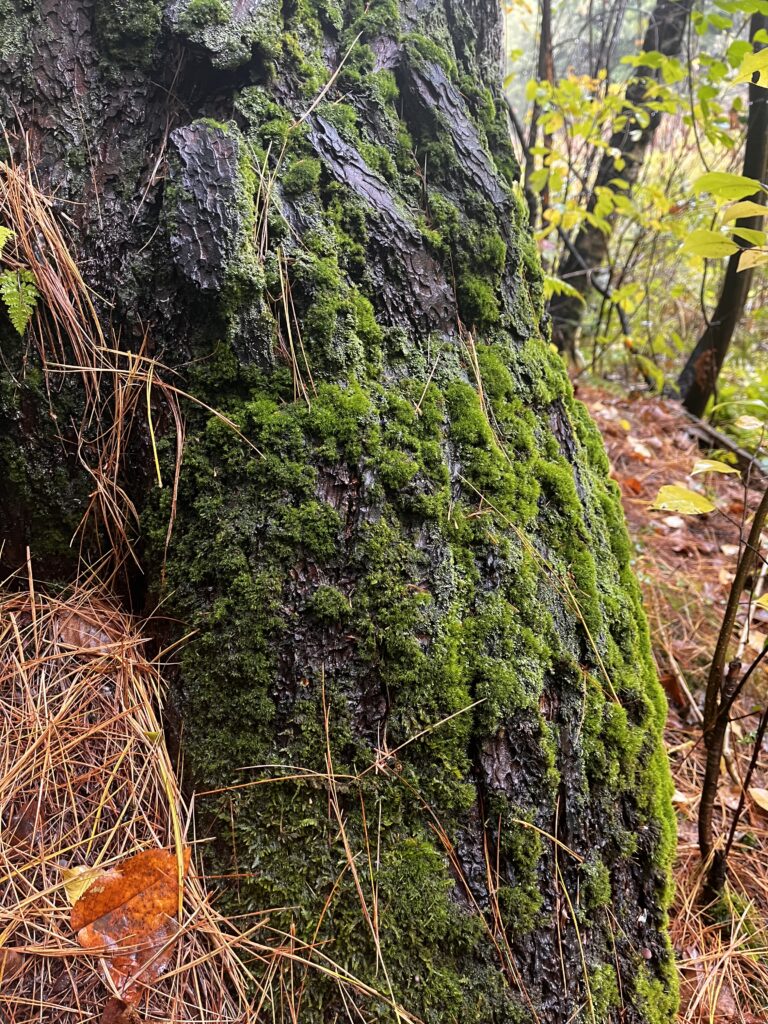
I accidentally brushed off the fresh coating of snow when I got to the rock I usually perch on, and I noticed that the mosses and lichens that call it home were also still alive and well. Perhaps it was because the snow was so fresh, but I do know from prior research that mosses never stop growing- they’re actually considered evergreen plants! As long as there is moisture, they’ll continue to grow and disperse.

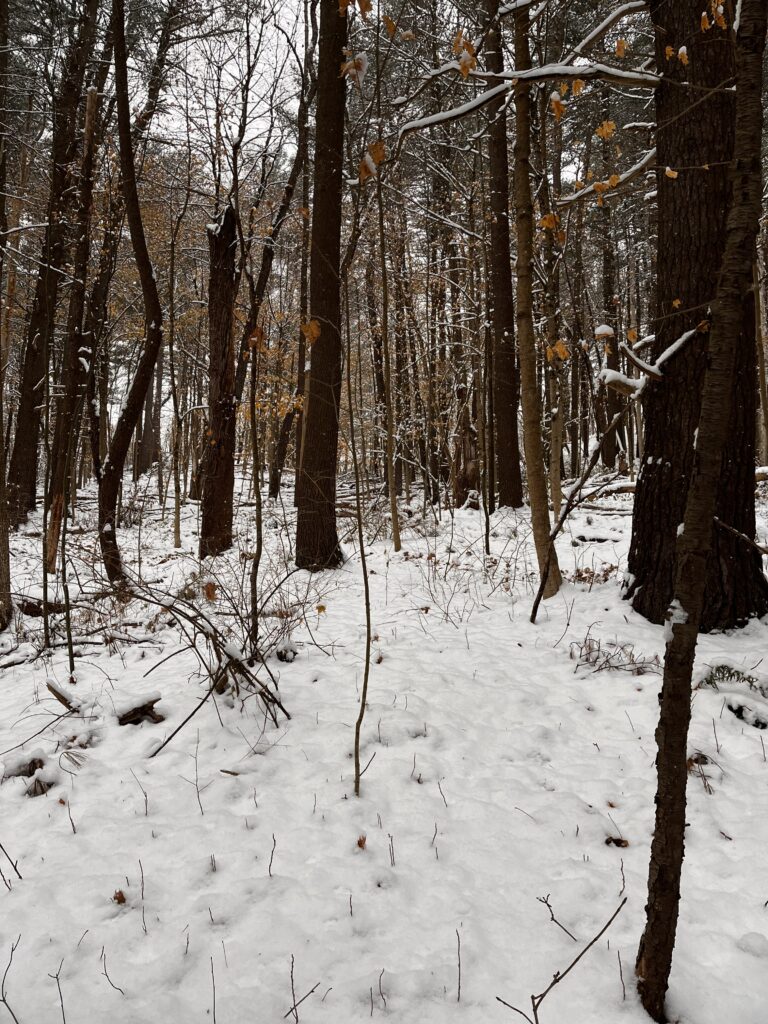
A glimpse into the forest after the first snowfall

I was eager to set out after I saw how much snow had fallen to potentially indulge in some winter wildlife tracking, however, I was disappointed to find that there were no tracks visible besides the ones left by dogs and their owners. I hope next time I’m able to get back out to Centennial there is a coating of snow and ample time for critters to leave prints.

Until next time! I can’t believe the semester has already ended and I had the privilege of seeing this beautiful landscape ebb and flow with the seasons as I have into my first season of college.

Phenology Log #3

11/24, 2:10p.m., Cloudy, 50°F

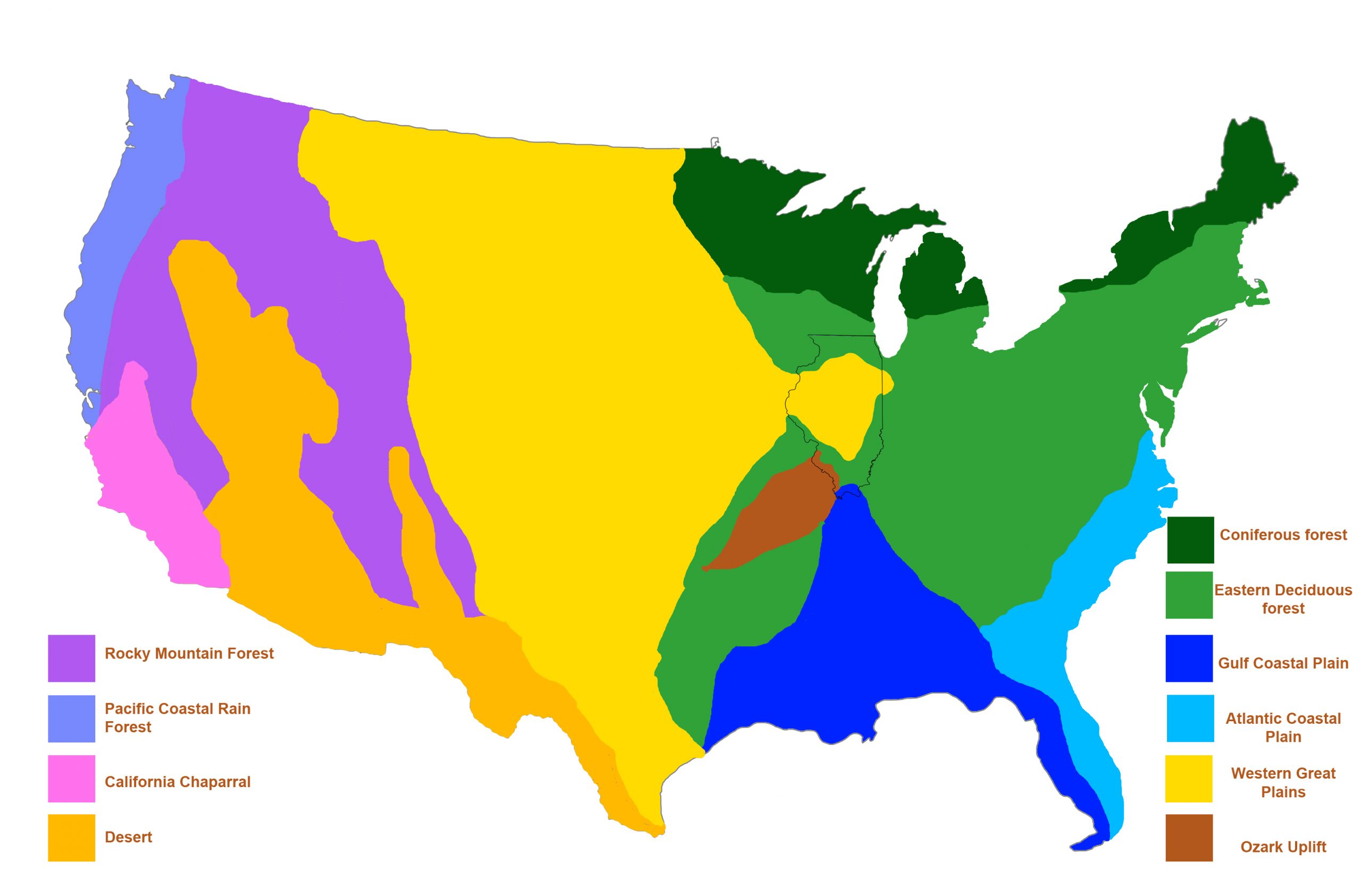
I’ve touched on briefly the similarities that my home state, Pennsylvania, shares with Vermont in a previous post. While I’ve observed many similarities, I’ve also picked up on some major differences, namely the forest composition. Vermont is situated near the cusp of the coniferous and eastern deciduous forest border in North America. More of the species found in Vermont are hardy and tolerant to the colder climate, such as the coniferous trees of which there are many different species (Norway Spruce, Eastern White Pine, Cedar, Hemlock, etc). Below, I have included a map of North America which illustrates this difference.

Since being home, I’ve seen many of our focal species, however their abundance is varied. I chose a spot that I’ve been coming to for over 10 years to observe these changes.

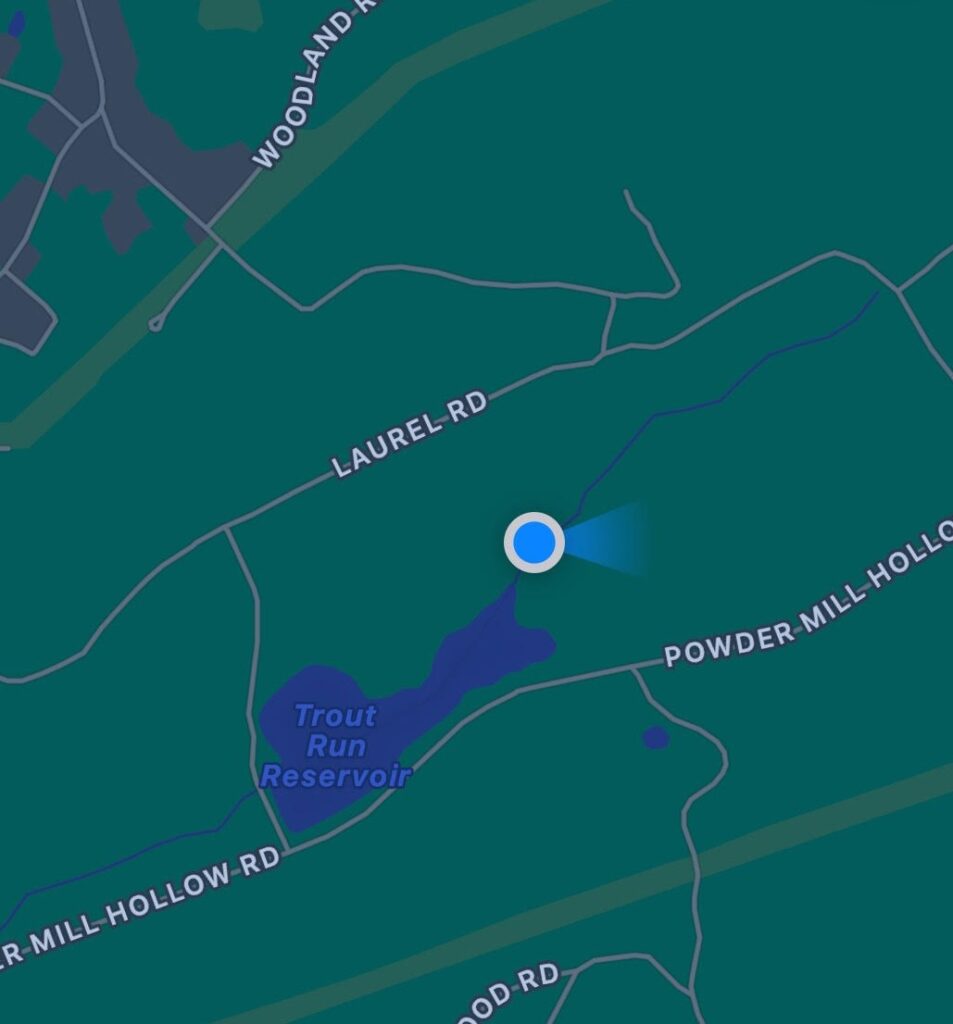
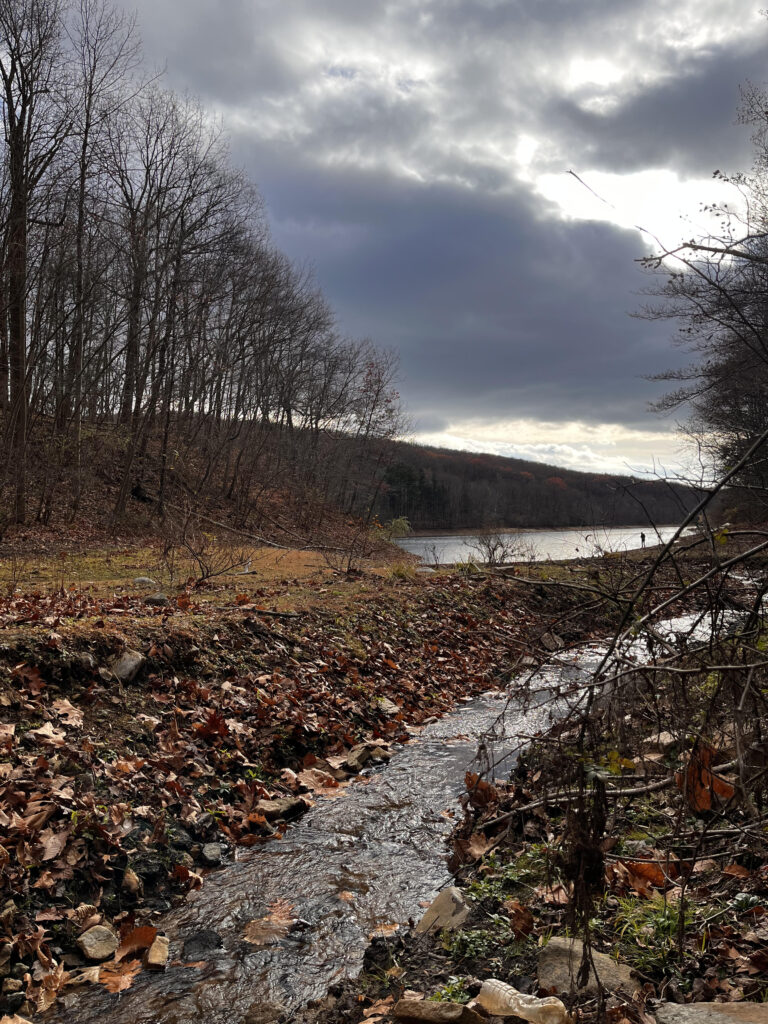
Trout Run Reservoir is a man-made body of water, but it is situated in a more rural part of Berks County, PA. It was built around 1975, so it’s been a prominent fishing and outdoor recreational location for the residents of Boyertown and other neighboring towns for a while now. While visitors are not allowed to boat or swim, the reservoir offers good fishing, which is how my dad and I discovered it so many years ago.

For how long I’ve been visiting this spot, I’m ashamed to say I have never done such a deep dive on it as I have these past few days; particularly, of the tree species present in the area.

I would say that the area is comparable to my spot in Centennial Woods, as there is still a significant amount of foot traffic. Both are relatively rural. However, there is more development right outside of Centennial.

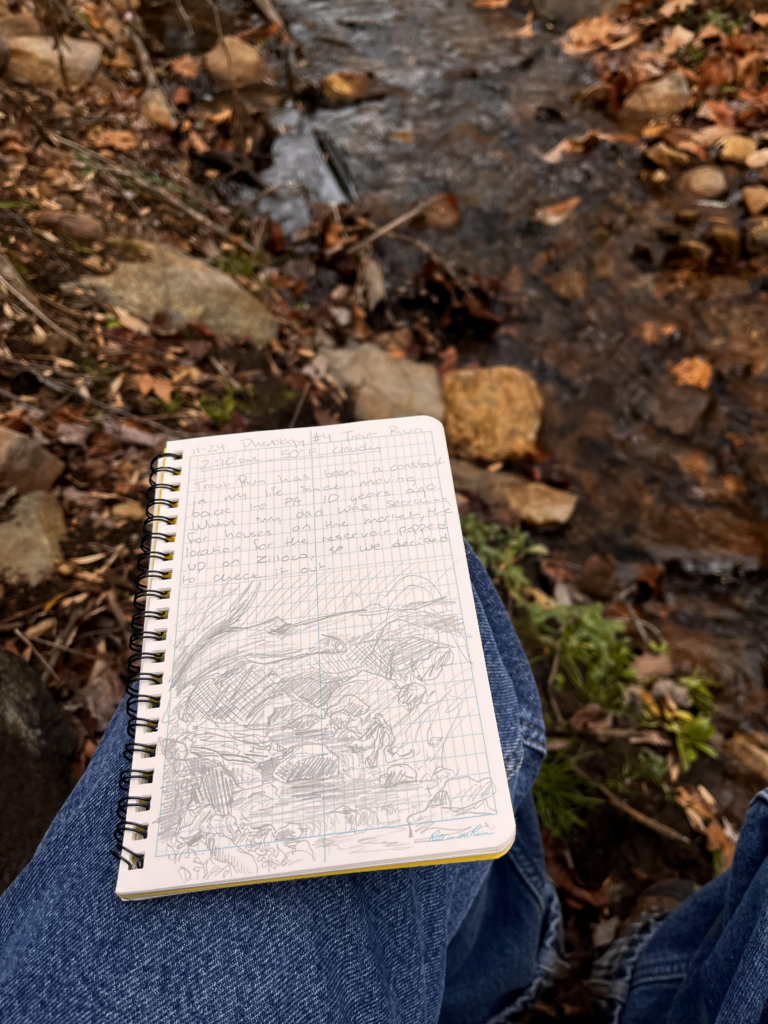
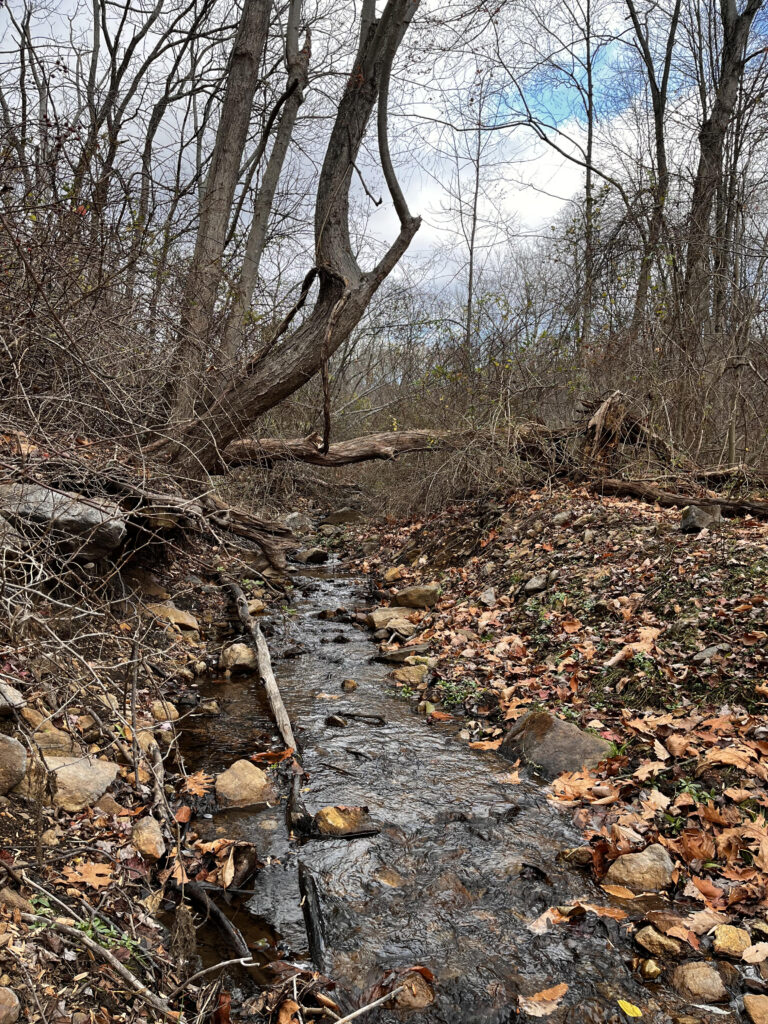
I sat in my spot for a while and sketched what I saw. There were larger stones in this section of the creek than in Centennial. The vegetation directly by the stream was sparse, and evidence of erosion was apparent. The small field adjacent to the spot at Trout Run lacked species typical of a wetland habitat.

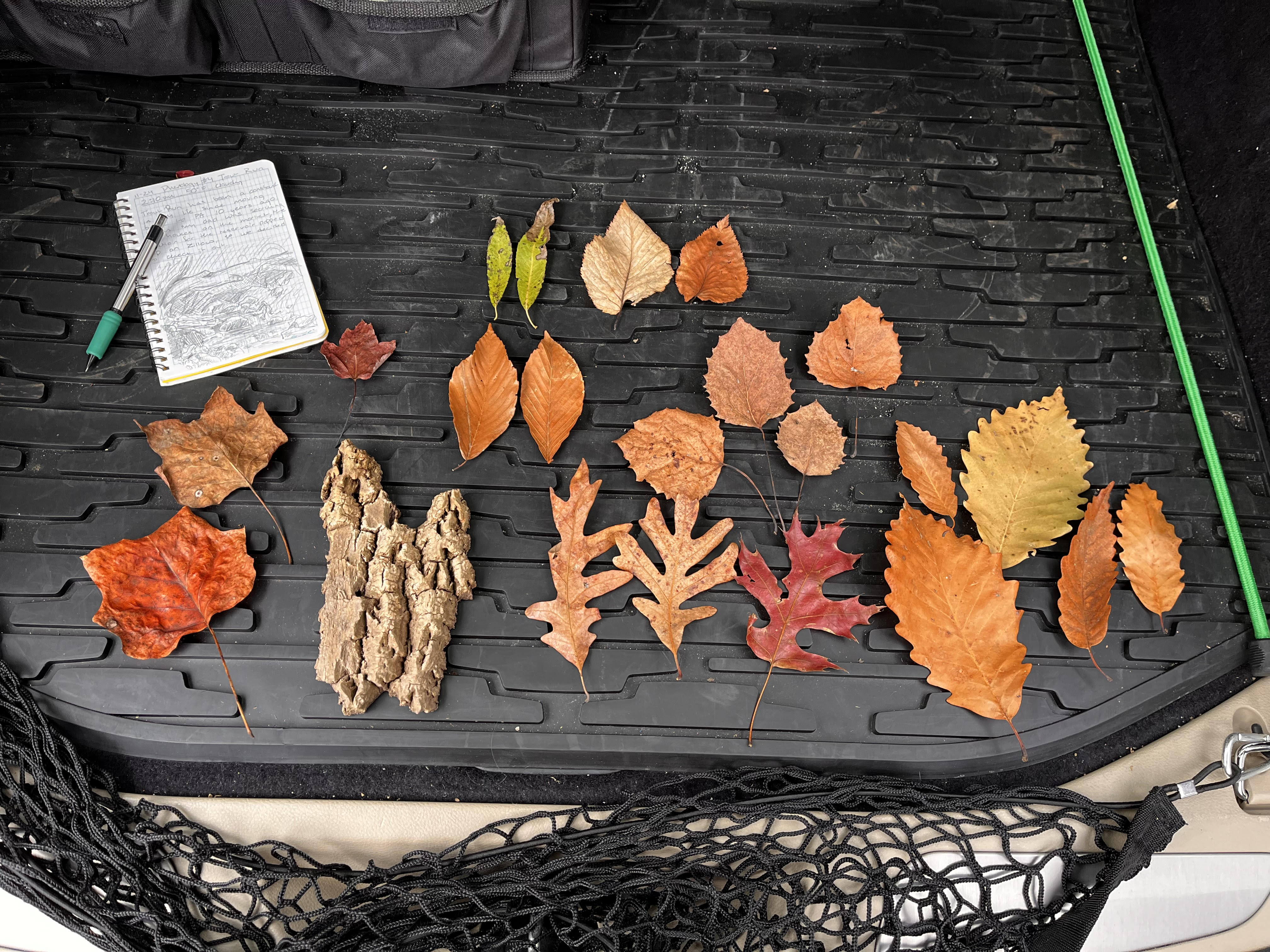
Some species I was able to identify include:

  • White Oak (Quercus alba)
  • Red Oak (Quercus rubra)
  • Chestnut Oak (Quercus montana)
  • Big Tooth Aspen (Populus grandidentata)
  • Red Maple (Acer rubrum)
  • Yellow Poplar (Liriodendron tulipifera)
  • Yellow Birch (Betula alleghaniensis)
  • Black Willow (Salix nigra)
  • American Beech (Fagus grandifolia)

Some of the beeches had still had leaves, which I had observed in the Burlington area as well. Much like Centennial, this forest does not feel like old growth. Many of the tree species there thrive in disturbed areas, and the fact that the area has been so developed and that the reservoir is a man-made alteration on the land indicates this is a younger stand. Nonetheless, I loved this opportunity to learn more about a spot that’s given me so many memories.

Phenology Log #2

11/3, 3:30pm, Sunny, 42°F

Today was the beginning of daylight savings. I sat at my phenology spot around 3:30 p.m., and the sun showed signs of setting. The temps are also beginning to cool, as it was only around 42 degrees Fahrenheit when I was out. I took a deep breath and noticed the subtle notes of fall under the brisk air. When I last came to my spot, the colors had been vibrant. Now, most of the trees have lost their leaves and stand naked in the clearing. The leaf litter made traversing the grounds around my spot somewhat tedious, however, I did so with no slips (this time). The ground right around the boardwalk and extending into the meadow is always saturated, even though we haven’t had substantial rain in a little while.

The ferns and mosses sported a rich green color still, making them easy to spot in the landscape. I sat in silence for most of the time, but I heard scattered calls from some birds. Here are a few notable ones:

  • Dark-eyed junco
  • White-throated sparrow
  • Downy woodpecker
  • Winter wren (this one was exciting! A lifer for me)
  • Black-capped chickadee
  • White-breasted nuthatch
  • Cedar waxwing (?)

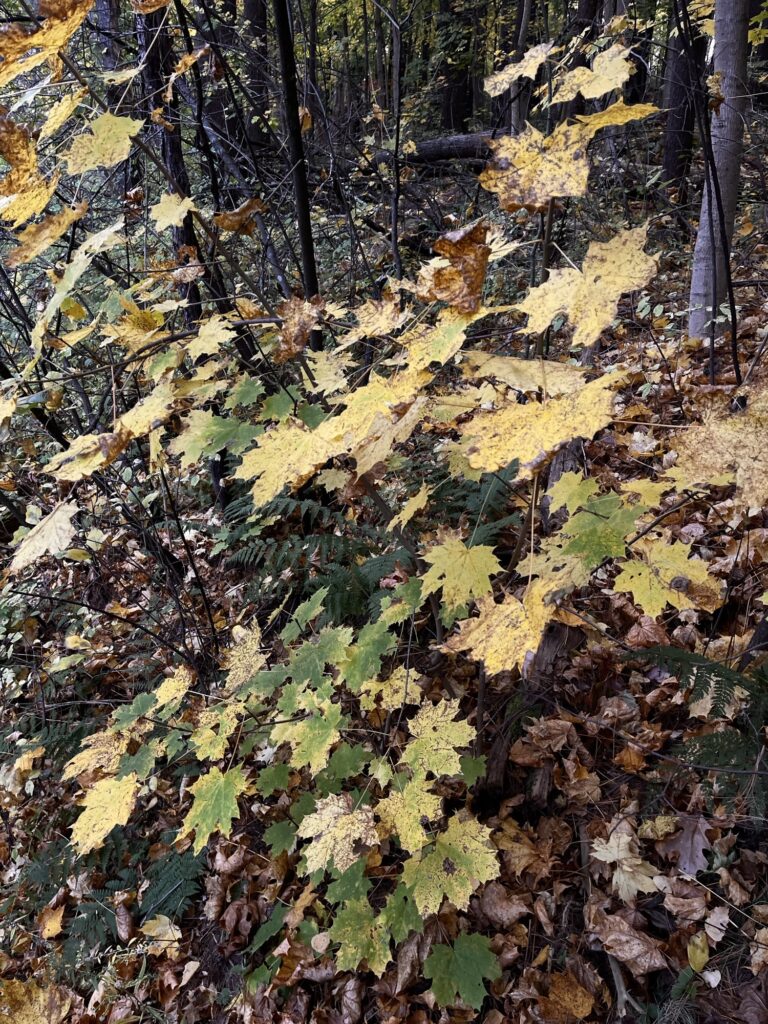
The Norway maples are putting on quite a show right now. Where most everything else in my spot has shed its leaves, the maples are sporting a rich canary yellow, making them easy to identify this time around. The red oaks, yellow birch, and other smaller maples have since gone dormant, however, the Eastern white pines and hemlocks are still green as ever.

The picture doesn’t do the Norway Maple leaves justice, but they were really bright!

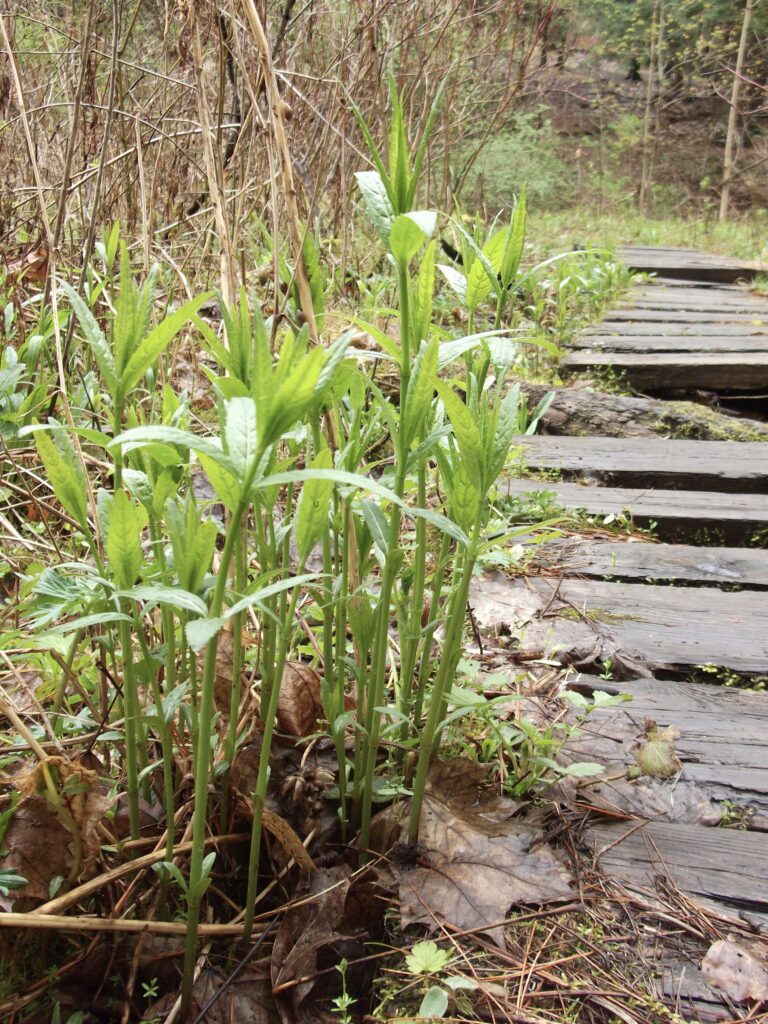
The Joe-Pye Weed in the field has finally gone, leaving only its seeds behind. The bright stems of the asters are no longer visible, as most of the wildflowers have passed their prime now. Now, the ramifications of fall and, subsequently, winter feel all the more real. While the land seems to be battening down the hatches, I don’t know if I’m ready for the cold.

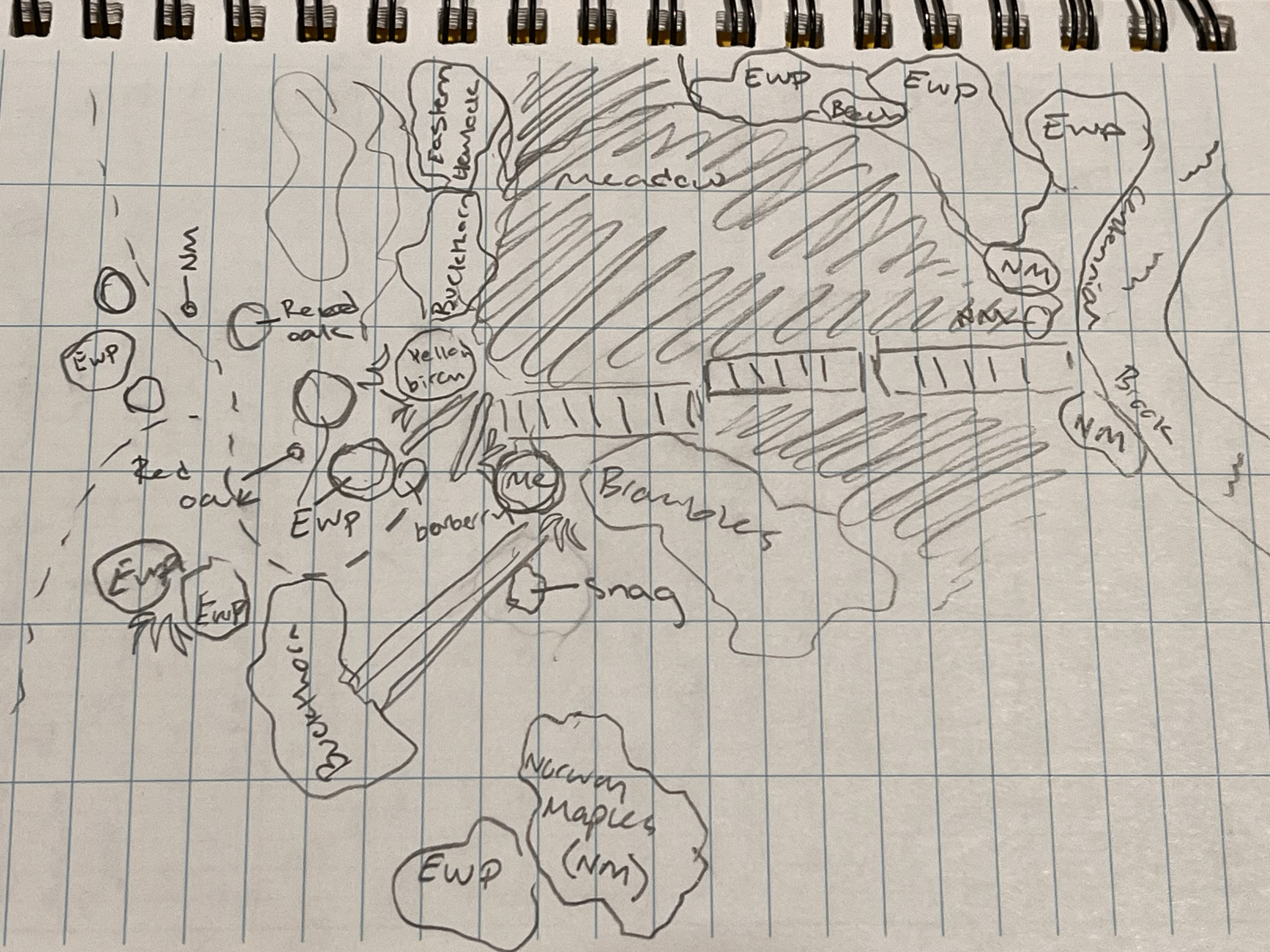
My attempt at an aerial view of my spot
EWP- Eastern White Pine

Before I left, I saw a large murder of crows traveling above the clearing, and I heard a single raven. A bit of a side tangent, but, since being here, I’ve heard and seen more ravens than I ever have, which has been super cool. While most of the phenology is similar to my home state, a lot of it is different in subtle ways. I love slowly unearthing those differences, but still maintaining a connection to bits of home.

Phenology Log #1

10/14, 11:02am, Rainy, 44°F

For my phenology project, I chose a place that many people know. While Centennial Woods may be close to campus, it is rich in flora and fauna. Within 15 minutes of walking, you are transported from an urban landscape to a wild one. Centennial was also one of the first places I came to know as part of UVM, and was one of the reasons I chose the school. I haven’t had much time to become acquainted with it, so that’s why I chose Centennial at large.

More specifically, I chose the boardwalk by the stream that overlooks the wetland for my phenology spot, partly because the forest edge and streamside habitat are usually teeming with life and partly because I saw asters flowering there, which are one of my favorite flowers. My spot is on the trail, so getting to it is easy. It provides a beautiful vista of the landscape and ample space to observe phenological changes in different natural systems.

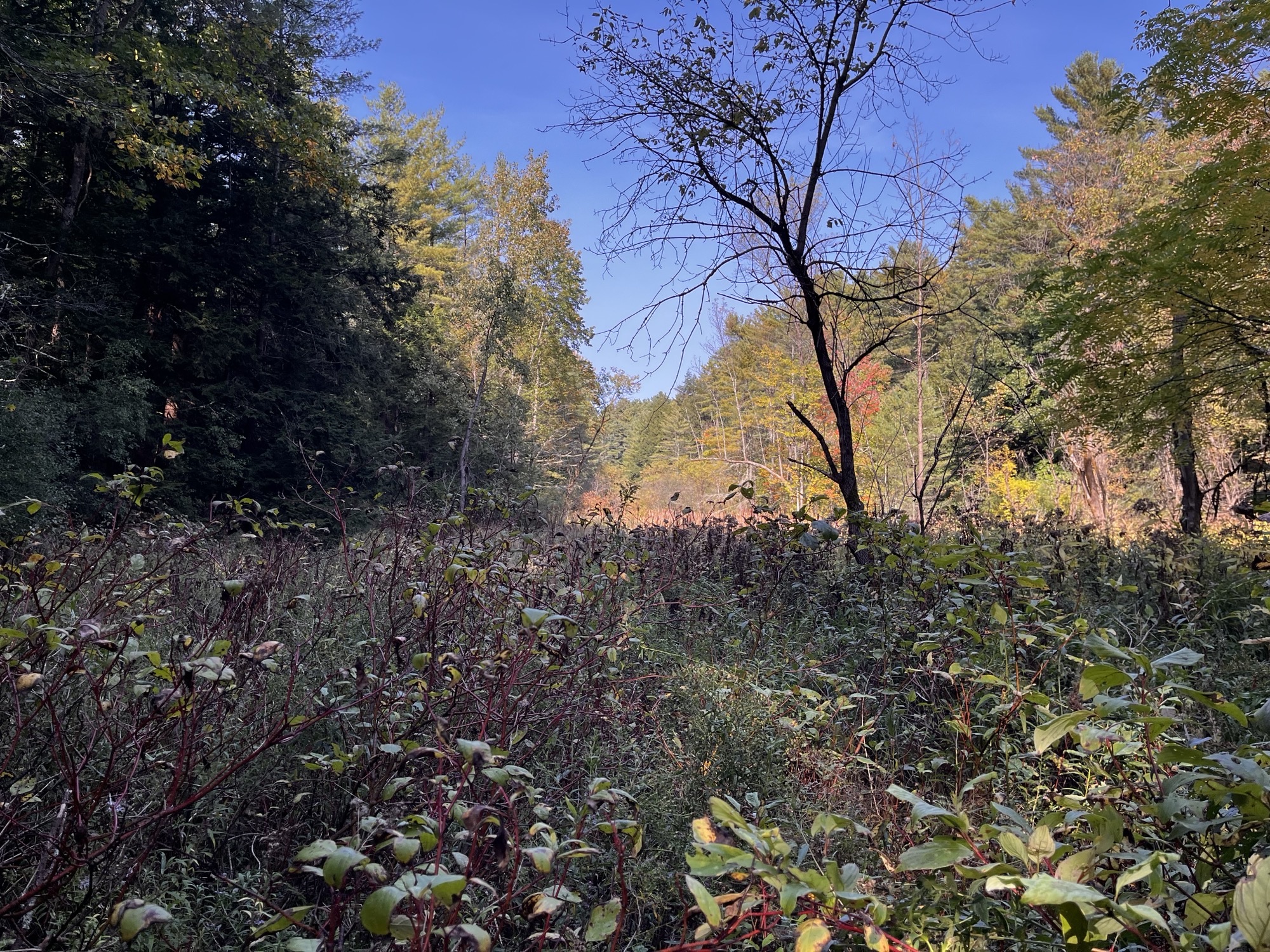
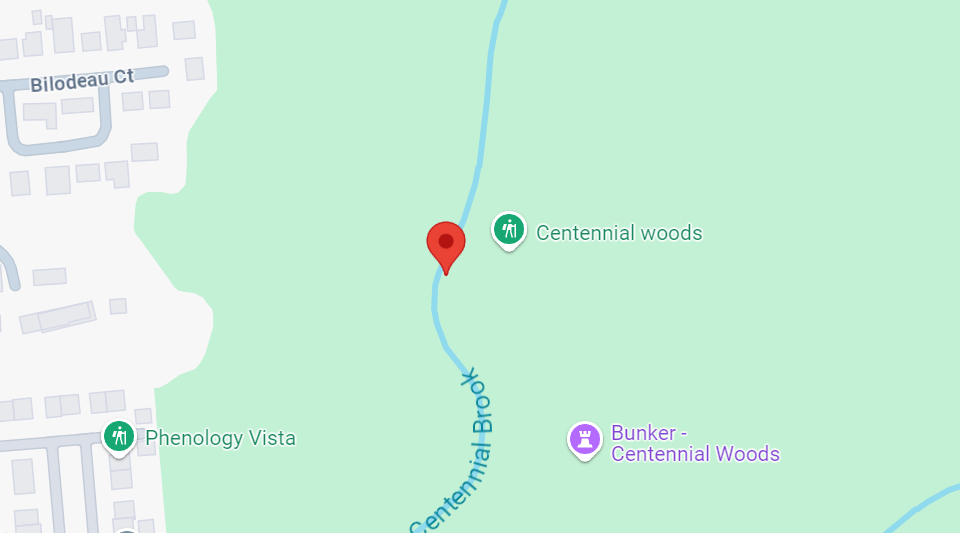
A map view of the location as well as an overall look at the spot. There is a meadow bordered by two tree lines. The fall colors are beginning to show, making it a beautiful scene.


The spot seems to be a wetland since the soils around the boardwalk are almost always saturated. Some of the more common vegetation includes:

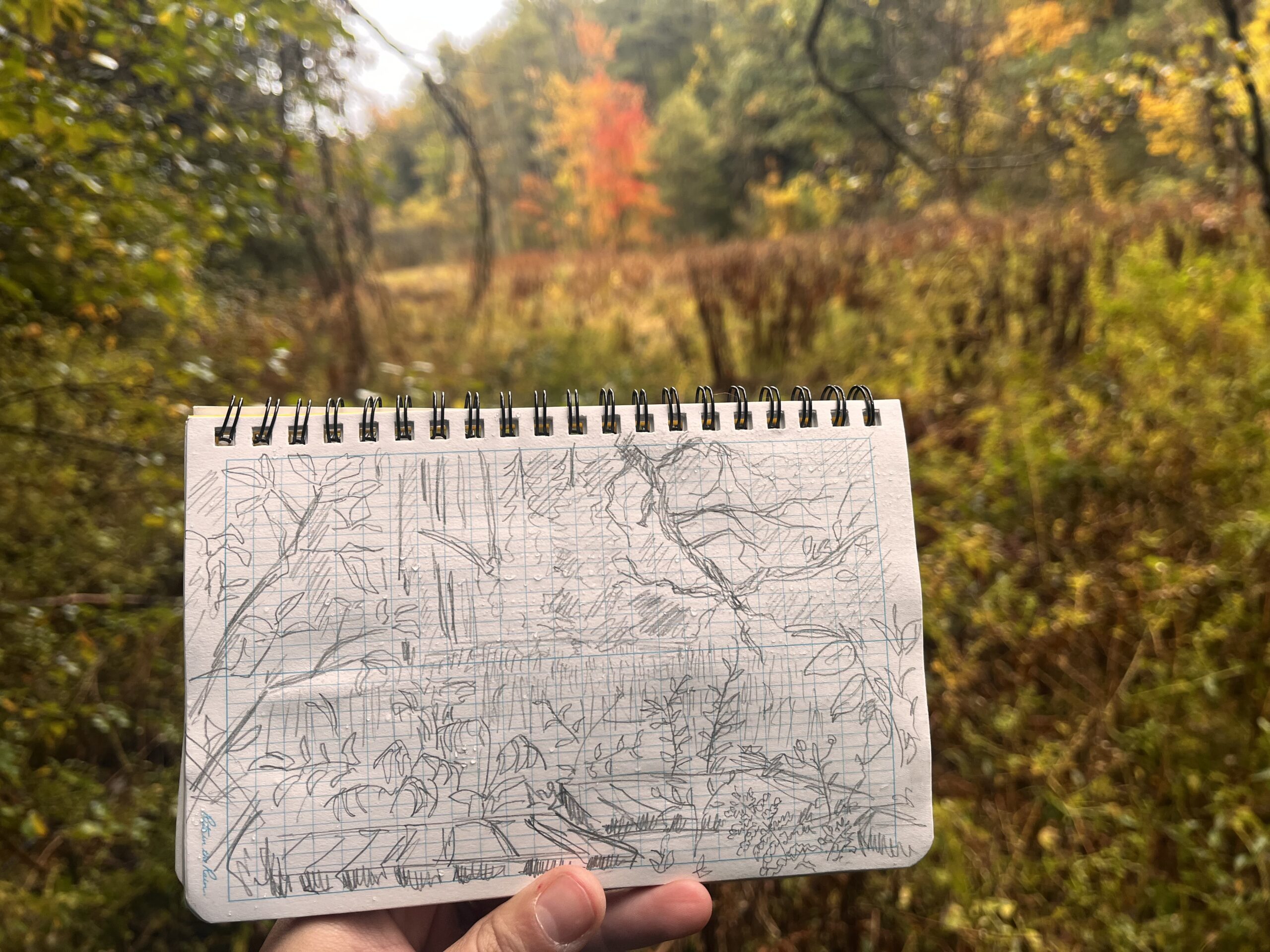
For some of the plants I need clarification on, I put a (?) symbol next to them. I also did a quick little illustration of my spot so that I could take in smaller details of the landscape that I would’ve otherwise overlooked.

I’ve witnessed this spot during late summer and can already see numerous changes. Many of the lighter-colored asters (Purple-Stemmed?) have already bloomed alongside the goldenrods, which no longer paint the landscape yellow. Instead, the bright hues of the maples and birches give color to the rolling hills, making the season extra beautiful. The Joe-Pye Weed that lined the boardwalks is also beginning to die, and the dampness of the earth from the past few rains has brought out the color in some mosses on the trunk of a dead white pine.

Skip to toolbar