Feeds:
Posts
Comments

As the weather continues to warm up, I am reminded how thankful I am to have access to nature. The human-nature relationship becomes much more apparent during the Spring, with more pedestrians, cyclists, etc., coming to enjoy the outdoor space.
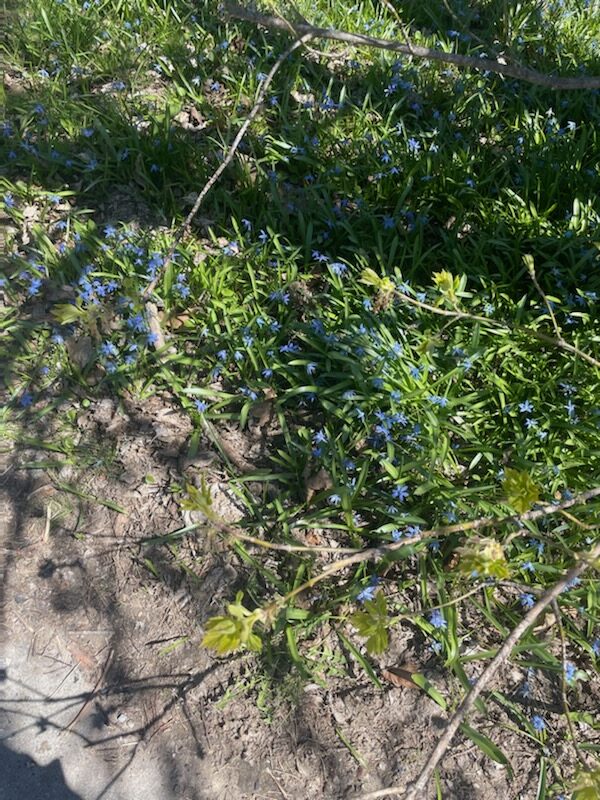
Flowers sprouting along the sidewalk on the way to the quarry.

On my way to Redstone Quarry, I was observing the many phenological changes taking place, especially the colorful flowers beginning to bloom. The wildlife was much more apparent than it had been in the previous colder months, with many more birds and lots of rustling in the bushes which was mostly chipmunks and squirrels.

The image below stood out to me as it was the first time the layers of the wall were really highlighted by the plants growing. It is interesting to think how different seeds got their way there either through birds, wind, or something else.
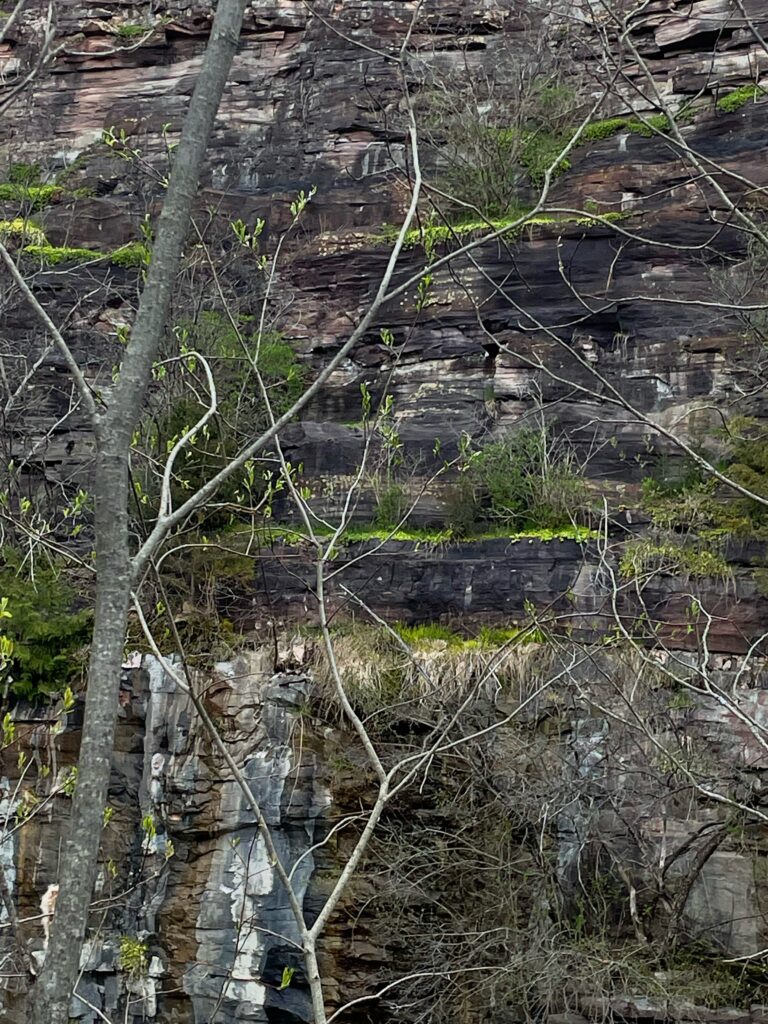
Layers of green growing on the various layers of the red stone wall.
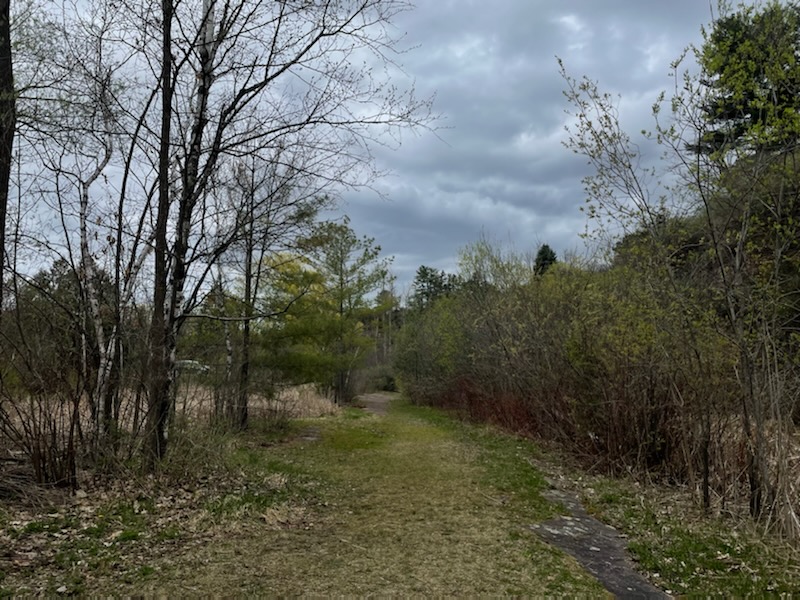
This is the path that I saw the Eastern Cottontail rabbit on in my first visit! I stayed here for a while hoping I would see him or some other animals come through, but I did not see any other mammals besides chipmunks and grey squirrels. I did not learn until today that squirrels are actually not entirely herbivores! They eat insects and will even eat birds. There were a variety of bird species present such as robins, chickadees, sparrows, and a bird that I think was a grackle. The species diagram below examines how species like this interact.
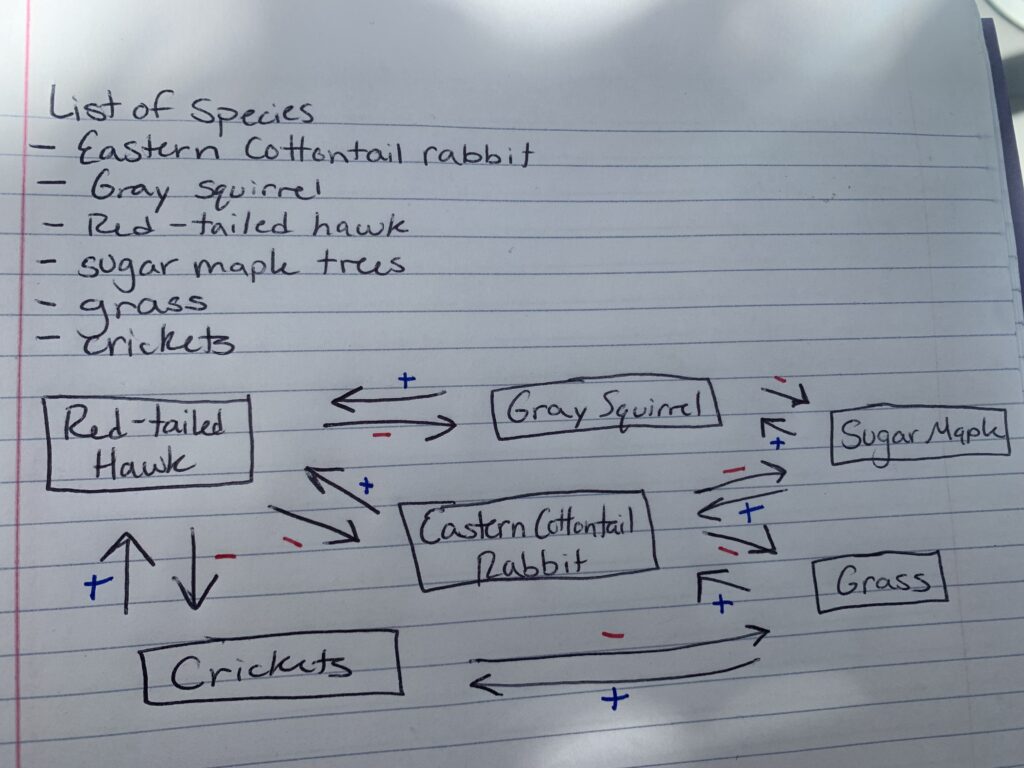
The positive and negative relationships demonstrate competition between species.

I wanted to add humans to this diagram, but I realized that would pretty much be a negative relationship to all other species. After spending many hours at the Redstone Quarry over the past two semesters, I do not exactly feel like a part of it, rather an advocate for it. Spending time here has grown my appreciation for this place as well as many other spots that may often go overlooked. I see myself coming back here in years to come and encouraging my peers to do so as well. If everyone spent time growing with a natural place, I believe human-nature relationships would be much more prosperous.
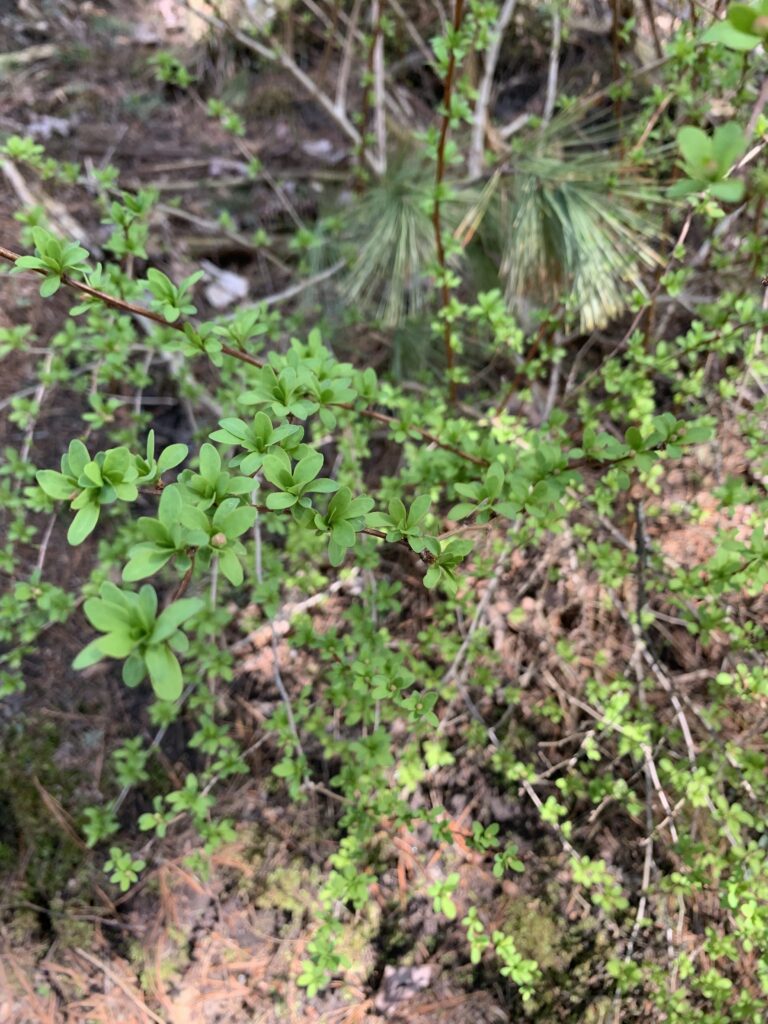
Spring iNaturalist

Green is finally coming back!

For this assignment, I biked along the path near past the golf course down Spear Street. I went until I found a small bridge, and decided to explore underneath it. It was the nicest day of the week so was great to explore a new area in Burlington.

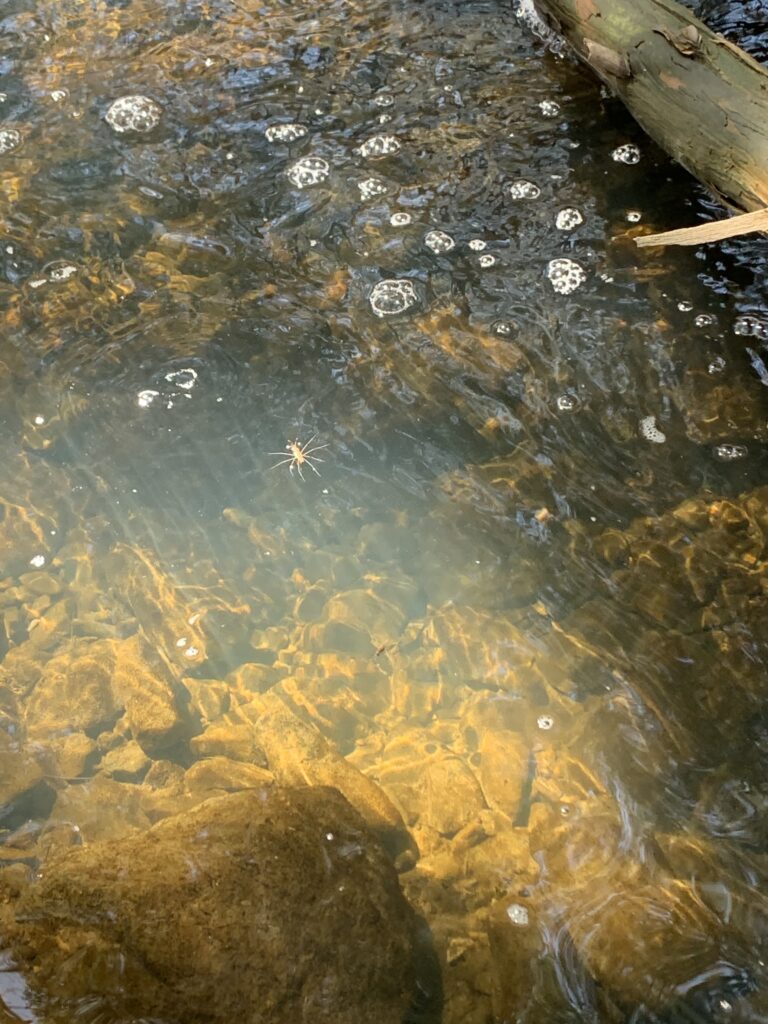
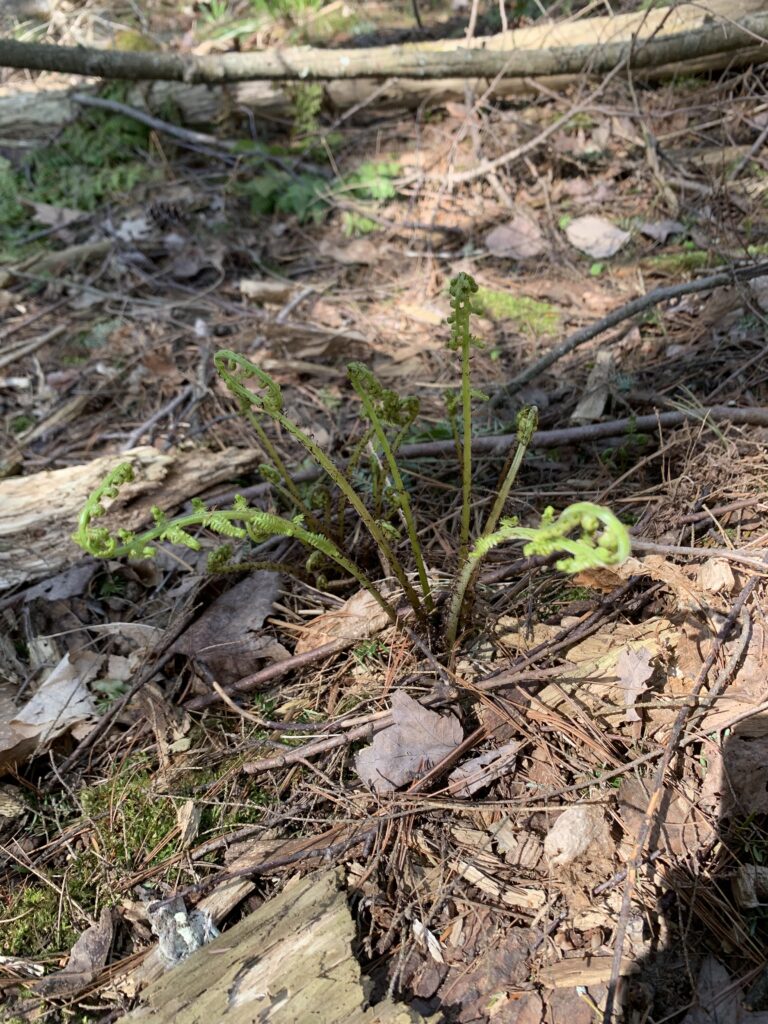
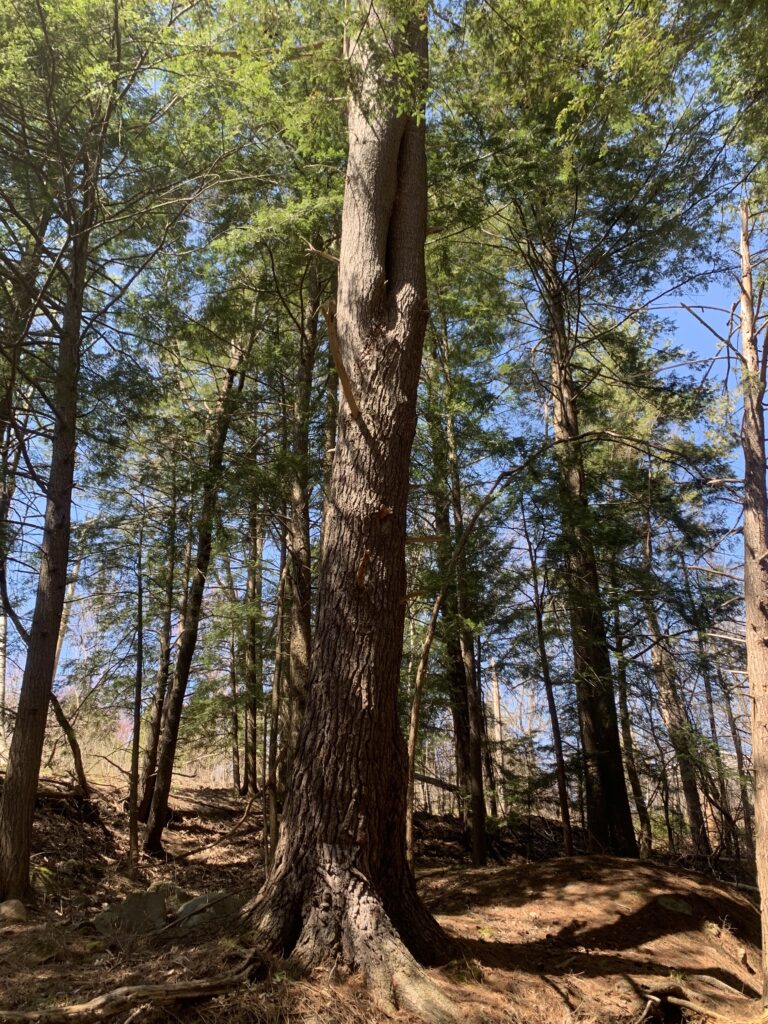
Under the bridge, there was a small stream that was surrounded primarily Eastern White Pine, Hemlock, and a few Yellow Birch. There were many ferns close to the water as well.

Using iNaturalist for this assignment was great because I did not know many of the species I was seeing, so I could upload them for others to accurately identify! I was surprised by the variety of mammals and birds my peers saw at their locations. I did not even see a squirrel here, but the lack of wildlife may be due to the fact that this was close to a noisy road, in between a neighborhood, and gets a lot of human traffic.

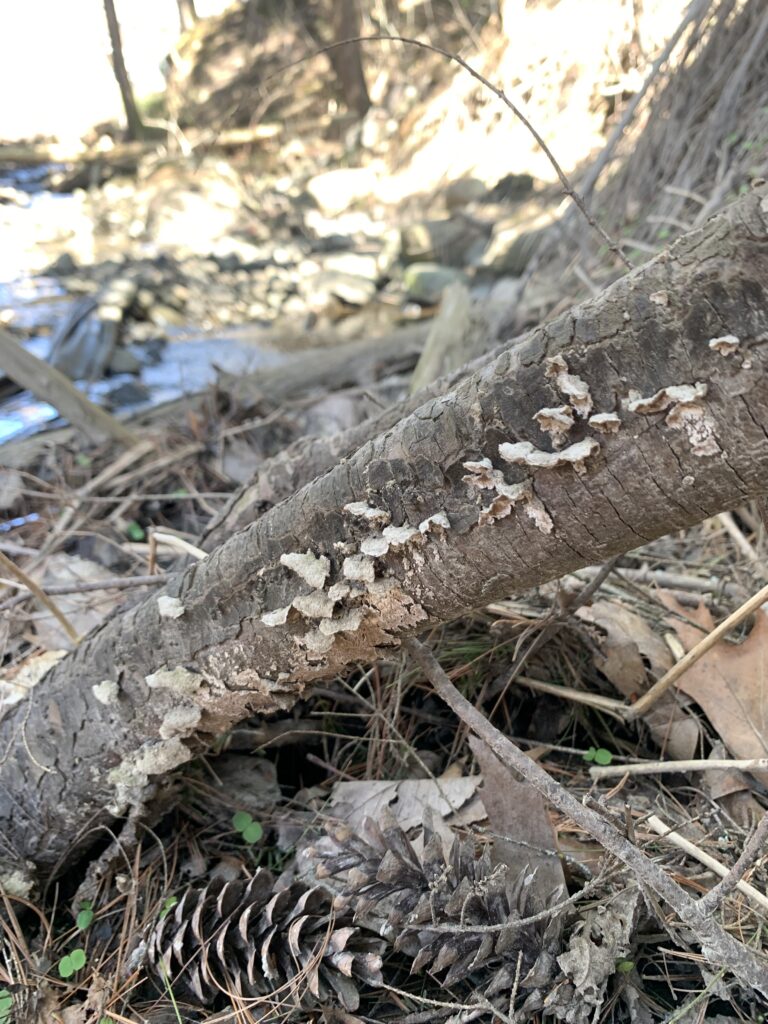
There were many water striders but not many insects other than that. I saw what I thought were fiddleheads and then realized they were too furry so must just be a type of fern. There was also a lot of fungi around which makes sense considering the surrounding moist area.

Bonus!

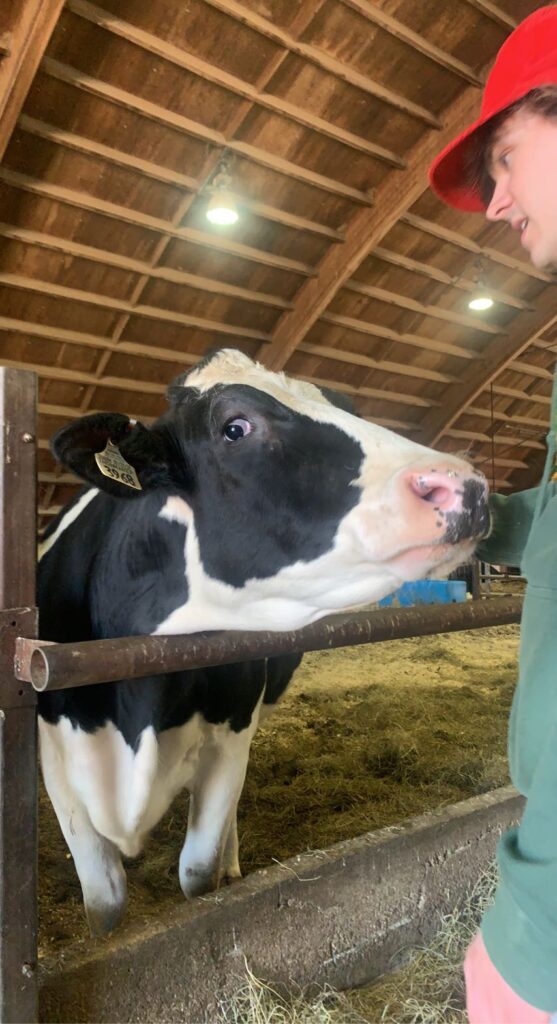
The best part about going to this location was that the UVM dairy barn was on the way! My friend and I stopped to give the cows some love and I got bathed by one of them.

March Phenology Post

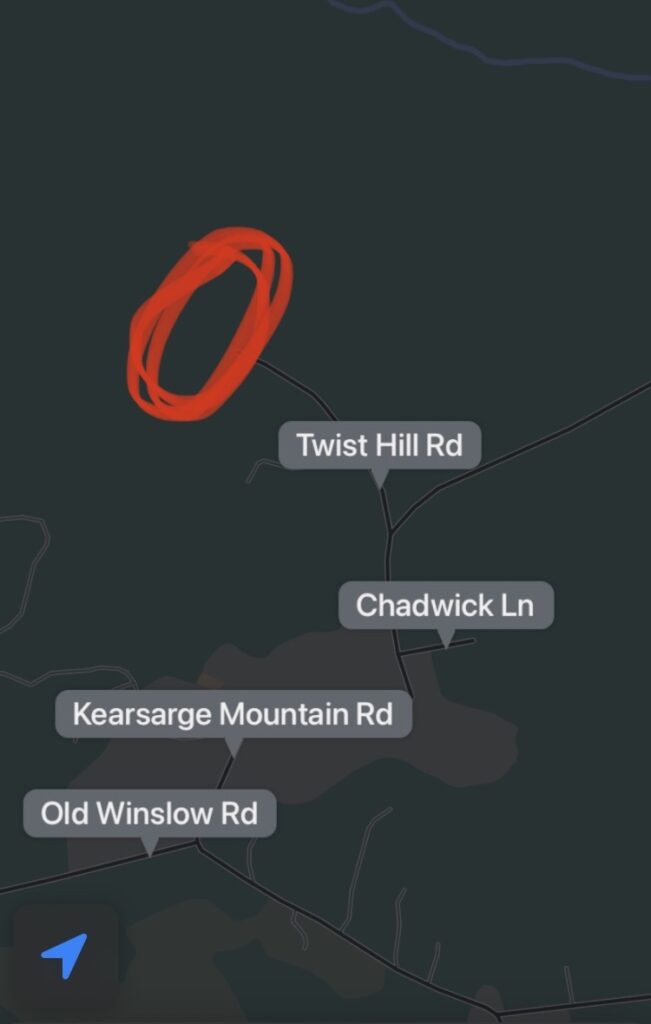
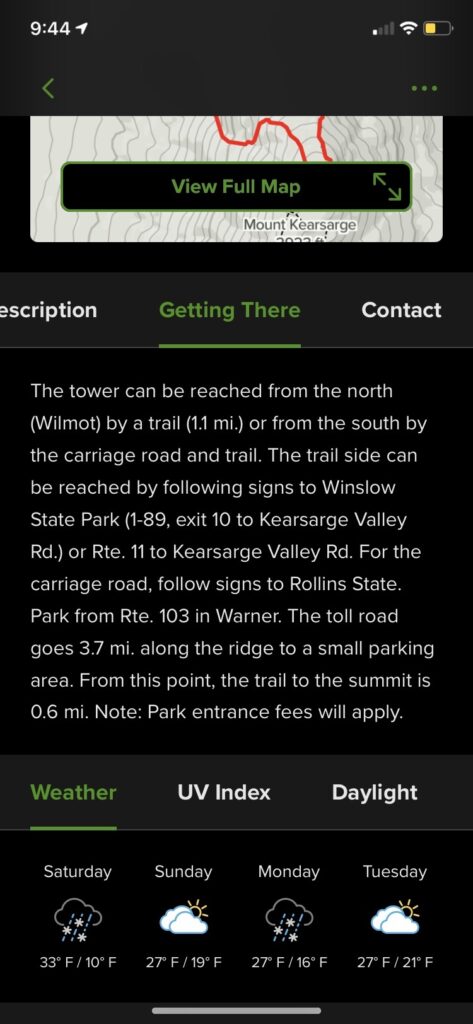
Over spring break I took a hike in Warner, New Hampshire at Mount Kearsarge, and I would not say that it felt like Spring whatsoever at the top. This mountain was named after the Indigenous word meaning “Notch-pointed Mountain of Pines.” Its prevalence of softwoods definitely reflected how it gained this name. The trail is pretty easy to navigate, but below is a map and written directions if interested in checking out:

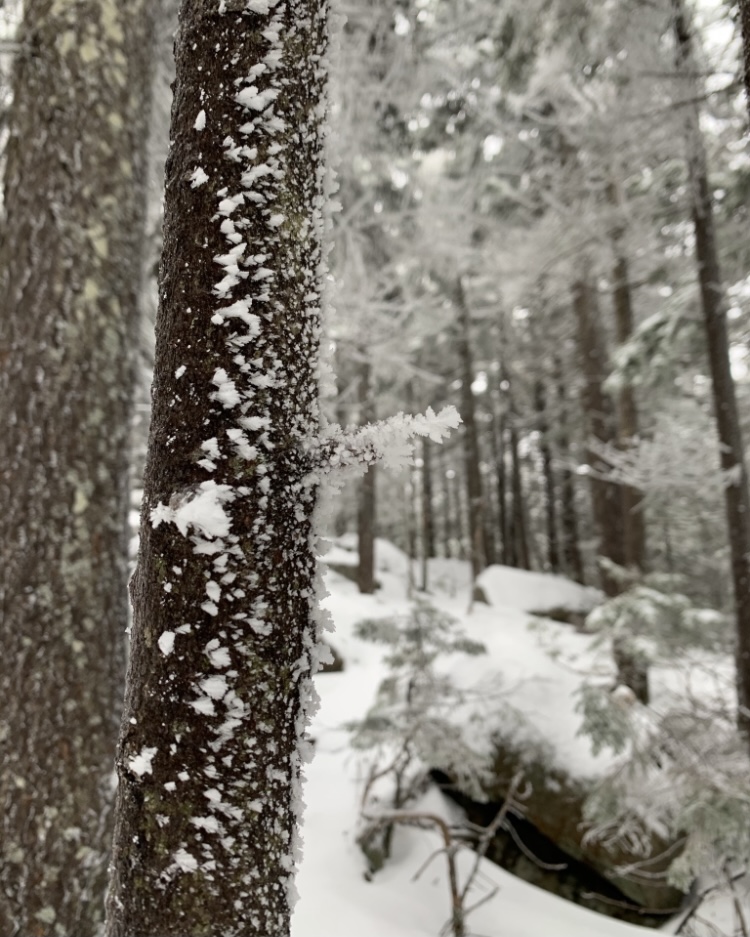
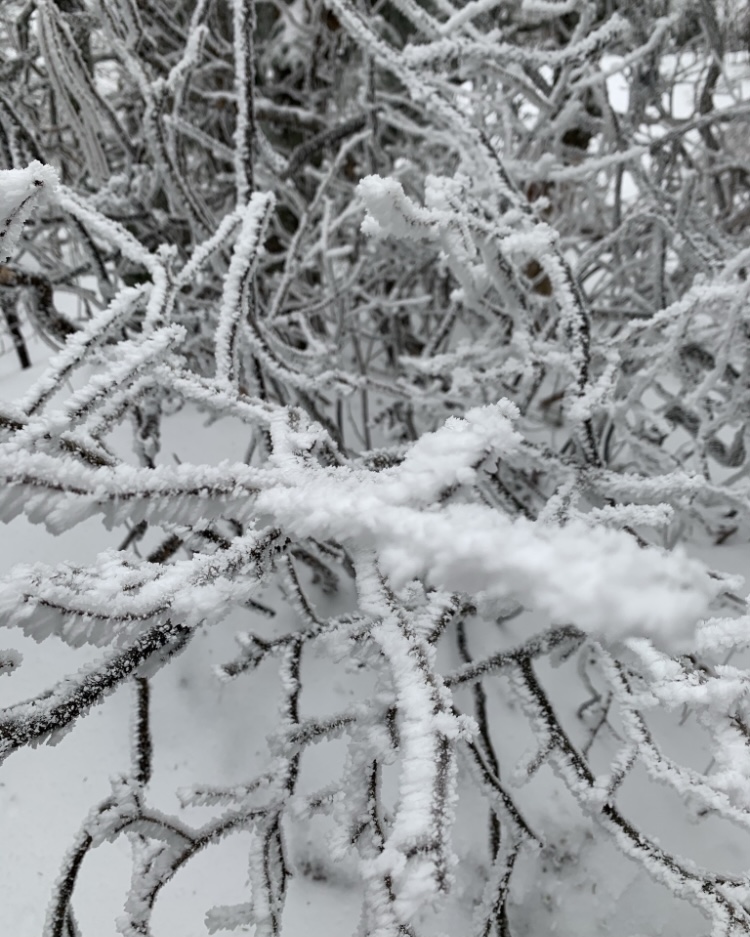
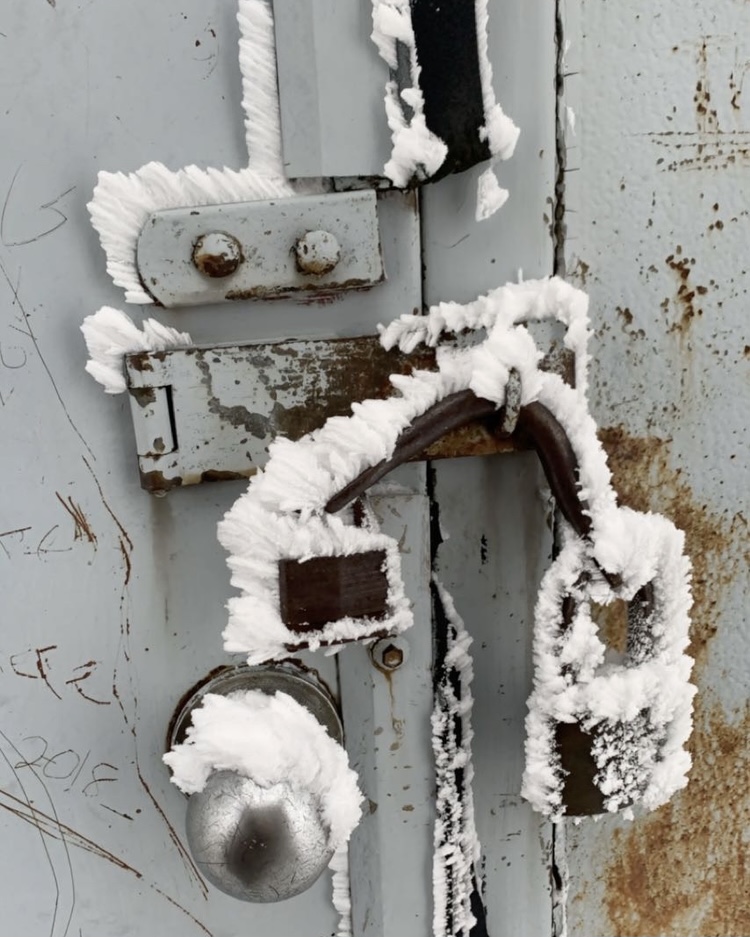
The most interesting thing that stood out to me about this location was wind swept ice on the trees at the top of the mountain which I loaded pictures of below. This hike was a perfect example of how elevation change impacts the different aspects of the environment, since at the bottom things were wet and melting but at the top everything was still frozen. As we learned in our last lab, conifers have a higher tolerance to higher elevations, since they must be able to survive the wind, ice, etc.

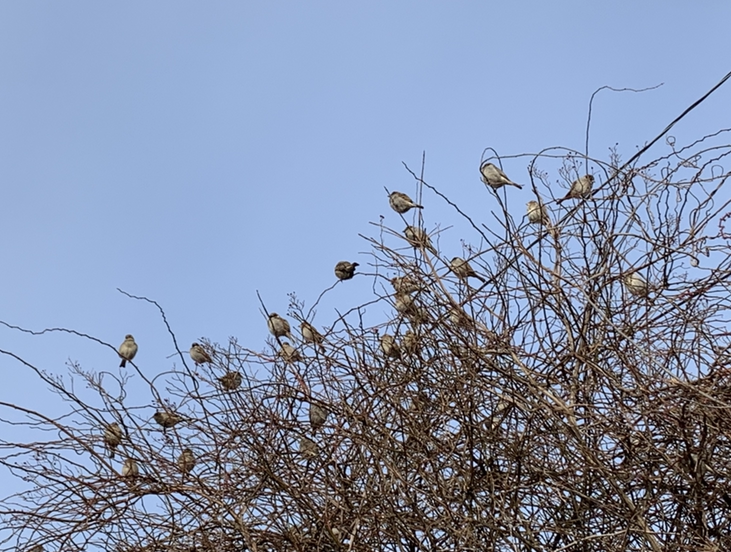
As for animal activity, it was fairly quiet on the way up. Towards the bottom though, I noticed the amount of birds I could hear and see increasing. Also, this likely had to do with the time as it got later in the day. Below is a bush full of sparrows I saw that I thought was pretty cute!

Winter Wildlife

One of the most valuable things I have learned this year is to pay closer attention to the natural world around me. There are so many details and stories that are easy to glance over when I am not paying attention. That’s why for this week I focused on a location that I pass almost everyday – the pines on Redstone campus. Other than squirrels, I did not see any mammals, but just because I did not see any doesn’t mean that they aren’t there!

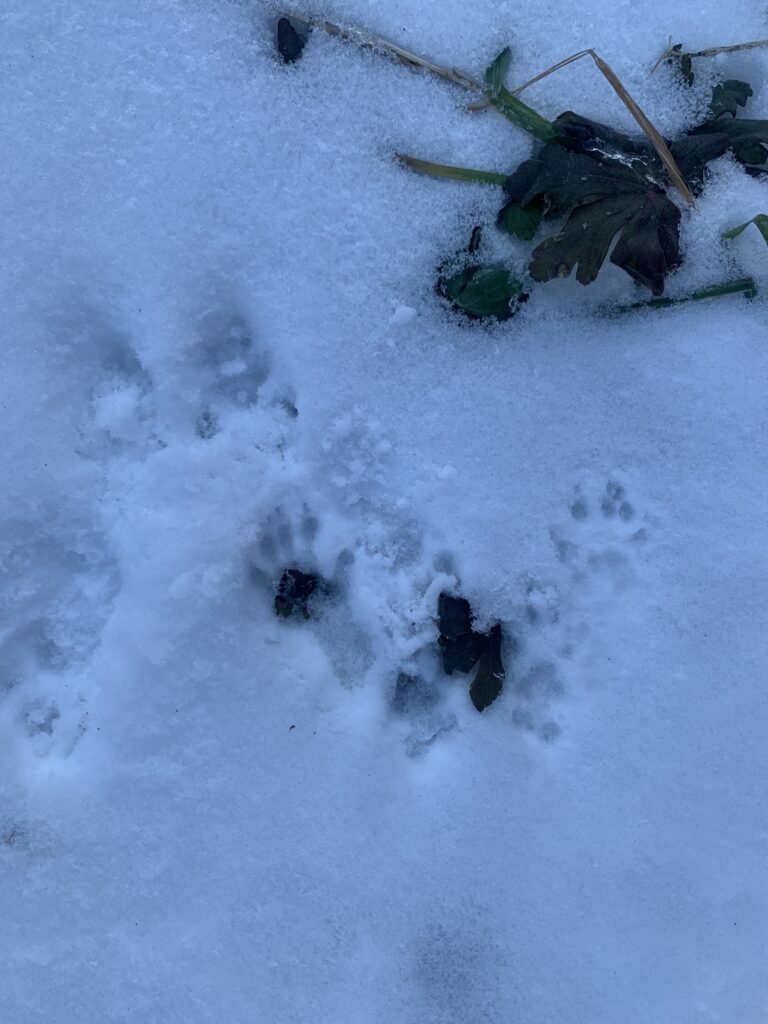
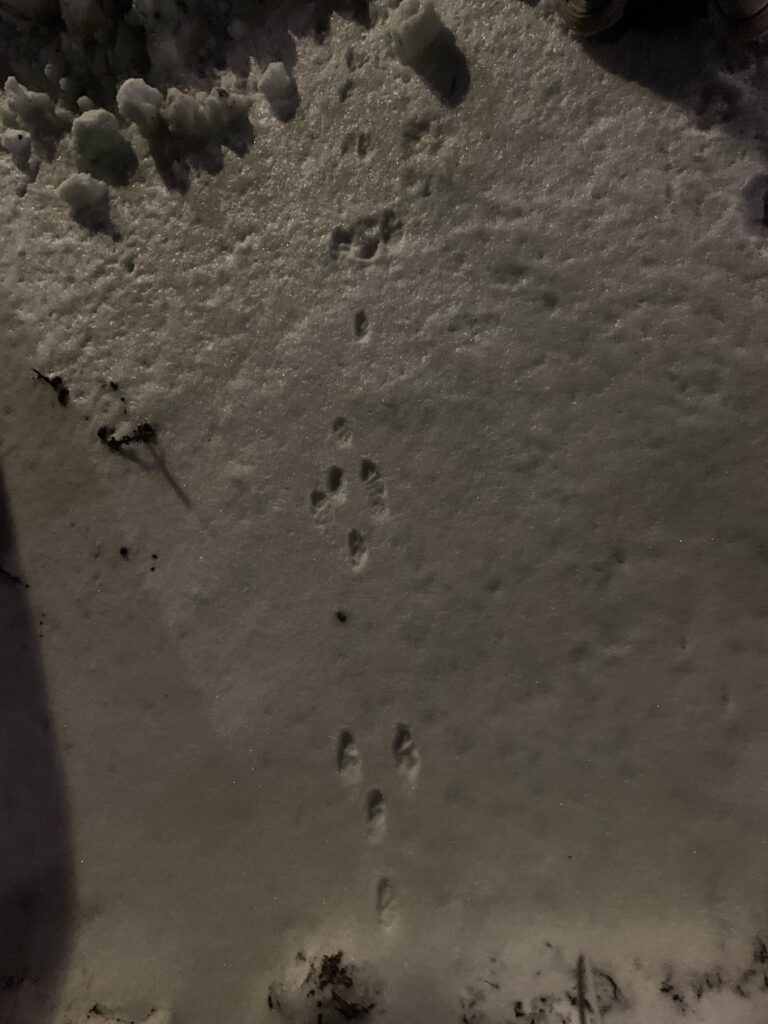
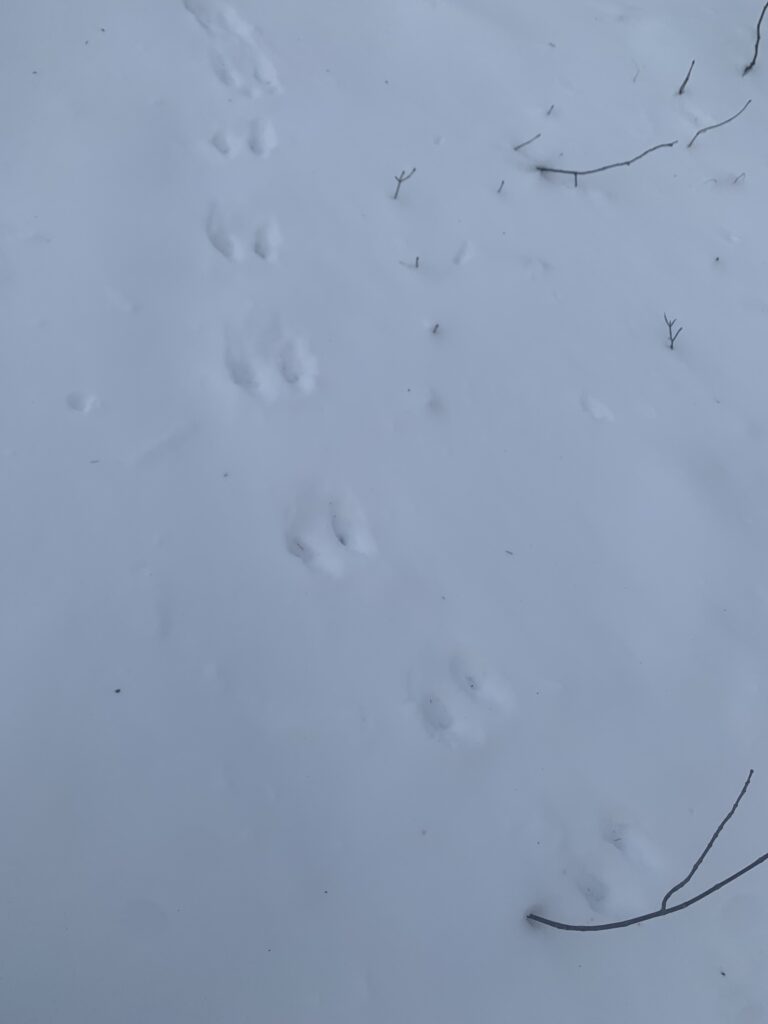
I found this set of tracks on my walk, and although they seemed to be part of the same trail, they look fairly different to me. If they are the same animal, then my best guess would be that this is from an opossum due to the 5 fingers with nails and shape of the center. The tracks on the right make me think that this is more likely a squirrel or raccoon though.

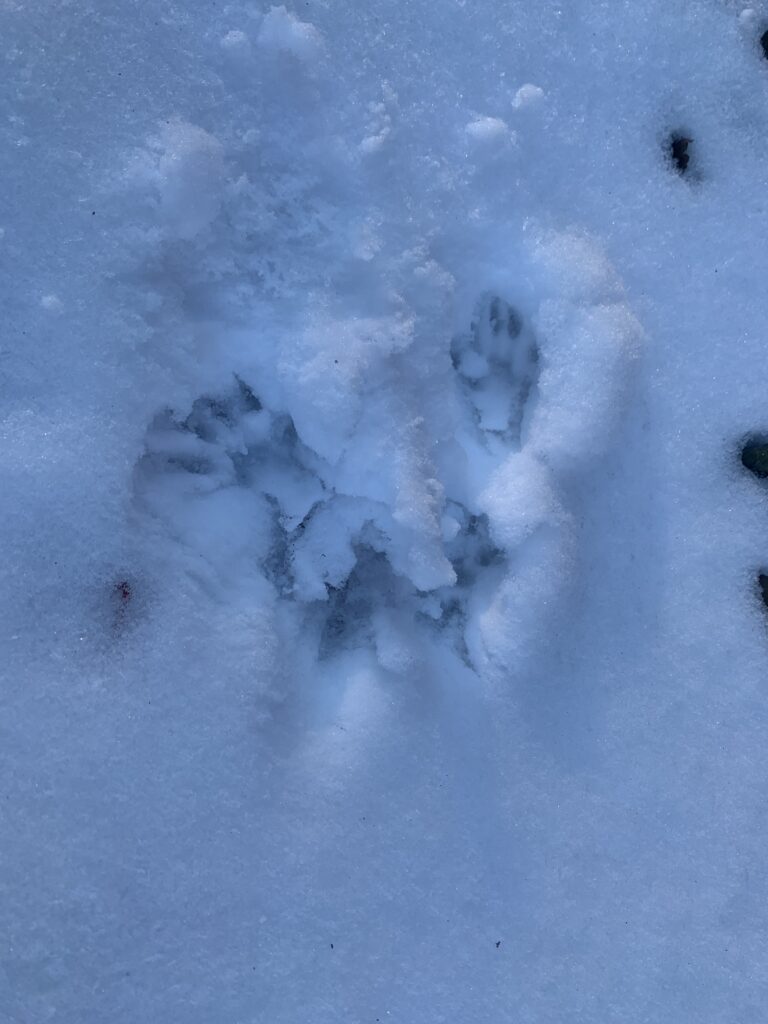
Later that day I watched a rabbit hop by me as I was coming back from dinner. Of course I had to stop to take a picture of the fresh tracks!

Aside from the mammal activity I witnessed at The Pines, I was awed by the massive flock of crows I saw leaving one of the trees. I remember that happening once when I was little, and my mom explained that this is crows roosting. I suppose they do this during the winter as a survival tactic, as they are more likely to find food, stay warm, and overall be more safe.

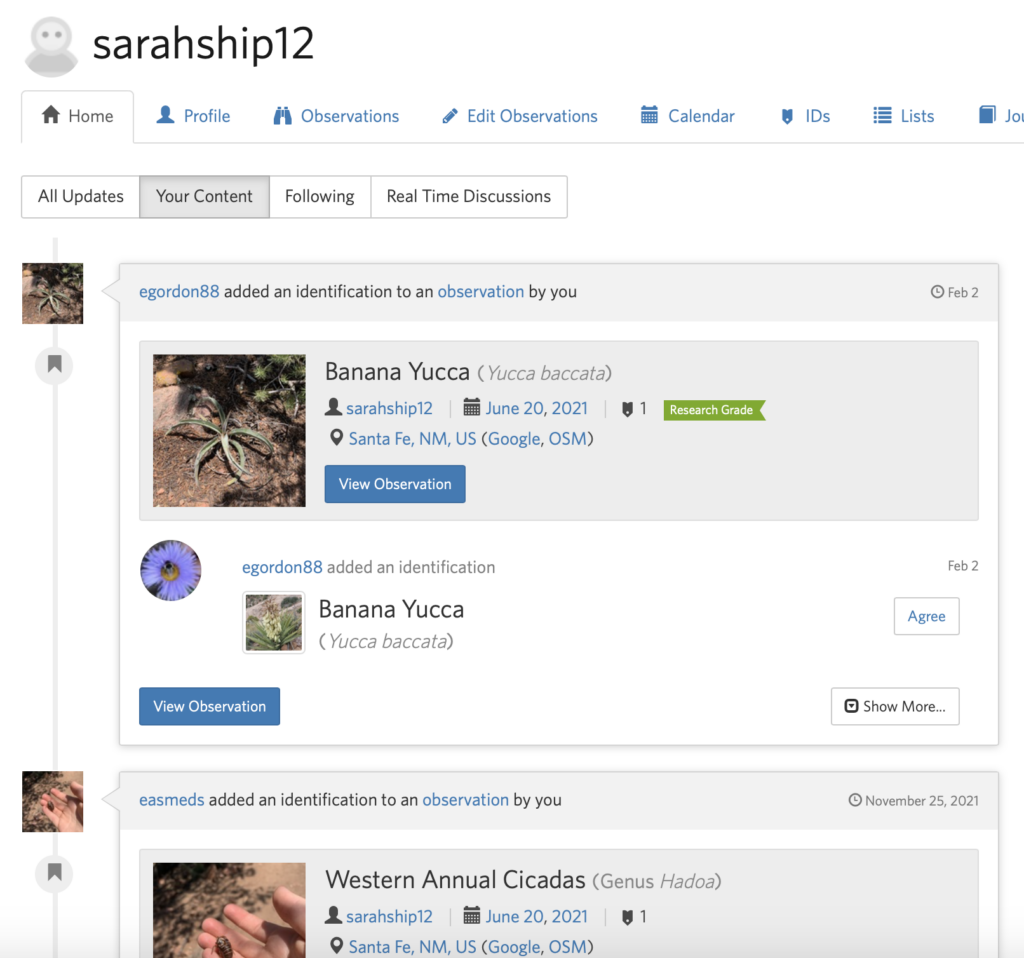
For this weeks phenology assignment, I was excited to be prompted to use the iNaturalist app. I had used this before, but it had been a long time and I had never been part of a group page before. It was really neat seeing my classmates observations, and I enjoyed posting some of my own again! It felt like a game more than an assignment.

Here is a link and a screenshot of my Profile if you want to check out my observations or follow me!

https://www.inaturalist.org/people/sarahship12

Winter at Redstone Quarry

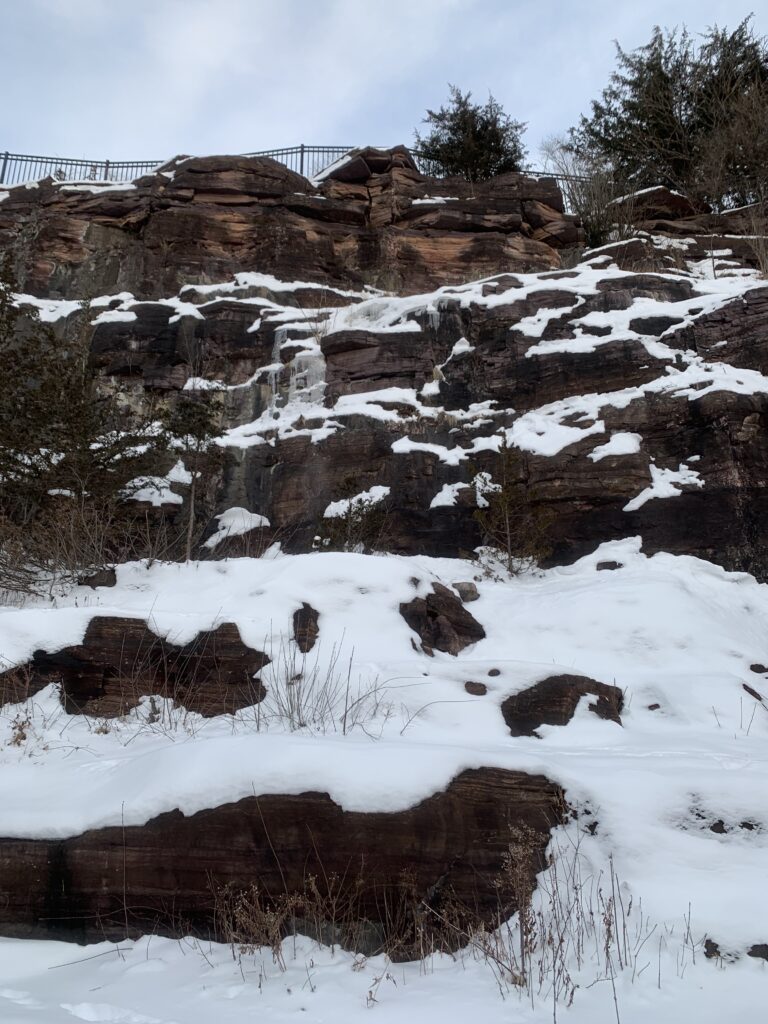
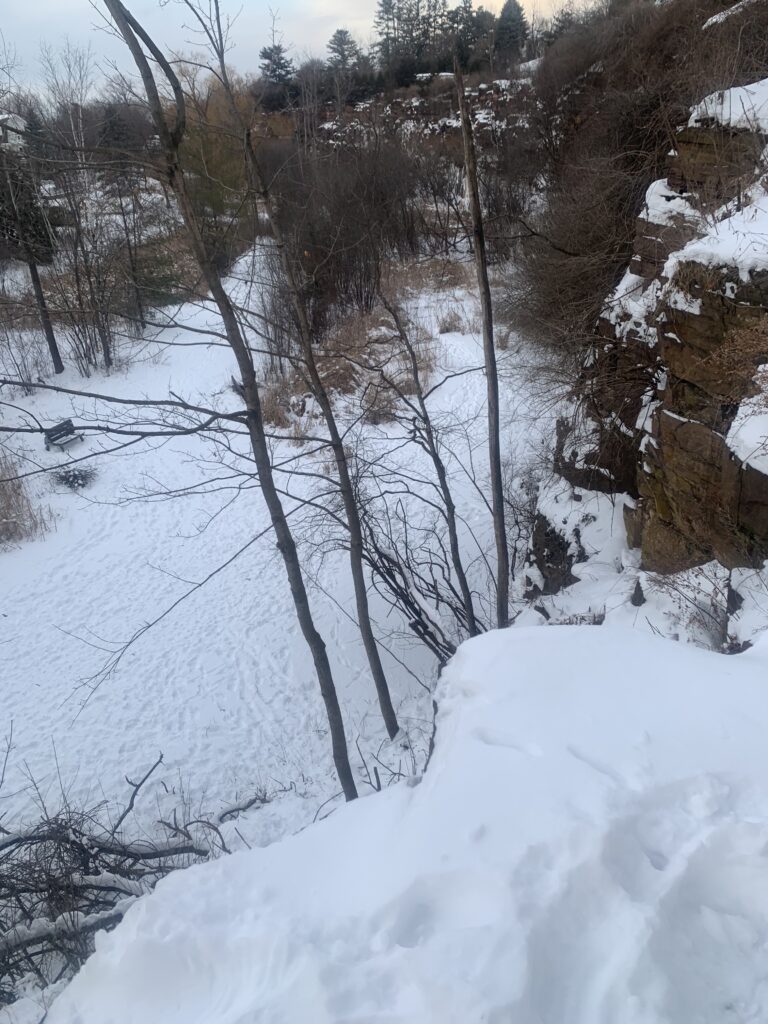
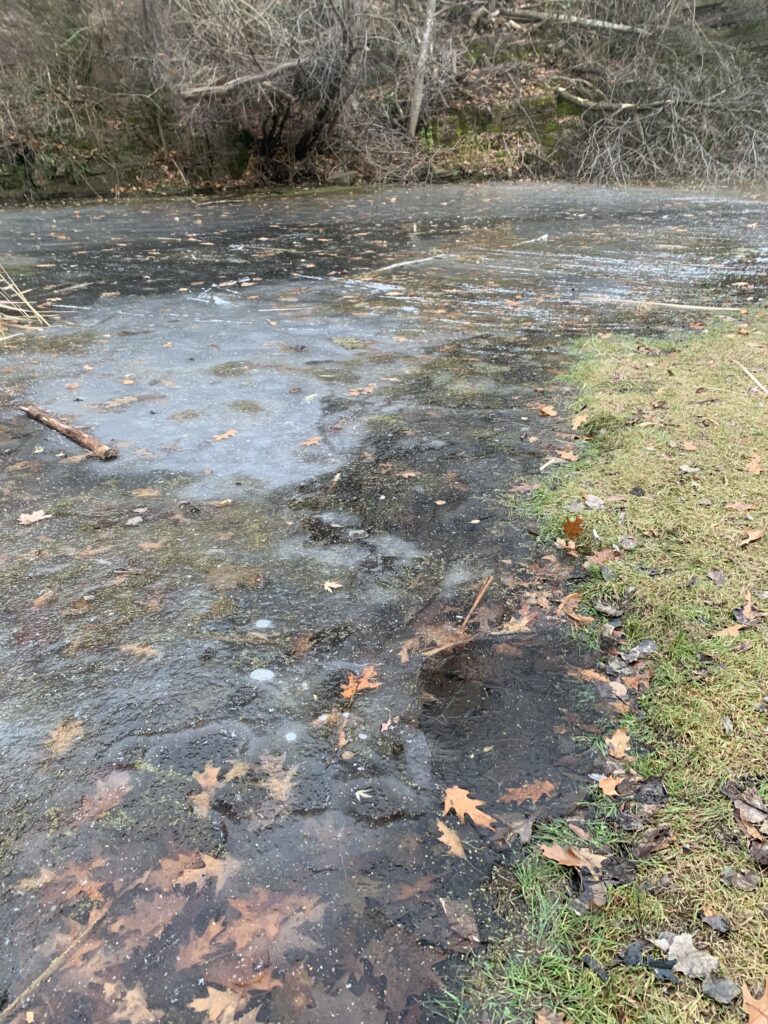
I returned to my phenology site this week to see it covered in snow for the first time. I found it unique how the snow on the ledge of the quarry wall really highlights its geography and different layers. The most notable change since my last visit was that the water had frozen over. I cautiously walked over the snow covered ice, and thought about how frozen water allows animals to access areas they might not otherwise be able to. I also thought about the living beings that may be below my feet. Below is a picture of the many paths that have been on the water since the snowfall a few days ago.

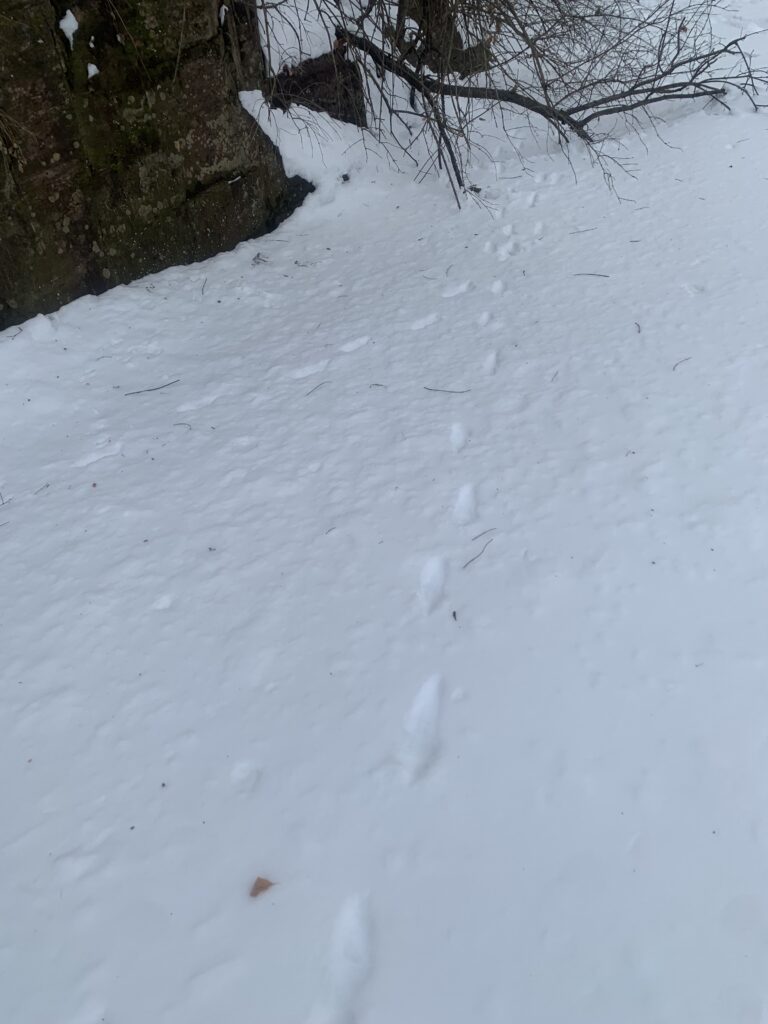
Ideally I would have visited directly after a snowfall to see tracks in their freshest state, but there were still many to be observed coming a few days after a snowfall. I primarily found human and dog prints, but I made out a few other critters as well. I looked for rabbit tracks to see if the rabbit I had seen in the Fall may have been moving around, but I could not find any. I have never tried tracking before, but the concept of telling time and stories through the paths of different animals was very cool to see.

Squirrel Tracks
Two paths crossing

Thinking about the drastic phenological changes that have occurred here since my first visit in the early fall has me excited to see what Spring will bring. Before the season changes though, I hope to find more Winter signs at my next visit beyond tracks.

December Phenology Visit

A day before the ground became covered with snow again, I visited the Redstone Quarry to see what changes had been made since the previous month.

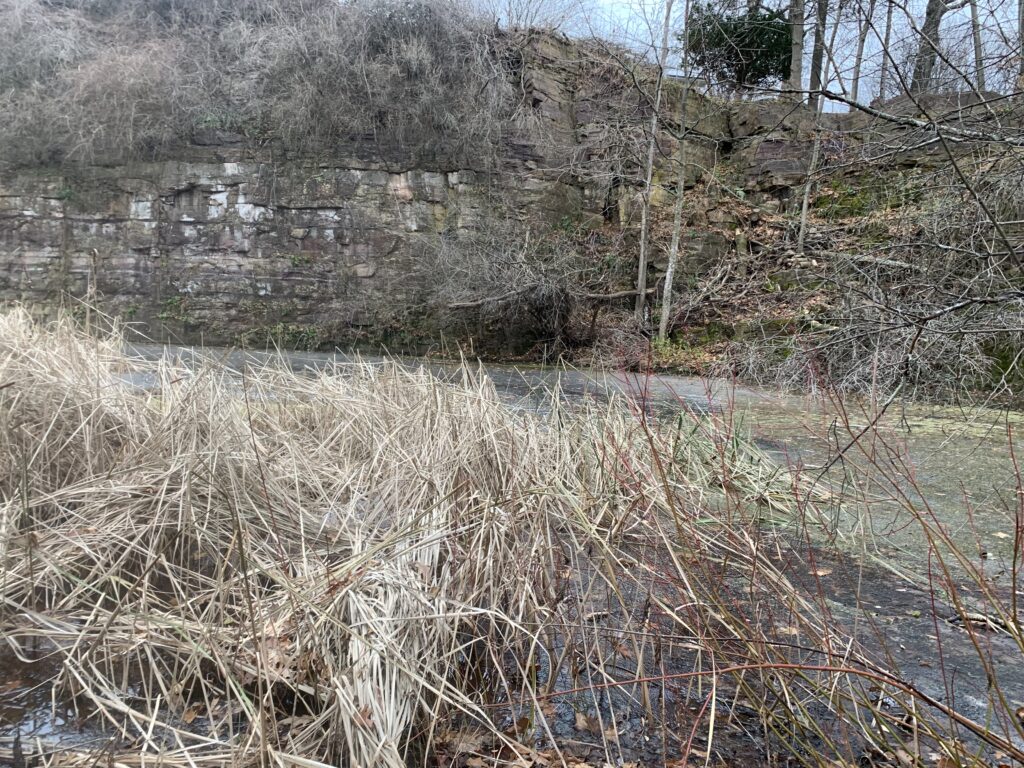
View near the bench by the water

The major change was that the water had frozen over, not enough to walk on by any means, but enough to show that Winter is here. The reeds that previously were tall and healthy were now dehydrated and frozen in the water. The green algae in the water was also frozen in place.

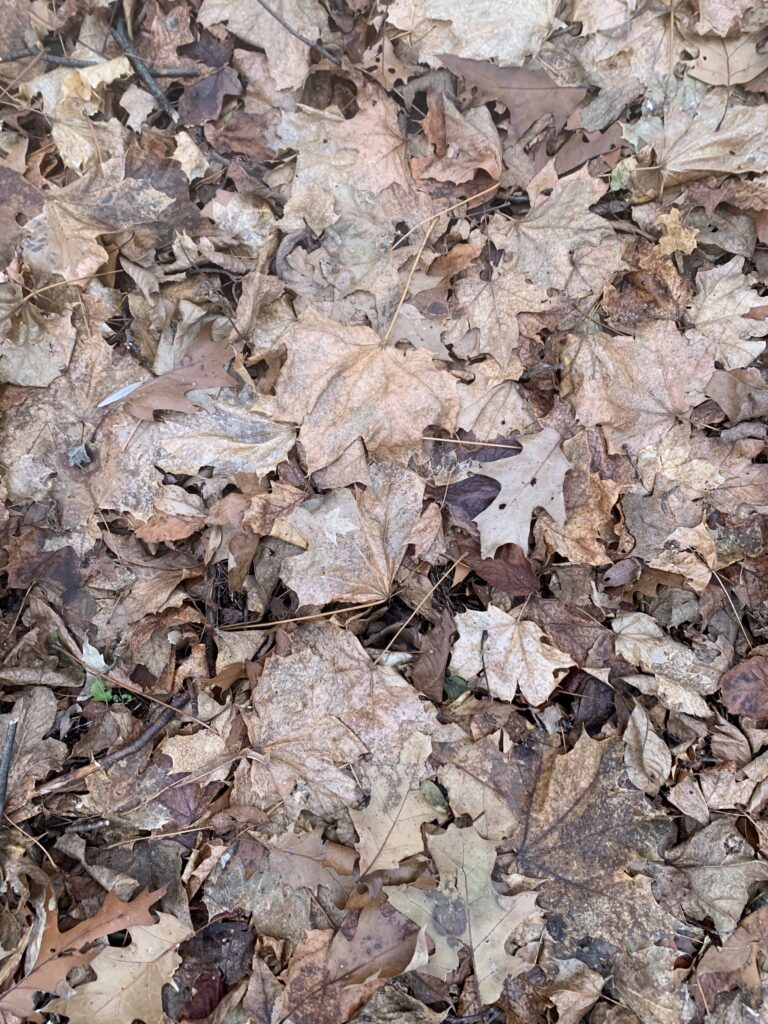
Red oak, Sugar maple, Norway maple and several other species of tree leaves

The forest area of the Quarry felt much more open with the leaves of the deciduous trees now mostly fallen. Knowing that the frogs/toads that inhabit this area may be hibernating beneath the leaf litter was something I thought about while walking through the quarry. I recently learned that when trees lose their leaves, a corky abscission layer forms where the leaf stem was attached to prevent transpiration from the tree and help it conserve water through the Winter. This is just one of the amazing adaptations that the natural world has to survive the seasons.

I saw and heard the chickadees and sparrows again, who do not migrate south but stay active through the Winter here. I will say they looked a bit fluffier than before. I did not see the rabbit that I had last time, and if there was snow on the ground I would have loved to search for its tracks. I did see some dog scat and prints in the mud, which is not surprising since it is often used by locals to walk their dogs. The Redstone Quarry has continued to prove itself as a successful socioecological site.

Clarification

Check the top of the page for the ribbons on how to get there, the vegetation, and wildlife! There are some neat images within each, they deserved their own section.

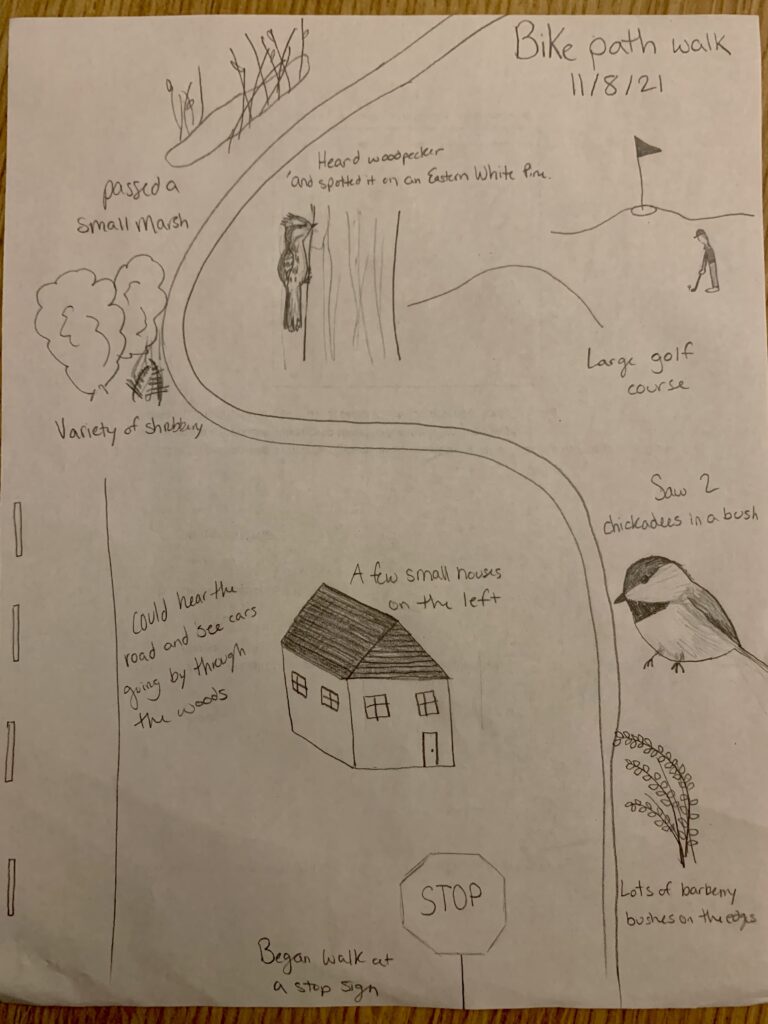
Event Map 11/8/21

Near the track on Redstone Campus, there is a nice path that many joggers and bikers use. I went at about 4:30, which because of the time change is now sunset. I heard and observed several different bird species, and identified a few of the trees and plants that were most notable. There were several types of bushes/woody plants that I did not know of. The path keeps going fairly far, but you do not need to walk on it long to witness a variety of Vermont wildlife.

Welcome!

A little background

Up until the 1930’s this location was used to mine the stone used for many buildings around Burlington, including some of UVM’s own, such as Redstone Hall. The rock here is called Cambrian Monkton Quartzite and is between 540-470 million years old. Today, the University of Vermont is responsible for the management of the area and the protection of the biodiversity within it.

11/1/21

I was eager to do this aspect of the assignment after having such a peaceful experience my first time visiting. While sitting quietly for 15 minutes on the bench by the water, I made a few different observations. First, I realized I observed much less wildlife than last time, which may have been due to the rain, the cold or the fact that it was the middle of the day. The colors of the place were especially prominent in the rock cliff and the fall foliage due to everything being slightly damp. The air was very crisp and fresh, it is interesting how the air during Autumn has an entirely different feel. It was very quiet there, other than some crows and a couple of people walking, it was very still there. It was very refreshing to simply sit in a meditative way for 15 minutes here, and is a great breather for anyone who needs a change of scenery. Since visiting last time, the biggest change has been with the leaves. The colors are past their peak now, where they were just reaching it last time I visited, and many of the trees have lost a fair amount of their leaves.. The ground was covered by leaves, especially due to the rain taking them down over the past few days, and there were lots of leaves in the pond as well. Despite the couple cold nights we have had here, there was still a lot of life at the Quarry. I think that by the next time I visit there will be a drastic difference in both biotic and abiotic features, and maybe even snow! 🙂

10/10/21

I came upon this location through the very useful Burlington wildways website (https://burlingtonwildways.org). My first time coming here, I was pleasantly surprised by the variety of nature, which can be observed best from the view on the rock ledge. I spent quite amount of time here exploring, listening, and capturing some of the beauty on camera as the sun went down.

Skip to toolbar