Posts

A Moose in the Desert?? (3/14 assignment)

Over spring break, I was backpacking with my dog, Moose, in southern Utah. We spent five days exploring Ticaboo canyon and its surrounding area, which is just northwest of Lake Powell.

To get to the trailhead, I drove south from Salt Lake City, moving from mountainous terrain into the land of expansive, dusty agriculture. Once I reached Hanksville, the last place with service before I dropped off the grid, pillars and mysterious mounds, and sweeping landmarks of sandstone became my out-the-window companions. I left UT – 276 for an unnamed road that twisted through BLM land. BLM land is owned by the government and is 10.5% of the U.S. land total or 248 million acres. This land is the land of the Núu-agha-tʉvʉ-pʉ̱ (Ute) tribe, and before the U.S government forced them out, they lived here. Now the land is leased to farmers for grazing their cattle. It is a weird, and privileged experience for me to be able to have done this backpacking trip on land that was stolen from people who aren’t welcome there now. To get into the canyons I explored, I took the path originally built for cattle, and I used maps created by surveyors from the U.S. government. I am constantly thinking about how to exist on stolen native land, and I am grateful for this trip, and am also indebted to the land and the people whose land it truly is.

The land above the canyon is scrubby, and filled with plants such as Mormon Tea (ephedra viridis), desert sage (salvia dorrii), and broom snakeweed (gutierrezia sarothrae). These plants are incredibly hardy, and able to withstand the dry, windy weather of their environment. And with the sheer number of plants, they seem very unaffected by the minimal cow grazing that I saw while I was there.
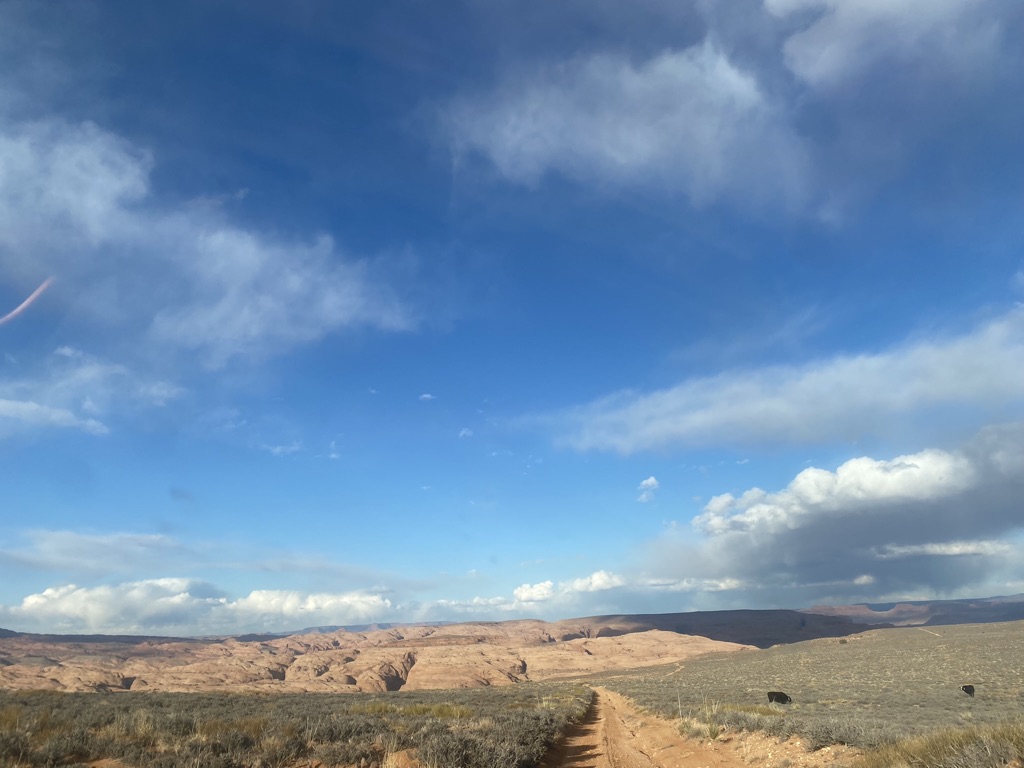
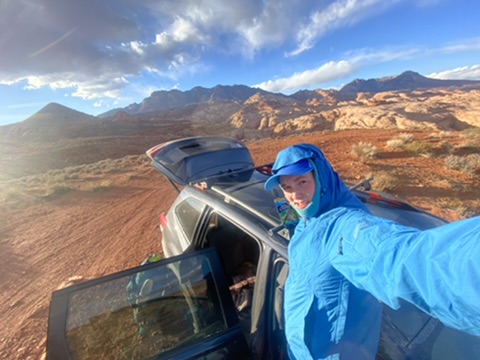
Me at the trailhead, where the land transitions from the scrubby fields (above) to slick rock sandstone.

The canyons I was walking in were mainly riverbed, with unique white, volcanic rock in them from the nearby dormant volcano. The rounded volcanic rock contrasts with the bright orange sandstone, from ancient sand dunes that towered above me as I walked deeper into the canyon.

The birds were pretty scarce in sightings. I saw a few ravens every day, flying overhead, and once I saw a pair of bald eagles circling in the distance. I saw no turkey vultures, which I took to mean there wasn’t much in the way of carcasses lying around. This made sense, given the lack of cougar tracks I saw. I noticed tracks in the ascending order of the food chain. I saw the most small beetle and rodent tracks, I saw fewer bobcat and coyote tracks, and I saw zero cougar tracks.

The bird encounters I loved the most were the canyon wrens I never saw but heard quite often in the echoey canyons.
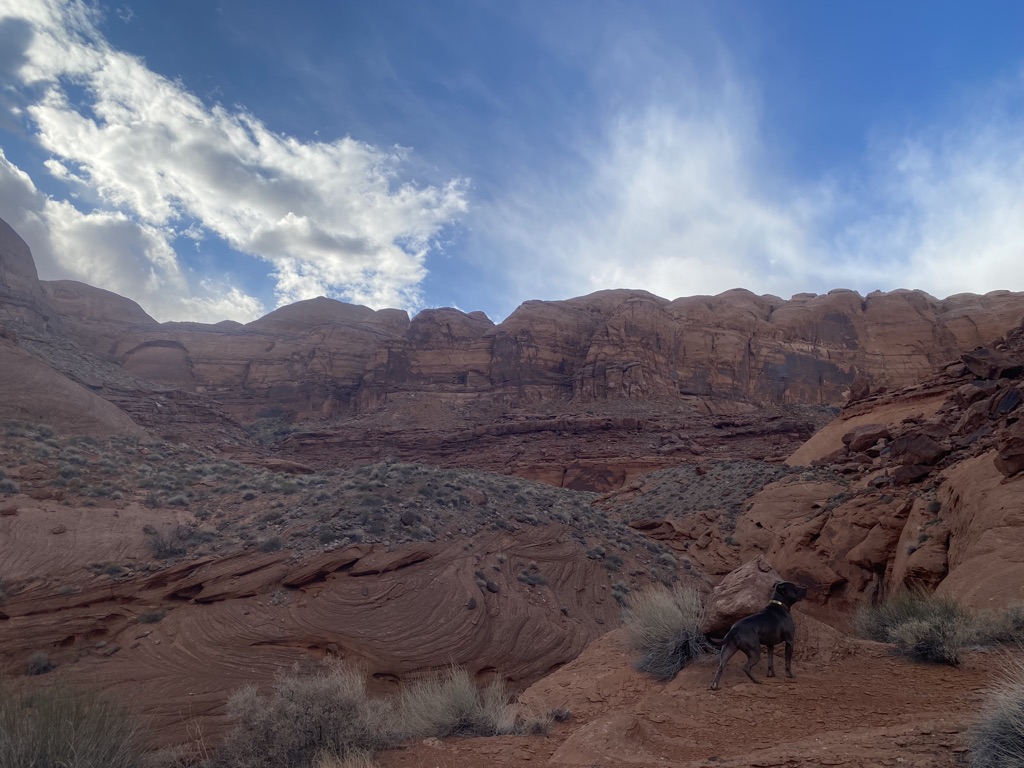
Moose hearing something, maybe a canyon wren?

My spring break phenology site is quite different than my Vermont phenology site in terms of geology, plants, and wildlife. But I did find some similarities. They both surround a source of water, Winooski’s Salmon Hole, and Ticaboo’s TIcaboo Creek, as well as farther down the canyon, Lake Powell. At both sights, I saw the tracks of many a cool creature, but never the creature itself.
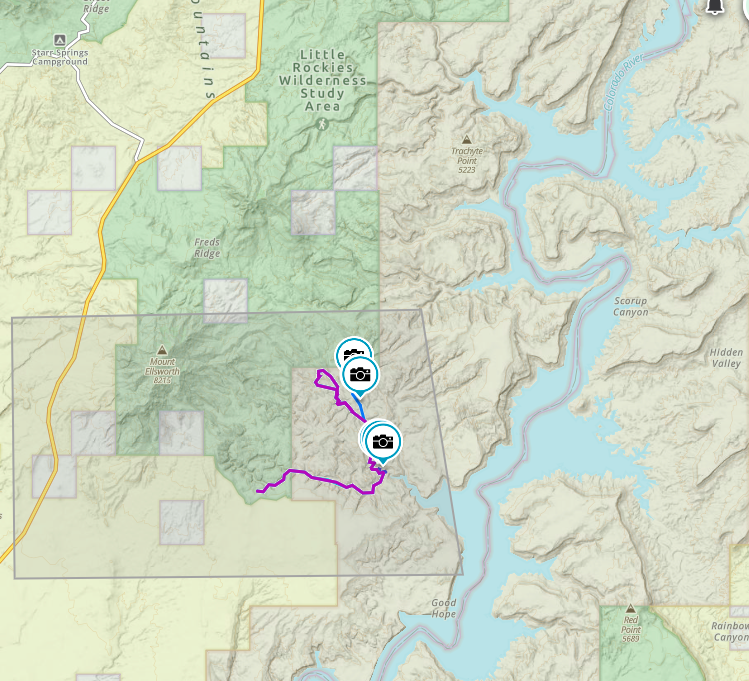
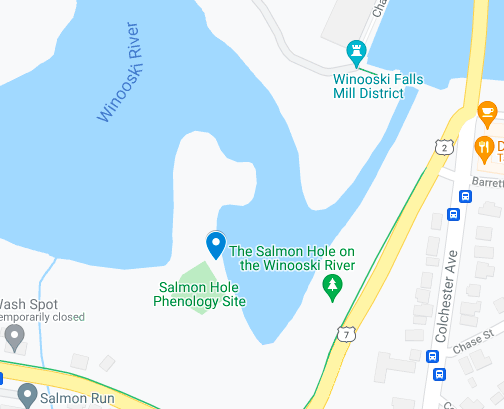
Maps of where I was! The tops of each map is North.
Birds on the Bike Path (2/21 assignment)

For my second blog posting of the semester, I went for a rainy run down to the waterfront. The squirrels froze when I ran by, and up above them their nests, as well as different sized bird nests, were exposed from the lack of foliage. The landscape is still very muted, the trees, reeds, grass, and leaf matter on the forest floor are all brown. I did see little shoots of daffodils popping up in the exposed dirt along the pathway which was exciting!

The further I ran away from the ECHO Center, the less buildings I saw and the more trees and reeds became the predominant scenery. Right before the skate park, there is a marshy area with reeds and cattails, and hailing me from within this miniature forest came the telling springtime calls of a redwinged blackbird.

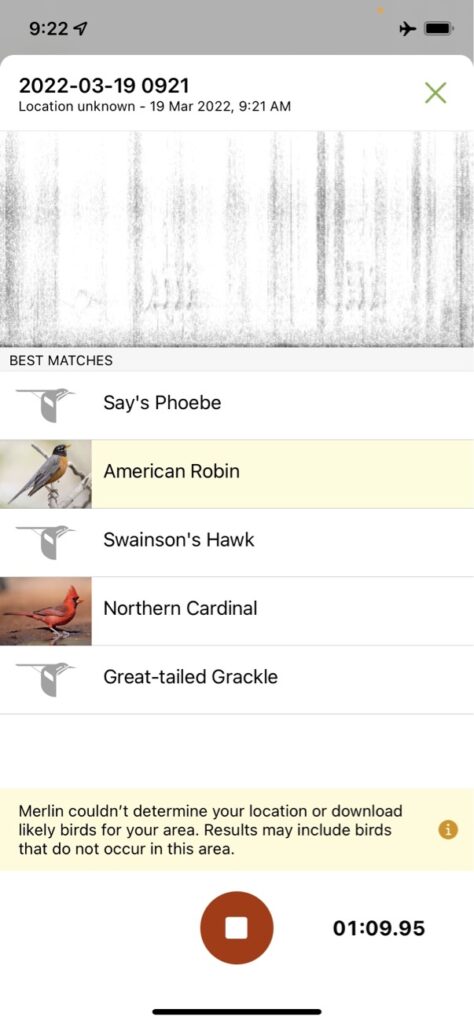
I recorded the red-winged blackbird on the iNaturalist app, and found the app to hold a wealth of sitings, from spiders in sinks, to coyotes and cats. I also used the Merlin Bird ID app, which was incredibly helpful for me, discerning which birds I was hearing.

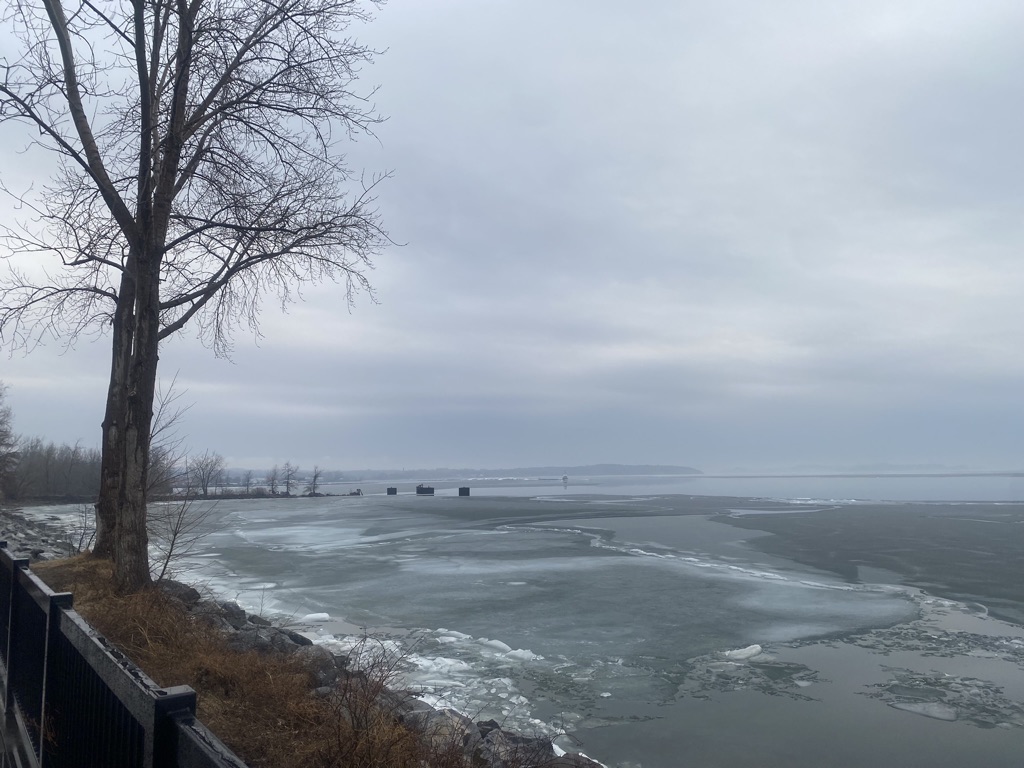
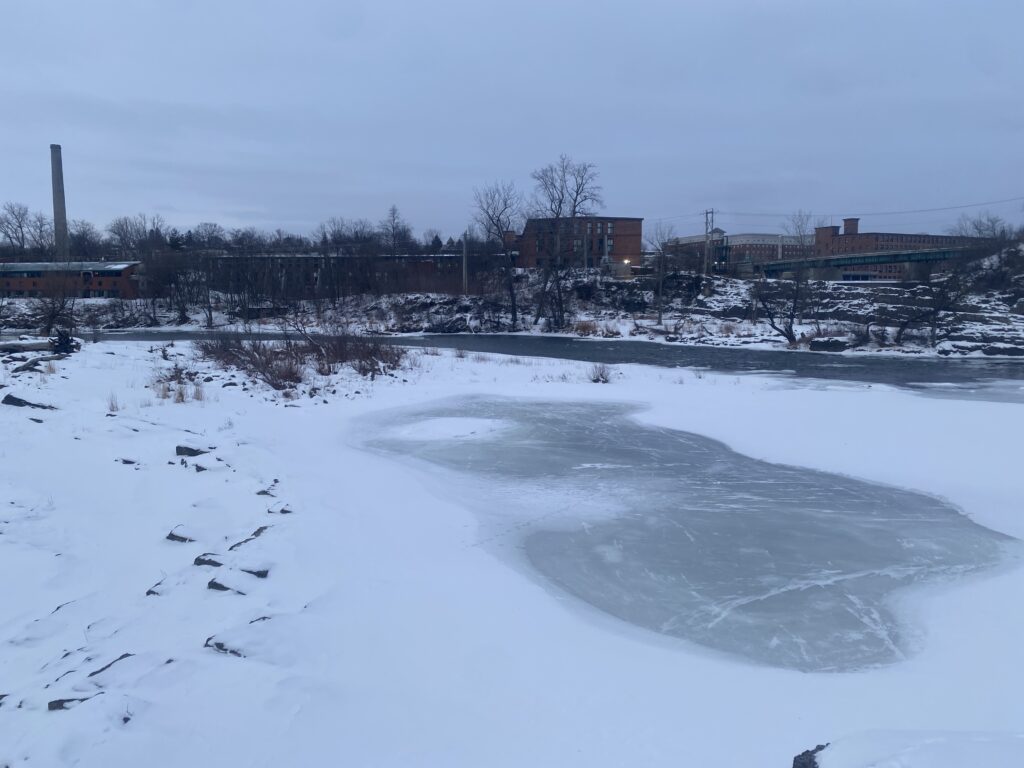
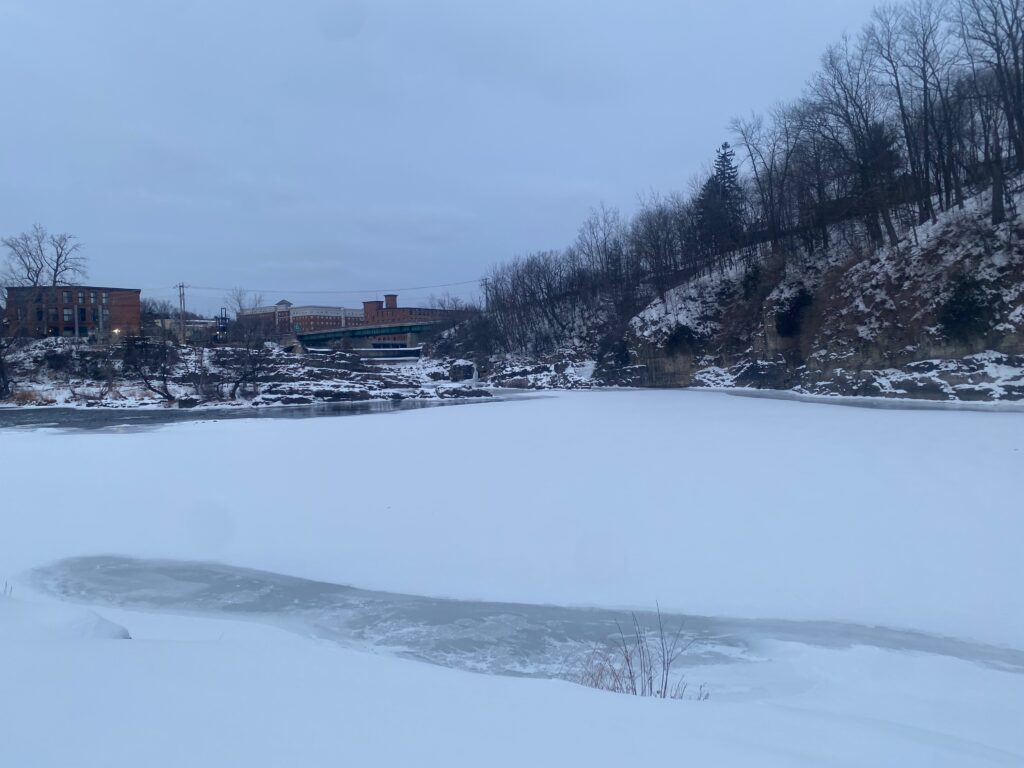
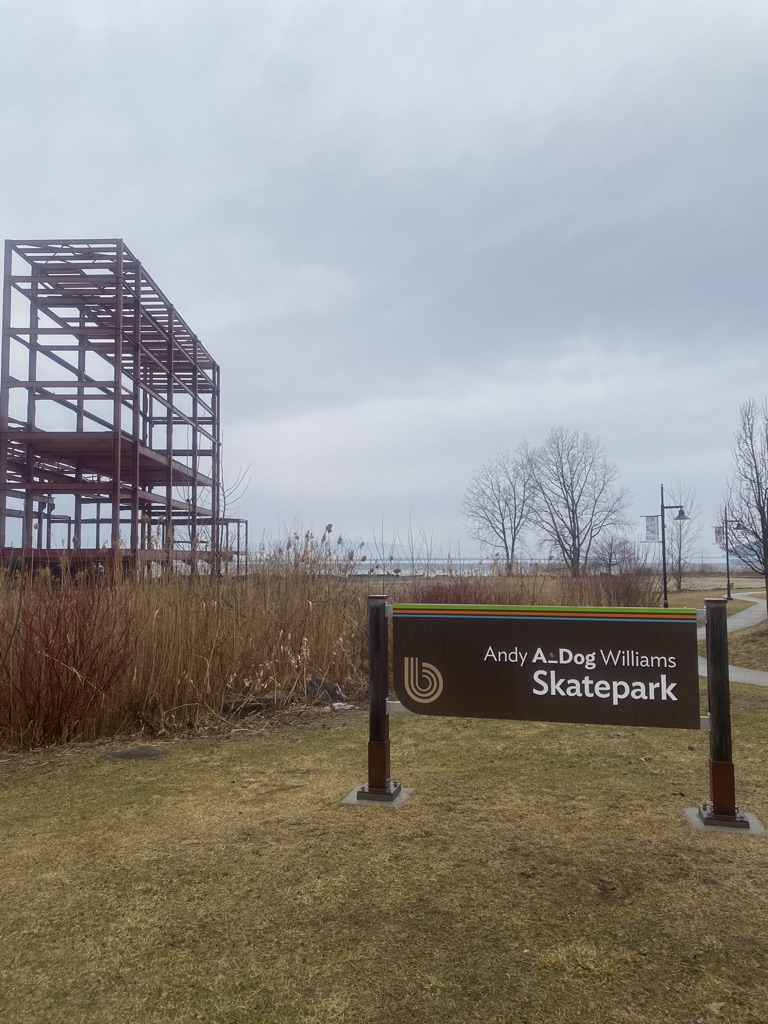
I recorded the birds in the same spot where this photo was taken, and as you can see the ice that has been consistently casing the shoreline these past few weeks is starting to soften and break apart.

Seeing changes in the natural world is a good reminder that life is always moving and changing. Hearing the birds brought me out of my school stupor, and pulled me into a place of deeper observation. This past week I’ve been feeling the need to escape from school stress lately, and returning to this observation, the seeking out of bits of nature and wildlife that aren’t always obvious to the quickly moving person, has been really wonderful.

If the foxes are cold, it must really be freezing

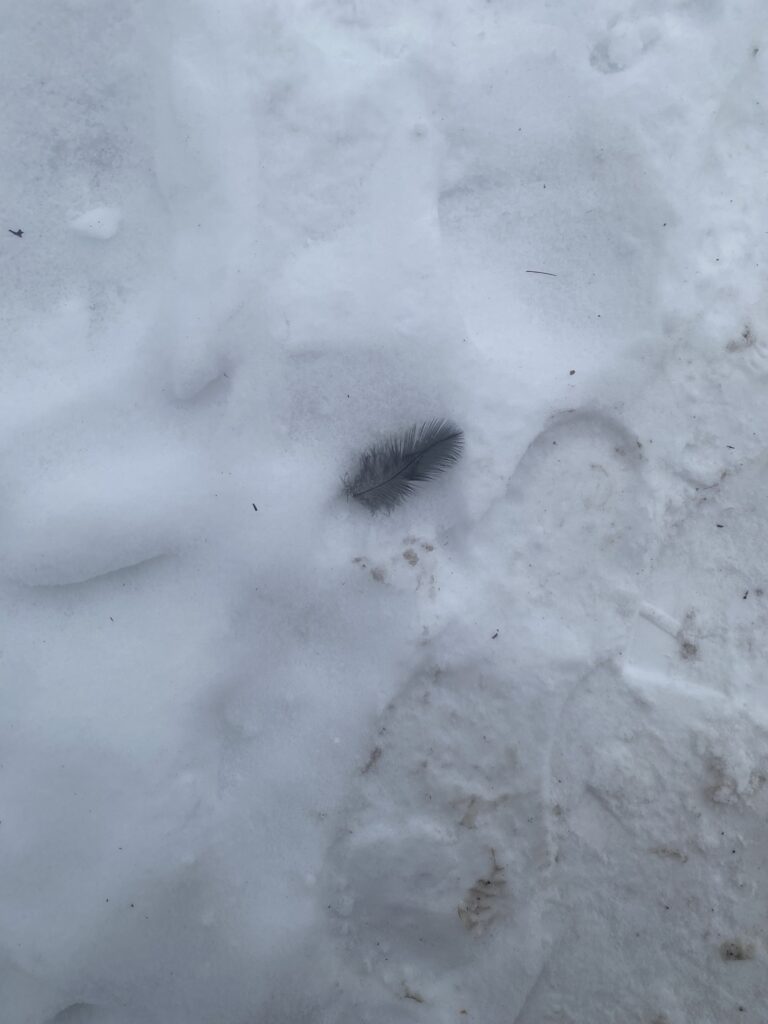
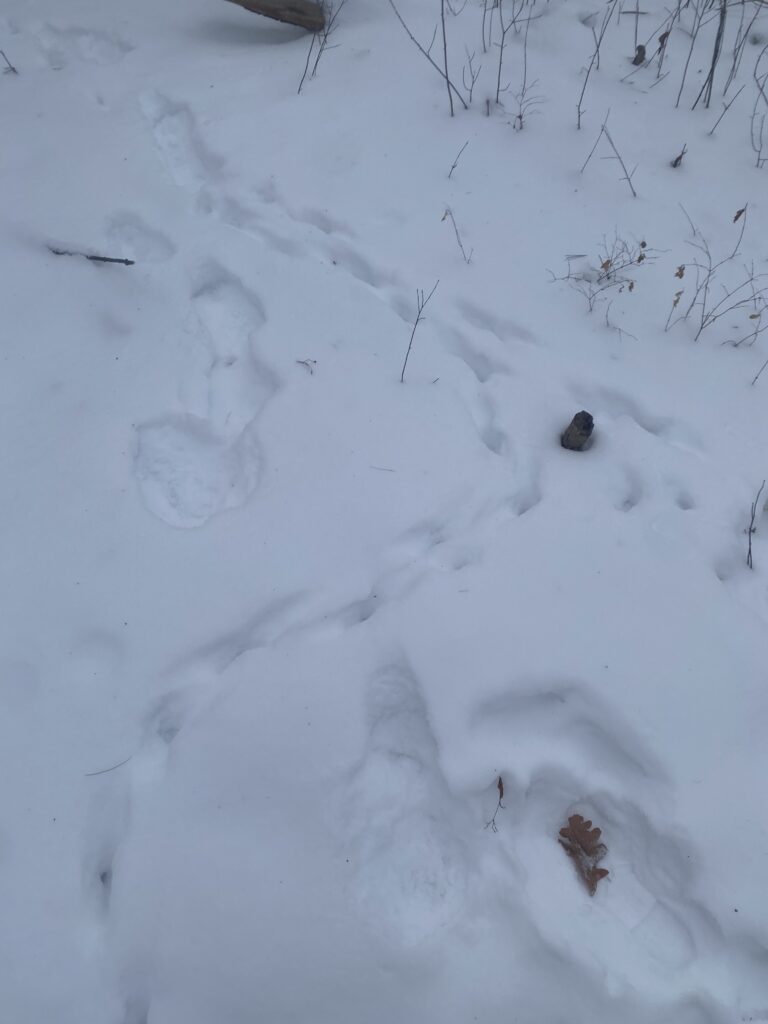
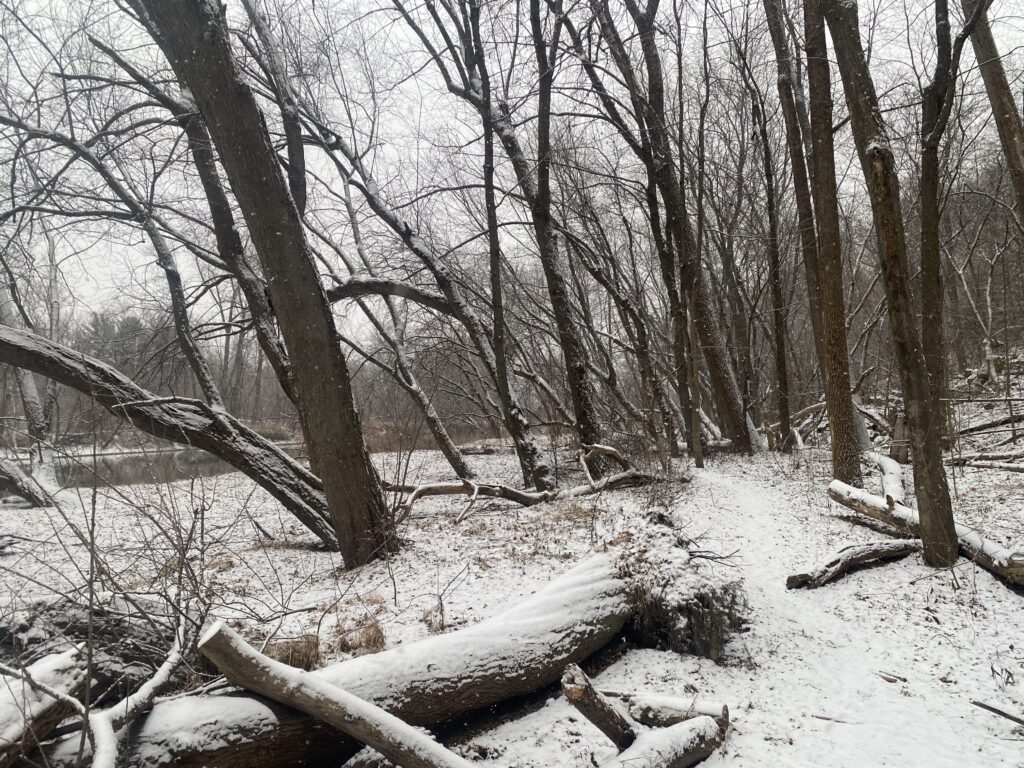
Well, it is 4 degrees outside, with a wind chill of -16 and I was thinking it was a little crazy to be walking all the way down to the Salmon Hole today, and apparently, the foxes were thinking along those very same lines. There were no fresh tracks to be found among the trees today, every print in the snow was muffed up by wind and newer snowfall. Not a bird was heard, but I did find a fluffy little blue-grey feather, nestled in the snow. Not that one feather makes much of a difference, but I bet that bird is feeling the chill today.

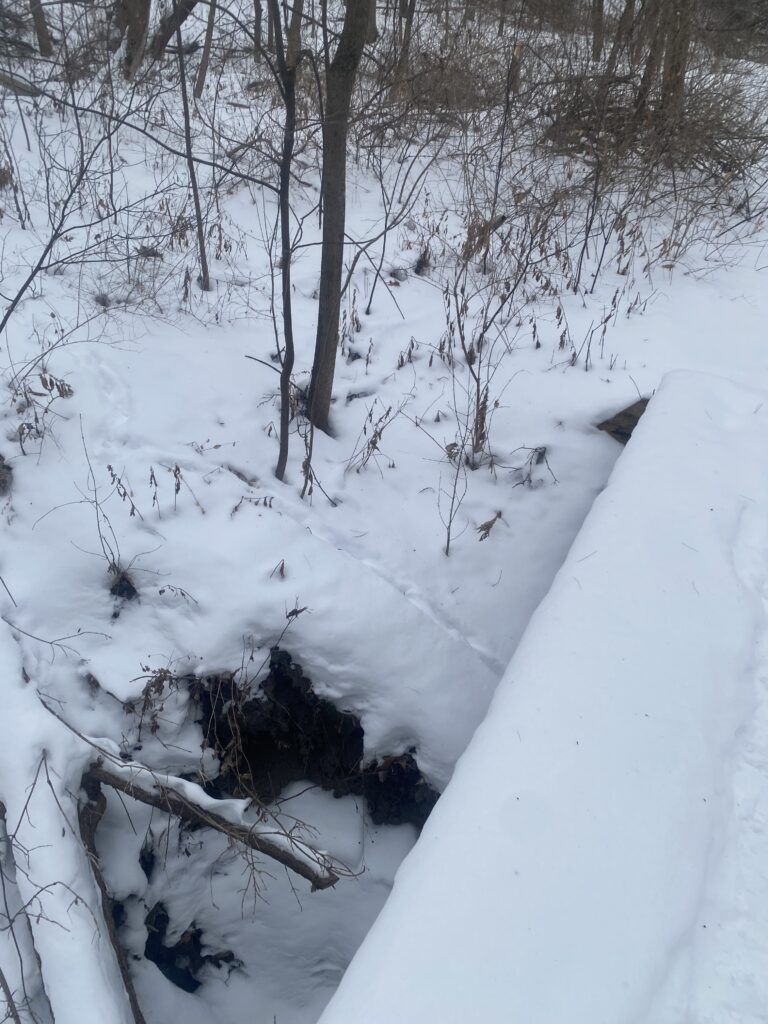
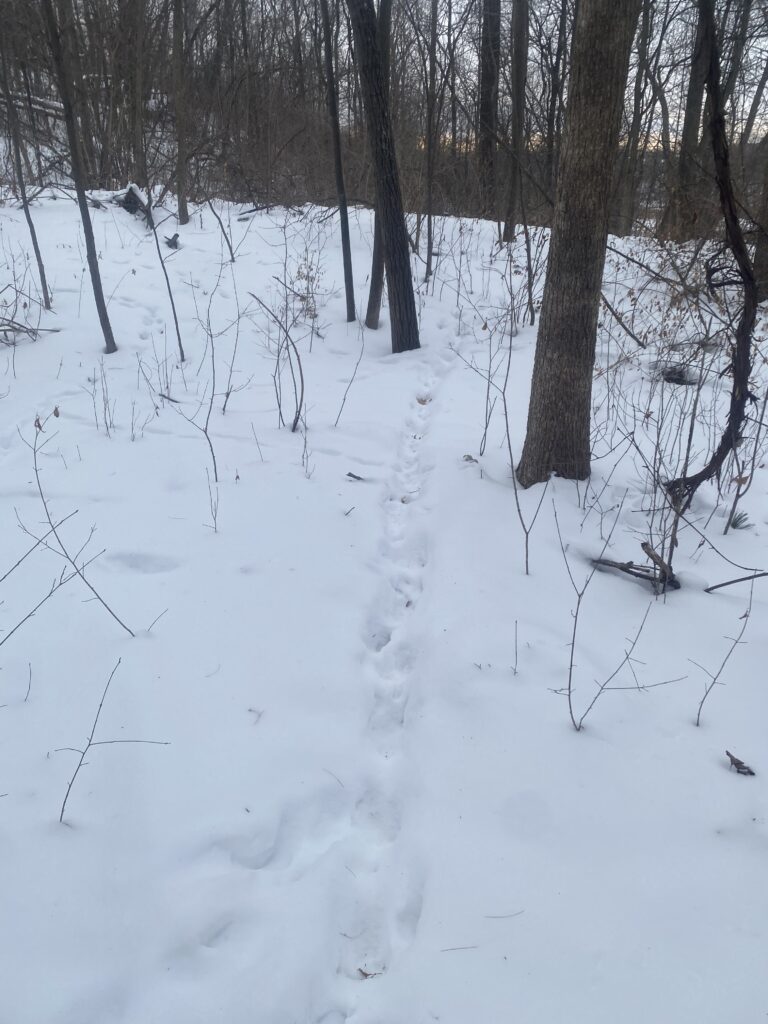
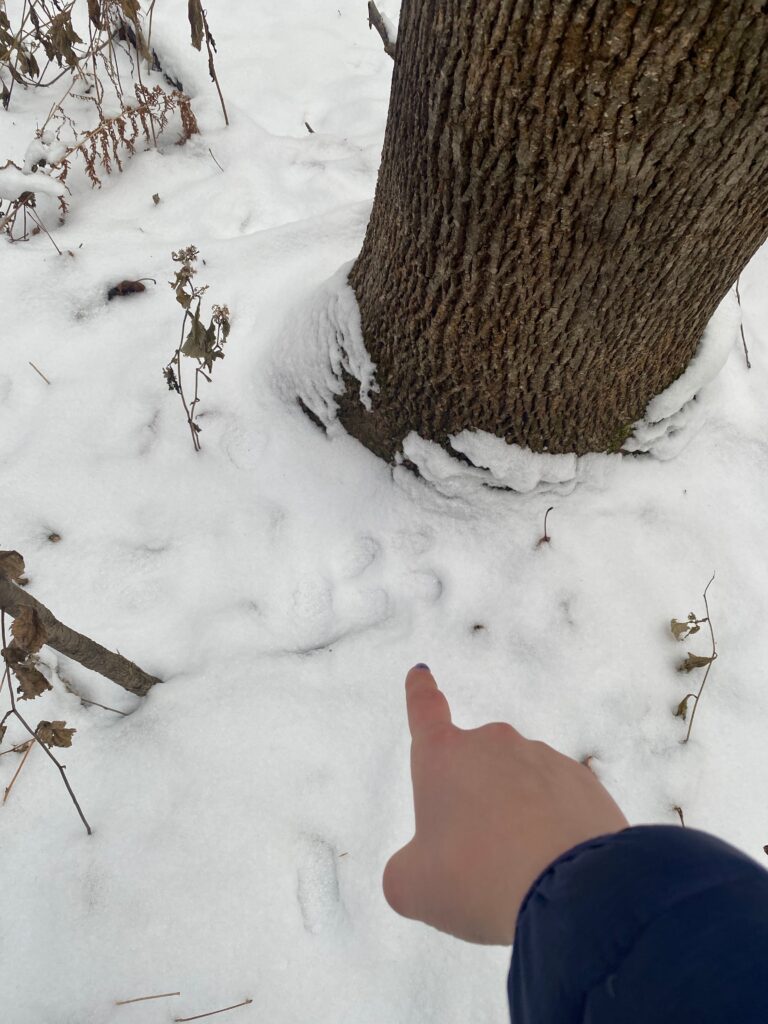
Crossing the bridge I noticed a set of tracks leading below, and upon closer examination, it seems the frozen creekbed has become a bit of an arterial street for the neighborhood foxes and bridge-dwelling trolls.

What I found that excited me most, was that where I had found tracks in December, I now found not an arterial street but a freeway. There were multiple sets of tracks running in the exact same spot as I’d seen only one set last month.

I found a set of tracks where the fox, who usually walks in a straight, focused line, diverged towards a stump before getting back on its original path. I didn’t find any scent markings in the snow around it, but I wonder if the stump has more stories to tell to that fox than it did for me.

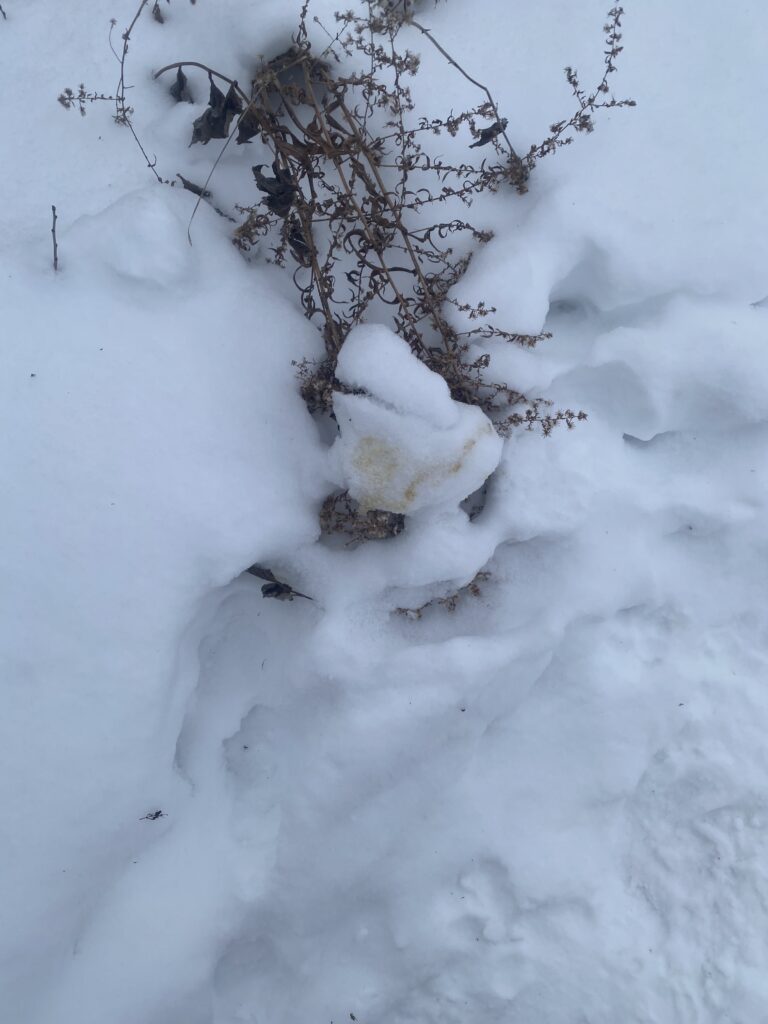
Here I did find a pee/marking spot, but not sure who the author for this one was.

The biggest change I noticed in this now familiar landscape was that a significant amount of the hole was frozen over, as well as parts of the river further down. The areas that curve outwards, where eddies and sometimes still water reside in this river were the sections with ice formed. The leaves were gone last time I was here, but the winter felt deeper. There was no movement in the woods except for me and the sound of cars passing by up the hill.

As I was walking back over the bridge to get to the coffee shop where I’m writing this, I noticed tracks running across the completely frozen lake-ish area that pools above the falls. It was too dark to get a good picture, but the tracks went directly across and were connected by brush strokes in the snow, like whoever ran across was running and dragging their paws between steps. Cool.

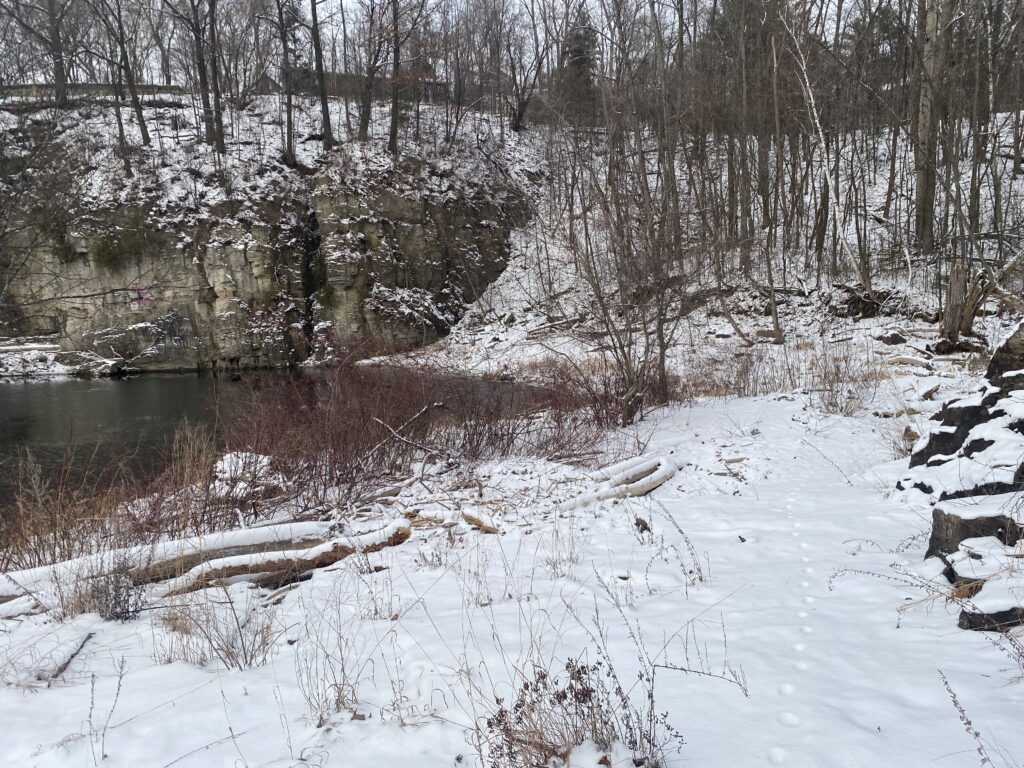
I spotted the tracks in the area just below the bridge.

Snow at the Salmon Hole!!

The squirrels are feeling scampery, the foxes are feeling like slow strolls, and I’m feeling like slippery runs in the snow are soo much more fun than studying inside!! All of these nature signs point to it being DECEMBER and FINALS week! Despite the high stress commotion on campus, I found great relief from the still silence of snowy woods. I got to experience my phenology site in two different stages of snow this week; the first being a quick look around during a run between classes, and the second was a slower examination of lot of little nooks and fancies throughout the site.

THE RUN: This was the first snow since the weekend, so the only critters who had been out making tracks at midday were squirrels, and they were busy! I followed the squirrel tracks from the stairs to the base of a tree, where the squirrel seemed to have scurried up, and then scurried back down and hopped over to a different tree. I wonder why squirrels sometimes choose foot traffic, and sometimes they choose acrobatics in the tree canopy?

Squirrel tracks on the stairs I did NOT fall down!
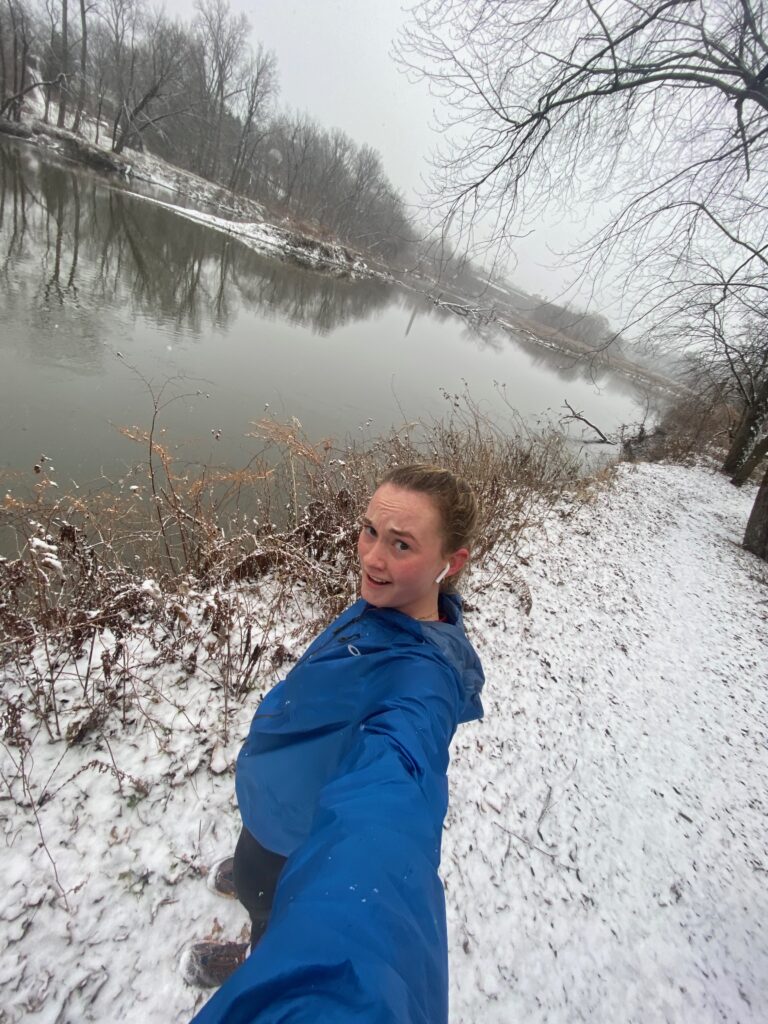
Awesome selfie of yours truly, just so excited about all this snow and the neat river.
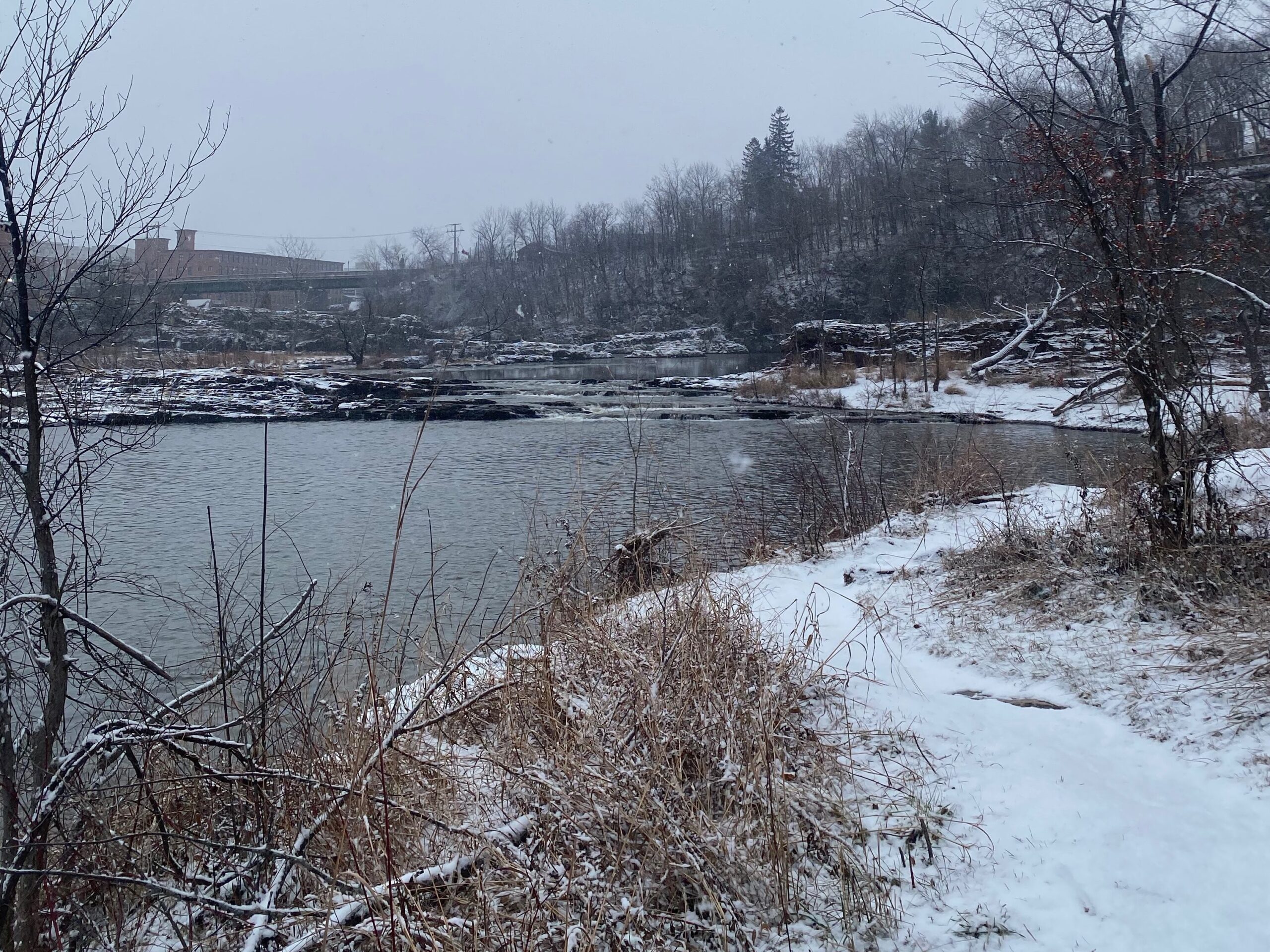
Snow coming down so quietly!!

THE WALK: My next venture to my site was Friday, the day it stopped snowing, so unfortunately there were some snowed in tracks, but I still could speculate about who delt them thanks to their size and shape. After a teetery bike ride to the trailhead, I locked my bike and started down the snowy stairs, scouring the ground for tracks. I saw lots of fresh human tracks and dog tracks, but nobody else! Continuing on the path, I heard birds chirping in the tree tops. I watched one little guy flitting about for a little while, and think it was probably a tufted titmouse which is exciting! It had a tawny colored underbelly and a dark top, and at one point it looked down and I could see the crest atop its head. It looked so fluffy and cozy with its winter down coat! I recorded some of its high pitched chirping, and at about 30 seconds or so, somebody starts chucking! It sounds like a pileated woodpecker to me, but not sure!

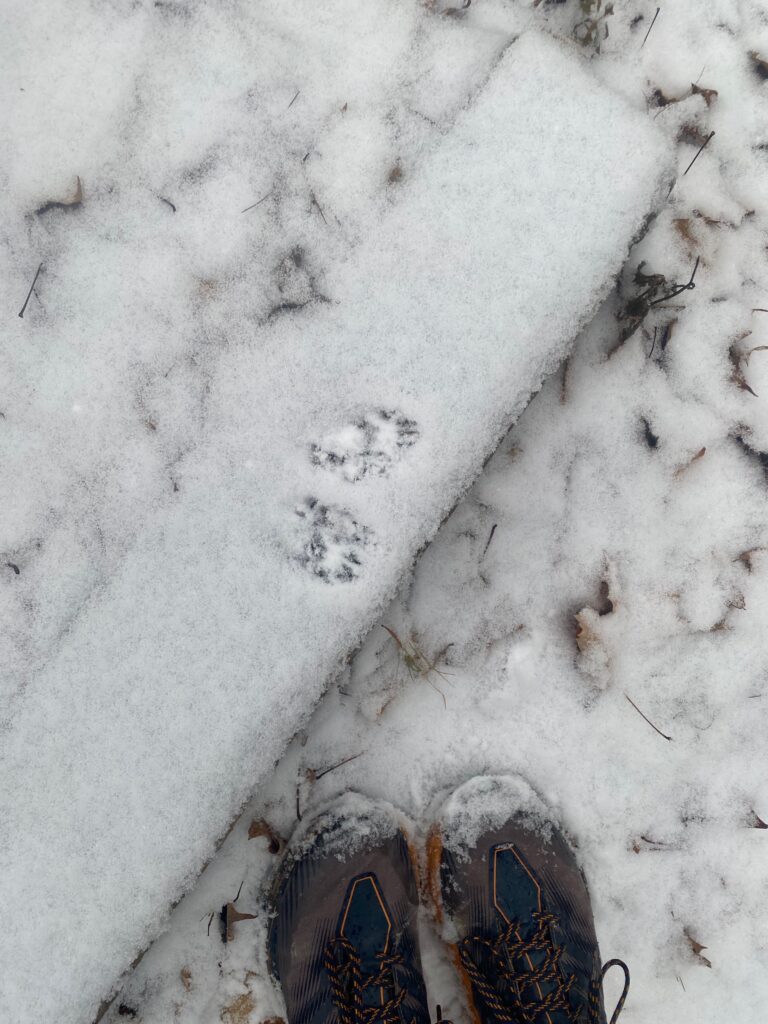
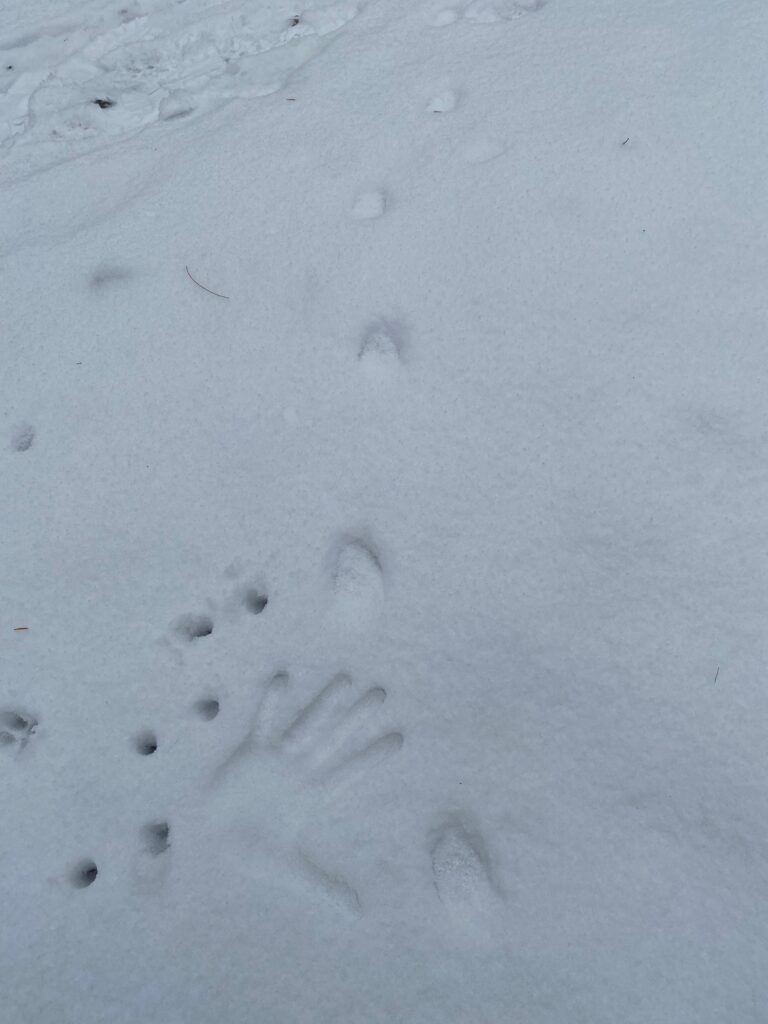
I left that little guy to hop around, and immediately came across a set of tracks! They had a fresh pile of light snow in the pad, eliminating signs of claws, but you could still see where the front of the paw pushed forward into the snow, and how as the critter picked its foot up, it kicked just a bit of snow back behind it. The tracks were about two inches long, tapered at the front and wider at the back. They looked too small to be coyote, and pretty just right to be fox! Say it was a fox, this fox seemed to be in no hurry. I found two other sets of fox tracks, and given that foxes are pretty territorial, I bet this one came back a couple times during the time snow was on the ground, or took the long, long way home.

The first set of tracks
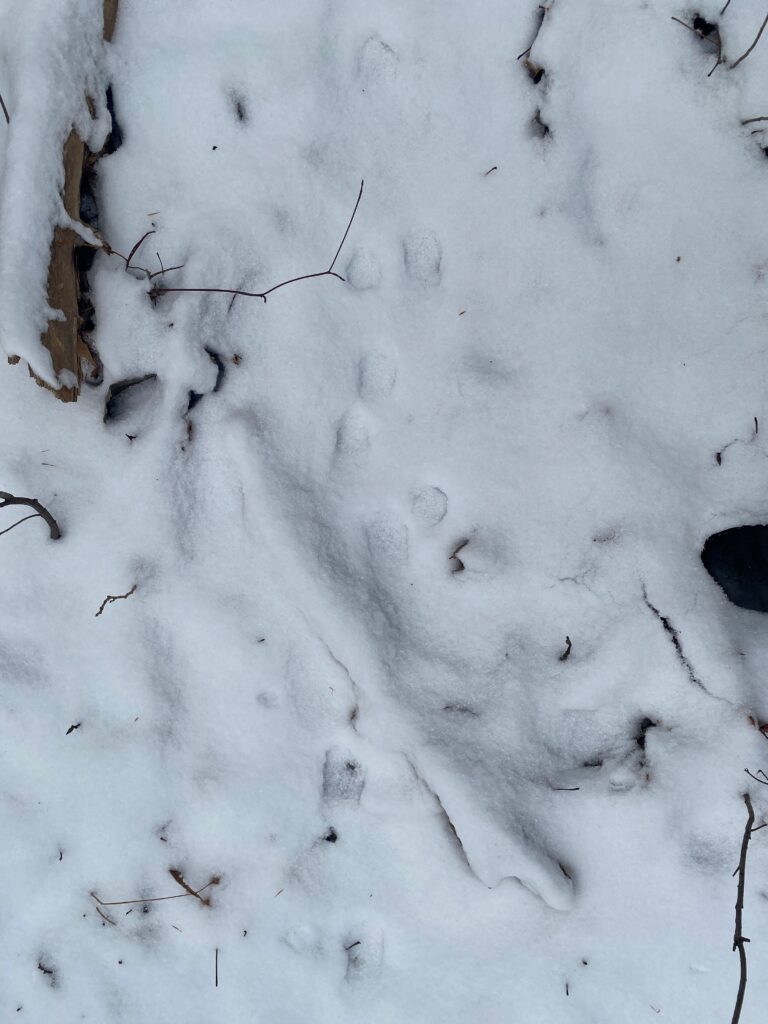
These tracks were really intriguing to me because the fox’s gait switched up momentarily by this stick. I wonder if it paused to sniff or watch something, or if it tripped over the stick!
Squirrel tracks stopping at the base of a tree!! So fun to imagine what goes on at the top of the tree when the tracks disappear.
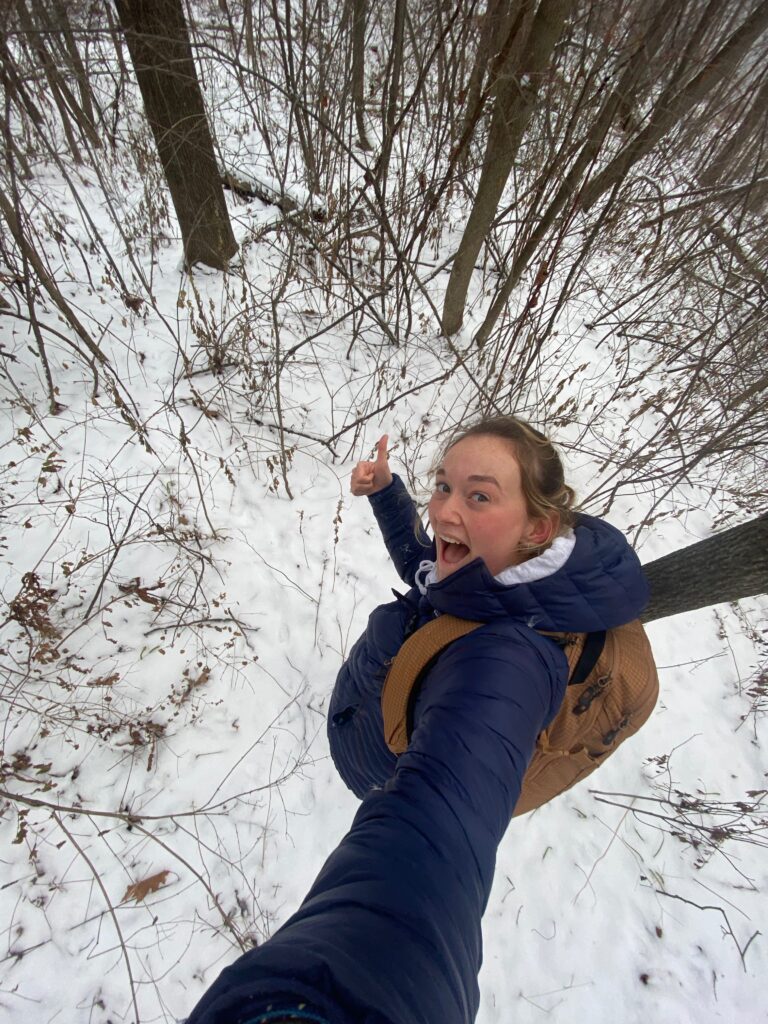
This is me being so excited about the cross walk of fox tracks and squirrel tracks!!

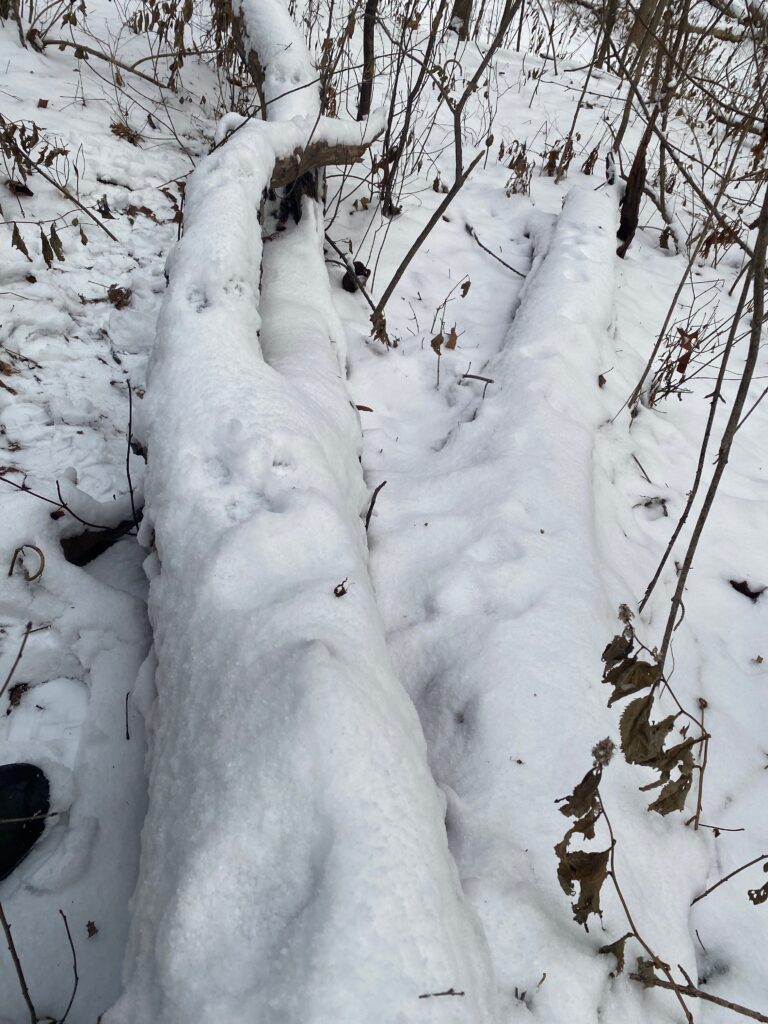
Next, I found an awesome log, in which first the fox crossed it, and later a squirrel hopped along it!

The fresher squirrel tracks are hopping up the left log, and the older fox tracks strut along the right log.
Here is a pristine set of foxy tracks that walk towards the creek that feeds into the salmon hole. Twice the fox starts to go one way, changes its mind, and goes a different way. It also hopped up a three foot cliff, and left the daintiest little tracks at the top. SO graceful!

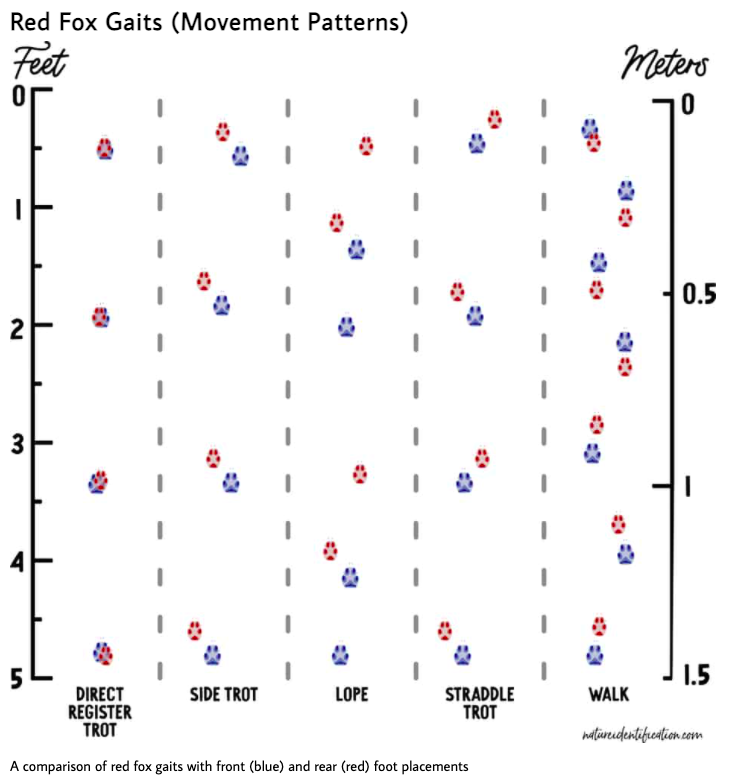
I looked up what different fox gaits looked like, and from what I can tell, it looks like the fox (or foxes) were not in a hurry. I didn’t find any scent posts, or digging in the snow, and I’m wondering what, if anything, made this a worthwhile trip for the fox?

It was certainly a worthwhile trip for me.

Sitting in my Spot!

Happy November!!

My Phenology site sure knows that winter is coming! I was so surprised to see that so many of the trees that had been full of leaves, even green leaves, only two weeks ago, had barely any left! The canopy is much more open, and I can see more of the river from the trailhead. As I walked down I noticed that the stairs and bridge were more slippery because of the leaves on the ground! The leaves on the honeysuckle by the bridge however, looked green and unchanged.

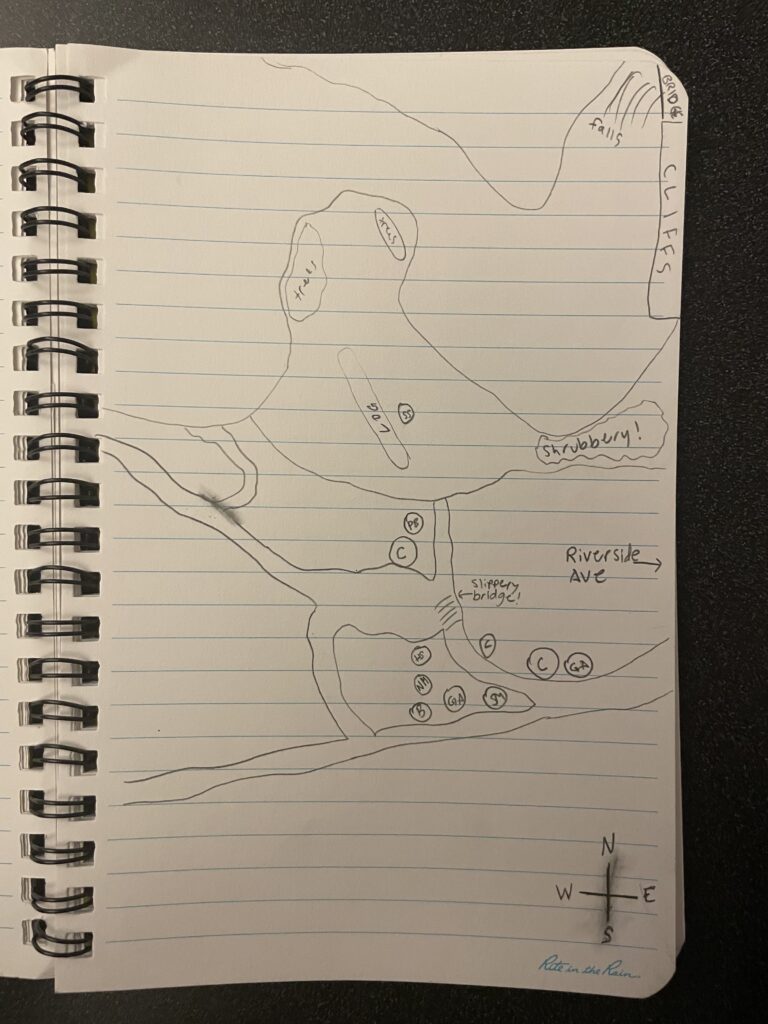
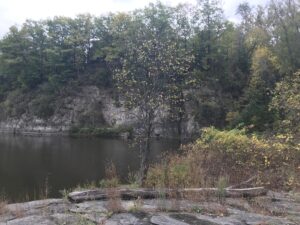
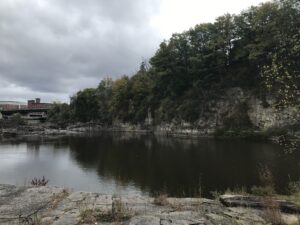
Getting down by the river I was SO excited to see all of the WATER that was rushing through the channel! With all of the rain this weekend the falls were absolutely rushing (and they usually aren’t at all), and the water level in the pool went probably ten feet higher up the bank than it had last time I visited. The pool was eddying around, with splotches of white foam on top and the water was super brown. I went over to check out a spot where I had crossed in previous times to go and fish at the bend in the river and it was totally covered up by fast moving water! On the map, this section is the bottleneck between the log and the areas with trees. It is hard to stress how much more water there was this time, but there was a LOT!

GA: Green Ash

C: Cottonwood

SM: Sugar Maple

NM: Norway Maple

B: Beech

HS: Honey Suckle

PB: Paper Birch

The areas labeled ‘trees’ I have not explored in detail yet! And the area labeled ‘shrubbery!’ has a detailed list of plants in my previous blog post in the section labeled ‘by the river’s edge’.

While I sat, I…

Heard: the rushing falls, cars, and random boys that came down with a bucket

Smelled: weed, the air smelled like a pumpkin

Saw: bright orange leaves on the trees on the cliff above the salmon hole, water rushing, the sun setting, lots of brown and grey

Touched: a wet log

Tasted: nothing! I was hungry.

10/18/21


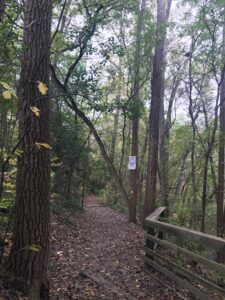
To get to the Salmon Hole from main campus, start by getting yourself to Colchester Avenue and then follow it East towards Winooski. Take a sharp right onto Riverside Avenue, and follow that until you get to a dirt path on your right heading downhill, into the trees. There should be a wooden railing on part of the trail, and up ahead you should see a tree with a sign about fishing and lake sturgeon. Walk down this path, go right down the stairs that are really too close together, cross two little SLIPPERY bridges, and you get to an open clearing with a bench. Take another right down a small path and follow that until the trees open up onto a rocky expanse that leads to the river’s edge. So, you’re here!

I chose this spot for a couple of reasons. I have enjoyed fishing here, not catching anything of course. I have also enjoyed swimming and running here, and I find it to be really beautiful, and I like the confluence of trees and water and rock. Since coming to UVM I have had some of my calmest times down here, and I think it is going to be awesome to keep it company throughout the year and watch it change with the seasons. I also am very excited to see it when it freezes over!!

I listed the vegetation/woody plants in order of appearance, so here they are!

Near the road:

  • Cottonwood
  • Green Ash
  • Honey Suckle
  • Poison Ivy
  • Norway Spruce
  • Hop Horn Beam
  • Paper Birch
  • Norway Maple
  • American Beech

Stream/Swampy Bridge Area

  • Honey Suckle
  • Ferns
  • White Oak
  • Buckthorn

River’s Edge

  • Cottonwood
  • White Pine
  • Striped Maple
  • White Oak
  • Paper Birch
  • Green Ash
  • Blach Cherry
  • Buckthorn
  • Grapevine
  • Bamboo!
  • Elm
  • Wormwood
Skip to toolbar