
December 3rd
Foliage
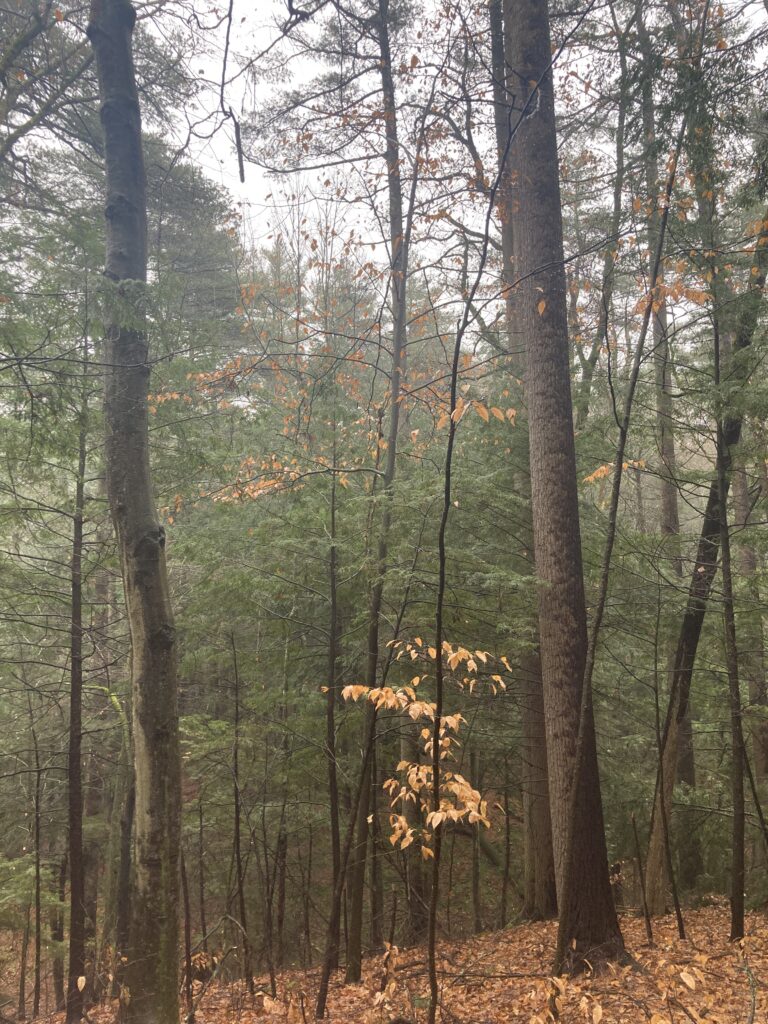
The only trace of the fall colors are the beech leaves, some of which are still on the trees. They have become papery and dull in the wet weather.
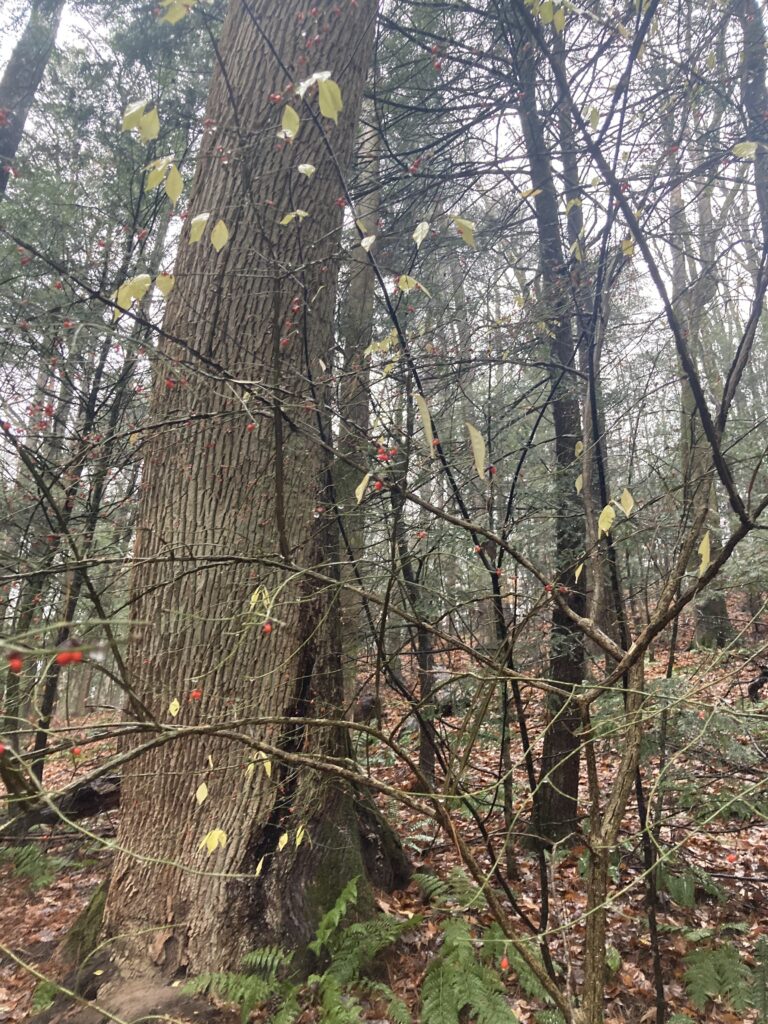
The burning bush next to the ash tree still has a few leaves, as well as its red fruit.
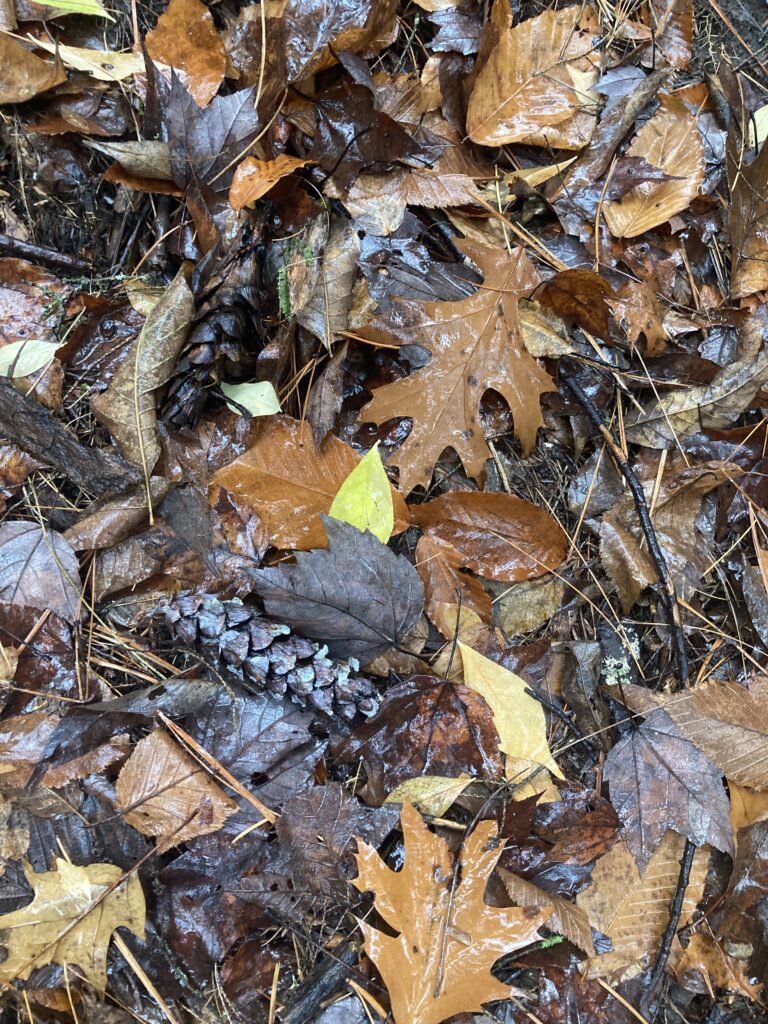
There is very little fall color on the forest floor. The maple and birch leaves have started to decay, while the oak leaves are more intact.
Moss
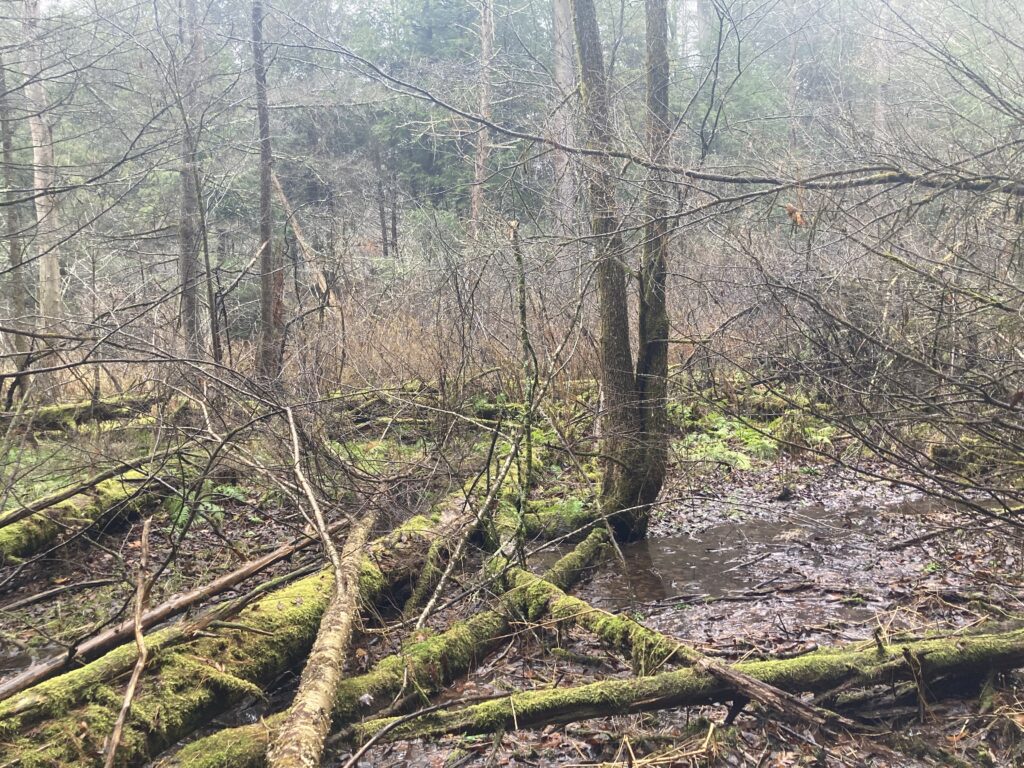
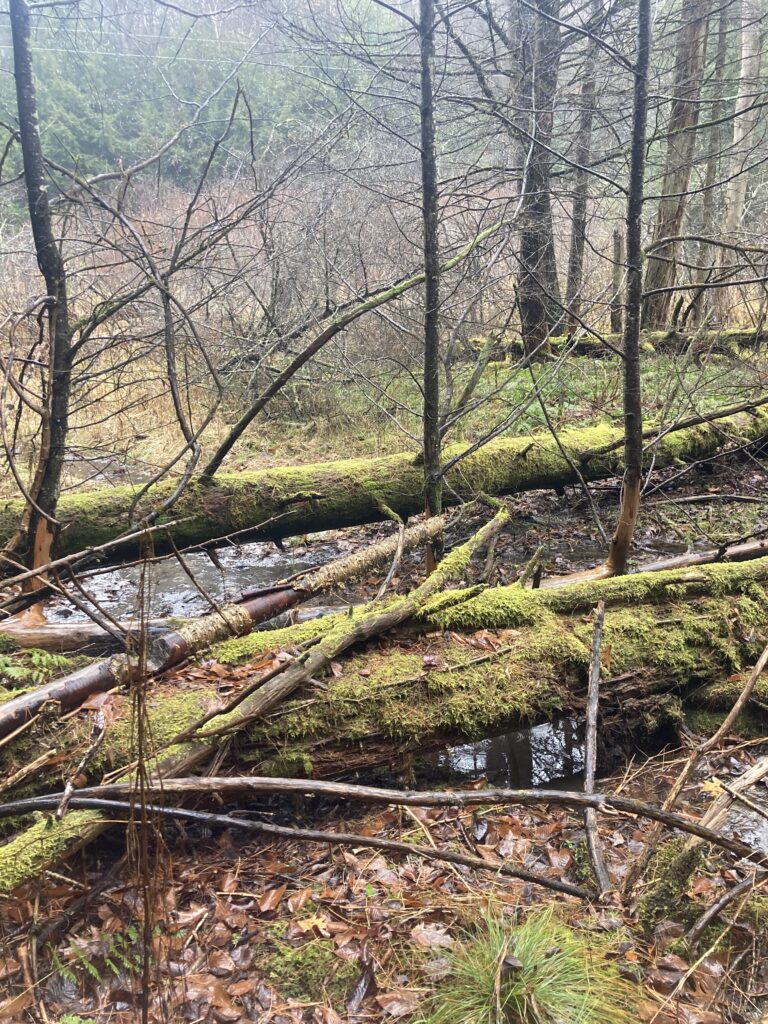
The mosses down in the wetland are thriving in the cold moist weather. They receive more light now that the deciduous trees have lost their leaves.
Birds
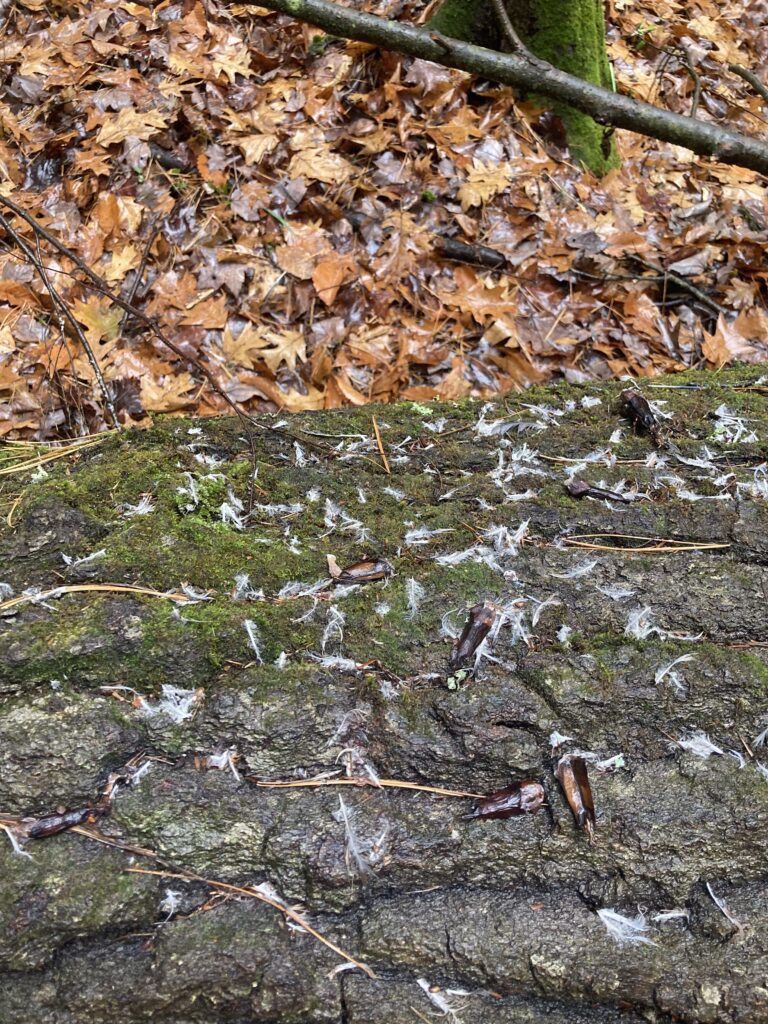
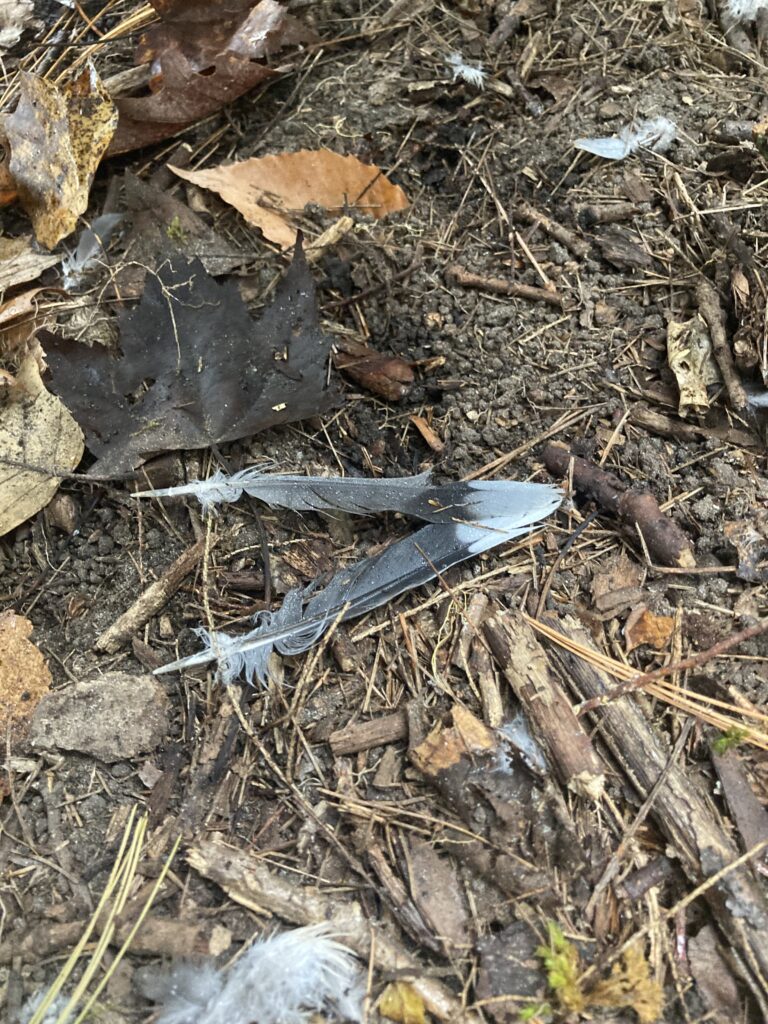
A bird of some sort met its end up on the hill behind my site, and was processed by whatever the culprit was on a log. I do not know what type of bird it was based on the feathers. There have generally been fewer animals near my site, but I have still been hearing the occasional chickadee.
My Favorite Things
Hemlocks
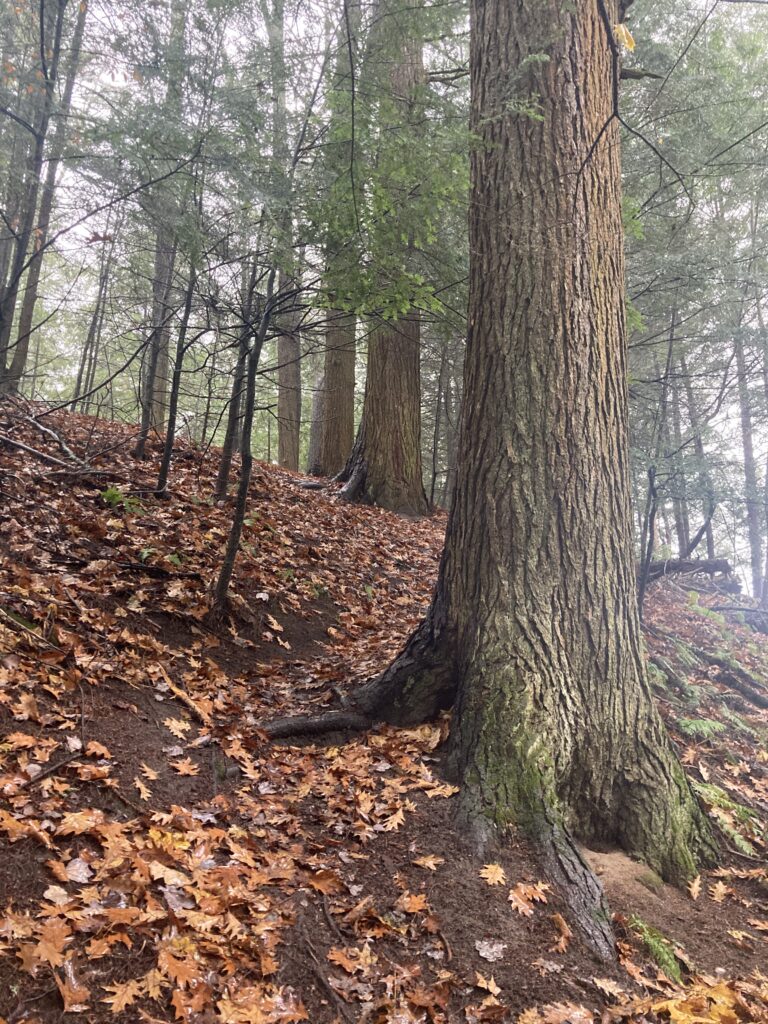
I enjoy walking past the massive hemlocks on the way down the hill. As the deciduous trees have become less prominent, the appearance of the forest on this side of my site has been swayed more and more by the hemlocks and their dark green needles. Some of the largest hemlocks that I have seen in Centennial grow on this hill. Since the last time I was here, the deciduous leaves have fallen out of the hemlocks, giving the forest a slightly more orderly appearance.
Pines
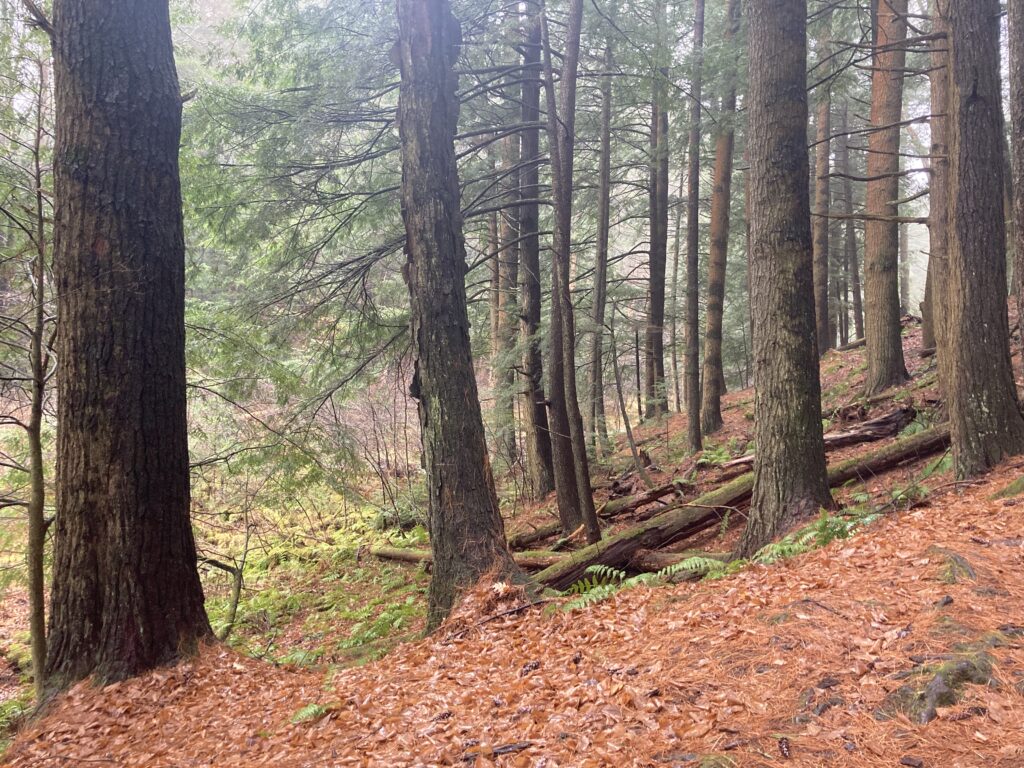
The hill opposite the one with the large hemlocks has more white pines growing on it, giving the forest floor a pleasant rusty color.
Birches
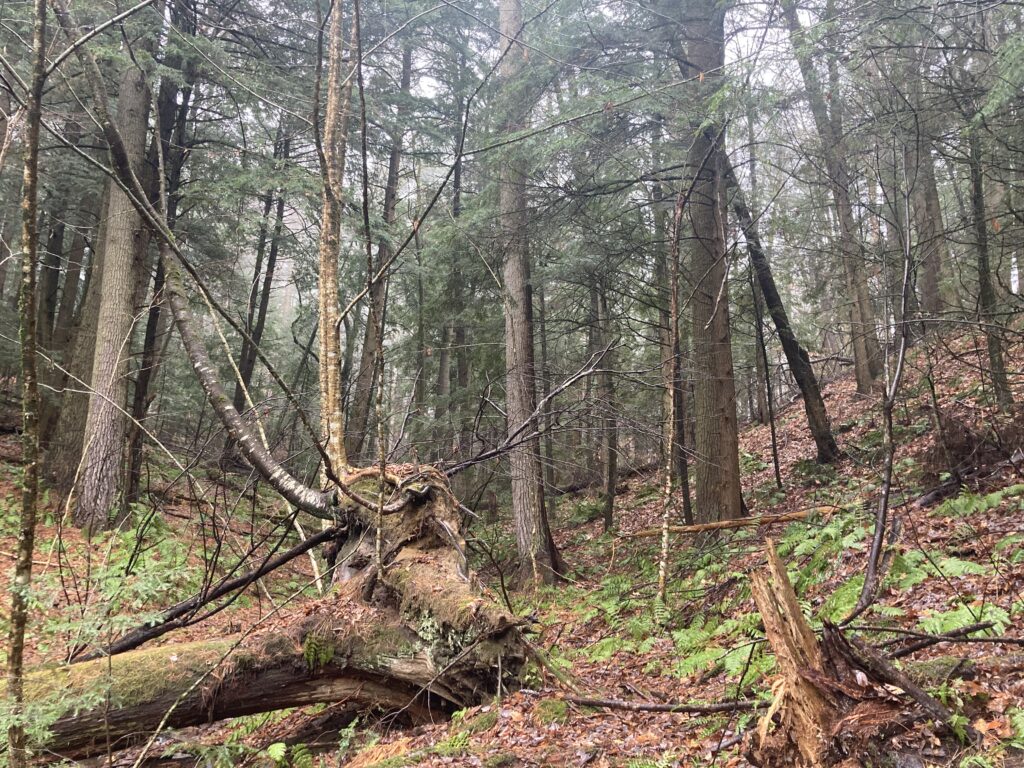
There was a considerable amount of mist when I took this photo, giving it a mysterious quality. The birches growing on the fallen log in the center are one of the reasons why I chose my site. I am curious about how well they will do into the future as more of the clay erodes off of the rootball. I imagine them forming a cage around where the log once was, with mangrove-like roots running into the soil.