Posts

Phenology 5

When I came around the bend and inspected my site for the very first time last semester, one of the first presences I noticed was the old ash tree up on the hill. I had no idea that this would be its last growing season.
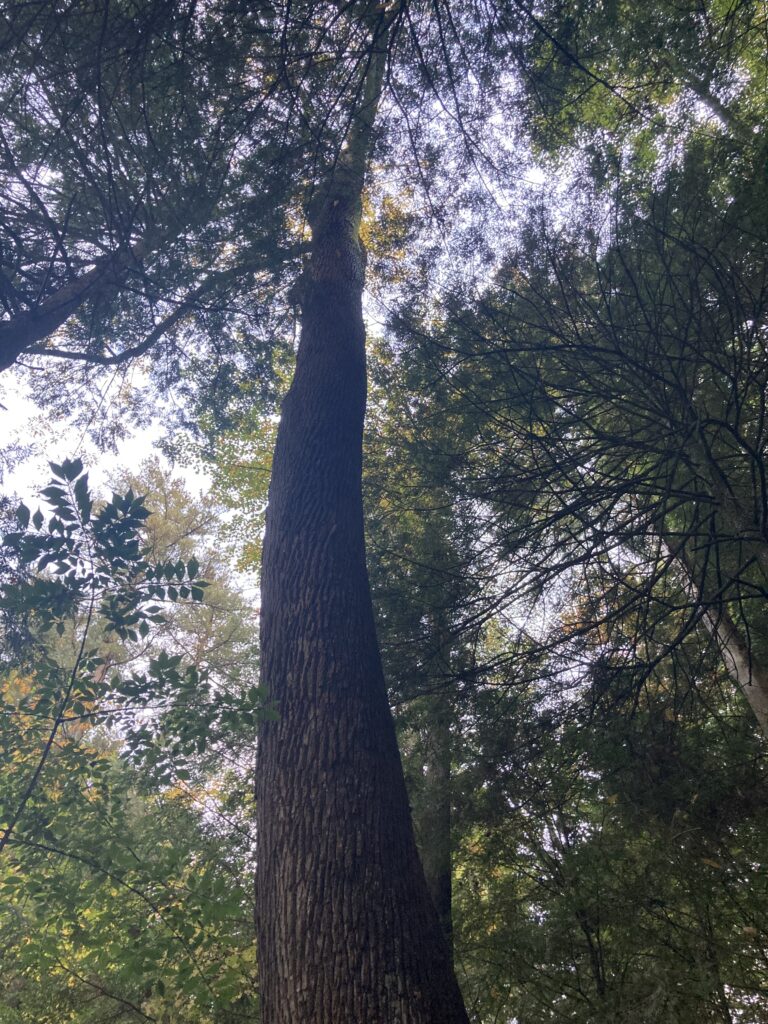
I feel very lucky to have gotten to know this tree a bit before it fell.
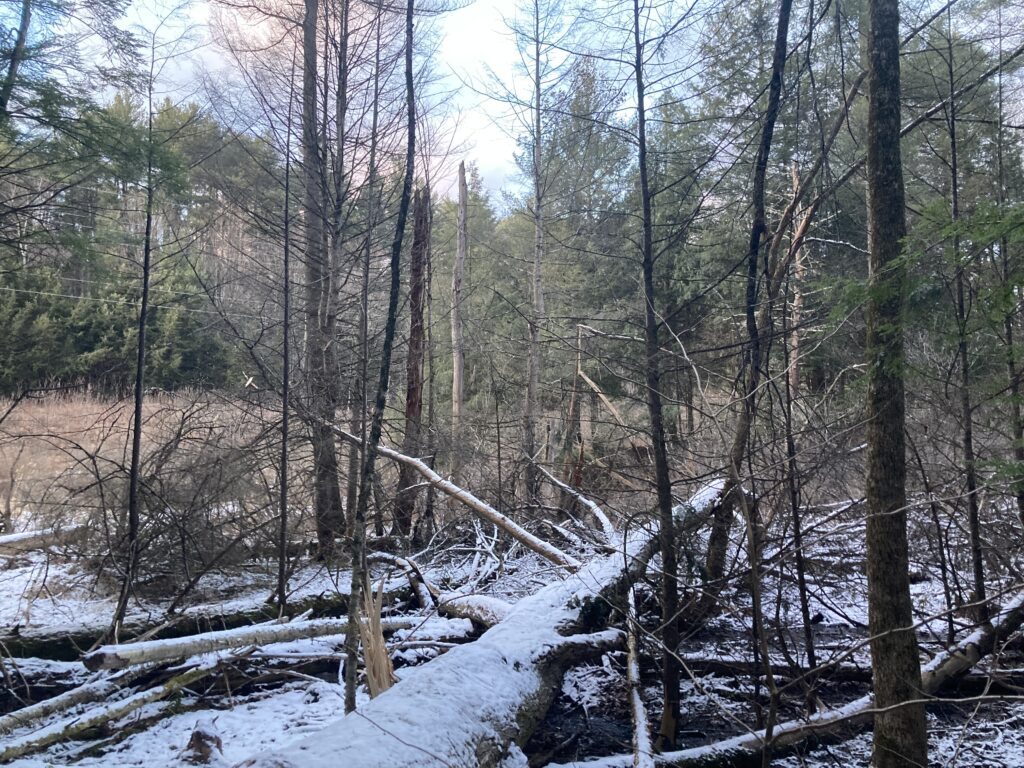
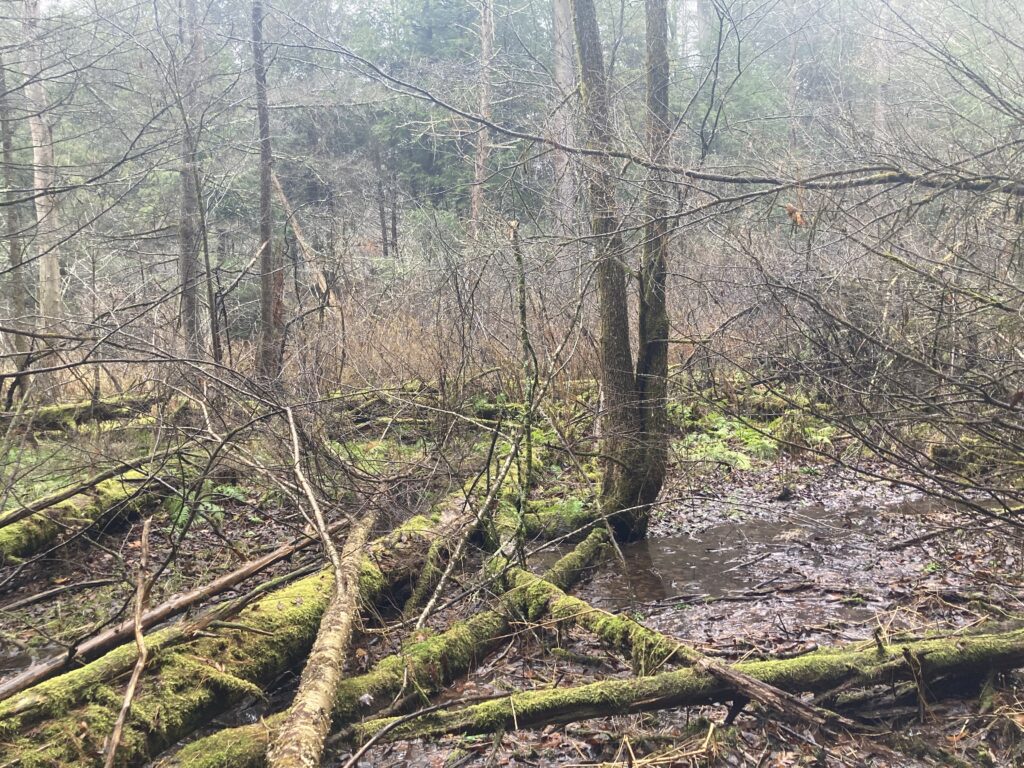
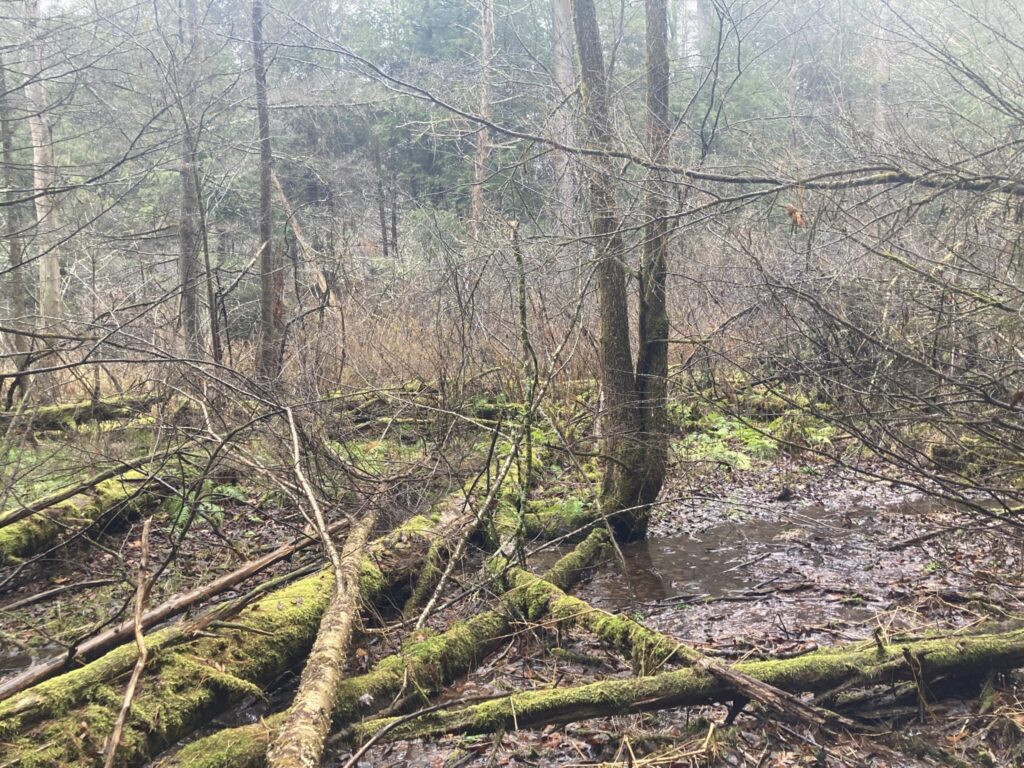
The swamp was full of woody debris before the ash fell, but there were still a few healthy trees.
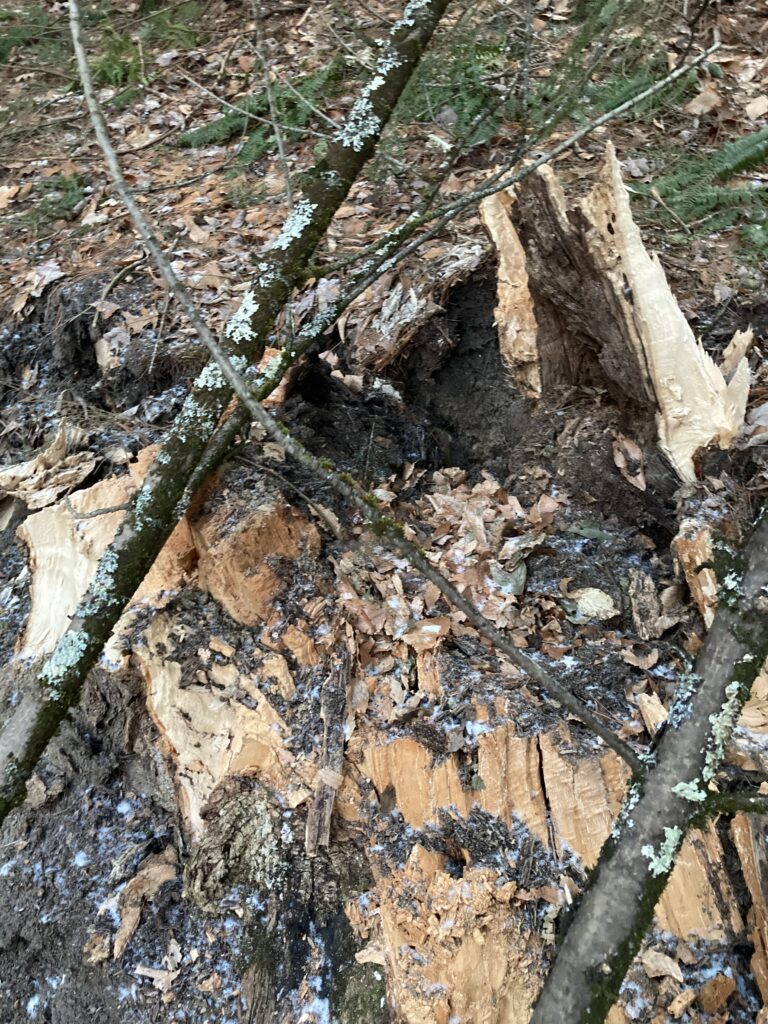
The ash split the elm in the foreground, and took out another one in the background, as well as a yellow birch that is just behind this vantage point. It leveled much of the understory. I am glad I was not in its path.

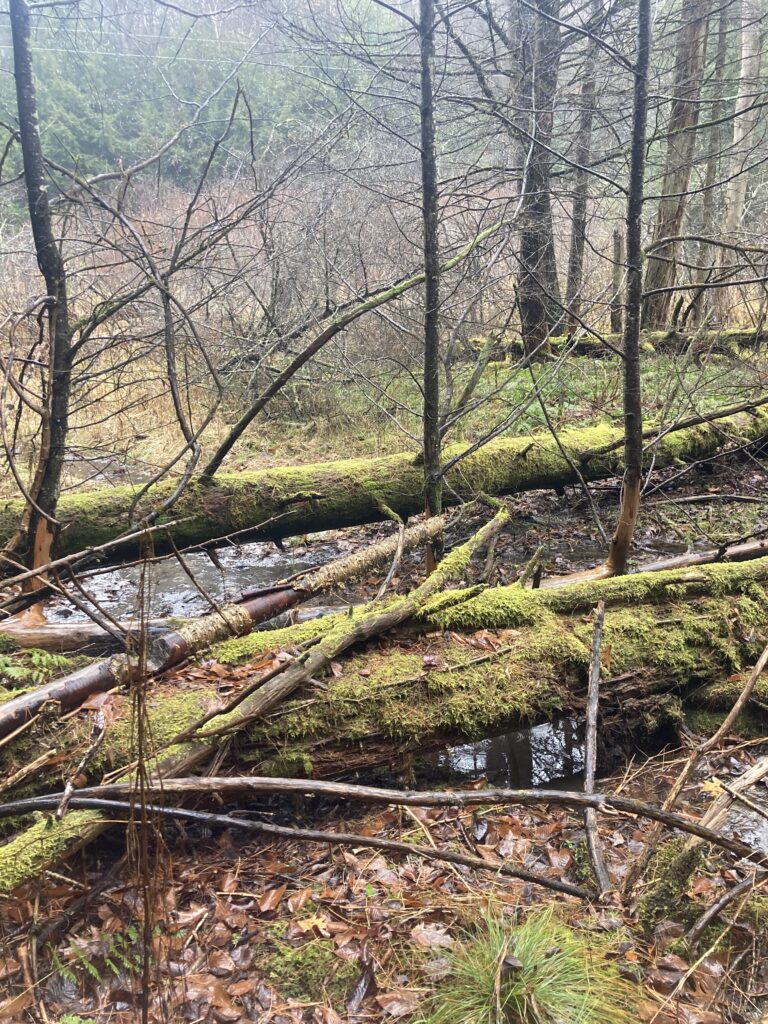
For several weeks after the ash tree feel across the trail, foot traffic diverted through the swamp, trampling some of the mosses. Then a trail maintenance crew came in and cut out a section of the trunk, and now the path runs more or less the same course it did before. It is likely that the gaps created in the canopy will either allow for rapid forest regeneration, or the establishment of invasive species. If birches reseed into the area from nearby, which is very likely, the beavers may have a good food source in a decade or two. Of course, their presence will be determined by other parts of the stream as well.

Besides the ash tree, I have come to see the streams as very important landmarks, as well as the clearing with the power lines. When I am in Centennial Woods, I always think of my position in relationship to one of these two corridors. There are minor landmarks that indicate where I am on the streams, which are mostly large fallen logs. In the power lines clearing, there is an island of pines and hemlock near where the streams intersect that also serves as a landmark. There is also a sudden bend in the clearing where I can see down both arms of the clearing from one vantage point. When I was still unfamiliar with Centennial woods, this bend threw me off when I was trying to navigate, but now I see it as a landmark.

There is a lot of foot traffic through my site, and there are always trail maintenance activities going on nearby. Upstream of my site, there is a wooden table and a set of chairs that are slowly falling apart. They are occasionally used by folks passing through to sit down and admire the scenery. There is also barbed wire in one of the conifers at my site, right on the edge of the swamp. This makes me wonder what the area was once used for. There are several forts made out of logs on this branch of the stream, and in the winter, I observed a lot of small mammal activity in and around them. Raccoons appear to be very common in the area, likely due to its proximity to neighborhoods where they can scavenge for food.

To be honest, while I feel a strong sense of attachment to my site, I do not yet feel like I am a part of it. I don’t think I have been around it for long enough to understand it on that level. At the same time, my presence has certainly influenced the nearby wildlife, and the landscape has made me feel like I belong in Burlington. We only overlap to a certain extent. I say this because I feel attached to so many other places. It is only right to say that I am a part of this Earth.
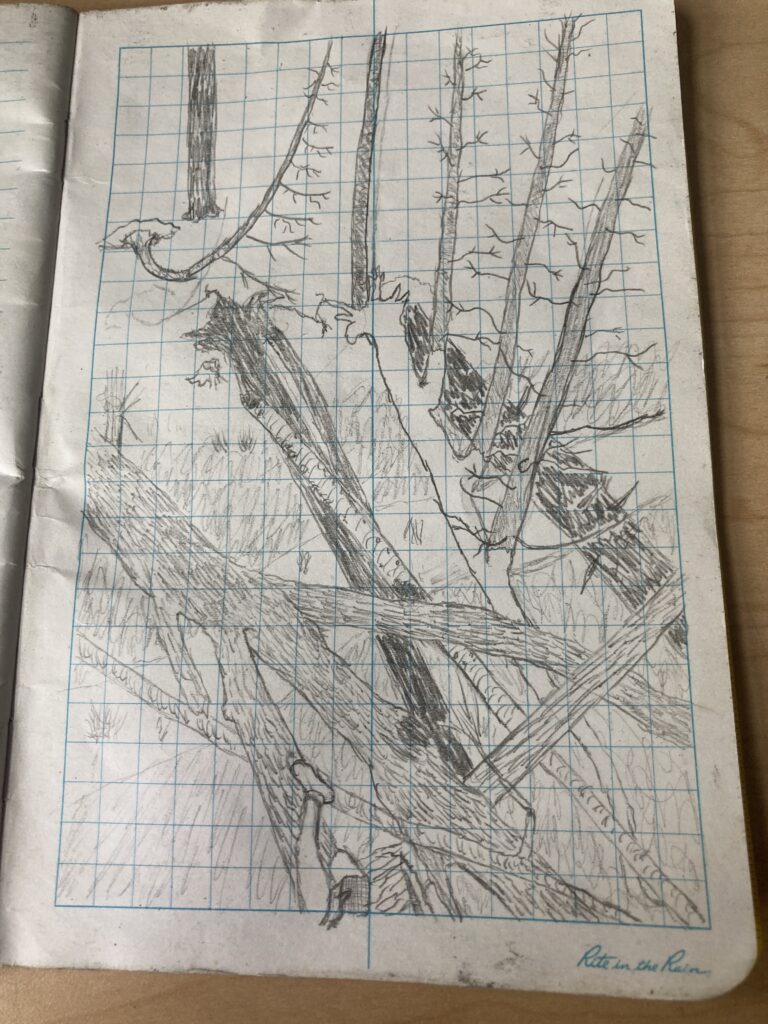
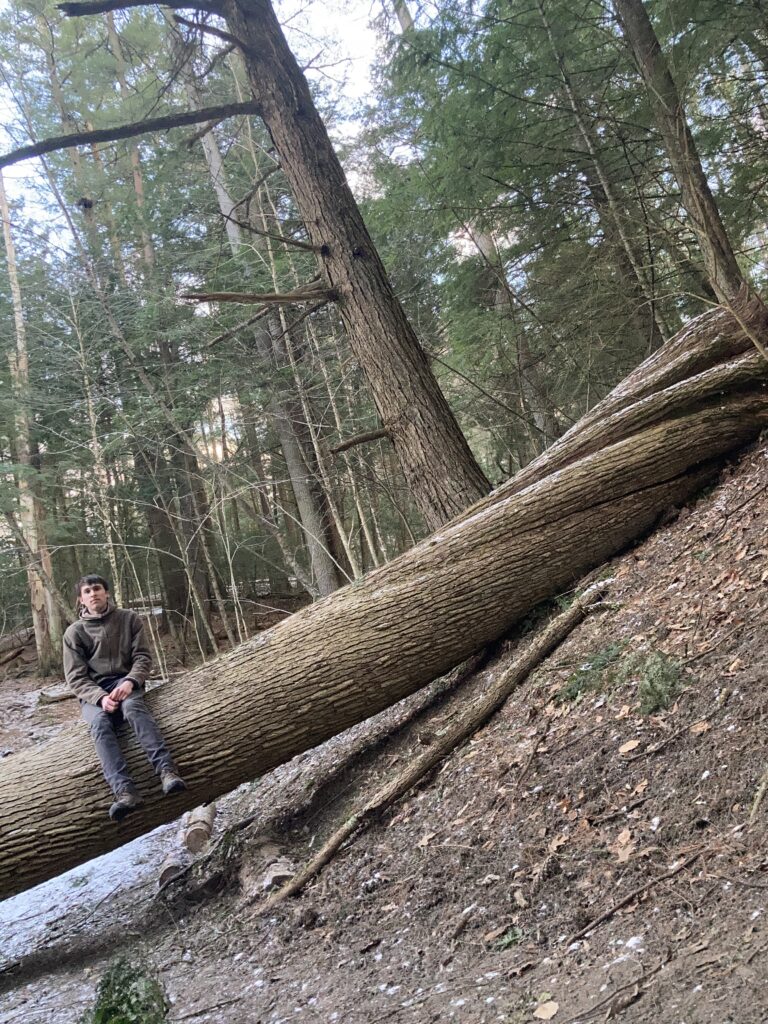
I was trying to draw my perspective from my seat on the ash tree. My back was resting on the standing half of the elm.

Phenology 4

For the BioBlitz, I began my search in Centennial Woods on Friday, and found species that I was fairly confident in identifying. On Saturday, I visited the pond near Harris Millis on the Athletic campus, and managed to catch what I believe to be an aquatic beetle larva. On Sunday, I visited Intervale and found a few more species not present in Centennial Woods. On Monday I went down to rock point, where I found an incredible amount of plant species. I then went to Derway Island and was finally able to photograph some birds.

On my way to Derway Island, I came across skunk cabbage and black cherry on the bike path.
Because I had already used iNaturalist to document mammal signs in Burlington over the winter, it was easier for me to upload my observations this time. I liked getting feedback from other people on my observations. I was impressed that a few people were able to narrow down some of the trickier ones, such as the amphipod I found at Intervale. I encountered around 140 species, but was only able to identify around 100 of them.

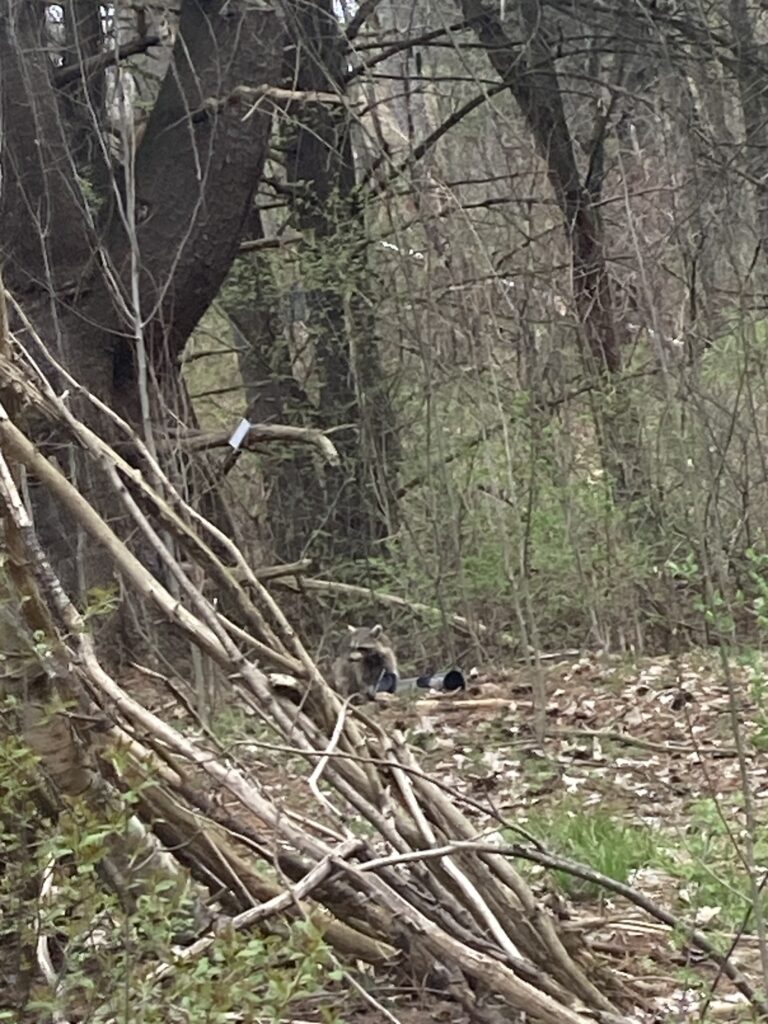
This raccoon was scavenging on a fallen bird feeder in Centennial Woods. It was weary of large groups of people, but not bothered by a person or two.

Taking a look at other cities, I saw more species recorded farther south and in coastal areas. I think it is interesting how big of a difference a few degrees of latitude can make in phenologies. Burlington seems to be at a place for many of its woody plants where they are in between their winter and summer appearances, making them hard to identify. I imagine being on the other side of this transition is partly what gives cities a bit further south their edge.

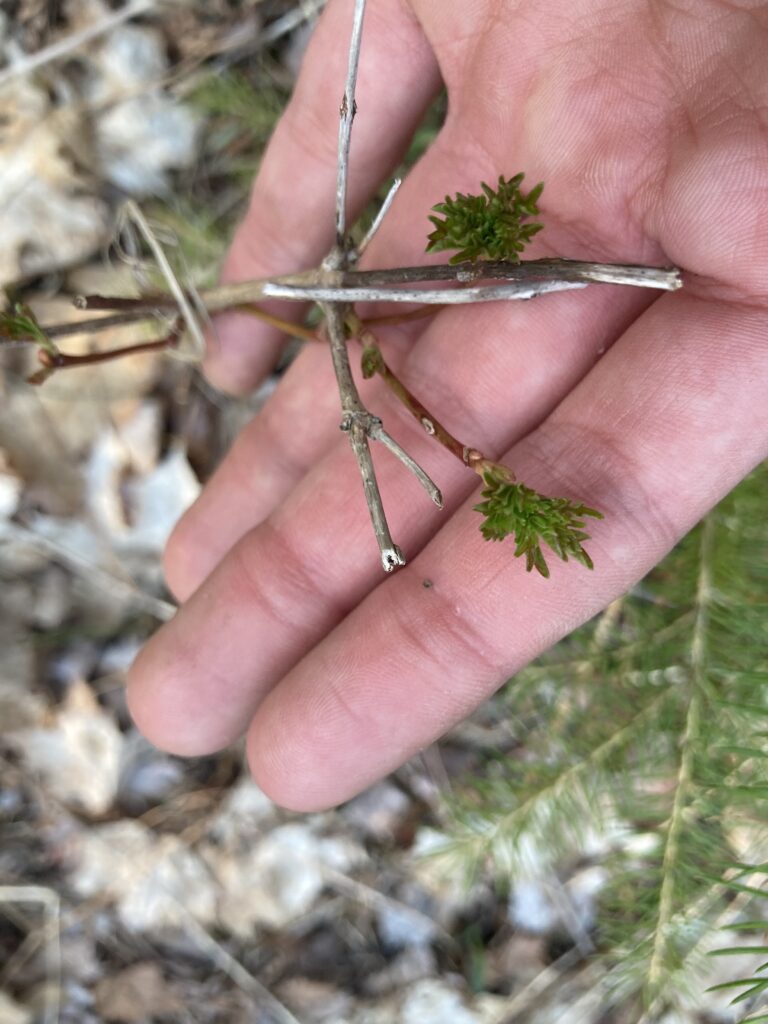
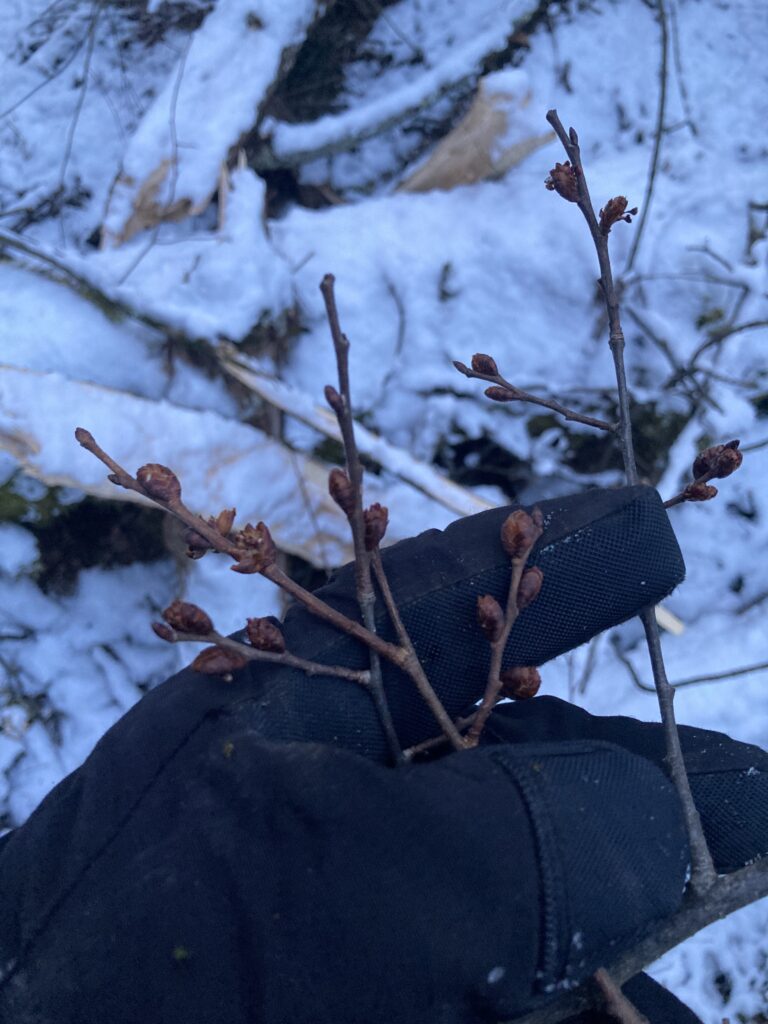
I was not able to identify this woody plant, because of the state that the emerging leaves were in.

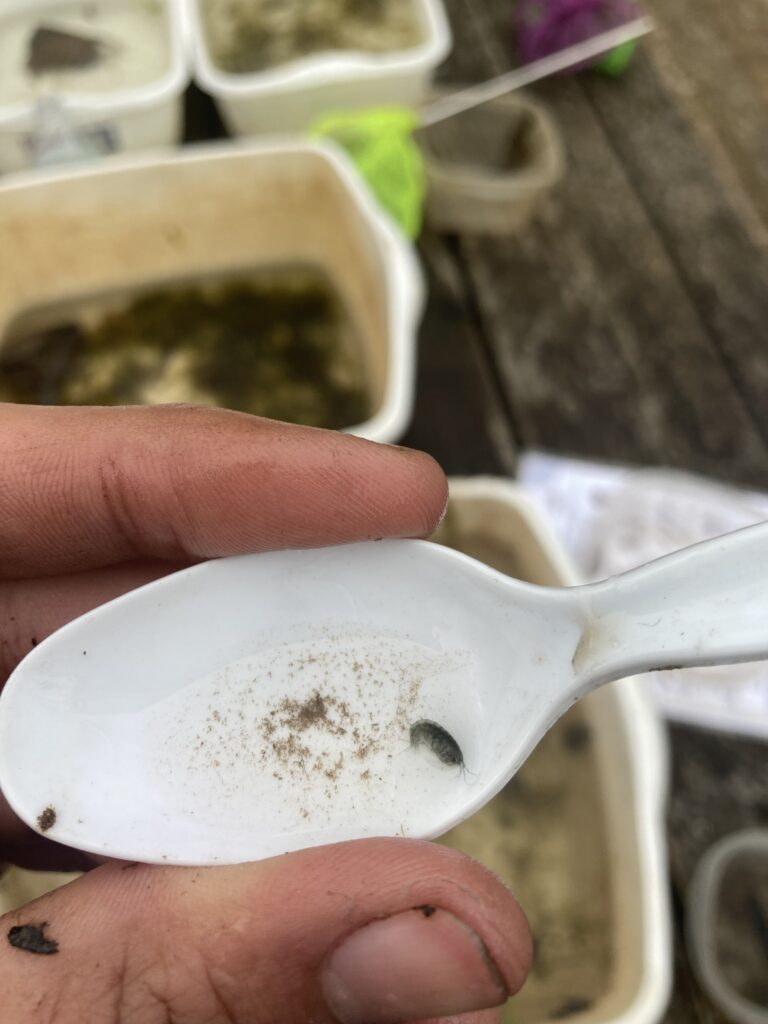
I found this amphipod with a blue tinge in the pond at the Intervale Center. There were an enormous amount of invertebrate species present in a relatively small area.

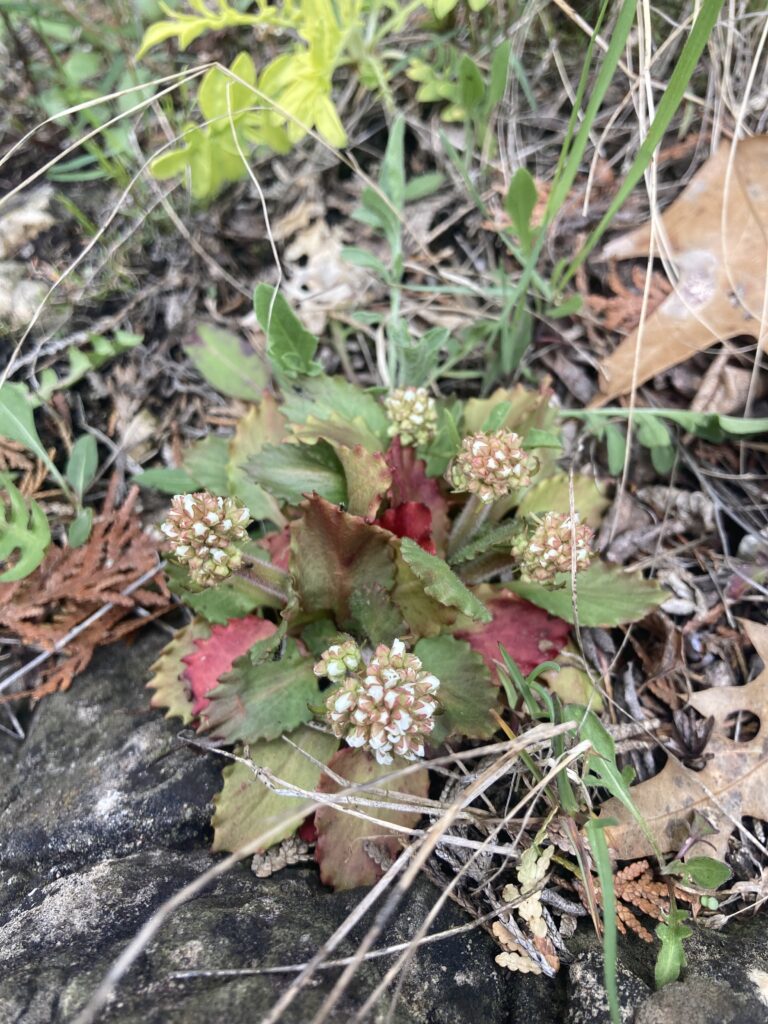
There was a seemingly infinite number of interesting plants at rock point. This one was Virginia Saxifrage.
There were a ridiculous number of bird species at Derway island. This video was intended to record some downy woodpeckers, but there was much more going on in the background. I also photographed a white-breasted nuthatch and a red-bellied woodpecker. The trees they were clinging to made it easier to focus my phone camera.
I captured this back half of a rabbit outside of MAT when I returned from a last minute outing to find more species. I opted not to include it because of how poor the quality was.

Phenology 3

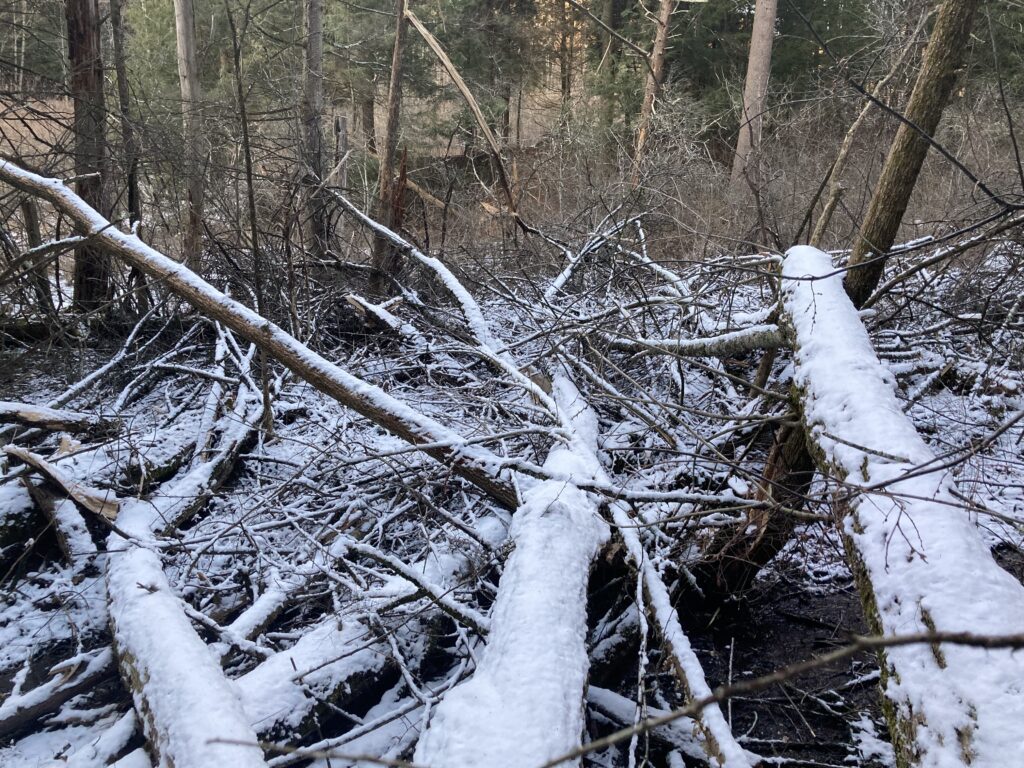
There was an abundance of twigs available close to the ground due to a significant event that probably occurred in the past few days:

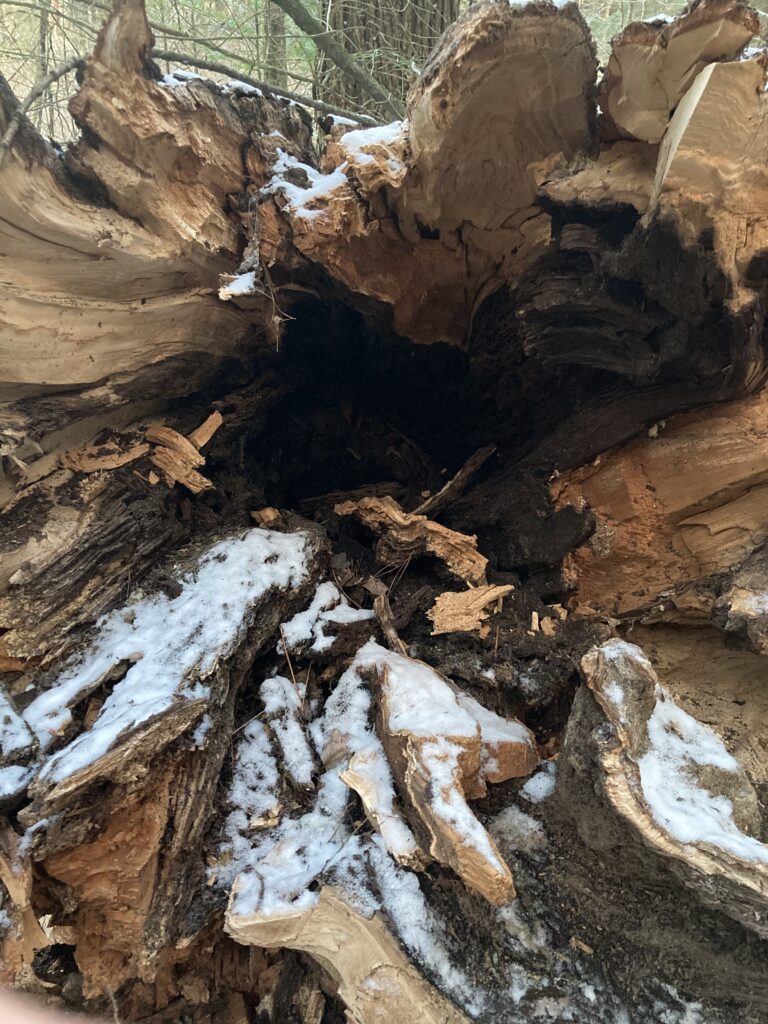
I was very shocked to see the giant ash tree down in the middle of my site when I got there this evening. It took down quite a bit of other plant material with it as well.

This was going to happen at some point or another, and I am glad I was not underneath it when it did.

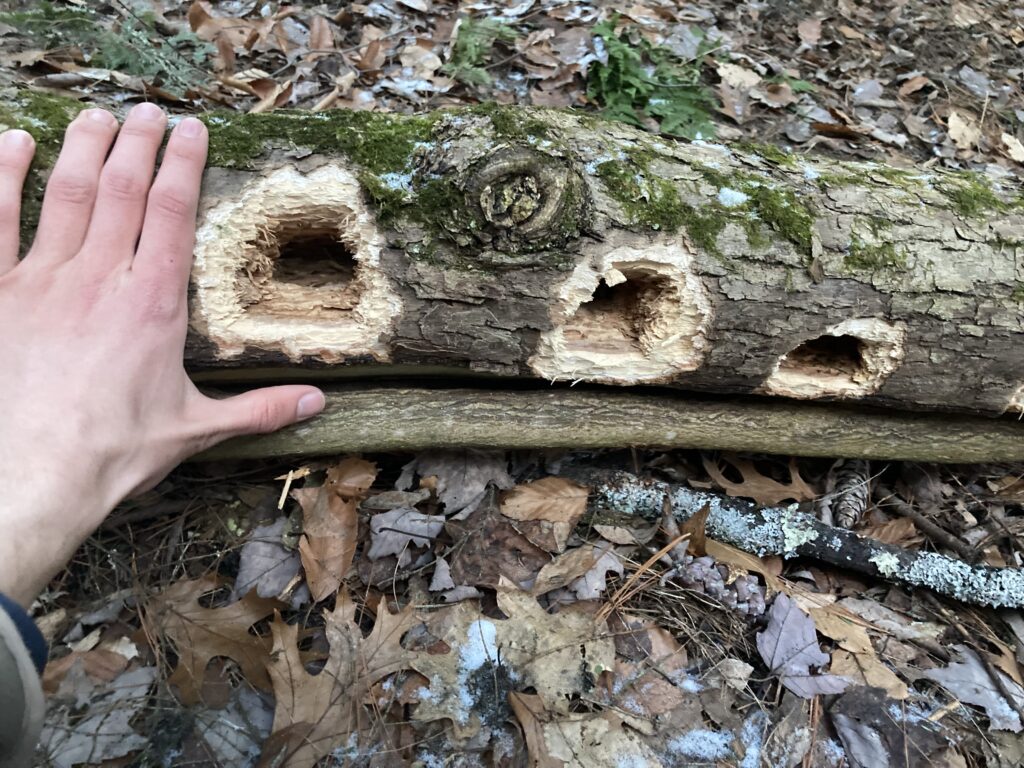
Near the base of the tree I found a branch that seemed to indicate pileated woodpecker activity, which looks somewhat recent.

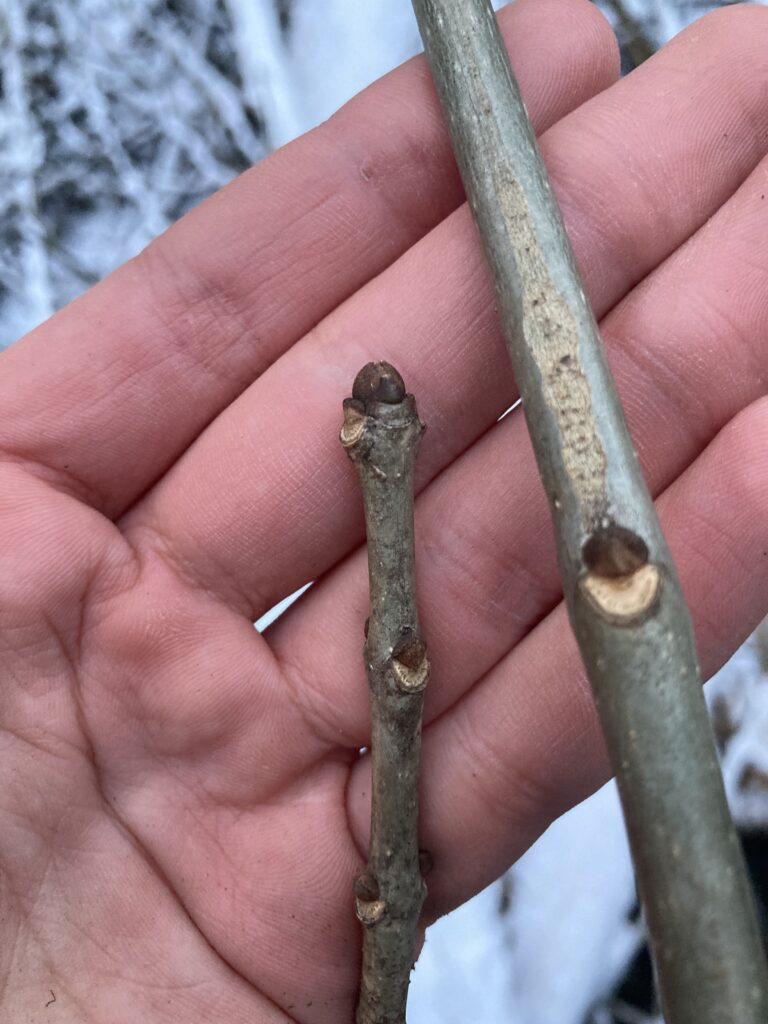
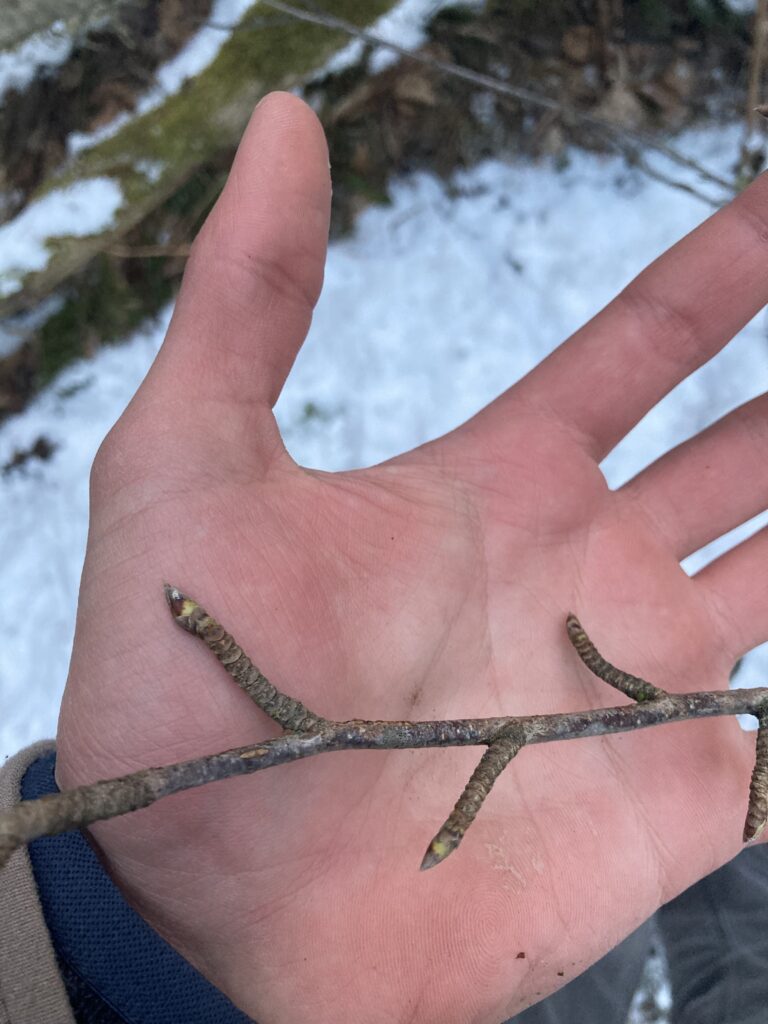
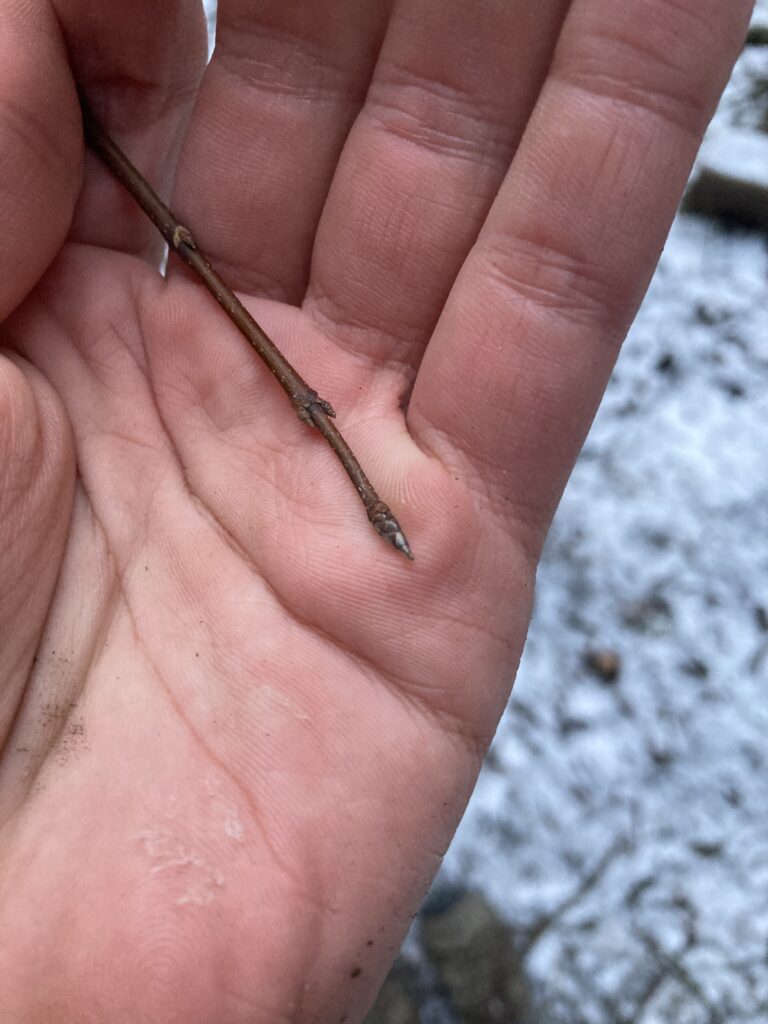
I finally got a good look at the twigs of the ash, as well as the other mature trees in the marsh.
Ash
the elm seems to have been flowering before it was wounded by the ash tree
This particular elm doesn’t look like it will survive.
birch-possibly yellow
The young sugar maple was unharmed in the incident, and is still dormant.

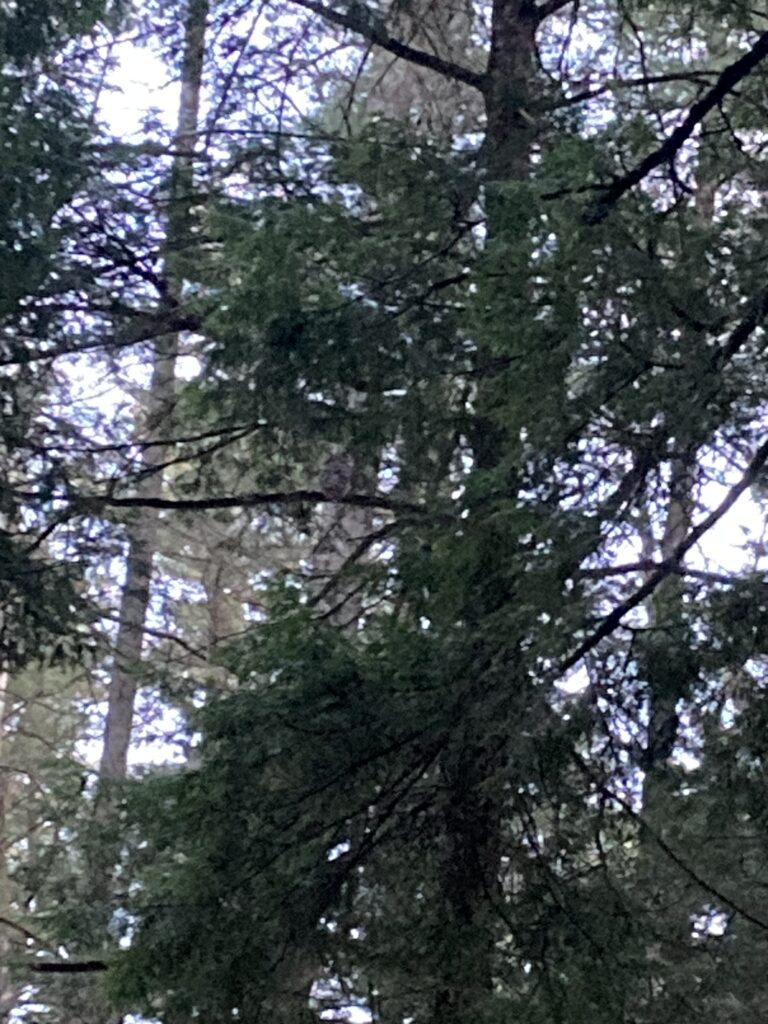
A faint “who cooks for you” caught my attention, and I crept through the valley leading away from the stream and captured this grainy photo of the culprit:

This was the best photo I could get before the owl took off.

I have been hearing a lot of barred owl activity in Centennial woods lately, and on the day of the squall, possibly around the time the ash fell, I recorded this video across the clearing from where my site is:

It sounds somewhat like the courtship duet I found on youtube. According to Naturally Curious, they are in nesting season, so I think this is a likely explanation.

At the end of September last year, around the same place this was recorded, I came across a gray squirrel evading one of the owls as I walked down the path:

The squirrel eventually made its way down the tree and escaped into a thicket.

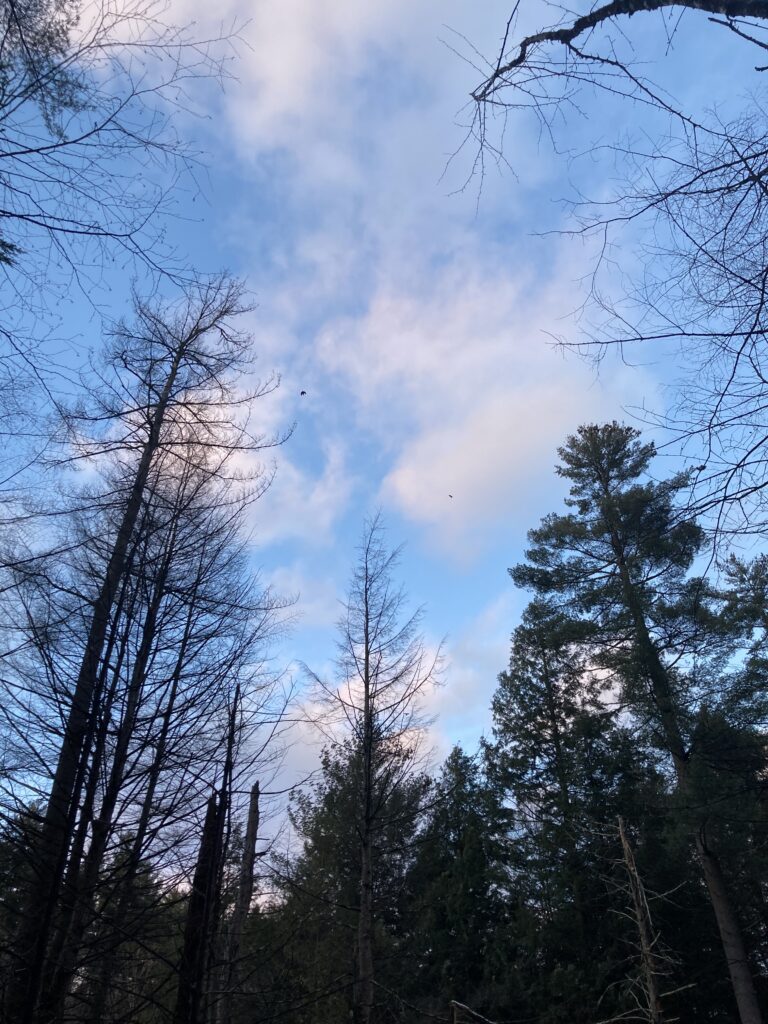
Other than the barred owl and the possible pileated woodpecker activity, there were quite a few crows in centennial and I got this picture of two of them flying overhead. I had been seeing a lot of chickadees as well, but not near my site in particular. There were no tracks in the snow that I could discern, and no signs of amphibians in the cold, half frozen mud.

Wildlife in Burlington

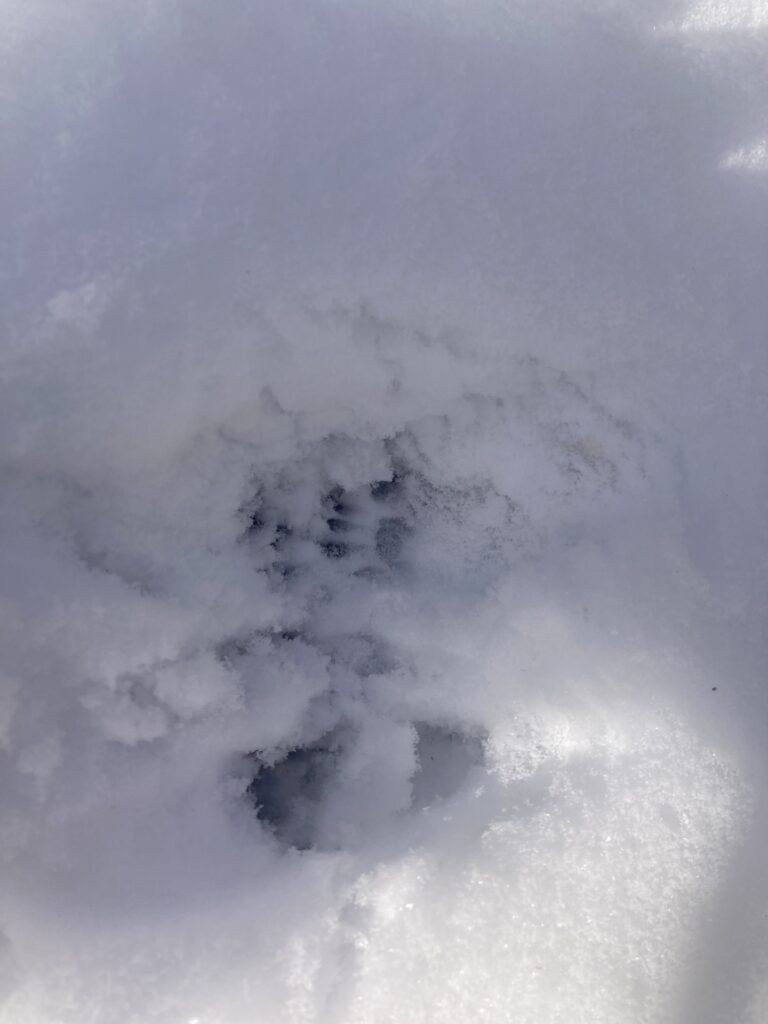
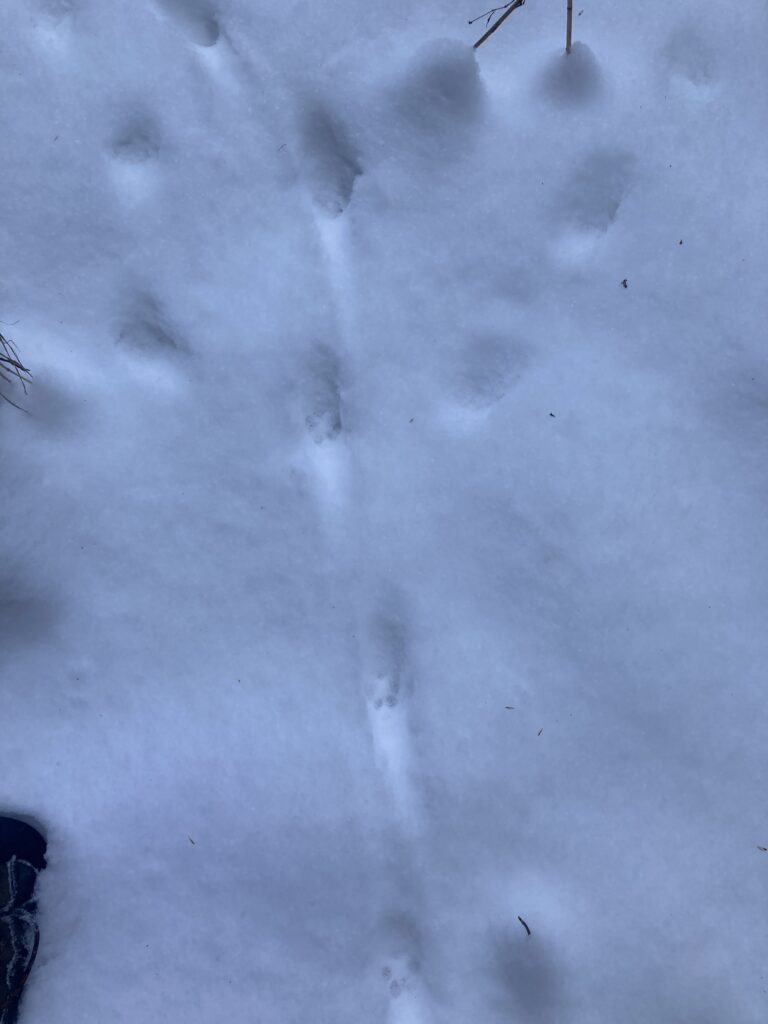
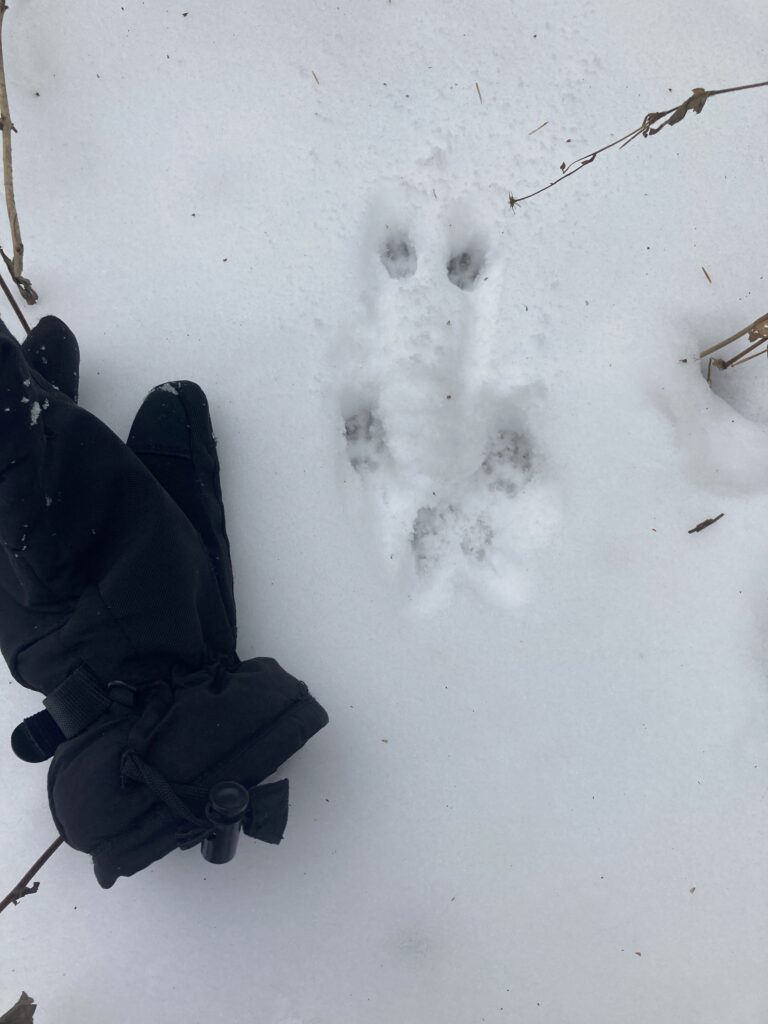
Unfortunately I did not get a chance to go out tracking for this project until late in the day Friday, after fresh snow had already fallen. I found almost no traces of animal activity, other than footprints from a small rodent. The prints above were left by the animal in Centennial Woods shortly before I found them on Saturday. I am pretty sure this was just a grey squirrel.

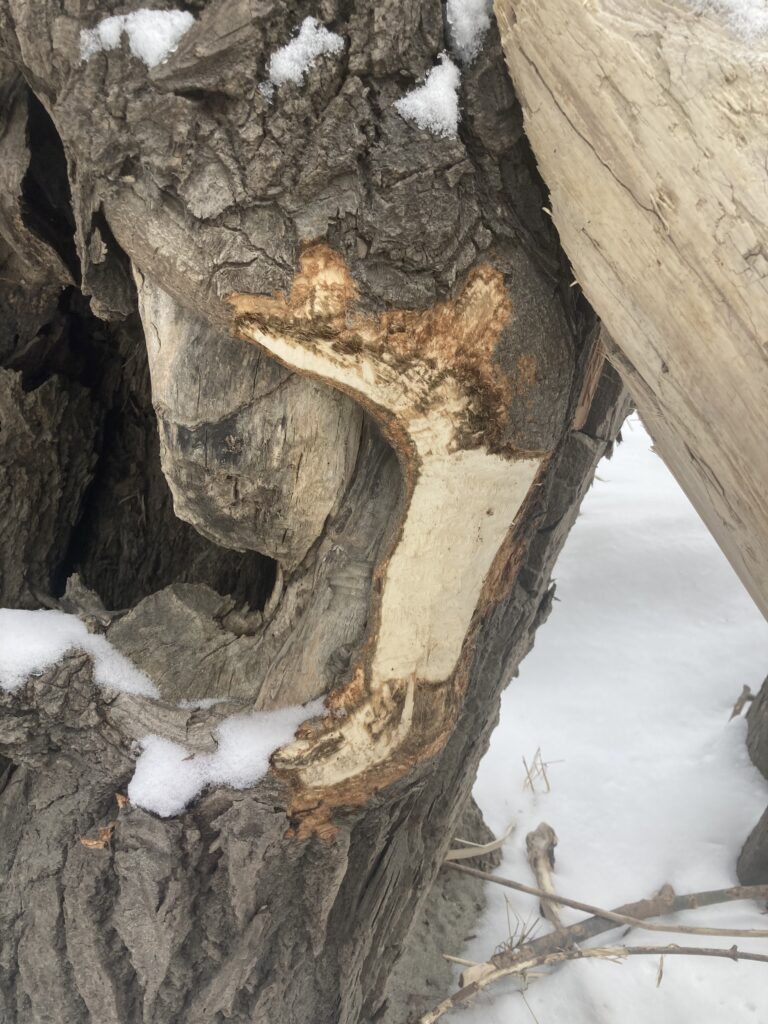
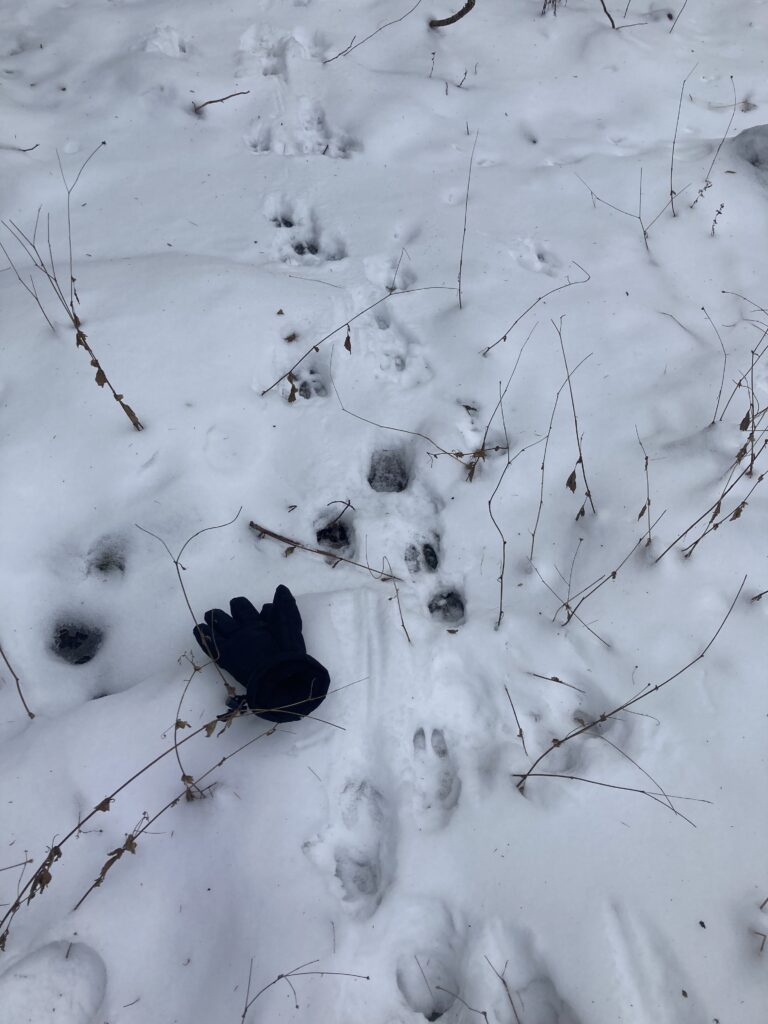
The frequent snowfall over the past two days covered all of the larger animal tracks before I found them, leaving them unidentifiable. If I had to guess at some of these based off of the gait, I would say fox, deer, raccoon, and possibly skunk were some of the culprits. Saturday was a little disappointing due to all of the covered-up trails I came across. I walked all over centennial woods and through the cemetery over to salmon hole, where I found some relatively new beaver activity.

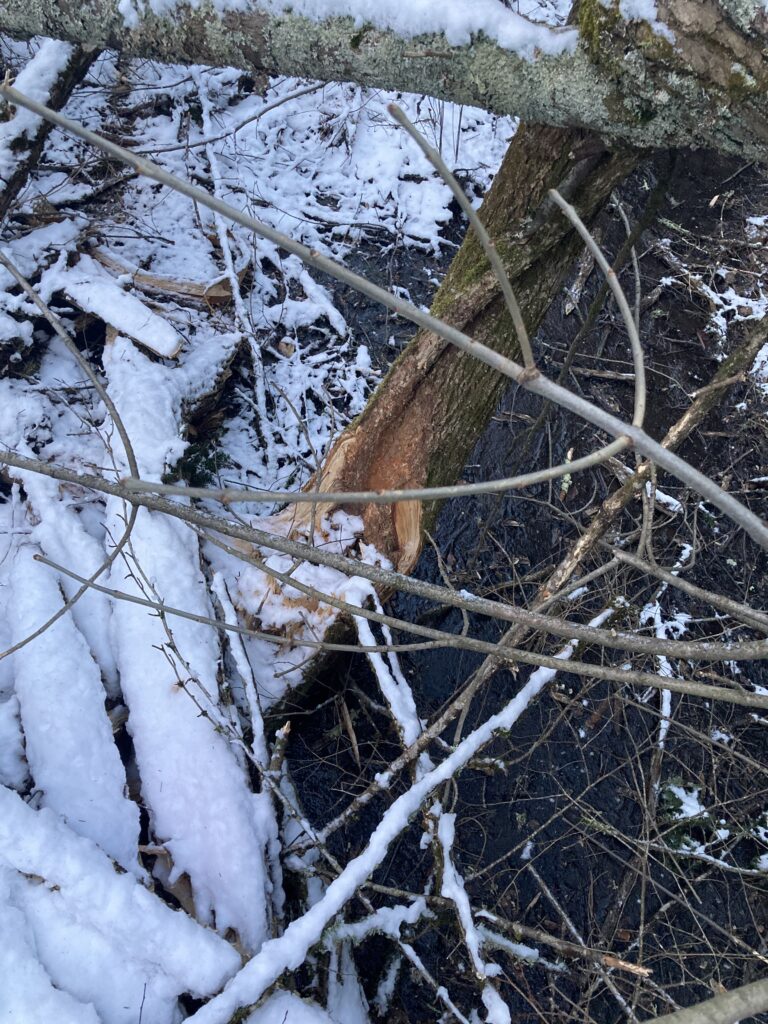
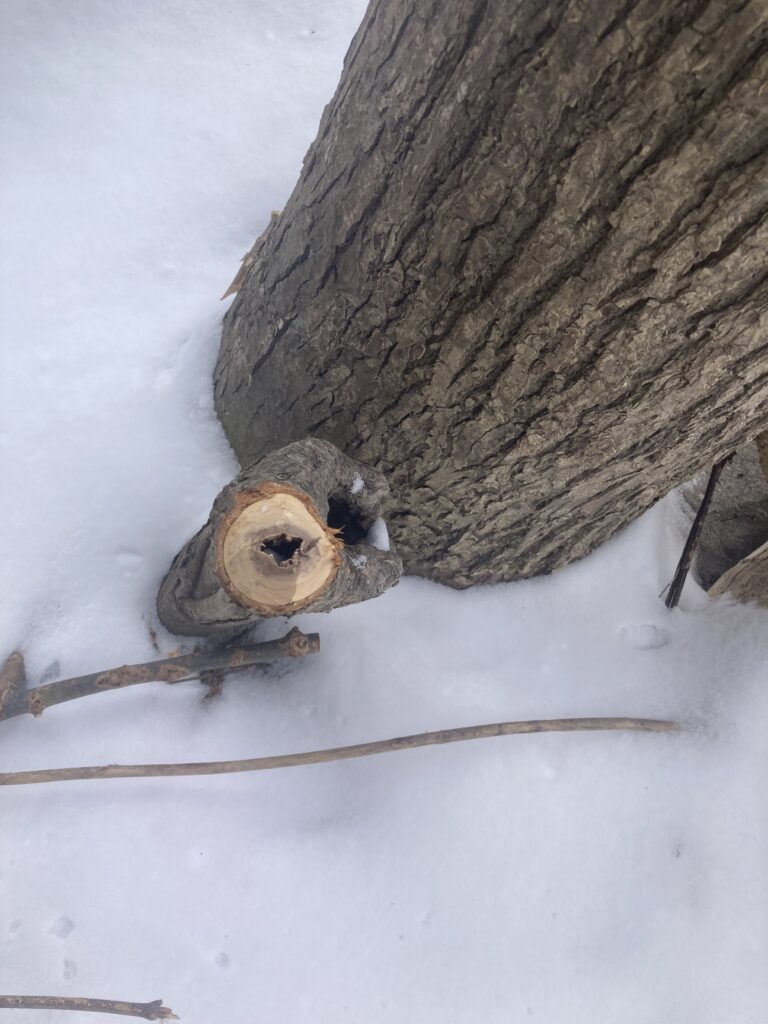
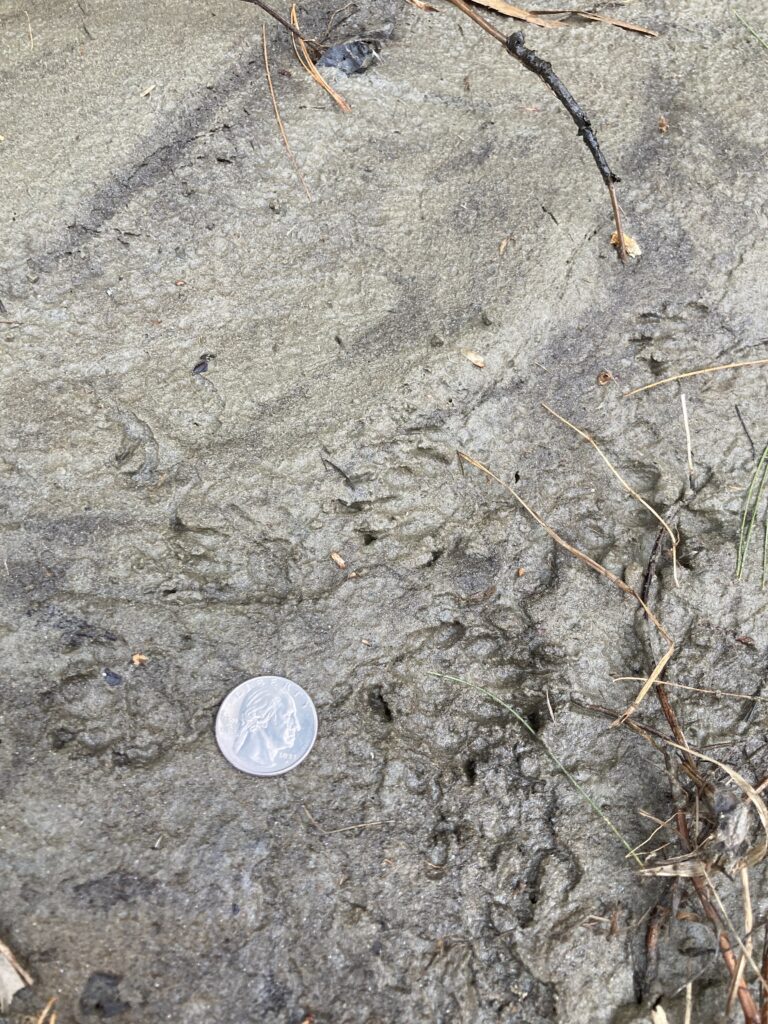
I am not sure how long ago these were chewed, but this was certainly the find of the day. Earlier in the week when all of the snow cover had melted, I saw a lot of raccoon activity up and down centennial brook, as well as some small prints that I think were left by mink. I settled on mink due to their location next to centennial brook and their size. The consistency of the mud made it a little hard to see all of the details, but I researched images of mink tracks in mud and they seem to match.

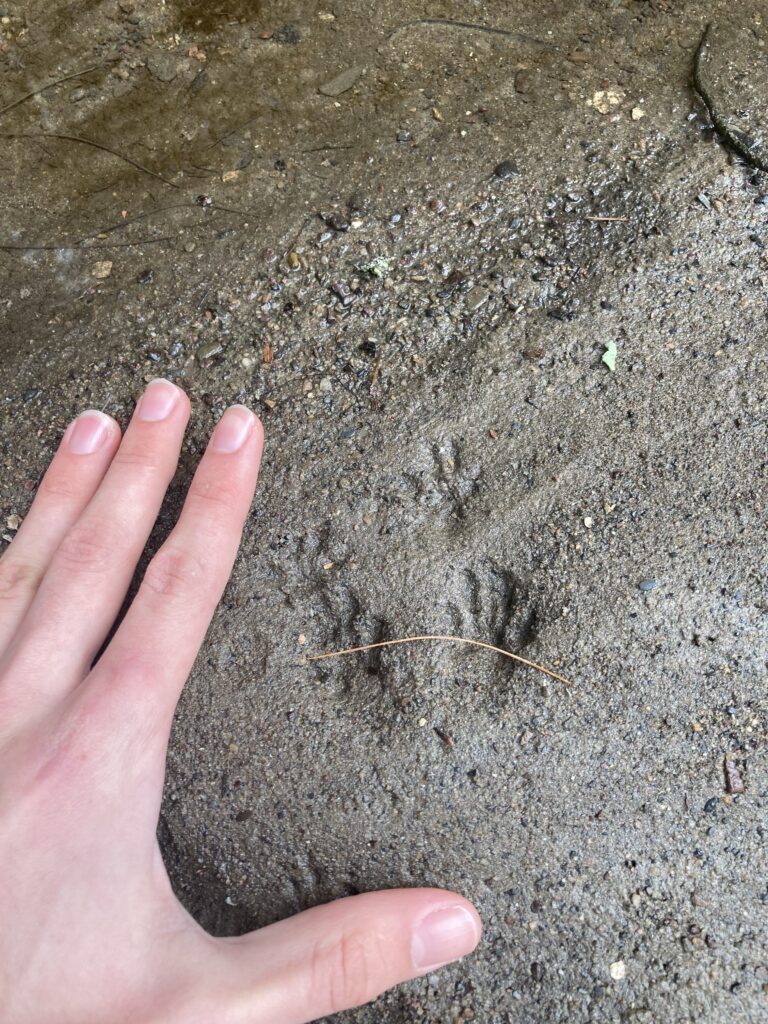
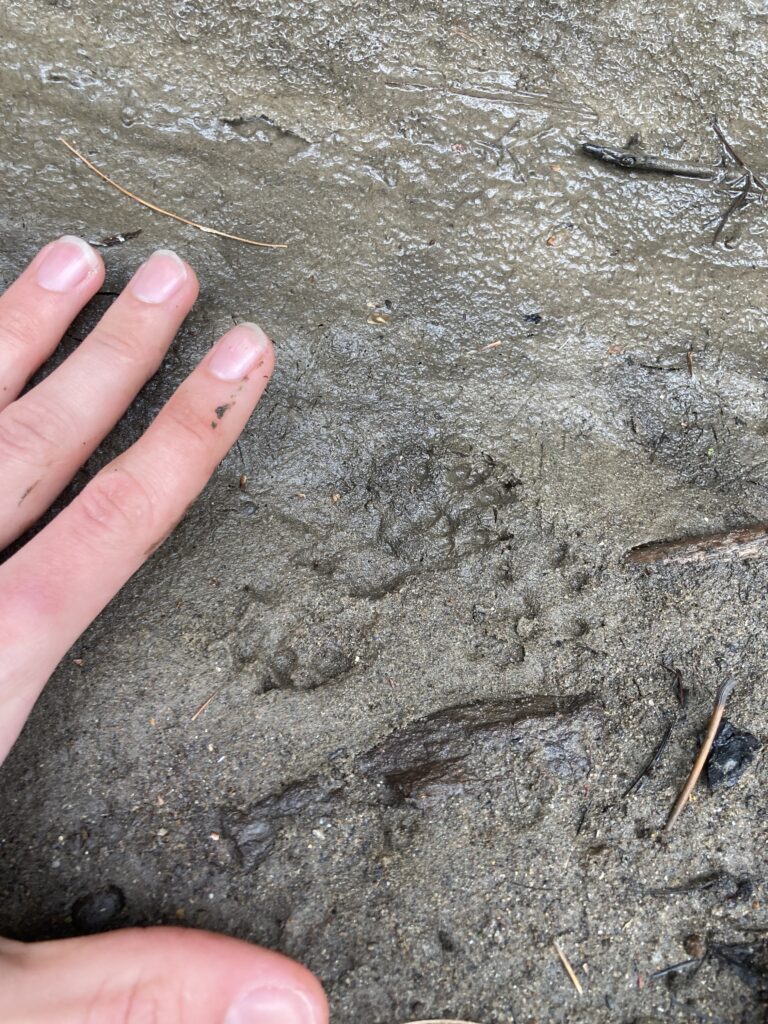
I also found a set of prints from a small rodent, perhaps a red squirrel, as well as one from a small mammal I am not sure of.

For these last two, there was no snow on the ground, so all I had to go off of were a few prints the animals left as they crossed the stream. I didn’t add either of these to iNaturalist because I didn’t have any guesses for what the species was, and I didn’t record the trails I found on Saturday because they were completely unrecognizable. I didn’t bother with the raccoon tracks in the mud at all as I know other people have already documented the same set. I found iNaturalist fairly easy to use, although the project didn’t update right away and I ended up adding another identical picture for the beaver sign.

Phenology 1-Return

Unfortunately the freezing rain ruined the snow at my site before I had the chance to do a proper analysis. However, when I was passing through earlier looking for snow mysteries, I found that the animal I had been following the tracks of had passed through the wetland.

The paw prints look like they were left by a small canid, and my best guess is a fox.

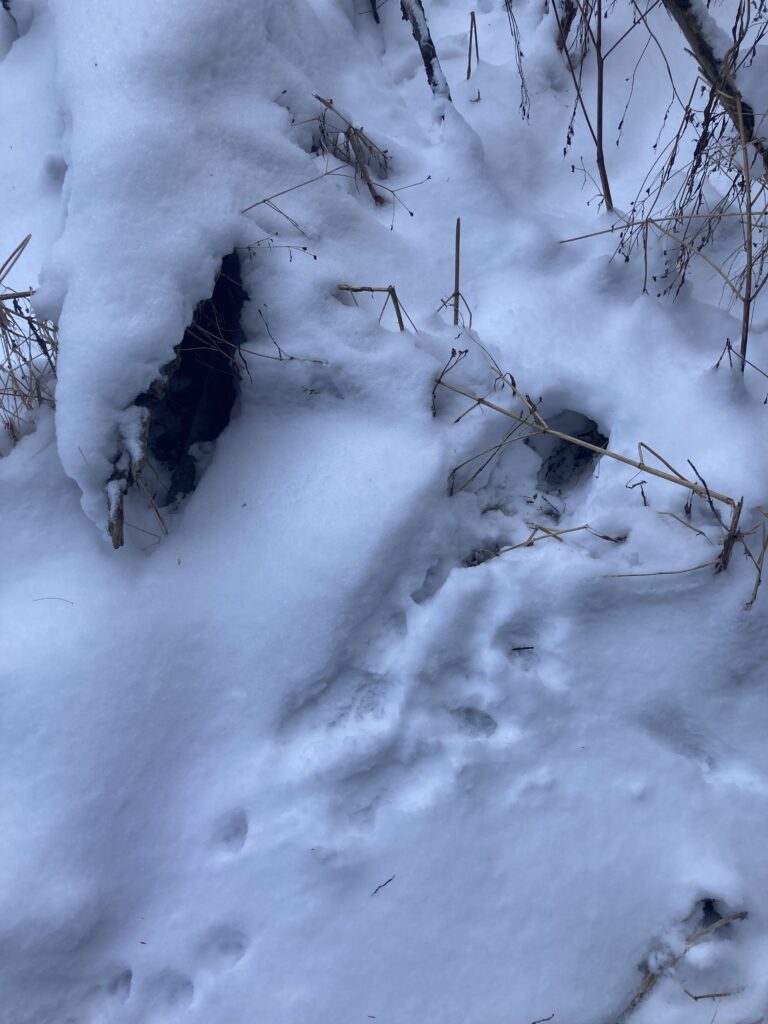
The animal seems to have been hunting the small mammals living under the snow. The lack of tree cover and presence of dead brush in the fields and wetlands in centennial woods has resulted in deep, fluffy snow accumulating in these areas, which is ideal for the creatures that live in the subnivean zone. Plenty of entrances into this layer have been created by dead plants that protrude from the snow.

Other than the possible fox tracks and evidence of small mammals, I did not see much activity at my site other than dog and boot prints.

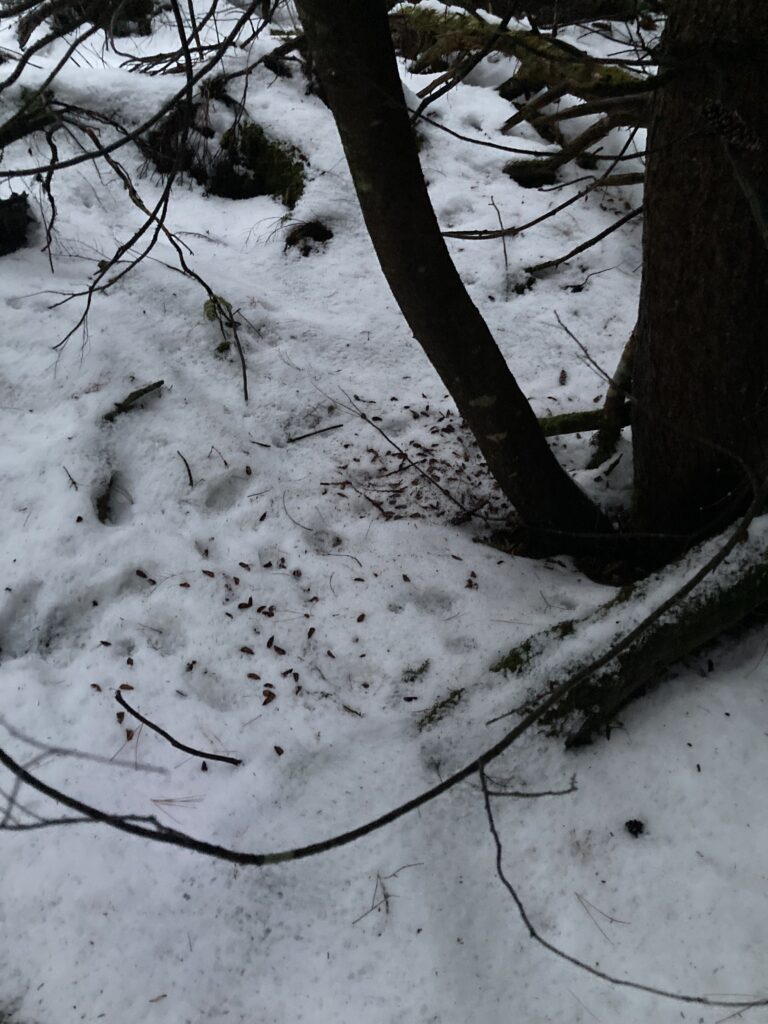
After the rain destroyed the powdery snow cover, the only sign I was able to detect was a pile of chewed pinecone bits, probably from a grey squirrel.

On the second visit to my site, the snow cover was too thin and inconsistent to be able to easily see disturbances, and the snow was not powdery enough to preserve small mammal tracks.

I think that the rain that has been occurring on and off for the past day or two has obscured tracks that were left during this time, and old ones are probably gone completely.

The only phenological change that I noticed other than the response of the fox and the small mammals to the snow cover was that the deciduous trees are finally completely bare. Before the snow had melted, I saw loads of evidence of squirrels digging up seed caches in other places in the woods, which probably happened during the thaw that preceded all of this rain. I also saw evidence of a waddling five-toed creature that ventured out during this time, as well as a trail used by deer. The slightly melty snow was perfect for tracking, preserving the smallest of prints very well.

I believe a gray squirrel left these prints. This was not at my site, but near another part of the stream.
A deer trail not far from the entrance to centennial woods. I have seen evidence of deer in the same place during the fall.

Phenology 5

December 3rd

Foliage

The only trace of the fall colors are the beech leaves, some of which are still on the trees. They have become papery and dull in the wet weather.

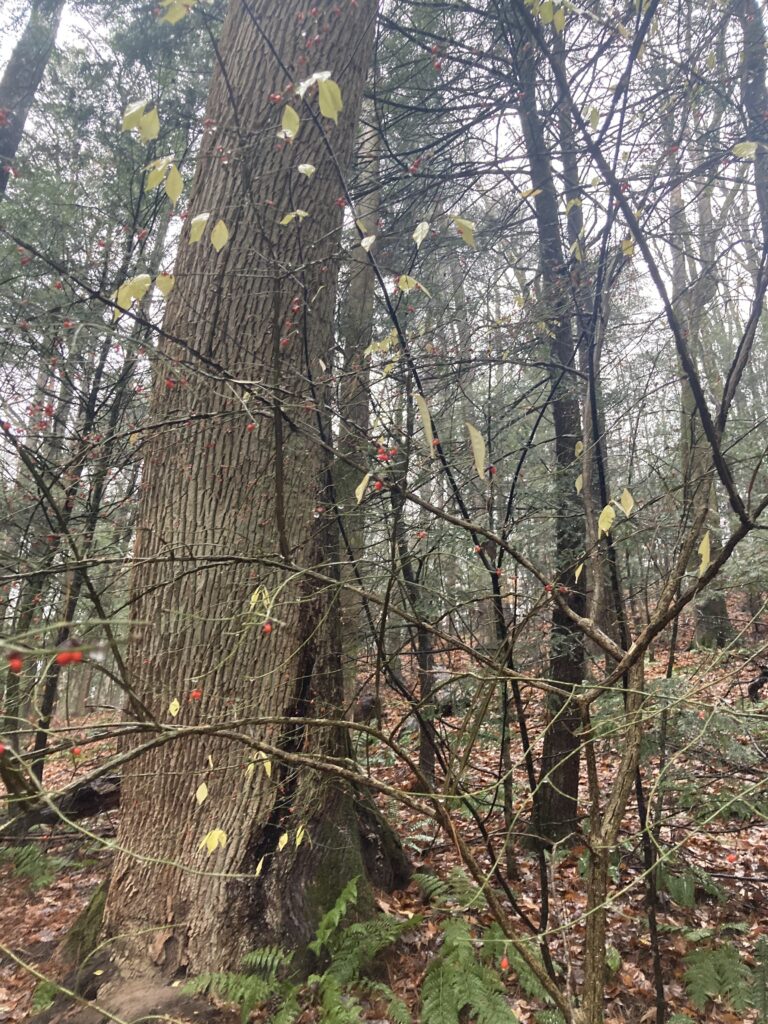
The burning bush next to the ash tree still has a few leaves, as well as its red fruit.

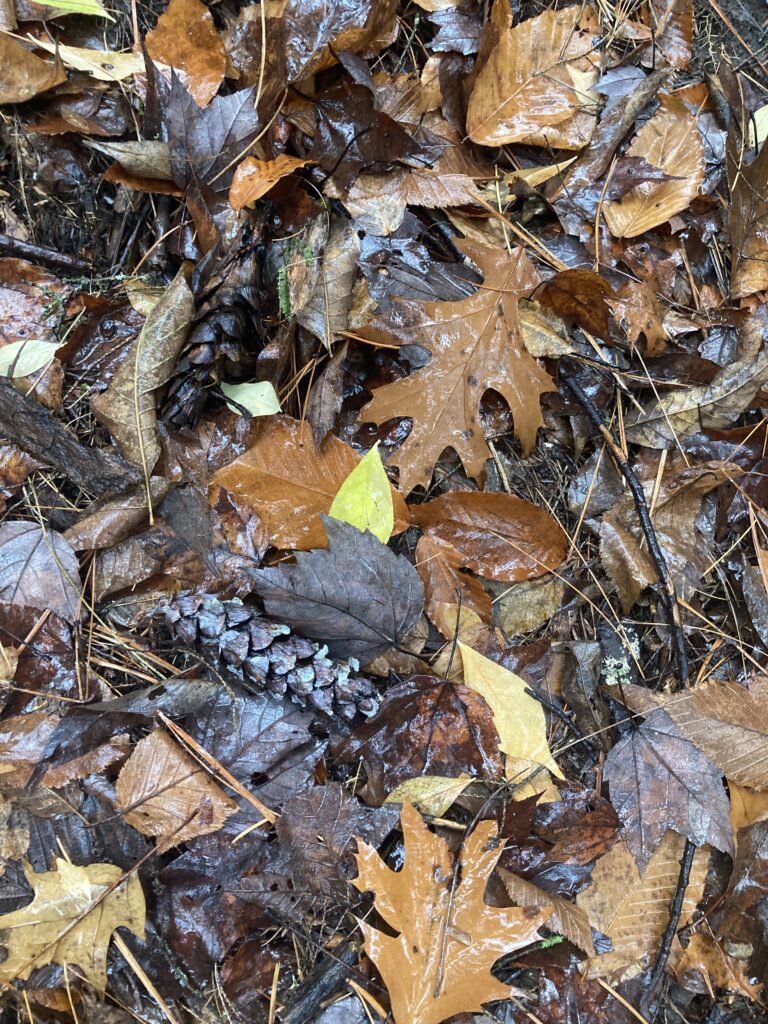
There is very little fall color on the forest floor. The maple and birch leaves have started to decay, while the oak leaves are more intact.

Moss

The mosses down in the wetland are thriving in the cold moist weather. They receive more light now that the deciduous trees have lost their leaves.

Birds

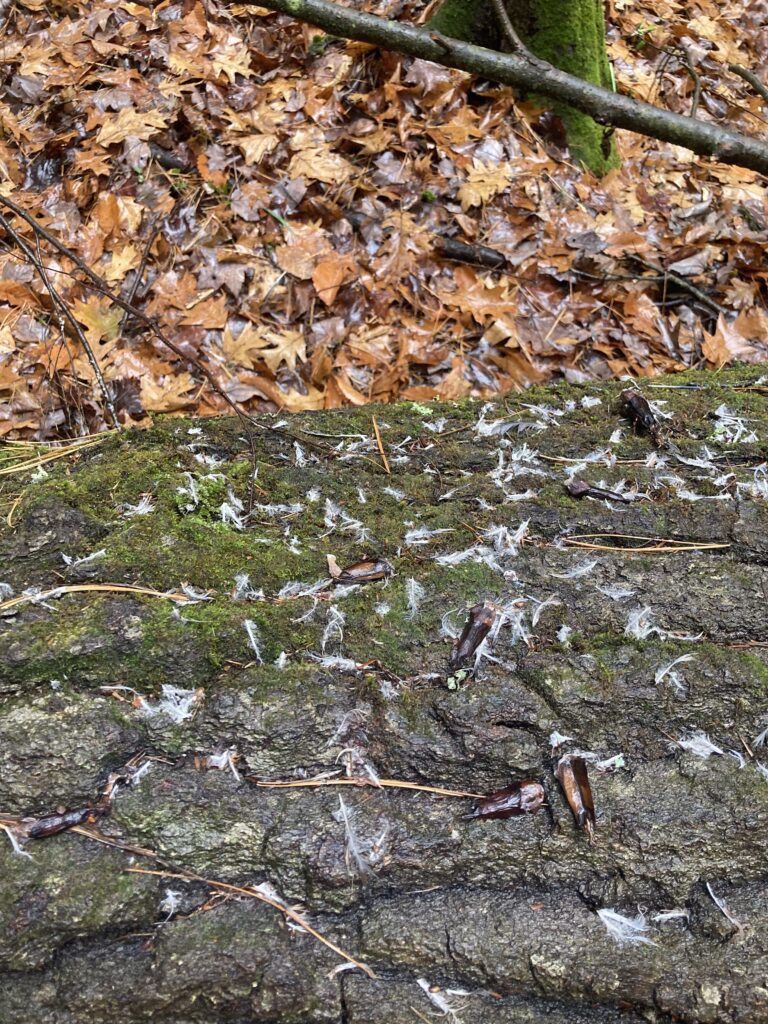
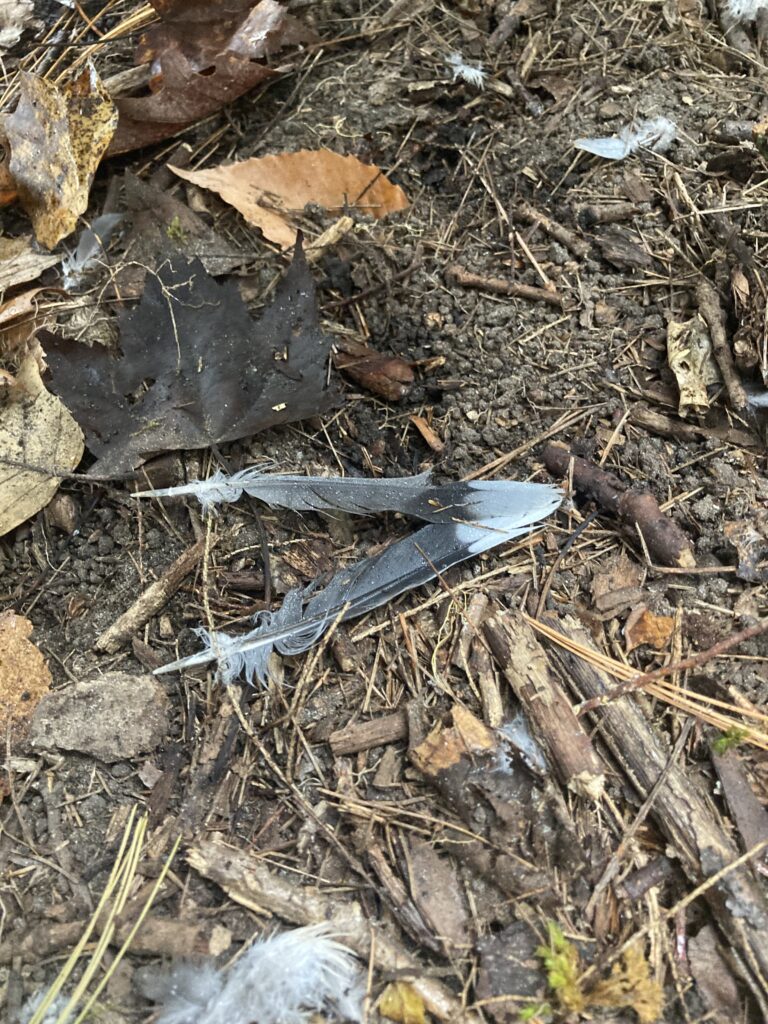
A bird of some sort met its end up on the hill behind my site, and was processed by whatever the culprit was on a log. I do not know what type of bird it was based on the feathers. There have generally been fewer animals near my site, but I have still been hearing the occasional chickadee.

My Favorite Things

Hemlocks

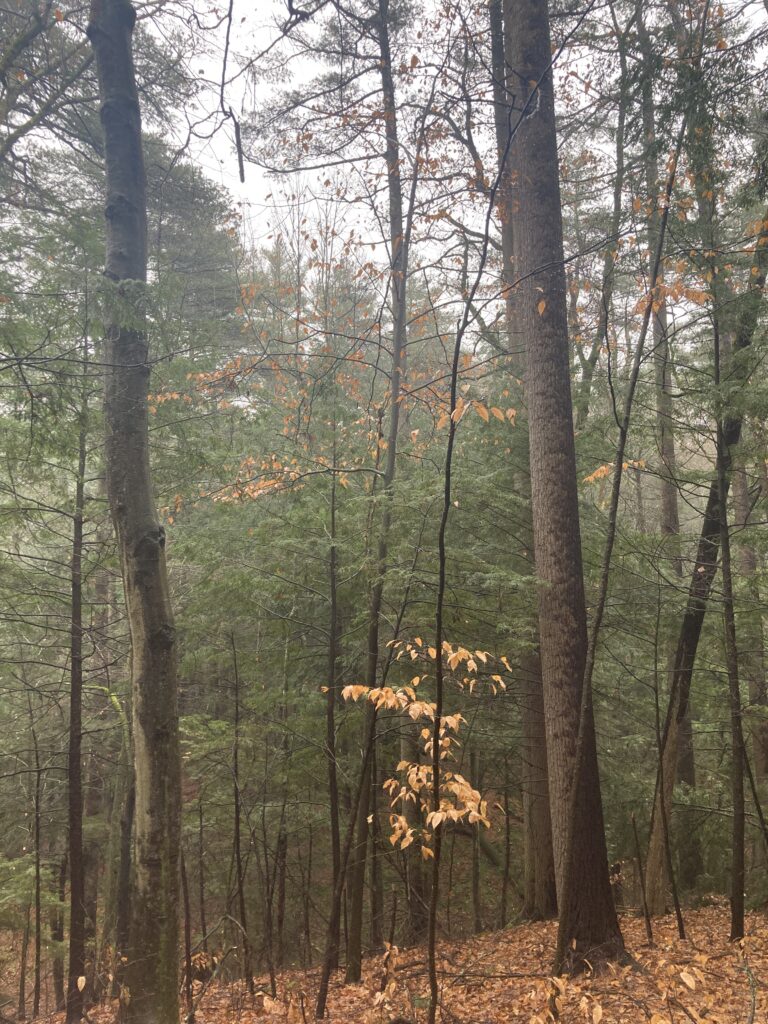
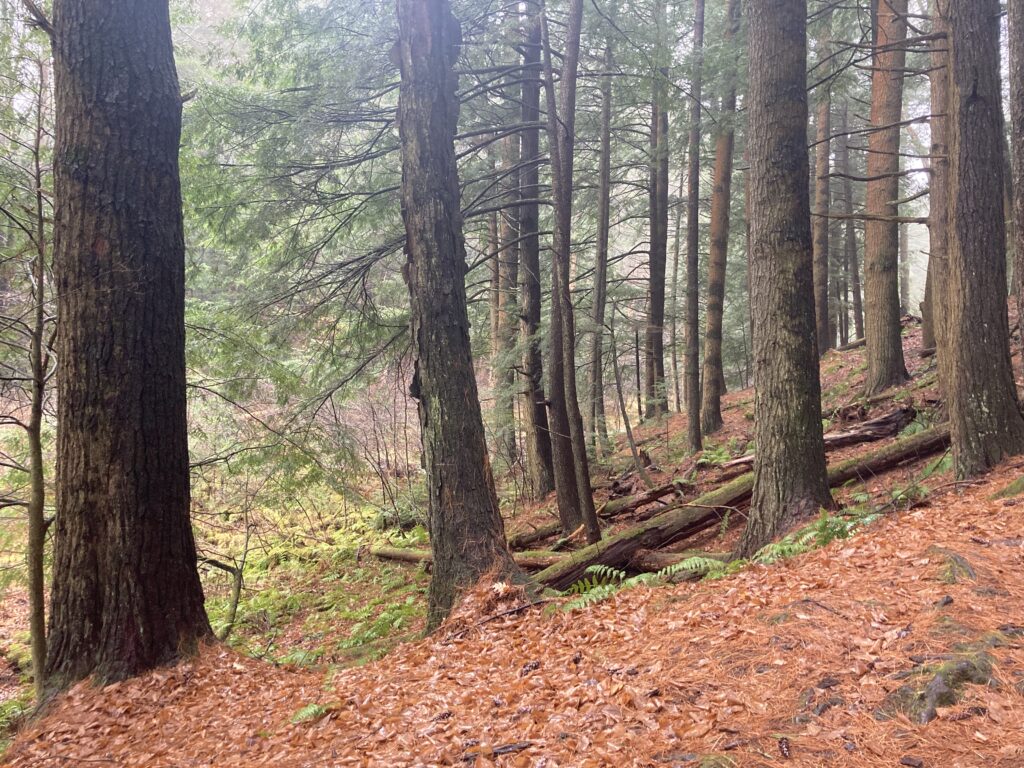
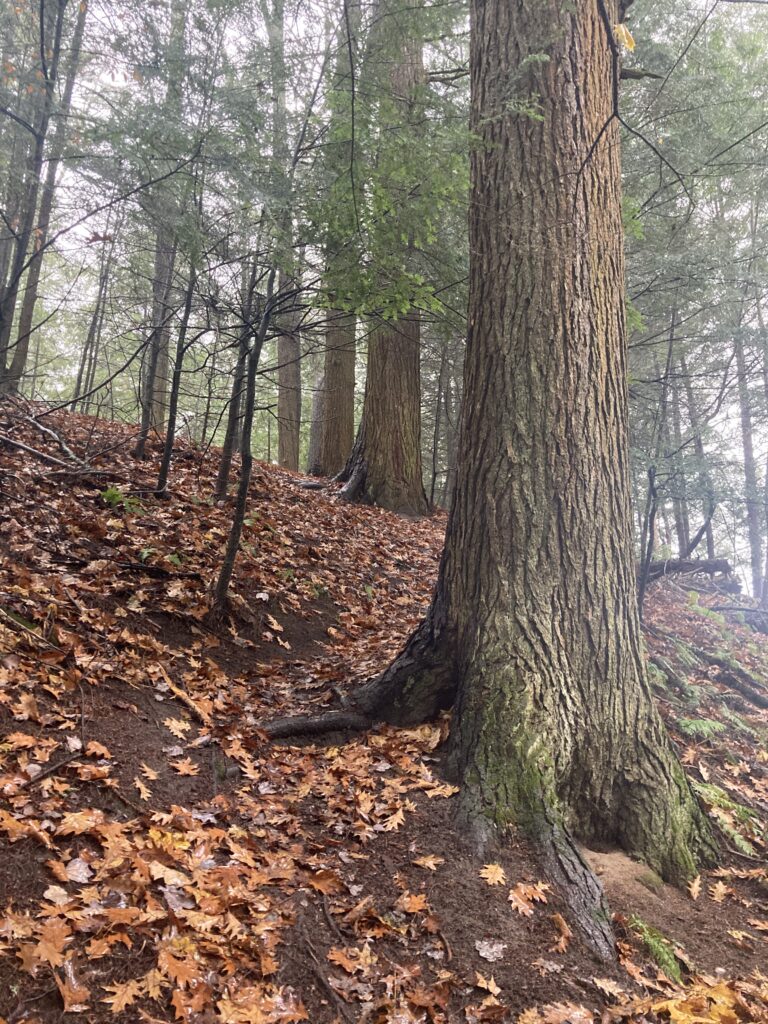
I enjoy walking past the massive hemlocks on the way down the hill. As the deciduous trees have become less prominent, the appearance of the forest on this side of my site has been swayed more and more by the hemlocks and their dark green needles. Some of the largest hemlocks that I have seen in Centennial grow on this hill. Since the last time I was here, the deciduous leaves have fallen out of the hemlocks, giving the forest a slightly more orderly appearance.

Pines

The hill opposite the one with the large hemlocks has more white pines growing on it, giving the forest floor a pleasant rusty color.

Birches

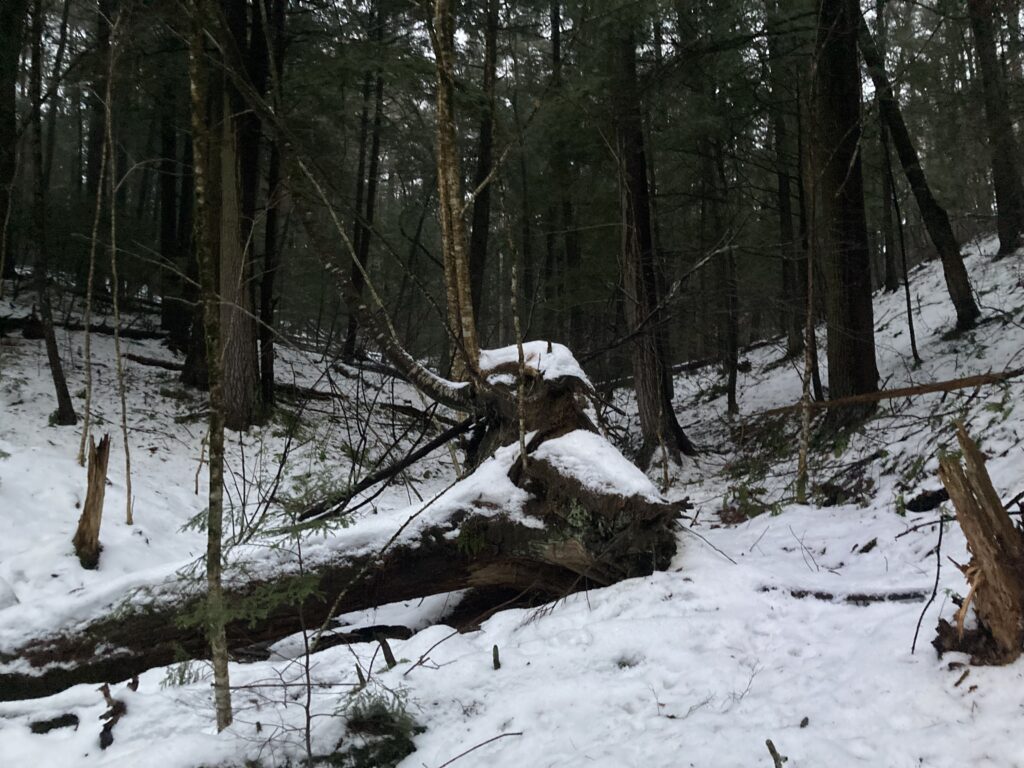
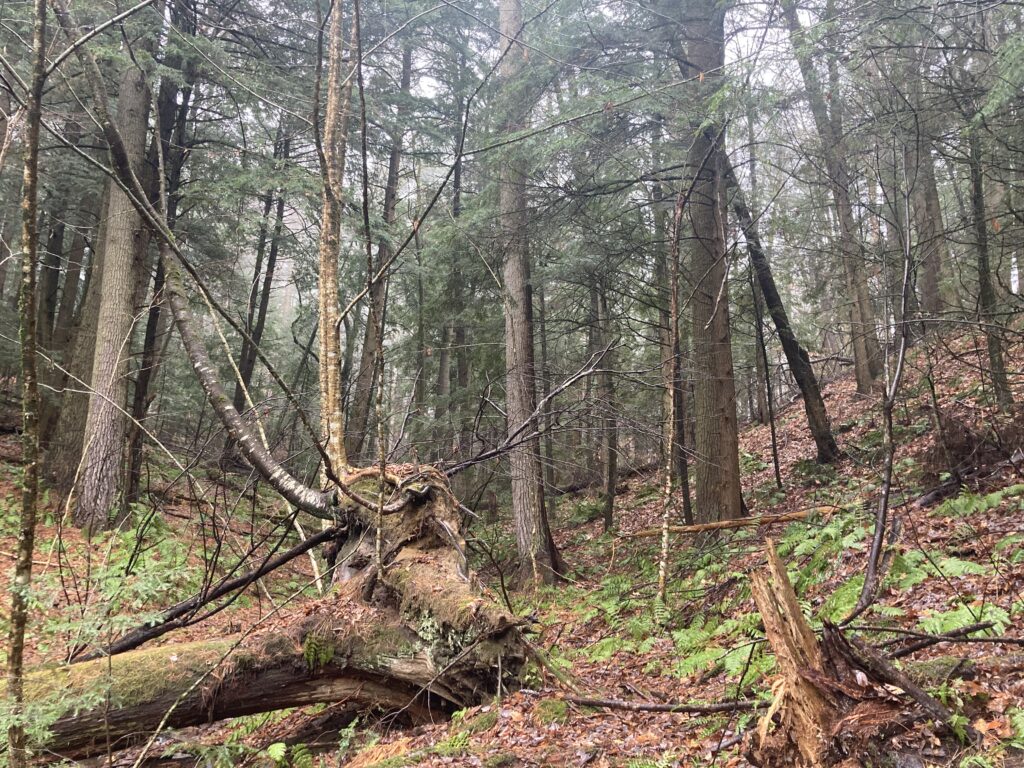
There was a considerable amount of mist when I took this photo, giving it a mysterious quality. The birches growing on the fallen log in the center are one of the reasons why I chose my site. I am curious about how well they will do into the future as more of the clay erodes off of the rootball. I imagine them forming a cage around where the log once was, with mangrove-like roots running into the soil.

Phenology 4

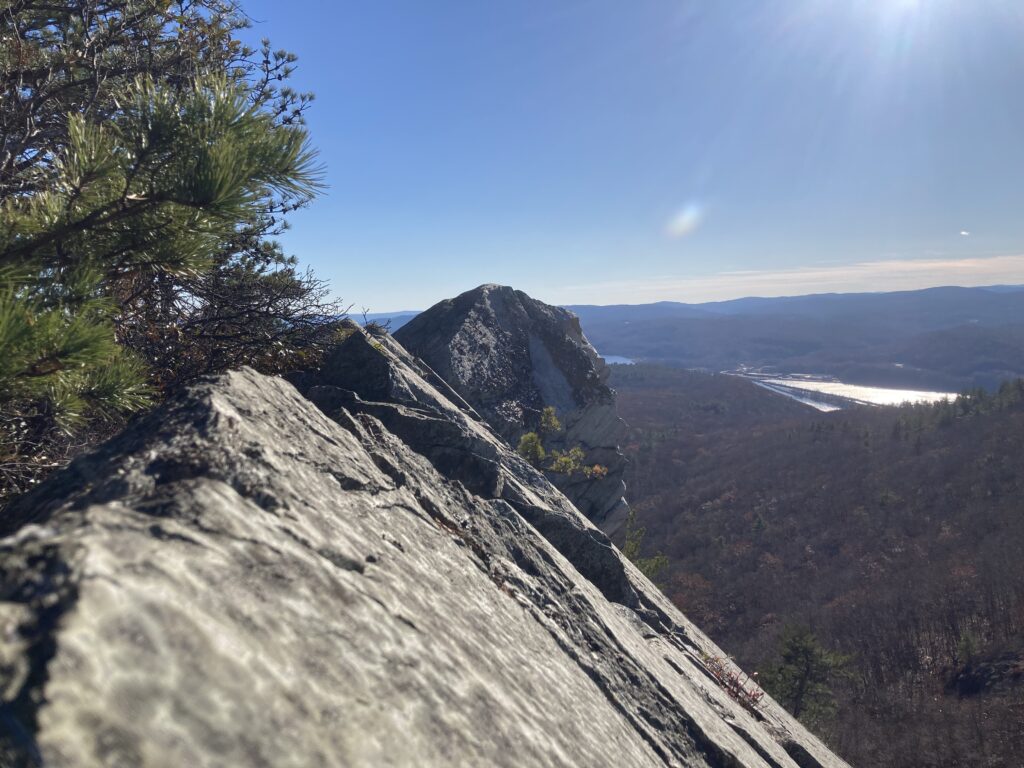
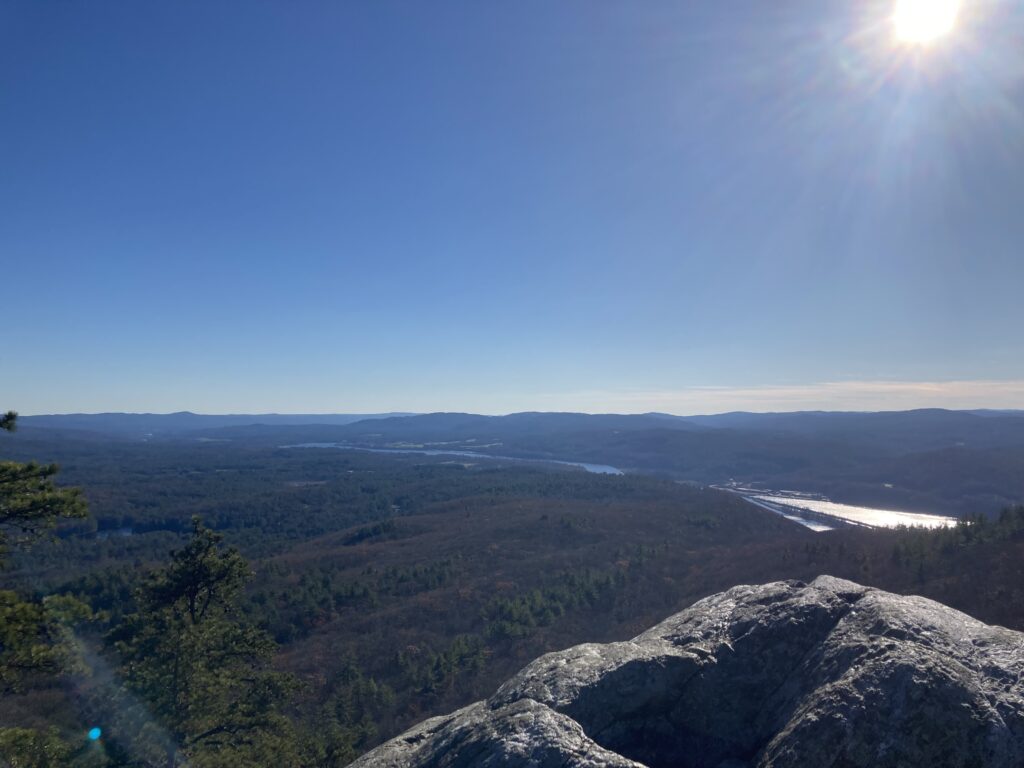
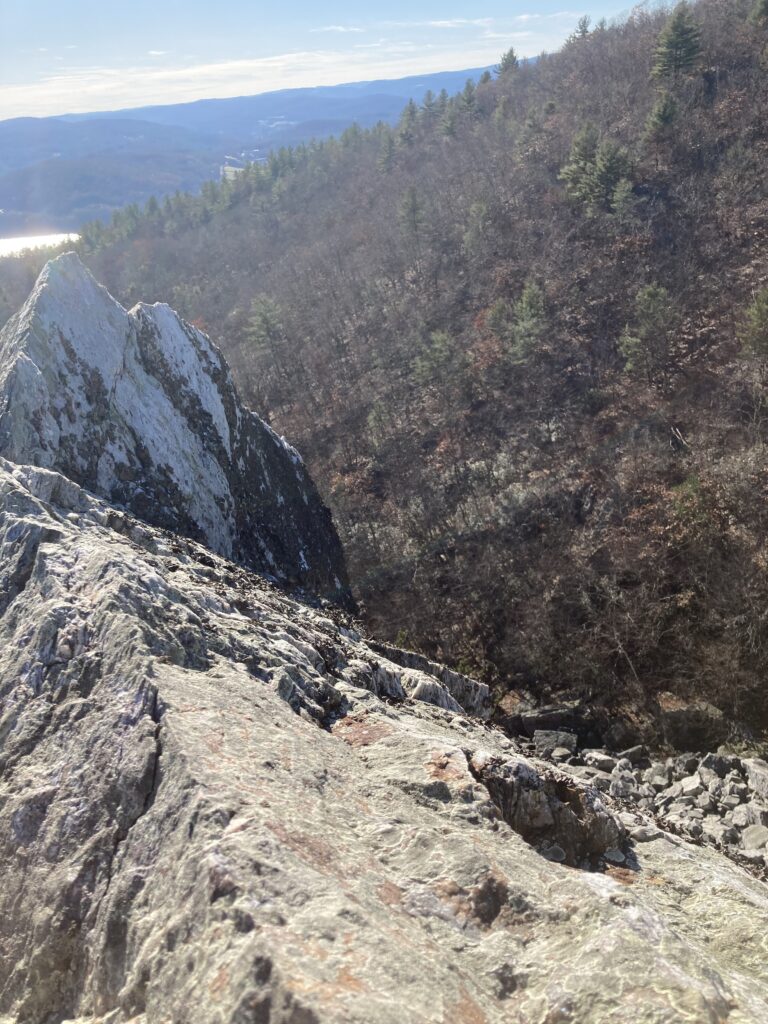
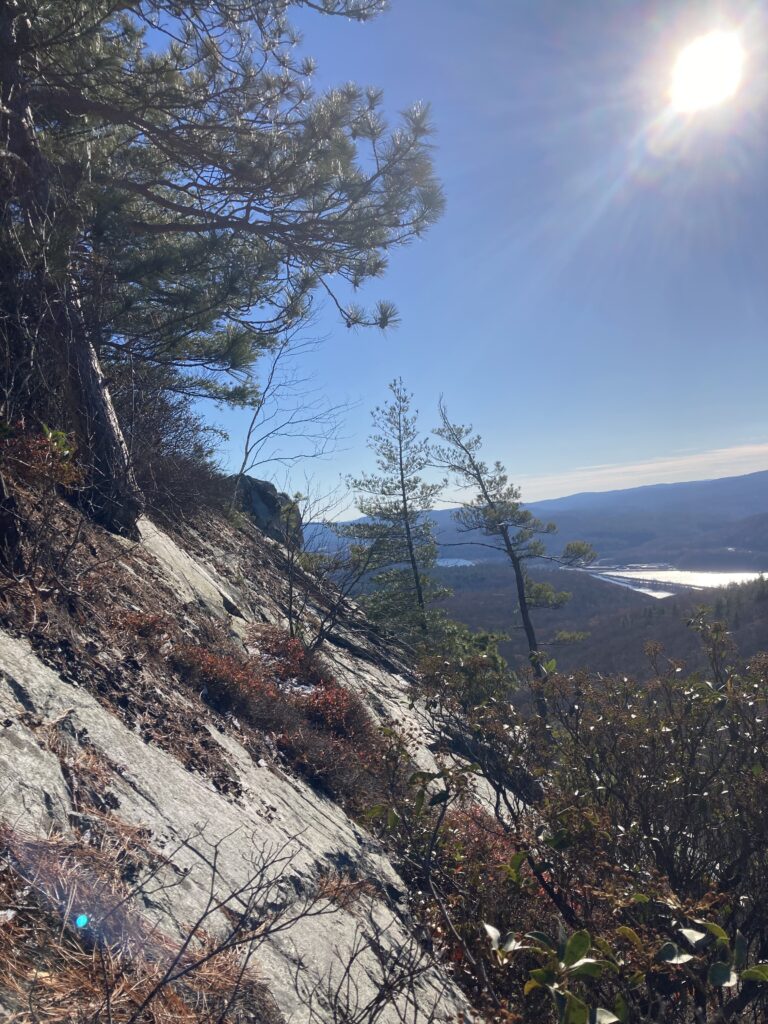
The new site is a place called Mine Ledge. It is a steep cliff face covered in brown lichens, with red and white pines growing out of it in places.

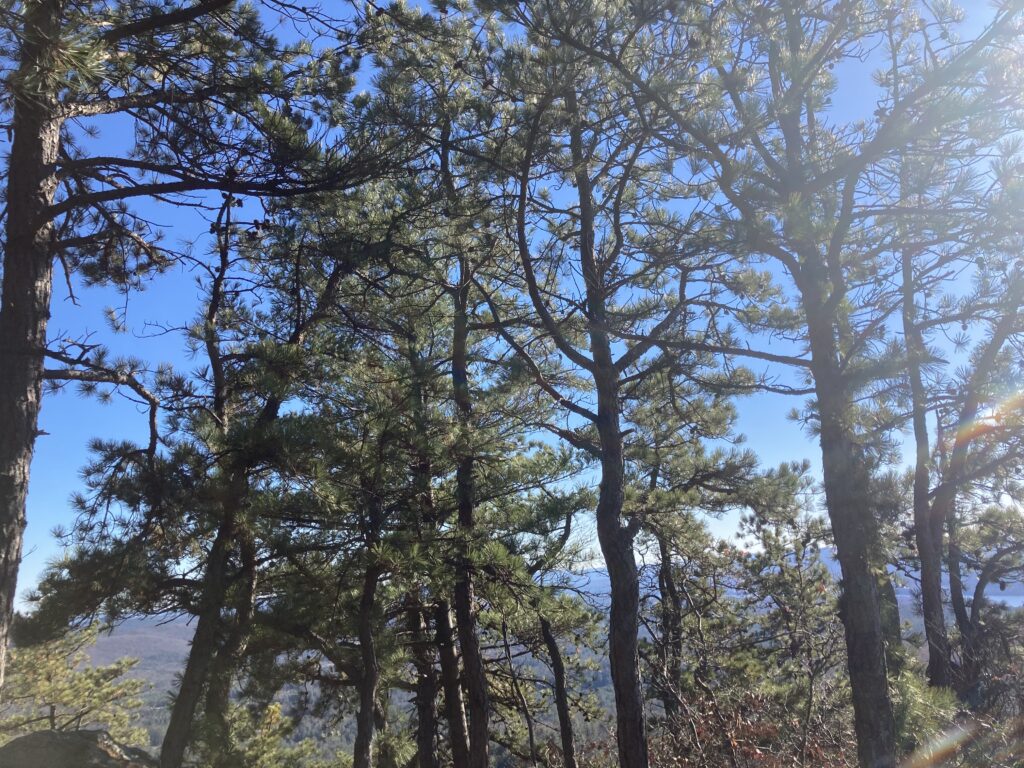
A stand of red pine and white pine on top of the cliff.

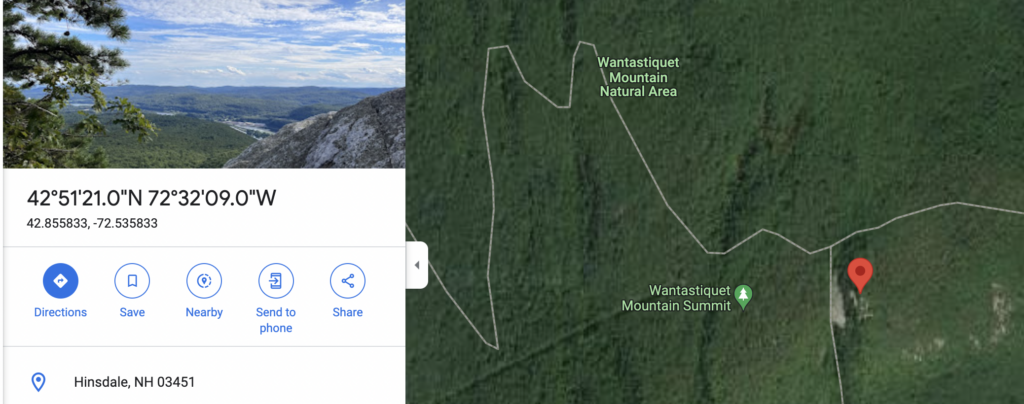
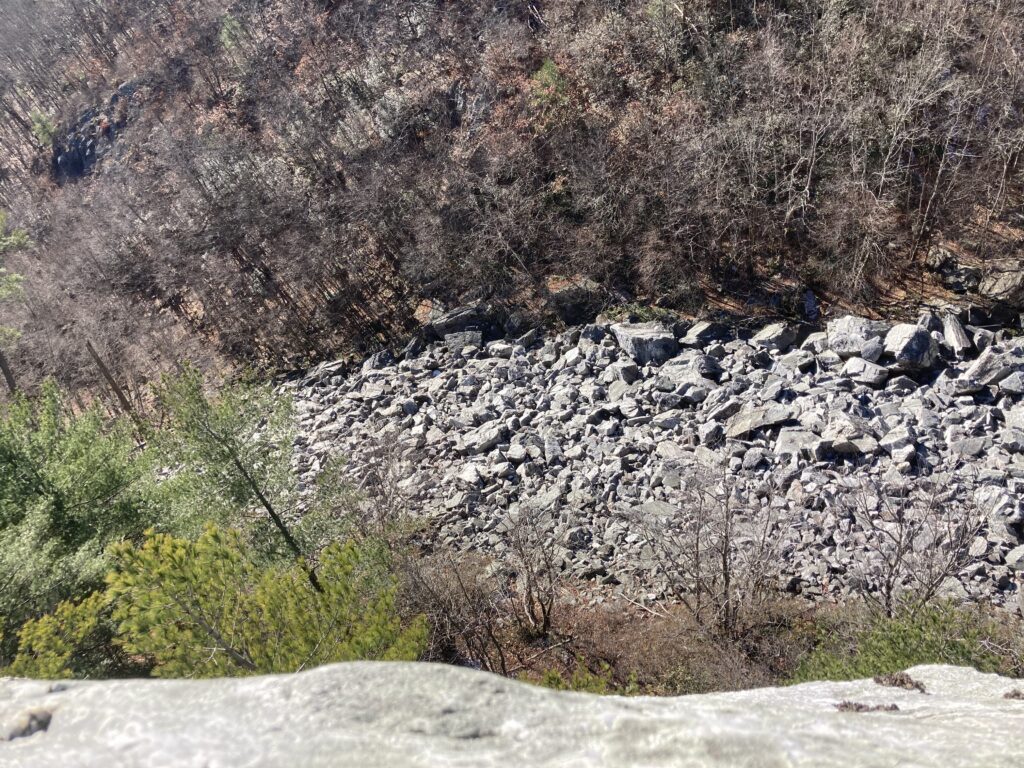
The pile of crumbled rock in the valley is visible on the google map.

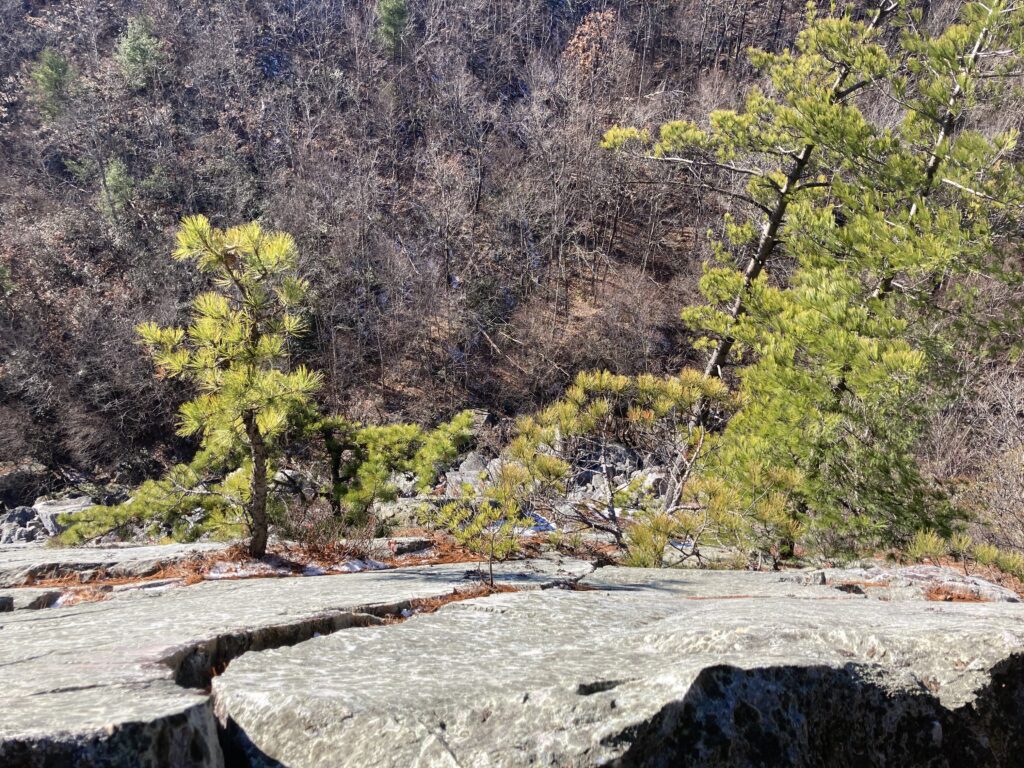
Low bush blueberries and mountain laurel grow out of some of the cracks. Although not visible here, there are also spruces and birches on the cliff

The vegetation that is able to grow in the shallow soils of this place receives much more sunlight than the vegetation at my site in Burlington does. The soils on this cliff are also much drier, in no way resembling those in the wetland in Burlington. The site is higher in elevation as well, at 1,320 ft. The Oaks, which are present at both sites, seem to be at similar stages in their phenology, with some brown leaves still hanging on the branches. I would say that the phenology is at a similar stage in both sites, with differences in latitude being made up for by elevation. The low bush blueberries have lost most of their leaves, with the remaining ones taking on a bright red color. Other than these and the oak, all of the other deciduous species have lost their leaves.

The vegetation at this site is adapted to drastically different conditions, and more closely resembles the vegetation on Mt. Mansfield. It is very special in the area, because there are not many exposed rock faces nearby.

Phenology 3

I sat on one of the fallen logs at my site. It was cold on October 29th, and the air had a stillness to it, in contrast to the day before. I could see and hear many winged things today. A small airplane, a barred owl, geese, a flock of chickadees, and the occasional falling hemlock seed. The usual echo of traffic was audible, of course, and there was never complete silence. I kept my hands warm in my sweater pockets as I took in the surroundings.

All of the deciduous trees, save for the beech, seem to be past their peak foliage. Old needles from the White Pine and colorful hardwood leaves are trapped by the dense foliage of the hemlocks. The beech trees are further up the hillside behind my seat, so most of the color in my field of view is either on the ground or in the hemlocks. There is an elm of some sort in the swamp where the log sits, which still has a few yellow leaves clung to it. The invasive species in the woodland are finally starting to go into dormancy, which for my site includes the ghostly whitening burning bush next to the Ash and the yellowing buckthorn down in the swamp. Ferns on the hillside are turning white as well, and it is clear that many of the herbs in the muck have completed their lifecycles. The woods are opening up for the winter, and more light seems to be reaching the forest floor even as the days get shorter. I no longer worry about the trees shading my evening walks, and for now highlighted at my site are the brilliant golden beeches, the dark green Christmas ferns on the forest floor, and the towering hemlocks.

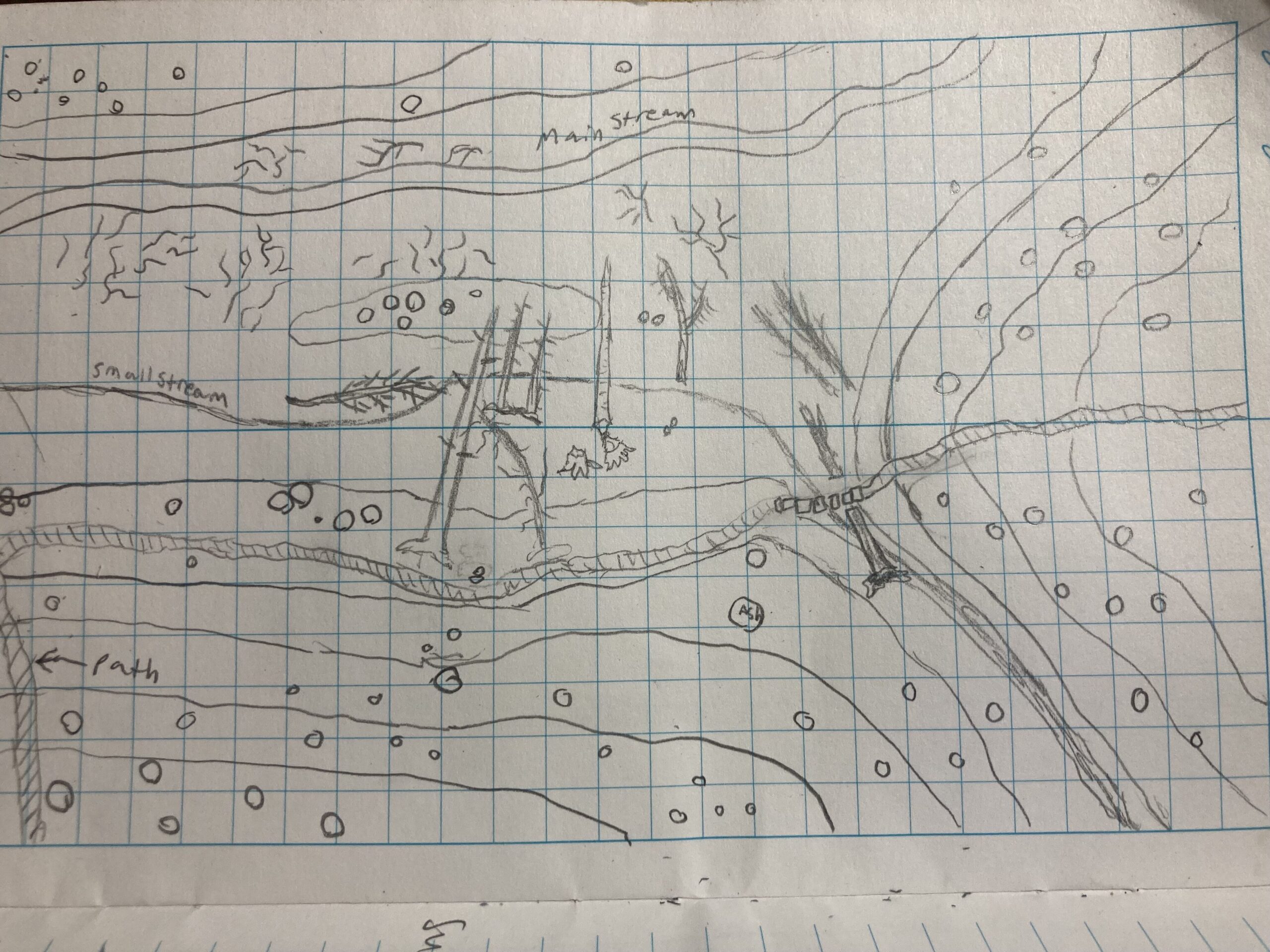
This is the map I drew for my site. Circles are used to represent the trunks of standing trees, and are not completely accurate. I have labeled the Ash. Most of the others are Eastern Hemlock. Downed trees are drawn as they appear above. The path is marked to distinguish it from the rough contour lines that I drew. The lowest elevation is found at the level of the small and large streams. The ‘island’ in the middle of the floodplain is the only place within it where trees seem to have grown sturdily. I drew in some of the shrubs growing in the swamp, which is what the wavy lines represent. The largest fallen log toward the center of the map is where I sat.

phenology 2

Directions:

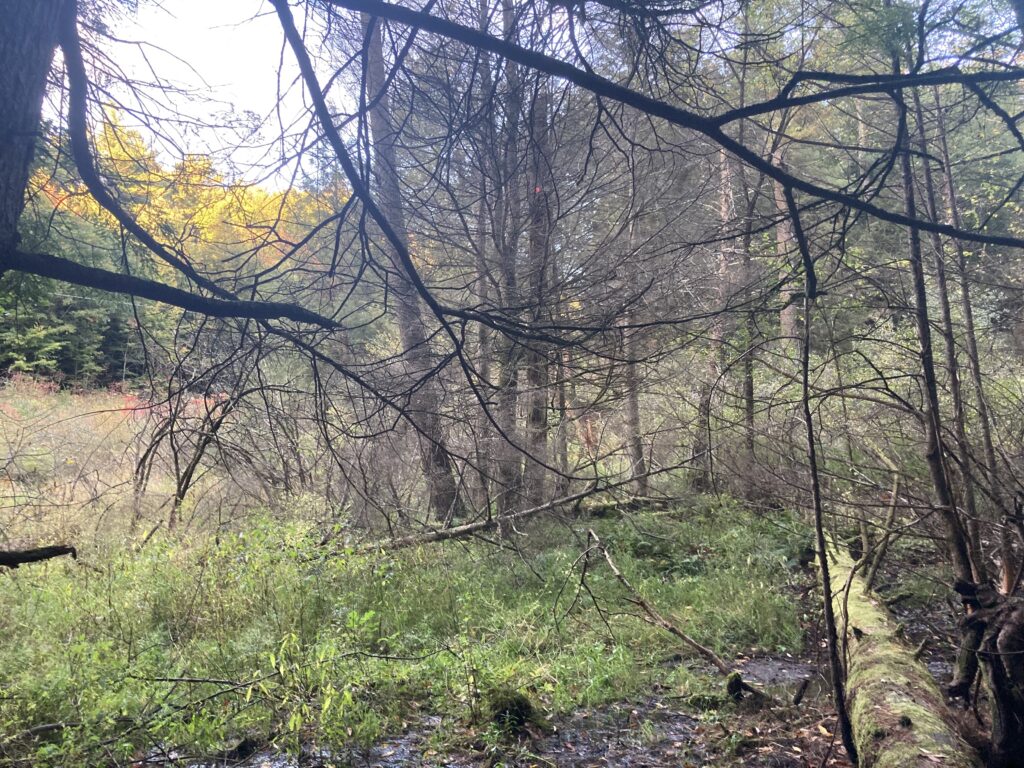
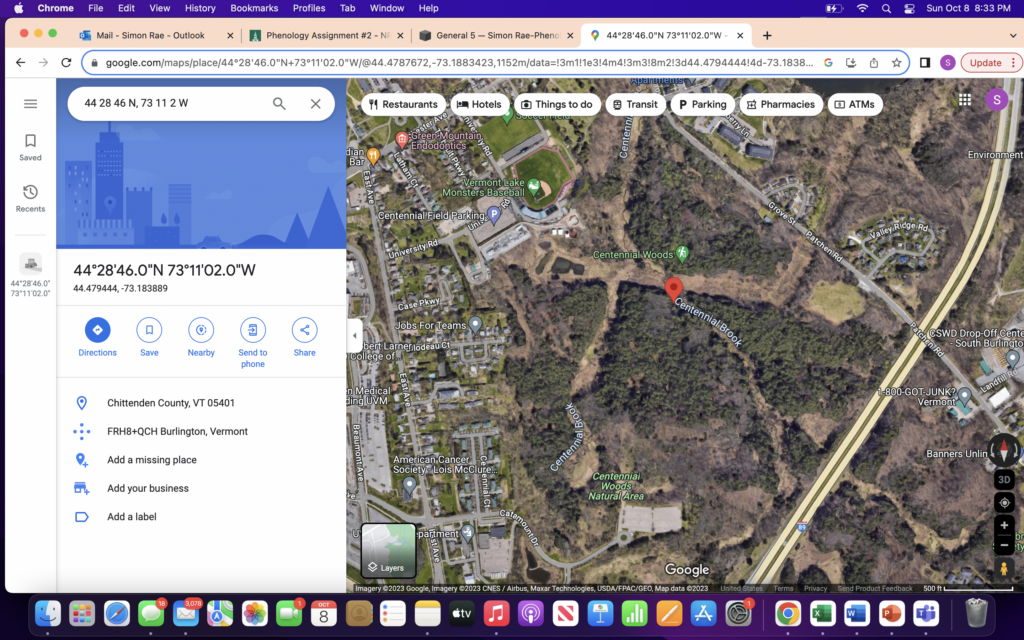
Enter at the trail head on Catamount Drive. Continue down the main path, which crosses over several raised wooden platforms. Take a right when you arrive at the junction near the floodplain, and cross the first branch of Centennial Brook. Continue to the next junction, and take the path that follows the brook downstream. Just before you get to the clearing with the power lines, take a right up and over the hill. When you arrive on the other side, this is what you will see.

Description:

The wetland that makes up about 50% of my site’s area extends all along the length of Centennial Brook. The soils are constantly moist, and most of the trees are dead. Up on the hill which makes up the other 50%, the trees are more stable and older. There are several large Hemlocks, and one enormous Ash tree.

I chose this place because I happened to sit down in the area one morning to observe the bird activity. I watched a flock of chickadees raid the hemlock cones above my head, and listened to a noisy blue jay perched in one of the dead trees. Many of the chickadees came quite close to me, and I saw a bird that I believed to be a Brown Creeper on one of the dead hemlocks. I also developed an appreciation for many of the individual trees, and so I decided I wanted to get to know the place.

Since I first visited the site, the Ash tree has been dropping more and more of its leaflets, which often separate from the stem that connects them when they fall. The birches have been yellowing, but so far have not been dropping their leaves as of October 8th.

Vegetation:

Woody Plants identified thus far include Yellow Birch, one species of ash, red oak, red maple, sugar maple, glossy buckthorn, burning bush, and Eastern Hemlock. Yellow birch and Eastern hemlock are most prevalent.

Herbaceous plants include Sensitive Fern, Christmas Fern, at least one unknown type of fern, Ground Bean, Jewel weed, mosses and wetland grasses.

Skip to toolbar