Posts

May 6, 2023

Durning the BioBlitz I spent a lot of time in Centennial woods and the bike path while walking to work. I wish it had lasted a little longer and I would have gone to other places. I ended up logging around 36 species but definitely saw a lot more. The first time I ever used inaturalist was in 2012 just to play around with it when I was younger and identify bugs and such. using it in the BioBlitz was really engaging and I like the friendly competition between lab groups but I really just like seeing the number of species grow and looking at some species I’d never seen before and learning more about them.
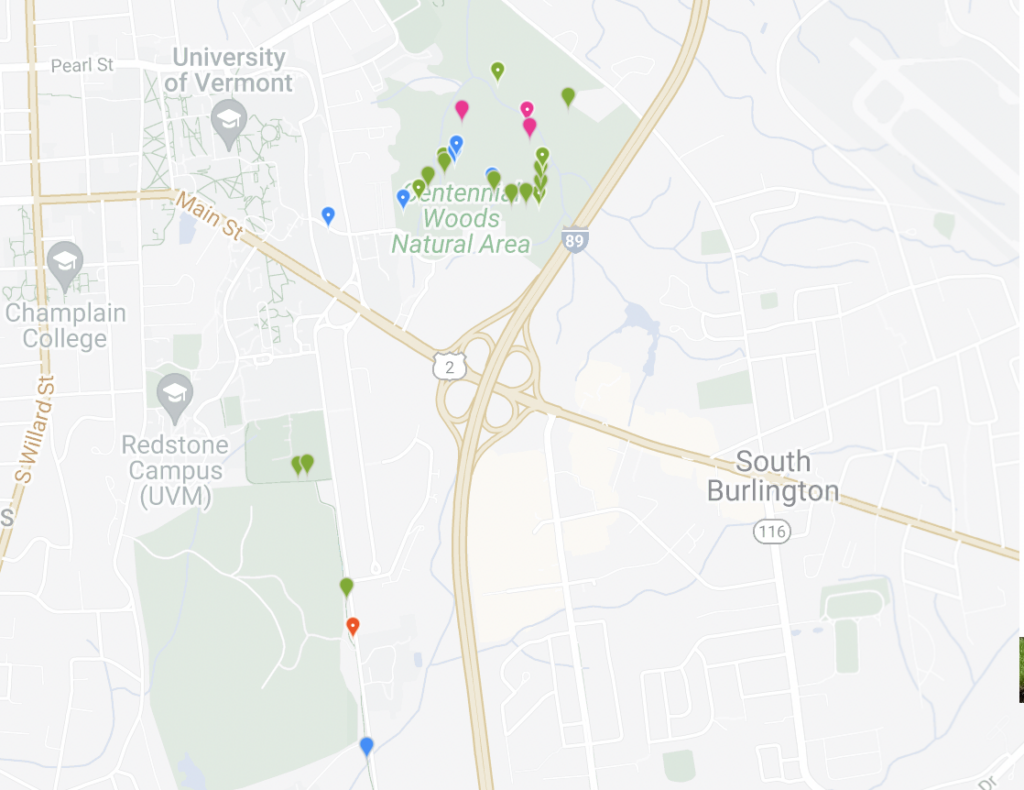
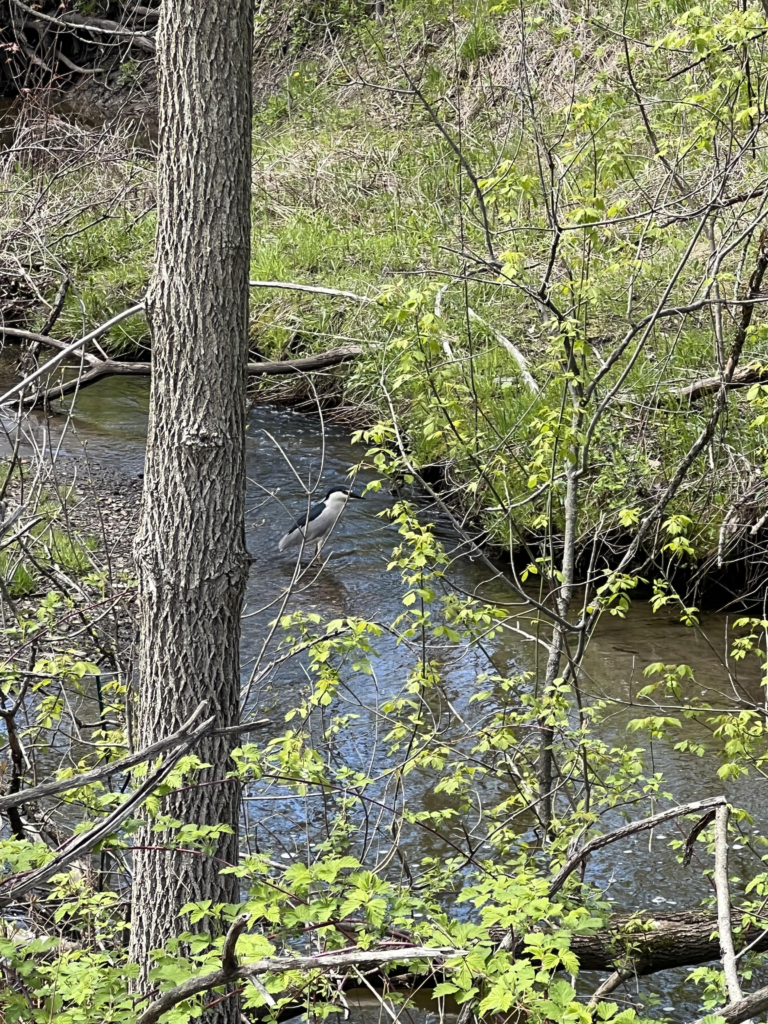
Comaring Burligtons statistics to that of New York city was really interesting, even thought there are a lot more people in New York there were many more observations in Burligton. I think this is also because with a smaller communitinty events like these are more well known and engaging. I’ve continued to use iNaturalist and more recently uploaded a picture of a Black-crowned Night-Heron and I learned that their conservation status is under “critically imperiled” in Vermont.
April 28, 2023

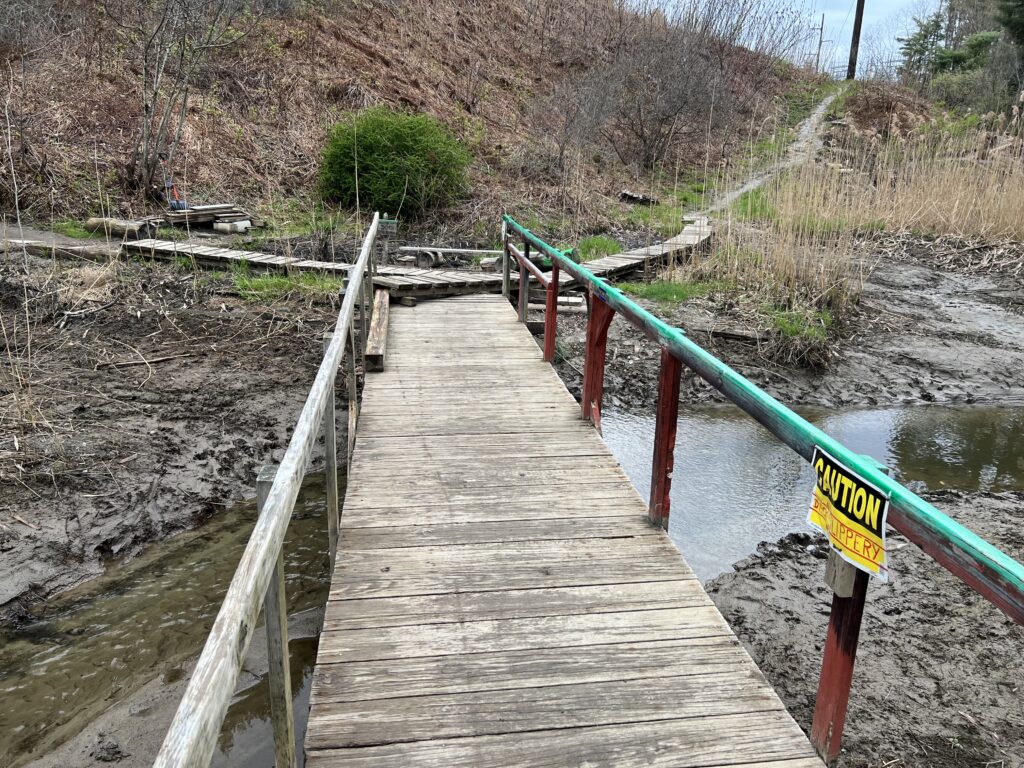
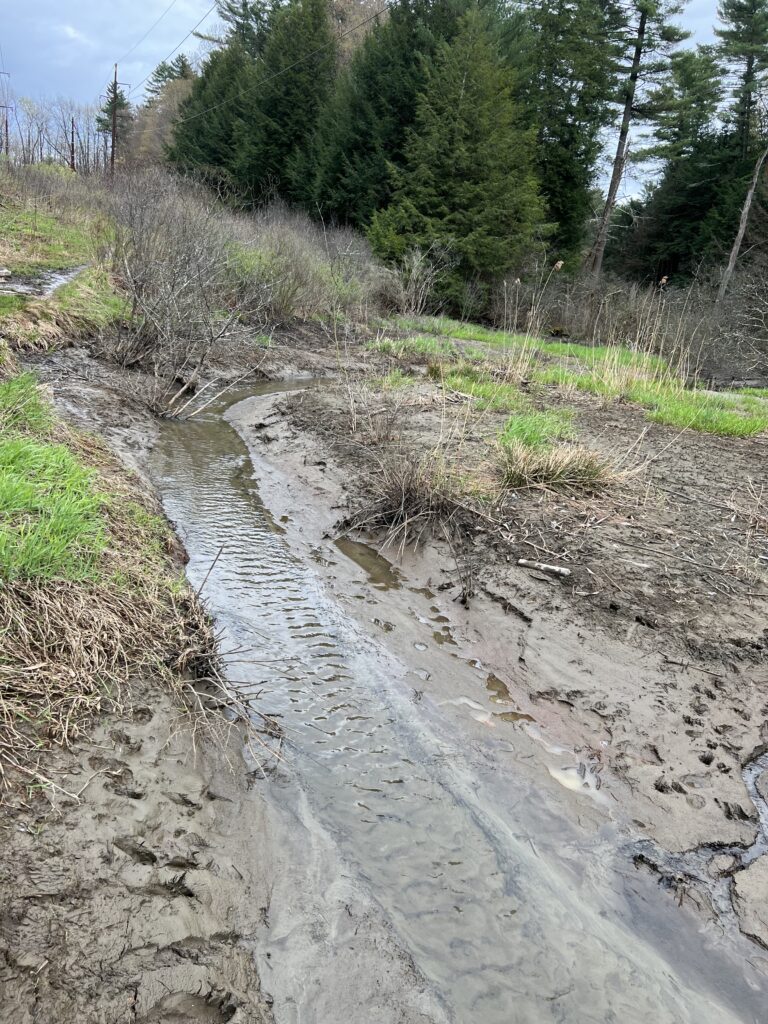
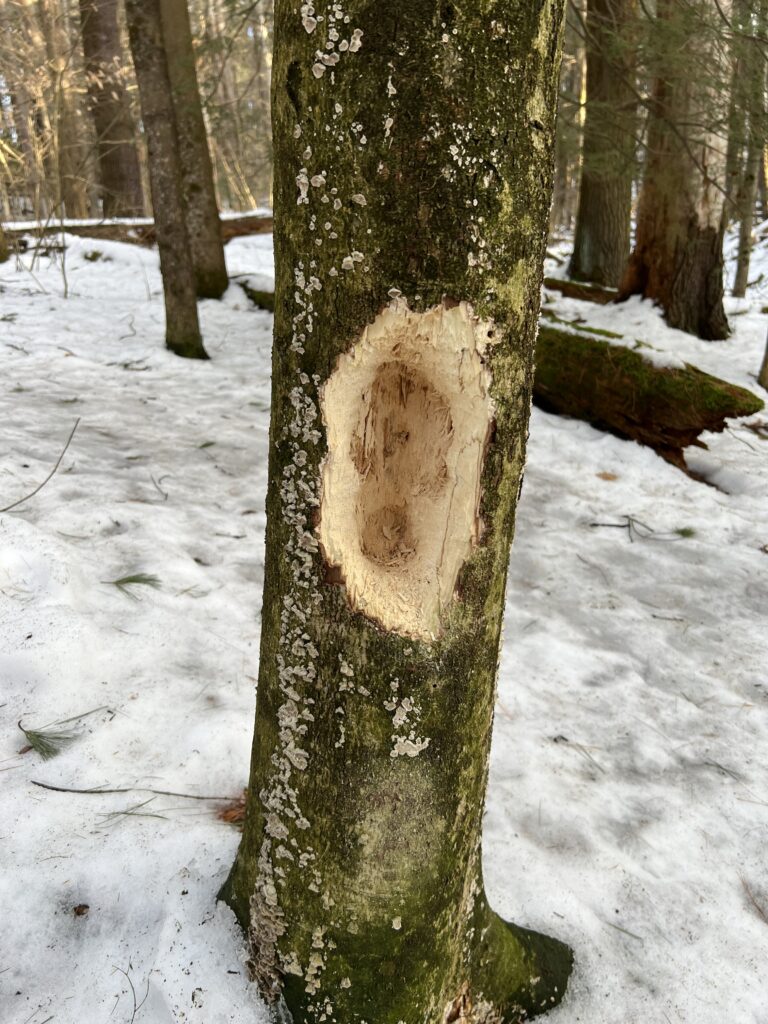
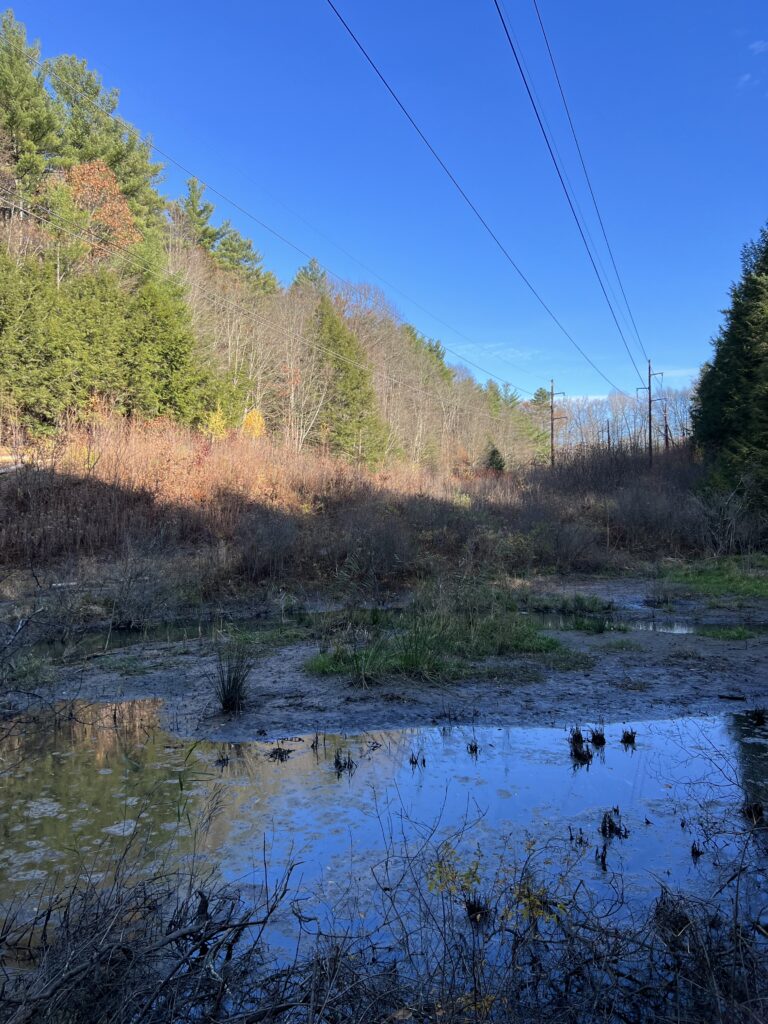
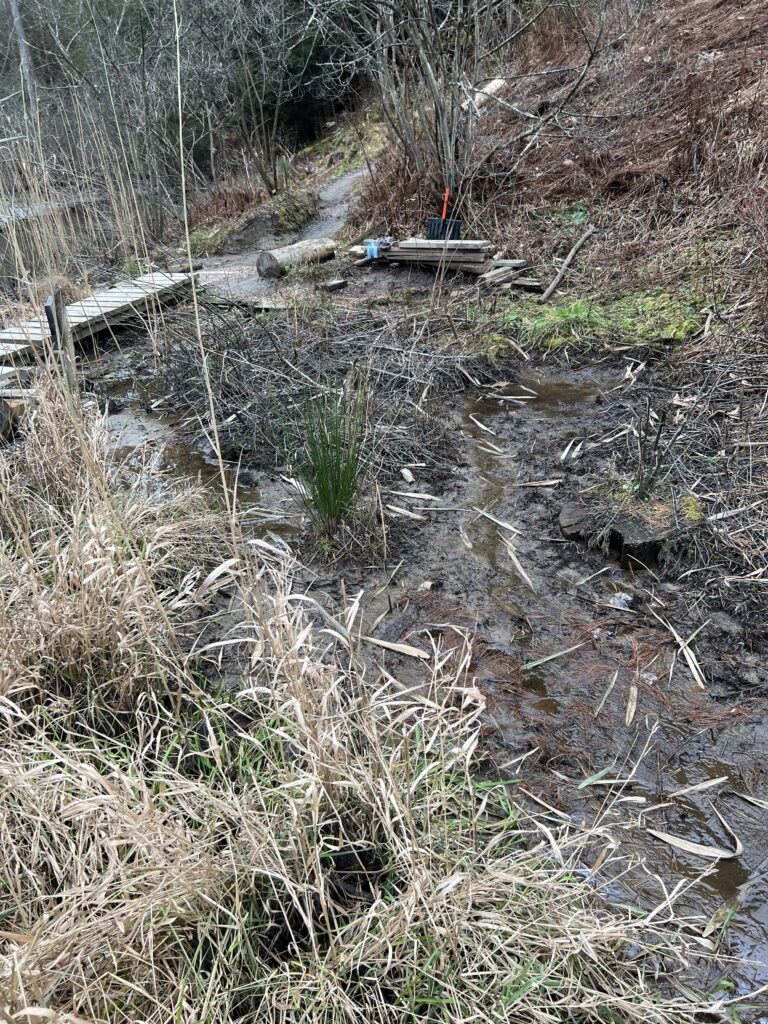
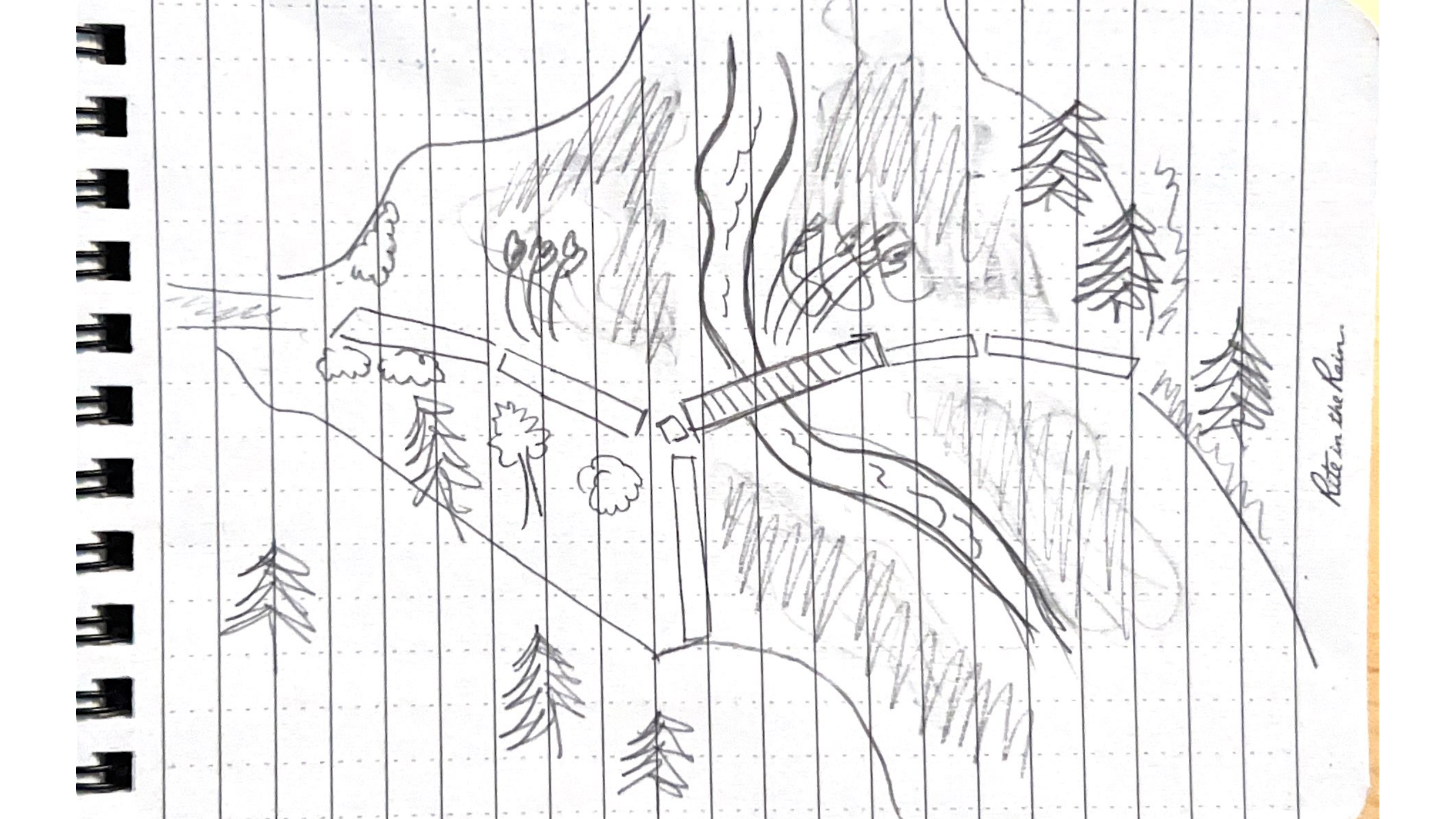
Going back to the original site for the final time after spending all year there was bittersweet. The most obvious phenological changes were the changes in foliage and the pond’s water level. Below is my sit-down sketch, instead of the water level being high enough to cover most of the area, there is now a little stream. I would have thought this would have been reversed with all of the rain we’ve had recently and the melting snow. I have become pretty familiar with this spot, the major landmarks are the pond and bridge I try to see if there are any prints in the mud each time I visit but the majority of the time it seems to just be dog prints. While walking there I always pass by the same woodpecker holes as well.

nature and culture are intertwined here because its a place people can come to appreciate the natural world. Same with any space you would consider part of the environment or green space including a potted plant can create a deeper connection to nature. It also allows us to reflect on where we are. My spot, for example is on Abenaki land and I am able to understand the history and culture of Vermont and grasp an even deeper connection after what Iv’e learned in this class. I do consider myself as part of my place. By visiting it it has encouraged me to come more and more often and I genuinely enjoy my time here. By spending time in this spot I have an impact on the land and feel a need to make sure its taken care of.

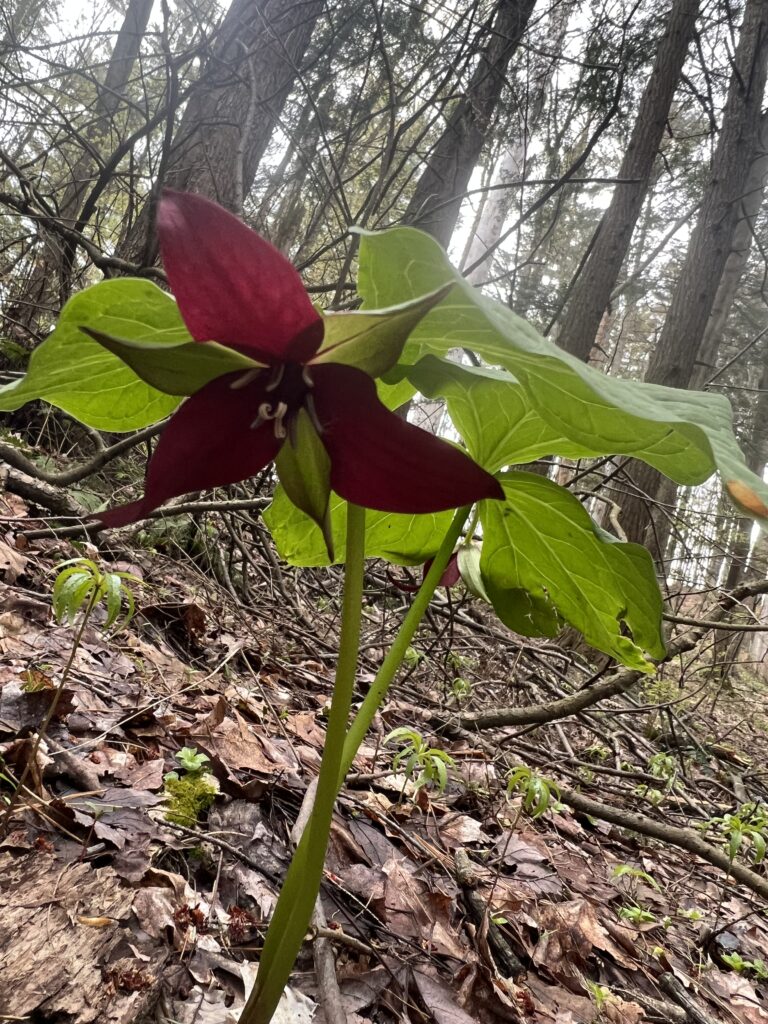
It was really nice to start seeing progress and green leaves and buds popping up. There were also so many plants I hadn’t seen in the fall semester like this red trillium.

April 10, 2023

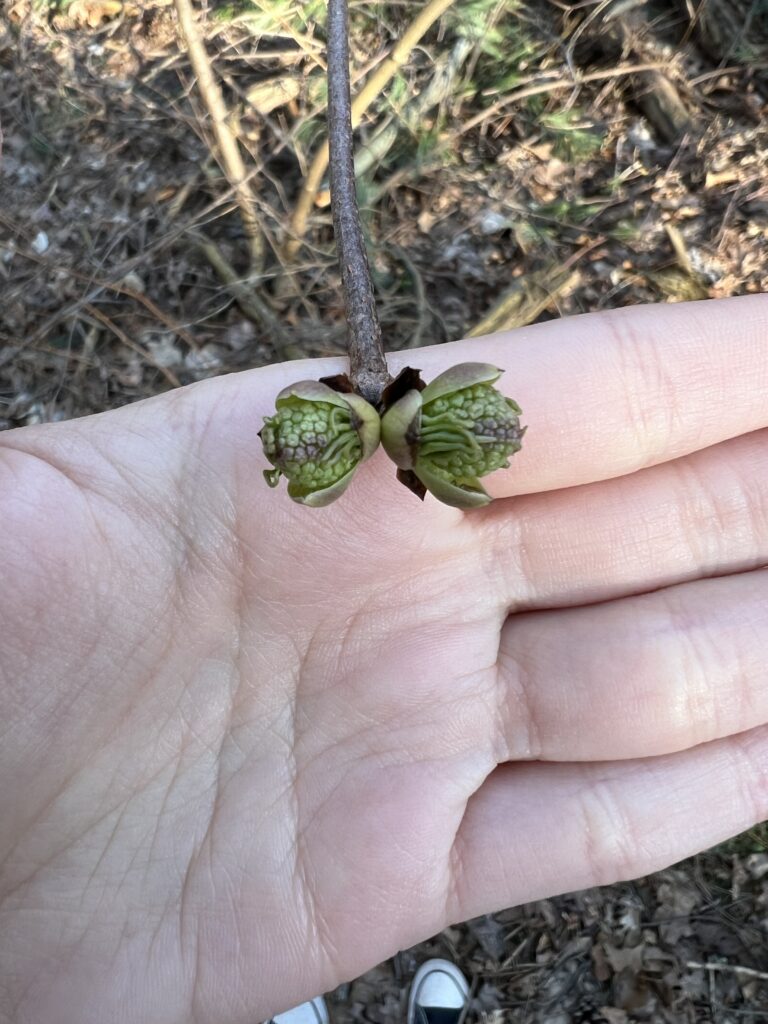
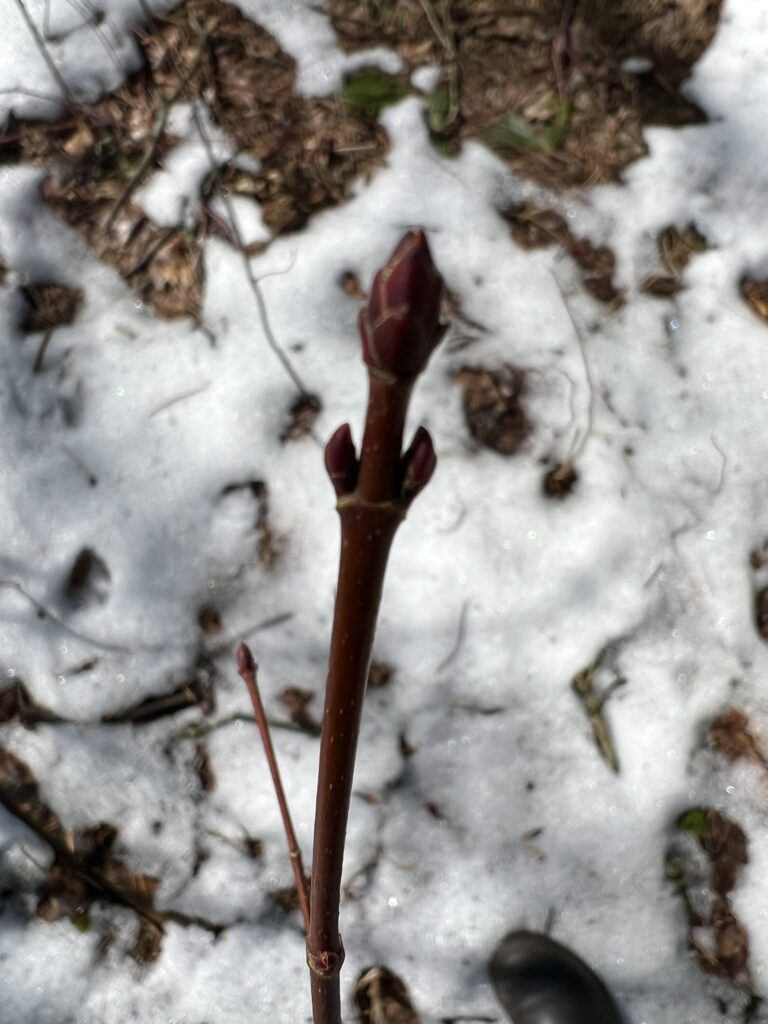
The red maple tree’s buds still have not yet shown any signs of flowering. I was hoping the slightly warmer weather would have encouraged some growth but they have stayed the same size. I found other trees and shrubs that had further growth like the red elderberry and a box elder pictured below. I should try and find a grown tree with low-hanging branches to get a good comparison between that and a younger tree like the one I picked.

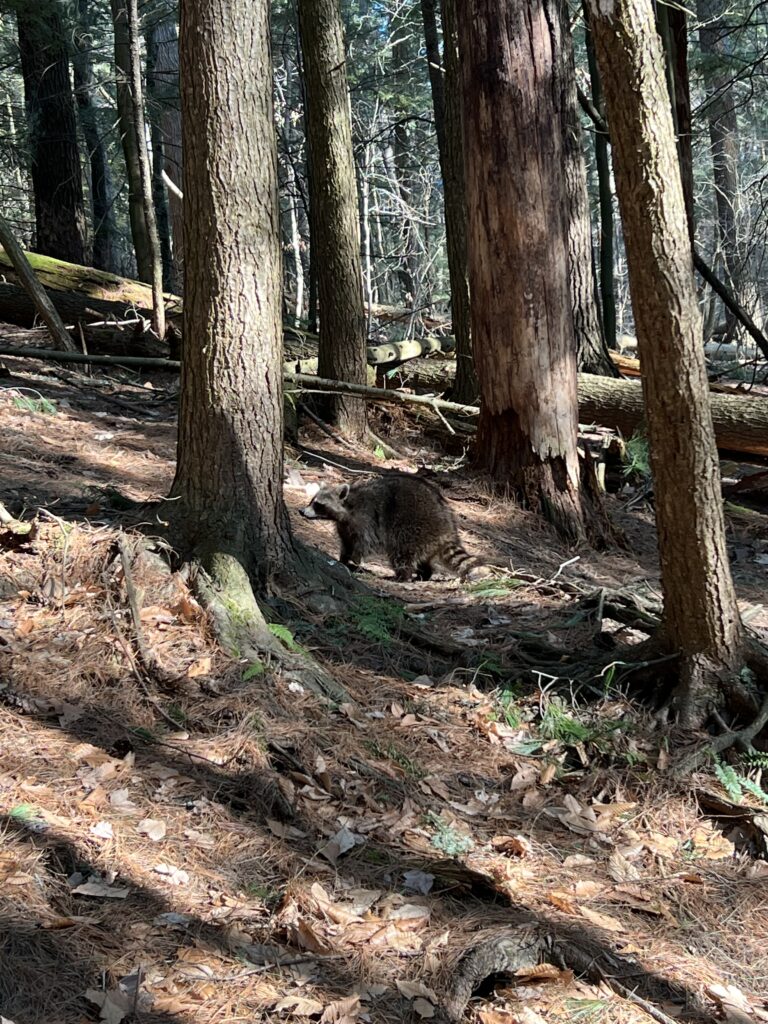
While I was walking around I also saw a raccoon, It was really cool to see the waddling walking pattern they have in action.

March 5, 2023

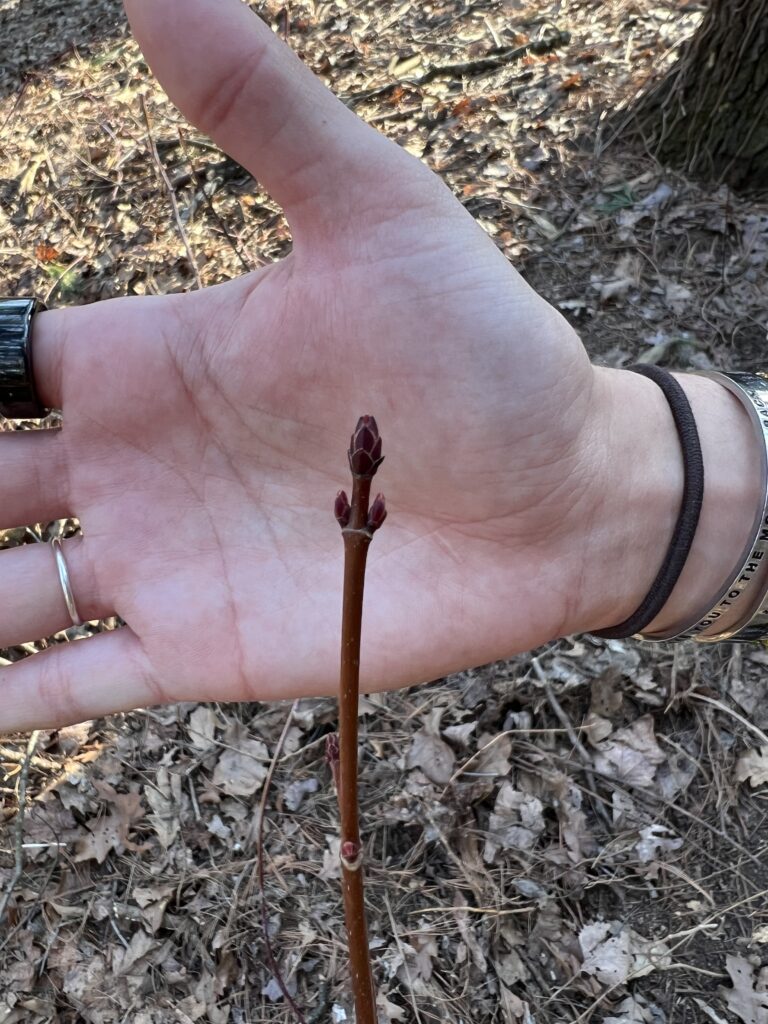
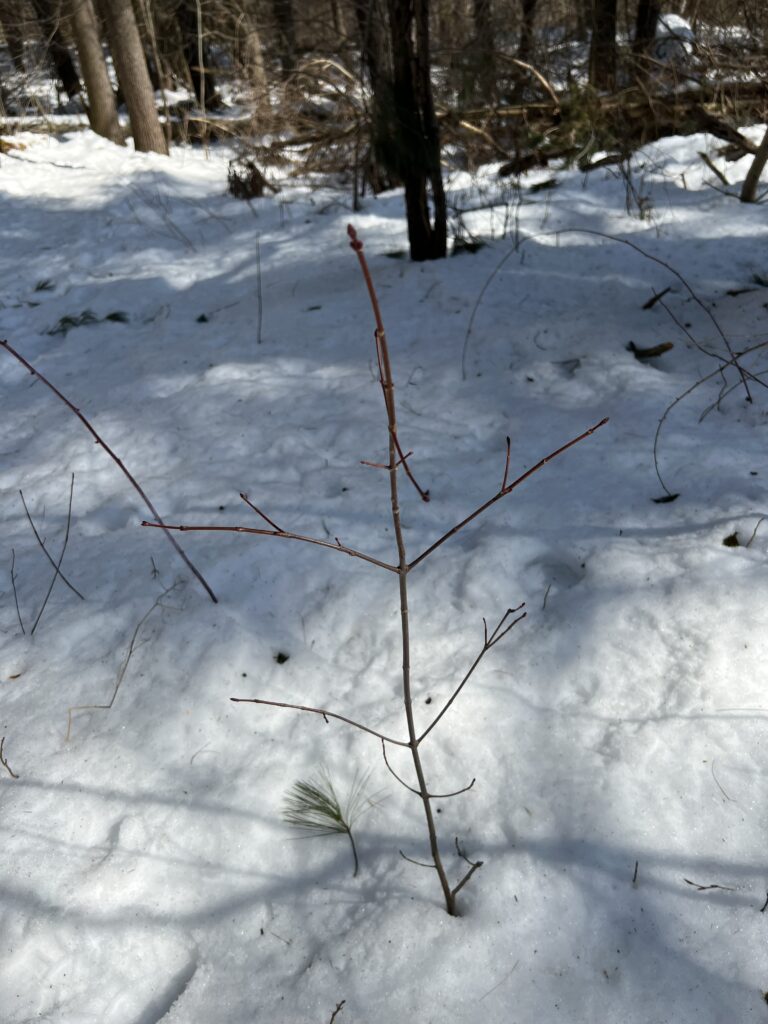
For the location of the tree, I picked one close to the entrance of Cenntenial Woods. I found a small red maple tree growing on the ground I decided to use it for my observations because I was able to get a better look at the buds. To identify the tree as a red maple I looked at the terminal buds, side buds, and the color of the branches If I had chosen an older tree I also could have used the bark to make identifying easier. This was a Red Maple and not one of its winter look-alikes, the Norway maple or sugar maple. The red color of the branch differentiates it from a sugar maple and the size of the terminal buds is larger than a Norway maple. as a result of picking a small tree, I’m wondering how quickly the buds will grow compared to a larger red maple.

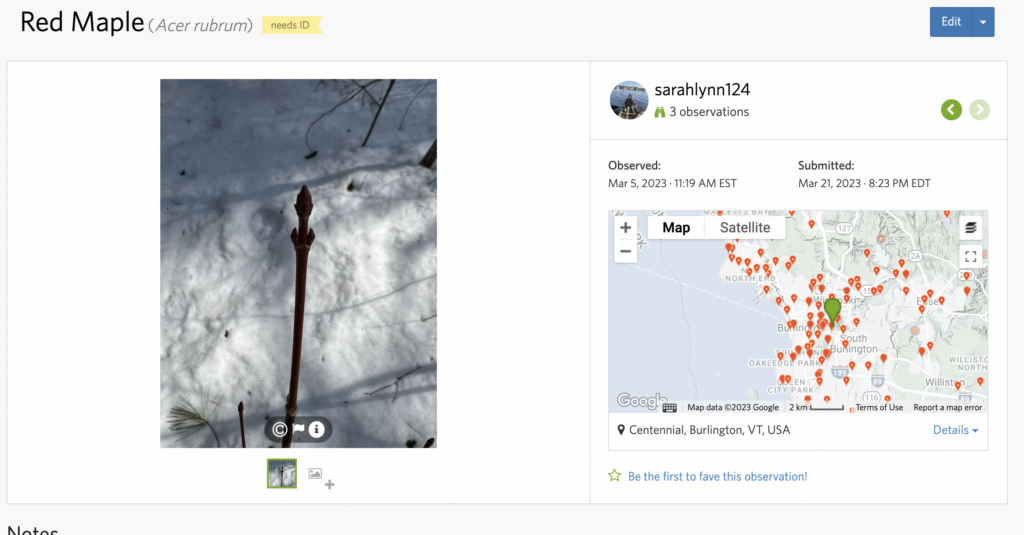
Here is my iNaturalist post with a map of where the tree was

March 27, 2023

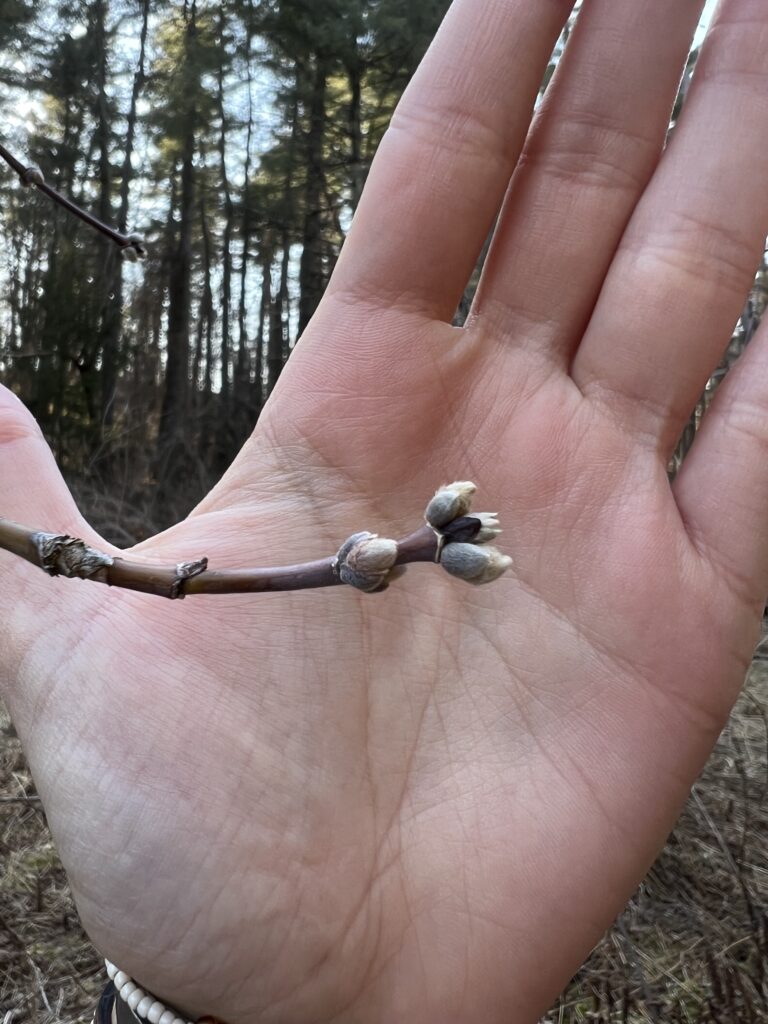
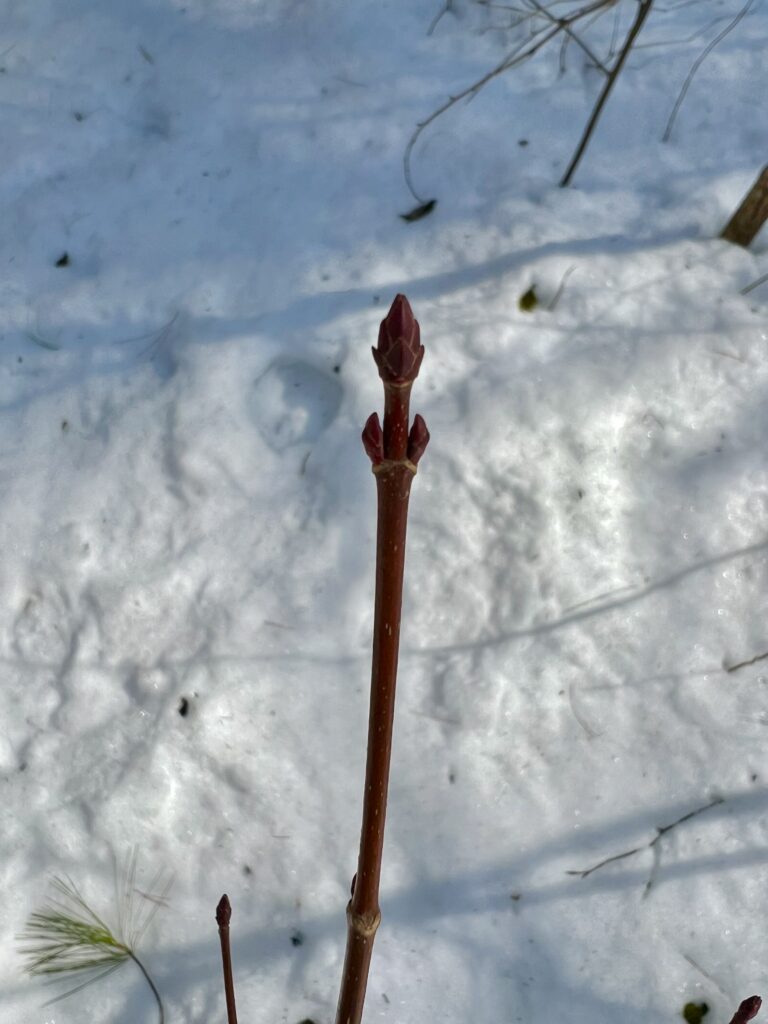
The picture here is slightly blurry, my camera couldn’t focus well enough on the stem and this was the best shot I got. The buds are about the same size as the last time I visited this little tree, I was hoping for a little bit more growth but hopefully by the next time I visit it. I wish I had taken a ruler with me to measure the buds to see if they did change or not. It was nice to come back to the site and try and find the same tree since it was smaller and not super eye-catching but it made it a little more fun. It was also nice to have some sunny weather and to see some of the snow melting. The image on the far right was a screenshot of the iNaturalist page showing other Red Maple observations in the area.

February 14, 2023

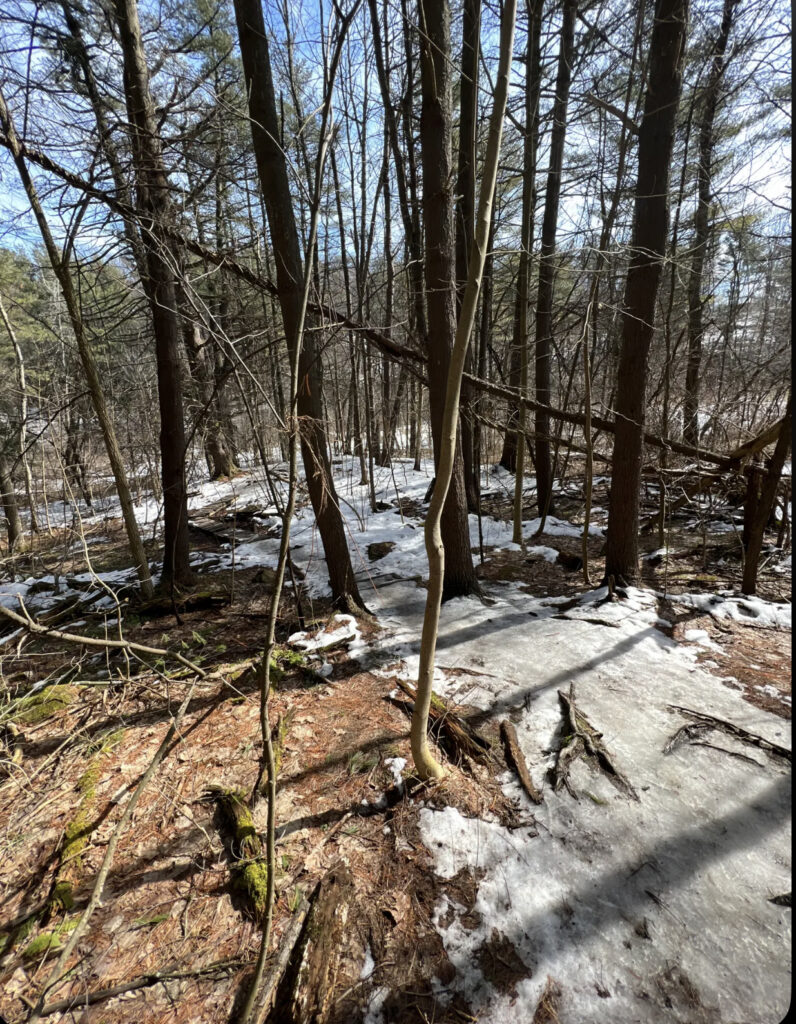
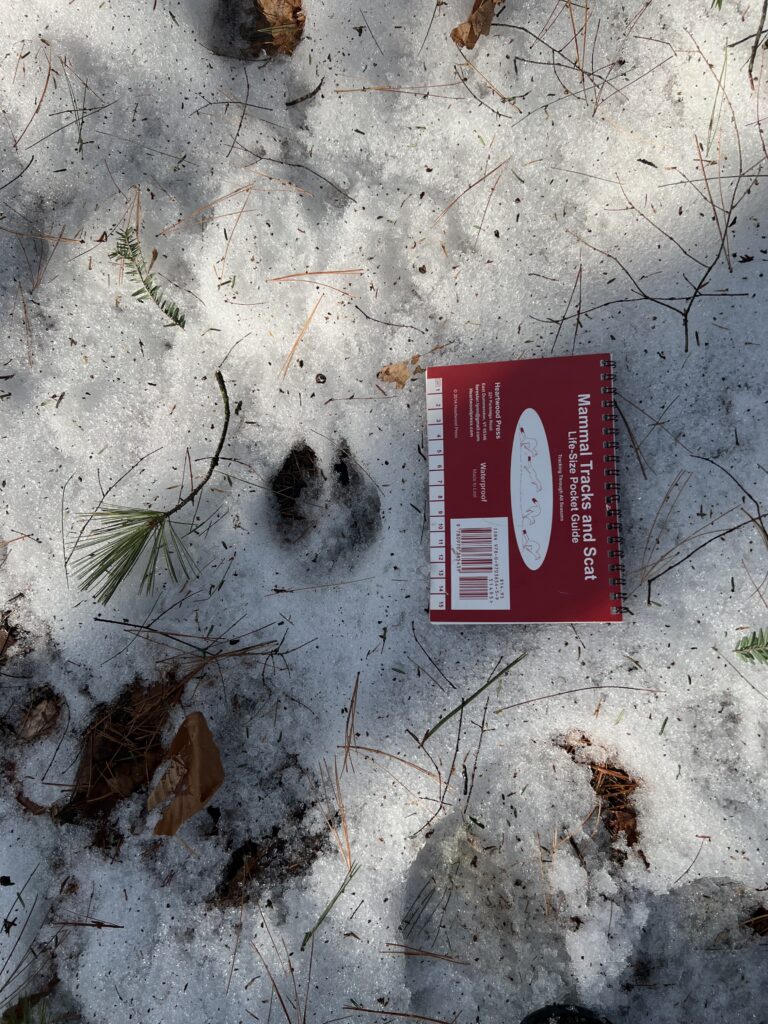
For my new location, I decided to just go to the other side of Centennial woods where I don’t usually go. The day That I went there wasn’t much snow and the prints that were there were very hard to see. Most of them just looked like circles in the woods and the melting of the snow on the trees made it hard to distinguish any walking patterns. I was able to find a deer track but wasn’t able to follow it. I was also able to see a few birds, I saw chickadees and crows which are more common but I also heard a Hairy Woodpecker and an Eastern White-breasted Nuthatch.

To identify the bird calls I used the Merlin Bird ID app and uploaded the recordings, they provided a few matches and I listened to them to confirm they were similar. For the deer track, I used my tracking book as a ruler and it wasn’t big enough to be a moose. I was able to see the woodpecker but wasn’t able to get a good picture but I remember the spot, the next time I go I will revisit it to try and see it again.

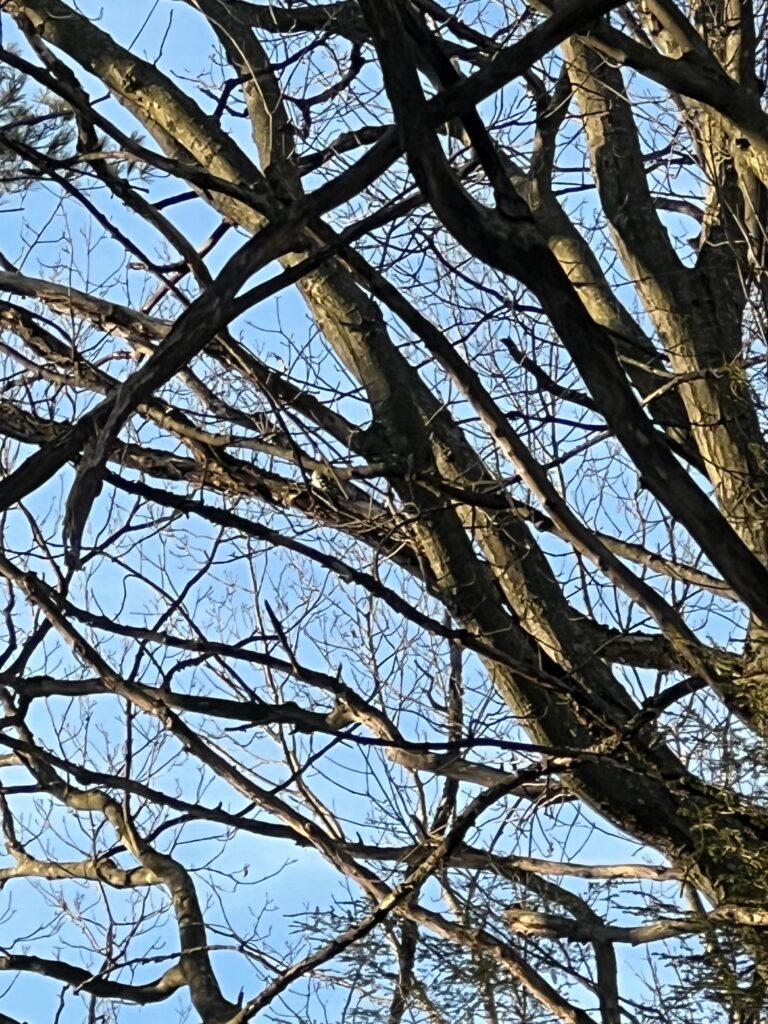
I also passed this tree that looked like a woodpecker had stopped by at some point.
Hairy Woodpecker
Eastern White-breasted Nuthatch

January 27, 2023

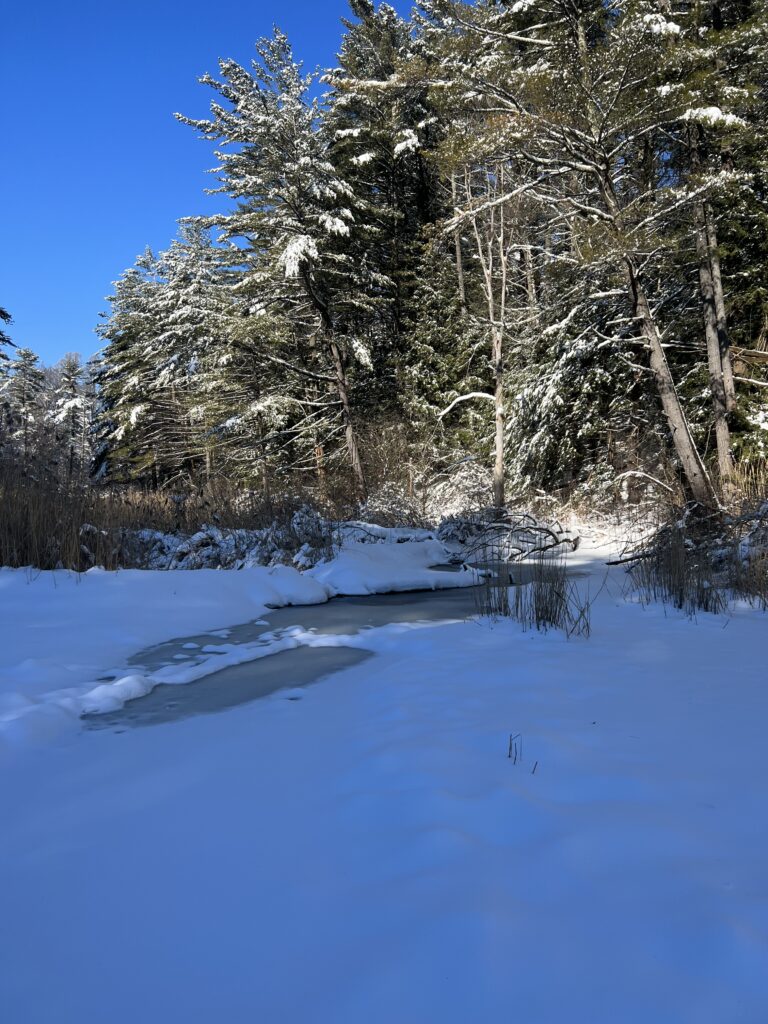
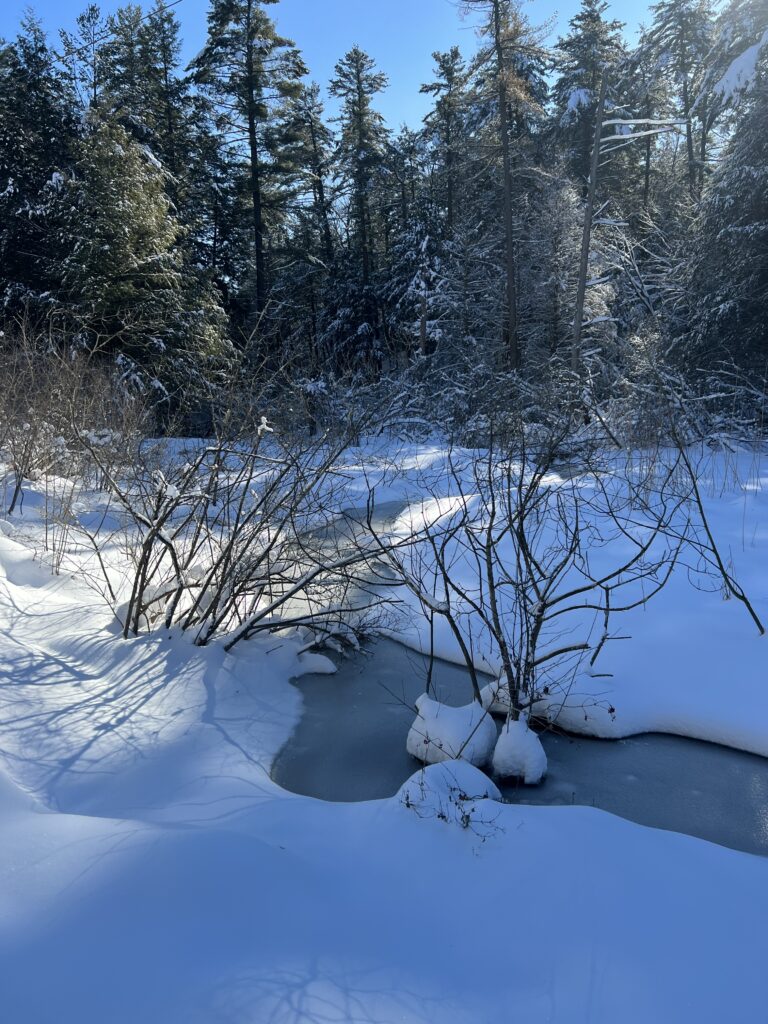
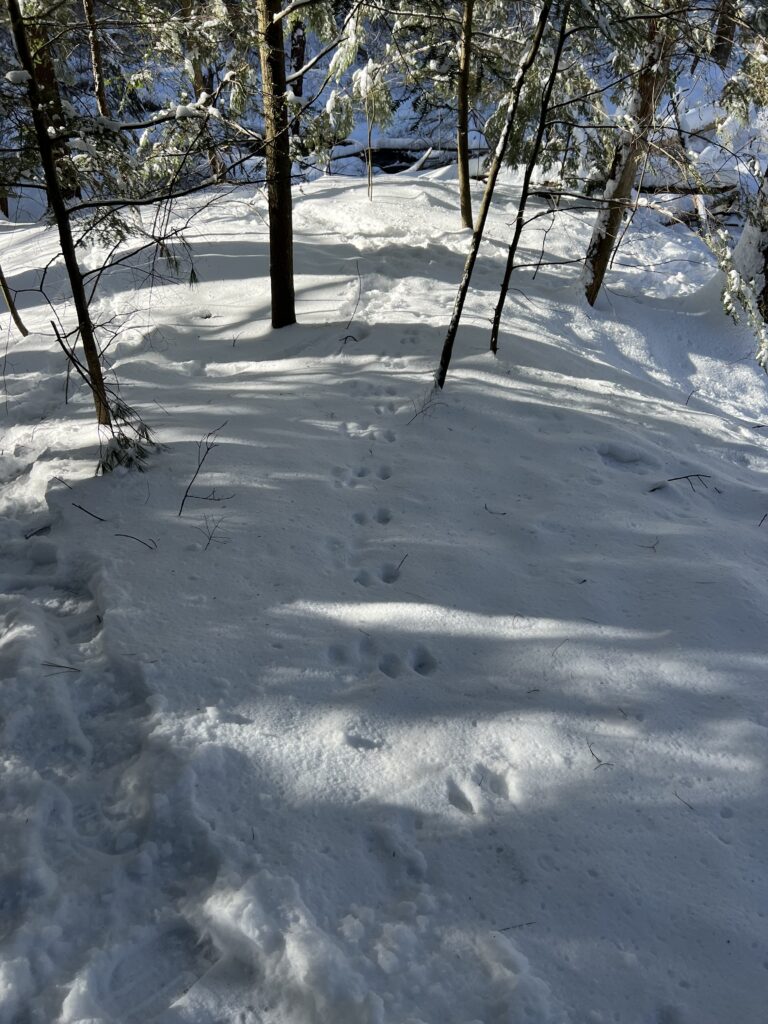
Since last semester there have been a lot of changes. The most obvious ones being the snow and the bare trees. The pond looked to have frozen over and there was a layer of snow on top, there were no tracks or marks of any kind in the snow about the pond. On the way to my spot, I was able to find some rabbit prints. I also saw and heard a few black-capped chickadees and a few crows.

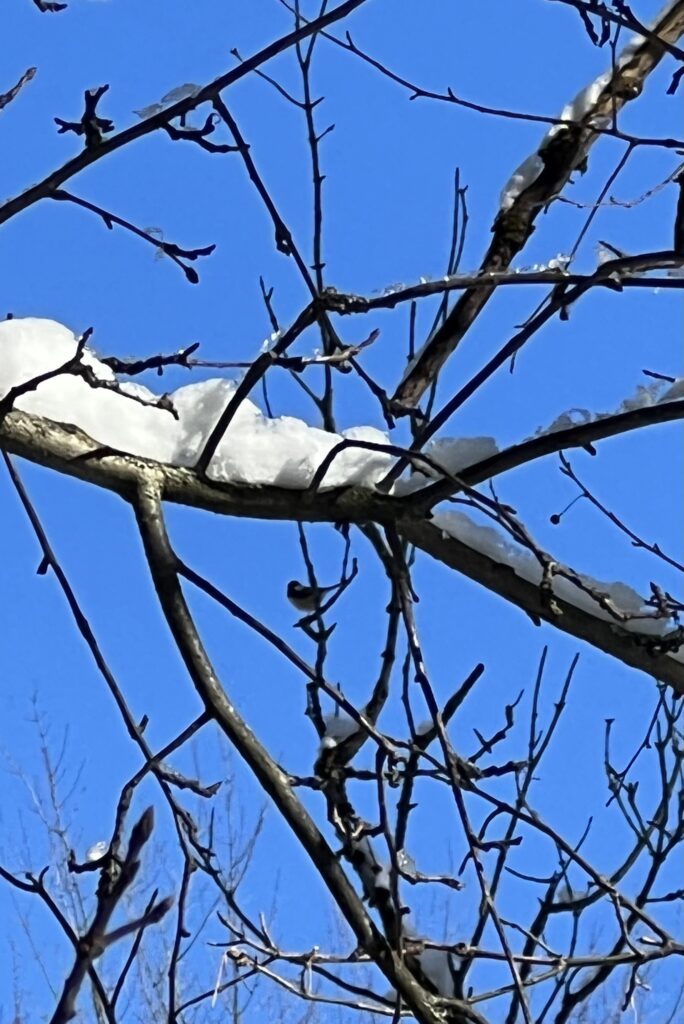
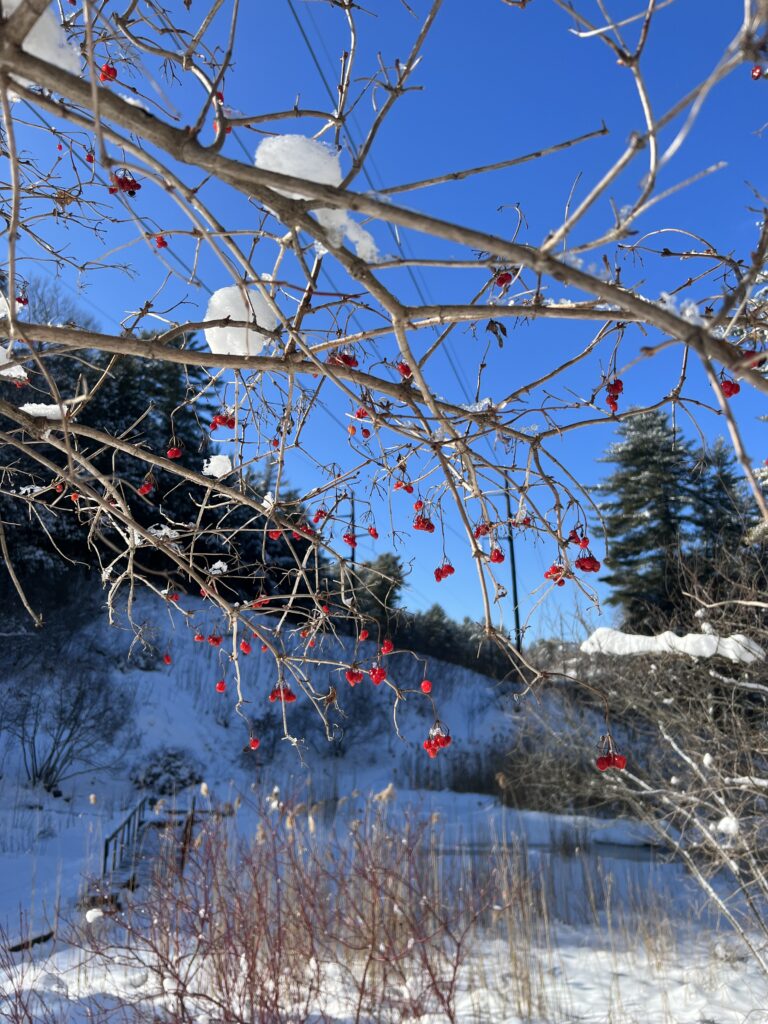
Here’s one of the chickadees hanging out in this tree. Two of them were calling back and forth for a bit. On the right is Guelder-rose, the bright red berries look really nice against all of the white.
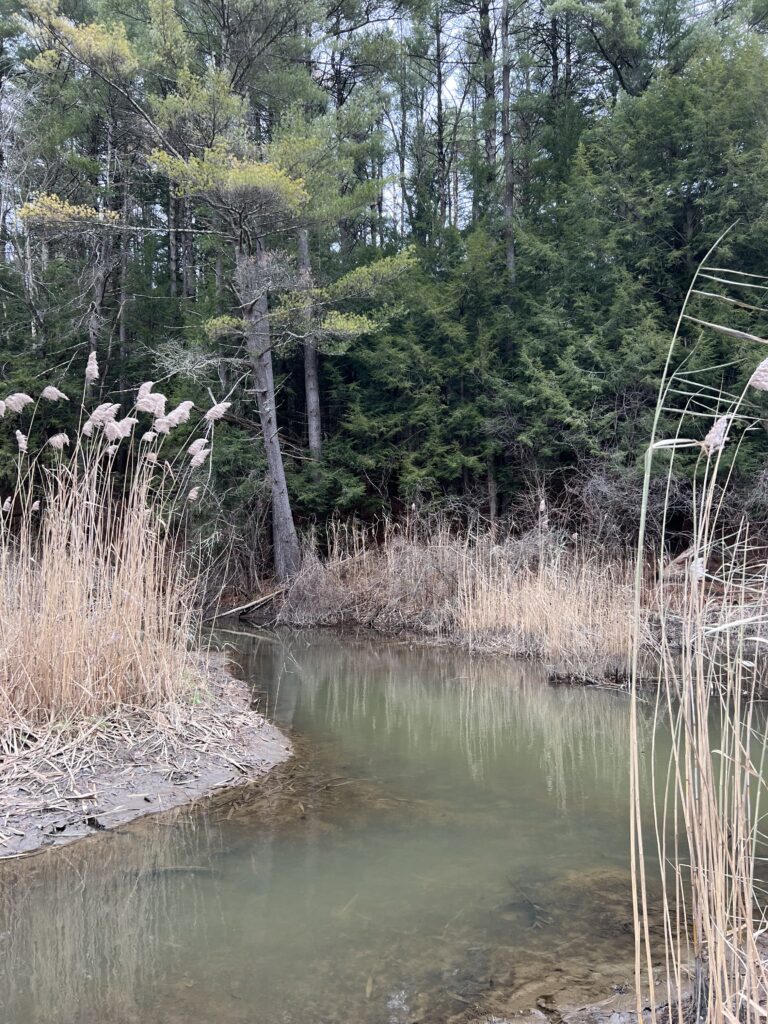
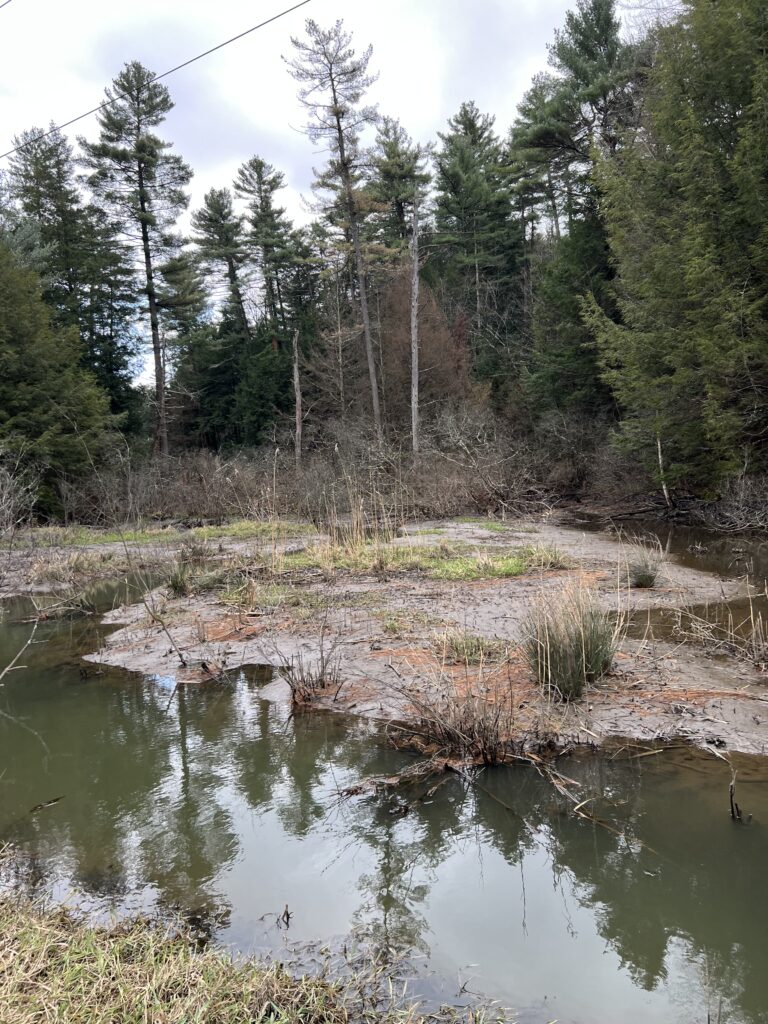
Most of the area is coniferous trees so the spot still has lots of greener compared to other spots in Centennial Woods. Although the top of the pond was frozen near the bridge you could still hear the running water. There were a few spots with rabbit tracks and I think there could have been a few deer tracks aswell. There were lots of dog prints too.

November 5, 2022

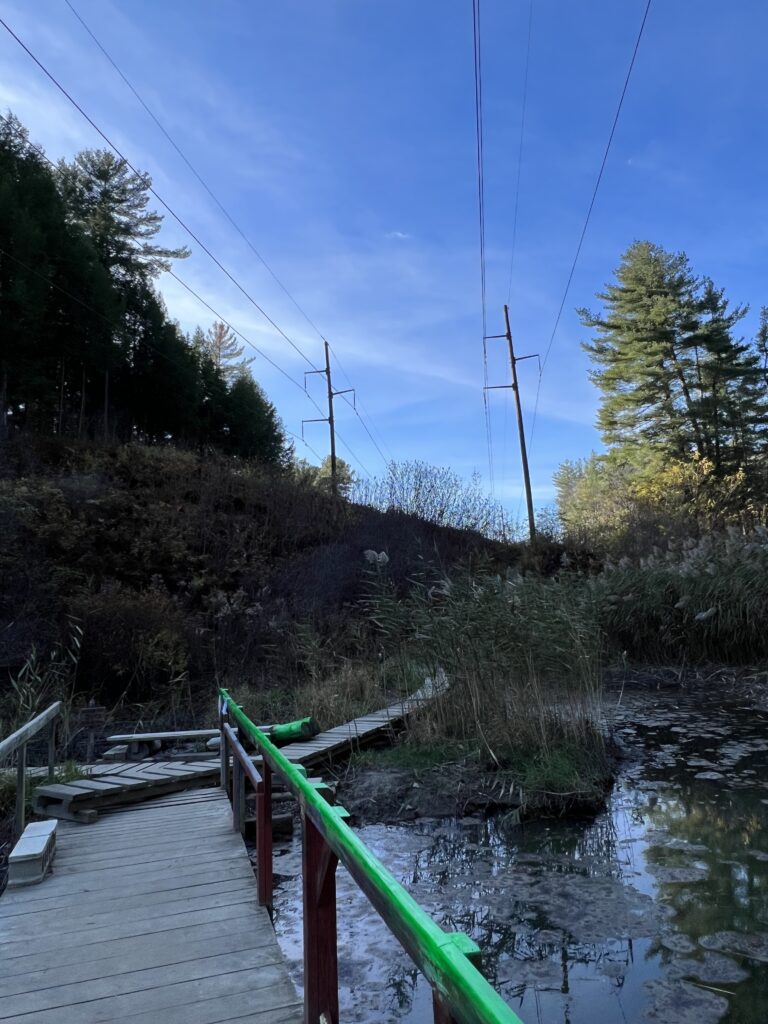
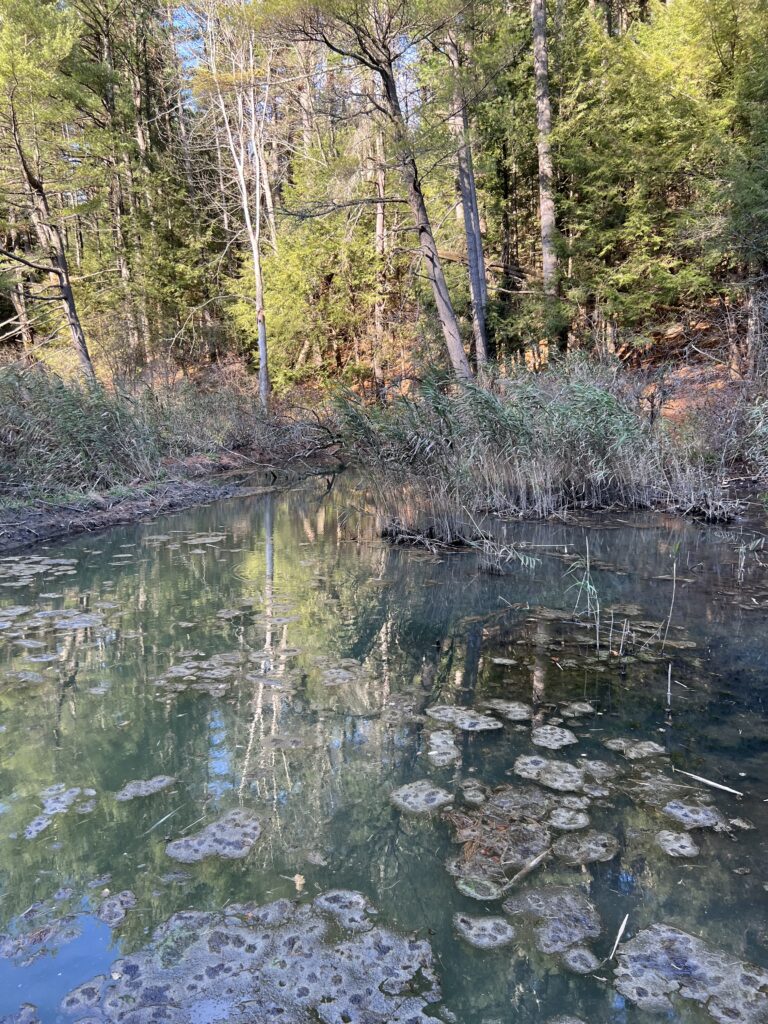
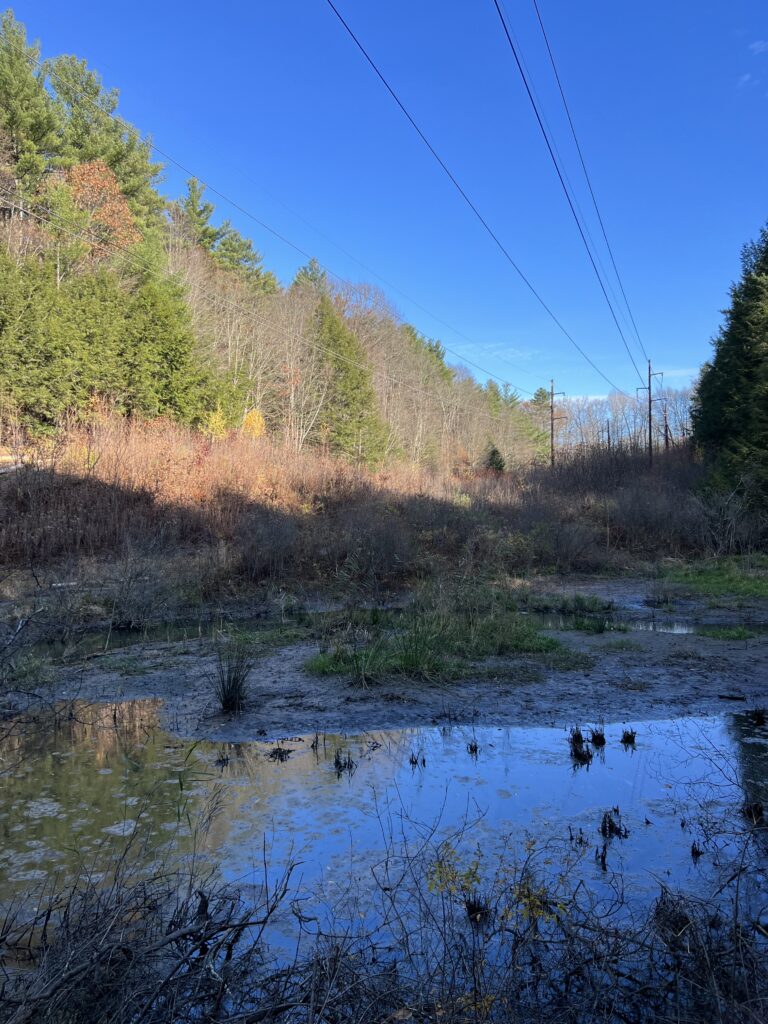
When I returned back to the site I noticed the water level had gone down, I think this is a result of not having much rain the past few weeks. There were also fewer insects either because of the drop in temperature or less water. As a was sitting there I noticed there weren’t as many bird sounds as earlier in the year. It was very calming as and the weather was beautiful even if it was warm for November. There was far less foliage this time around and even looked as if there were less reeds in the water.

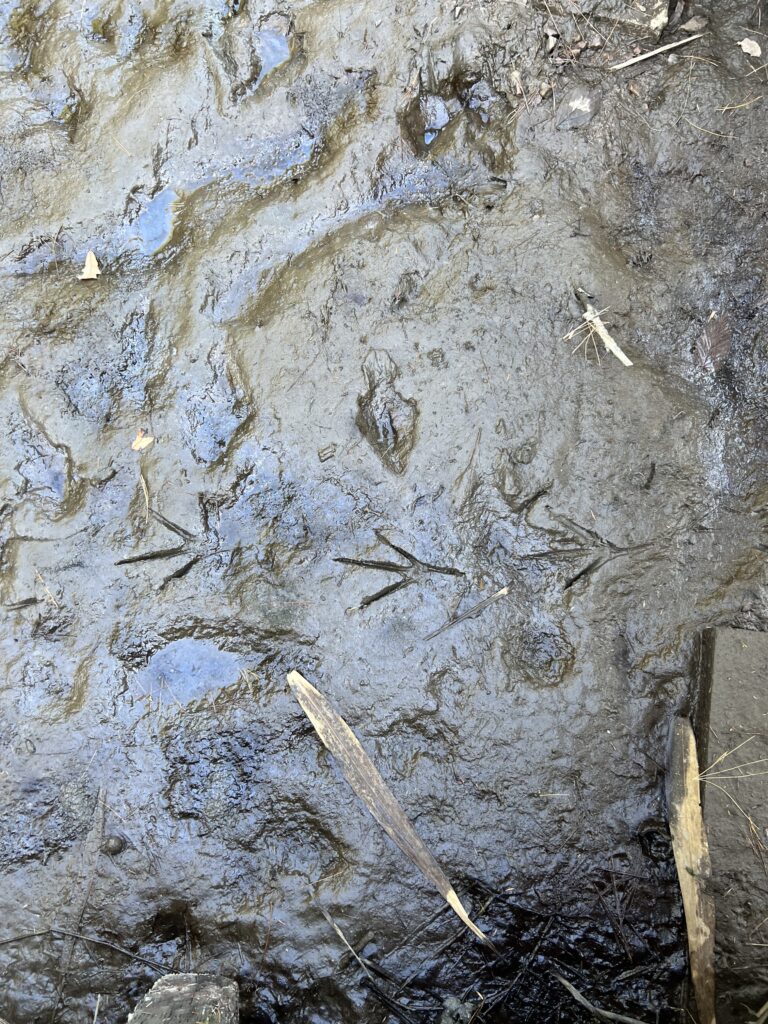
I also noticed these heron tracks near the boardwalk of the trail

Centennial Brook Phenology Project

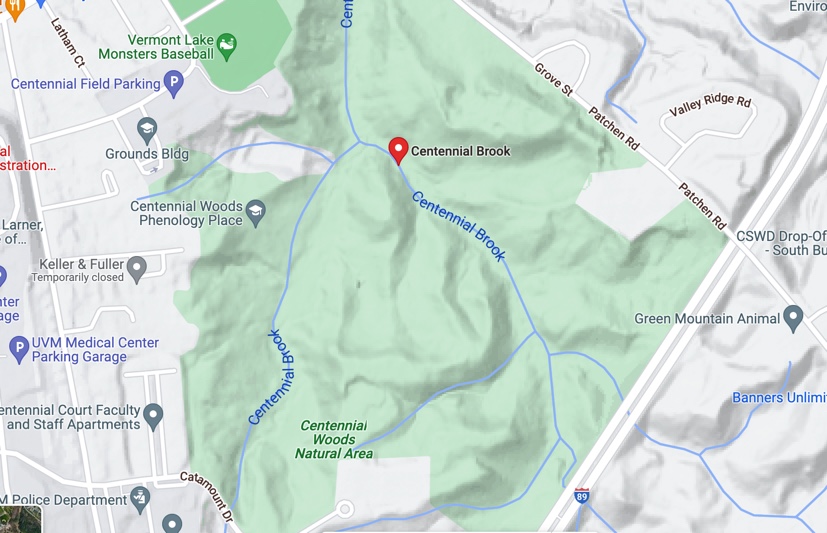
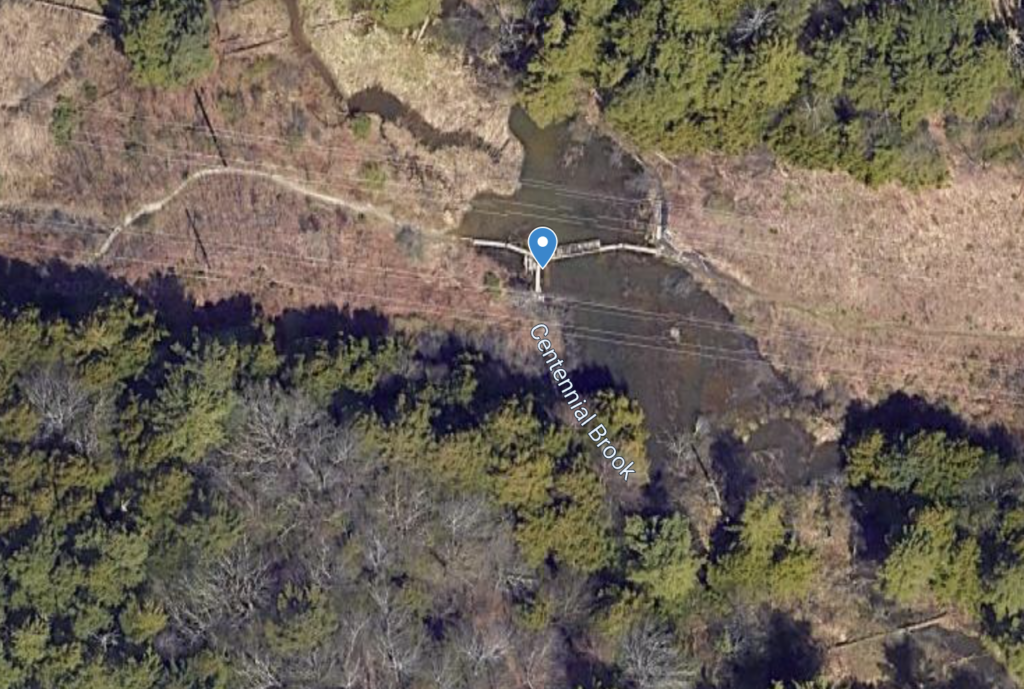
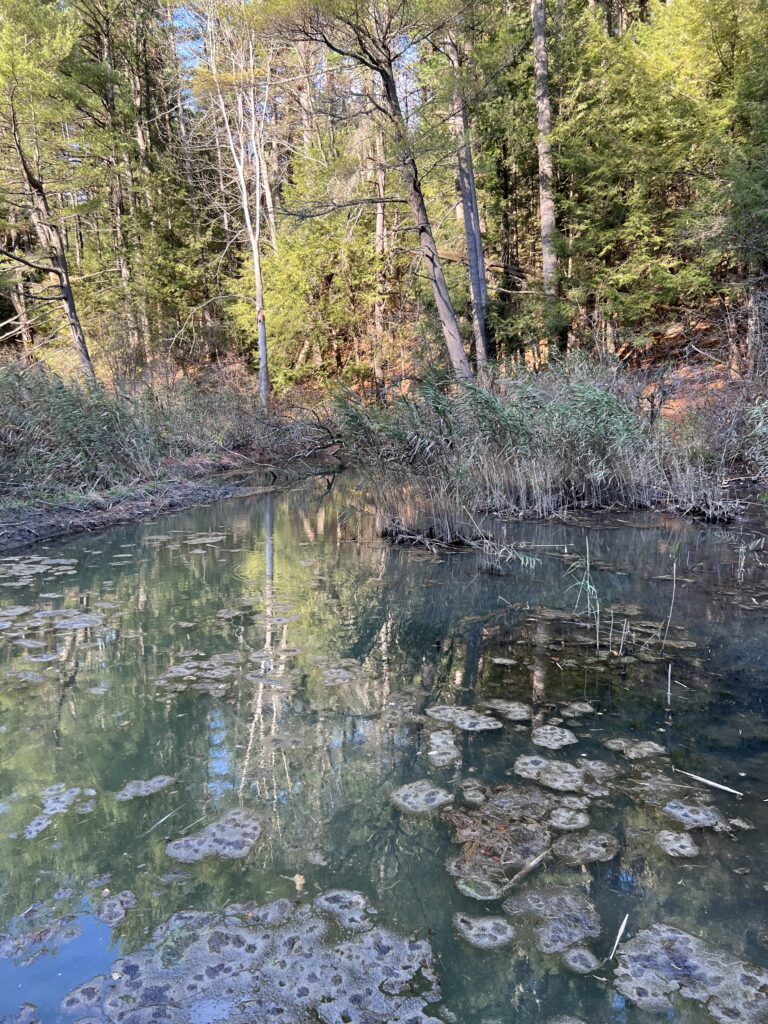
Hi there! I chose to pick a spot in Centennial Brook for my phenology project just because I’ve walk to it a few times this year and have already started to see changes before starting this assignment. From the entrance to Centennial woods you basically take the trails that veer right until you get to the part of the forest where there are mostly large pine trees. I chose a spot on the brook where the trail meets this little board walk over the brook. There are signs mentioning beavers so over the course of this project I hope to find evidence of them being around the area.

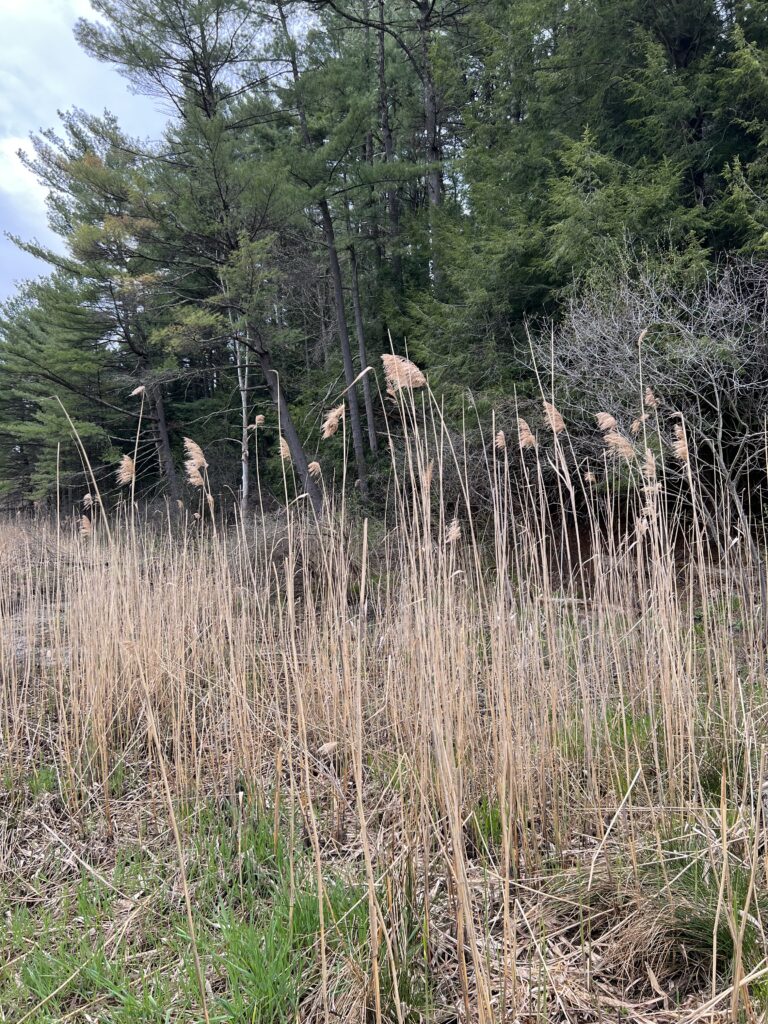
This area has lots of eastern white pine trees where the brook meets the forest, I’ve found other species like Norway maple and red maple trees as well. There are smaller plant species like ferns, common reeds, and mosses. There are lots of dragonflies, and other cool insects too.

November 5, 2022

When I returned back to the site I noticed the water level had gone down, I think this is a result of not having much rain the past few weeks. There were also fewer insects either because of the drop in temperature or less water. As a was sitting there I noticed there weren’t as many bird sounds as earlier in the year. It was very calming as and the weather was beautiful even if it was warm for November. There was far less foliage this time around and even looked as if there were less reeds in the water.

I also noticed these heron tracks near the boardwalk of the trail

November 17, 2022

I decided to visit Morgan Higgins’s phenology site which was also in Centennial Woods but in a different location. Her site was closer to the entrance and there was a difference in the species of trees compared to my site. This site had more maples trees while mine was surrounded by Eastern White Pines. Both of our sites had a body of water, her site has a small stream while on my site there was more of a pond.

November 28, 2022

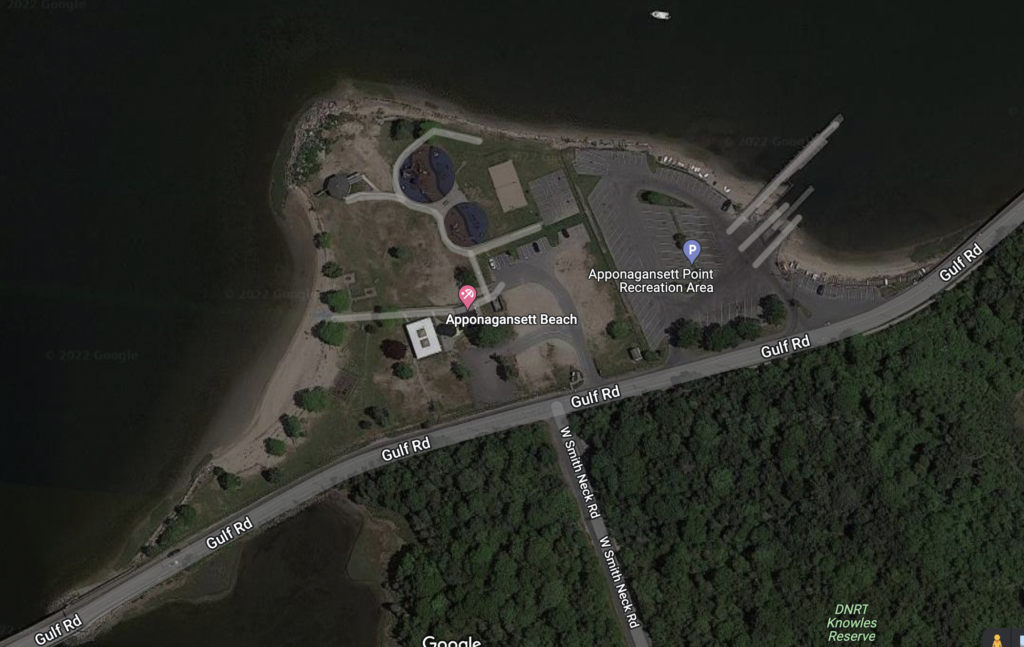
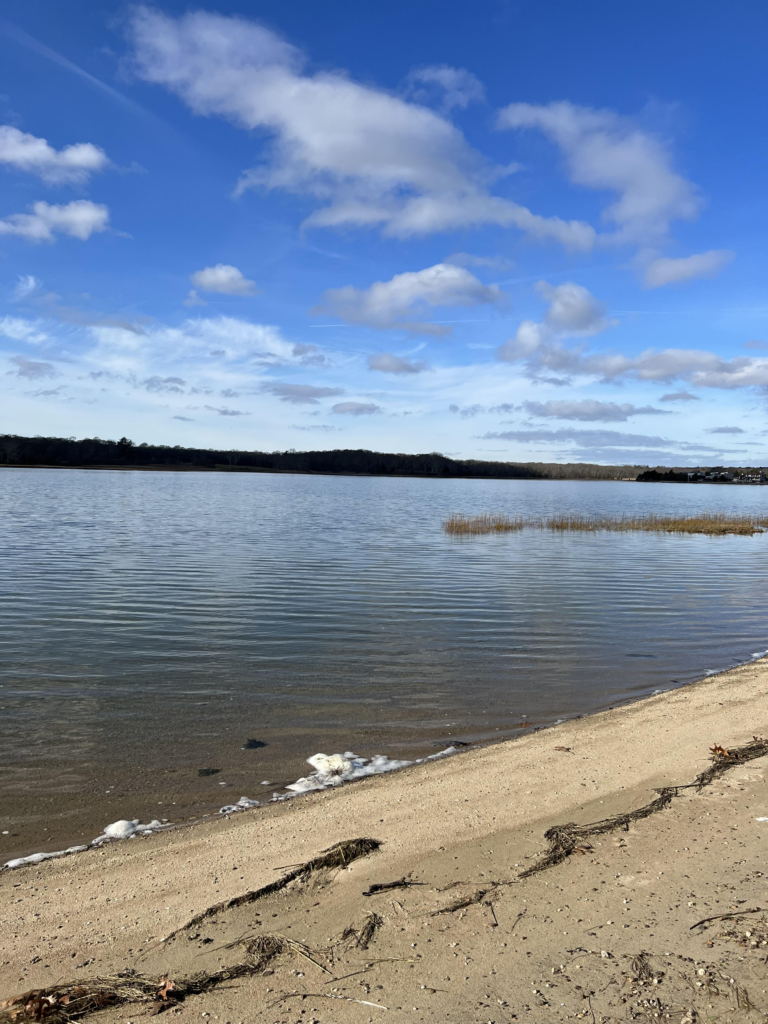
Over Thanksgiving break, I took a walk to Apponagansett Bay. The phenology here is very different from the spot in Centennial Woods from the trees, soils, and species. The beachy area has a sandy shore with a few long grasses and shrubs. There are a few trees that were hard to identify. Its special to me because my family and friends would spend a lot of time over here as kids, hiking the nearby trails and walking to get ice cream. Over the years I have noticed that some areas on the beach don’t look the same as they did 10 years ago and the tides have probably changed the landscape a bit.

My sisters and I took some time to pick up some trash that we found around the area to show that we care for the bay and wanted to leave having it be better than when we came. After reading “The Honorable Harvest” I felt more appreciation for growing up so close to so many trails and coastal environments like this one.

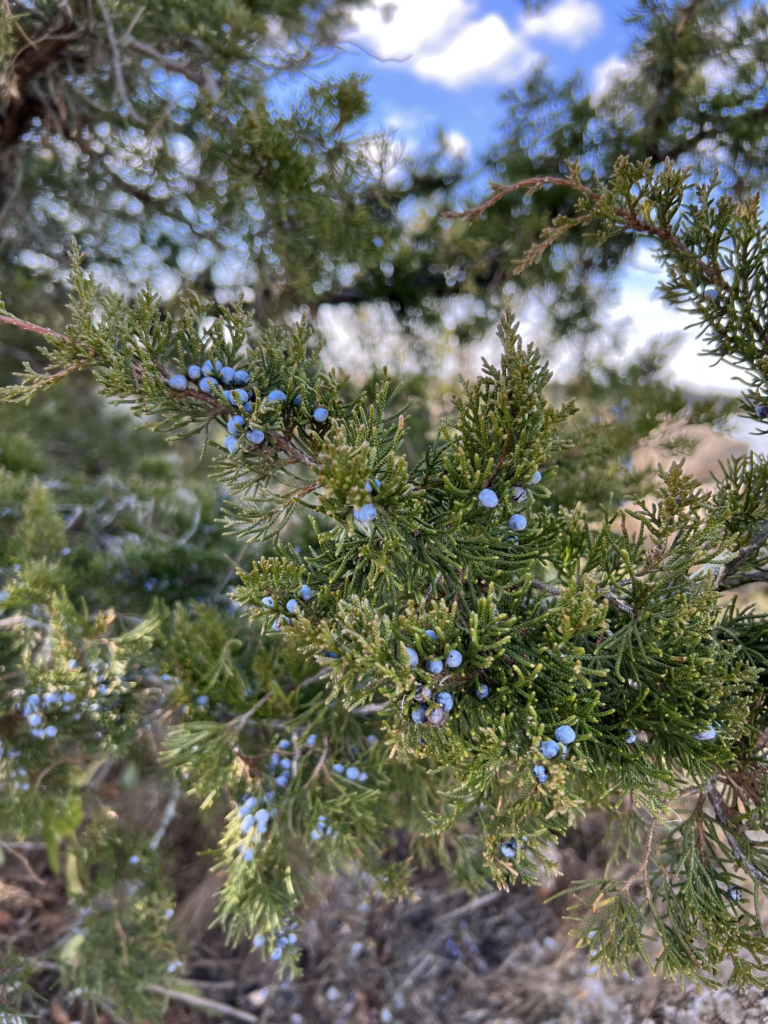
There was also this Northern Red Cedar tree that had some berries on it which I thought was really cute and ties in with the chapter on how the earth exchanges gifts.

December 7, 2022

There were no trees left with leaves in this area of Centennial Woods, only coniferous trees like the northern white pine. There is a lot more leaf litter around the area and the water level of the pond seems to still be low compared to the first posting. there is a lot of decomposing litter in the pond as well making it look a bit gross. There are also no bugs like dragonflies or gnats flying around.

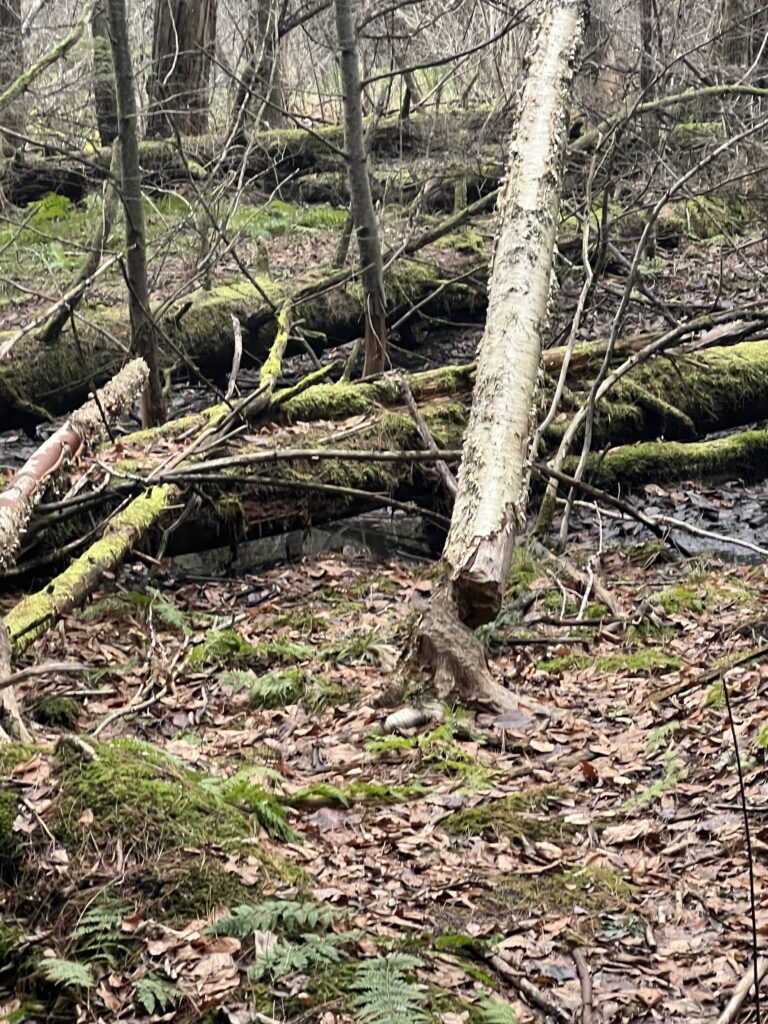
While observing the area some signs of beaver were spotted. This yellow birch had been gnawed down by one of the beavers in the area. This could be used for shelter or for food as they stockpile edible sticks for the winter.

Skip to toolbar