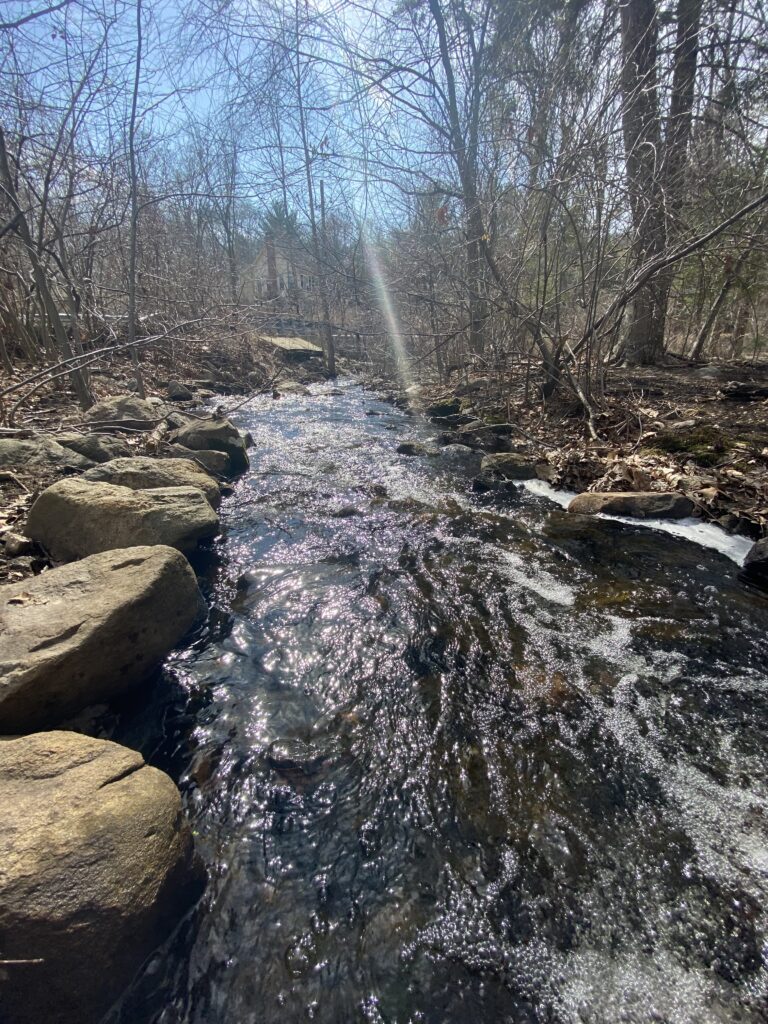
Ever since I was young, my dad and I would frequently venture down the road to the Bartlett Arboretum. It’s a beautiful little nature preserve that I have gotten to know very well growing up. It’s literally located on my street and is about a 4 minute walk. My dad and I often went foraging for mushrooms there or just took nice walks on the various trails. We had a favorite spot however, it was Forsyth pond that was at the end of one of the trails, the trail pops you out into a beautiful pond area and has some seating. This is what I chose to be as my at home phenology site.
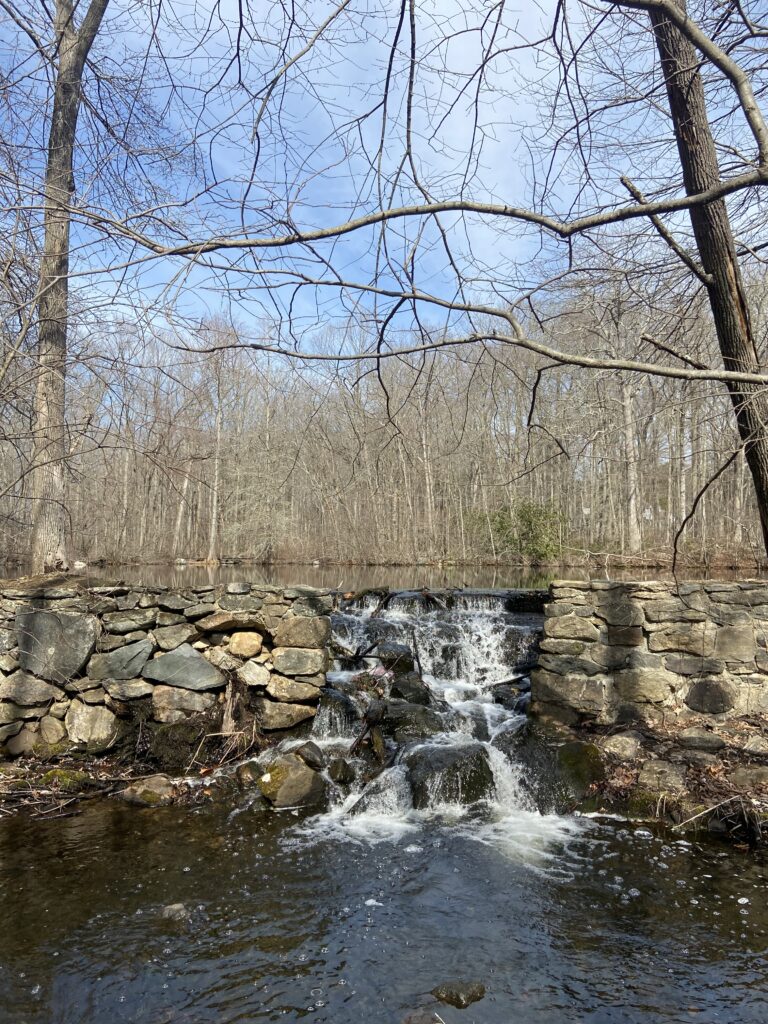
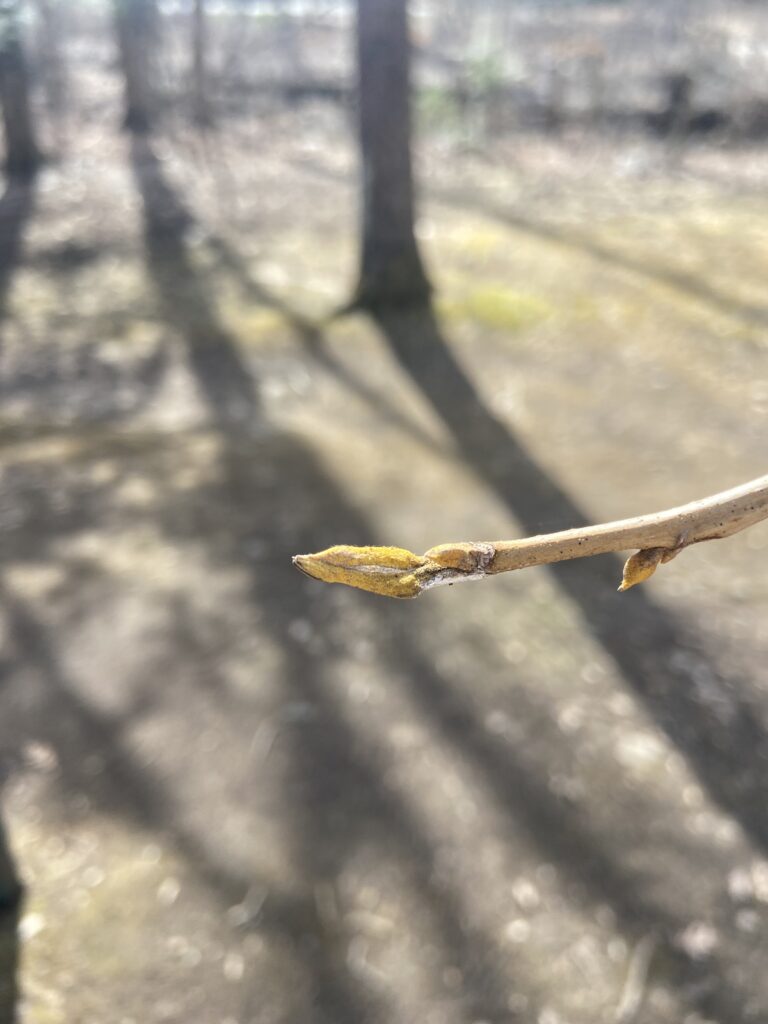
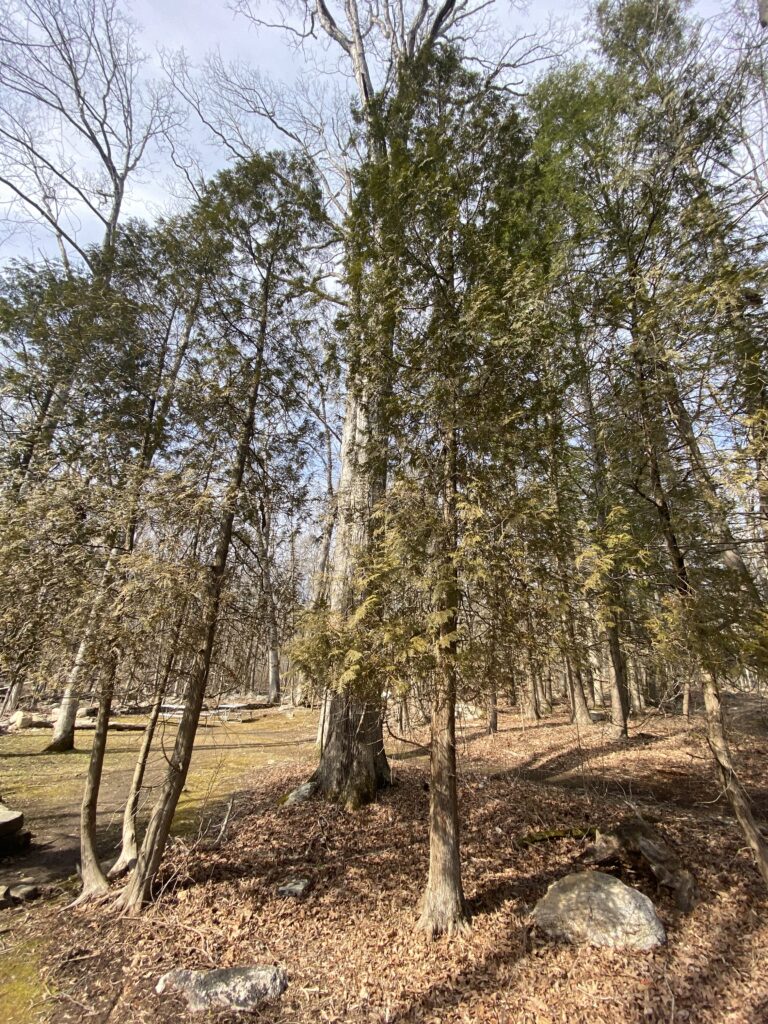
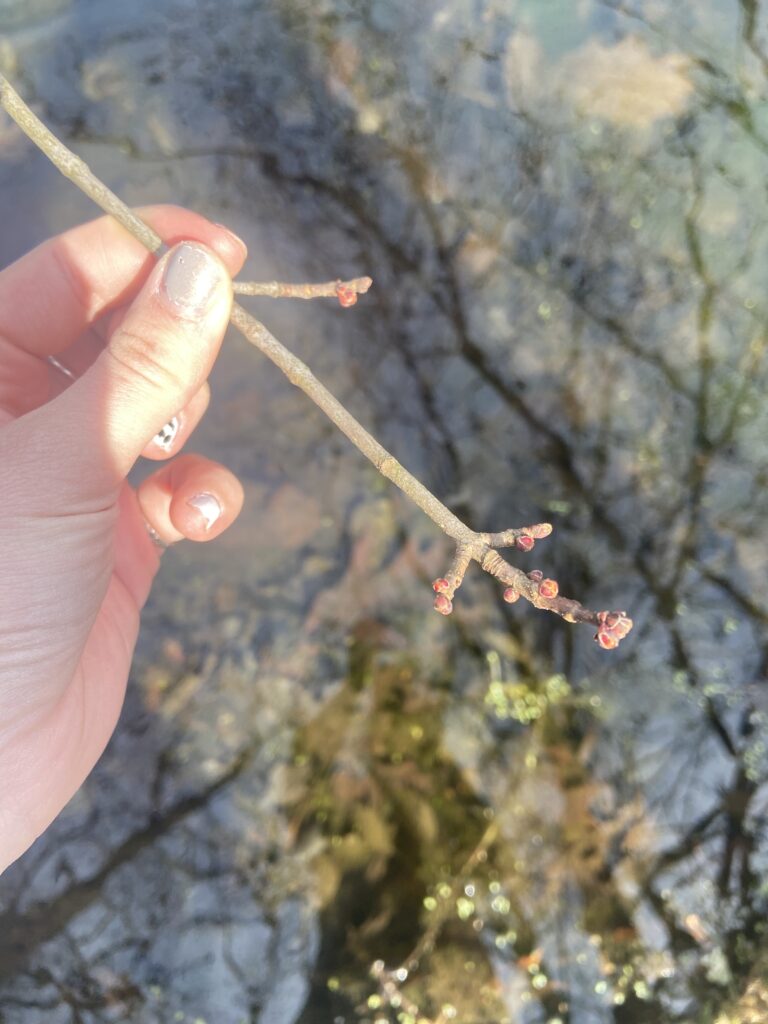
When I arrived, I was greeted by shining sun but not as much phenological action as I was hoping to find. Most of the woody plants in this spot were still recovering from winter, but were definitely still in good condition. There were many dead branches dipping into the pond likely as a result of the snowstorm we received the weekend prior. There wasn’t much woody plant growth on the ground but there was a nice mix of tree species in the area. I saw some red maples, sugar maples, an american beech growing in the understory, and some northern white cedars glowing in the sun. There was one tree that I just couldn’t identify however since the buds were growing out a bit already and iNaturalist was unable to make a clear guess based on the buds and the bark. The buds were soft, long-ish, and yellow. I’ll provide an image if any of you have any guesses please let me know!
I chose a sight with running water to have that similarity with my Burlington phenology spot however the two spots differ greatly still. The main difference is how untouched my spot in Burlington is while my spot in Stamford is very accommodated to humans and their recreational needs, there’s at least four signs and a wooden table and a bench. The phenology here was definitely more controlled by humans whereas my Burlington spot is completely natural. Another thing here was that I could hear birds, but for as long as I sat there, no birds wanted to show themself. In my Burlington spot however, bird sightings are much more common.
This woodland pond was created by a dam located at the point where the water pauses before spilling into Poorhouse Brook. The water then runs south to Long Island Sound. Shallow enough for aquatic plants to root and still reach the surface, Forsyth Pond is home to frogs, dozens of snapping turtles, several aquatic plants, and cypress trees which were planted by the founder of the arboretum, Dr. Bartlett. The pond provides a beautiful rural despite for the Arboretum’s many visitors.

My last bit of my adventure consisted of some cleaning action! I was looking at the stream and saw a very large water filled pink balloon wedged between a few rocks on the waterfall! I was really saddened to see this type of pollution in one of my favorite natural areas. I couldn’t just reach in the falls and pull it out because I’m too small and the falls are too big so I took one of those dead branches I mentioned earlier, and for at least 30 minutes poked at the balloon until finally I got it un-wedged! I was super proud of my work and felt like I did a good thing for my community.