We break new ground today, and leave behind Vermont and the fall colors. This week1, I returned to my hometown of Austin, Texas, where, in the final month of Autumn, the leaves haven’t even begun to turn gold yet.
This is due to a combination of factors: the biggest one is that the massive Live Oaks that make up the majority of the overstory in my neighborhood are technically evergreen trees. They’re named “Live” because unlike most oaks, they don’t lose their leaves in the fall, and remain green. However, they do still lose their leaves, they just do it in the spring to make room for the new buds, and don’t spend very much time at all being leafless. However, Austin, Texas is also in a significantly different climate than Vermont. Winter isn’t going to come until January, or maybe even February. Fall begins much later, even for the trees that do change color. The leaves of my neighborhood Sycamores are browning, but still have that hint of chlorophyll. The riverside underbrush isn’t blooming anymore, but its still pretty green. The weather hasn’t dropped below 70 since the end of spring in March, and barring a cold front or two, it probably wont until mid December.
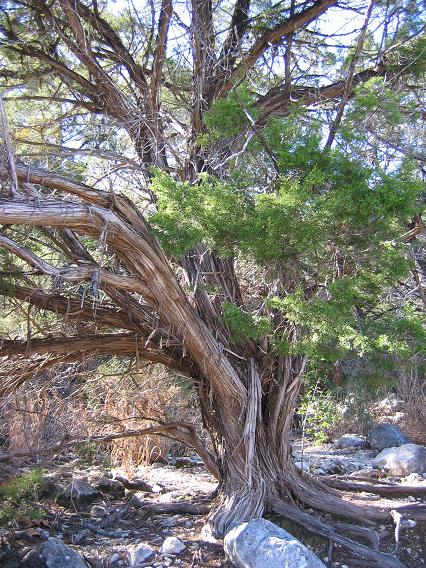
On the outskirts of Austin, the most prevalent tree is the humble Ashe Juniper: short, hardy, and surprisingly similar to its cousins up in Vermont, the Eastern Red Cedar. Its adapted to a wildly different environment, but in both cases, its doing its best to preserve water in extreme temperatures and both the evergreen scaly leaves and squat stature they share help in both the hot and the cold.


I’ve attached some screenshots of my location as the google map embed wasn’t working on my end for some reason. This may be a reason to transition away from word press or allow students to use website builders other than word press such as google sites.
The spot that I chose to look at is a spot that I hold very near and dear to my heart. My house is backed up onto a hillside sloping down into a mostly dry creek bed. The hillside has been left alone for more than 50 years, with invasive species running rampant, but in the last 5 years, my elderly neighbor, Carl, has gained an interest in trying to fix this scraggly overgrown mess of an environment. He recruited me last summer and we spent every Saturday weeding out and chopping down all sorts of invasive species that had wandered out of people’s manicured garden beds. Anyway, I haven’t been able to visit it since August, and it was nice to be back. There was more work to do, because the fight against nature’s urge to destroy itself with invasive species will never end. But its best to do most of the removal in the summer when the soil is dry and the seeds struggle to find a home in the cracked earth, so we took it easy. I’ve had to do most of the plant identification myself, because my neighbor means well but taught me all the wrong names for the plants initially.

Beggars weed and hedge parsley are both invasive but are extremely different from each other in appearance. Though with how hedge parsley seeds latch like leeches on your clothes, beggars weed seems like a more appropriate name. You’ll be begging that you found the last seed and yet you’ll always find more hidden on your clothes.
Nasty plant, but ripping it out of the ground is immensely fun. And if some of the seeds escaped, they would certainly ruin the day of whomever’s lawn they landed in, so we made sure to be extremely careful with how we disposed of the many seeds covering our clothes after we were done working. But a housing development had pissed off the neighborhood with a variety of greedy practices that were making lives worse for the existing residents. And they had wildly inefficient water management practices for their massive lawns with such incredibly fertile soil. Whatever seeds got planted in that soil certainly grew quickly and grew thickly.
I believe I had a significantly different intention than Robin Kimmerer when I gifted my thanks for my dishonorable harvest.
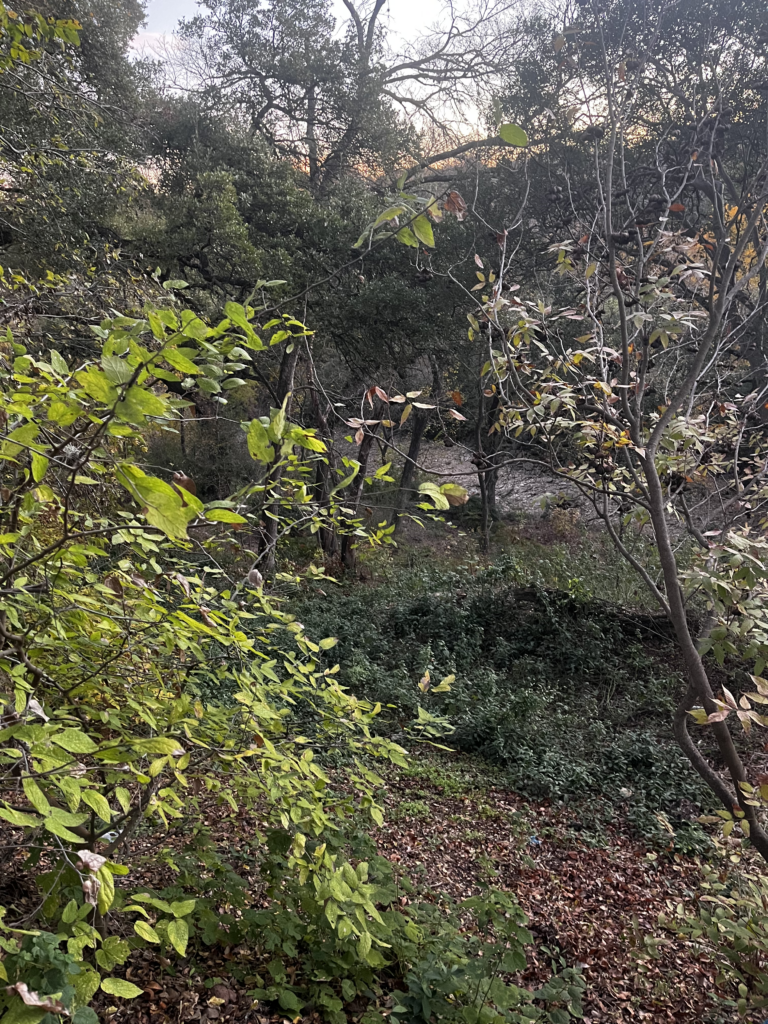


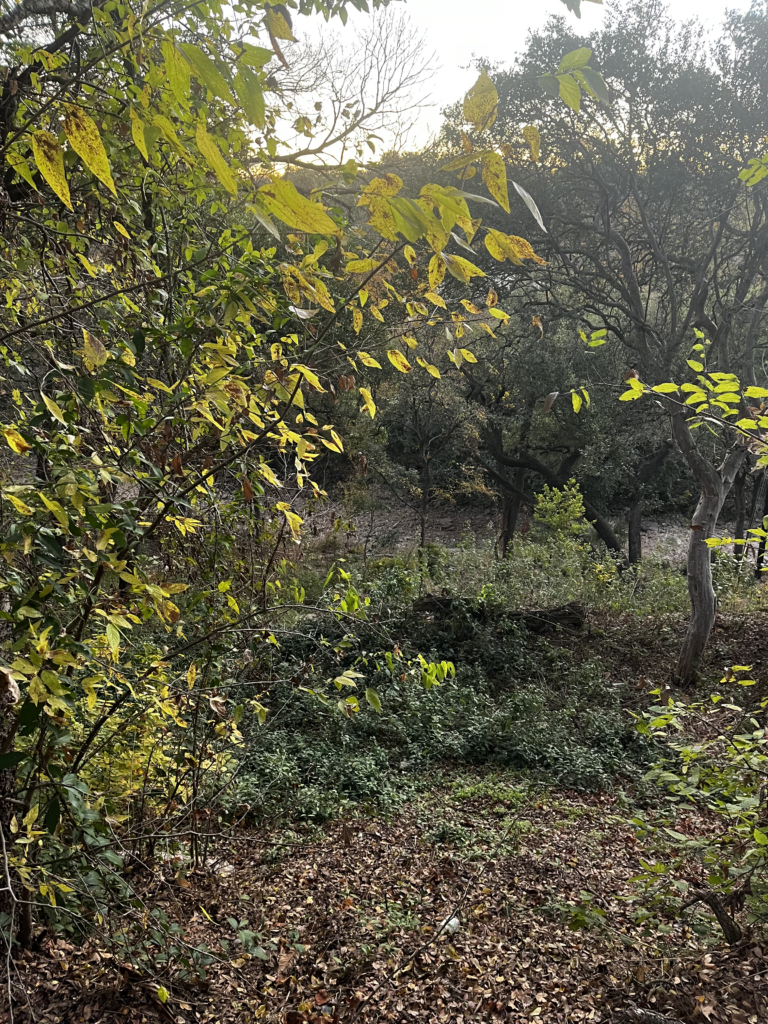
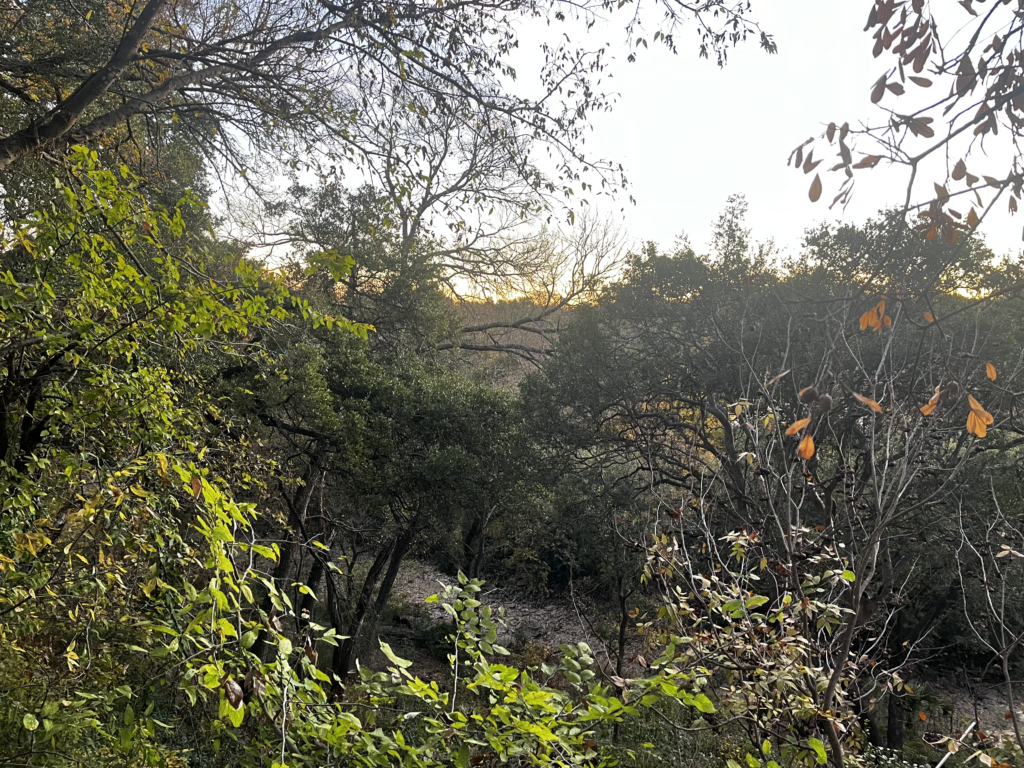
Anyway, the hill behind my house had a special place in my heart, and while it hadn’t quite yet gotten that cold, it certainly has gotten much wetter. Less sunlight from increased cloud cover and the changing season means water sticks around for longer, so things were actually greener than they were over the summer. They’ll brown up by mid-December I’m sure, but I just thought it was interesting that while everything in Vermont was shutting down, Texas is getting started again.
- Please ignore how long it took to publish this blog post, I wrote most of this over break and the article flows much better with that assumption ↩︎