Posts

Middleborough/Lakeville Cranberry Bog Exploration Guide

By Shea Hilton of Middleborough Massachusetts.

*If you have time bring a fishing rod or binoculars to pass the time and fish or bird

Follow this Nature Guide for Betty Neck and the cranberry bogs surround the area between Lakeville and Middleboro

Start as you drive down between the lakes in Lakeville and down the insanely bumpy road of Betty’s Neck. To start park your car/bike/truck or whatever you took to get here. Start by walking up straight through the Woods to Betty Neck Reserve (Go to 1). OR take a left before the trail goes into the woods and walk along the Cranberry Bogs (Go to 2) to an inlet on your right-hand side as you walk away from the parking area.

1) Betty’s Neck

Before you even walk up the path, take a moment to notice what is around you. An abandoned cranberry processing facility sits halfway hidden away by trees on your left hand side, looking at the woods. Dark wood still clings to the building as there are holes from where storms have damaged it and rotting has taken place. on your right-hand side, you can see the clear-cutness (Definitely not a word) of the cranberry bogs, and if it is the right time you will see people walking their dogs along these. As you start walking up this path here look up at the canopy of the trees and watch as sunlight creeps down into the forest floor. As you walk up the path, white pines and some birch trees dominate the forest. Look for an oak tree around these areas and notice the difference in leaves from those of the pines. What bird calls do you hear while you are in the forest? Songbirds fill the canopy with their music and red-winged blackbirds can be seen at the edge of the paths here. I know for the times I have been here I have been able to hear woodpeckers going at it on these trees as I walk towards the massive clearing that the path takes me to. As I step over roots growing alongside the path you step out into this sea of reeds and plants with a mowed walkway around the outside. Bird houses are lined all around as swallows swoop and chirp at each other in pretty immense numbers around this area. Short chrips chirps fill the air as in the summer and spring you can see mother birds bring food into their houses to feed their young. The photo I am going to send is a mother bird watching me and standing her ground as I walk by her. After you have made the loop around the reserve look to the ground as you walk on the path back. What plants and bushes are you noticing as you make your way back to your starting point.

2)Cranberry Bogs and lake

After you arrive or finish your walk to Bettys Neck Nature Reserve, walk along the side of the tree line and between the cranberry bog. Fair warning, bring sunscreen or a hat to protect from the sun and long pants or socks would be helpful in protecting against ticks. As you walk along the side of the cranberry bogs there are many places to look to find intoxicating nature. In the sky watch out for kites or other predator birds as they swoop these open areas looking for muskrats or other small prey. As you look down in the sandy areas near the edge of the bogs do you see anything moving? If you look close enough you might be able to see hoards of little bog spiders hustling and bustling around the bogs if they are flooded or in the actual cranberry vines of the bogs. As you walk on the edge of the cranberry bogs on the left-hand side, go to the water line which should appear about 200-300 ft from the start of your walk. Watch where you step here as little garden snakes slither around in the tall grasses here. Catch one safely if you find one, by pinching the area on the back of its head and holding them out in front of you! As you get and walk along the water line try and see if you can see fish in these waters. Sunfish, largemouth bass, perch, and pickerel are all found here. Cast your line a few times if you feel like it and have a rod. Just be careful for basking snapping turtles that lie out in the sun and quickly scamper back into the water when frightened as if caught, it will hurt them and mess up your line. About 500 ft from the start of the water, you will find a small red water pumping house that after it lets you turn right into an inlet into a large pond that you can walk along if you don’t mind getting a little mud on your shoes. Here you will find one of my favorite birds, the herring a lot as they wade and float atop the water. Mallards also swim in these areas as this inlet is surrounded by trees aside from a small driving/walking path that if you follow these directions correctly, you should be on. Here is where I will often sit, fish, lie down with a blanket, or just listen to music for an extended period of time. Here try to notice how the different birds and animals partition their shared space. Where are certain birds found? Why do these plants grow here and not over in the plains of Betty Neck? Why are snakes and spiders in the same area, but in different-looking locations here? Take time to reflect on your walk and experience and maybe write down something you would like to remember here.

Writing this as I do it myself really helps to visualize what the reader would be going through as they walk and read this guide. I loved it as I am able to show whoever is reading this, the spots I wanted them to see and that I enjoyed as a child growing up. Doing this also helped me to notice certain aspects of this site that I would more likely than not, ignore as I walk on past. It makes me take a second at every area and really get a feel for it. Like what is around here, what animals, trees, and plants call this area home? How is this area being used? It just really gets me to think of these natural areas in context to me and to human development as people often visit these areas here too. I want to thank you Laura for giving us this WonderBlog assignment because it was so helpful in awaking that initial “awe” I had when I was first shown these bogs and I asked all these questions while looking around in every nook and cranny here as a kid and is something I want to take the perspective for to use wherever I go.
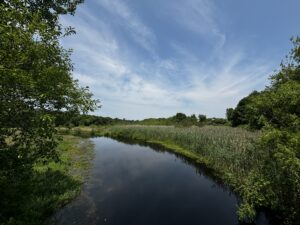
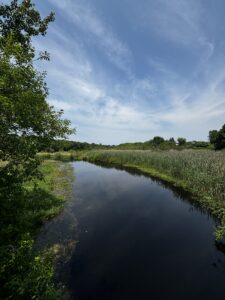
WonderBlog 2, Old Middleboro/Lakeville Town Bridge.

It is June 1st, at 2:45pm and I just got out of work and arrived here. The weather has been consistent the last two times I have gone here, with bright blue skies and a few clouds floating overhead.

As I’m here I walk to the waterline facing south, away from the Bridge, now facing the new one as cars and 18-wheeler trucks occasionally drive over it. Here I sat down watching the water flow out and under the bridge and hearing the symphony of bug buzzes in the air. I watch the multicolored dragonflies buzz about the top and watch as sticks and small debris flow underneath the bridge, where for some reason a lone rope sways, hanging in the center of the bottom of the bridge. I wonder about how dragonflies get so many colors as I recall wondering that same question on my first day. I had never paid so much attention to dragonflies before, their diversity is really astounding. I spotted one with a glittering blue body as it hovers without effort and then darts away from me in a moments time. Some fly by with their bodies connected as well, I wonder if it is a mating tactic or ritual? As they buzz around I notice a sort of pattern in their flying as it seems they patrol specific areas, possibly hunting for smaller insects (do they even eat other insects) or looking for a place to rest. A particularly large dragonfly with a metallic green body returns over and over again to land on reeds close to me.

One plant that I found looked interesting and that I had no idea what it was, was a lone bushel of Yorkshire Fog I believe, which was stuck out of a crack in the asphalt surrounded by fallen leaves. Its full name is Holcus Lanatus and I have seen it in other fields around my town, particularly in the ones people have by their houses. When I researched about it I found that it is native to Europe and actually invasive here in the Americas, but a more fun one is that the base of the stem has a stripped pink appearance which led to people calling it the “pink striped pajamas”.

Going to email you the photos, they are on my phone and I have no idea how to put them in like I did for my first wonderblog. Sorry.

Sketching for this felt disheartening at many points as, in my head, I am a failed artist and in this case, felt disappointed in my ability to sketch the beauty I saw in person. I do really like the idea of it and the process of doing it as it gets me to give more attention to the detail of what I am actually seeing and as I draw I see certain trees or details that would have gone unnoticed in my eyes.

Wonderblog entry #3, Old Middleborough/Lakeville town bridge.

As I write this it is Sunday, June 30th. I got back to my house from Portugal around 4:35 and I arrived at this location at 5:47. The sky is bright blue, with sparsely populated clouds and I can’t look up without squinting my eyes. The sun makes it feel high 80s even into the 90s as it beats down on me. Flies and dragonflies still buzz around the water as they make the water ripple.

As I was on site after being over the bridge for a few minutes I walked down the path again and saw a dead tree that was dead before but now fallen over the path. Off topic but not really, when I was away from Middleboro in Portugal we have 2 tornado warnings in the 10 days I was gone, when I was there I have only been through 1 tornado warning. The high winds and rain that my girlfriend was telling me that was making my dog go crazy I suspect made those fall as other smaller branches were around the whole site. I investigated where it was snapped-about a 1/4 of the way up the tree as a jarring right angle showed the snap. Bark peeled at the site as small vines attached themselves to the very base of the tree. Small branches shot out as my eyes followed the hanging trunk, reminding me of small crackeling fire starters that I would use in my fire pit. The fallen trunk went across the whole path and where the top met the ground, the branches were situated in a way that looks like a dead branch bush.

As I back to my spot over the water, I was drawer to the size difference in the reeds again. As I looked longer I noticed that the side with reeds growing taller also has larger trees. Seeing that they still get roughly the same amount of sun exposure I was trying to think of why they can grow taller on one side. What I was coming up with was that since the side with the taller reeds is surrounded by other taller shrubs and trees, they just provide a protection for wind and other elements that allow for reeds to grow taller without being knocked down from the winds. The side with small reeds has no cover from wind hitting them, from any direction and as parts of the reeds in the marsh move closer to the tree line, the reeds also continue to grow in side as well, leading me to believe and support this theory.

I’m going to send you the photos because they won’t attach onto my blog for some reason! Sorry!

As I took photos I found myself trying to find something interesting to take, as I crouched down in different spots first seeing if it stuck out enough for me to take a photo of, or if it was something that I wanted to show off to you or anyone else that would see them. I took photos of the different sides of the water as I wanted to show the flow of it and how green the areas are surrounding the water. It felt so much more natural for me to take the photos than sketching as I found better angles to do take photos from as I got bigger and smaller in the areas trying to understand the subjects from different perspectives. My visit was very relaxing as it was my first time being back “home” and seeing the changes around the site was interesting to observe.

Entry 1 Old Middleboro/Lakeville town bridge near Ocean Spray!

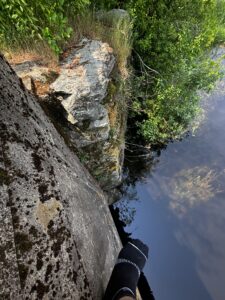
On June 20th of 2024 at 12:46, I sat down on the old bridge over the Nemasket river that separates the towns on Middleboro (where I live) and Lakeville Massachusetts. I sat with my back facing the new bridge used and faced down river with the Ocean Spray warehouse to my right and only visible through breaks in the tree line. It was super hot today, with it being around 91 degrees fahrenheit. The was sparsely any clouds in the sky and the sun was so hot, I had to take my shift off and put on sunglasses.

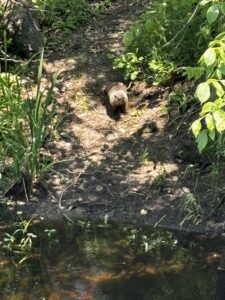
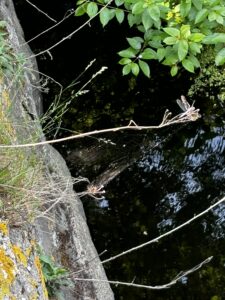
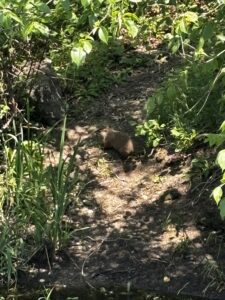
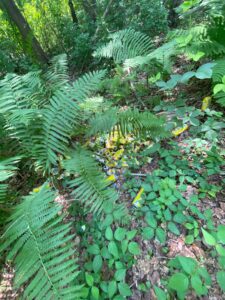
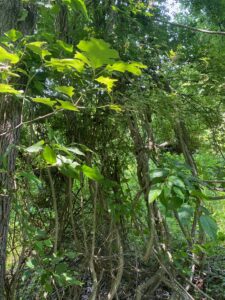
I was on the edge of the bridge with my feet hanging over, and noticing the cracking ashplat with weeds growing through it. You can hear a bunch off distinct bird calls as they call and swoop in the trees. Dragonflies where buzzi n around the top of the slow moving water as it dragged rooted underwater grass and some tree debris down. I couldn’t really smell much of anything as my nose has been clogged up from working in dusty Jordan furniture trucks, but I could smell the “freshness” of the air if that makes sense. I usually always have fishing rods in my car and curious to see if there were any fish here I cast out a few times to investigate. During spawning season these rivers are flooded with river herring, rushing to Assawompsett pond to breed. The herring run is a popular event in Middleboro when you can witness this mass migration. But here, only solitary snapping turtles basked in the sun below the stones of the bridge on the mud underneath. As I sat there I kept on noticing the different colors of the Dragonflies buzzing around as you could hear them as they got close to you and one landed on a branch near me, where I noticed a dead Dragonfly caught and wrapped in the web of a spider. This was about halfway from my height to the water on the “leg” of the bridge to my left. As I continued to watch the dragonflies buzz about and seeing little water bugs hop across the surface, it was hard to not see the sizable difference in reed height from my left side of the river, to the towering reeds on the right. Birds swooped from side to side and landed on the reeds and some small shrubs alongside the river. As I stayed there I noticed a little guy looking at me from a small, muddy opening near the bottom of the bridge “leg” to my right. At first I thought it was a beaver, but then recognized this critter to be a groundhog watching me. Having seen them before, as a family used to live in my backyard when I was younger…until my aunts old dog got loose :(. He blended into the dirt at first but was clearly visible once I saw him. He was there for about 2-3 minutes before turning and walking down the length of that path he was on. After wondering about why Dragonflies are an array of colors for a bit, I decided to walk down the old road that is completely overgrown expect for small tracks of a path some go down. I couldn’t help myself but from looking at some sweeping vines that covered the understory of trees and shot up in a variety of ways. I also saw massive furns with super wide “wingspans” I guess you could say. As I walked to the edge of the warehouse and passing signs of the previous use of this area, I saw how the ground was spilt into sections of ivy and ferns, as they grew only around groups of each other.

  1. When was the Nemasket river created?
  2. What Birds call this area home?
  3. How was this landscape (on a larger than location scale) created?
  4. When was the bridge made/then abandoned?
  5. How long have Dragonflies been here?
  6. How do they get their different colors?
  7. How do plants root in moving water?
  8. When have plants started taking  over the bridge and its cracks.
  9. Why is it that the reeds tower on one side of the river, yet are significantly shorted on the other side?
  10. Where did that Groundhog come from/does he live in this area?
  11. Why are their no fish here now (that i’ve witnessed)
  12. How many different species of birds live here?
  13. Have spiders always lived here (and then this area, and how did they get here if not)
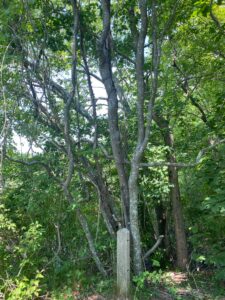
  14. Why does this tree to my left bend and jut out the way it does?
  15. Do spiders eat dragonflies?
  16. What types of plants can live under the water?
  17. What is the soil like at the bottom of the river? (clay? muddy? sandy?)
  18. Where does this river deposit?
  19. How long has this landscape looked like this and been this climate?
  20. What allows for bone growth? And what type is this?
  21. How big can ferns grow to?
  22. Why are ferns only growing in sections, with other ferns?
  23. How do birds partition their niche here?
  24. Do plants also partition niches?
  25. How does pollen sticking to water affect above and below water organisms?
       Why ferns grow in sections.
Ferns often grow close to each other due to their unique reproductive cycle involving gametophytes and sperm dispersal. Many  ferns have small, heart-shaped (cordate) gametophytes that must grow close enough together to allow for sperm to swim between them for fertilization to occur. The gametophytes of most leptosporangiate ferns are often found in recently disturbed areas, as spores buried in the soil are then exposed and capable of germinating with little surrounding competition.
      I really enjoyed going to this bridge for my wonderblog as I used to go here when I was younger to launch off my friend canoe to paddle down the river, and hasn’t been something I did since freshman year of HS, as I haven’t talked to him that much and haven’t gone here to really appreciate this area since then. I would love to see if their are more fish here as my time goes on and hopefully I can see the groundhog again.
Skip to toolbar