Ode to my Salmon Hole Phenology Spot

Salmon Hole

Lived, Living, Live on

Oh how rich and full I have seen your life in only a year

Seen you flourishing, in death, and emerging once more

Lived, Living, Live on

Living Cycle

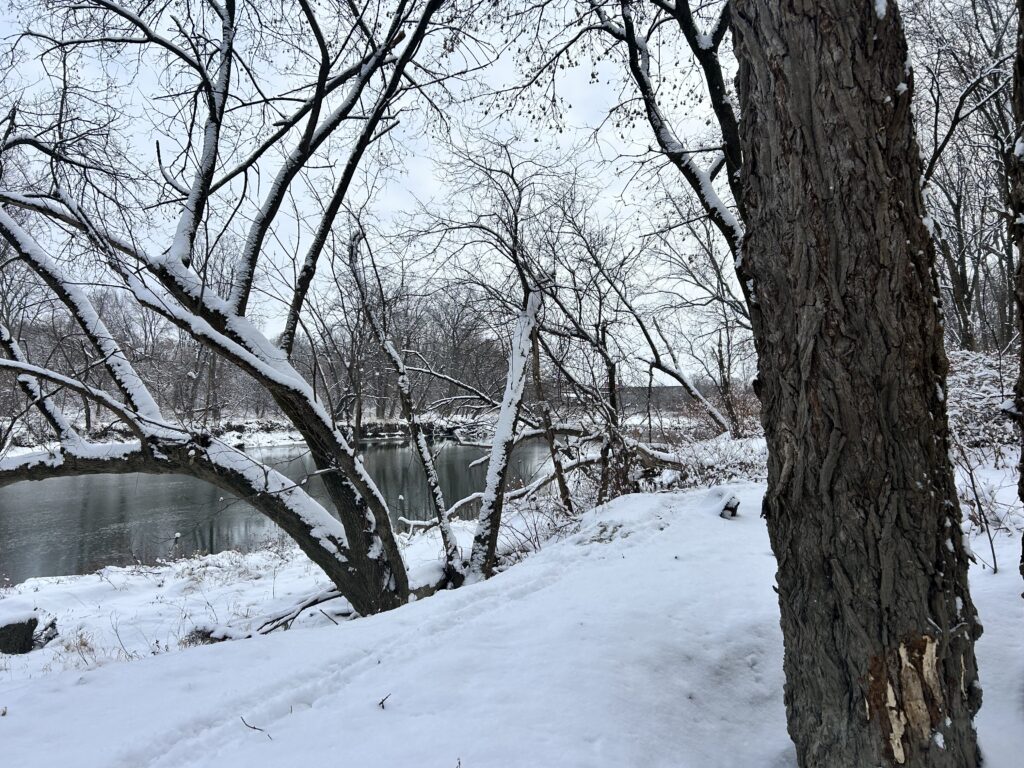
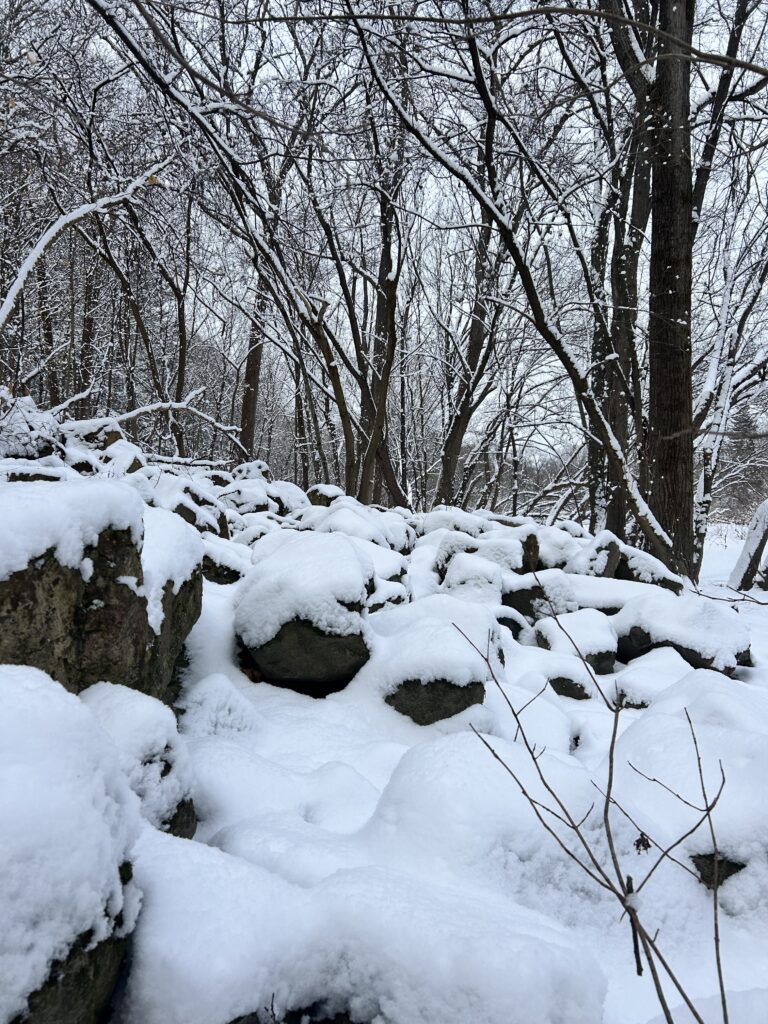
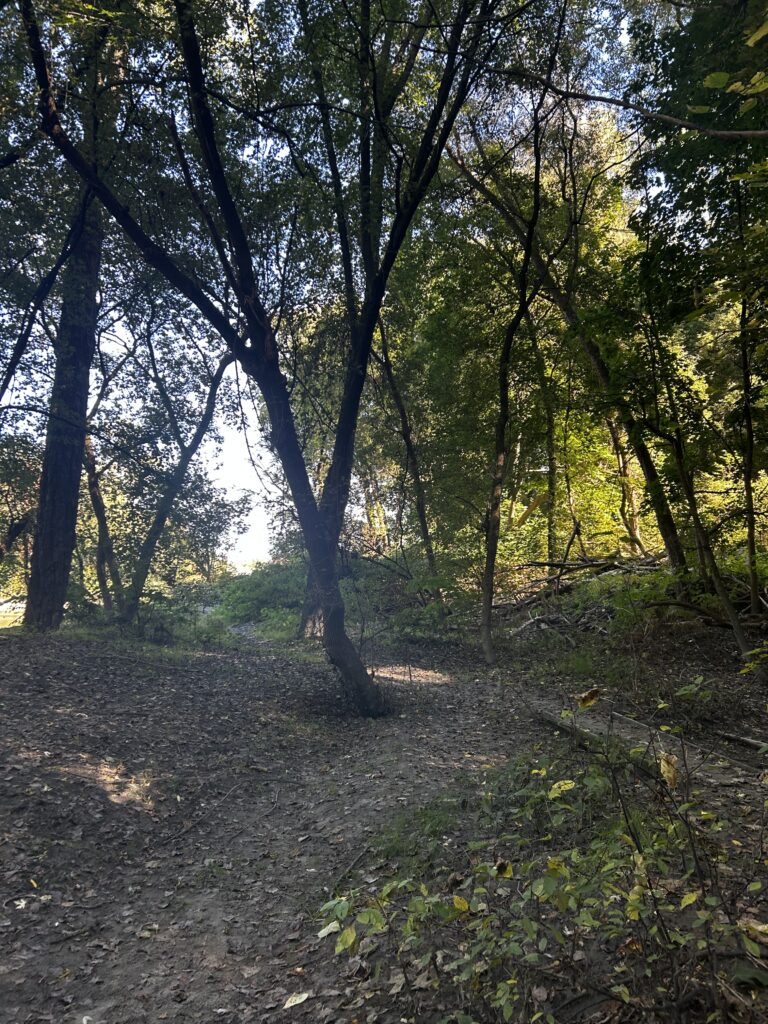
The first time I visited my phenology spot, it was bursting with life: trees full of leaves, geese calling out, ants crawling by, grasses rustling in the wind. As the temperature got cooler, the birds flew south, animals went into a dormant state, and leaves started to turn vibrant oranges and fall. It soon became a peaceful scene with a blanket of snow lying over the ground and ice occupying the space where the river once was. Wildlife was hidden or gone, aside from the occasional prints and teeth marks from a beaver. With time, my site has now begun to bustle with life again, with bird calls growing louder by the day and buds breaking to reveal vibrant green leaves.

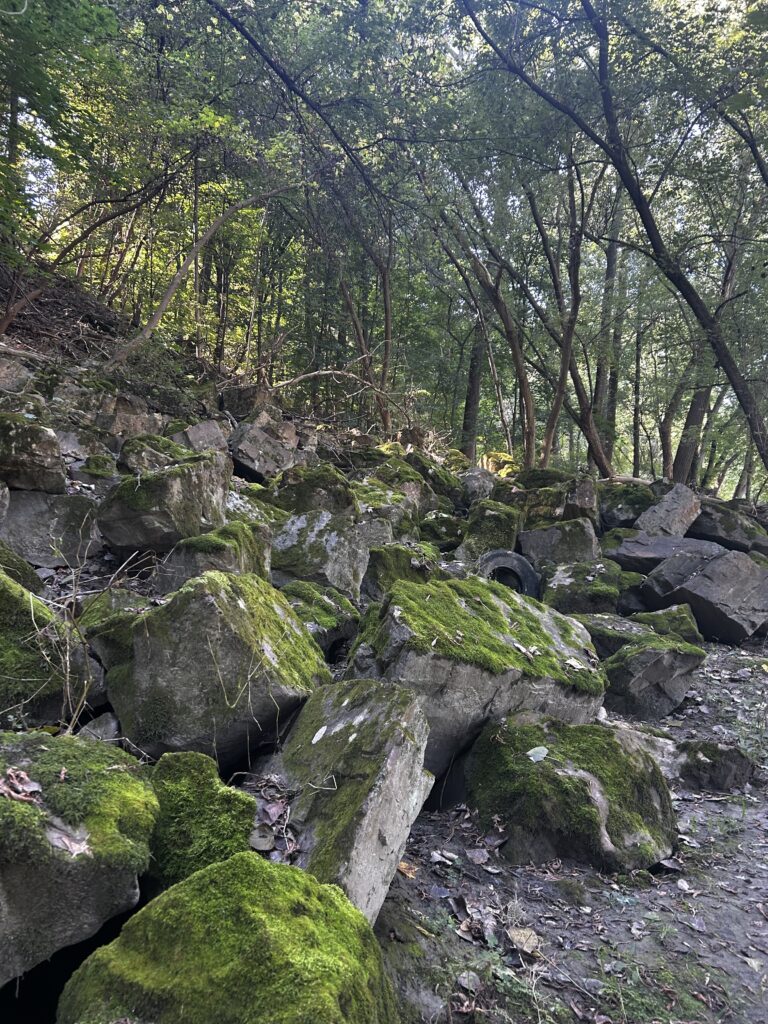
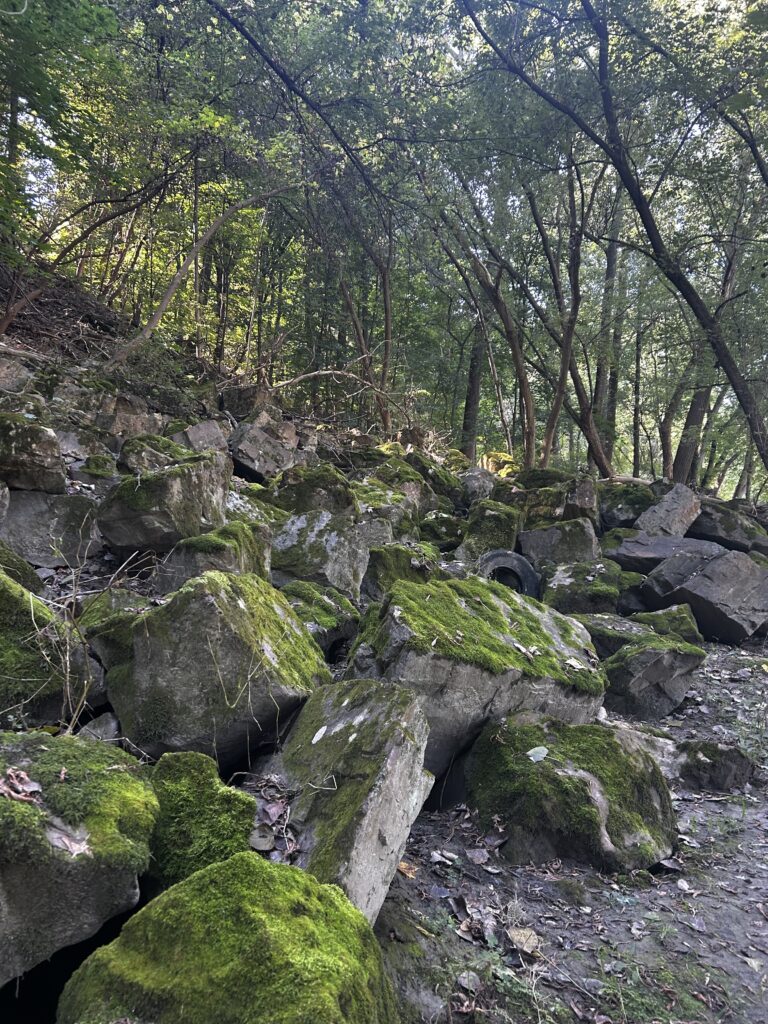
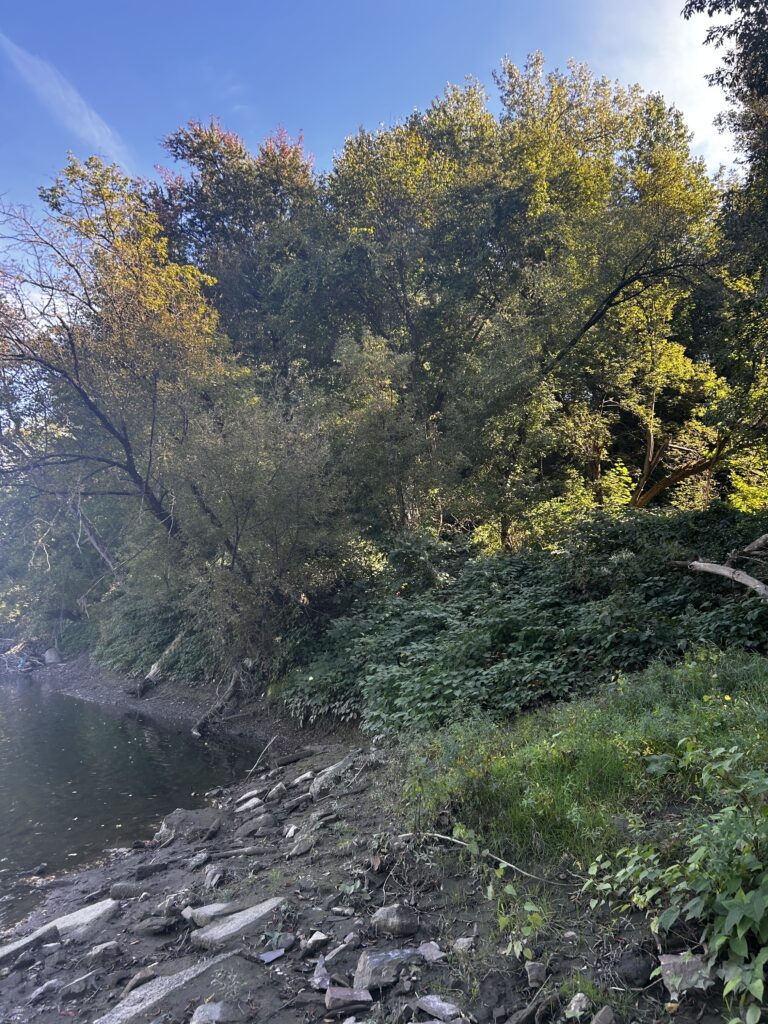
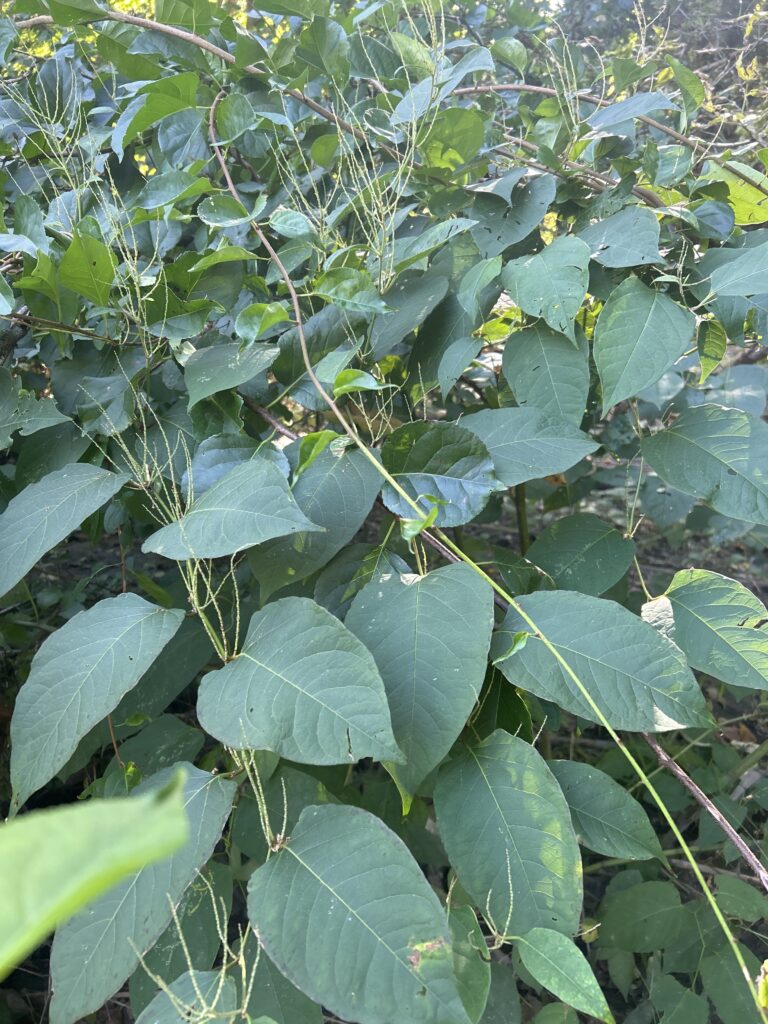
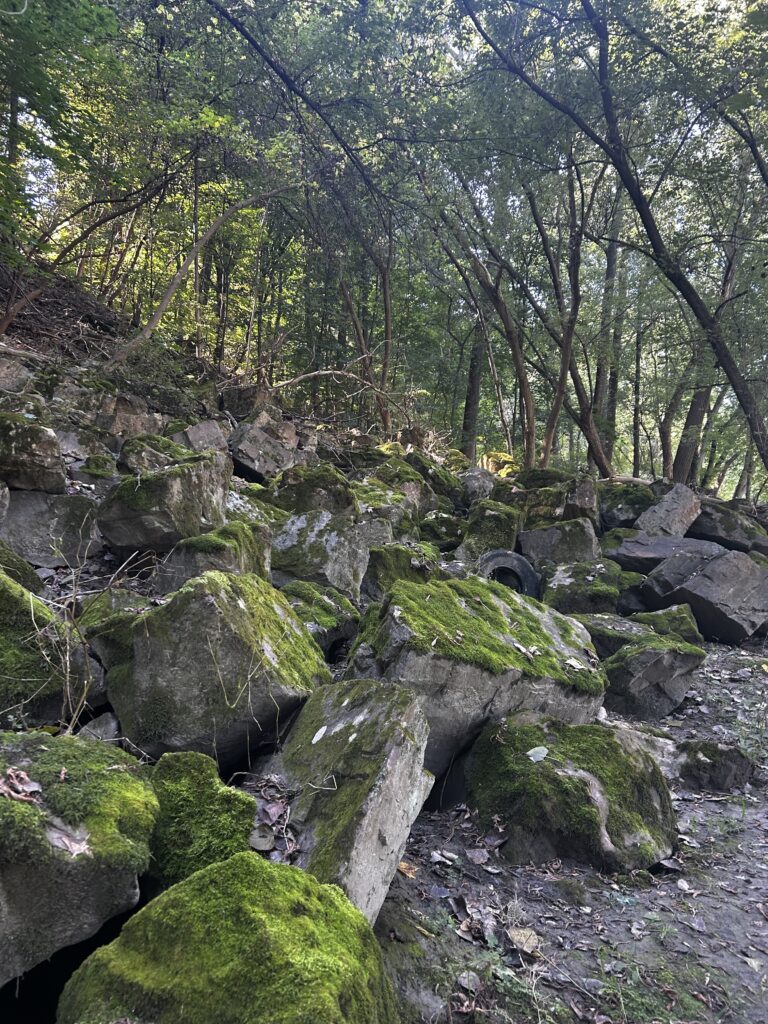
Visiting and becoming more educated about my site has revealed a few landmarks that I observed throughout the seasons as they changed. Firstly was the large Japanese Knotweed bush that was thriving, died, and is now blooming again. Due to it’s invasive nature, it would have been beneficial to remove the plant in the winter when it was dead. Secondly, I observed the status of the riverbank and the accumulation of trash changing from fairly polluted, to iced over, then even more polluted then before. Finally, I observed the change, or lack of change, of the rock pile at the back of my site. While little physical differences were observed of specifically the rocks, it was a great way to see the difference in coloration of the site throughout the season.
Since the last warm visit to my site, a large amount of wood debris has collected along the banks of the river, carrying with plenty of human trash and pollutants as well. This could be a result of the great amount of rain Burlington has seen within the past month, raising water levels enough to push trash onto the shores of Salmon Hole. The pollution at my site has, unfortunately, increased significantly due to, what I assume, both natural and anthropogenic factors. It is disheartening to see the health of my site worsening at the expense of human activities.

Additionally, there is an interesting two-sided cultural and natural interaction here. With some individuals using this land for recreation and appreciating nature, while others use Salmon Hole as a home with many homeless individuals living there. This creates a unique relationship of humans and nature with one group simply appreciating the land and the other viewing it as their home. I am curious as to which group has a greater impact on the land and the differences of emotional connection and belonging towards the site.

I feel as though I can be appreciative of the nature at the site and educated on an intellectual and emotional level of the history and current status of the site, however, I do not feel I am a part of the site. This is because there are many individuals who live at Salmon Hole and I feel as though I am entering their home. I love how I have seen this site change, evolve, live, rest, and live again, but I am not a part of that phenology. I have had my own phenological changes this past year: adapting to life in Vermont, meeting new people, developing new passions, and discovering my values. Both Salmon Hole’s phenology and my own can be at the same time, but I have not impacted the site’s changes. I have learned so much throughout this past year returning and observing my phenology spot and I plan to continue to visit and check up, making sure it continues to thrive and improve it’s health over time.

Goodbye Salmon Hole… only until next time.
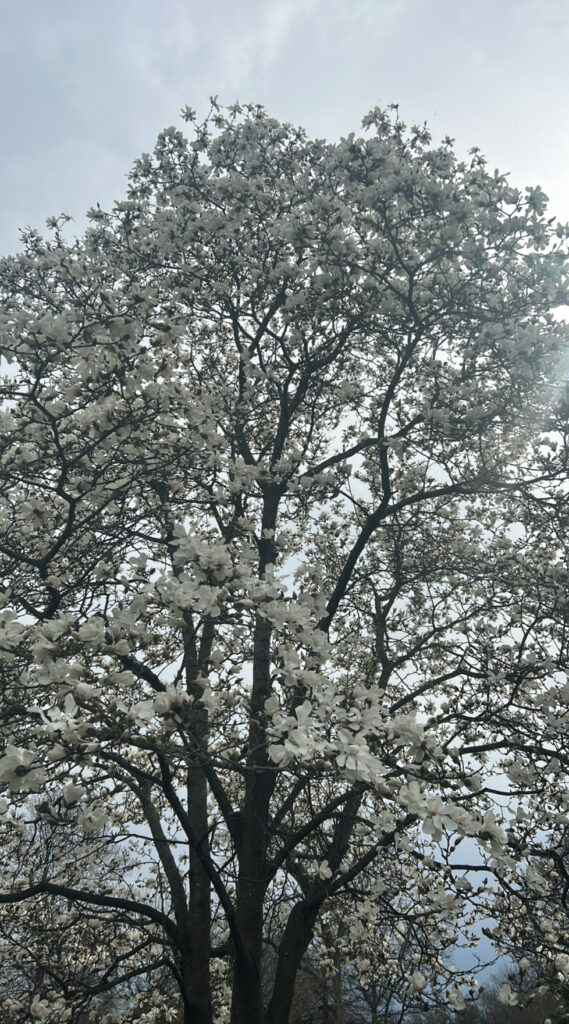
BioBlitz from Burlington

Monday April 28, 2025

This weekend was the global City Nature Challenge BioBlitz: a challenge between cities around the world to see who can identify the most species within their area. As a part of the Greater Burlington Area team, I identified 36 different plants and wildlife species between the University Green on the UVM campus and Waterfront Park in downtown Burlington.

To record my observations I utilized the iNaturalist app where I can take a picture of the species I am trying to identify and it will offer suggestions of possible species. Coming from the old iNaturalist app, in which you could document species through images, videos, and audio recordings, I found the new app underwhelming and unhelpful. The sole option for observations is images which restricts you when attempting to identify birds by their calls. Additionally, the new app fails to try to help identify the specific species, but rather it will resort to a class, order, or family. I feel it greatly restricted my ability to explore what the plant or wildlife could be and prevented a greater amount of species to be spotted by amateur naturalists.

When looking at a handful of other cities that participated in the challenge, I found it interesting to see how many cities in South America focused primarily on wildlife rather than plants, like in Bogota, Colombia. Additionally, I found it so interesting that, through the pictures, you could see the changing seasons around the world. For instance, the images taken in Cape Town, South Africa reflect it is autumn there because of the mature animals and established plants, while images taken in Tokyo, Japan show that it is spring because there are young offspring and blooming plants.

The entries from my adventures that excited me most were of birds! I found common gulls, black-capped chickadees, American robins, house sparrows, and many more! Due to the restricted features of the new app, I was unable to record many or get a clear image to post on the challenge. Additionally, I was particularly excited to learn about the species “Candleflame Lichen” present on a tree I was trying to identify. Overall, the BioBlitz was super exciting and I am looking forward to participating again next year when the weather is a little kinder on those trying to identify.

Spring Phenology!!

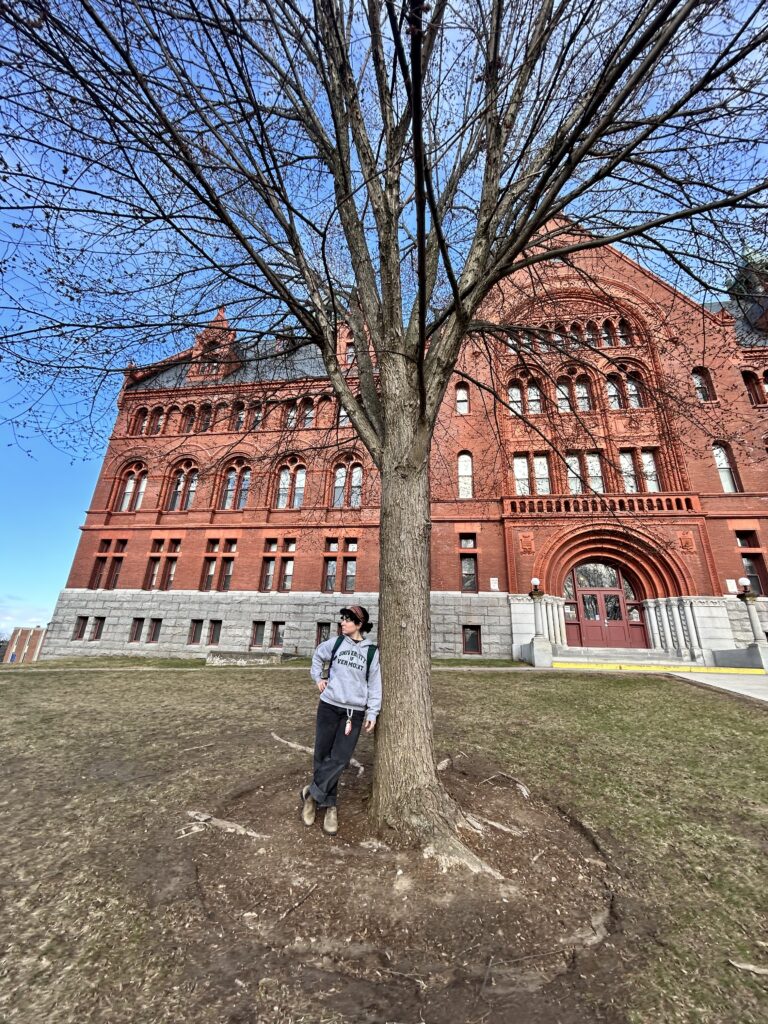
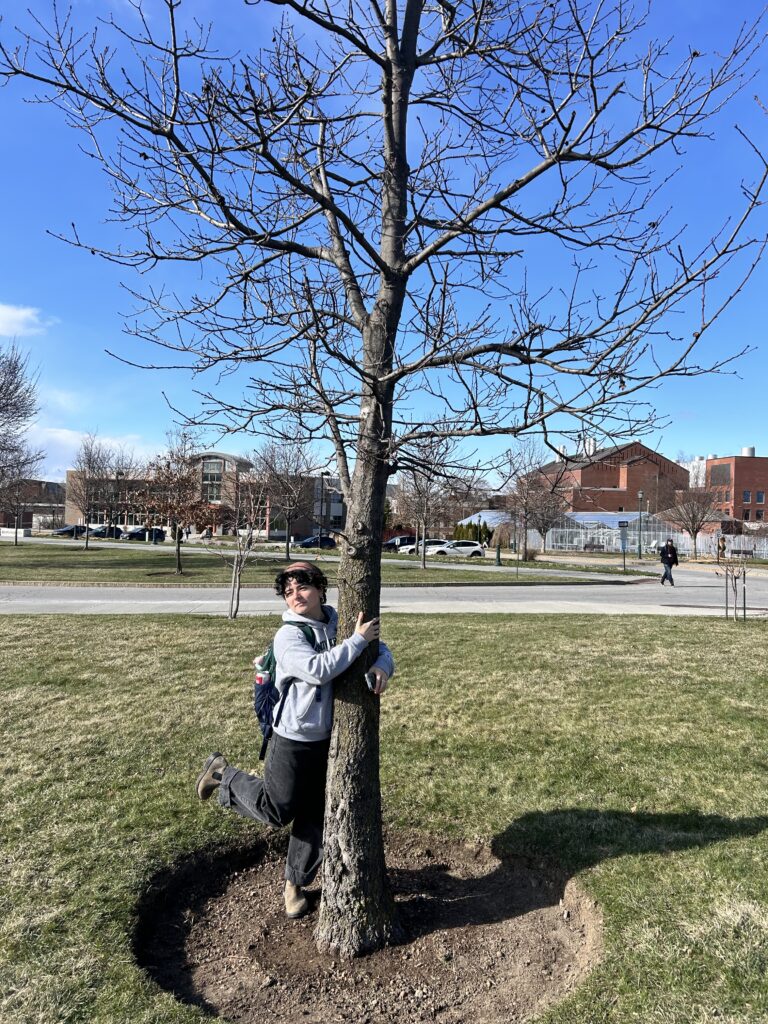
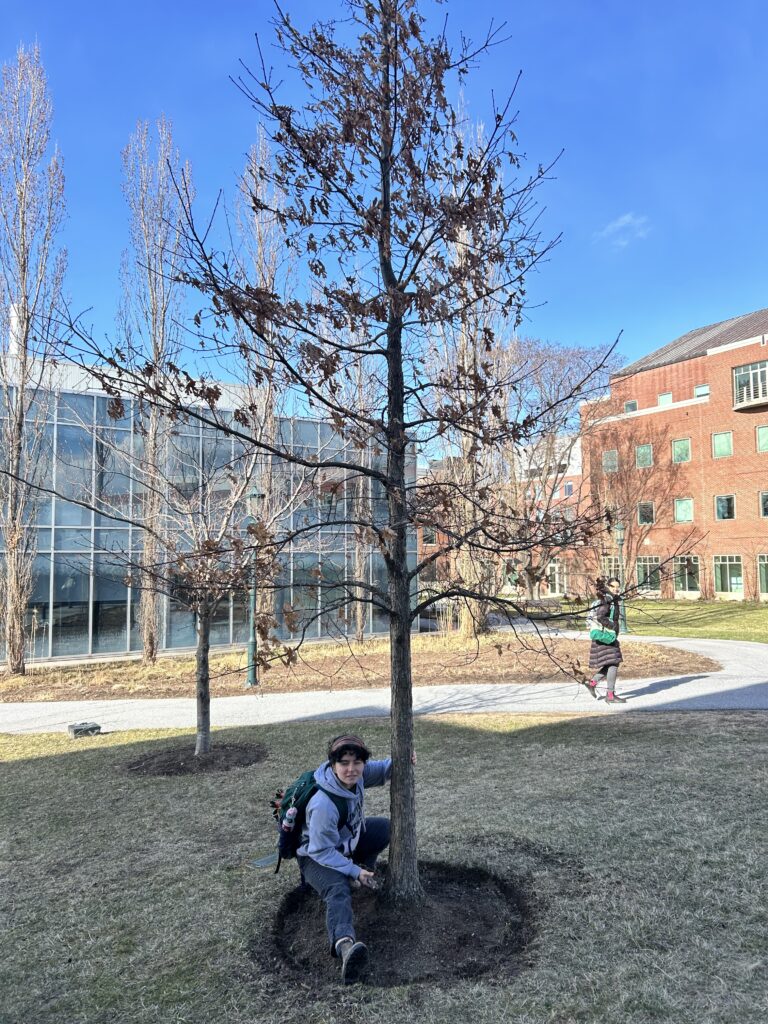
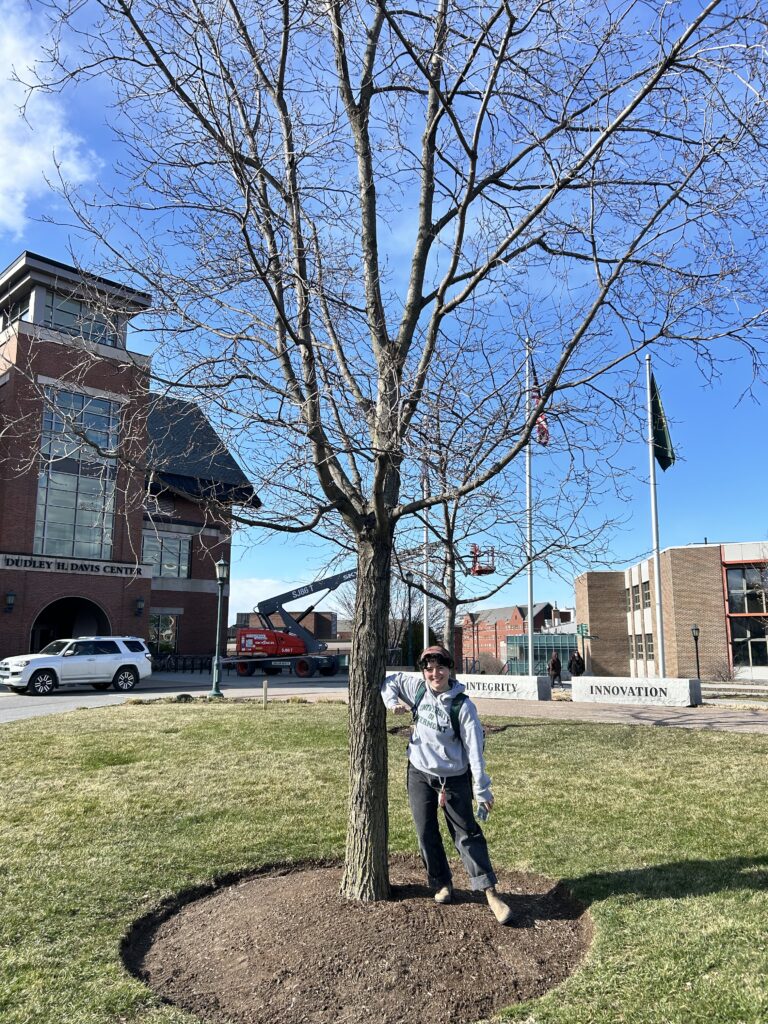
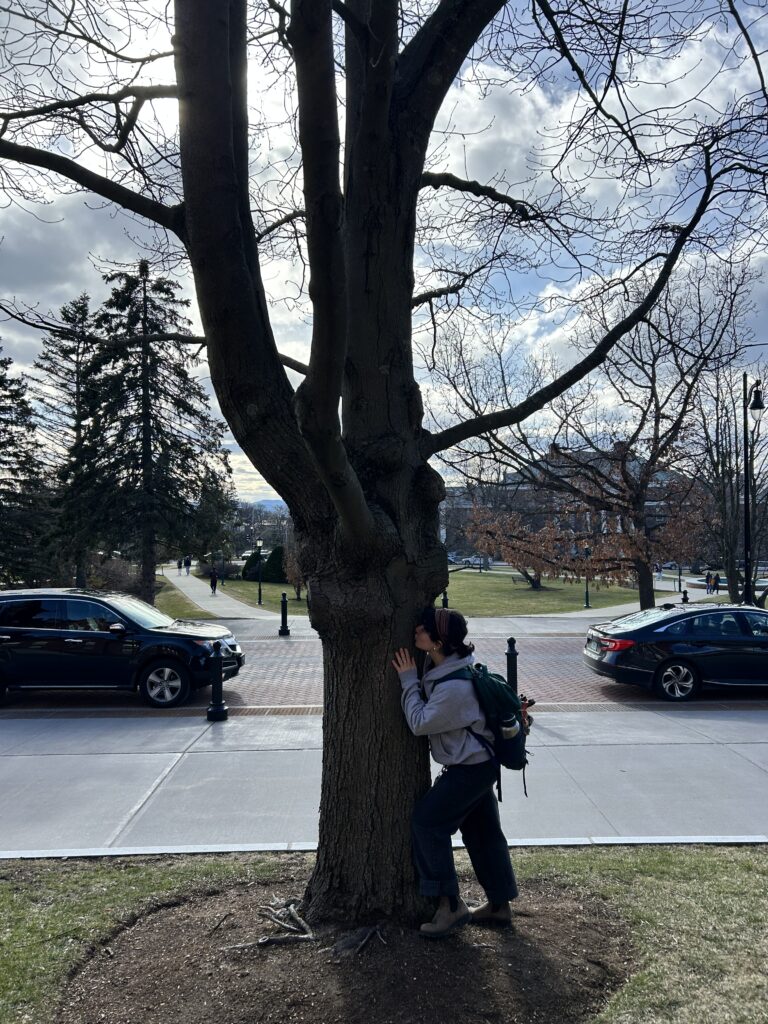
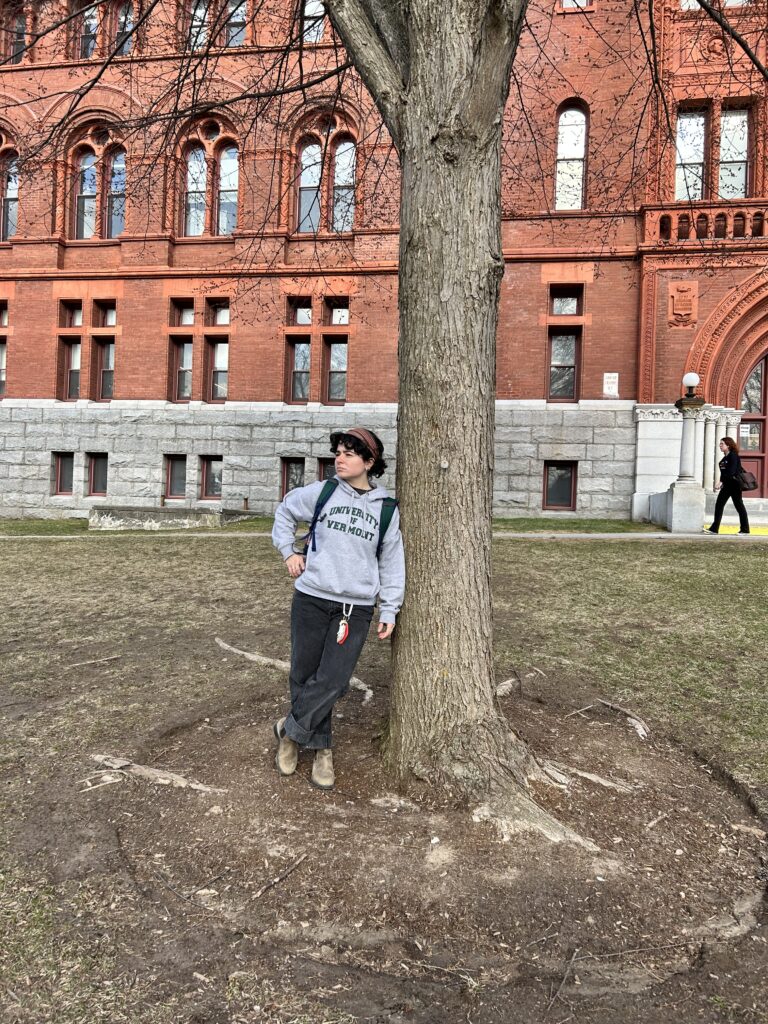
This afternoon, Wednesday April 9th, 2025, I ventured around the University of Vermont campus to observe the phenological changes occurring with the emerging season of spring. Although it was only slightly above freezing today, me and my friend, Legare (who so kindly posed for a picture with each and every tree), were able to spot multiple signs of the coming warmer months, including a few trees’ buds breaking! I observed five trees total and we identified many similarities between the phenophases of them all.

Oak Trees

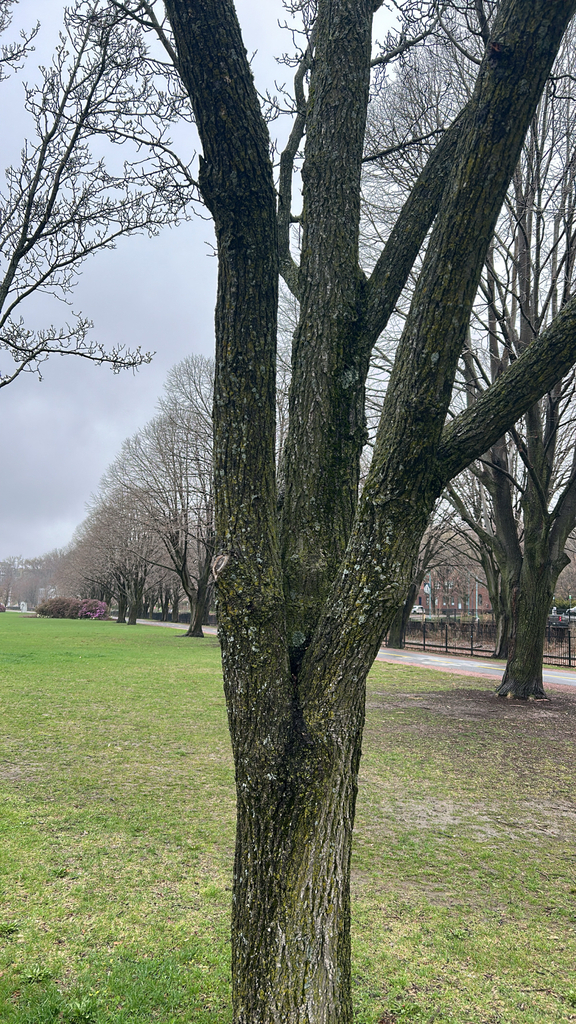
Of the two oak trees, northern red oak (615) and white oak (761), I observed, neither of them showed signs of buds breaking or leaves swelling. They both had a large amount of buds present on their branches, however no signs pointed toward them breaking in the near future. This is a good example of how common species can follow similar phenological timelines to receive the maximum amount of time to be pollinated in the spring months.

While neither species had buds breaking, the white oak still had colored leaves present. The approximately 5-24% of leaf coverage made it slightly harder to distinguish the state of the buds at the top of the tree, but I would be curious to see when these leaves are going to fall.

Maple Trees

I observed three maple trees today, sugar maple (618), red maple (280), and Norway maple (3261), and all three showed slightly similar results. Both the sugar and red maple showed no signs of phenological changes except for flower buds breaking slightly. Conversely, the Norway maple showed both flowers budding and slightly open flowers. Overall, compared to the two oak trees, the maples seemed further along in their phenological phases because they showed signs of buds breaking.

National Phenology Network

The National Phenology Network (NPN), is a nationwide monitoring and research organization that studies phenological signs and events, creating future phenological forecasts. After some exploring of their webpage, I discovered that their predictions for the coming of spring in various locations is based on data from 1991 to 2020 and daily minimum/maximum temperatures and differenced to estimate the time spring will arrive annually. NPN also determines if spring is “normal” timing compared to previous years based on the same data. While spring has not officially arrived in Vermont, according to the data provided, it is predicted to arrive up to 20 days earlier than “normal”. This aligns with current trends of global warming, which would result in pollinators emerging earlier and trees matching their phenophases with the pollinators as to receive the longest length of time for pollination possible. This is surprising, though, because this year’s winter in Vermont was very cold and snowy as compared to the previous year, which does not match the overarching trend of rising global temperatures. This could be an interesting relationship to study in the coming years as to whether the intensity of winter affects the phenophases of trees in the same locations.

Winter Wildlife

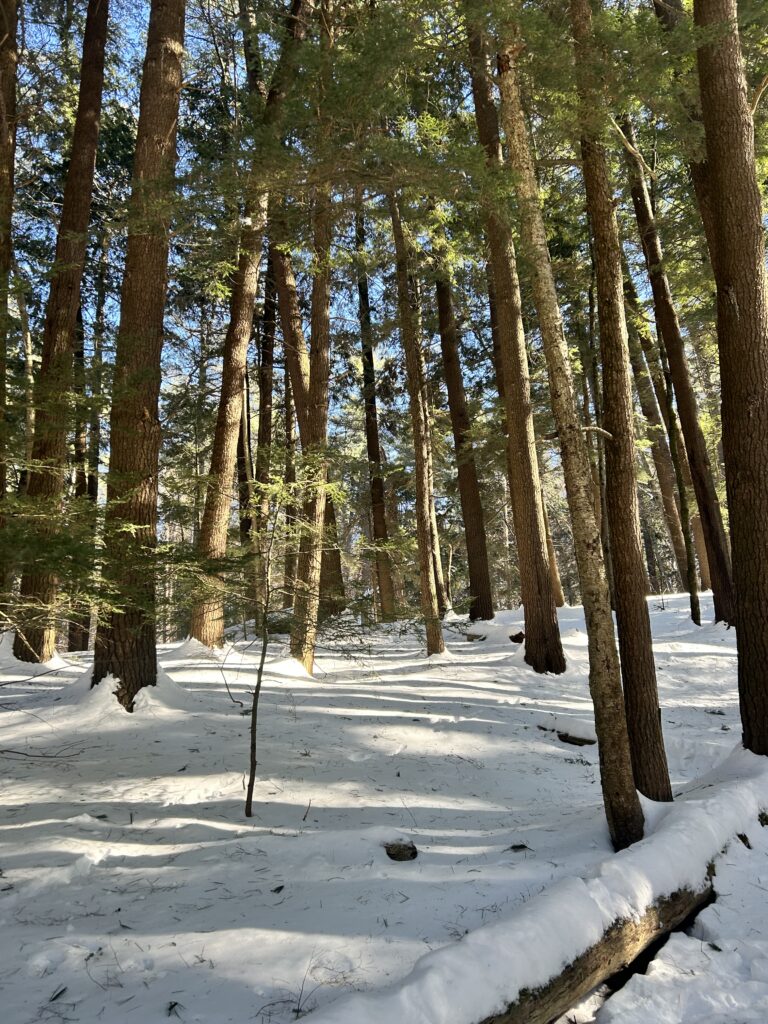
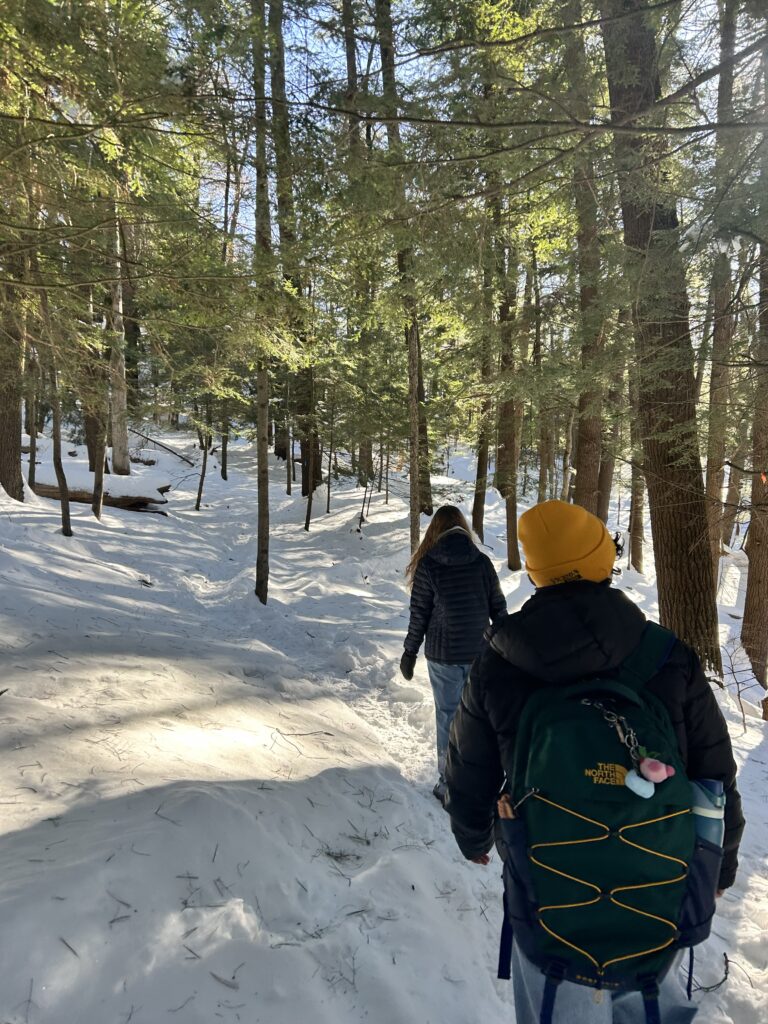
Instead of visiting my usual phenology spot this month, I explored Centennial Woods with a few friends in hopes of finding signs of wildlife. While we only found one (or maybe two) sets of tracks, likely because of the recent snow, we found lots of other signs of animals in the areas we walked through.

iNaturalist

To record the exact location, time, and image of the wildlife signs, we utilized iNaturalist, a website and app that allows for other people to confirm your identification or identify the picture you provide. This makes the identifying process (whether for animals, tracks, plants, or other natural observations) much easier as there is support from the community in addition to the suggestions provided by iNaturalist. I am excited to see if anyone on the site will be able to identify some of the wildlife signs I spotted!

Browse

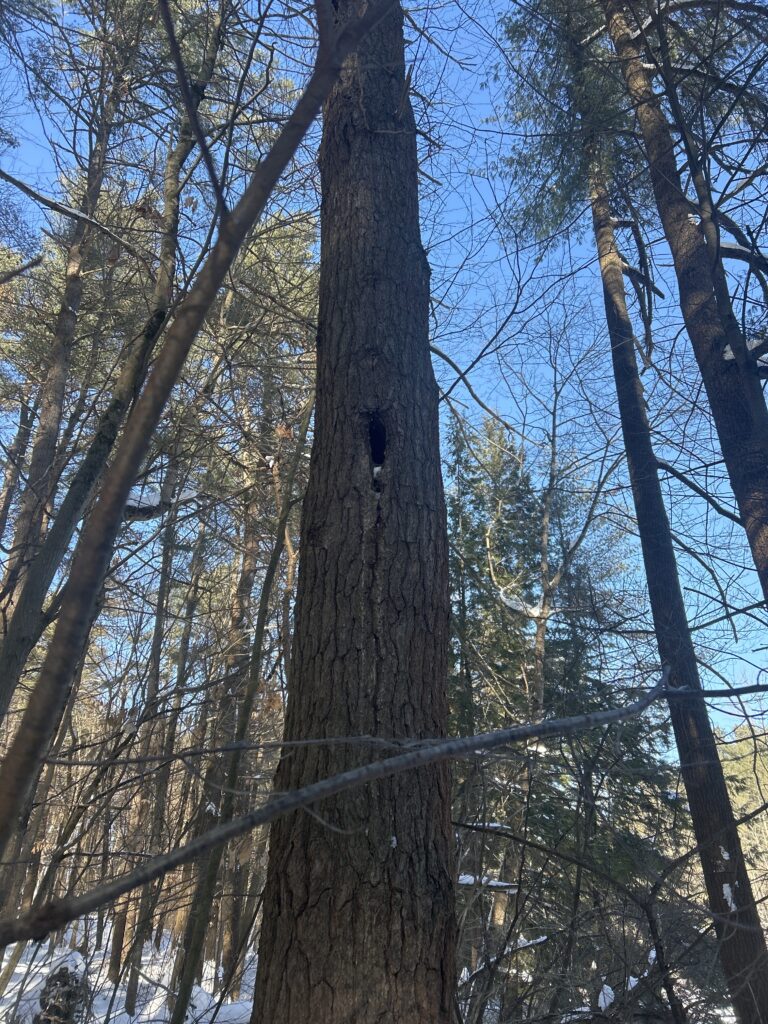
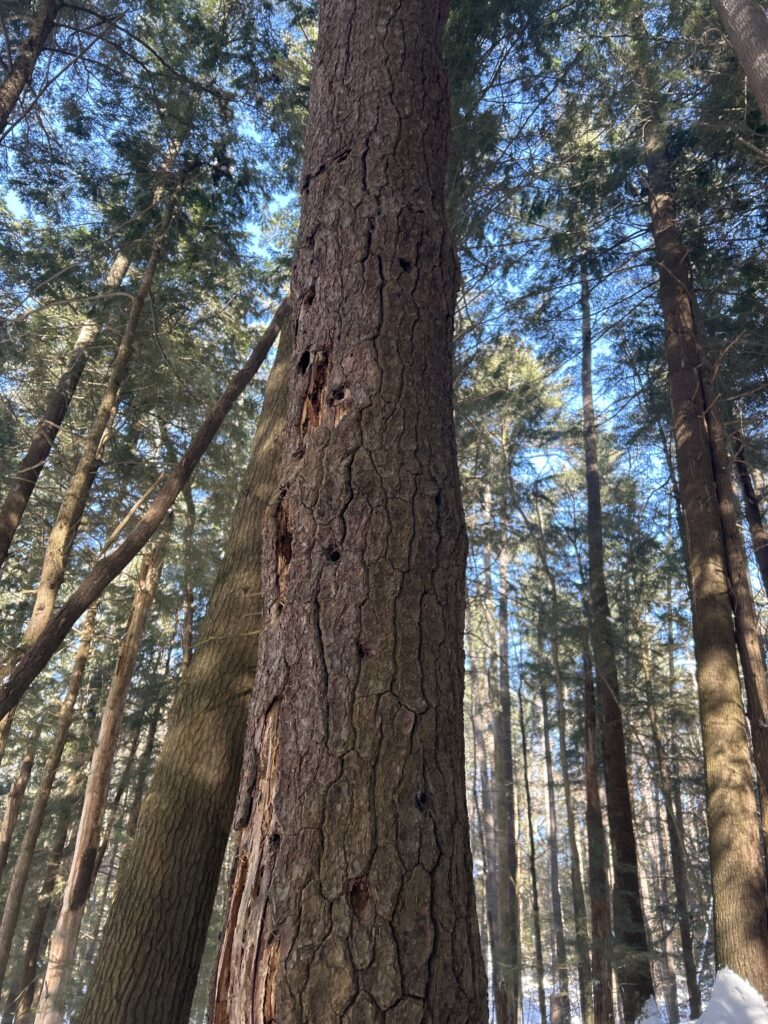
Going into this search for wildlife signs, I was hoping we would find signs of a beaver, like at my Salmon Hole phenology spot, however, we were unsuccessful. Alternatively, we spotted four or five trees filled with holes from a woodpecker. There were two different kinds of holes in the trees: one with multiple holes, only 1″ to 2″ wide, one with a large, oval shaped hole dug multiple inches into the tree. I believe the latter, with the large hole, is from a pileated woodpecker due to their large beaks allowing them to dig quite deep into the tree, while the others, I am not definite as to which species made them.

Feathers

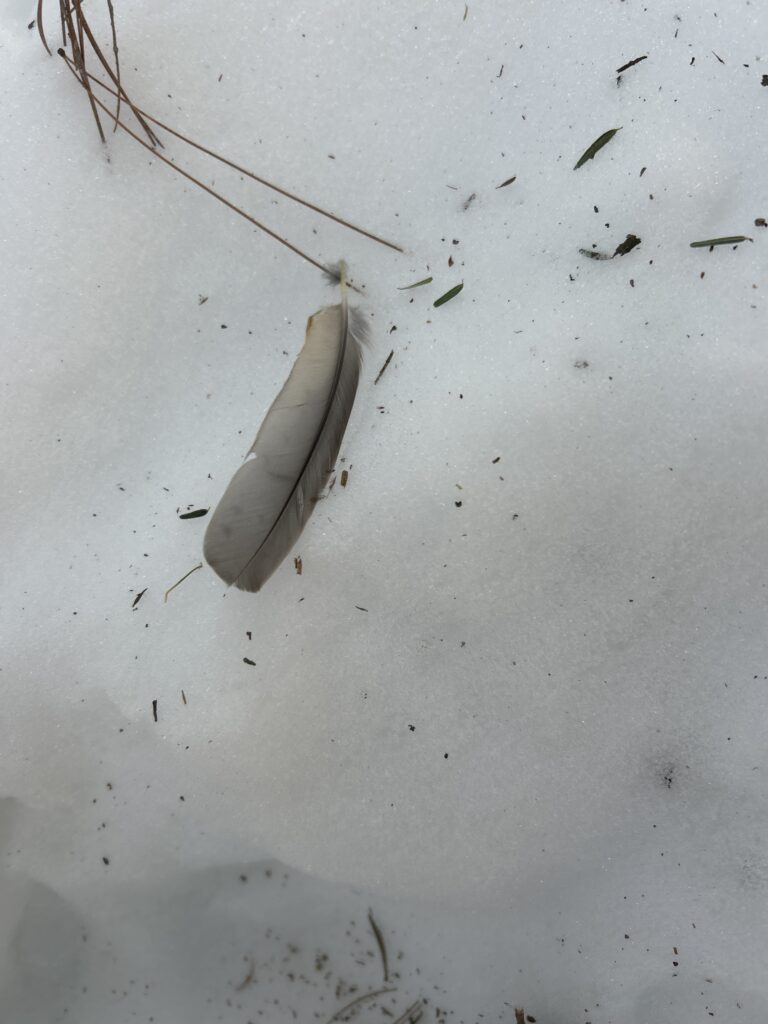
Along the trail, we spotted two different feathers! I believe the first, an approximately 3 inch long, grey feather belongs to a mourning dove. While some mourning doves migrate south for the cold Vermont winters, many males stay in order to get a head start on establishing breeding areas. I decided upon mourning dove because of the brown/grey/dark grey color gradient, length, and the small tuft of hair toward the bottom of the feather, that are seen in most mourning dove feathers. When trying to identify the feather, we also considered a pigeon, which was also suggested on iNaturalist. Ultimately, we decided against this identification because of the more intense color gradient seen in pigeon feathers, with no brown hue present, which was seen in the feather found.

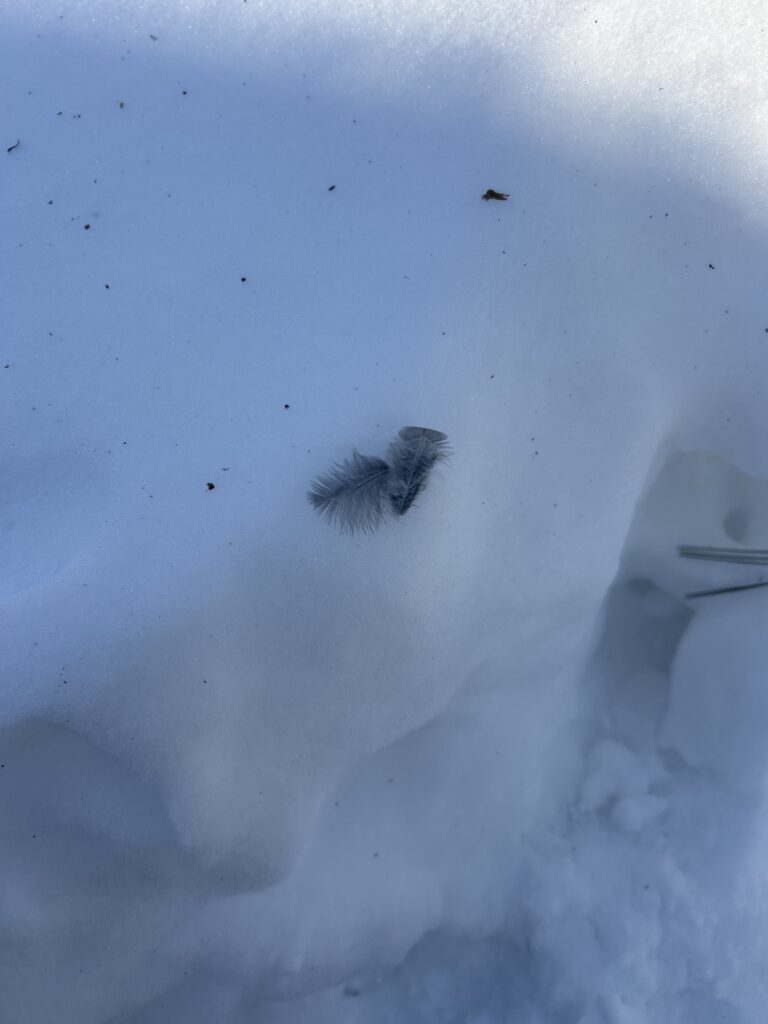
The next feathers we found were just next to a previous footprint made on our way into the woods. These are much smaller than the last feather (only around an inch long), meaning they are harder to identify because they do not have a definite color gradient or pattern. iNaturalist, additionally, could not recommend any species. I believe they are mourning dove feather, simply because of the color and the prior knowledge that there are mourning doves in Centennial Woods. However, I could be incorrect as I am not very knowledgable regarding bird feathers.

Dens and Burrows

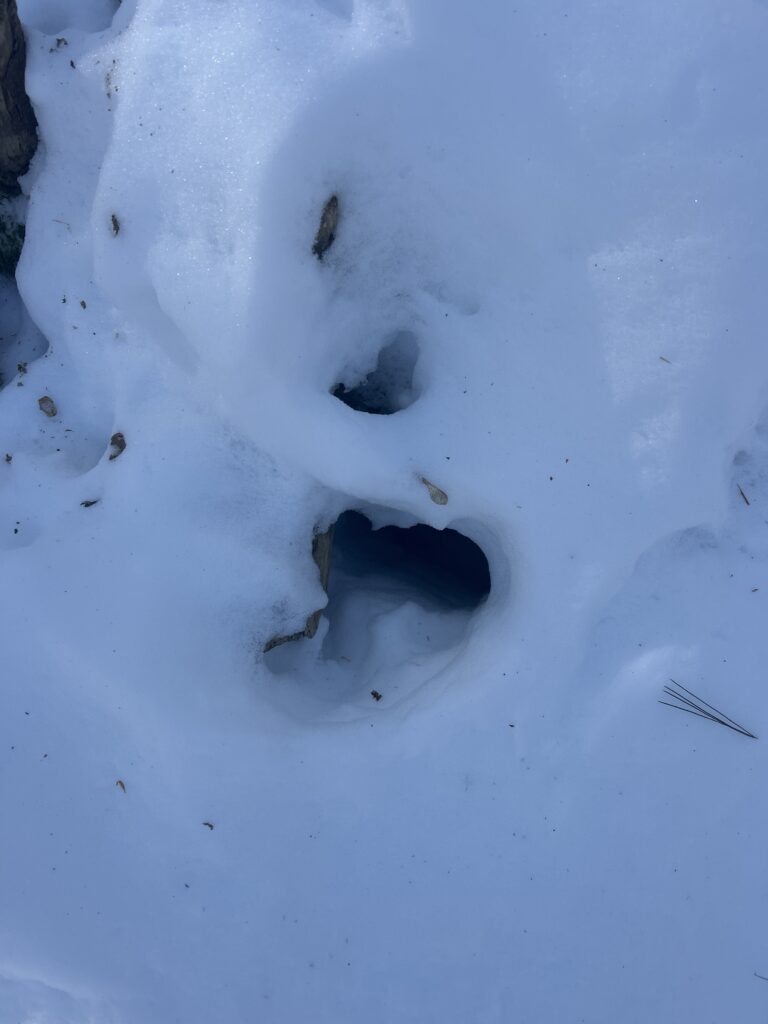
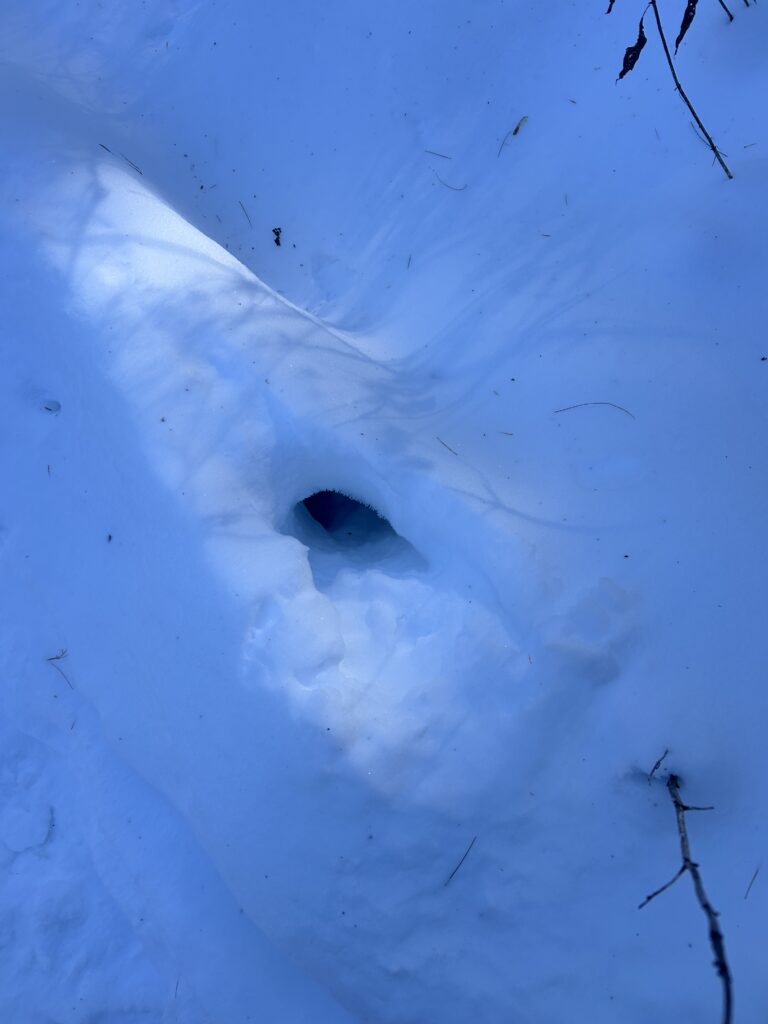
Due to the high amount of downed and dead wood and trees, there were a lot of burrows made by small animals along the side of these trees. While I am unsure of what animals could have made these holes and been burrowing in the trees, there are a few possibilities that could match the sizes of each of the holes. First, the larger holes could have been from rabbits or hares. The size hole was similar to a rabbit and it went down under the log, providing good shelter from the cold and possibly predators. The second hole was also along a downed tree, but was much smaller in diameter. I could assume that in that burrow lives a vole, mouse, or shrew, but I cannot be definite based solely on the size of the hole dug.

Tracks

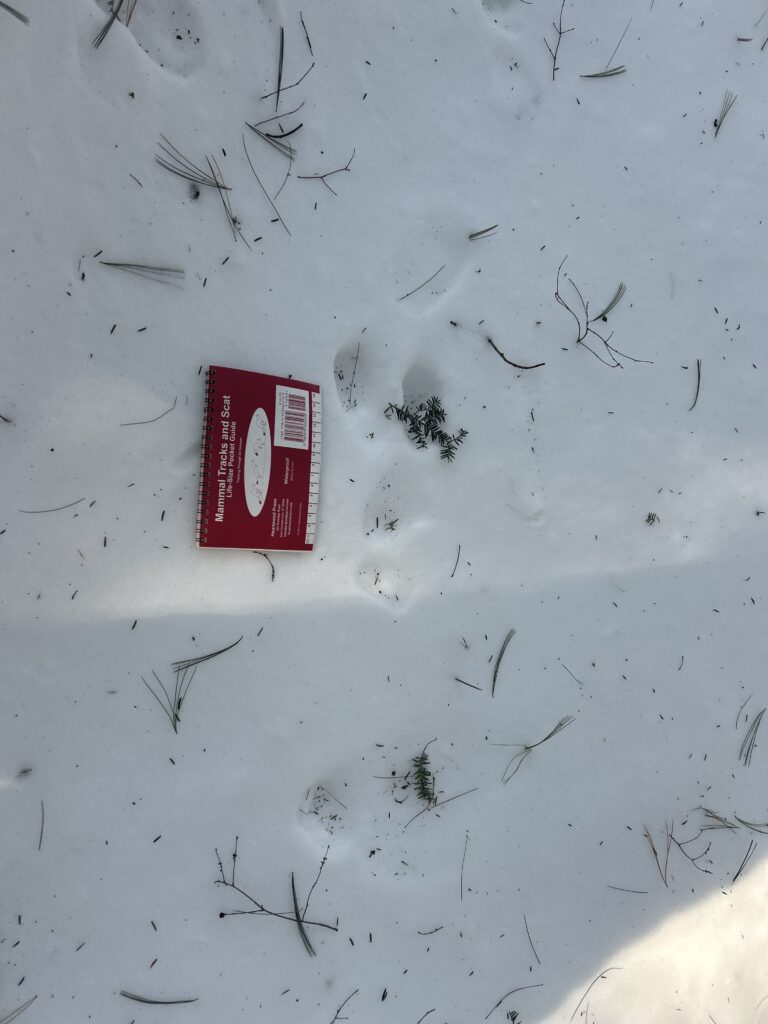
While (I believe) tracks are the most exciting signs of winter wildlife, we only found one (and possibly two) sets of tracks. First, we spotted the prints of a galloper going towards a tree and then jumping around it in a different direction. Initially, we believed it was a squirrel that jumped onto the tree and then, later, back onto the ground, this could not have been true, due to the size of the feet. The front (smaller) feet are approximately 1-2 cm for red and grey squirrels, however the front feet of the track were around 3cm, aligning with a cottontail rabbit. We also considered a snowshoe hare because of it’s similar pattern of movement, but the straddle and track themselves were far too small for this to be true.

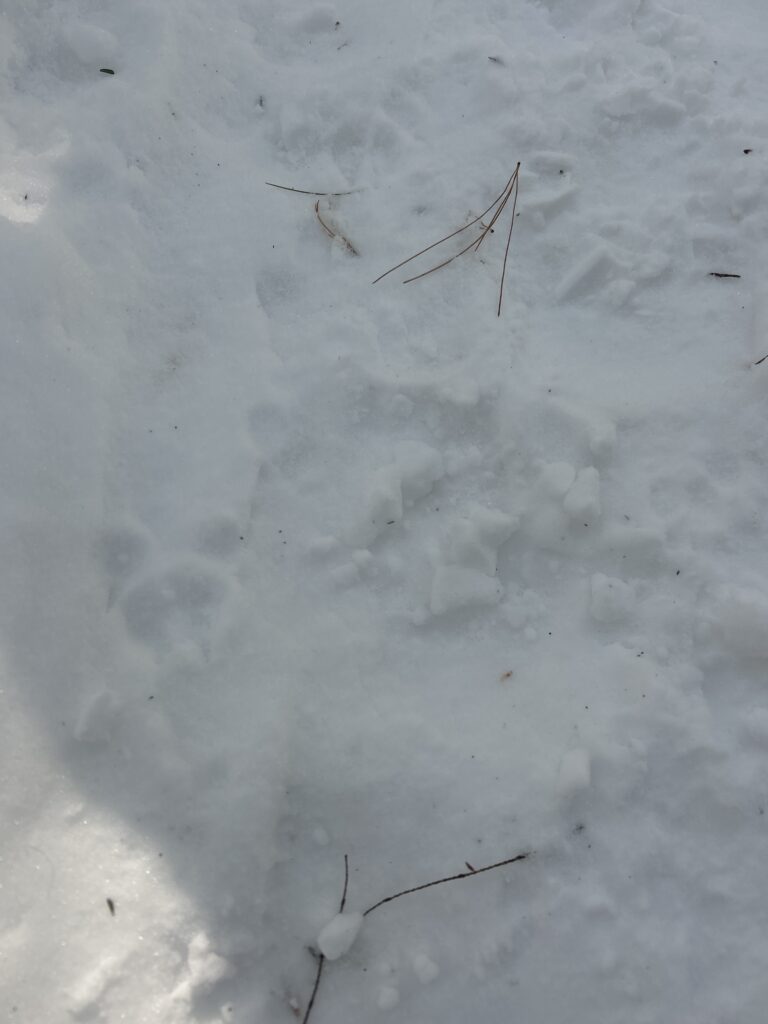
The final track we found was very difficult to see, but it can be slightly made out on the left middle of the picture to the right. While there is a high chance that this could be a domesticated dog print from a visitor taking their dog on a snowy walk, we also debated as to whether or not they could be from another diagonal walker, such as a coyote or grey fox. All of the options are around 5 cm long and 5-10 cm in straddle, making it difficult to determine without a clear print. Due to the fact that the track are obstructed from human prints around, it is likely that we will not figure out the origin of this print, however, it was exciting to consider the possibilities of the track.

The signs of winter wildlife seen were so exciting to see and begin to imagine the amount of animals that live in Centennial Woods, although not always seen. It will be interesting to see how these signs of wildlife change as we move into the spring and summer months and more animals return or emerge. While the wildlife signs spotted were not very different from my normal phenology spot at Salmon Hole, it was exciting to be in an area with so many more trees and more secluded from people than my normal spot.

Welcome back to Semester 2 at Salmon Hole!

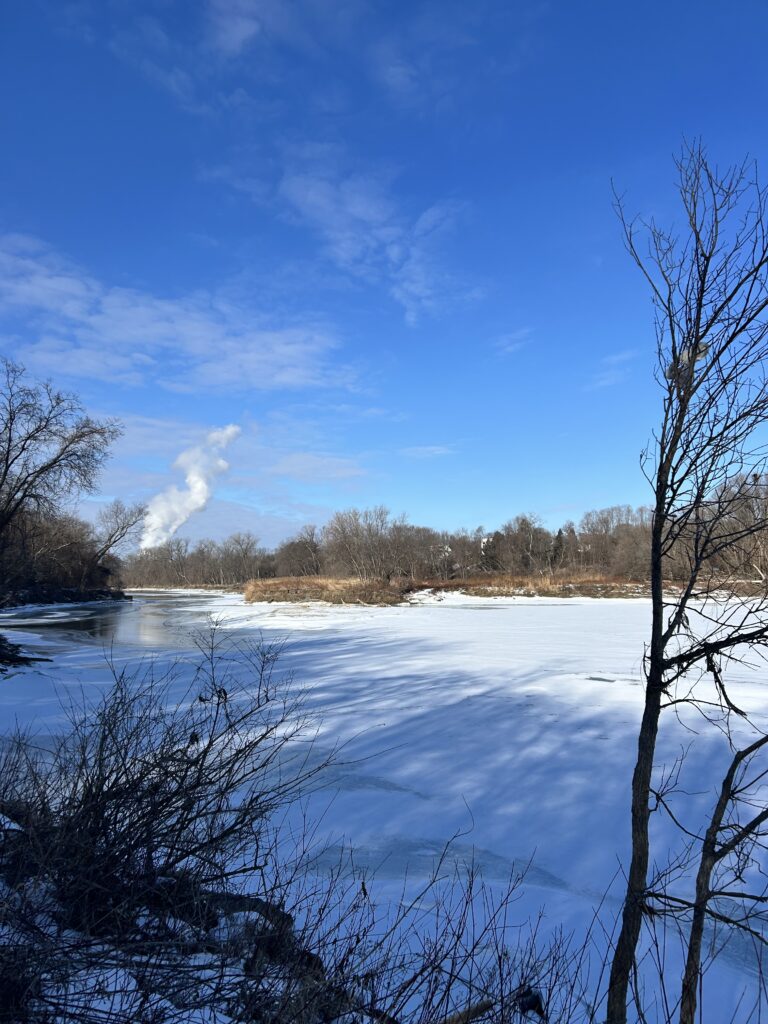
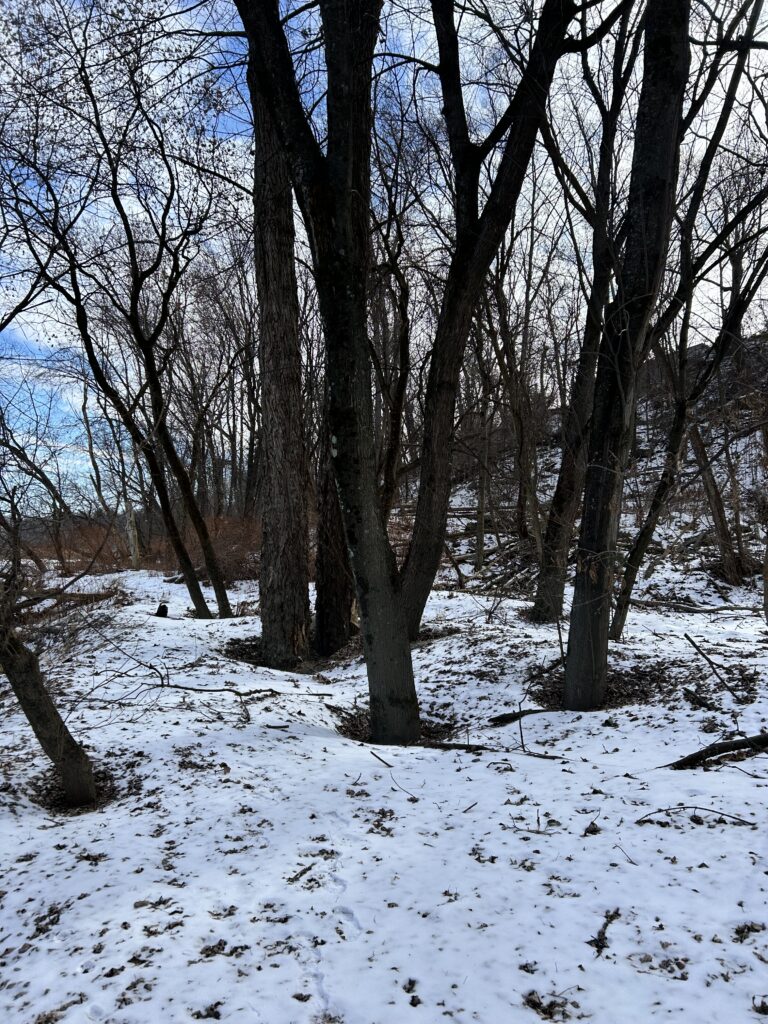
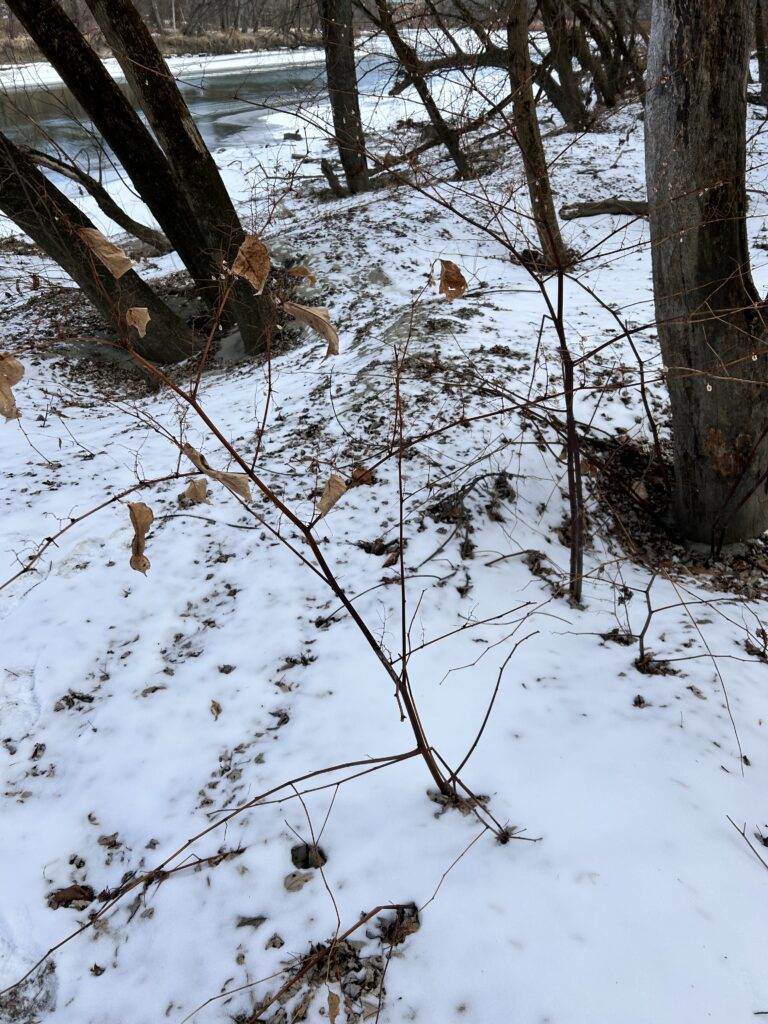
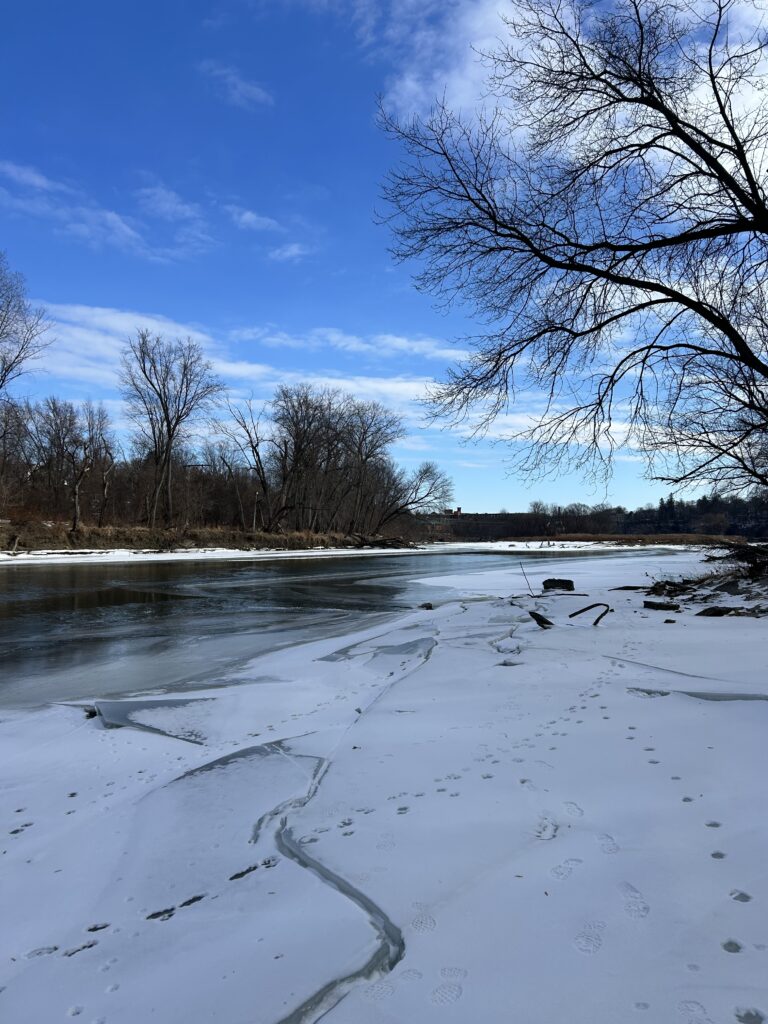
Hello again! This weekend I trekked back to Salmon Hole to visit my phenology spot in the new semester. Immediately I noticed a thick layer of ice covering almost the entire waterway. There was slightly less snow than at my last visit, however, there was plenty of ice this time to make up for it!

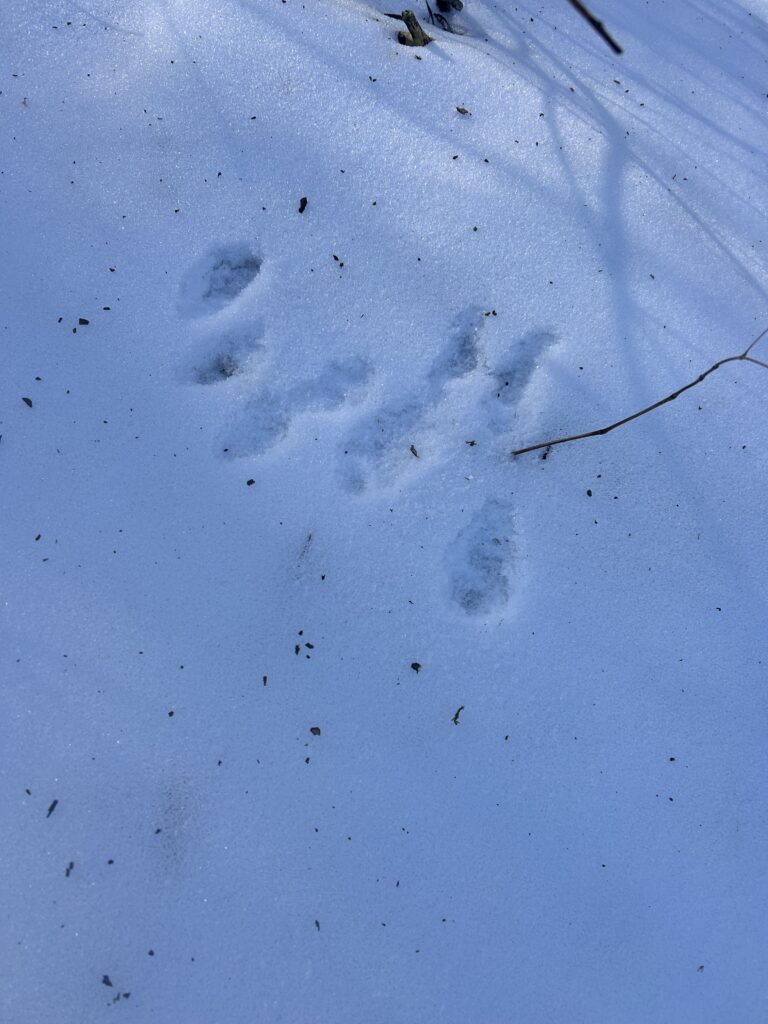
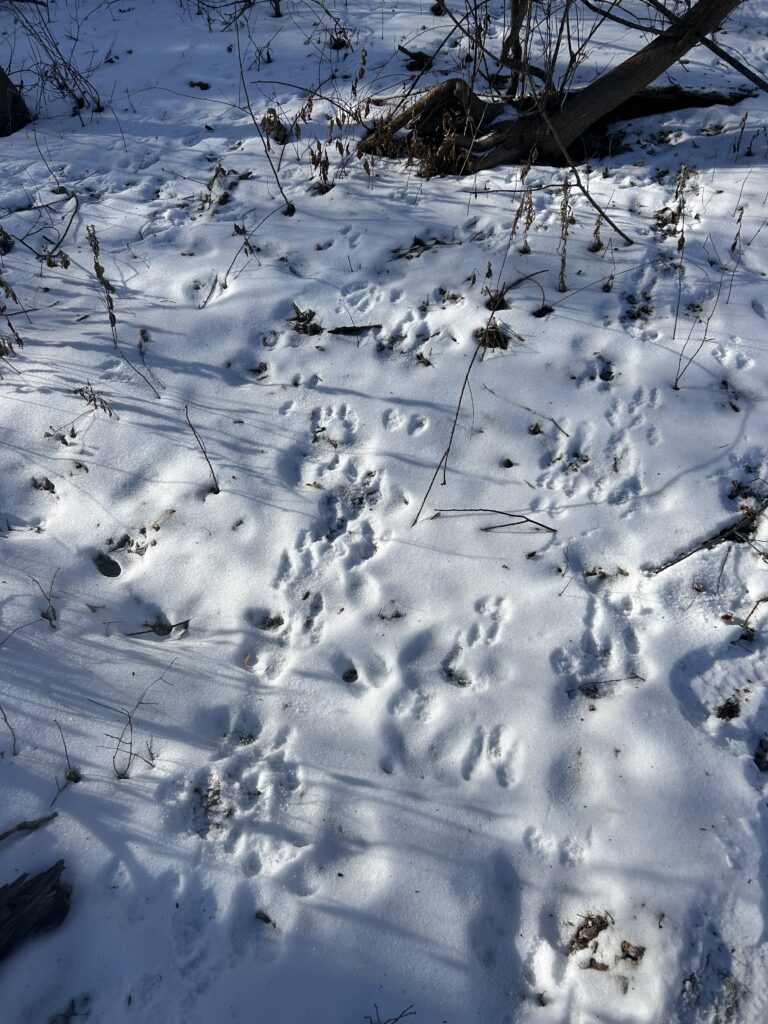
While walking in, I spotted some tracks along the trail. I believe they are bunny tracks because of slightly rectangular shape of the prints and the distinction between the large and small footprints. Once I identified and snapped a picture of the tracks, I kept walking and heard birds around me and noticed there was a woodpecker in the tree above! Although the woodpecker was being shy to the camera, I recorded the sounds of the other birds nearby!

The rest of the site yielded no significant signs of animals aside from the beaver marks from my last visit and some prints from a dog and their owner. There was much less leaf little peaking out from under the snow than last time, but the basswoods still had a few leaves remaining on their branches.

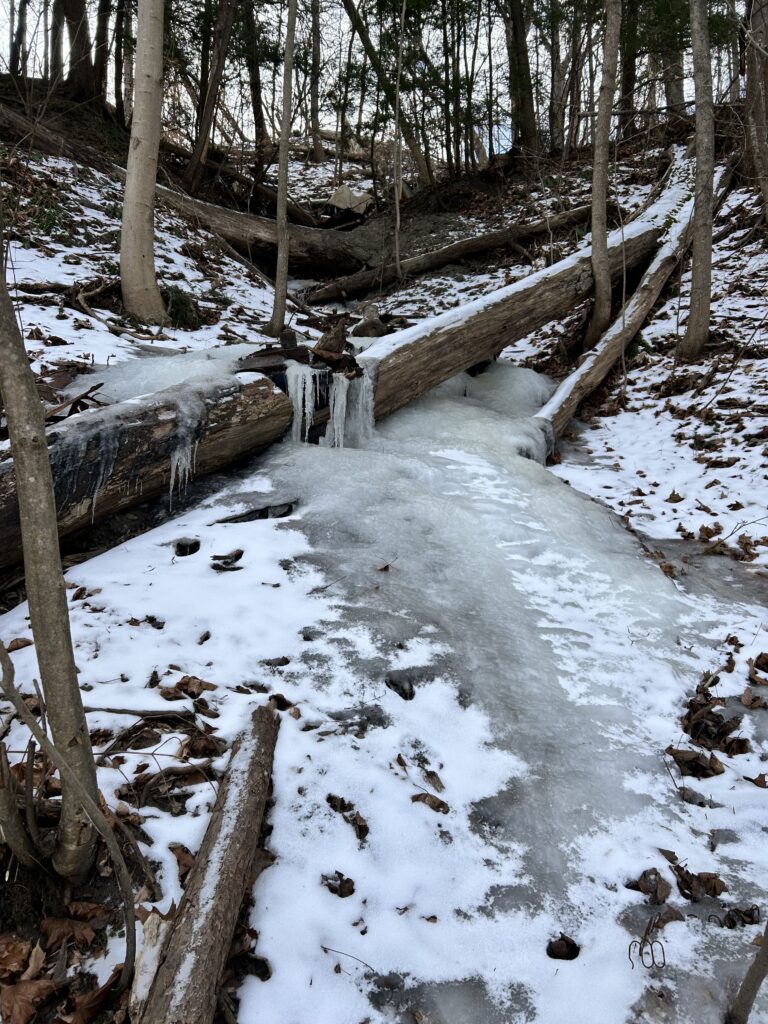
The final bit of winter excitement occurred on my walk back when I spotted a series of fully frozen waterfalls! It was so interesting to see how, even though there was less snow than at my last visit, there was so much more ice! See you next time!

A Snowy Semester Finale

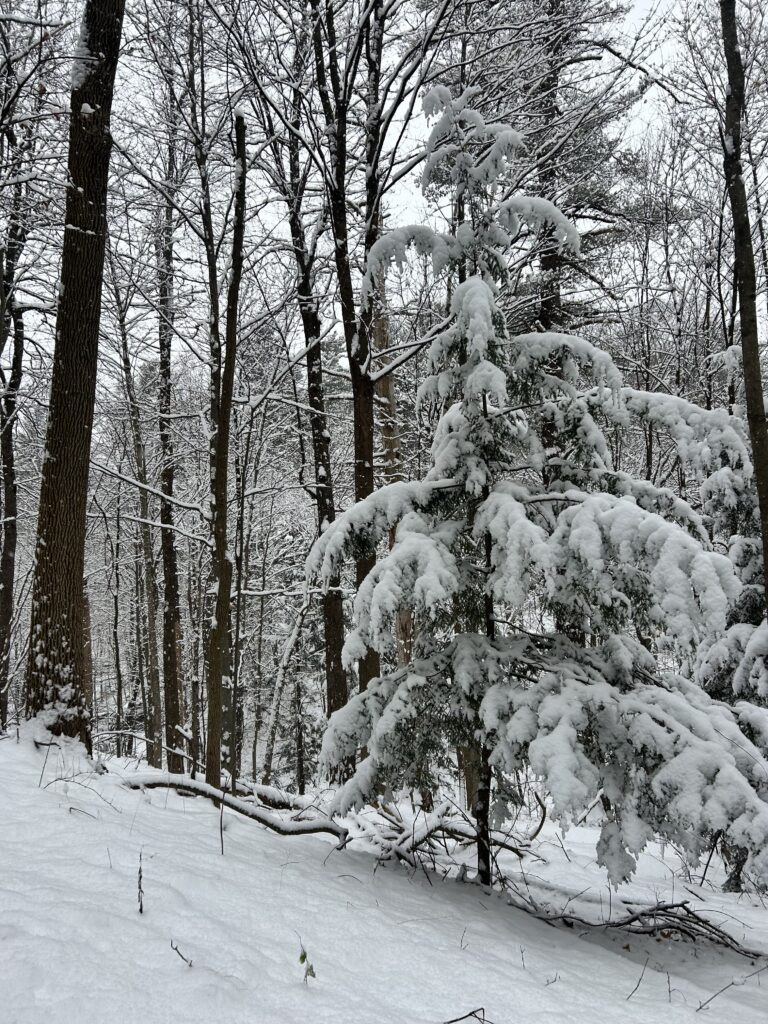
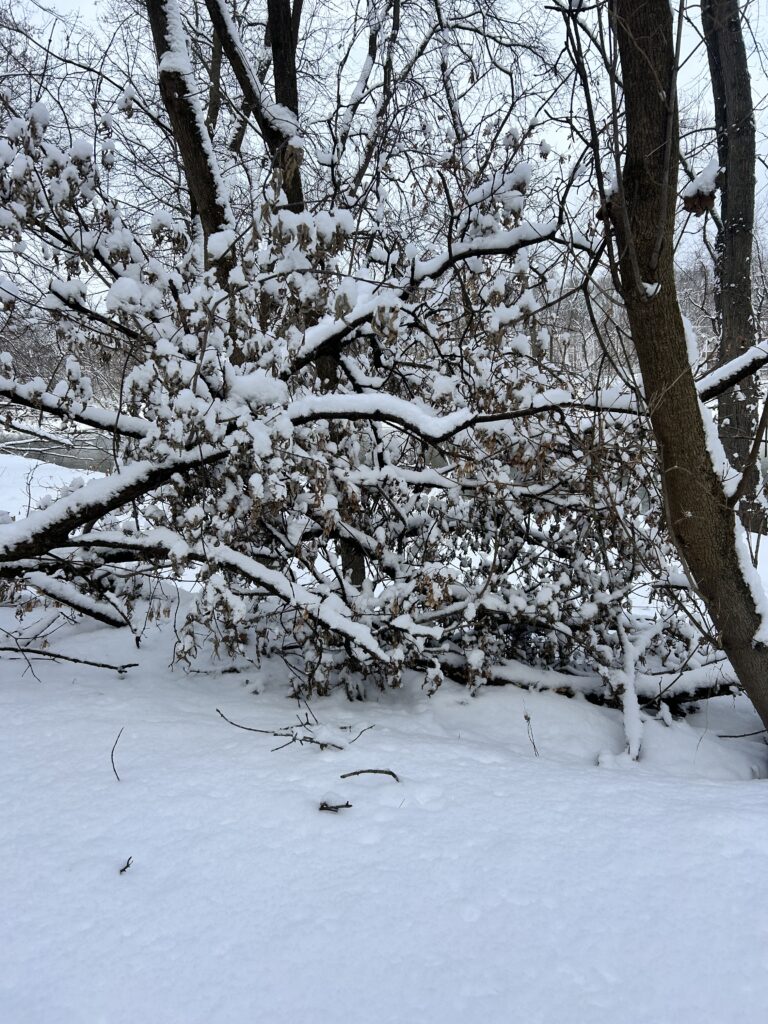
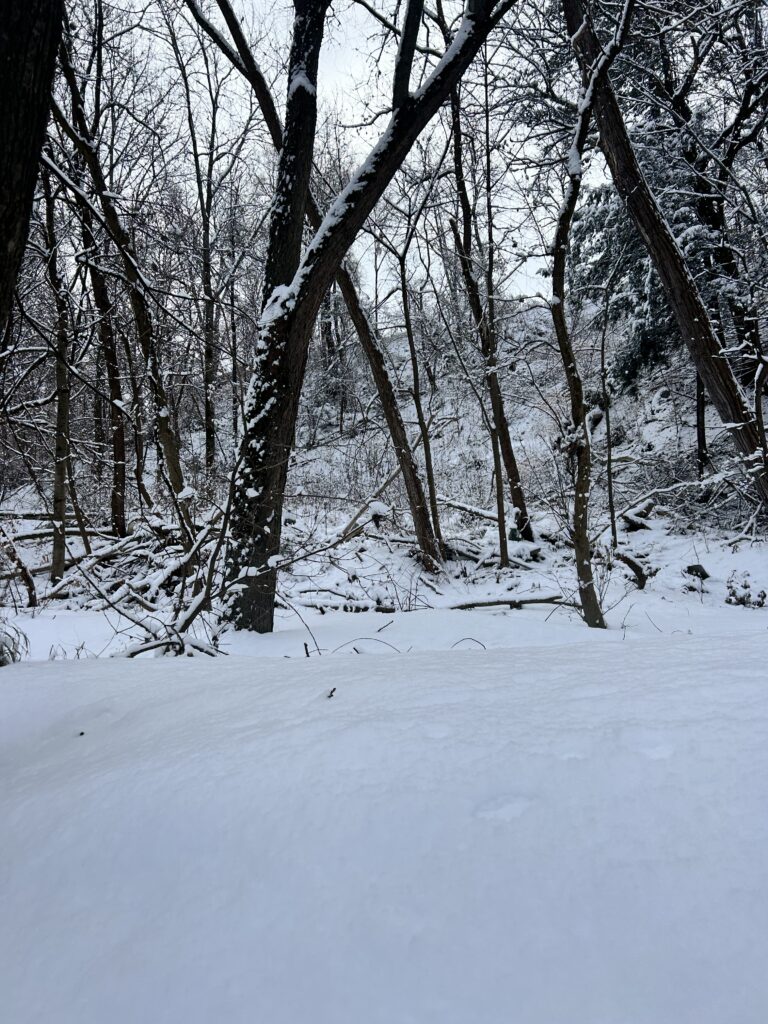
Waking up this morning, I knew today would be a perfect day to study the phenology of my spot due to the gorgeous snow outside. Although cold, I had an amazing time studying how snow so vastly changed the makeup of my phenology location and the plants, animals, and systems around it.

Time Spent Observing Plants

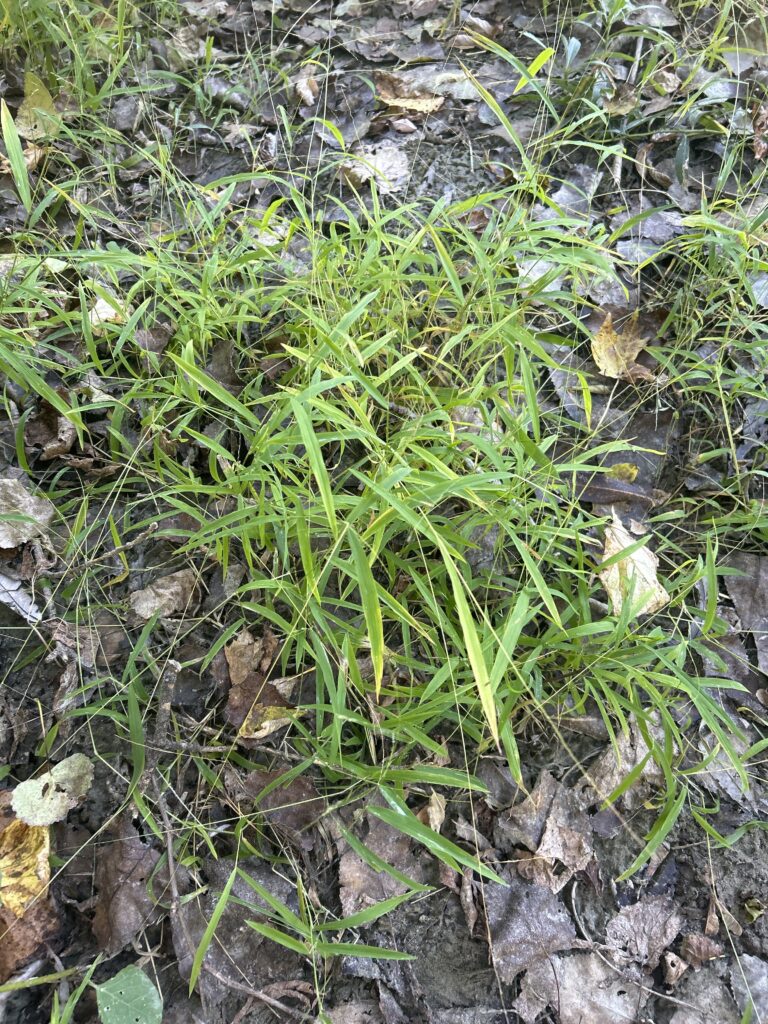
Walking into the spot, it amazed me how immensely different it looked from even the last time I visited, a little over a month ago. Almost the entirety of the fall foliage was gone, aside from a white ash and a basswood. The white ash, however, had fallen down since I last was there, meaning it could have fallen before it lost it’s leaves, meaning that it is not an accurate representation of how long ashes hold their leaves for. Additionally, all of the Japanese knotweed has died for the season, ready to come back in the spring. Without the invasive knotweed, my phenology spot is so much more clear. On the other hand, the Japanese stiltgrass is still holding on strong. It’s green blades are the only bit of color sticking out of the blanket of snow.

While I assume the leaves and other sticks and logs are starting to decompose, allowing for food for decomposers, the snow coated the entirety of the ground, making it very difficult to tell.

Winter Wildlife

On my walk to the spot, I noticed a repetitive bird call in the trees, attached above. After looking into it, I learned that the call was a Black-capped Chickadee, a common bird in the Northeast. Along with the Chickadees, I spotted a few ducks, which have stayed for the winter instead of migrating. In the past months, there had been lots of geese present at the small island near my spot, but I spotted none on this visit.

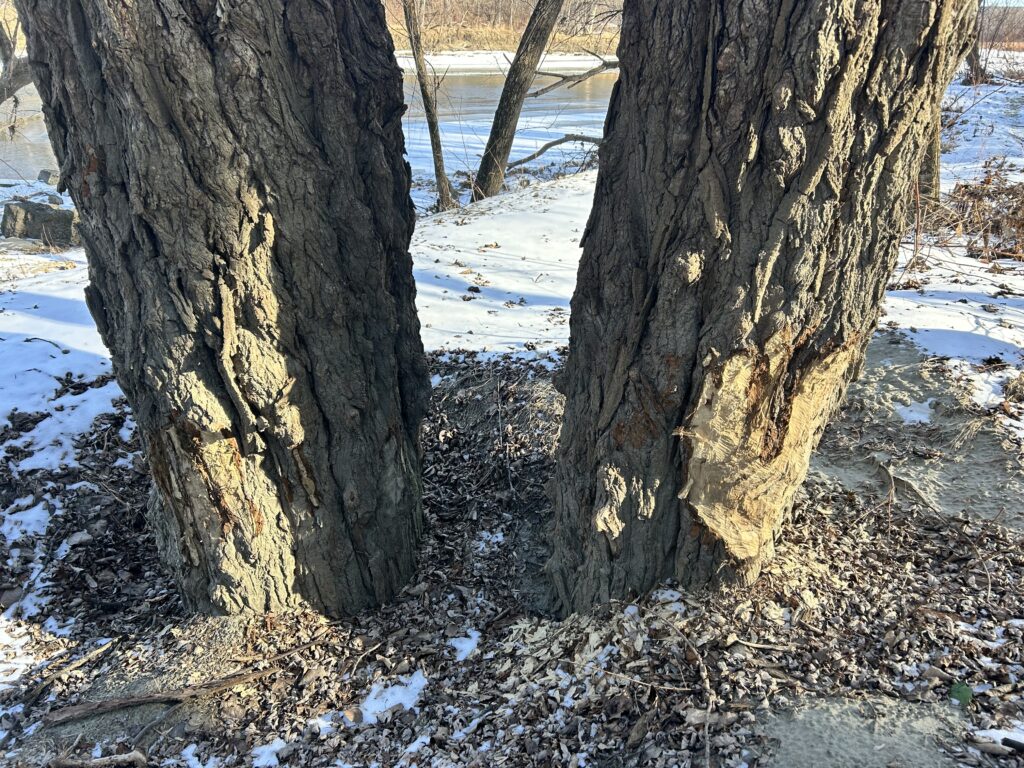
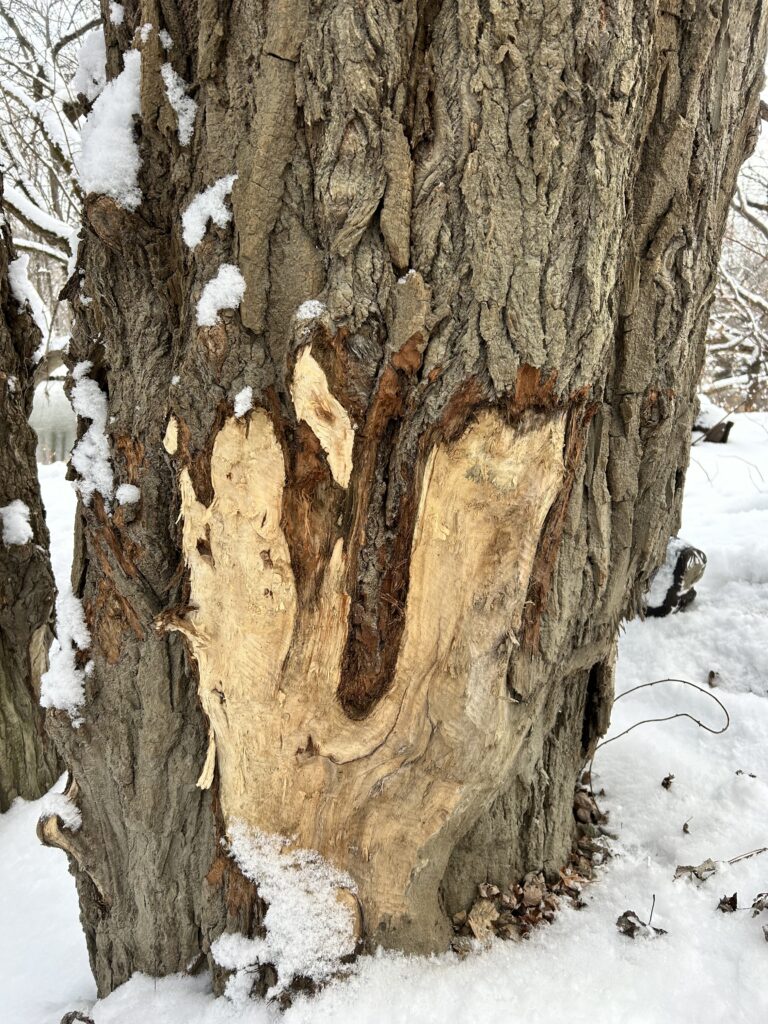
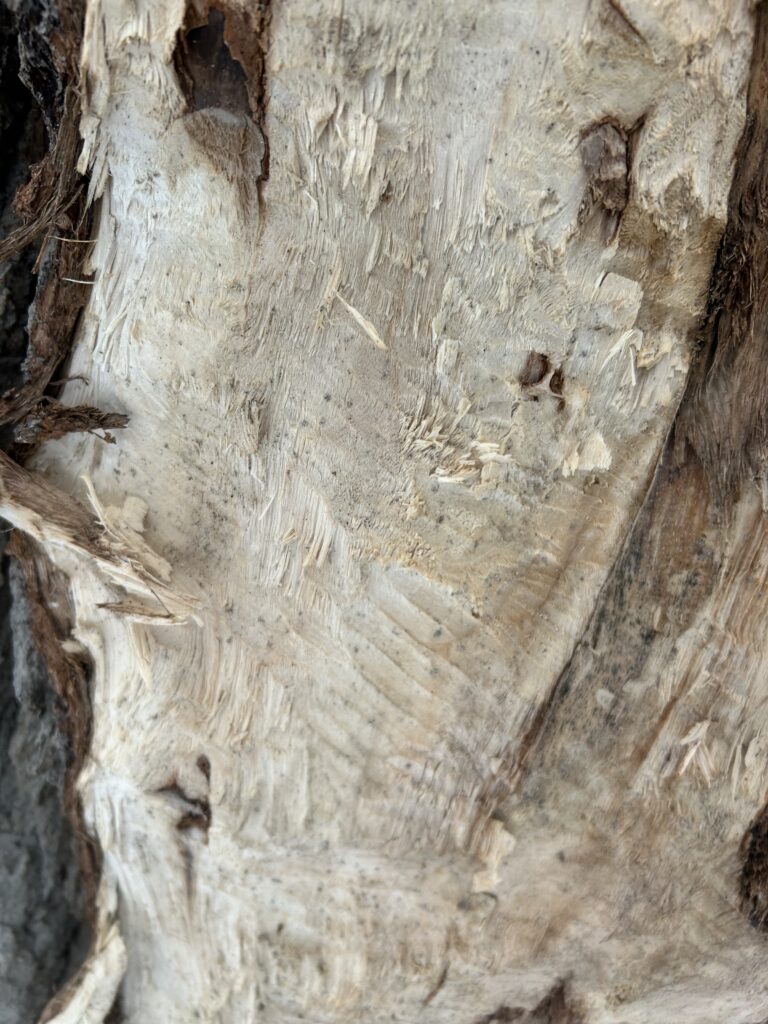
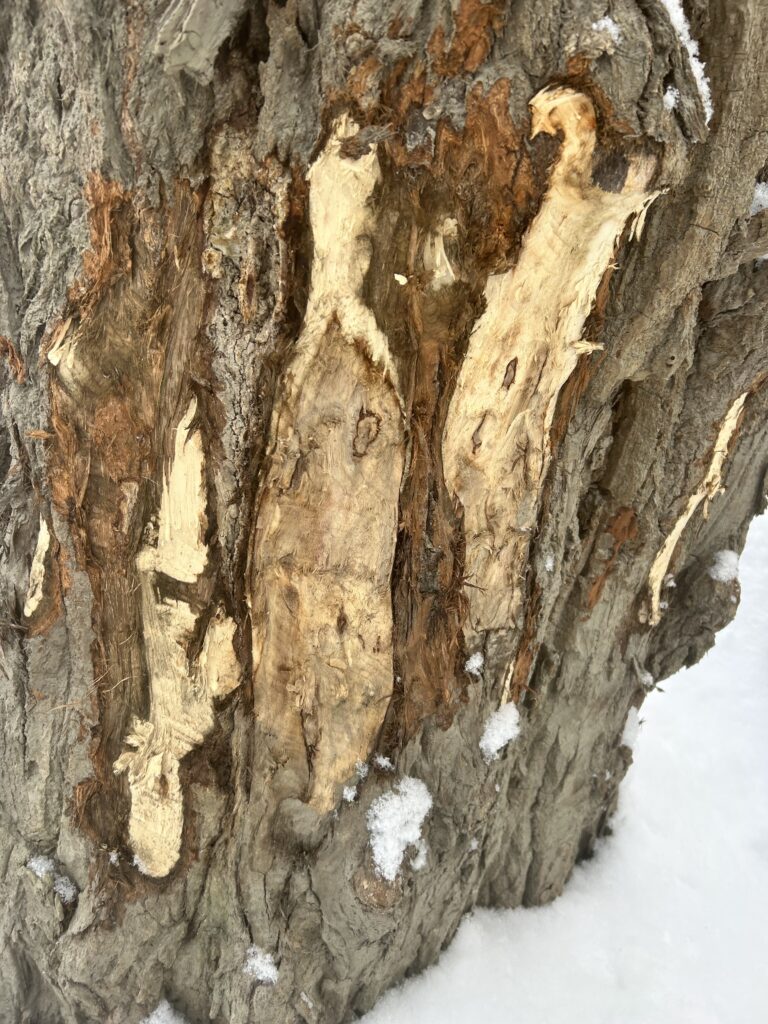
The most exciting discovery I made was marks on the two ginormous sugar maples from a beaver! I was familiar with the general look of these marks from “Naturally Curious” by Mary Holland, so it was very exciting to see it in person. To confirm this was from a beaver, I made sure the marks were below 6 ft, had clean cuts and distinct teeth marks, was accessible from the water, and the bark was the stripped part. With all of these being true, I am certain a beaver had a snack on these sugar maples!

Aside from the few bird sightings and the beaver discovery, there were little remnants of other animals. While I was on the search for tracks and scat, there were none seen because of the fresh snow on the ground. The overall animal activity has greatly decreased, but I am sure there are still an abundance of animals present in dormancy, hibernation, or burrowing just away from sight.

Saying “Goodbye”

Being a regular visitor of this location has allowed me to see the beauty present all around my home. My favorite part of my phenology location is most definitely being able to view the gorgeous changes in color and how it shifts the overall look of the spot. This spot has gone from vibrant, beautiful greens, contrasting with the dark stones and deep blue waters to lively oranges, yellows, and reds slowly falling, making a mosaic of foliage, to a pure white landscape, contrasting with the dark wood all around. Through only a few short months I have learned to appreciate the simple natural processes that occur around me everyday and how vastly it can change the way people view their surroundings. Until next time!
P.S. go outside and appreciate the nature around you!

Welcome to Salmon Hole!

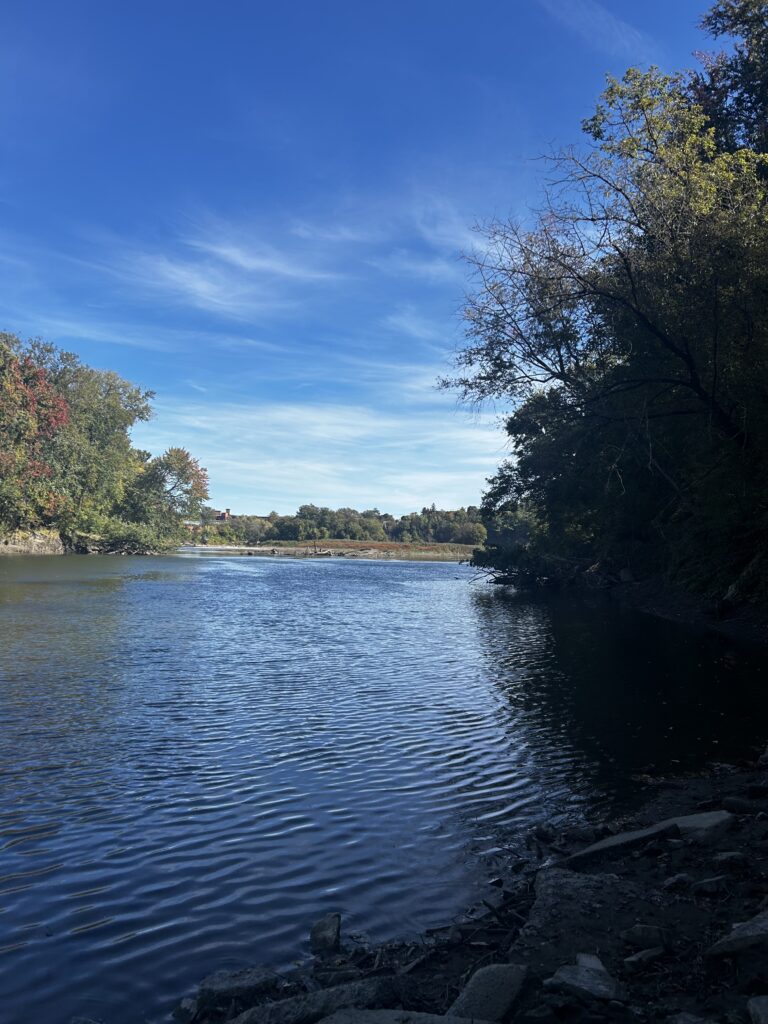
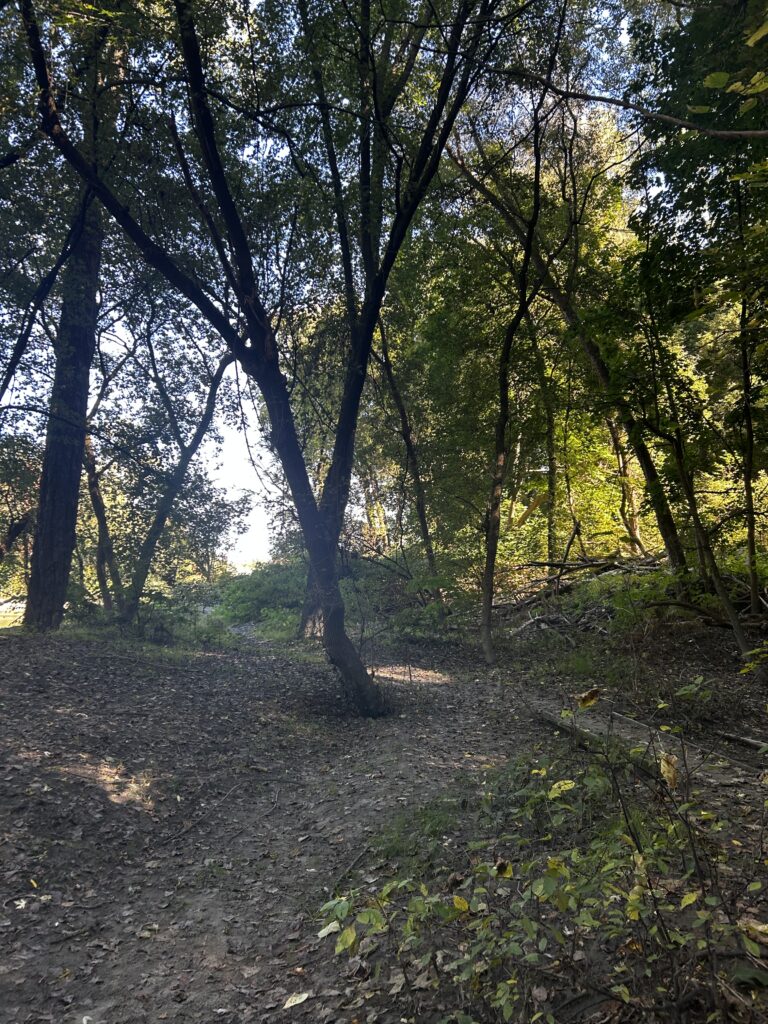
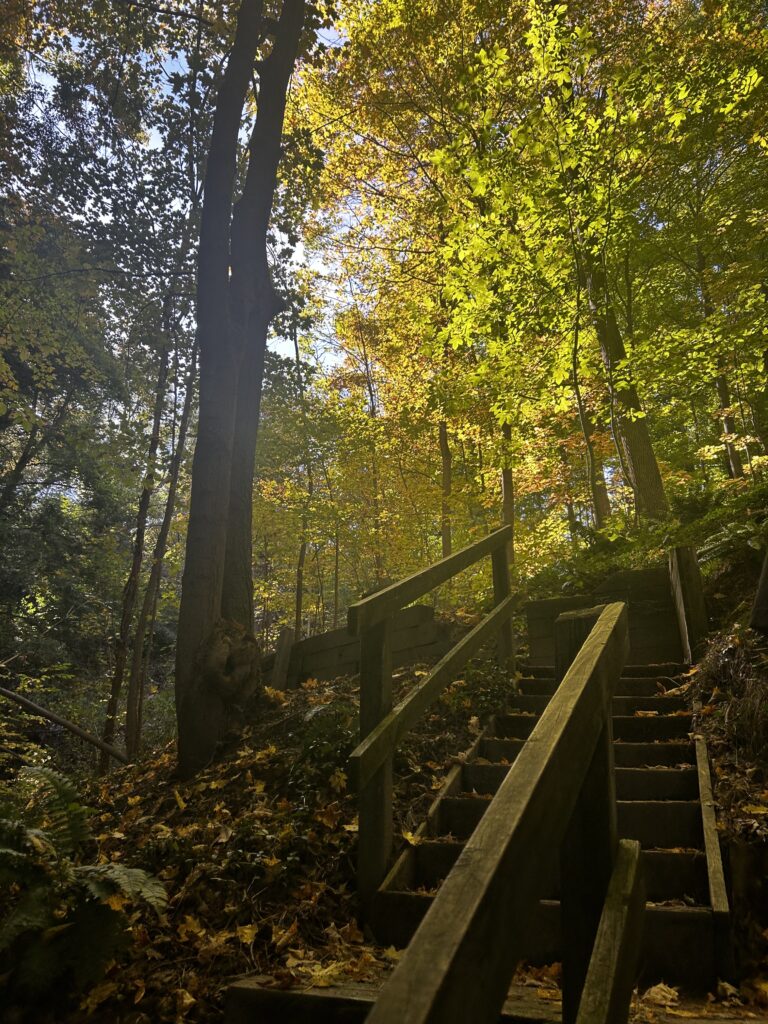
Salmon Hole is a natural space and park found just along the edge of the Winooski River. The river lies below beautiful cliffs topped with gorgeous trees with lots of wildlife, making it a perfect spot to study phenology! To find Salmon Hole, start from the University Green on the University of Vermont Campus. Head north on North Prospect St through a quaint neighborhood until you pass the intersection where Riverside Ave, North Prospect St, and Intervale Rd meet. Continue down the hill and you will see an entrance to a dirt path on your right. Follow the stairs down to the water and bear right onto the trail. Keep walking until you see a large pile of mossy rocks on your right and a small, rocky beach to your left. Congrats! You have successfully arrived at my phenology spot (44°29’19.4″N 73°11’49.1″W)!

At my phenology spot, Japanese Knotweed, an invasive species on the Vermont Noxious Weed Quarantine List, is growing rampant. It is extremely harmful to Salmon Hole’s native ecology because it outcompetes and replaces native vegetation, leading to a decrease in insect, fish, bird, and mammal populations that rely on native species for food.

Japanese Knotweed

Japanese Stiltgrass is also widely seen on the ground at this site. This invasive plant can quickly overtake native plants and prevent any new tree growth as it altars the soil nutrient cycling processes.
Japanese Stiltgrass

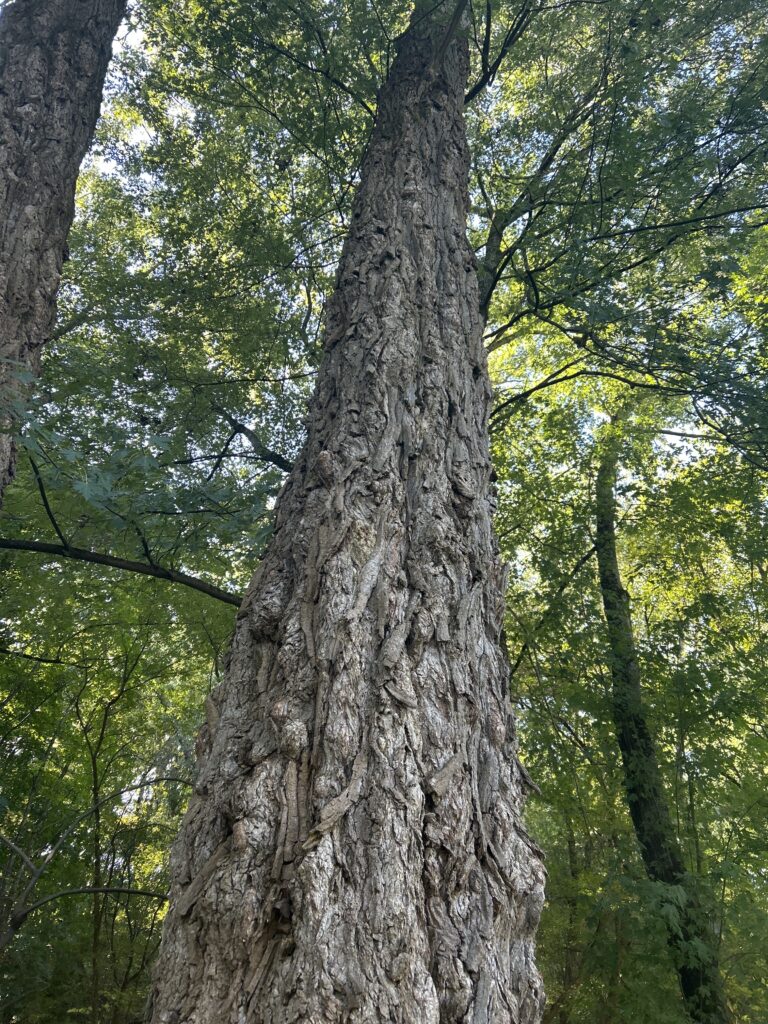
While this site is mainly composed of invasive species, making it extremely difficult for native species to thrive, Boxelders are also very common here. At the center of my site lies two enormous Boxelders with about five scattered in the surrounding area. Additionally, there are a few Sugar and Red Maples, Ashes (White and Green), American Elms, and Basswoods.

Boxelder

This site has so many different interacting plants and ecological systems to observe, making it a perfect place to study throughout the changing seasons. Stay tuned to see updates on the phenology of Salmon Hole!