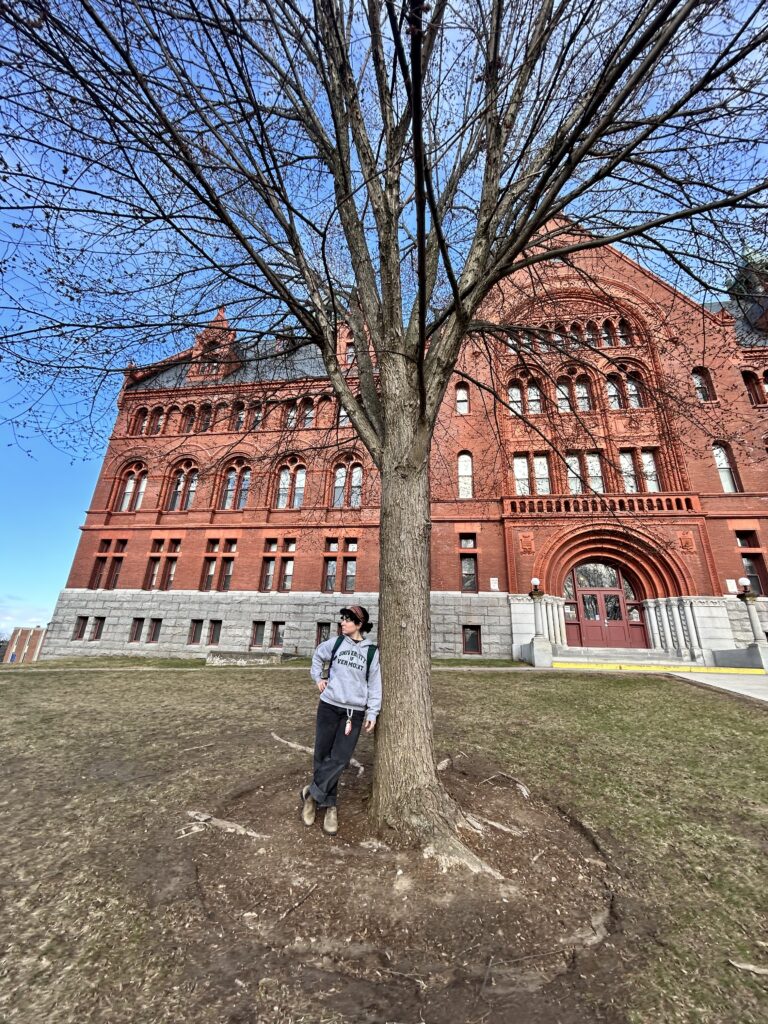
This afternoon, Wednesday April 9th, 2025, I ventured around the University of Vermont campus to observe the phenological changes occurring with the emerging season of spring. Although it was only slightly above freezing today, me and my friend, Legare (who so kindly posed for a picture with each and every tree), were able to spot multiple signs of the coming warmer months, including a few trees’ buds breaking! I observed five trees total and we identified many similarities between the phenophases of them all.
Oak Trees
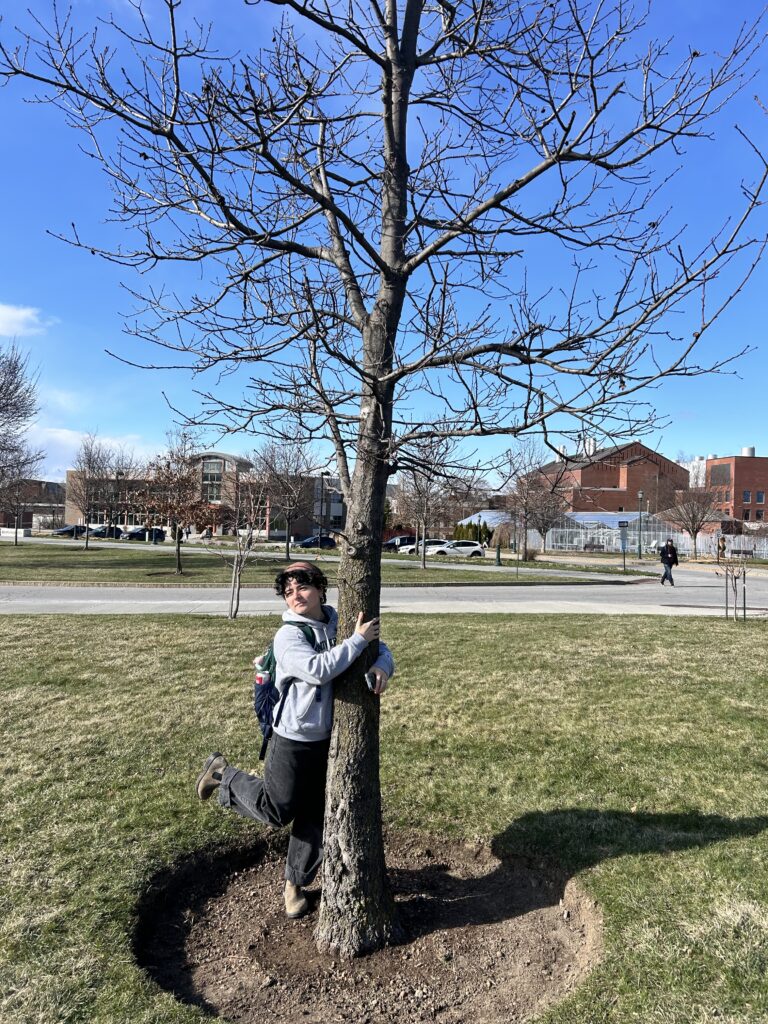
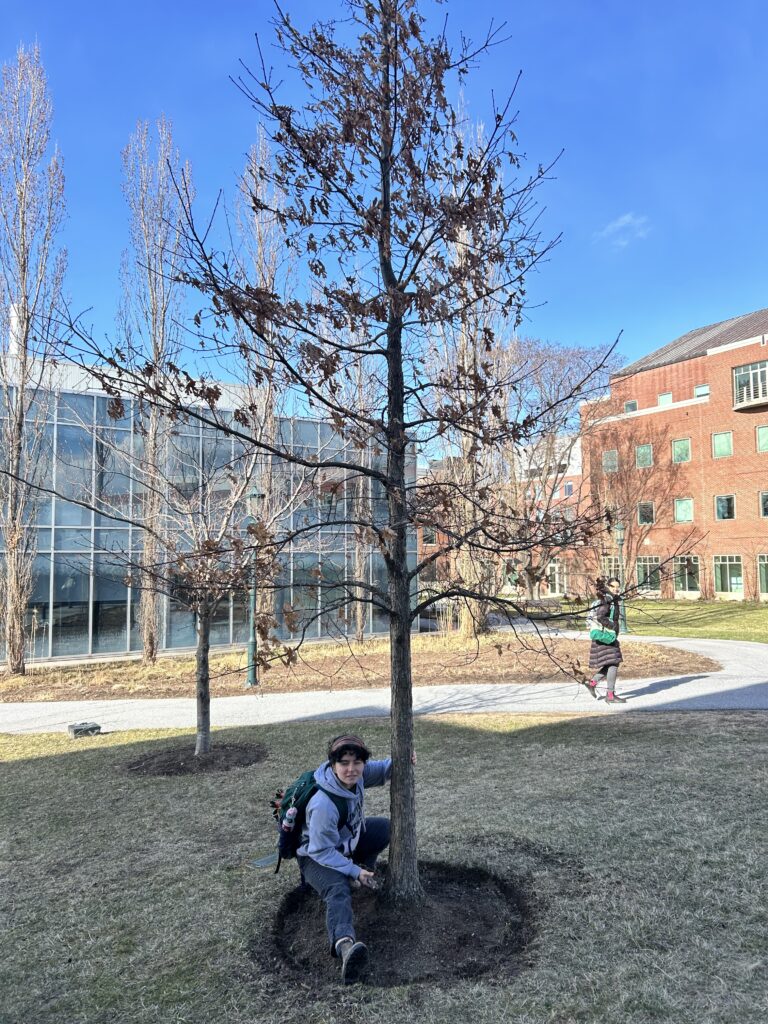
Of the two oak trees, northern red oak (615) and white oak (761), I observed, neither of them showed signs of buds breaking or leaves swelling. They both had a large amount of buds present on their branches, however no signs pointed toward them breaking in the near future. This is a good example of how common species can follow similar phenological timelines to receive the maximum amount of time to be pollinated in the spring months.
While neither species had buds breaking, the white oak still had colored leaves present. The approximately 5-24% of leaf coverage made it slightly harder to distinguish the state of the buds at the top of the tree, but I would be curious to see when these leaves are going to fall.
Maple Trees
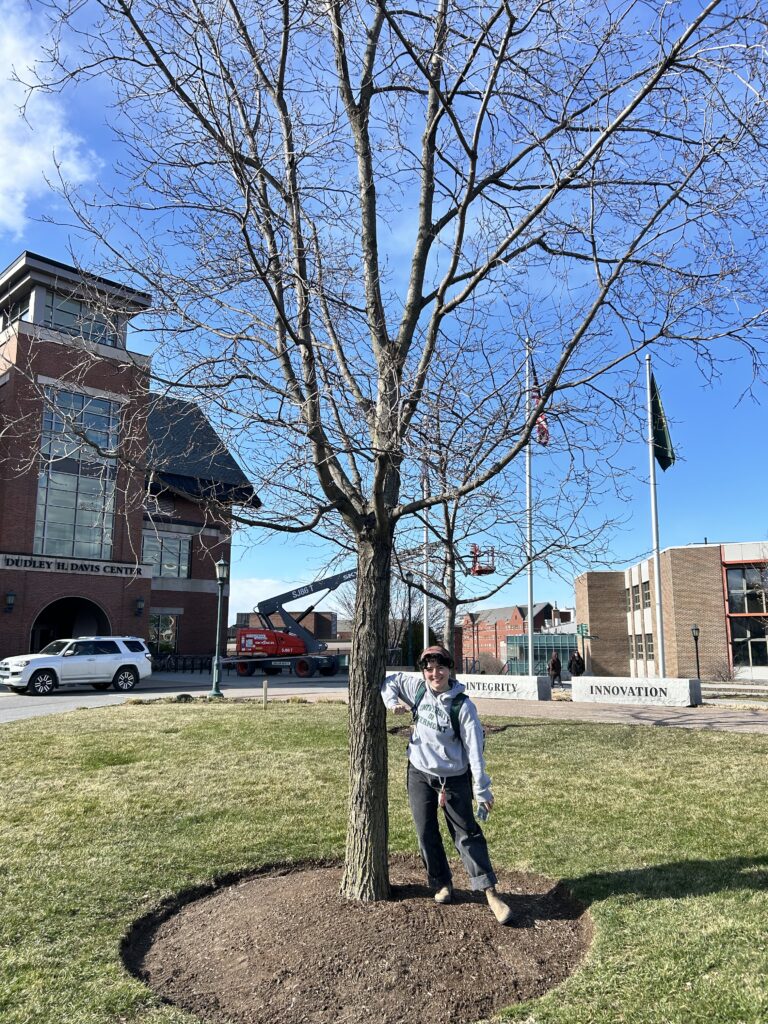
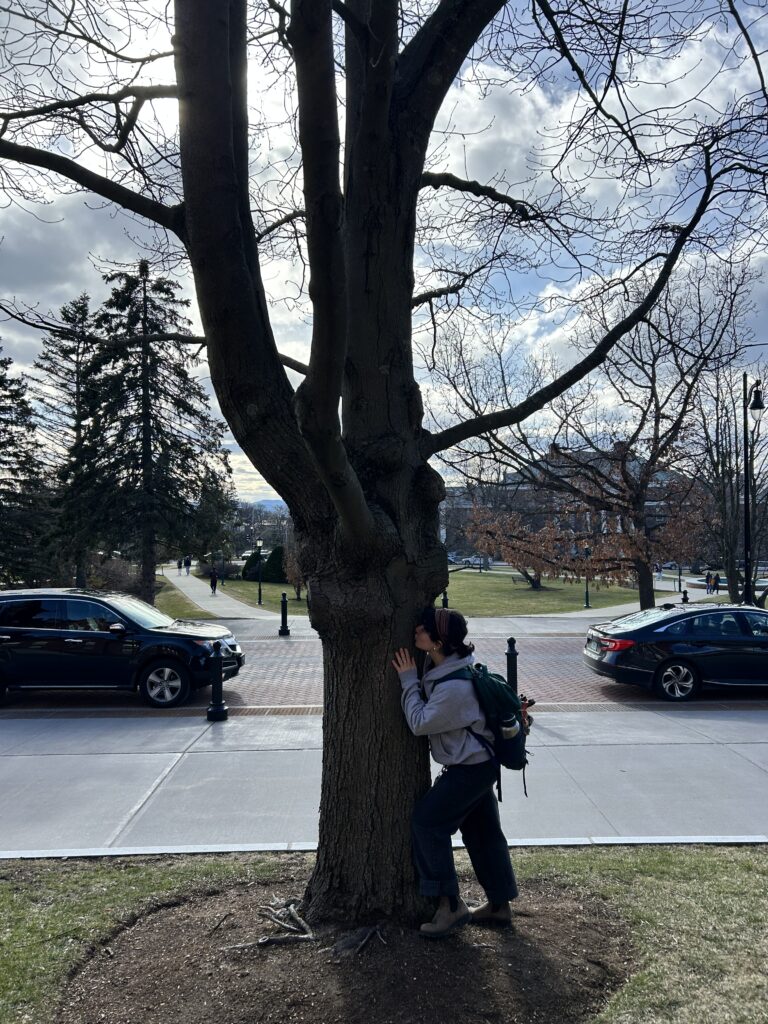
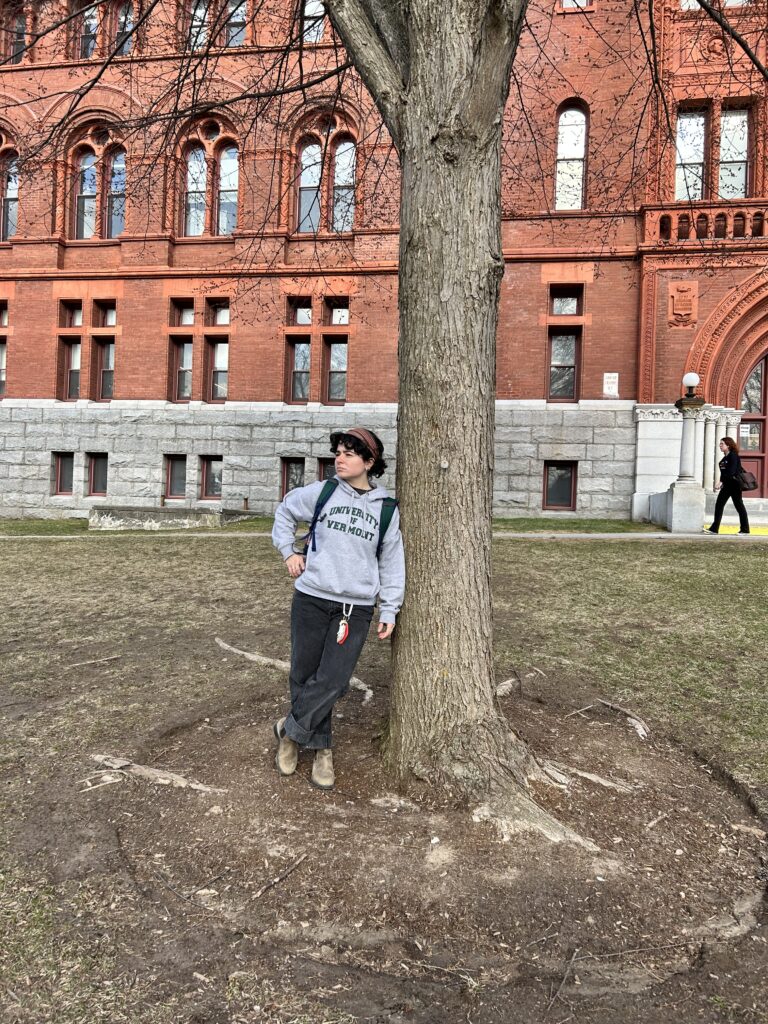
I observed three maple trees today, sugar maple (618), red maple (280), and Norway maple (3261), and all three showed slightly similar results. Both the sugar and red maple showed no signs of phenological changes except for flower buds breaking slightly. Conversely, the Norway maple showed both flowers budding and slightly open flowers. Overall, compared to the two oak trees, the maples seemed further along in their phenological phases because they showed signs of buds breaking.
National Phenology Network
The National Phenology Network (NPN), is a nationwide monitoring and research organization that studies phenological signs and events, creating future phenological forecasts. After some exploring of their webpage, I discovered that their predictions for the coming of spring in various locations is based on data from 1991 to 2020 and daily minimum/maximum temperatures and differenced to estimate the time spring will arrive annually. NPN also determines if spring is “normal” timing compared to previous years based on the same data. While spring has not officially arrived in Vermont, according to the data provided, it is predicted to arrive up to 20 days earlier than “normal”. This aligns with current trends of global warming, which would result in pollinators emerging earlier and trees matching their phenophases with the pollinators as to receive the longest length of time for pollination possible. This is surprising, though, because this year’s winter in Vermont was very cold and snowy as compared to the previous year, which does not match the overarching trend of rising global temperatures. This could be an interesting relationship to study in the coming years as to whether the intensity of winter affects the phenophases of trees in the same locations.