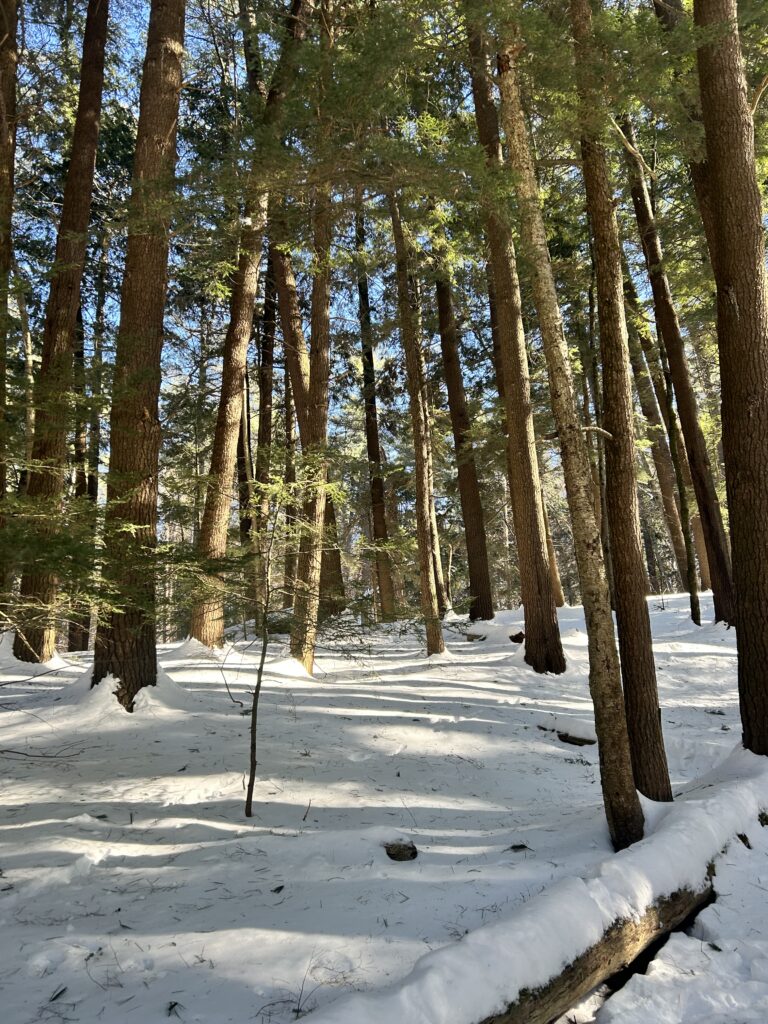
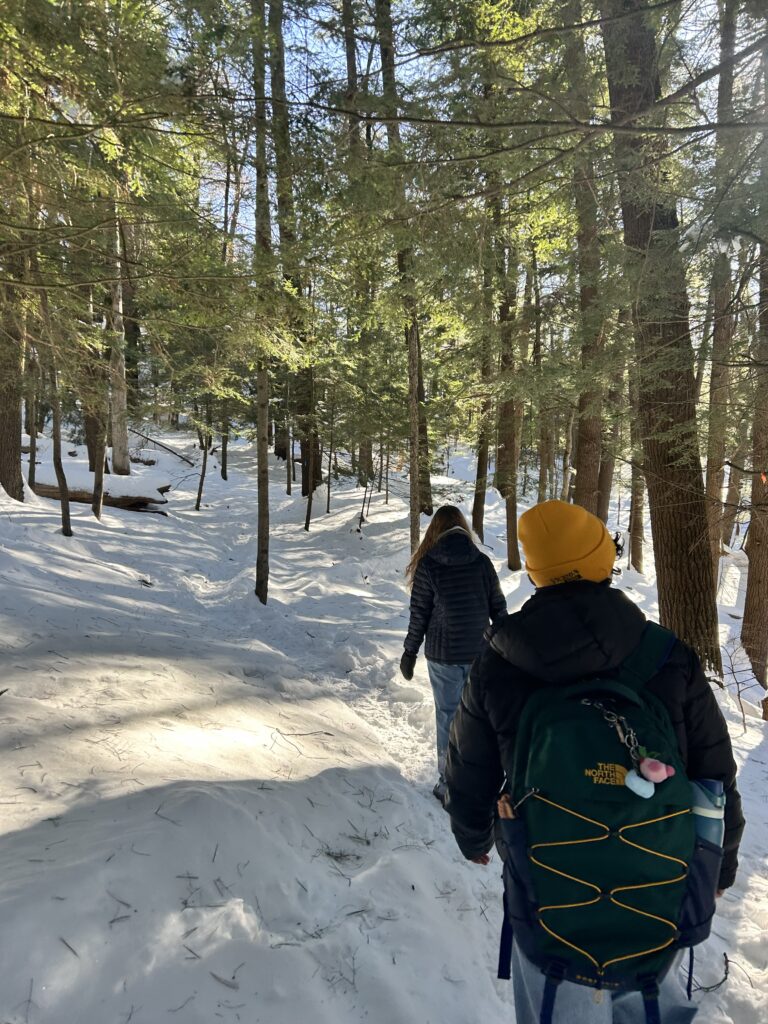
Instead of visiting my usual phenology spot this month, I explored Centennial Woods with a few friends in hopes of finding signs of wildlife. While we only found one (or maybe two) sets of tracks, likely because of the recent snow, we found lots of other signs of animals in the areas we walked through.
iNaturalist
To record the exact location, time, and image of the wildlife signs, we utilized iNaturalist, a website and app that allows for other people to confirm your identification or identify the picture you provide. This makes the identifying process (whether for animals, tracks, plants, or other natural observations) much easier as there is support from the community in addition to the suggestions provided by iNaturalist. I am excited to see if anyone on the site will be able to identify some of the wildlife signs I spotted!
Browse
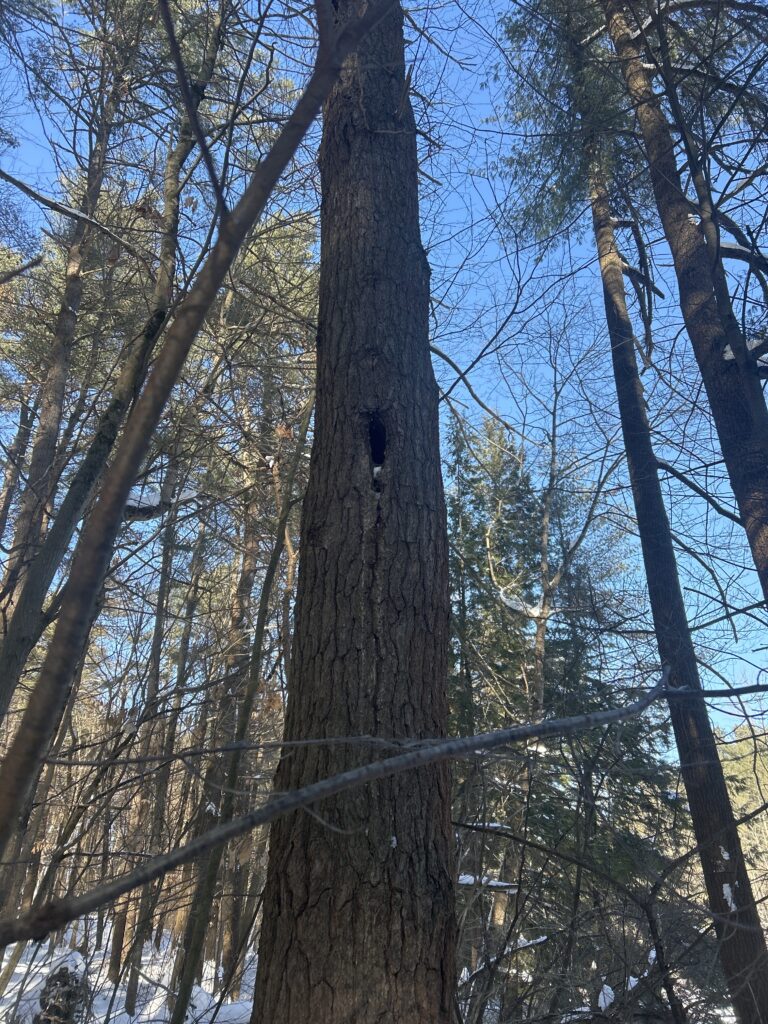
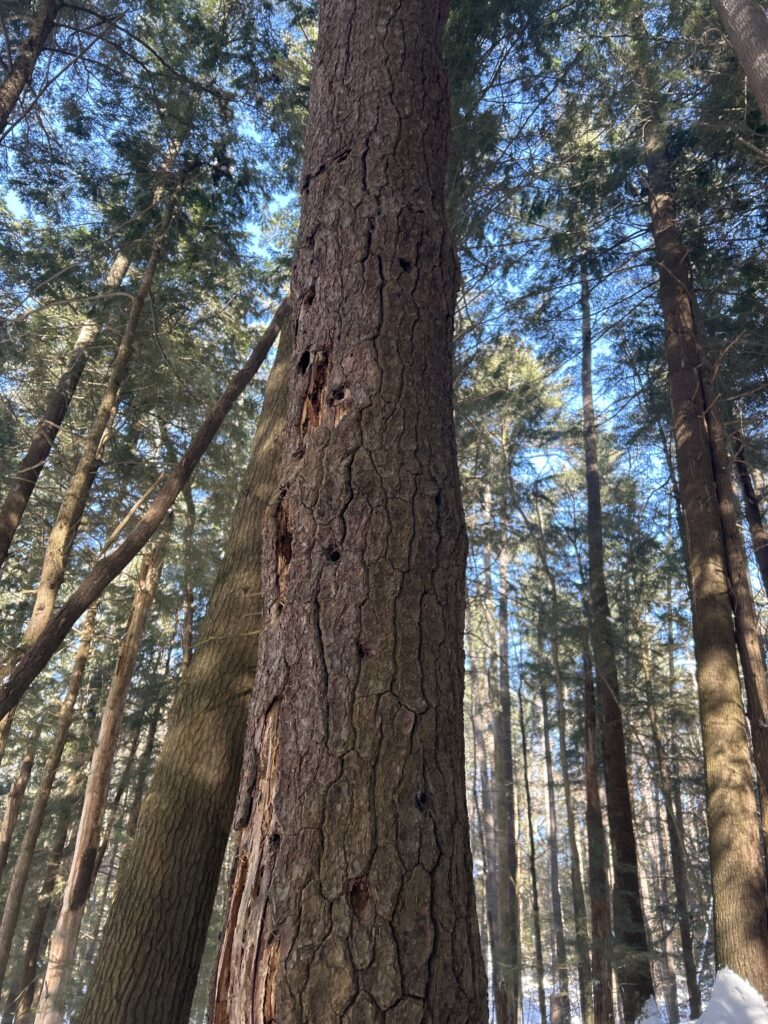
Going into this search for wildlife signs, I was hoping we would find signs of a beaver, like at my Salmon Hole phenology spot, however, we were unsuccessful. Alternatively, we spotted four or five trees filled with holes from a woodpecker. There were two different kinds of holes in the trees: one with multiple holes, only 1″ to 2″ wide, one with a large, oval shaped hole dug multiple inches into the tree. I believe the latter, with the large hole, is from a pileated woodpecker due to their large beaks allowing them to dig quite deep into the tree, while the others, I am not definite as to which species made them.
Feathers
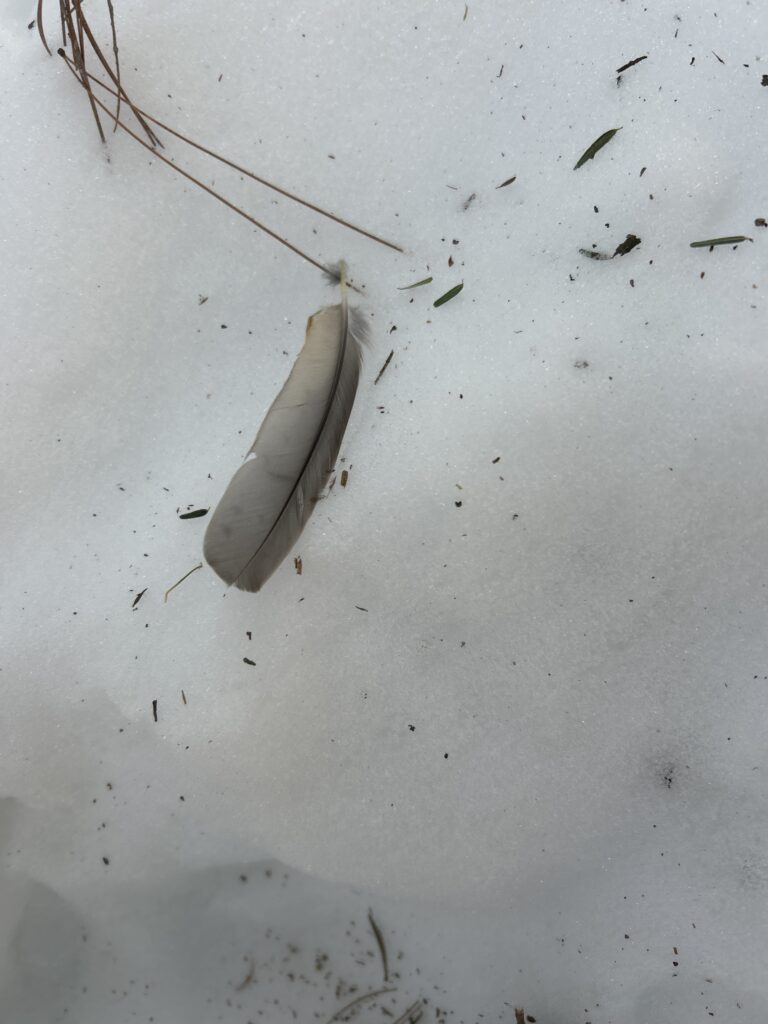
Along the trail, we spotted two different feathers! I believe the first, an approximately 3 inch long, grey feather belongs to a mourning dove. While some mourning doves migrate south for the cold Vermont winters, many males stay in order to get a head start on establishing breeding areas. I decided upon mourning dove because of the brown/grey/dark grey color gradient, length, and the small tuft of hair toward the bottom of the feather, that are seen in most mourning dove feathers. When trying to identify the feather, we also considered a pigeon, which was also suggested on iNaturalist. Ultimately, we decided against this identification because of the more intense color gradient seen in pigeon feathers, with no brown hue present, which was seen in the feather found.
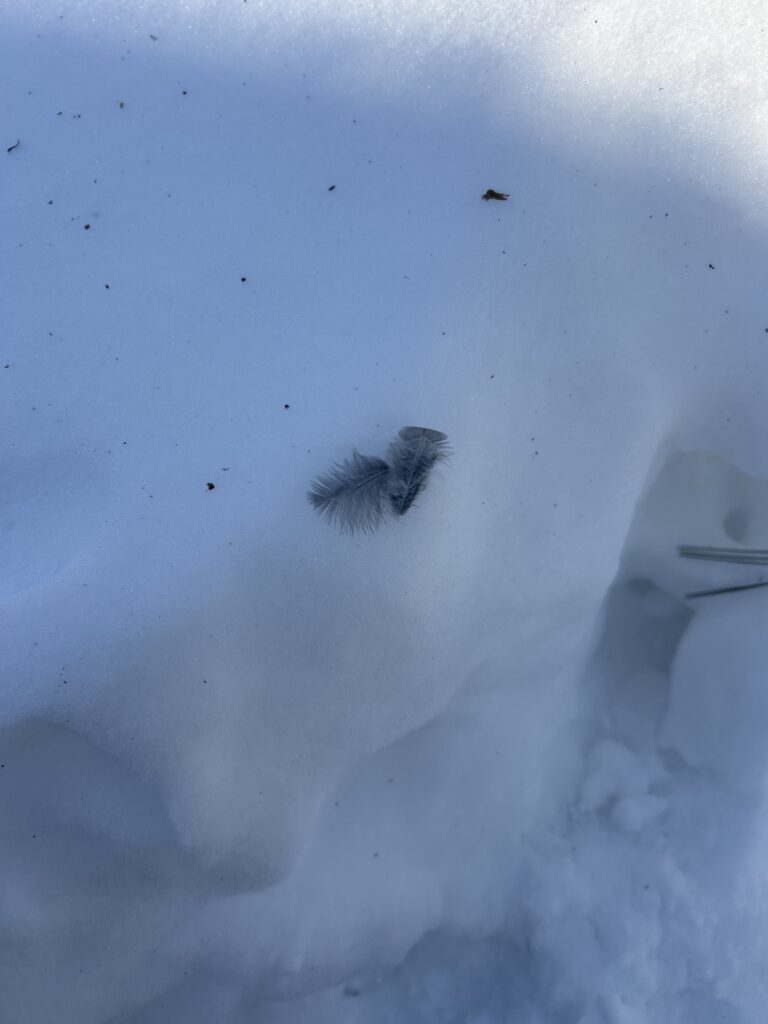
The next feathers we found were just next to a previous footprint made on our way into the woods. These are much smaller than the last feather (only around an inch long), meaning they are harder to identify because they do not have a definite color gradient or pattern. iNaturalist, additionally, could not recommend any species. I believe they are mourning dove feather, simply because of the color and the prior knowledge that there are mourning doves in Centennial Woods. However, I could be incorrect as I am not very knowledgable regarding bird feathers.
Dens and Burrows
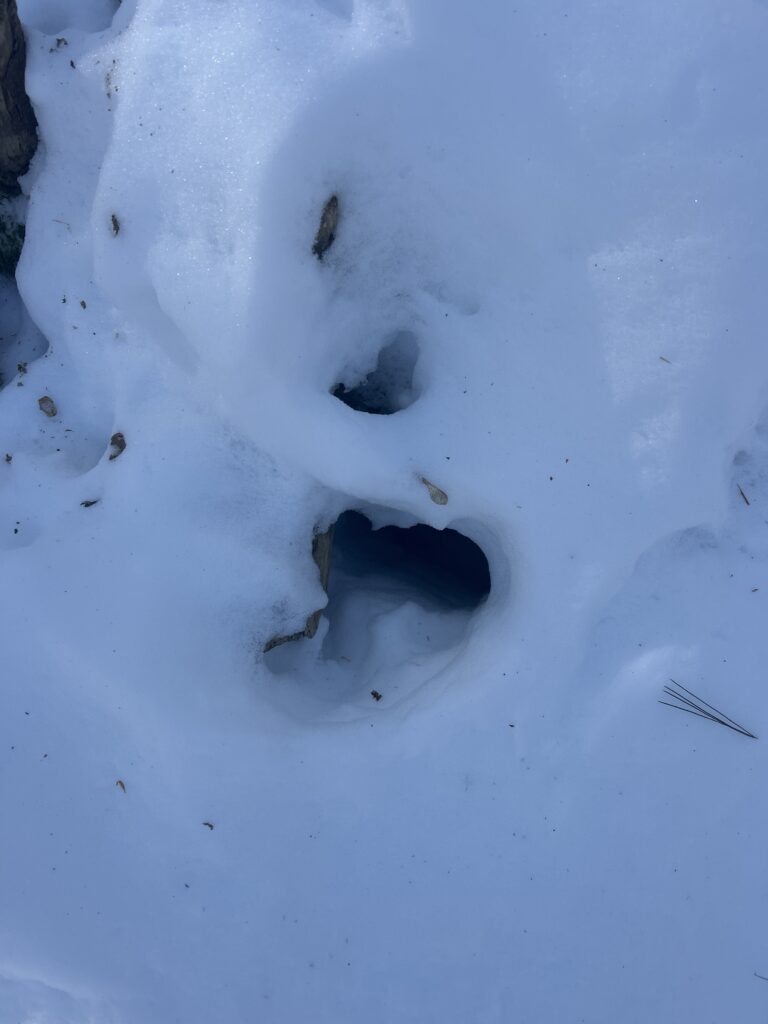
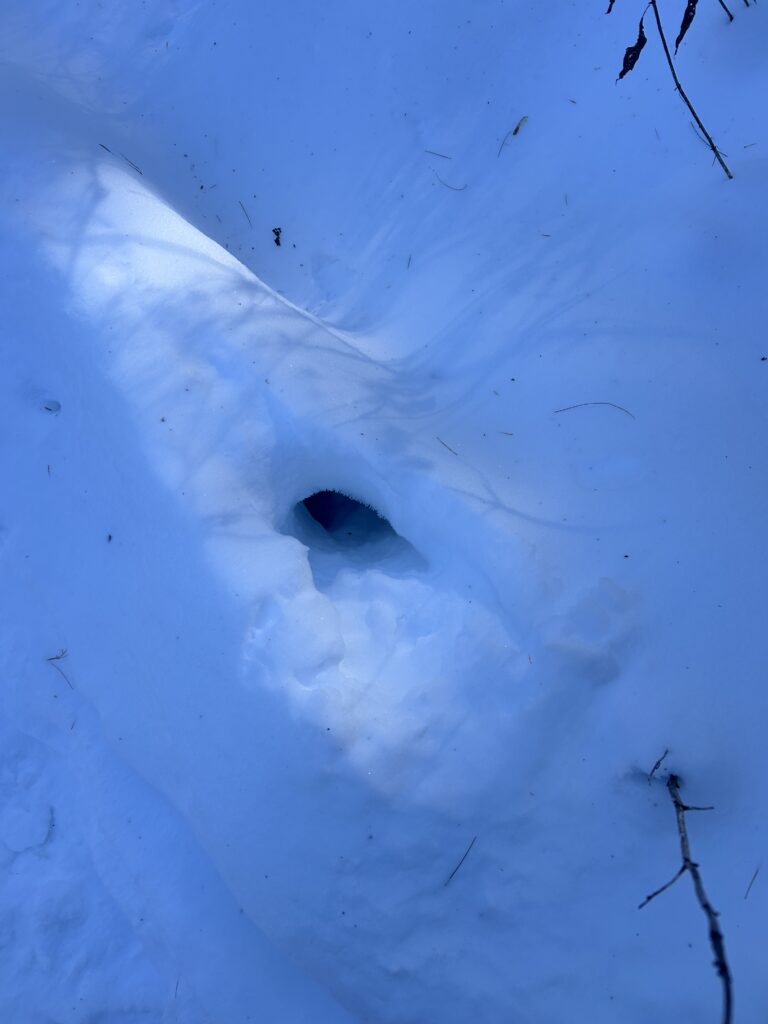
Due to the high amount of downed and dead wood and trees, there were a lot of burrows made by small animals along the side of these trees. While I am unsure of what animals could have made these holes and been burrowing in the trees, there are a few possibilities that could match the sizes of each of the holes. First, the larger holes could have been from rabbits or hares. The size hole was similar to a rabbit and it went down under the log, providing good shelter from the cold and possibly predators. The second hole was also along a downed tree, but was much smaller in diameter. I could assume that in that burrow lives a vole, mouse, or shrew, but I cannot be definite based solely on the size of the hole dug.
Tracks
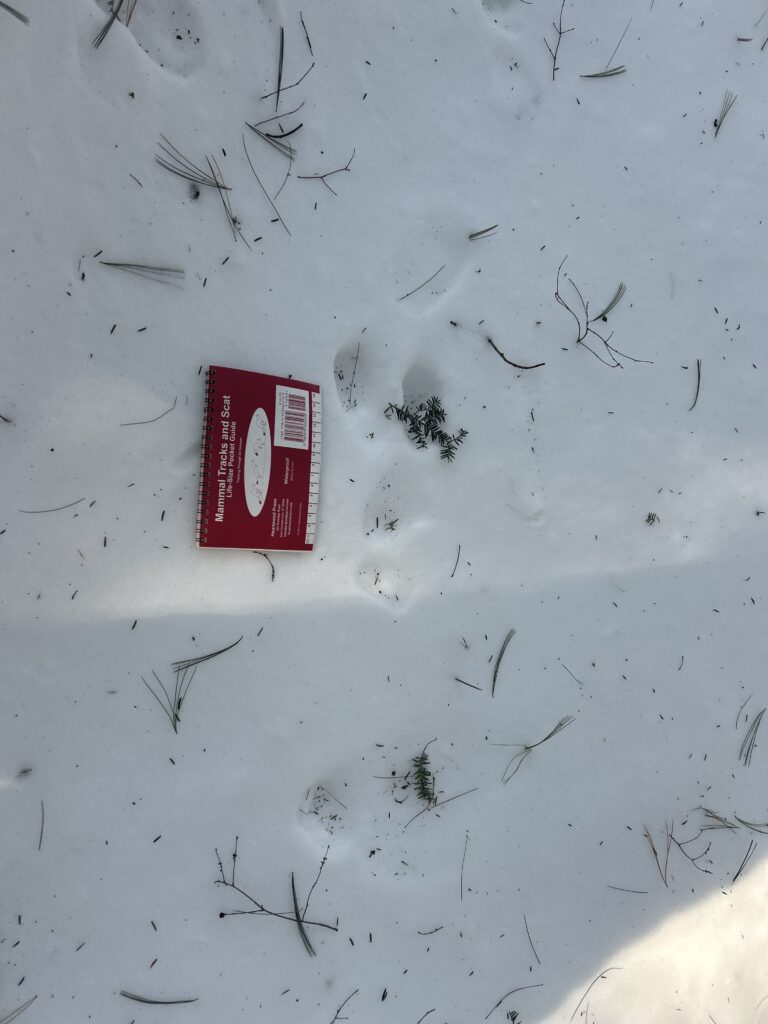
While (I believe) tracks are the most exciting signs of winter wildlife, we only found one (and possibly two) sets of tracks. First, we spotted the prints of a galloper going towards a tree and then jumping around it in a different direction. Initially, we believed it was a squirrel that jumped onto the tree and then, later, back onto the ground, this could not have been true, due to the size of the feet. The front (smaller) feet are approximately 1-2 cm for red and grey squirrels, however the front feet of the track were around 3cm, aligning with a cottontail rabbit. We also considered a snowshoe hare because of it’s similar pattern of movement, but the straddle and track themselves were far too small for this to be true.
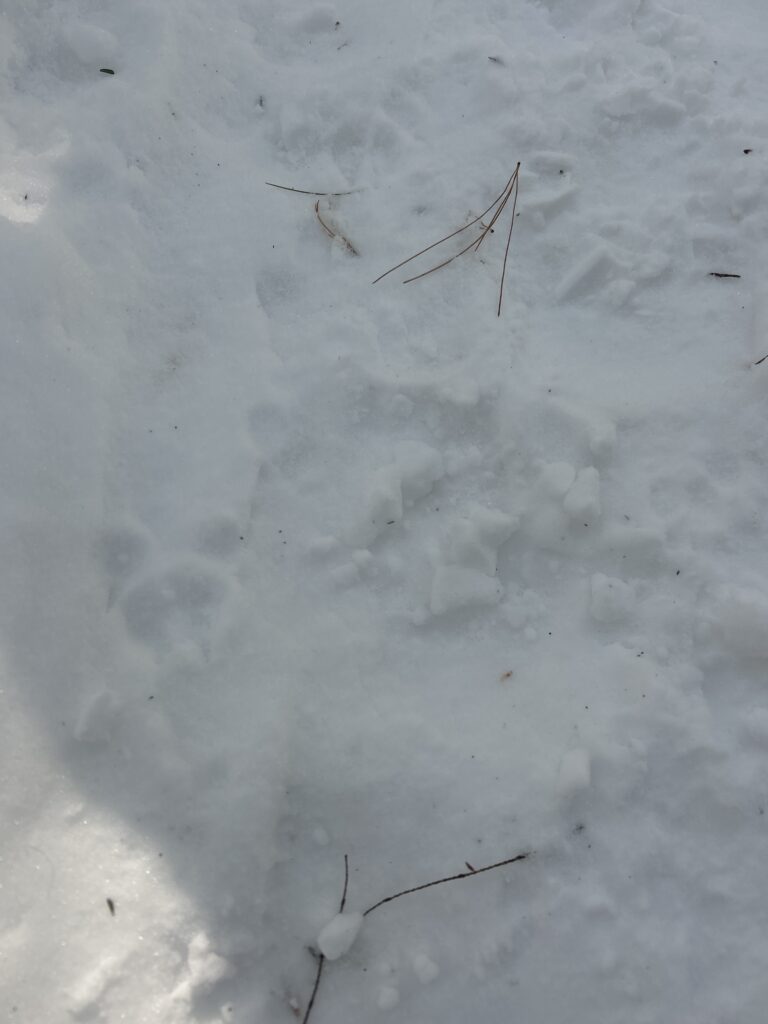
The final track we found was very difficult to see, but it can be slightly made out on the left middle of the picture to the right. While there is a high chance that this could be a domesticated dog print from a visitor taking their dog on a snowy walk, we also debated as to whether or not they could be from another diagonal walker, such as a coyote or grey fox. All of the options are around 5 cm long and 5-10 cm in straddle, making it difficult to determine without a clear print. Due to the fact that the track are obstructed from human prints around, it is likely that we will not figure out the origin of this print, however, it was exciting to consider the possibilities of the track.
The signs of winter wildlife seen were so exciting to see and begin to imagine the amount of animals that live in Centennial Woods, although not always seen. It will be interesting to see how these signs of wildlife change as we move into the spring and summer months and more animals return or emerge. While the wildlife signs spotted were not very different from my normal phenology spot at Salmon Hole, it was exciting to be in an area with so many more trees and more secluded from people than my normal spot.