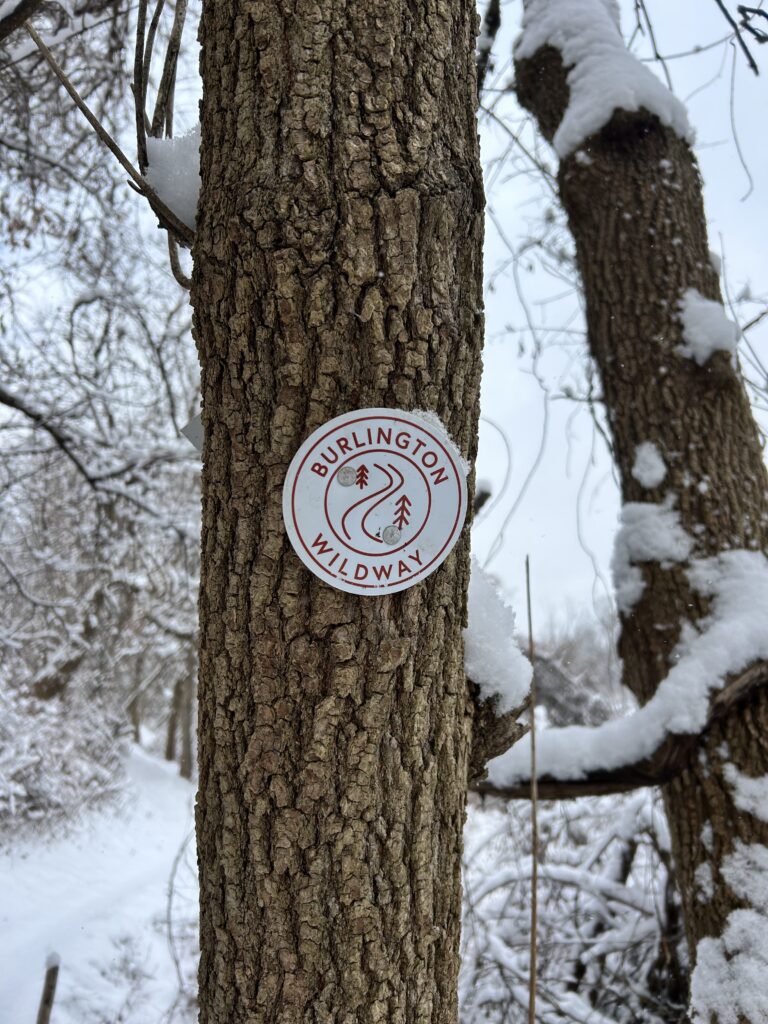
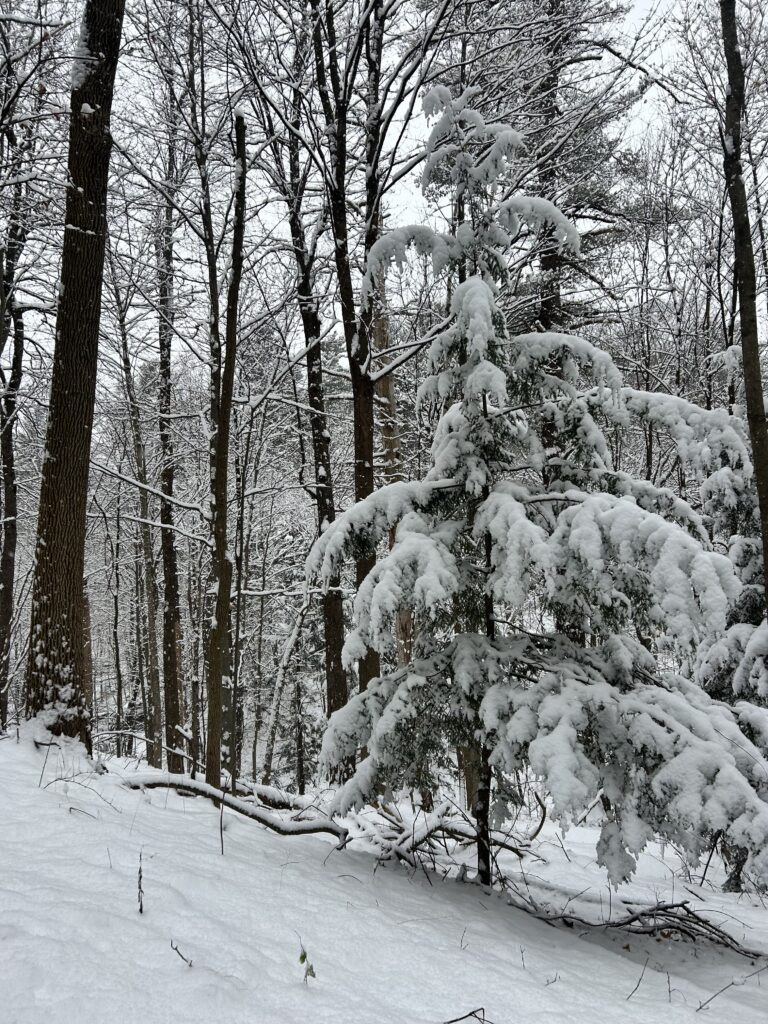
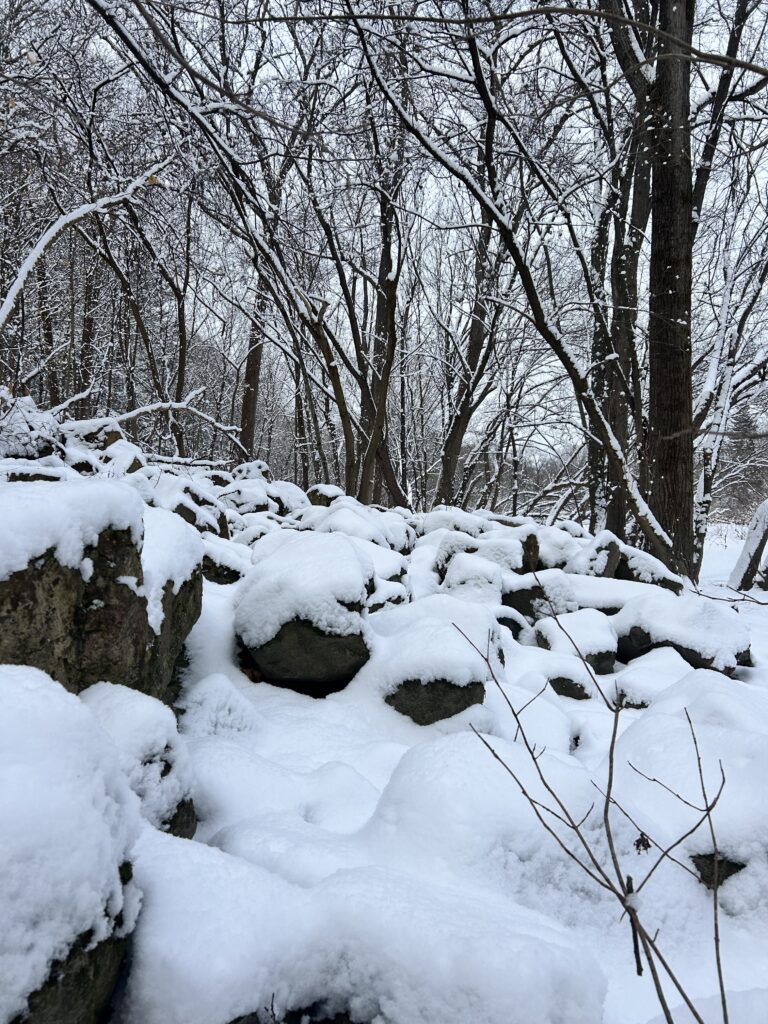
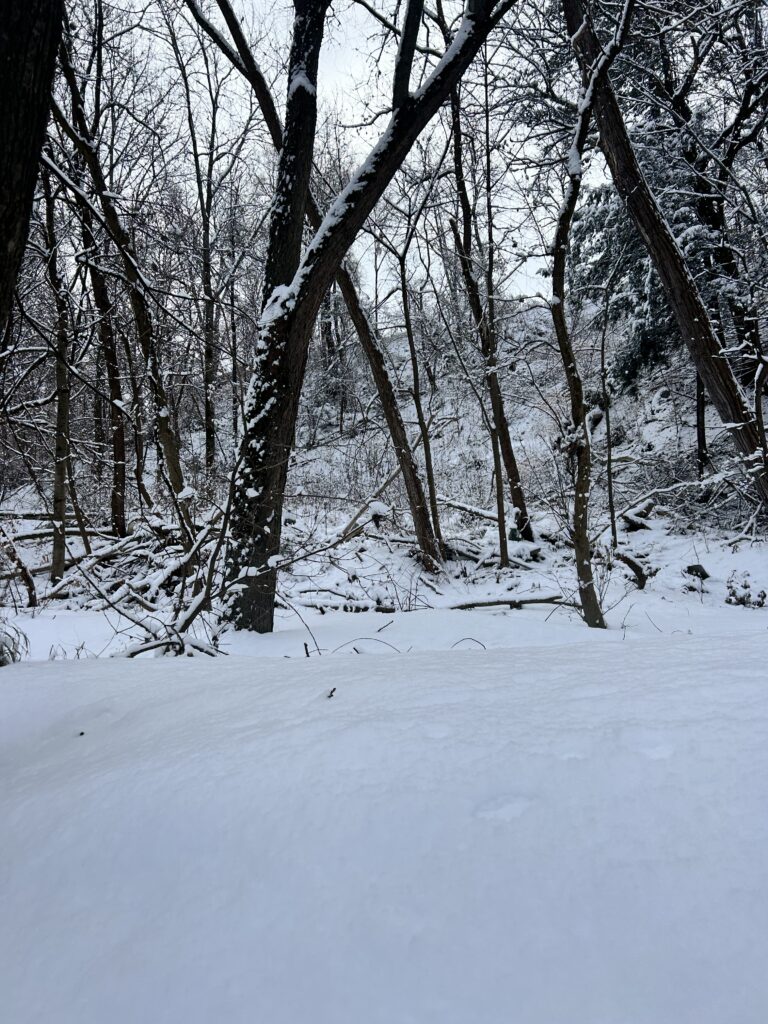
Waking up this morning, I knew today would be a perfect day to study the phenology of my spot due to the gorgeous snow outside. Although cold, I had an amazing time studying how snow so vastly changed the makeup of my phenology location and the plants, animals, and systems around it.
Time Spent Observing Plants
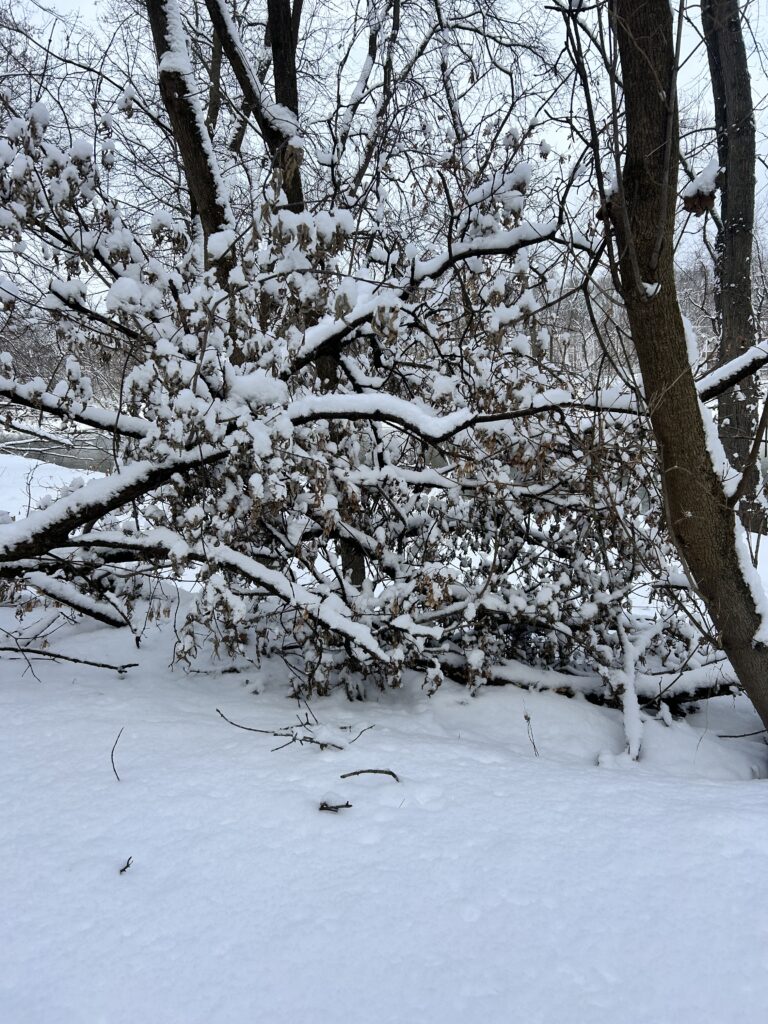
Walking into the spot, it amazed me how immensely different it looked from even the last time I visited, a little over a month ago. Almost the entirety of the fall foliage was gone, aside from a white ash and a basswood. The white ash, however, had fallen down since I last was there, meaning it could have fallen before it lost it’s leaves, meaning that it is not an accurate representation of how long ashes hold their leaves for. Additionally, all of the Japanese knotweed has died for the season, ready to come back in the spring. Without the invasive knotweed, my phenology spot is so much more clear. On the other hand, the Japanese stiltgrass is still holding on strong. It’s green blades are the only bit of color sticking out of the blanket of snow.
While I assume the leaves and other sticks and logs are starting to decompose, allowing for food for decomposers, the snow coated the entirety of the ground, making it very difficult to tell.
Winter Wildlife
On my walk to the spot, I noticed a repetitive bird call in the trees, attached above. After looking into it, I learned that the call was a Black-capped Chickadee, a common bird in the Northeast. Along with the Chickadees, I spotted a few ducks, which have stayed for the winter instead of migrating. In the past months, there had been lots of geese present at the small island near my spot, but I spotted none on this visit.
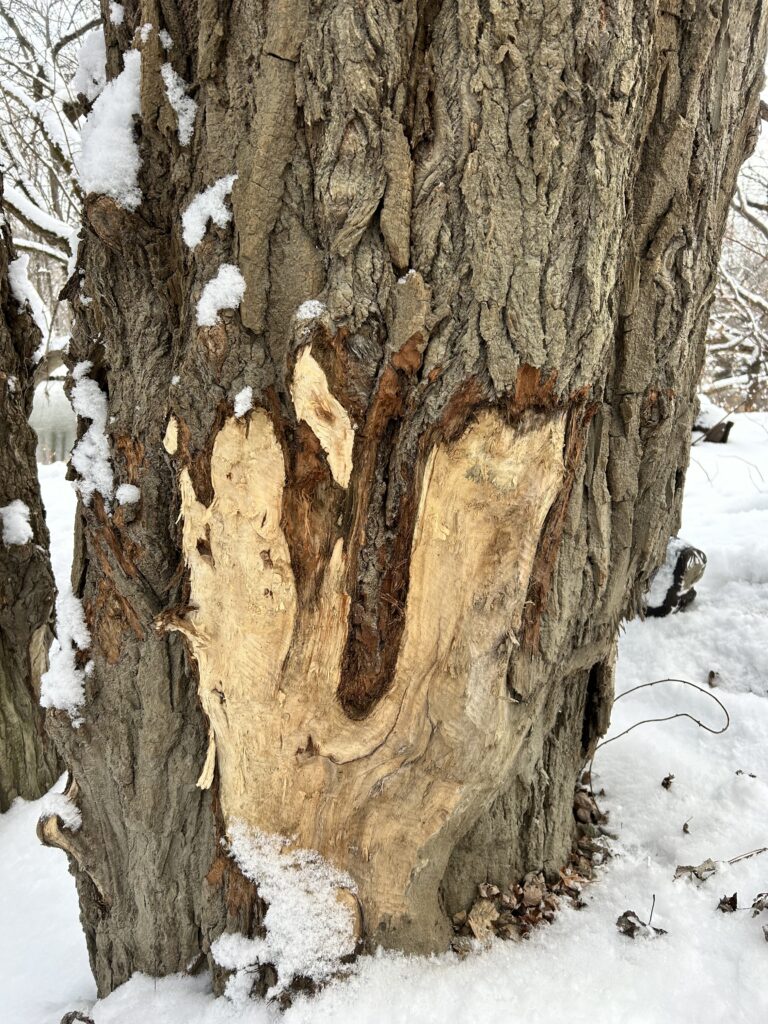
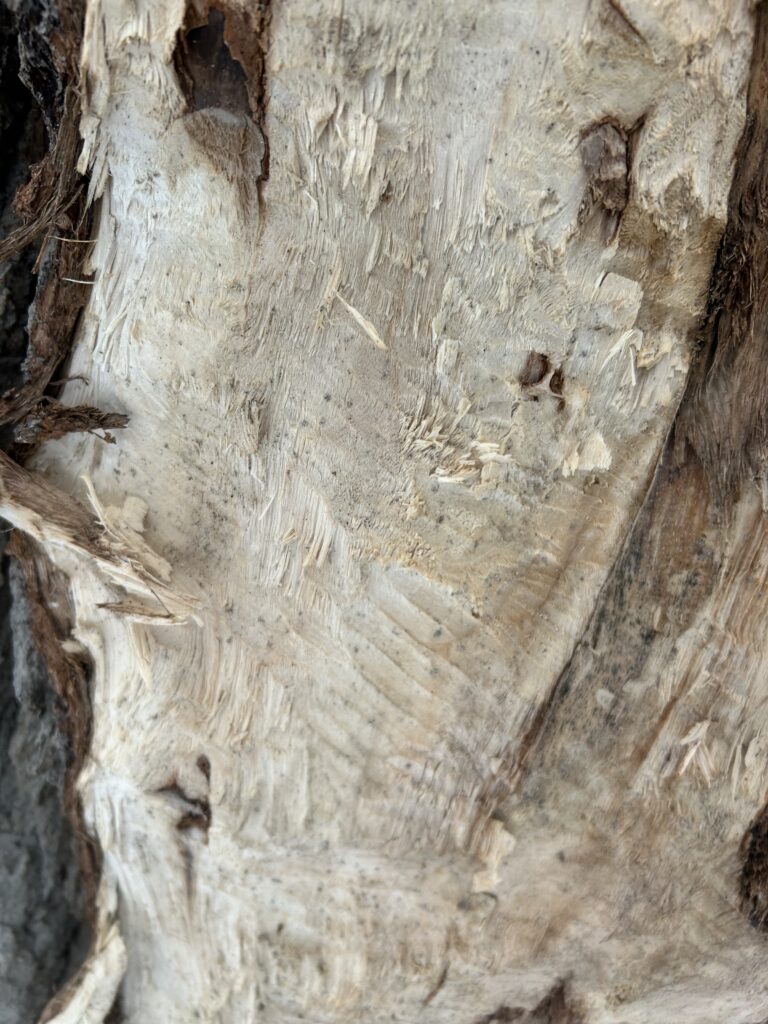
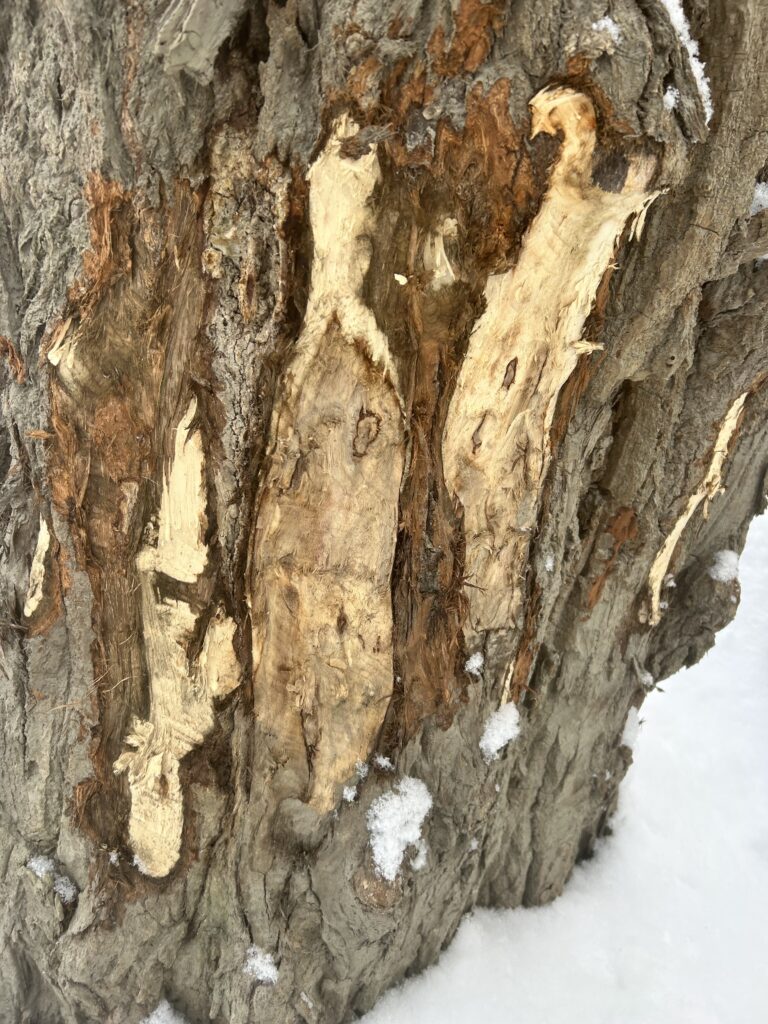
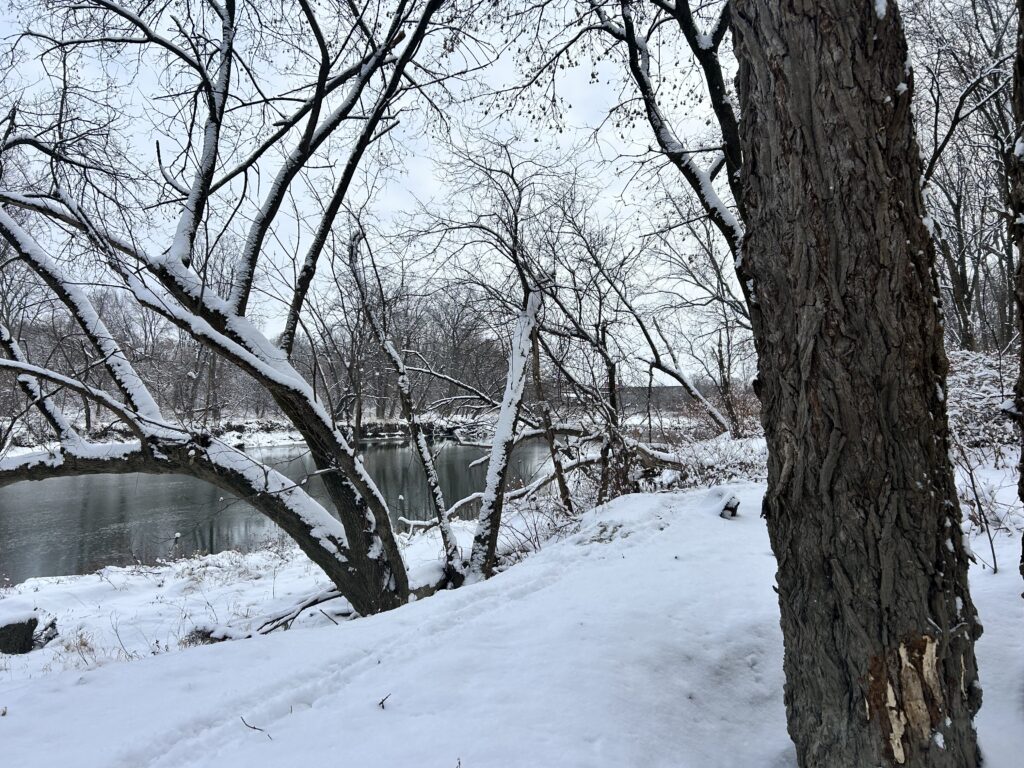
The most exciting discovery I made was marks on the two ginormous sugar maples from a beaver! I was familiar with the general look of these marks from “Naturally Curious” by Mary Holland, so it was very exciting to see it in person. To confirm this was from a beaver, I made sure the marks were below 6 ft, had clean cuts and distinct teeth marks, was accessible from the water, and the bark was the stripped part. With all of these being true, I am certain a beaver had a snack on these sugar maples!
Aside from the few bird sightings and the beaver discovery, there were little remnants of other animals. While I was on the search for tracks and scat, there were none seen because of the fresh snow on the ground. The overall animal activity has greatly decreased, but I am sure there are still an abundance of animals present in dormancy, hibernation, or burrowing just away from sight.
Saying “Goodbye”
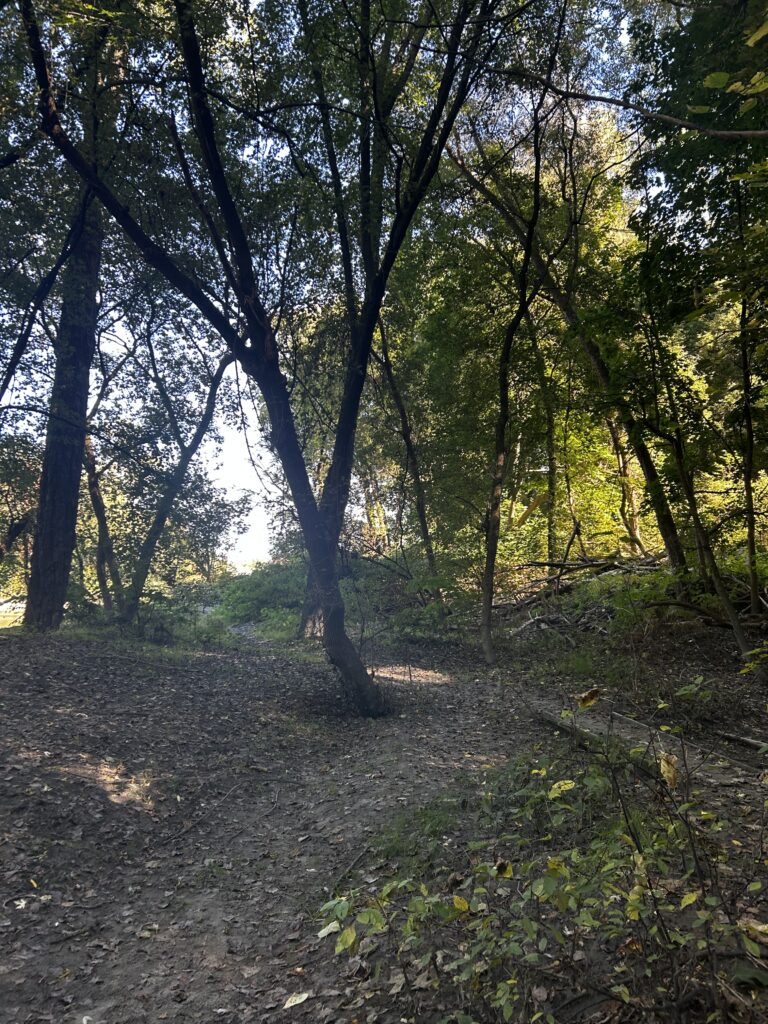
Being a regular visitor of this location has allowed me to see the beauty present all around my home. My favorite part of my phenology location is most definitely being able to view the gorgeous changes in color and how it shifts the overall look of the spot. This spot has gone from vibrant, beautiful greens, contrasting with the dark stones and deep blue waters to lively oranges, yellows, and reds slowly falling, making a mosaic of foliage, to a pure white landscape, contrasting with the dark wood all around. Through only a few short months I have learned to appreciate the simple natural processes that occur around me everyday and how vastly it can change the way people view their surroundings. Until next time!
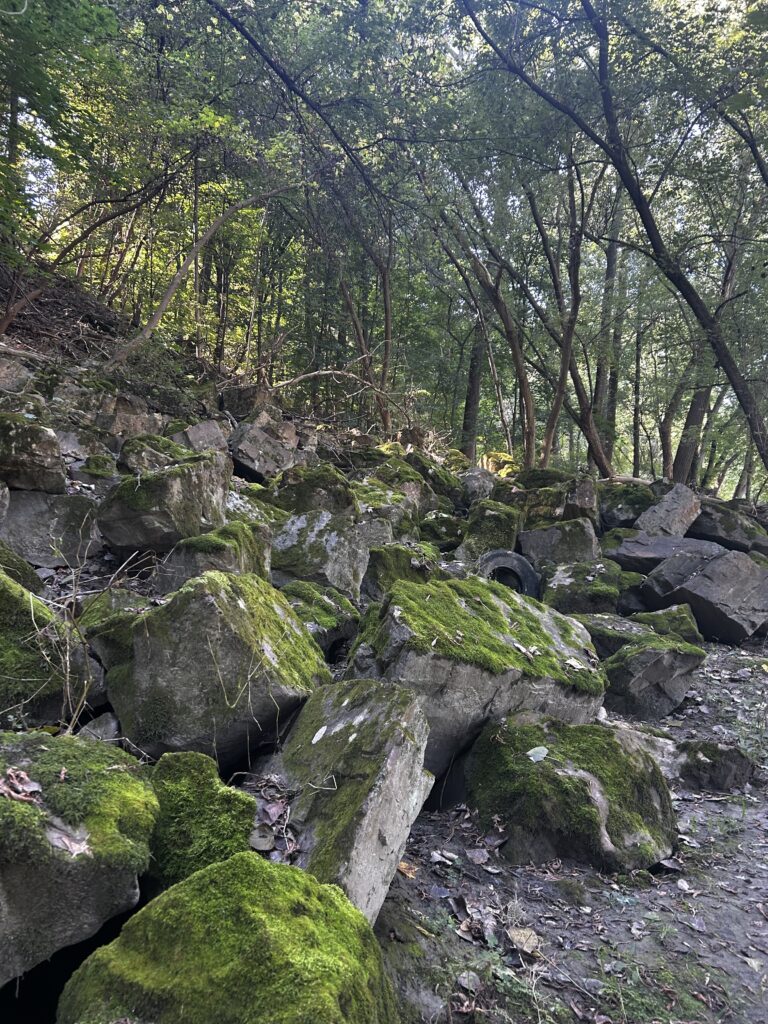
P.S. go outside and appreciate the nature around you!