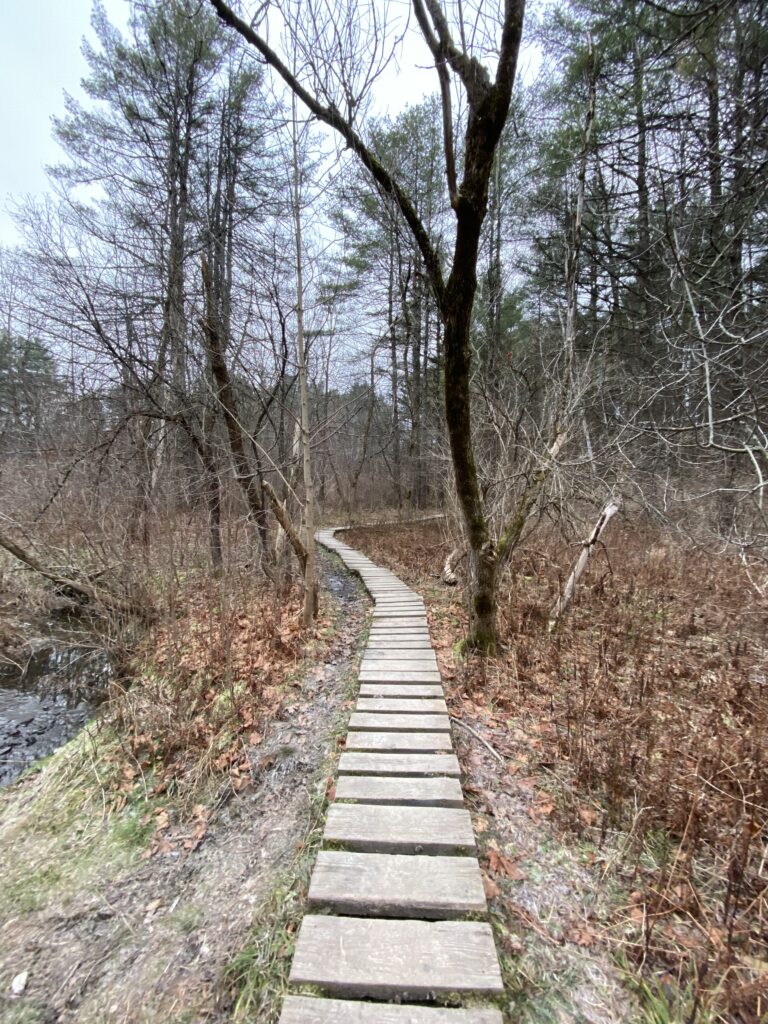
The journey of learning more about my phenology spot in Centennial Woods is coming to a close. Over the past two months or so, I have had the opportunity to observe the changing phenology of my location which has been eye-opening and educational. By observing the thick green overstory transition into a colorful foliage and then transition into stick season has been a special way to be introduced to Vermont.
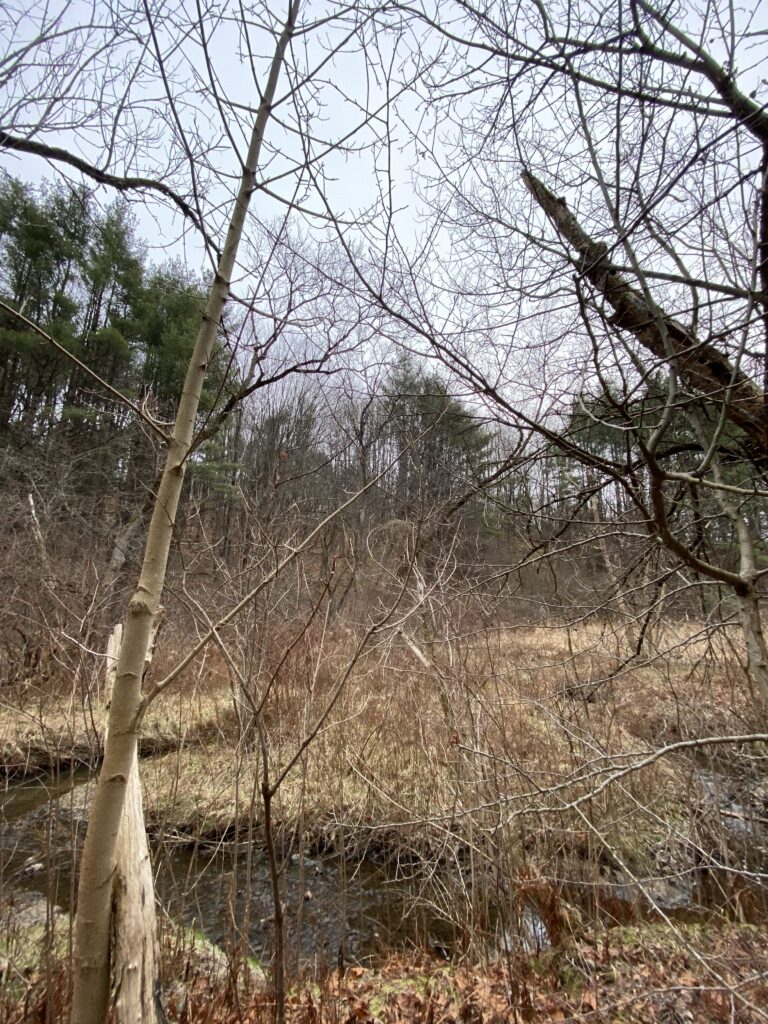
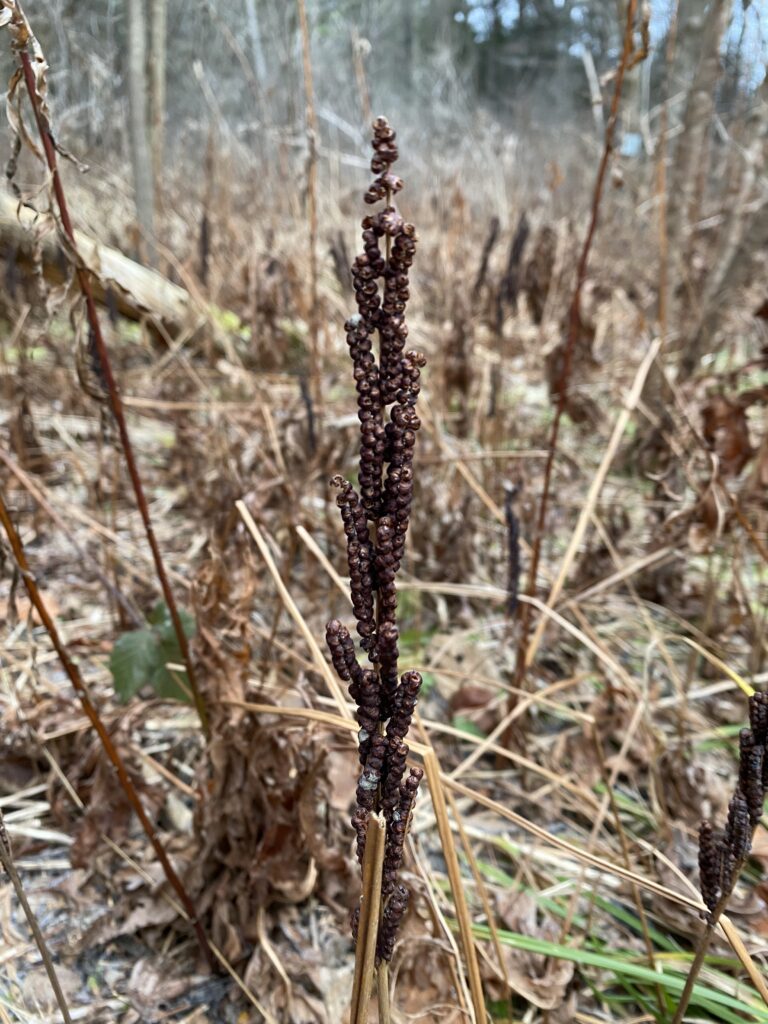
The foliage has not changed significantly since my post in early November. It is stick season in Centennial Woods and it still has an abundance of fallen leaves. There were more trees than last time without any leaves. The Sensitive Fern was one of the few planets that was not all sticks. In my hand-drawn map of my location, it is highlighted that, at the time, all of the varying trees in species and maturity, like the Birches and American Beech, have full crowns of leaves which have all fallen. In addition, the buckthorn that lines the path and the grass and fern that covered the forest floor was thin and overpowered by fallen leaves.
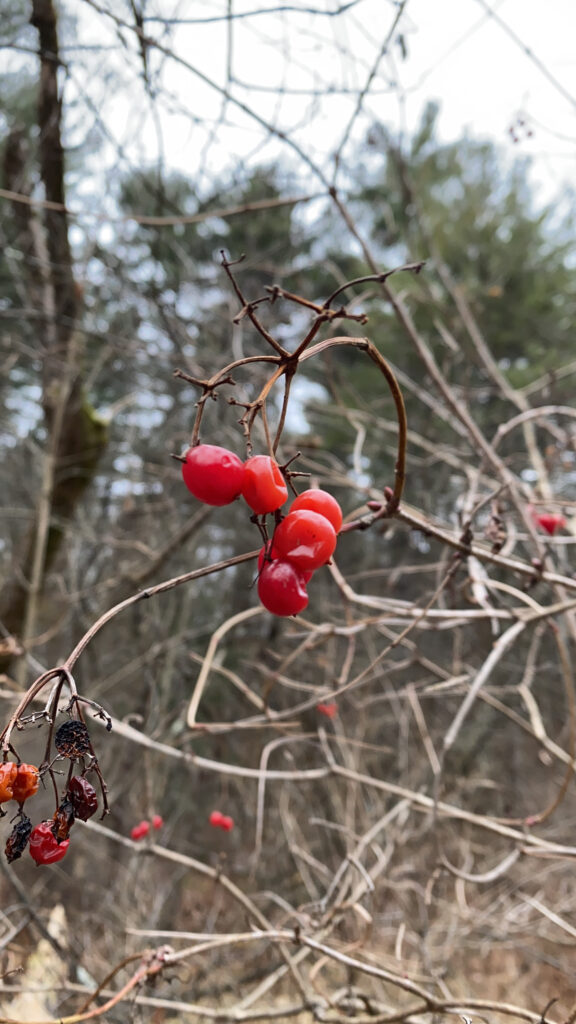
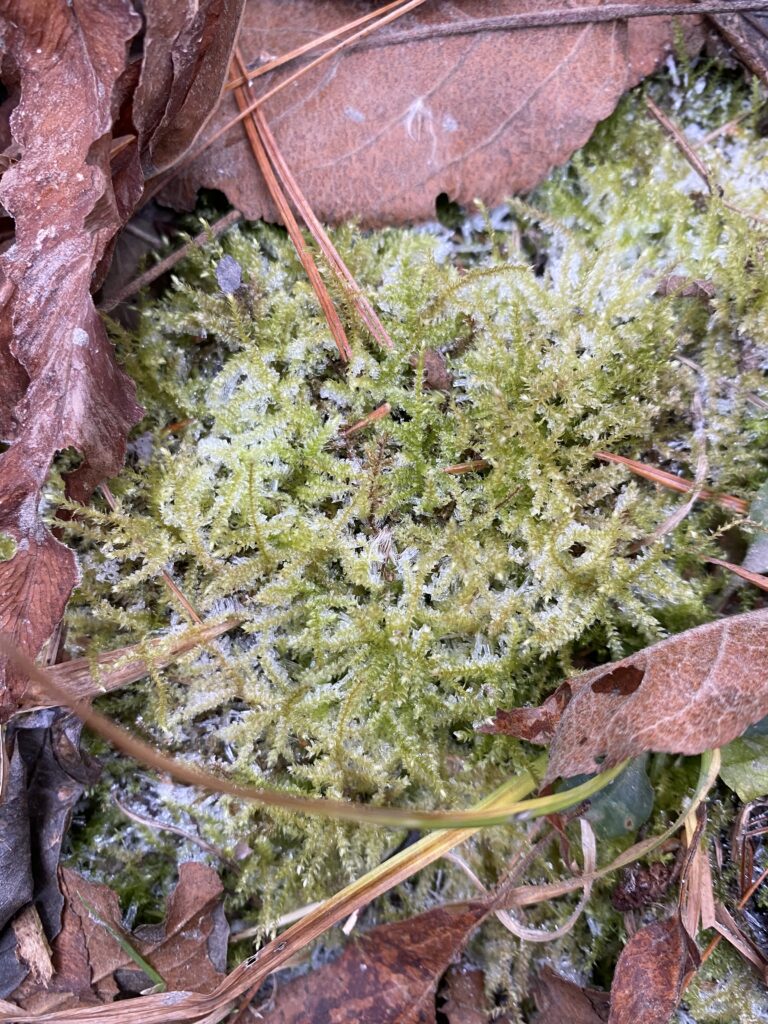
At my location, there were a couple of persistent fruits and vegetation. The most visible fruit was the guelder-rose with its bright red berries that can be seen from far away. These berries will be a main food source for various bird species. Some persistent vegetation that I was able to identify was moss, specifically Eurhynchium Praelongum, and the leaves of White Avens.
A major component of stick season is the fall leaf litter. I noticed that the size of the leaf litter has decreased due to the decomposition of the leaves. An example of a decomposer is mold, which is indicated by greenish-gray or darker brown spots on the leaves.
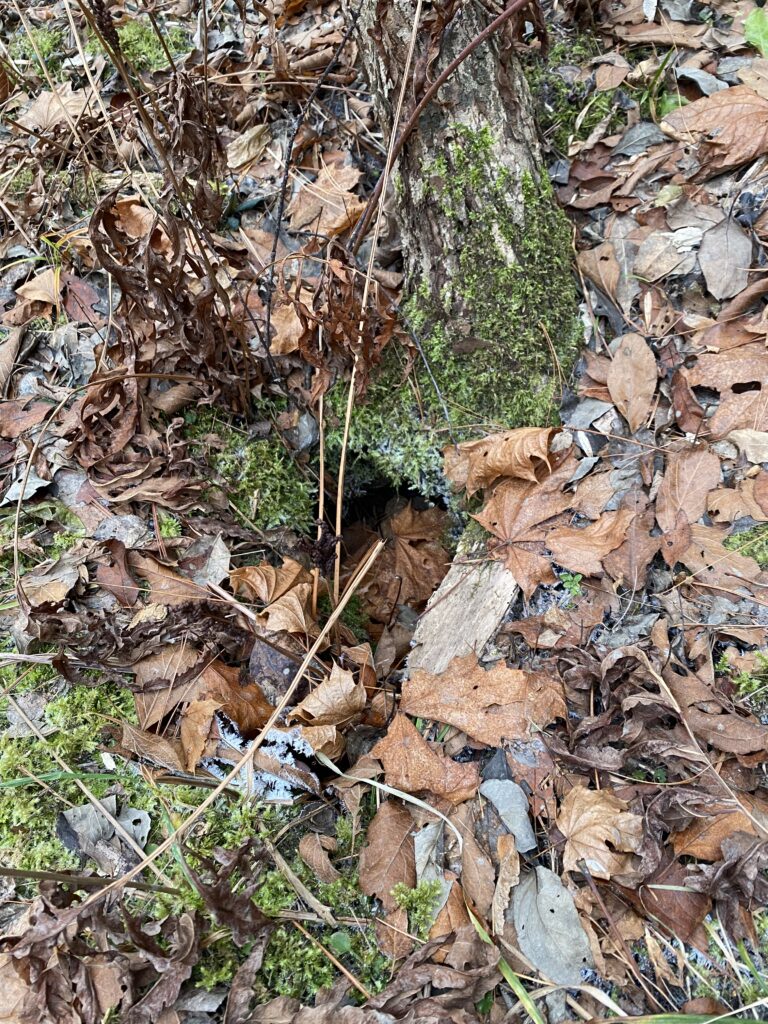
The Merlin Bird ID app was able to identify a Black-capped Chickadee. In addition, there were various trees with marks on the bark and borrows, showing signs of hibernation. And as Mary Holland likes to point out in Naturally Curious, there were signs of squirrel nesting as there were leafy ball nests and striped bark nearby. While the animal activity previously was never overwhelming, it was and felt more calm and empty feeling, like everything had gone to bed for the night. There were very few birds chirping and sounds of animals moving over the crunchy leaves. Unlike the past visits, there were no sightings of the typical squirrels or chipmunks.
I am beyond pleased with the location that I chose for my phenology project for several reasons. I am proud that my spot highlights the importance of appreciating and enjoying your immediate surroundings and how it demonstrates that you do not need to travel long distances to enjoy nature and learn from it. Furthermore, my location seems very similar to a spot in my hometown (featured in my latest blog post) at first glance but once you observe it more closely and identify the species that make up the spot, you will soon learn that they are different. Lastly, my favorite part of the location is the babbling Centennial Brook that weaves itself through the woods. It feels like the brook makes the location more unique and has a strong influence on what species are likely to be found in the location. Although my Centennial Woods exploration is coming to a close, I intend to keep visiting my location and further observe the changes in phenology to continue my overall understanding of and continue to learn about Vermont’s phenology. Until next time!