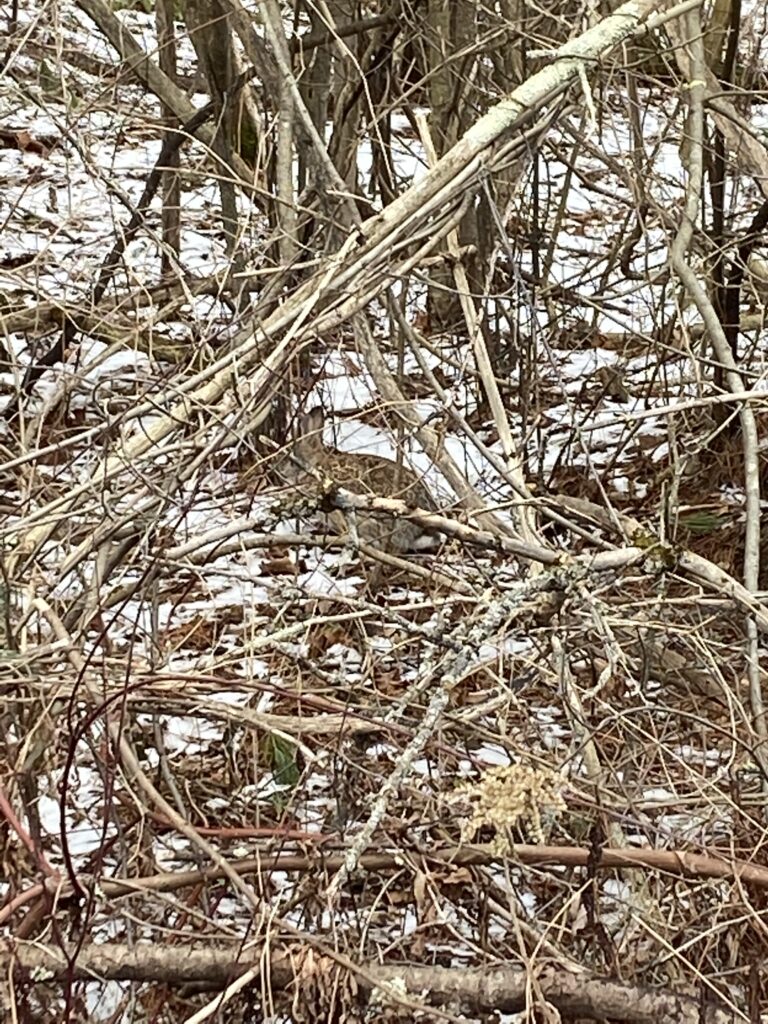
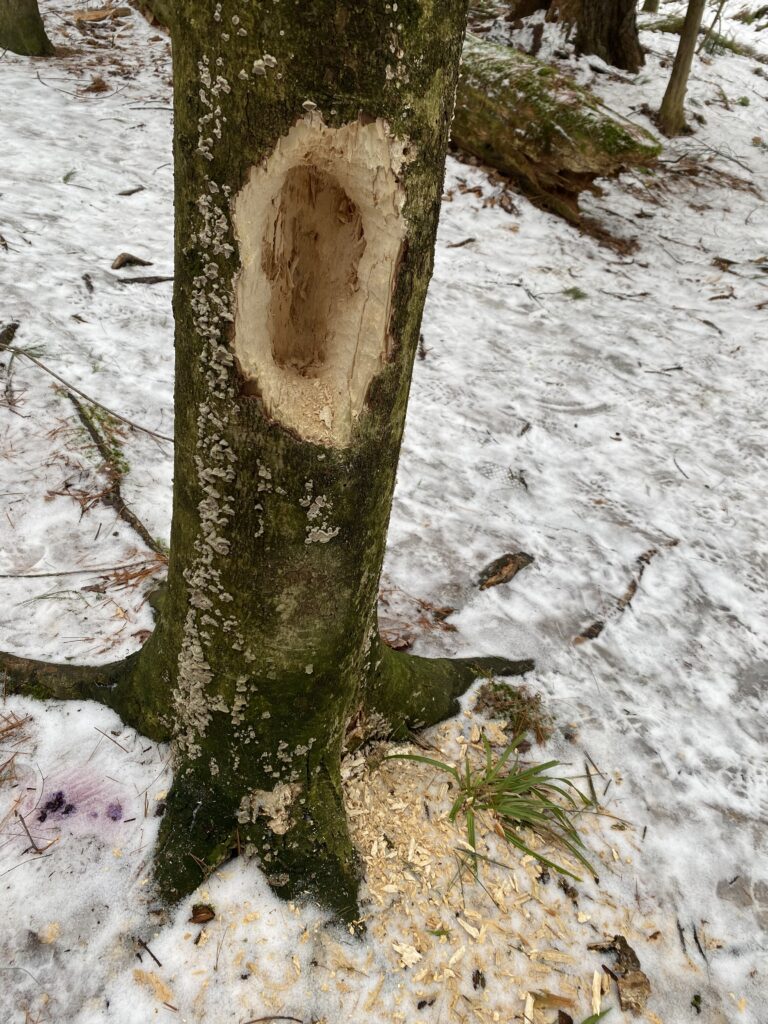
On Sunday, February 19th, at 11:15 AM, I journeyed over to Centennial Woods in the hopes of finding animal tracks and being able to identify them. It was a cold, partly cloudy morning a couple of days after it snowed. Depending on where the sunlight shined, it was muddy or snow-covered in different areas. I encountered various sightings of wildlife in Burlington such as dog tracks, Eastern Gray Squirrel tracks, Woodpecker activity, beaver activity, an Eastern Cottontail, a Black-capped Chickadee chirping, tracks of an animal that is a member of the Mustelids family, and raccoon tracks in the mud.
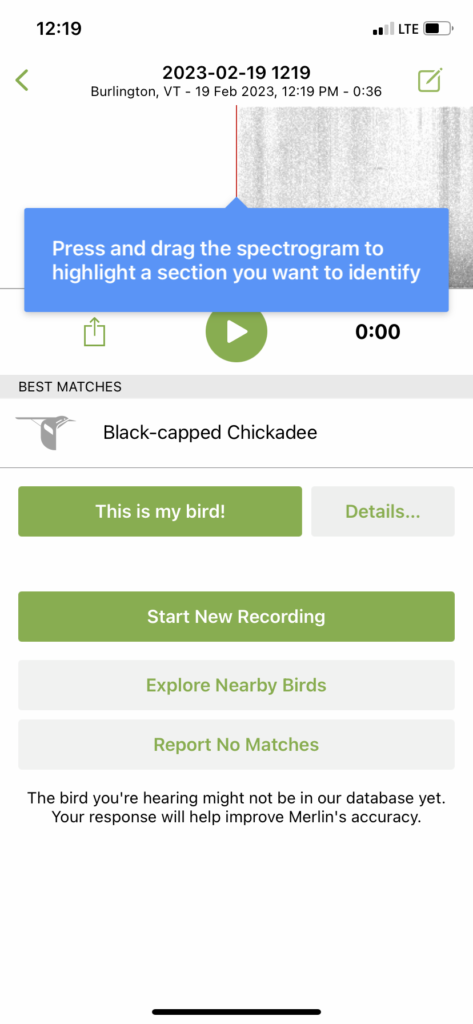
The iNaturalist app is an amazing resource that I find myself using constantly to learn more about my surrounding environments and ecosystems. The app’s ability to identify is always impressive and endless, especially when it comes to identifying plant species. However, I had a challenging time using the app to identify animal tracks because the tracks were not defined enough to highlight the identifying characteristics. Therefore, I mainly relied on my track and scat book and already made observations on iNaturalist by my peers to help identify the tracks that I found on my adventure in Centennial Woods. Another resource that I relied on to help identify the wildlife in my surroundings was the Merlin Bird ID app. I can always count on that app to pick up on the chirping of the Black-capped Chickadee.
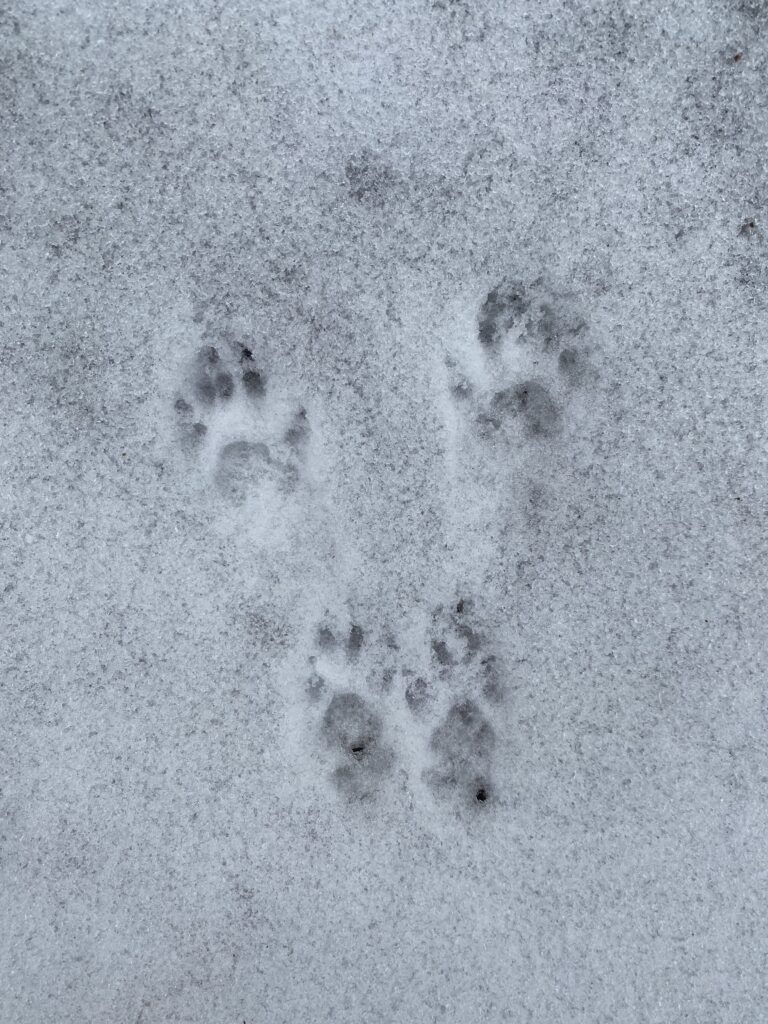
At the beginning of the trail, I came across a bunch of smaller animal tracks at the bottom of a tree. I identified these tracks as a Gray Squirrel because there were four small tracks together, four front toes on the front feet, and the hind foot was different with five toes. The size of the tracks corresponded to the dimensions given by the tracking book and I compared these tracks to the pictures uploaded to the iNaturalist Project. I was pretty confident with these tracks being a squirrel’s but I wasn’t sure between a red or gray squirrel because the main difference is the size of the tracks. Ultimately, I chose the Gray Squirrel because of the size of the tracks and there were more postings of a Gray Squirrel than a Red Squirrel on the iNaturalist database.
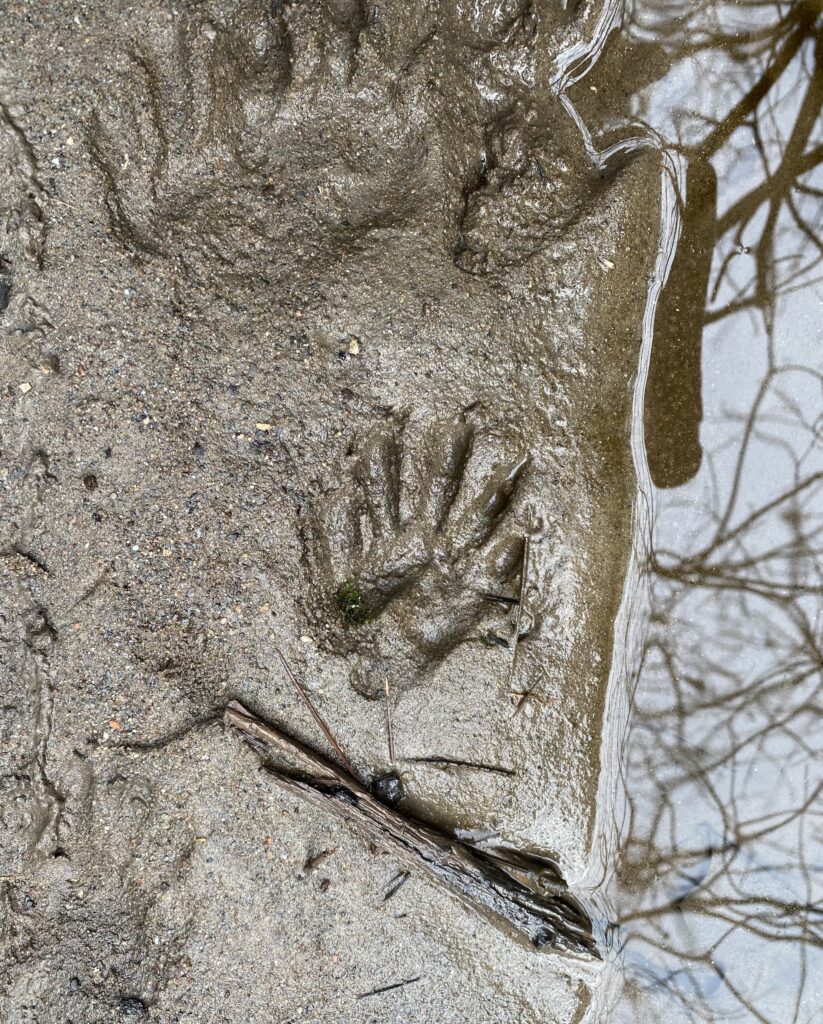
After journeying deep into Centennial Woods, I came across tracks in the mud next to the stream that the iNaturalist app was able to pick up immediately. The tracks of a raccoon that was likely down by the stream to drink water. There were the same pattern of tracks down the stream about 20 feet from the first ones. Raccoon tracks have very distinct features including five toes and human-hand looks. In addition, the dimensions when comparing to an eco-ware tag were accurate to the dimensions provided by my animal tracking book.