Join me on an in-depth exploration of Centennial Woods! It is a natural area located in Burlington, Vermont that is frequently used as a “getaway” for humans but also is a home for countless species.
I chose this location because of its ease, resemblance to my hometown, as well as the varying elements that make up this area. Burlington, Vermont is home to many beautiful and worthwhile natural areas that capture the wonders of the natural world. While there were numerous locations that I could have chosen to further explore, I chose a nearby location because it is important to be able to appreciate the typical natural areas in your surrounding community as these areas are your reality. You are not always able to travel to the most renowned and spectacular sights, which is why there are no matched beauty of the simple things in life. Furthermore, we were assigned to self-explore Centennial Woods for our first lab of the semester. Centennial Woods was my first impression of the natural world in Vermont and I was immediately drawn in by its beauty and abundance. I was drawn to this specific area partially because it reminds me of a stream right by my house in Connecticut. Additionally, I thought it would be interesting and educational to explore the role of the stream on the phenology that you would be able to observe at this spot.
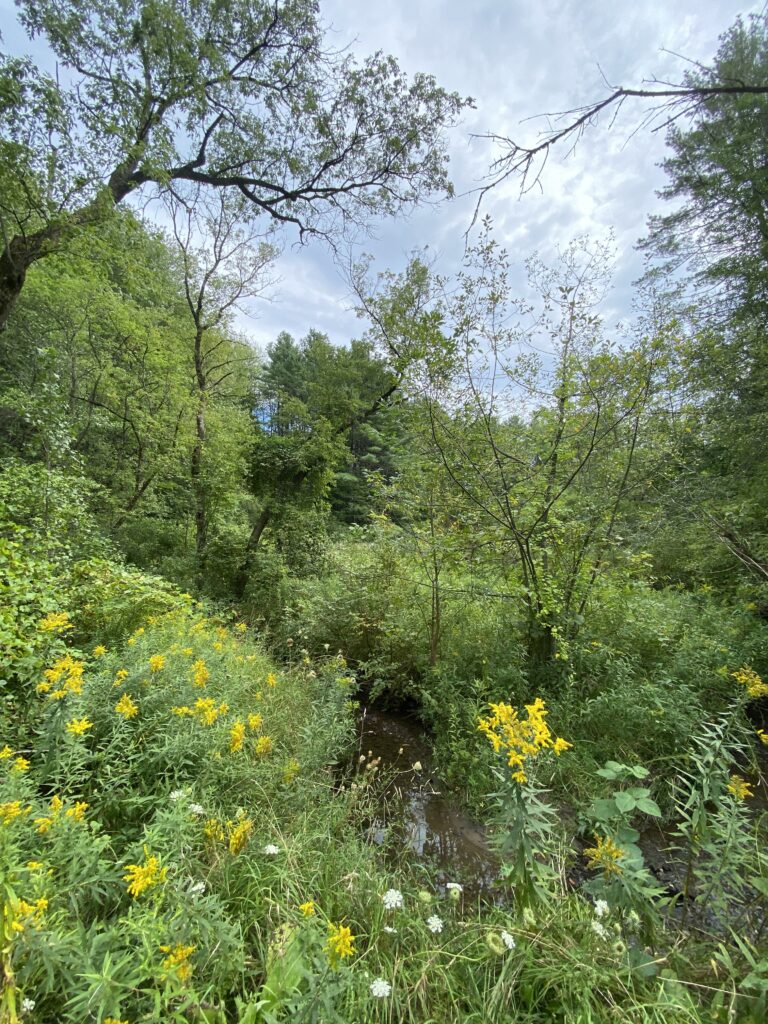
Centennial Woods is a mix of forested and marshland with a small stream flowing through the thick forests of various plant species such as Buckthorn, Eastern White Pine, Boxelder, Yellow and Paper Birch, and Poison Ivy. The plant cover is relatively widespread and there is a mix of tree maturity. You can spot and hear the typical New England species in Centennial Woods which I am excited to discover and observe.
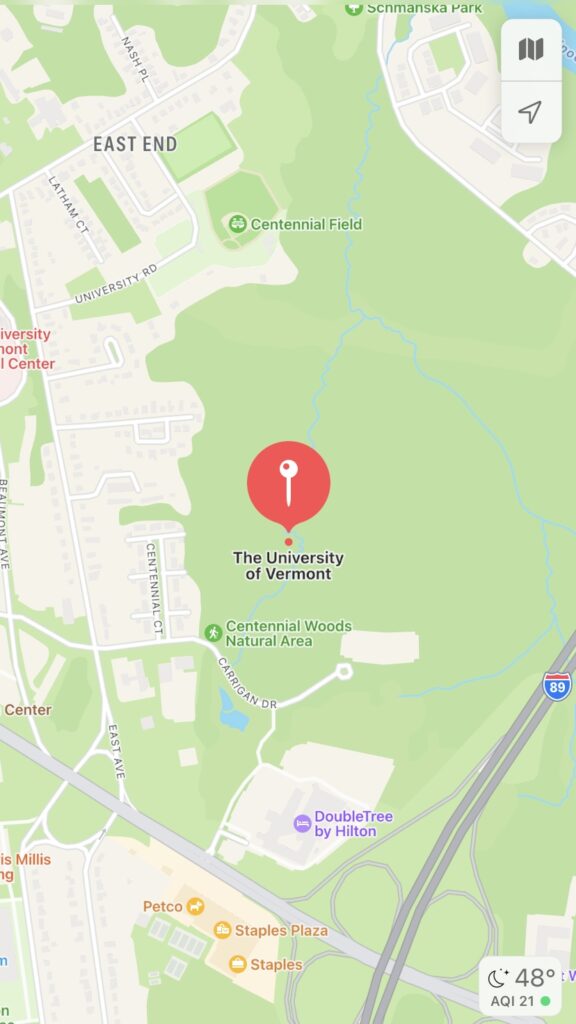
Where do I start? Find your way to Jeffords Hall on the University of Vermont campus. Walk towards the Jeffords parking lot and find Carrigan Drive. Using a compass, walk east down Carrigan Drive which will become Catamount Drive after a main intersection with a stop light. Continue walking east until you locate a wooden sign titled “Centennial Woods, Natural Area”. Use the path to the left of the sign and start your journey. At the first fork-in-the-road, continue on the path to the right. Eventually, you should come across wooden bridges that will be parallel with a small stream. Look around and enjoy the vicinity!