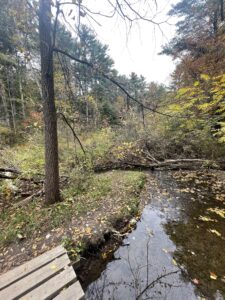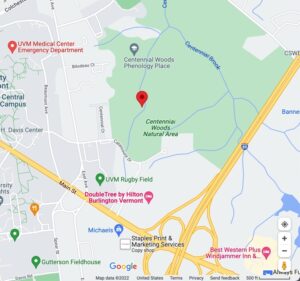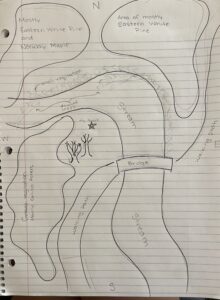
At my phenology spot there is a place where the river bends creating a bank that is perfect to sit on. This is where I spent my 15 minutes of observation. I had to put my jacket down to sit on because the ground was wet from the rain the night before. It was quite warm out for this time of the year, and there was a strong breeze. The Eastern White Pines are the tallest trees in the area and they were swaying a lot in the wind. The other most common type of tree in the area is Norway Maples. They were not swaying as much and they were still holding onto some of their leaves, unlike the rest of the trees in the area. There was some human traffic through the trails that I was sitting off of, but it was not loud or disruptive. The river was flowing steadily but fast over the rocks. It was a very peaceful experience and I now feel more connected to my place.
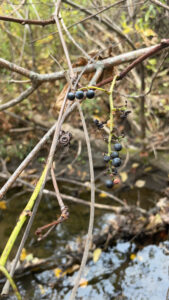
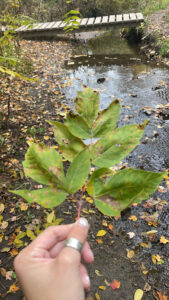
There were some differences that I noticed from the first time I went to my spot. All of the trees in the area, besides the coniferous and Norway maples, had lost their leaves. The leaves that were still attached to the Norway Maples were a bright yellow color, which was different than the green they were back in October. The leaves that had fallen were covering the ground, and appeared dried out and brown. Some of them even looked like they had already begun decomposing into the soil. The smaller vegetation along the bank of the river also had turned brown and looked to be dying. Overall the area looked much more barren than it had when I first visited. It felt strange because the temperatures did not feel like autumn, but the forest looked like autumn.