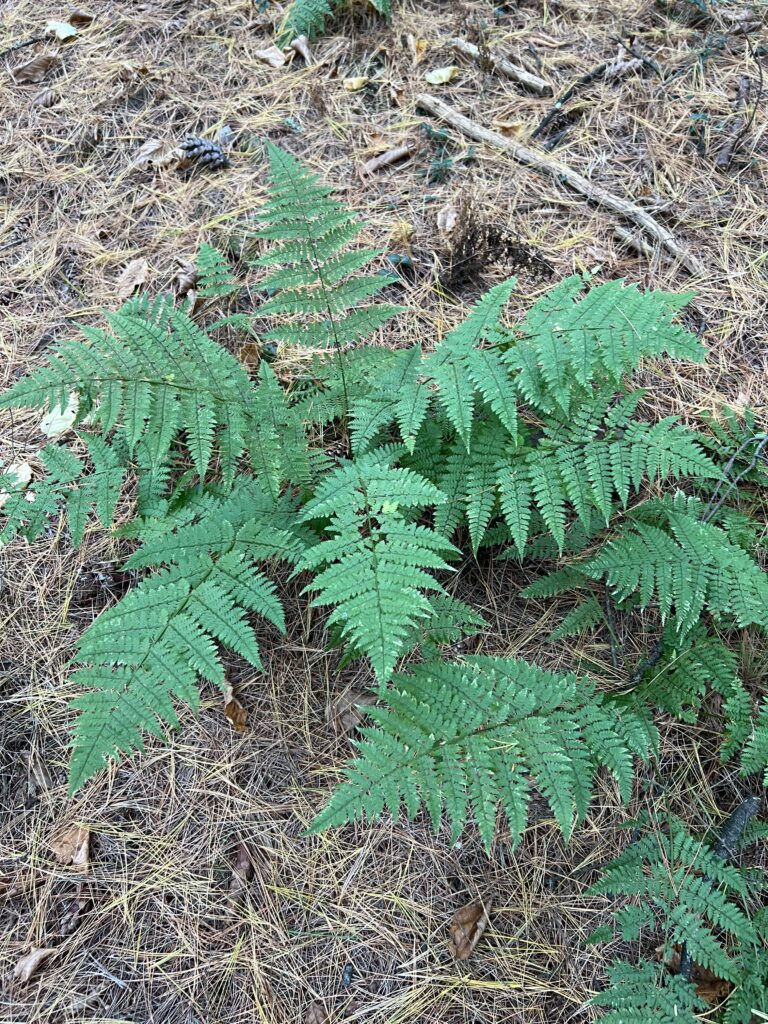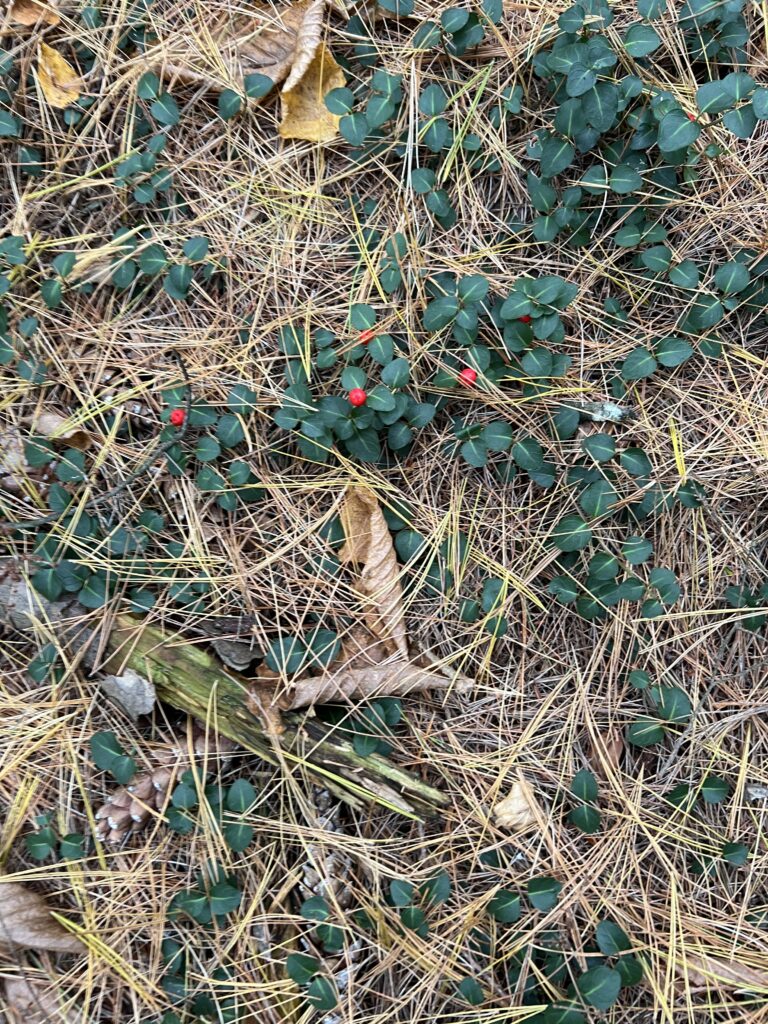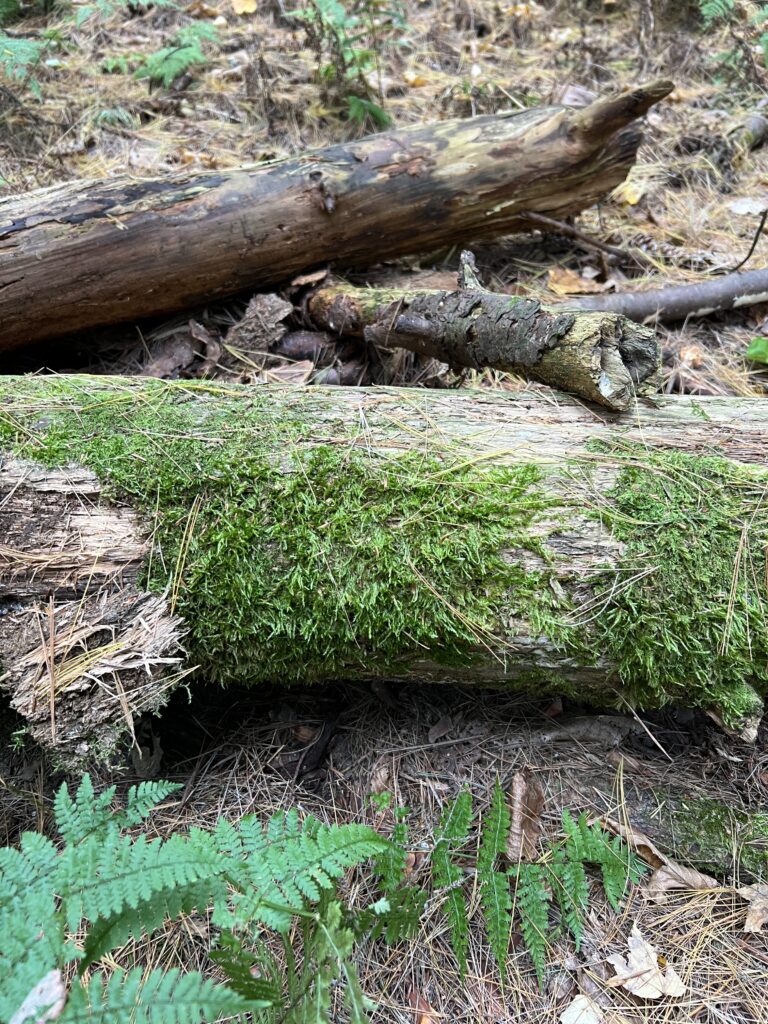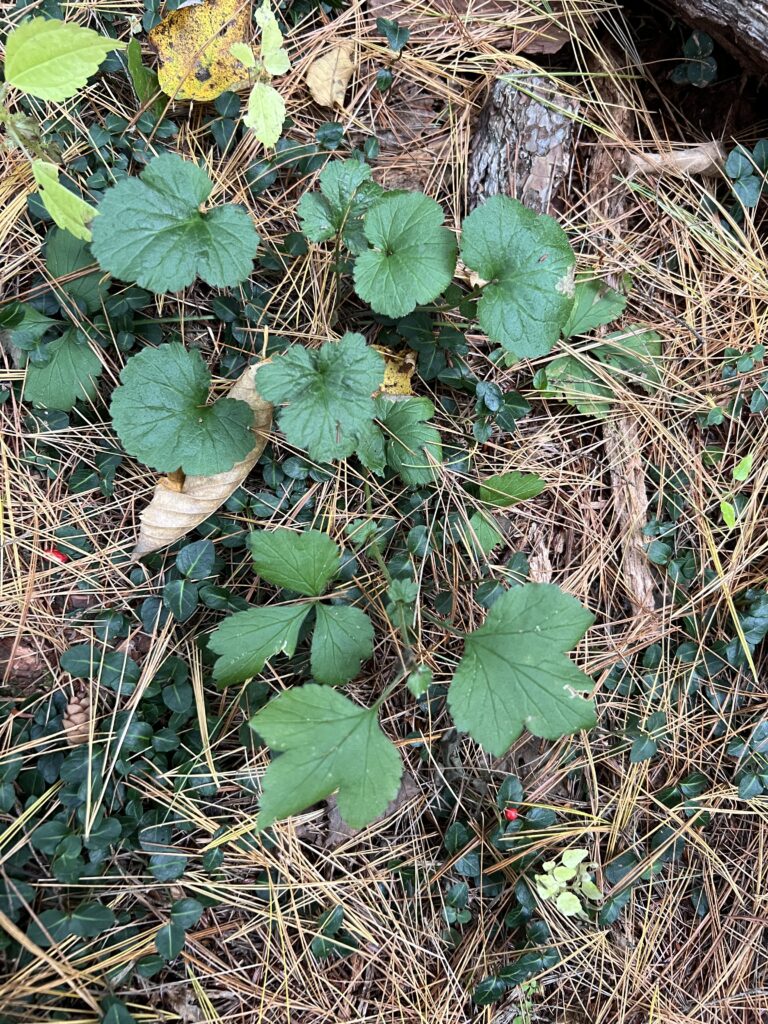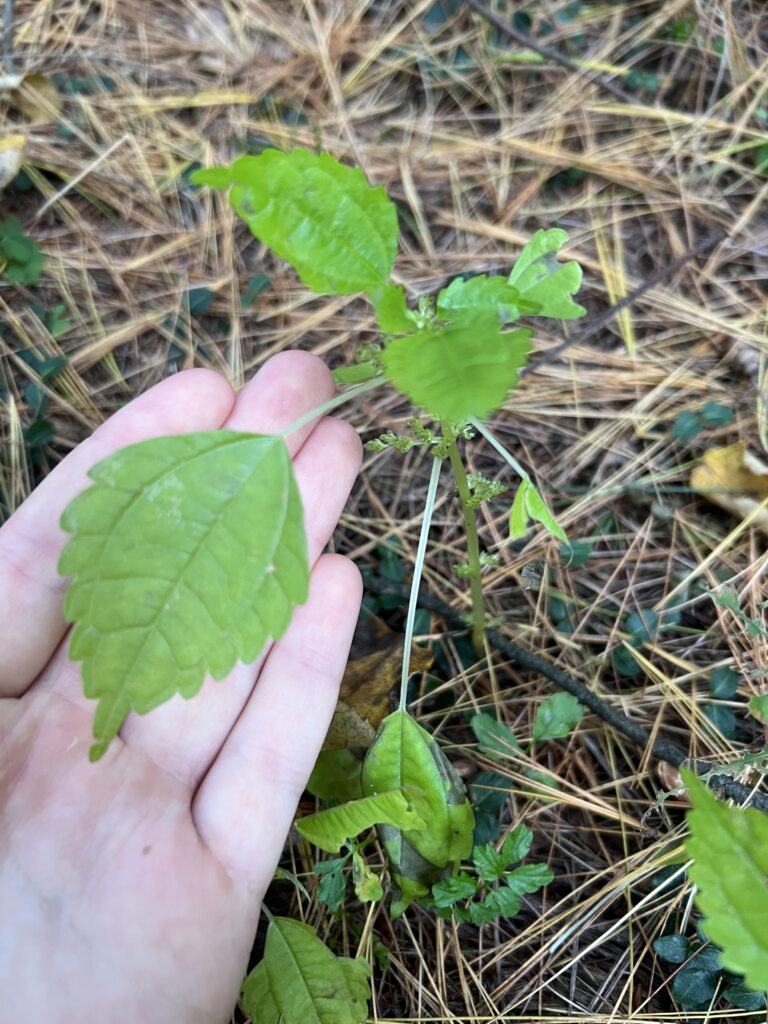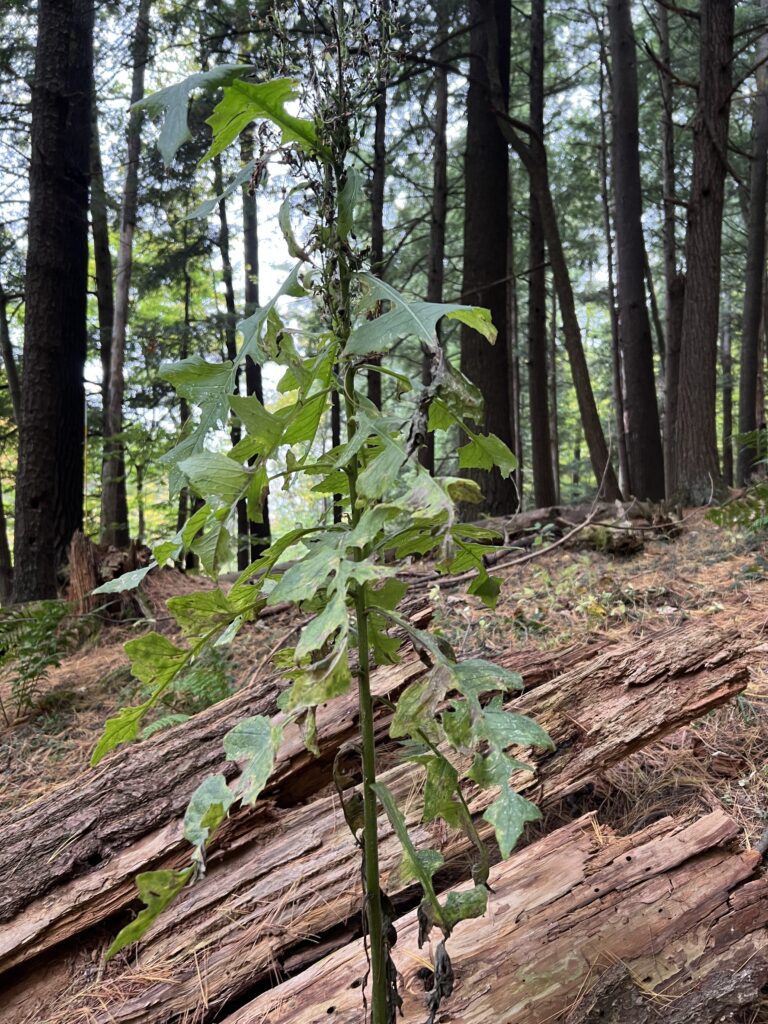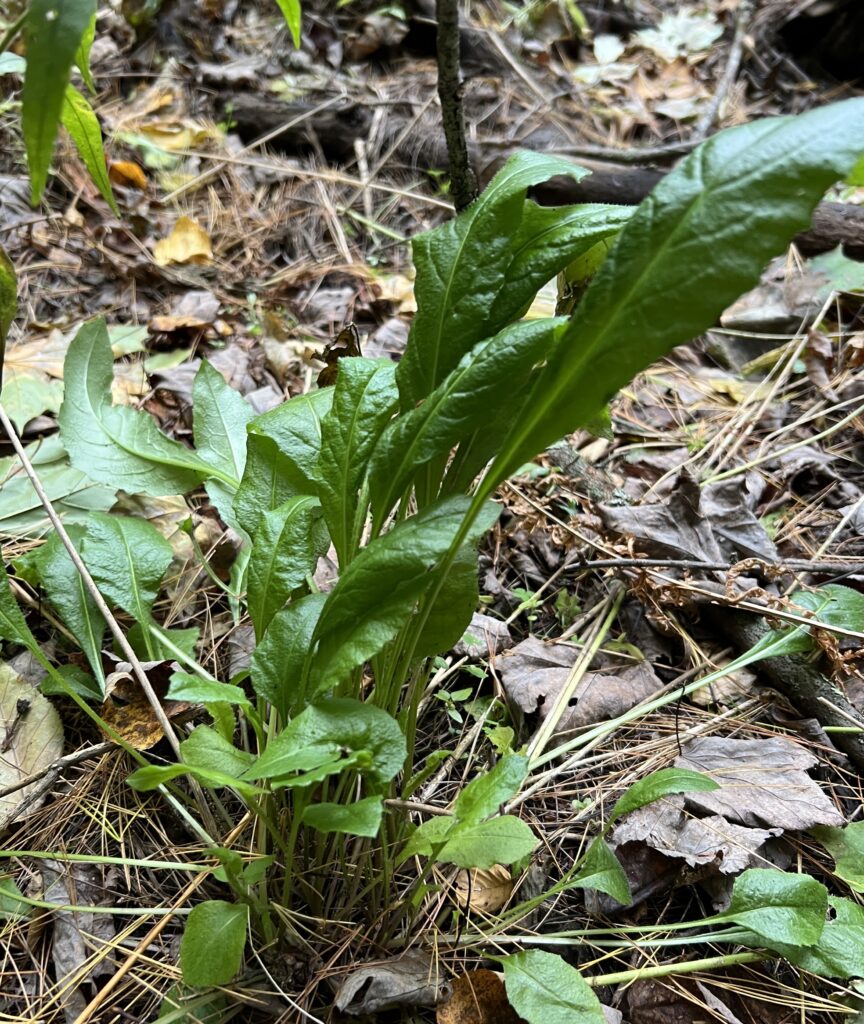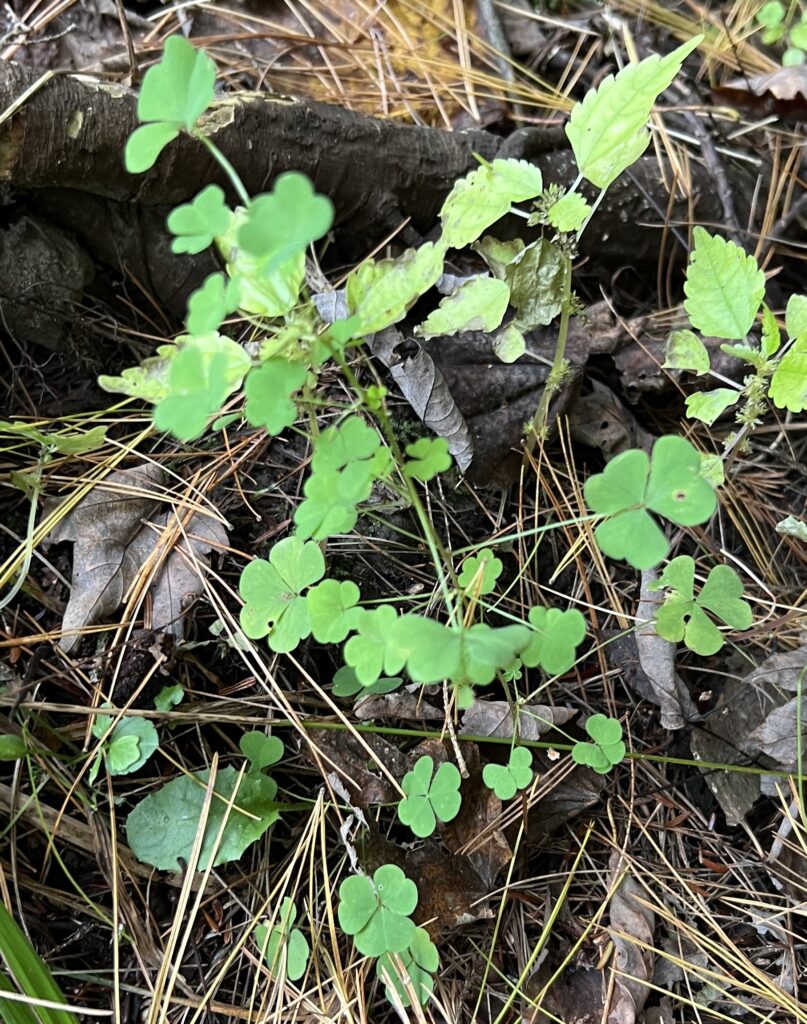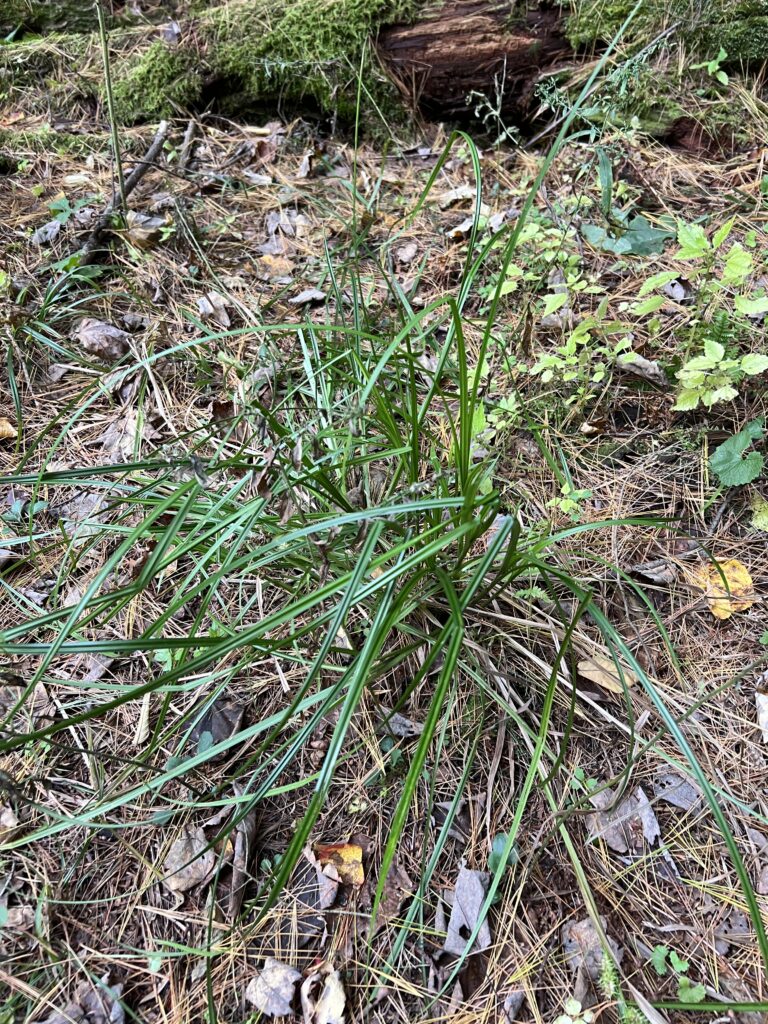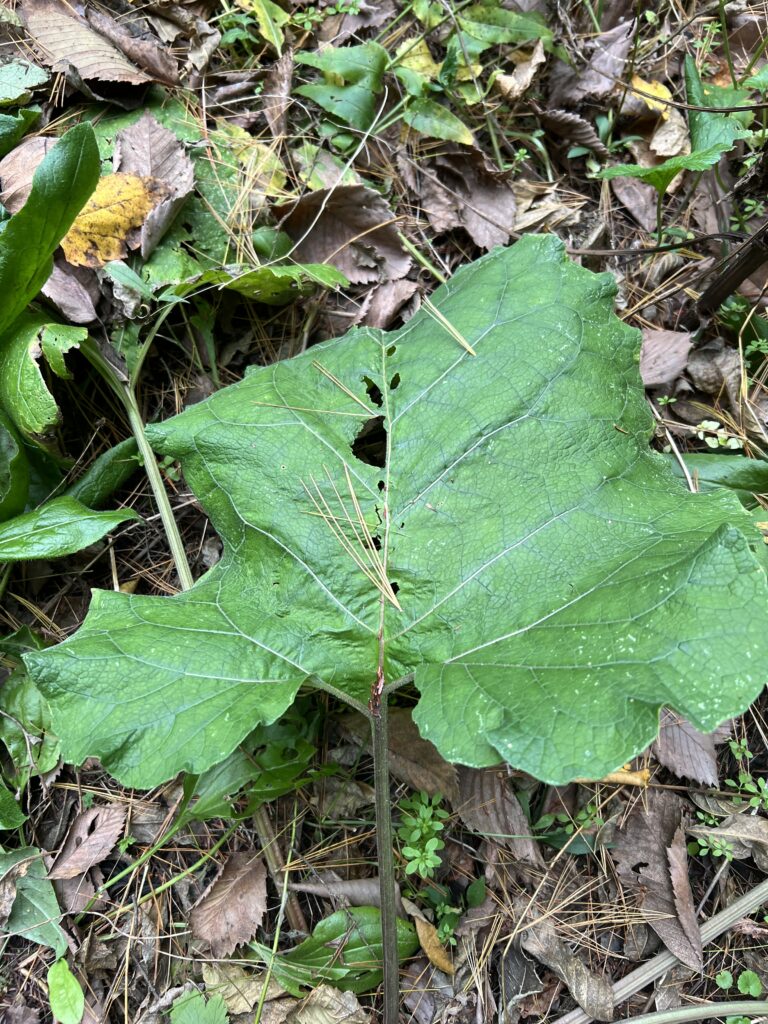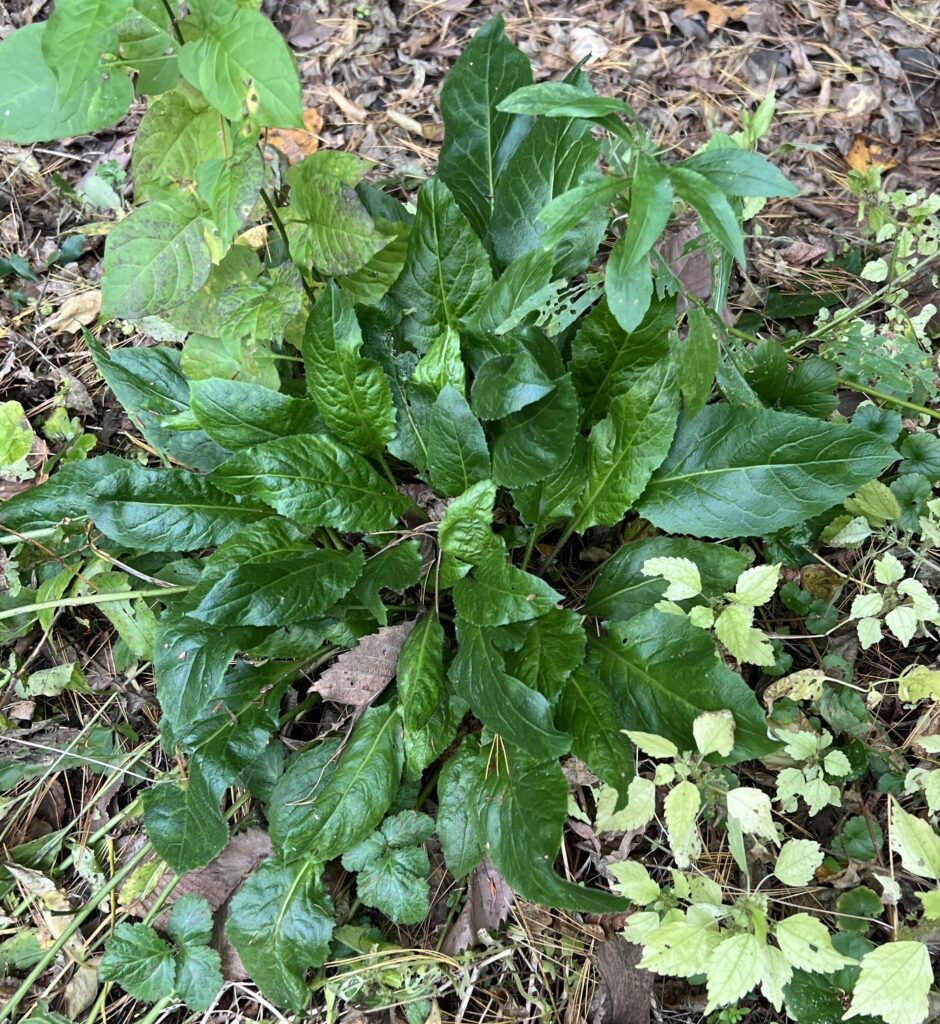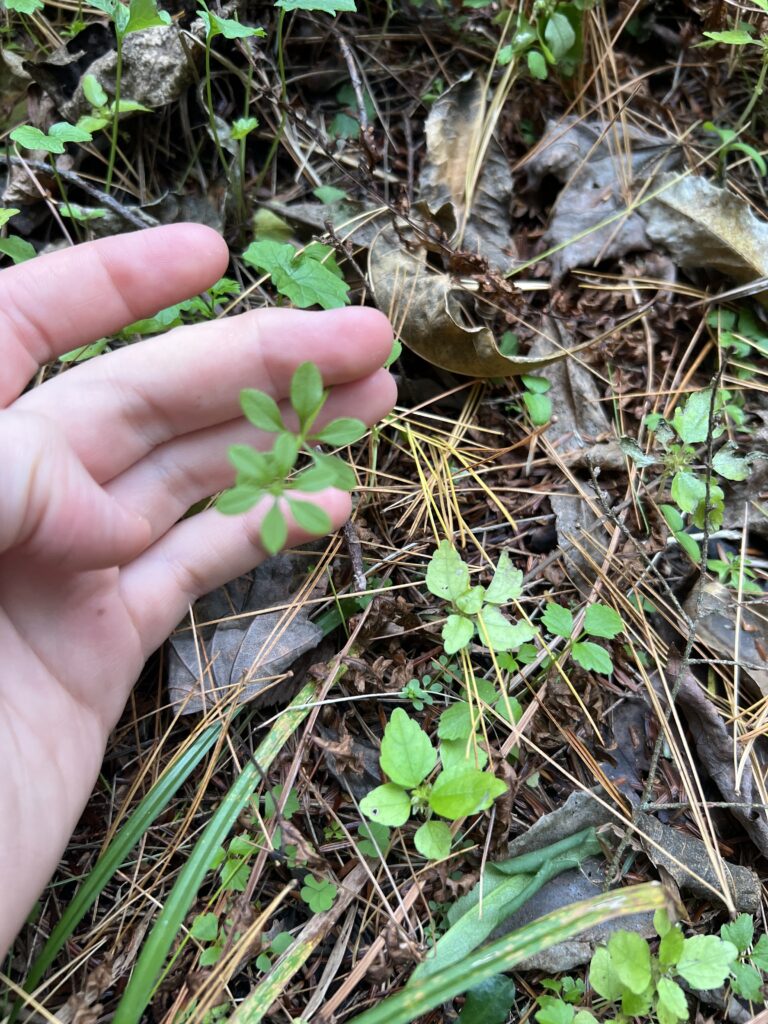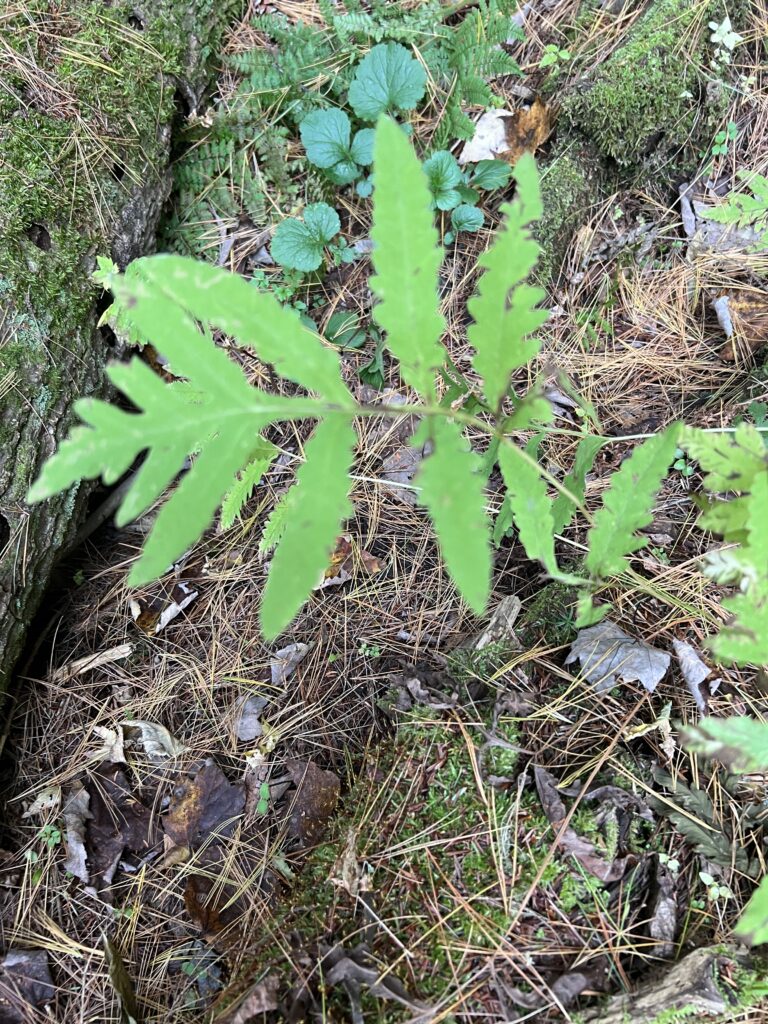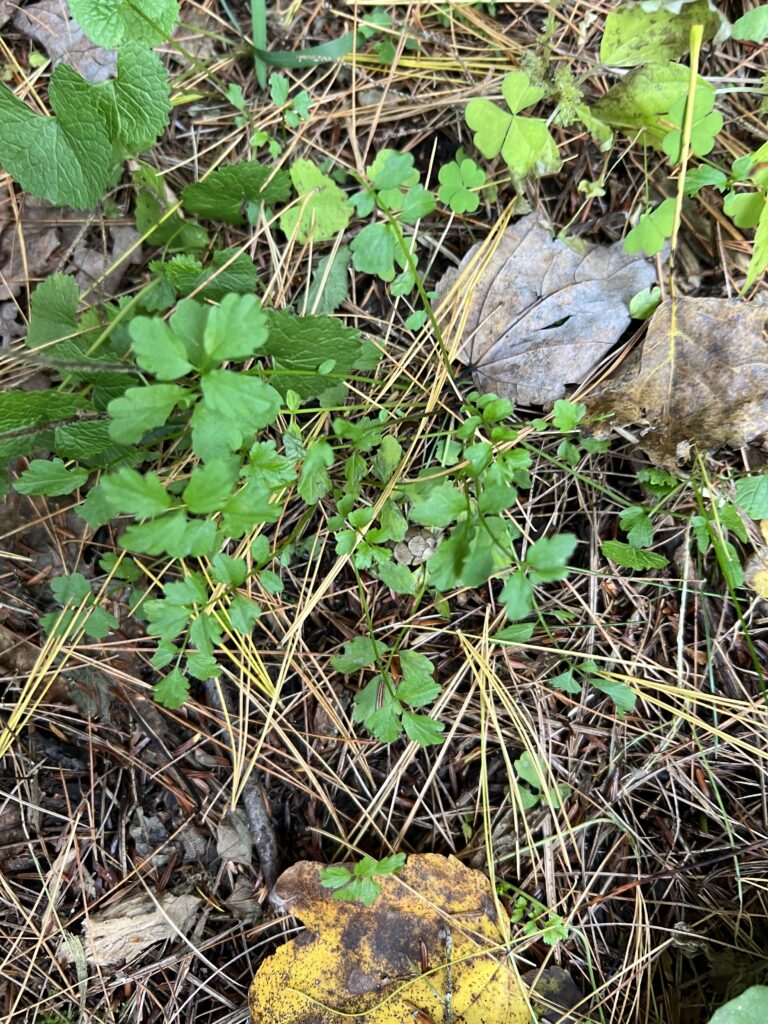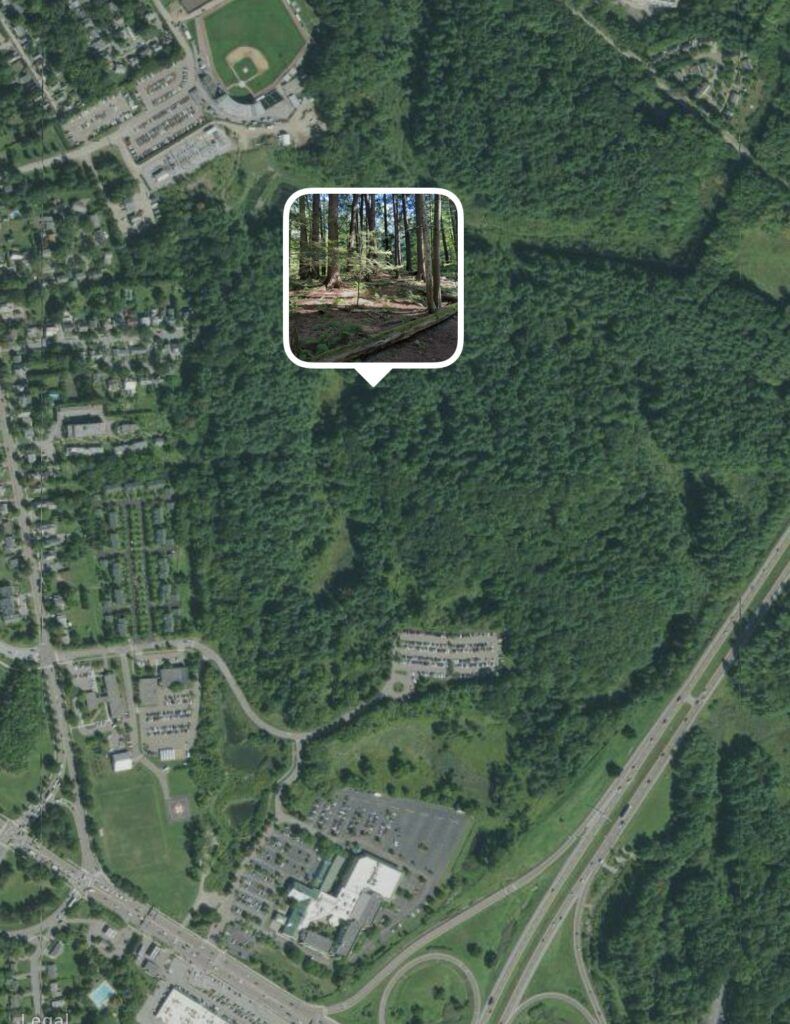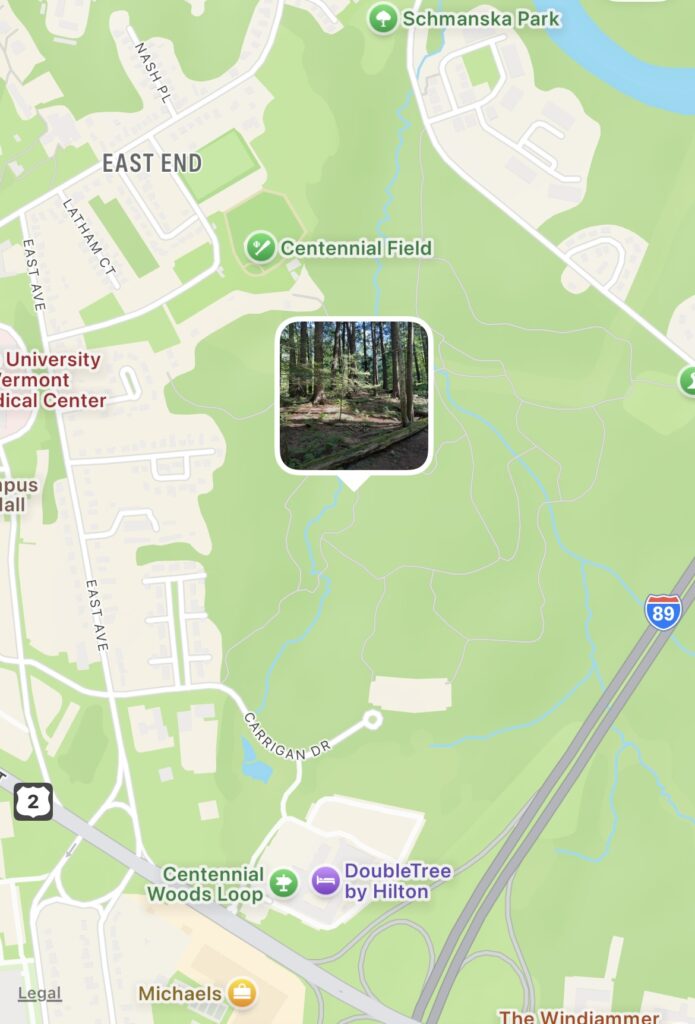
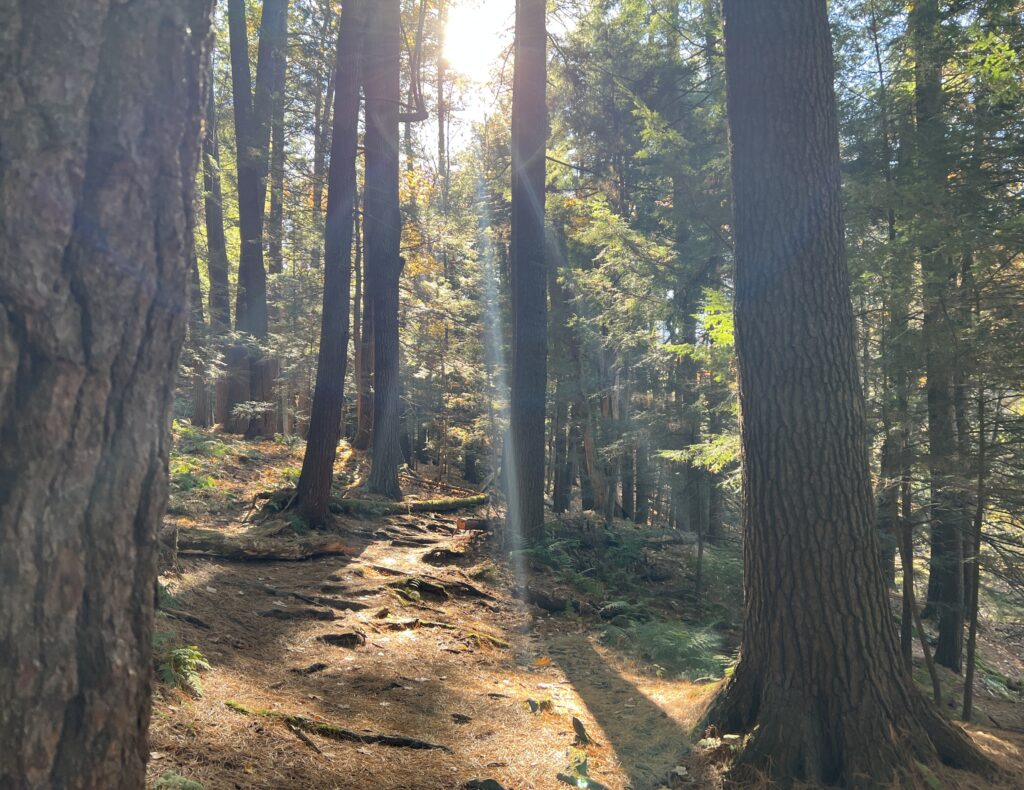
While sitting quietly in my phenology spot, I saw many areas where the sun rays poked through to reach the understory. I also noticed that while there were many areas of the trails with a thick layer of deciduous leaf litter, in my area there was still only eastern white pine needles covering the forest floor. I saw a mix of trees with yellow-red foliage and deciduous tress that still haven’t turned, and mainly evergreens. I also noticed that there is a lot of coarse woody debris in the understory lining the trail, along with many large standing snags. I also noticed that the stream in the wetland area was running a lot faster and stronger than last time because of the rain earlier in the week.
I heard the sound of the stream trickling, birds chirping in both the over story above and from distant trees, leaves rustling and falling in the wind, the cracking and creaking sound of trees, water dripping from the leaves, and chipmunk squeaks. I also could hear the sounds of the surrounding road from deep in the forest. I heard the sound of sirens, the beeping of a truck backing up, and the revving of engines.
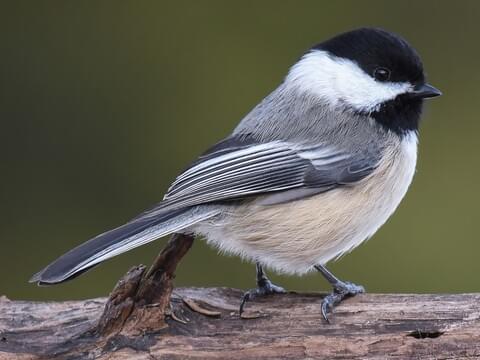
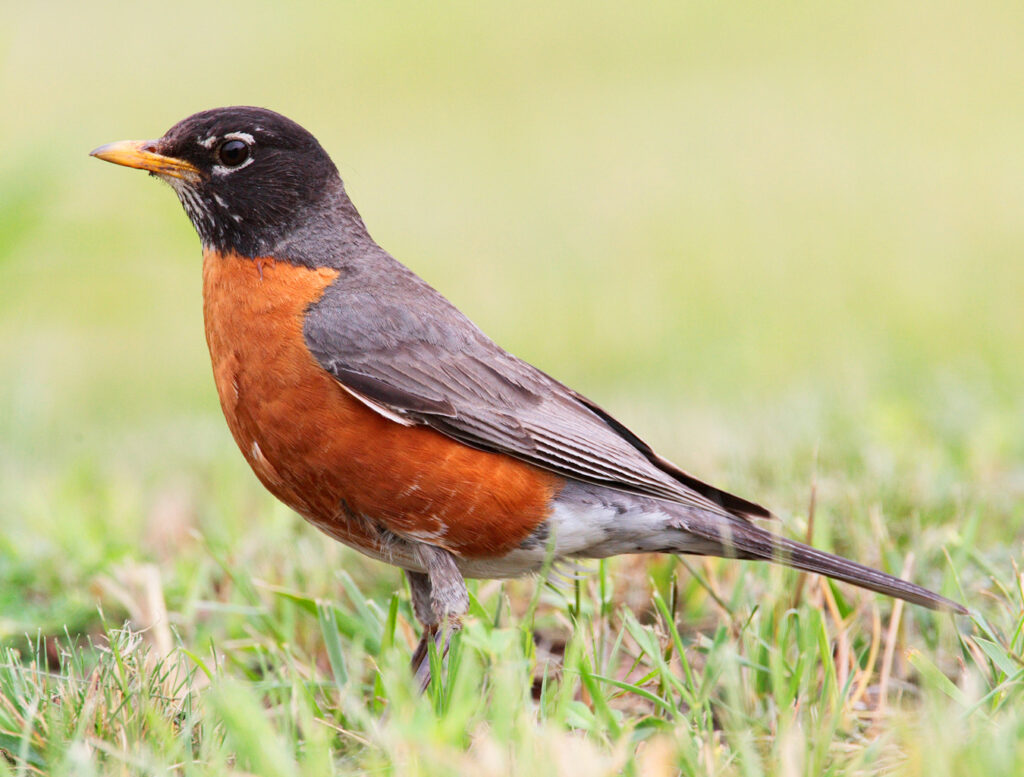
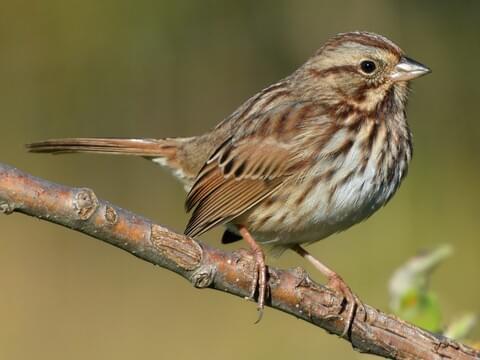
Additionally, during my 15 minutes of observation, I had the Merlin Sound ID running to pick up on and identify the specific bird calls I was hearing. The recording identified the calls of the black-capped chickadee, American robin, song sparrow, winter wren, and eastern screech-owl. These identifications may not be entirely accurate though I am familiar with the call of black-capped chickadees and those were the most prevalent.
I felt the cold breeze of the brisk day and the soft moss of the downed log I sat on. I smelled the cold, stinging air and the earthy, mossy smell of the woods.
I enjoyed this experience because I wasn’t distracted by technology or answering a complex question about my surroundings. I simply had to observe and therefore could be more mindful and focus on what I was feeling and seeing in the moment. I could pick up on more details of the environment with this exercise.