Posts

Final Spring Visit! 🌿🌷

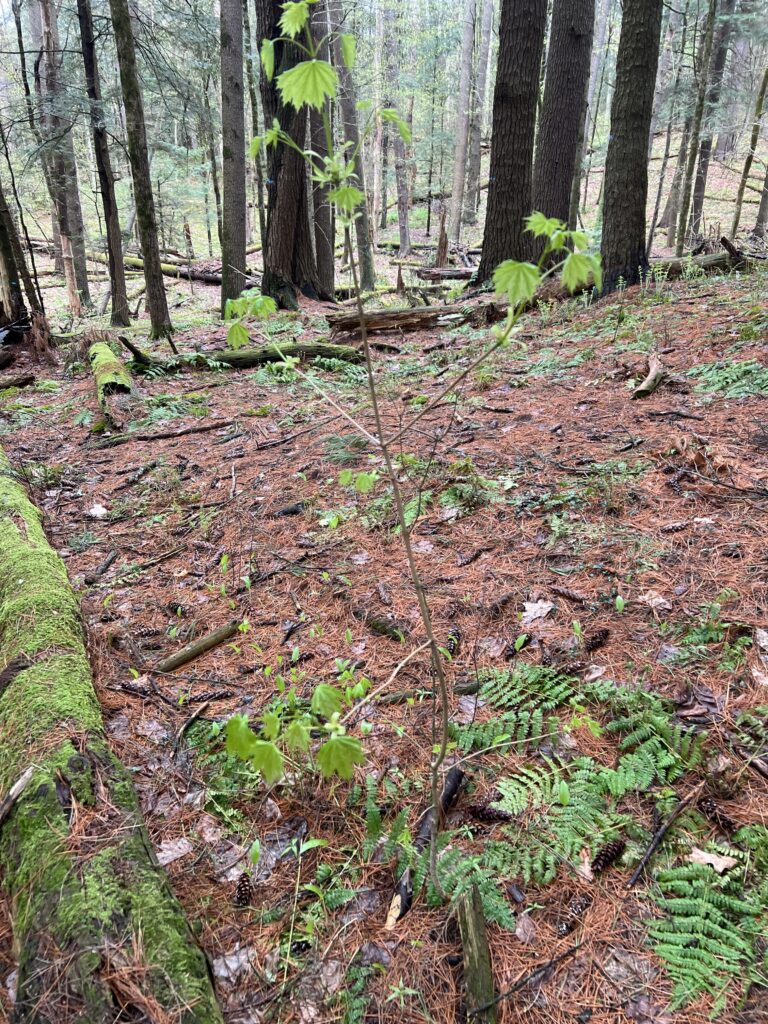
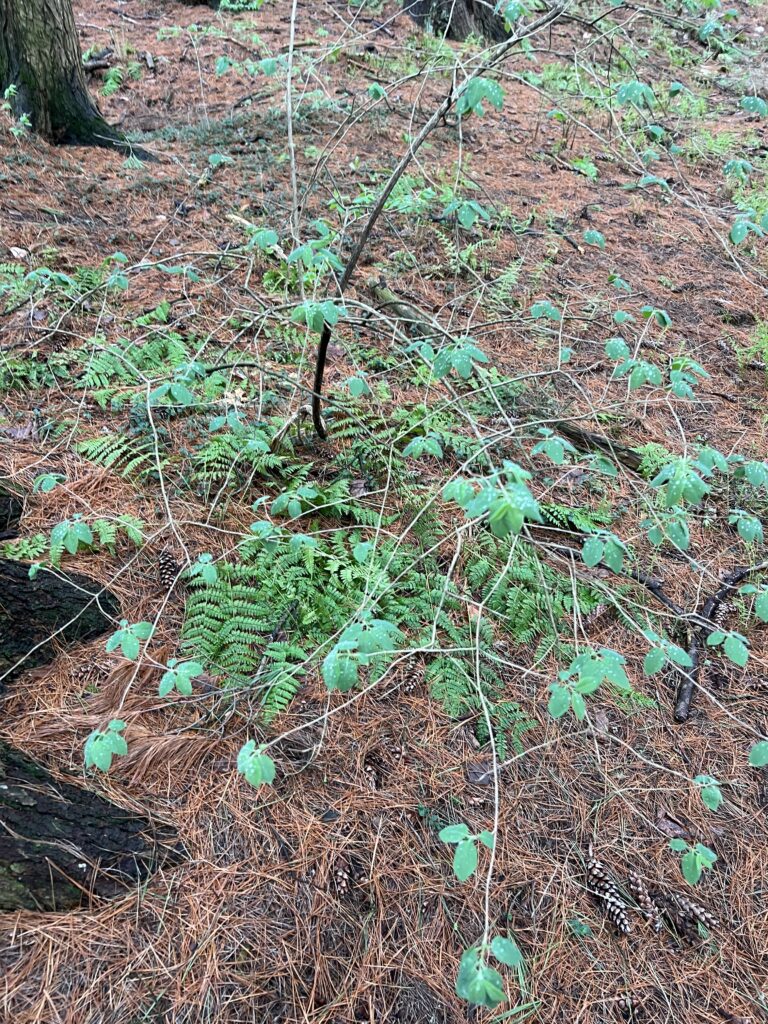
Over the course of the year, I have seen my site transition from fall to winter, and now winter to spring. The last time I visited my site in late January, the understory was very sparse, there was a thin layer of snow, and the stream had a layer of ice on its surface. Now, my site has started to bloom into spring. The few deciduous trees in the understory have begun to leaf out, there is more vegetation beginning to emerge, and the snow and ice cover has melted away. During my visit, the weather was warm and humid, and rainy.

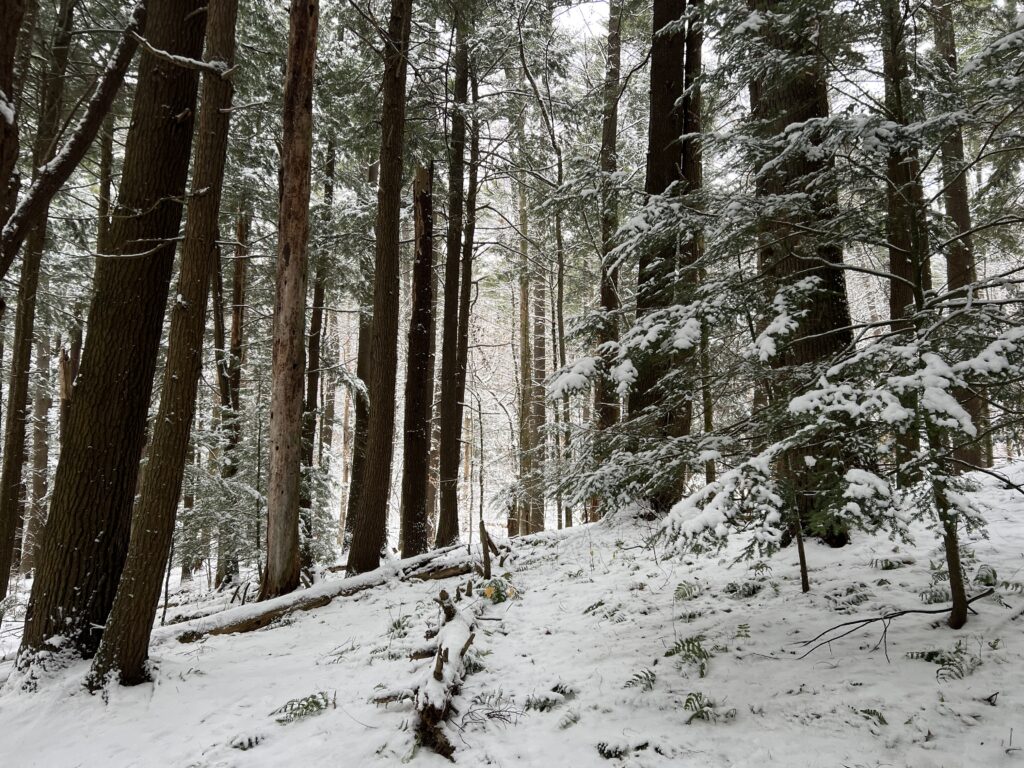
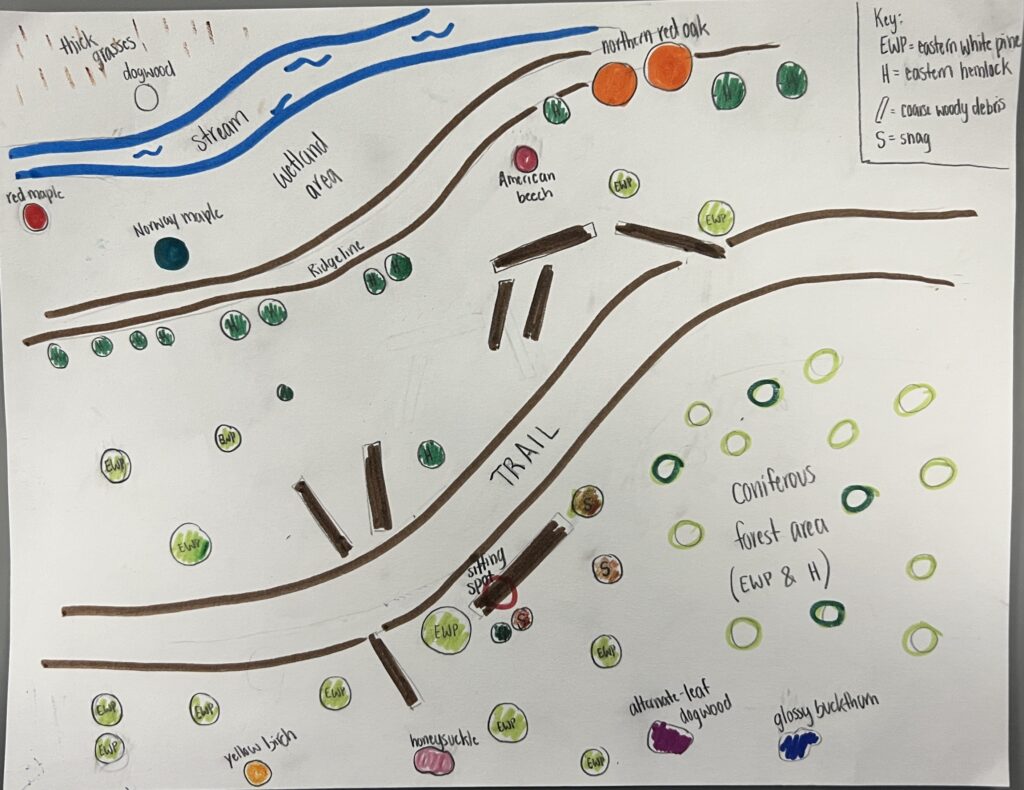
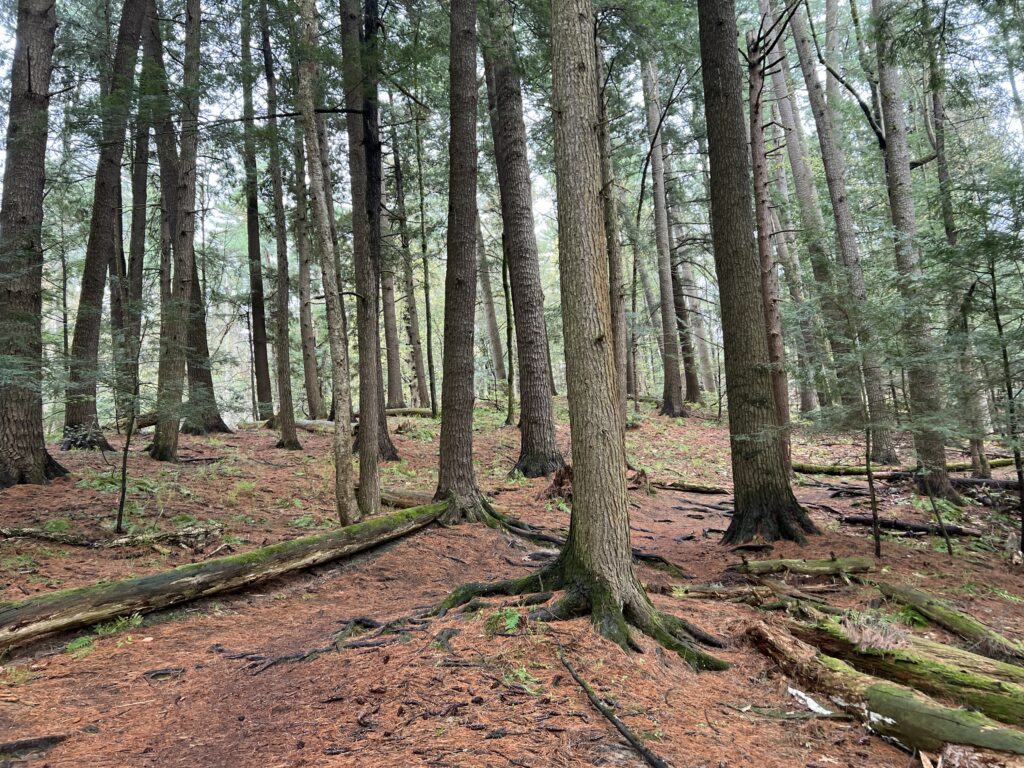
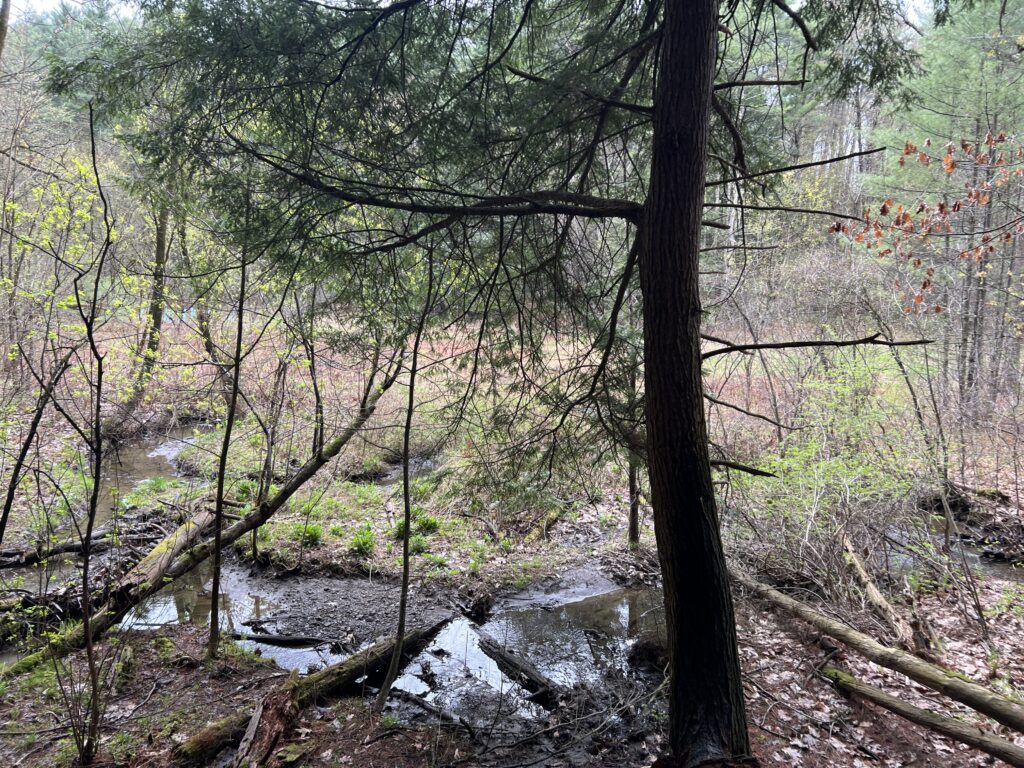
The major landmarks I have become familiar with at my site are the stream in the wetland area, the large hemlocks and eastern white pines along the trail, and the walking trail itself. Some of the smaller landmarks include the dead logs lying close to the path and some of the small deciduous trees in the understory including an American beech, patches of honeysuckle, and red maple saplings.
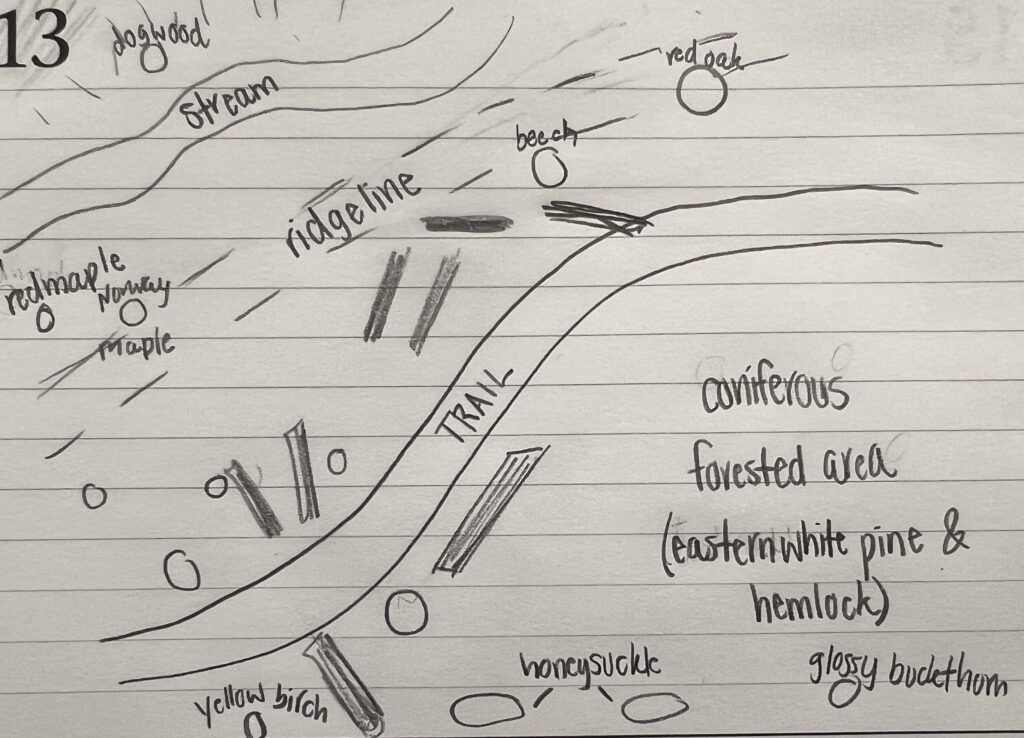
15-minute sit-sketch

My site is important to Vermont and UVM culture because it is an accessible natural area to UVM students. The woods and forested areas also may have spiritual and sacred meanings, and can be important for religious practices or simply staying grounded in place. The area also may be important for artistic expression or recreation. Culture also influences how we interact with or protect this site. At UVM and in Vermont, we value natural areas and forests, and therefore we maintain it using sustainable practices to foster thriving ecosystems and wildlife habitat.

I’m conflicted about whether I consider myself a part of my place. While I think UVM and the community as a whole are part of Centennial Woods and my site, I don’t believe that I as an individual am. UVM plays a role in maintaining and preserving the forested area, giving back to the nature that thrives here. Hikers in the community have impacts on and interact with this place everyday, becoming a part of the place. However, I don’t believe that I, one person, am part of this place as I don’t have a large effect on the ecosystem and will never fully understand it.
City Nature Challenge! πŸŒ†πŸŒΏπŸŒΈπŸŒ³

During the four-day urban BioBlitz, I explored the UVM campus and some of the neighborhoods near Redstone Campus, including South Prospect St, Summit St, Ledge Rd, Deforest Heights, and Iranistan Rd.

I had an easy experience using iNaturalist because I have previous experience cataloging species throughout the year for this blog. It was fairly easy to enter all my images and identifications. However, I did find it a little annoying to enter images during my walks, so I ended up snapping pictures while I was outside and logging the entries afterwards so that I could be as present as possible.

I encountered 21 species during my explorations:

I found it interesting to observe the biodiversity across the global participation and the shear amount of observations. There are currently 59,803 species and 2,197,239 observations! It is also really cool to view the top observed species. Currently, the top five species with the most observations are common dandelion, mallard, garlic mustard, western honey bee, and ground-ivy. It highlights how we are all connected by our natural surroundings. This event also fosters a community of nature lovers and it is very heartwarming to be a part of a community that cares about the protection of biodiversity and access to nature for everyone.

Phenology Walk πŸŒ³πŸƒ

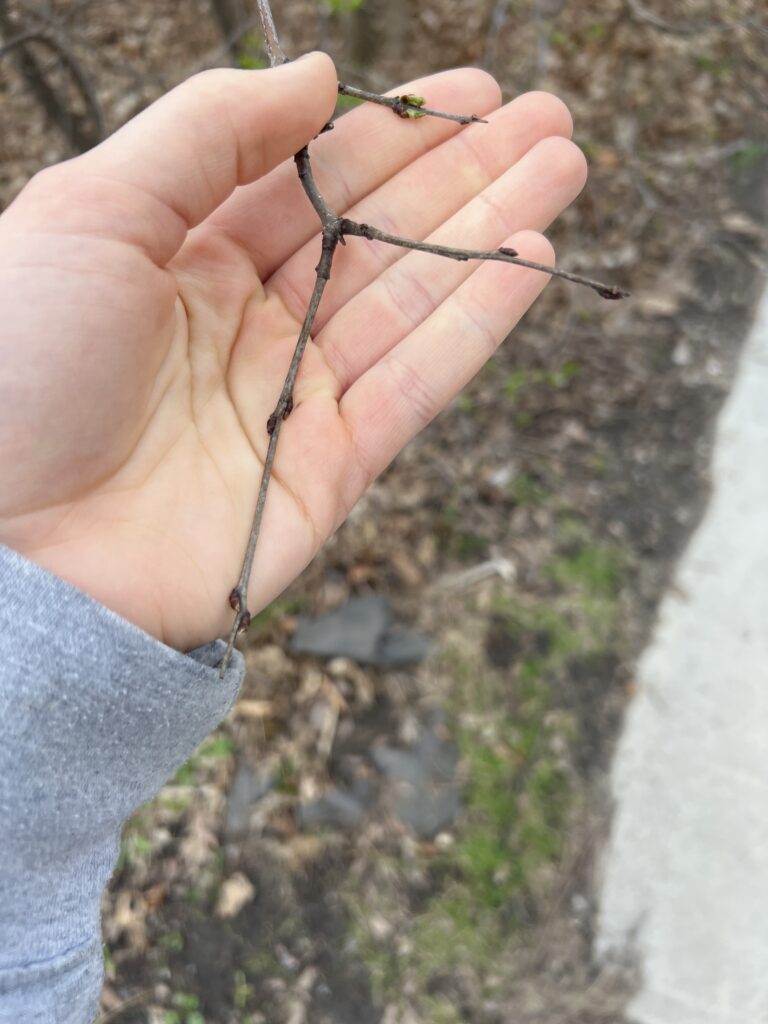
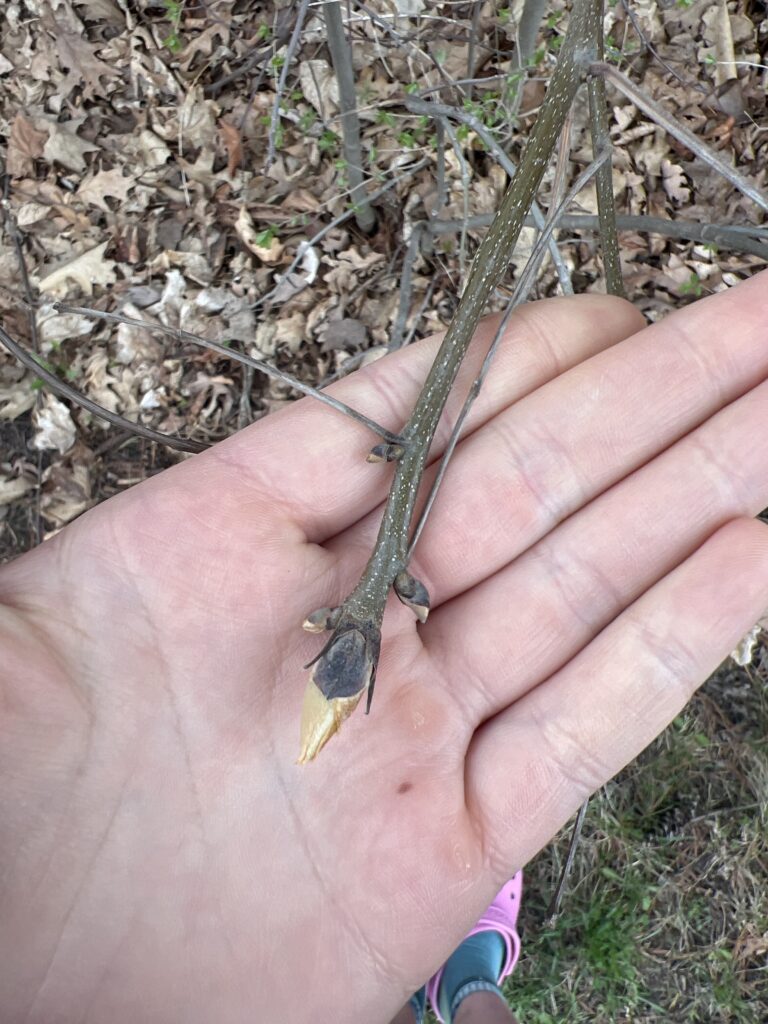
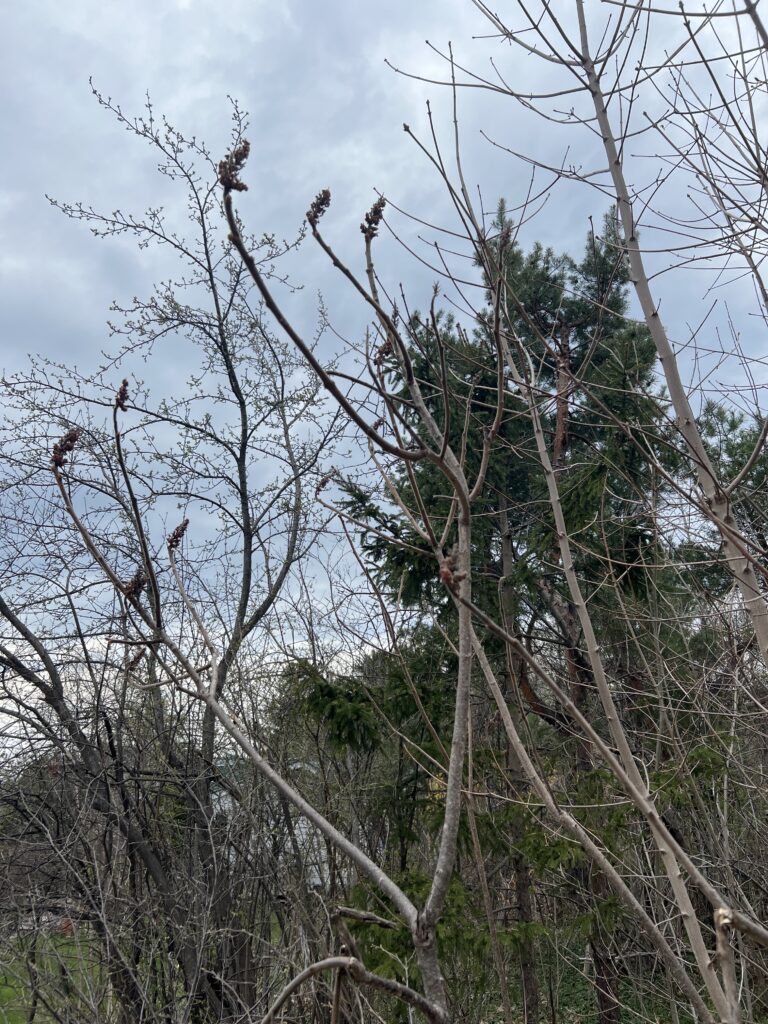
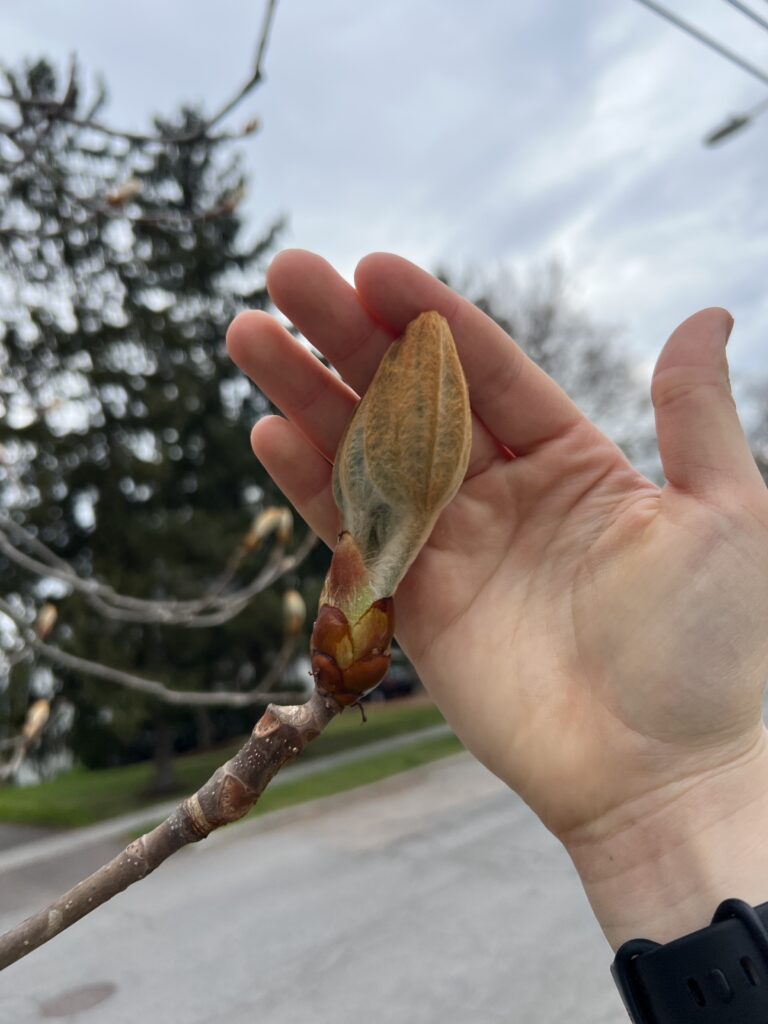
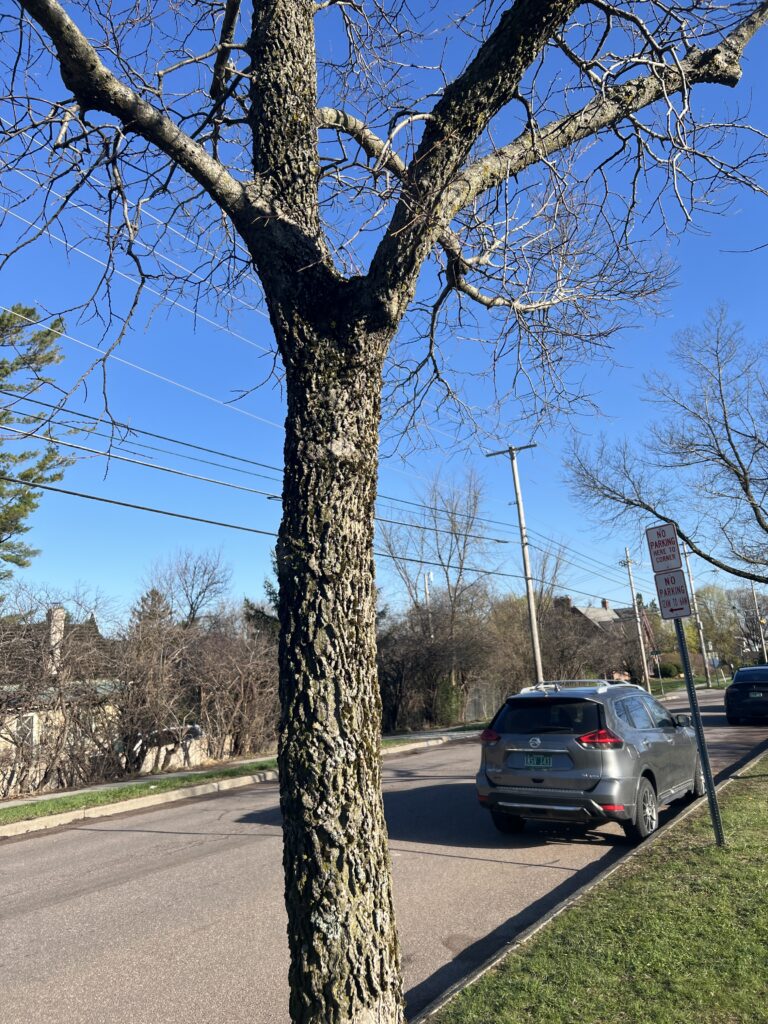
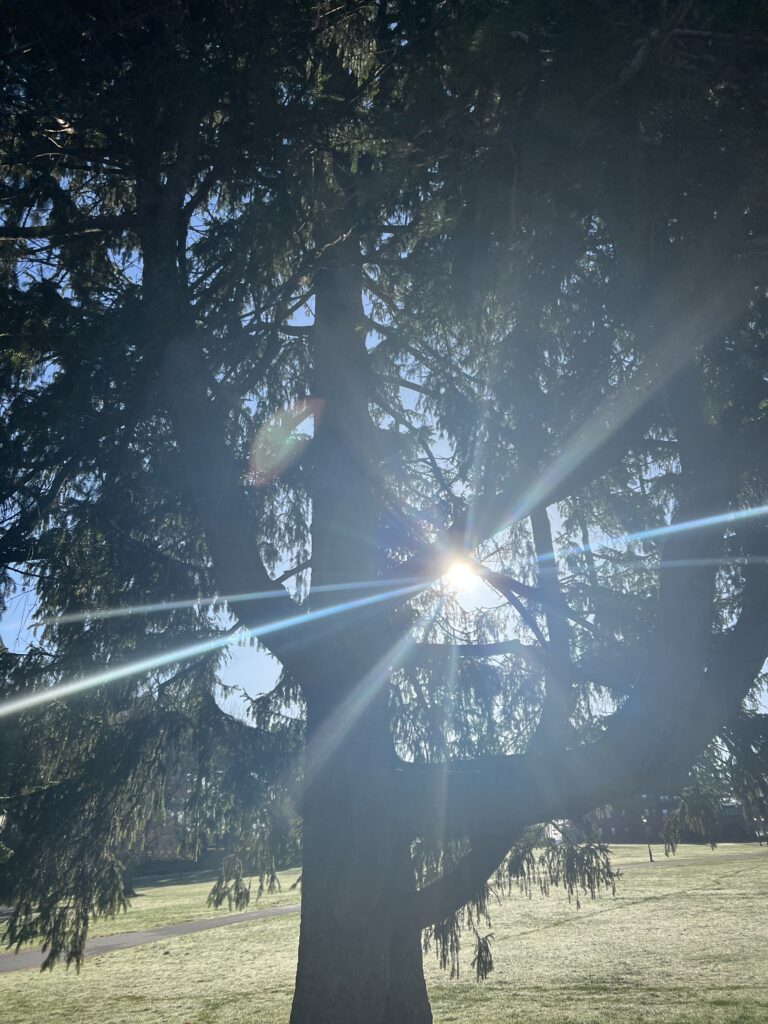
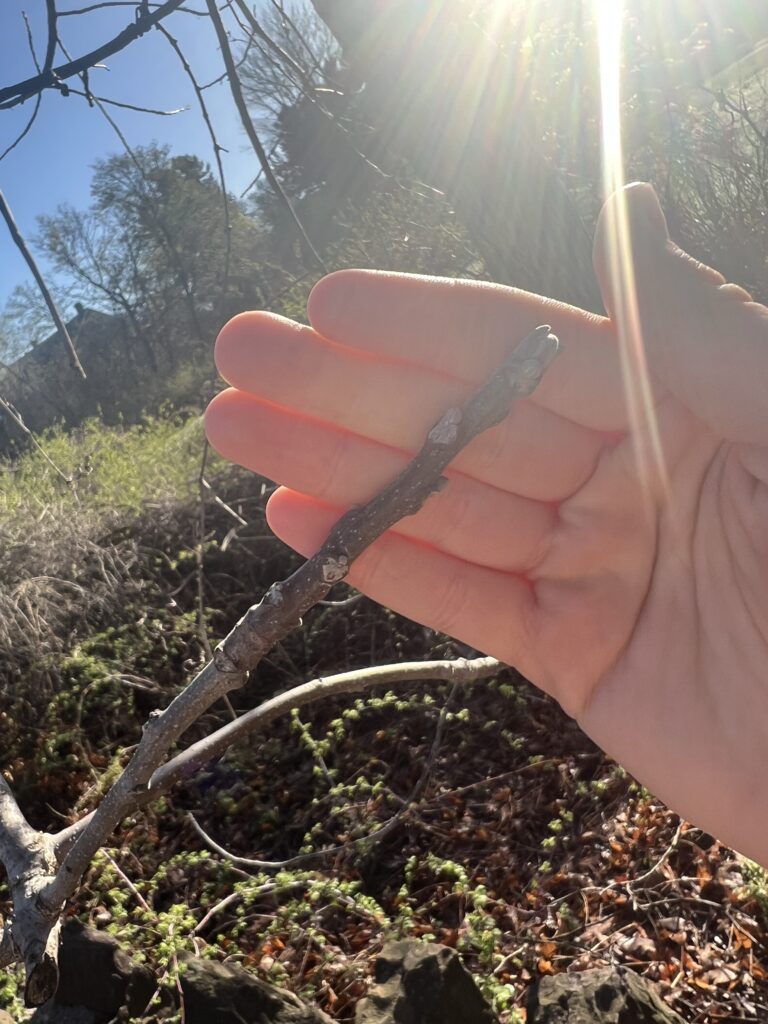
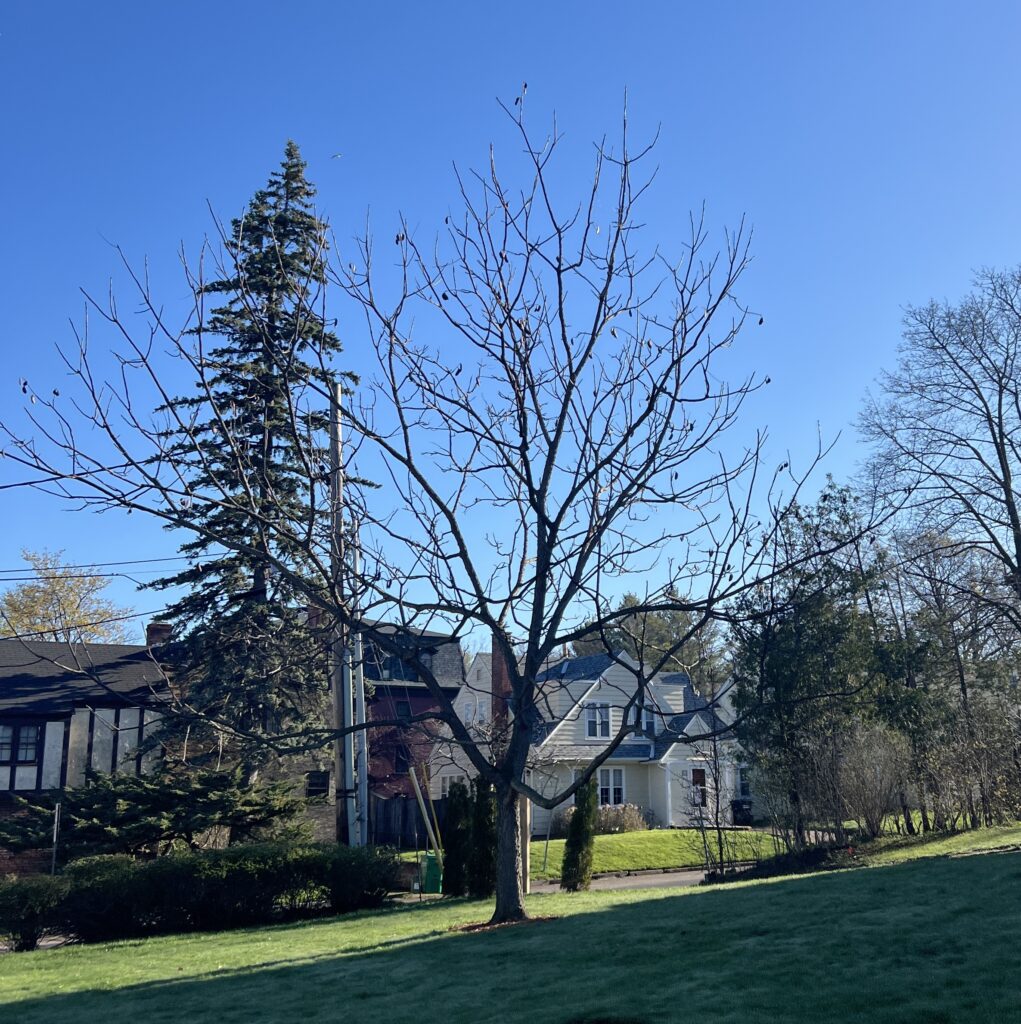
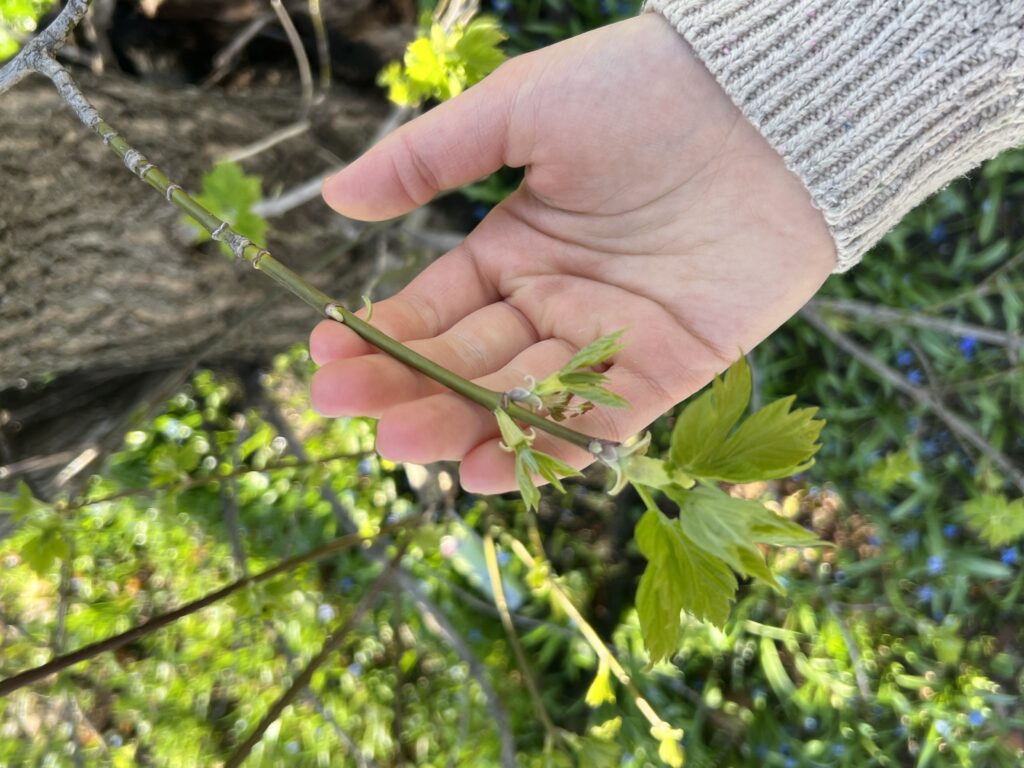
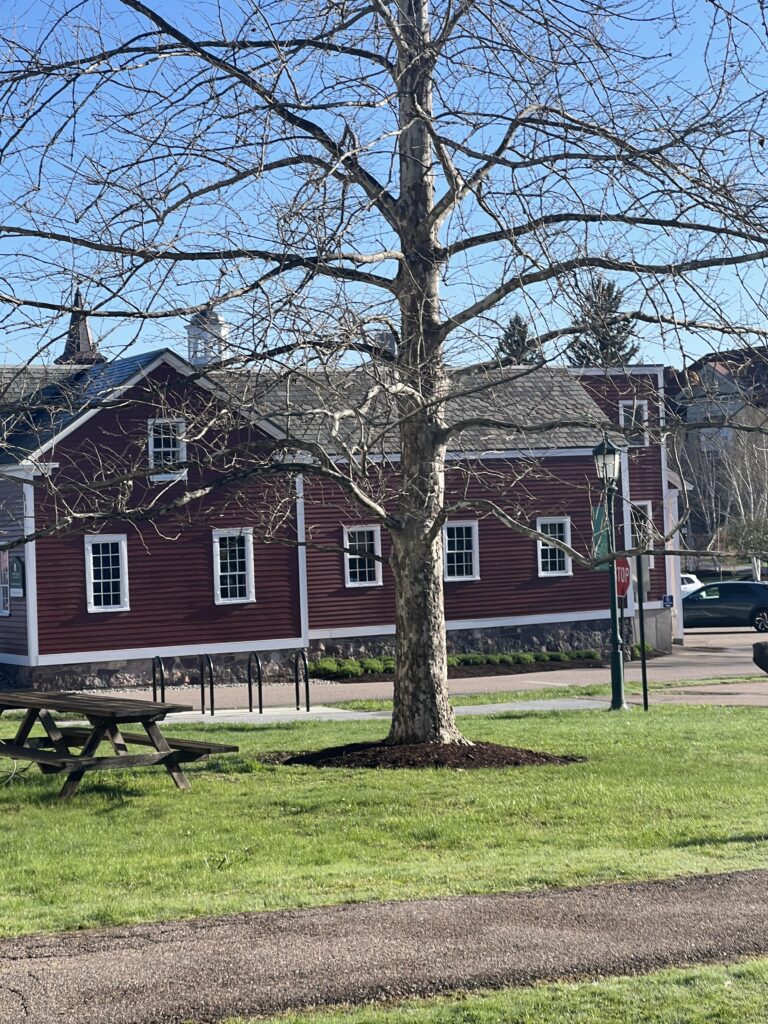
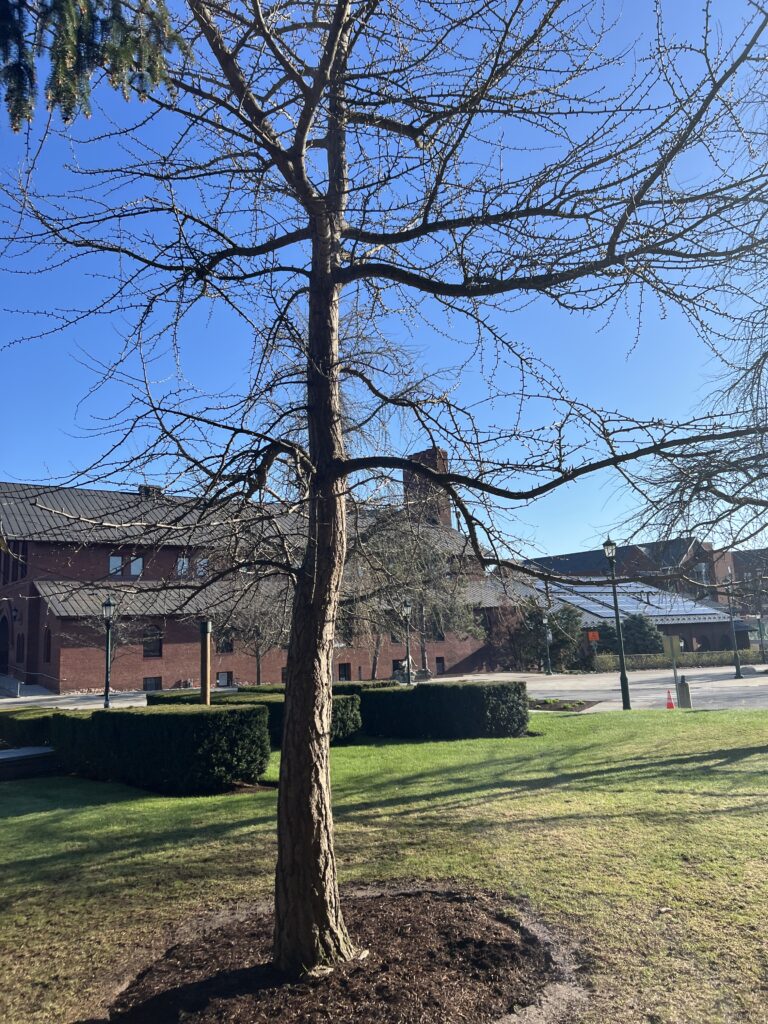
I collected phenological data from 5 trees on April 7, 2025. The species included red oak, sugar maple, white oak, red maple, and Norway maple. I noticed that generally, the buds on the selected trees hadn’t quite broken. The only changes of phenological significance were a few broken buds on the sugar maple, and dead leaves on the white oak remaining from the fall. I didn’t see any flowers, pollen, or expanded leaves because it was too early in the season to view these changes. Due to my observations, I can determine that all five trees were in a similar phenophase: either close to budding or starting to bud. When walking around campus in the following weeks, I noticed the test trees starting to bud around 2 weeks later.

When exploring NPN’s website, I found an article titled “Are plant and animal species responding differently to climate change?” derived from the study “Phenological divergence between plants and animals under climate change” from Nature Ecology & Evolution. In this study, they collected an extensive dataset of phenological observations from other peer reviewed literature and networks including the USA-NPN. They estimated whether the average time that a life cycle stage occurs has shifted since 1980, and evaluated the role of temperature and precipitation in discovered changes. Furthermore, they researched how climate change may increase the likelihood of phenological mismatches for species in the same location to assess risks to ecosystem dynamics.

The authors found that spring and summer phenological processes for plants like leaf out, flowering, and fruiting are happening earlier than 40 years ago. This advance is likely the effect of rising temperatures. Contrastingly, leaf fall has not shifted over time. Additionally, climate change has had a much weaker effect on the timing in animal life cycles. The differences in responses contribute to the evidence of emerging mismatches between interacting species.

An example of an emerging concern of phenological mismatch is how plants that rely on insect pollination are flowering earlier, however, the insect pollinators are not emerging earlier in the year. If this pattern continues and their seasonal timing further diverges, the pollination process may be disrupted in future and have detrimental impacts on the ecosystem and food web.

The data we are collecting on campus may contribute to the development of this study and other similar research projects to determine how tree phenology is changing in Vermont in relation to climate change, and potential consequences for species dynamics.

Winter Wildlife Sitings β„οΈπŸΎπŸΏοΈ

Throughout the period of February 15 – 24, I explored the Burlington area and observed winter wildlife signs throughout the city. I visited the Intervale Center twice throughout the week and found animal tracks and other signs of wildlife activity. I also found tracks and saw birds gathering food while walking around campus.

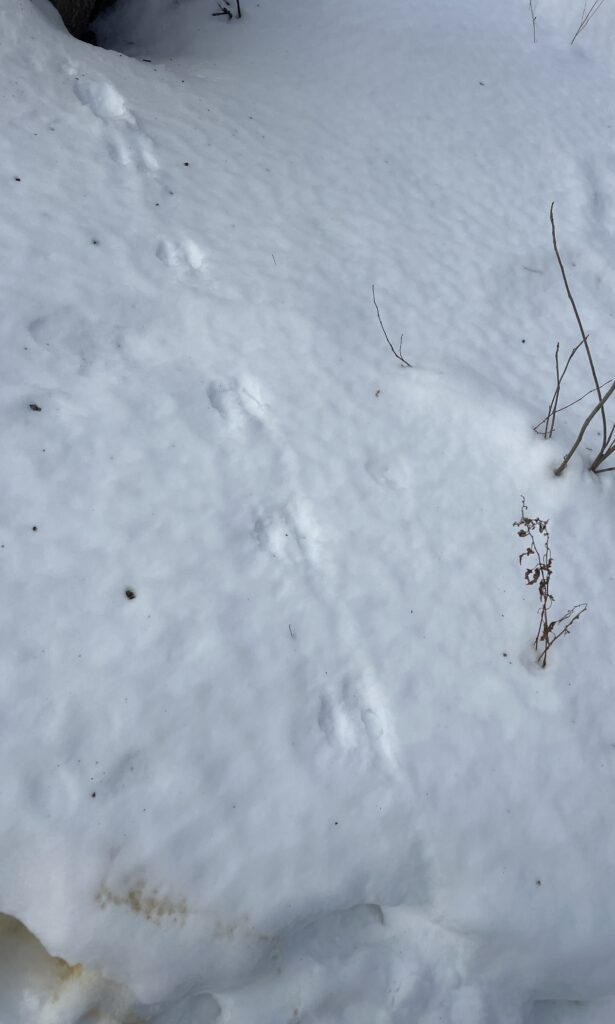
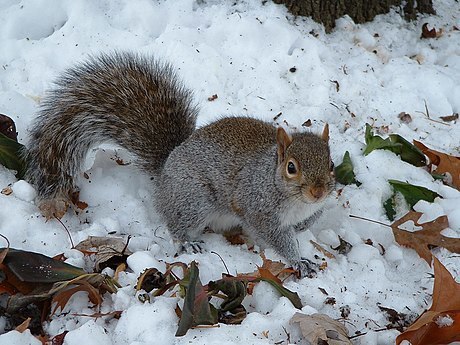
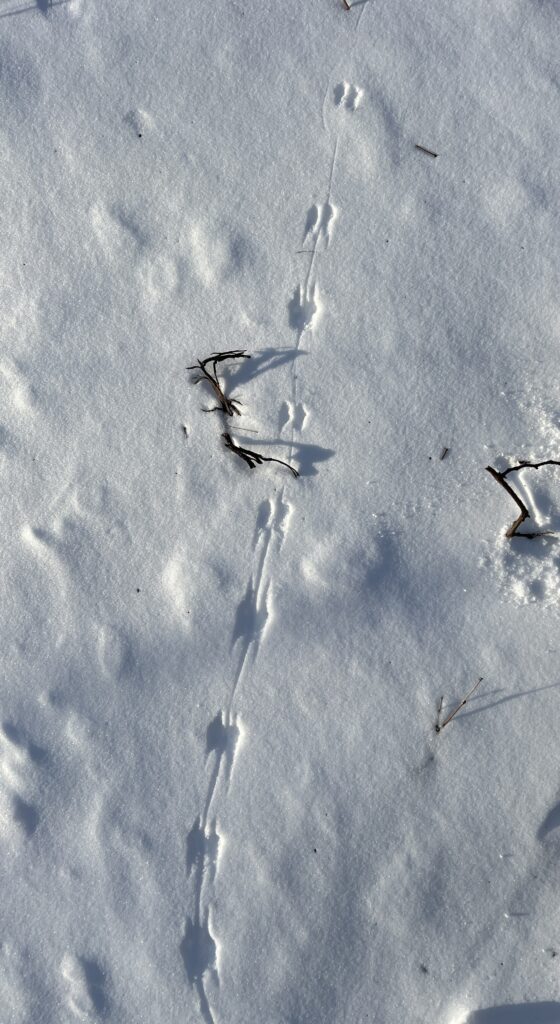
I observed many tracks that I believed to be eastern gray squirrels around the UVM campus and at the Intervale Center. These tracks resembled a galloping or hopping gait with the larger hind feet in front. The smaller front tracks were side by side instead of at a diagonal, indicating a tree dwelling species. Furthermore, the size and shape resembled the paws of a gray squirrel. Lastly, context was very important in my identification as the majority of the tracks I saw moved from tree to tree, most likely formed from a squirrel scurrying between trees for shelter.

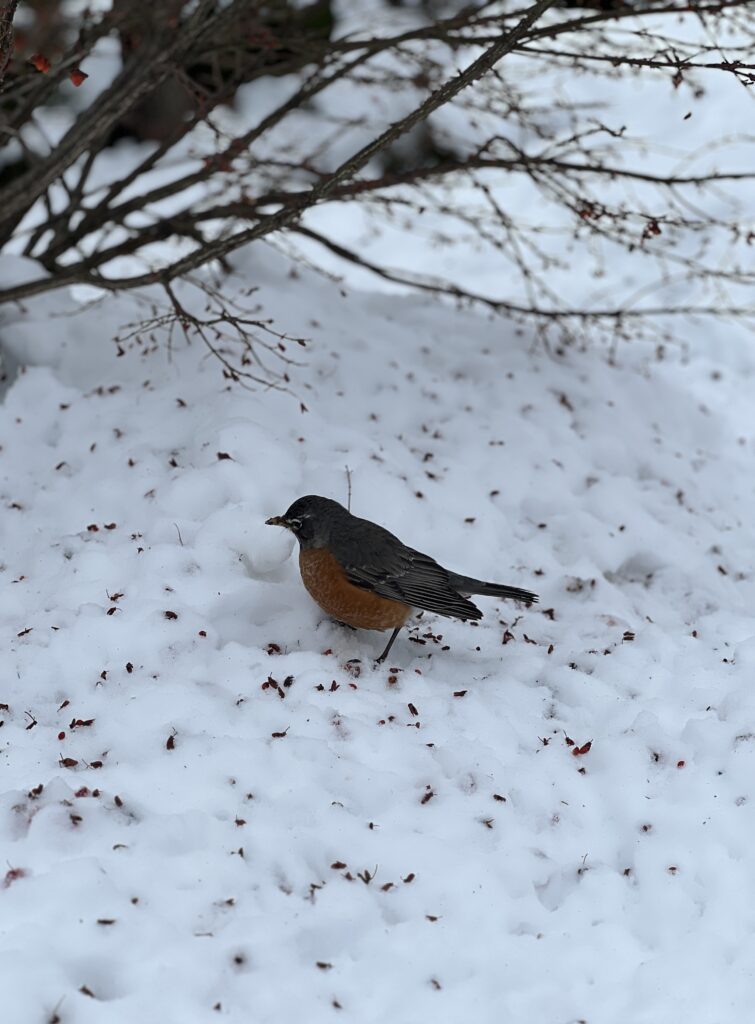
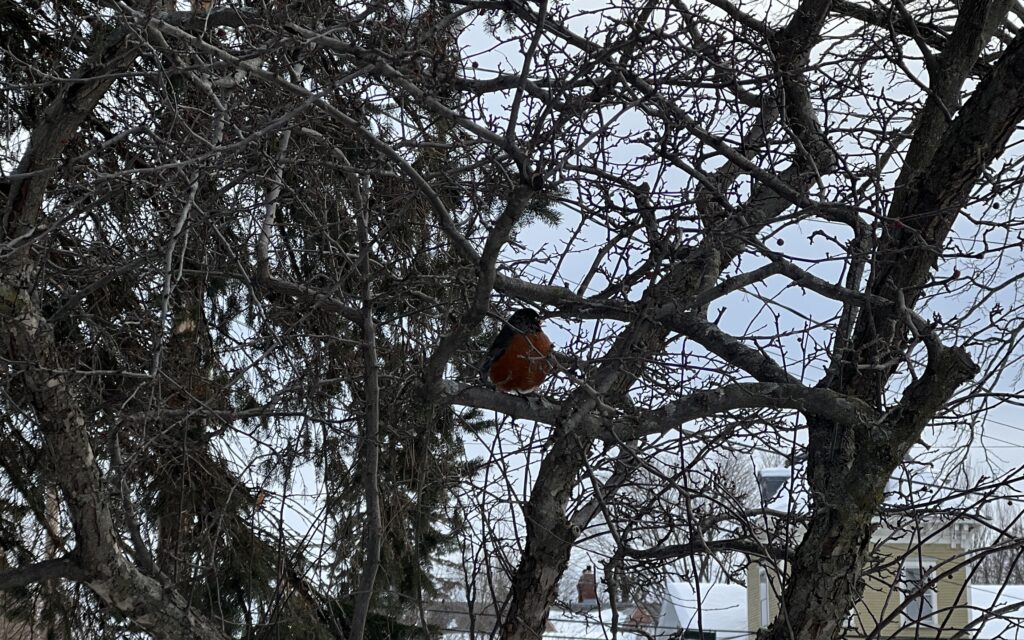
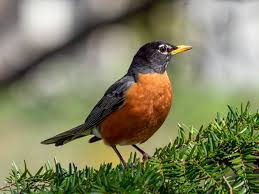
I also saw many American robins throughout the week. This species is distinct because of its bright red chest. They particularly love to flock around the bushes outside my dorm and feed on the burning bush berries.

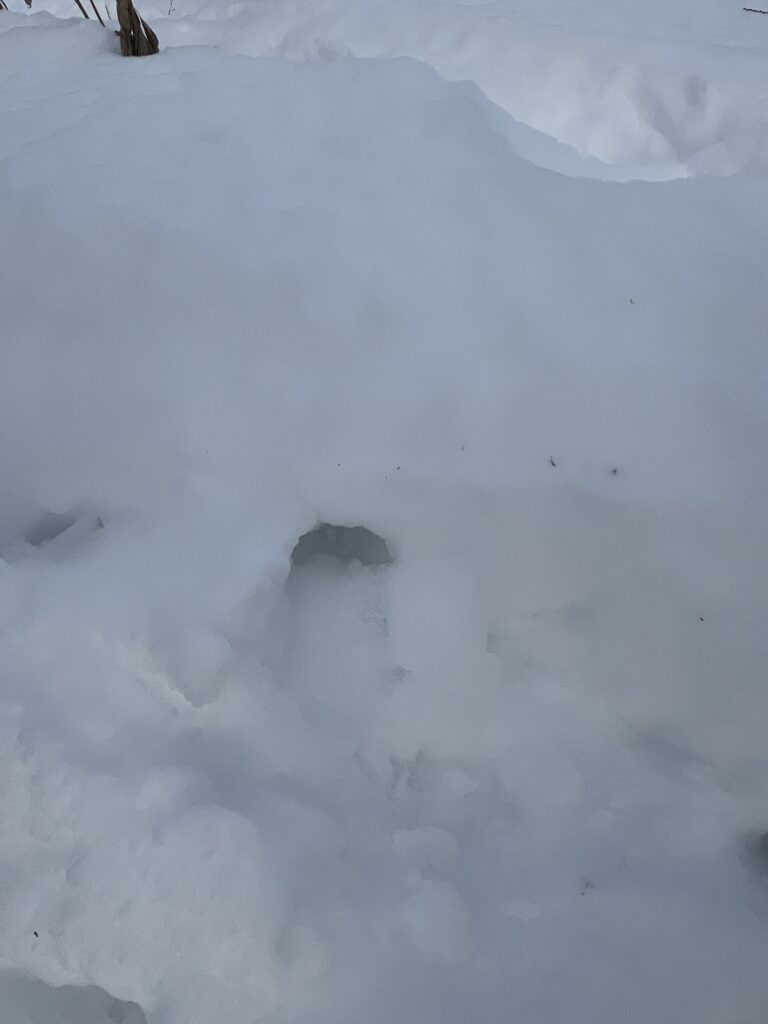
At the Intervale, I found the tracks of what I suspect to be a deer mouse. This is because the tracks were very small and there were also markings of a tail. They are also very commonly found near grasslands and agricultural fields, making the Intervale Center a suitable habitat. I also found a possible hole or burrow into the subnivean zone under the snow made by some type of vole or weasel.

Overall, I had a good experience using the iNaturalist app to record observations and I look forward to my identifications being confirmed or refuted by my peers in the future. It was also a good platform to see others’ findings.

Winter Activity β„οΈβ˜ƒοΈ

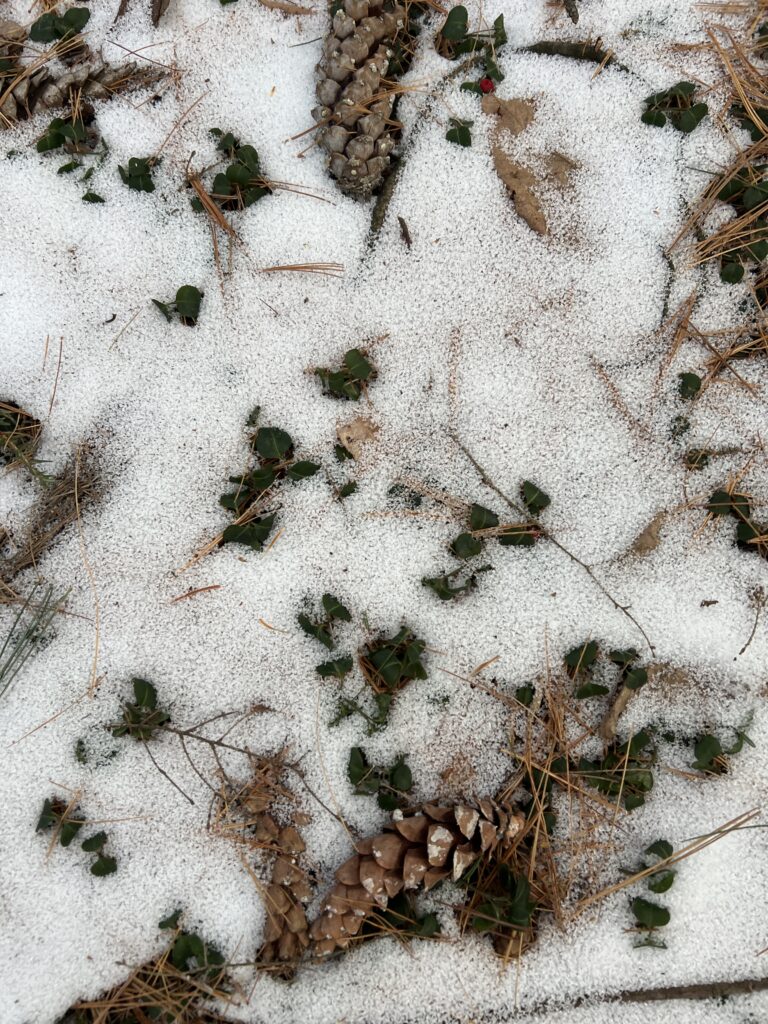
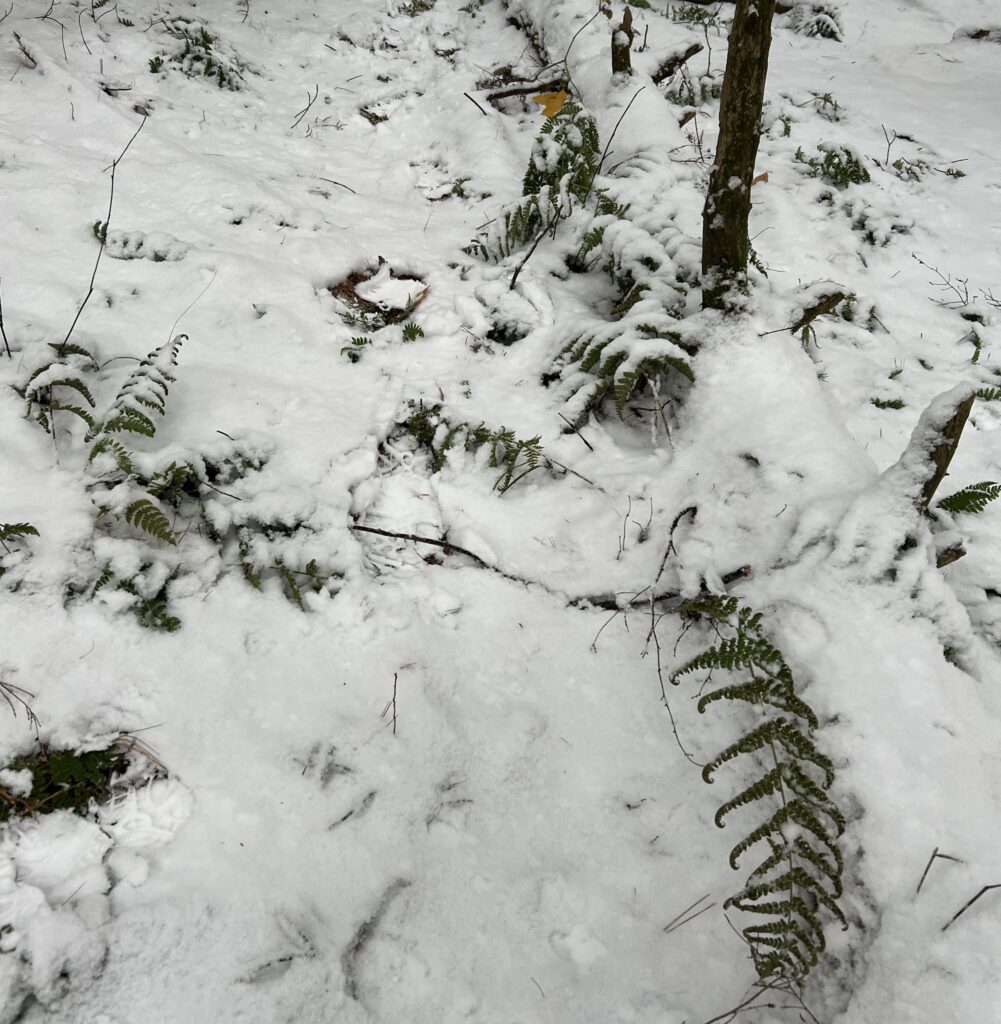
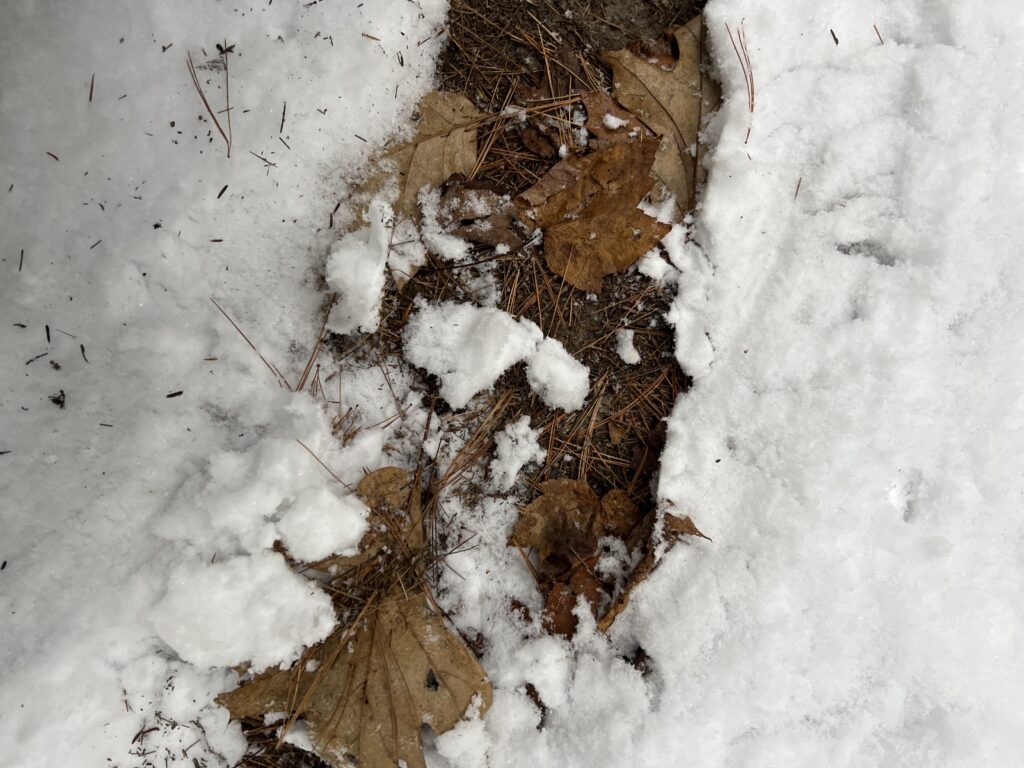
Interestingly, when I returned to my phenology spot in Centennial Woods it did not have a thick layer of snow. Instead, there were only thin patches of snow covering the ground. This is likely because of the thick over story that shields the ground from snowfall, and the heat exuded from decomposing organic material on the ground that melts patches of snow. The wetland clearing in my area had a much thicker layer of snow because it is open to precipitation.

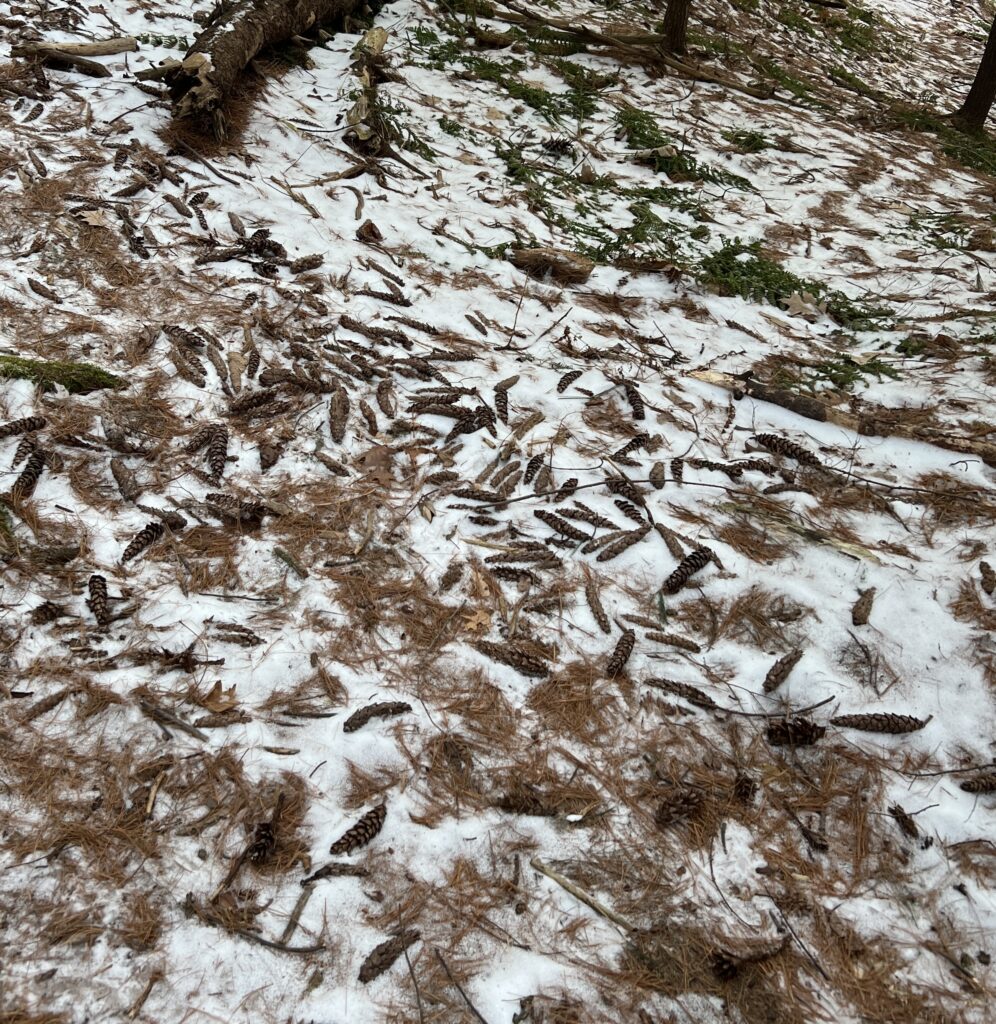
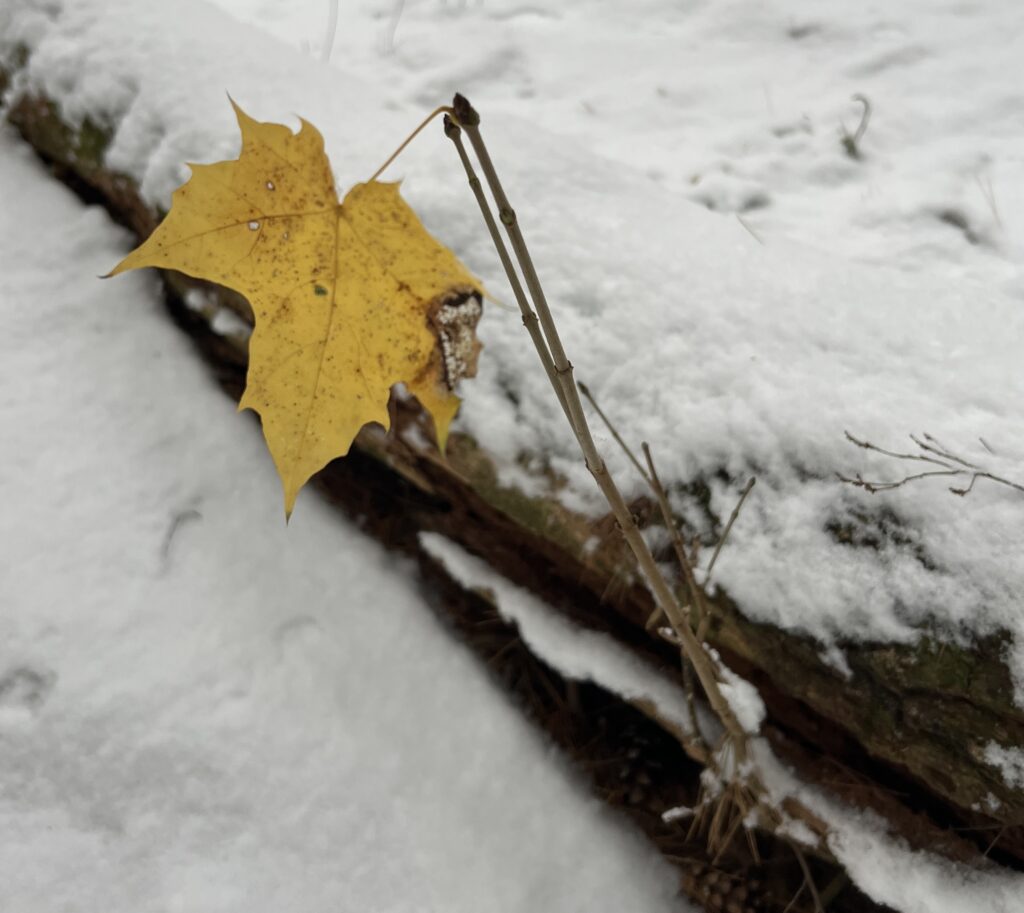
Many more eastern white pine cones littered the forest floor in comparison to my last visit. These cones usually drop in fall to early winter so many must have dropped over winter break.
Another seasonal change I observed was that the small stream in the wetland clearing was almost completely frozen over with a thin layer of ice. At my last visit, the stream was still fully running with minimal ice chunks.

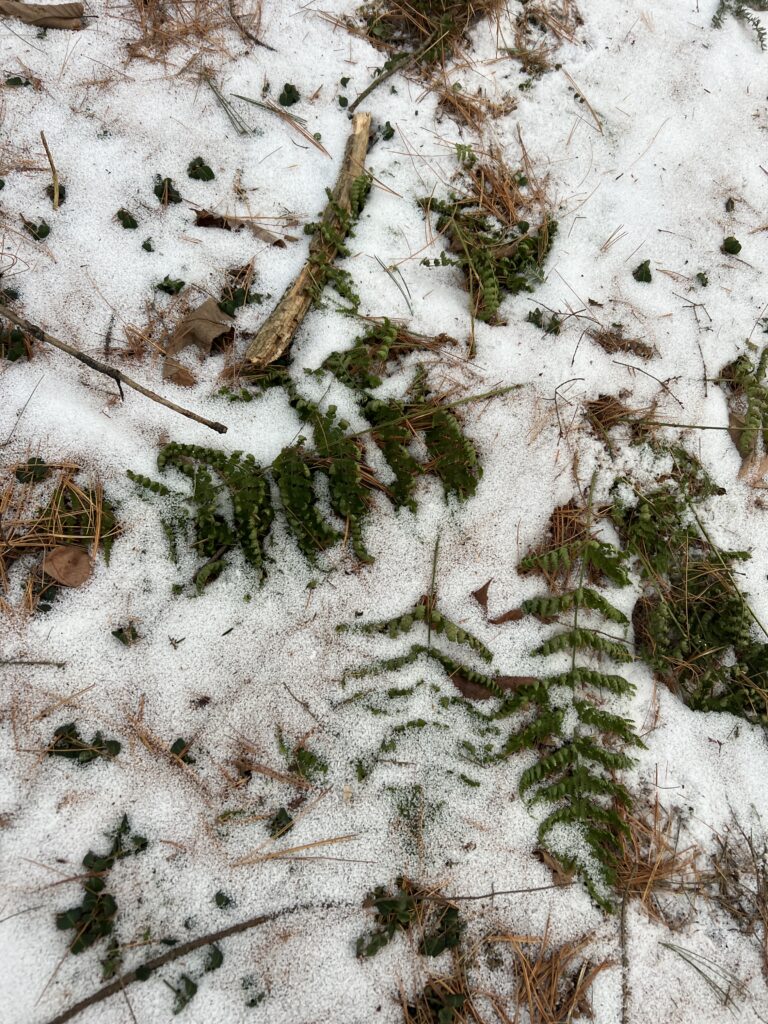
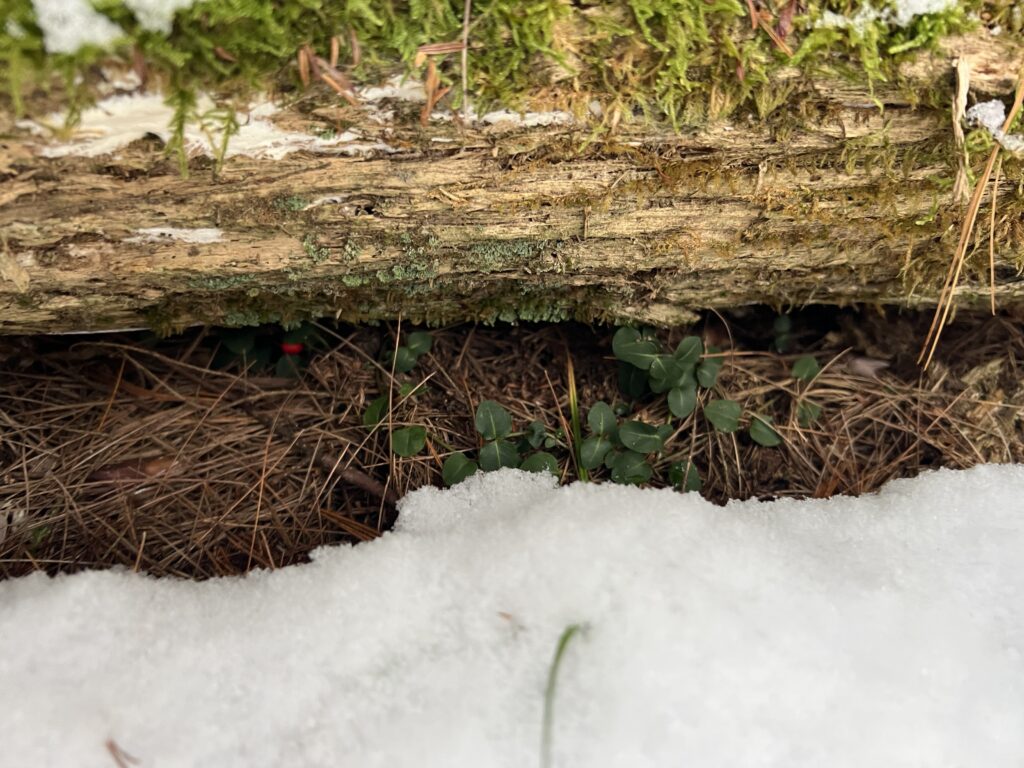
The vegetation was very similar to my last visit in December. The only living vegetation were partridge berries and marginal ferns under the snow. Some dried up leaves were still noticeable on tree limbs, and the evergreens were unchanged.

I observed very few bird calls in comparison to my last visit. Usually there are many black-capped chickadees at my site however this time the only call I picked up by Merlin Bird ID was one of an American robin.
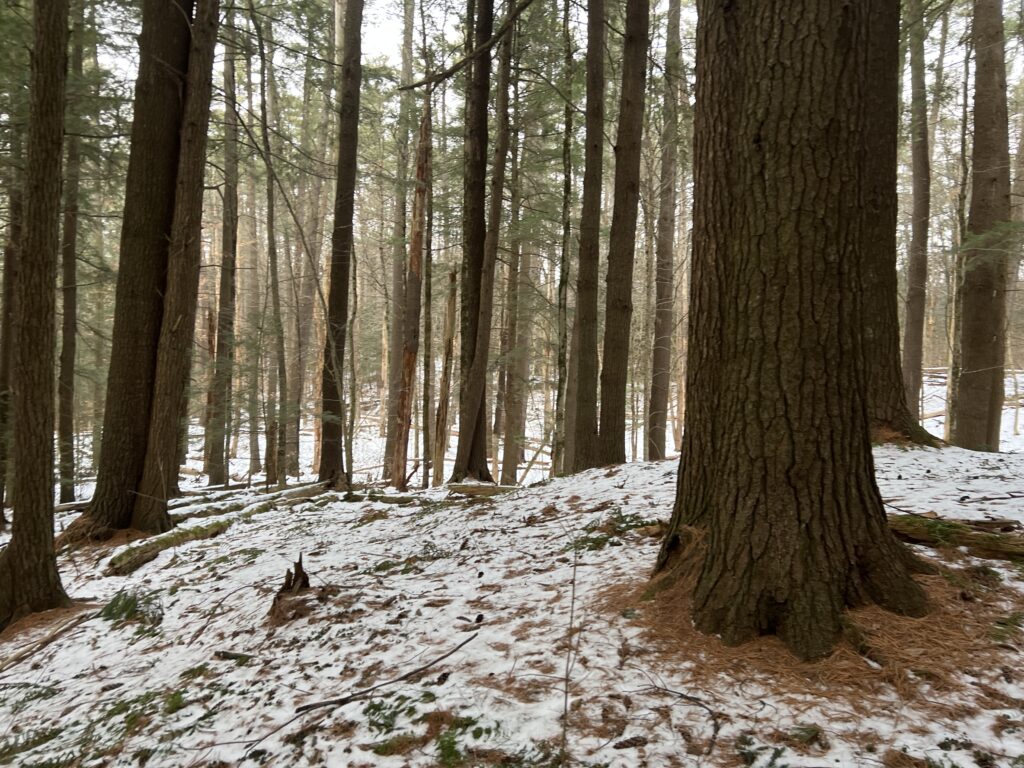
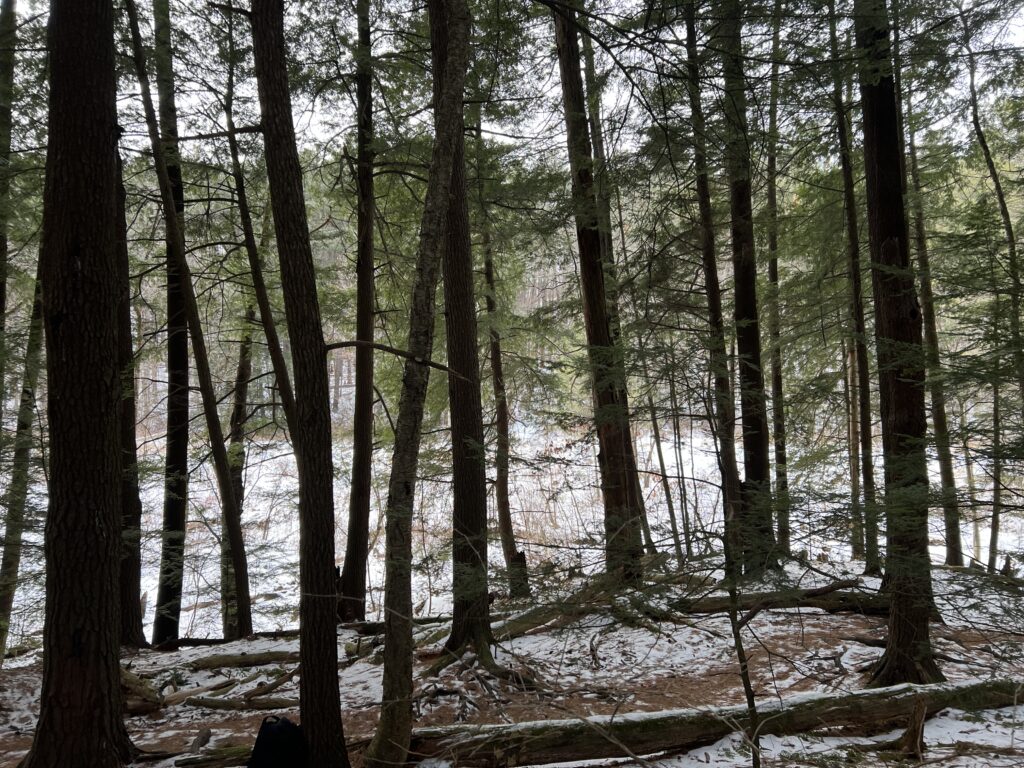
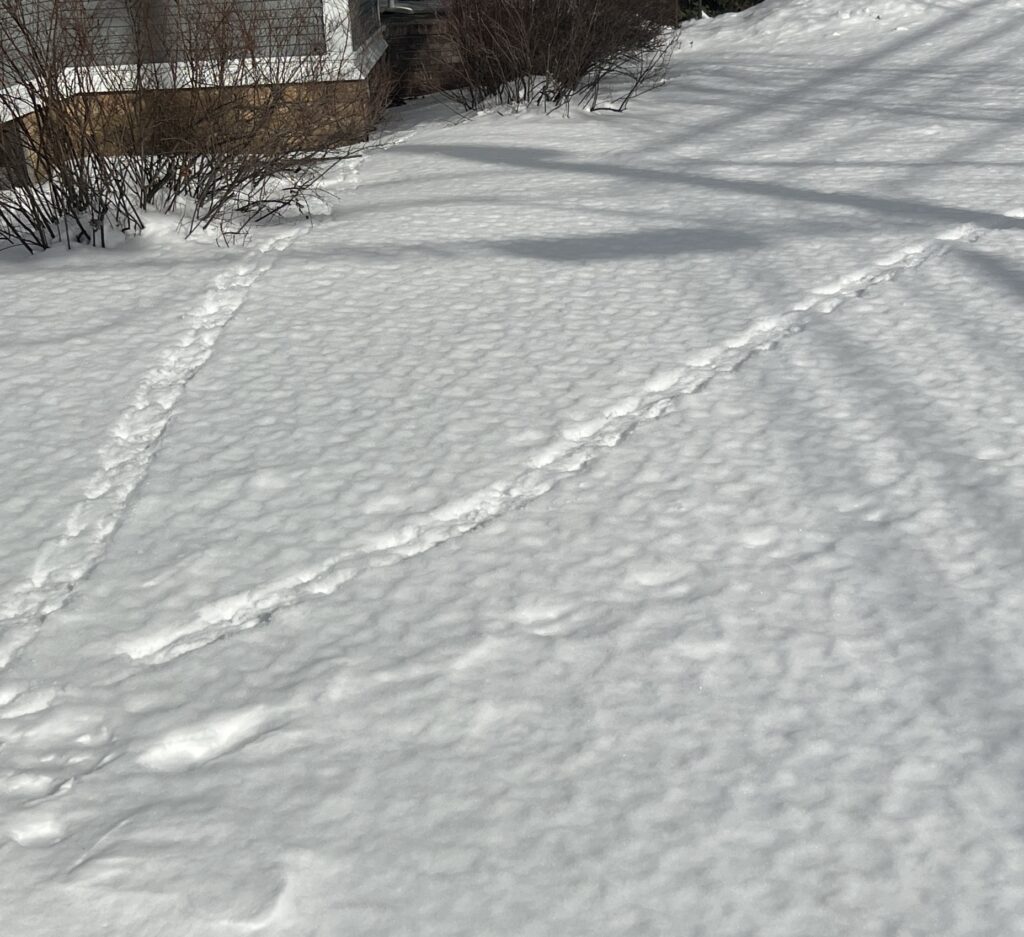
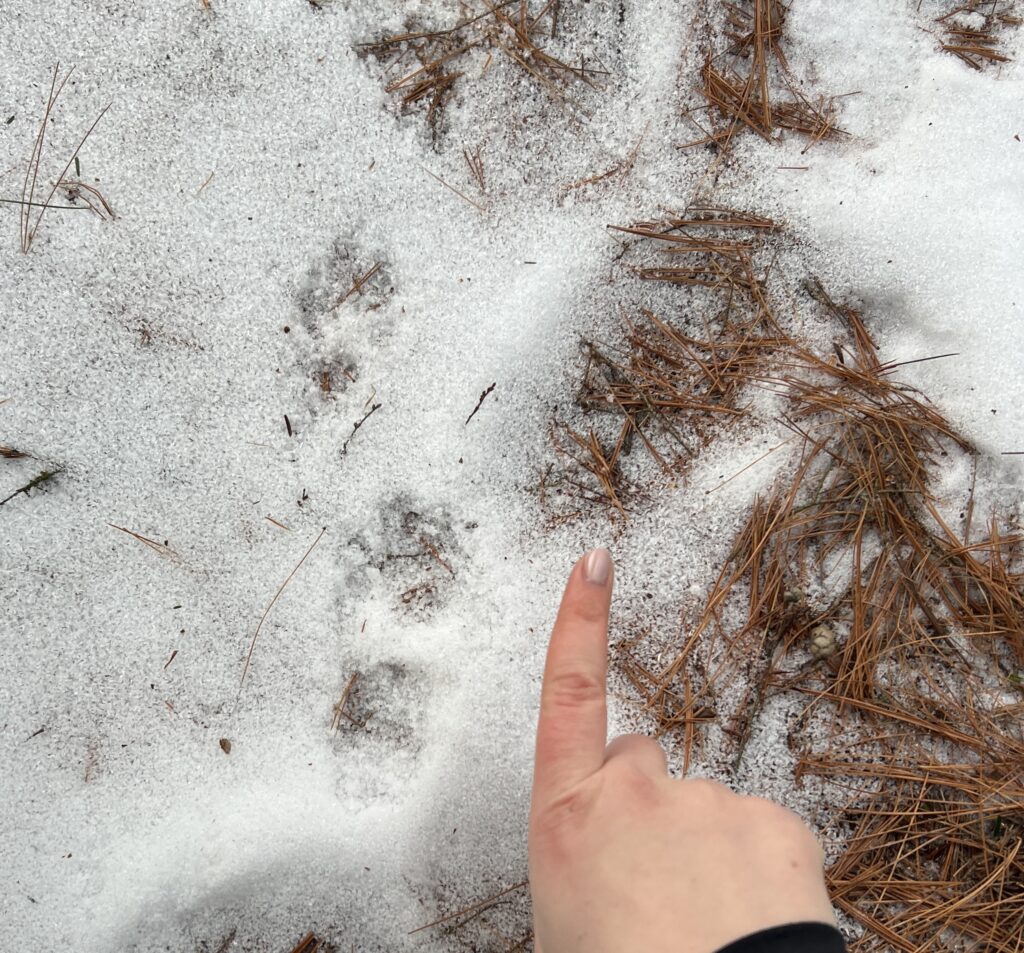
I also observed some tracks in the snow. Some tracks I could identify as dog prints simply because of the paw shape and size, and because they were usually winding and looping, indicating an animal with limitless energy and access to food to burn.

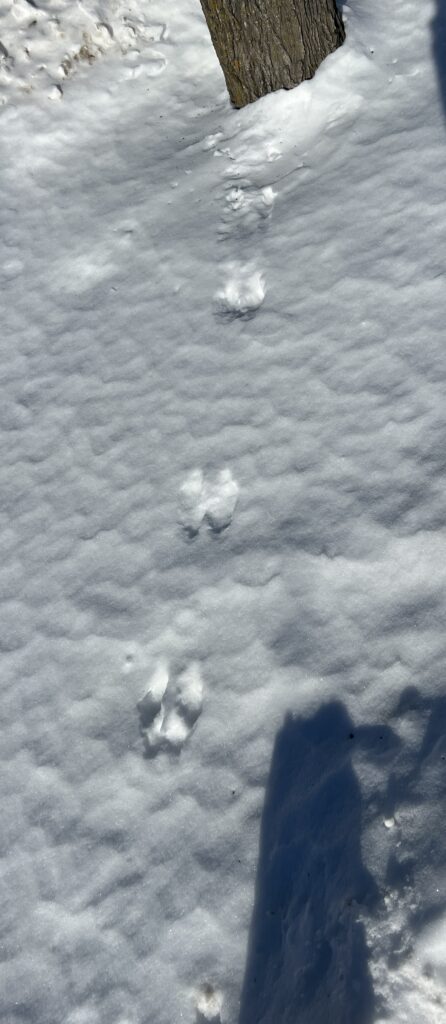
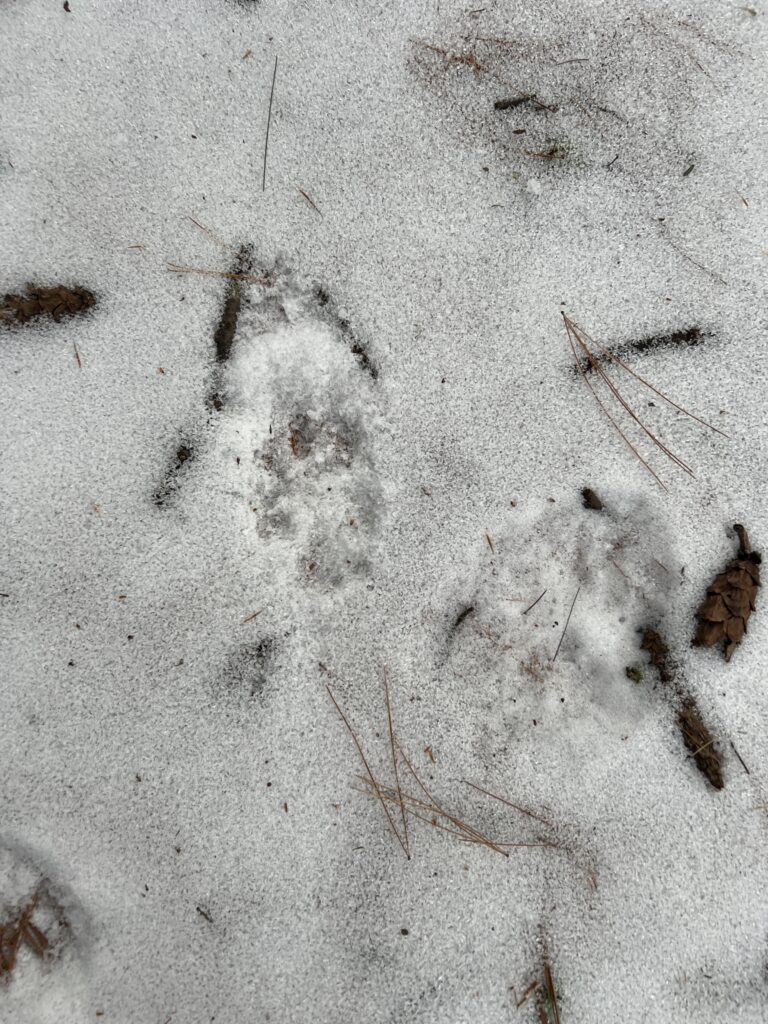
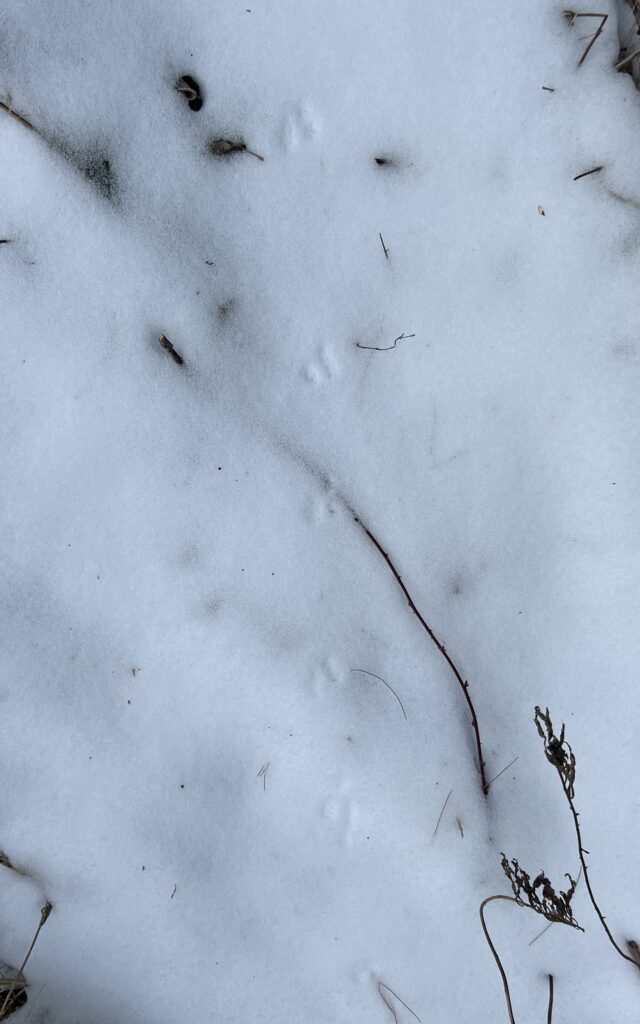
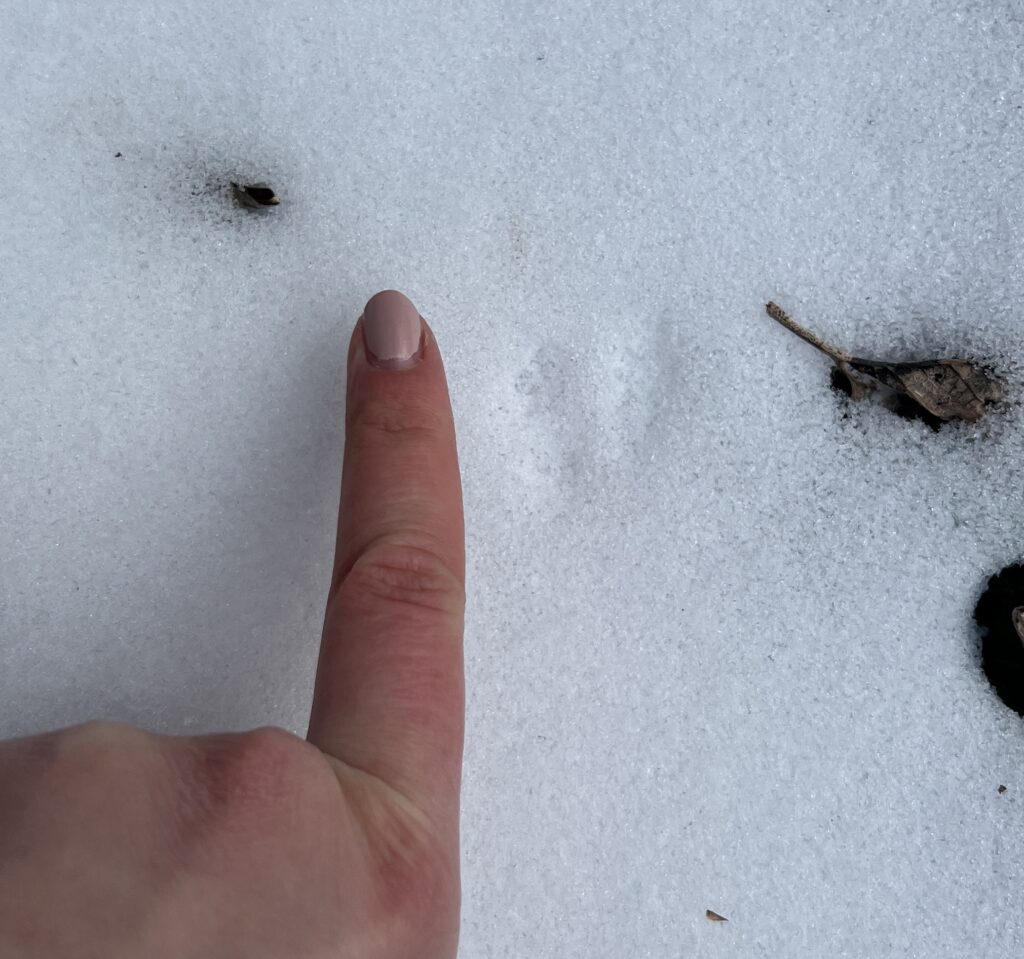
I also found another pair of tracks that have a different shape with a longer back foot. I suspect that these may belong to a rabbit or hare because of their shape. They appear too large to belong to a simple squirrel.

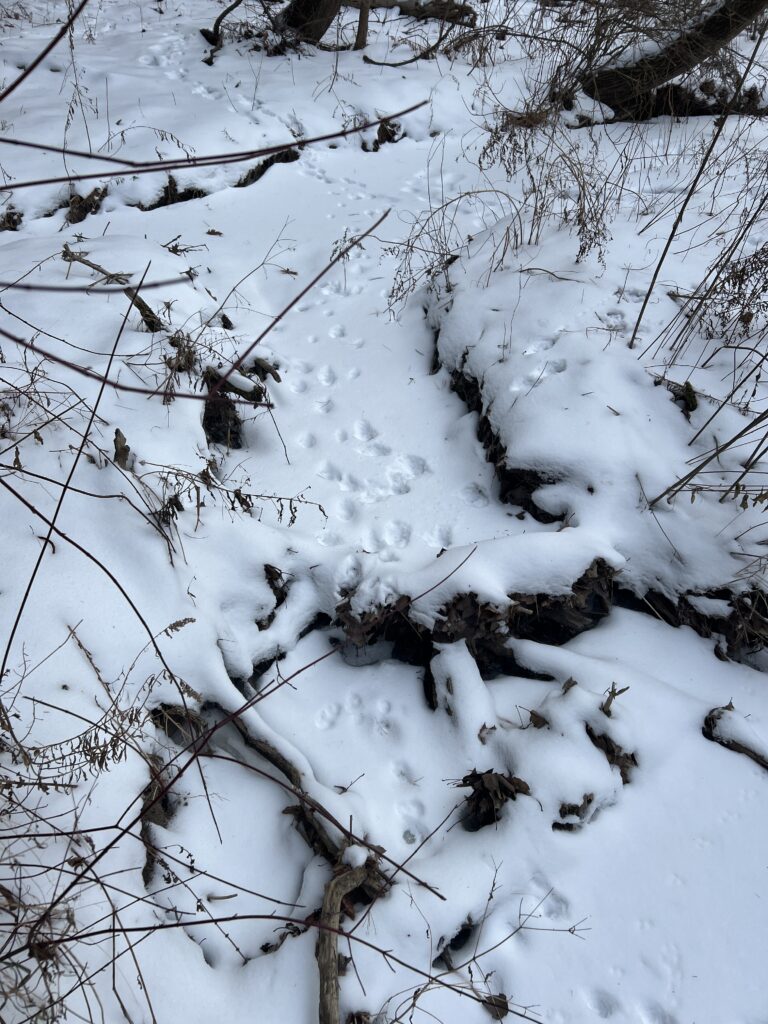
I also found a path of tiny tracks that were extremely close together that I suspect could have belonged to some type of bird, perhaps a hopping black capped chickadee or American robin. I’m not extremely confident in this identification because the tracks were somewhat melted over.

What aspects of your phenology place do you enjoy theΒ most? πŸ’š

I enjoy how my phenology spot demonstrates how growing conditions affects species diversity and the vegetation of an area. My spot includes both a primarily evergreen area of forest, and a wetland area in Centennial Woods. You can clearly see how in the wetland area there is greater species diversity and a more vibrant understory because of the moist conditions and sunlight. In the forested area, there are only ferns and moss, and scattered saplings in the understory because of the shade and acidic soil. I found this really interesting to observe and compare over the fall.

Final Observations πŸ‘€

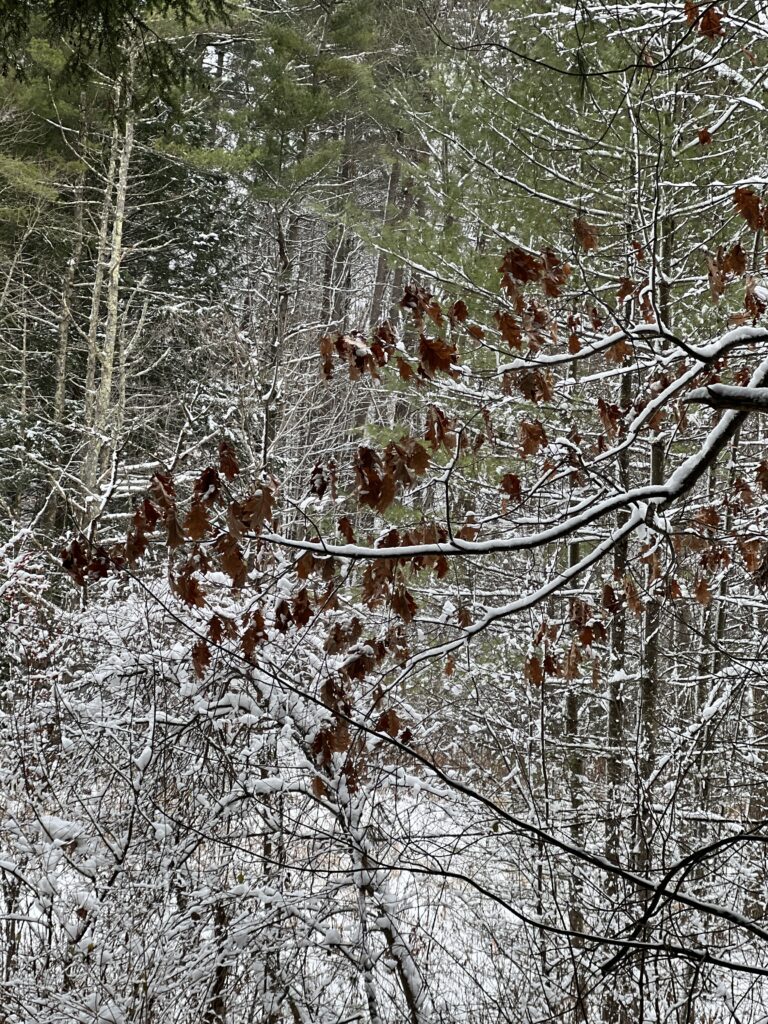
My phenology spot is mainly evergreens such as eastern white pine (Pinus strobus) and eastern hemlock (Tsuga canadensis). These trees keep their needles for 2-3 years so they will keep them throughout the entire winter. This allows them to photosynthesize all year long. Most of the hardwoods in the area have lost their leaves. One exception is a northern red oak (Quercus rubra) along the bank of the wetland that still has some dried out leaves on its branches. There are also a couple small Norway maple (Acer platanoides) saplings that have a couple small remaining leaves.

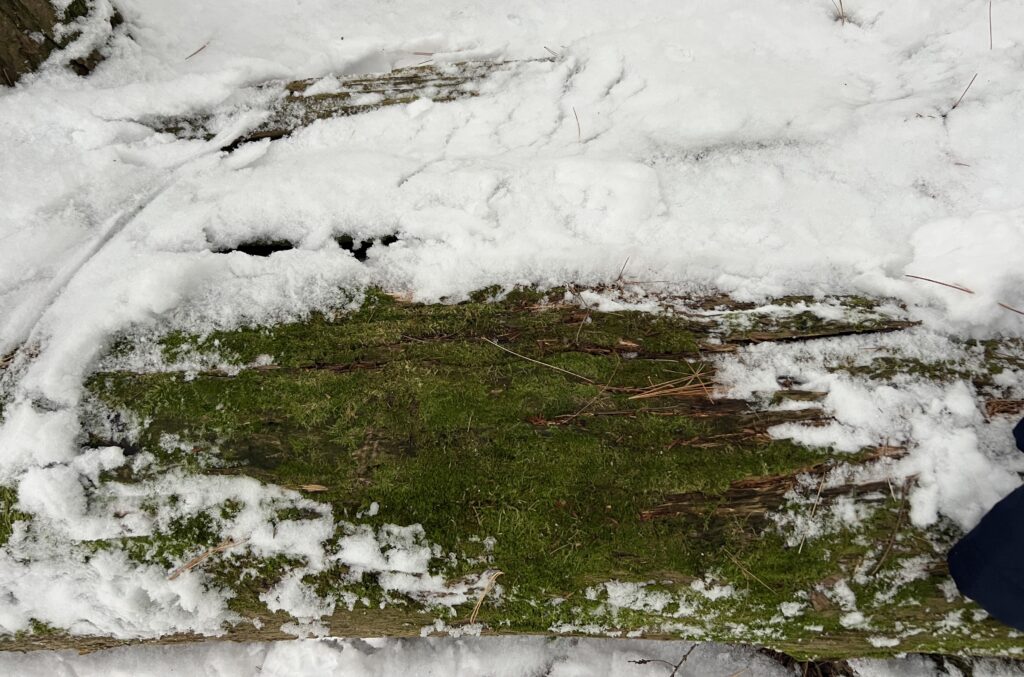
There is some persistent vegetation. There are mostly marginal ferns (Dryopteris marginalis) remaining along the forest floor poking out of the snow, and partridge berries (Mitchella repens) hidden under logs. There is also moss on the decomposing logs.

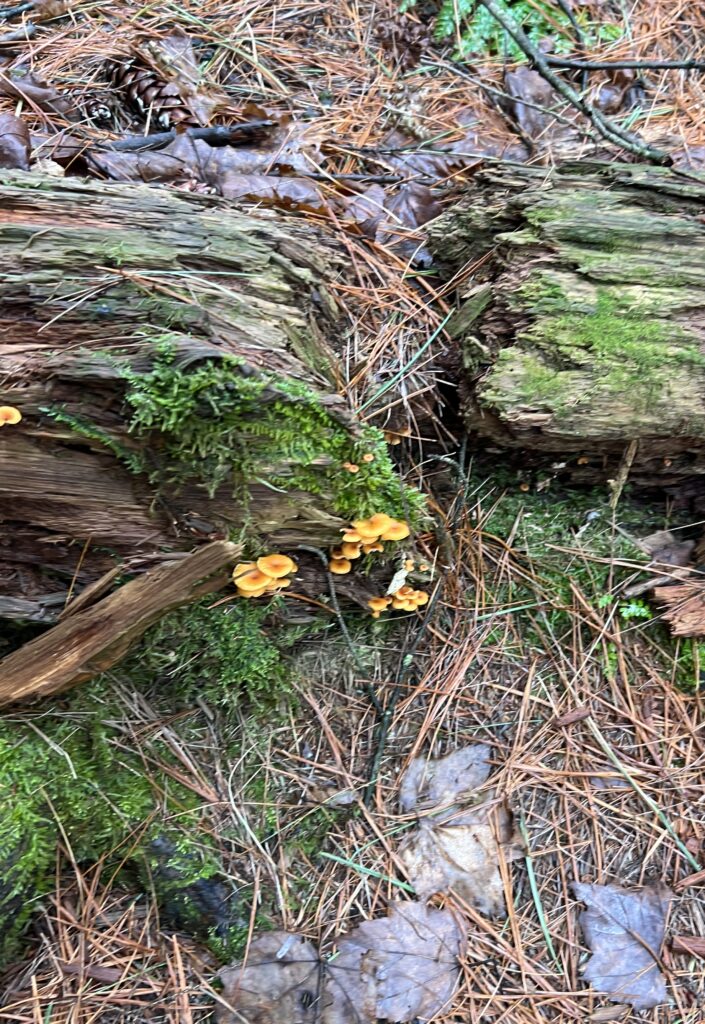
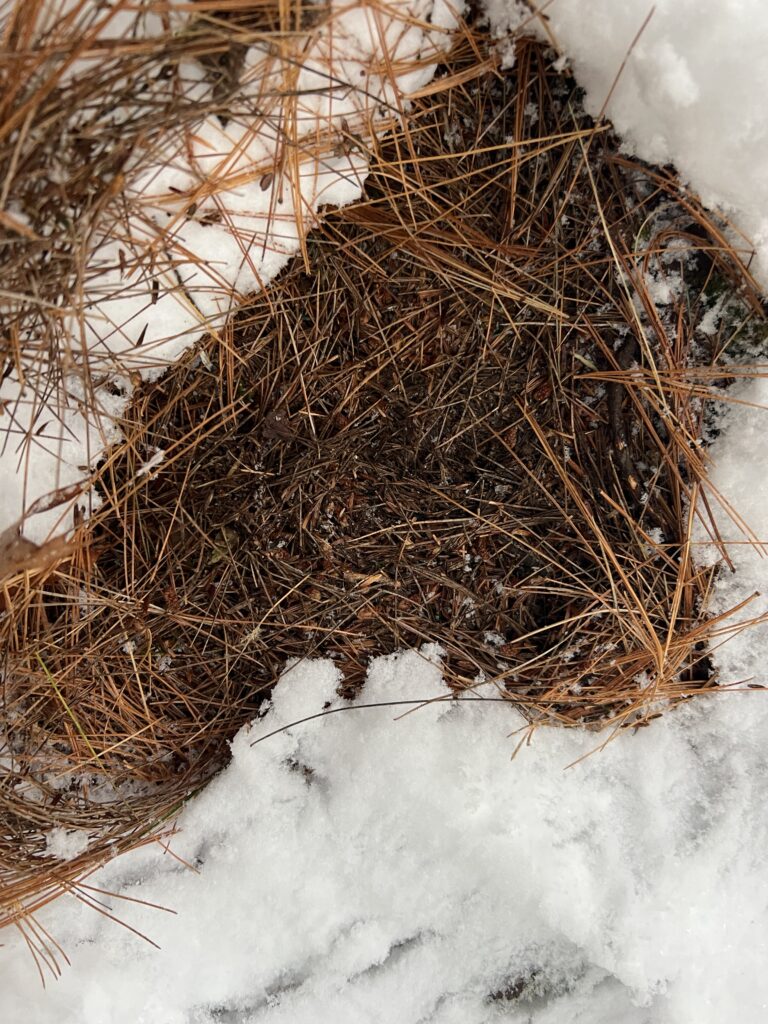
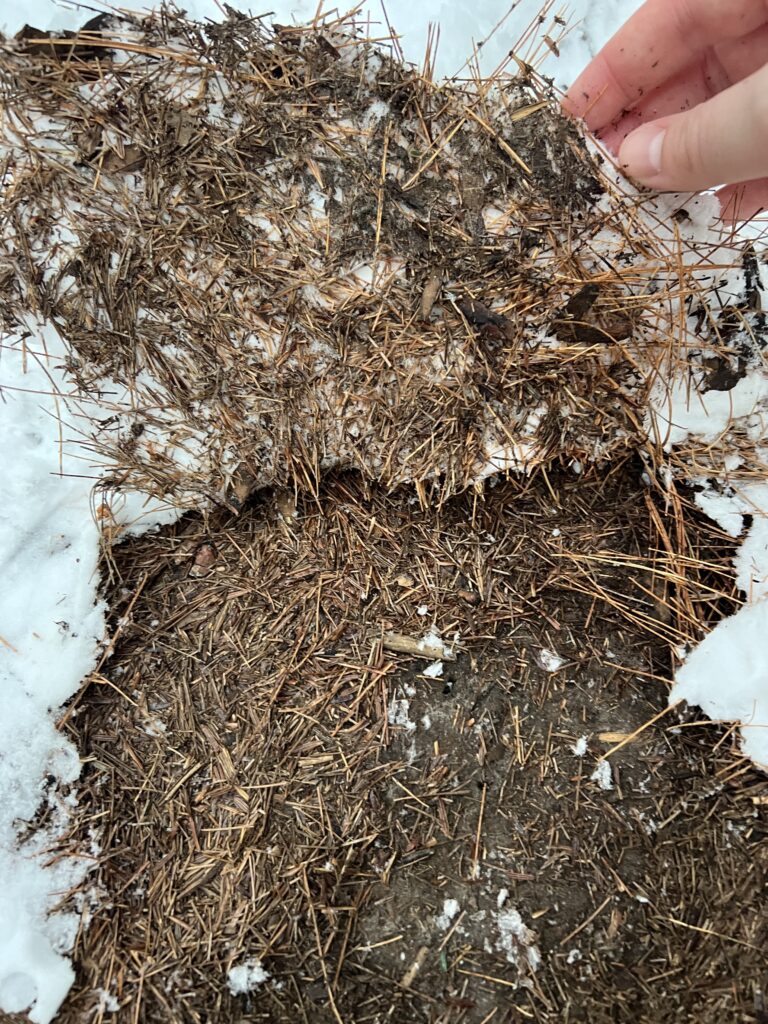
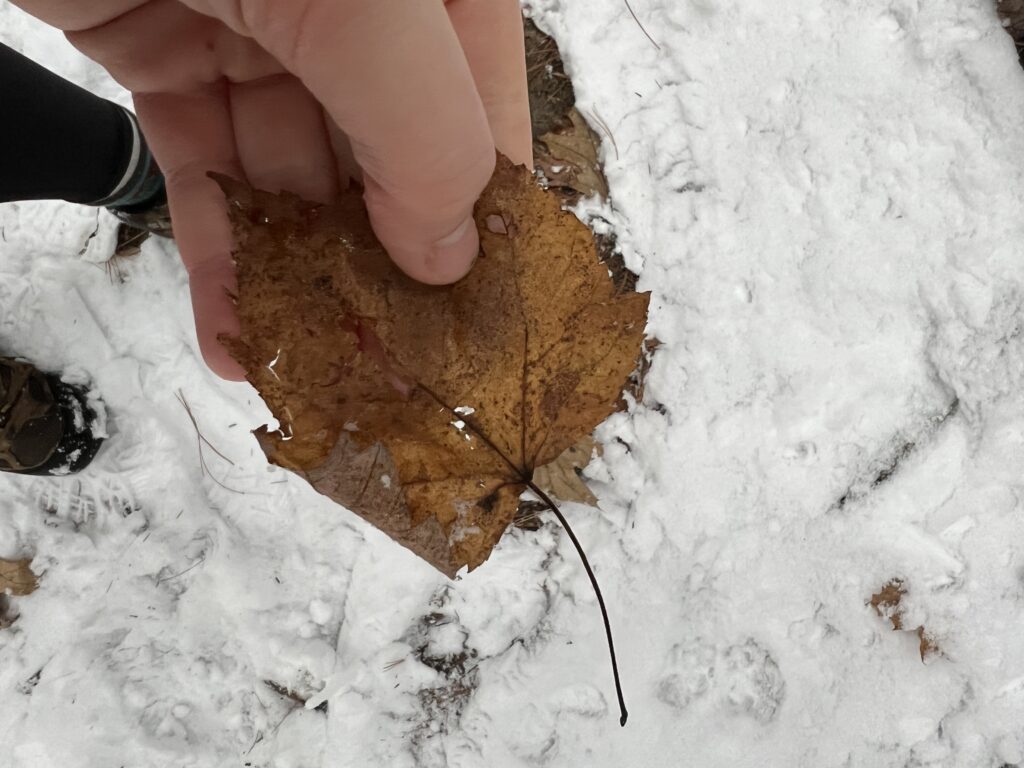
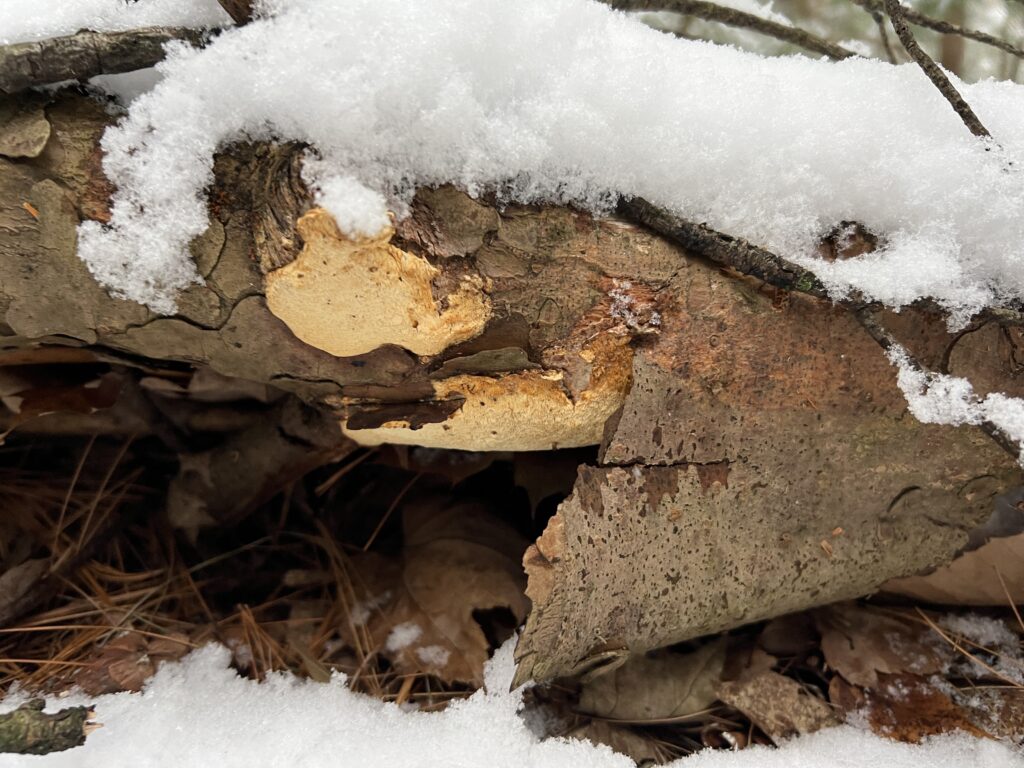
The leaf litter is mainly white pine needles which have started to break down over time. You can see the layers of decomposition under the snow cover. Under the freshly fallen needles there are layers of more broken up, partially decomposed needles. Also, in the areas where there are a few hardwoods, there is leaf litter that is starting to decompose. You can feel the leaves become thinner and turn brown as they decay. I also found some fungus on the side of logs, indicating decomposition.

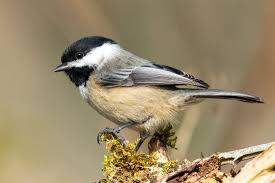
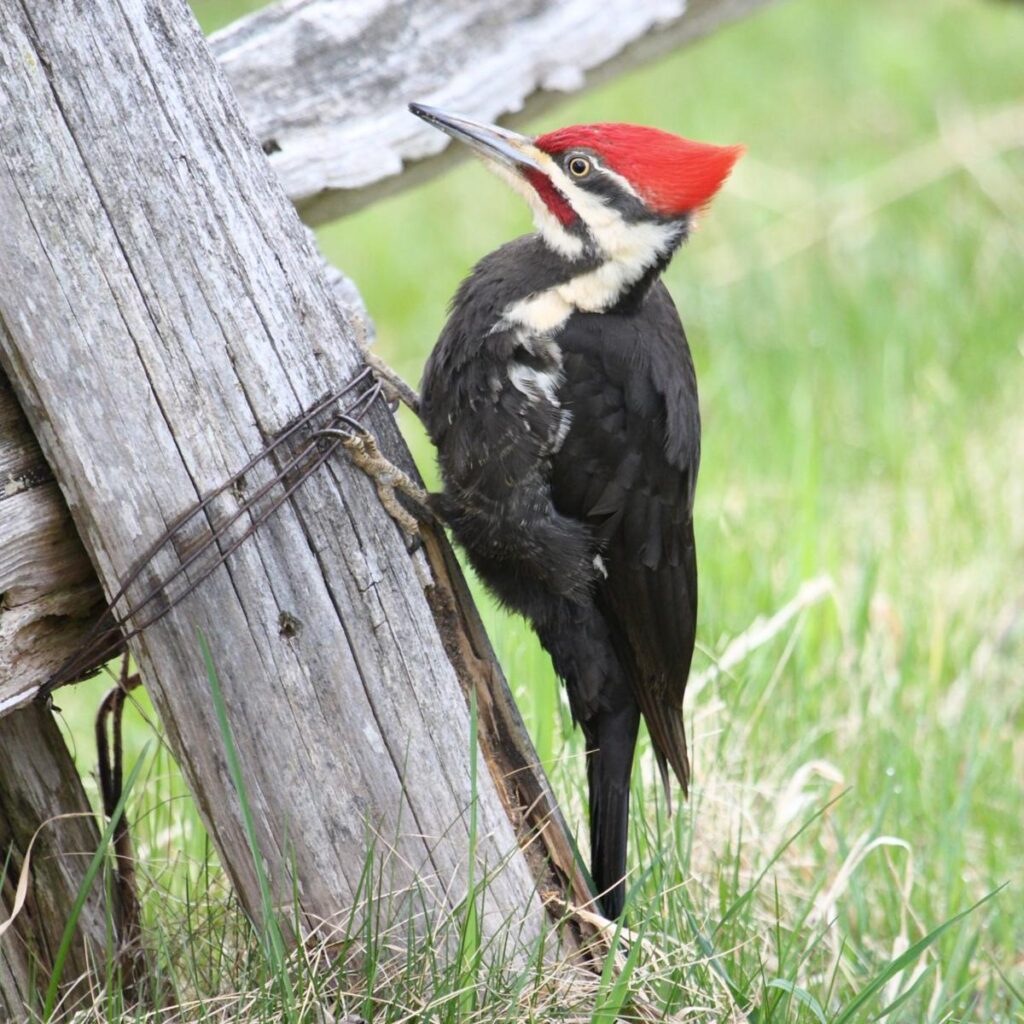
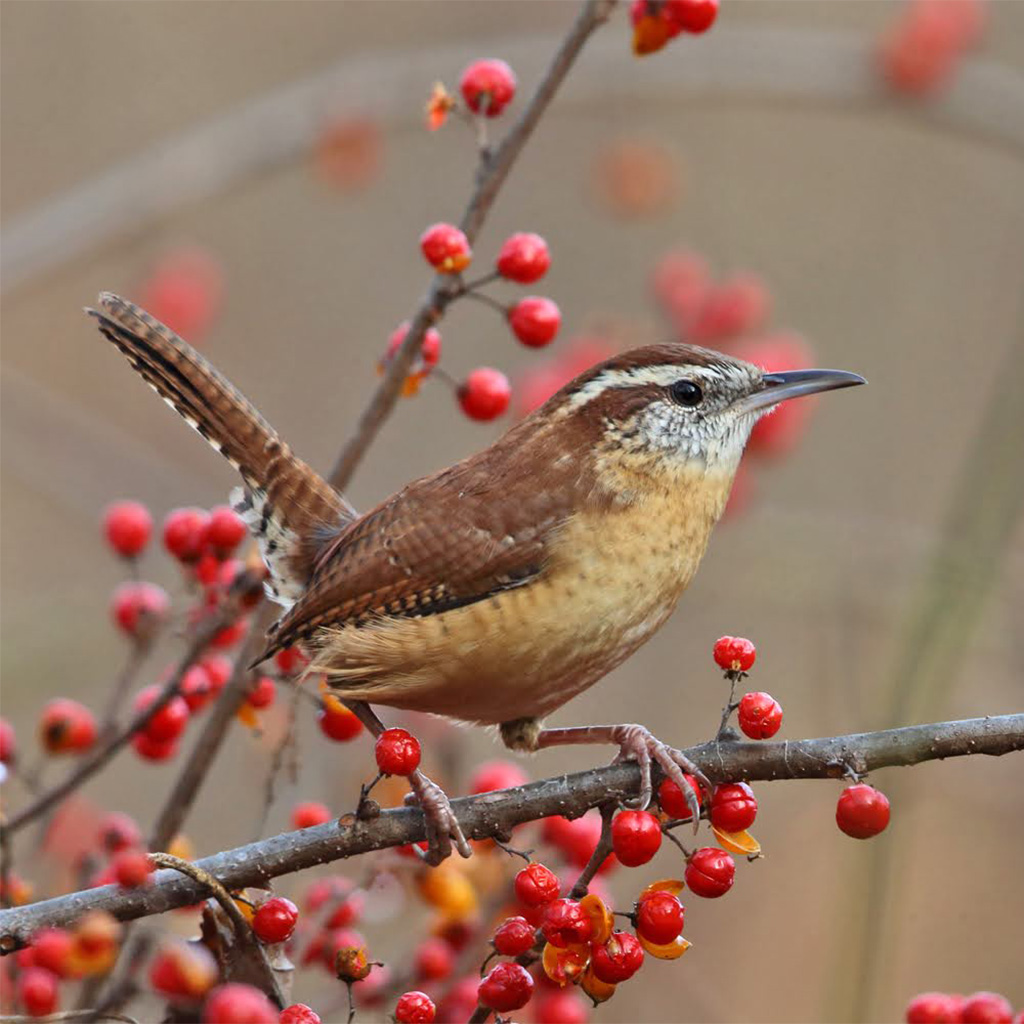
When walking and observing my area, I didn’t see any physical signs of wildlife activity. I didn’t see any tracks which may have been because of the beginning of dormancy for some species, or simply because it had recently snowed, covering up any previous tracks. I did hear a lot of bird activity. I heard black-capped chickadee (Poecile atricapillus) calls, and the Merlin Bird ID app picked up the calls of a pileated woodpecker (Dryocopus pileatus) and Carolina wren (Thryothorus ludovicianus).

Overall the animal has decreased slightly. I never saw a lot of activity in my area but I have noticed that there aren’t as many active squirrels or chipmunks. There were also less bird calls than I usually noticed earlier in the fall. The forest seemed a lot quieter.

Hometown Spot Comparison πŸ¦ƒπŸ

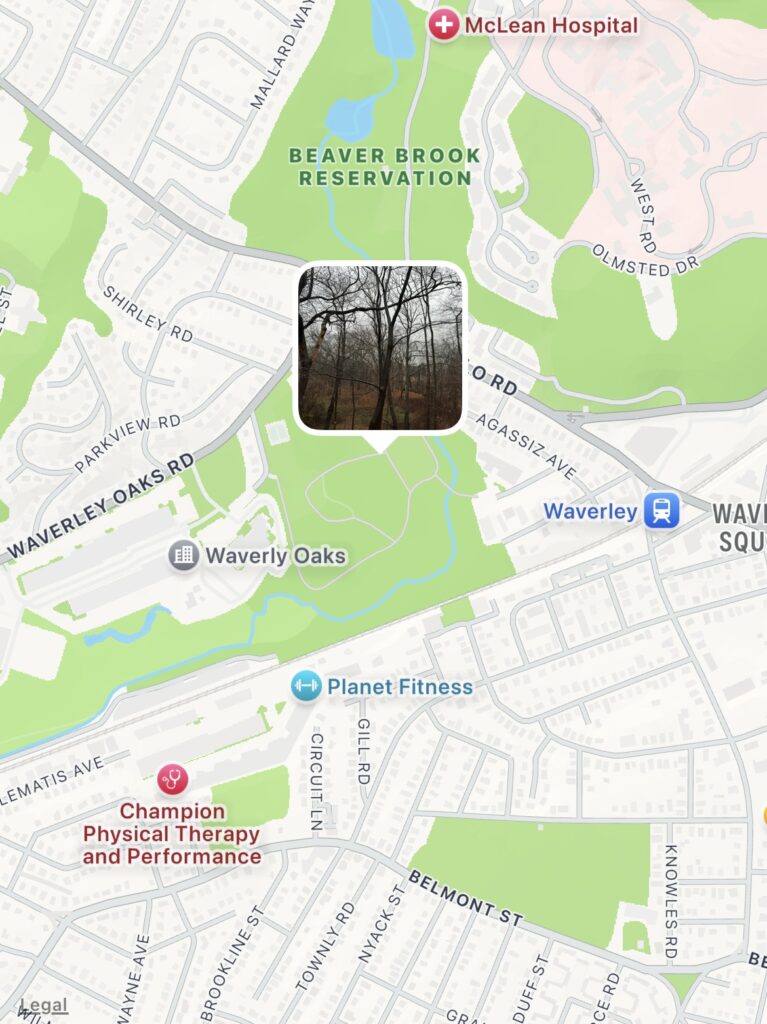
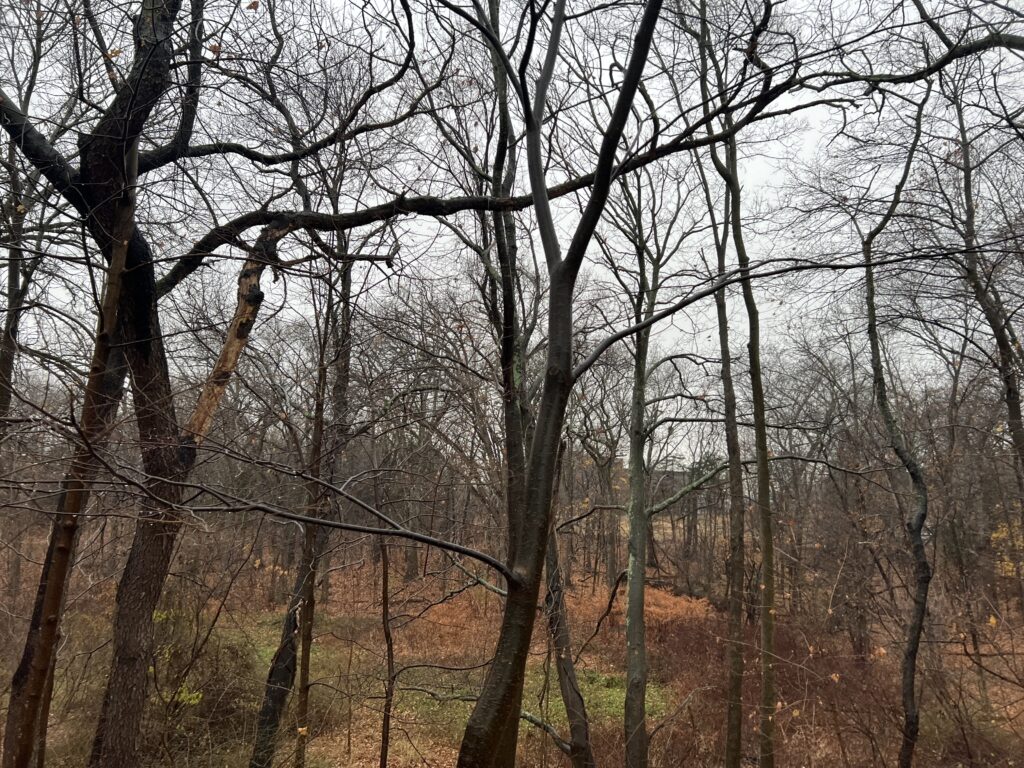
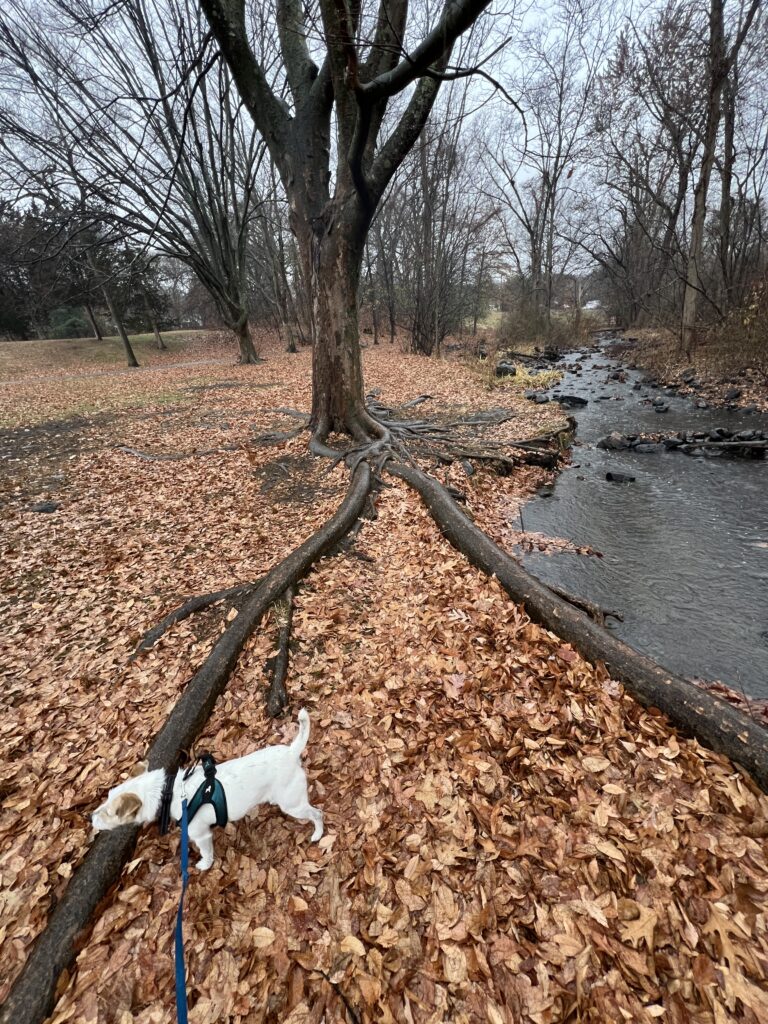
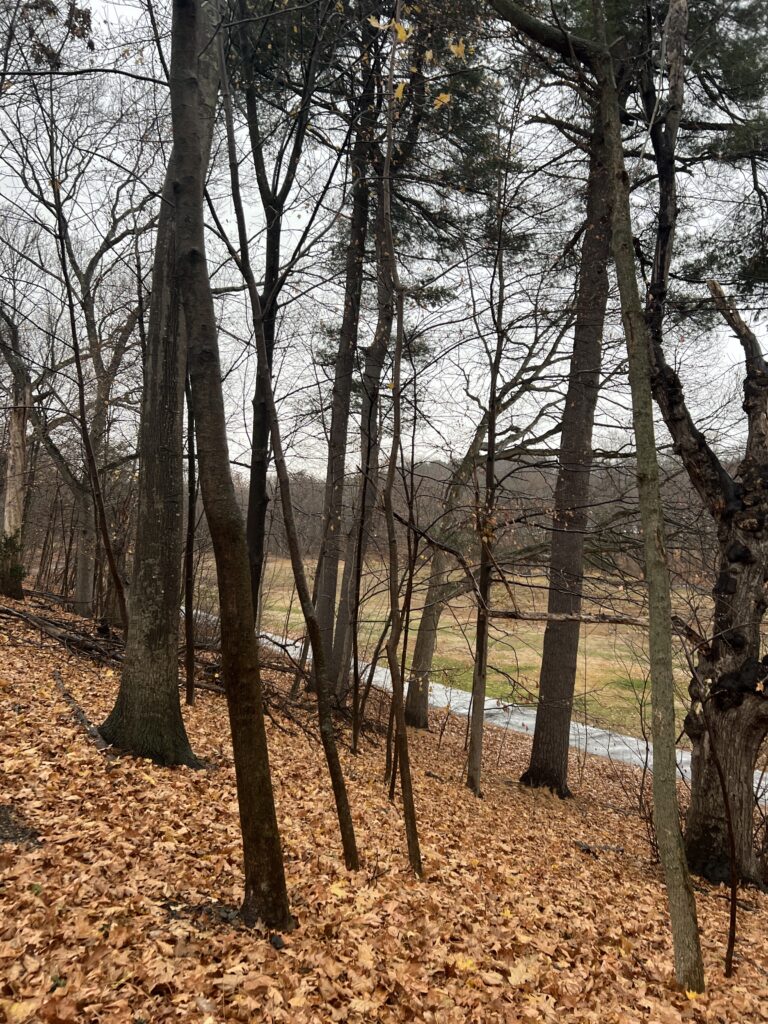
For my break phenology spot I picked an area of the Beaver Brook Reservation/Park in my hometown Belmont, Massachusetts. It is a reserved natural area that contains a paved walking path, a dog park, a playground and water park, and a small forested area with walking trails. I picked this spot because it is my favorite area to walk my dog around and because it is a gorgeous natural area within a developed suburban town.

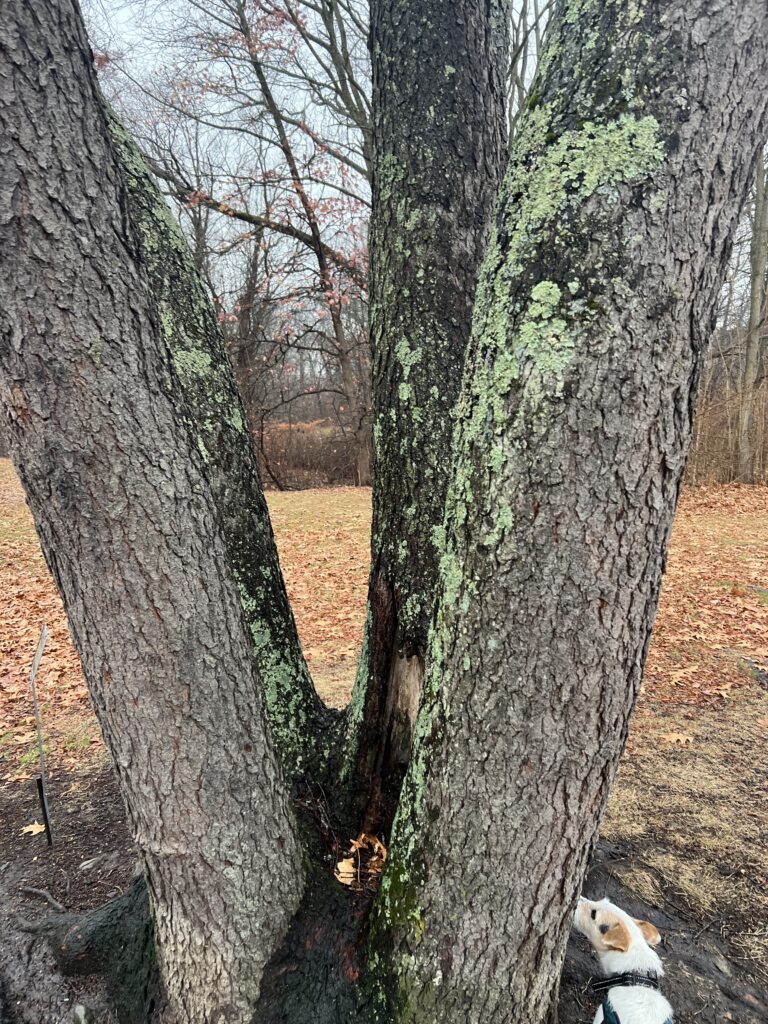
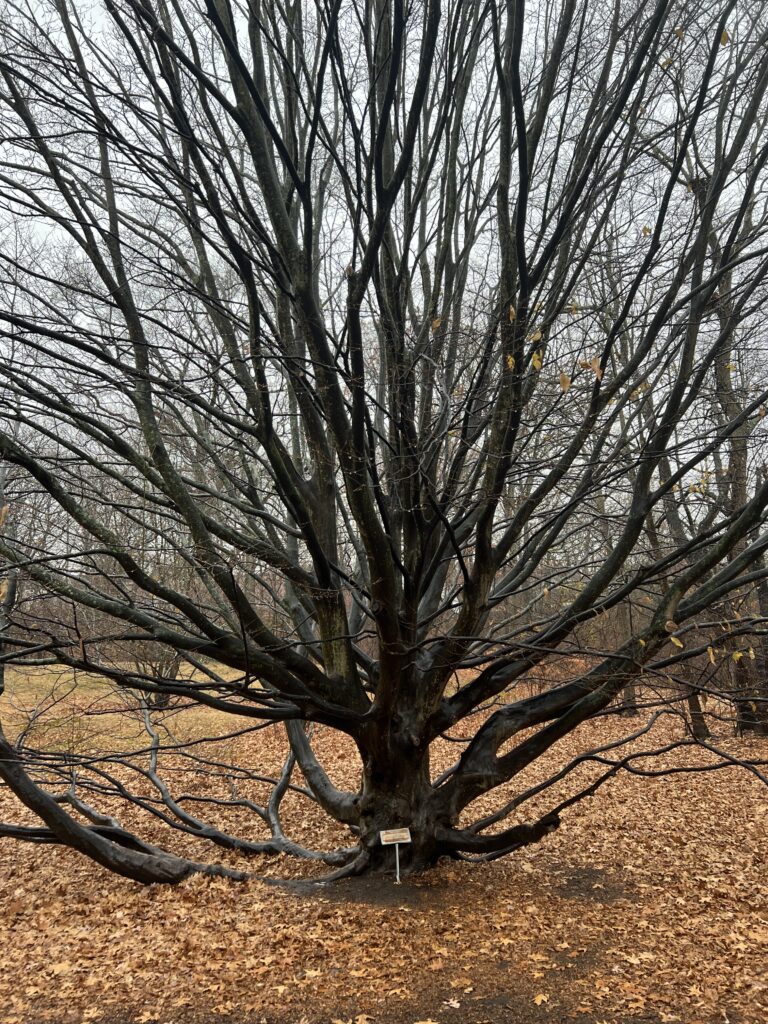
Another reason I find this place special because of the cool variety of tree species with native species in the forested areas and ornamentals planted along the path. I only noticed this on my most recent visit because of the knowledge I have from NR1010 and Dendrology. This has made me so much more mindful of my surroundings. Beaver Brook also makes learning about different tree species accessible to everyone with little signs labeling different species and explaining a little bit about their history. The forested area of the park is interesting because it is mainly composed of small trees including ash, eastern white pine, northern red oak, birches, and various other species. This is evidence that before this land was saved for conservation, it was most likely cleared for farming or residential areas.

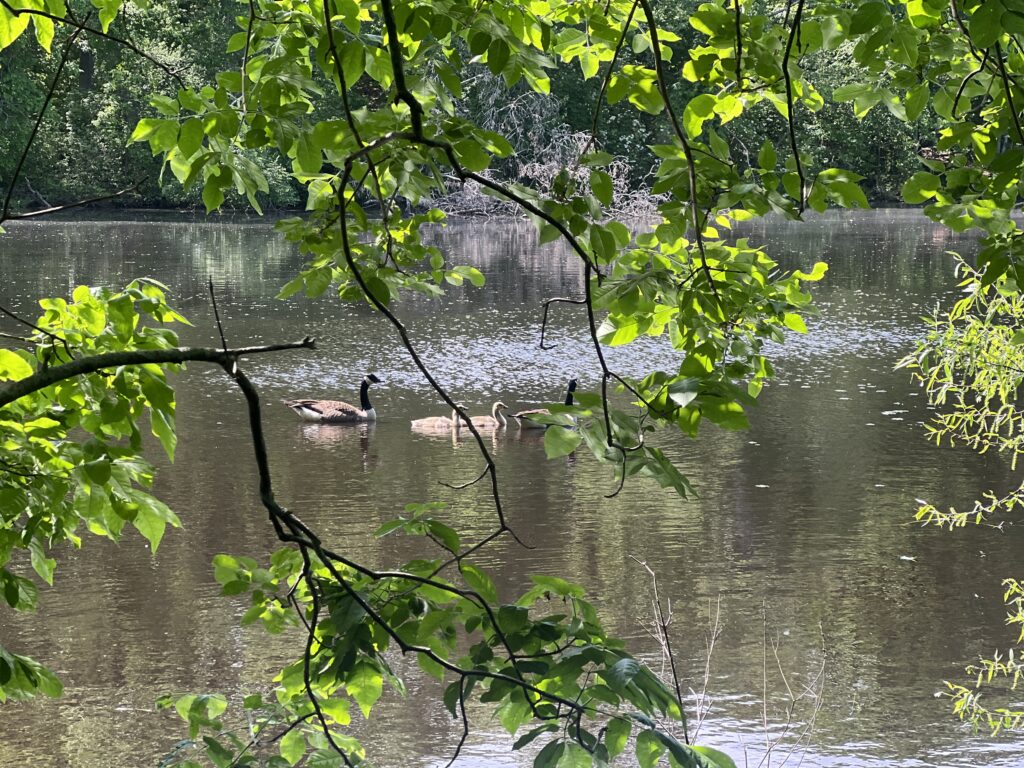
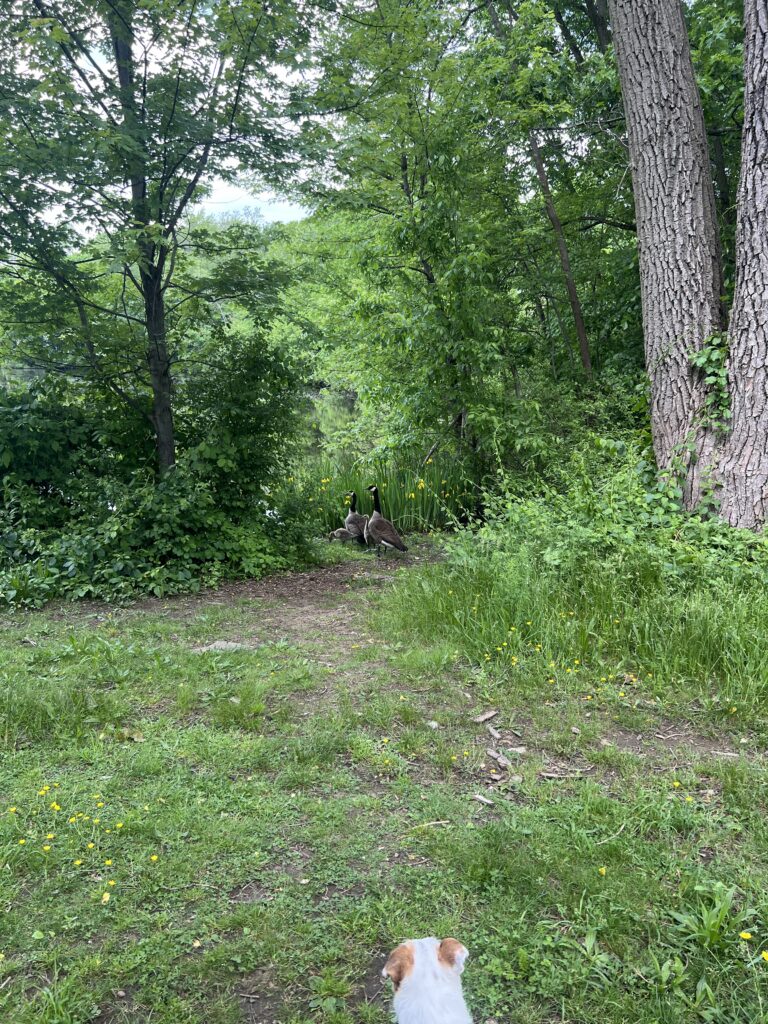
This area is also special because it is home to lots of wildlife. During my visit there were many blue jays flying around the park. You can also often find ducks swimming in the stream and you can always see squirrels running around. It also has another extended area across the main road where there are more walking trails and a pond that is often home to geese and many riparian tree species.

This place is similar to my spot in Centennial woods because they both have many younger trees and many of the older trees are eastern white pines. However, my place in Centennial woods is dominantly large evergreens where as in Beaver Brook there is a more diverse mix of hardwoods and evergreens with northern red oak as the most common species. Beaver Brook also has more of an herbaceous understory because the overstory is so much thinner while the forested area of my spot in Centennial Woods is mainly pine needles. They are similar in the fact that they both have riparian elements because there are streams running through the forests and they are both surrounded by developed urban areas. This has effects on the wildlife that can live in these areas because of the surrounding roads.

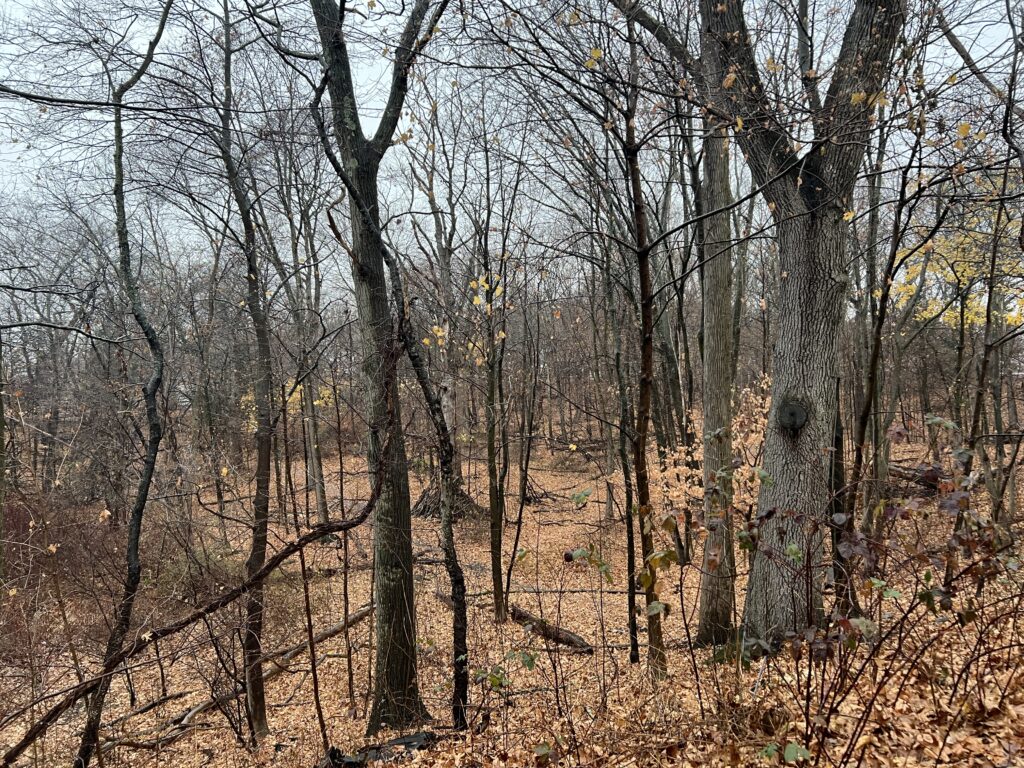
When I observed this area it was much farther into the fall season than when I last checked out my Centennial Woods spot so way more of the trees had lost their leaves and the ground was covered in leaf litter. I would also say there were fewer signs of wildlife as I usually observe in this area because of the start of colder weather. There are often migrating Canada geese and other birds in the area that I did not see most likely because they have gone south.

Changes πŸŒ±πŸŒΏβ†’πŸ‚πŸ

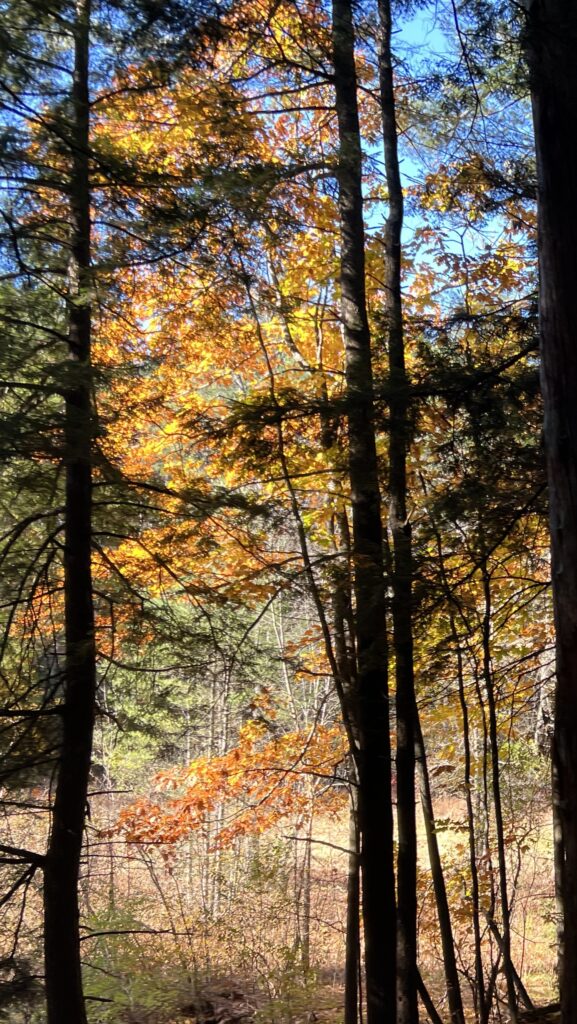
There is more foliage in my phenology spot but only in small areas because the majority of the area is conifers like eastern hemlock and eastern white pine. There are a few northern red oaks on the ridgeline of the wetland that have orange and yellow foliage. There are also a few red maples that show fall colors. Similarly, on the forest floor there are concentrated areas of leaf litter but it is mostly covered in eastern white pine needles.

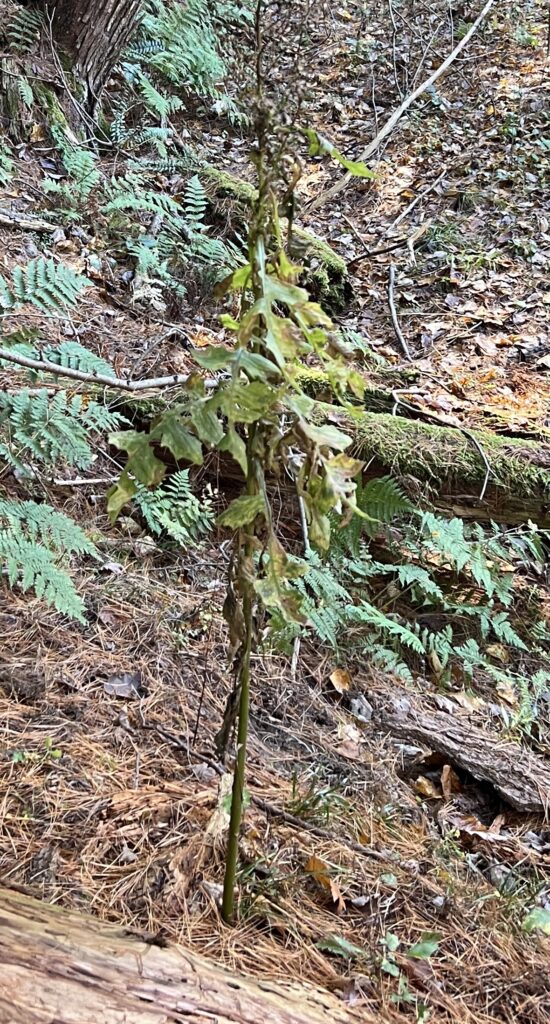
The vegetation looks mostly the same and the ferns and wetland species have not been very effected by the weather changes yet. Some of the species are beginning to die and shrivel up such as the tall blue lettuce. And a lot of the vegetation along the steam appears washed around or windblown from the recent rain.

Skip to toolbar