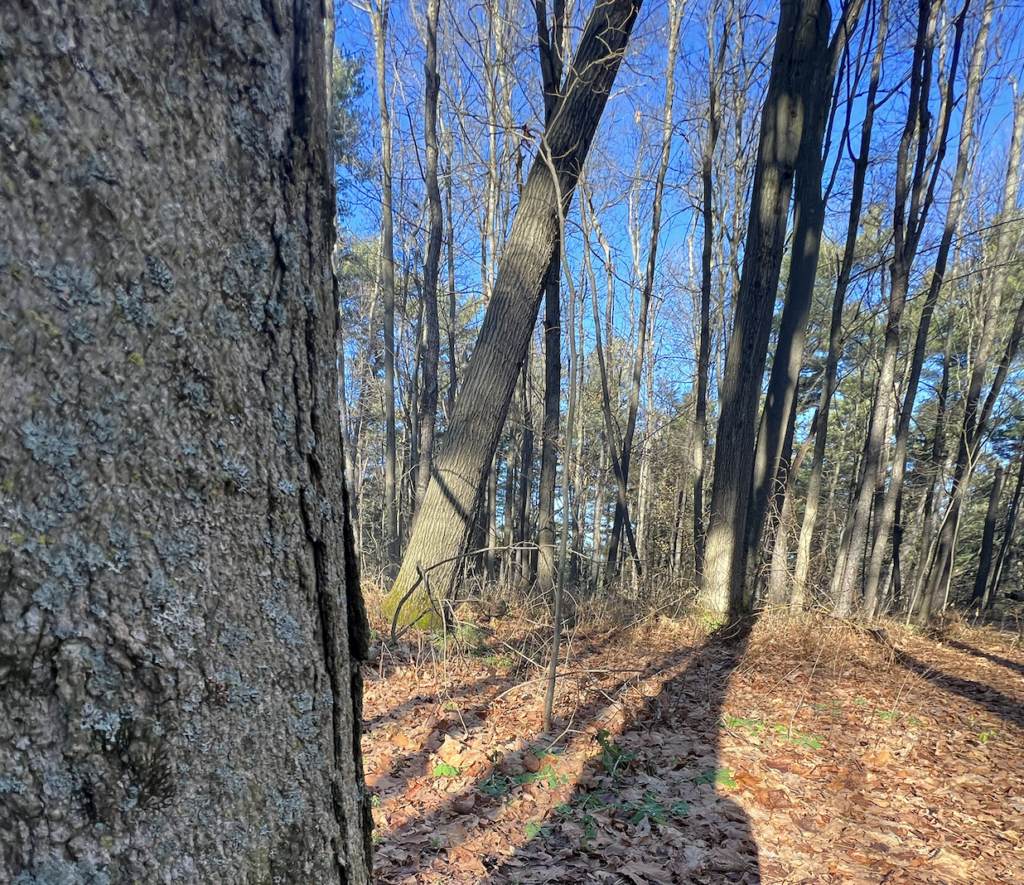
It is the week before finals and it was nice to break up my study time and visit my phenology spot for the last time before the end of the semester. Looking back at my first post and the pictures that I took, it is very interesting to see the vast changes that have occurred in such a short amount of time.
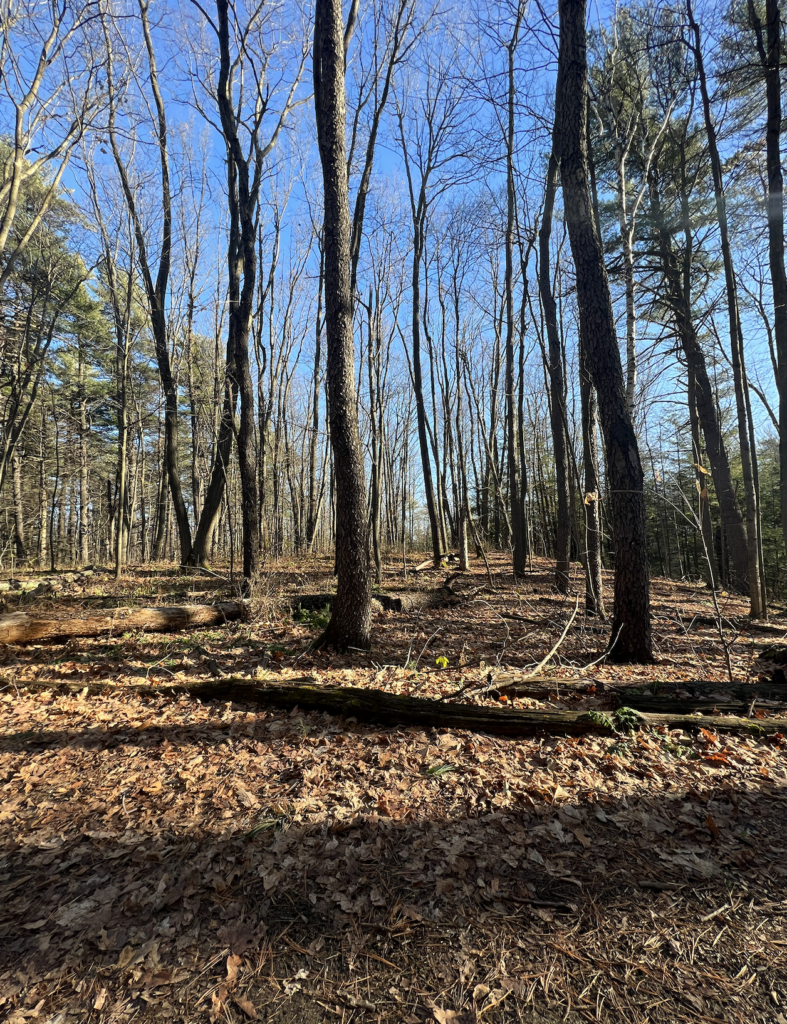
There is no longer lingering foliage on the black cherry and maples that surround my phenology spot, most of it has fallen from the trees. The only foliage that remains is that of the eastern white pines (pictured below). This has caused an increase in leaf litter, and an overall increase in decomposition especially amongst the fallen trees and bark.
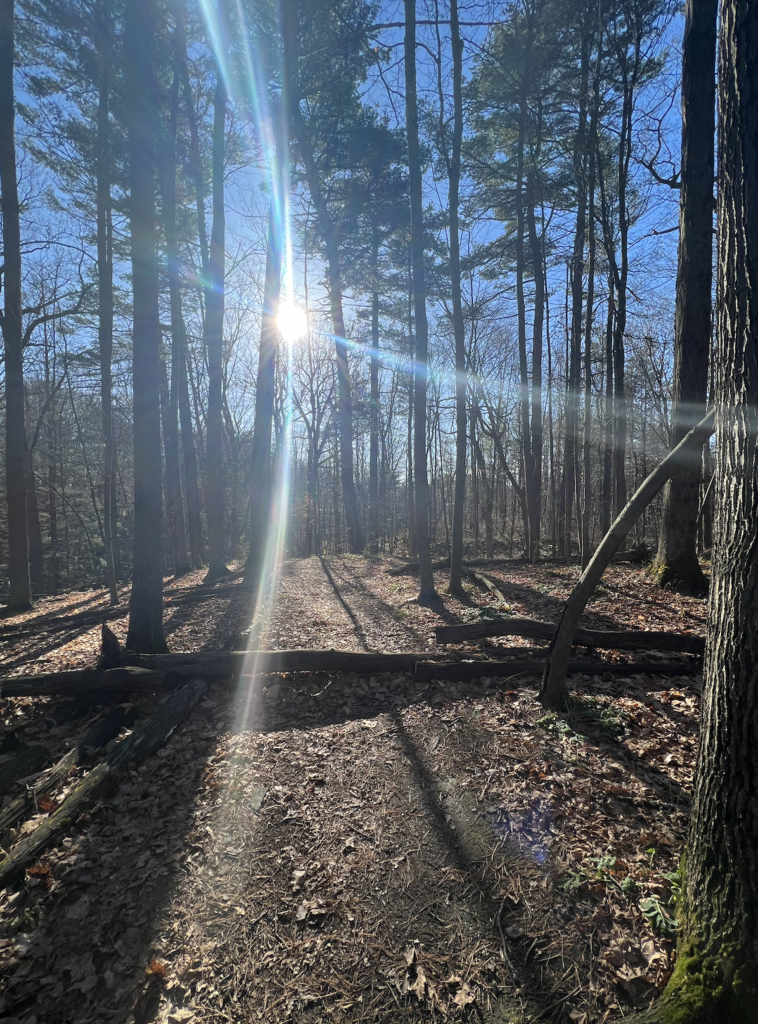
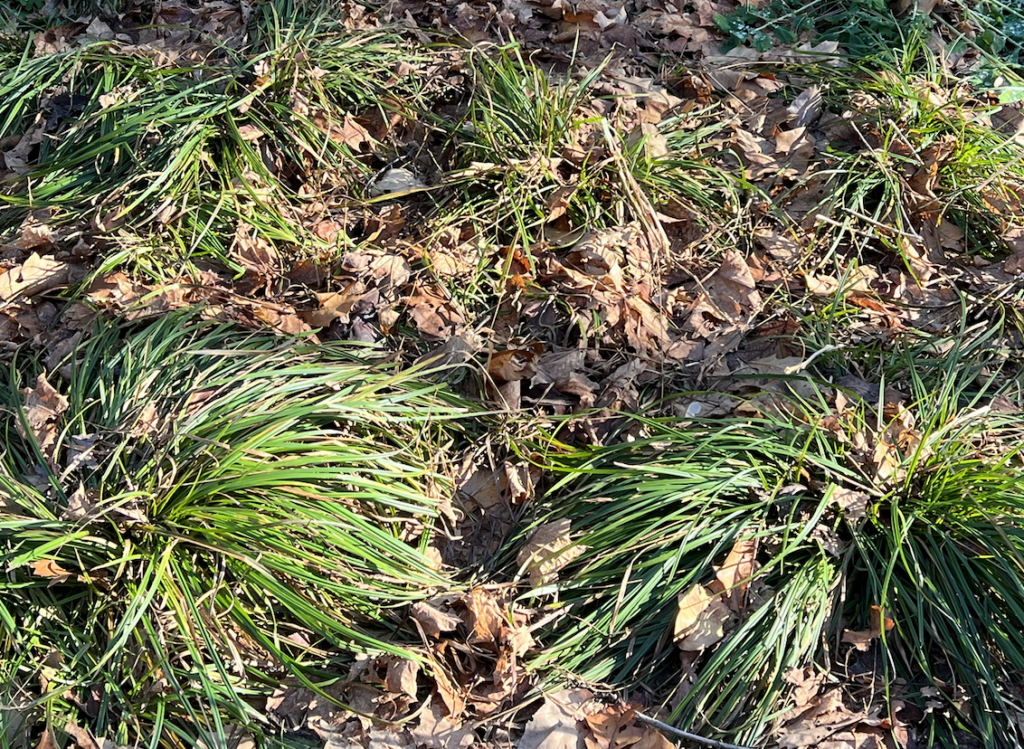
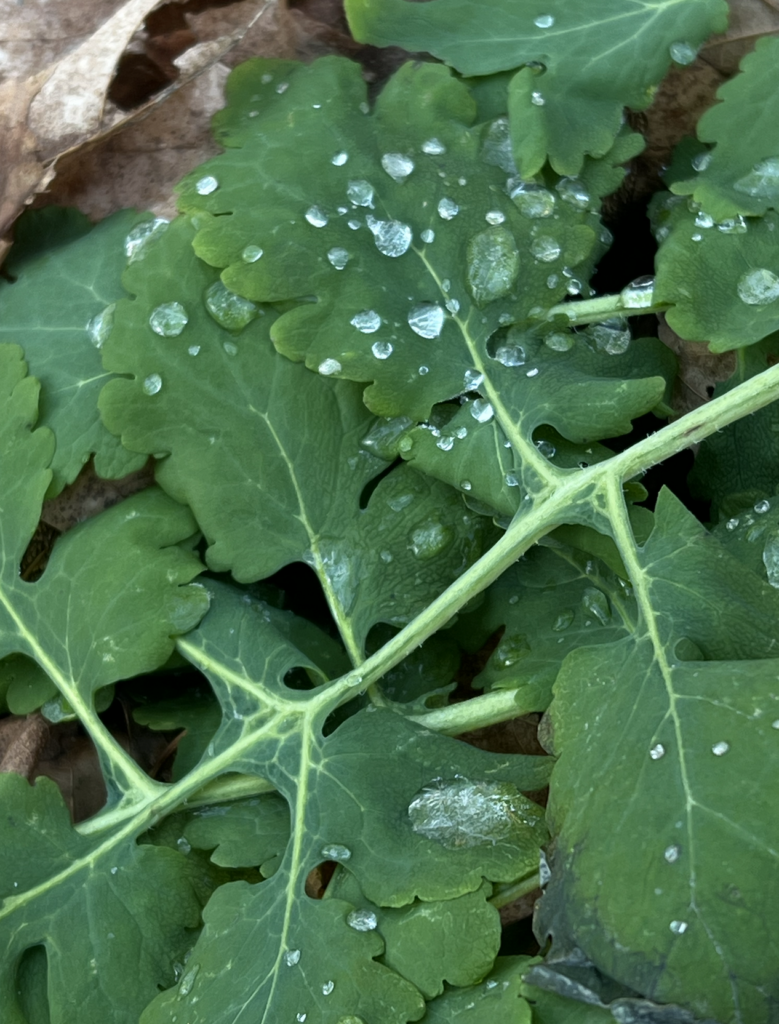
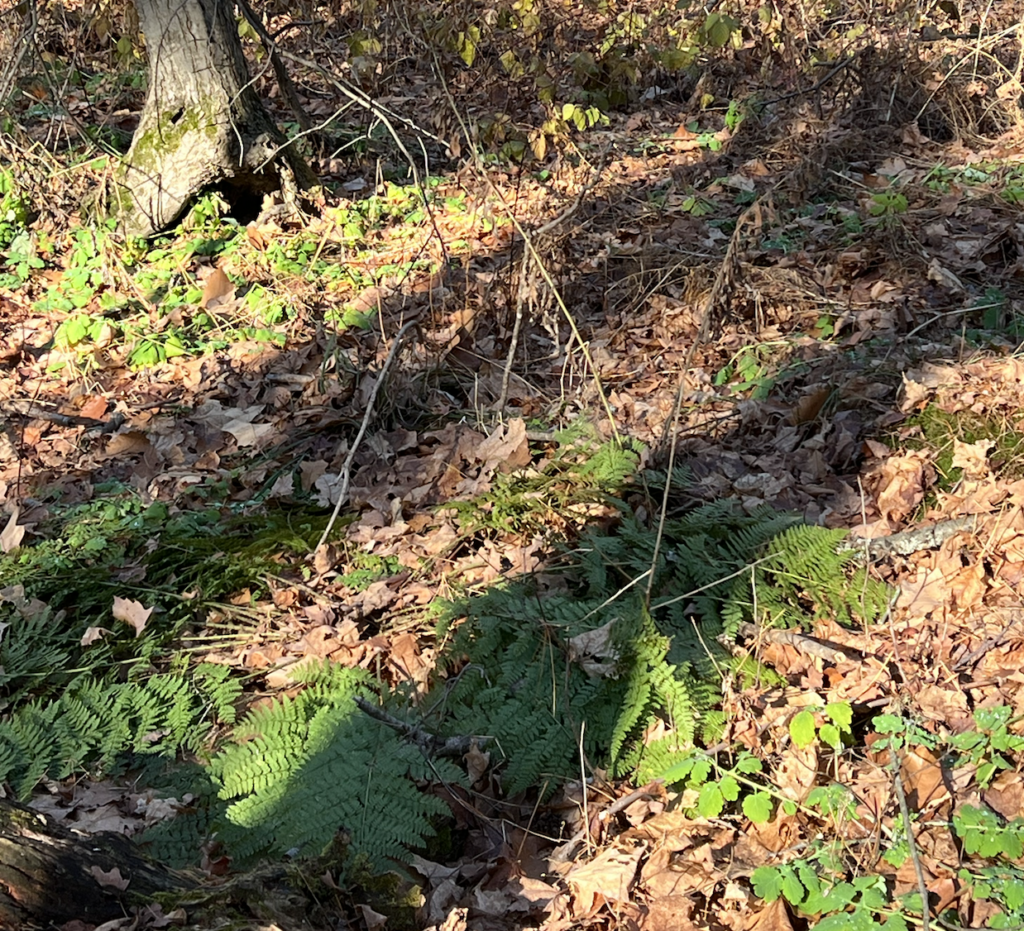
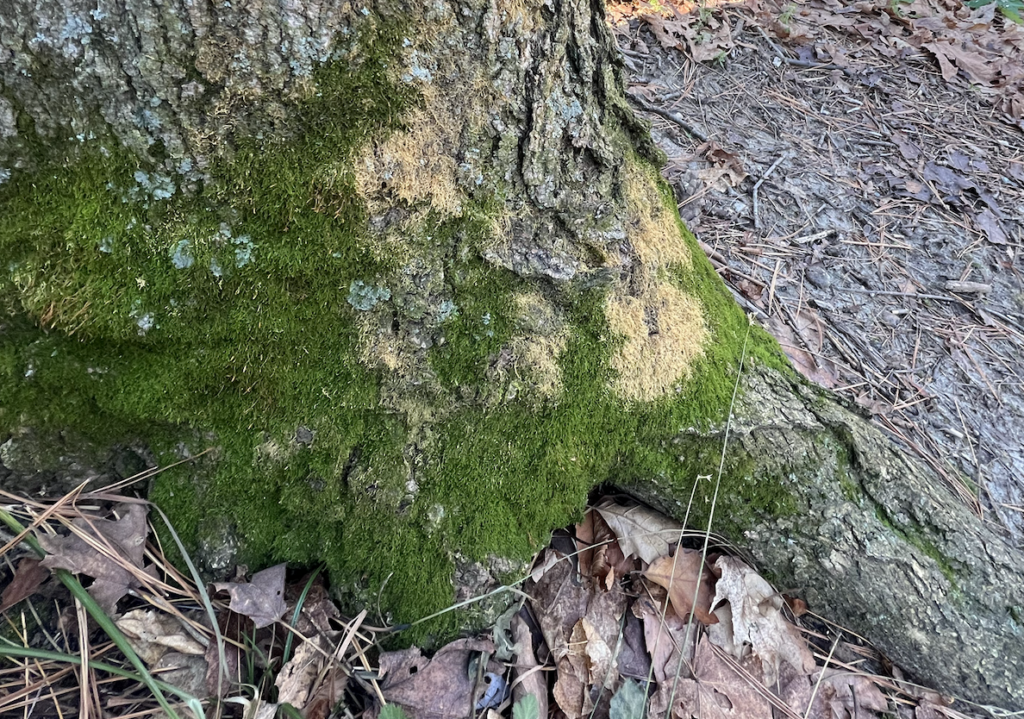
Even with the increase in leaf litter, an increase in decomposition, and the recent frost some woody plants and moss strangely persist. However, by referencing naturally curious it made more sense. My phenology spot is mostly made up of small woody plants, one being the intermediate woody fern — this is the most common fern in New England and its “fronds remain green throughout the year” (Holland). Another species that is still persistent in color is the greater celandine (Chelidonium majus), however, unlike woody ferns, these leave will eventually give to the frost. Longstalk Sedge, however, is an evergreen plant and will remain throughout the winter.
Animal activity has greatly decreased with the exception of birds. Below I attached an audio recording of what surrounded me as I sat and observed the space around me. Unfortunately, I couldn’t see the birds as I looked around, but I definitely heard them.
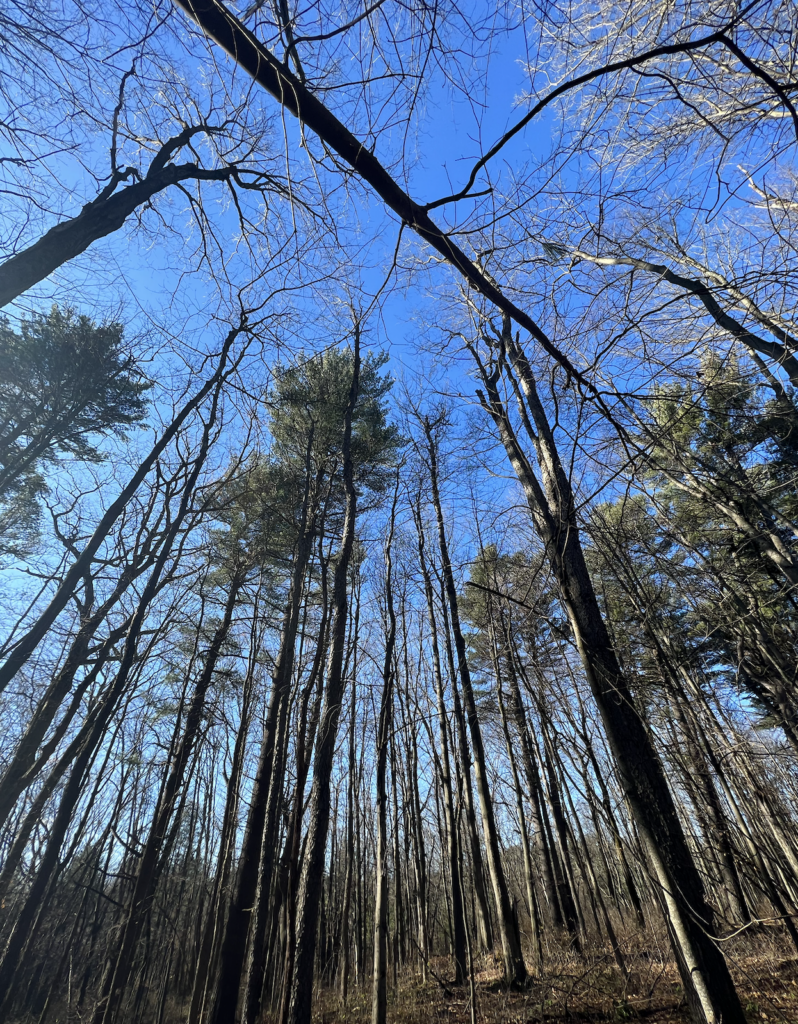
With the time I have spent at my phenology spot, I have realized that what I value most from it is the over story. Whenever I visit, I tend to look up.
I originally chose this spot for the abundance of ferns, and although this still remains as one of my favorite things about the place, I have learned to acknowledge the way the trees grow. If you look close enough you can see how the branches grew according to the sunlight.