I spent my Thanksgiving break in the home where I spent most of my life. I live in a relatively suburban area, but my backyard is forested. I chose this forested area right behind my house because it has served as a place of imagination and curiosity throughout my childhood, keeping me connected to nature, even in a bustling, noisy neighborhood.
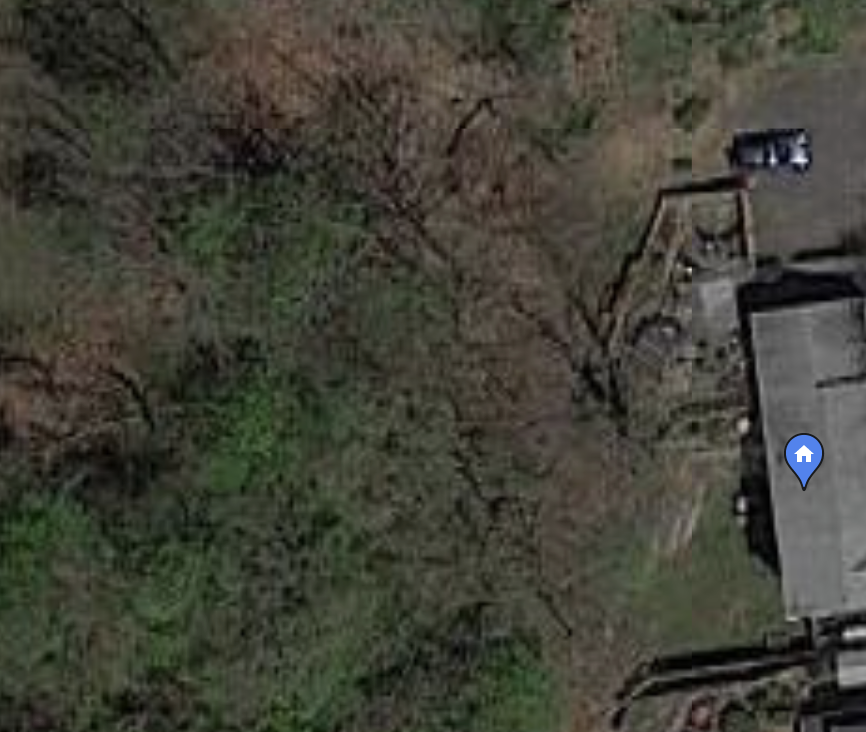
In this google map satellite image of my home, you can see how close I am to a wooded area. It is common for me and my family to see birds, squirrels, chipmunks, deer, coyotes, wild turkey and groundhogs come in and out of our area. It is a place of refuge for these animals from the highly developed areas surrounding.
Previously cleared in the early 1900’s, similar to my phenology spot back in Burlington, it is a relatively young forest with a greater percentage in understory rather than over story. It is mostly made up of silver maples, Norway maples, northern red oaks, and white oaks; whereas, back in centennial woods, there is an abundance of sugar maples and white pines. The phenology of both areas are relatively similar with that the trees have lost most of their leaves and every thing beneath the organic layer of leaves lies dormant in preparation for winter.
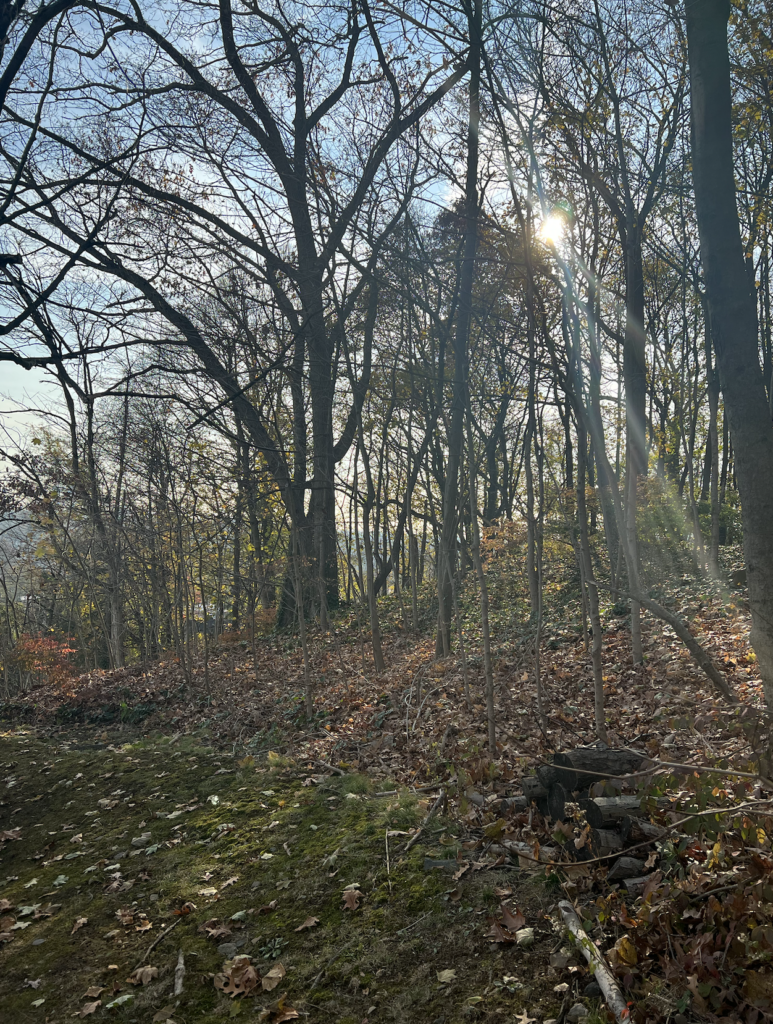
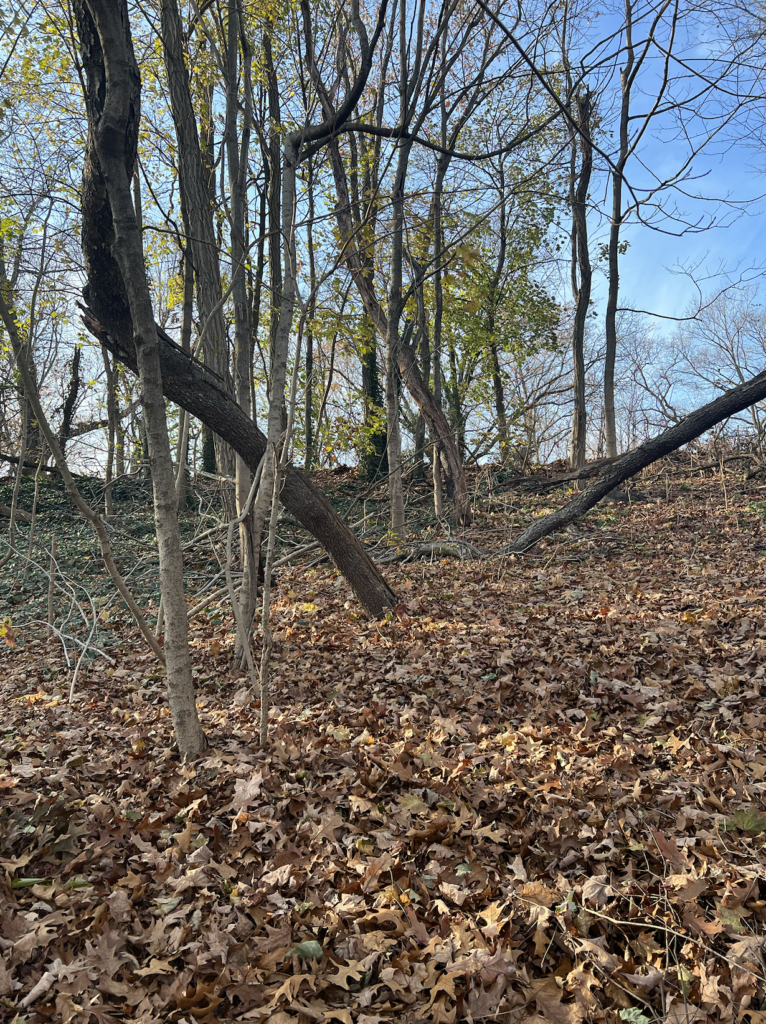
This spot isn’t just special because it is where I spent most of my childhood, but it is interesting to watch the area develop over time. Every year I observe changes to the animal population and watch saplings develop over time. Now, with a greater perspective of changing seasons and natural ecological patterns, I hope to have a better understanding of these changes in a broader perspective.
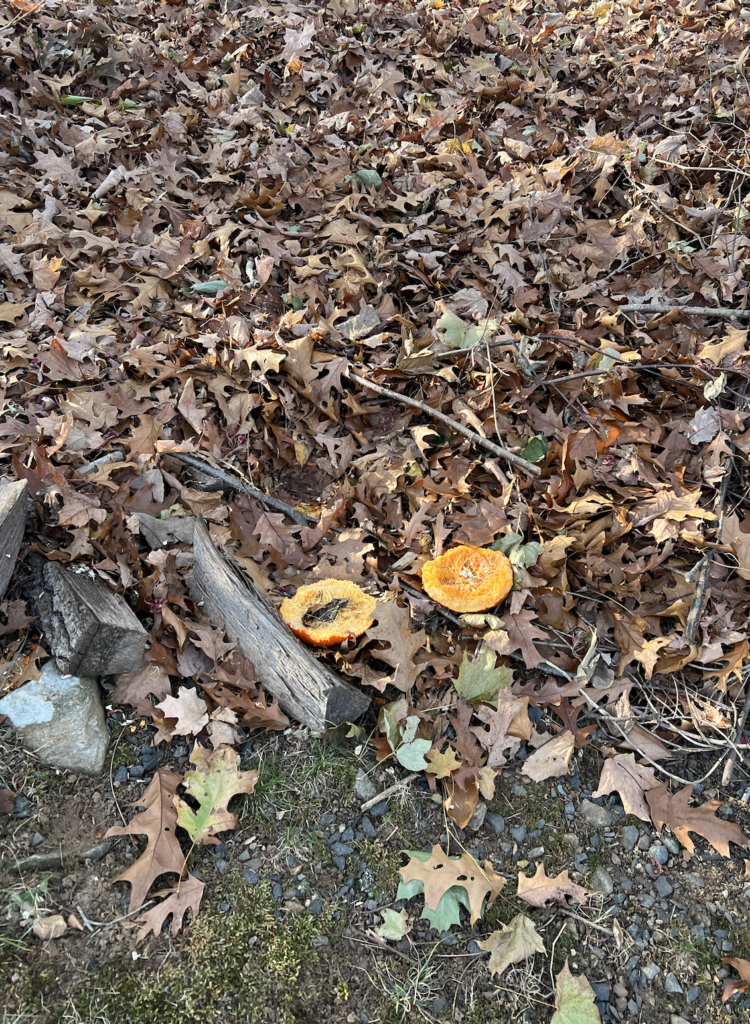
In response to honorable harvest, my family left our pumpkins (used to decorate on thanksgiving) on the edge of the woods, and not even a day later it was evident that they were eaten by small mammals.