
Welcome to my phenology blog for Natural Resources 2021-2022 at Redstone Forest. Here I will track this forest’s progress throughout the seasons as well as report on plant and animal species found.
Below is a map of how you get from Mason, Simpson, Hamilton, to the Redstone Woods:
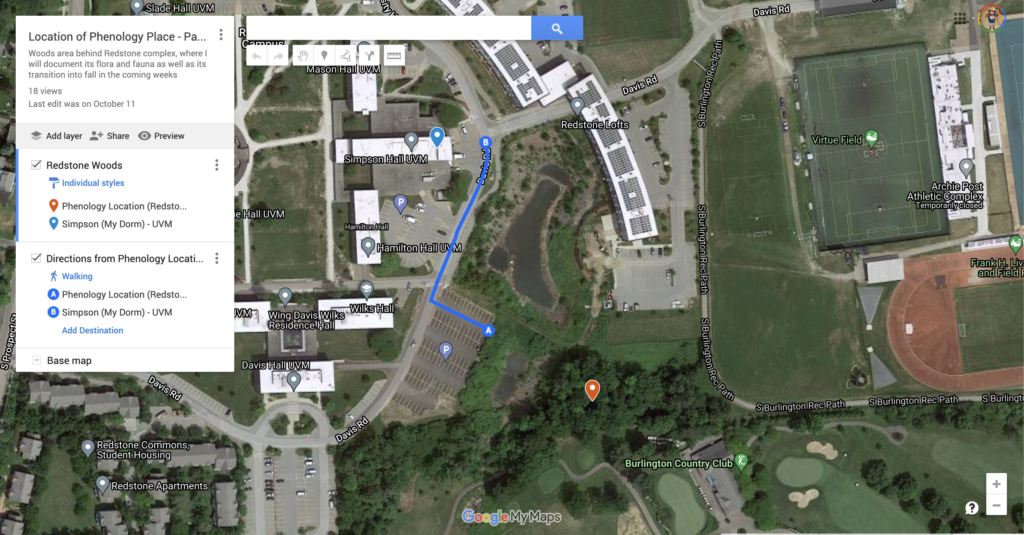
This is my Phenology location, Redstone Woods, outside where I live. Thought it would be good to watch the change of nature right outside my room.
For the most part, it seems the forest is relatively new, or at least the trees are. There are many young red and white oaks, striped maples, as well as some paper birch and dogwood.
Saw a few animals in the forest such as squirrels and chipmunks and various birds overhead. Redstone forest is not that large, being surrounded by the campus on one side and the gold course on the other.
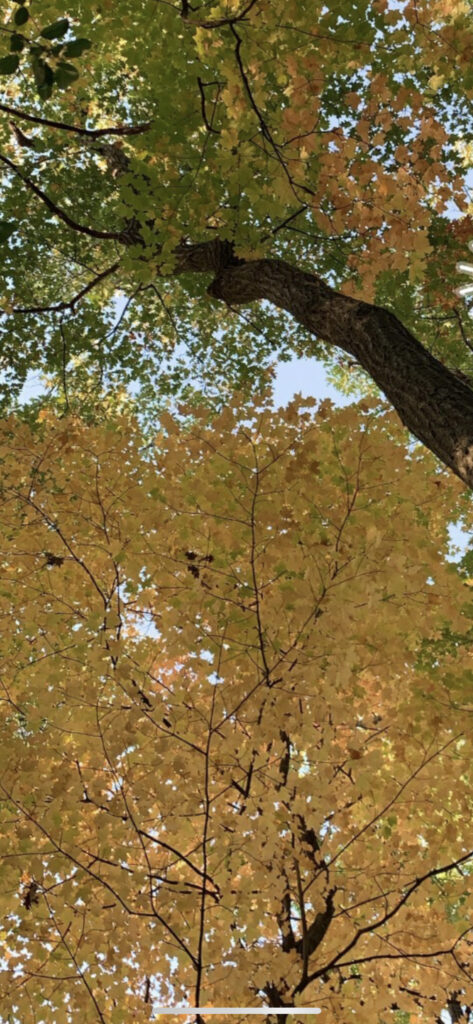
This is a photo of Redstone Woods before the leaves fell.
Sitting quietly for 15 minutes, I realized how loud Redstone Woods is. This is because the woods aren’t that big and in all directions, you can see the edge of the woods. It is in between a private golf course and country club, and the Redstone dorms and lofts, making it the center of a lot of human attention and noise. This is probably why there are few animals in the area. The number of old beer cans and cigs indicate it is used during the warmer seasons to smoke or drink as a hang-out spot for college students. This also destroys the woods and discourages animals from living there. The trees have begun to shed their leaves and the air is much colder.
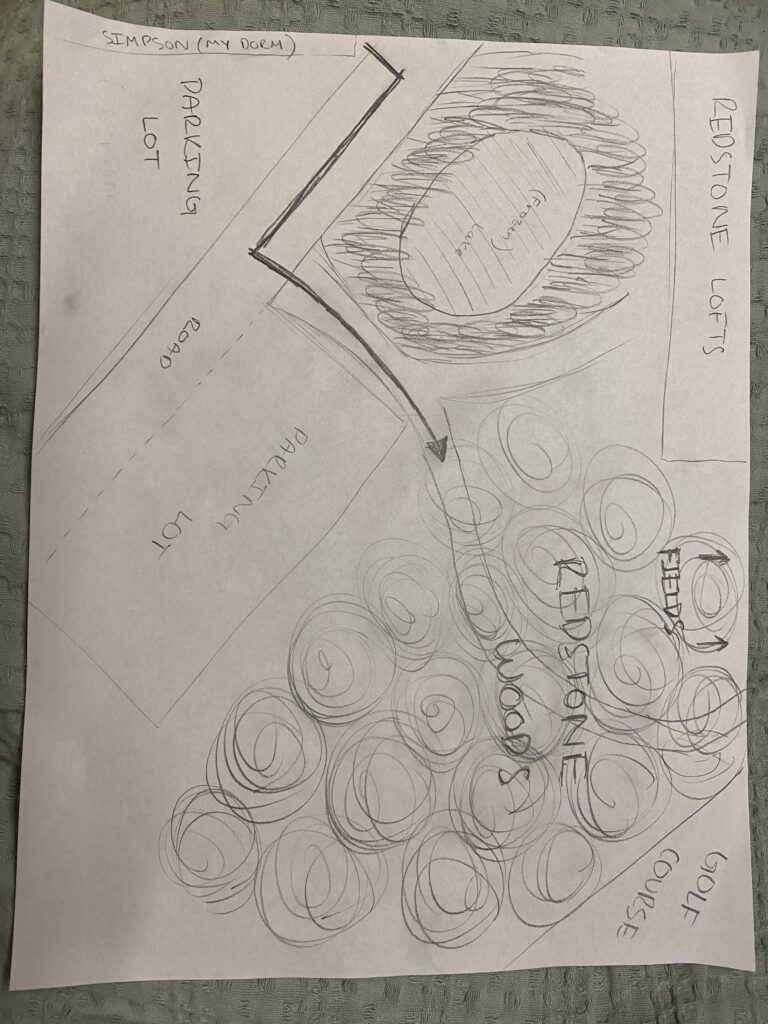
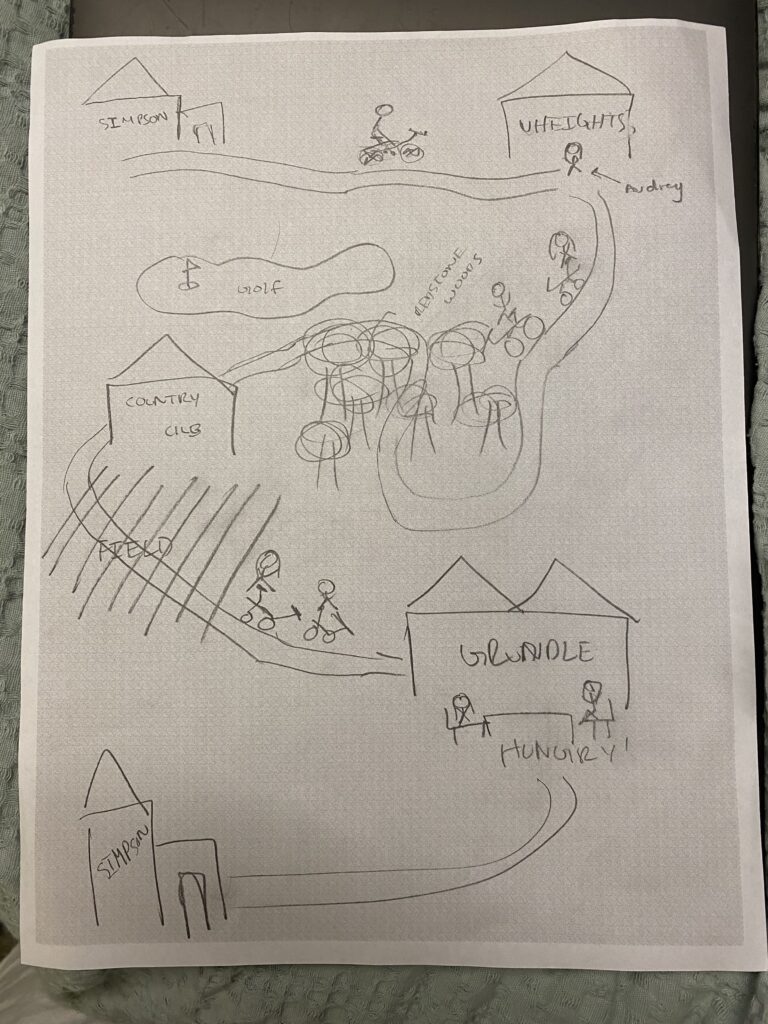
While drawing my birds-eye view, I noticed that the air felt a lot colder, and the trees looked weaker. The leaves are a vibrant color but it’s almost as if not only I, but the trees can feel winter on the horizon. I am seeing fewer and fewer animals and a few trees have begun dropping large portions of leaves and covering the ground.
There are many changes since the last time I have been here. The last few weeks have completely taken the leaves off the trees. This makes the golf course and country club in the back much more visible. The privacy I thought the Redstone Woods provided is gone with the leaves all on the ground. It makes the woods feel smaller than I remembered them before Thanksgiving Break. The pond has frozen over. The only animals I have seen are a few hawks high up, and chipmunks as well as squirrels here and there. There is almost no wildlife to be heard or seen.
SEMESTER 2
Natural Resources 002
Post 1 – January
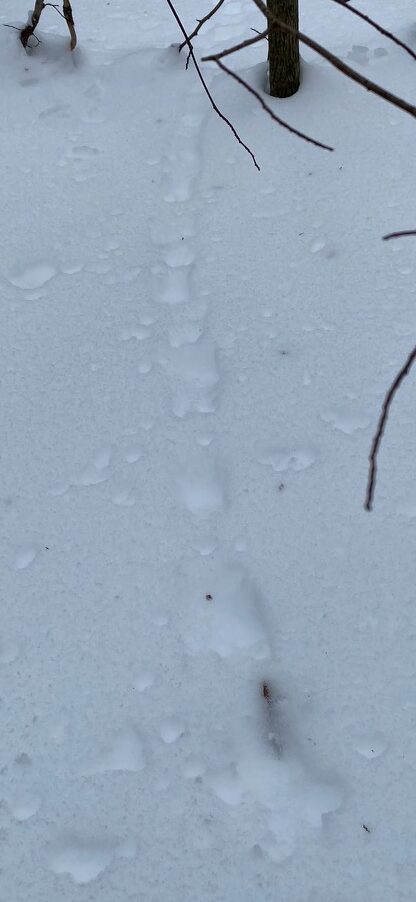
In order to get to my phenology location, the Redstone Woods, I was required to wear boots, as there was snow and ice. However, this made it significantly easier to track animals, as they leave footprints that stay for a while. Having learned a few things about animal tracking during an NR lab such as stride and shape of footprints, I was able to generally discern the footprints below. Based on how small it tried, my guess is it is possibly a squirrel or maybe something even smaller like a chipmunk. The prints were kind of messy indicating this animal was likely moving at a fast pace, as many squirrels and chipmunks do.
There are few evergreens and firs in this area, meaning the land really clears out and loses its privacy when all the trees drop their leaves. The forest seems significantly smaller and the golf course, as well as Redstone and the lofts, are clearly visible. The small pond outside Redstone is frozen over and the path into the forest is icy in certain spots. Trash that is usually in various locations throughout the Redstone Woods is most likely hidden underneath the snow and ice that has begun to accumulate here since I left in December of 2021 (a one-month accumulation period).
Post 2 – inaturalist Adventure in Jericho Research Forest – February
Over the weekend, I drove to Jericho Forest and just walked around, using inaturalist to help identify both plant species and tracks of animal species. It was super helpful in clearing up the confusion and would definitely consider using it on my own time when I explore forests like this one.
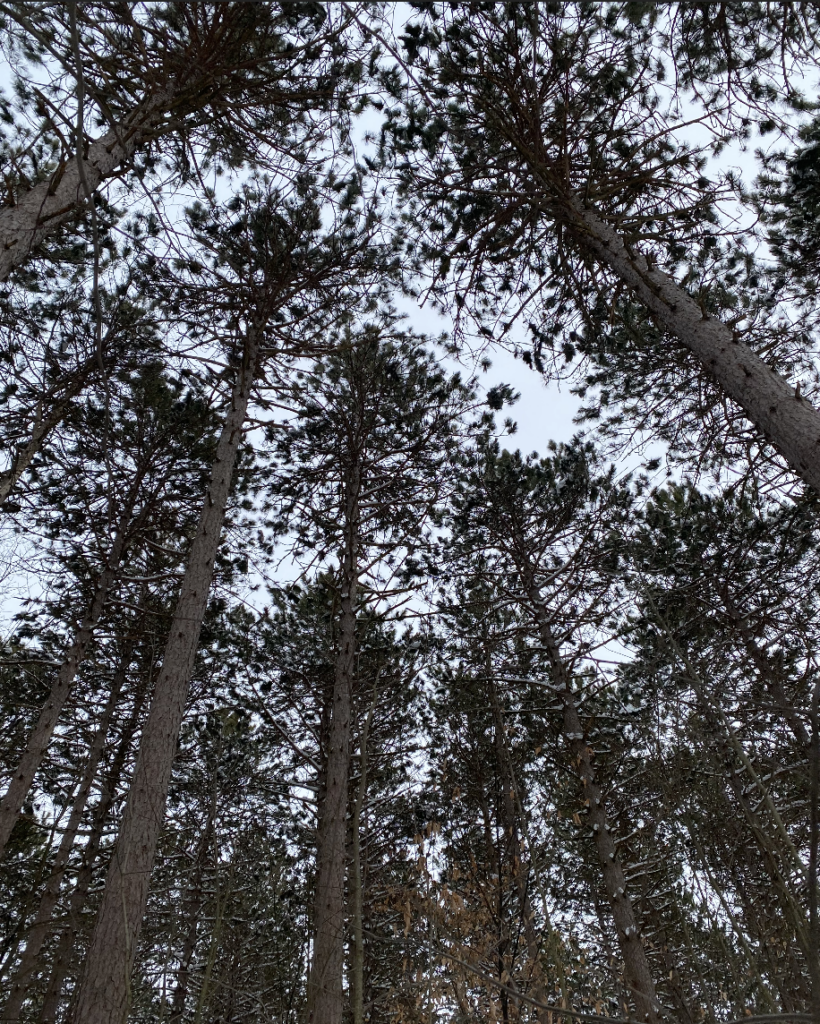
There are a lot of firs and evergreens in Jericho, unlike Redstone Forest, giving it more cover. It is also obviously much bigger than my phenology location and therefore is a lot more private and has far more wildlife and biodiversity. There is also a lot less garbage and pollution in comparison to my area. I stumbled upon a hill with big red pines growing. At the base of these pines, I found ground that had been dug up with what seemed to be claw marks, indicating some sort of a cat (maybe a bobcat). It was windy that day and there was lots of falling snow, making it hard to discern what were tracks. Because evergreens do not lose their leaves in the winter, they can hold many pounds of snow that is just waiting to fall.
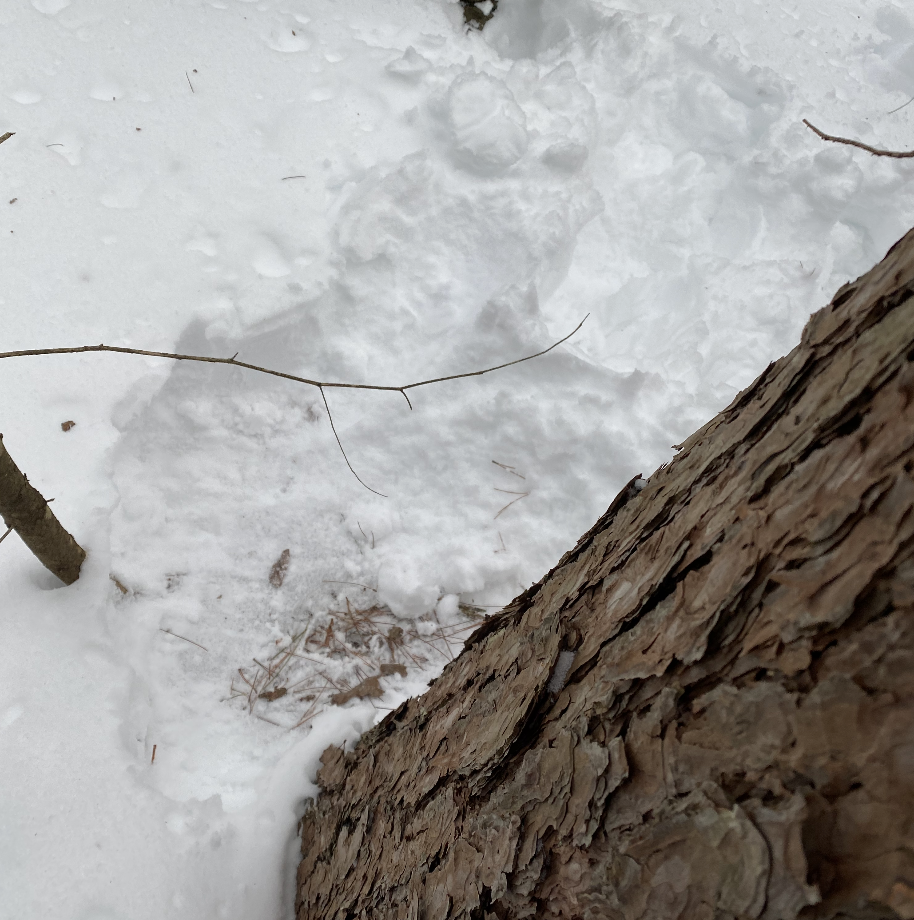
Some of these prints are mine but the dug-up area by the tree was something I did not make. It’s hard to tell with all the falling snow and previous footprints of those who have been through here recently.
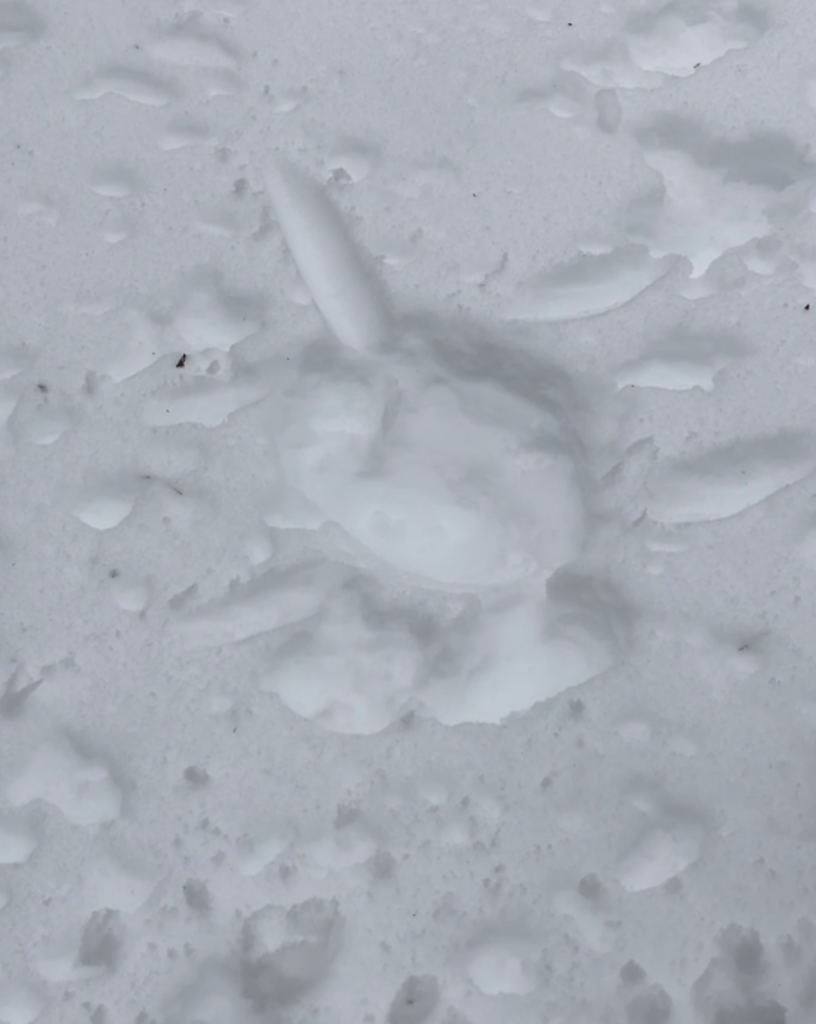
It is so hard to tell if stuff like this may be a footprint or just falling snow. Spent a while looking at this print and around it for footprints but couldn’t find any 🙁 so I’m maybe it’s just snowfall.
Post 3 – Vacation – March
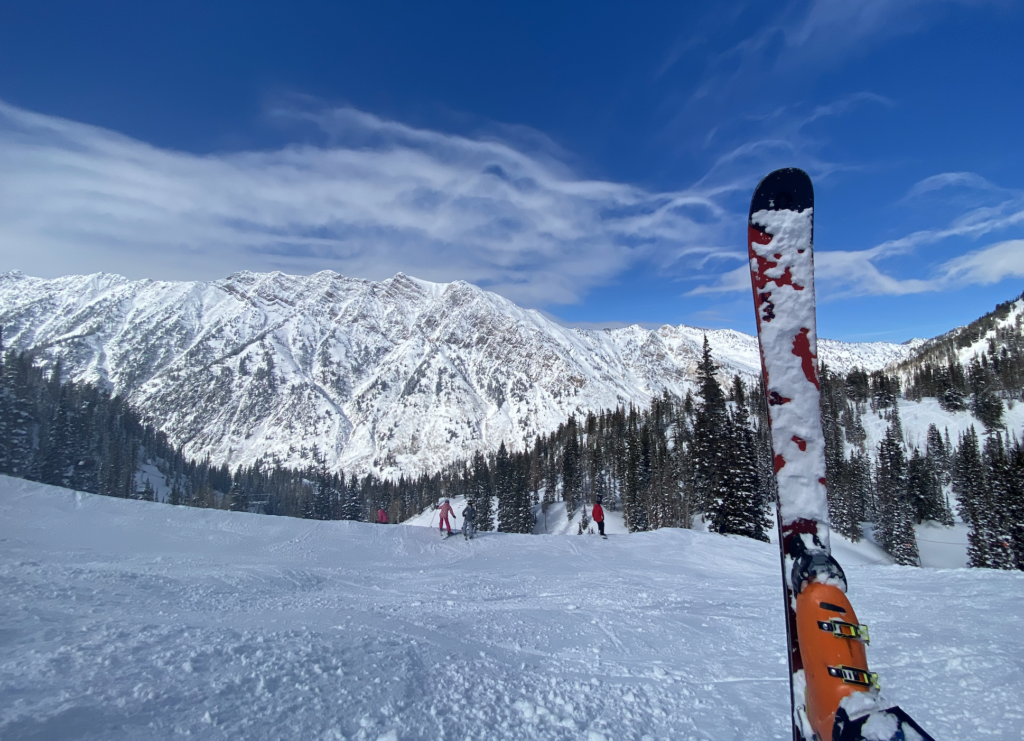
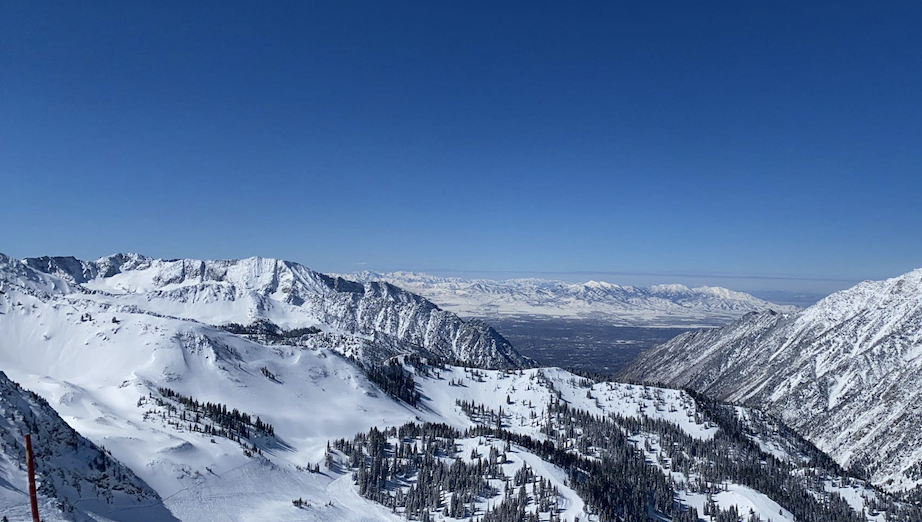
Over March break, I went to Snowbird and Alta in Utah to ski. While it isn’t part of the assignment, I thought I’d include some dope pictures from my trip along with the observations I made about the land and its variety of species while there.
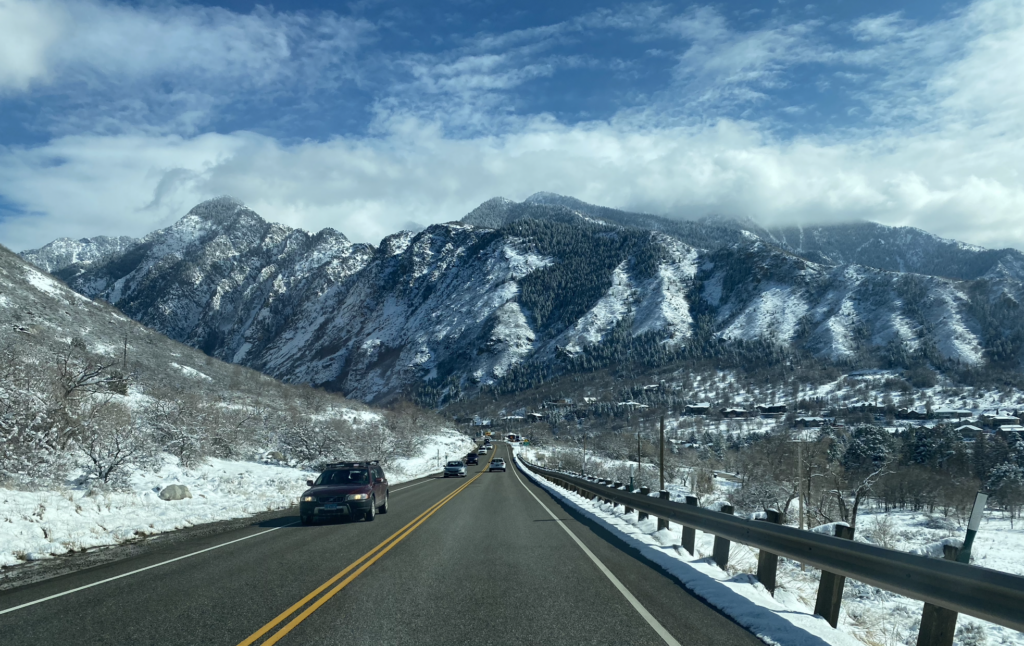
The terrain is significantly rockier and the mountains are much larger and steeper than in New England. becuase there was a decent amount of snow here, it was difficult to tell how rocky the dirt was, but after researching it online, I found trees have a lot harder time growing in this rocky area with an elevation of over 4,000 ft.
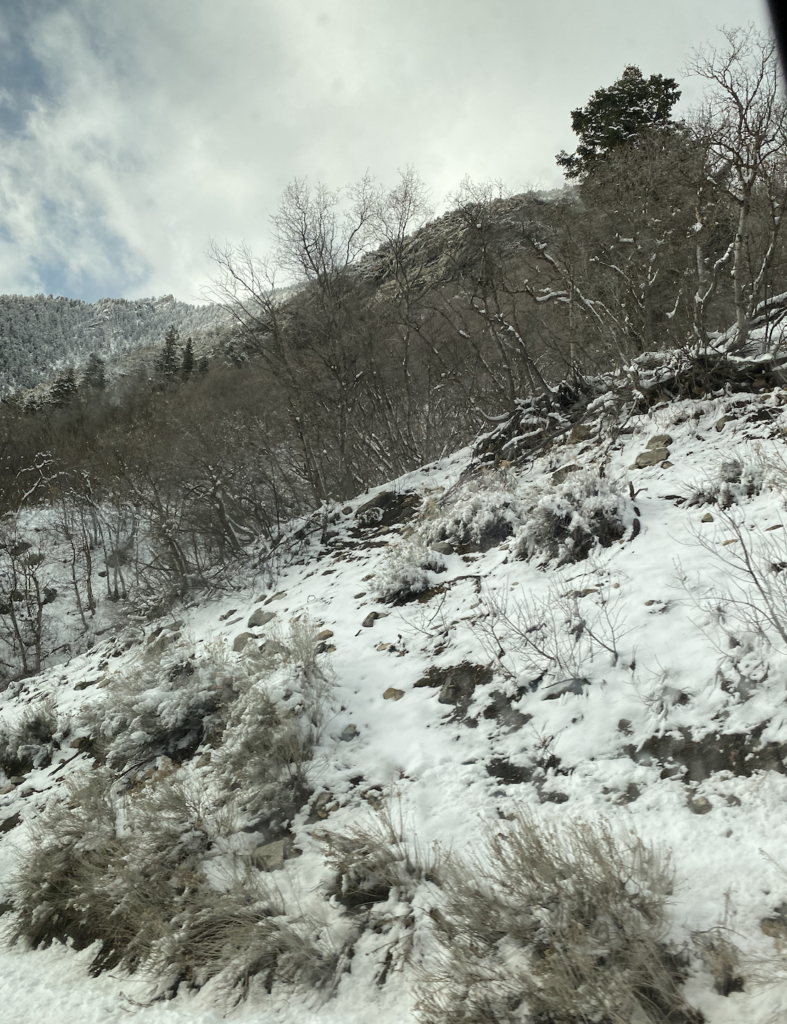
This is a closeup of the side of the road leading up into the mountains where Alta and Snowbird are located. as you can see, the ground definitely has more rocky chunks preturding, which indicates rockier, tougher soil which only some species can grow in. There were a lot of firs and evergreens here, most likely because evergreens are adapted to high elevations.
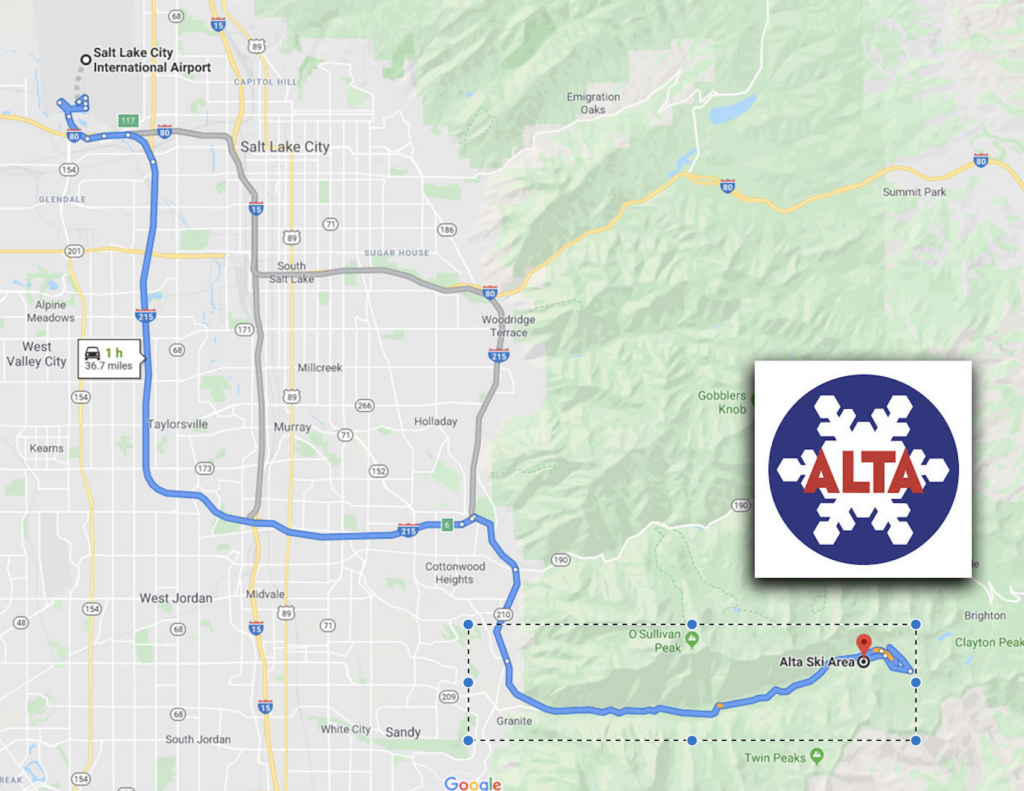
As you drive away from the city and up into the mountains, the landscape gets significantly more rocky and the mountains create steep, uneven land. As you can see on the map, the road winding up to Alta and Snowbird is basically in the middle of no where, as there is no buildings or houses except for ski lodges and hotels.
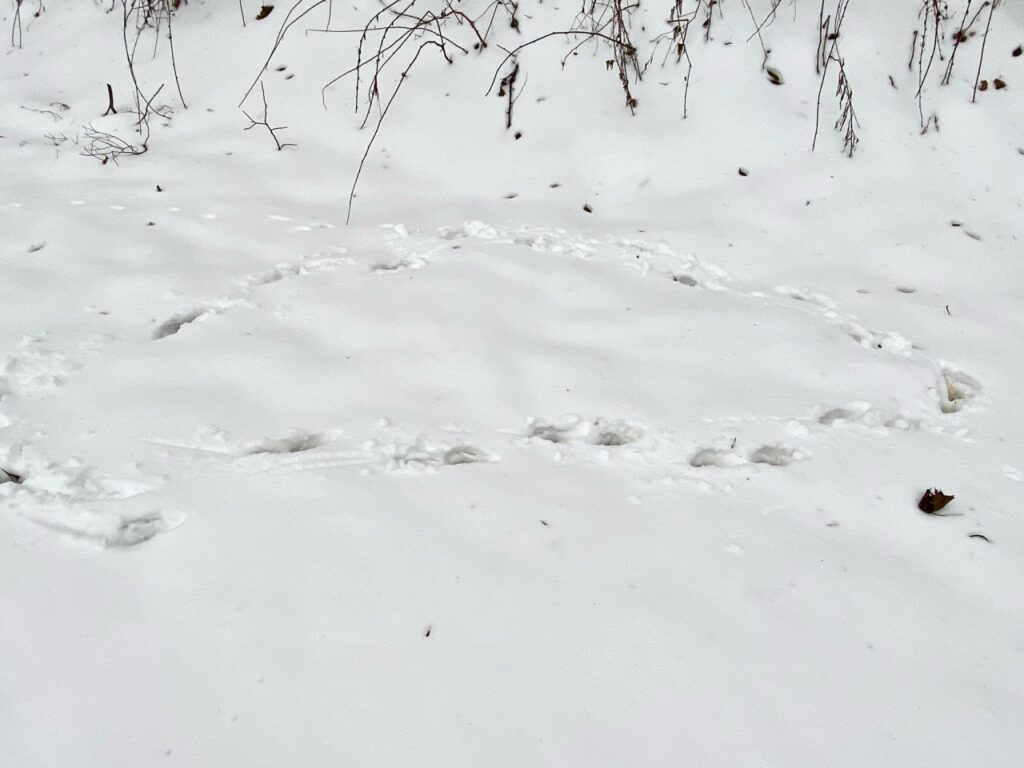
Found these tracks a little ways way from our lodge close to the mountains. It could have been a dog but I think these tracks belong to a fox, as they are common in Alta. I even saw one while skiing in the woods, but then it ran away, and I was unable to get a picture.
Dope Photos
Post 4 – inaturalist City Nature Bioblitz April
For this post, I chose to explore Rock Point with a few friends in the class. We took pictures of many different types of species as well as pictures of the great view from both the Thrust Fault and Lone Rock.
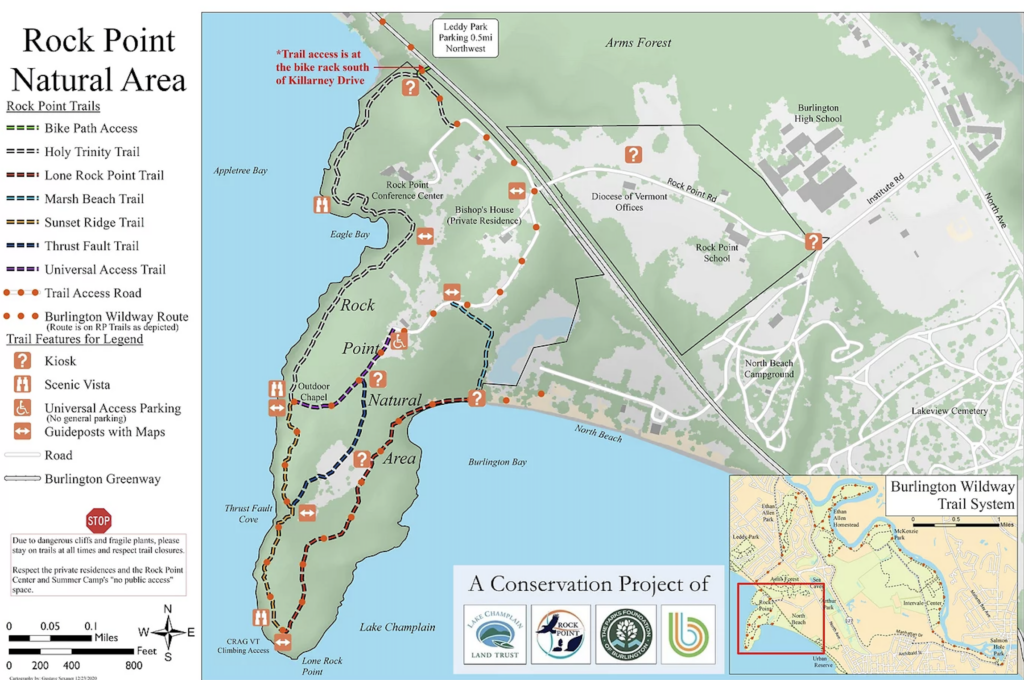
We parked down by the beach and then walked around the Rock Point trails identifying some of the species we saw, as many flowers and buds have come in since the end of March into April. Here are some of them:
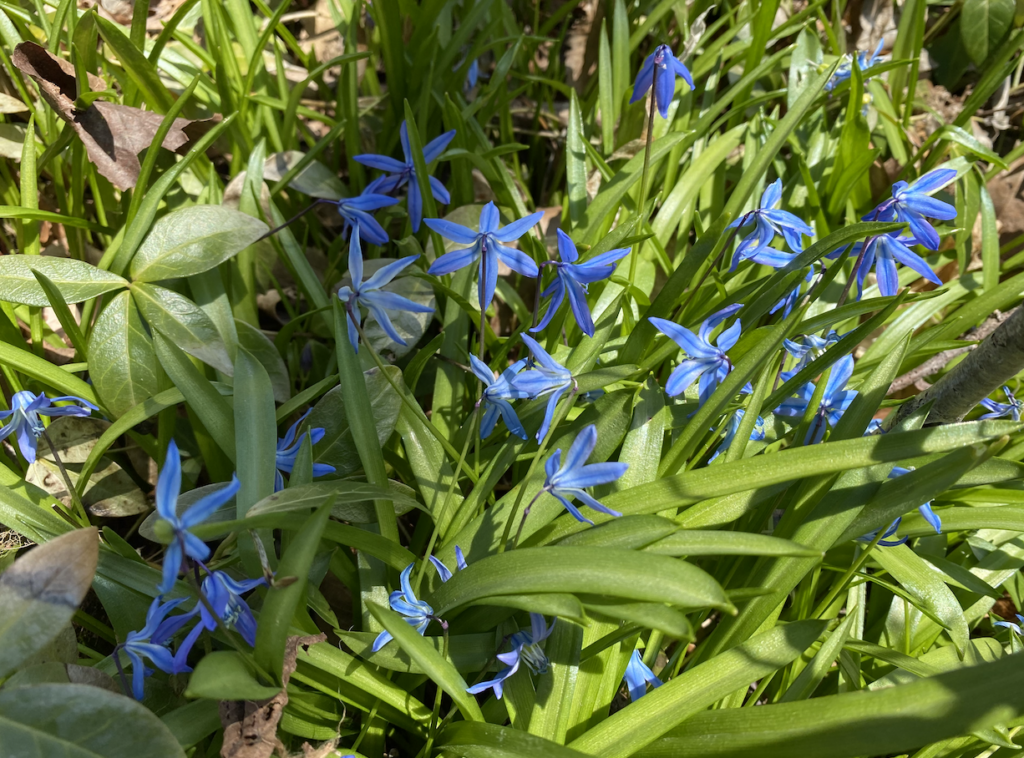
This is Siberian Squill (Scillia Siberica) and it is a wild flower that grows in spring. After doing research, I found that this plant species is native to Western Asia such as countries like Turkey. It grows in many wild places and even in peoples gardens all over New England.
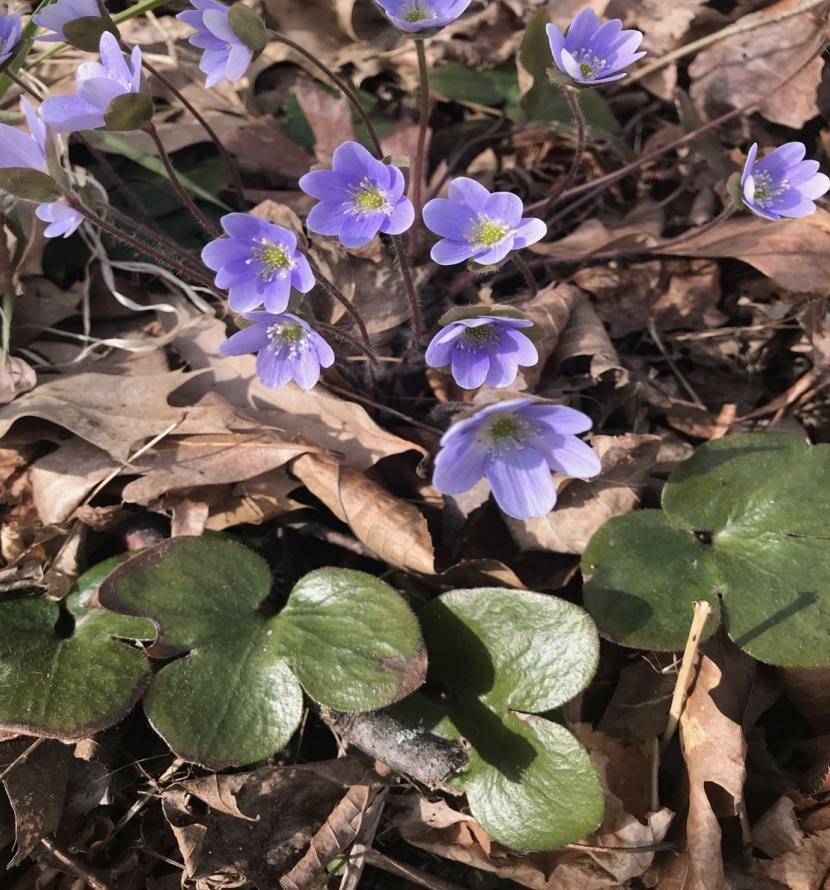
This is Round-lobe Hepatica (Anemone Americana) and it flowers in early spring. This is a native wild flower of North America that can come in a variety of colors such as white, pink, blue, and purple, as well as a mix of those colors.
While there were a bunch more species, we wanted to focus on the flowering spring plants such as the ones above. All around I could see different plants sprouting up, even if it wasn’t a flower. There were saplings and growing types of grasses and bushes that really indicated that summer is coming. As we learned in Natural Resources this year, rock point has a super thin, yet super fertile layer of soil due to Rock Point’s rocky composition and the rich nutrients of the yellow dolostone below that shaves off and mixes with the soil overtime. The pH of this ground is also neutral to basic (7-9 in pH scale).
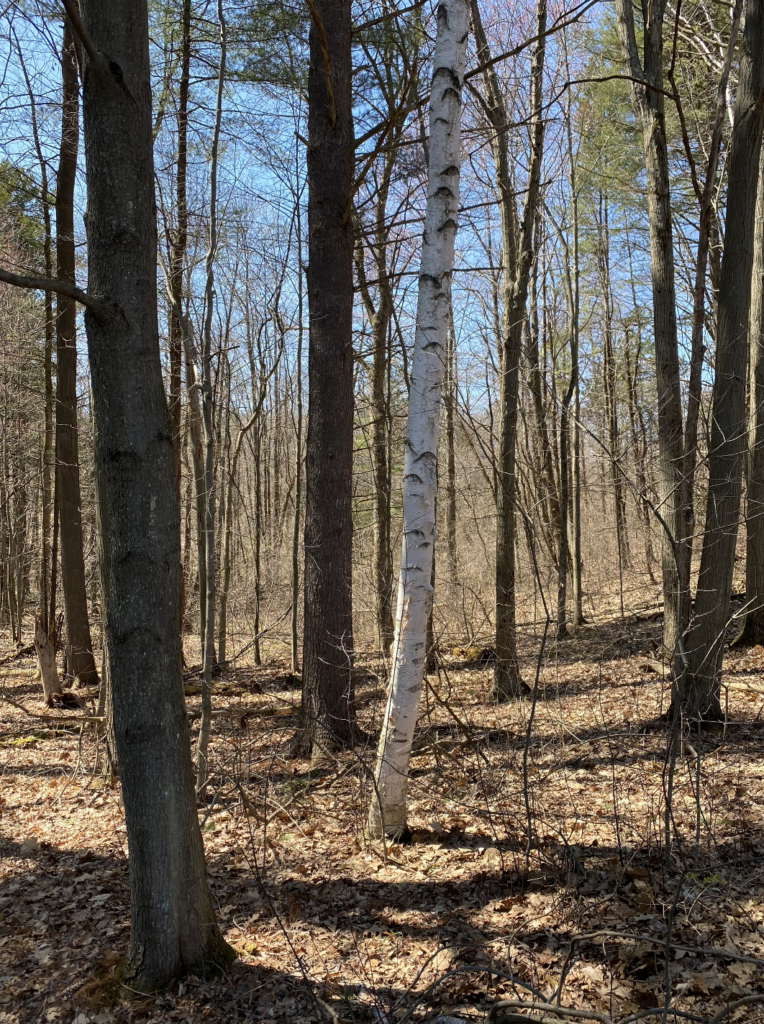
There are a few white paper birches with loads of oaks and maples. This picture was taken close to North Beach. This includes red oaks and white oaks as well as sugar and red maple.
These are some cool photos such as nice views and cool finds such as this tree growing on a rock on the shore of Lake Champlain.
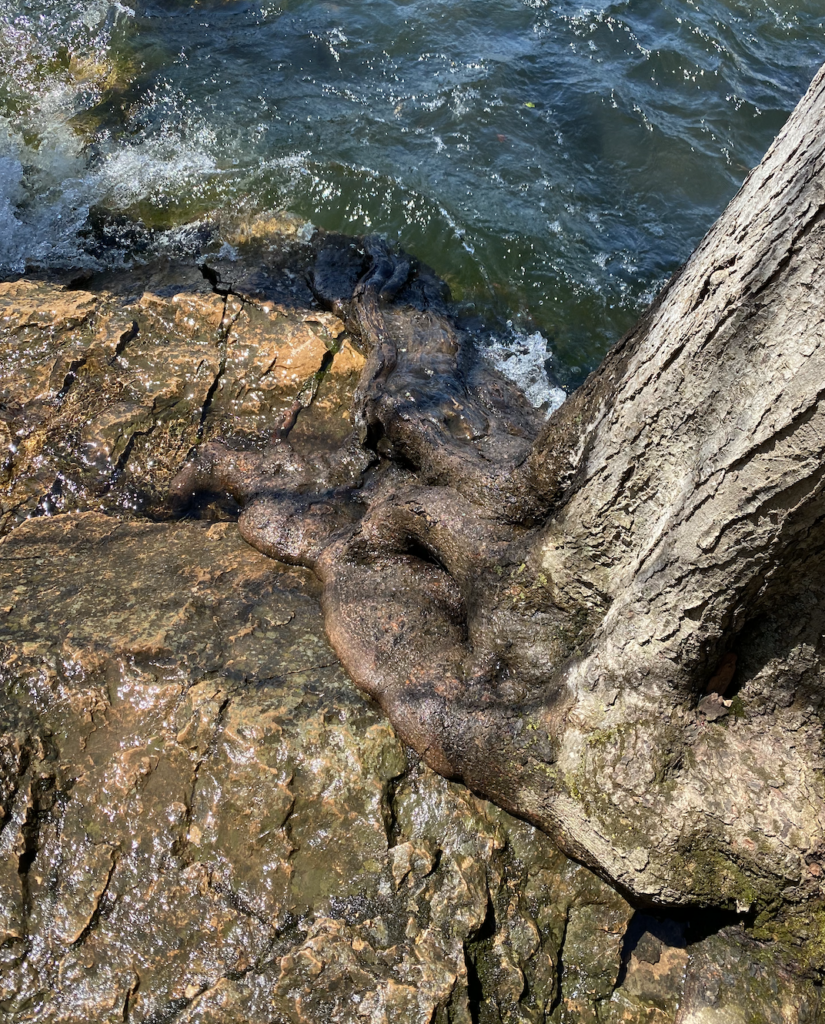
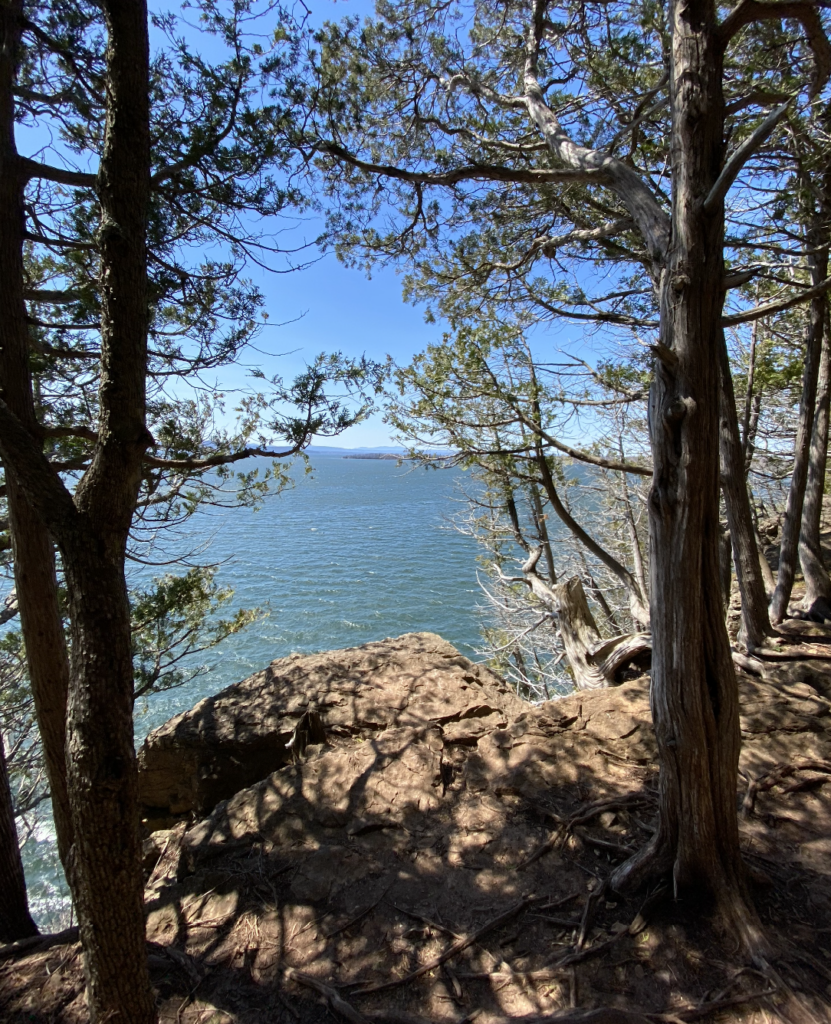
Per usual, inaturalist made it easier to identify and confirm tree and plant species we found as we walked the trails of Rock Point. People really do put super relqavent and helpful info when to omes to idnefiying and making more out of your outdoor adventure.
Post 5 – Final Redstone Visit – May
Sad that this will be my final post for the Redstone Woods. This has been the natural area outside my home for almost a year now and honestly I’m really glad I chose it as my phenology place (despite others telling me it wasn’t an adequate phenology spot — Justice for Redstone Forest, its like any other forest!)
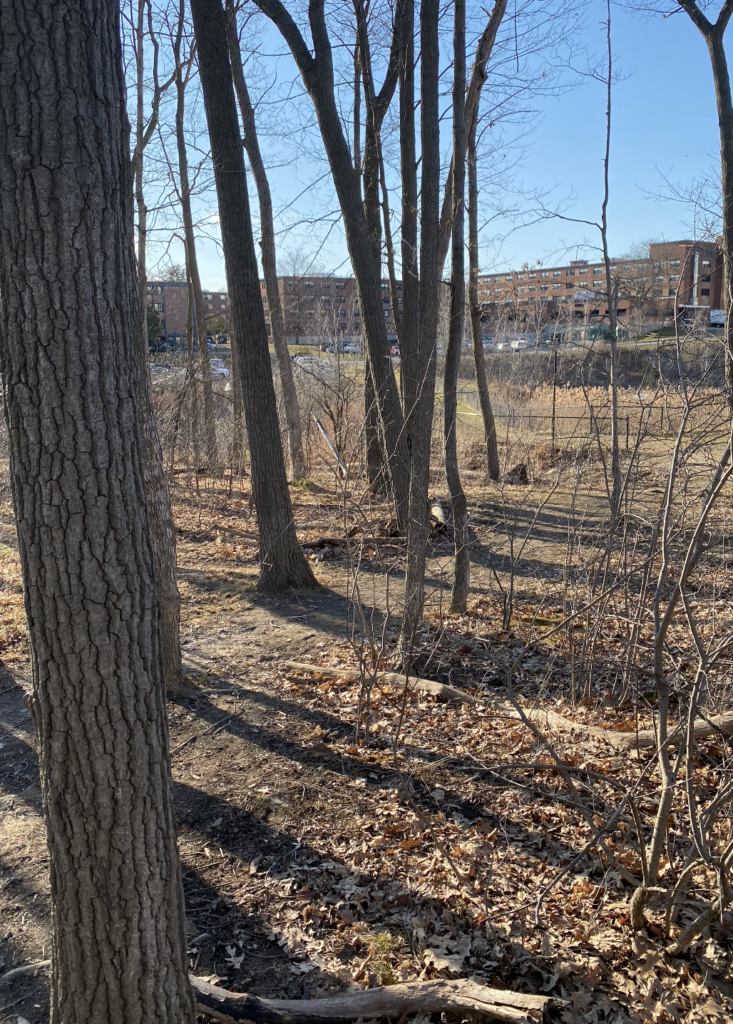
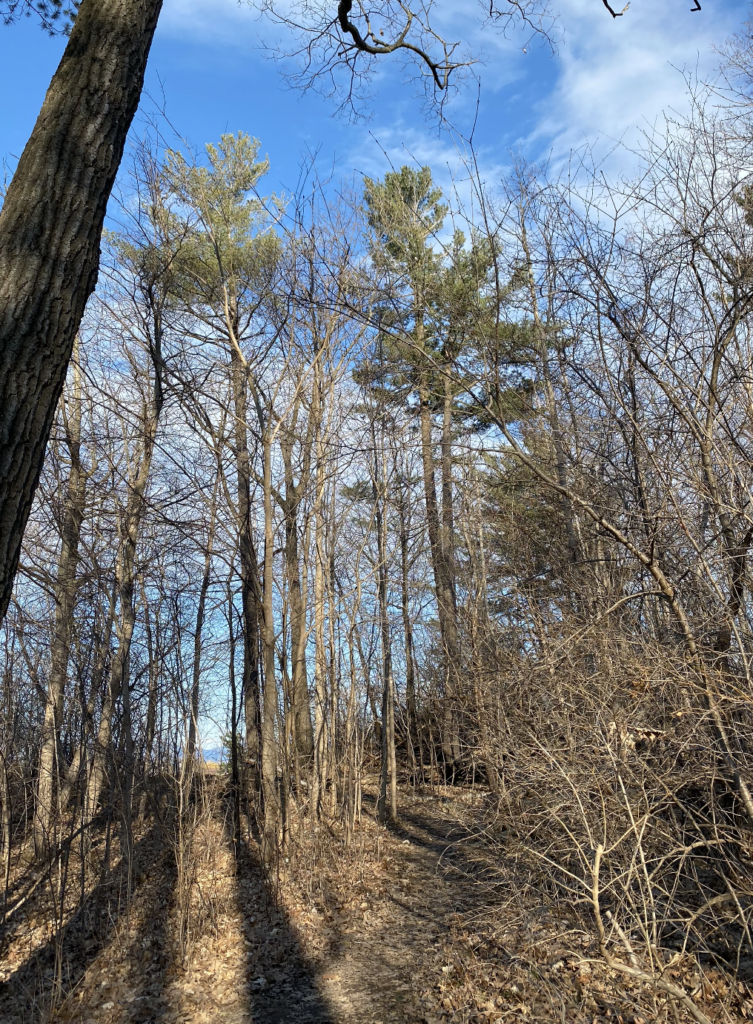
Adios Redstone woods, I’ll miss you!
🙂