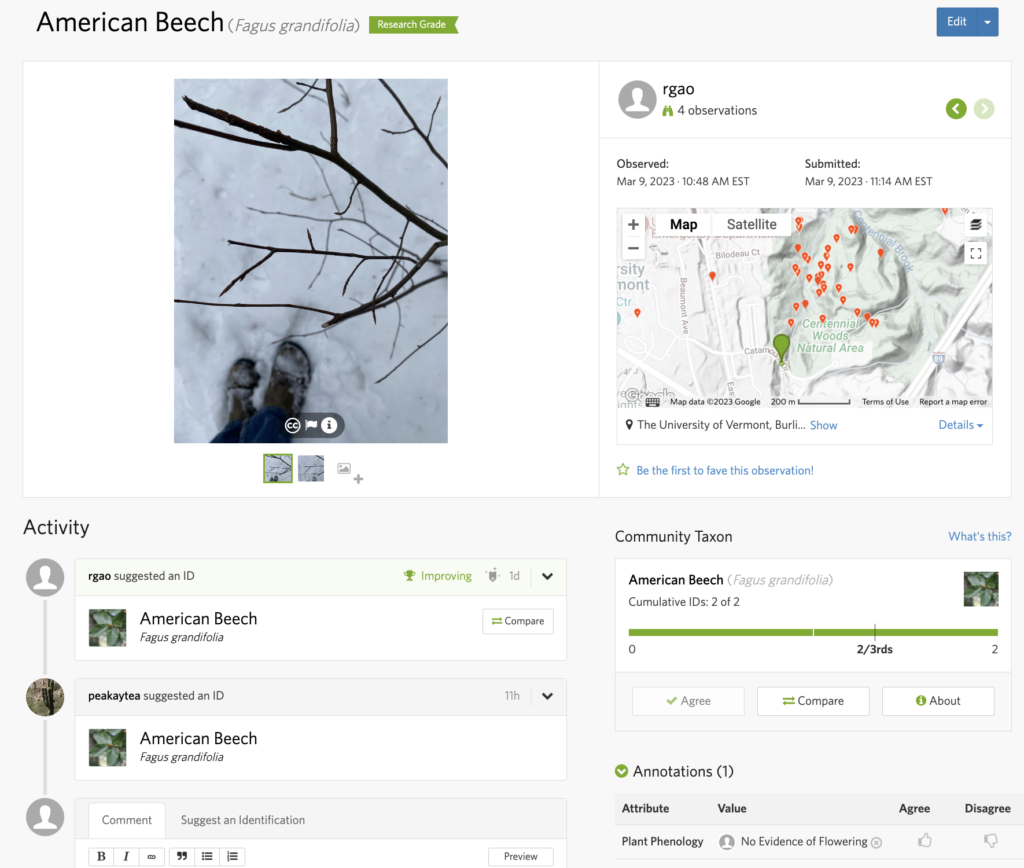
On Thursday morning, I revisited the woods to search for one species from the list:
- Red maple (Acer rubrum)
- Northern red oak (Quercus rubra)
- Paper birch (Betula papyrifera)
- American beech (Fagus grandifolia)
- Paper birch (Betula papyrifera)
- Northern red oak (Quercus rubra)
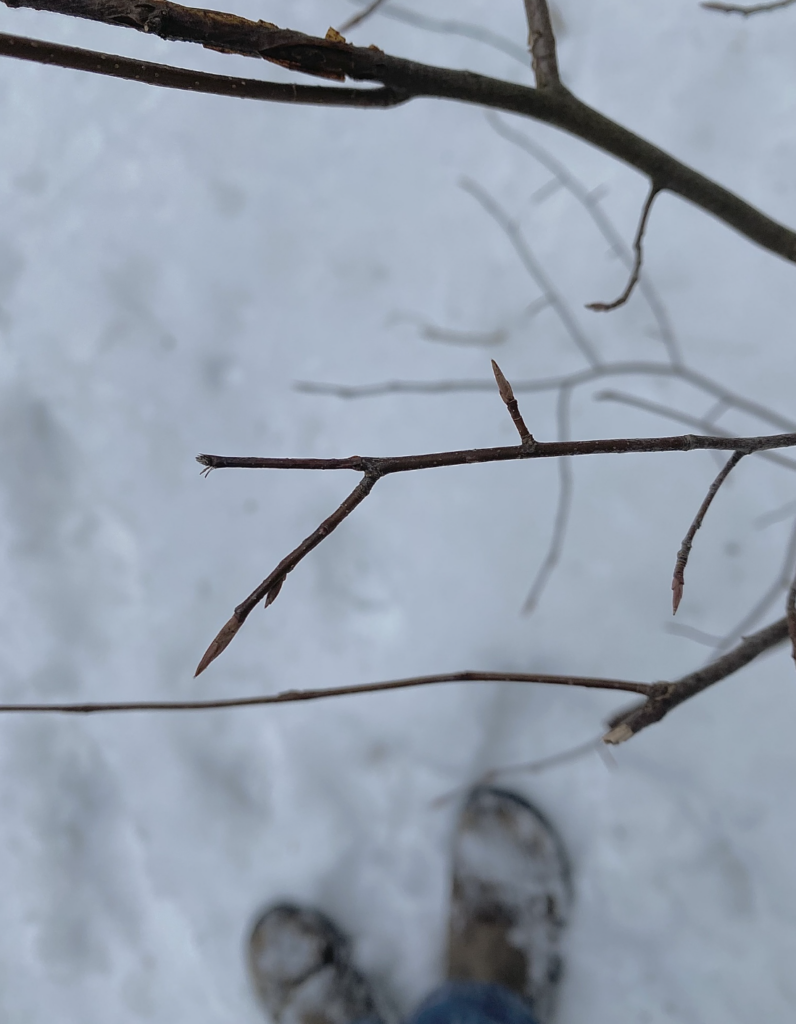
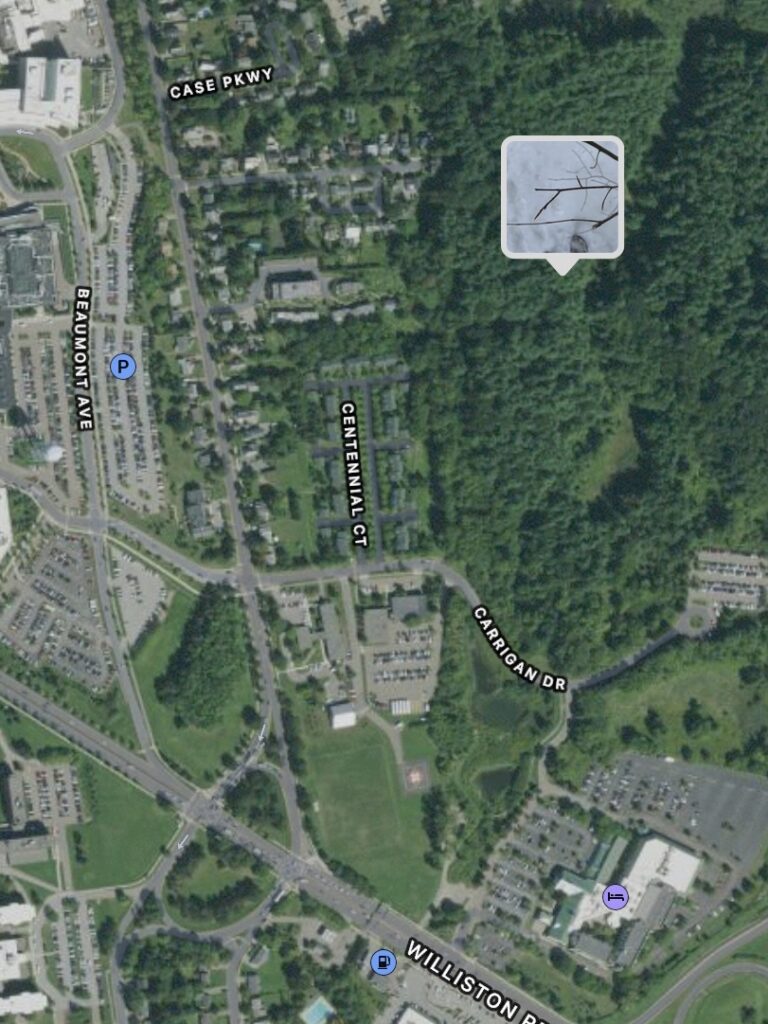
With the high volume of Norway and Sugar maples and conifers in my stand, I found it slightly challenging to find a smaller tree from our list to ID. With the exception of a dead Paper birch, I was not having much luck around my spot. Thus, I decided to look along the trail leading to my area in the woods. Scouting along the entrance to the woods, right by the edge of a small creek, I recognized the tell-tale signs of a beech bud. With its alternate branching and long, narrow, and pointed lateral buds, it was surely a young beech tree. Though often confused with a young maple, the prominent alternate branching disproved any possibilities, as maples are trees with opposite branching.
Using iNaturalist, I classified the phenological stage of this tree to be “no evidence of flowering” as the bud scales were still tight and there was no visible green tissue. In early spring, new beech leaves will emerge from these buds as feathery tassels.