
November 12: Recent Observations and Event Map
As we Vermonter’s batten down the hatches and see the last of what we know warm weather to be, it’s clear the animals are doing the same. Decreased activity in insect populations as a result of temperature’s dipping below freezing at night, and a lack of necessary precipitation for large-scale reproduction.
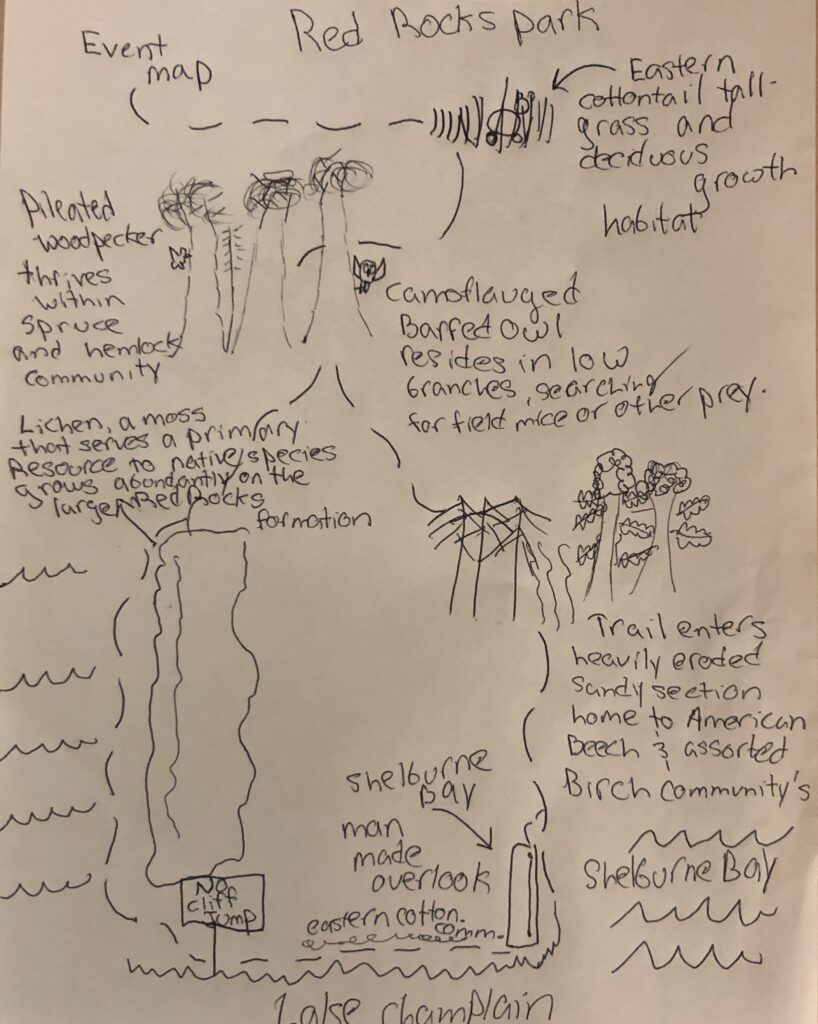
This trend has also applied to other ecosystem activity. A decrease in Eastern Cottontail sightings and little evidence of squirrel activity also can be confirmed as a result of colder temperatures and these organism’s food sources becoming more and more scarce. Vegetation is depleting on the cliffside and in the internal parts of the park, while spruce and coniferous tree species are cozying up for the long winter.
Other than the immediate ecosystem and organism characteristical changes, it’s interesting to look at decreased foot traffic during the winter, and especially minimal on certain trails. People are now not as motivated to take the entire route around the park, which features some incredible rock formations and diverse yet separate vegetative communities as a result of just wanting to take the easy route and see the lake, then get back in their warm cars.
This is a clear benefit for the local ecosystem in Red Rocks. Less foot traffic and human activity means the natural processes and organisms native to the area are less disturbed, and more able to find necessary resources and shelter for the looming months ahead. As a student and observer of this area, I think it’s important to see how native organisms to urban wild’s can readily adapt to these social changes as a result of human behavior or park design and survive.
If this information has been unclear, here’s an event map to illustrate some of these recent processes. In our next post, we will display an updated and recent gallery illustrating many key features within the park. Stay tuned!
Recent Comments