For my phenology project, I decided to look into the Sea Caves at Arthur Park. I originally took interest in the Sea Caves while looking for locations on google maps and thought the ecology surrounding it would present a very compelling area to work on my project.
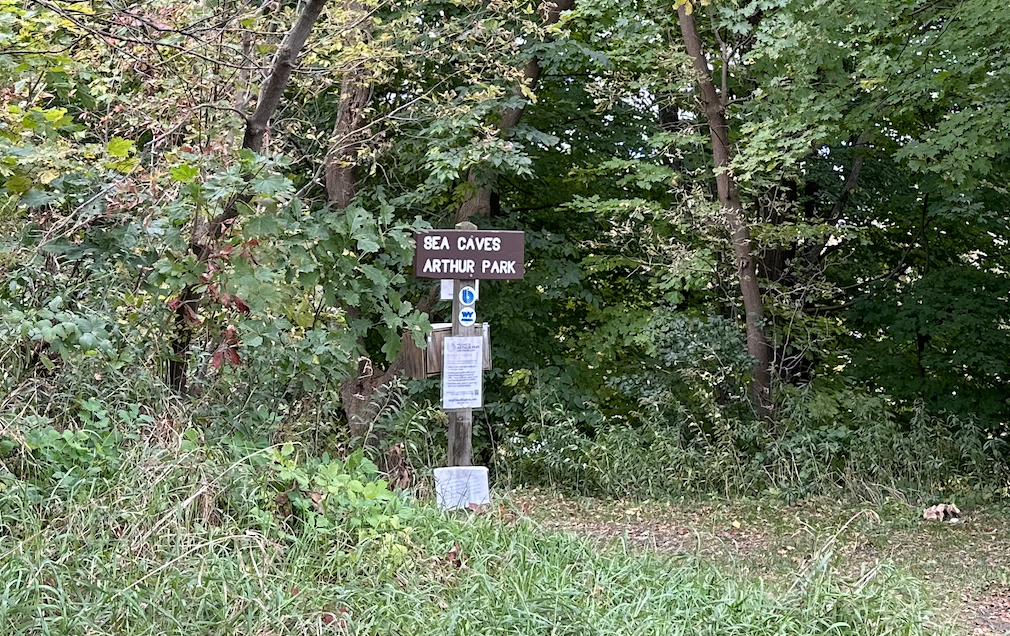
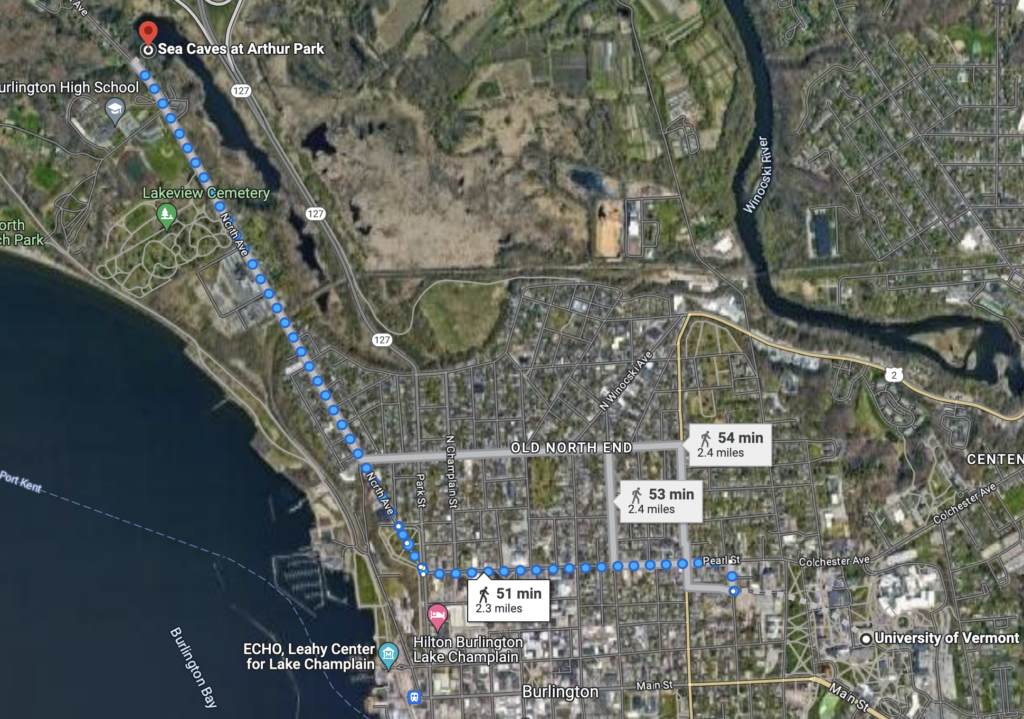
To get to the Sea Caves at Arthur Park, it is easiest to walk to the Green Mountain Transit bus stop at the Double Tree by Hilton from UVM. Once at the bus stop, hop on the 1 bus and ride until the North Avenue at Beltline stop. Now off the bus, you can walk down to the Arthur Park entrance and navigate your way down the path until you eventually reach the Sea Caves. Although the inside of the sea caves themselves aren’t reachable until the water freezes over, you’re still able to observe and walk around the surrounding area.
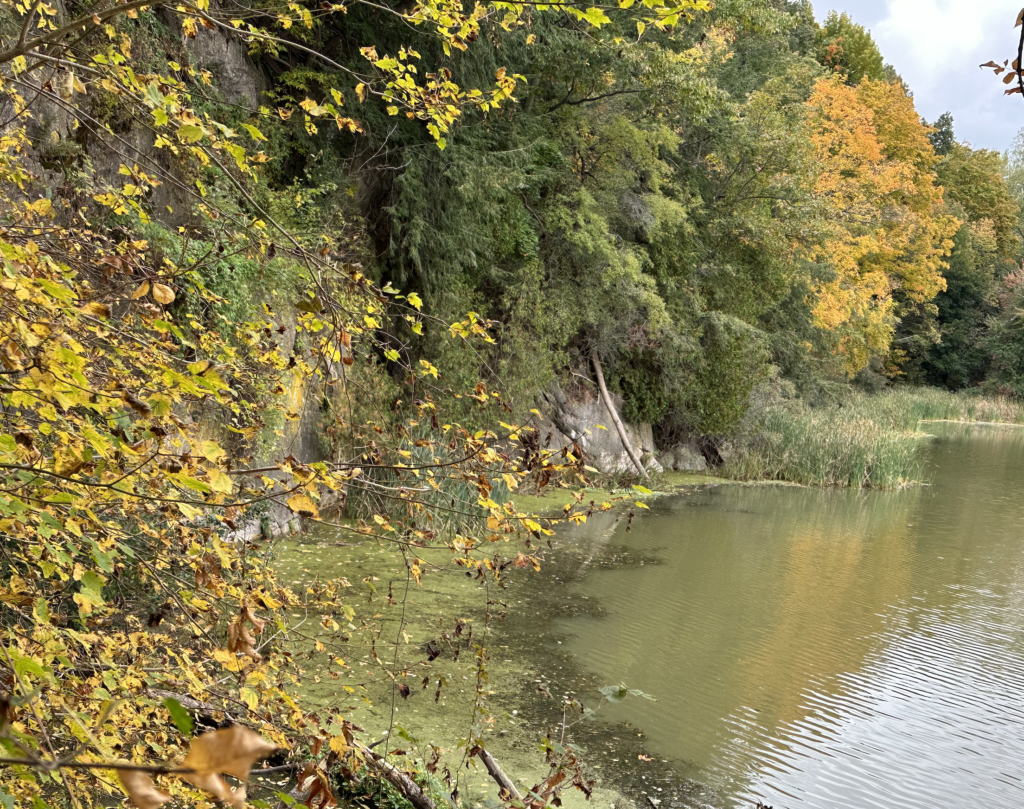
The vegetation in and surrounding the Sea Caves are defined by the sandy soil and rocky formations it resides on. Like Burlington and the rest of the area enclosing Lake Champlain, Arthur Park’s soil is very sandy, limiting the amount of species to those that can sustain themselves in this environment. The tree population around the area is limited, as I was only able to identify eastern hemlocks and striped maples in the area. Despite lacking a lot of tree species, the woody plants in the area make up for it, including buckthorn, marginal wood ferns, celandines, lots of different mosses, and more. As the Vermont weather intensifies and winter comes along, the amount of life the park can sustain will decrease, especially the woody plants that will be buried in the coming snow.
Hi, this is a comment.
To get started with moderating, editing, and deleting comments, please visit the Comments screen in the dashboard.
Commenter avatars come from Gravatar.