Posts

Featured

Goodbye Rock Point

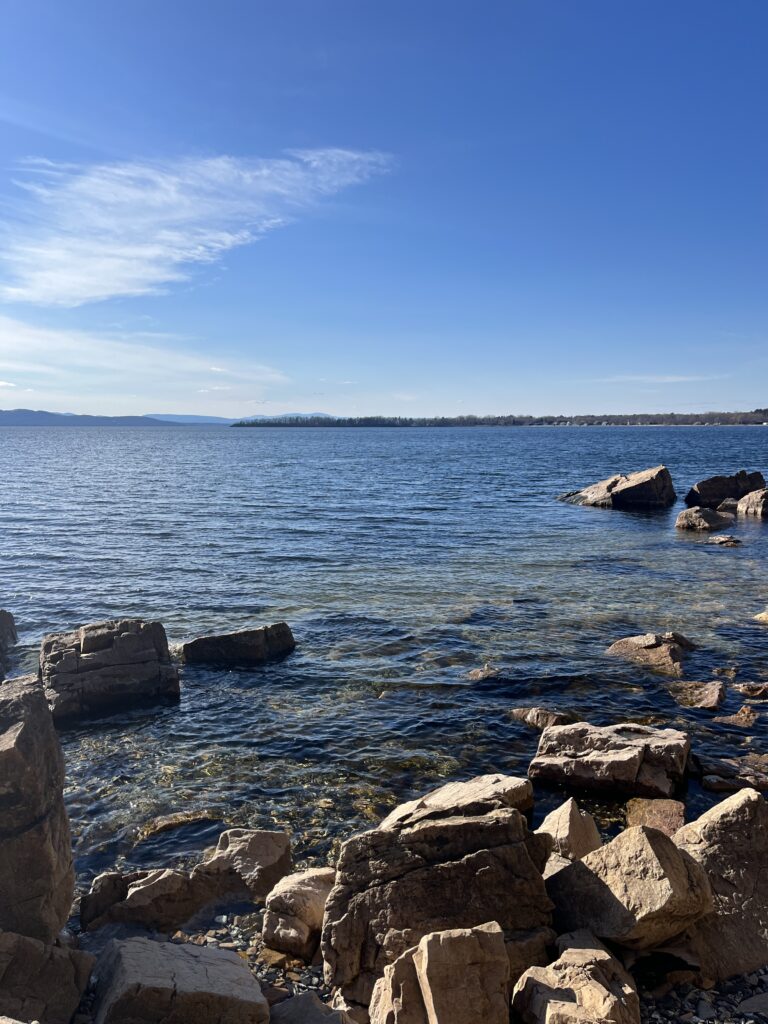
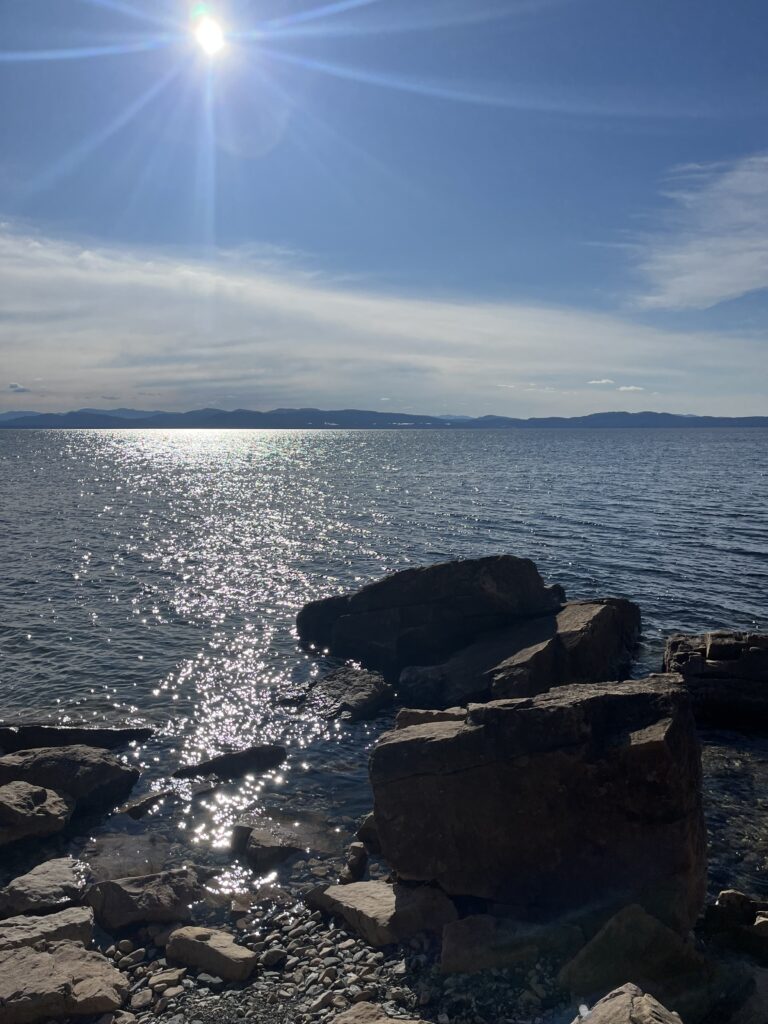
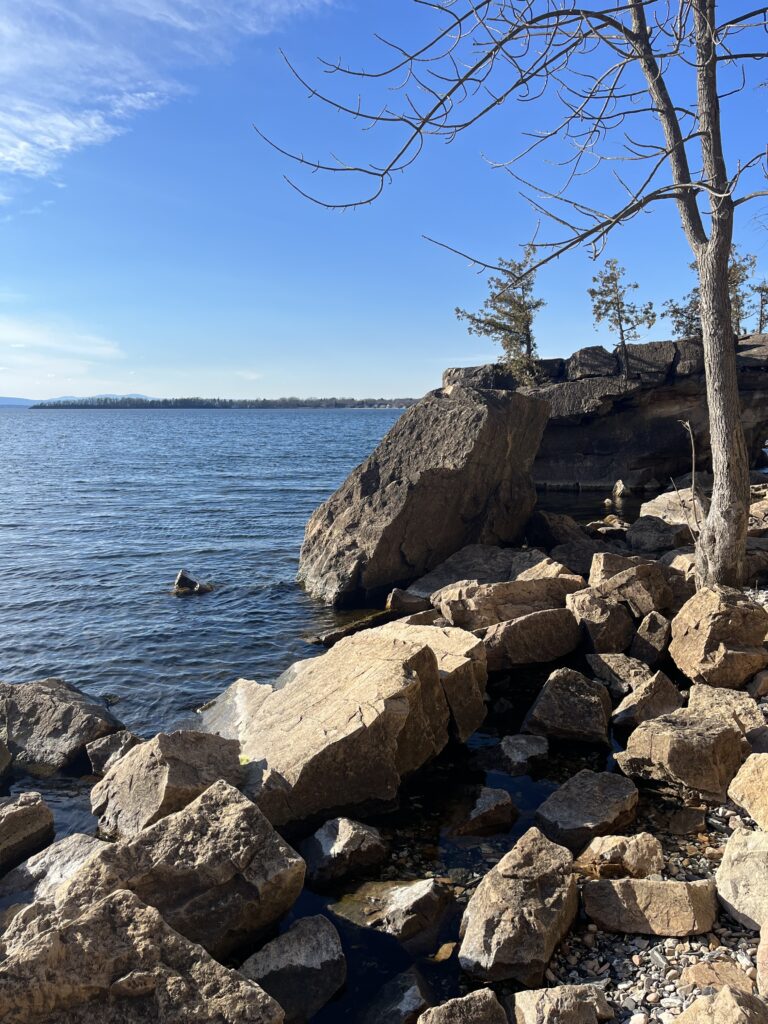
Rock point has become such a special place to me over my first year at UVM. It was one of the first places I visited with my friends the first week of school to go cliff jumping. My first NR lab was at Rock point where I became friends with the girls I am working on my final project with. For the past almost 6 months since this assignment was assigned in the fall semester I have visited Rock Point every other weekend with my friend Becky. We would use this time to reflect on our week, debrief on our weekend activities, and relax in the beautiful scenery of rock point.
Rock Point over the Year

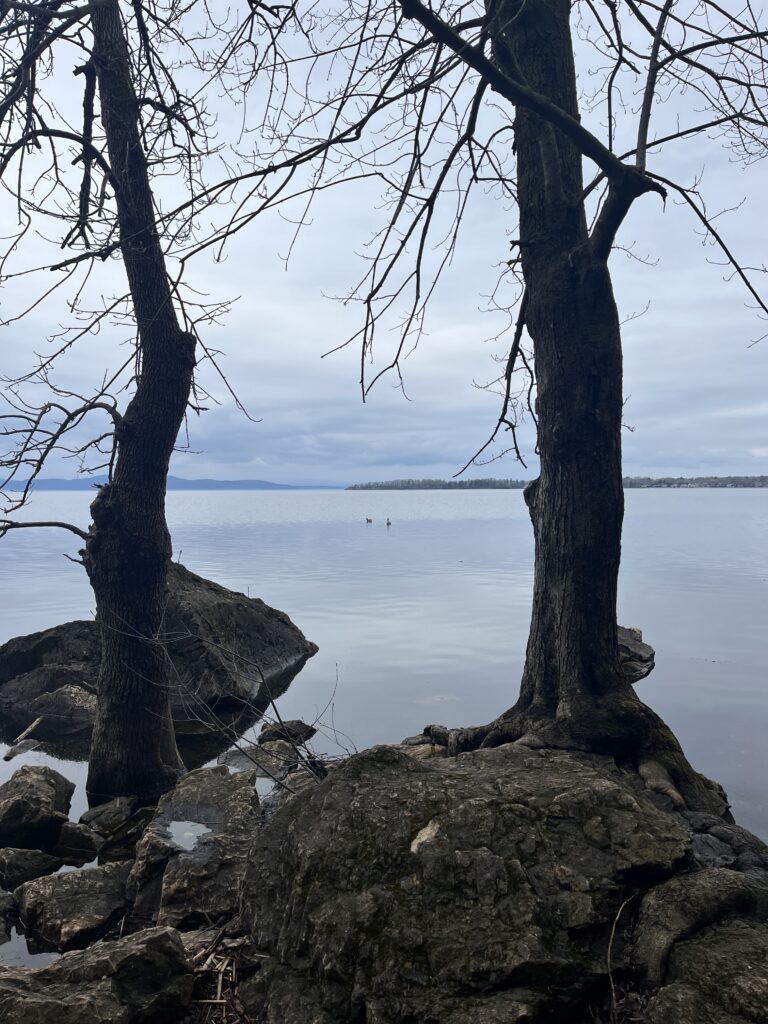
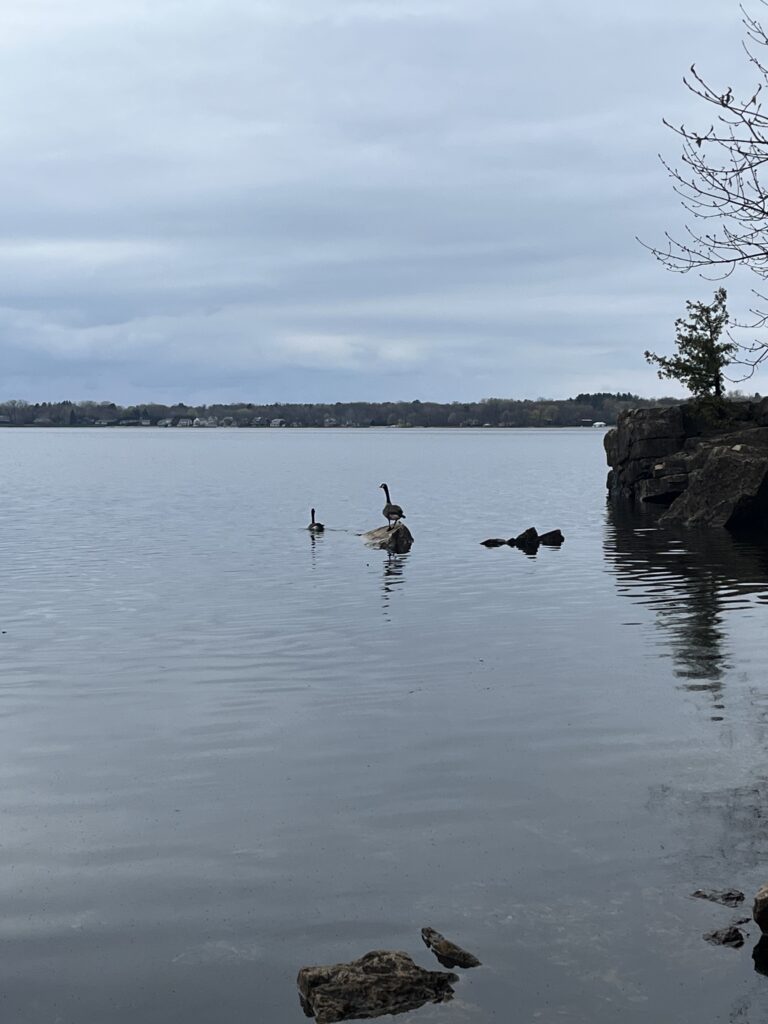
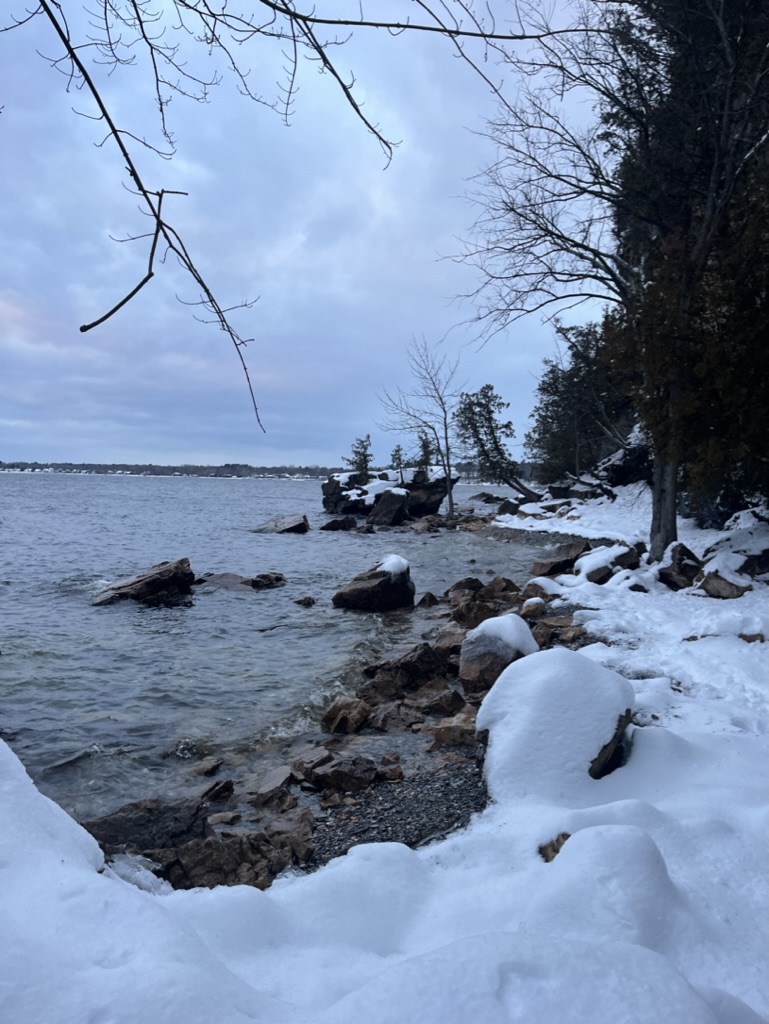
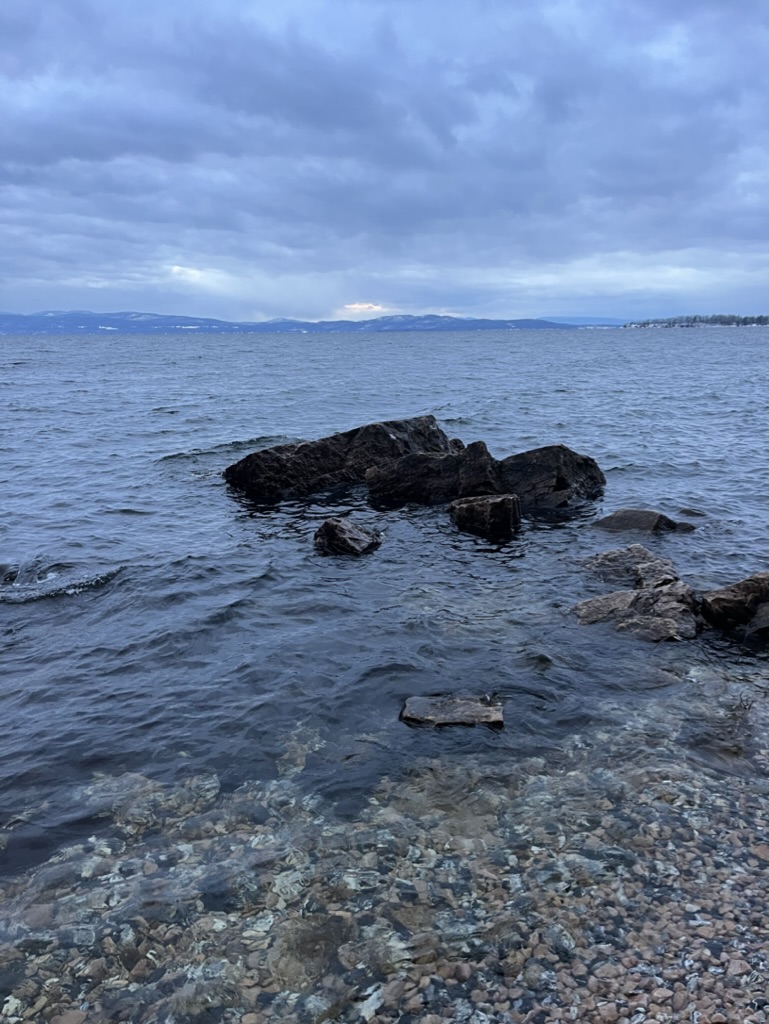
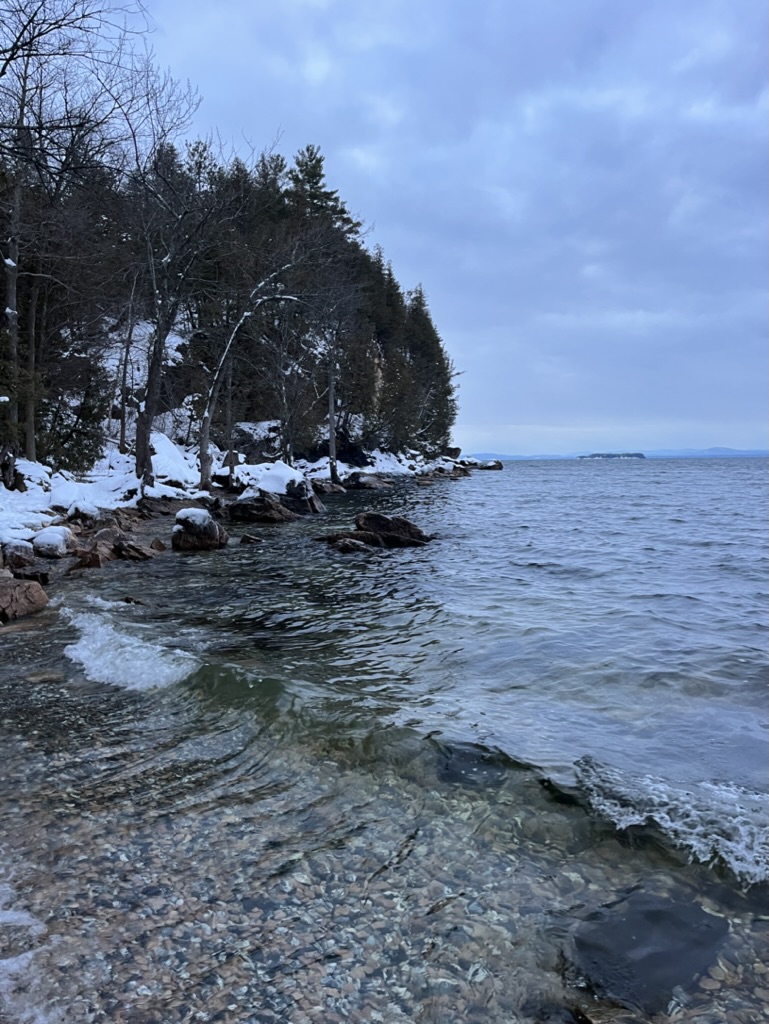
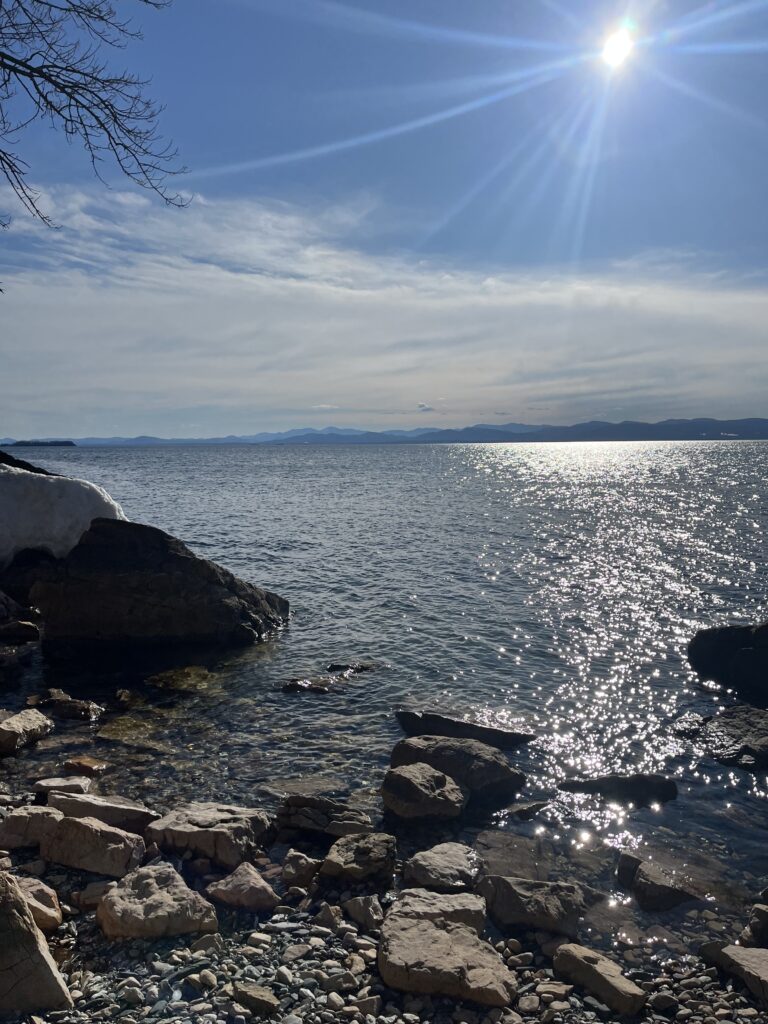
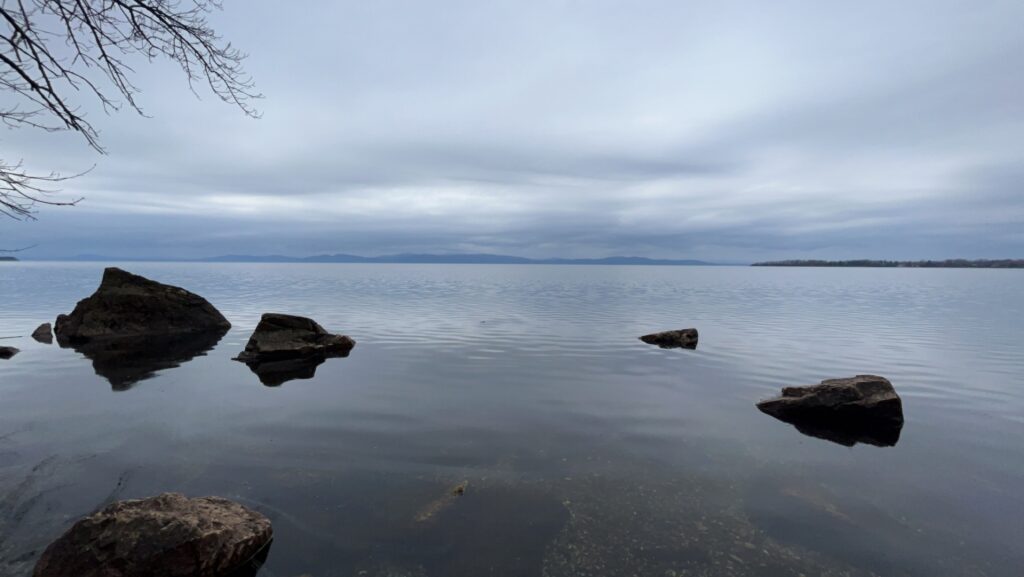
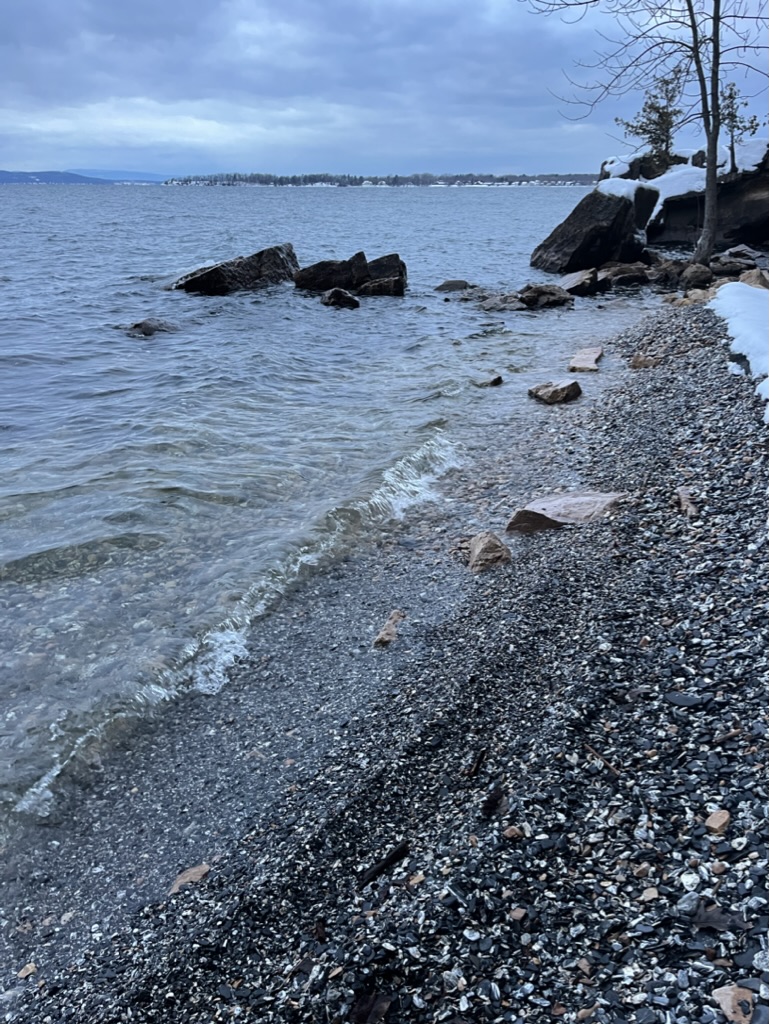
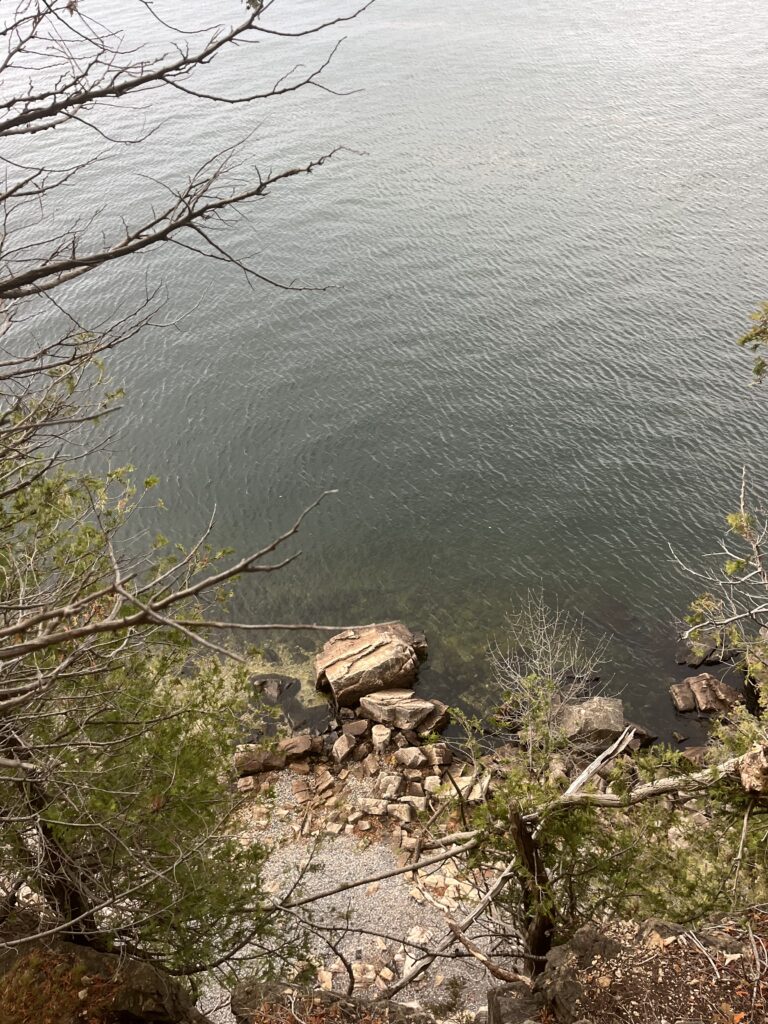
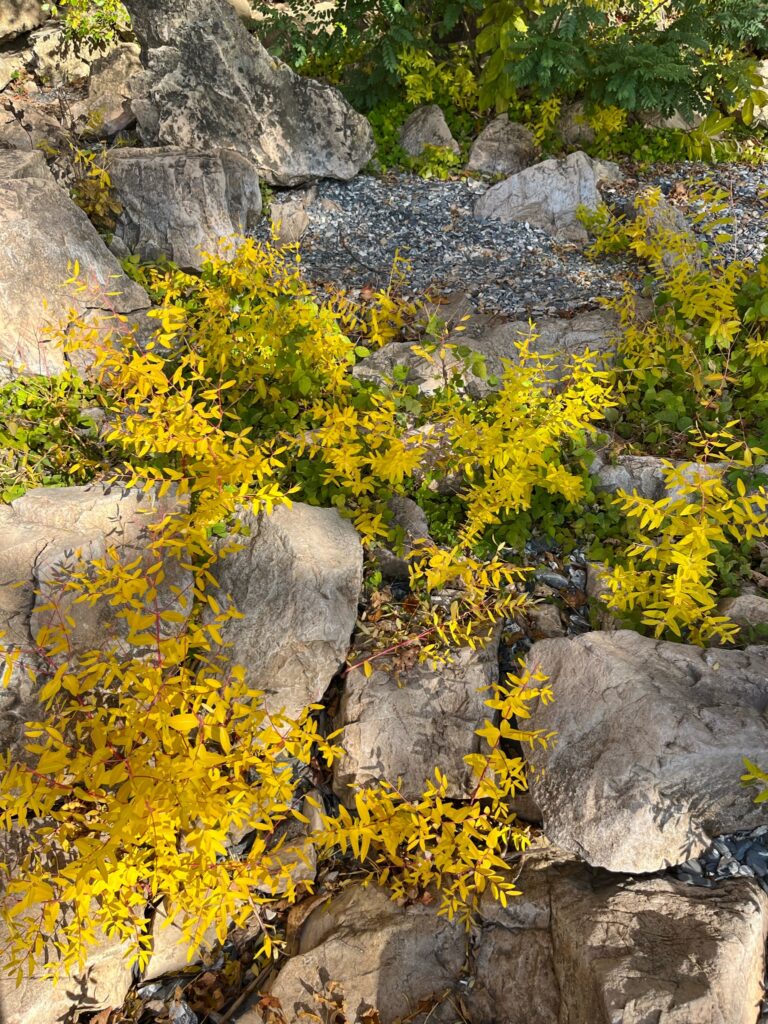
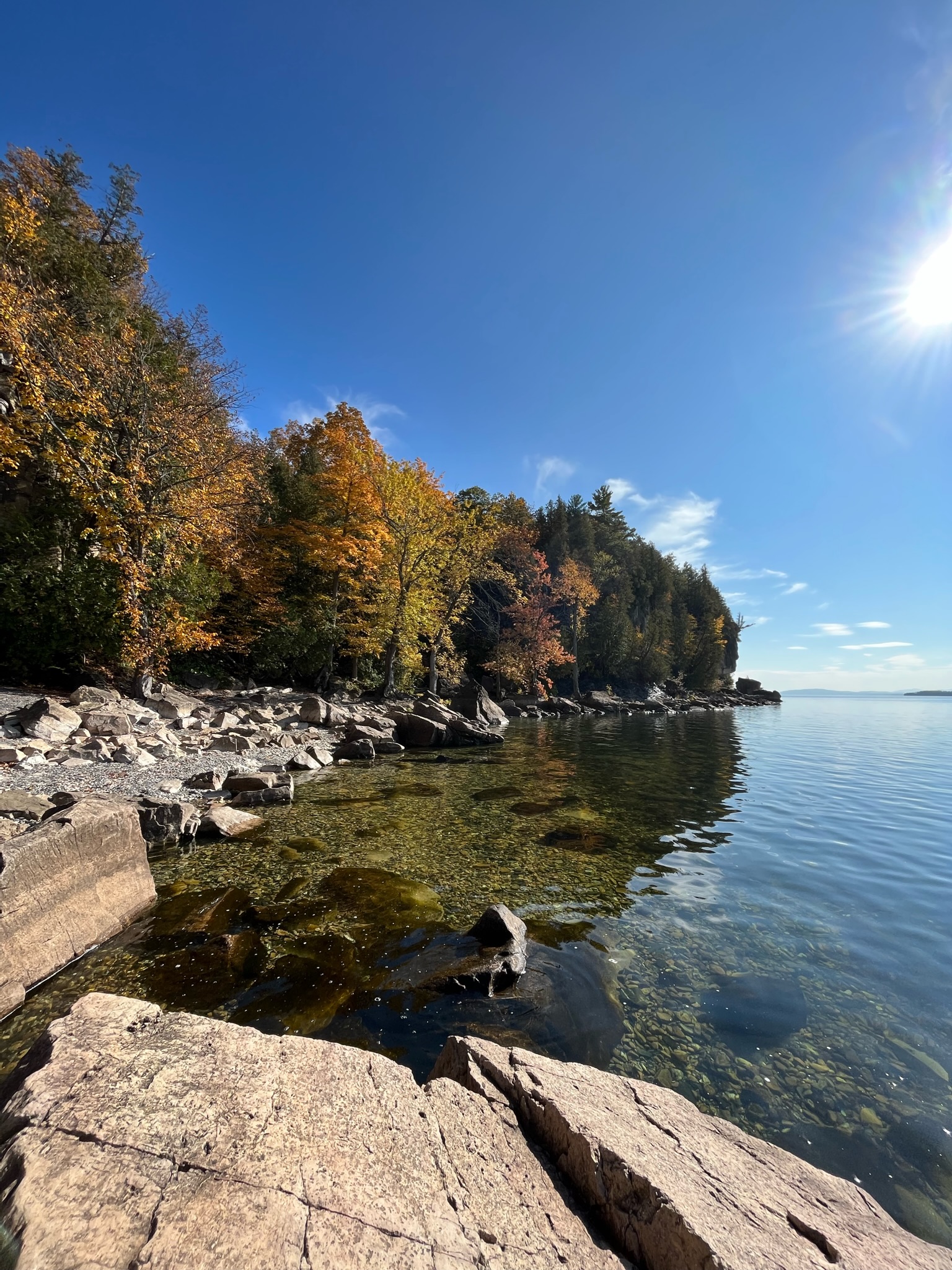
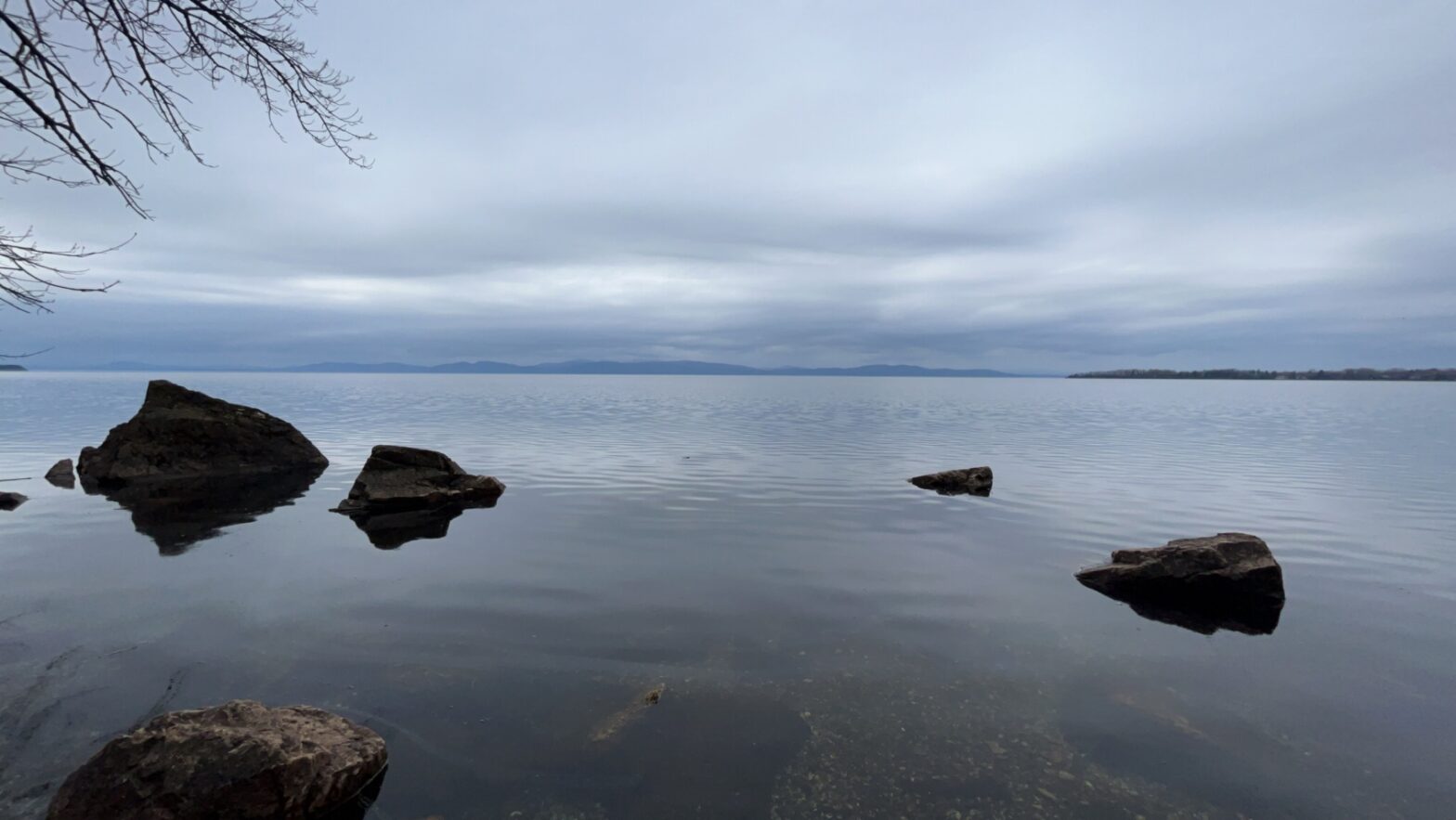
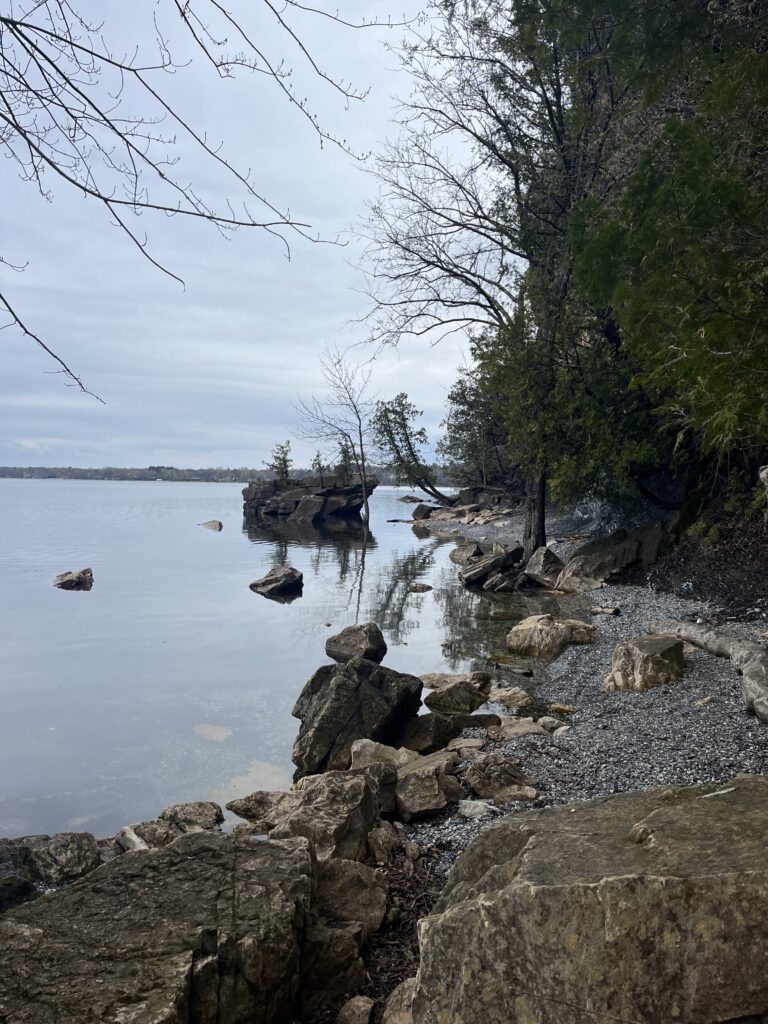
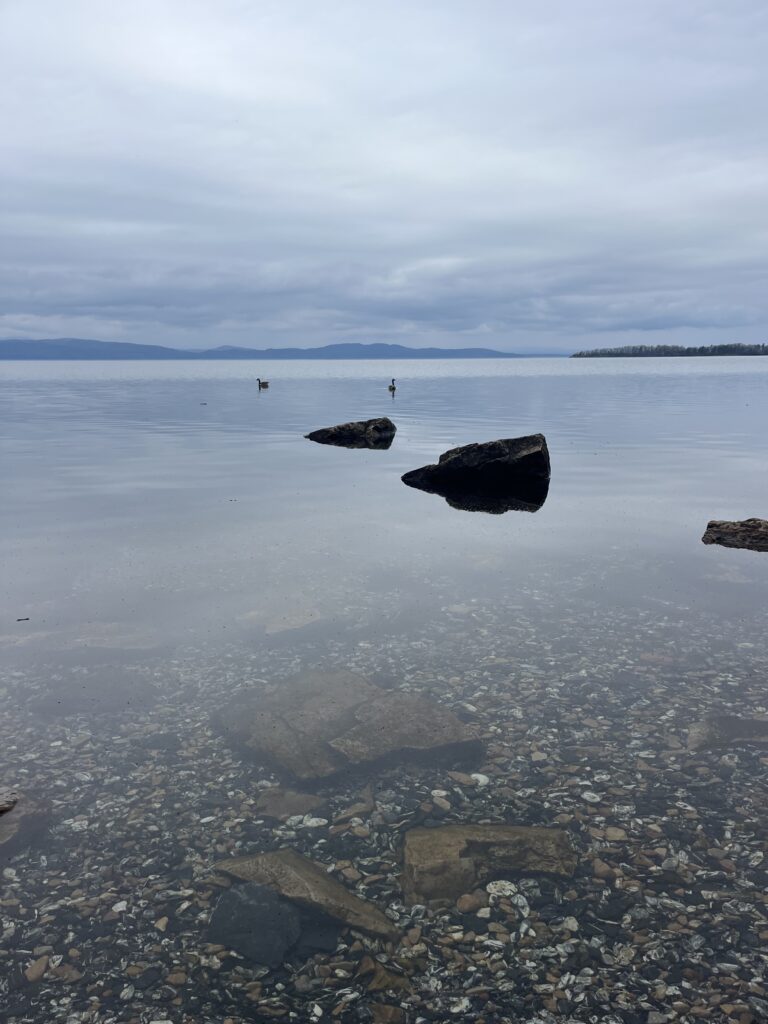
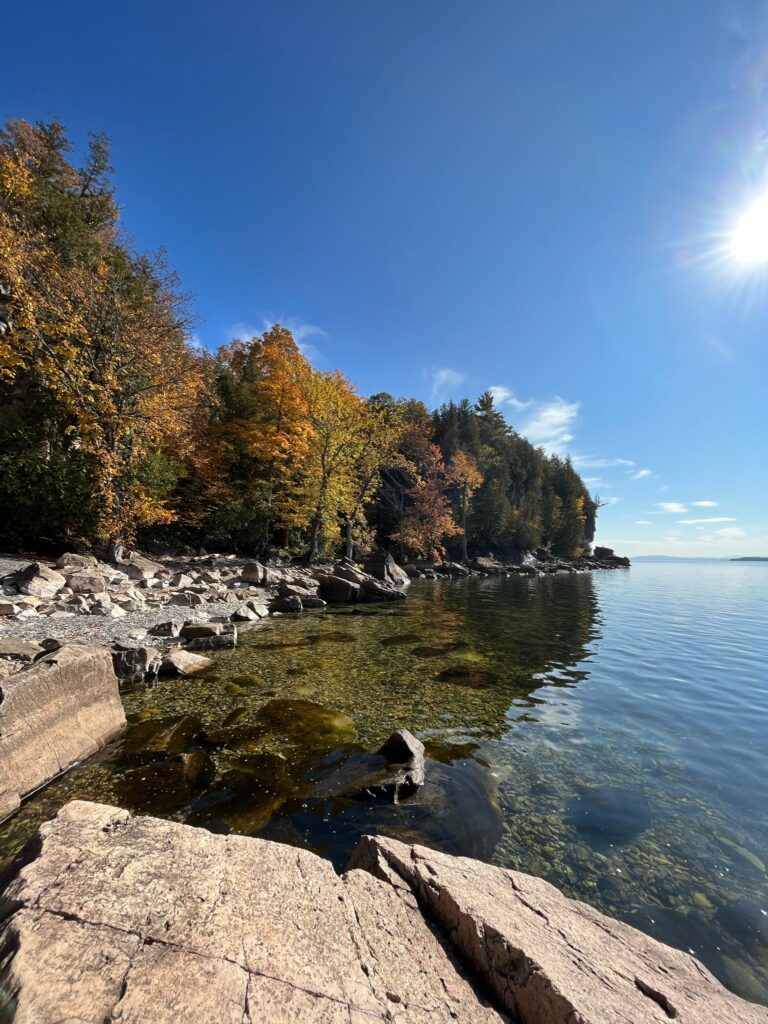
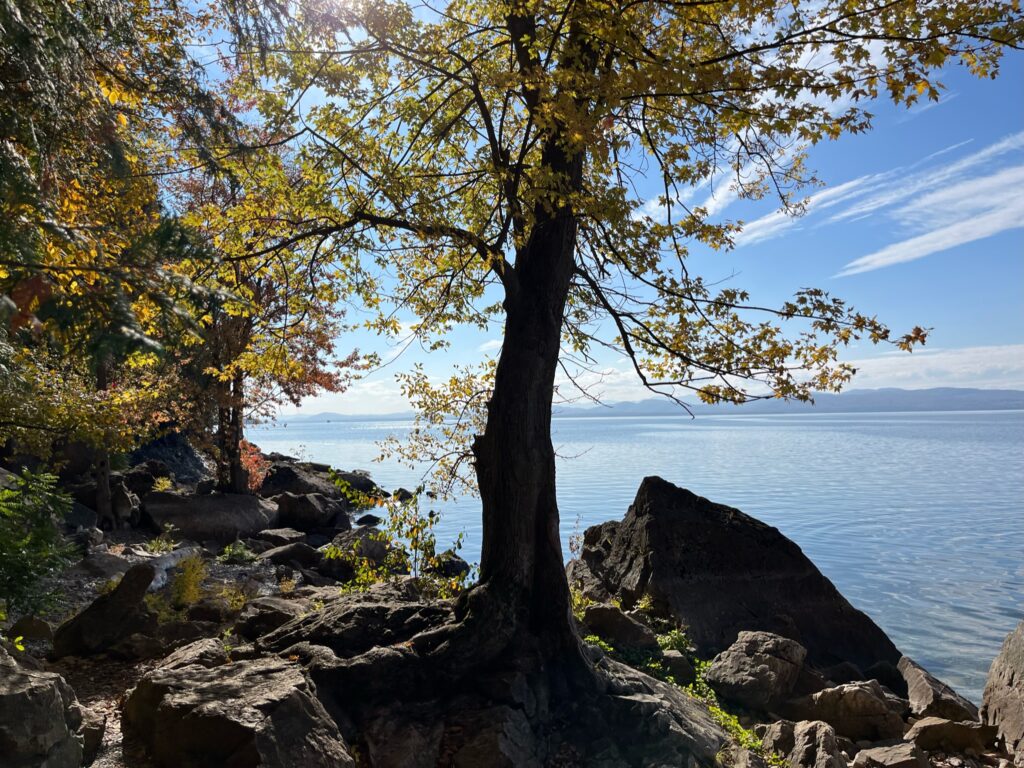
At the beginning of the first semester Rock Point was full of greenery. The deciduous trees all still had their leaves and there were mosses and flowers squeezed between the rocks. The water was a lot lower in the fall, creating a pebble beach for visitors to hike on. As the weather became colder the leaves turned to brilliant oranges, yellows, and reds, dropping from their branches gradually until only the American Beech held on to its leaves. As winter moved in the water gradually began to rise each week. The pebble beach shrank until there was just a sliver of stones for us to walk on. Soon the little beach was covered in snow and the trek to Rock Point became a lot more tedious as I had to trudge through a foot of snow. The lake was often much choppier in the winter, with stronger winds blowing across the lake. Large pieces of driftwood were pushed to shore and now rest along the pebble banks. The rocks all along the shore were covered in ice as the spray from waves froze over the rocks. Moving now into spring, the water is even higher, making it difficult to move down the shoreline. The water is still extremely cold but no more ice floats on the surface. And the rocks are no longer a hazard as all the ice has melted away. Greens are starting to pop up through the soil, as well as the occasional flower. Birds are chirping again and the water is calm and still. Trees are budding and soon the thick green canopy from the summer will be back.
Rock Points Nature and Culture

Rock point is an extremely diverse place both with its culture and ecosystems. It is a beautiful natural area that has changed and evolved over centuries to become the rock point we are familiar with today. Many years ago the Abanaki most likely hunted in the area. When European settlers moved in they cleared the land for logging and to open up the beautiful view of the lake. Bishop John Hopkins loved the land so much that he eventually bought it and built his home on top of Hemlock Hill. The rock point we know today was crafted by the Hopkins family who worked with the properties natural resources. They practiced subsistence farming and planted and apple orchard. They also allowed much of the forest to grow back in its natural state. John Hopkins eventually turned this place into a center for learning, building a school that was also used for military training. Eventually it burned down, but then was rebuilt into the school that is there today. The Rock Point School stands there now, working in harmony with the environment around it. Outdoor education and learning in nature is now a central part of the culture surrounding the rock point institute. A summer camp and retreat are run there during the summer, also focusing on building peoples connections with nature to help them in their everyday life.

My Relationship to Rock Point

As rock point has undergone many changes throughout the year and seasons, so have I. Just as I have experienced so many new things in college, I have also noticed all the new changes happening at Rock Point. So much in my life has changed since my first visit at rock point, as many of these changes occurred in my life rock point was always a place where I have been able to find solace and peace, even when my life was hectic.

I like to think of myself as welcomed visitor of Rock Point. Like the friend who is always welcomed to show up unannounced at your house. I think that the place is more a part of me than I am a part of it. I can’t say that my presence has changed rock point in any way, however i know that my visits to Rock Point have helped shape me this year. I would not consider myself a part of this place, simply because I don’t think I contributed enough to the ecosystem here to be. If I had collected trash, tested the water, or run observations of some sort then I would have considered myself part of Rock Point. Rock Point has definitely provided me more than I have it. I got there and just sit and observe, I can find peace at Rock Point, always feeling like a welcomed guest, but not a local. Maybe by the end of my senior year I will think differently, for now I am happy being a grateful visitor.
Featured

Tree Updates, Spring has truly Sprung

The weather has really warmed up over the past few weeks and there are now lots of flowers popping up through the soil. All the snow has finally melted and made its way back into lake Champlain. Many of the trees now have leaves and budding. My paper birch has now sprouted leaves. I might have missed when it was budding because the branches are so far away, or the budding happened very suddenly in the two weeks since my last visit when there was a lot of rain and warm weather. The weather was particularly beautiful this day as it was the first sunny day after a few days of rain. The wonderful spring weather and close proximity to easter just made the trip even more refreshing. I’m sad that there is only one more visit to rock point because it has been such a place of comfort for me over the semester. I will definitely continue to visit rock point regularly for the rest of my time at UVM.

Featured

Spring at Rock Point

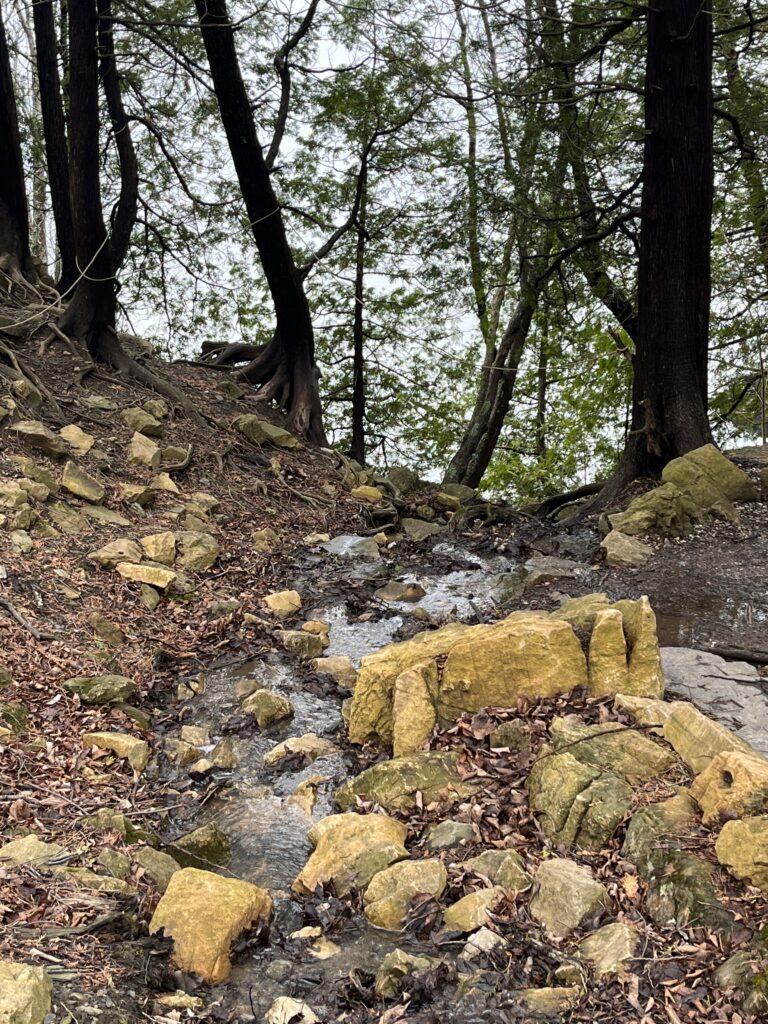
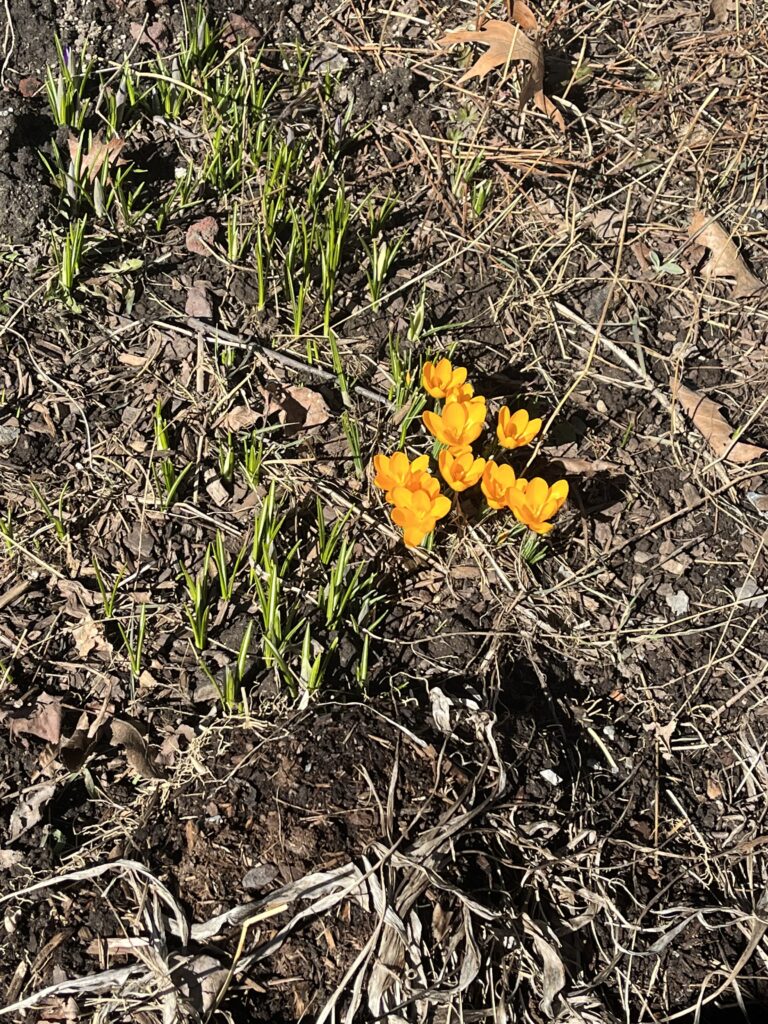
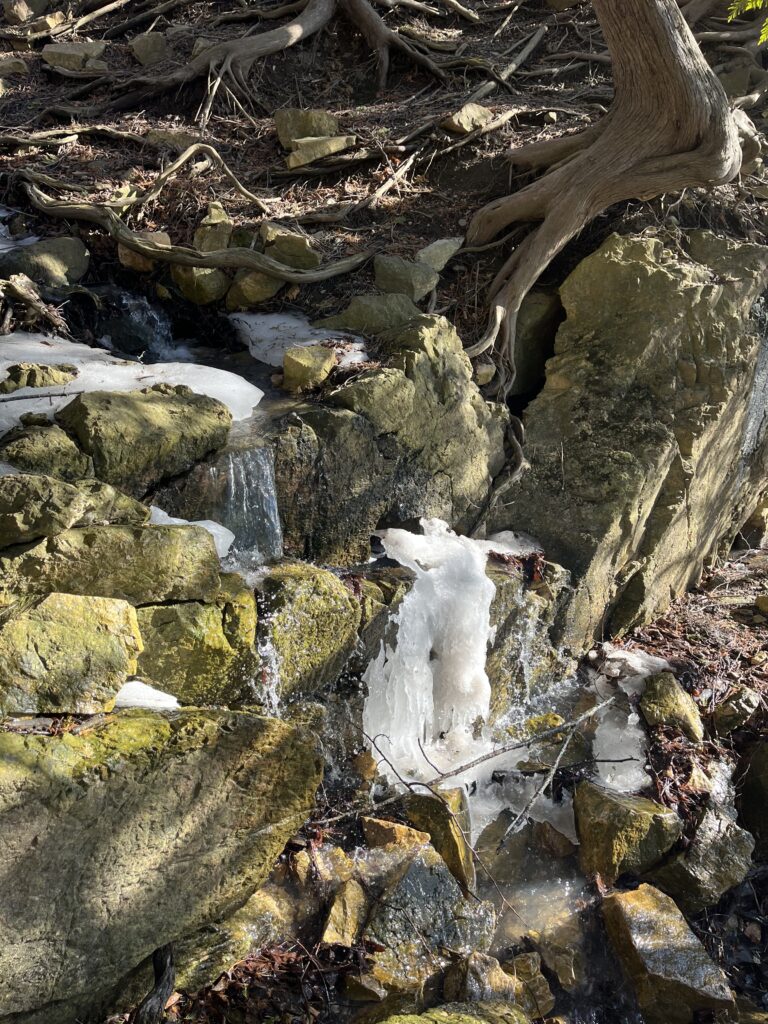
The first day of spring was the previous week and already temperatures are starting to warm into the 40s. The snow that once covered the trail to Rock Point and the rocky beach is now almost completely melted, bringing mud season to Vermont. There were some small tulips pushing up through the soil at points but none were blooming yet. The stream that was dried up in the winter was now running again from all the recent rain and snow melt. It created a beautiful little staircase of trickling waterfalls down to the lake, with parts of it still frozen.

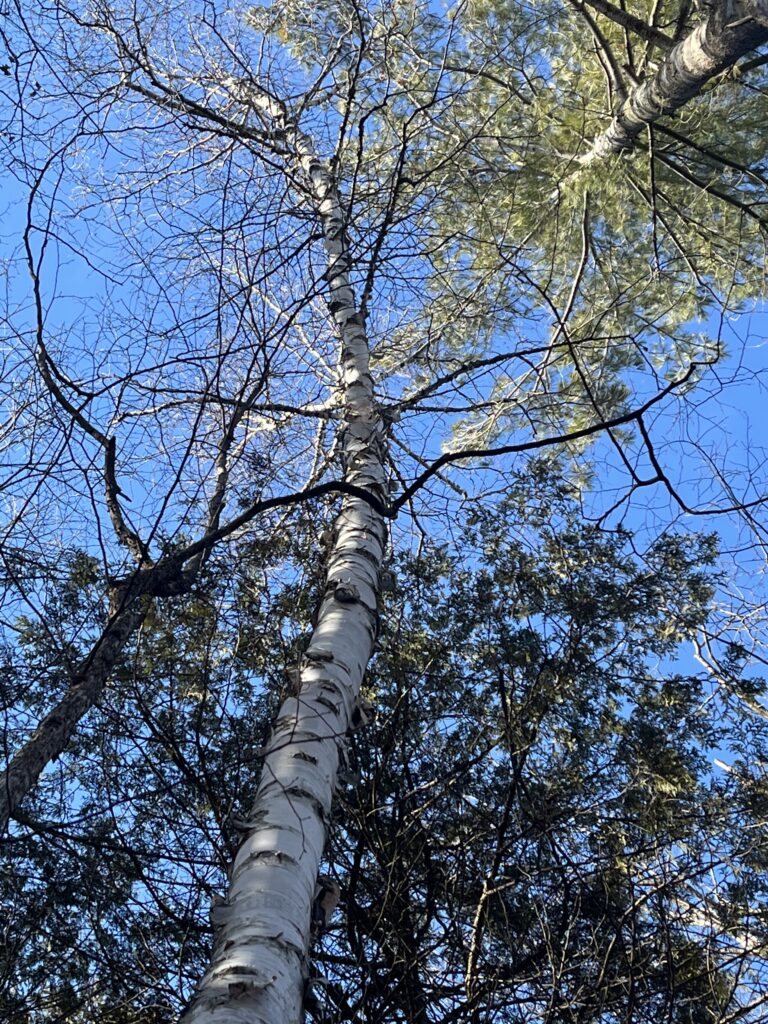
My paper birch had not undergone any change since the last time I visited. there were not any visible buds that looked like they could be ready to bloom soon. The branches are also at the very top of the tree so it is difficult to see, I will probably not be able to see anything until there start to be some blooms. However, looking at the surrounding trees there were no noticeable buds on any of the other trees so my theory is that it is just a little early for there to be blooms.

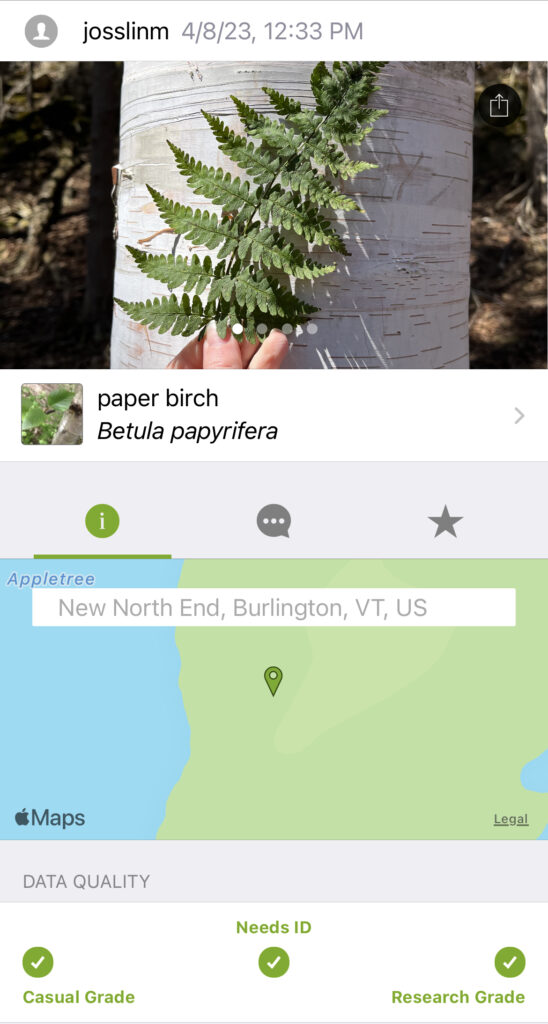
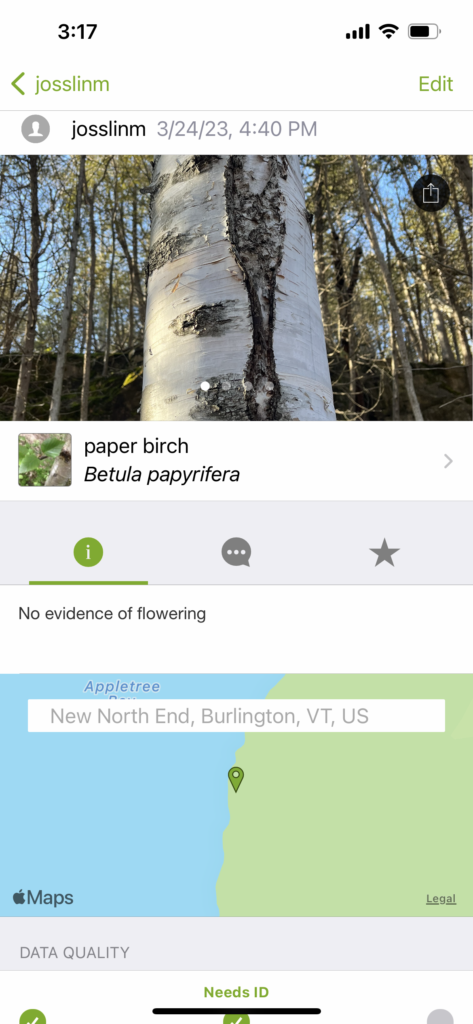
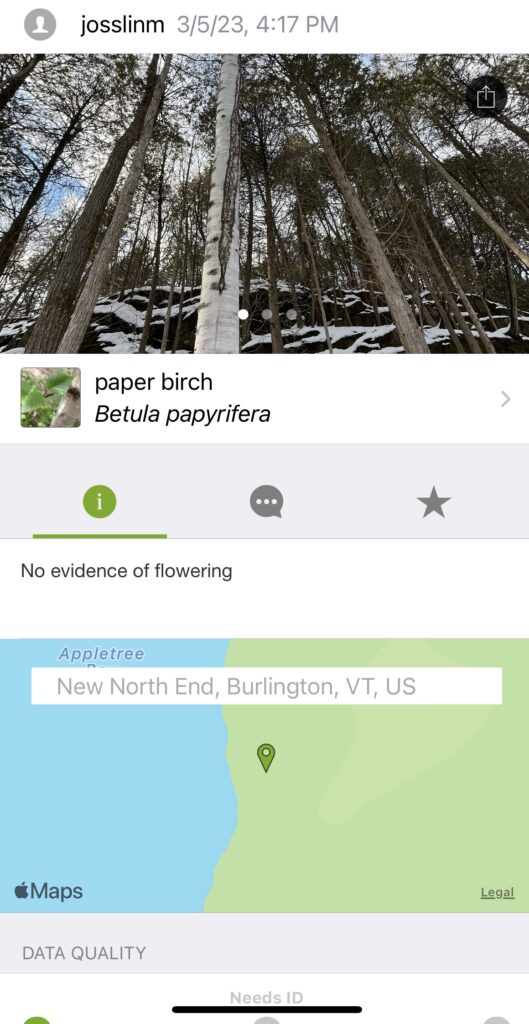
inaturalist post

As always Rock point was beautiful and a lot more easily navigated since most of the snow has melted. The sun also stays up a lot later now which was nice because I didn’t have to rush back in the dark. I noticed that it seems like the water had receded and the sitting rock was now accessible again. I’m not sure what causes the water to rise in the winter, my only guess is that it has to do with parts of the lake freezing.

Featured

Spring Break Phenology

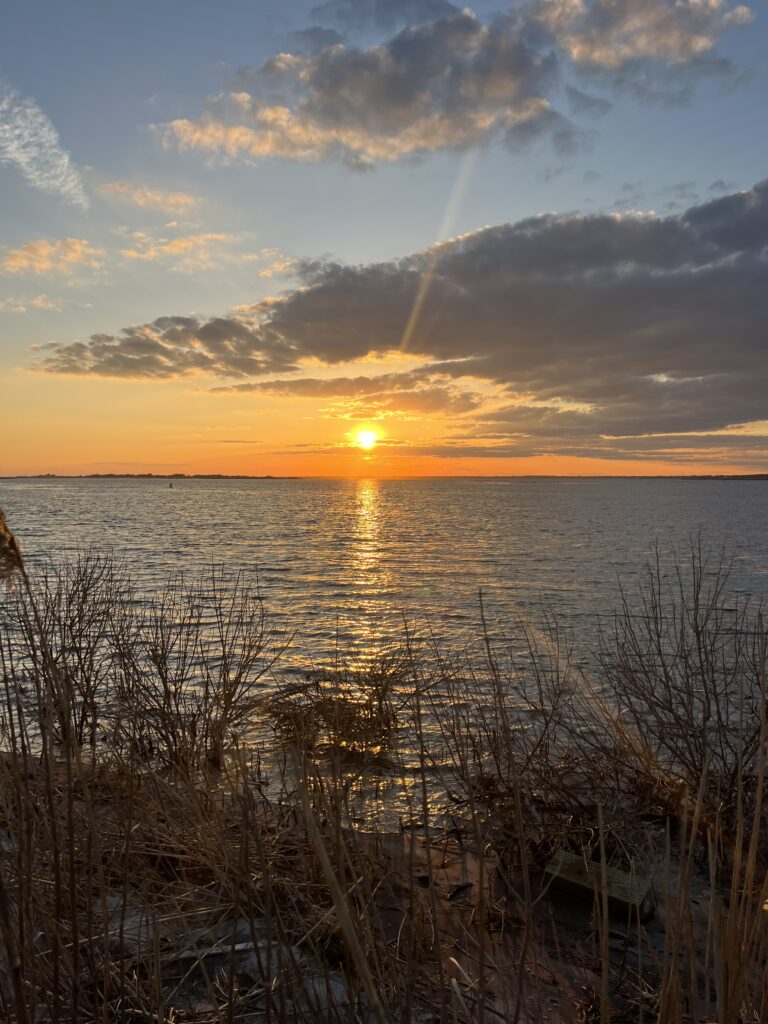
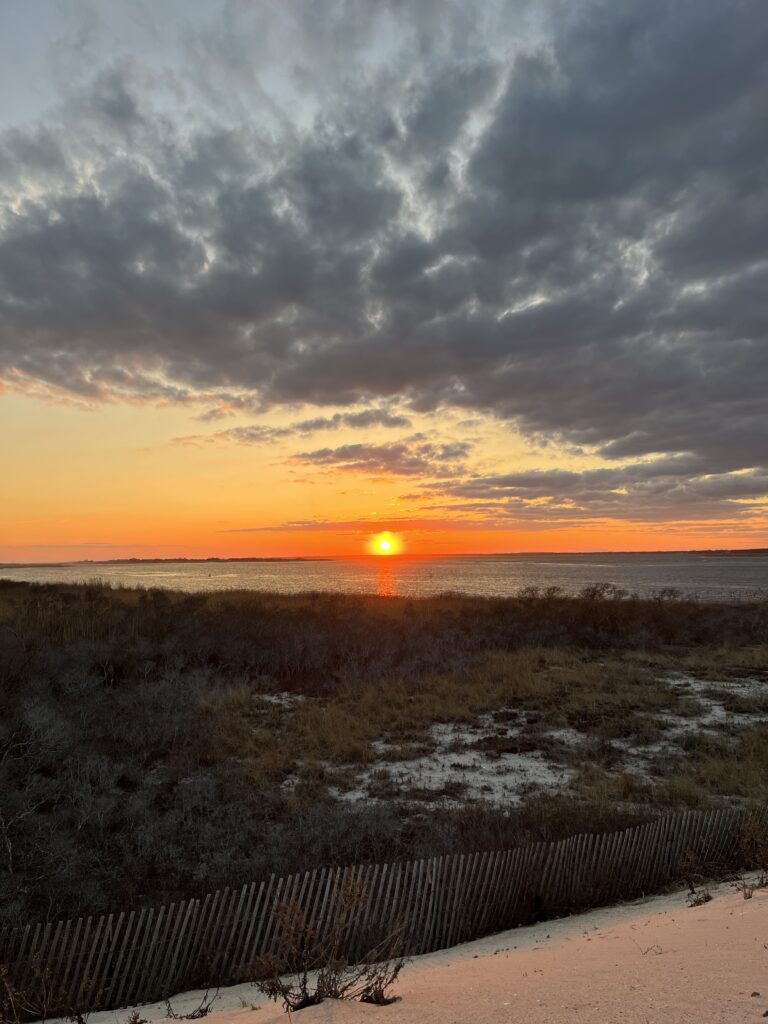
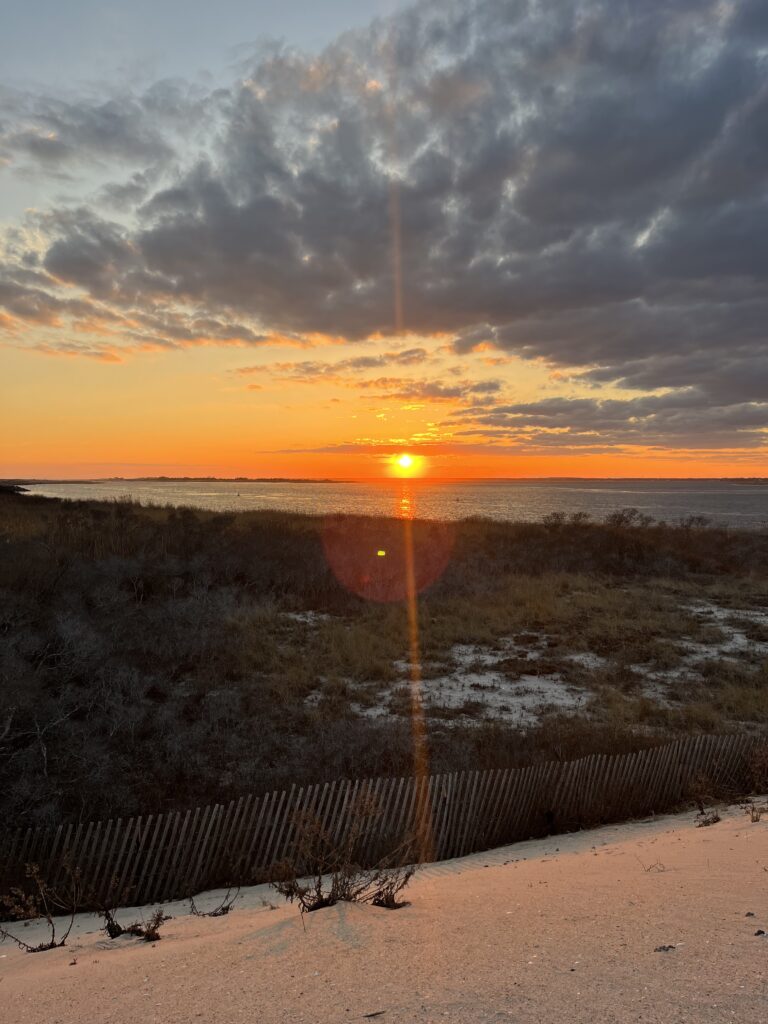
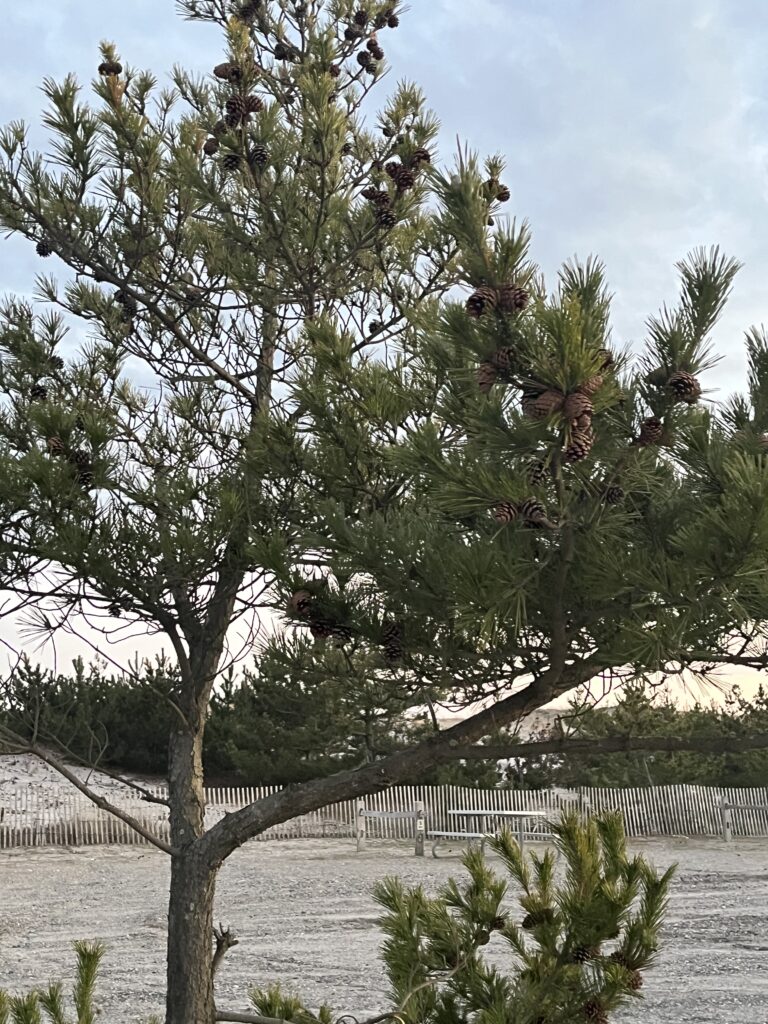
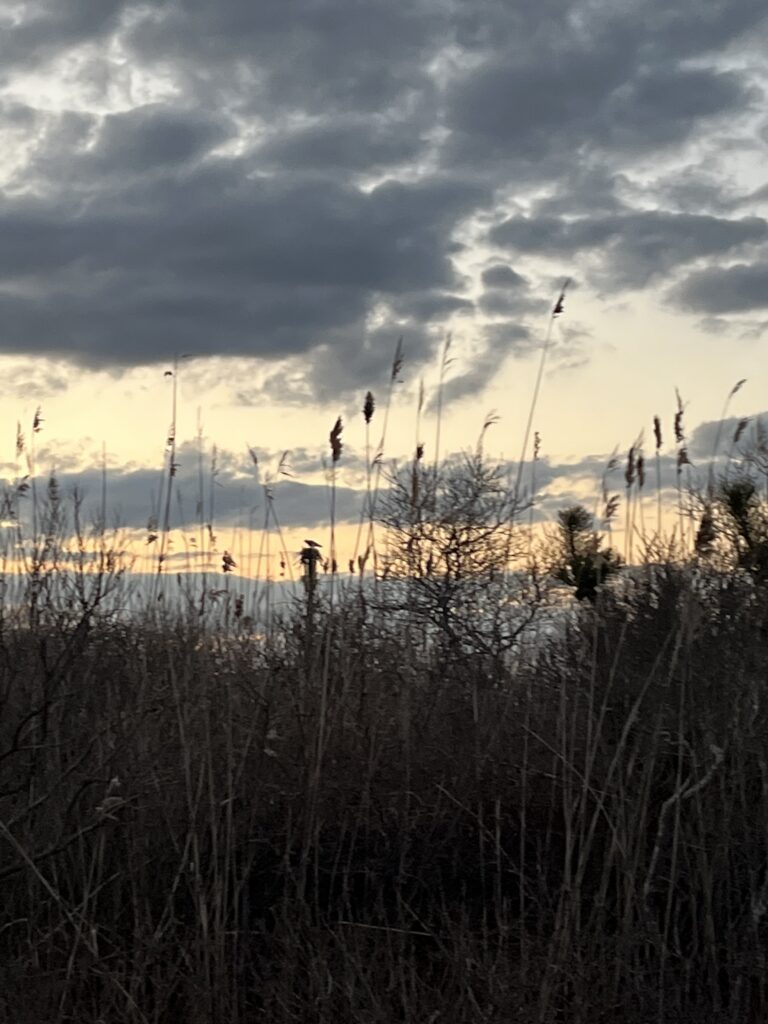
Over break I visited the west Hampton dunes. It’s near fire island. At the end of the dunes there is a beautiful park called Cupsogue County Park. There is actually a native bird that nests there called the Atlantic Coast Piping Plover. I saw their nesting area. Seal are also common in the bay. I sadly did not see any while I watched the sunset over the bay. There were a lot of ferns and small bushes growing in the dunes. There were also some small pine trees inhabiting the dunes. Unfortunately I was not able to identify the tree.

Featured

Tree Phenology – Paper Birch

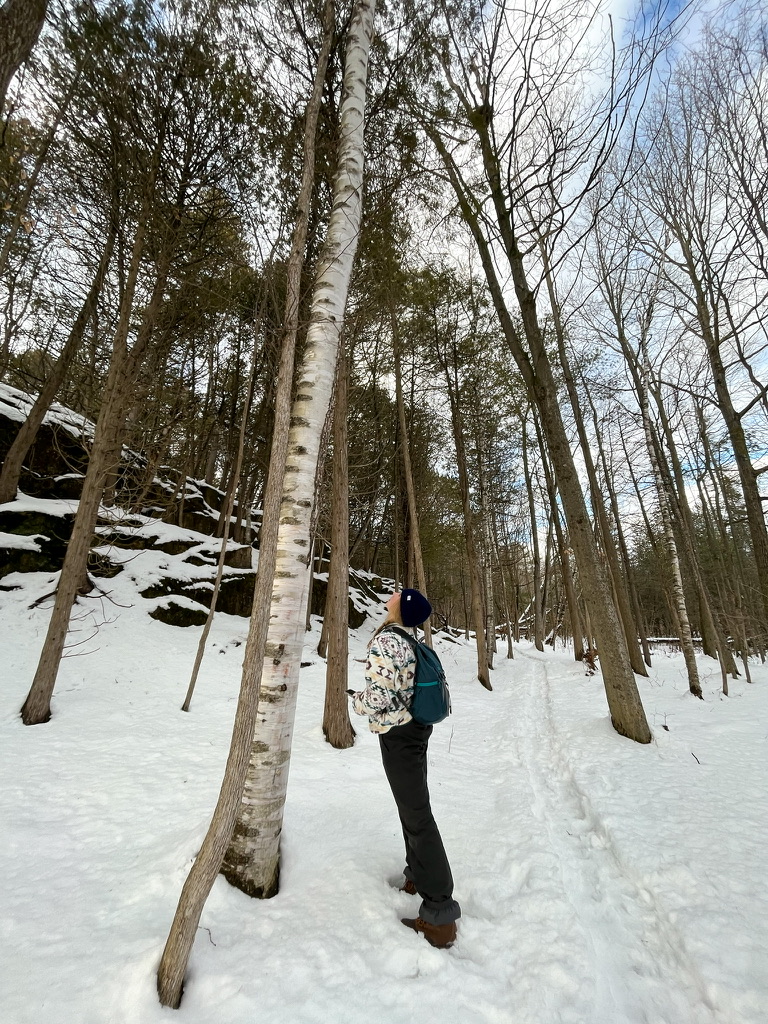
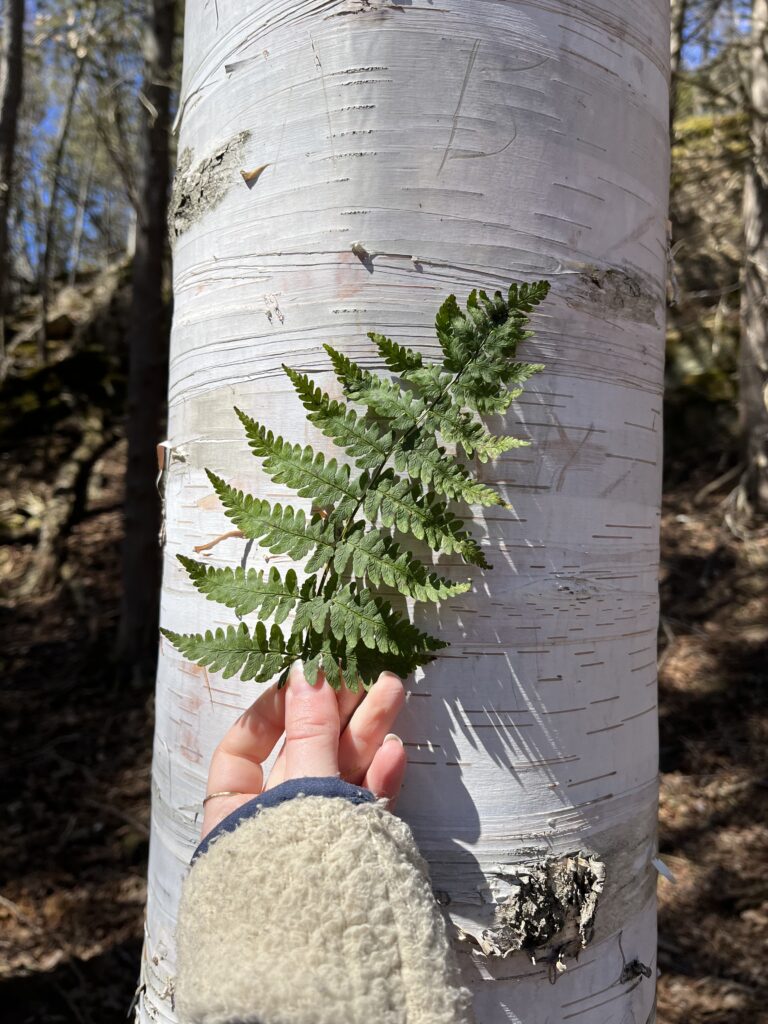
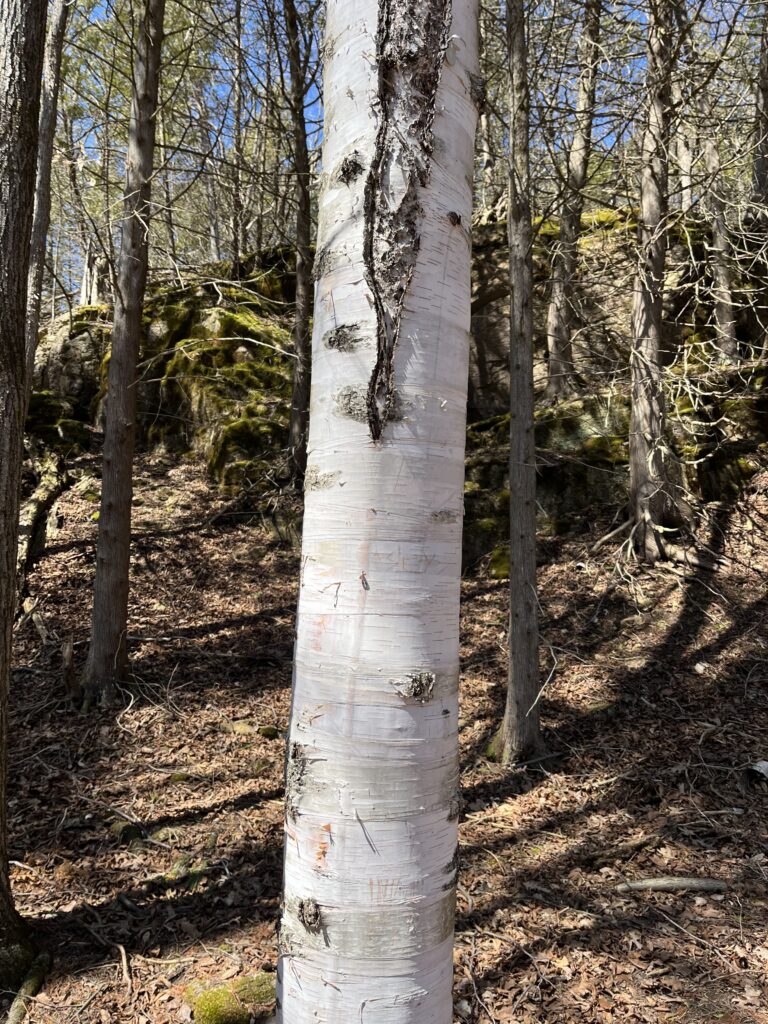
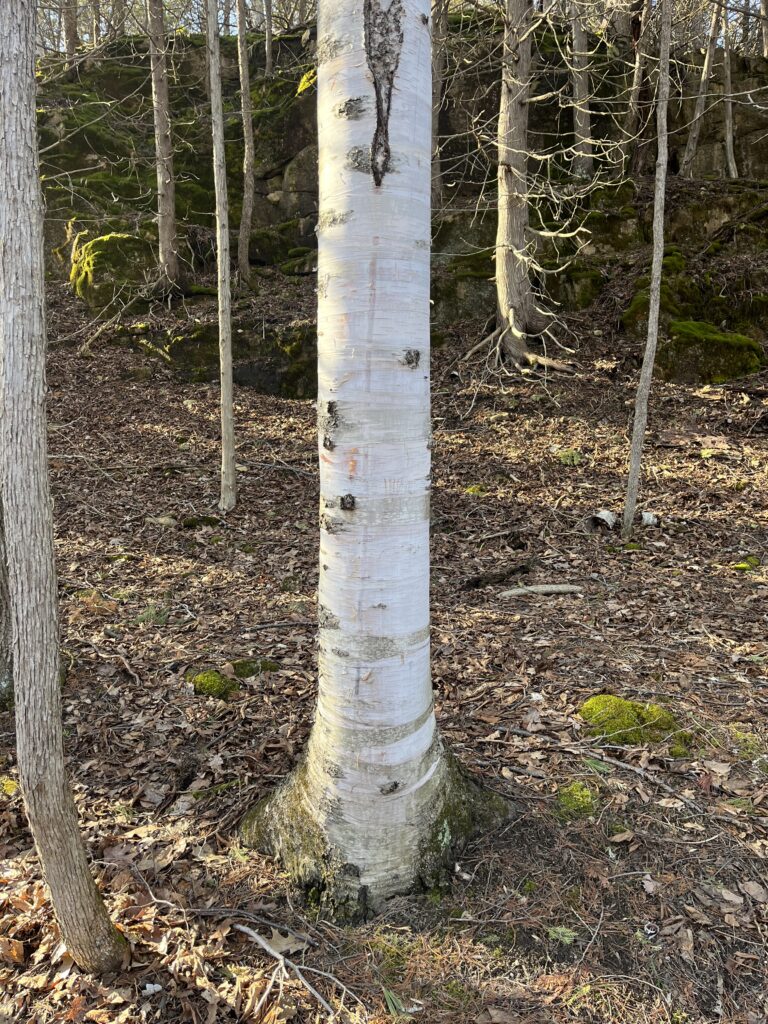
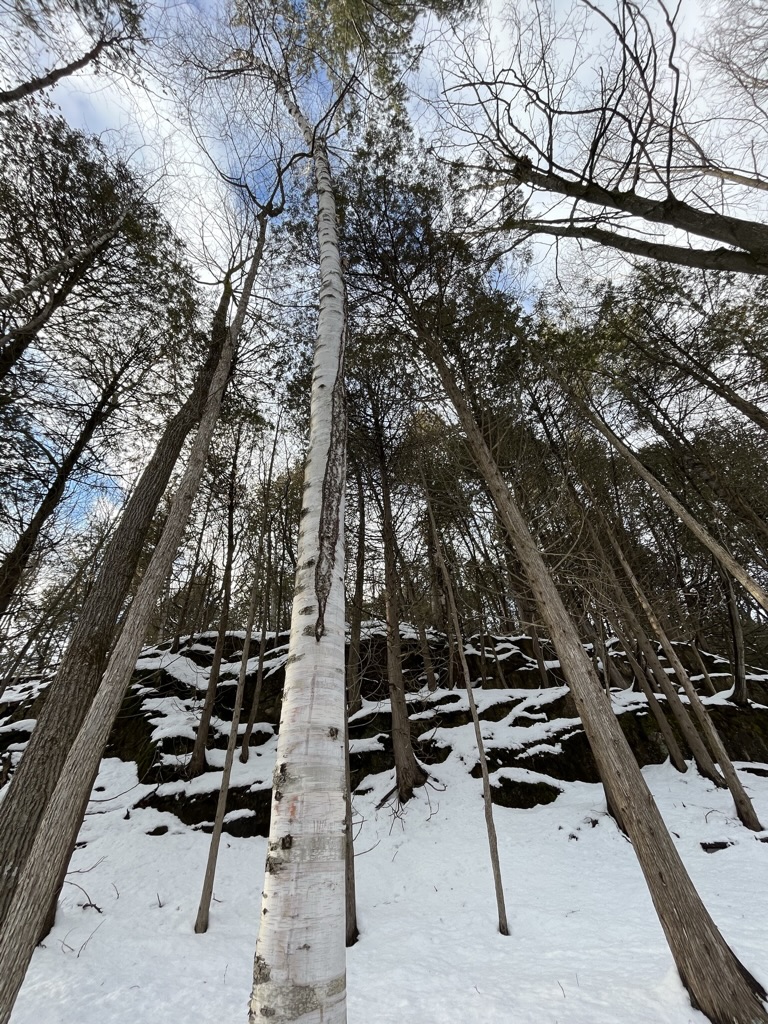
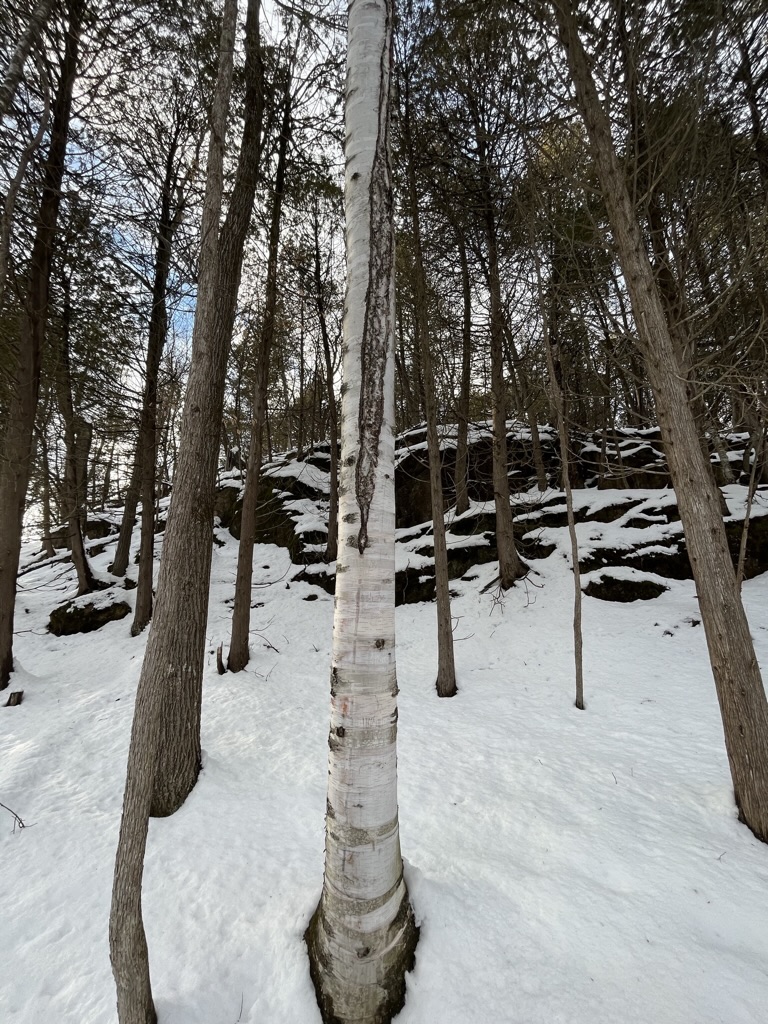
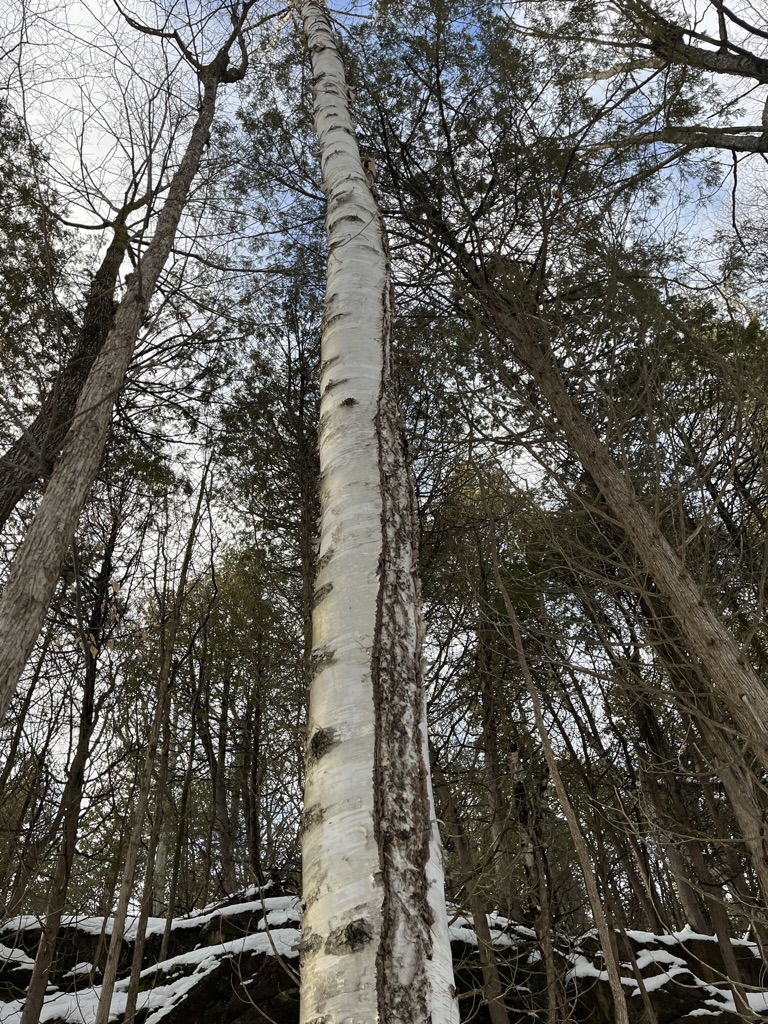
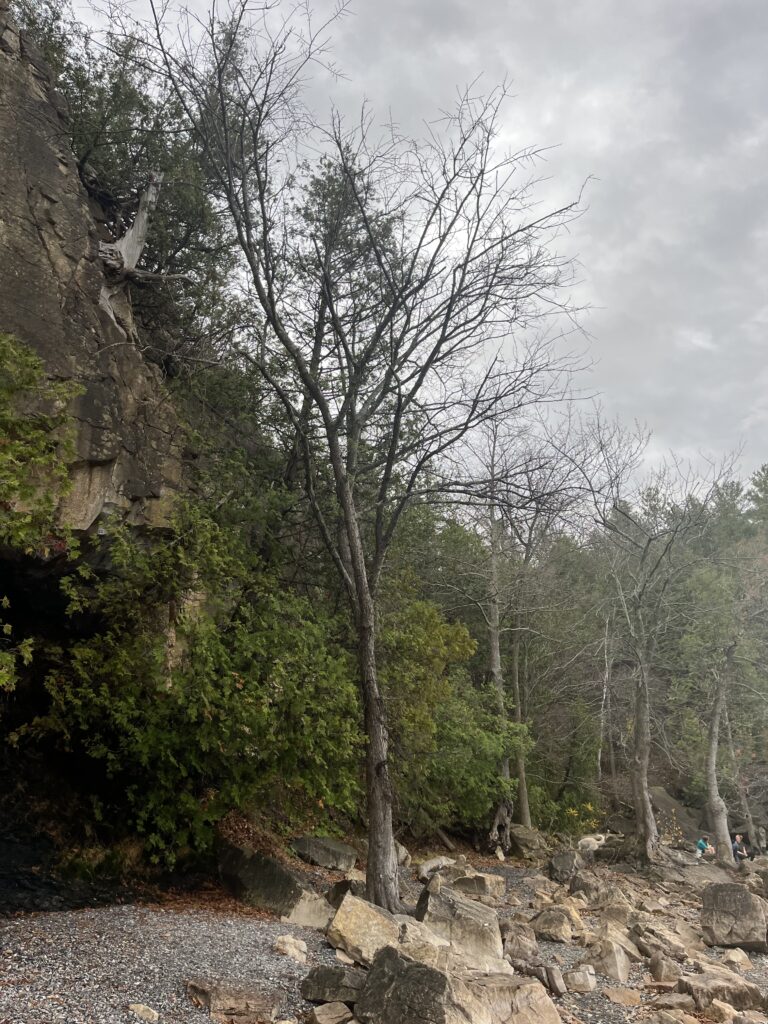
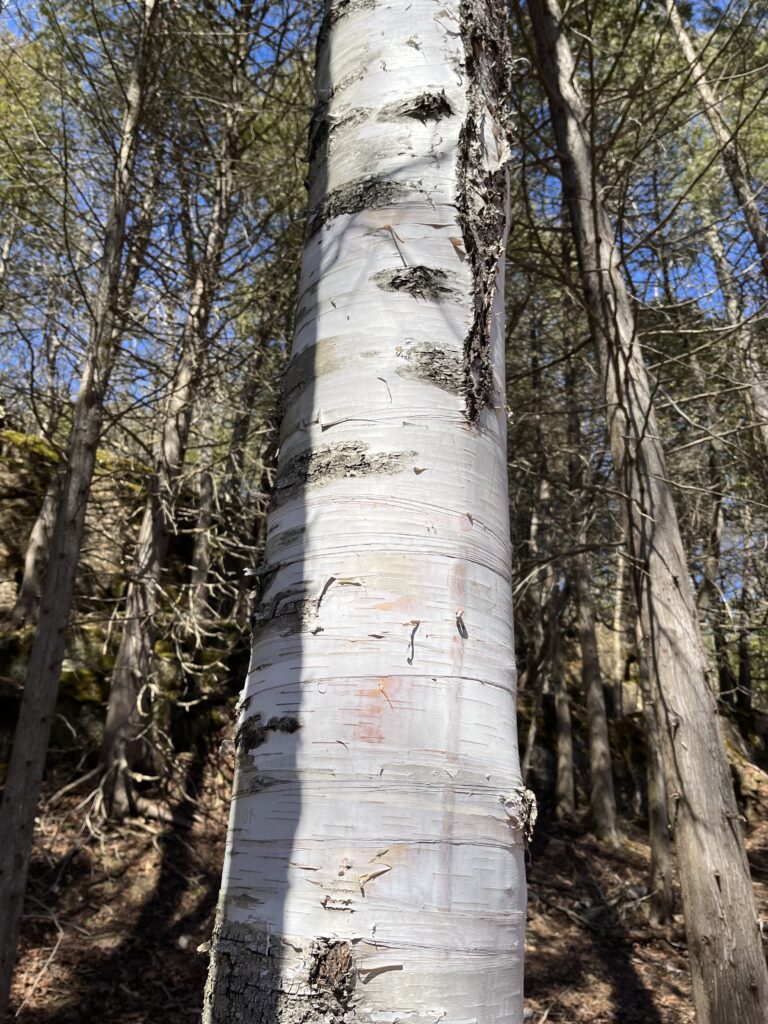
At rock point the most plentiful tree species is the Northern White Cedar. However, on the top of the bluff an interesting assortment of trees can be found including: red maples, oaks, paper birches, American beech, etc. The tree that I chose to investigate is the paper birch. The paper birch is one of my favorite trees. The bark is so unique and pretty, i love the contrast that it adds to the surrounding forest.

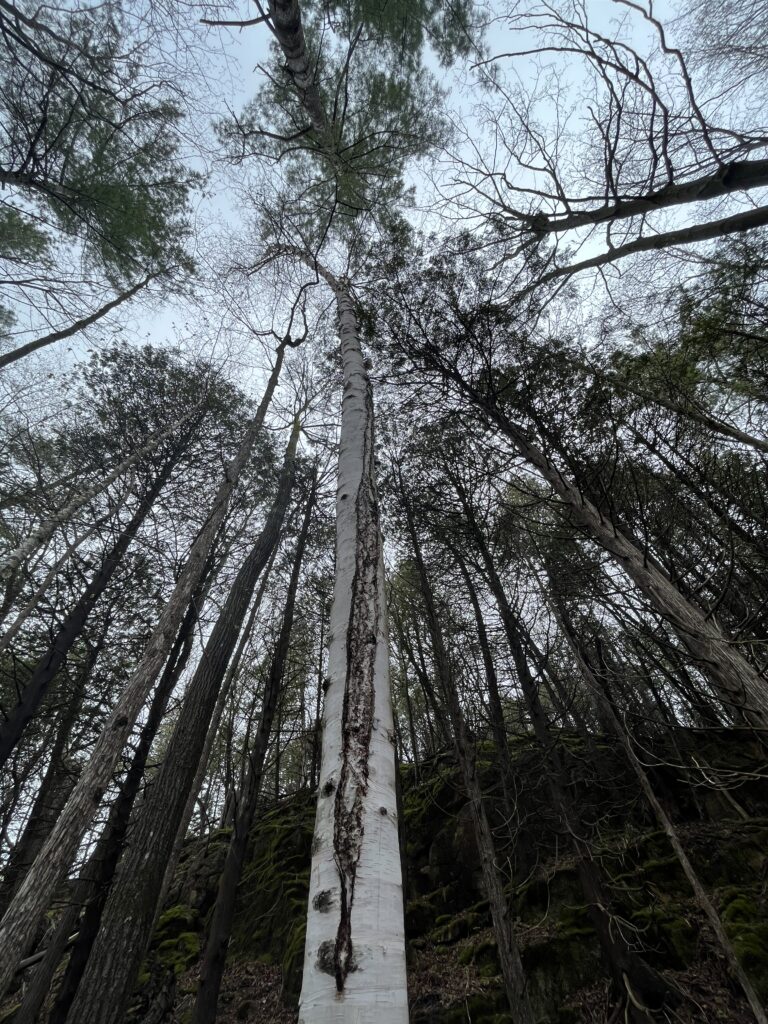
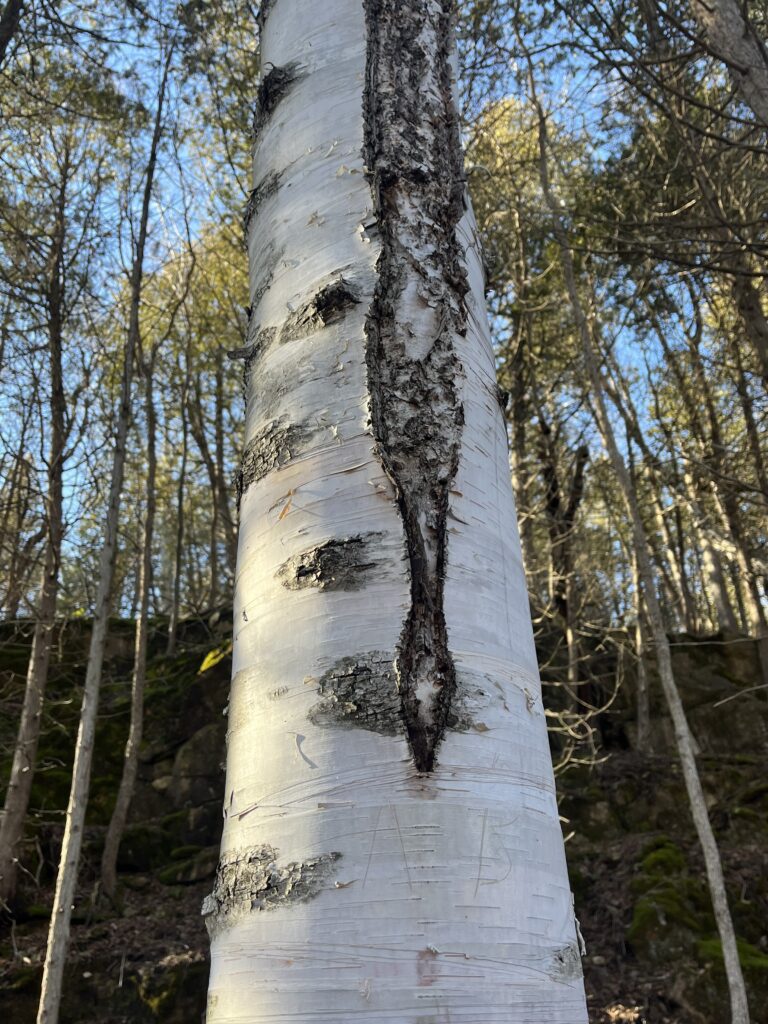
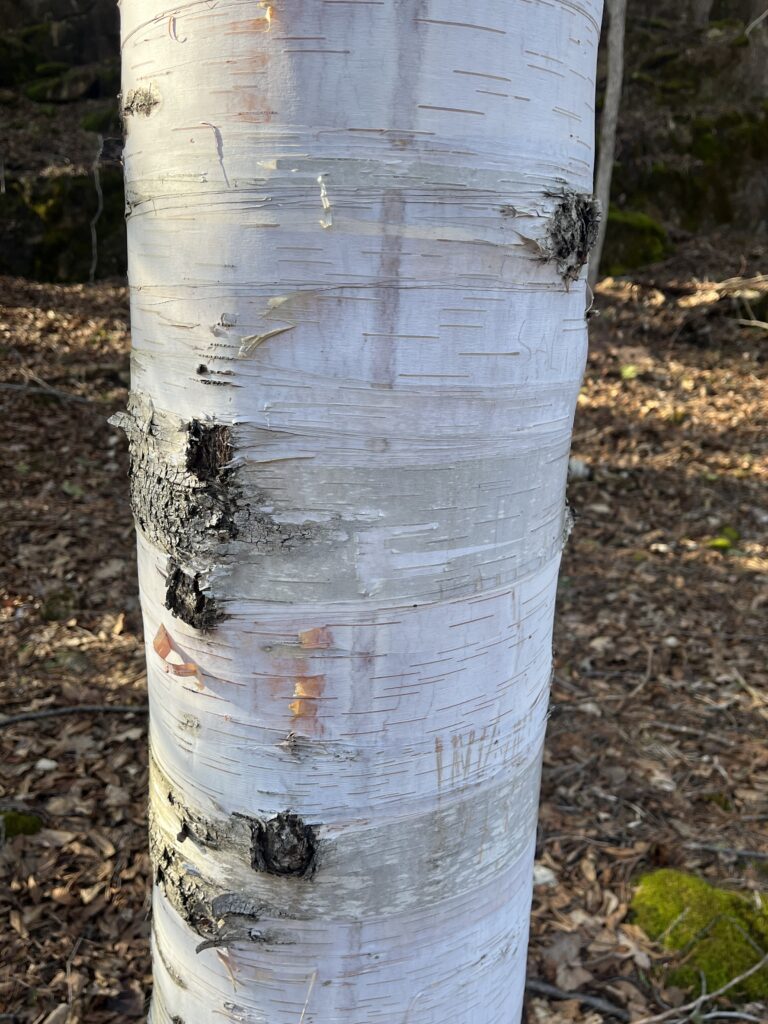
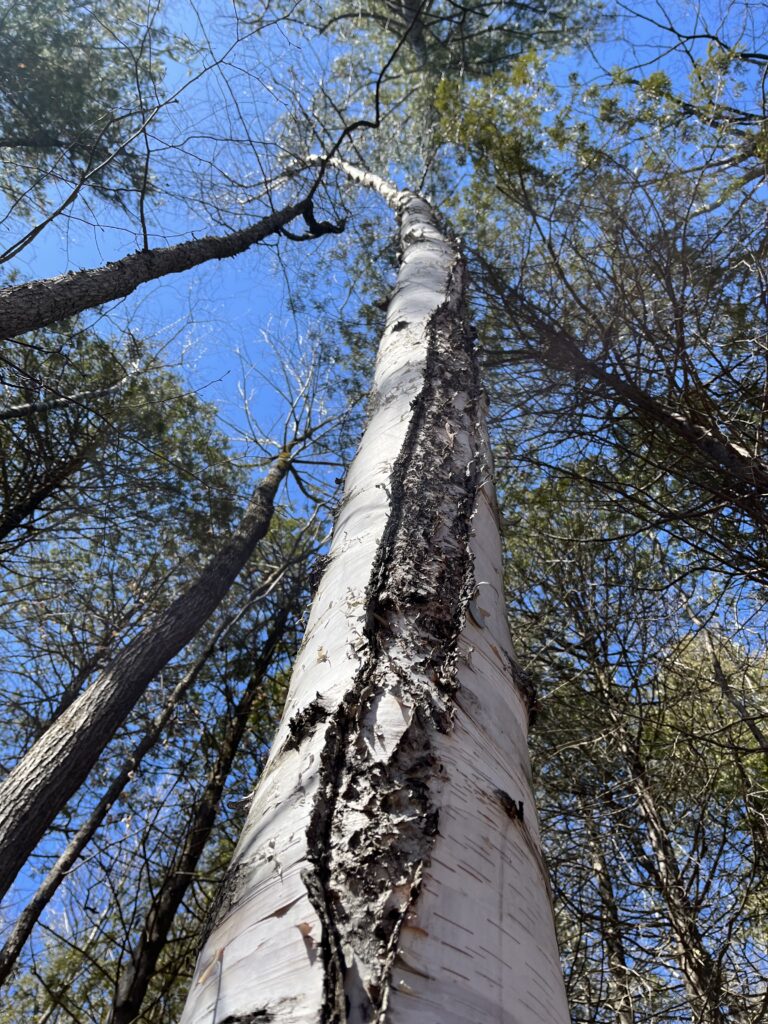
My tree has a large split running down the side of it that almost looks like it may have been struck by lighting. It is incredibly tall maybe around 30-40ft tall. The trunk is skinnier then most paper birch trees found in the mountain. This is probably because by the water it is warmer so there is less competition holding them back from growing tall, then paper birches found at high elevations with a shorter growing season.

Paper birch can sometimes be confused with gray birch, river birch, or yellow birch. Paper birch is distint from these three other options because their bark is a lot more white then the gray or silver birch. The bark also peels off in bigger sections, more paper-like, then the other birches.

Featured

Tracking in the Centennial Woods

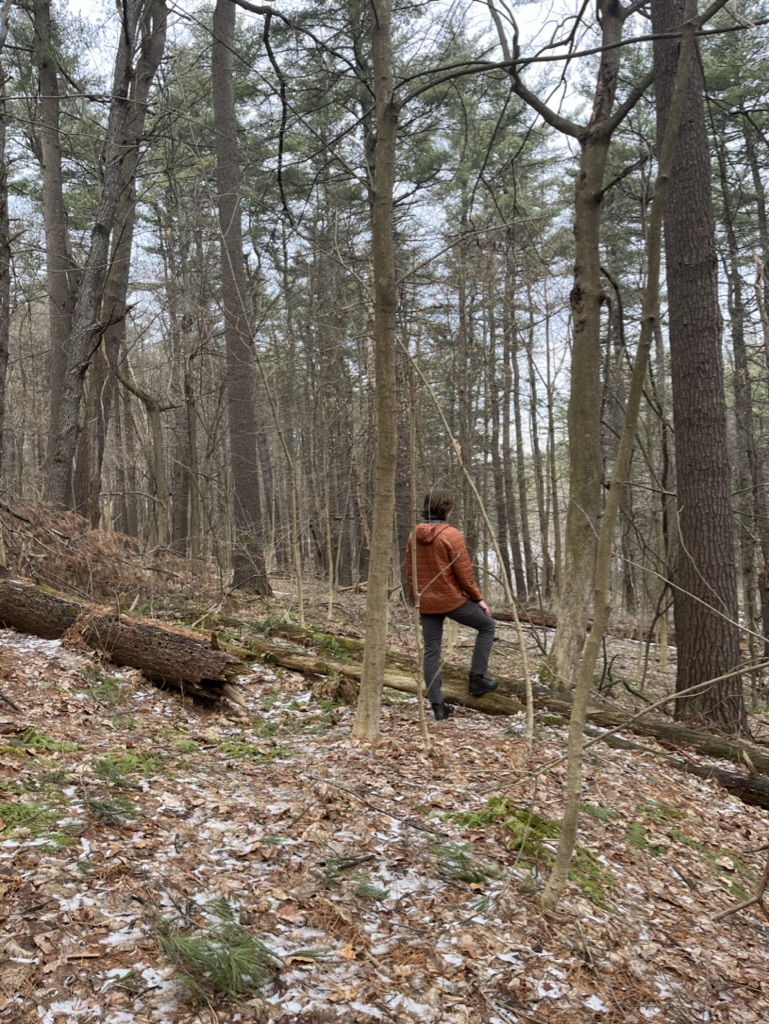
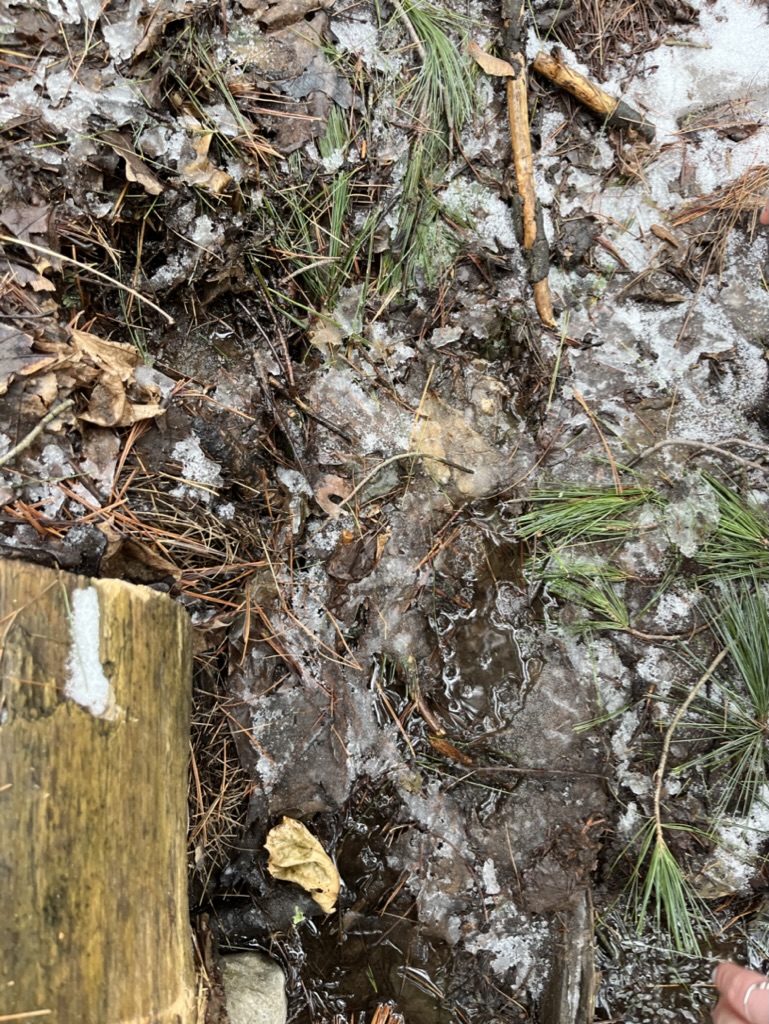
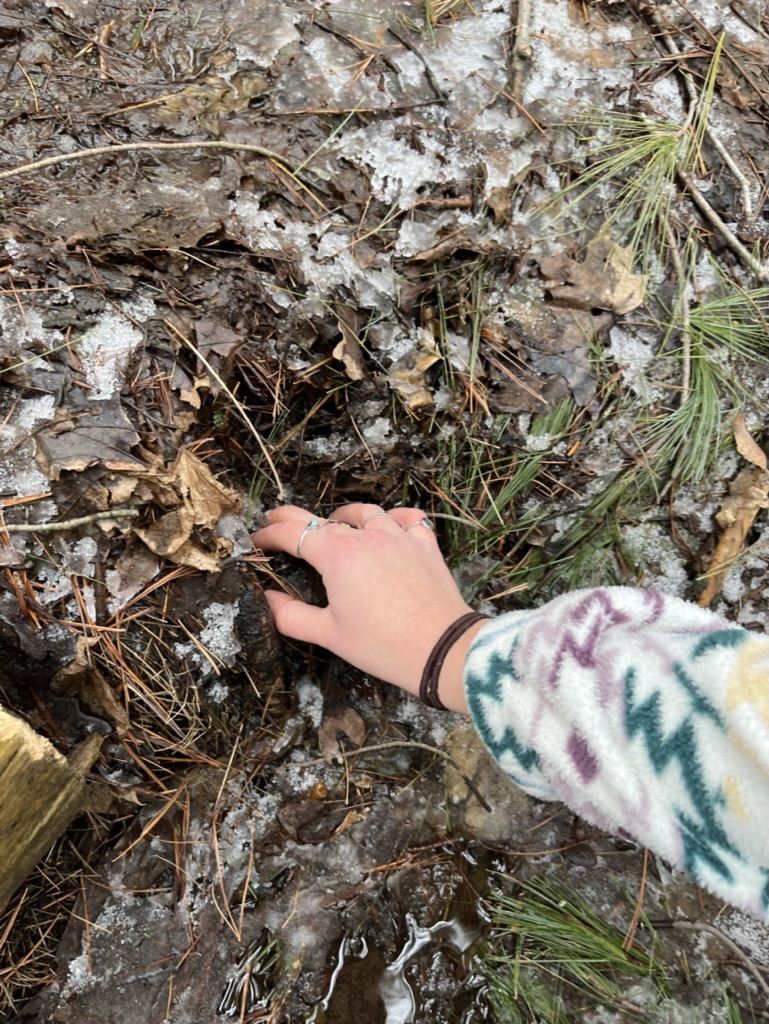
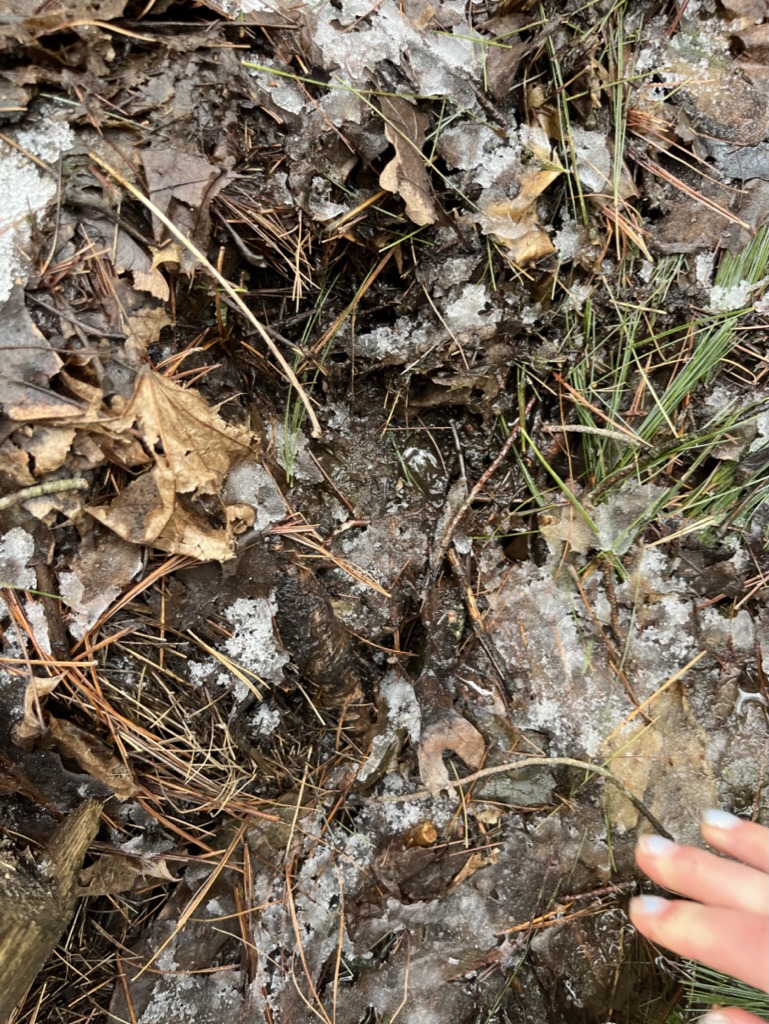
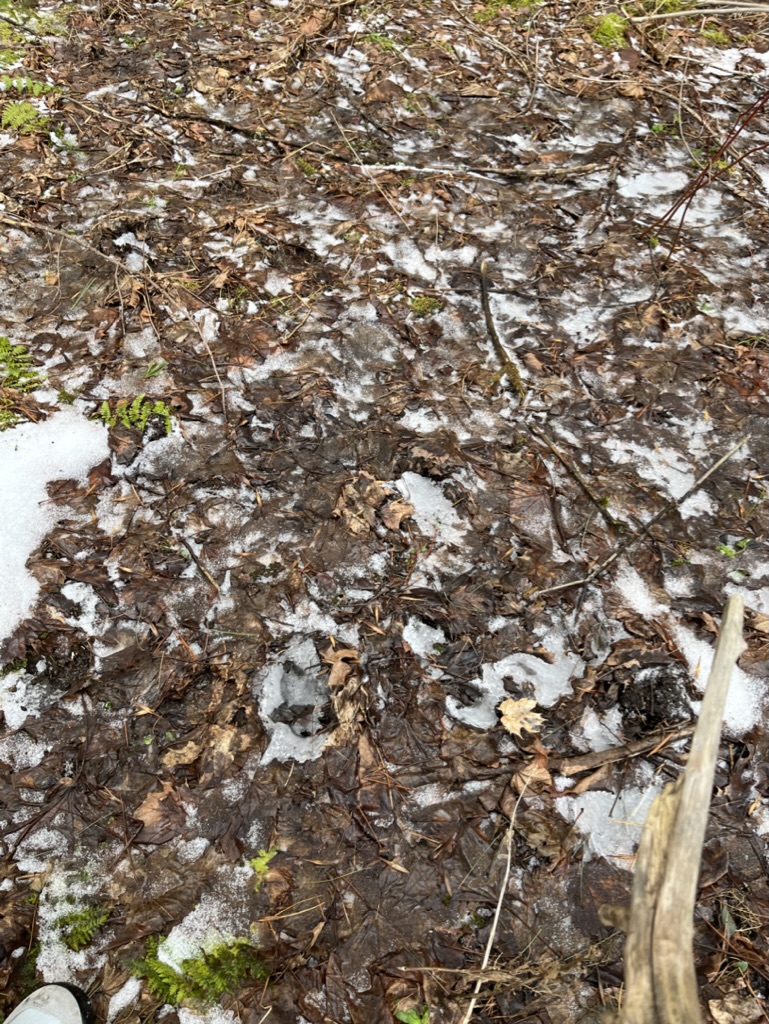
Centennial woods is a plot of forested land right by the UVM campus. There is a surplus of wildlife found in these woods including squirrels, foxes, beavers, bobcats, mink, white-tailed deer, and many more. The conditions made tracking a little difficult because most of the snow was melted. There had also been rain earlier in the week and then a freeze. Many tracks were not very clear because they had melted and then refrozen. However, the ground was soft, so a lot of recent tracks were noticeable in the mud.

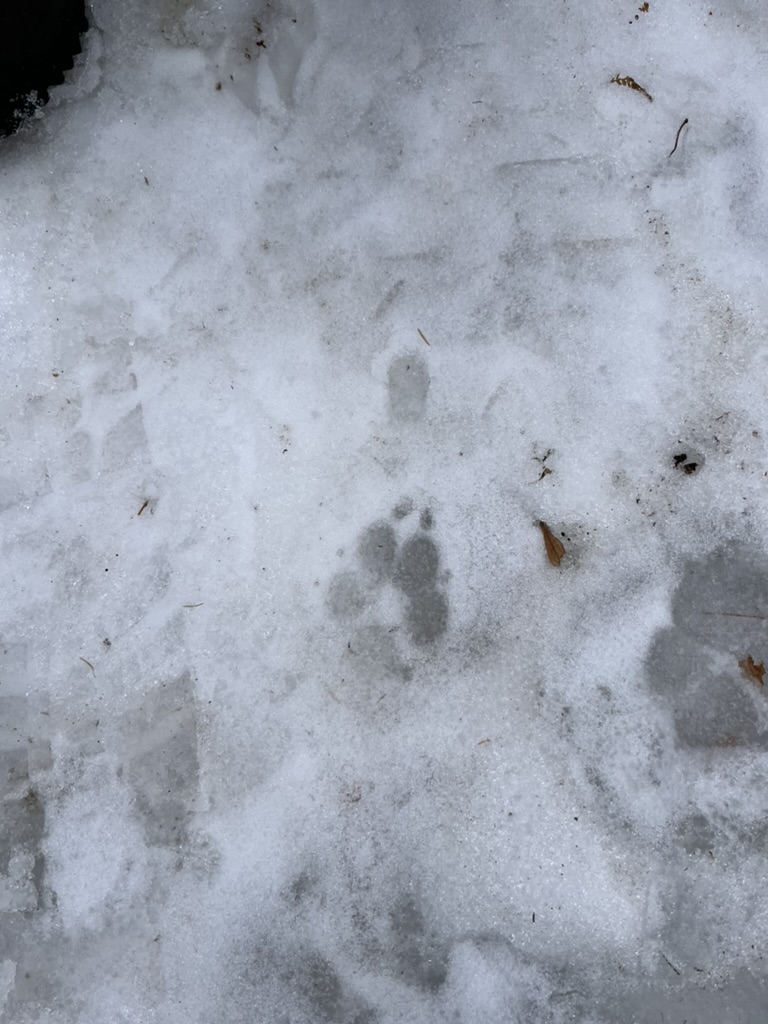
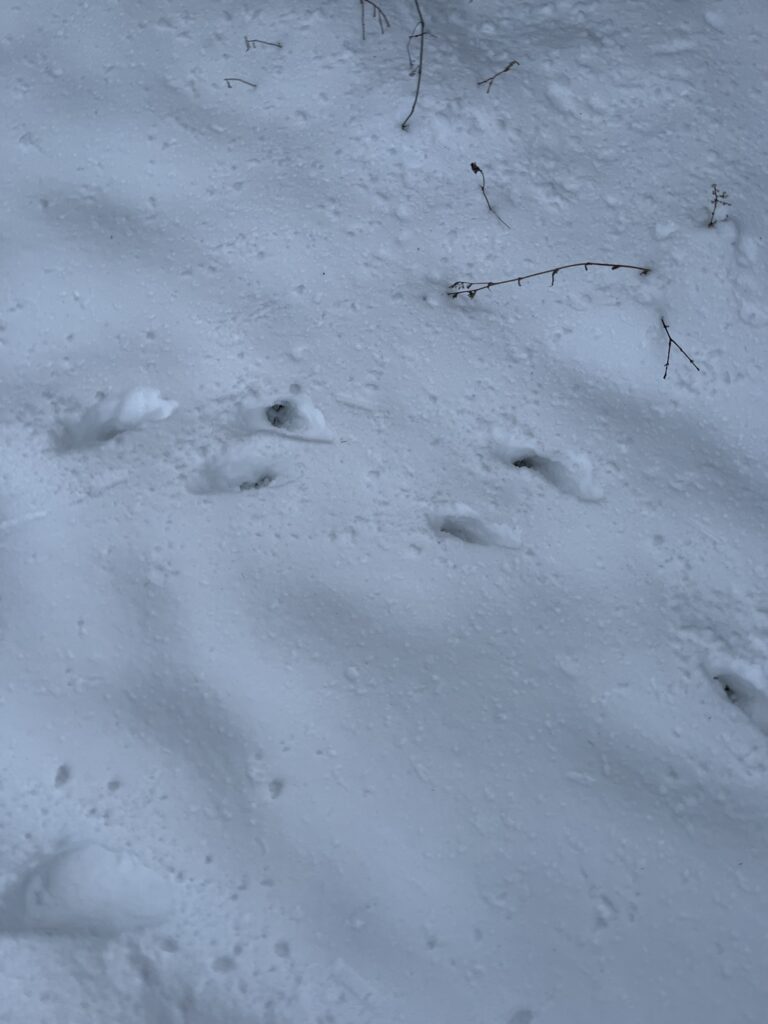
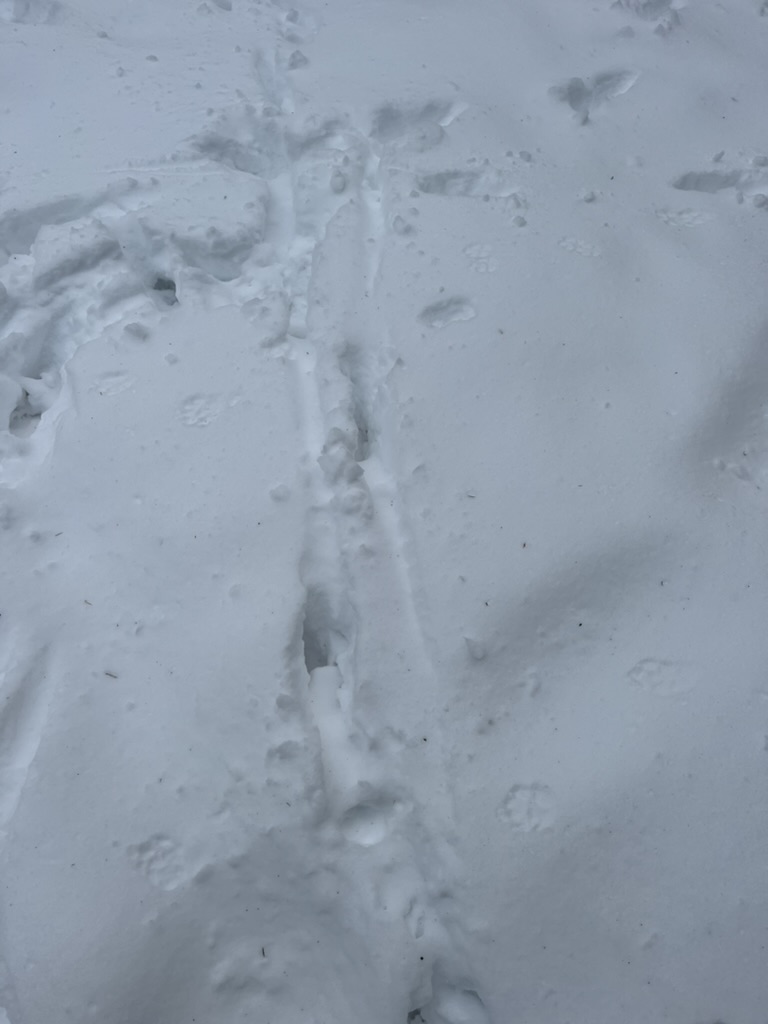
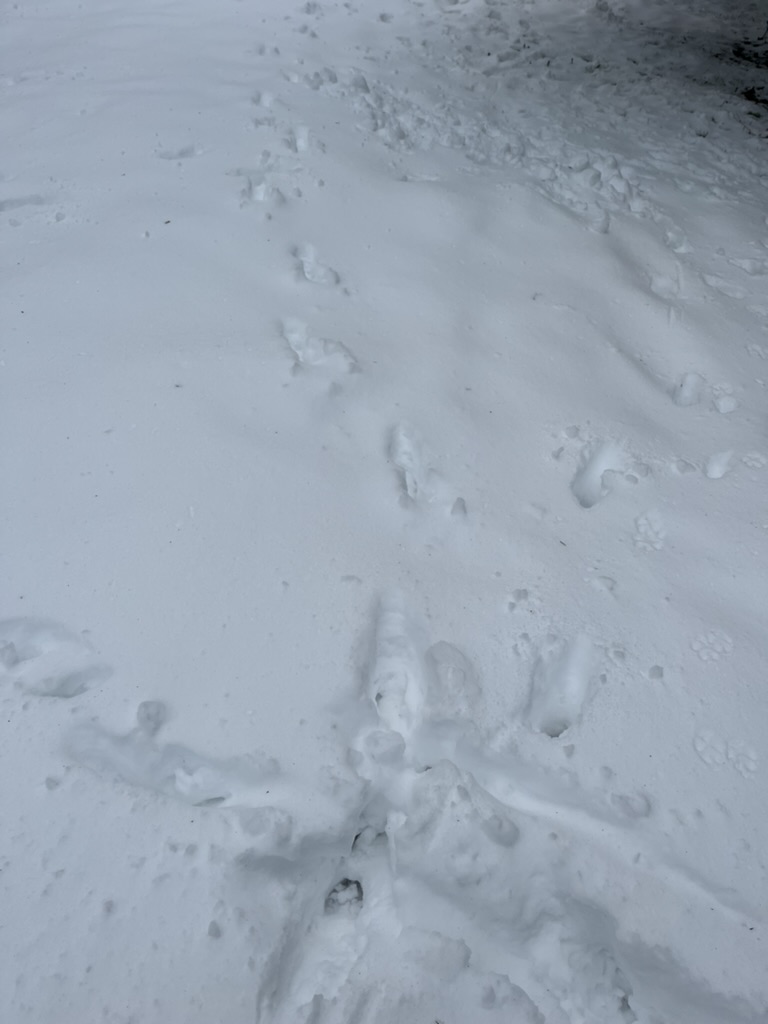
The first animal that we tracked seemed to have been climbing up an embankment along a small stream flowing into the valley. It had four toes and one was leading. There were also no noticeable claw marks. This made me think that it could be a bobcat especially because of the leading toe and because its tracks continued following the hydrological trail. On our lab in Jericho we tracked a bobcat that had many of the same characteristics as these tracks. Is bobcat maybe a bit of a reach for the centennial area? Maybe, but there have been sightings and tracks of them there before and the evidence adds up.

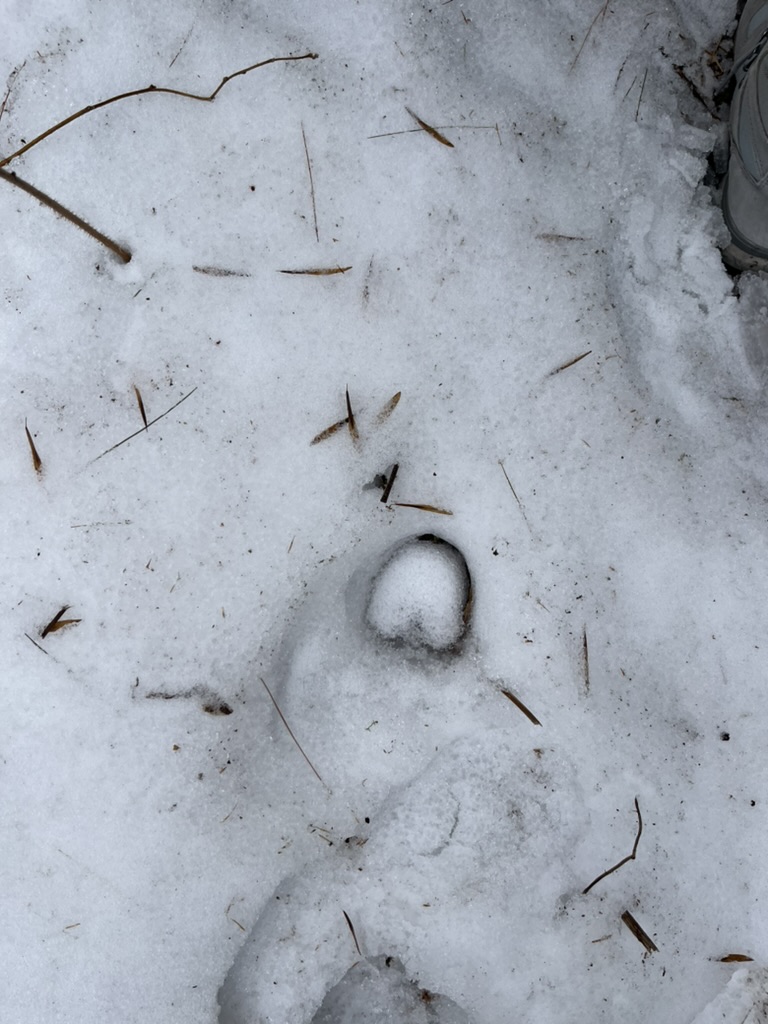
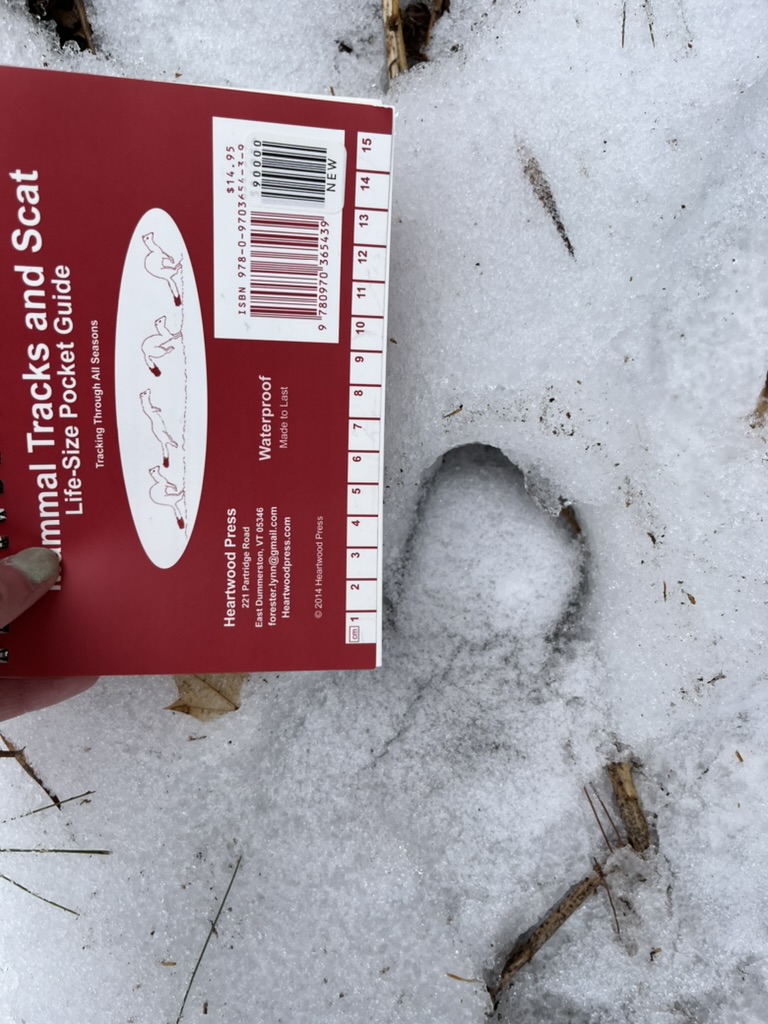
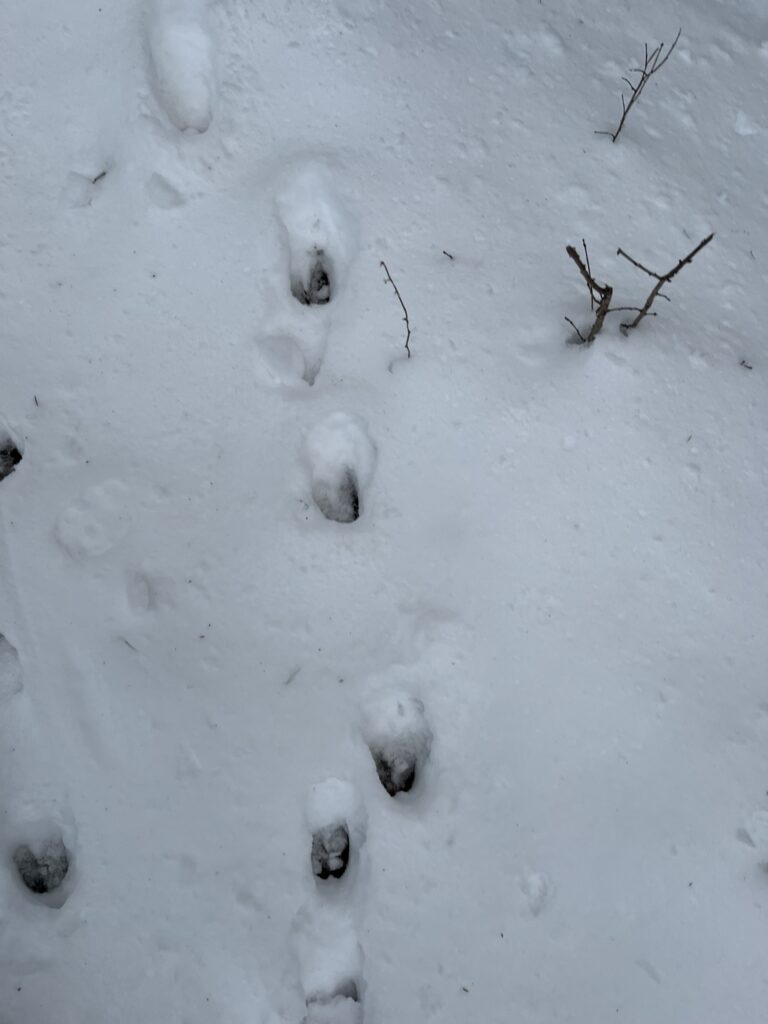
The next animal we tracked was a deer traveling along the bottom of the valley in a wetland area that is now covered in snow. The deer was identifiable because of it is a diagonal walker and very easily identifiable hoof tracks. The hoof prints are much smaller then a moose and elk really aren’t in this area so white-tailed deer was the one that made the most sense. We noticed that it seemed like the deer was speeding up and taking bounding steps towards a fallen tree because its stride lengthened approaching the tree. On the other side of the tree there were deeper hoof marks where i suspect the deer landed after jumping over the tree.

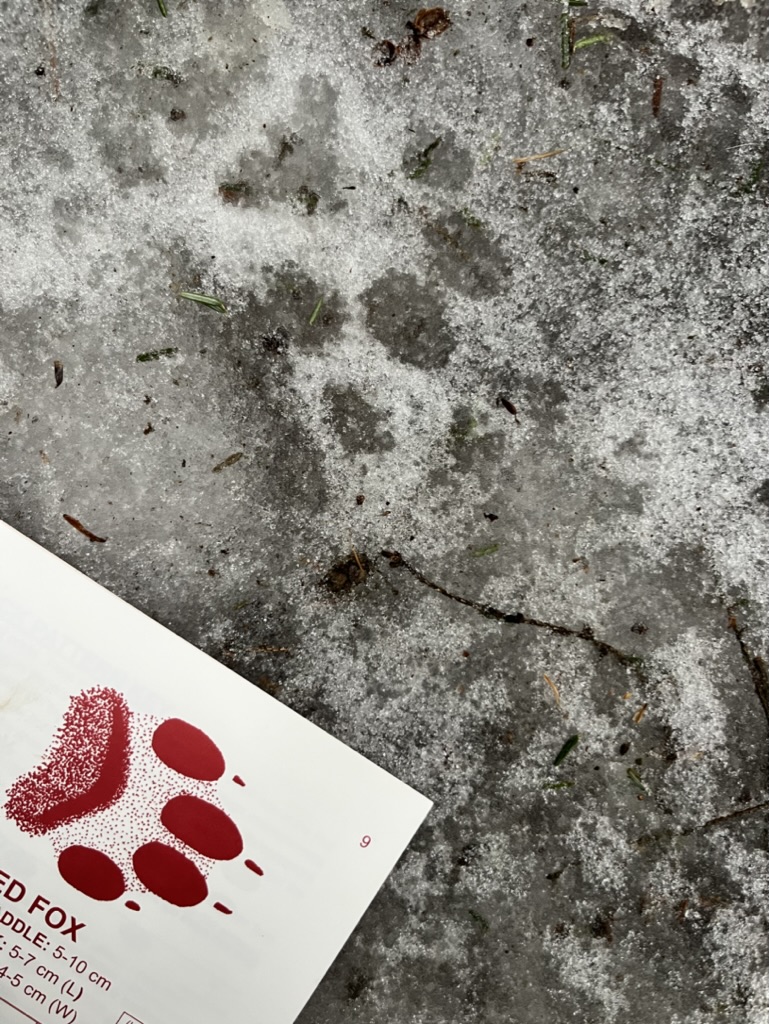
The most difficult part of tracking was how many dog prints there were since centennial is such a popular place for people to take their dogs for walks. However, we did find one track that looked different from the other dog tracks. It was smaller than most of the dog prints and pad spacing was different. It seemed to match closely with a red fox. The only thing that didn’t make sense was there were no noticeable claw prints. However, we thought that because of the conditions and the freeze thaw that has been going on the claw prints might have been shallow and with the changing conditions they might have just melted away to be unnoticeable.

Overall using inaturalist was very helpful because you can also see what other people have found in the woods and base some of your own observations and hypothesis on certain tacks about what other people have also found. It also helped with some of the identification aspects although I found that generally wasn’t able to give suggestions for tracks. However, the app is easy to use and i find it really interesting being able to see what other people have found in the Burlington areas.

Featured

Return to Rock Point! – Snow edition

Rock Point’s New Look

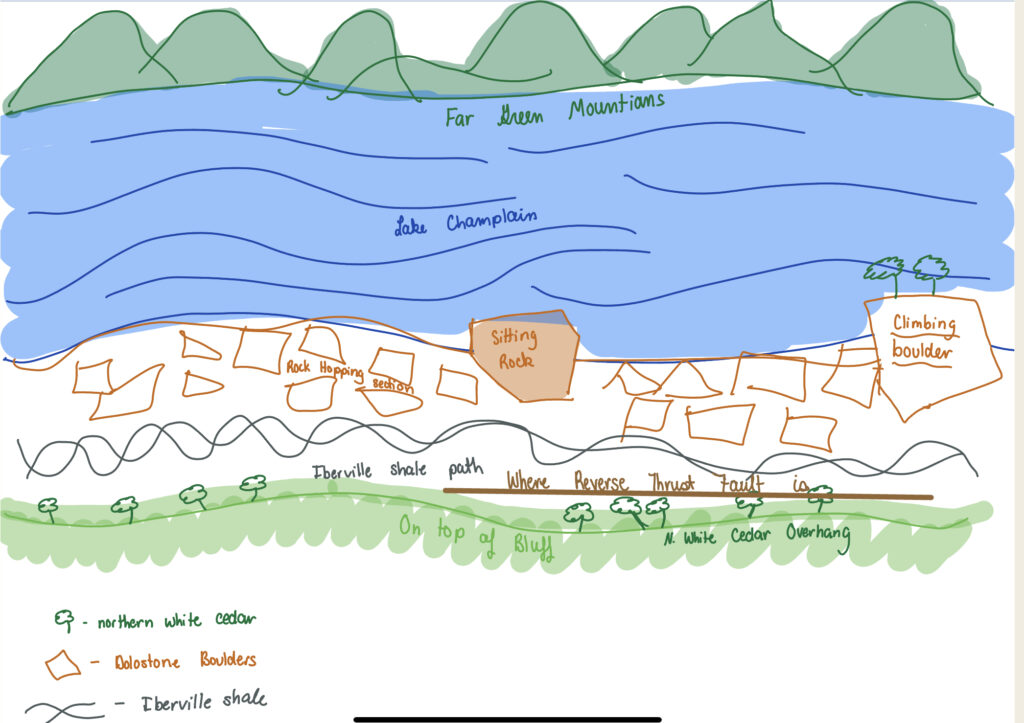
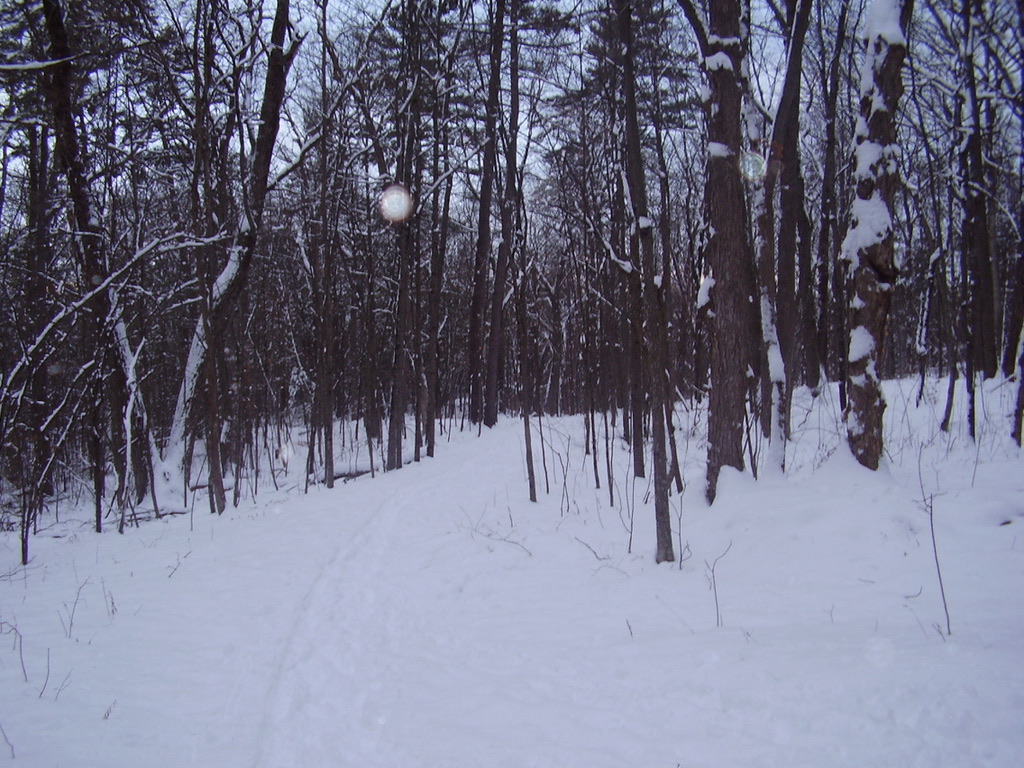
A lot has changed at rock point in the month and half since the last time I visited. Snow now blankets the ground and coats the branches of the trees on the path in. It gives Rock point a whole new look and makes it beautiful in a new wonderful way. It really does feel like walking through a winter wonderland. However, not only is there now snow but the water levels of lake Champlain have risen by at least a few feet. The rock that used to be the “sitting rock” is cut off from the beach and can no longer be accessed because the water is almost covering it. The beach is a lot more narrow and erosion is very noticeable along the shoreline. There is more of a drop off into the water where the waves have crashed into the small rocks pushing them back. The climbing boulder is also now inaccessible because the water has risen to a level that surrounds the rock where before it had not. It is incredible to me how so much changed in such a short amount of time. I also wonder what it is that made the water rise so much. Is it related to snow melt? Hopefully I will find out soon.

Animal Tracks

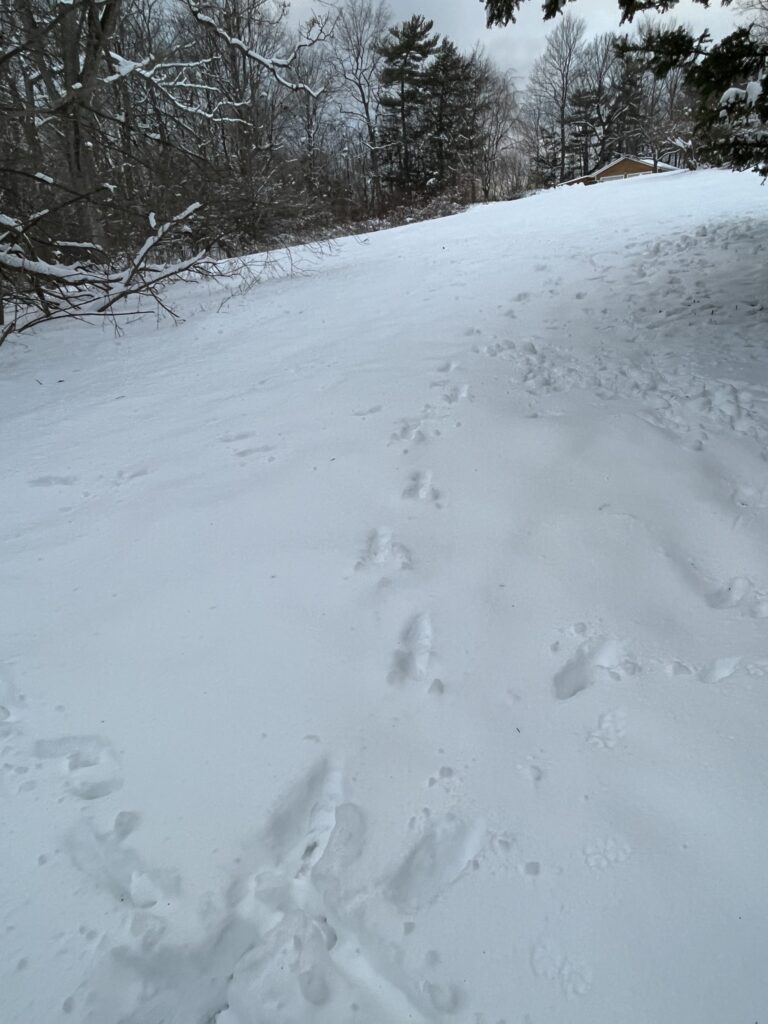
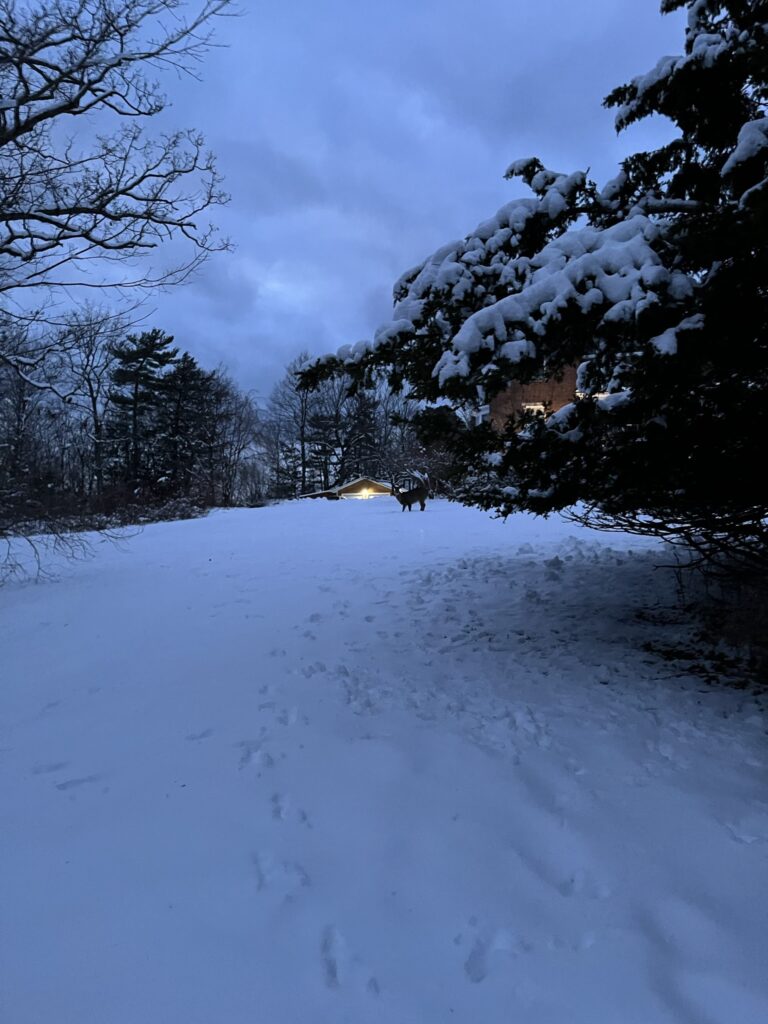
Until this past trip there has not been a lot of wildlife at rock point. Early on there were lots of birds but as it got colder they became less common. The snow has allowed me to see all the signs of wildlife at rock point that I had never been able to see before. On the walk through the woods to rock point there were many animal tracks and while leaving my friend and I passed right by a deer grazing on the side of the trail. It was pushing the snow out of the way to get to whatever grass or brush it could find underneath.

Winter is so beautiful at Rock Point, and being someone who loves snow I am so excited to explore and see how Rock Point changes throughout the season!

OLYMPUS DIGITAL CAMERA
Featured

December Phenology

My favorite part of Rock Point is this view

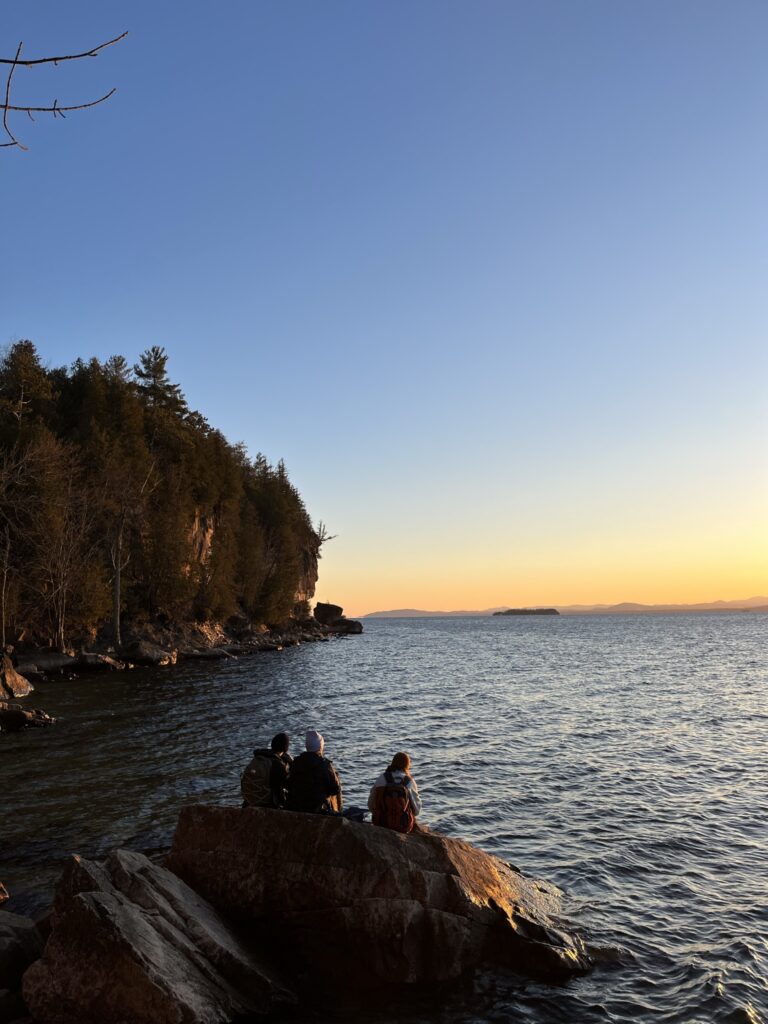
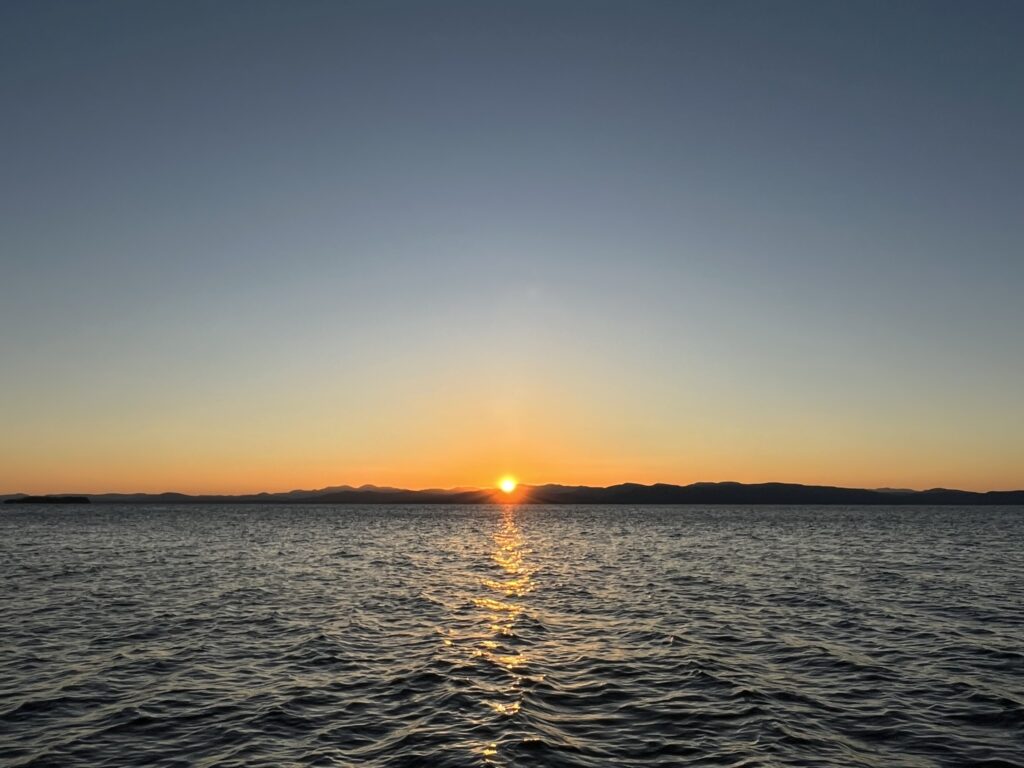
Rock Point was a balmy 25°F today, but the beautiful sunset that I got to witness made up for the chilly weather. A lot has changed since my first visit to Rock Point, the temperature is significantly colder, the trees are bare, and ice covers some of the rocks and boulders close to the lake, and the sun now sets at 4:15pm.

The foliage has changed significantly from my first visit. The leaves that had painted the trees a beautiful array of orange, red and yellow my first trip, now they scatter the ground leaving the deciduous trees bare. While it is sad that the leaves no longer decorate the trees they have a greater purpose now as they decompose and put nutrients back into the soil for next year. Already this decomposition process can be seen as the leaves are now a dull brown, deteriorating back into the forest floor. The only persistent vegetation are the Northern White Cedars, which don’t loose their needles.
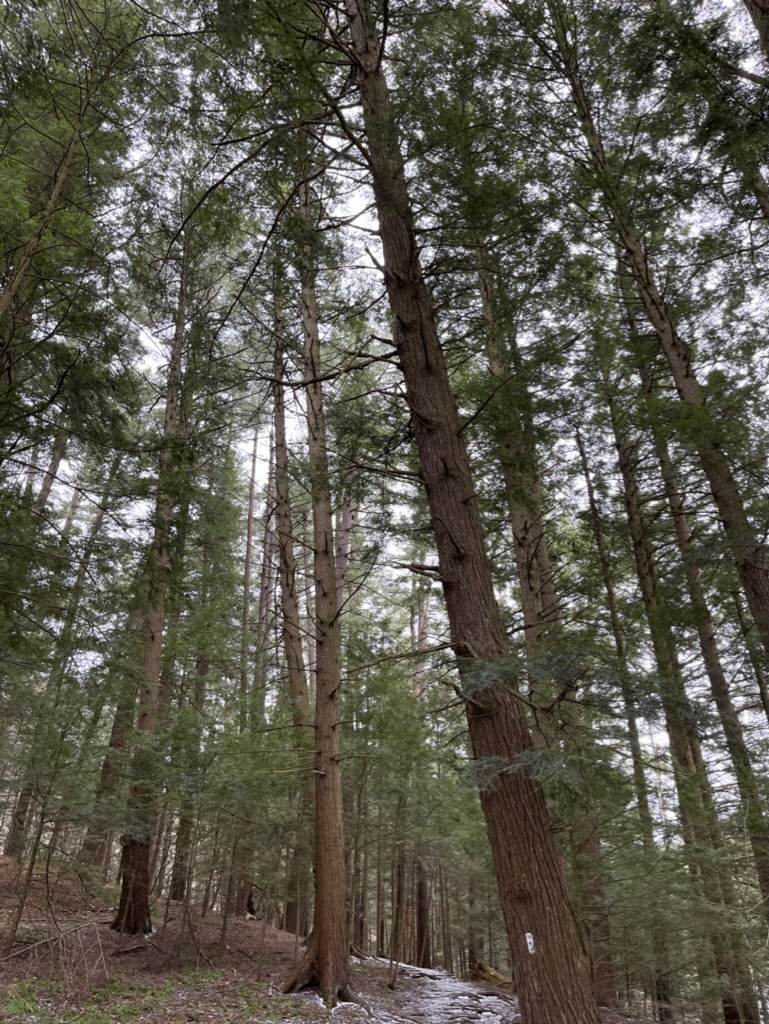
There isn’t much of a change in animal activity except there are not as many birds active in the area. At the beginning of the year there were many seagulls and other small finch-like birds. However, it is quieter now as it seems many of these birds might have started their migration. On the walk to the shoreline through the interior of the peninsula my friends and I heard a howl from the wooded area that could have been a coyote. It definitely didn’t sound like any dog I had ever heard, but that also could have been our imaginations running wild (the most probably case).

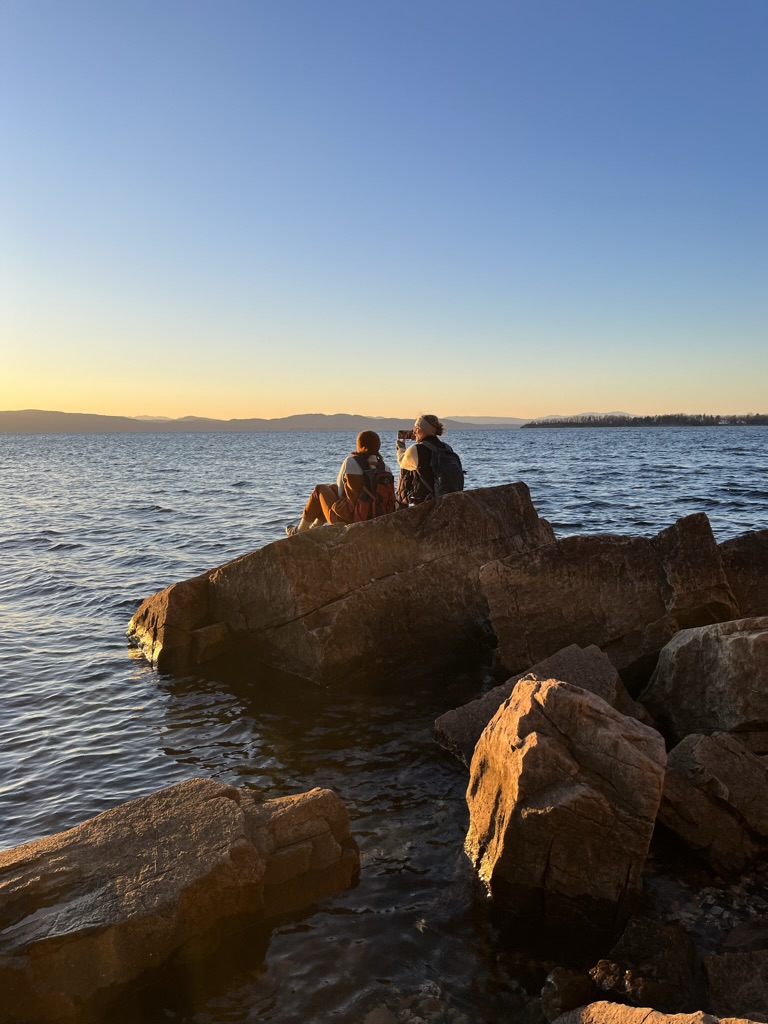
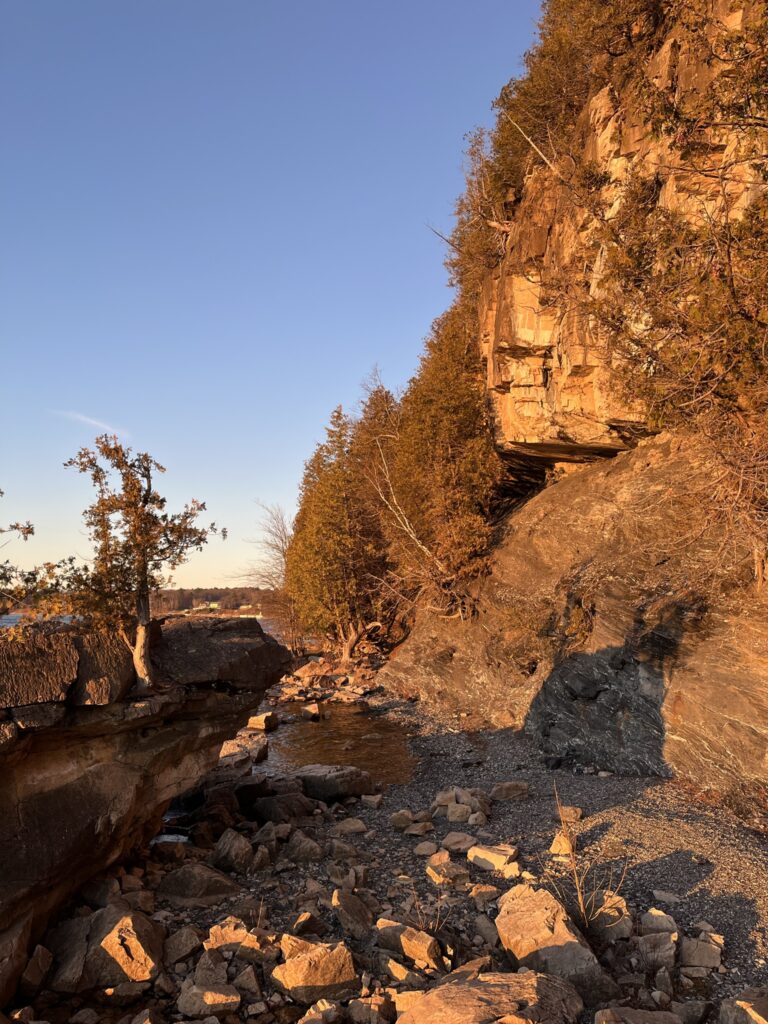
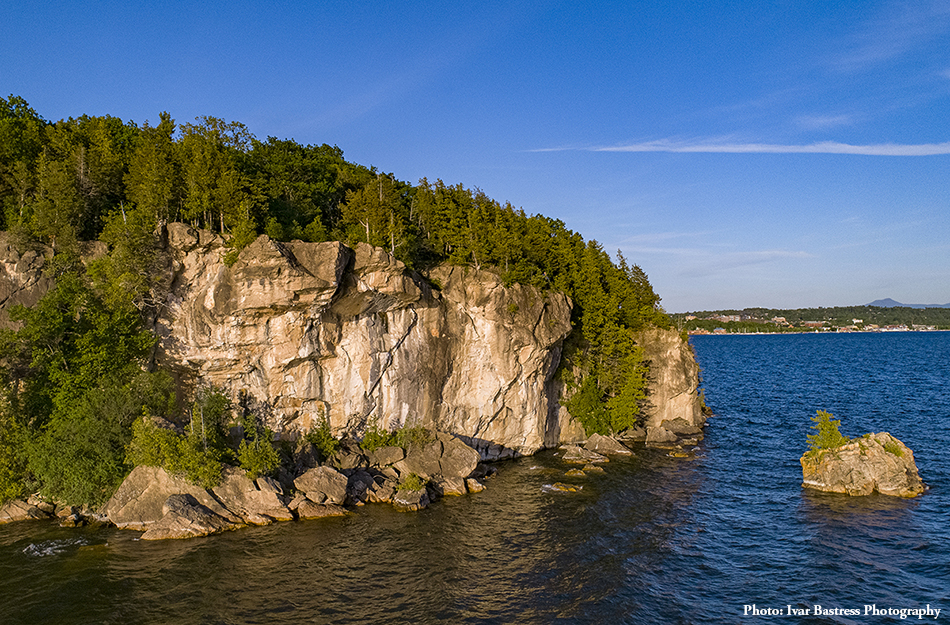
In my last trip to Rock Point this semester I was lucky enough to witness a beautiful sunset. The sun cast a golden glow over the Dolostone rocks, illuminating the cliff-line brilliantly. The sunset, in addition to the majestic lake and mountain range, made this my favorite visit yet. These were my favorite aspects of Rock Point, that no matter the weather, time of year, or time of day the view over the lake was so grand that it made me feel like I was part of something so much bigger then me. It took me away from any worries about school, personal life, or just stress in general and allowed me to just exist in a beautiful place. I also love the small hints of adventure I got from my outings there, like climbing my climbing bolder or even just the unpredictability of the weather. Rock Point was dependable and calming and yet provided a different adventure every visit.
Featured

Hometown Phenology

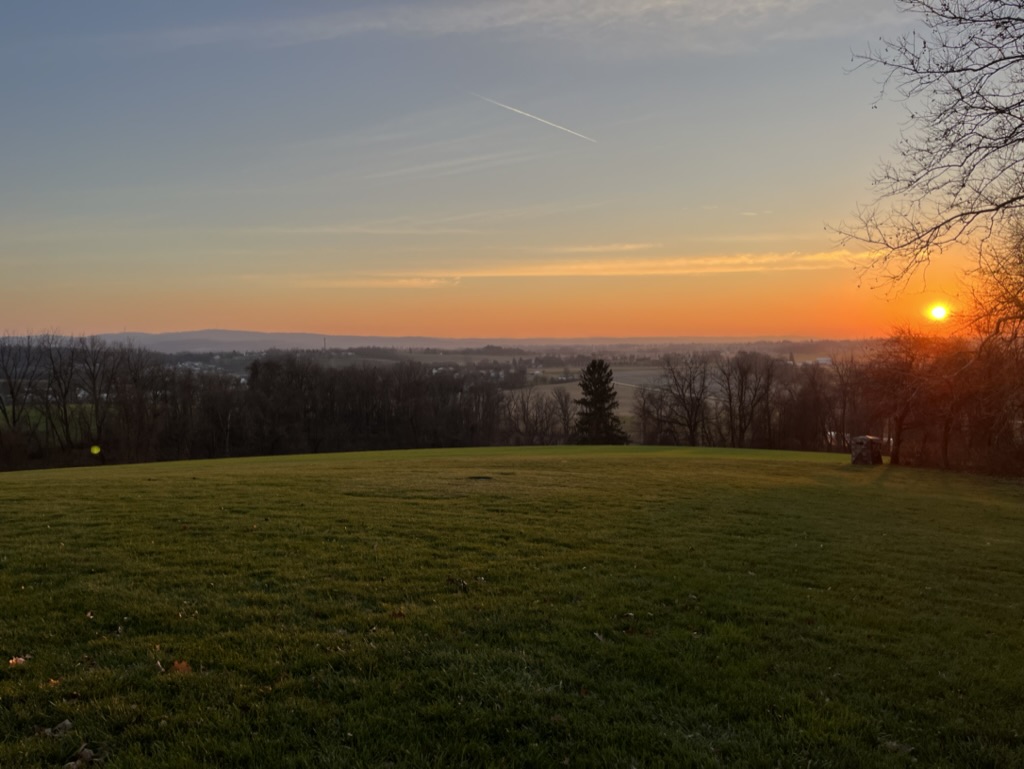
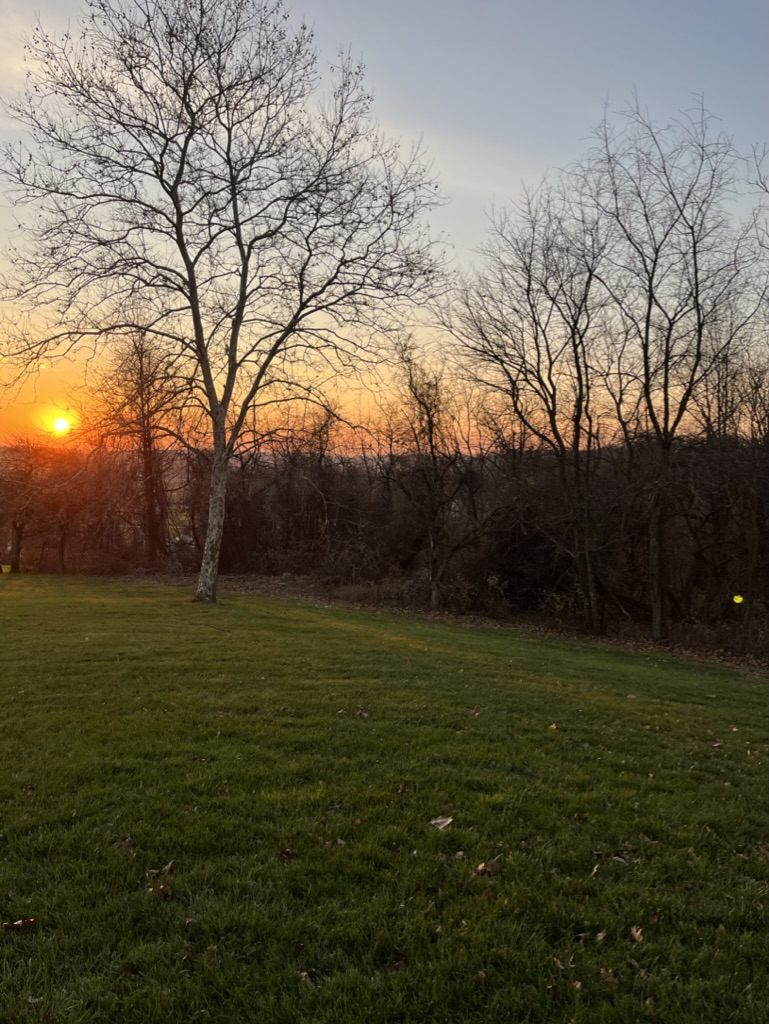
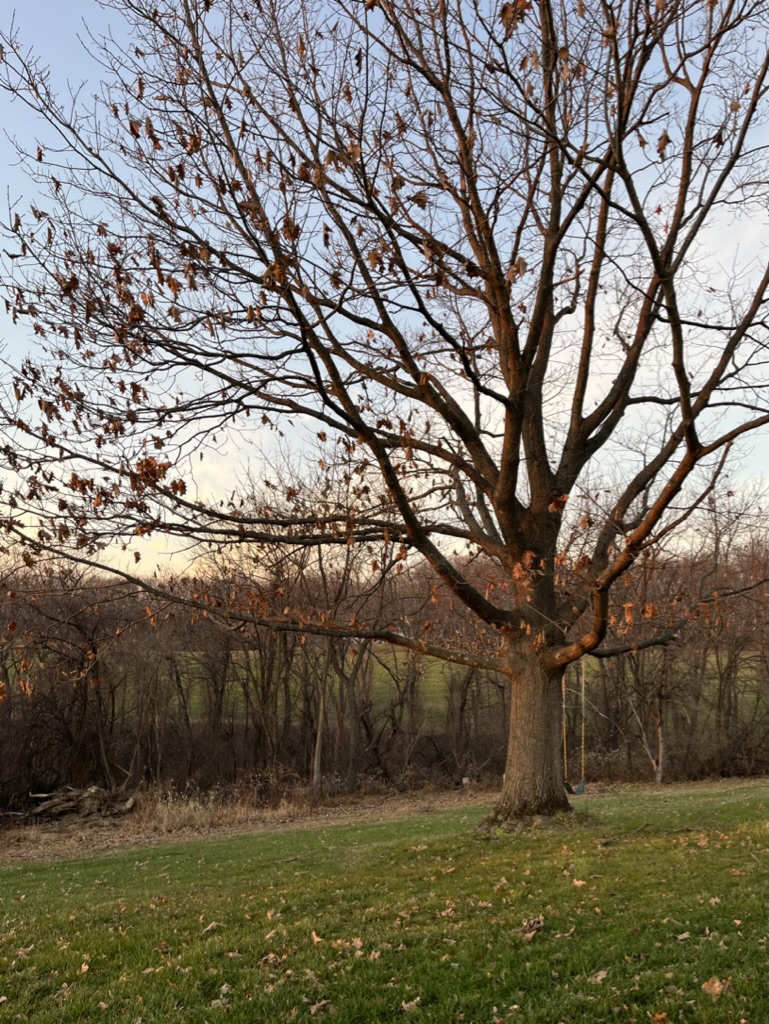
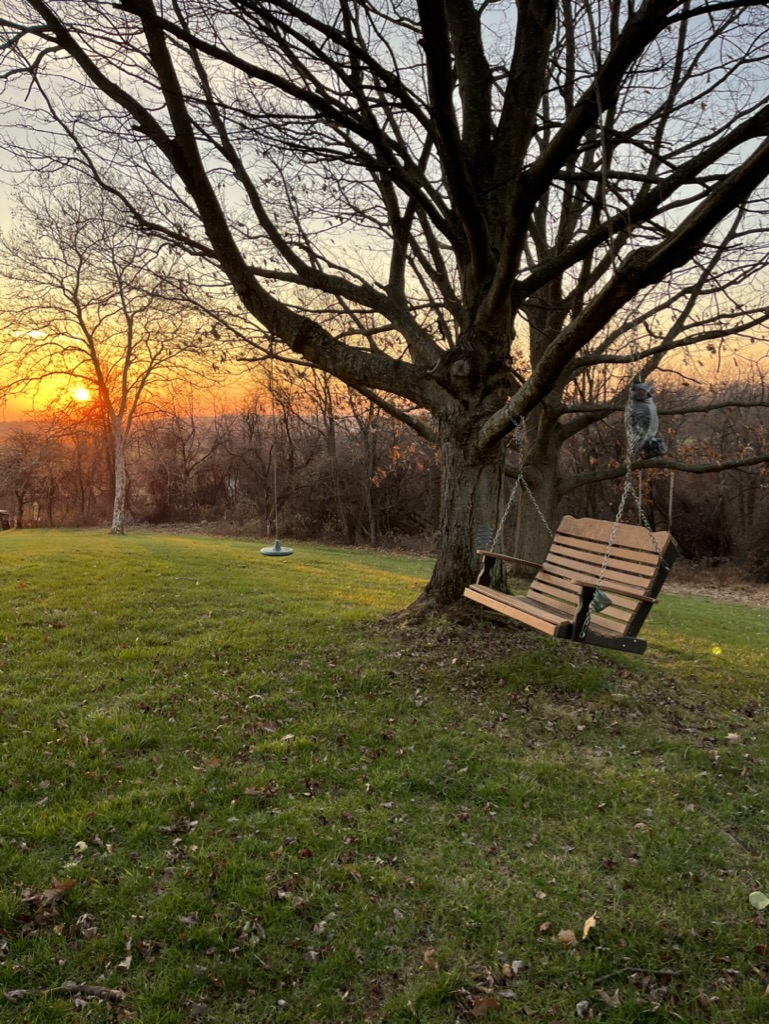
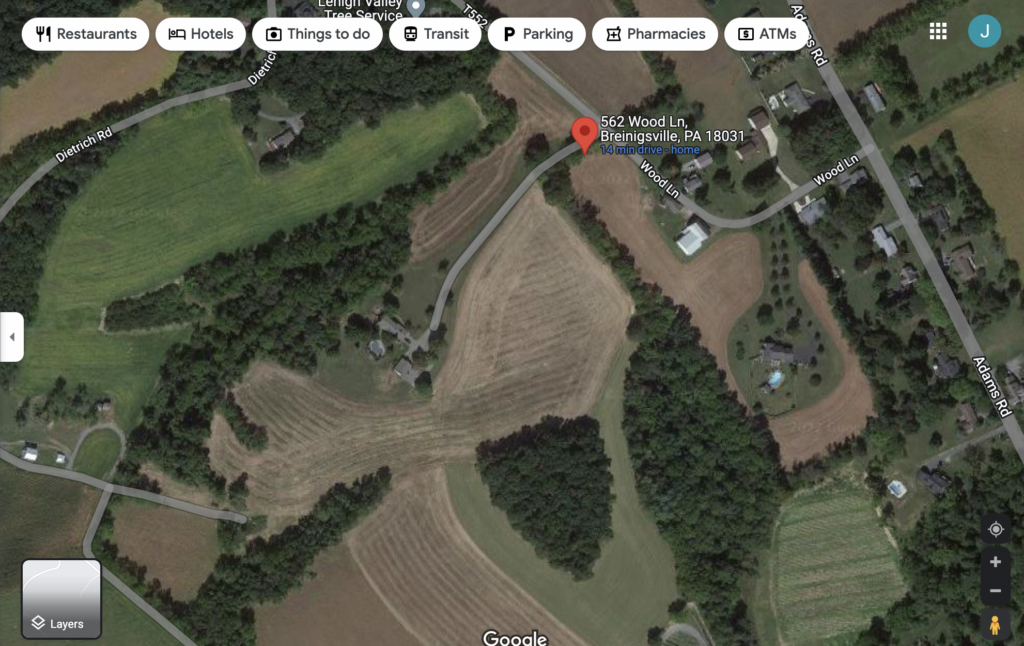
This place is extremely special to me because it is my grandparents’ farm. I’ve spent much of my childhood here and have always loved this view. The tree with the bench swing is actually the first tree I ever climbed. Every Tuesday growing up, I used to go to my grandparents’ house after school. And every time I was always in awe of how beautiful the sunset was. Their house sits at the top of a hill overlooking the Lehigh valley. This place is where my love for the outdoors began and I hope you can appreciate the simple beauty of the Pennsylvania countryside as well.

The ecology and phenology of Pennsylvania is not that different from Vermont. Many of the same trees are common in Pennsylvania like red oaks, maples (the one above is an October Glory). My grandparents farm also has an abandoned apple and peach orchard in the background of the pictures. They also have a beautiful sycamore tree in their yard. PA also has an abundance of white tailed deer and a growing beaver population like Vermont. I think the main difference between Vermont, the Burlington area especially, and my grandparents’ farm is the soil composition. Pennsylvania soil is extremely rich, loam soil, where as Vermont soil is a lot rockier and sandier. Agriculture is huge in Pennsylvania for this reason, so while Vermont is mostly forest, PA is mostly agricultural land, especially center and eastern Pennsylvania. The season transition from fall to winter happens a lot more gradually in Pennsylvania than Vermont. The cold air from the arctic jet stream doesn’t hit us as hard so our winters are much more mild. So Pennsylvanias phenological transition from fall to winter, while similar to Vermont’s, happens later and at a slower pace.

Featured

15 Minutes of Quite at Rock Point

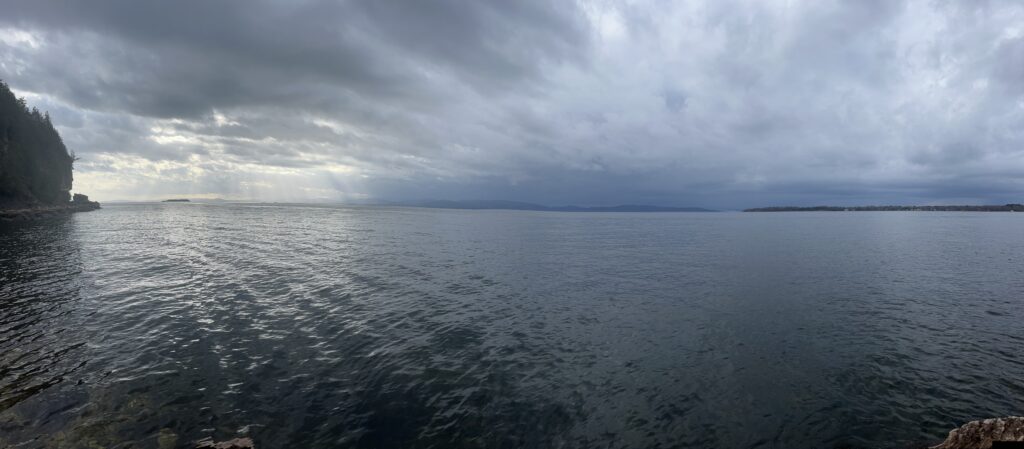
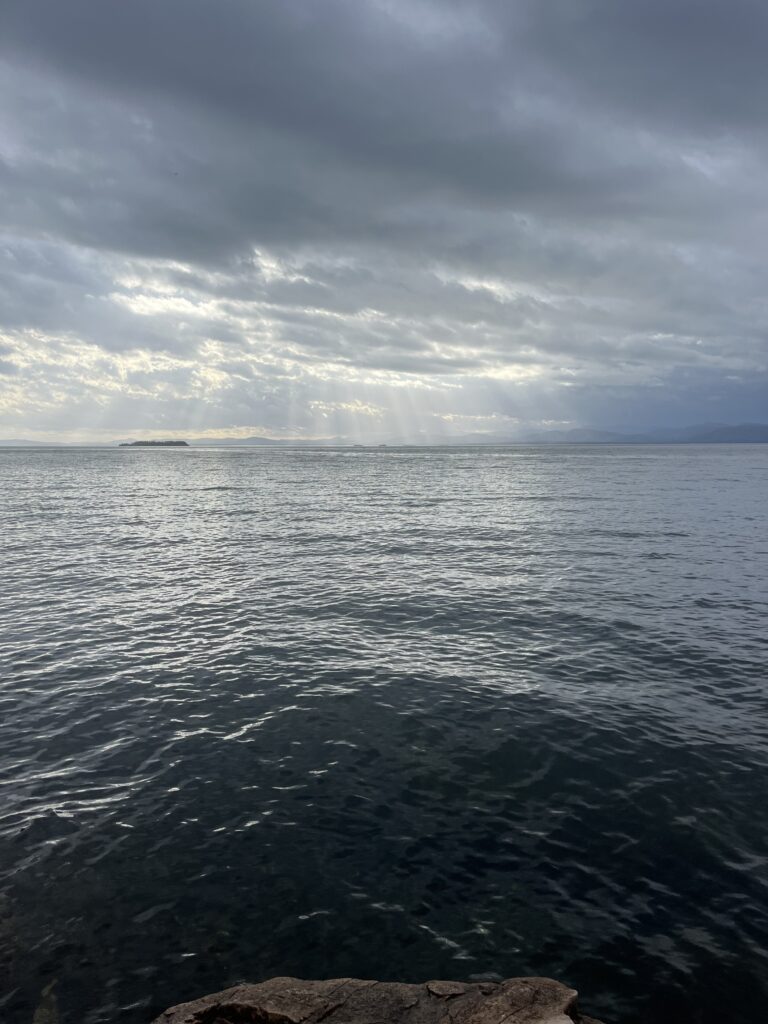
Something about the combination of water and a beautiful cliff-lined coast makes rock point such a unique and settling place to be. As I relax and take in the blissful tranquility of nature’s processes around me I feel completely at peace and grounded in my space. My “sitting rock” is a large dolostone boulder that fell off the reverse thrust fault. Its’s perfectly angled so that I can comfortably sit or lay on it to take in my surroundings. Clouds hover over the green mountains that span across the other side of the lake, with rays of sun shining through small gaps, reflecting brilliantly across the water. Rain is in the forecast in the next hour but as of now that couldn’t matter less as the perfect breeze whistles across the lake, cooling me off on this unusually warm November day (71°).

This welcoming breeze brings with it the melodic lull of steady waves crashing into my sitting rock. The tranquil rhythm of the waves is enough to lull anyone to sleep, and I almost fall victim to its comforting rhythm. As I look out over the water and listen to the crashing of the waves I realize thats really all I hear. There is no rustling of leaves anymore as they have all fallen off, there is no chirping of birds or splash of a fish jumping. It seems like despite the warm weather nature is ready for the silence of winter. Rock point is a place where silence doesn’t feel empty, but instead fulfilling and healing. The steadiness of this place provides me with a way to recharge and reset before the next hectic week.

15 minutes is a short time and apparently plenty of time for a rain shower to race across the lake. The distant clouds are now suddenly very near and the smell of rain is evident in the air. The breeze has transformed into a steady gust across the lake and the gentle waves have been whipped into a hectic frenzy. Rock Point is apparently ready for the hectic week too. My time to re-enter into the cacophony of reality has come and I must leave my little sitting rock until next time.

The only changes to Rock Point is that most of the foliage has fallen off leaving barren trees except for the Northern White Cedar, which keeps its needles all years. The temperature of the water is also much colder and I do not suggest dipping your feet in for a swim anymore.

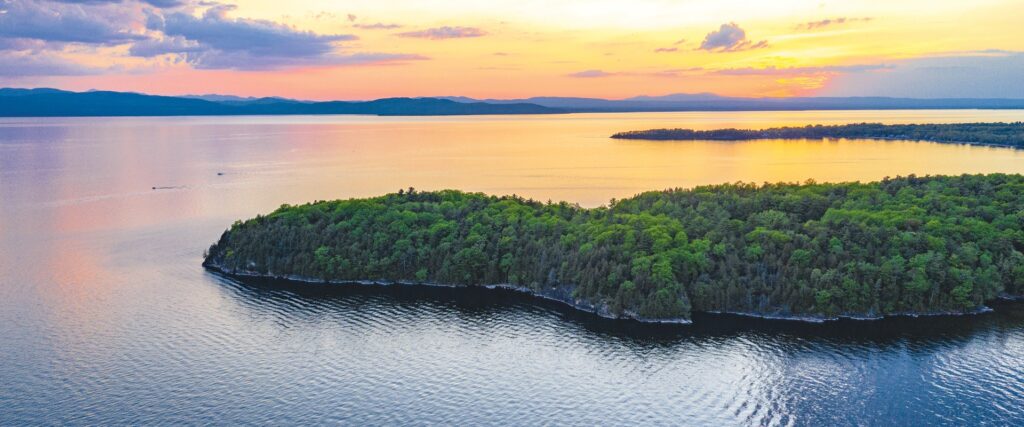
Birds Eye View of my Spot
Featured

Josslin Muto – Rock Point Phenology

Welcome to Rock Point! I Hope you stick around to see its amazing Phenology!

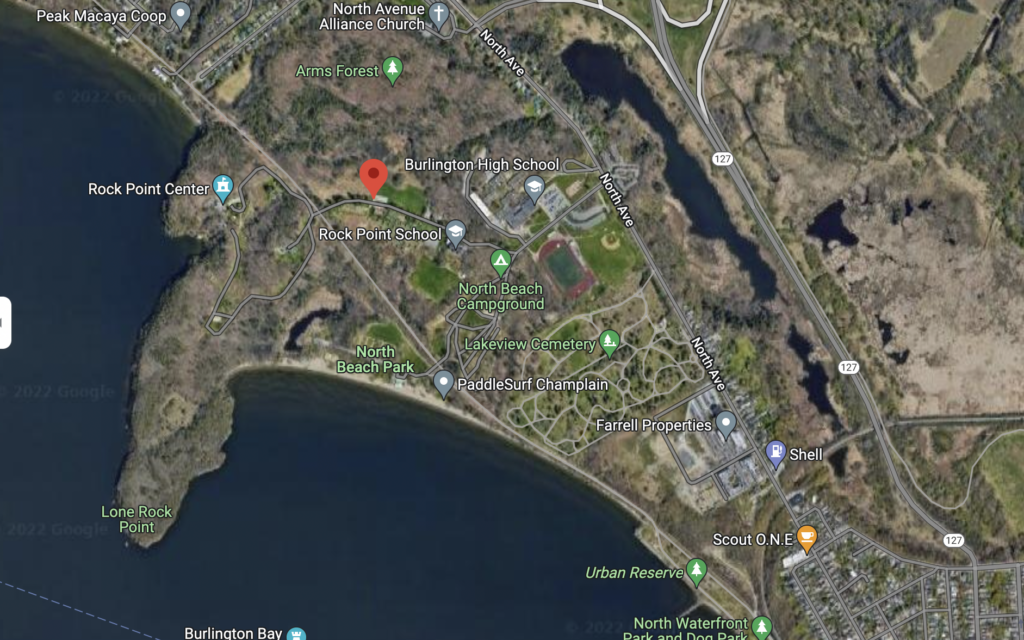
I have chosen to study and observe a place called Rock Point. It is located at the end of a peninsula that juts out into Lake Champlain, right at the end of North Beach. A very popular destination for locals, tourists, and of course college kids. Rock Point is a wonderful place to explore, marvel at the power of shifting rocks, and of course, jump off some! Rock Point is the first place I visited off campus in the first few weeks of school. I went cliff jumping with a bunch of my new friends and had so much fun exploring a new, beautiful place. I am so excited to see Rock Point’s beauty in every season over the next several months and hope you will join me!

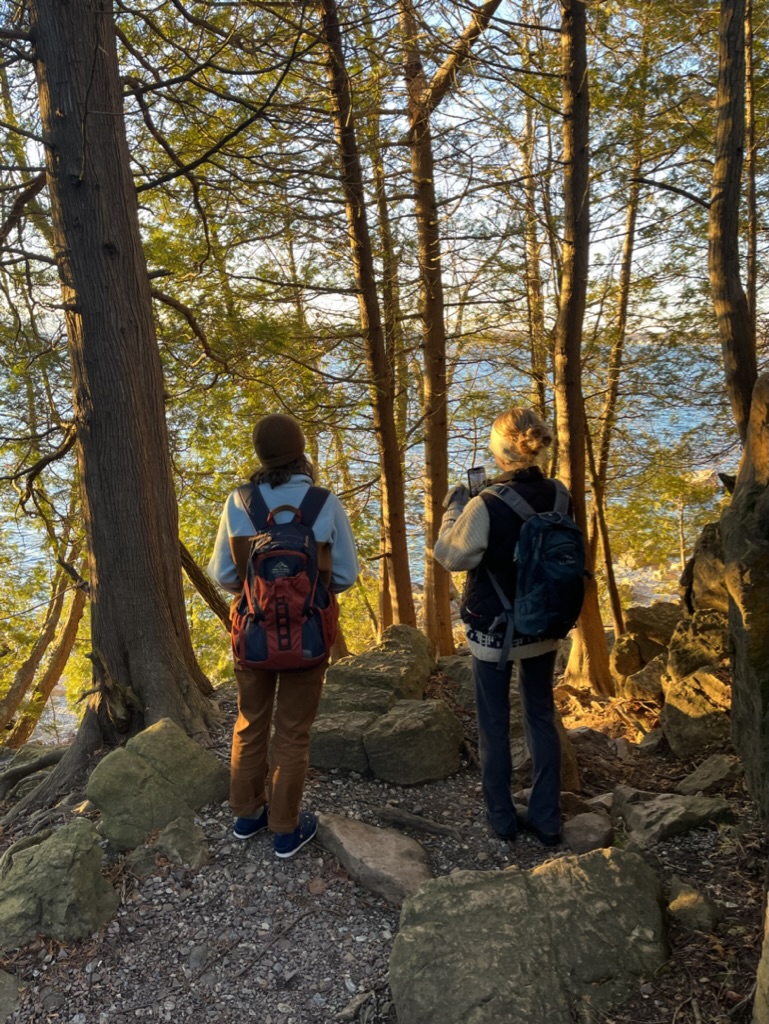
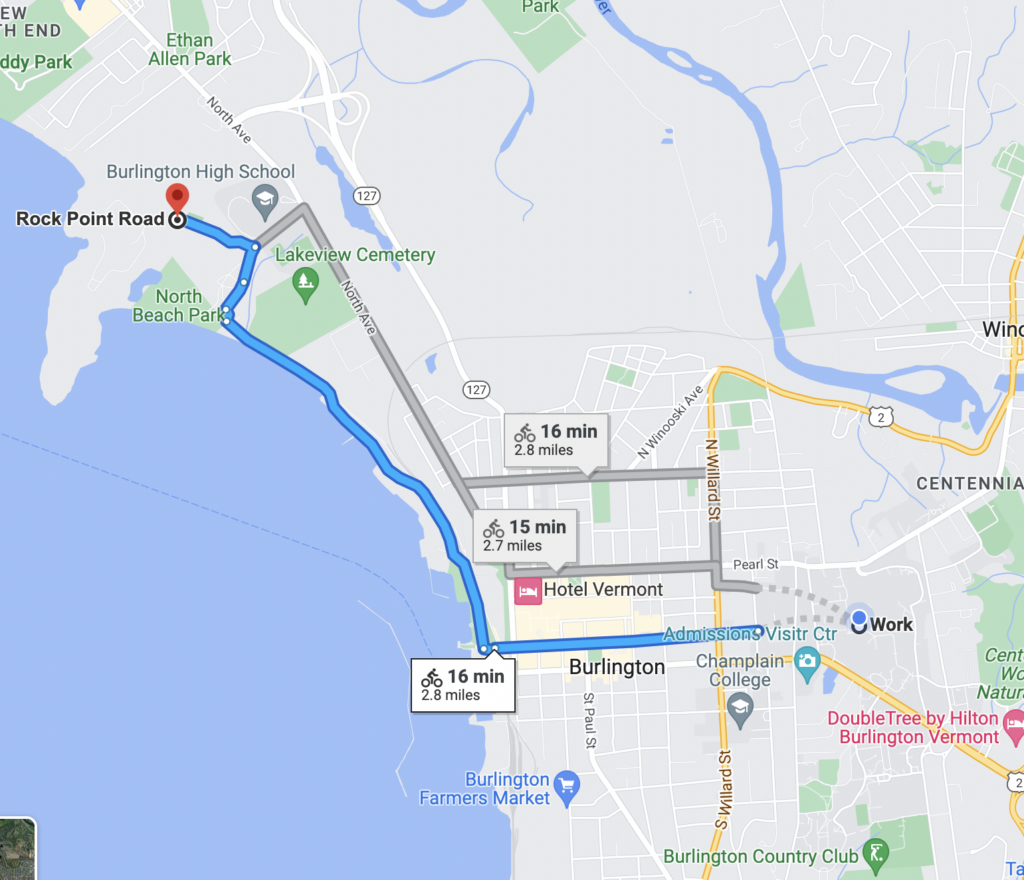
How to Get To Rock Point: There are several ways to get to Rock Point from the University of Vermont. The first is using public transport, bus 1 takes you to the transit station in Burlington, from there transfer over to bus 7 and get off at the Burlington High School stop. From there you can either walk to north beach and take the path all the way at the end of the beach or take the trail past the Rock Point School. Riding a bike from the Davis Center also only takes about 20 minutes when using the waterfront bike and walking path.

Types of Woody Vegetation

There are many unique trees and plants found on the bluff at rock point. This is due to the lake affect weather that leads to slightly warmer weather and a longer growing season. This results in a diverse bluff community.

  • Northern White Cedar
  • Eastern White Pine
  • American Beech
  • Sugar Maple
  • Northern Red Oak
  • White Oak
  • Paper Birch
  • Buckthorn
  • Red Pines

A Walk through Centennial

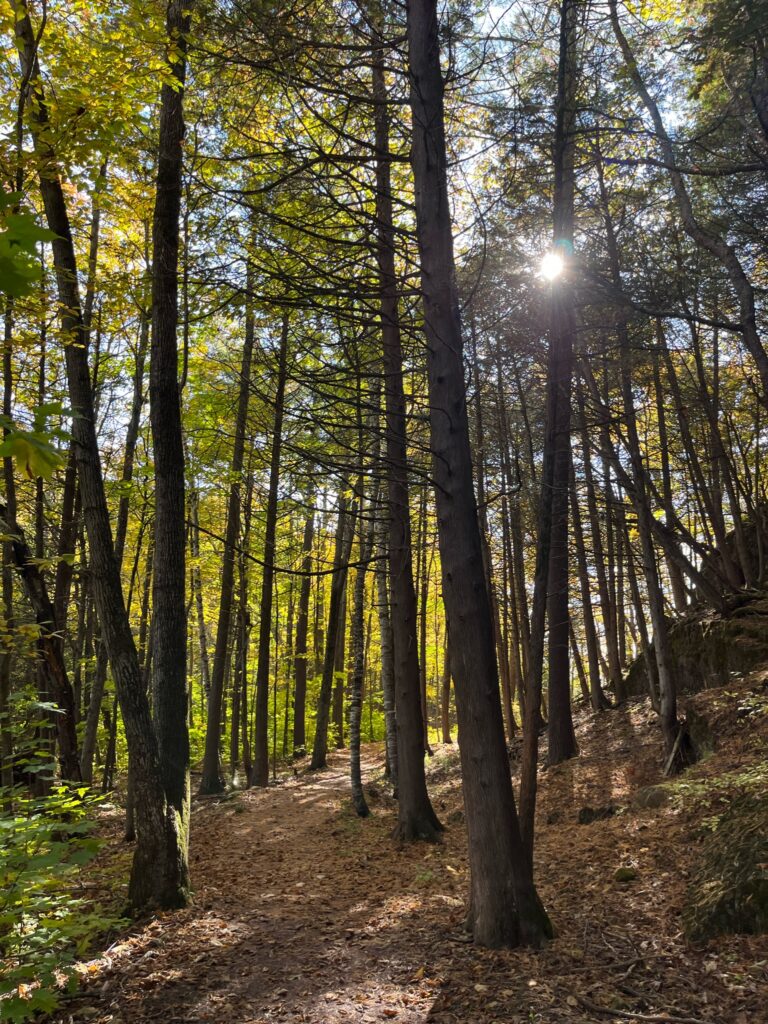
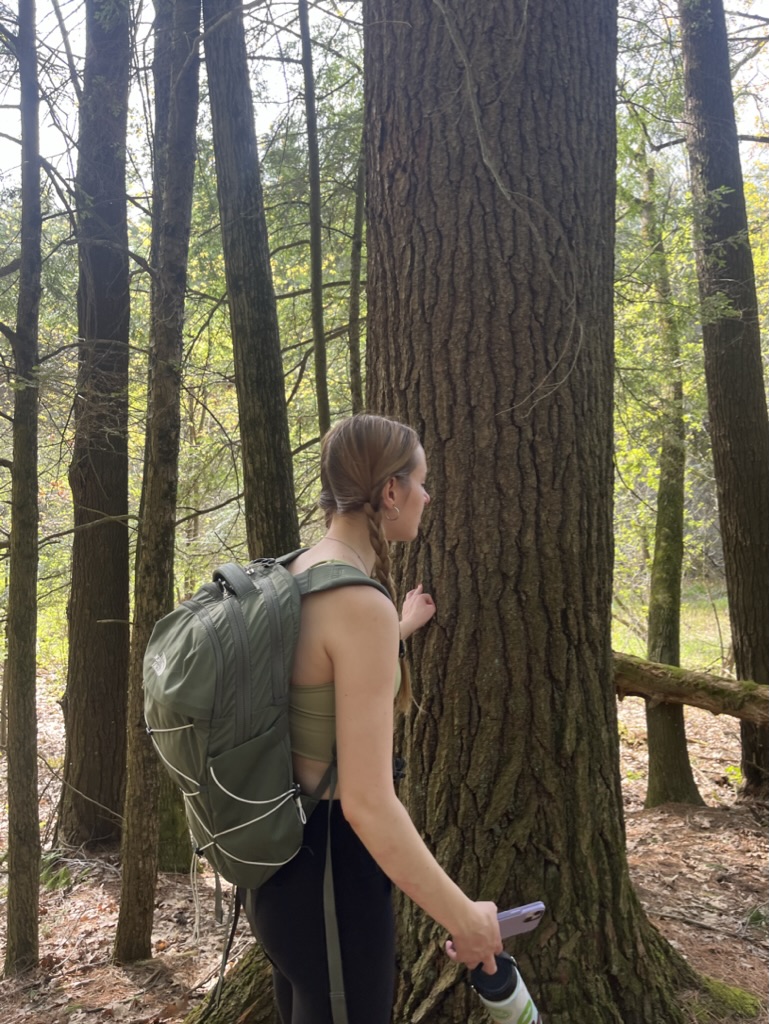
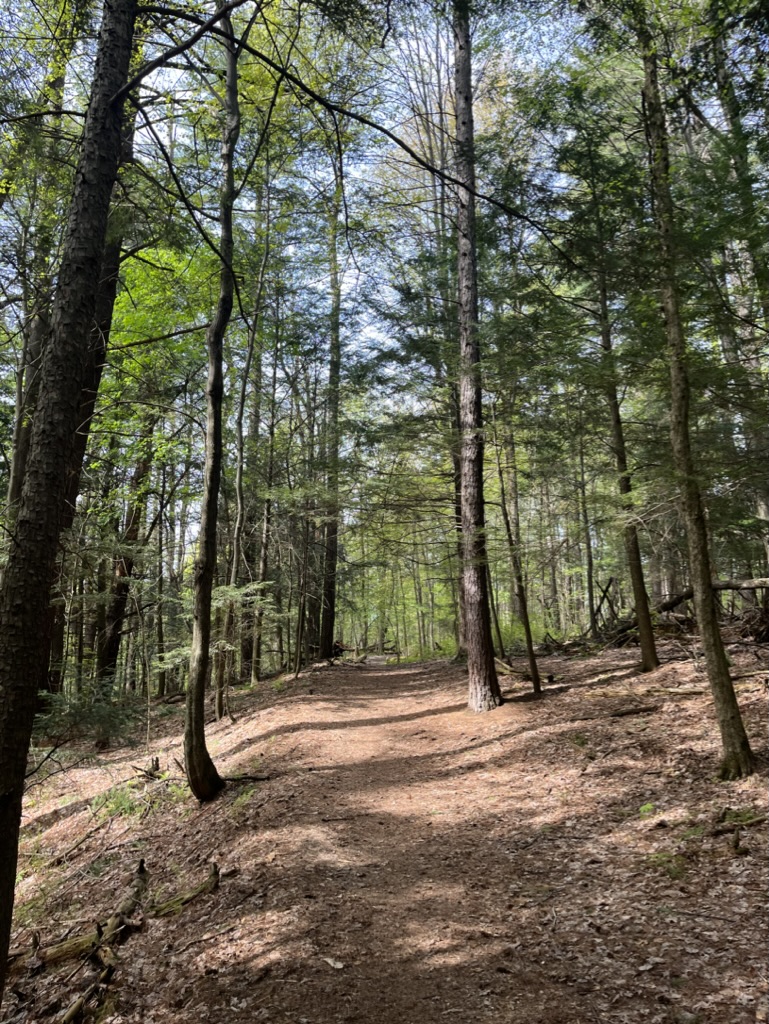
Unfortunately I missed the Bioblitz because i thought it was continuing through all of last week, not just the previous weekend. So to make up for missing the Bioblitz i decided to go on a walk through Centennial Woods. It was a full circle moment for me and my friend Becky who also came with me. At the very beginning of the first semester the first big outing day with the whole friend group started at centennial. All our new friends came with us to do some tree identification, our first lab assignment in NR. Now we are finishing off our year in Centennial with tree, plant, and track identification.

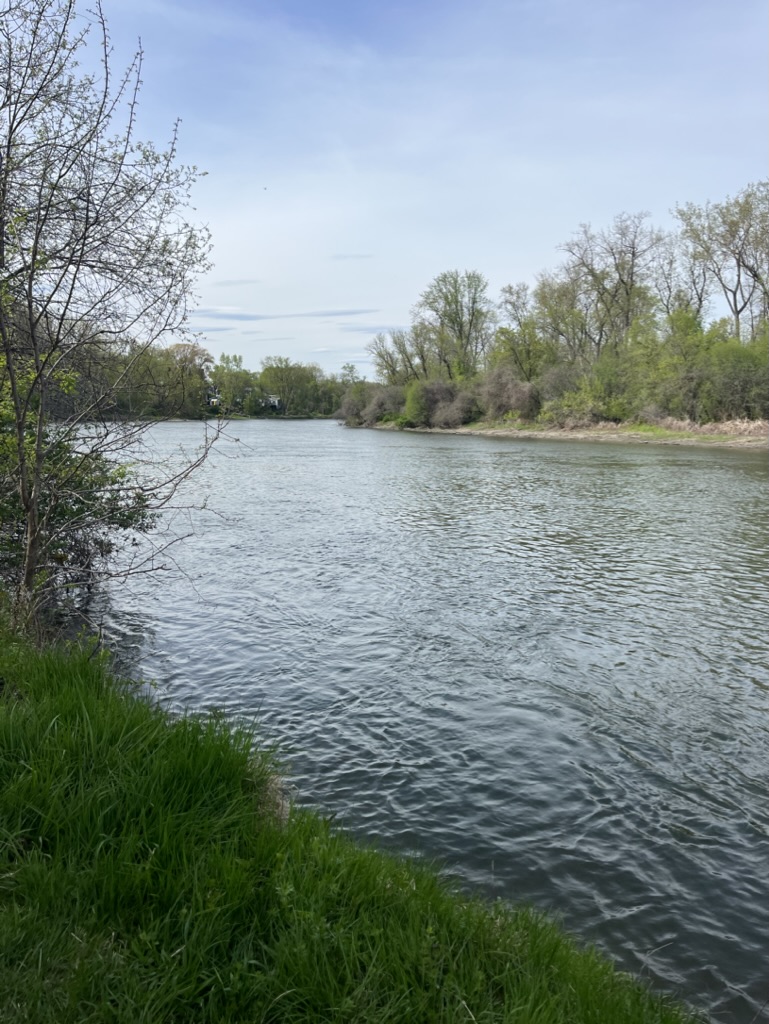
This excursion through centennial we diverged onto a different path than the one we usually take. We ended up exiting centennial across the street from the Winooski river. We decided to appreciate our watershed and took a nice little break on the bank of the Winooski as we reminisced about our first year in college and how quickly it flew by.

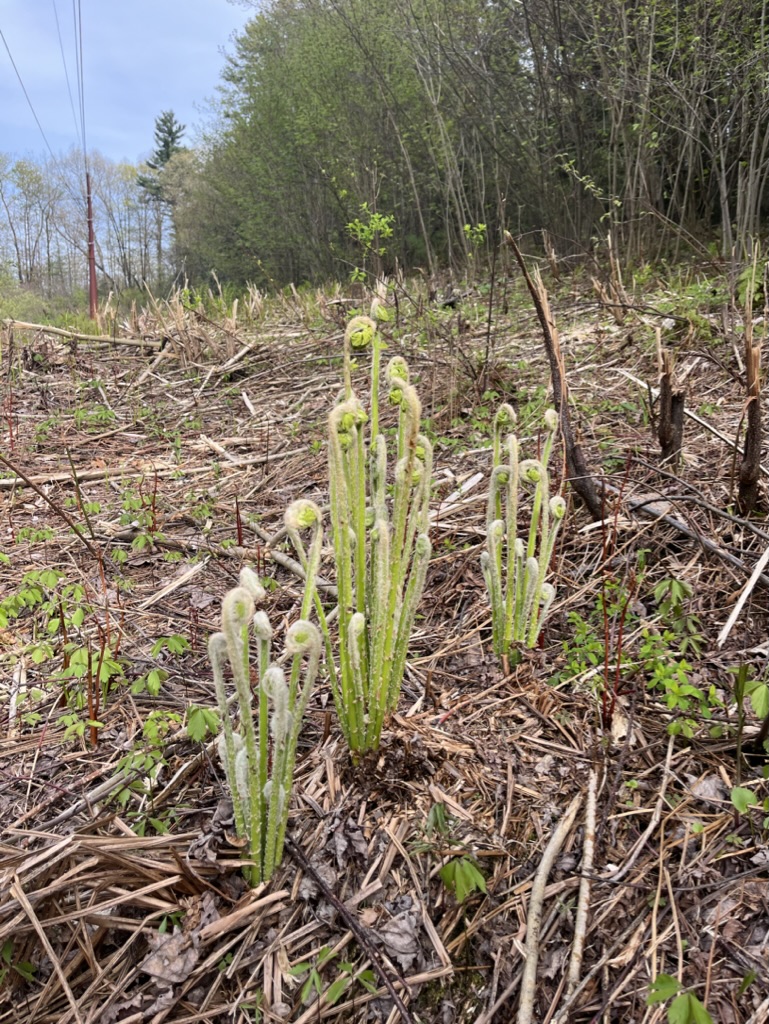
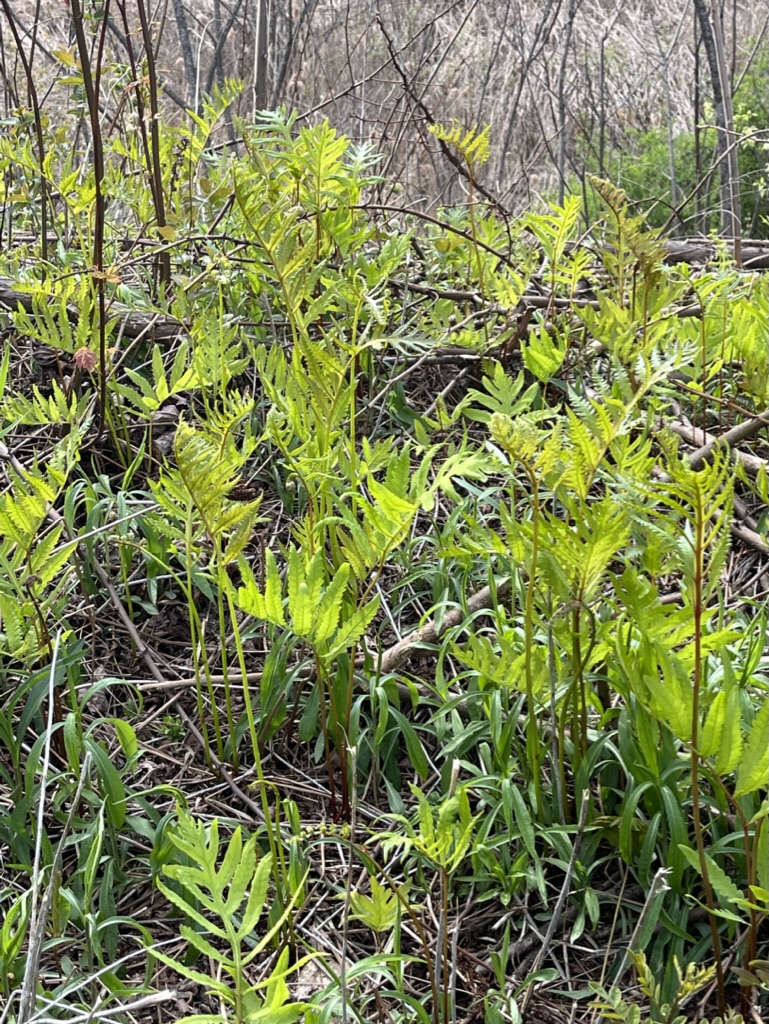
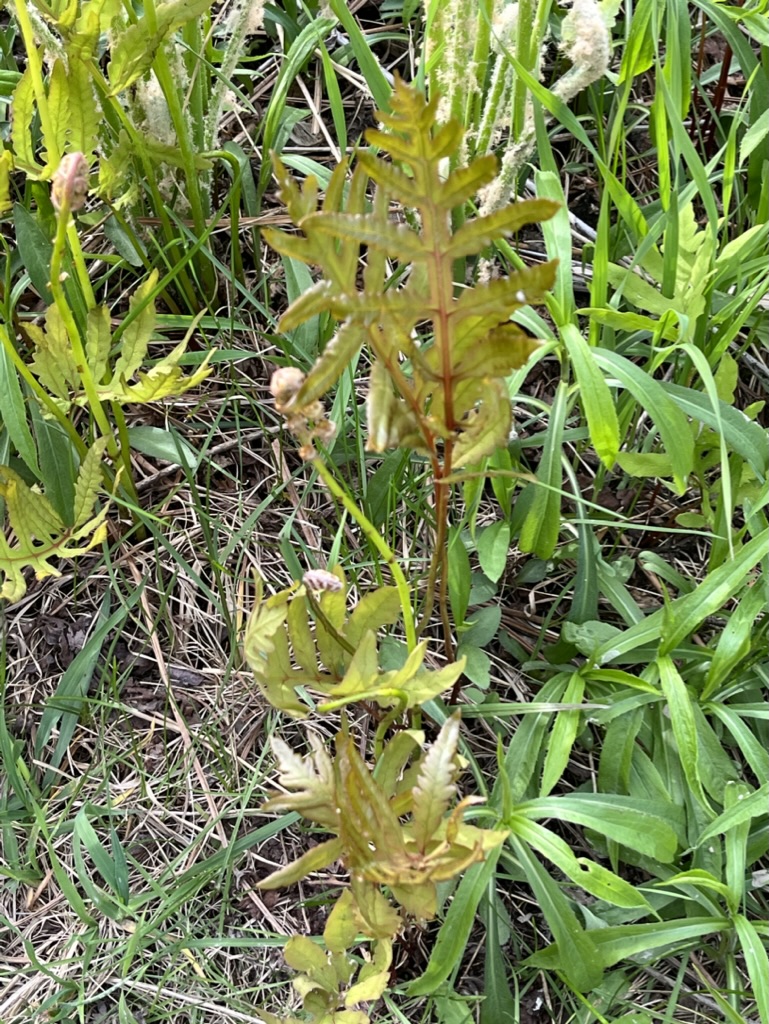
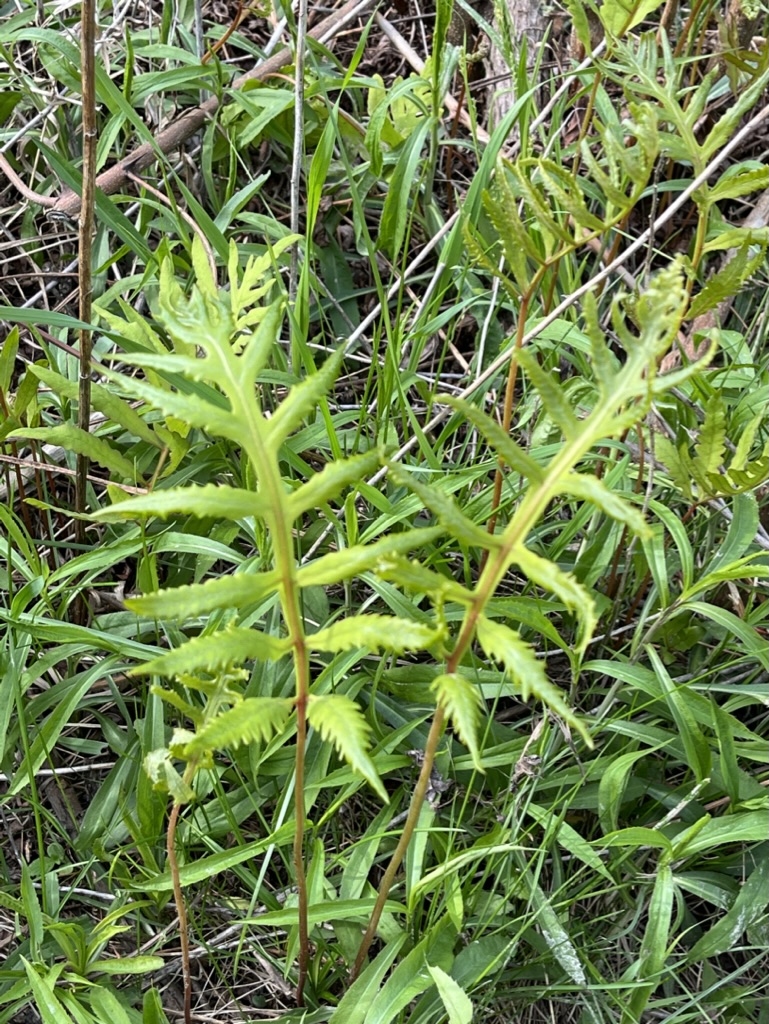
By the river there were a few interesting plants that we used seek to identify and then added to inaturalist. One of the species unbeknownst to me at the time, was fiddleheads. There were a few patches of them growing by the river.

fiddleheads (interrupted ferns)

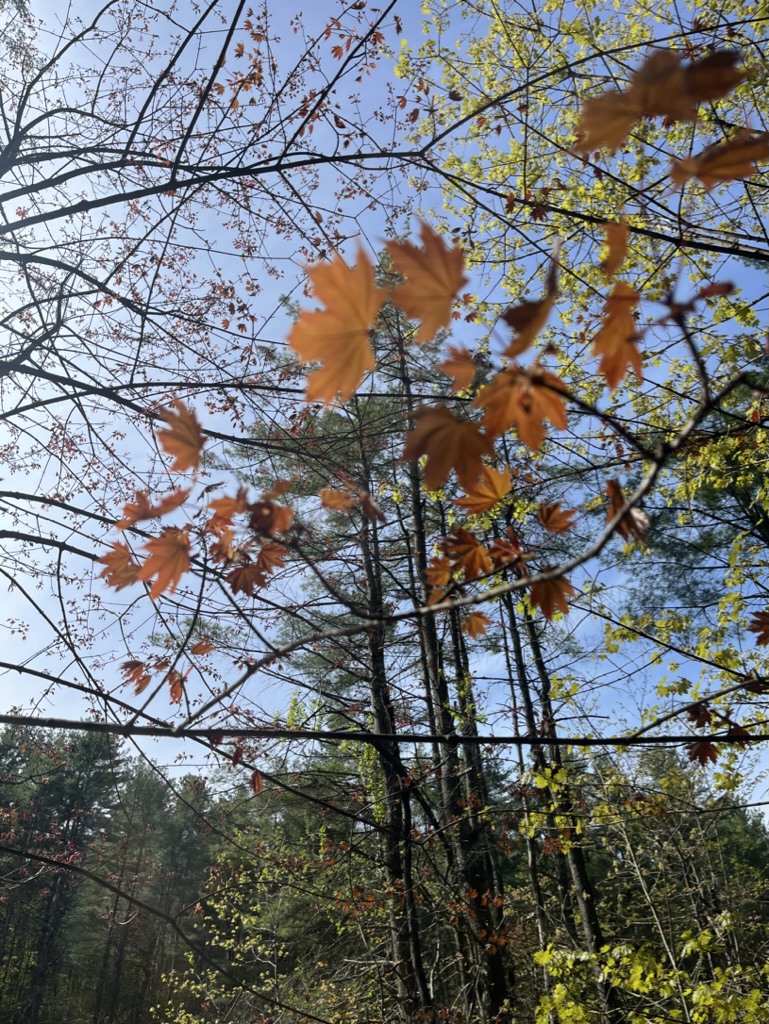
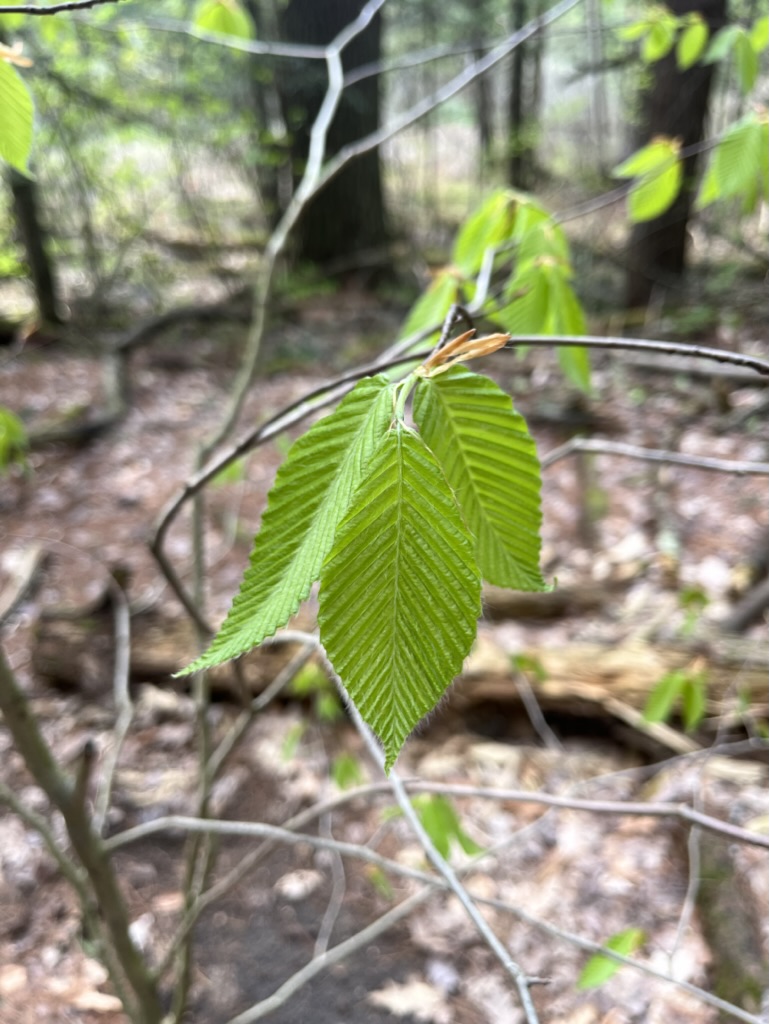
During our walk through Centennial we saw many of our 22 tree species from the first semester. There were red maples, sugar maples, white pines, oaks, beeches, and basswood.

We also saw some interesting ferns going through the “wetland area” called sensitive ferns. Apparently they are very sensitive to frost and as soon as frost touches the leaves it withers up and dies. Its interesting that a plant like that would make its home in Vermont since its such a cold state with a lot of temperature fluctuation.

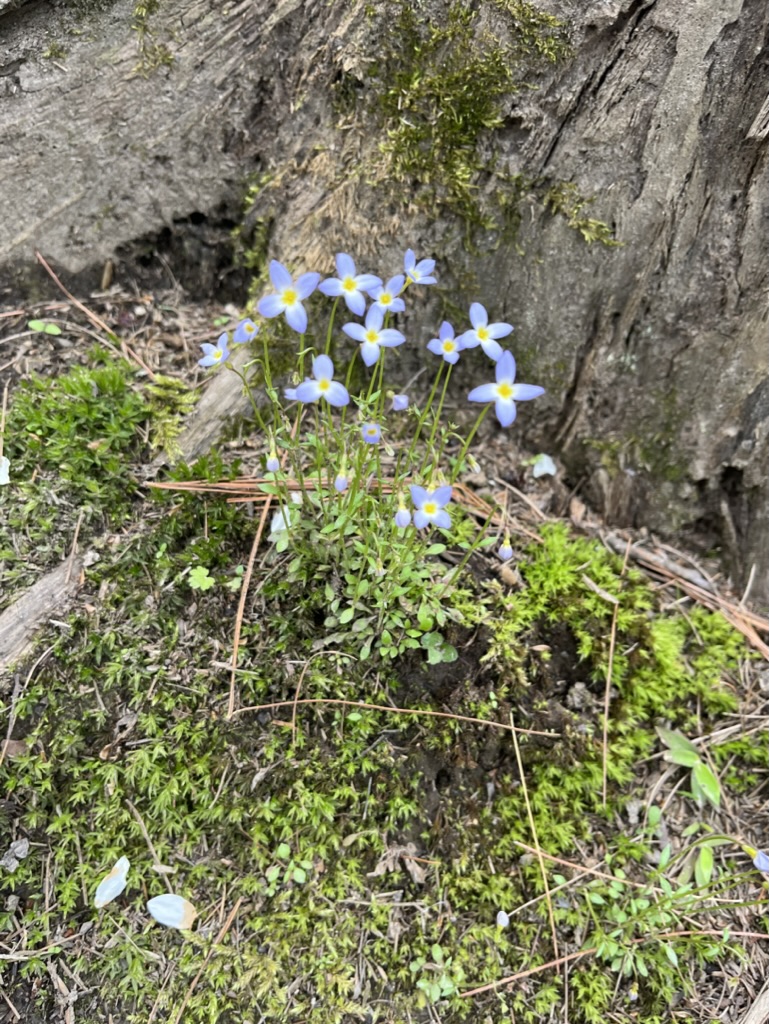
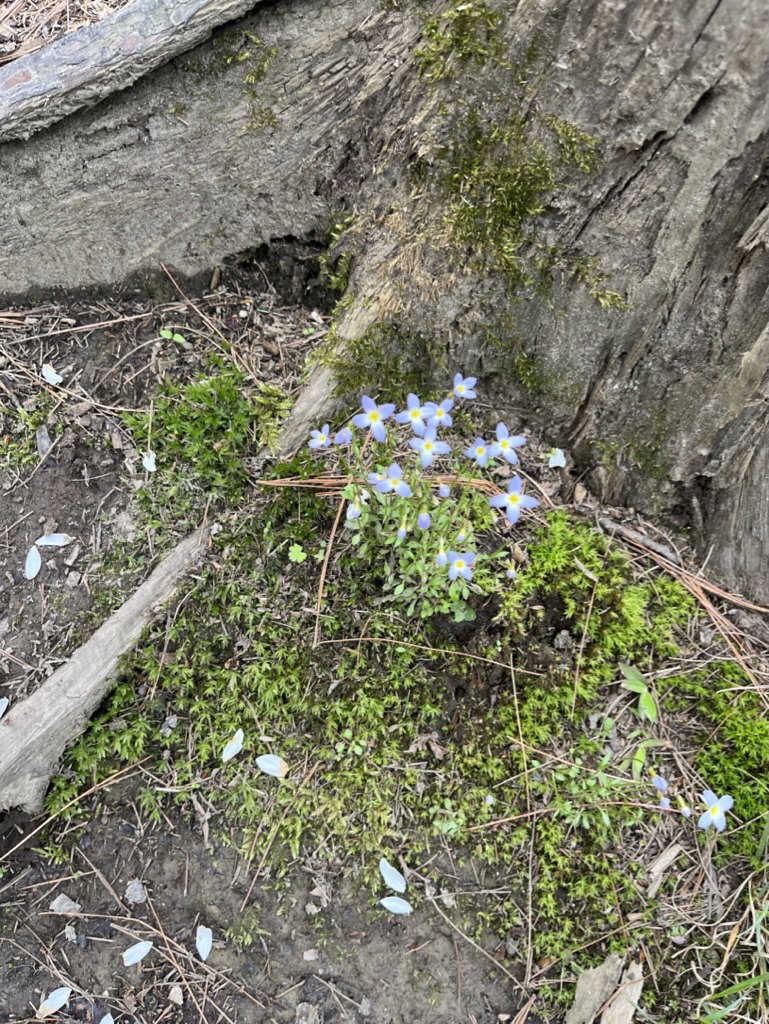
My favorite foliage to see were the little wildflowers growing in the crevices between stones or roots of trees. I love seeing how some plants can adapt and thrive in the most uncomfortable of looking places. The juxtaposition of a beautiful, delicate flower peeking its way through a rough, solid rock is one of my favorite sights to see in nature. The species I identified were Quaker Ladies.

This year has been so much fun and I have really enjoyed my time in NR 1 and 2. This blog has brought me to so many interesting places and made me really open my eyes and take note of the ecology all around me. I want to continue the tradition of going on a hike every week or so in the summer and identifying plants and animals around me.

Skip to toolbar