
Final visit to my phenology spot (for real this time).
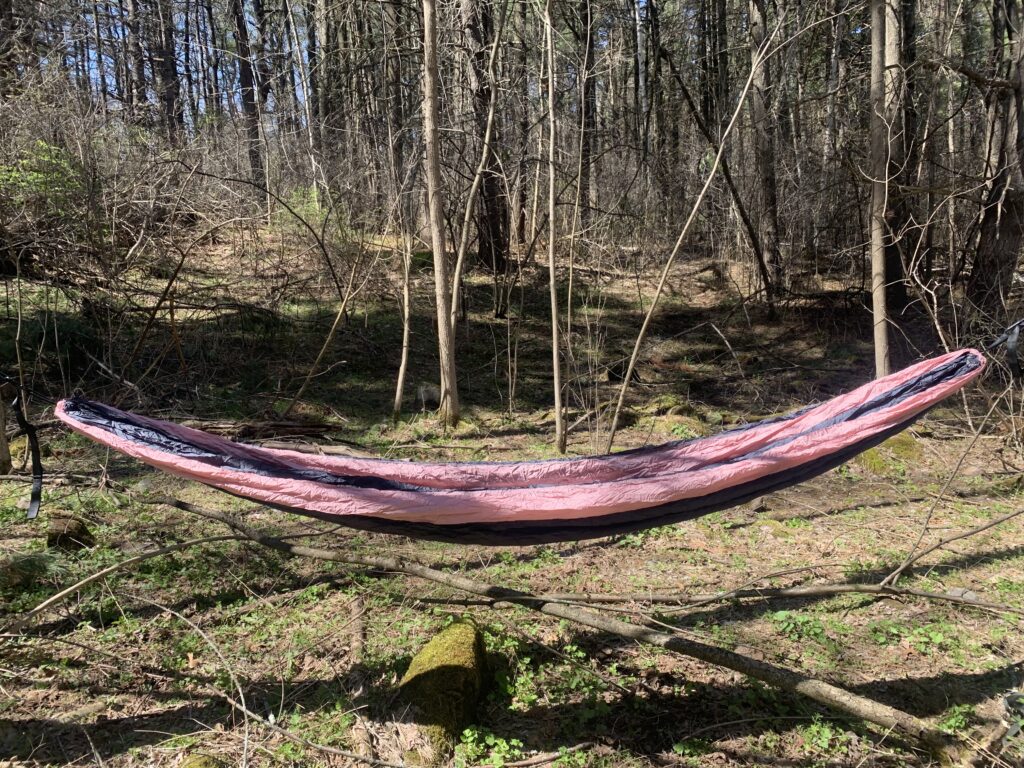
So much unfolding at my site this time! Like I said in my previous posting, I set up my hammock and spent some time in my phenology spot, as the spring weather was super enjoyable.
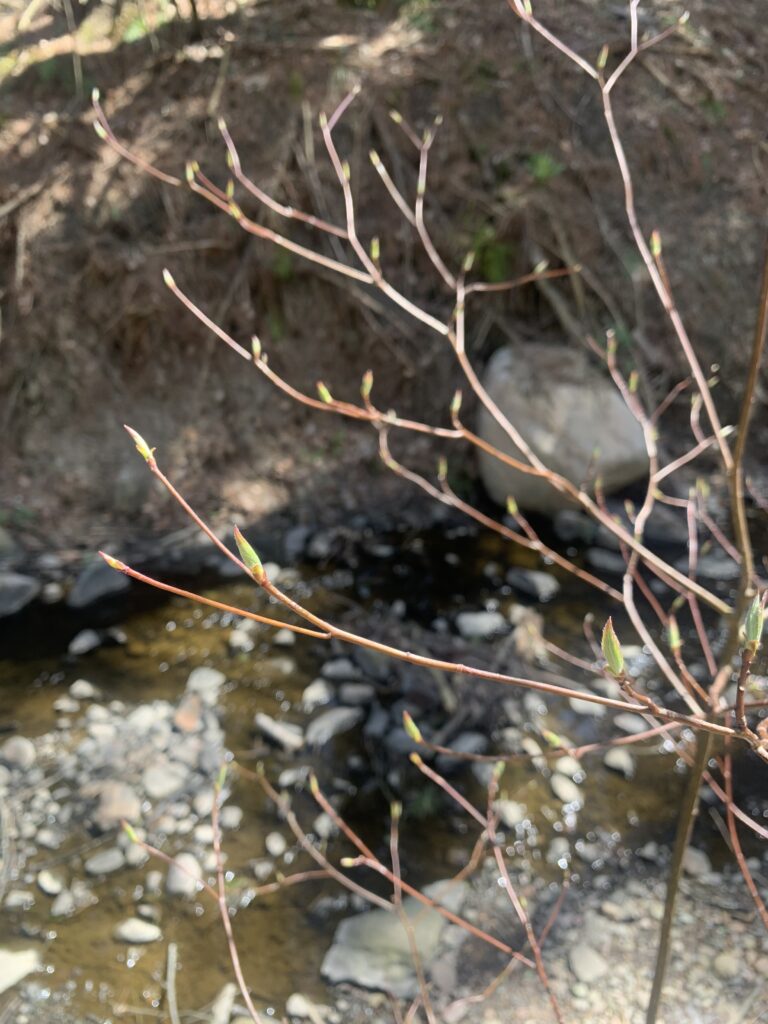
There are no leaves on the non-coniferous trees yet, but buds have formed. Below is some buds from a tree at my spot. Based on the tinted tips and shape of the buds I think this is a yellow birch tree.
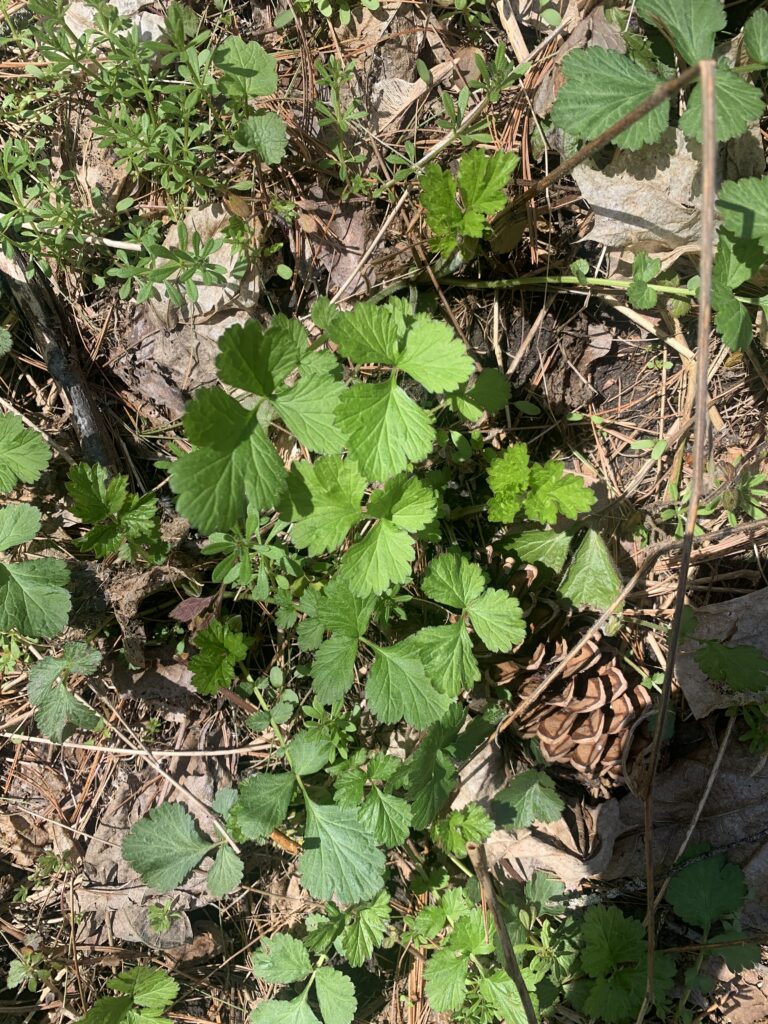
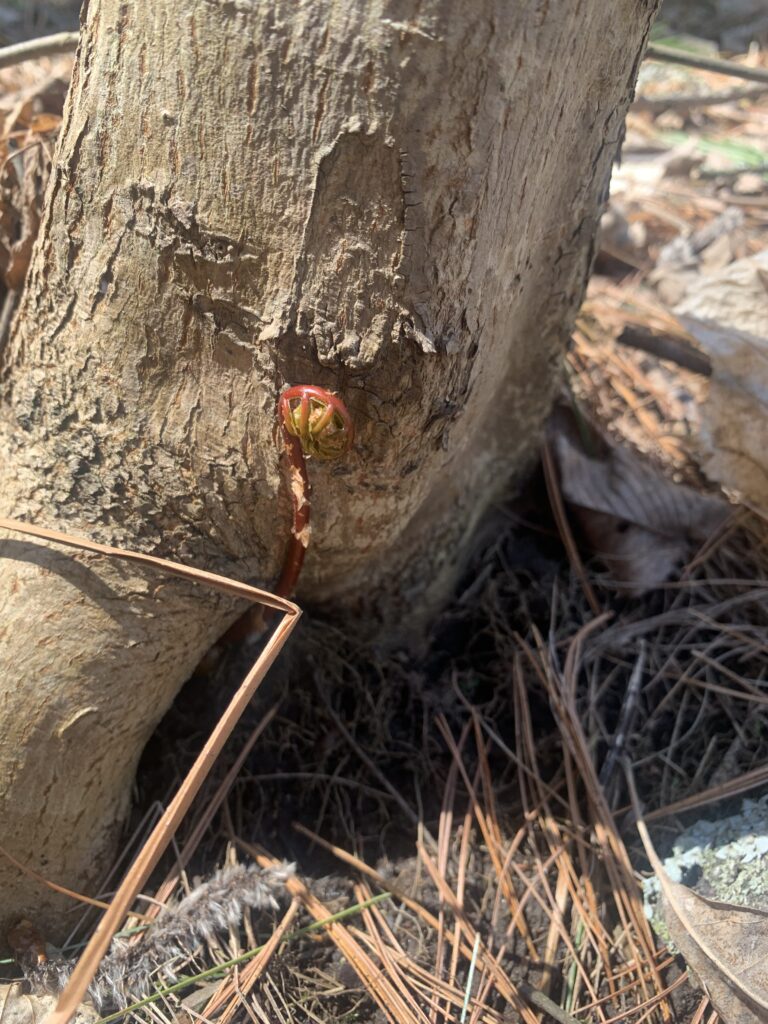
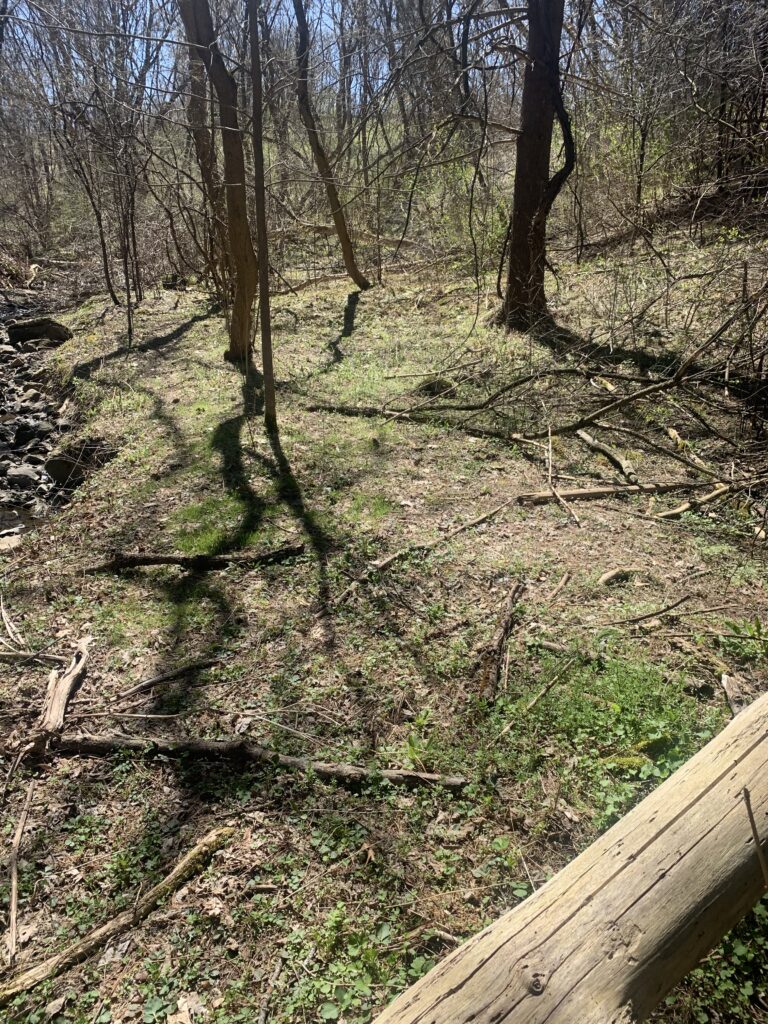
Lots of greenery in the area, which was not present in my last visit. A lot of the floor of the forest is covered in some of these common plants, such as garlic mustard and fiddleheads.
The ground was more solid than I thought it would be. I had anticipated more mud by the river due to snow melt or recent rain we had last week. Overall, I noticed a lot more green in the area, indicating some phenological spring changes.
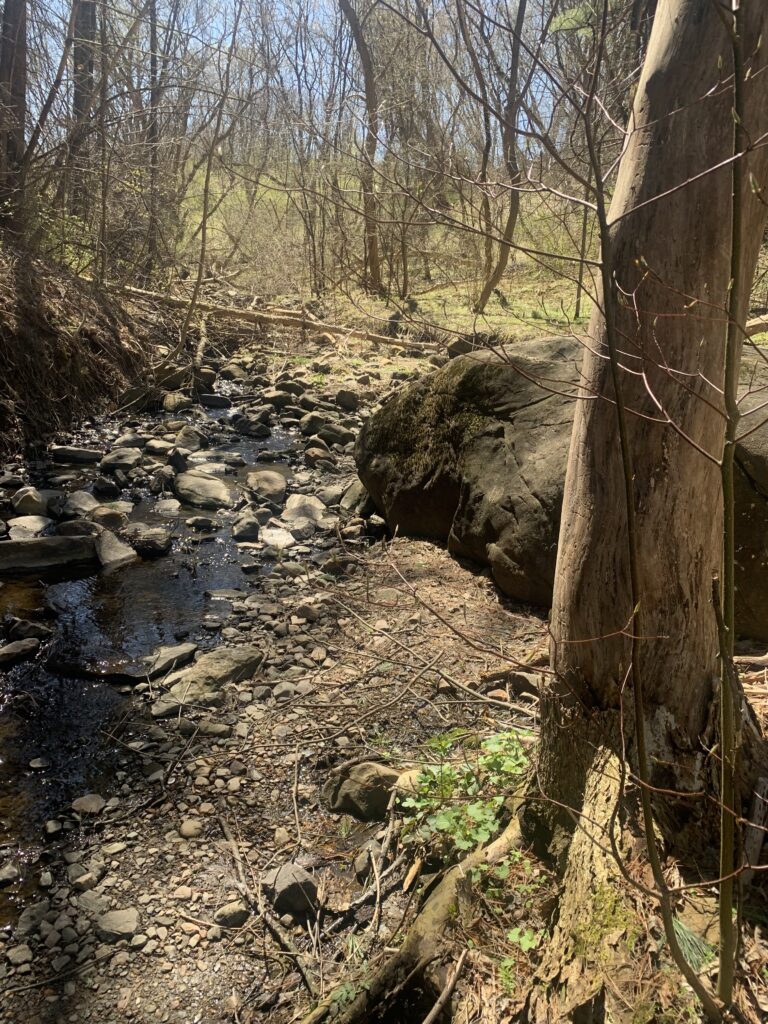
The water was free flowing and no longer icy like when I visited last in February.
While sitting I heard a woodpecker feeding, and I saw the holes left from them, which inspired my species interaction diagram.
Nature and culture are intertwined at my place. Not only is Centennial woods a part of the culture of our school, it also was once land belonging to the Abenaki people. There is evidence of tool making found in Centennial woods that represented traditional Indigenous practices. Their land use perspective clashed with Euro-American settlers, who drove them off the land and converted for agricultural purposes. It is now a re-naturalized area in possession of The University of Vermont.
I feel that I am a part of this place. At my last visit I spent much more time there (about 2 hours) than I normally do. I spent time truly just being in the space, and reflecting on the year. I visited this spot in the warmer fall months with my roommate, then again through ice and snow, and now during spring while the buds form on the trees. I truly have watched the seasons unfold and plan on returning to my spot for enjoyment in the following years.