
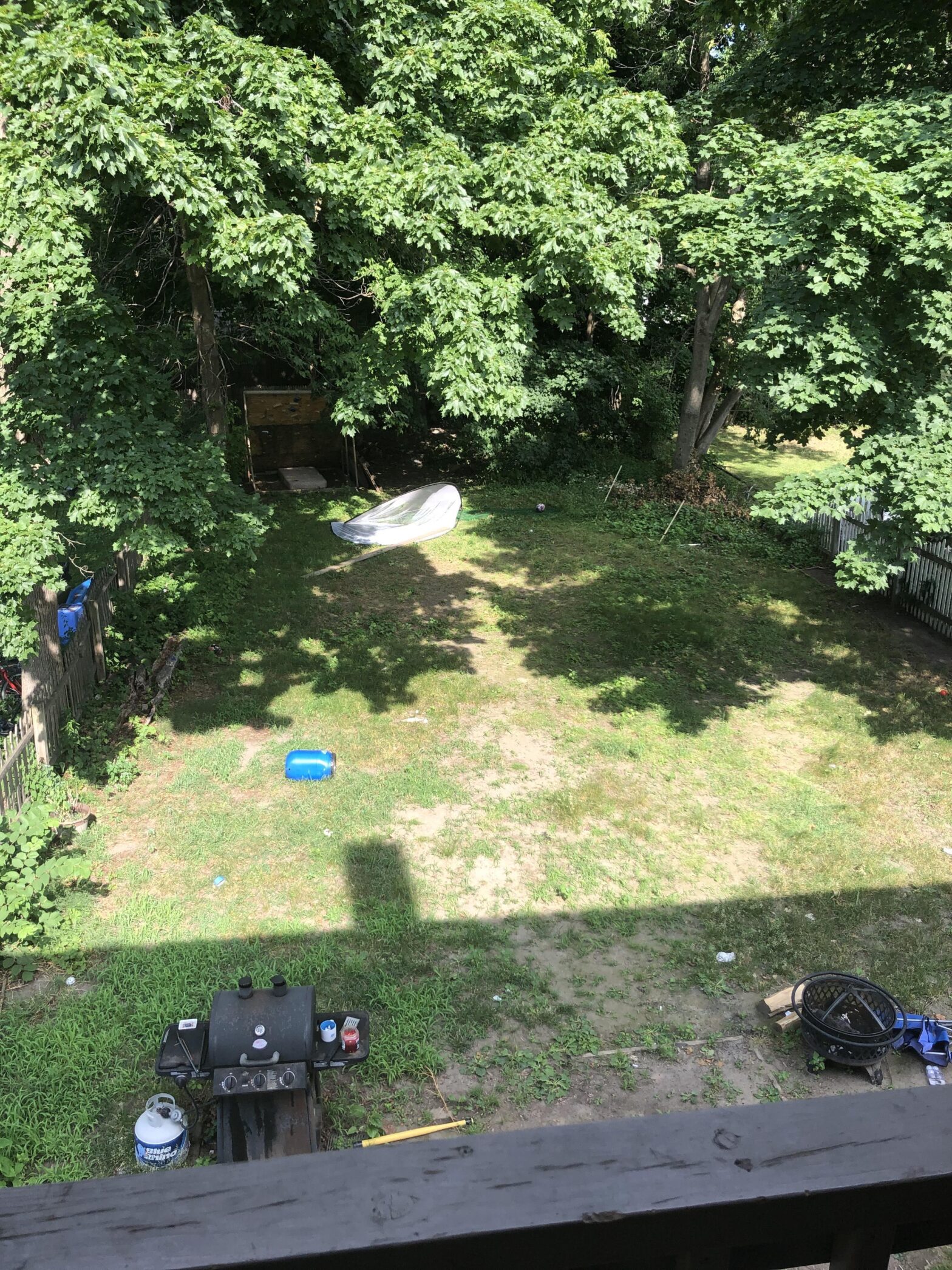
Today is Friday, June 6th, at 2:30 in the afternoon and it is a sunny and warm day here in the old north end. My site for this journal is a backyard on South Willard St. in Burlington. There are various insects crawling on the ground, from ants to ladybugs and various types of caterpillars. There are two co-dominant sugar maples that provide excellent shade cover for the yard as well as a group of smaller striped maples closer to the back. Several species of non-wood plants also litter the ground closer to the back. For animals various song birds visit the surrounding bird feeders, including chickadees, tufted tit mouses, and hermit thrush. There is also track evidence of raccoons and squirrels who also like to use fences as sort of highways in between yards. Some questions that I came up with while in the yard are: What trees did these fallen logs come from? Why are the squirrels so fat here compared to other places? How acidic or basic is the soil which causes spotty growing? How well have the various plants observed adapted to growing in more urban areas? Why do squirrels here choose to mover along fence lines rather than through trees? Where do the trees get the water it needs? When do the animals in urban settings feed? How does being in close proximity to humans affect certain animals? How much have the diets of these animals changed? What is the rate of regeneration in certain urban areas? Why does it look like some species of plants are thriving while others aren’t found? The question: why are the squirrels in urban areas larger than ones in rural settings? The answer, simply more resources. In an urban setting, in close proximity to humans who throw away ungodly amounts of food, the eastern grey squirrel has moved into cities very recently. But when that move came the diets of these animals changed too to include the food waste that gets thrown out at the end of everyday. Over time, even as the numbers of a given population may vary, the average size of the grey squirrel did increase as they became more used to the urban settings. (Etienne, Benson: Urbanization of Eastern Grey Squirrel in the US)
To wrap up the first entry, this spot is a welcomed escape from the woods which has now become my office and my apartment.It always amazes me to see how much life can exist in such a small area, even if it is relatively close to other people. Something that caught my attention from when I was there was how the squirrels were moving from one place to another. Back where I’m from the squirrels used the tree tops whenever possible to move across the forest and now these fences are almost acting like highways that allow them to move in a straight line. Next time I think a closer watch as to what their end destination actually is will provide some more answers.