Feeds:
Posts
Comments

Bioblitz!

Howdy y’all, and happy Bioblitzing! I had a lot of fun –more fun than I thought I’d have– out in Centennial Woods near my phenology site visiting one last time, and I brought my good camera so I could take some pictures for the Bioblitz. For starters, it was such a nice day; it was cool, maybe low fifties with a little wind, and I couldn’t have been happier to be outside. As I entered the woods, I pulled my earbuds out of my ears, took the lens off my Canon, and started scanning what was before me with my eyes and ears. It was engaging and kind of exhilarating; I’d hear a call and whip my head around to see what was there, and that’s what led me to my first find… a gorgeous Pileated Woodpecker maybe sixty to seventy feet up in a dead pine tree.
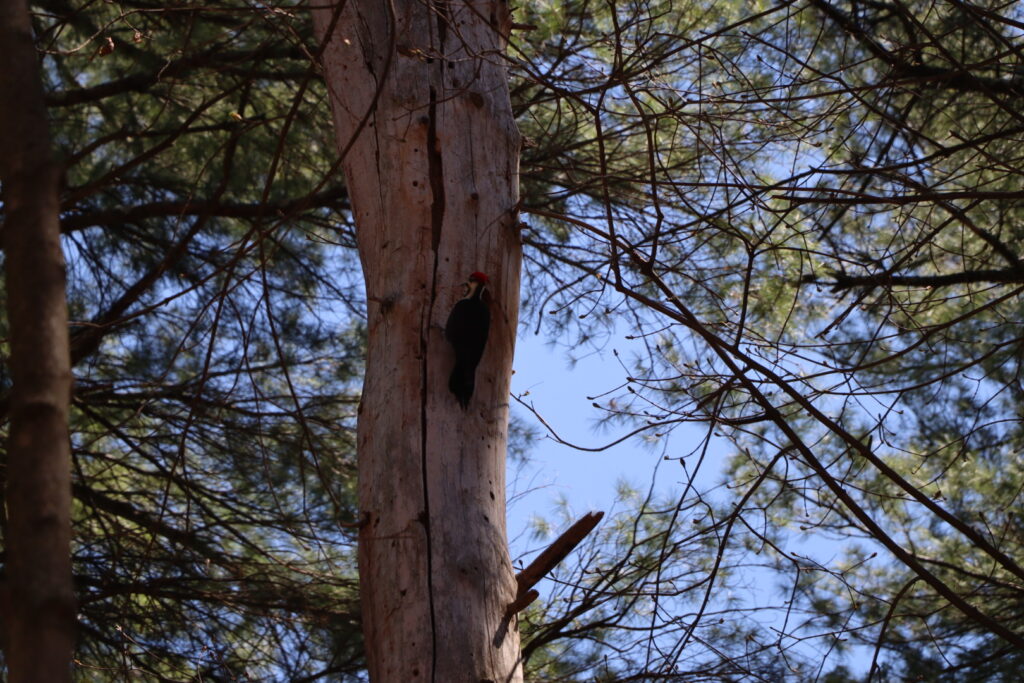
These guys are always so special to see.

After that, I slowly made my way to my phenology site which didn’t have much in the way of wildlife, and while I love my trees –Eastern Hemlocks especially– I was looking for wildlife. Not too far from my site, the melted snow had exposed the beaten-down grasslands and the brook, so I made my way over there. The first thing I noticed when I stepped up to the Brook was little fish darting around in the water, I took my best guess when entering them into iNaturalist, but I’m still not sure.
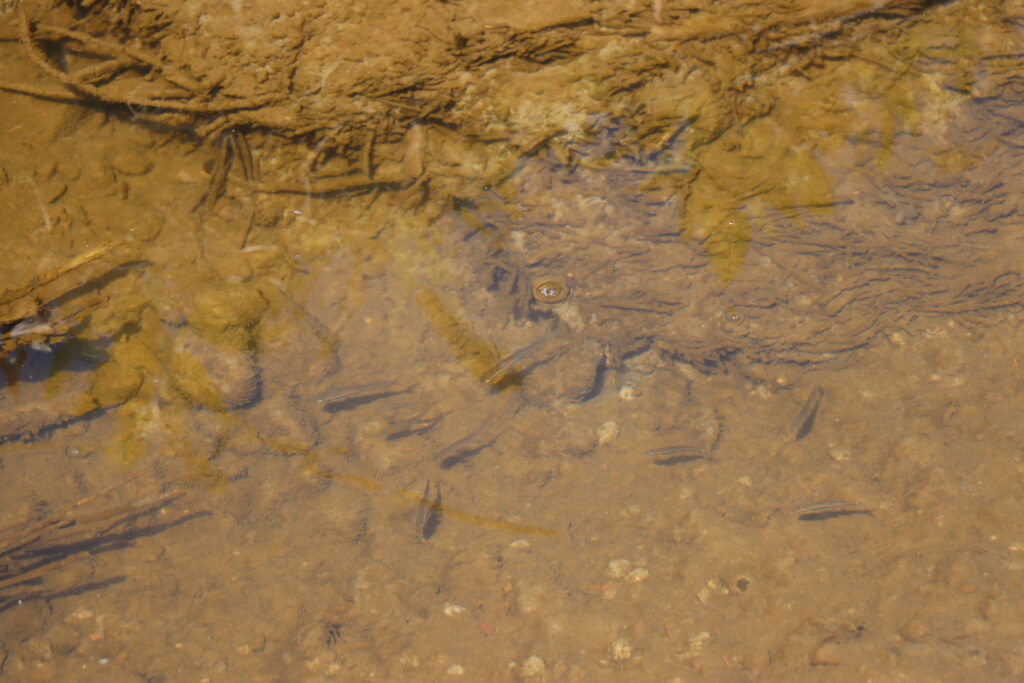
My best guess was Eastern Blacknose Dace, but I’m open to other suggestions!

Another find from the Brook was a few little guys I’m used to seeing in literally any body of water back home: water bugs!! This little dude reminded me of home, and so I got more pictures of them than I think a normal person would take of a water bug, but here ya go!
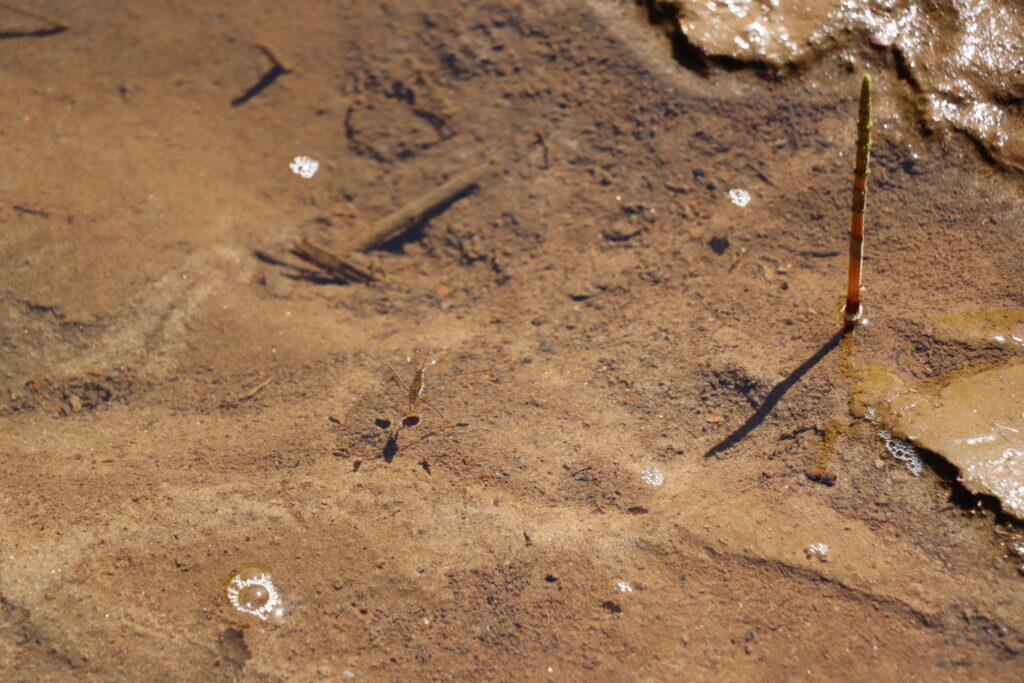
Technically this is called a Common Water Strider via iNaturalist

A got some very common species like a common fly and a nice pair of Mallards, but on the way out, a bird flew right over my head and landed on a tree not too far from me. I was preparing to put my camera back in my bag, but I was able to get a couple last pictures of a Red-Breasted Nuthatch! The blue coloration on its back and the gentle bronze-ish on its underbelly along with delicate coloring around its eyes and the circumstances of seeing it really made this my favorite find of the day.
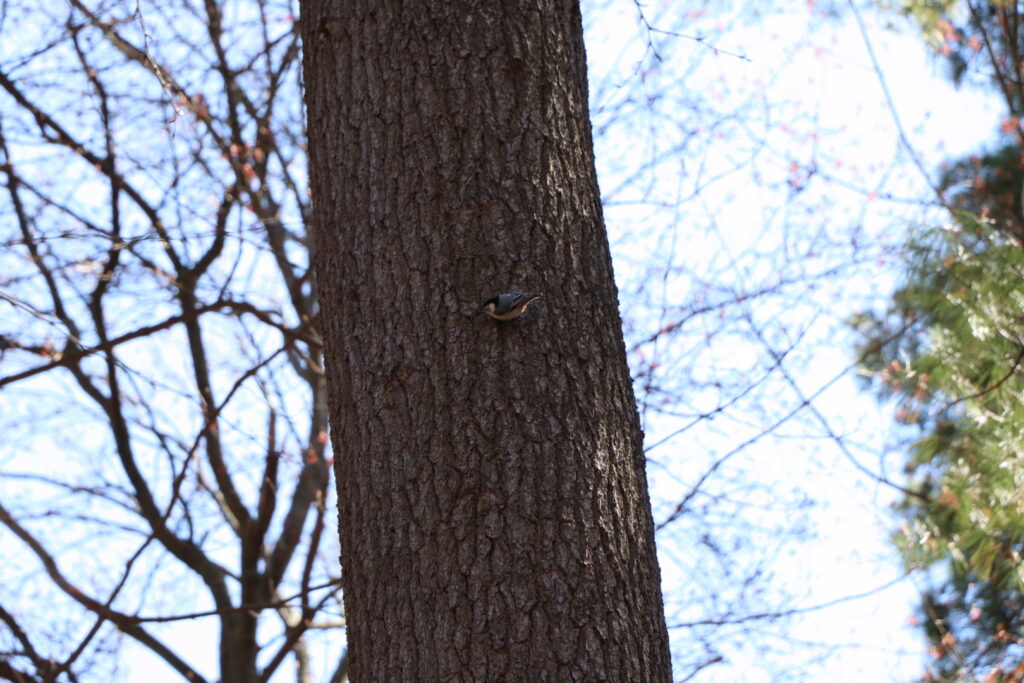
What a pretty little dude

All in all, I photographed 7 species and confidently identified 4 of them. I encountered a few others including a spider I couldn’t quite get a good picture of and a few other birds singing in the trees and flying over head I couldn’t get a great look at. iNaturalist was really pretty fun; I liked that I didn’t have to know exactly what I had, particularly when it came to the little fish and the Nuthatch. It wasn’t too hard to navigate, it was fun to have second-hand opinions on my finds, and it’s awesome exploring what people from other areas and even other countries are identifying in their own backyards! There are just so many cool little groups and being just shy of 100 million observations, iNaturalist is citizen science working to perfection; I love it.

Well y’all, that’s really all from me right now; I had a lot of fun in a place I’ve grown awfully fond of the past two semesters. Good luck to everyone else participating in the City Nature Challenge, and happy blitzing!

Peace & love, y’all 🤙🏽
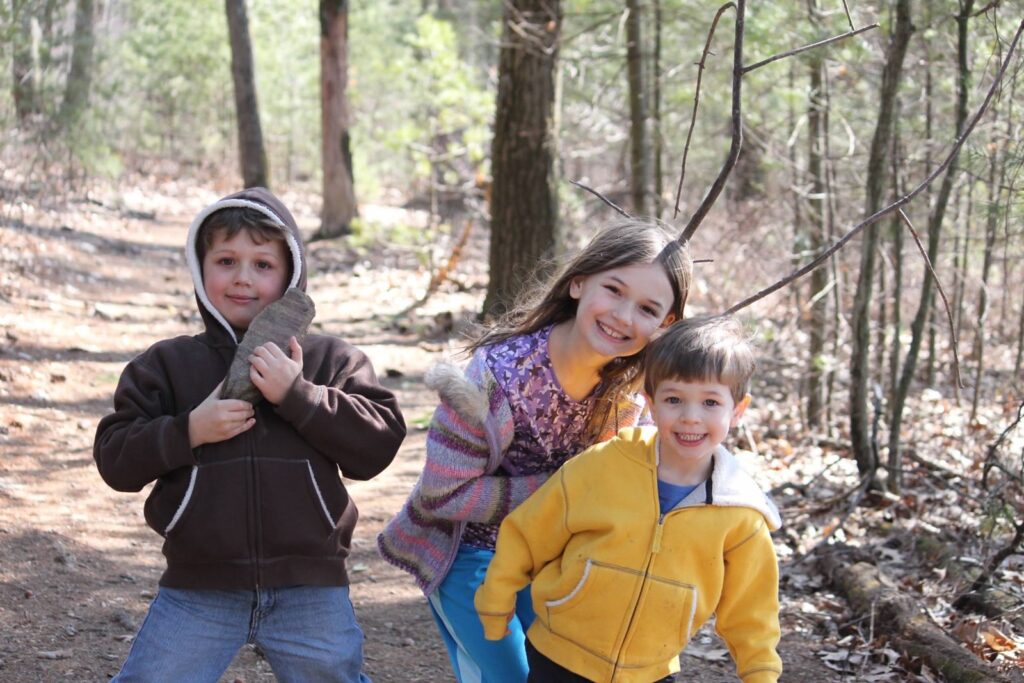
I’m so excited to get to make this post. My phenology site here in Burlington is in Centennial Woods, and I’ve felt from my first day there way back during our self-guided walk of the forest that it reminded me of one of my favorite places back home: the Middlesex Fells Reservation. It’s a fair bit bigger than Centennial –over 2,200 acres across 5 different towns– but it’s a New England forest through and through just like our Centennial. I hadn’t been since before I left for college, but I’ve spent so much time here throughout my life, and I was finally able to go back during break. I was lucky enough to have my girlfriend with me who isn’t used to the area, and it really emphasized how special the place is to me when I felt like taking her there was introducing her to a family member.

My siblings and I in the Fells ~a decade ago… I guess I liked that rock

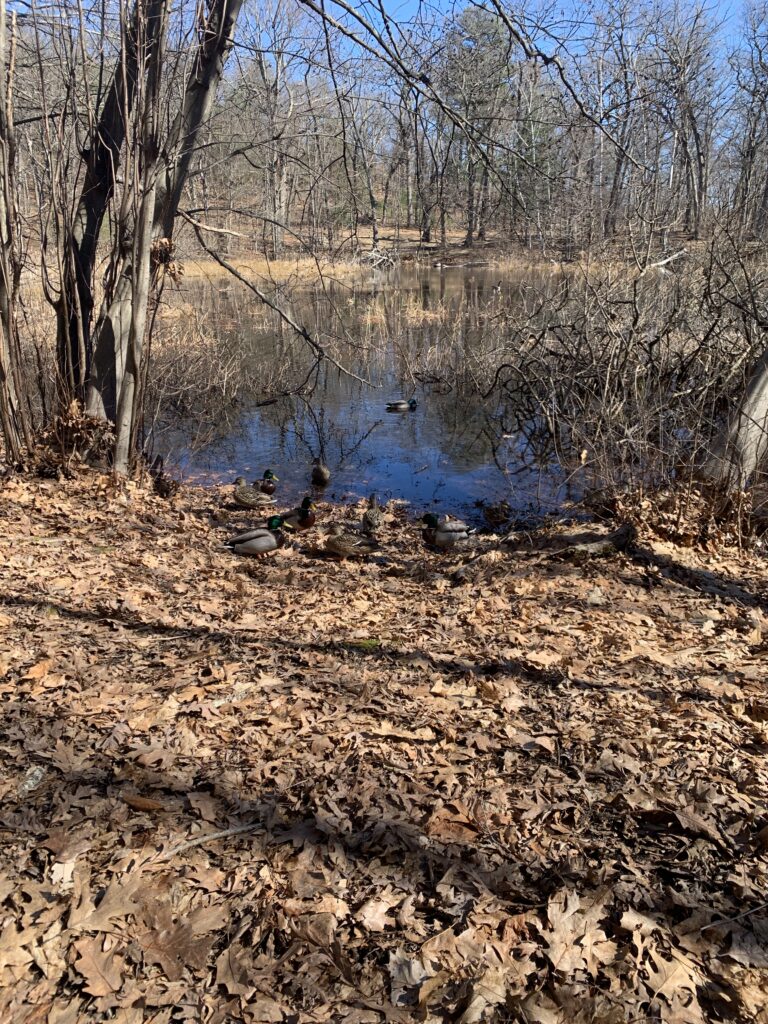
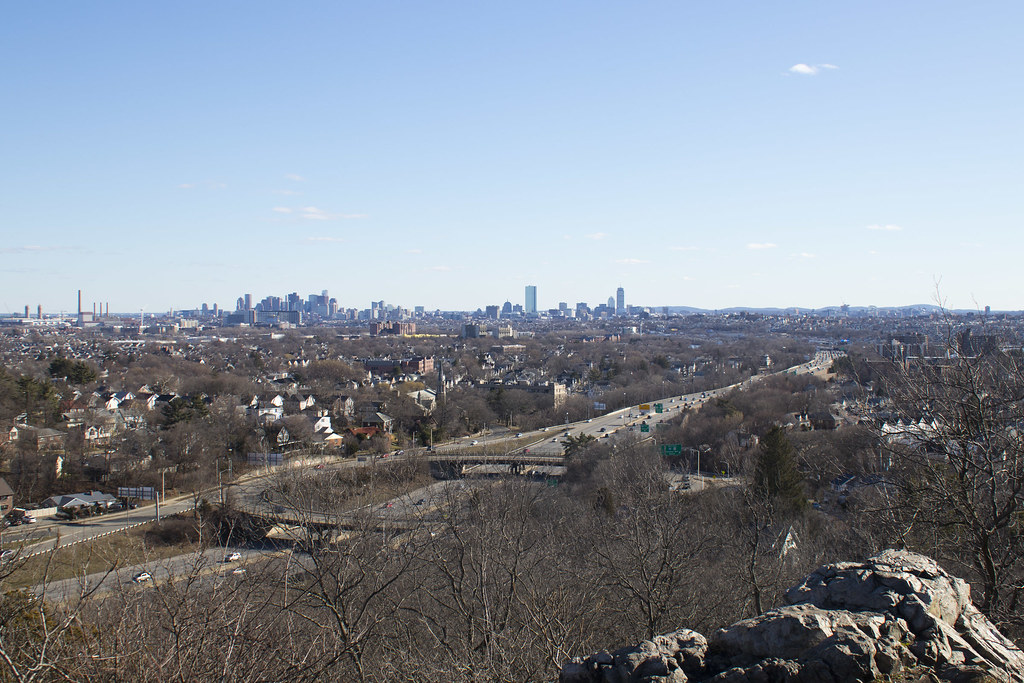
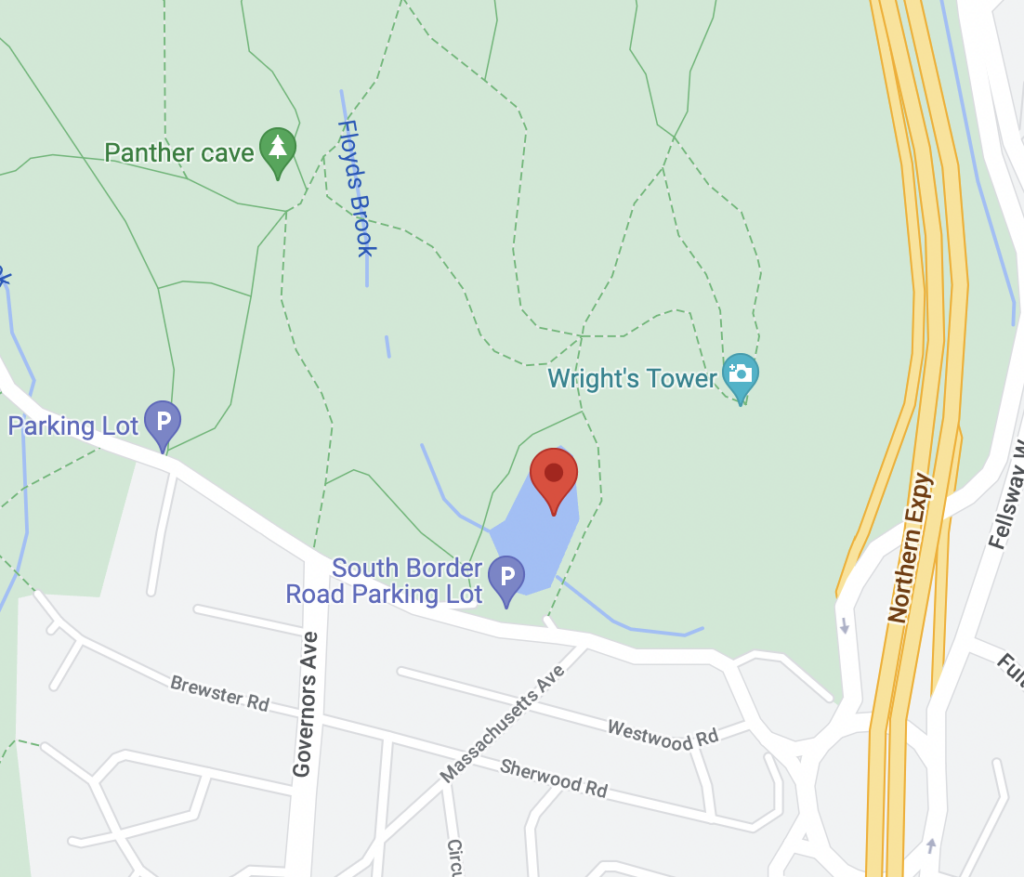
I like the whole area, but my favorite spots have always been Wright’s Tower and Bellevue Pond. They’re both right by the South Entrance which is in my hometown of Medford, MA. The site of the tower gives what I think is the best view in the area with a beautiful scene of the Boston skyline, the suburbia that surrounds it, and the hills and greenery around and past the city. I’ve spent hours sitting by the rocks up there just taking it all in and enjoying being there; it’s easily one of my favorite spots there is. The pond is another awesome spot. In recent years it’s been dried up, but there was water last week! Not to mention the countless weekend my family spent by the water catching frogs, tadpoles, crayfish, snakes, and getting leeches stuck to our boots. I wonder if the shoe I lost as a kid is still stuck in that mud.

Some ducks came to say hi to my girlfriend and I while we were sitting by the water
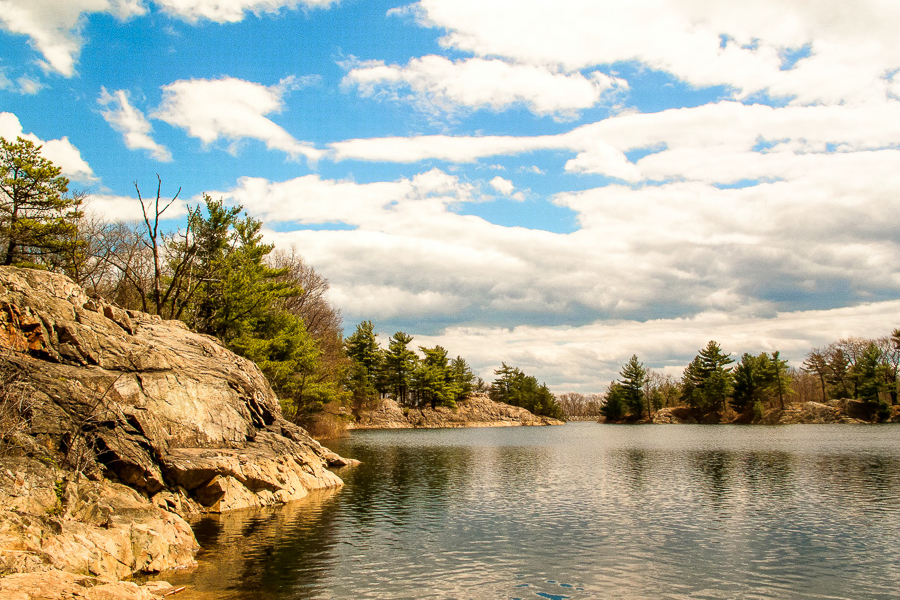
Not my picture, but one I found online that looked almost exactly like what we saw; it’s quite a view, but it’s much prettier in May

Now to some phenology of the Fells in the early spring; I get distracted pretty easily talking about what I love. The Fells is a pretty big place, so I won’t get to everything, but it’s a healthy forest. There’s an abundance of Pines of a few species, but notable Eastern White Pines which we’re pretty darn familiar with in Centennial. Another conifer found all over Vermont, Eastern Hemlocks (a favorite tree of mine) can be found throughout the woods of the Fells. An invasive we know well in Burlington, a few buckthorn varieties have made a home there as well. We have Boxelder, Norway, Red, and Sugar maples as well as White, Red, Black, and a few other species of Oak Trees. There’s five species of Birch trees and American Beech is well established there. Not to mention, there’s plenty of Poison Ivy. All in all, the Fells are a LOT like Centennial and most of the forests in Vermont in plant phenology; the conifers are thriving, the deciduous trees are bare but healthy, and most grasses are unidentifiably dried up, but spring rains will liven up Centennial and the Fells alike soon!

Now to something a little more exciting to me: animals! The wildlife in the Fells is also remarkably similar to that of Centennial/Vermont with lots overlapping species including red and grey squirrels, red and grey foxes, Eastern Coyotes, chipmunks, skunk, opossum, white-tailed deer, mice, rabbit, raccoon, and more. It’s such an amazing ecosystem in the Fells with a few ponds, reservoirs, and a lake to accompany the diverse forest there.

Google Maps image of Bellevue Pond in Medford, MA

I know I already said it, but I’m so happy I got to share this with NR 002. I hope y’all enjoy the pictures and vibes of the Fells even a fraction of the way I have for so many years.

Peace & Love, y’all 🤙🏽
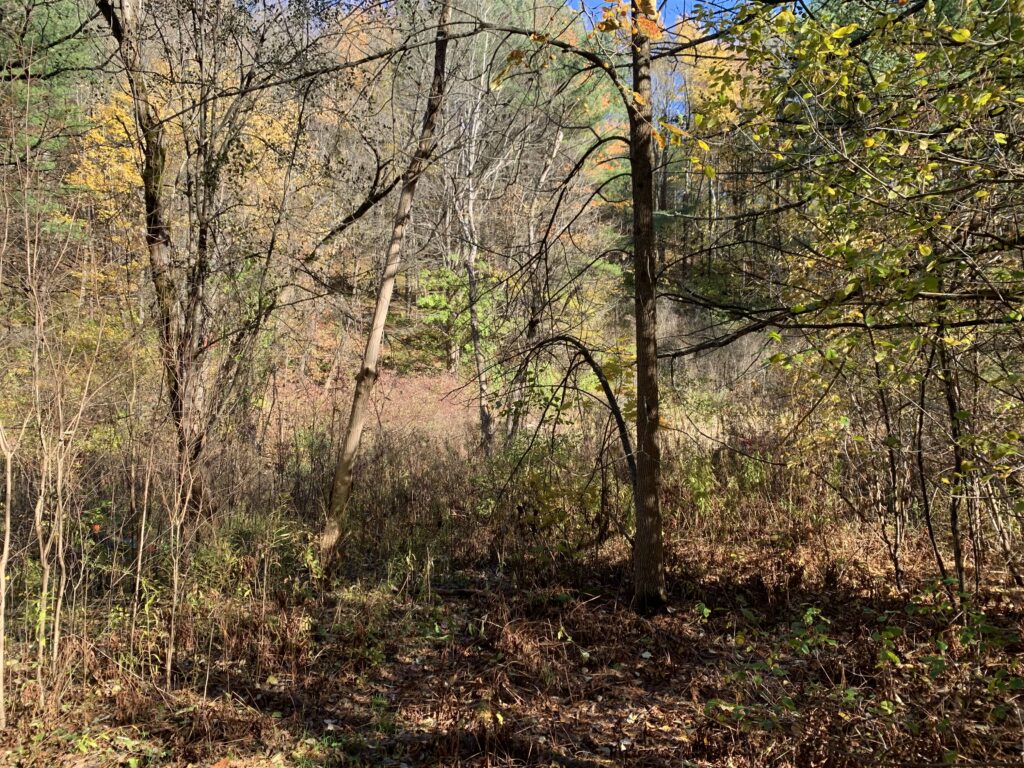
Potash Brook!

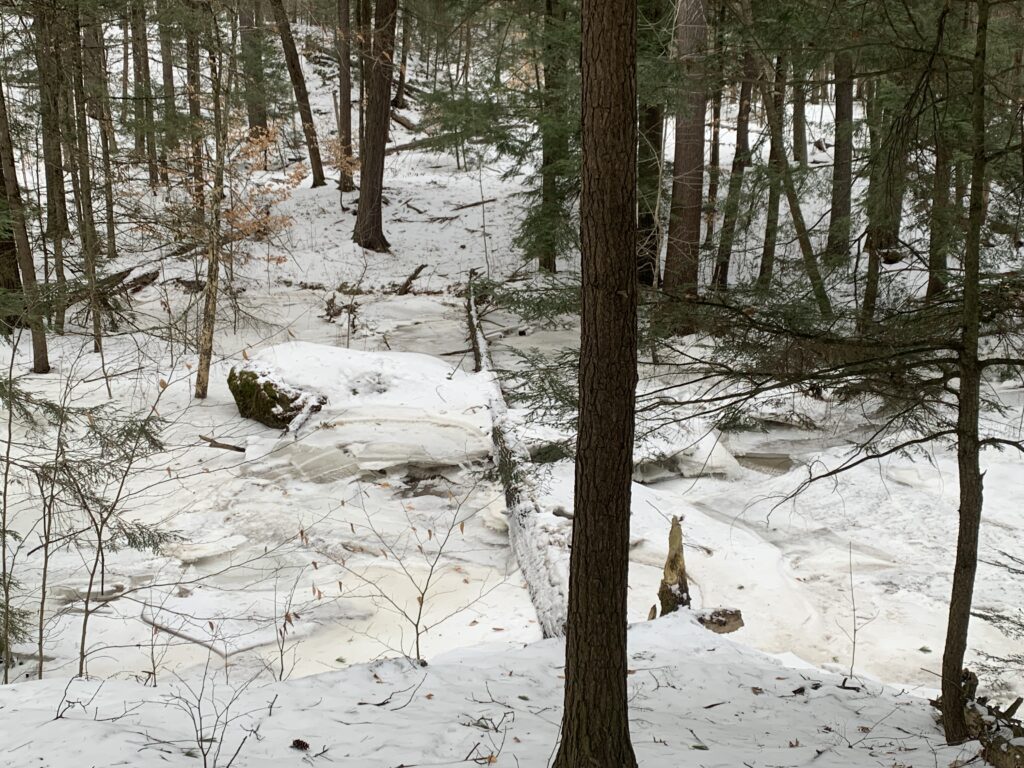
Howdy y’all 🤙🏽 I know I’m posting a little late, but yesterday afternoon I grabbed my NR pal I went down to Centennial with a few weeks ago, and we walked over to Potash Brook to see if we couldn’t find any signs of life. Going back to the fall when all of NR 1 went to Potash to study stream ecology, it was super cool to see how different everything looked in the winter; it was hard to even recognize our lab site with the frozen brook and snow coating the woods’ floor. It was also fun going much deeper into the woods than we were able to in the fall, exploring up through the forest, farther away from Klinger’s bakery, and having way too much fun crunching ice under our boots.
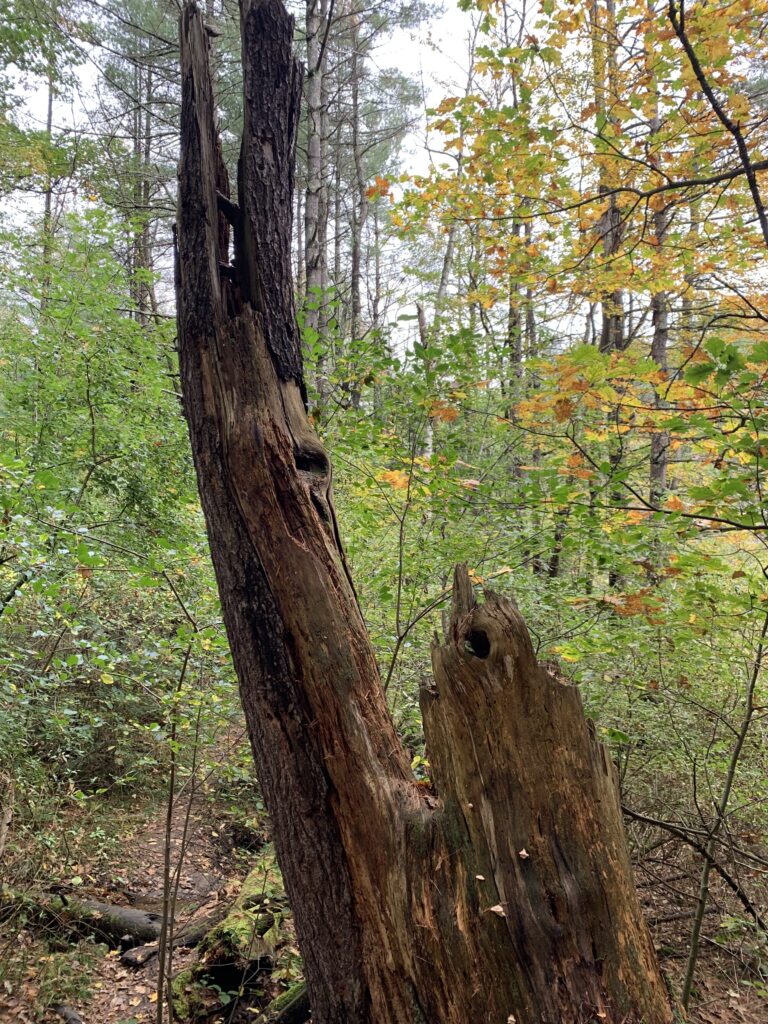
It’s a little blurry, but here’s a frozen over Potash Brook!

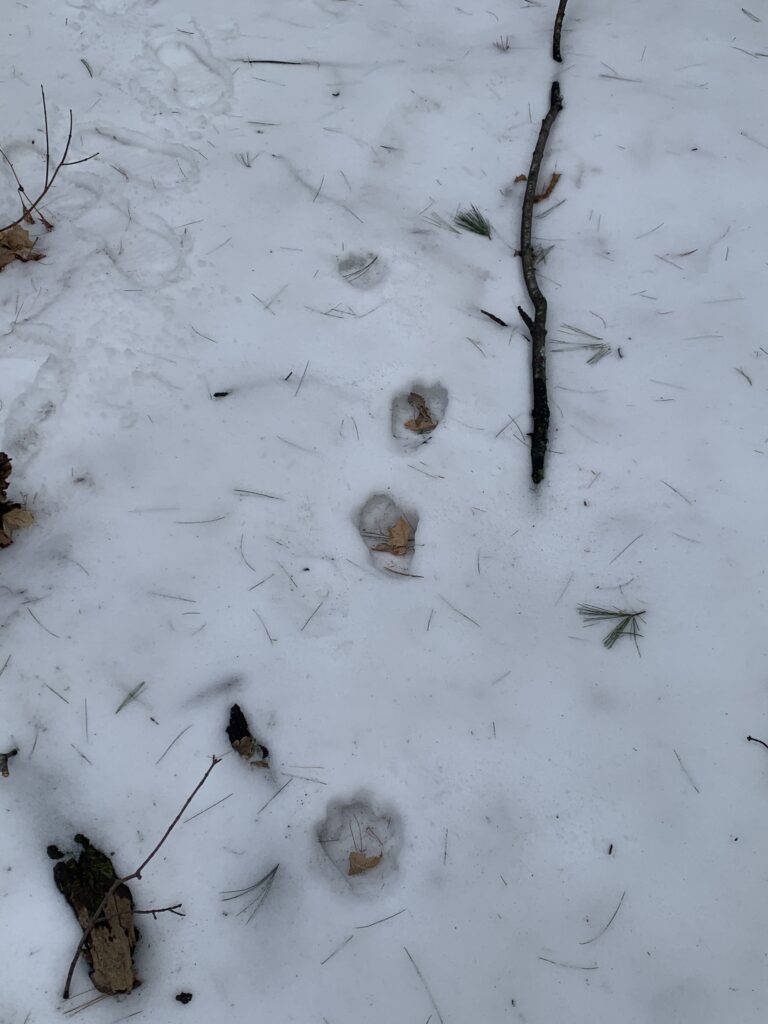
When we first got there, we weren’t super hopeful for finding much because conditions weren’t great. The snow was blown around by the wind making a lot of tracks unclear, there was a lot of ice that didn’t allow for a lot of tracks to show, and there seemed to be a fair bit of foot traffic in some parts of the area. That being said, we were able to find a lot of evidence of fishers in the area.

The distinctive gait of the fisher

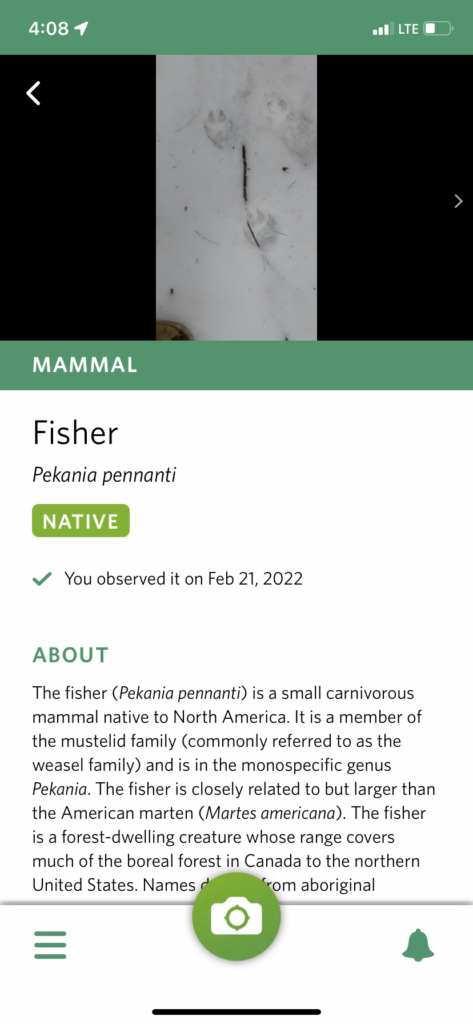
We actually followed the tracks of this individual down to the brook and back up the hill for maybe a couple hundred feet. There were a few times when the tracks became more clear, and when this happened, we used iNaturalist’s Seek app to help us identify the tracks, and they told us what we already expected…

Thank you iNaturalist

It was a lot of fun tracking the fisher, but other than that, we couldn’t identify many other tracks. There were various canine tracks throughout the woods, but they were often so close to human footprints, and the tracks themselves didn’t appear very straightforward (as to conserve energy which wild canine species would likely demonstrate). My best guess based on the size of the tracks that did follow roughly straight paths, were not near footprints, and had relatively pointed feet that were small would be fox.

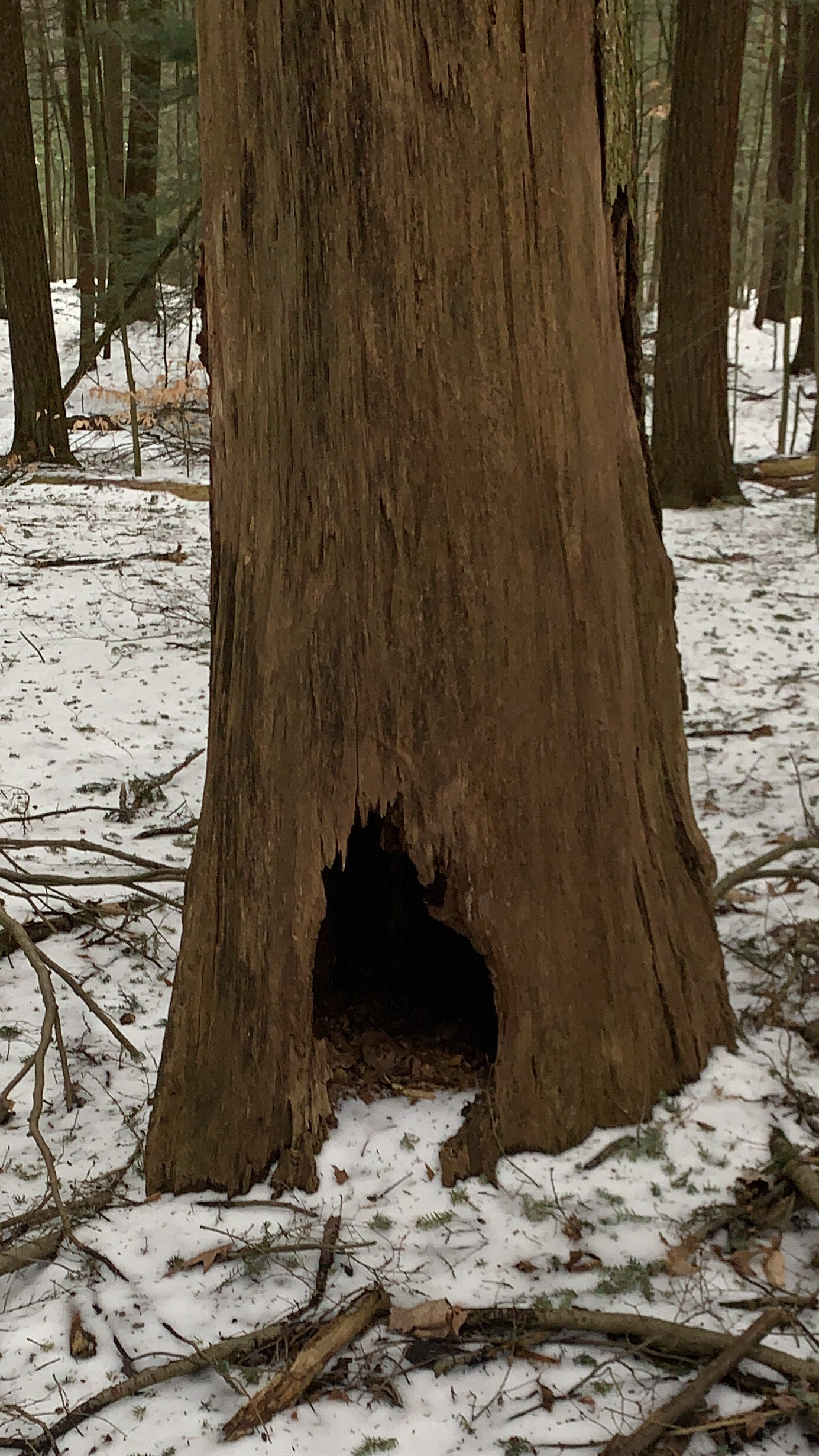
We were on our way back down the hill on our way out of the woods, doing one final loop around the woods to see if we could find some final tracks before we left, and that’s when we found this…

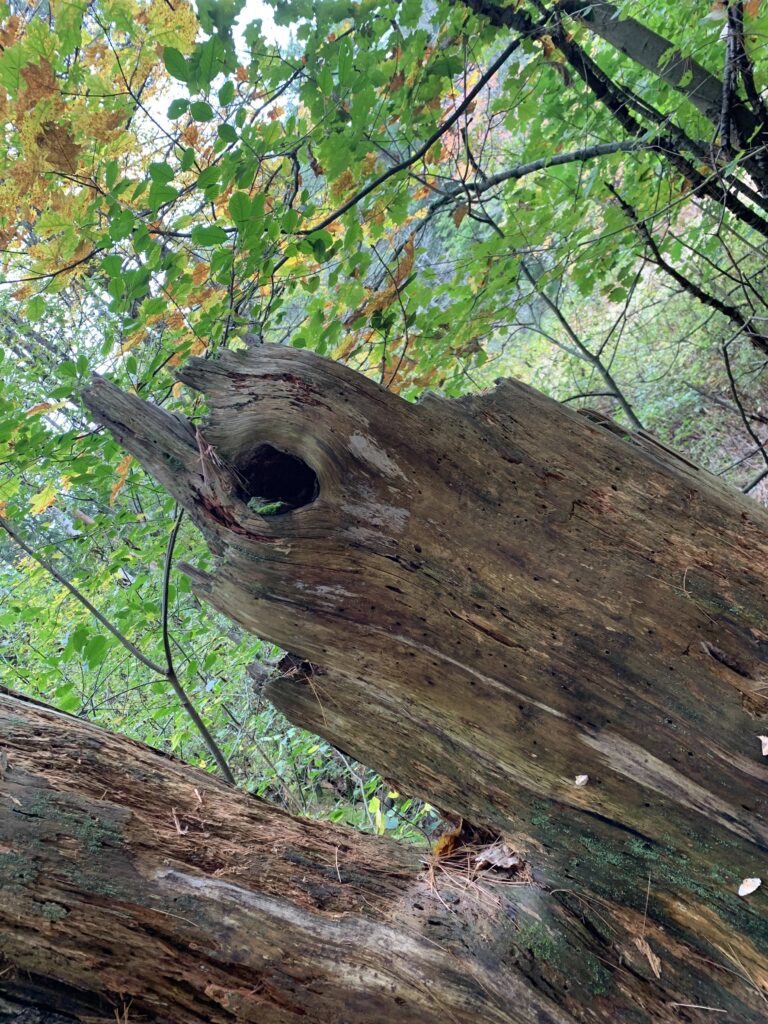
I had no idea what made this hole, quite frankly.

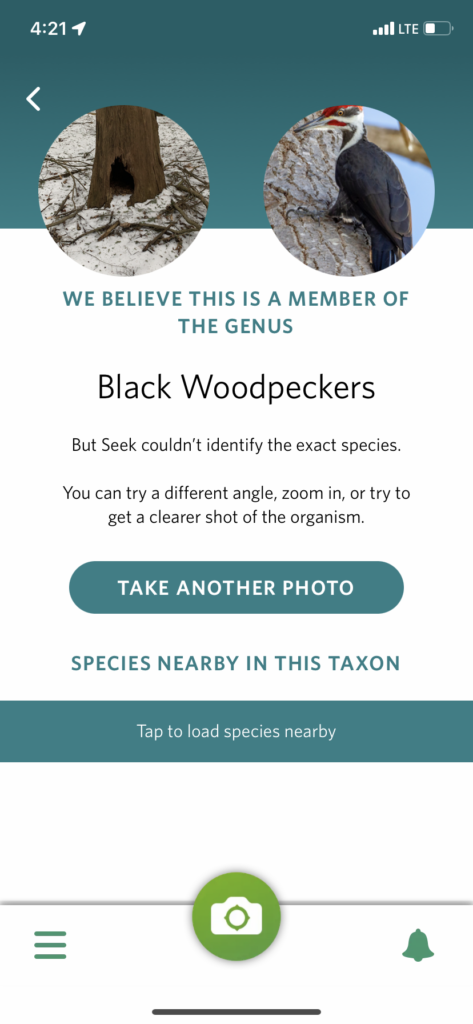
Again, my buddy and I turned to Seek to identify what could have made this, and they suggested the Black Woodpecker, although they really weren’t quite sure either.

The naturalist in me was really hoping I would find some scat or tracks near the hole, but I found absolutely nothing around the base of the tree. I was really really excited at the premise of the woodpecker making a hole in the tree that would then be used as a den by another animal species, but no evidence of such a relationship could be found.

It wasn’t as eventful as I was hoping it would be, but it was pretty fun regardless! It wasn’t super cold so I had good weather, good company, and it just made for a pretty nice day even though I was really freaking sore from snowboarding Sunday 😂 Potash Brook is a really incredible winter spot no matter how the snow looks, and I’d suggest getting down there if you can and find some fisher tracks because there are PLENTY of ’em. Have fun!

Peace and love 🤙🏽
Frozen Hair and Footprints

Howdy, y’all! I made a choice yesterday. That choice was going to Centennial Woods even though it was about 3°F with windchills down under -10°F. I grabbed a buddy whose phenology site is also in Centennial, and we headed over in the afternoon, about 1:30-2:00 pm. Somewhere along the way, our eyelashes, eyebrows, and even some of my hair began frosting and freezing because of the condensation coming off our breath. Sorry, I’m still a little fixated on how damn cold it was.

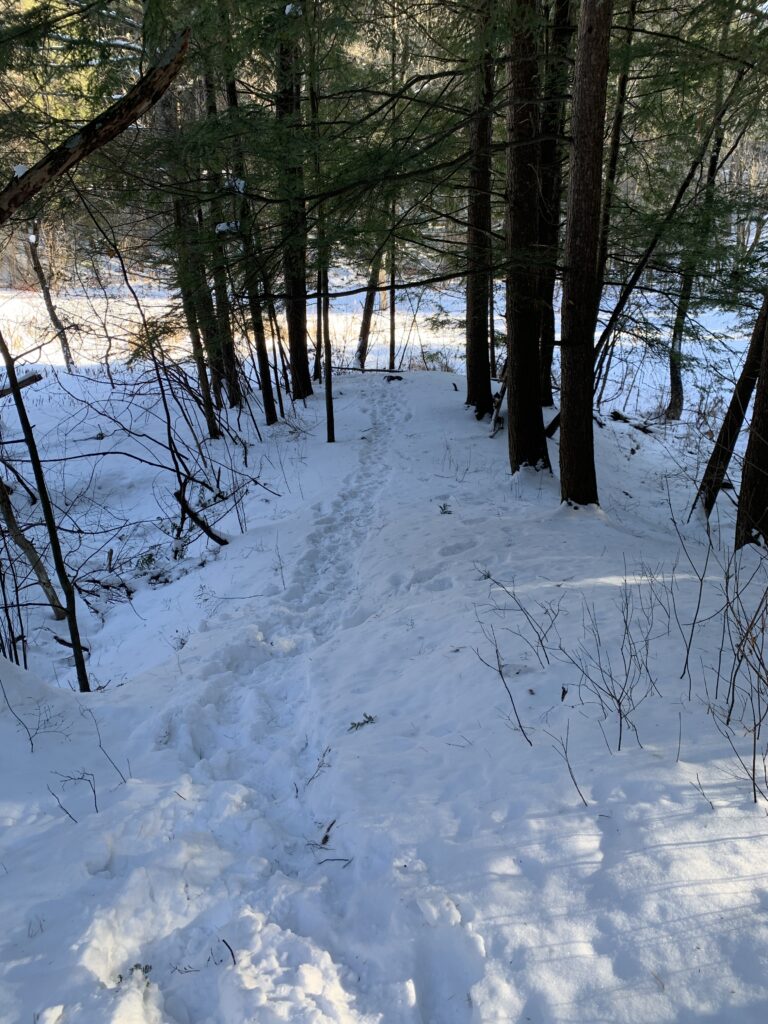
Once I split from my friend and made it over to the always-lovely Hummingbird Point, I was somewhat disheartened to see that there were a lot of shoe prints all over my site. That being said, it didn’t stop me from getting some cool finds in and around my phenology site!

Welcome to Hummingbird Point 😀
As always, gotta say hi to our buddy! He’s looking a little cold these days
Definitely plenty of evidence that I’m not the only one coming here; while it hurts my chances of seeing animal activity here, I’m glad other people are enjoying it too

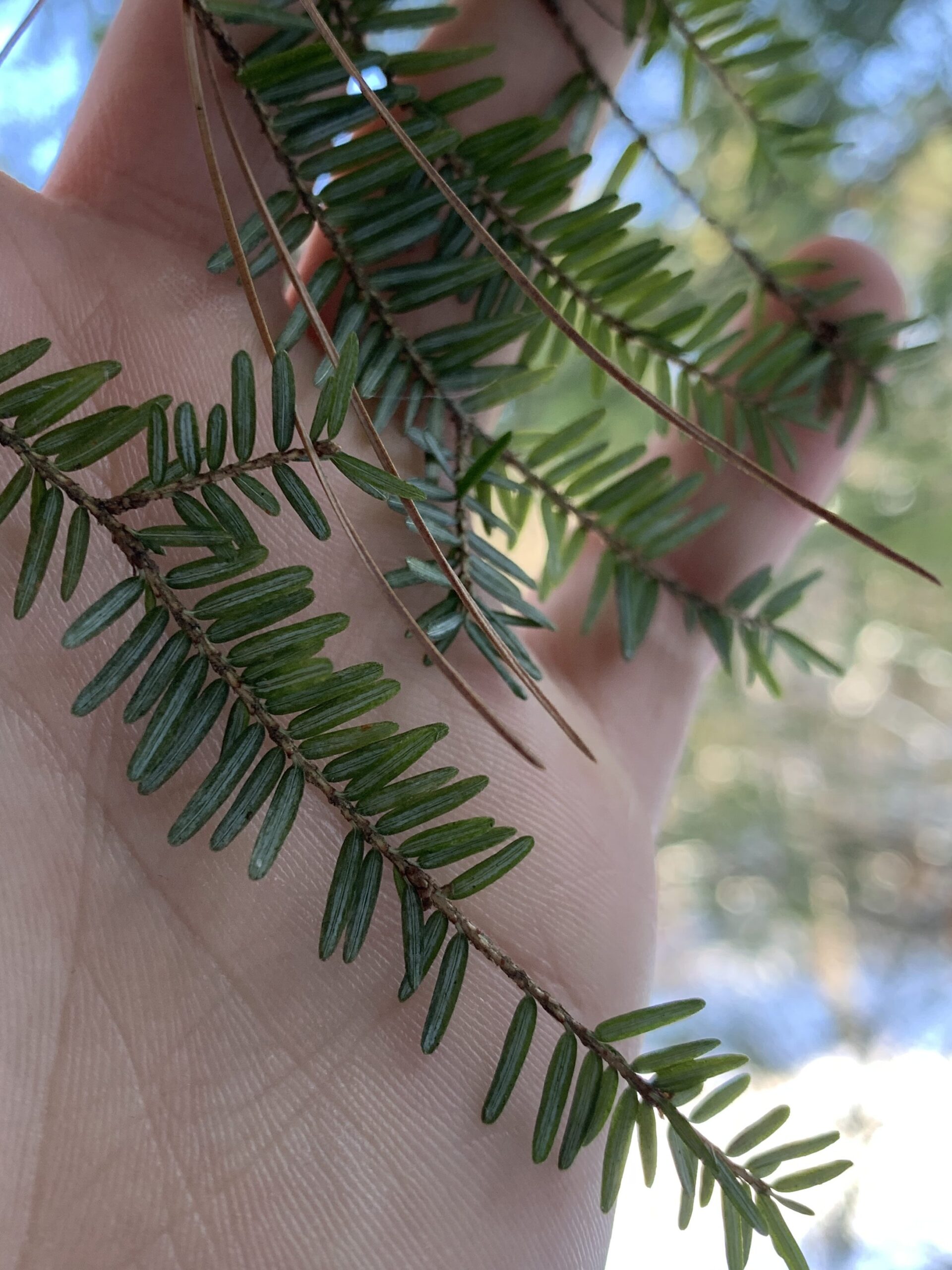
In terms of what’s actually alive at Hummingbird Point, not much has changed from my last post. The conifers are essentially the only green to be seen in the area, and on my side of the marsh, it’s mostly Eastern Hemlocks dominating the scene. Since coming to Vermont, Hemlocks have kind of found a place in my heart. When I first learned about them in class and how to ID them, I went home for Thanksgiving break and quickly realized we have a very young hemlock in our yard; an ID I could only make because of NR 1. These trees are strong, hearty, stay green year-round, are very shade tolerant, and can live to be 800 years old. That’s just mind-boggling. Yeah I don’t know how else to explain it; I guess I have an affinity for them now, and I always look for those simplistically beautiful two white stripes of stomata on the underside of their little but numerous leaves.

The distinct underside of the leaves of one of the many Eastern Hemlocks at Hummingbird Point

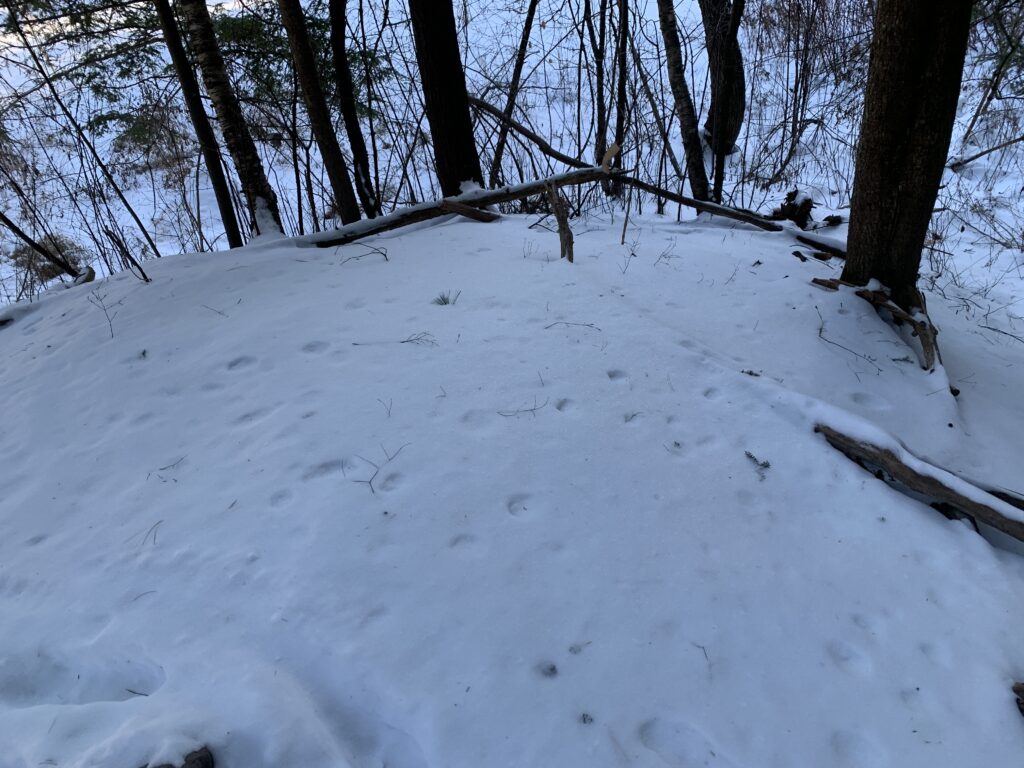
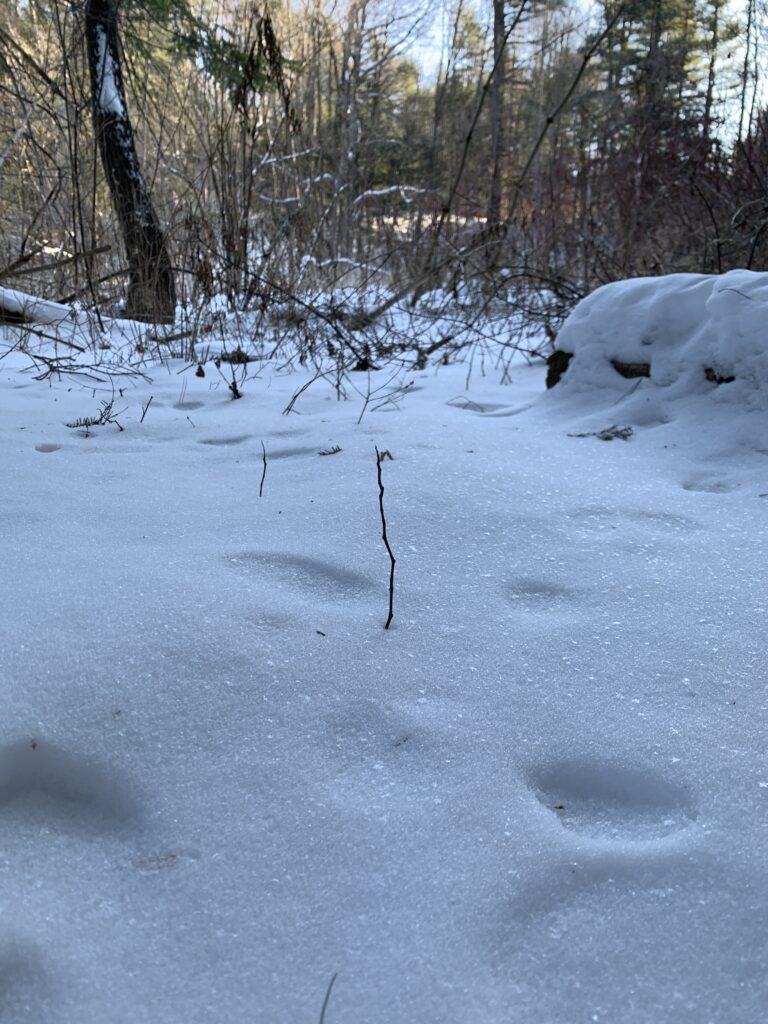
Alrighty now the bread and butter of winter in New England as a budding phenologist: tracking! Conditions weren’t great for tracking when I was there, quite frankly. Snow was powdery, and winds had blown away the definition of the few tracks that could be seen. That being said, there were definitely signs that something had been active in the area, and it’s relatively safe to assume some of the tracks were of the same species I believe were active there before winter break: coyotes, foxes, and squirrels. Even if it’s pretty hard to tell what was there, I like seeing and knowing SOMETHING was there; the outdoors are for everyone and everything.

Tracks in my area showing that, well, something was here!

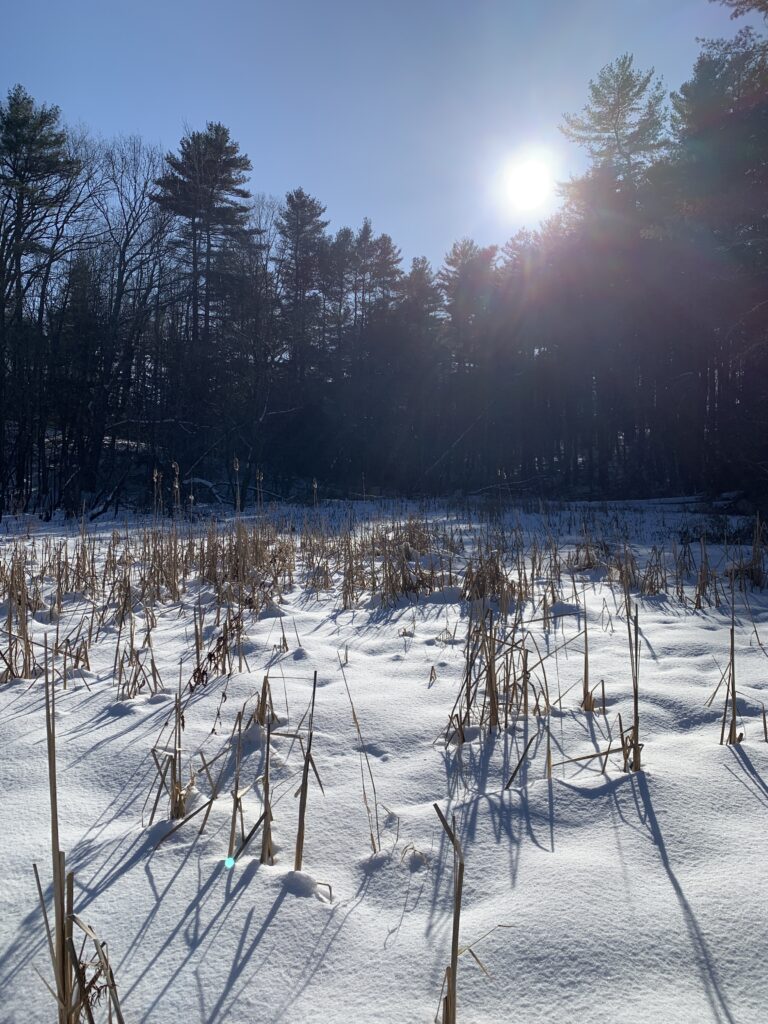
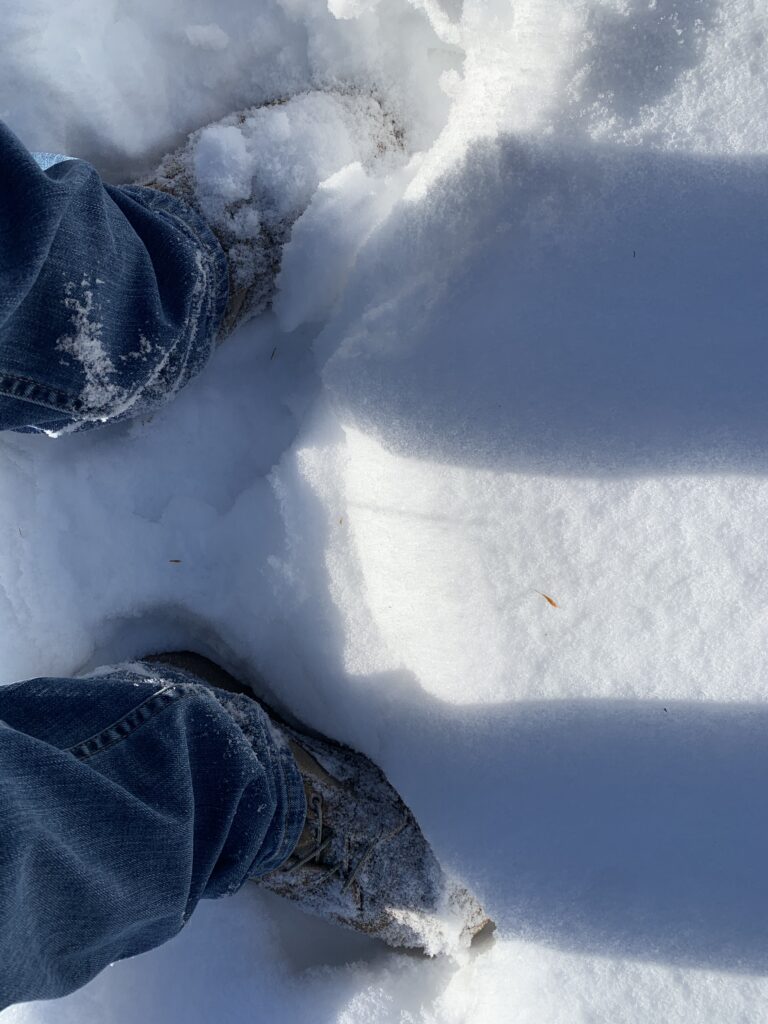
While I always love making my way to Hummingbird Point, it was a little too cold to be fully enjoyable there yesterday. I always try to take my time there, to relax and take in the environment around me, but when your ears and fingers hurt even with a hat and gloves, –albeit, not of the most amazing quality– you don’t necessarily want to take your time. That being said, I spent a few minutes doing something I haven’t done before but have wanted to do since being introduced to Hummingbird Point; I walked out into the marsh. The layers of snow had build up undisturbed in the marsh, and without all the plant growth and water and mud, it was pretty easy. The setting sun always lights the spot up the most beautiful colors making everything more vibrant, and although I wasn’t quite there for the sunset, I did get a few pictures I’m kinda fond of. Check ’em out!

Lastly, this wasn’t at Hummingbird Point, but it was nearby.

Alrighty, y’all that’s all I got for this trip to Hummingbird Point, but it sure is a beautiful place. I’m glad we all have a place like Centennial Woods so close to campus; it’s nice for getting away from it all for a little bit. I hope you enjoyed the pictures and videos, –this old soul is finally learning how to use basic technological functions– and words can’t describe how excited I am for the spring at Hummingbird Point, in the marsh, and throughout Burlington.

Peace and love 🤙🏽
We’re Gettin’ Snow!

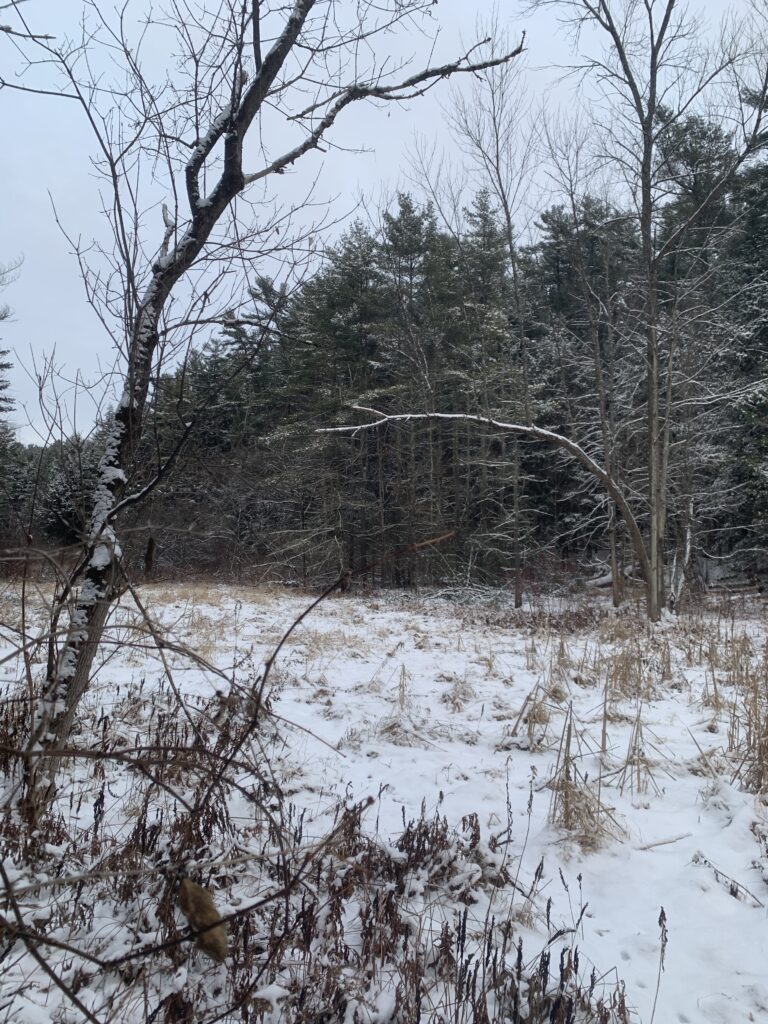
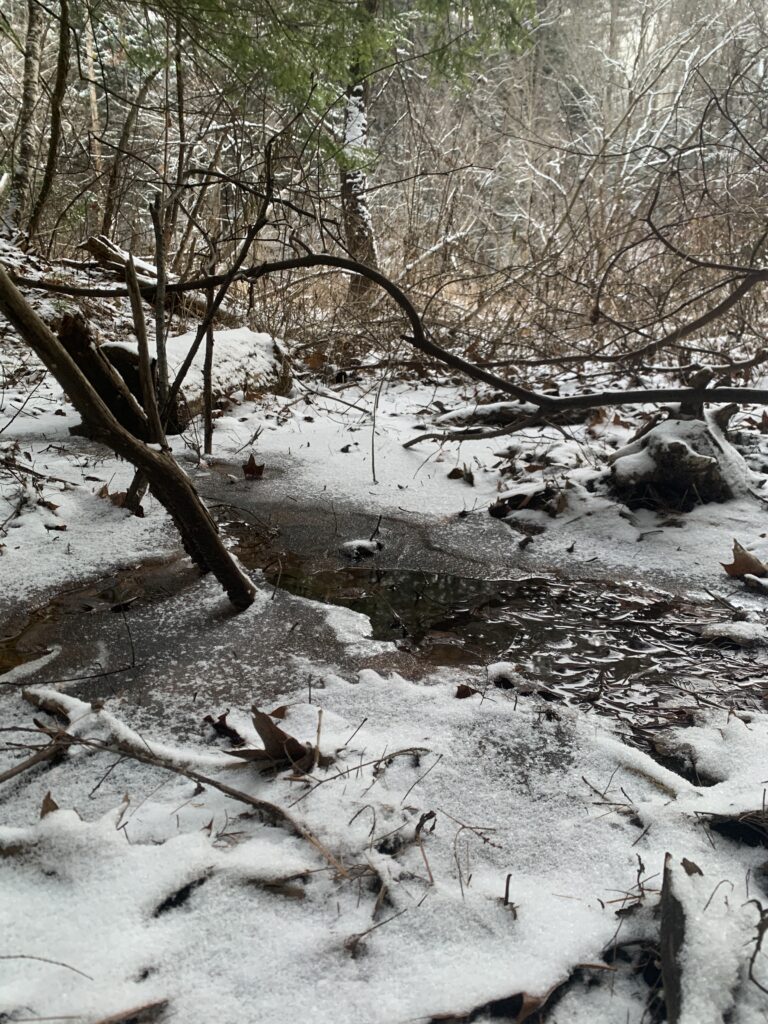
Much to my delight, it snowed last Wednesday night which I thought made the perfect opportunity to head out early Thursday to my spot in Centennial. There was fresh snow covering the ground and some still falling as I was walking which was a pleasant surprise. I was excited to get into the woods now that fall has passed and winter is setting in, but I was mostly amped to try to find some tracks! There was some ice on the path on the way there and a gorgeous winter-brook scene as I made my way to Hummingbird Point, and much to my surprise, my site was untouched when I got there… well, by humans anyways. On top of that, there were some pretty clear signs that winter has set in at Centennial.

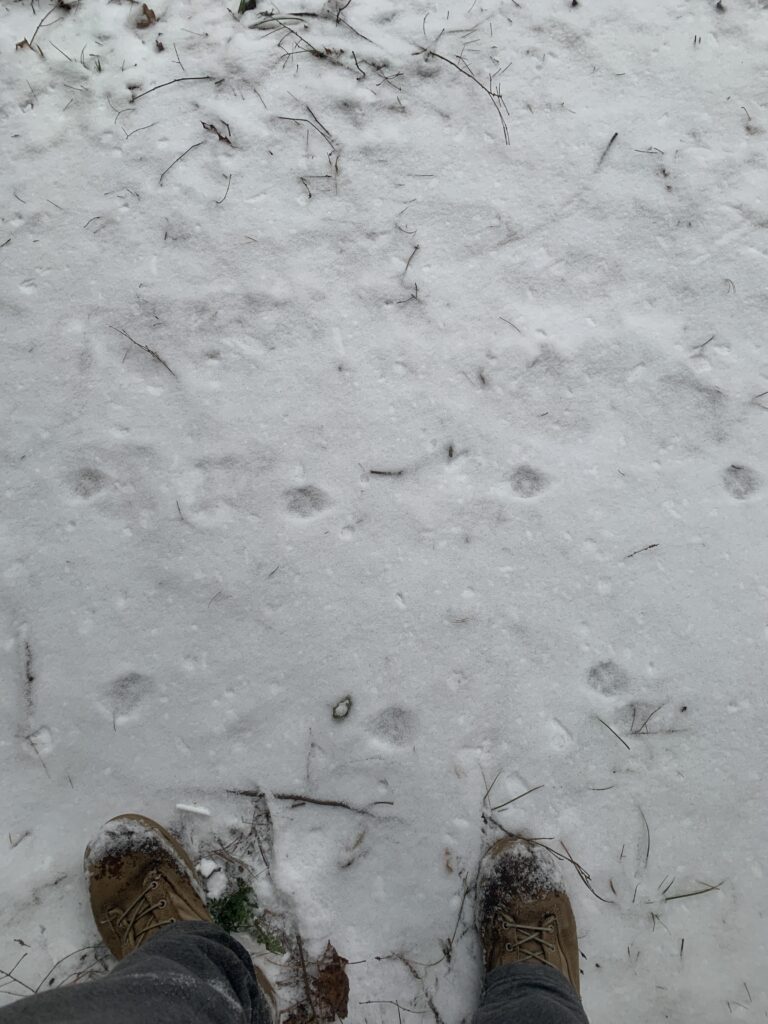
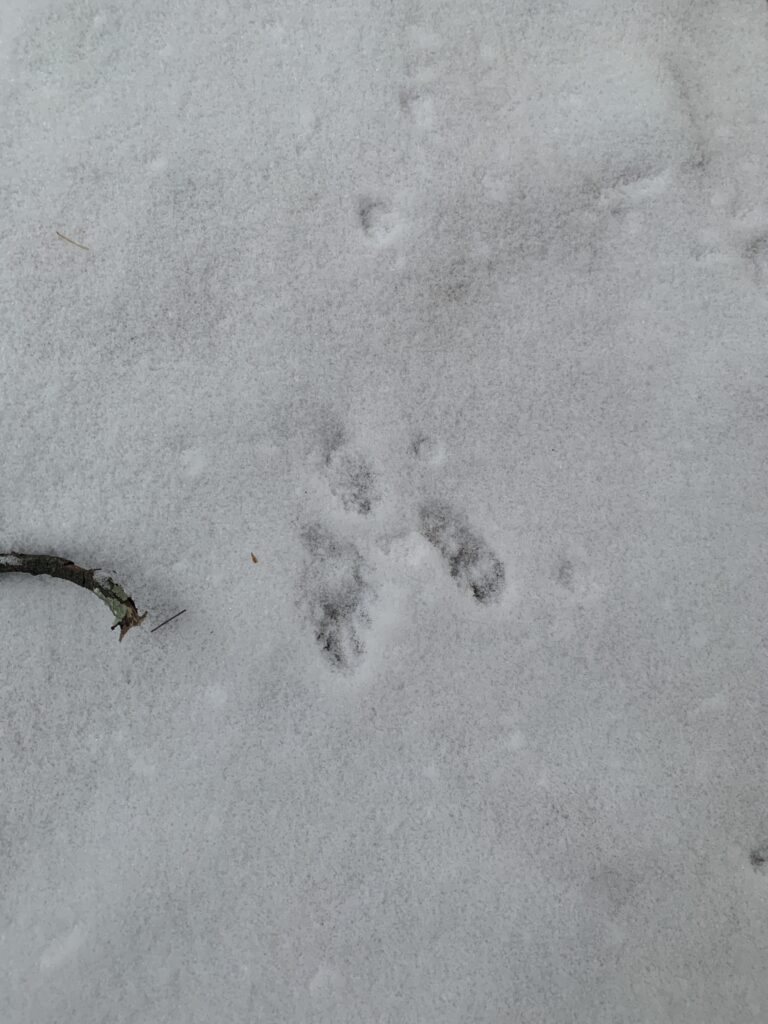
What hit me first and foremost is that the place had no footprints anywhere to be seen. I foolishly forgot to take a picture before going down the path myself, but it was kinda majestic; it was nice seeing something not touched by human activity. What hit me immediately after were two sets of tracks of comparable size and shape with one going down towards the Point and one seemingly coming from it. Upon going closer towards the end of the Hummingbird Point, I’m able to guess that these tracks were produced by different individuals although likely of the same species. With the fresh dusting, the tracks weren’t particularly visible, so I can’t say exactly what species this was, but my best bet based on the size and roughly-canine features of it are that it was a fox or coyote. The second track pictured below is that of a gray squirrel. Rabbit tracks are fairly unique because of the foot size difference and shape as well as their distinct hopping pattern where all four feet come together. The primary distinction between their tracks and those of squirrels are that for rabbits, you tend not to have much definition on their paws; you can’t really see individual digits like we can here. And since the tracks were of a larger size, I think it was a gray squirrel opposed to a red squirrel.

Two sets of tracks I found at Hummingbird Point seemingly of the same species but going in opposite directions.
A lil’ gray squirrel was here!

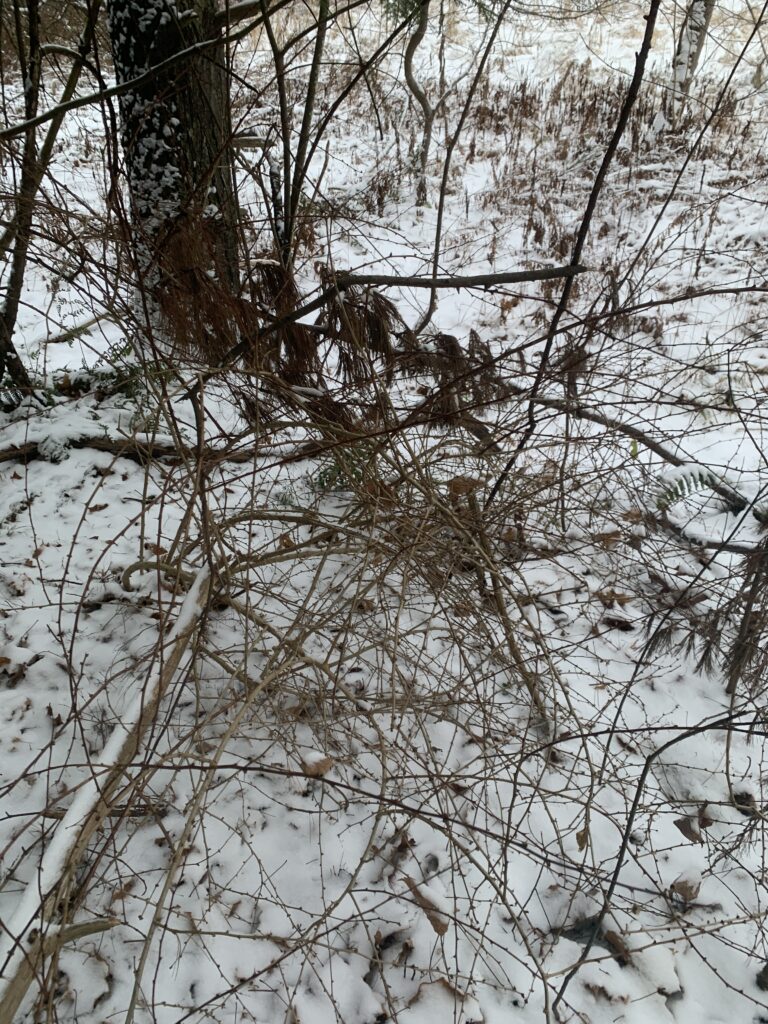
What was very clear is that many species in the area had lost their leaves. The mass of thorny branches pictured below is our Japanese Barberry bush. A vibrant member of this site during the fall with its gorgeous leaves and bright red berries, our little friend is bare right now.

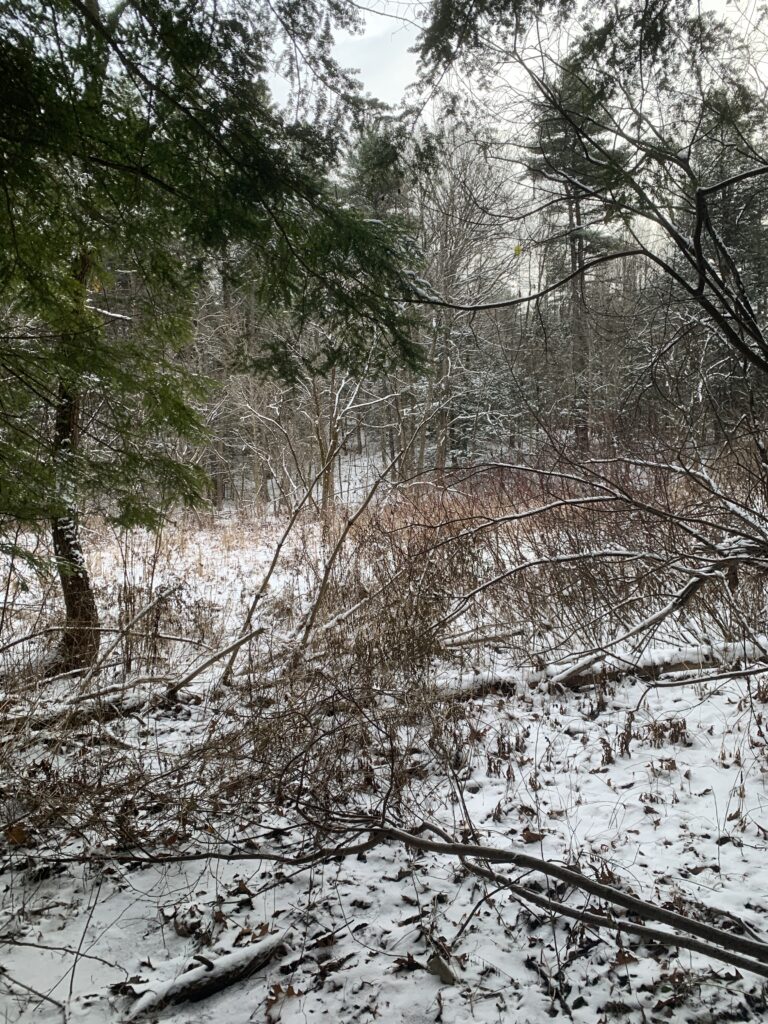
The next picture sums up the major phenological changes incredibly well. The conifers in the area, with Northern White Cedar pictured here on the left, are essentially the only green left on the landscape. The former marsh made up of mostly grasses and dogwood surrounding the brook has dried up, turning various shades of yellow and brown. All the deciduous trees in the area have lost their leaves and allow a different, more vulnerable angle of the forest show. We can now see farther through the treeline than before, and it feels more personal being there during the winter after a snow. Everything is cold and bare, and I don’t know how else to describe it; it felt special.

What’s left of the marsh is beautiful in a sort of barren way.
The winter version of picture I took for a previous post; I love this angle.

I really enjoyed getting to see Centennial in it’s December glory even though I know the heavy snow and biting cold are still yet to come. My only regret on the day is that I didn’t see any signs of deer on my site. I know they’re all throughout Centennial, and I spent a good 15 minutes after leaving my site scouring around the area for deer tracks, but I couldn’t find them and had to get back to campus for a class. Maybe next time, I suppose.

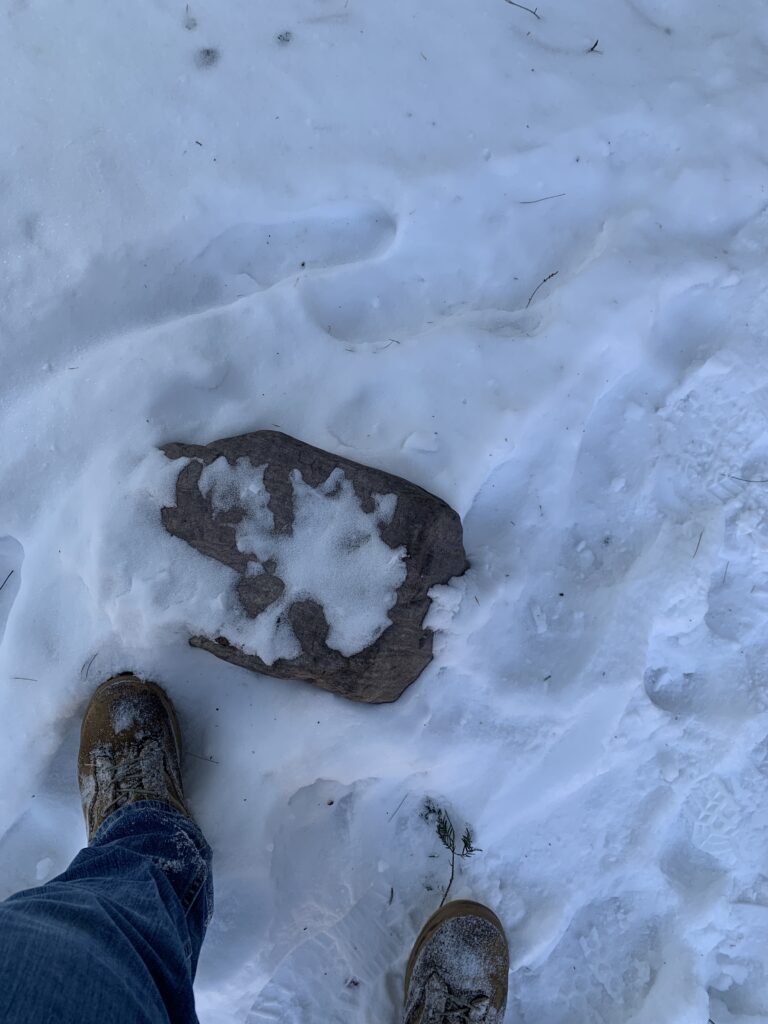
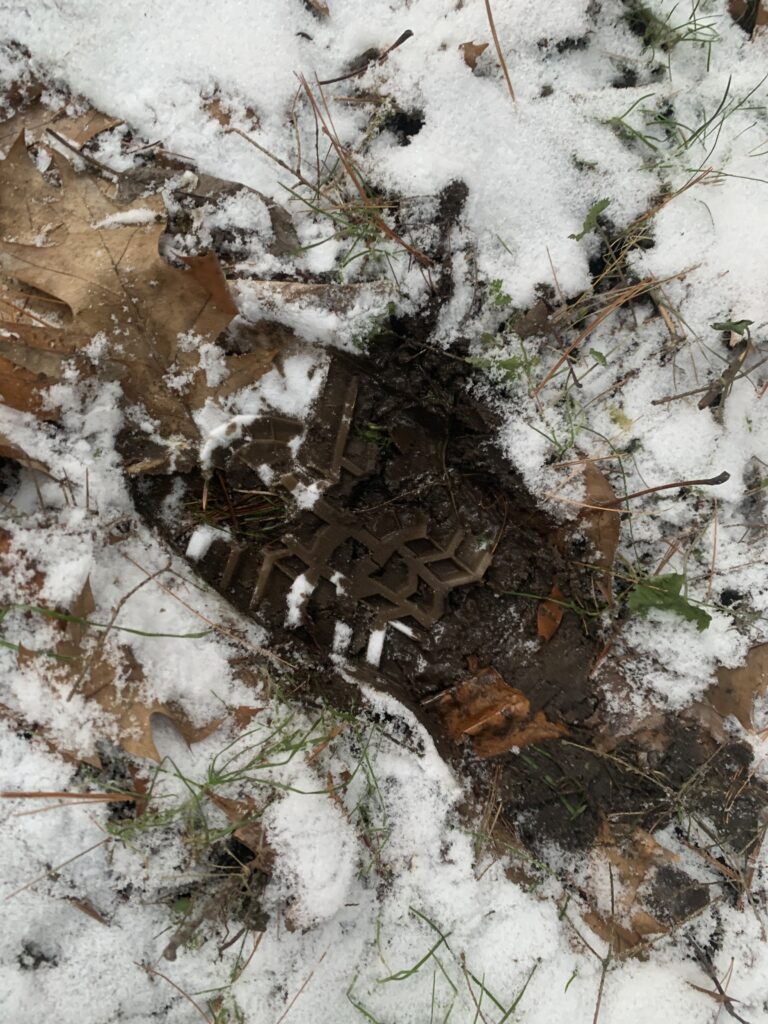
I’m gonna close this post up with this photo above and a little reminder. Our presence is everywhere; I heard two F-35 fighter jets fly overhead, taking my eardrums with them while I was there. It’s important to try to leave no trace when you’re out in nature but really wherever you go. When the snow melted this weekend, I’m sure it took my footprint along with it, but seeing it there in the snowy mud, so clear and deep in the soil really reminded me of how everywhere we are. I just encourage you to be careful outdoors for what you take and leave behind because it should be as close to nothing as possible; bring your enthusiasm, take some pictures, and leave the place untouched.

Peace and love 🤙🏽

It’s Raining (Leaves)

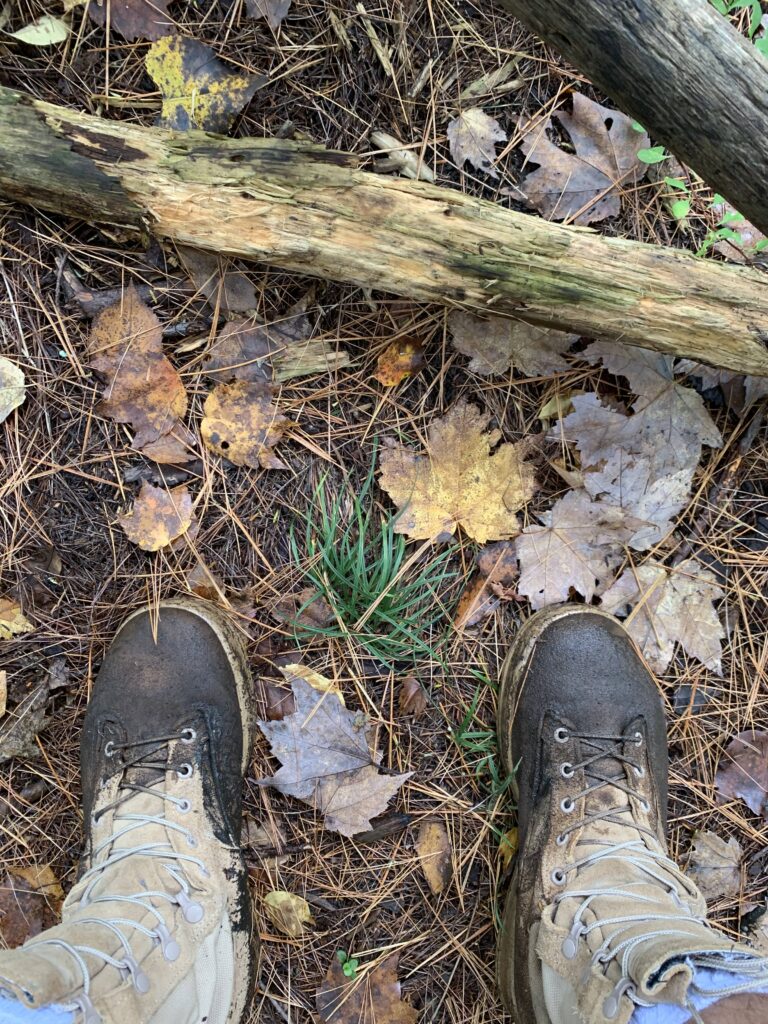
Howdy, y’all! I went down to Hummingbird Point earlier today after some heavy rains yesterday to find just what I expected: lots of mud, lots of fallen leaves, and lots of changes at my site.

This week’s visit consisted of some quiet time at my spot just trying to get in-tune with the environment and really getting a feel for what it means to be a part of the area. Let’s start with the sounds. During this time, my ears were filled with the sounds of the brook, distantly running, a chattering squirrel, presumably gathering its last nuts to store for the coming winter, and the gentle pattering of leaves falling all around me. It was quite pleasant; I left with a huge smile on my face, fresh air in my lungs, and feeling kinda refreshed. I got lucky in that I didn’t hear car horns, I didn’t hear planes or helicopters flying overhead; it was a naturally beautiful, tranquil time there, even though I was in a bit of a rush to get back for a class. It kinda made my day.

While not a ton has changed since my last time there, there were a few noticeable changes. The area was generally just less green which is to be expected later in the fall. There were lots of yellow and brown leaves canvasing the landscape and plenty more on the trees, not to mention all the ones falling while I sat there. There was seemingly less healthy understory, perhaps less ferns and buckthorn or the wetland grasses dying as the year goes on. Last but not least, the prominent Japanese barberry bush near the center of the site is dying for the year.

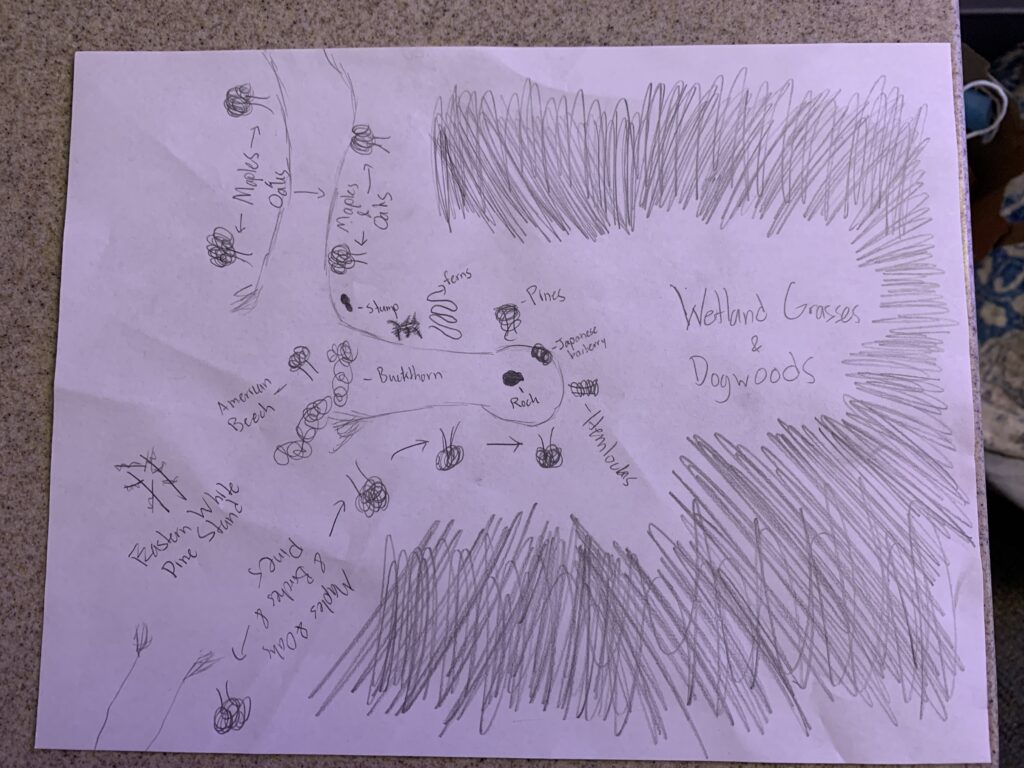
Alrighty before I sign off for the time being, here are some pictures I took from the site and from other parts of Centennial while I was there, wrapping up with my birds-eye-view map of the spot. Enjoy! Peace and Love 🤙🏽

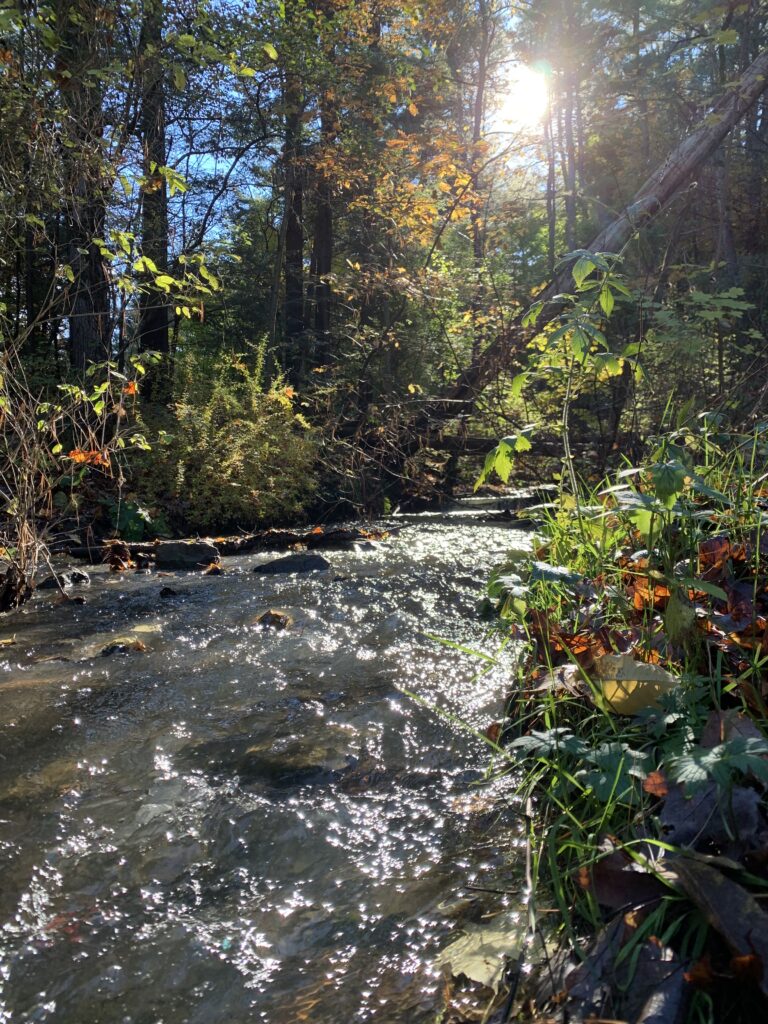
A flowing Centennial Brook after heavy Sunday rains
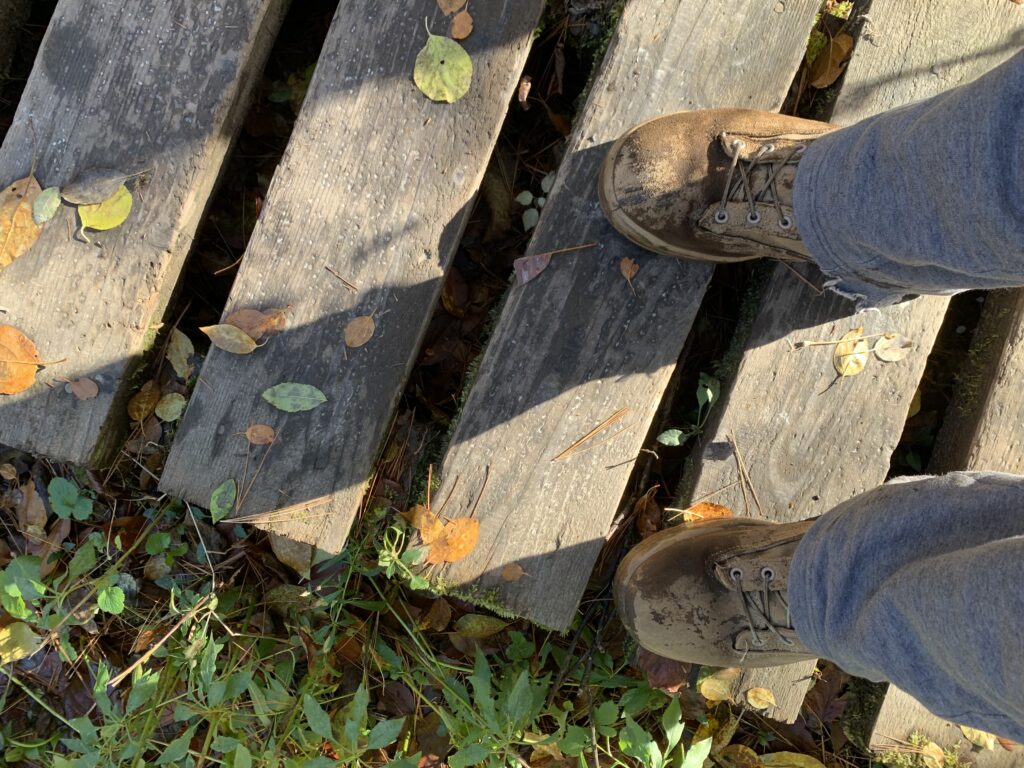
A lot less green that a few weeks ago!
Pardon my artistic ability

I got up early this morning and made my way over to Centennial woods. This wasn’t my first time visiting this forest, but I was the first time touring and studying my phenology site on my own. With heavy rain yesterday, I was ecstatic to go into the woods and ruck through the marsh a bit, the smell of moist wood in the air. I packed my bag with my water, camera, a Clif bar, and went on my way. I came back with boots proudly coated in mud, some awesome pictures, and a somehow ever-growing excitement for my site. Welcome, my friends, to Hummingbird Point.

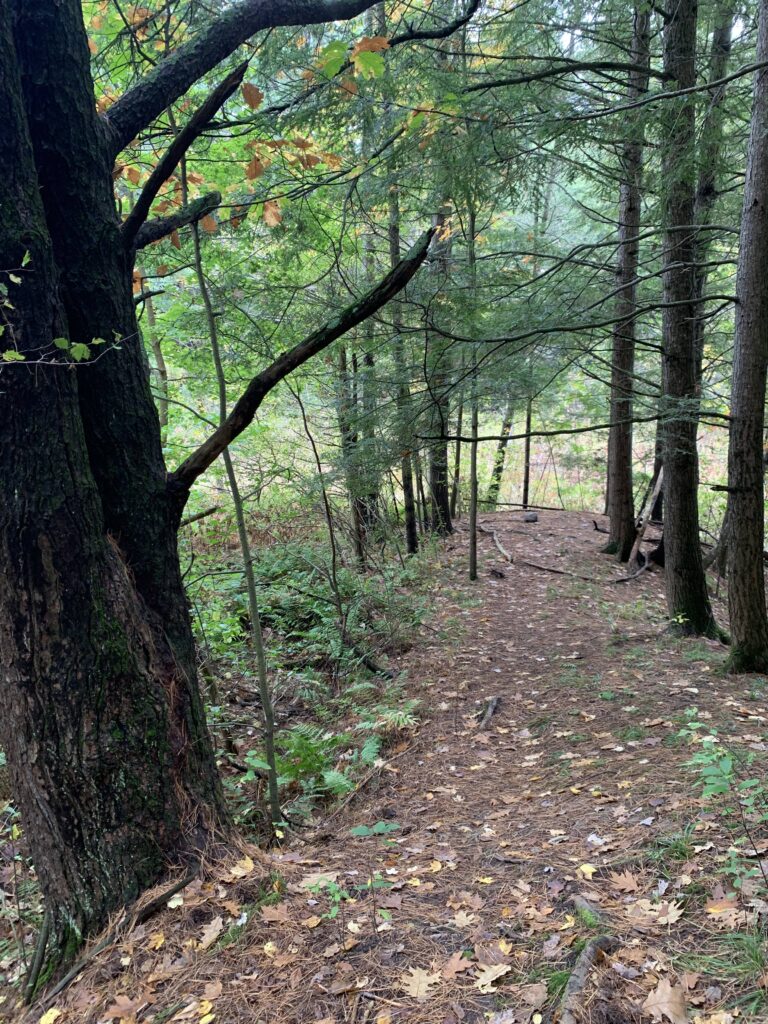
Alrighty let’s start by getting y’all to Hummingbird Point with me. When you enter Centennial Woods off of Catamount Drive, you’re going to start heading down the path until you reach a small clearing with a poison ivy warning sign –go left here. There’ll be a foot bridge for you to cross, followed by three small steps in the ground and another footbridge that bears right. At the end of that bridge, there will be another clearing with another poison ivy sign –go left here as well. You’ll stay straight on this path for essentially the rest of the way, crossing a downed tree across the path, a young maple with five black spray-painted stripes on it (at the small fork, bear right alongside the marsh). Continuing this way will bring you to another large downed tree and a mangled stump, part of which kinda resembles a shark which have been some of my favorite creatures since I was real young. Here you’ll turn right and go down a short path to a small, circular clearing that should have a medium-sized rock at the center of it, overlooking the marsh

Congratulations! You’ve reached Hummingbird Point.

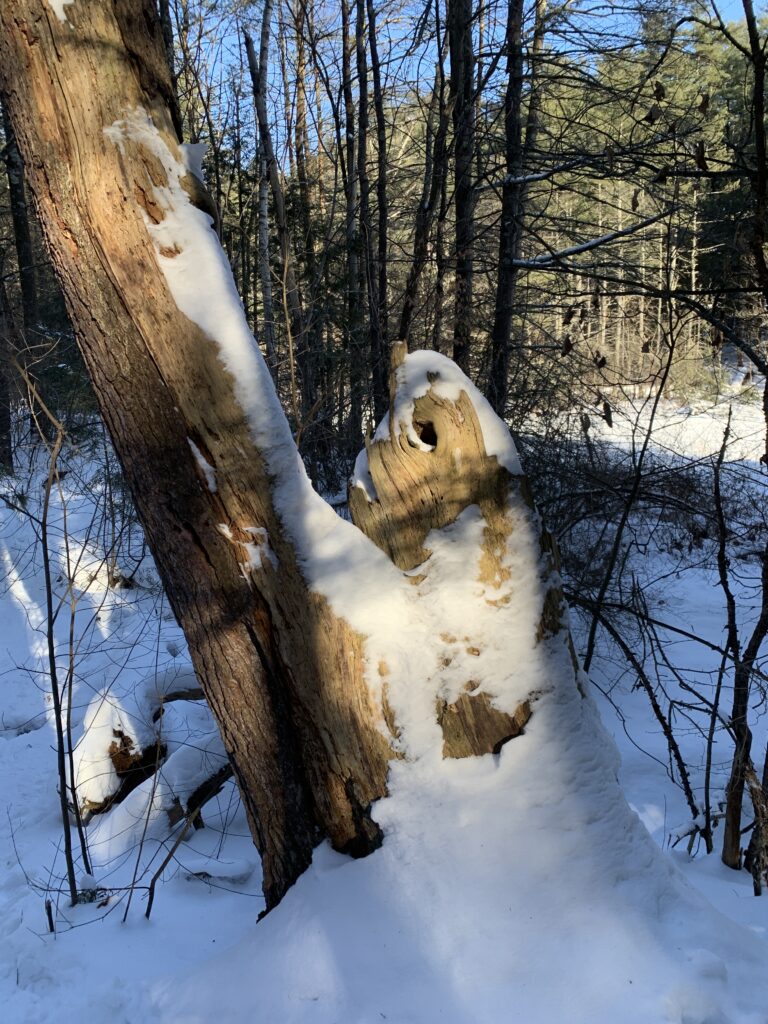
Mangled stump
Any idea what to name him?
View of Hummingbird Point from the stump

I chose Hummingbird Point sort of on a whim. I was participating in a lab for another course when our TA brought us to this site, eager to show us her phenology site that she grew to know and love. She described how it was an edge habitat, linking the forest and the wetland, providing a uniquely diverse series of plant life in the area. Most importantly, she named it Hummingbird Point because on one of her first trips there, debating what to call this place, a hummingbird flew right up near her, and she took it as a sign. The main reason I chose a spot in Centennial Woods though, is that it reminds me of place I know and love dearly, the Middlesex Fells Reservation. The Fells have been a secondary home of mine since I could walk, basically. We’d go on family walks, or hang around the pond by the trail entrance and catch frogs, tadpoles, and crayfish. As we grew up, we’d take the Skyline Trail to Wright’s Tower to get what I believe may be the best view in the greater Boston area. As a teenager, it was my escape from the world; I could go there whenever I wanted as it was so close to my home, so I would often find myself there when school or people or life was just too overwhelming. Centennial has reminded me of the Fells since the first time I went there during my first week of classes for our Self-Guided Tour of Centennial, and I’m so happy I have an excuse to spend more time there.

Spot Pond, Middlesex Fells Reservation, Stoneham MA

This is an edge habitat; on one side of the site is a hardwood stand featuring primarily Eastern White Pine and Eastern Hemlock trees with few birch, oak, and maple trees. The ground is inhabited by intermediate wood ferns, Japanese barberry bushes, lots of Alder buckthorn, and grasses. The forest is not particularly dense and is intersected by trails. As the woods transition to the marsh on the other side of the site, lots of alternate-leaved dogwoods, rough horsetail, and purple loosestrife inhabit the ground. The marsh is almost entirely inhabited by marsh grasses, loosestrife, and sensitive ferns primarily, but a few other types of ferns that were just a bit too hard to get to through the mud (my guess is cinnamon ferns or cattails). 

And a list of the dominant plant species there are as follows:

Intermediate Wood Fern

Alder Buckthorn

Eastern Hemlock

Eastern White Pine

Japanese Barberry

White Oak

Rough Horsetail

Purple Loosestrife

Sensitive Fern

Alternate-Leaved Dogwoods

Marsh Grasses

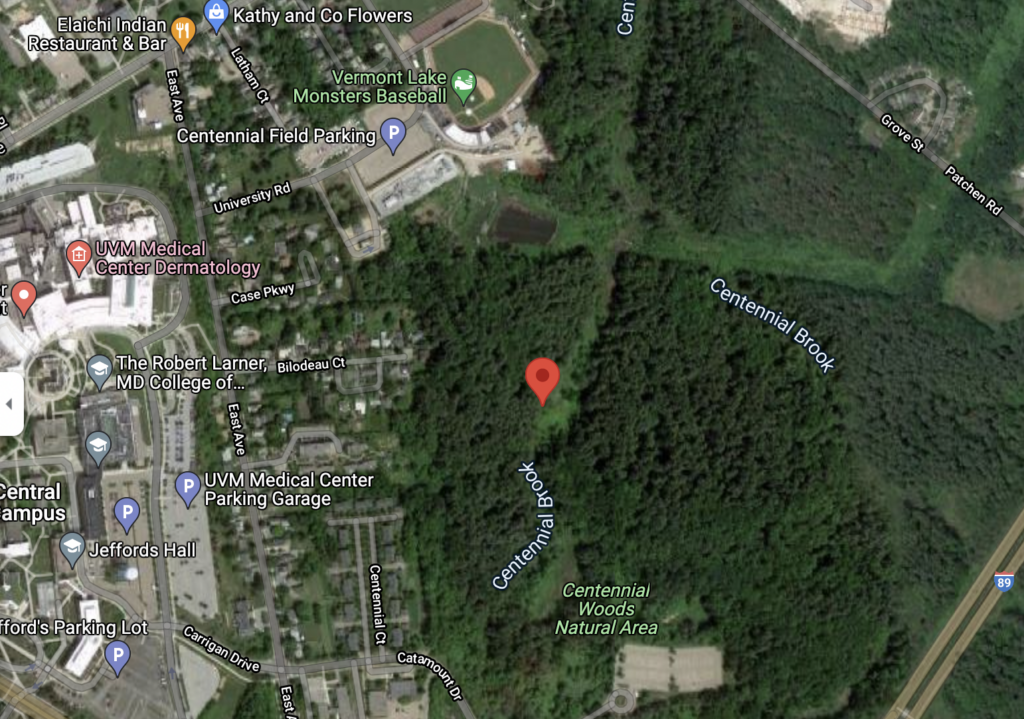
I’m going to leave you here today with a few of my favorite pictures I took today, finished up with a Google Maps picture of exactly where in Centennial you can find this spot.

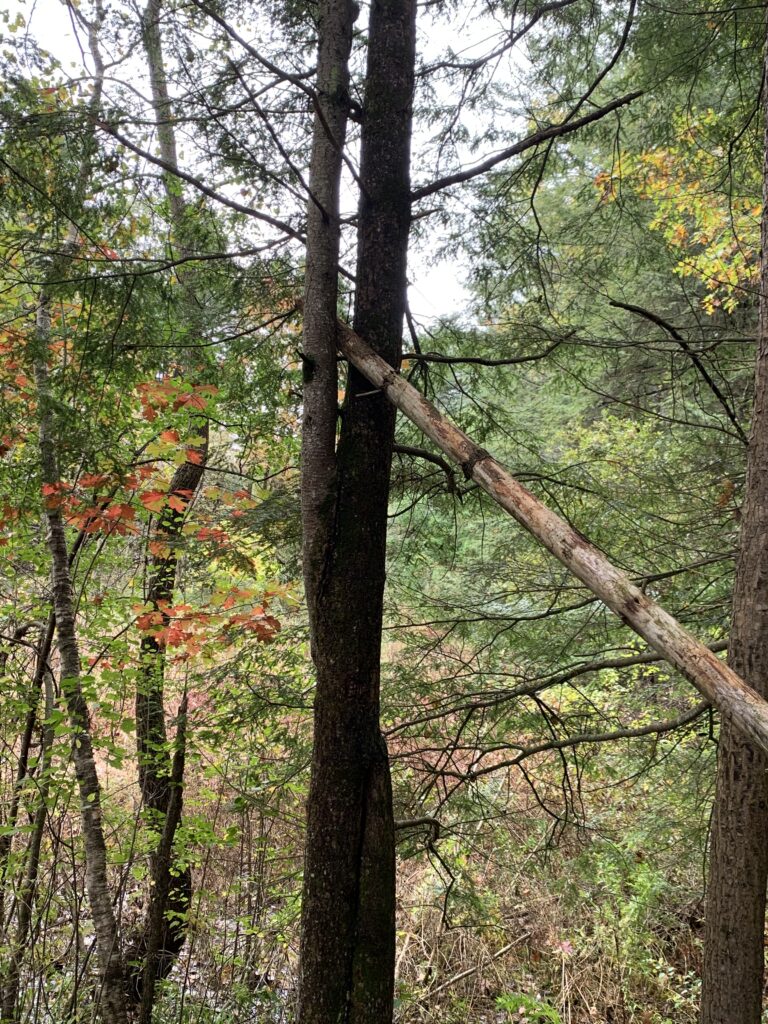
A singular twisted Eastern Hemlock
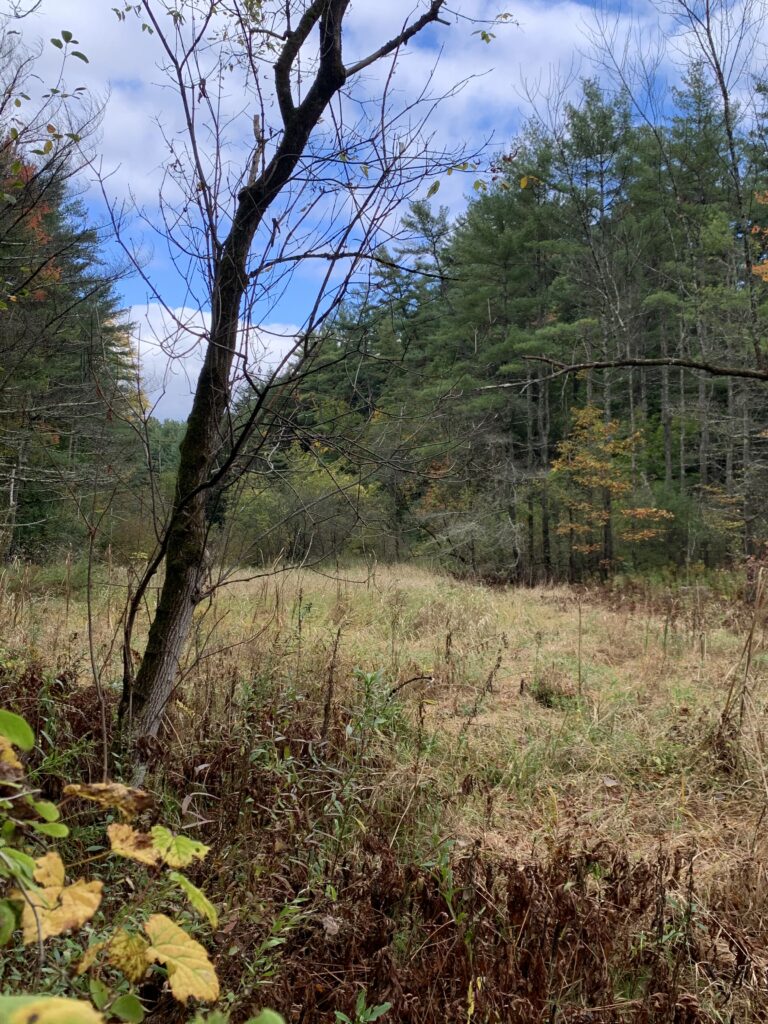
The Centennial Woods wetlands in all its autumn, mid-morning glory

Have a great day! I hope you enjoyed and will hang on for the ride as I learn as much as I can about this spot and Centennial Woods as a whole. See ya ’round! 🤙🏽

Howdy, Y’all!

This is my blog where I’m going to be keep you guys posted on a place I’m calling Hummingbird Point, an homage to a student who used the same spot a few years ago for NR 9 and showed it to me; I’m using this place as my phenology site under their blessing, and I’m excited to do so. It’s a lovely little alcove in Centennial Woods, out of the way of most foot traffic and in a fascinating edge habitat. I’m looking forward to getting to know the spot better this year and, more so, getting to share the phenological progression of this spot over the course of the year. Enjoy!

Skip to toolbar