Feeds:
Posts
Comments

Entry #1 – 10/16/2022

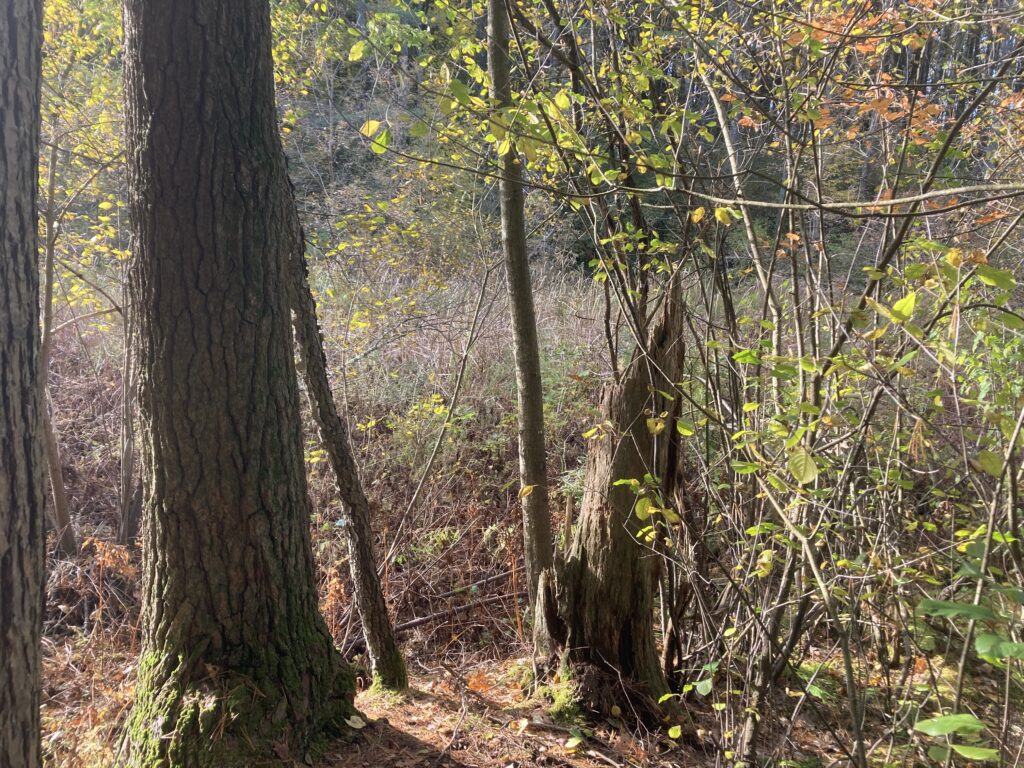
view from the edge of the high ground facing into the bog

https://goo.gl/maps/AYtXgMMDvT8sDsy67

Directions: Entering Centennial Woods from the main trailhead, continue along the main path. After crossing the bridge at the Muddy Buddies spot, head left and downhill at the fork in the trail. A few minutes later, after going across the first duckboard you get to, turn left and off the trail for ~20 feet until you spot the chair-shaped stump.

Why this place: It’s cool! It’s a tree kind of shaped like a throne!

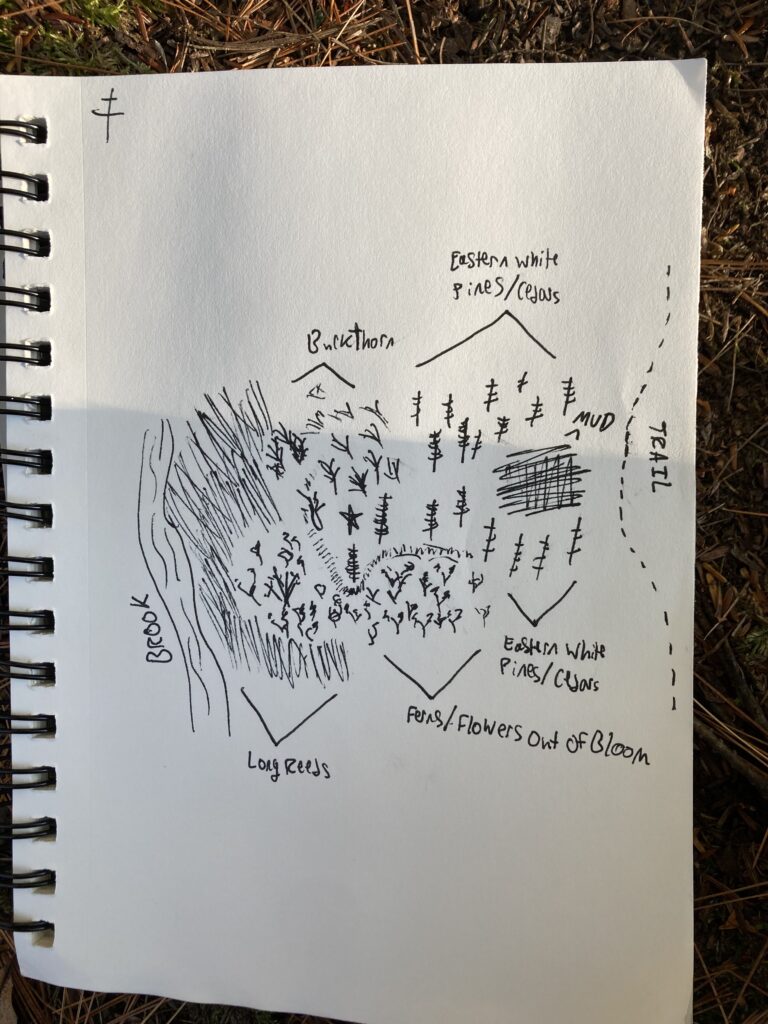
Vegetation: The vegetation starts out with a conifer stand just off the trail, devolving into more understory species and eventually into somewhat of a bog the deeper in you go.
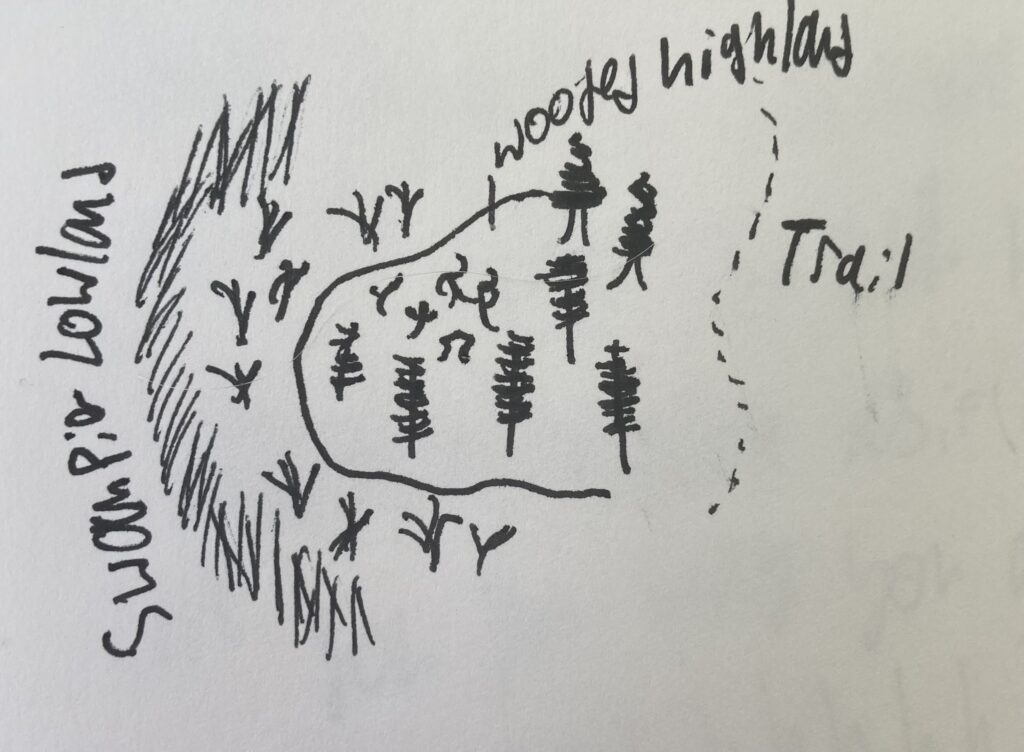
sketched map of the vegetation distribution

Main Woody Plants: Glossy Buckthorn, Eastern Hemlock, Eastern White Pine, Northern Red Oak

view of the stump in the direction of the trail

During the BioBlitz, I mostly explored just on UVM’s campus, and a little bit in Centennial Woods. I found the basic features of iNaturalist (those being just taking pictures, labeling, and uploading them) pretty easy and intuitive, but I could never really figure out how to connect it to the BioBlitz or the phenology stuff from earlier this year. I encountered a lot of species, mostly various small undergrowth plants and trees, but there were only a few that I was able to identify. It was interesting to see the different kinds of flora and fauna that were common in other places across the world, like South Africa, Korea, Ukraine, etc.

Entry #10 – 4/24/2023

Over time, my site has changed almost entirely phenologically, moving from winter to spring in the natural calendar. There have been a few additional fallen logs in the area, likely due to storms, but other than that the site’s layout is identical to when I first saw it.

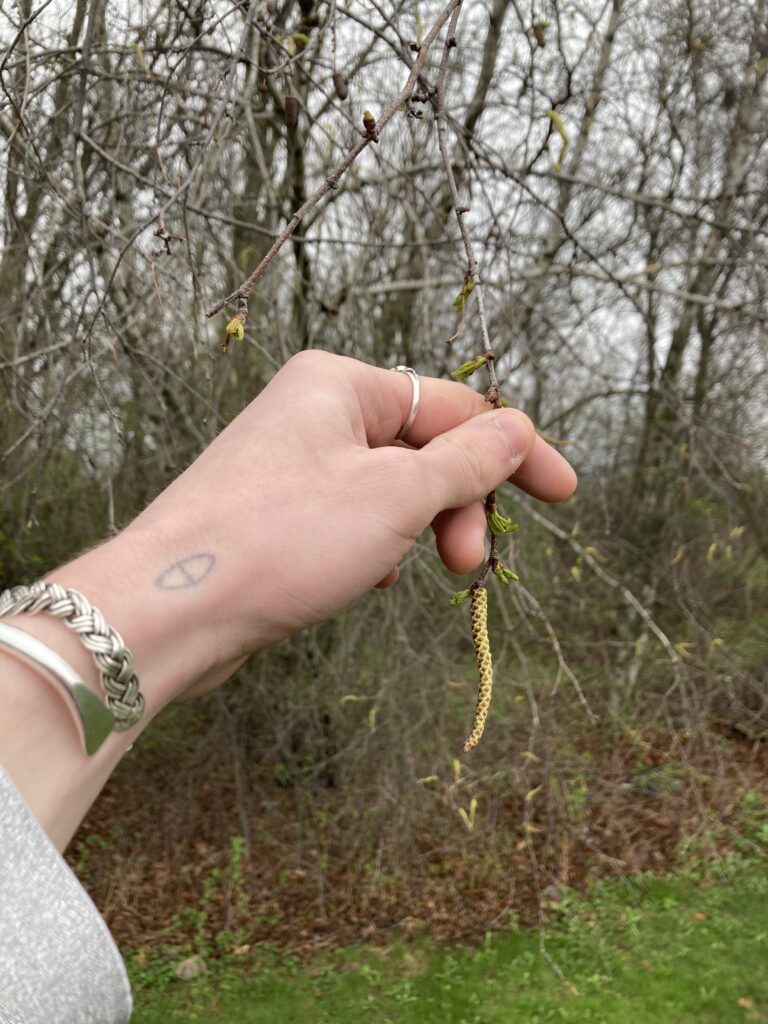
soon to be a cone

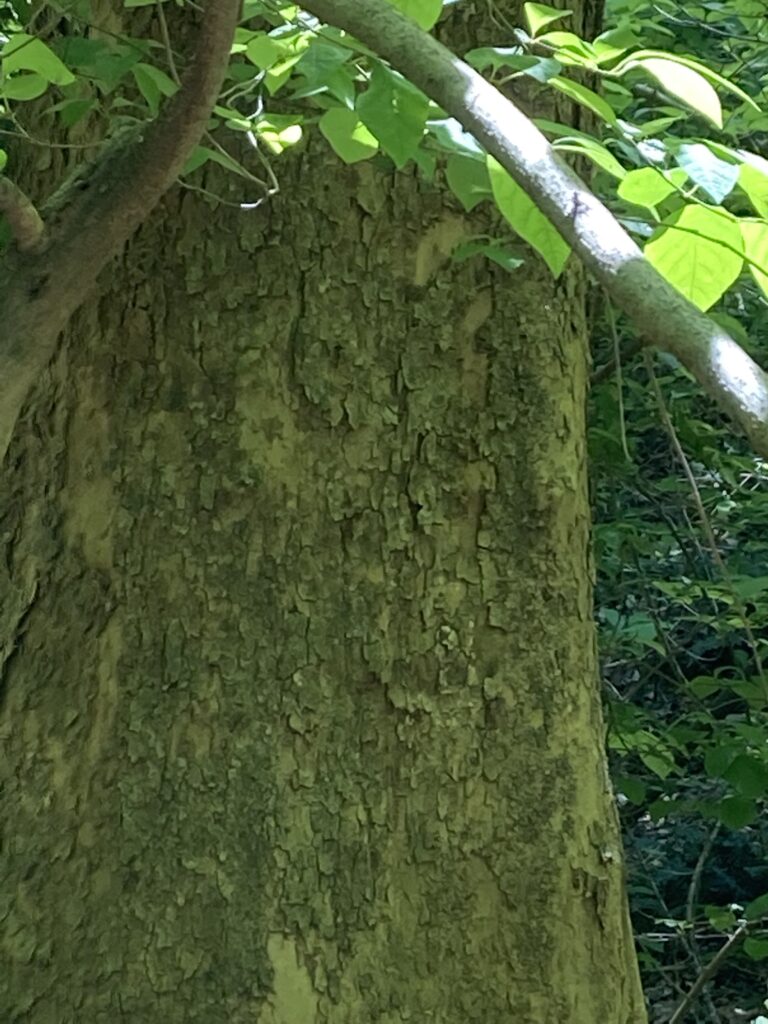
The major landmark of the area is my tree, its white bark standing out from the surrounding oaks and beeches pretty distinctly. I have also developed a general understanding of the area – I know where little breaks in the shrubbery that I can pass through are and things like that – although I’m not sure those can truly be counted as landmarks.

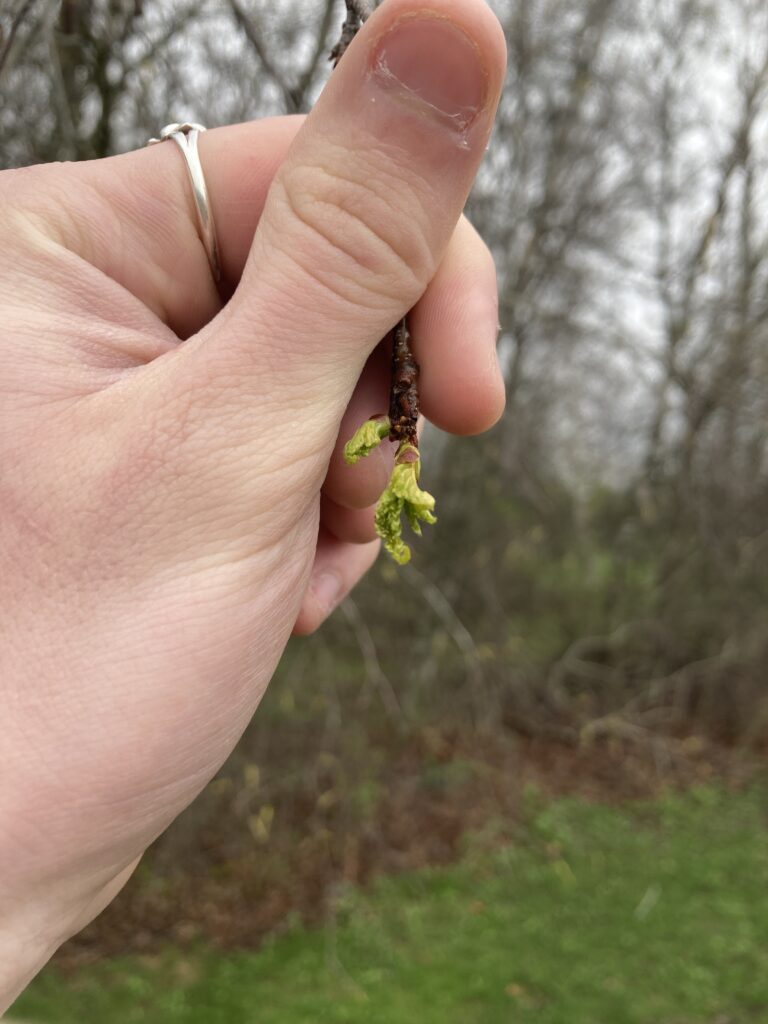
first leaves!!

My site is pretty dominated by nature, but the small trail that exists nearest to it in the woods could be considered an aspect of culture.

I don’t really consider myself a part of my place. That part of the woods, and indeed that tree, have existed long before I ever came there, and will continue to exist far in the future while I never go there again. I also haven’t changed the place at all or made any significant impact to its appearance, accessibility, or anything.

Entry #9: 4/10/2023

Finally, my tree has begun to show some phenological changes. During this visit, I noticed small cones growing from the ends of the branches, as well as maybe a little bit of budding at the twig tips.

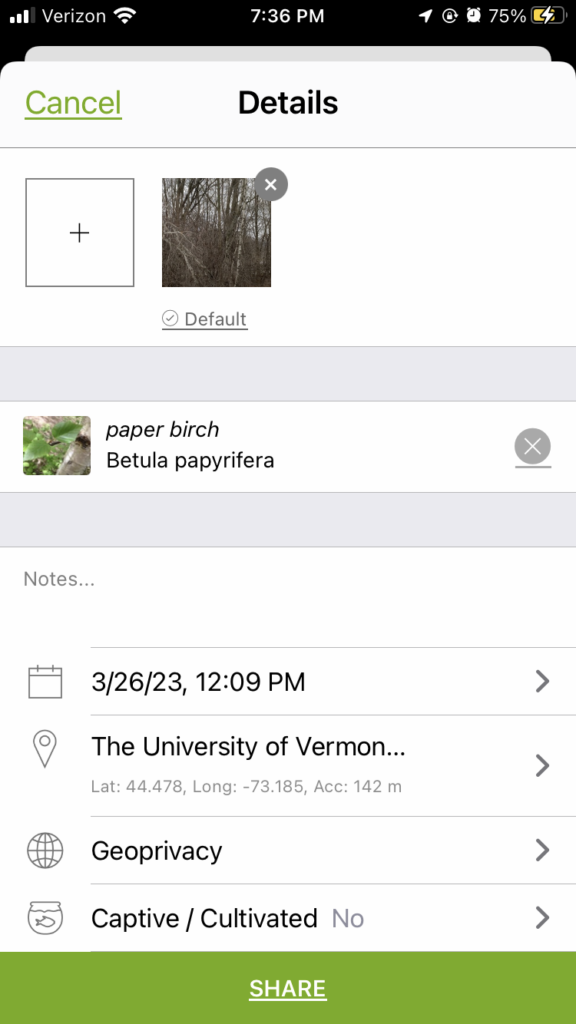
Entry #8 – 3/26/2023

There were no changes to my tree at all, at least as far as I could tell. It is possible that some of the twigs high up in the tree beyond my vision had started to bud, but none of the ones I could see had started so I doubt it. However, there has been a lot of snowmelt since last time I checked the tree, so the area does feel different phenologically.

Entry #7 – 3/9/2023

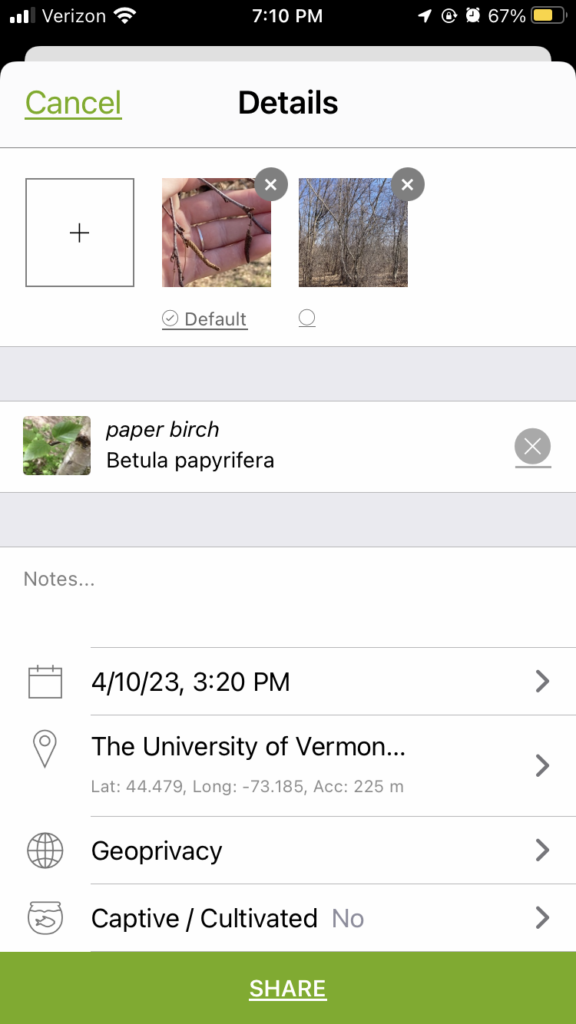
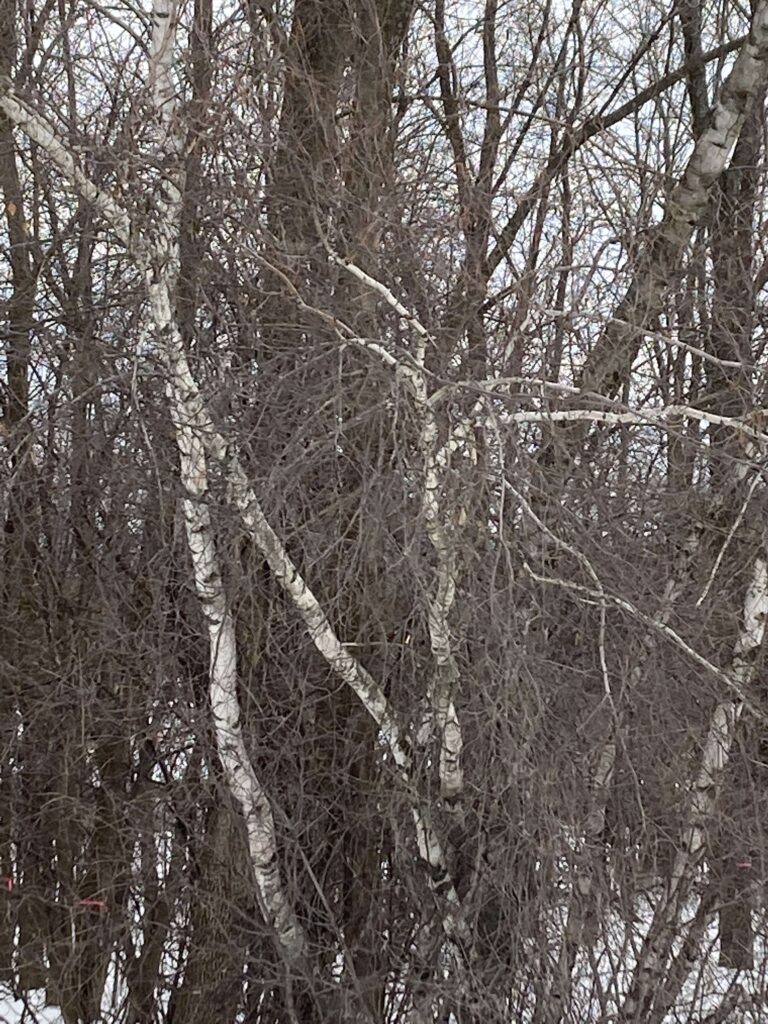
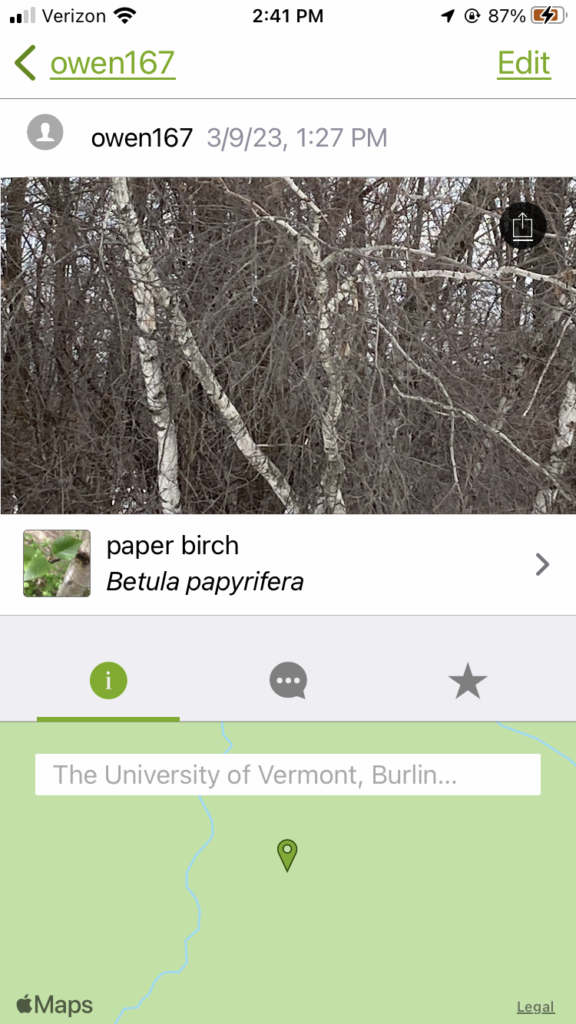
I went out to the woods near my spot and found a paper birch:

While this photo is not the best, I was able to distinguish this as a paper birch because of its distinctive white bark that was peeling in big paper-like strips as opposed to little flakes or peels. I couldn’t figure out how to do phenology in the iNaturalist app, this tree has no evidence of flowering.

Entry #6 – 2/20/2023

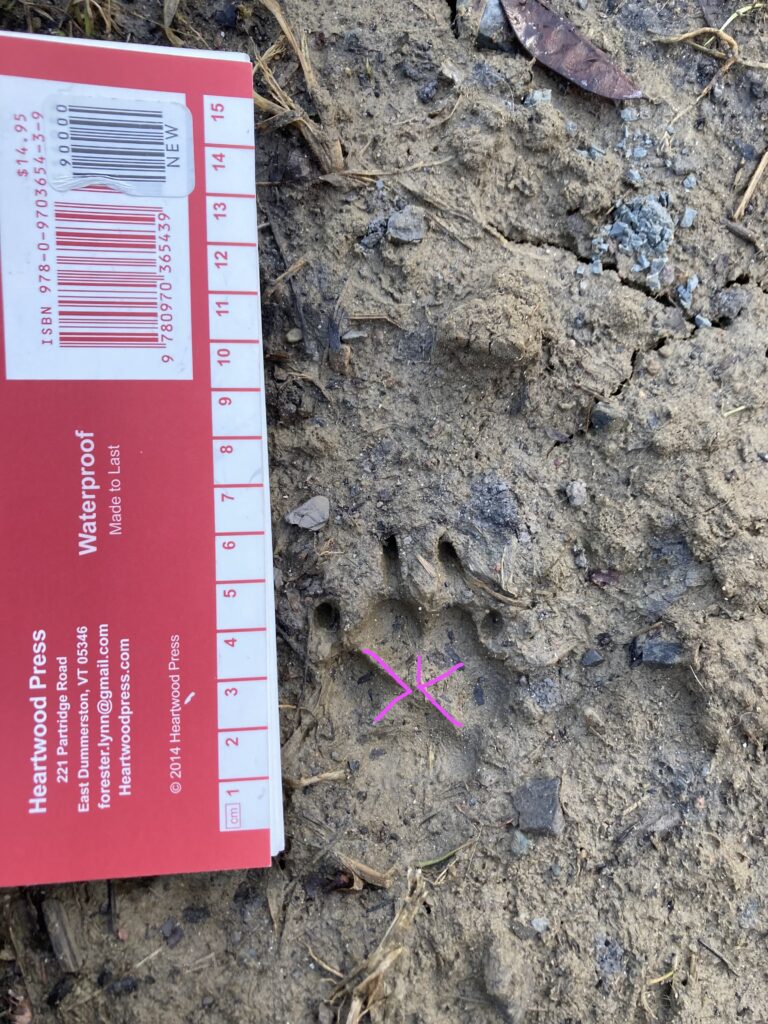
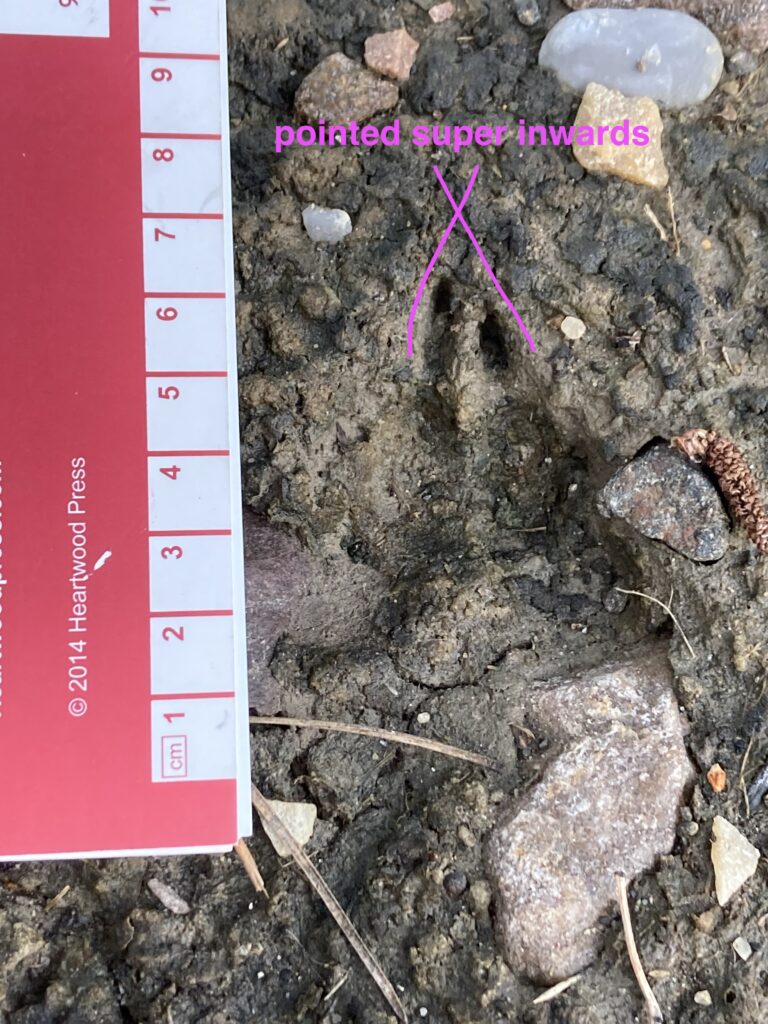
I mostly stuck around campus while I was looking for tracks, specifically the parking lot between the medical center and aiken complex. It was pretty easy to use the app, and I got three pretty good tracks:

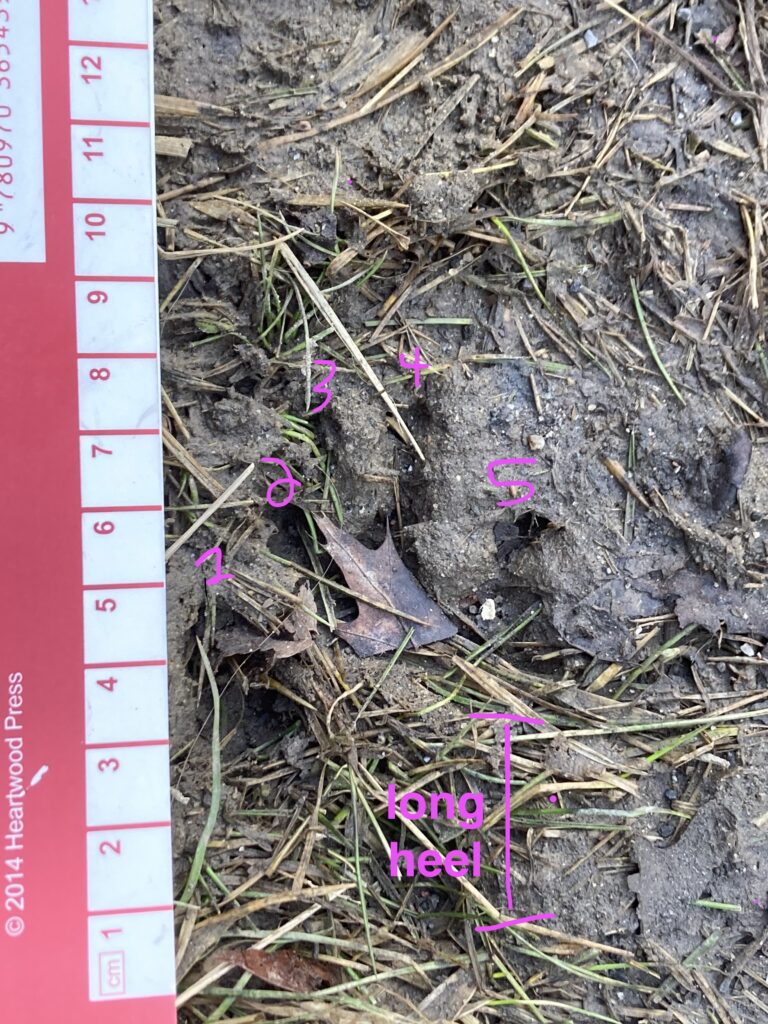
1) Raccoon

I thought that this track was likely a raccon for several reasons. First, it fits into the size range of 6-10 cm, coming in somewhere around 8. It also had 5 clawed toes, which are a little hard to see in the picture, and a long heel of the palm, which fits the general shape of a raccoon track.

2) Red Fox

This one I was a little less sure about. I went with red fox because of the size range (~5.5cm) and the 4 toes, but the thing that really stuck out to me was the way there was a circular indent all around and somewhat obscuring the toes. However, I have a sneaking suspicion that this one is really just a pet dog.

3) Coyote

This track is a little bit small to be a coyote (only about 6cm), but the distinct way the two front toes pointed in towards each other. The only other track with toes like that was the wolf, and this is definitely too small for that.

Entry #5 – 12/30/2023

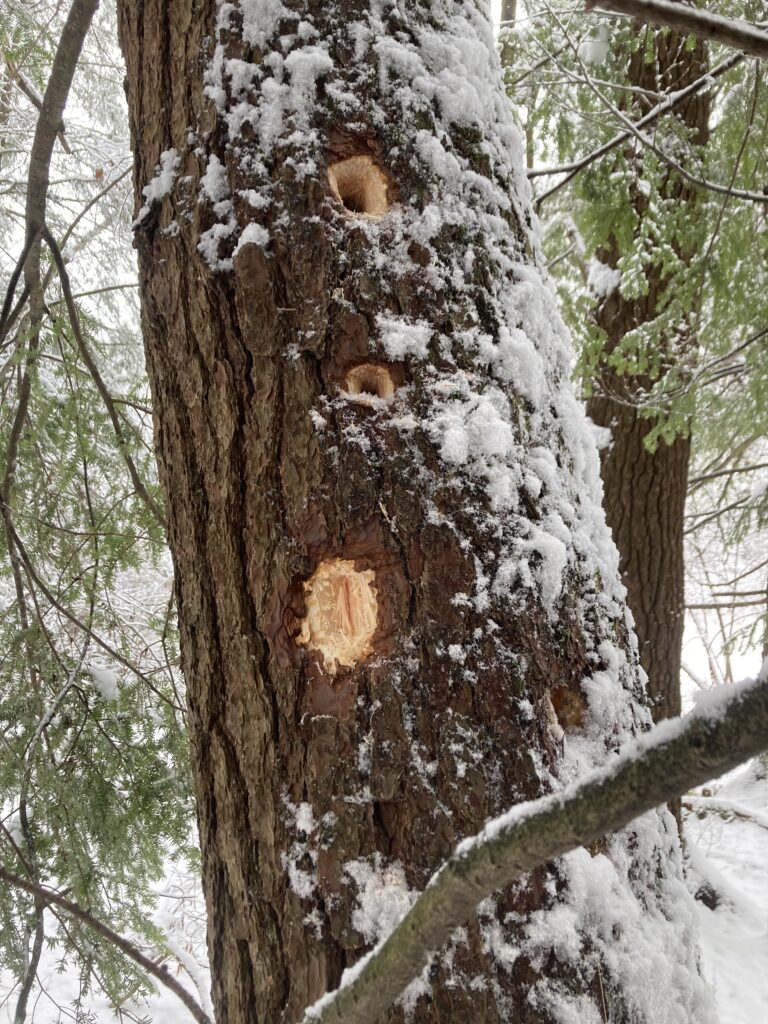
boreholes in a tree in my spot, showing evidence of woodpecker presence

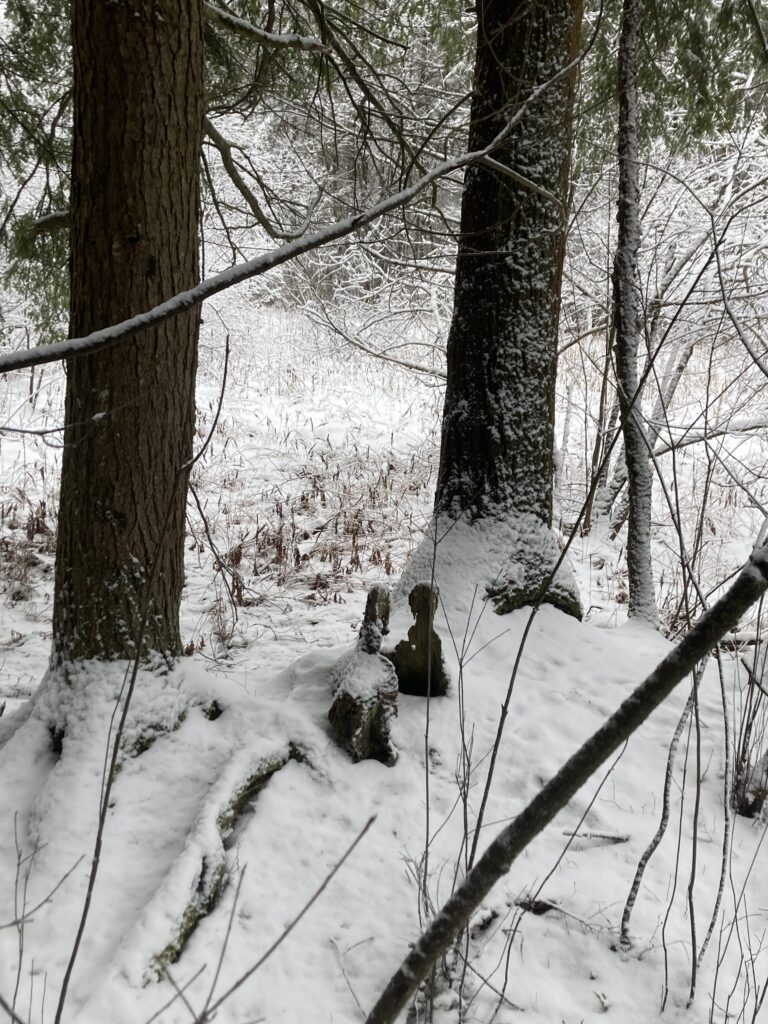
Not much has changed since my last visit a little over a month ago, other than the presence of snow covering everything. I believe that several of the buckthorn have fallen fully over and died, but I wasn’t precisely tracking them so I’m not totally sure. Other than that there is a little bit of degradation of the ferns shown in the background of the picture below, but that process had already begun last time.

Entry #4 – 12/10/22

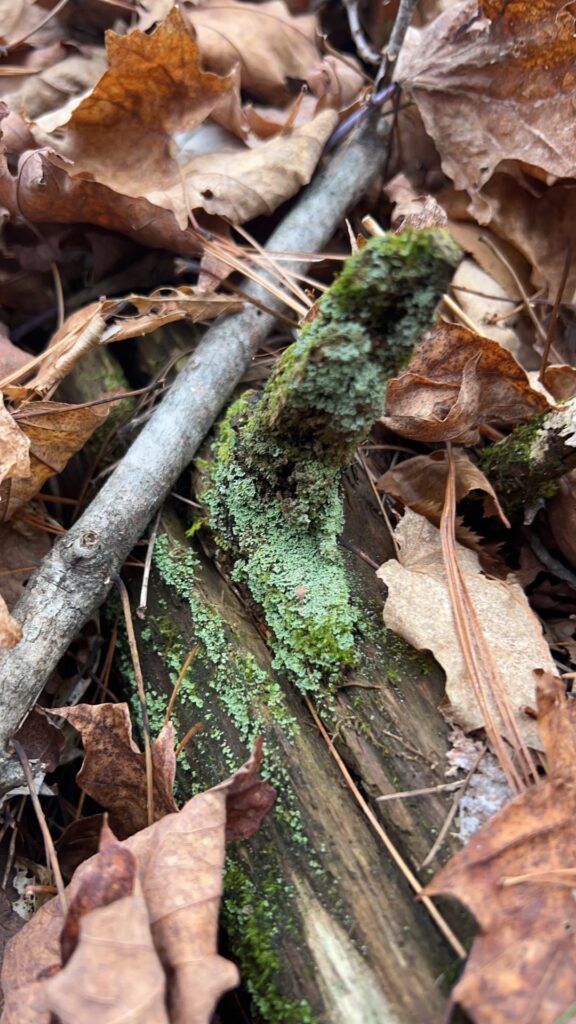
The foliage has totally disappeared. Alll the tree species and ferns/undergowth have withered and lost their leaves. The only green remaining in my spot is the moss. The leaf litter has gotten very thick around the edges where there are hardwoods that drop actual leaves. I have never noticed much animal activity in this spot, but the birdsong has definitley decreased.

the moss on a fallen log among all of the fallen leaves

My favorite aspect of my phenology spot is how comfy it is. Around the trees, there are elevated spots of earth with moss on them, which are great to sit on and take a minute to unwind and center myself.

Entry #3 – 11/28/2022

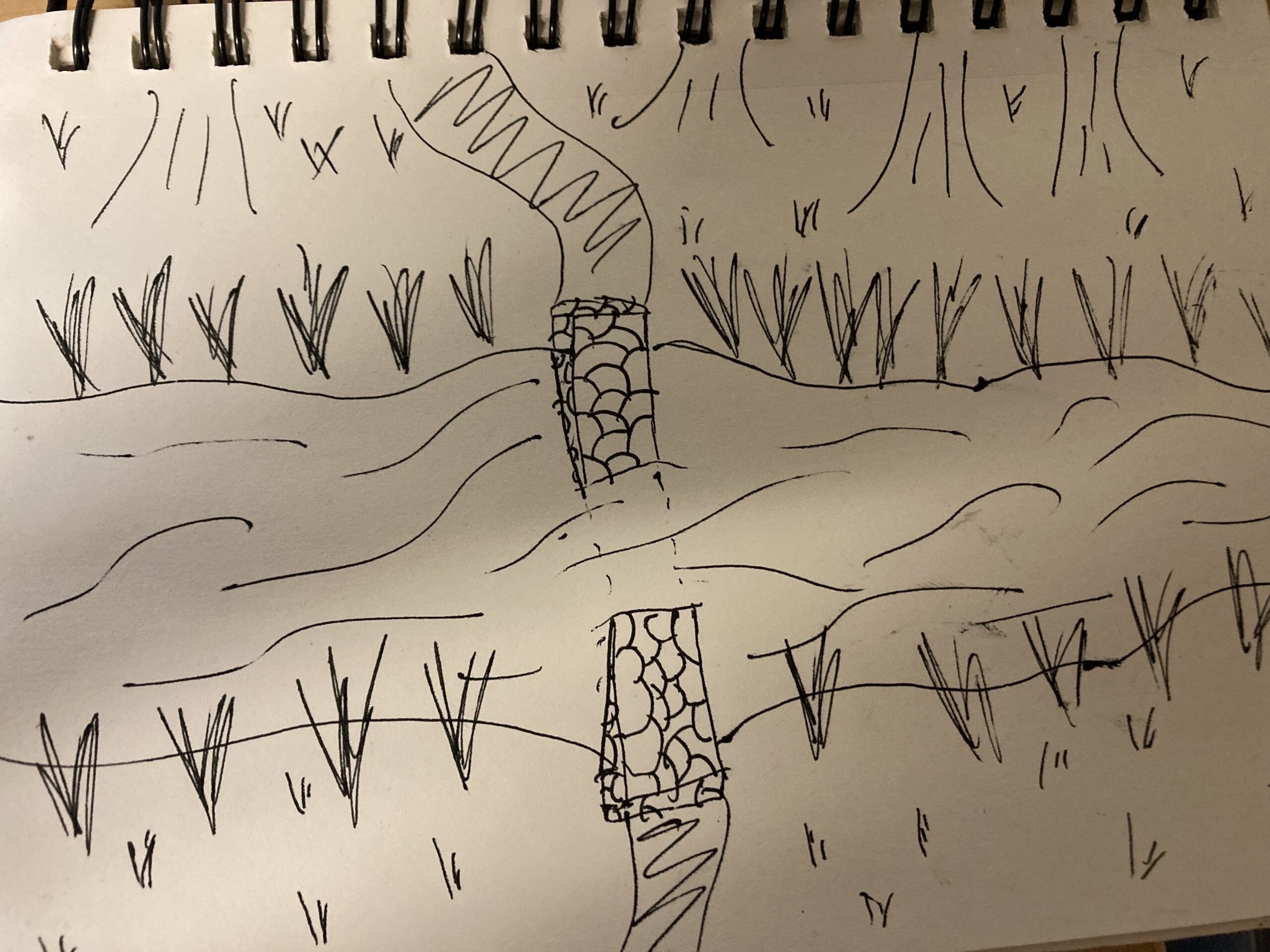
my back-home spot is a little creek crossing in glover archbold park in dc

https://goo.gl/maps/YEJCMNnZs6WUpCRK6

crazy tree that looks like a yin yang (this was a long time ago)
sketch of the place where the stone bridge sinks underwater (thank you muriel bowser)

ECOLOGY/PHENOLOGY

this spot has a couple glossy buckthorns, similar to my vermont spot, but is otherwise totally different: a bunch of white oaks, american beeches, and cottonwoods as opposed to the softwoods of my spot. using the buckthorns as an indicator, this spot seems to be about a month behind the vermont spot phenologically.

Entry #2 – 11/7/2022

Reflection: The first 5 of my 15 minutes were sort of interrupted by people running with their dogs. After that, I started to get deeper into a meditative state, and feel more in tune with the spot. I felt the breeze and the hot sun on my arms. Towards the beggining, I heard a more warbly bird, and towards the end a screechier one, but other than that there was only the sound of falling leaves. I could smell the thick moss all around me.

birds-eye drawing, the star represents where I was sitting

Changes in Vegetation:

  • the flowers are almost entirely gone, and the ferns are very wilted
  • the buckthorn are getting very sparse with leaves
  • a big tree fell amongst the buckthorn on the edge, crushing a couple of them

Older Posts »

Skip to toolbar