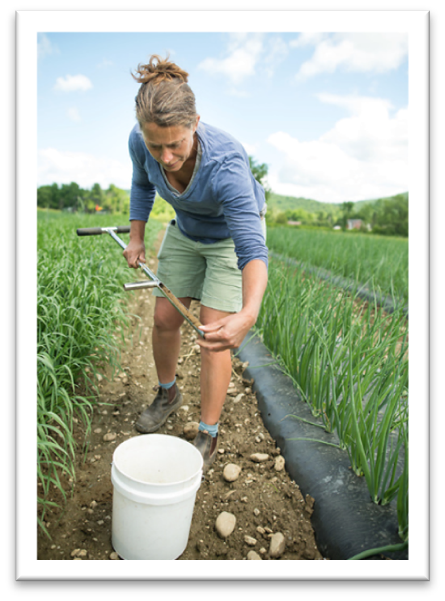
{"id":3698,"date":"2022-03-25T08:26:44","date_gmt":"2022-03-25T12:26:44","guid":{"rendered":"https:\/\/blog.uvm.edu\/outcropn\/?p=3698"},"modified":"2022-03-25T12:39:58","modified_gmt":"2022-03-25T16:39:58","slug":"feeling-the-squeeze-manage-nutrients-efficiently-to-offset-high-fertilizer-prices","status":"publish","type":"post","link":"https:\/\/blog.uvm.edu\/outcropn\/2022\/03\/25\/feeling-the-squeeze-manage-nutrients-efficiently-to-offset-high-fertilizer-prices\/","title":{"rendered":"Feeling the Squeeze: Manage Nutrients Efficiently to Offset High Fertilizer Prices"},"content":{"rendered":"\n<p>With the reality of high fertilizer prices, we encourage you to manage nutrients on your farm as efficiently as possible! The goal this year should be to reduce input costs without sacrificing yield. Below are three strategies that can help you manage nutrient supplies resourcefully.<\/p>\n\n\n\n<p><strong>1) <\/strong> <strong><em>Don&#8217;t Guess, Soil Test<\/em><\/strong><\/p>\n\n\n\n<div class=\"wp-block-image\"><figure class=\"alignright size-full is-resized\"><a href=\"https:\/\/i0.wp.com\/blog.uvm.edu\/outcropn\/files\/2022\/03\/heather-soil-test.png?ssl=1\"><img data-recalc-dims=\"1\" loading=\"lazy\" decoding=\"async\" data-attachment-id=\"3699\" data-permalink=\"https:\/\/blog.uvm.edu\/outcropn\/2022\/03\/25\/feeling-the-squeeze-manage-nutrients-efficiently-to-offset-high-fertilizer-prices\/heather-soil-test\/\" data-orig-file=\"https:\/\/i0.wp.com\/blog.uvm.edu\/outcropn\/files\/2022\/03\/heather-soil-test.png?fit=445%2C601&amp;ssl=1\" data-orig-size=\"445,601\" data-comments-opened=\"1\" data-image-meta=\"{&quot;aperture&quot;:&quot;0&quot;,&quot;credit&quot;:&quot;&quot;,&quot;camera&quot;:&quot;&quot;,&quot;caption&quot;:&quot;&quot;,&quot;created_timestamp&quot;:&quot;0&quot;,&quot;copyright&quot;:&quot;&quot;,&quot;focal_length&quot;:&quot;0&quot;,&quot;iso&quot;:&quot;0&quot;,&quot;shutter_speed&quot;:&quot;0&quot;,&quot;title&quot;:&quot;&quot;,&quot;orientation&quot;:&quot;0&quot;}\" data-image-title=\"heather-soil-test\" data-image-description=\"\" data-image-caption=\"\" data-medium-file=\"https:\/\/i0.wp.com\/blog.uvm.edu\/outcropn\/files\/2022\/03\/heather-soil-test.png?fit=222%2C300&amp;ssl=1\" data-large-file=\"https:\/\/i0.wp.com\/blog.uvm.edu\/outcropn\/files\/2022\/03\/heather-soil-test.png?fit=445%2C601&amp;ssl=1\" src=\"https:\/\/i0.wp.com\/blog.uvm.edu\/outcropn\/files\/2022\/03\/heather-soil-test.png?resize=223%2C301&#038;ssl=1\" alt=\"\" class=\"wp-image-3699\" width=\"223\" height=\"301\" srcset=\"https:\/\/i0.wp.com\/blog.uvm.edu\/outcropn\/files\/2022\/03\/heather-soil-test.png?w=445&amp;ssl=1 445w, https:\/\/i0.wp.com\/blog.uvm.edu\/outcropn\/files\/2022\/03\/heather-soil-test.png?resize=222%2C300&amp;ssl=1 222w\" sizes=\"auto, (max-width: 223px) 100vw, 223px\" \/><\/a><figcaption>Dr. Heather Darby soil sampling.<\/figcaption><\/figure><\/div>\n\n\n\n<p>The first, best step to efficient fertilizer management is to discover what your soil needs to support crop growth. <strong>Soils should be sampled every<\/strong> <strong>three years<\/strong> and when crops are rotated. A standard soil test ($15 at <a href=\"https:\/\/www.uvm.edu\/extension\/agricultural-and-environmental-testing-lab\">UVM Agricultural and Environmental Testing Lab<\/a>) will measure available phosphorous (P), potassium (K), and micronutrients in soil as well as pH and organic matter content. Individual fields will vary greatly in their capacity to supply essential nutrients such as P and K. Check out this factsheet explaining <a href=\"https:\/\/www.uvm.edu\/sites\/default\/files\/Department-of-Plant-and-Soil-Science\/AGTesting\/How_to_Take_a_Soil_Sample.pdf\">how to take a soil test<\/a>. Nitrogen (N) is a different story. Nitrogen recommendations for corn are not based on a standard soil test but are an estimate made from expected yield, N credits from previous crop and manure, and soil drainage class. This is where the Pre-Sidedress Nitrate Test (PSNT) comes into play.<\/p>\n\n\n\n<p><strong>2)  <em>Take All the Credit You Can<\/em><\/strong><\/p>\n\n\n\n<p>Your livestock\u2019s manure is an excellent source of nutrients for your crops \u2013 take a <a href=\"https:\/\/www.uvm.edu\/sites\/default\/files\/Department-of-Plant-and-Soil-Science\/AGTesting\/Manure_Sample_Submission_Form_2019_form1.pdf\">manure sample<\/a> to estimate the application rate needed. Check out this factsheet explaining <a href=\"https:\/\/www.uvm.edu\/sites\/default\/files\/media\/Manure3.pdf\">how to take a manure test<\/a>.<\/p>\n\n\n\n<p>Unlike synthetic fertilizers, the availability of N from manure will not be 100%, so <strong>consider incorporating the manure immediately<\/strong> to increase available N. You might also consider adding a nitrogen inhibitor to reduce manure-N losses.<\/p>\n\n\n\n<p>Another consideration is modifying your cropping system. <strong>Plowing down a legume or grass hay crop can provide the next crop of corn with all or most of its N requirements.<\/strong> Nitrogen that is tied up in roots and above-ground biomass is released over time as soil microorganisms break down the plants and release N in forms that plants can use.<\/p>\n\n\n\n<p><strong>3)<\/strong>  <strong><em>Resist the Impulse to Top-off<\/em><\/strong><\/p>\n\n\n\n<p>The plant\u2019s capacity to uptake nutrients does have a limit and going beyond that limit is like flushing money down the toilet. The same rate of actual N should be applied regardless of the fertilizer source.<\/p>\n\n\n\n<p>To learn more about fertilizer and soil management feel free to contact Dr. Heather Darby at <a href=\"mailto:heather.darby@uvm.edu\">heather.darby@uvm.edu<\/a> or (802) 524- 6501. <strong>You can also refer to the resources below:<\/strong><\/p>\n\n\n\n<ul class=\"wp-block-list\"><li><a href=\"https:\/\/www.uvm.edu\/sites\/default\/files\/Northwest-Crops-and-Soils-Program\/NutrientRec_BR1390.3_Sept2020.pdf\">Nutrient Recommendations for Field Crops in Vermont<\/a>, Revised September 2020<\/li><li><a href=\"https:\/\/www.uvm.edu\/sites\/default\/files\/media\/manage-nutrients-efficiently-to-offset-high-fertilizer-prices.pdf\">Manage Nutrients Efficiently to Offset High Fertilizer Prices<\/a>, by Dr. Heather Darby<\/li><li><a href=\"https:\/\/www.uvm.edu\/sites\/default\/files\/media\/maximizing-manure-nitrogen.pdf\">Maximizing Manure Nitrogen<\/a>, by Dr. Heather Darby<\/li><li><a href=\"https:\/\/www.uvm.edu\/sites\/default\/files\/media\/Vermont_P_Index_User_Guide_v6.0_Final_Oct2017.pdf\">Vermont Phosphorus Index User Guide<\/a>, version 6.0 revised October 2017<\/li><li><a href=\"https:\/\/www.uvm.edu\/extension\/nwcrops\">UVM Extension Northwest Crops and Soils Program<\/a> webpage<\/li><li><a href=\"https:\/\/www.uvm.edu\/extension\/agriculture\/nutrient-management-and-water-quality\">UVM Extension Nutrient Management and Water Quality<\/a> webpage<\/li><li><a href=\"https:\/\/www.youtube.com\/user\/cropsoilsvteam\">UVM Extension Northwest Crops and Soils Program\u2019s YouTube Channel<\/a><\/li><\/ul>\n","protected":false},"excerpt":{"rendered":"<p>With the reality of high fertilizer prices, we encourage you to manage nutrients on your farm as efficiently as possible! The goal this year should be to reduce input costs without sacrificing yield. Below are three strategies that can help you manage nutrient supplies resourcefully. 1) Don&#8217;t Guess, Soil Test The first, best step to &hellip; <\/p>\n<p class=\"link-more\"><a href=\"https:\/\/blog.uvm.edu\/outcropn\/2022\/03\/25\/feeling-the-squeeze-manage-nutrients-efficiently-to-offset-high-fertilizer-prices\/\" class=\"more-link\">Continue reading<span class=\"screen-reader-text\"> &#8220;Feeling the Squeeze: Manage Nutrients Efficiently to Offset High Fertilizer Prices&#8221;<\/span><\/a><\/p>\n","protected":false},"author":5031,"featured_media":0,"comment_status":"open","ping_status":"open","sticky":false,"template":"","format":"standard","meta":{"_monsterinsights_skip_tracking":false,"_monsterinsights_sitenote_active":false,"_monsterinsights_sitenote_note":"","_monsterinsights_sitenote_category":0,"jetpack_post_was_ever_published":false,"_jetpack_newsletter_access":"","_jetpack_dont_email_post_to_subs":false,"_jetpack_newsletter_tier_id":0,"_jetpack_memberships_contains_paywalled_content":false,"_jetpack_memberships_contains_paid_content":false,"footnotes":"","jetpack_publicize_message":"","jetpack_publicize_feature_enabled":true,"jetpack_social_post_already_shared":true,"jetpack_social_options":{"image_generator_settings":{"template":"highway","default_image_id":0,"font":"","enabled":false},"version":2}},"categories":[36679],"tags":[36682,708156,708157,579,125503],"class_list":["post-3698","post","type-post","status-publish","format-standard","hentry","category-out-croppings","tag-crops","tag-fertiizer","tag-nutrient","tag-research","tag-soil-health","entry"],"jetpack_publicize_connections":[],"featured_image_src":null,"featured_image_src_square":null,"author_info":{"display_name":"crdavids","author_link":"https:\/\/blog.uvm.edu\/outcropn\/author\/crdavids\/"},"jetpack_featured_media_url":"","jetpack_sharing_enabled":true,"jetpack_shortlink":"https:\/\/wp.me\/p67qLh-XE","jetpack-related-posts":[],"_links":{"self":[{"href":"https:\/\/blog.uvm.edu\/outcropn\/wp-json\/wp\/v2\/posts\/3698","targetHints":{"allow":["GET"]}}],"collection":[{"href":"https:\/\/blog.uvm.edu\/outcropn\/wp-json\/wp\/v2\/posts"}],"about":[{"href":"https:\/\/blog.uvm.edu\/outcropn\/wp-json\/wp\/v2\/types\/post"}],"author":[{"embeddable":true,"href":"https:\/\/blog.uvm.edu\/outcropn\/wp-json\/wp\/v2\/users\/5031"}],"replies":[{"embeddable":true,"href":"https:\/\/blog.uvm.edu\/outcropn\/wp-json\/wp\/v2\/comments?post=3698"}],"version-history":[{"count":3,"href":"https:\/\/blog.uvm.edu\/outcropn\/wp-json\/wp\/v2\/posts\/3698\/revisions"}],"predecessor-version":[{"id":3702,"href":"https:\/\/blog.uvm.edu\/outcropn\/wp-json\/wp\/v2\/posts\/3698\/revisions\/3702"}],"wp:attachment":[{"href":"https:\/\/blog.uvm.edu\/outcropn\/wp-json\/wp\/v2\/media?parent=3698"}],"wp:term":[{"taxonomy":"category","embeddable":true,"href":"https:\/\/blog.uvm.edu\/outcropn\/wp-json\/wp\/v2\/categories?post=3698"},{"taxonomy":"post_tag","embeddable":true,"href":"https:\/\/blog.uvm.edu\/outcropn\/wp-json\/wp\/v2\/tags?post=3698"}],"curies":[{"name":"wp","href":"https:\/\/api.w.org\/{rel}","templated":true}]}}