
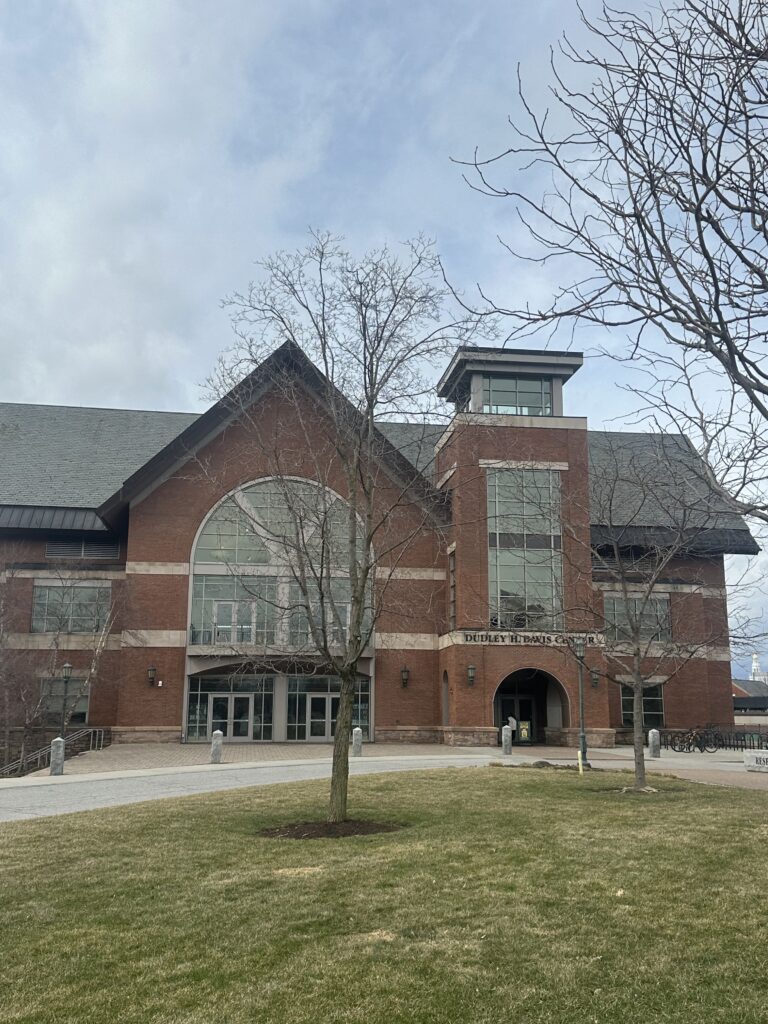
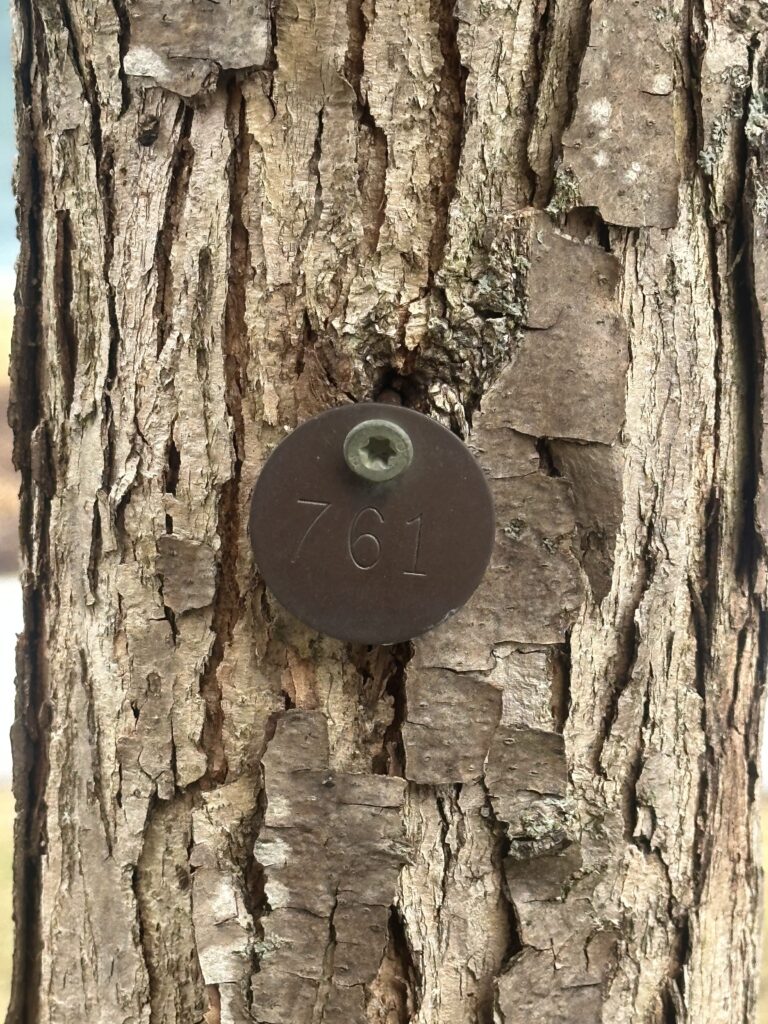
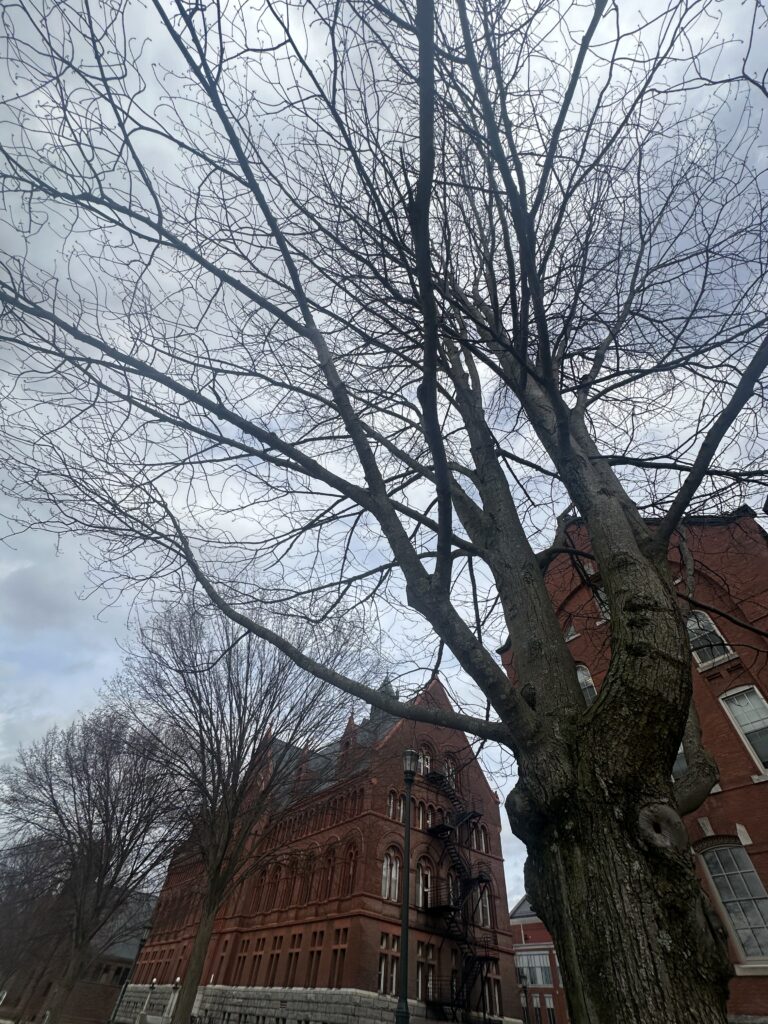
At 2:00 in the afternoon on the 3rd of April, 2025, I set off to chart the phenological changes among five different trees on the University of Vermont campus. I was looking for a red oak, sugar maple, white oak, red maple, and a Norway maple, respectively. Being a Pennsylvanian, I am used to early April being the time when trees start to bloom, when they flood my nose with allergens, and get ready for the pastel petals to bestow the landscape.
However, Vermont is not Pennsylvania. Vermont is about seven degrees higher on the Earth, and about twenty degrees colder at any given time. Presumptuously, I already knew there would not be much to talk about when reviewing these five trees. This would not stop me from delicately observing the flora anyway.
What’s phenophases got to do with it?
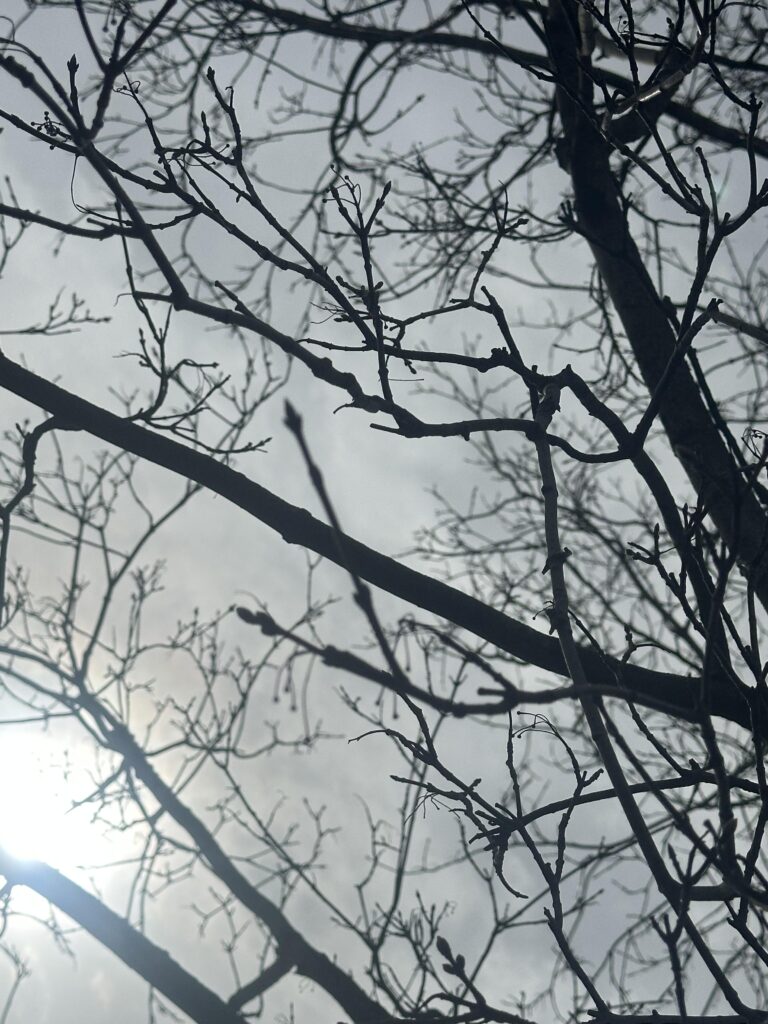
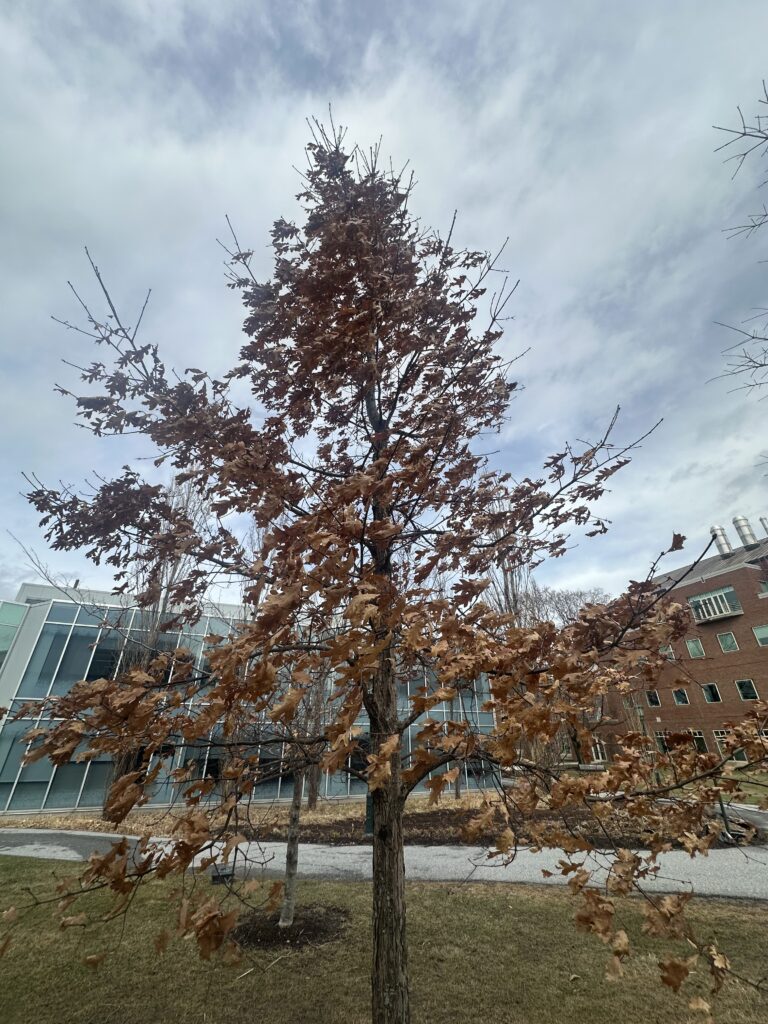
Upon any deciduous’ emergence from its winter rest, they begin to produce small buds on their nodes. This is common practice and the first indicator of springtime phenophase. According to National Phenology Network’s 2017 draft of Phenophase Primer for Plants, “‘Initial growth’ is a phenophase that observers will watch for when their chosen plant is an annual or perennial forb or grass, sedge or rush. It captures the first growth and emergence of leaves from a germinating seed or from a dormant plant at the beginning of a plant’s active seasons” What this tells me is that none of the trees I observed were in their initial growth stage. There were no leaves emerging… yet. I could tell that they were all getting ready to begin shortly, and as of late April, the initial growth phase has happened to most trees on campus, including these five.

When exploring other topics that the National Phenology Network has to offer, I found a map of 2025’s spring leaf index. The information they provided showed that I was in fact correct with my claims: leaves did not begin sprouting when I took my walk.
References
Guertin, P., Barnett, L., Denny, E. G., & Schaffer, S. N. (2017, June). Phenophase Primer for Plants [Understanding Plant Phenophases for Nature’s Notebook]. USA National Phenology.