
When I was tasked with identifying wildlife in Burlington, I was eager to further investigate the area around me. I did not want to go too far from home, instead opting to expand my usual walk around the block, and explore the neighborhoods just outside of campus.
This lead me to Calahan Park. A small area inside a few streets of houses, designated for two baseball fields and a hockey rink. As I walked around the park, I made sure to look for prints, birds, unique trees, and anything else that looked peculiar. Using the iNaturalist app, I was able to take pictures of what I found to be interesting, and it came up with suggestions to what they could be. In total, I made 9 posts, but I only want to share the best of the best.
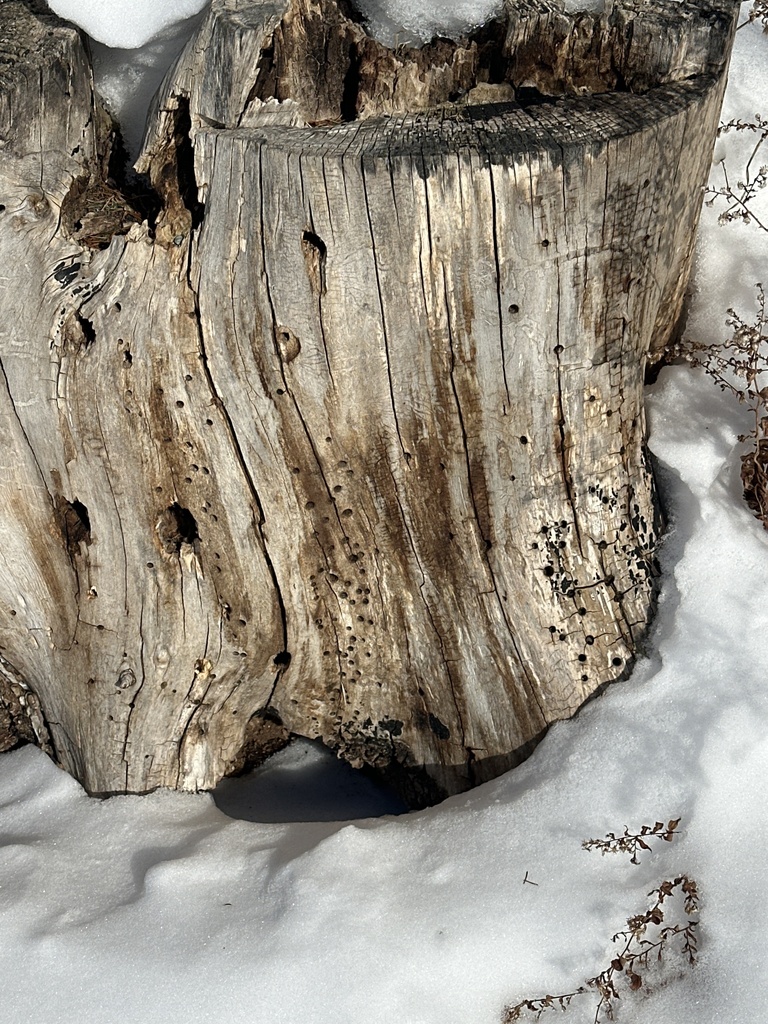
Winged and Once-winged Insects Stump
When moths and beetles lay their eggs, they nest them deep within trees. This keeps the egg safe until the insect can emerge a larva and fend for itself. In this case, I found a tree stump with many different holes in the wood from said insect species. I didn’t know what specific bugs they were, so I simply googled the right questions to lead me to find that this was a mix of various winged insects.
A Squirrel’s Home
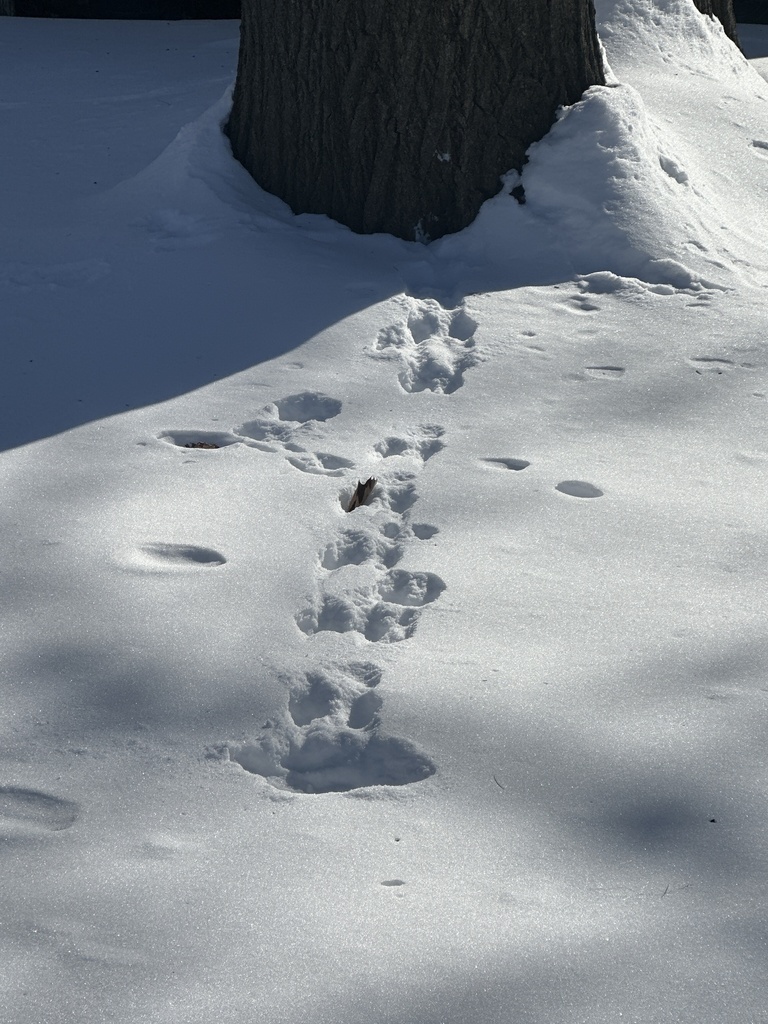
Near the middle of my walk around the park, I found myself next to a row of houses with a barbed wire fence separating their properties with the grounds. I didn’t mean to snoop, honestly, but I couldn’t help to notice these tracks emerging from some sort of hiding hole for the animal. Originally, I thought this couldn’t be a squirrel, since my knowledge of them tells me they nest in trees. After I posted on iNaturalist, simply identifying this as “mammal” someone made me away in a comment that this is a squirrel.
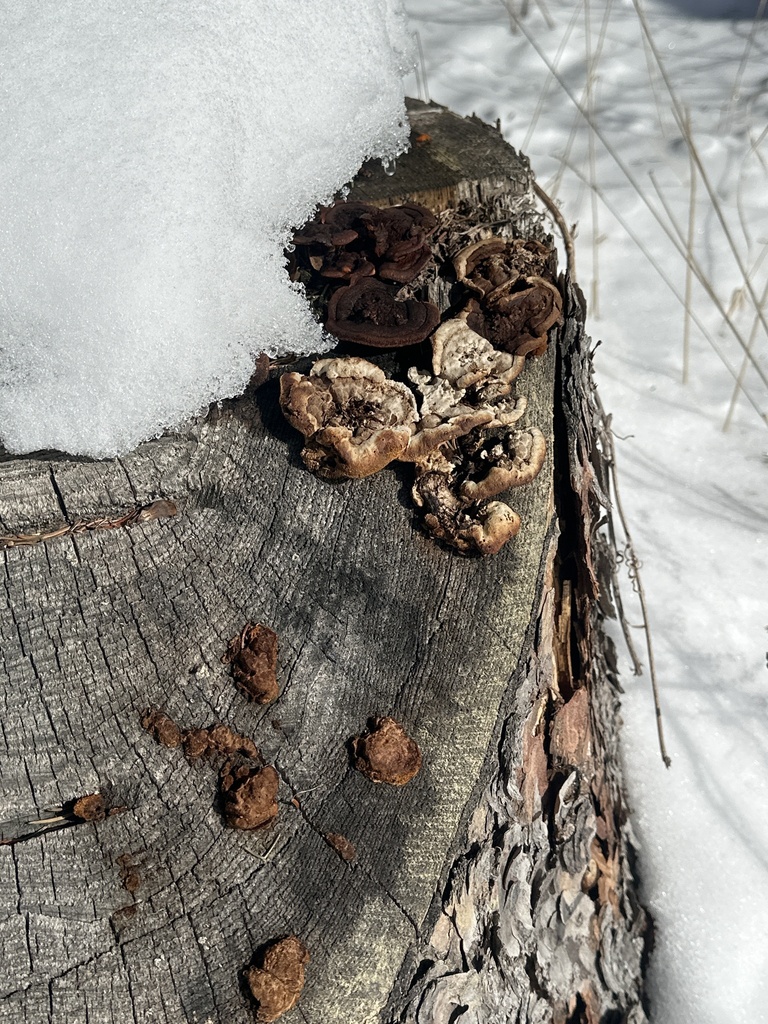
What Kind of Mushroom is This?
Once again, I am looking at a stump. What would be considered rather boring in most cases, looking for different cases of nature really made me see all the little interactions between species. I saw the brown smudges on the top of a stump, expecting they were scat. As I got closer I realized they were mushrooms. I looked up trail guides for brown mushrooms in Vermont, and the closest match I could find was Genus Gloeophyllum. The mushrooms that I found were definitely early on in their life, stunted in development by winter’s freezing temperatures.
A Tree For a Change
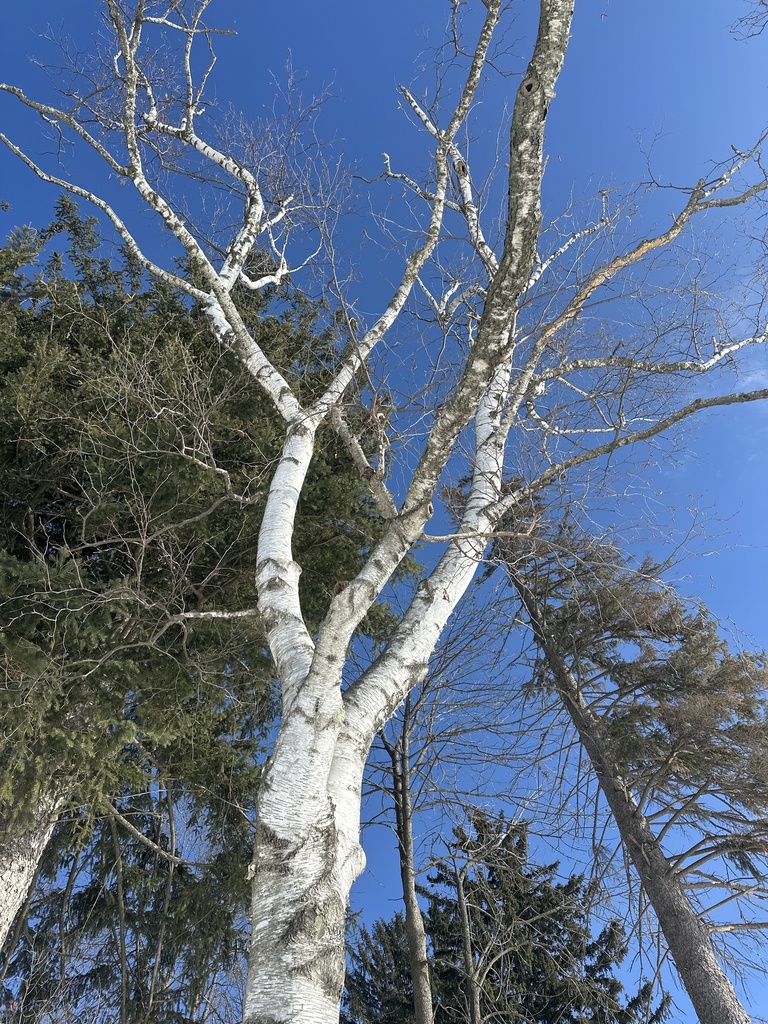
I was hesitant to include any flora at all when I first set off on my journey. Since I already looked for tree species before, I wanted this walk to be for animals. When I saw this massive, beautiful paper birch, I changed my mind. The way the ghoulish branches sprawl themselves thin in an effort to paint the sky was the true indicator that it is the dead of winter. Not one leaf sat upon a twig, and the buds had yet to emerge.