
The Great Change
Coming back to Red Rocks Park for the first time all year, I noticed one thing out of the ordinary. A change so drastic that I had never experienced something like it in my whole life up until this point. For the first time in my personal history, I was able to stand and walk on a very frozen Lake Champlain.
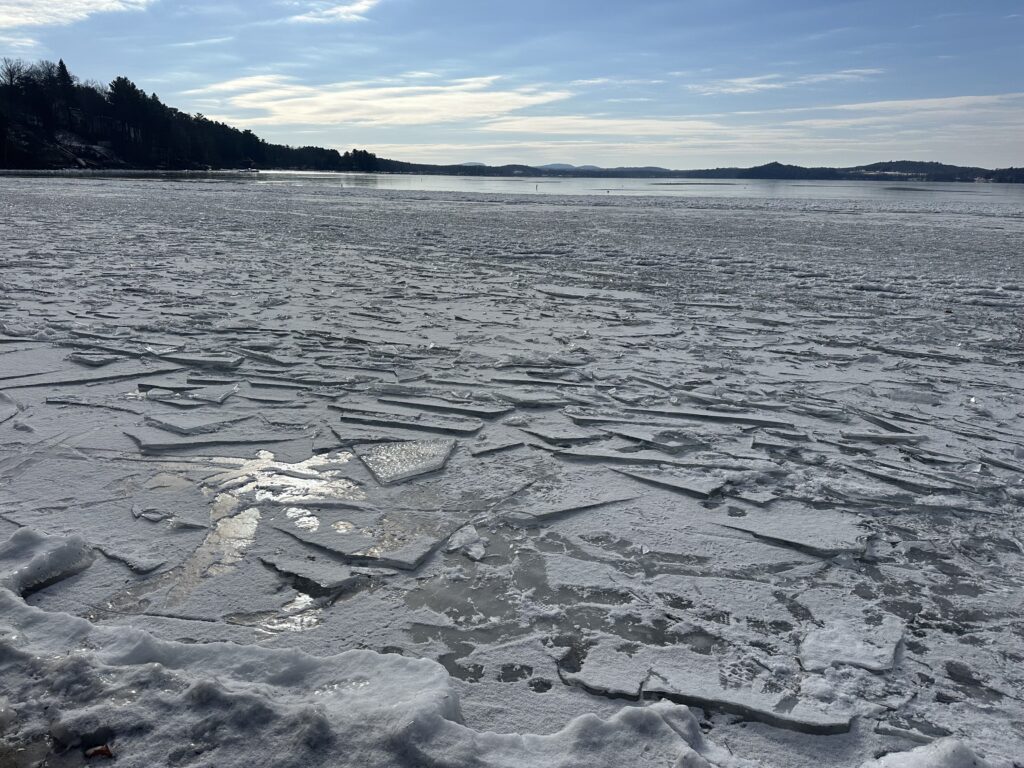
The temperature on the lake has been consistently below freezing for well over a month now. In the depths of winter, one can expect this to happen. Fishes, plants, birds, and all other species alike anticipate this abiotic change just as we do, and plan their frozen journey accordingly. My presumptuous claim is that the ice is between 4-8 inches thick, as it was safe for walking but unsafe for vehicles. This means that most of the fish underneath are entering their winter rest period; slowing their metabolism, heart rate, and food intake. I noticed most of the birds were sitting far out on the water where there was less ice, most likely waiting to catch something edible so they could get their limited nutrients for the day. Another animal I wanted to take note of is one that was a lot more prevelent to my location…
Squirrels!
It is well known that winter is a time when mammals rest as much as possible. This idea is often exchanged with the term “hibernation”, but in most cases these are not interchangeable. Taking a look at the surrounding area of the great oak tree I like to hang around, I found evidence of at least one squirrel.
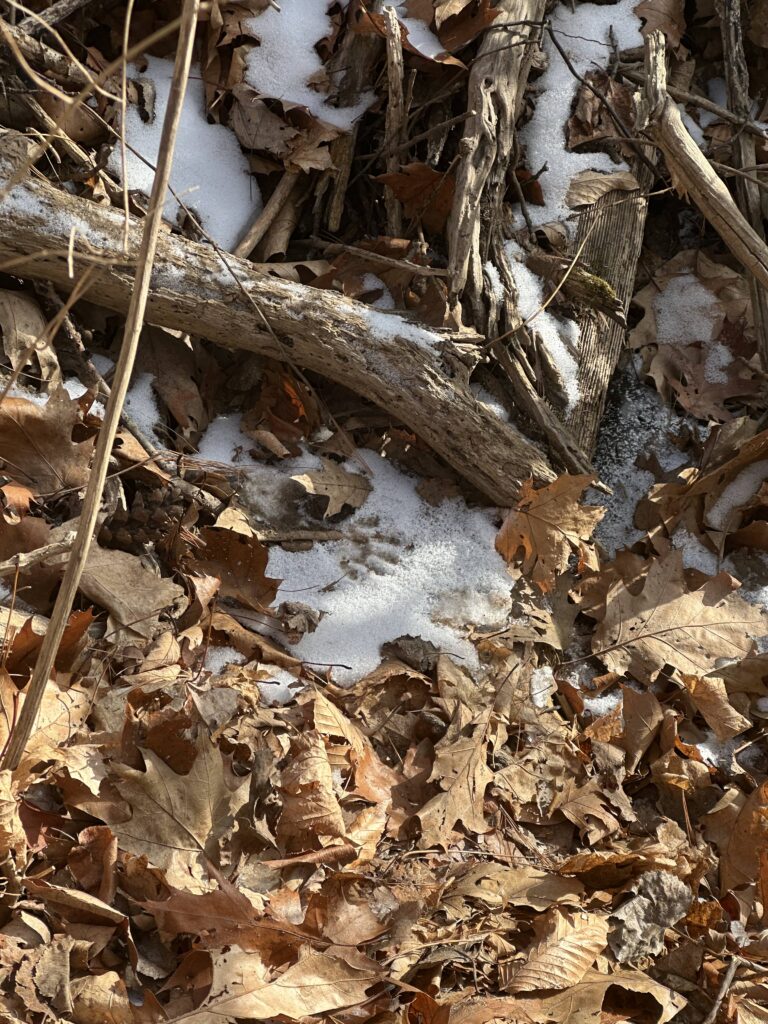
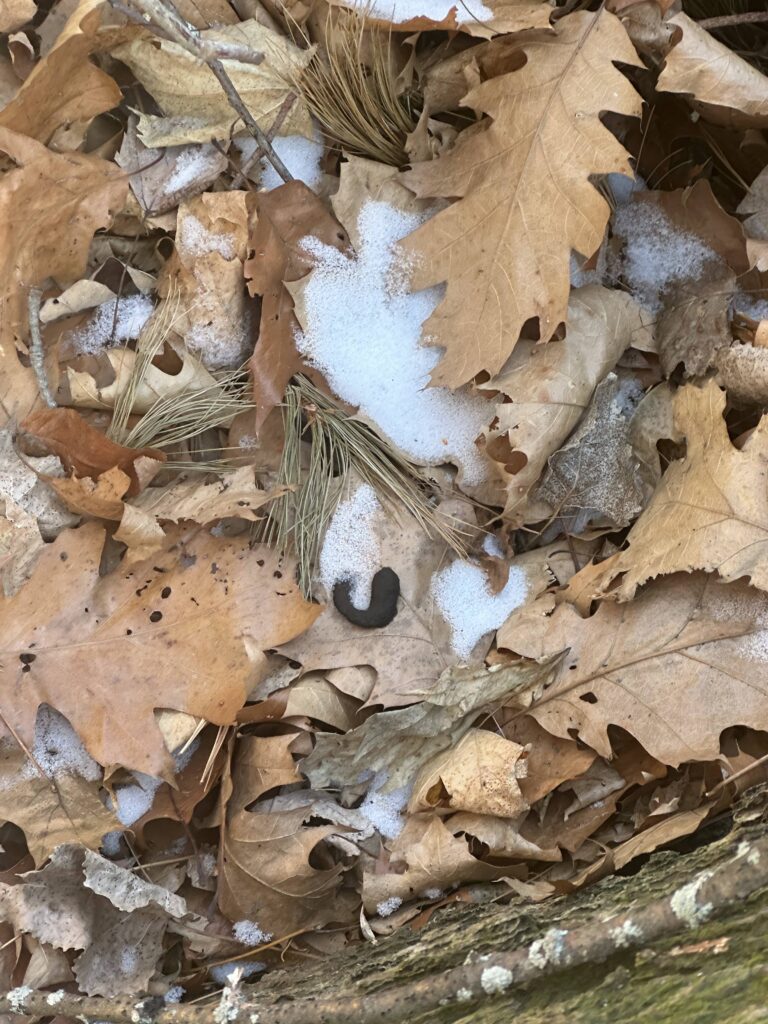
The image on the left (above) shows a single hand print of a North American Grey Squirrel (Sciuruscarolinensis) and the image to the right of that shows a fecal dropping from the same body that produced the print. I have taken note of the squirrels in the area before, as they are the larges mammal I have observed so far, but this is the first time I found solid photographable evidence of the critters!