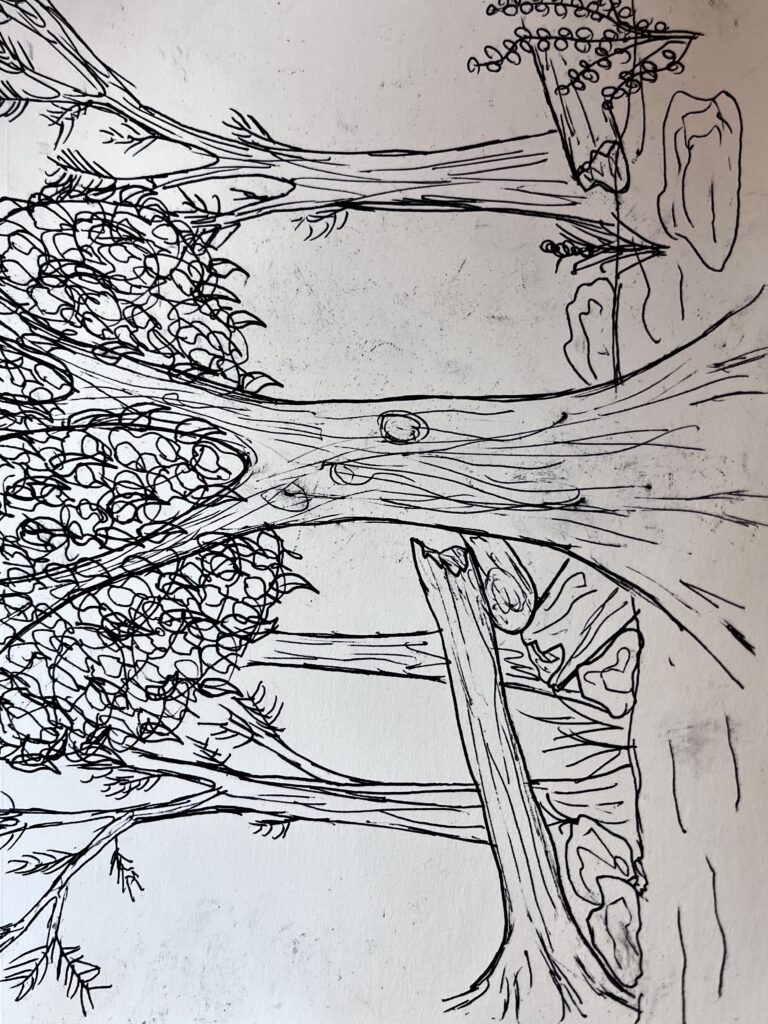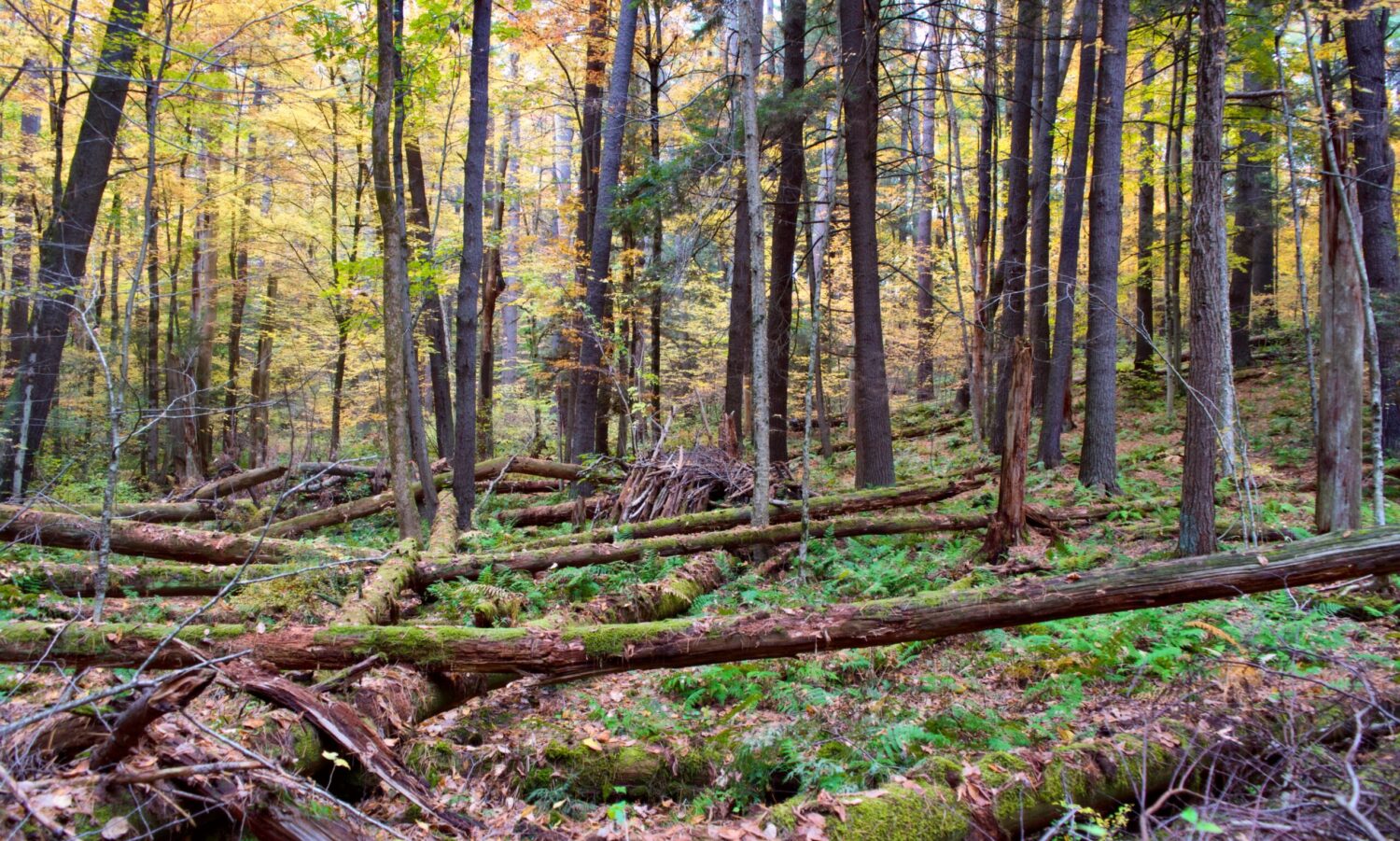
Throughout my first year at the University of Vermont, I had the opportunity to explore the beautiful Centennial Woods Natural Area. With each visit, I witnessed the ever-changing landscape and discovered new wonders of nature.
As the seasons shifted, I observed the phenological changes in Centennial Woods. In the early days of fall, vibrant hues of red, orange, and yellow painted the trees, creating a breathtaking tapestry of colors. I spent hours wandering through the rustling leaves, captivated by the beauty of nature’s transformation.
Winter arrived, and with it came a blanket of snow that covered the forest floor. My footprints were some of the only ones to disturb the snow-covered trails. The trees stood tall, their branches covered in ice glistening in the winter sunlight. The silence that enveloped the woods was truly amazing, broken only by the occasional chirping of winter birds.
As spring emerged, I noticed the awakening of Centennial Woods. Shoots pierced through the thawing ground, announcing the arrival of new plant life. Blossoms adorned the branches, and the air was filled with the smell of damp soil and leaves. This has been my favorite time to visit Centennial as it has been beautiful and full of change.
However, it wasn’t just the cyclical changes in nature that I observed. Centennial Woods also bore the marks of human and storm-induced changes. New trails were worn in as people began to walk off the main paths. Educational signs dotted the paths, providing insights into the ecological importance of the area.
Occasionally, I would come across fallen trees, their trunks weathered and worn. Storms had unleashed their fury upon the woods, reshaping the landscape and leaving behind a reminder of the power of nature. Yet, amidst the changes, I saw the resiliency of Centennial Woods, as new saplings emerged from fallen giants, proof of nature’s resilience.
Throughout my visits, I became familiar with the major and minor landmarks of Centennial Woods. The towering Oak I visited often, with its gnarled branches and sprawling canopy, became a symbol of strength and wisdom. The babbling brook that meandered through the woods became a spot I would often sit.
In Centennial Woods, nature and culture intertwined seamlessly. The woods served as an outdoor classroom, where students and visitors could learn about and appreciate the natural environment.
As I continued my visits throughout the year, I couldn’t help but feel a sense of belonging. Centennial Woods had become a place where I felt connected to the cycles of nature. I would definitely consider myself a part of this place, for it had awakened a deep reverence and love for the natural world within me. I have recognized that I, too, am a thread woven into the fabric of Centennial Woods—a witness to its changes and a guardian of its beauty.