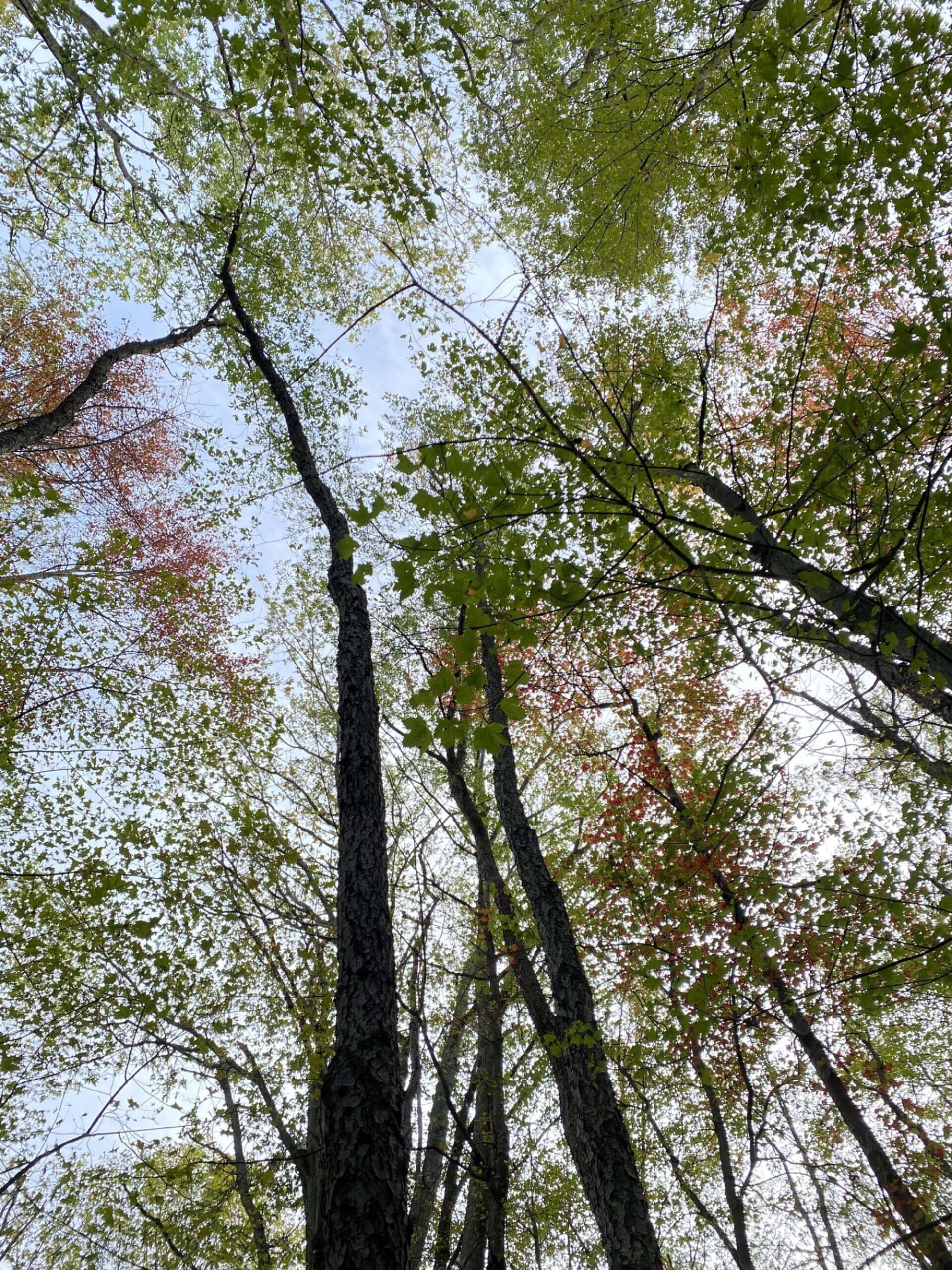
This is the first time I’ve been to my spot since December 11th, before I left for break. When I went last, there were quite a few plants still poking through the minimal snow, and some grasses still green and visibly alive. But now, there’s a good 4-6 inches blanketing the whole forest, with the footpaths being the only areas stamped flat. There are tons of American Robins in the forest, hopping around and sitting on branches all puffed up to stay warm. They stand out bright red against the snow. There were also a few separate murders of crows I saw circling in the wind, which wasn’t something I noticed in the fall.
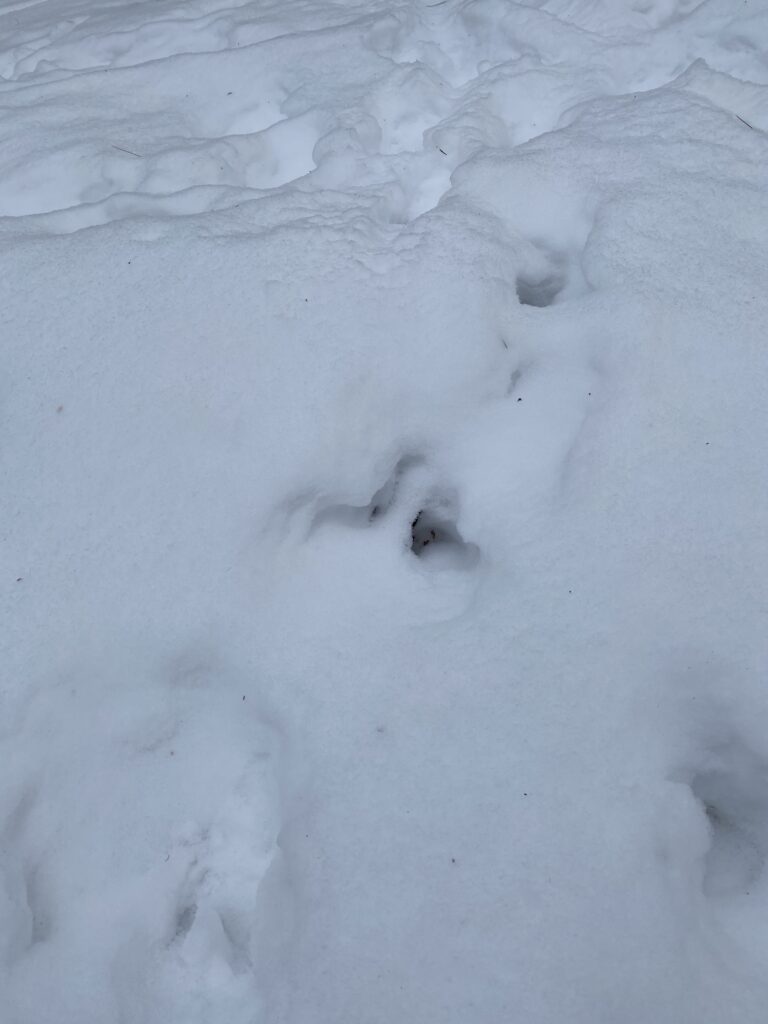
In my spot, at first glance there weren’t any distinctive tracks. There was lots of evidence of people with dogs walking through, and given that my spot is right on an established part of the path this was something I expected, so I looked for tracks about 10-15 feet off the beaten path, somewhere where animals would feel a little less exposed or not be scared off by pets or people. There was a set of rabbit tracks running off the path and down the hill. These tracks were easier to identify because they are tracks I see all over campus.
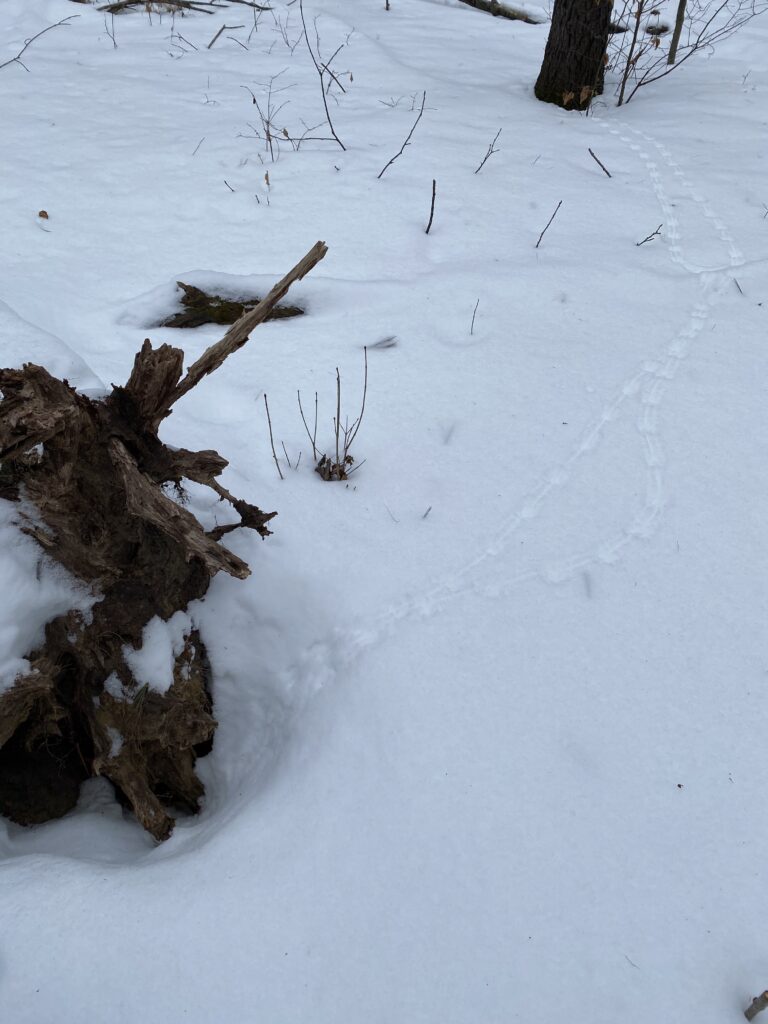
The most prevalent (and interesting) tracks that I found at my spot where a set of mouse tracks that ran the length of the area and across the walking path to a dead tree. They ran in both directions, following roughly the same path each way. My guess is that the mouse has some sort of food store there that he ran a little mouse errand to earlier today. The tracks were distinctive and easy to follow, and with the wind blowing the snow everywhere this afternoon the fact that they were undisturbed makes me think they are relatively fresh. The tracks appear to start/end rather abruptly in a little indent in the snow. Small mammals are a grouping that live in the subnivean zone, so I’m guessing that the tracks we saw are evidence of the mouse leaving his burrow to gather food, then returning along the same path. In areas that it was able, the mouse traveled along the edges of logs and stuck close to tree trunks, presumably to stay less accessible to predators that may be hunting it from above, such as hawks.
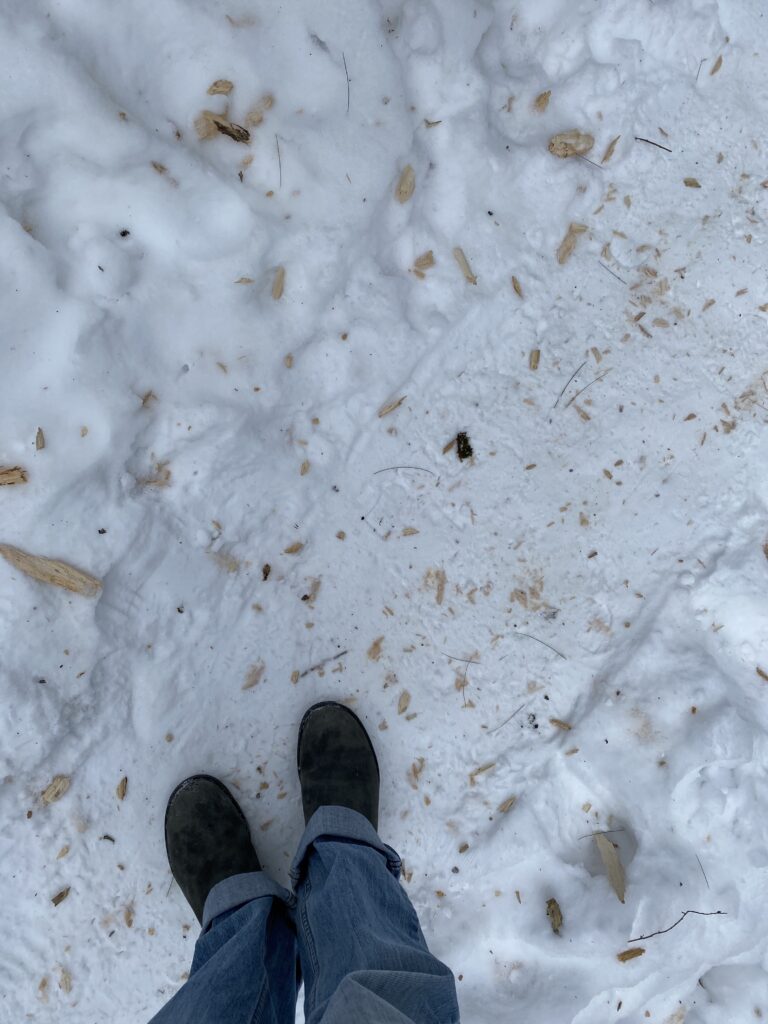
The full cover of snow in the forest adds a little bit of life to my spot, given that the trees and shrubs are far from having leaves again. With the snow, it’s clear that people are still walking in the woods, and now it’s possible to see the wildlife that passes through the forest, which wasn’t a noticeable detail in the fall. Fall felt like a kind of weird lifeless transition in Centennial Woods, given that there wasn’t snow to show animal tracks and all the shrubs and trees were in the process of losing their leaves. But now the snow adds a layer of life to the forest and makes it much brighter. It also makes it easier to notice what’s happening above in the trees! For example, while I was crossing the creek at the bridge, there was a ton of shredded wood at the base of a dead tree. This seemed like an abnormal amount of debris for a tree to drop, even in wind. Looking up, I noticed a woodpecker on a part of the tree where the bark has all been presumably pecked away by his efforts. Without the snow, I don’t think I would have noticed the excess amount of chipped wood on the group. Heres hoping the snow sticks around so I can keep track of what I usually wouldn’t see.