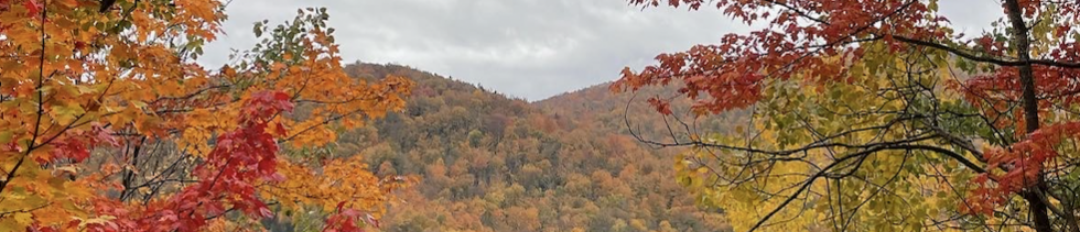
The City Nature Challenge iNaturalist BioBlitz was a very fun experience. It was fun to be extra aware of my surroundings on campus. During the BioBlitz I explored red stone pines and campus. I was unable to explore more of the Greater Burlington area during this short amount of time.
It was very easy to use iNaturalist when identifying species. If I did not know a species I was given many different suggestions on what it might be. It made it easy to go through different examples and narrow down what they might be. Although I did not personally record many things, I helped my friends who recorded a lot. We encountered around 91 different species as a group. I found it very interesting how much species diversity that can be found all over the world. I found a pattern of very similar species in the cities in New England and on the east coast. When comparing Burlington and Pittsburgh, there were many similar species found. I really enjoyed the competition and how many different things we could find on campus. Although our group didn’t win, it was still a lot of fun to participate with my friends.
I have had the same spot in Centennial Woods since the first semester. I originally chose this spot because it had a bridge and many different types of trees and shrubs. I felt like this spot had a lot of natural variety. I really enjoyed visiting this spot because it allowed me to watch the changes throughout all of the different seasons. I think the prettiest season at my spot was fall. There were so many different colors and it was so vibrant. As it transitioned from fall to winter, more things started to die off. It started to become brown and drab. I think having a safe spot in the woods helped me feel more connected to the natural world in Vermont. I am excited to continue going back to this spot and observe the changes throughout my 4 years here.
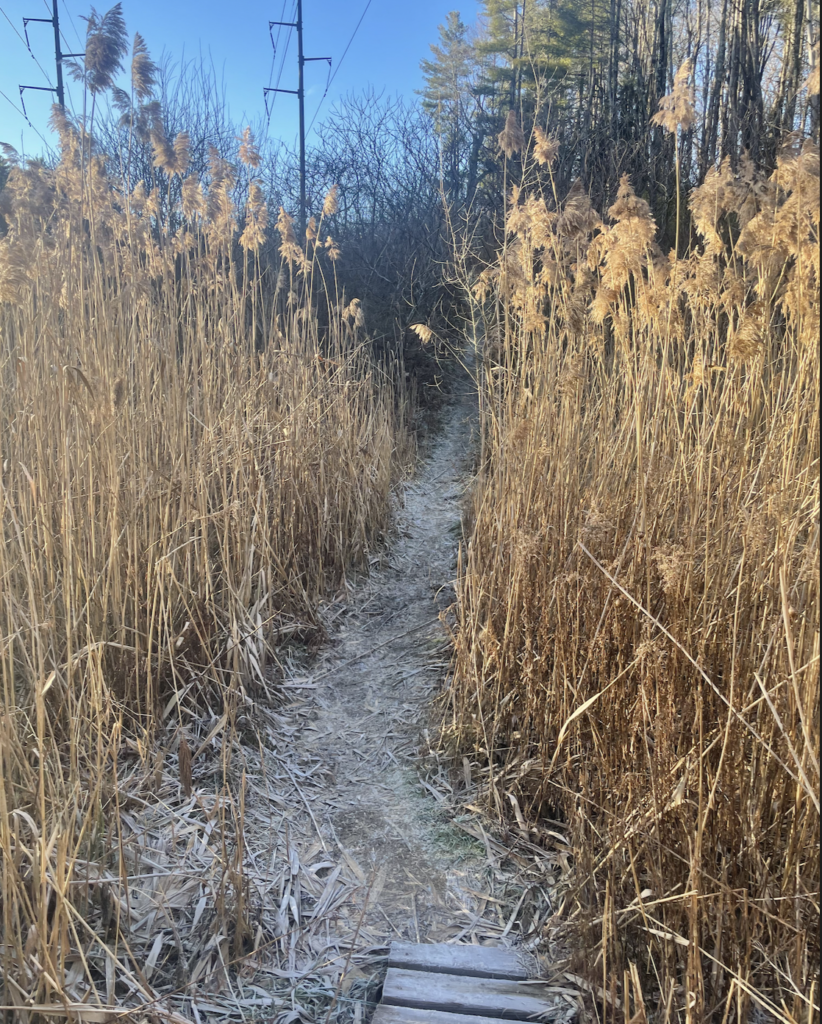
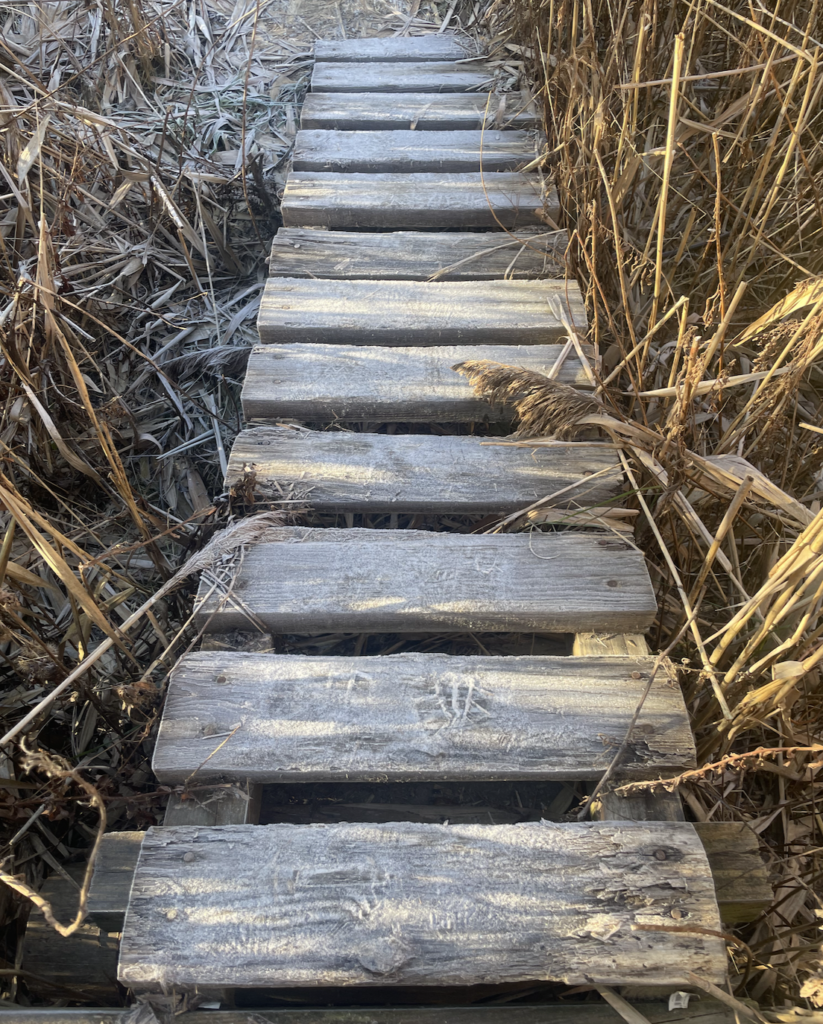
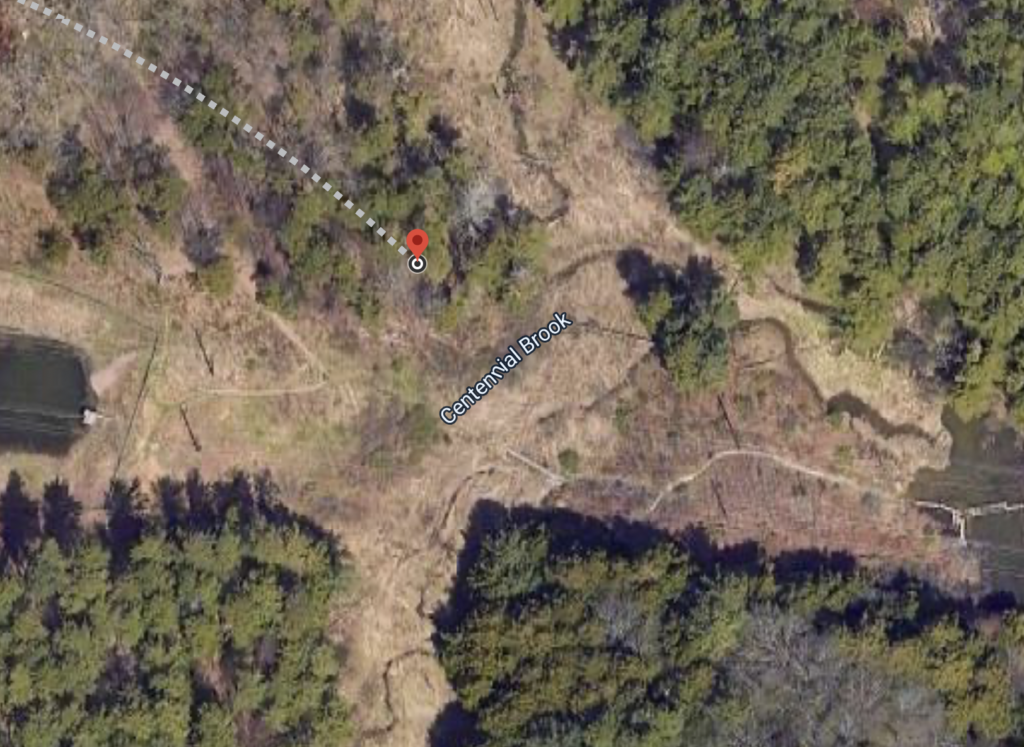
My spot has changed a lot because of the storms. The cattails that surround the bridge have blown down and have started to die. They are slowly starting to collapse on each other. Some of the major landmarks I have become familiar with is the bridge and the path leading to my spot. The path gets thin on the way to my spot. This is a good indicator that we are approaching it. Another landmark is the fence that surrounds a body of water to the left of my spot. When I see that in the distance I am able to know that we are in the correct place. I feel that nature and culture intertwine here by allowing humans to cross the stream and also it is very close to the baseball field. The natural area of my spot surrounds the bridge. I feel very immersed in nature at my spot because of how tall the cattails are.
I do consider myself a part of my place. Since going back here at the beginning of the year, I have grown to feel very safe and comforted by my spot. This spot and blog have allowed me to grow my relationships with my friends. We would go on adventures to explore our spots and it brought us closer together. It was also the first place outdoors that I really got to know when I moved to Vermont. Moving to a new place can be very scary and this allowed me to have some sort of stability and familiarity. I am sad to not have a reason to visit my spot anymore but this will allow me to feel a connection to centennial woods.
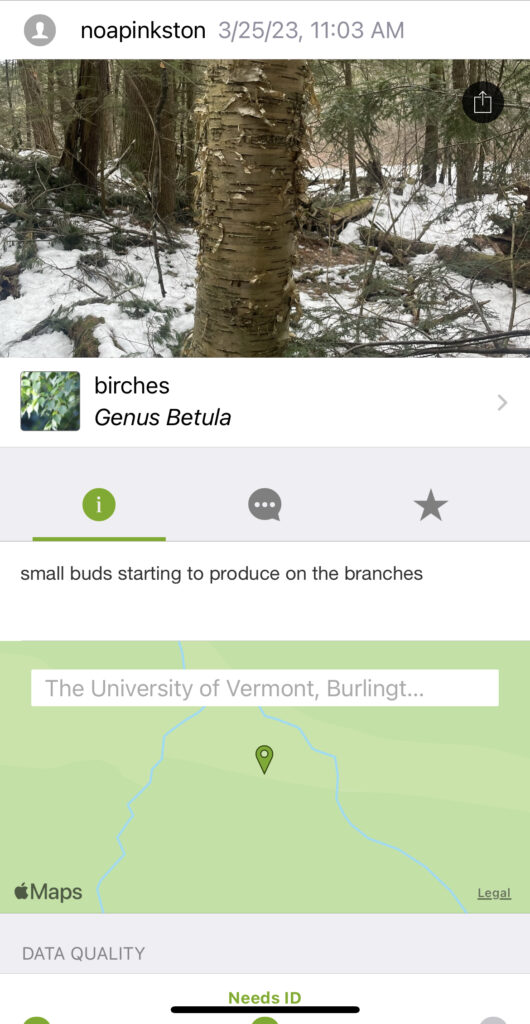
Me and my friends ventured back into Centennial Woods and now a lot of the snow has melted and it is slowly starting to get warmer. When adventuring into the woods, it took me a while to find my original tree. Finally, after a while, I found it. Since going back, I was able to observe that the tree had started to see some budding on the twigs. This was a sign that the weather was starting to get warmer so the tree was able to transfer the energy it stored to produce buds. It did not need to conserve all of the energy to keep warm during the frigid Vermont winters. It was nice to go out on a hike and explore my tree and see the changes.
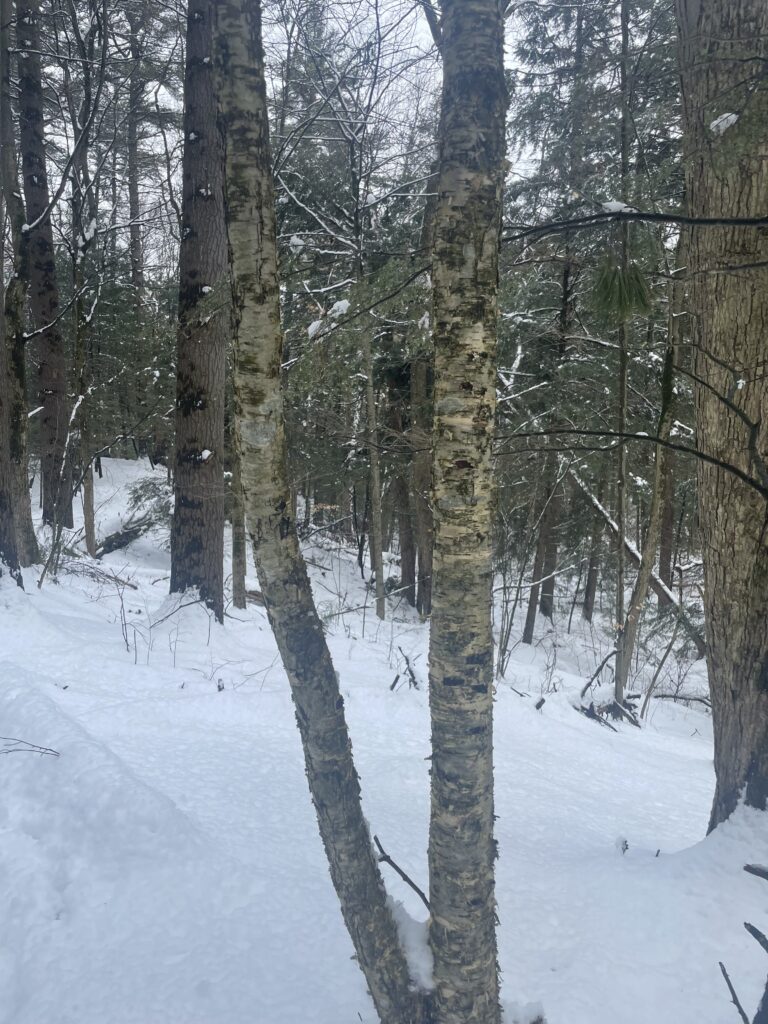
When going to my spot in Centennial Woods, I had a very difficult time observing one of the trees listed. After walking around the woods around my spot, I was able to find a paper birch. This is my favorite tree and is also very easy to identify.
Birch
Paper Birch trees have very distinctive bark. The bark flakes off and looks like paper. When observing the phenological phase of my tree, I did not observe any evidence of flowering or budding.
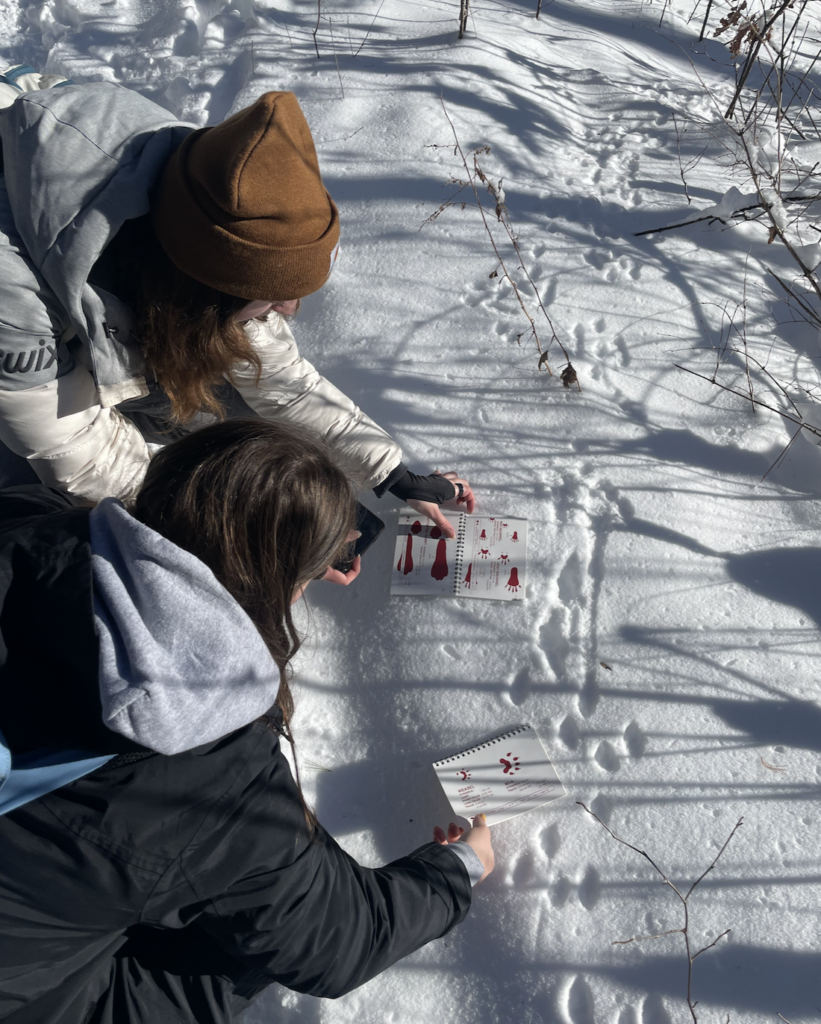
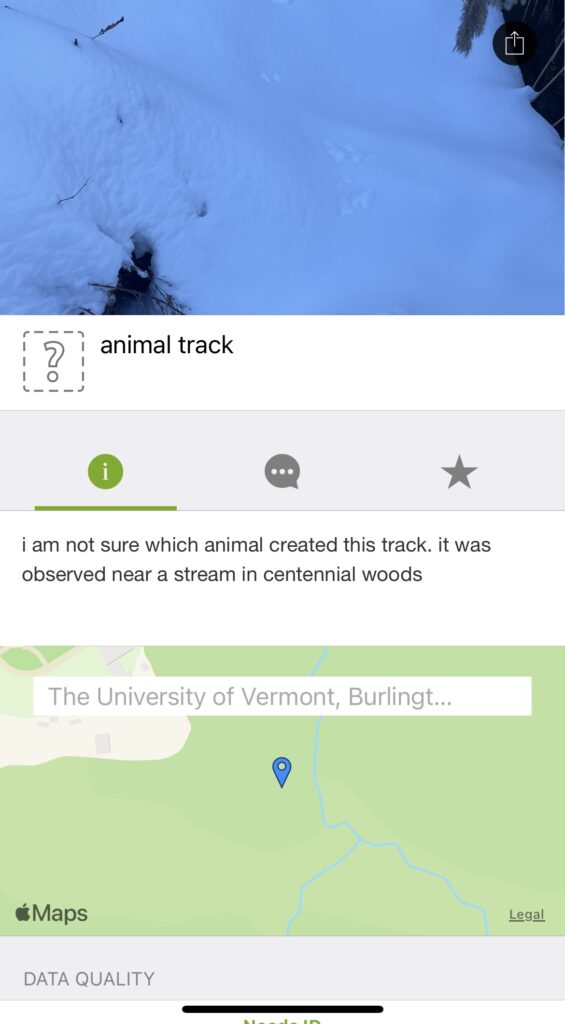
For this Phenology blog, we were assigned to explore the greater Burlington are with our NR 2 friends. My group decided to explore Centennial Woods. When walking through Centennial, we observed many animal tracks. There were a lot of signs of active animals throughout the woods. I have used iNaturalist in the past so this was very exciting to go back and explore the new features that is on the app. The app is very user friendly. If you are unsure of your observation, the app provides suggestions and other users can go back into your posts and make suggestions about what the observation is.
Most of the tracks we observed were mouse and squirrel tracks. When observing squirrel tracks, it can sometimes be difficult to differentiate between rabbits and squirrels. One way to tell the difference is, when following squirrel tracks, they usually lead to a tree. Furthermore, they have two small front feet and two longer back feet. When observing these tracks, we made sure to use our red tracking guide to help us differentiate. The biggest factor when deciding what animal created the track was the size and the direction it was going.
I went back to my spot on a very cold day. The wind was blowing so much and the temperature was close to 20 degrees. Although it was cold outside, the sun was shining and it was beautiful outside. When observing the water in the brook, most of it has frozen over at the edges and at some parts of my walk the water has frozen over completely. The foliage has changed at my spot. There were no longer leaves hanging from the trees. As the weather slowly gets colder the trees need to conserve energy. Instead of expending energy to protect these organs, trees shed the leaves. I did observe that the evergreen trees surrounding my spot were still green. This is due to the shape of the needle on the tree. The shape allows evergreens to conserve water during the summer which allows photosynthesis process to continue in the winter. The cattails at my site are still up and very full around the bridge. The leaf litter on the ground has frozen over. The soil has frozen and crystalized over.
When observing the traces of animals and their presence I found traces of dog prints. I also observed many crows flying around and a black capped chickadee. I did not observe scat around or marks on tree bark. The animal activity has decreased significantly due to the cold weather.
The aspects of my phenology spot I enjoy the most is how peaceful the bridge is. I also enjoy how secluded it is from other peoples spot. This phenology blog has allowed me to connect more to nature and find a place in Burlington that I can connect to. When I came here I was very excited to get outside and in nature. This blog has allowed me to go with my friends and have fun. It gives me an excuse to be in the woods. I am very excited to continue this blog next semester. I want to continue this blog until I graduate. I think it will be amazing to watch it change over the next 4 years and be able to have a safe space in Burlington.
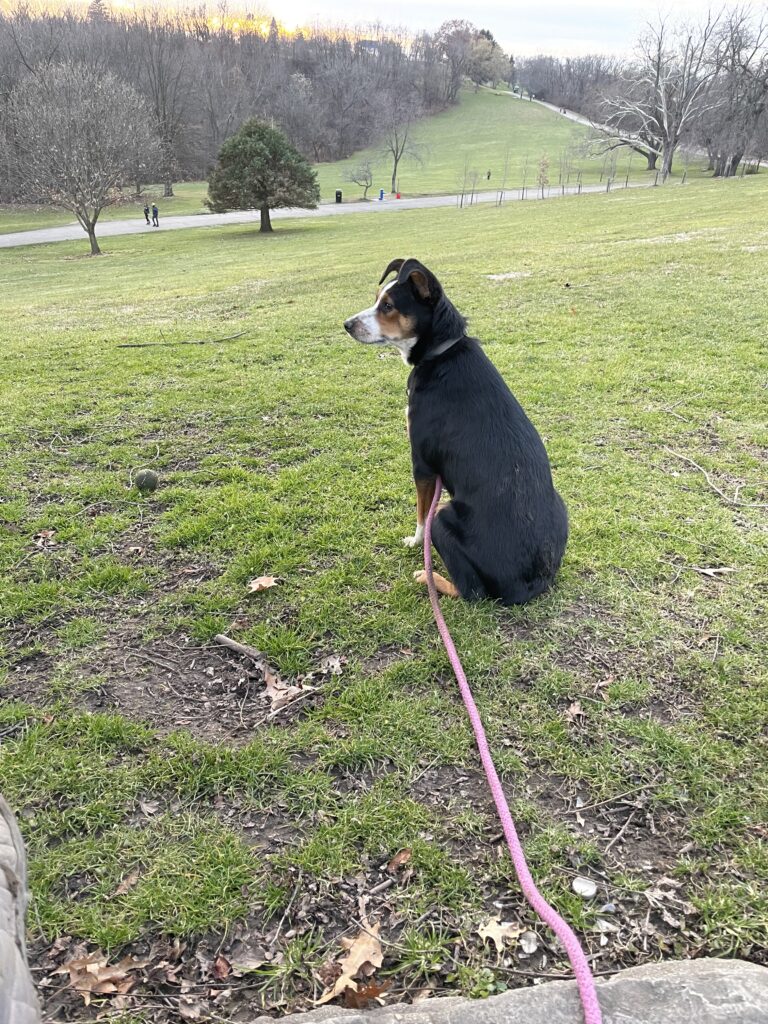
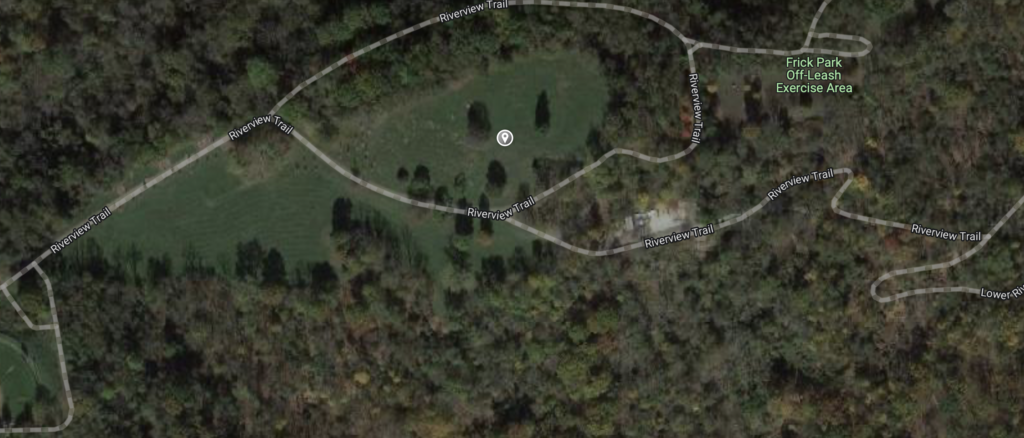
I spent my break in my hometown, Pittsburgh. We have a place called Frick Park. Frick Park is an urban wild, a piece of a natural ecosystem that thrives in a city or urban environment and offers a glimpse into the natural world. It is a great place for people in the community to be outside and engaged in the outdoors. This is my favorite place to go and be outside and connected to nature. I grew up going to camp at the Frick Environmental Center and hiking every day there with my mom and dogs. For my spot over break, I chose a special spot to me in Frick Park. It is at the top of a hill and looks out the whole park. I sit there and relax on the bench and read my book.
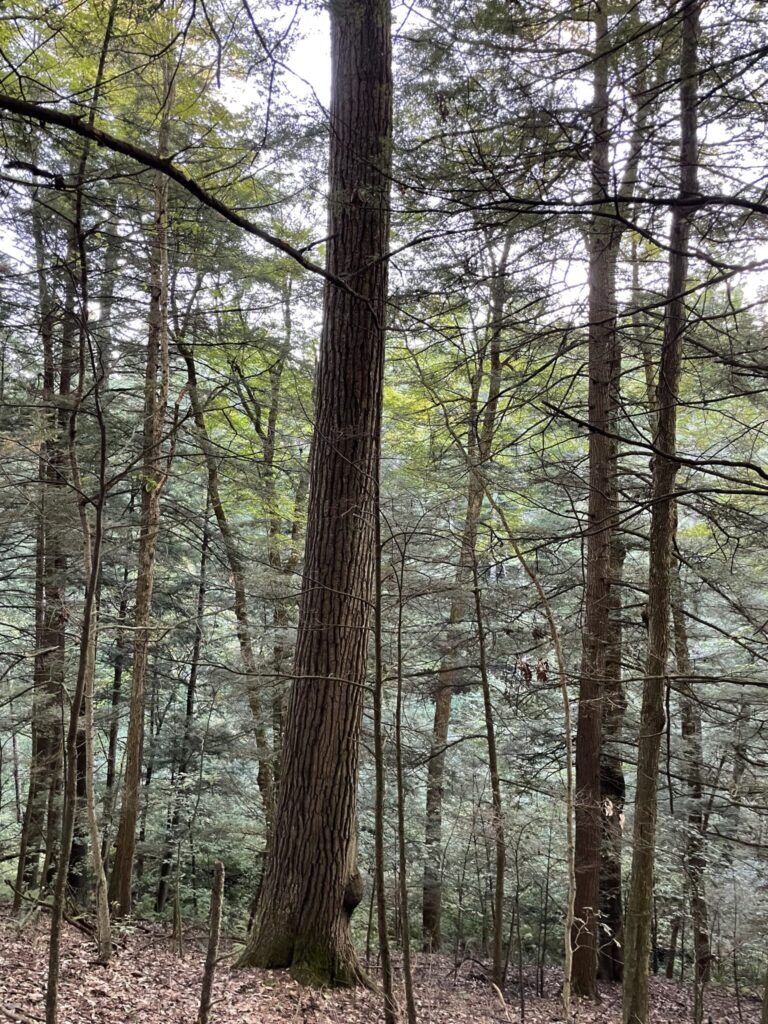
The trees found in Frick Park are very similar to those found in Centennial Woods. There is a lot of paper birch, Eastern Hemlock, White Oak, and White Pine. The spot that I chose in Pittsburgh is very different from the one in Burlington. It is a very open space but behind the photo, it is surrounded by White Oak and Eastern Hemlocks. At my phenology spot in Centennial Woods, it is surrounded by Pines and cattails and located on top of a stream. I chose a very special place in Frick Park and I am very excited to explore my site in Centennial more to create a special bond with that site as well.
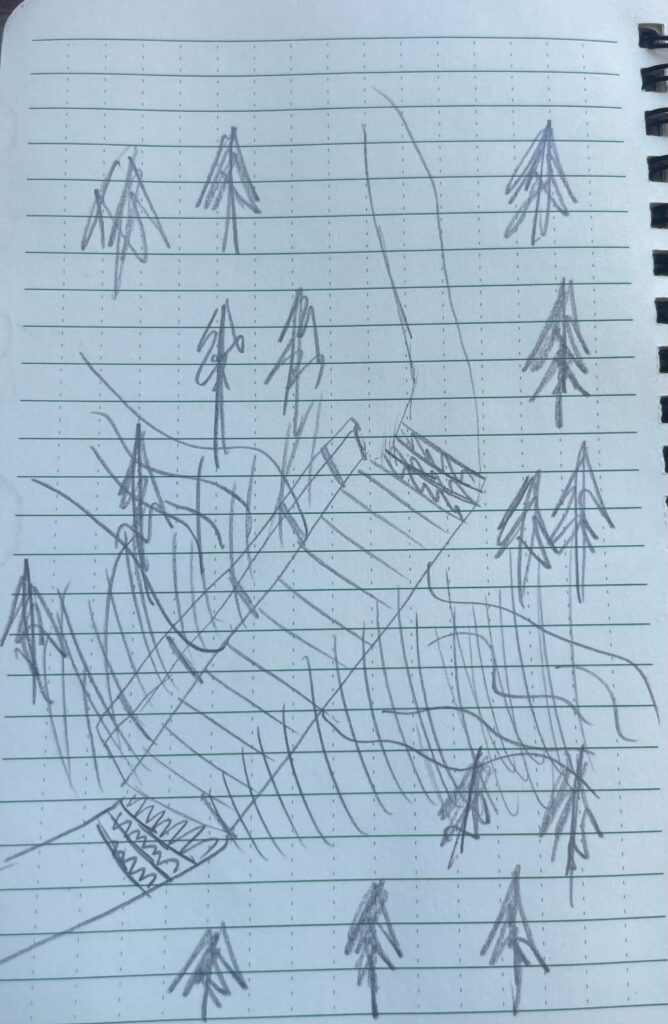
I visited my phenology site on a very gloomy day. It was chilly and the wind was powerful. Even with these conditions, I was at peace when visiting my spot. As the wind blew, it caused the cattails to create a calming noise while being shaken by the wind. Sitting on the bridge and connecting with my site allowed me to take a few deep breaths and relax. I needed the time to just sit and connect with nature. I listened to a meditation and did breathing exercises as I was sitting there. After taking a break, I got on to drawing my site. When I first visited my spot I noticed the bright colors of the trees and the liveliness of the nature around me. Now going back, it was very dull and colorless. Taking a birds-eye view approach when looking at my site allowed me to observe more than I did before. Although my drawing is messy, it allows me to look at it from a different perspective and get a new appreciation for Centennial Woods.
When looking back at the vegetation at my site, I noticed many changes. As Burlington is moving from the fall slowly into the winter, the colors have changed drastically. The cattails surrounding the bridge are dry and brown, the trees are losing the bright fall colors, and the understory is starting to prepare for winter. Although the life of the fall colors is slowly starting to fade, my site still has life in it. The wind brought that back by creating music through the cattails and trees. The wind created a white noise that was peaceful and relaxing. I enjoyed sitting on the bridge and just listening to the sounds of nature that surrounded me.
Birds Eye View Map
My birds-eye view map is very messy but I feel like it captures what my site looks like. The bridge in the center is where I was sitting and observing my spot. The brook and bridge were surrounded by cattails and trees. The trail leading down to my spot goes downhill and the trail continuing after goes straight uphill. My spot is surrounded by hemlocks and pines on the outskirts and then smaller trees and cattails closer to the bridge. In my map, the large circles are the pines and hemlocks that are surrounding it. The smaller circles that are closer together are the smaller trees and brush. The short lines around the brook are the cattails. It was very difficult to get a full birds-eye view because there is so much around my spot that you cannot see. This was a very relaxing visit to my spot and I cannot wait to see it in the winter.
My site is in Centennial Woods along Centennial Brook. One morning I went bird-watching with my friend. We walked all through Centennial and it was very peaceful. To get to my spot you walk into the woods and turn to the right. As you follow the brook you will get to my spot. My spot is by a quaint bridge. I chose this spot because it is very calming. When I got to this spot I was able to relax and just sit. As I walked through the woods, there were many pines and maples. As I got deeper into the woods, there were ferns and mushrooms. There were also many pine needles on the ground. I am very excited to spend more time at my spot and get to know what other observations I can make surrounding it.