Posts

Ninth & Final Post

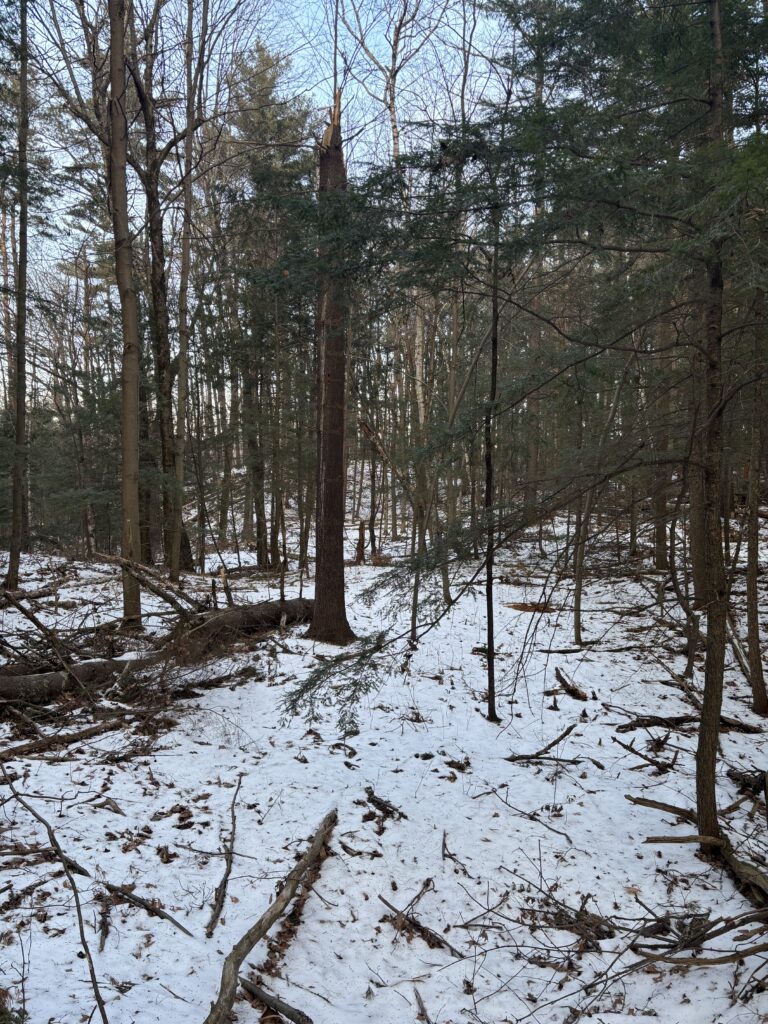
My spot looked a lot more green then the last time I went here. It started off pretty green, with the first couple of times I went there being in early fall. Then of course the trees lost most of their leaves and things looked pretty dead. Then there was a lot of snow and finally spring has come and the plants are starting to bud again and the site looks green again. Not as green as it was in the beginning but greener than it has been in months.

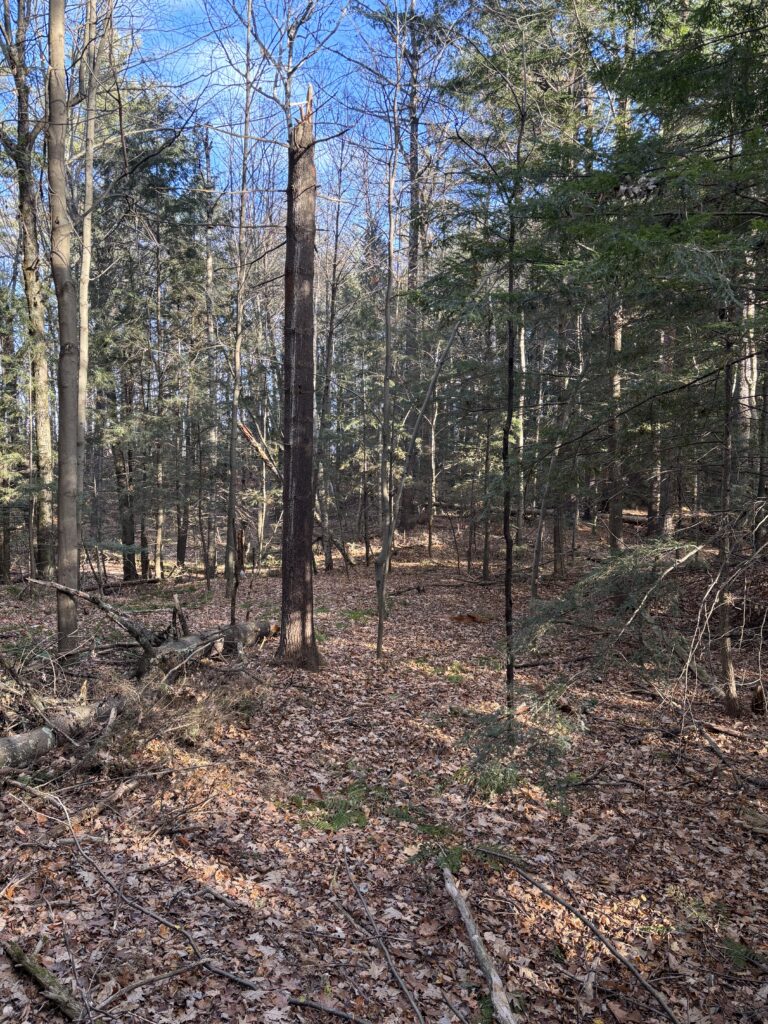
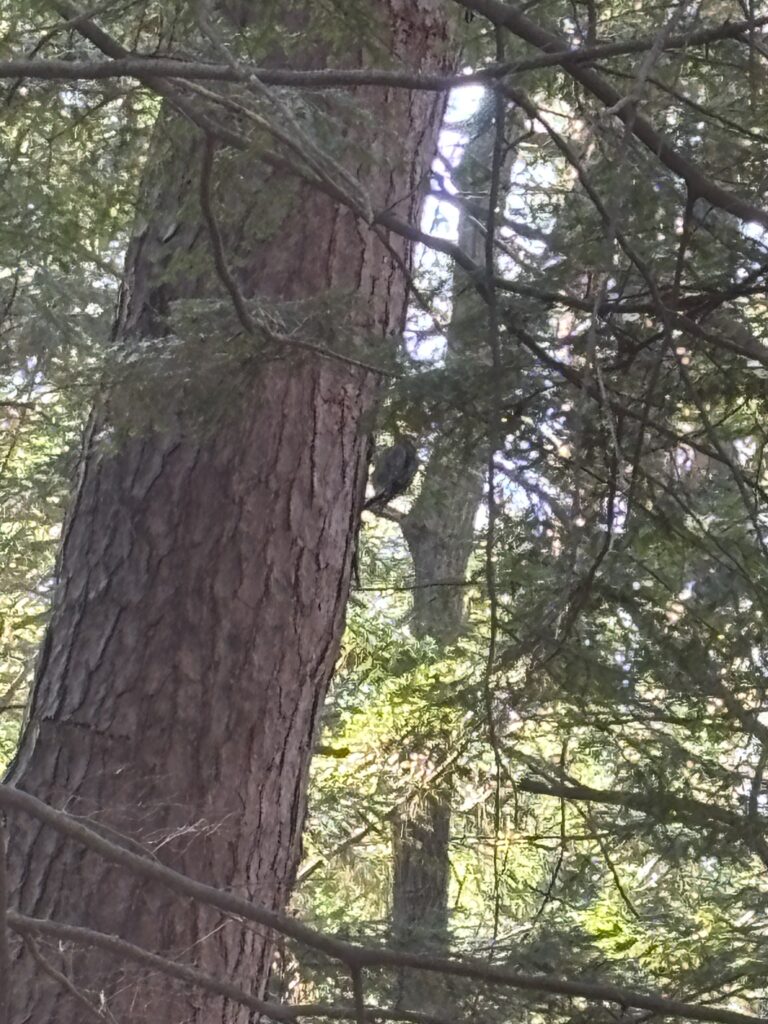
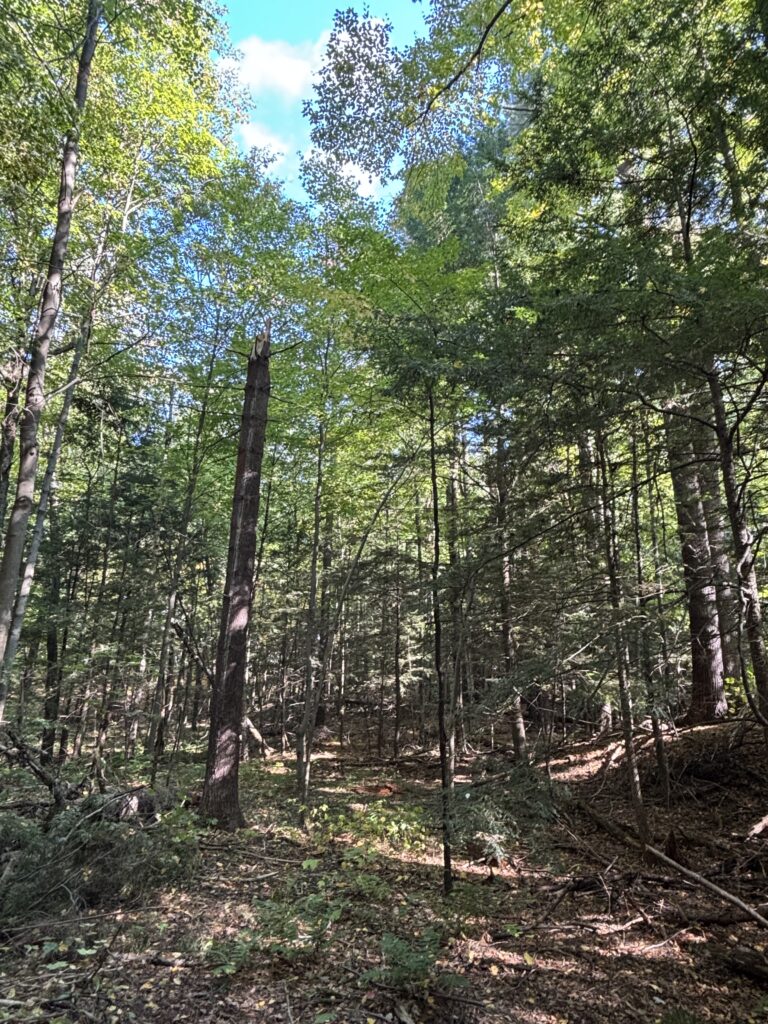
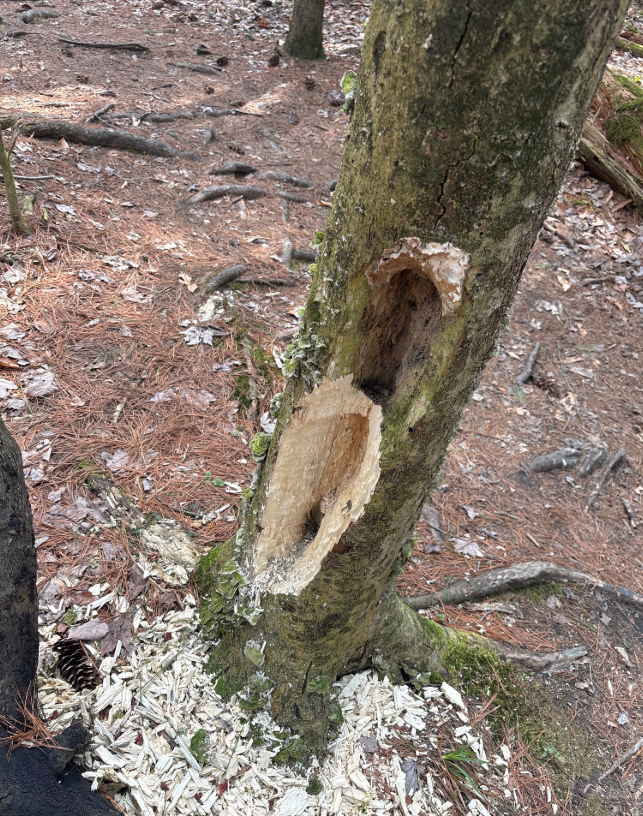
One of the major landmarks I’ve become familiar with is the large dead tree in the middle of it. This tree, combined with a red pine off of the trail, are the main way I find my site and overall really adds to my site. This most recent time the large dead tree was filled with woodpecker holes which weren’t there before. I also like to look at the ferns when I’m at my site, just to see how they look throughout the seasons. They were growing once more.

Centennial woods is a pretty public place. I saw a bunch of people when i visit my site, and most of them are people of the community going there to walk their dogs.

I don’t consider myself a part of this place right now. This is because I haven’t been here in a while as the phenology assignments haven’t had me going here. I also feel like I spend more time getting to my spot then I spend at my spot. I also haven’t seen anything of interest at my spot in a while which I feel like has kind of decreased my interest and connection with my site.

I heard a merlin and a Cardinal not far from my site, I thought that was pretty cool. Sorry about the lack of a photo, the website wouldn’t let me upload it.
Eighth Post

This past weekend was the city nature challenge. Sadly, during most of this weekend I was at a Timbersports meet in New Hampshire. This meant I was only really able to participate on Friday, so on Friday I went to Centennial woods twice, before and after lab.

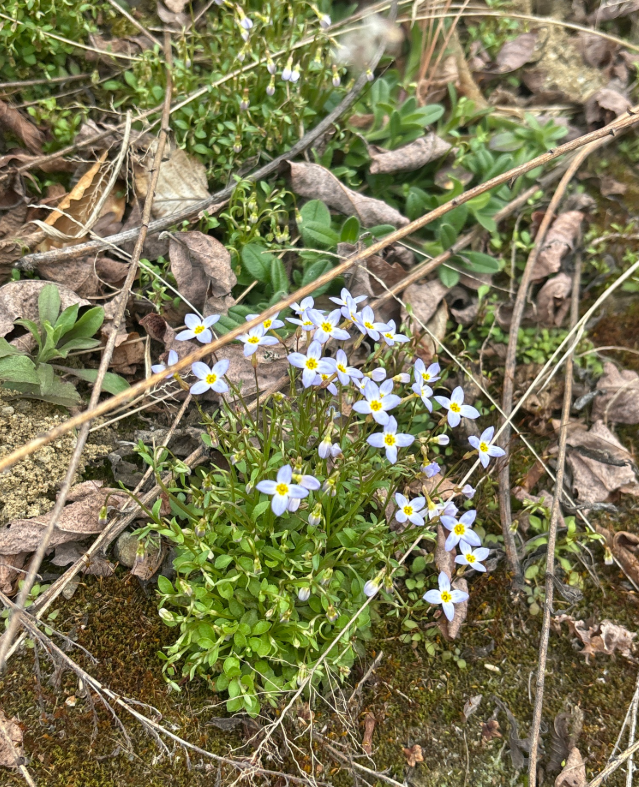
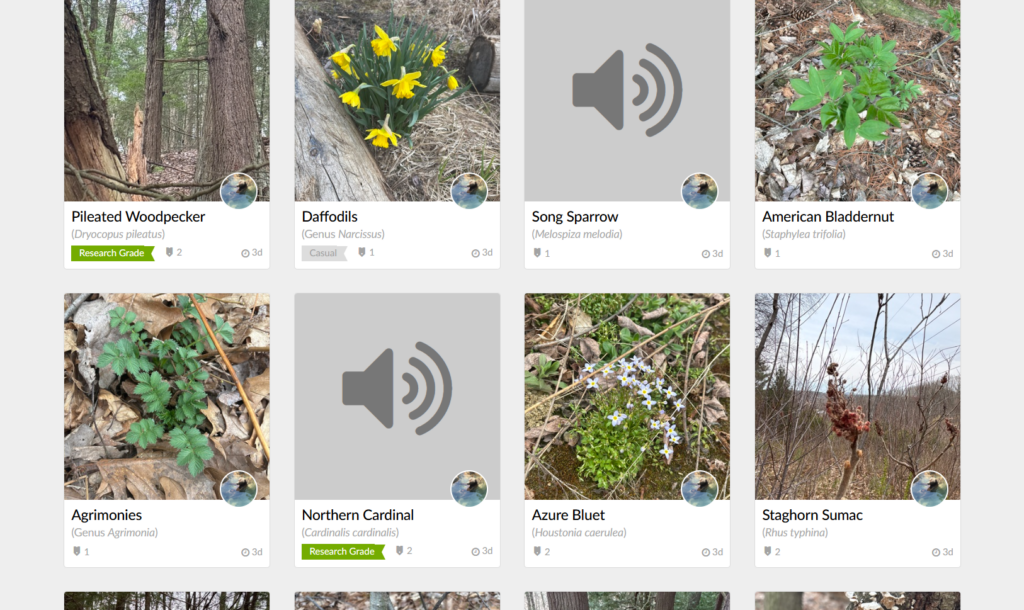
I enjoyed using iNaturalist as I’ve used it many times before but never at this capacity. Over the course of the day I made 41 observations. Almost all of which were different species. Sadly, it appears that none of my observations made it onto the group project for the lab as the project didn’t open until Saturday. Luckily I’m pretty sure my observations were being recorded into the Greater Burlington city nature challenge project.

I’m currently have the 22nd most observations in the city nature challenge, out of 331. I find it really impressive how some of these cities are able to get thousands of people to participate in this. Cochabamba, a city in Bolivia currently has 2,778 observers, and La Paz, also in Bolivia, has over 107,000 observations.

One of the coolest parts of this event was how I got extremely quick feedback on my observations, it often takes weeks for my observations to get looked at and IDed, however, I was getting notifications that my observations were being IDed while I was still out in the woods.

Seventh Post

My date is March 29th.

Today I saw no buds breaking. There is currently a solid 6 inches of snow on the ground so it really doesn’t look or feel like spring.

The only tree that had anything on it was the Red Oak, which appeared to still have some of its leaves from last year still on it. The leaves were dead and clearly old, and I’ve seen those leaves on the tree all winter. All five tree did appear to be in the same phenophase however, with all of the trees having buds that haven’t broken yet.

One article I read on the NPN’s website talked about climate change’s impact on phenophases and phenological mismatch. The article mainly covered how climate change and weather tends to have a greater effect on plant species, which flower sooner most of the time due to warming climate. However, animal species don’t react the same and that photoperiod was a larger influence on animal cycles. This shift has caused phenological mismatches

https://www.usanpn.org/news/article/are-plant-and-animal-species-responding-differently-climate-change

Sixth Post 2/23/2025

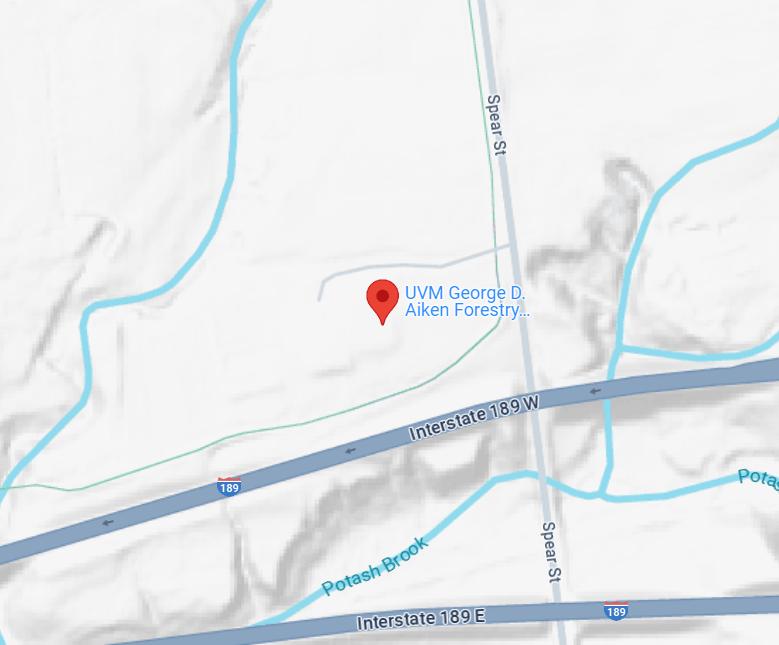
For this post I did not return to my phenology spot, and instead I went to the Aiken Forestry lab on Spear Street. I went here in a hope to see some sort of wildlife sign.

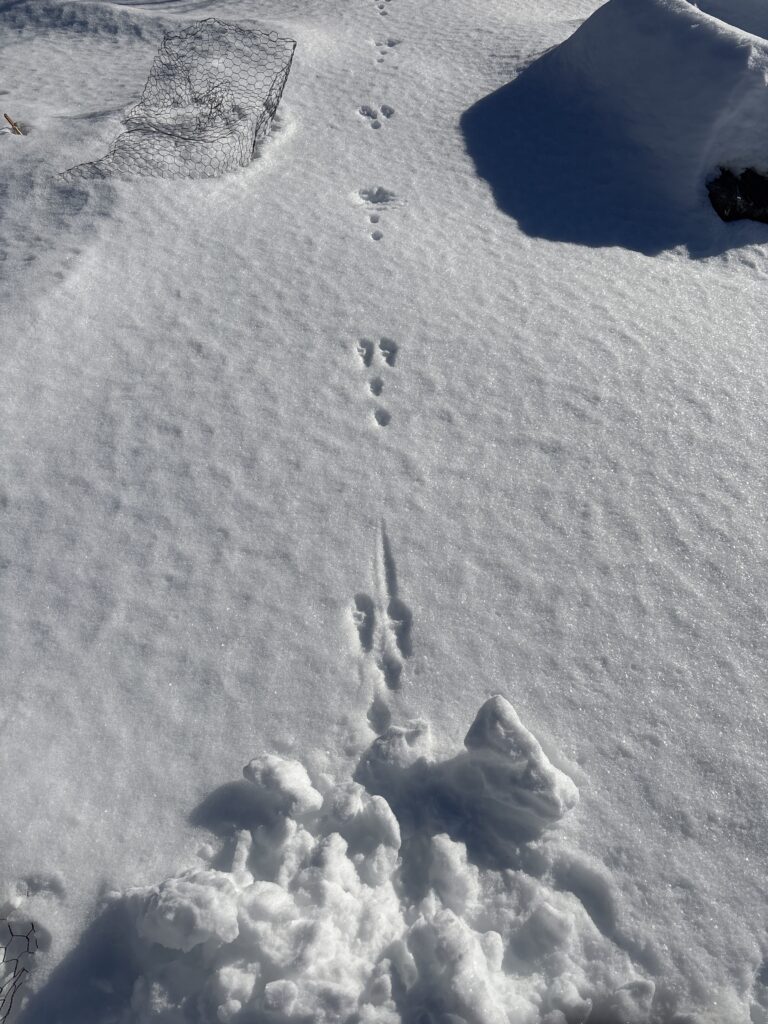
However, I only saw one track while I was there. It is what I believe to be a cottontail rabbit.

I believe it to be a cottontail rabbit because the tracks are in a gallop pattern. What also points towards the track belonging to a rabbit is the fact that the feet are not parallel to each other and instead are in more of a diagonal pattern. This points towards the tracks belonging to a ground dweller instead of a tree dweller like a squirrel.

The tracks also likely didn’t belong to a mouse as the tracks were a few inches long, and the stride was far too large to be a mouse, being around a foot long. The tracks were also not big enough to be a snowshoe hare which means it was likely a cottontail.

I also saw some birds while I was out there, including chickadees, a hawk, and what was likely a tufted titmouse.

Fifth Post: 1/26/2025

I have returned to my phenology spot from last semester in the Northern part of Centennial woods.

There is now a layer of snow on the ground. There are now far less bird sounds, and while at my spot I didn’t see any woodpeckers, only a single crow flew overhead.

Sadly I didn’t see any tracks while in my phenology spot. The rest of centennial woods was filled with interesting tracks, but my spot was mostly bare.

I enjoyed returning to my spot and walking through centennial once more.

Fourth Post: 12/7/2024

The only trees at my spot in centennial with leaves are the evergreens. The red pine and the eastern hemlocks still have their needles, as expected. However, all the deciduous trees have lost their leaves. I don’t think this is much different that the last time I was there. Nevertheless, I do believe some of the leaves have started to decompose. The leaf litter is less fluffy/crunchy (I don’t know how to describe it) and looks like the leaves are starting to incorporate into the soil.

The lack of leaves really opened up the area, revealing the really large open area in my spot. I guess I’ve seen it before but I really noticed it this time. My guess is that the old tree that has fallen in the middle of my spot used to be really big and shaded the majority of my site, making it difficult for smaller trees to grow. This would also explain why several small sugar maples are growing in that area.

As always I saw a woodpecker. However, this is almost the only bird I saw my entire time in centennial. I heard a few chickadees at one point, some geese, and a raven. But other than that I didn’t see any other birds. I assume that many migrated, in class we learned 75% of Vermont’s birds migrate, so most of the birds I heard earlier in the project likely flew south. The whole forest was eerily quiet.

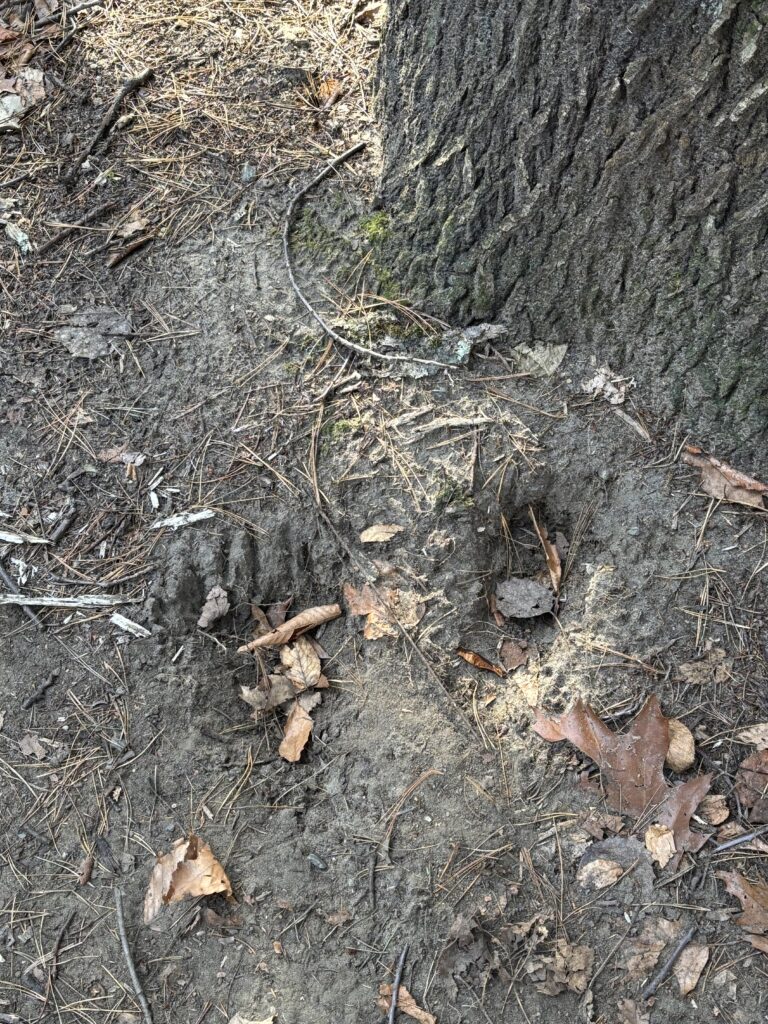
I saw several tracks while I was out in centennial, most I’m assuming were dogs as I saw several people walking their dog, but I also don’t know much about tracks yet. However I did find these tracks. It looks like either a dog or other species was digging, but they overall looked really interesting and really grabbed my attention. My guess is that it was likely wildlife because I don’t think many people want their dogs digging in the woods during a walk.

What I like the most about my phenology spot is that it got me out and gave me a reason to go into the woods. I loved traveling to and from my spot, and even though I have only posted three times about my spot, I went there almost every week. I loved see the woodpeckers and identifying all the trees, no matter how difficult some of them were to ID. This project gave me the opportunity to get out and enjoy the sounds and feelings of the woods. I think that even if this project doesn’t continue next semester, or changes, I’ll try to keep going to my spot and enjoying the woods.

Third Post: 11/25/2024

My phenology spot this week while we’re on break was in my backyard back home in Hillsborough, North Carolina.

The ecology in this site was quite a bit different, with the primary tree being White Oak. There were also many other small shrubs not present at my phenology site in Centennial woods. The phenology itself was also quite different as several of the trees still had some leaves on them, and the shrubs were still all green.

I would’ve liked to say I heard some different birds in my spot, but the dogs next door are constantly barking (I swear they have 10 over there). I have seen a lot of Chickadees (Carolina Chickadees, the better Chickadee) and Tufted Titmice the last few days though at my birdfeeder, as well as Northern Cardinals. One Northern Cardinal I observed was missing her tail feathers.

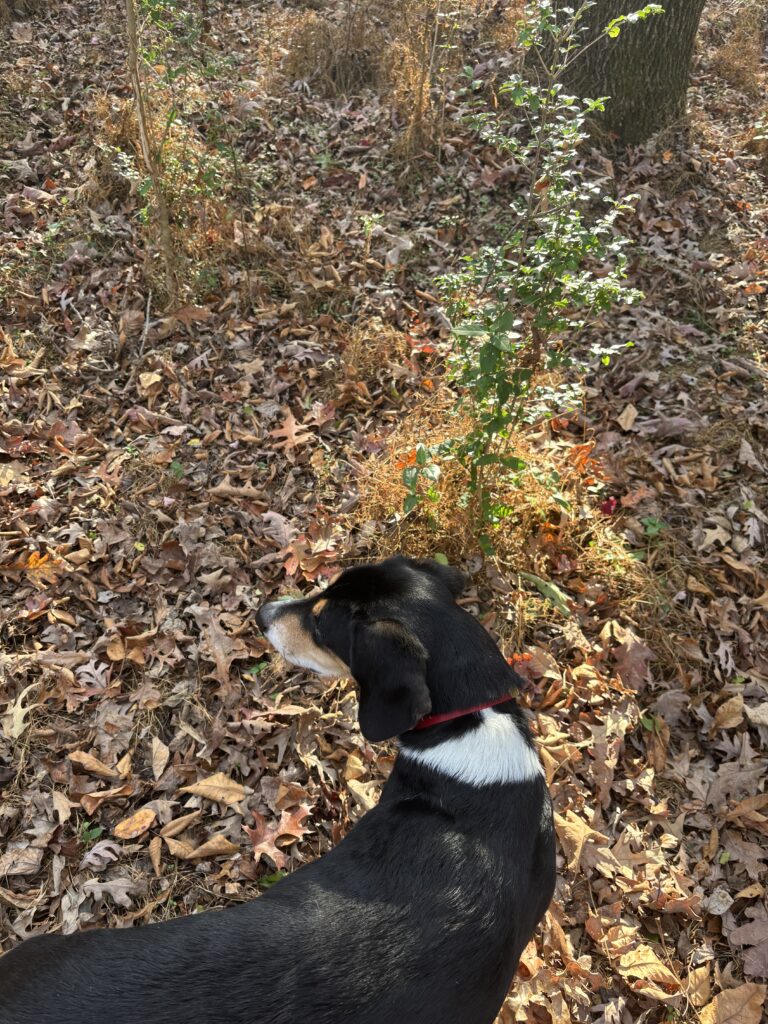
I always love going into these woods behind my house because it gives me the opportunity to spend more time with my dogs, the one pictured is Parker. The dogs themselves a huge part of this ecosystem behind my house. They hunt moles and rodents. Interestingly, due to this my front yard, which the dogs don’t have access to, is now covered with mole tunnels.

I feel like the fact that I’ve spent so many years back there building up a relationship with the place, as well as taking nothing from the environment, feels like that’s already a gift. I’ve spent time there, and also tried to prevent my dogs from killing things, which feels like a gift in of itself. I have a really strong sense of place here, as I’ve spent so much time back here when I was younger and we had a playset back there. Recently I’m one of the few in my family who will go back there to see what my dogs are up to. Overall I have a lot of good memories back here and that provides me with a strong sense of place.

Second Post: 11/3/2024

My time in my location started with me observing a woodpecker across the trail, along with hearing Hairy Woodpeckers in the distance.

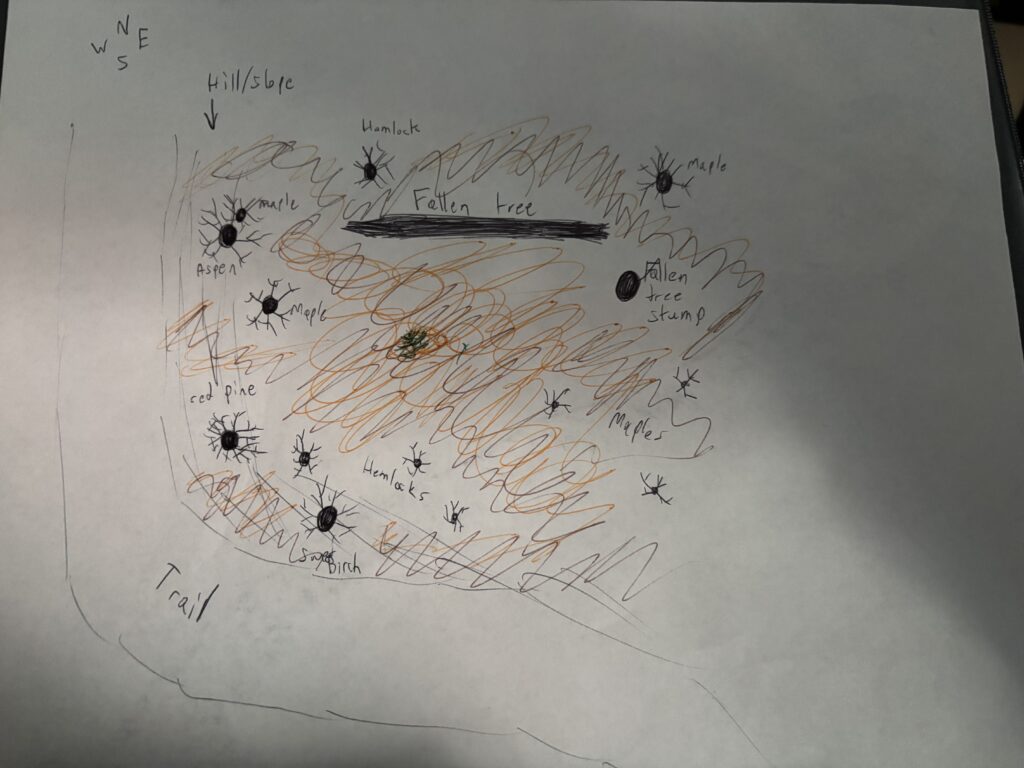
For a while I sat in the area listening to the woodpeckers move about through the trees. I then drew a diagram of my project area. I assume that there is likely a woodpecker nest near my site due to how often I see/hear them.

I tried to show that my project area is down a hill off the trail, with a large fallen tree and that tree’s stump in the center of it. I tried to show that the ground was covered with leaves as all of the deciduous trees in my project area have lost their leaves, I don’t think that was portrayed very well however.

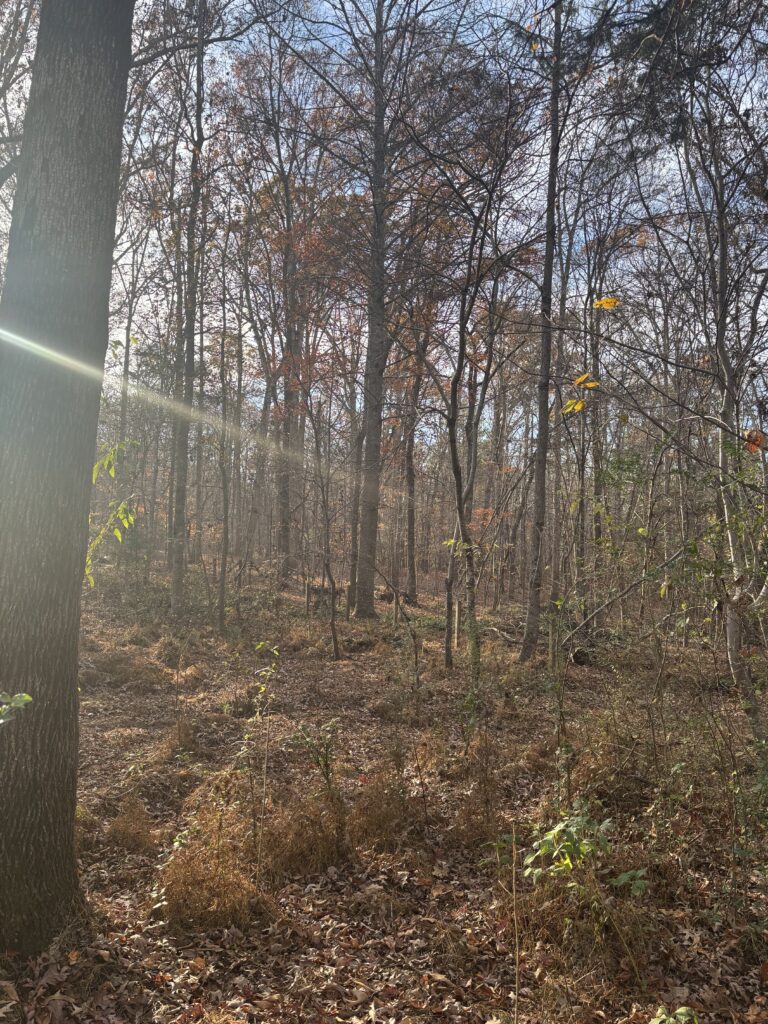
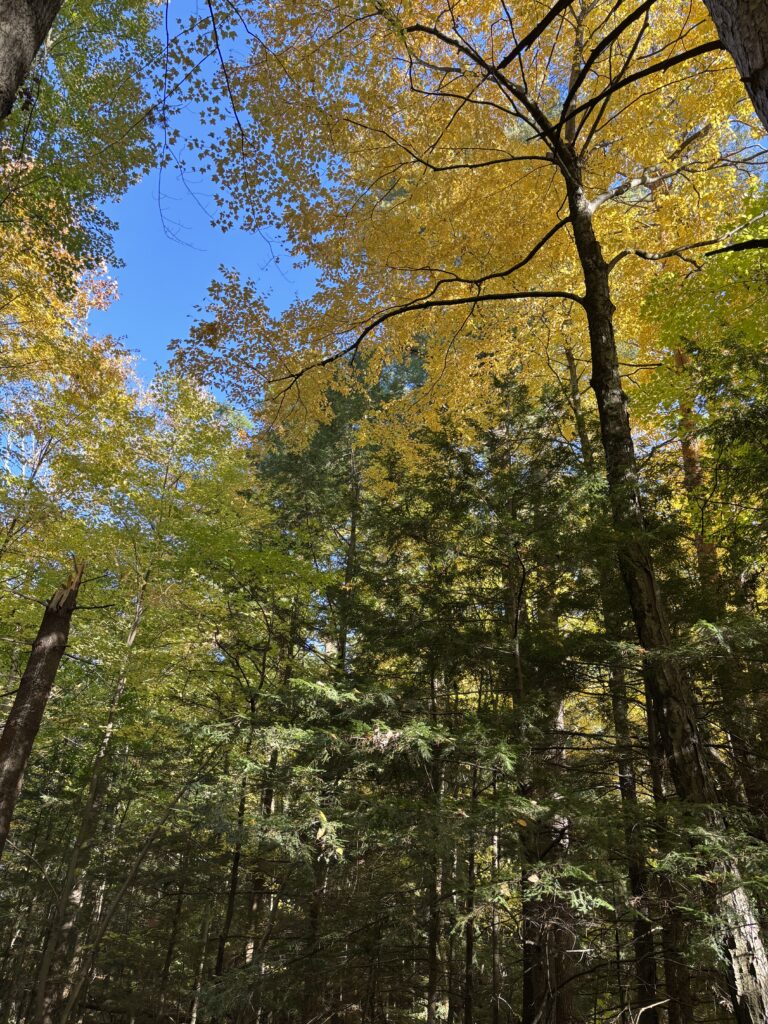
It was a surprise to see that the deciduous trees have lost their leaves as 2 weeks ago, when I last visited my location, many of the trees still had leaves, as seen below.

First Post: 10/14/2024

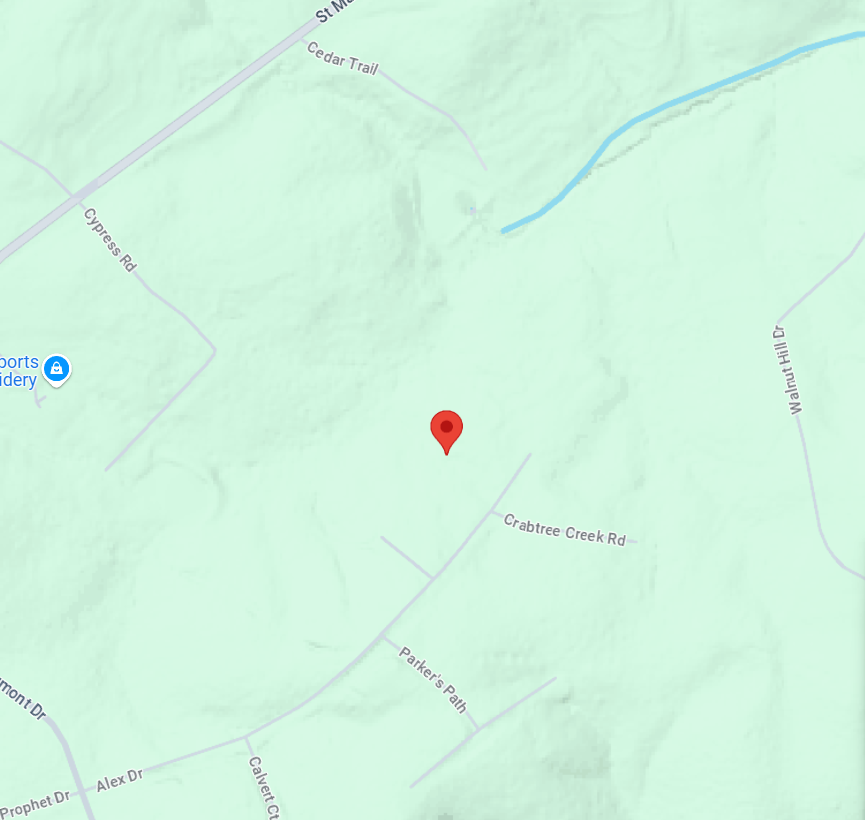
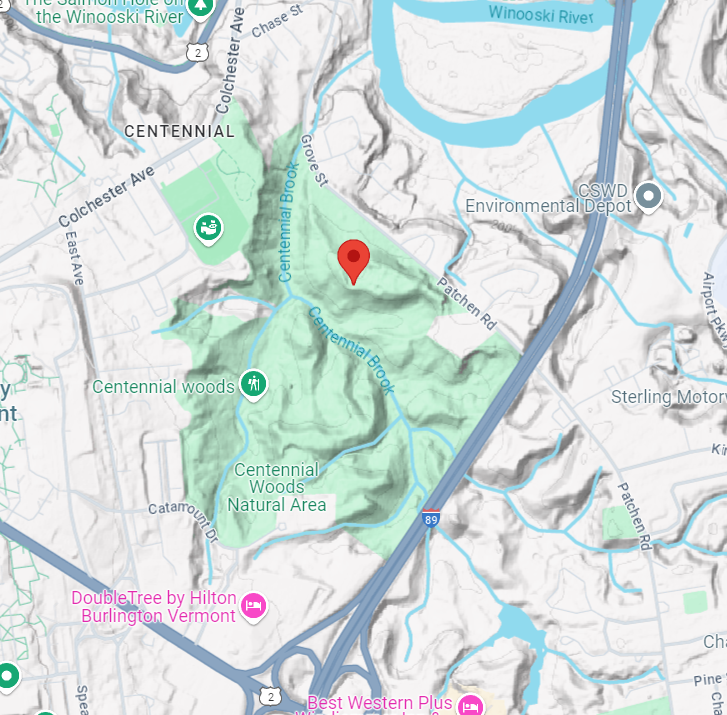
The spot I chose for my phenology project is in the North of Centennial Woods. I chose this spot because it had a fair number of deciduous trees in the area and the ground wasn’t too difficult to walk on as there were less shrubby plants.

The vegetation in my block is pretty light compared to some of the other areas around it. There are a few ferns on the forest floor, along with some striped maples, and partridge berry.

My block has several large hardwood trees, with a few smaller coniferous trees. Many of the hardwoods surround the trail while the smaller hemlocks and sugar maples are in the center of the site. These trees include:

While in my project area on October 11th, I heard what sounded like a Red Tailed Hawk, as well as a pileated woodpecker in the chaos following. I was not able to get a recording, but it did sound similar to the call Merlin

Skip to toolbar