
Introduction
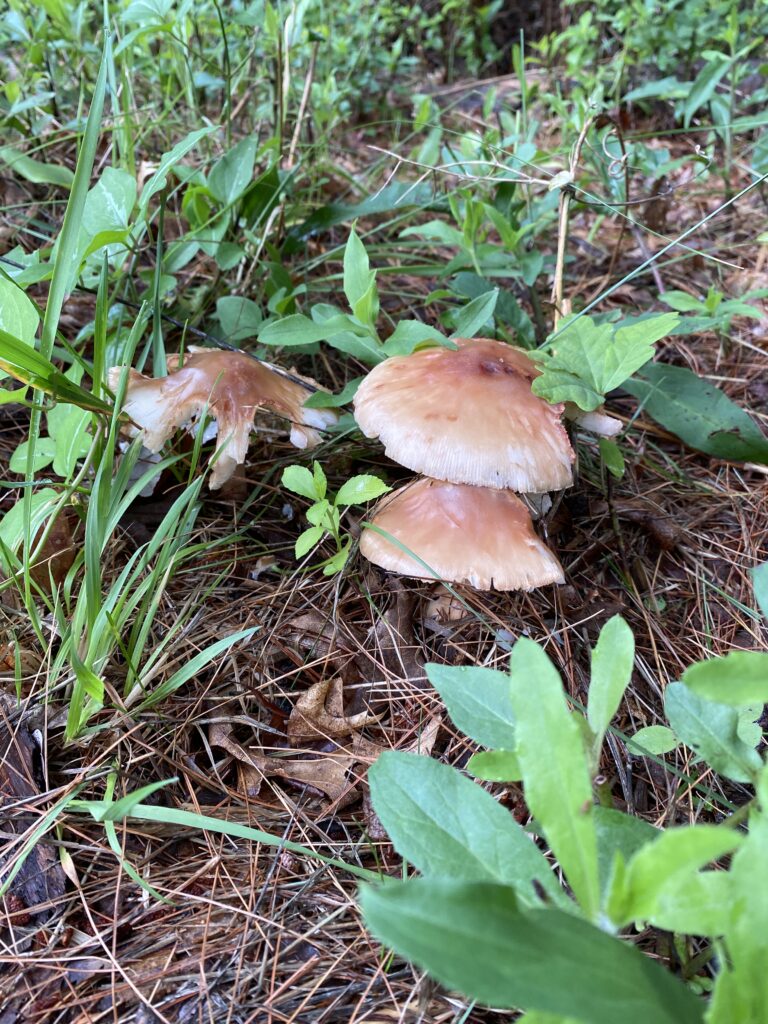
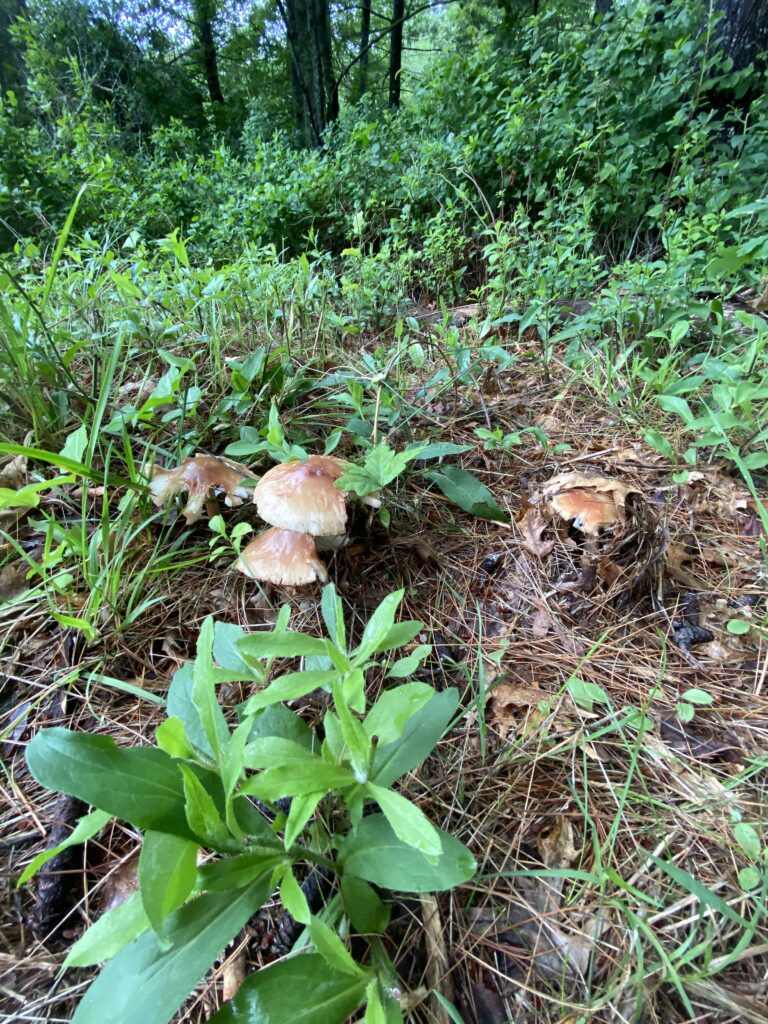
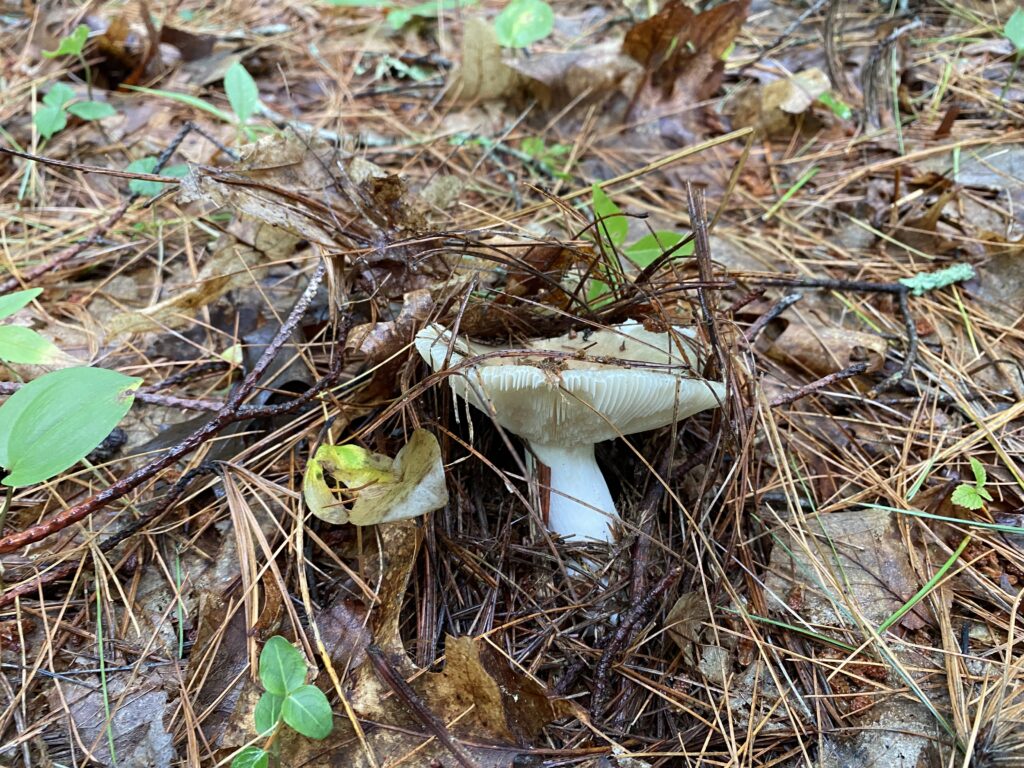
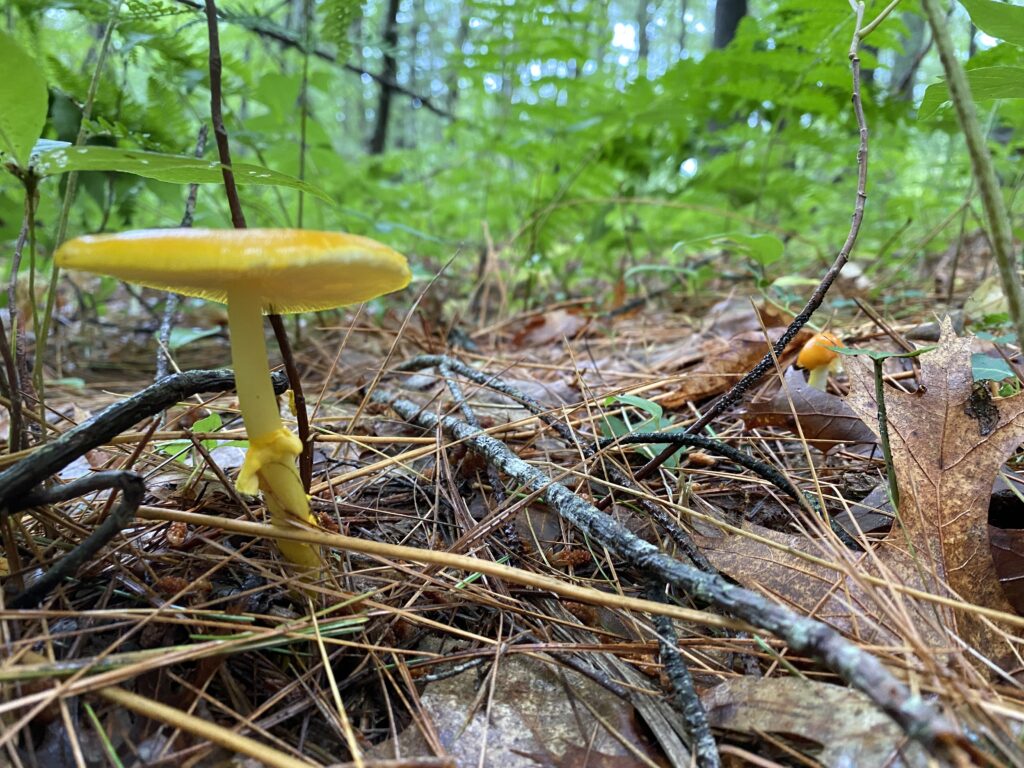
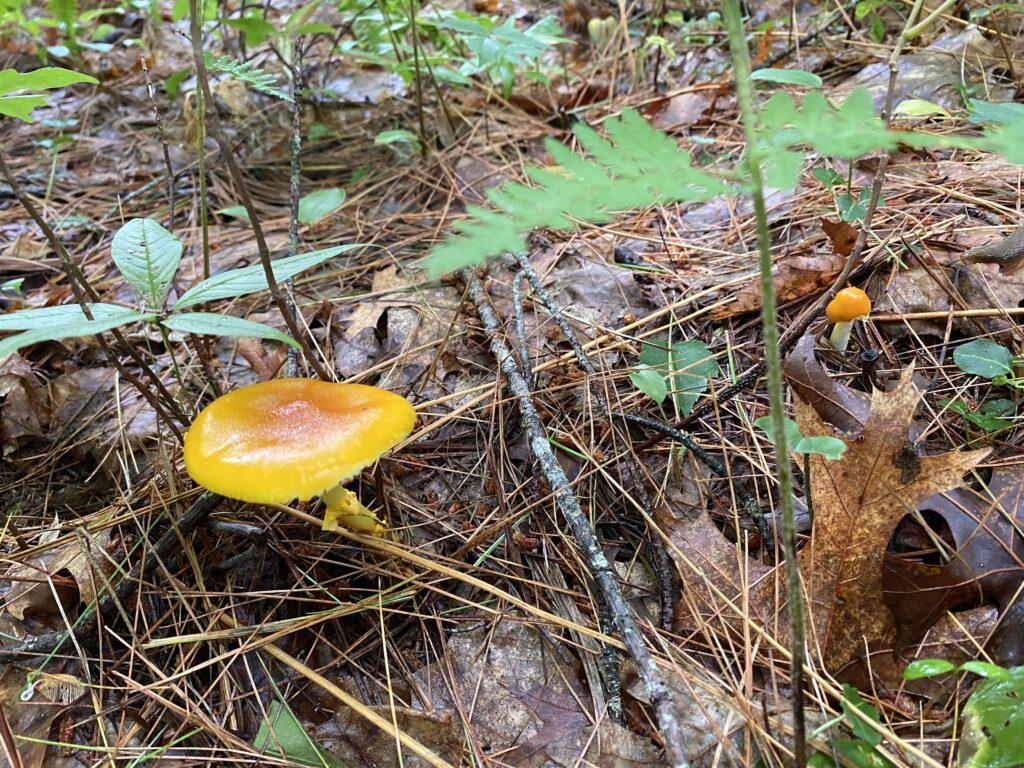
This week for two days in a row I walked through the location of my wonder blog, which is located down the road from my house next to a reservoir. The first day of my walk I attempted to search for mushrooms to take pictures of with my friends, as it has rained the past few days. On this day I was unable to take as many pictures as I wished whether it was because I was distracted by conversation with my friends or a drive to do something as a group I don’t know. On the next day I returned alone after a morning and night rain to take pictures of every mushroom I could find. The sky was dark with a very slight drizzle coming down, it was 68 degrees out according to the thermometer in my car, and the ground was very damp from the tropical storm that passed through a few days ago and the rain I was currently experiencing. At first I was walking and found the large mushrooms right off of the path which gave me a decent amount of photos but it wasn’t enough, I felt like after all the rain in the past week the wetlands back here would be producing vast amounts of mushrooms. It took me a second to slow down and stare at the woods beyond the path to find all the mushrooms hidden under leaves, on downed trees, or to small to see by a glance. After taking a picture or two of every mushroom I could find I took a few home to spore print them. I have no experience identifying mushrooms but taking a proper spore print Is required if I want to get to the point where I can forage for my own food. I would some day like to look around me and know what is growing out of the ground and this is the first step in understanding the steps to that process. Being able to look at different mushrooms and distinguish their notable features from cap patterns, vails, excretions, spore prints, textures, underbelly structures, and ground conditions will be very important in learning to forage safely. Below is a gallery of all of the mushrooms I could find on July 12th, 2021.
Photo Gallery
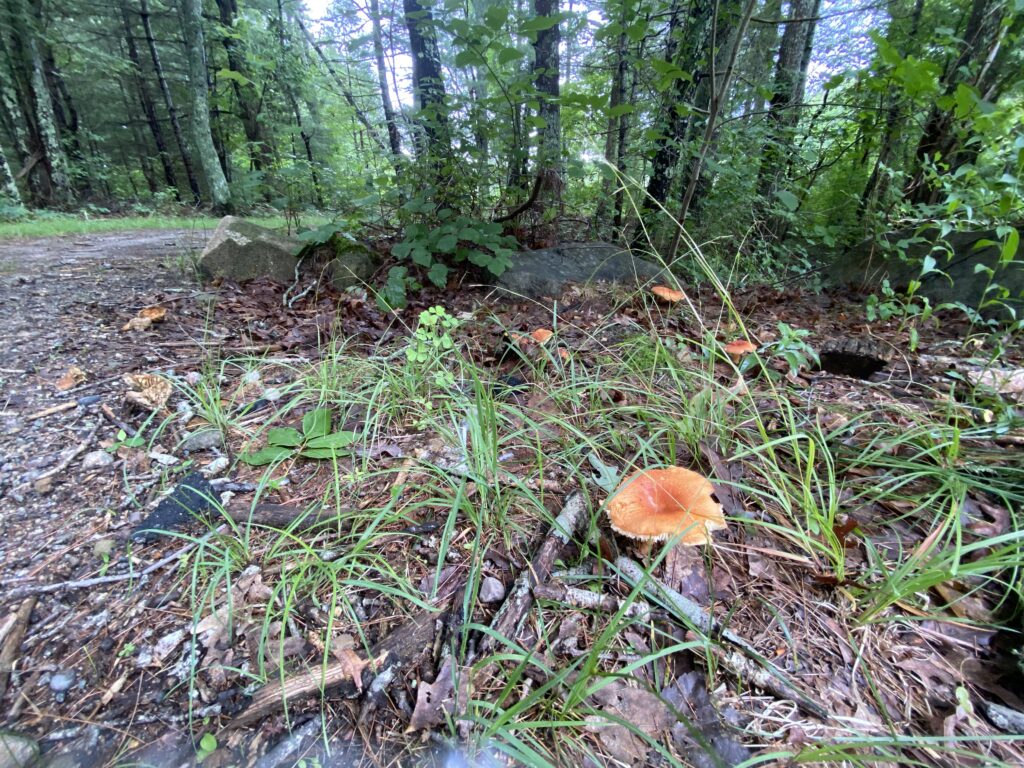
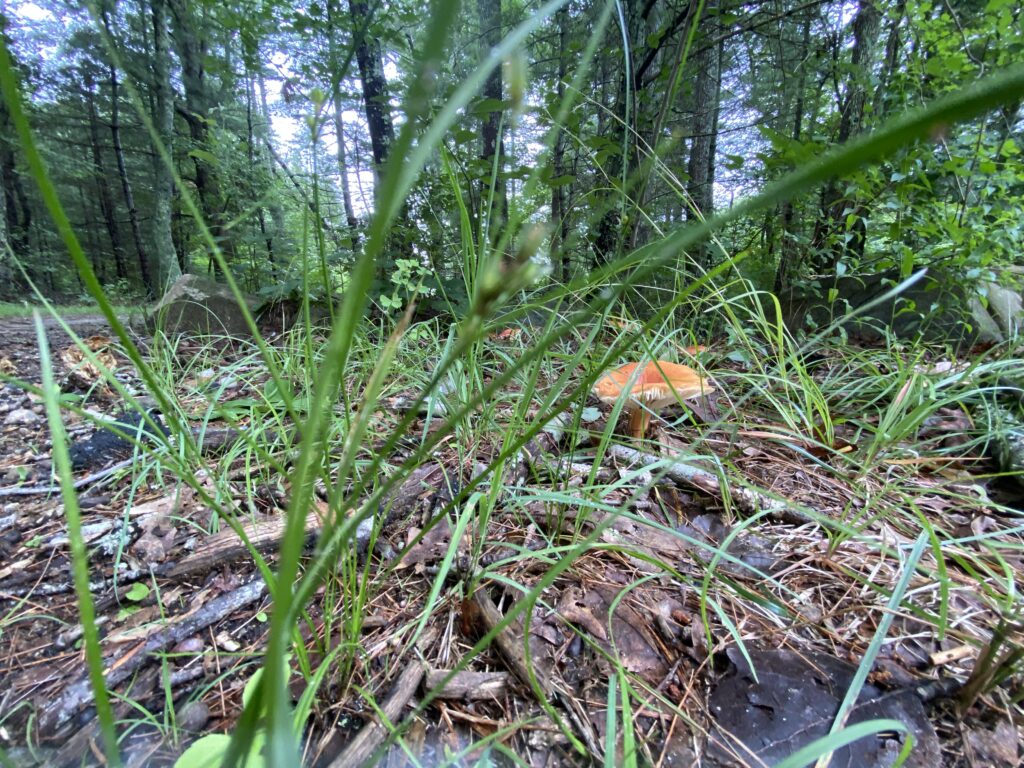
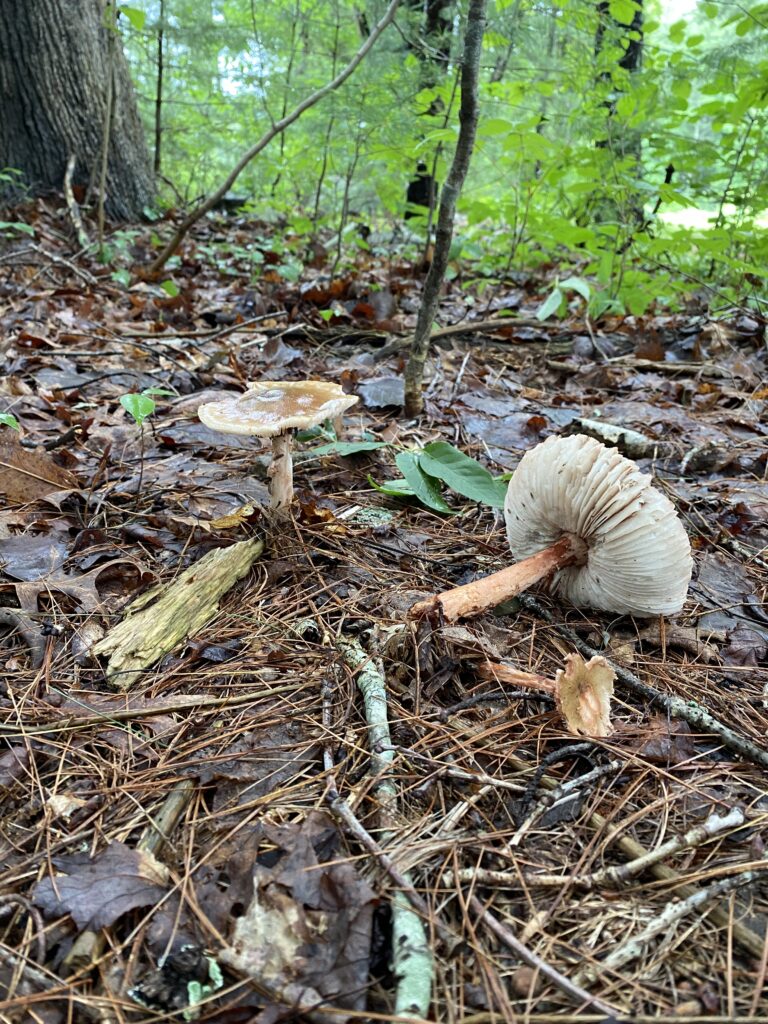
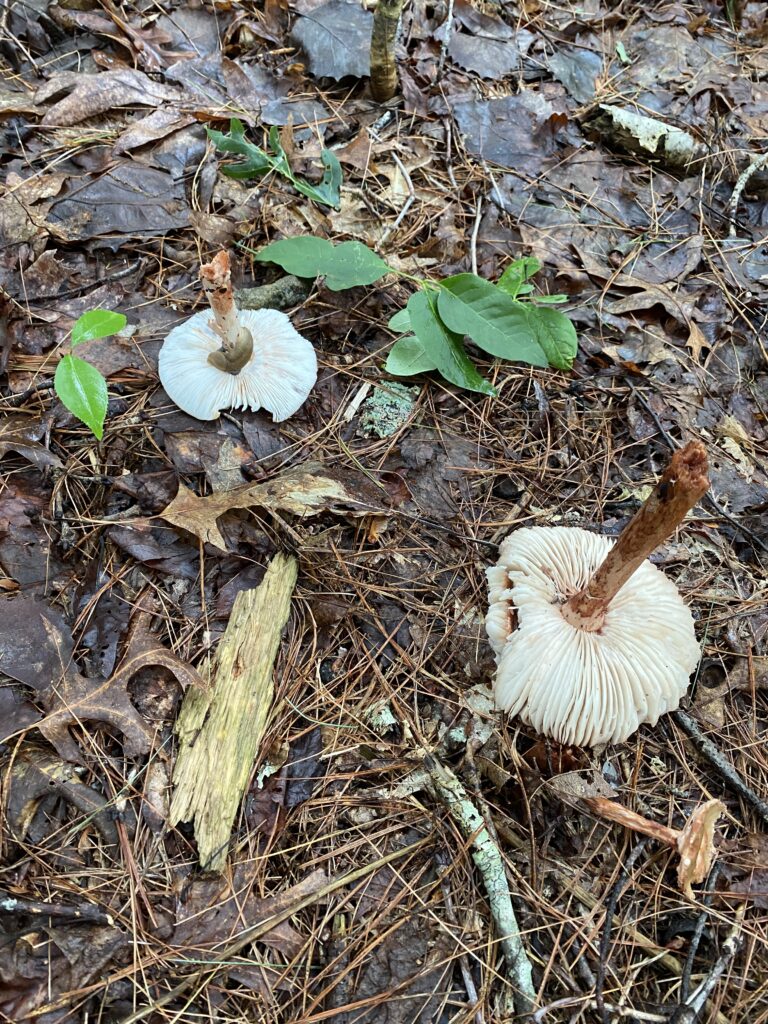
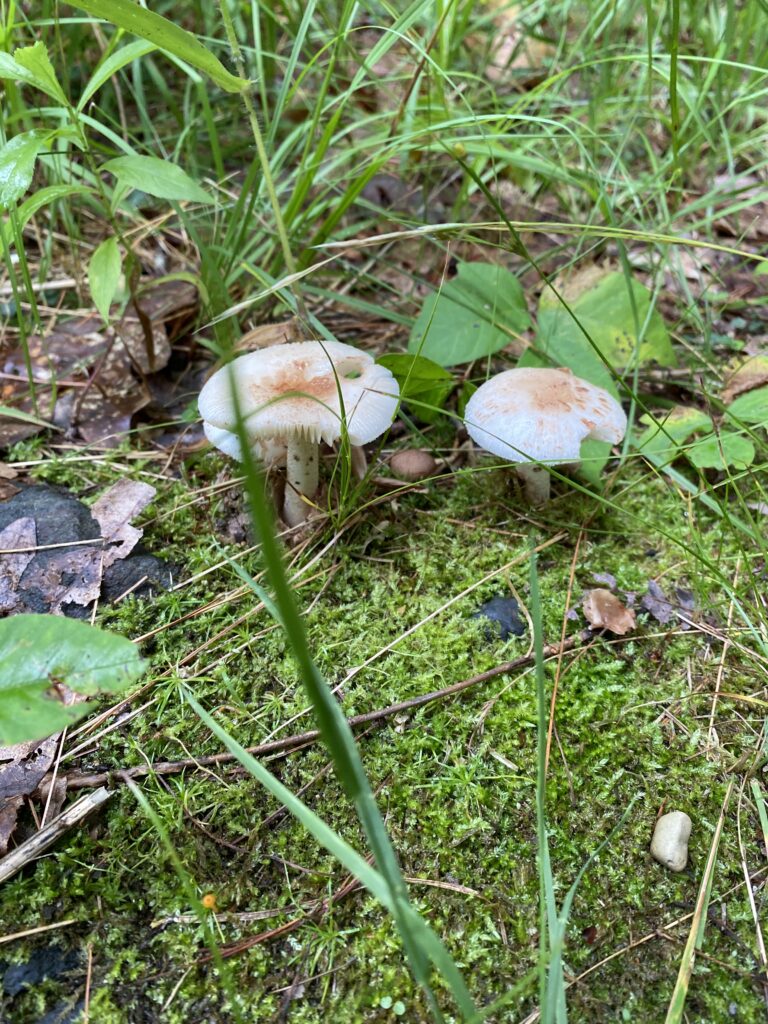
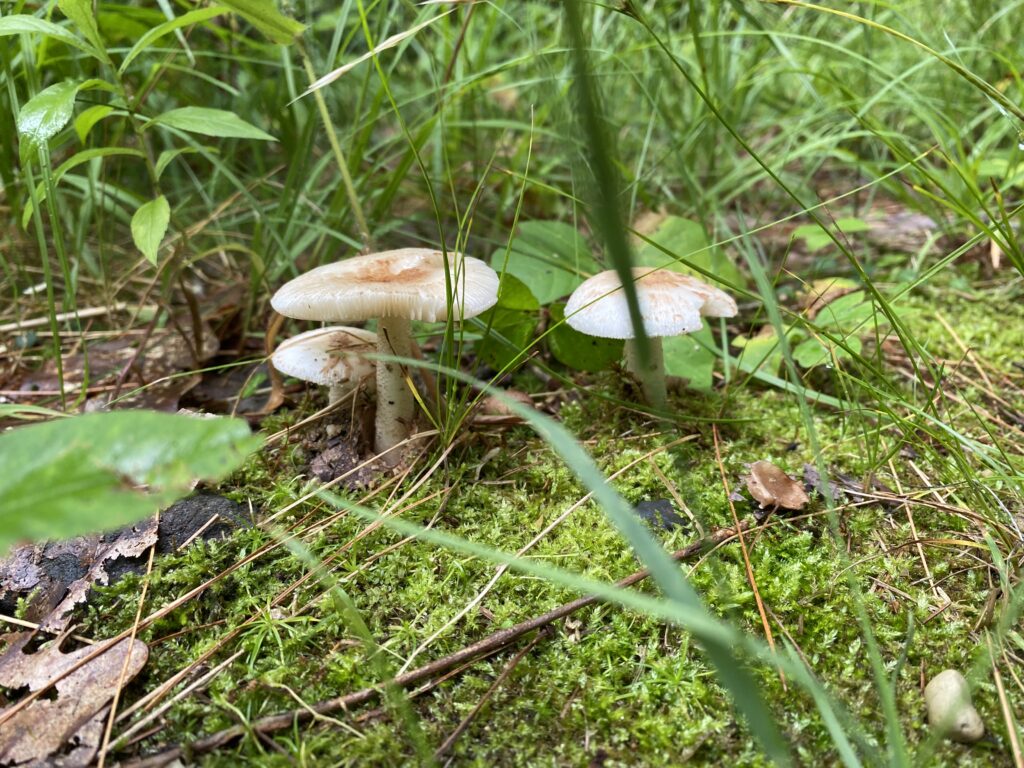
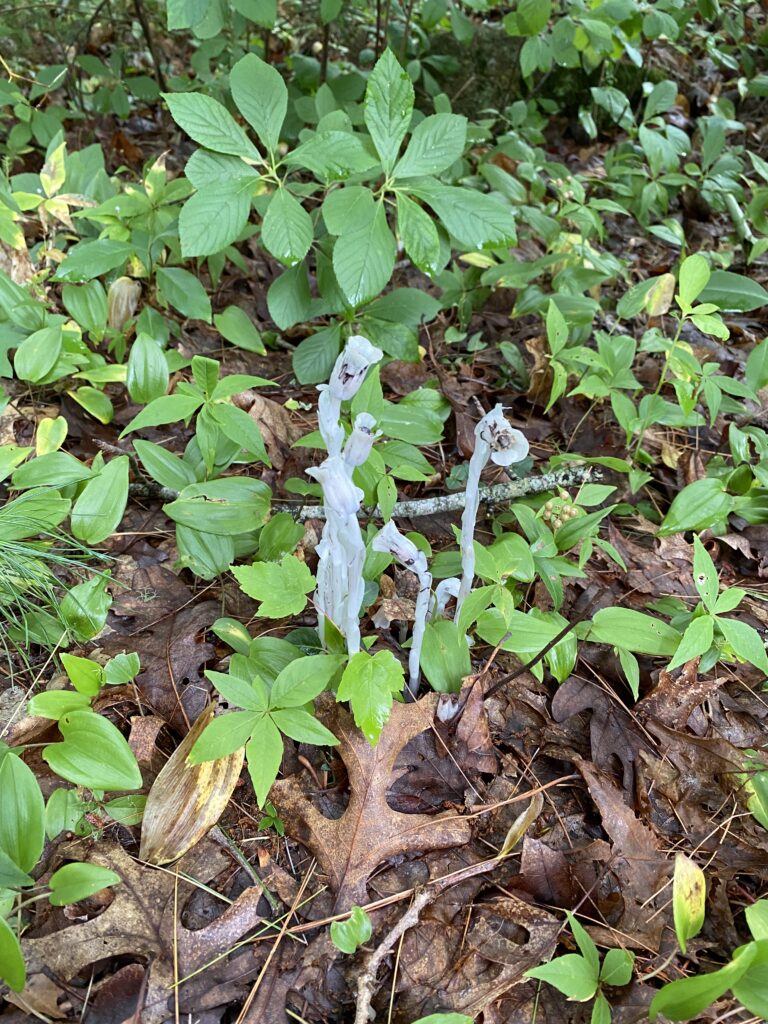
Indian Pipe 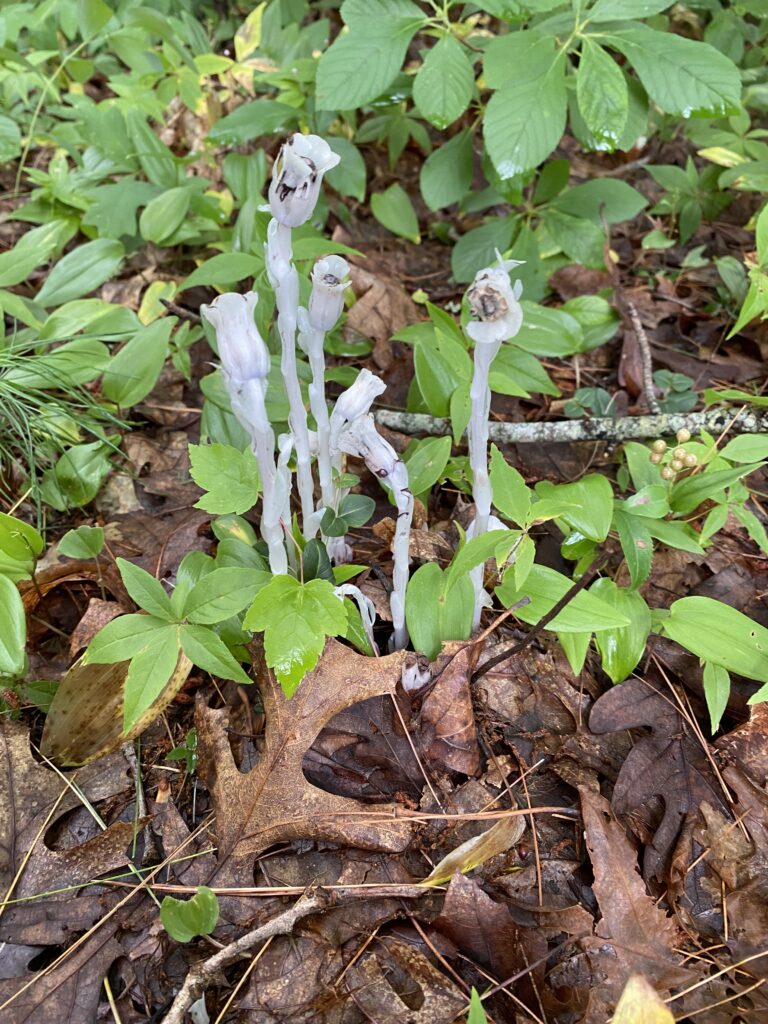
Indian Pipe 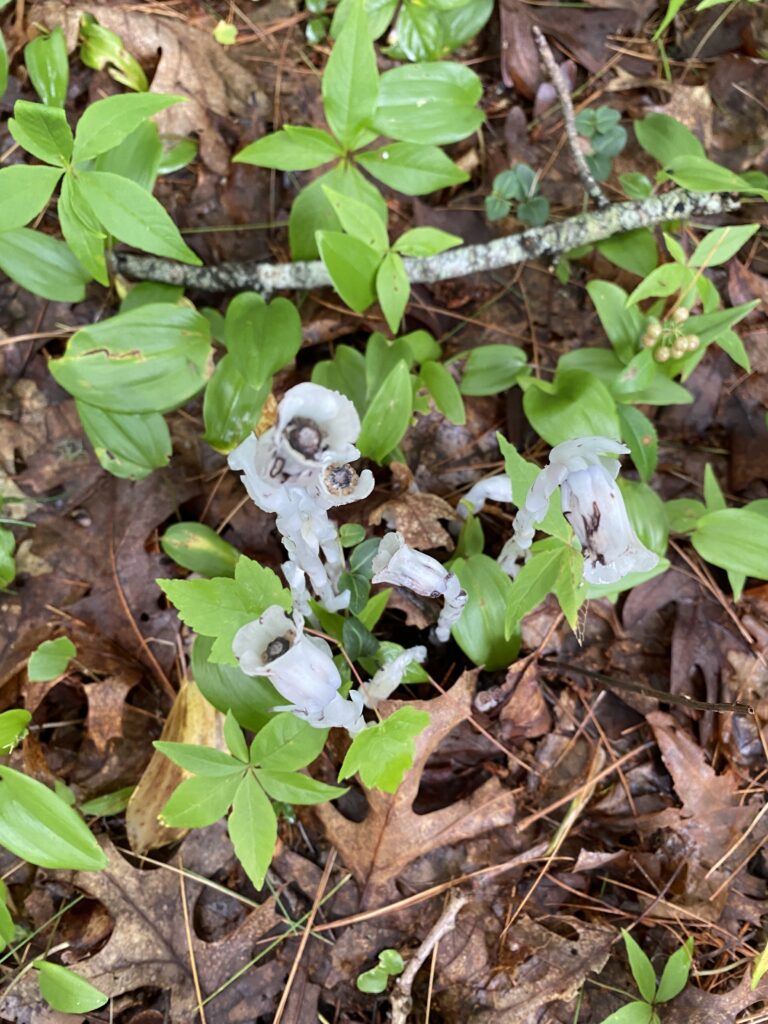
Indian Pipe 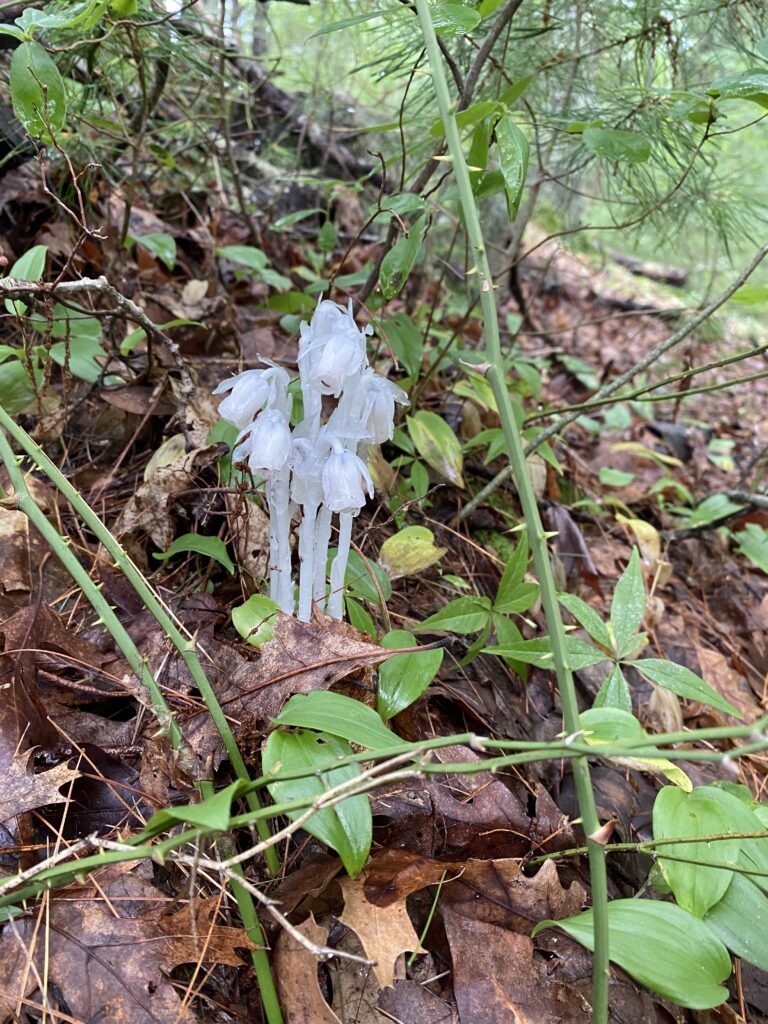
Indian Pipe 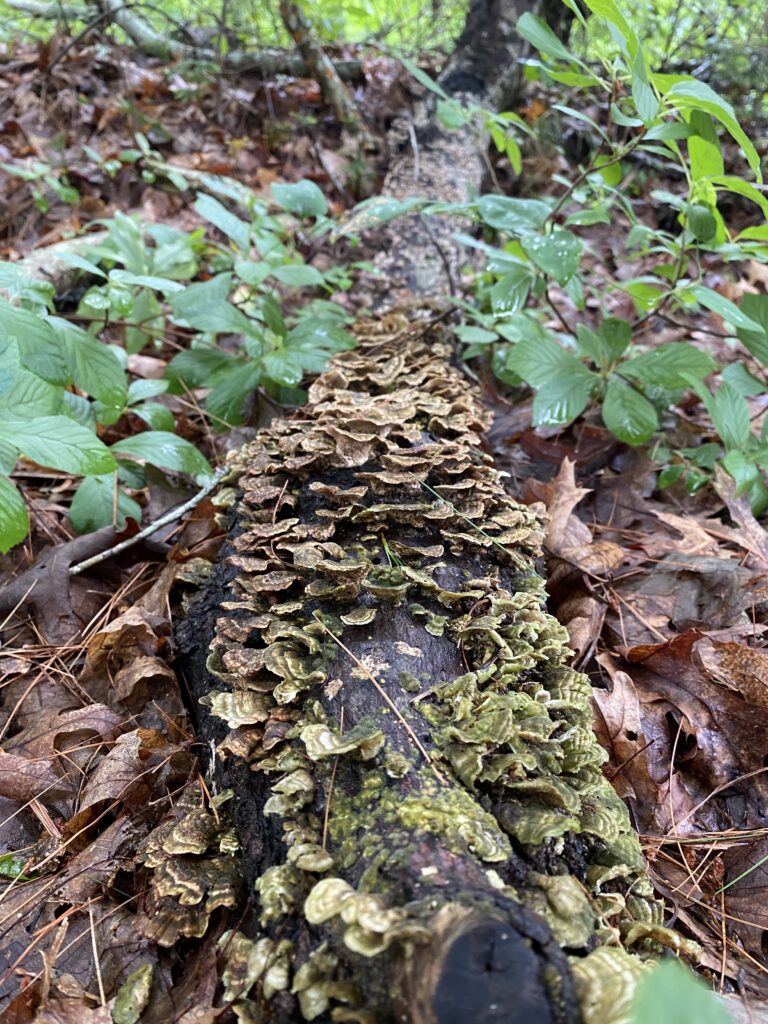
Stereum ostrea or False Turkey Tail 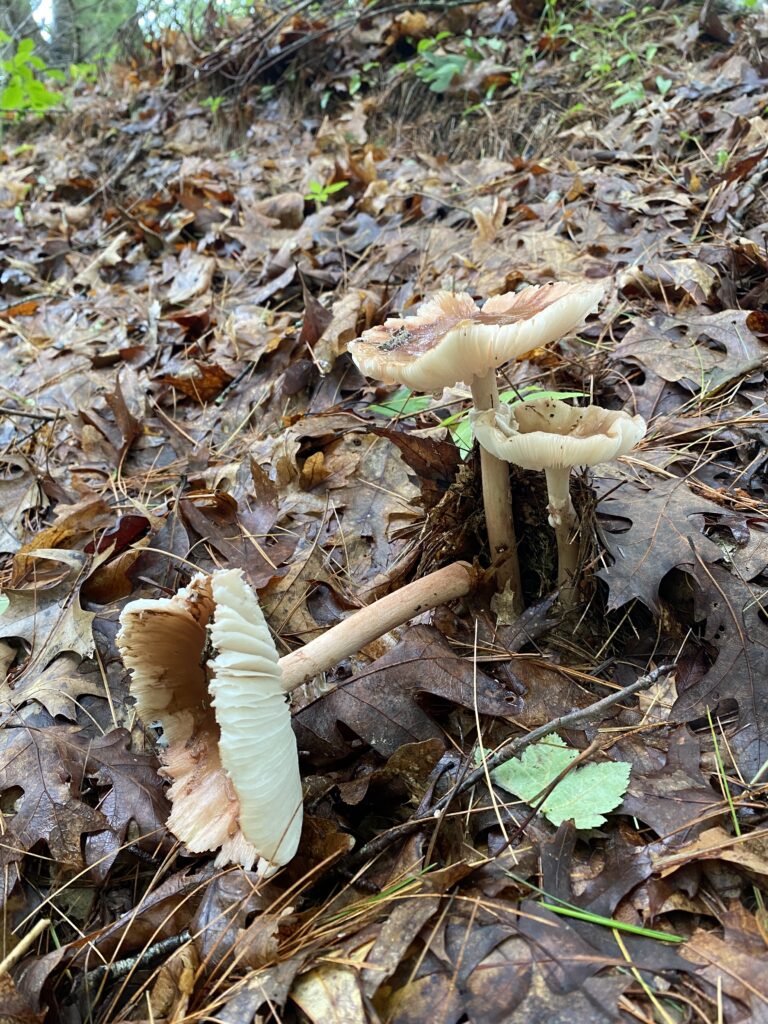
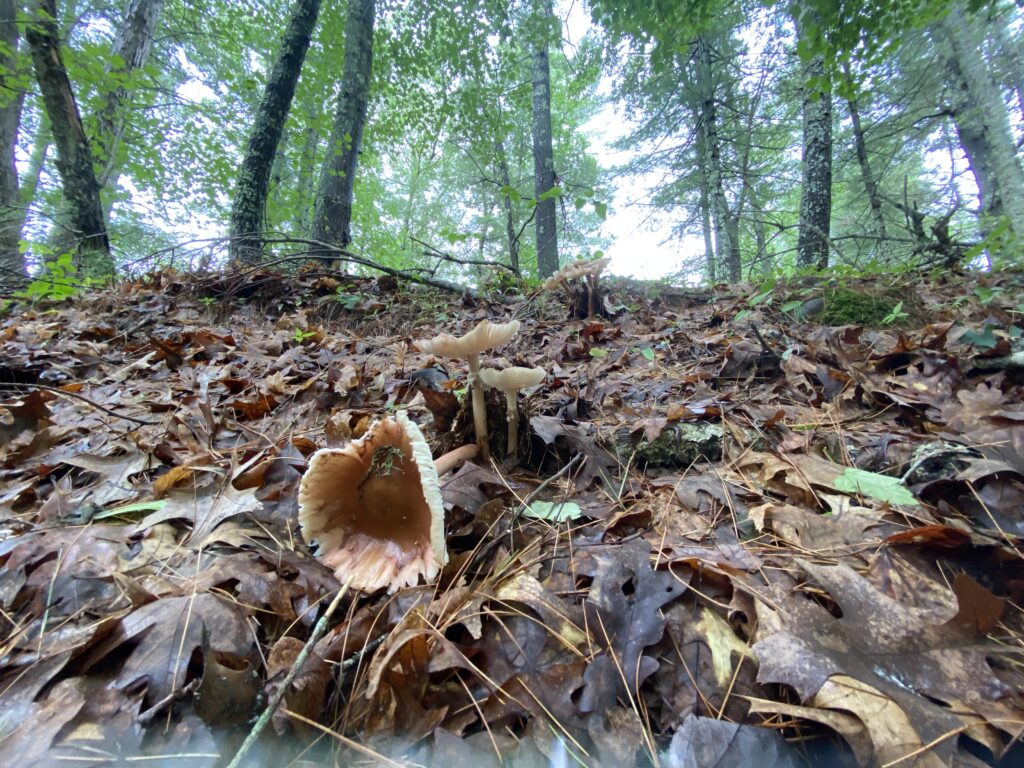
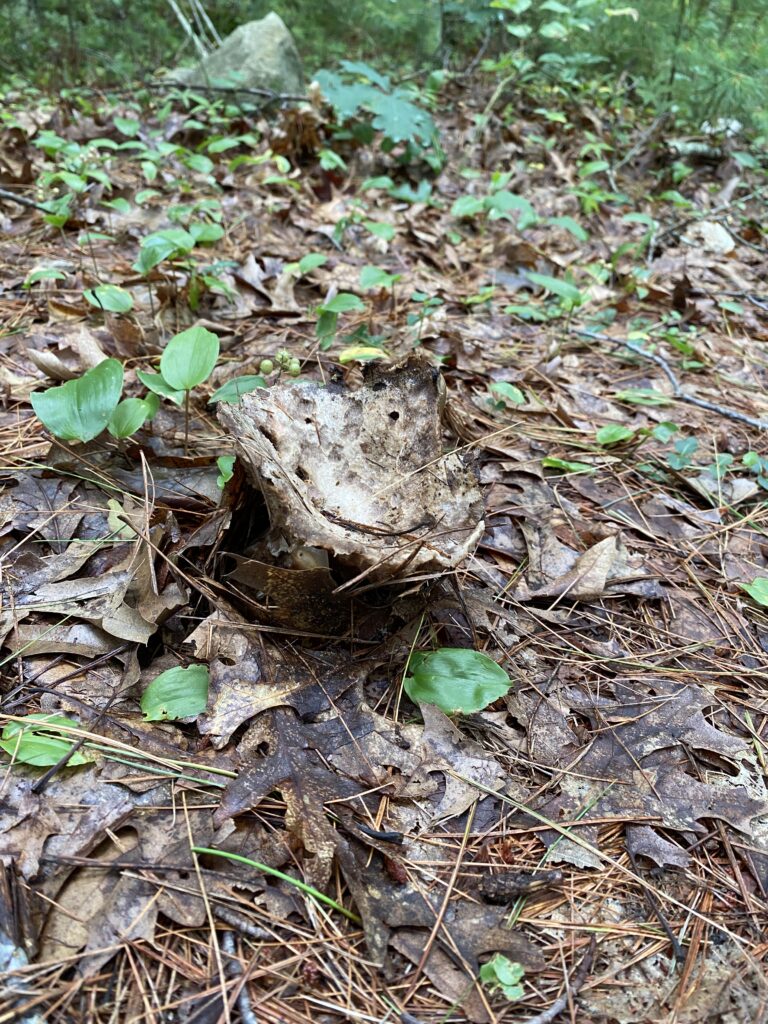
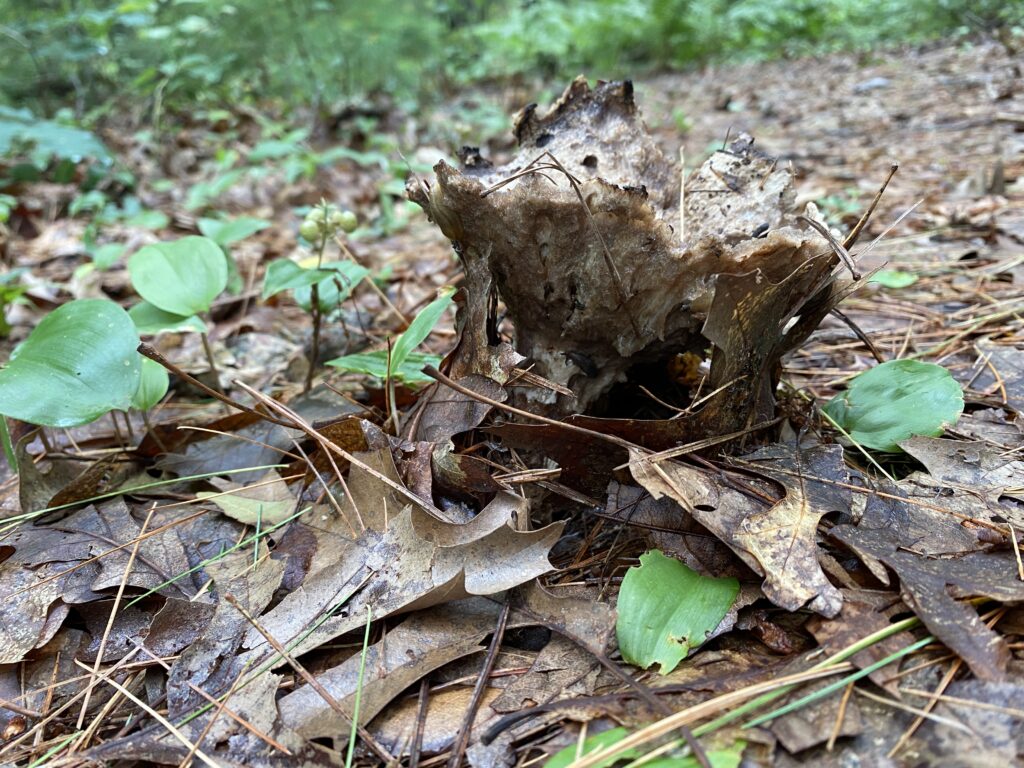
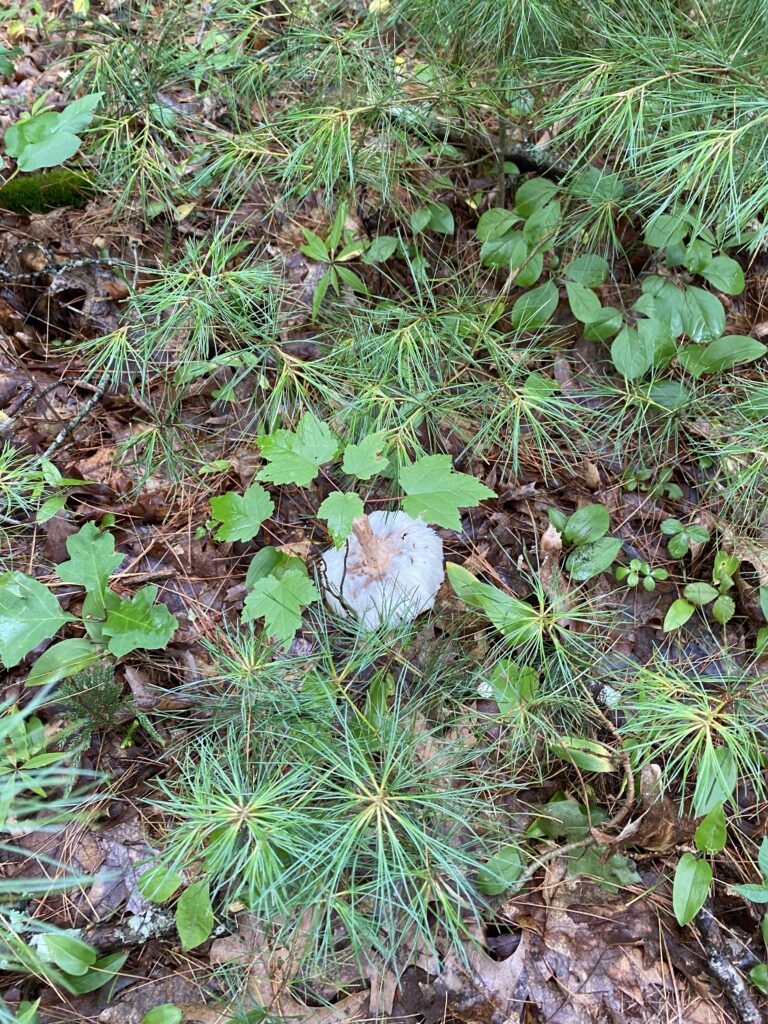
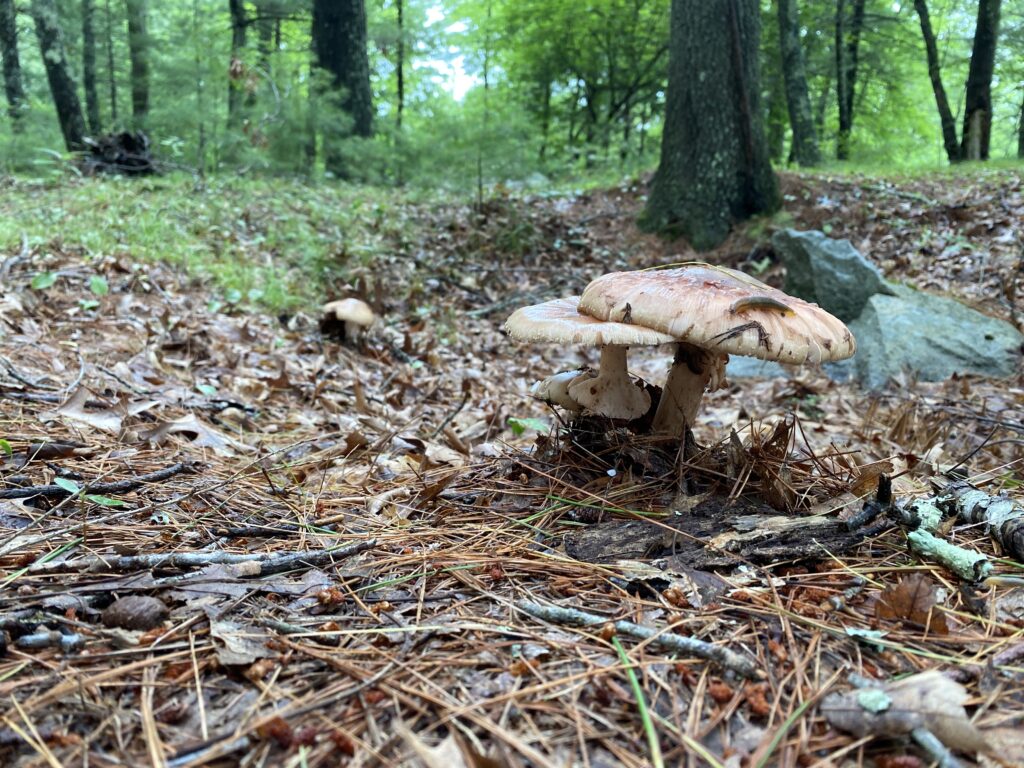
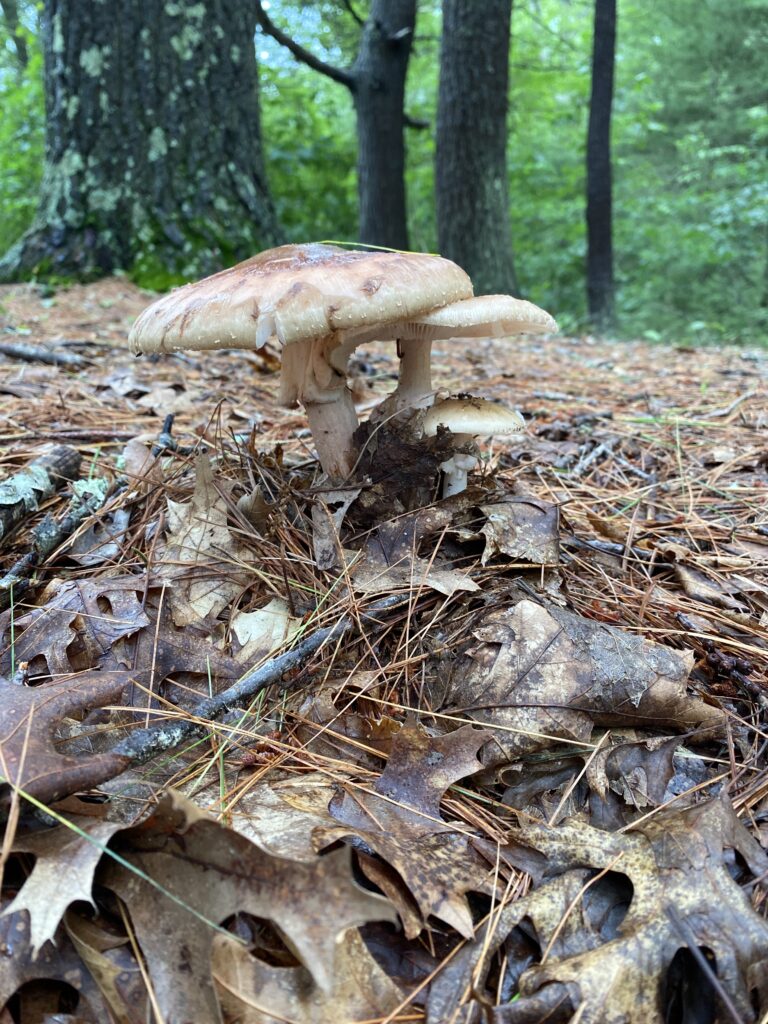
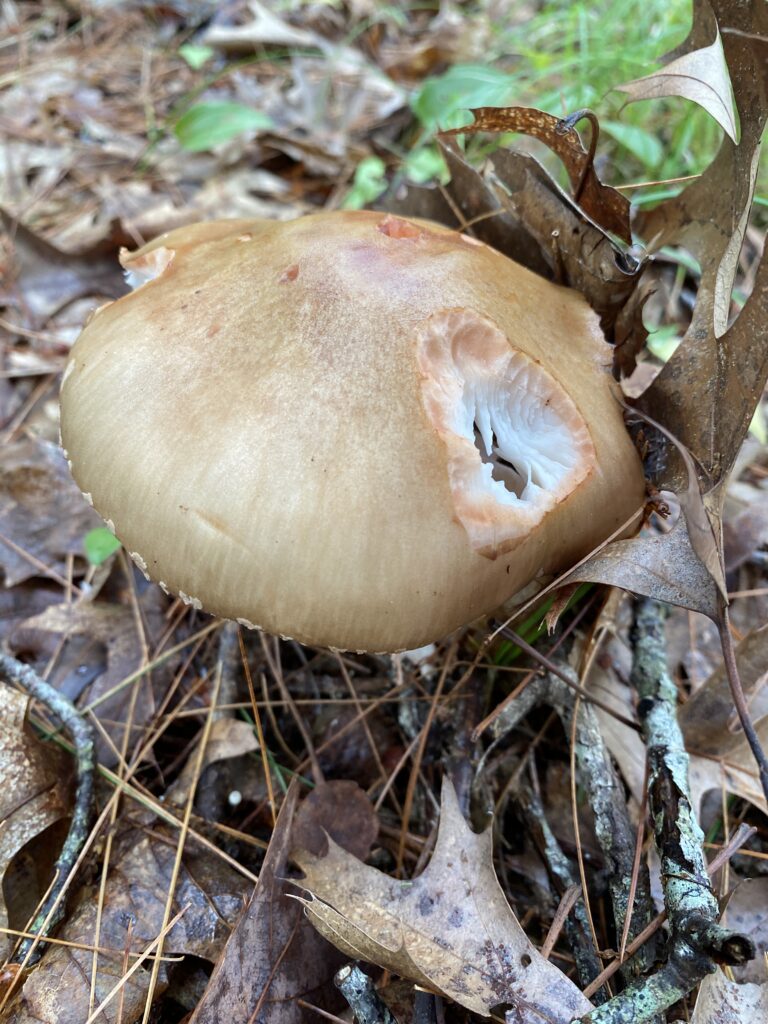
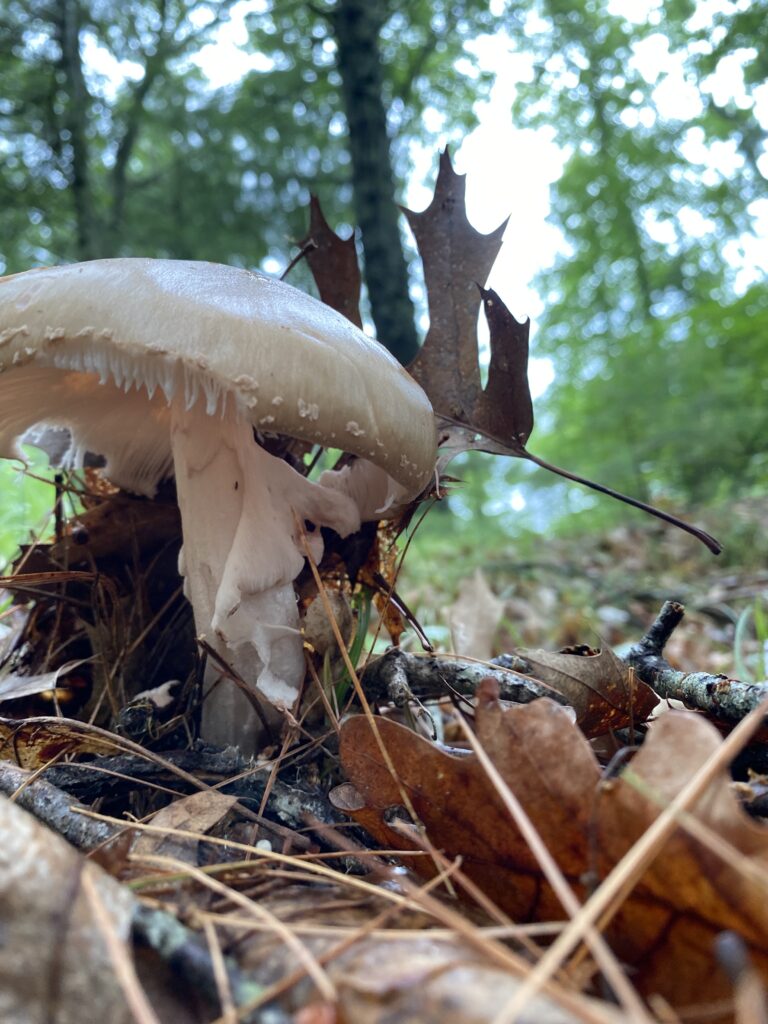
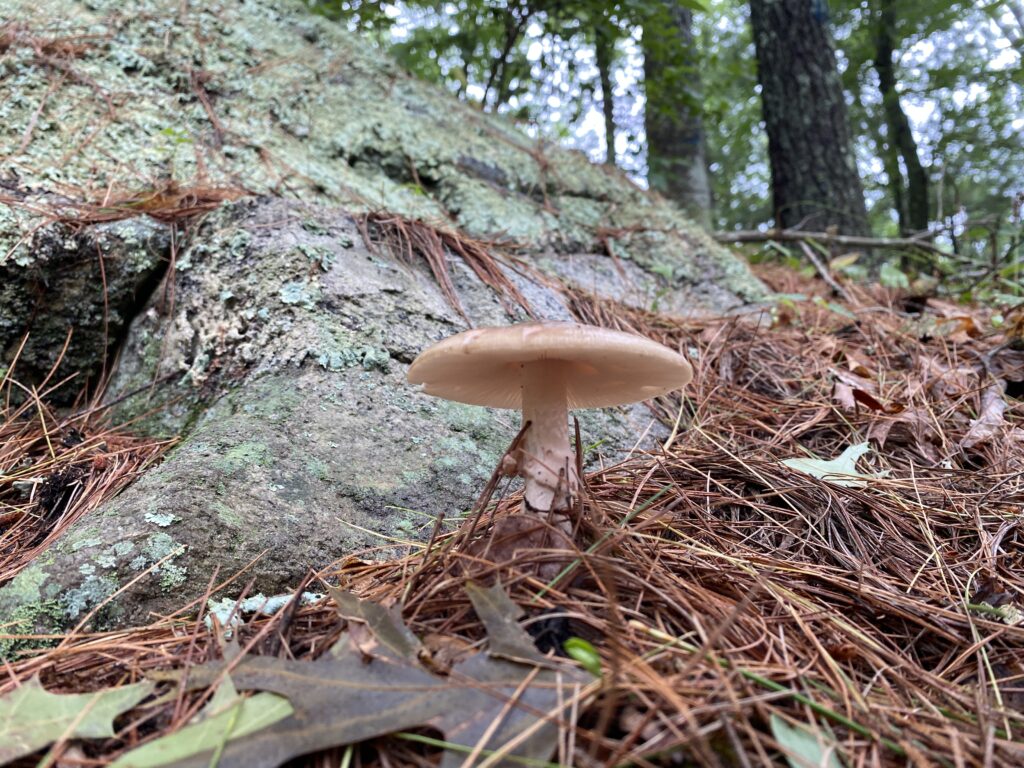
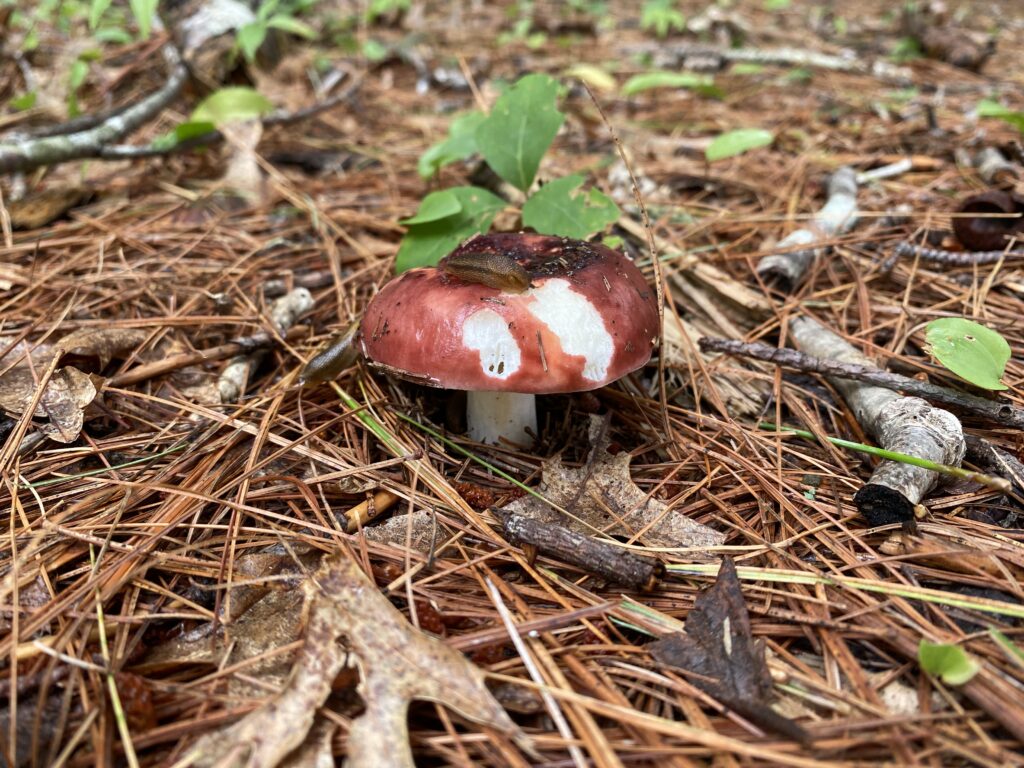
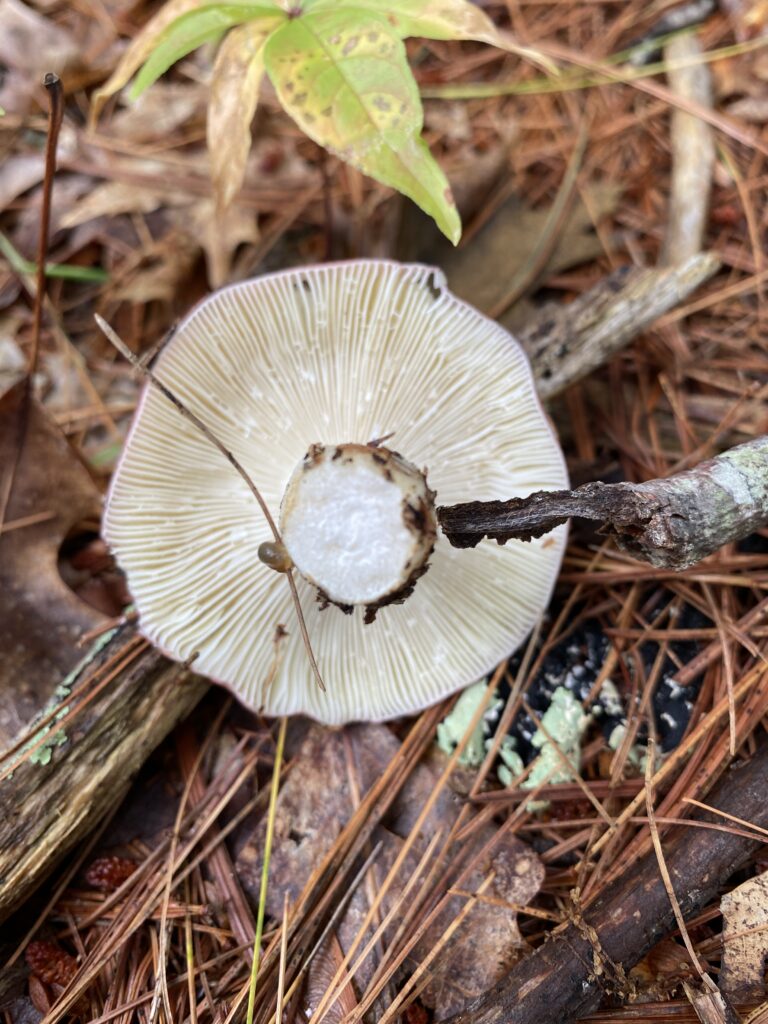
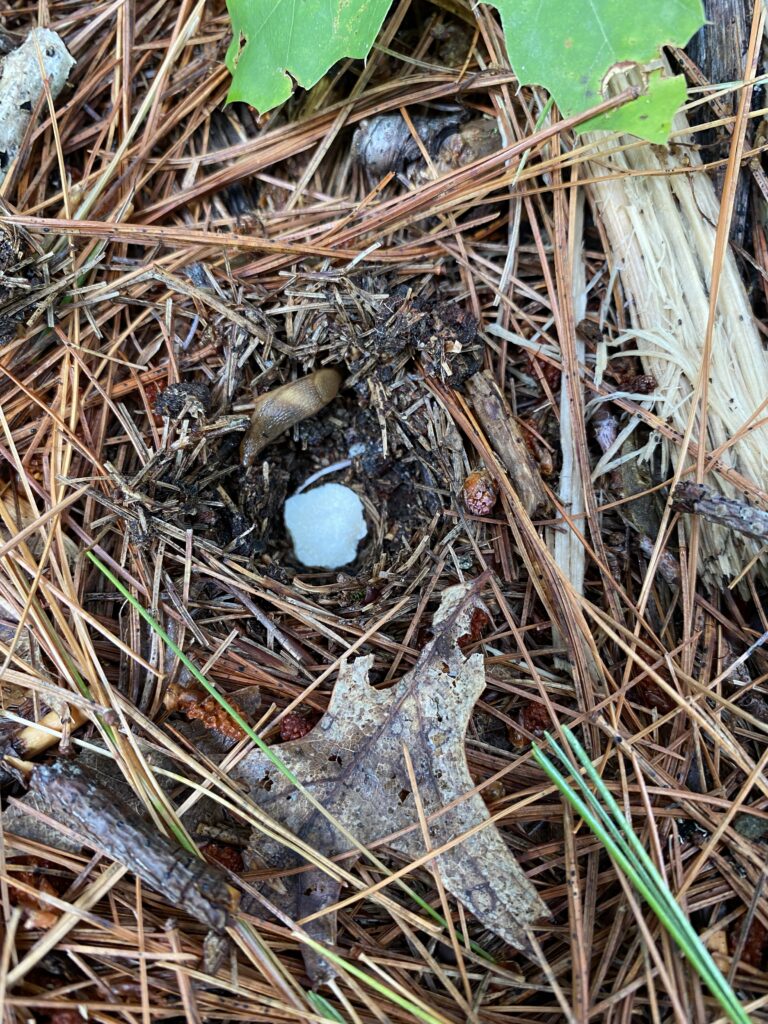
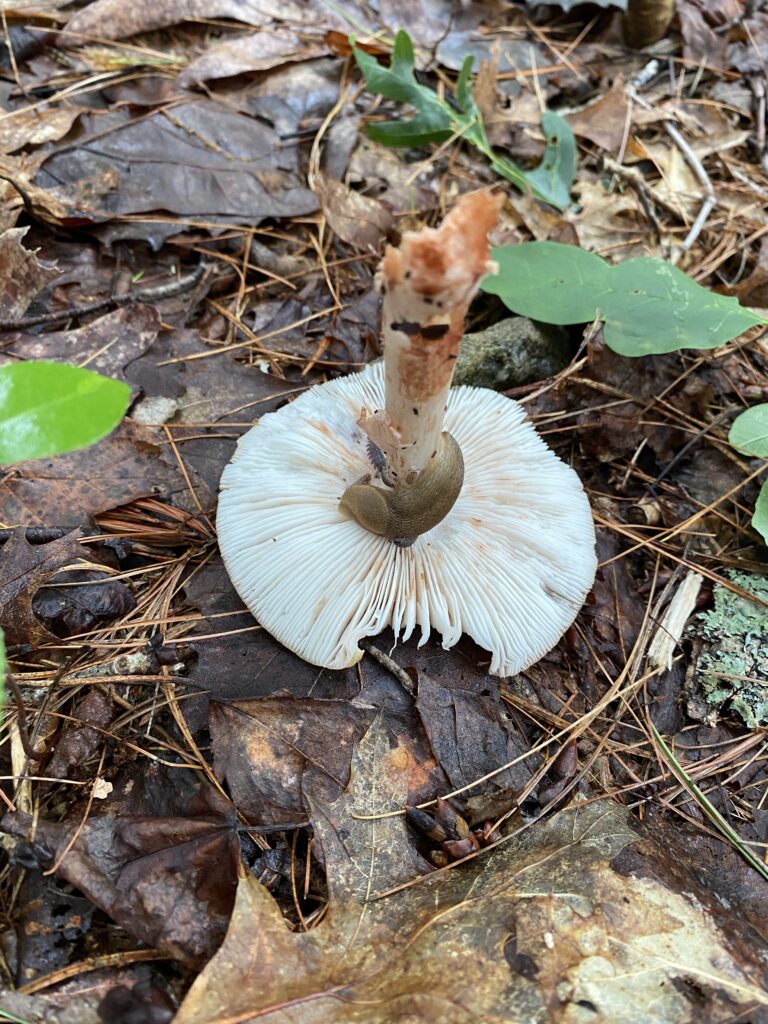
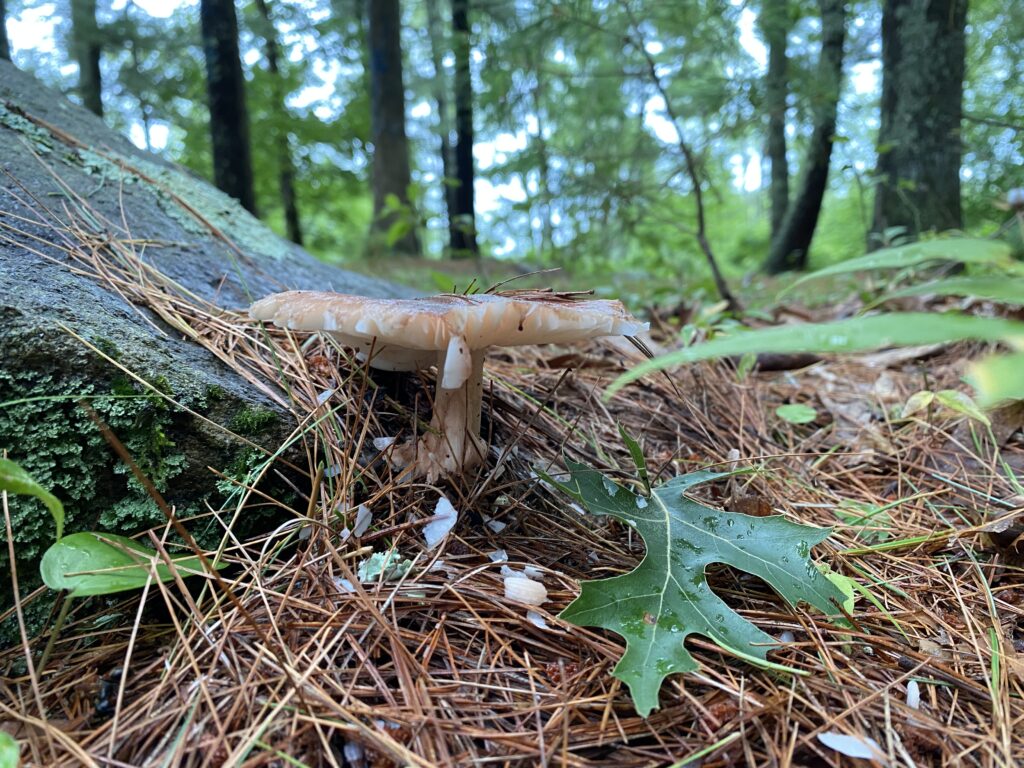
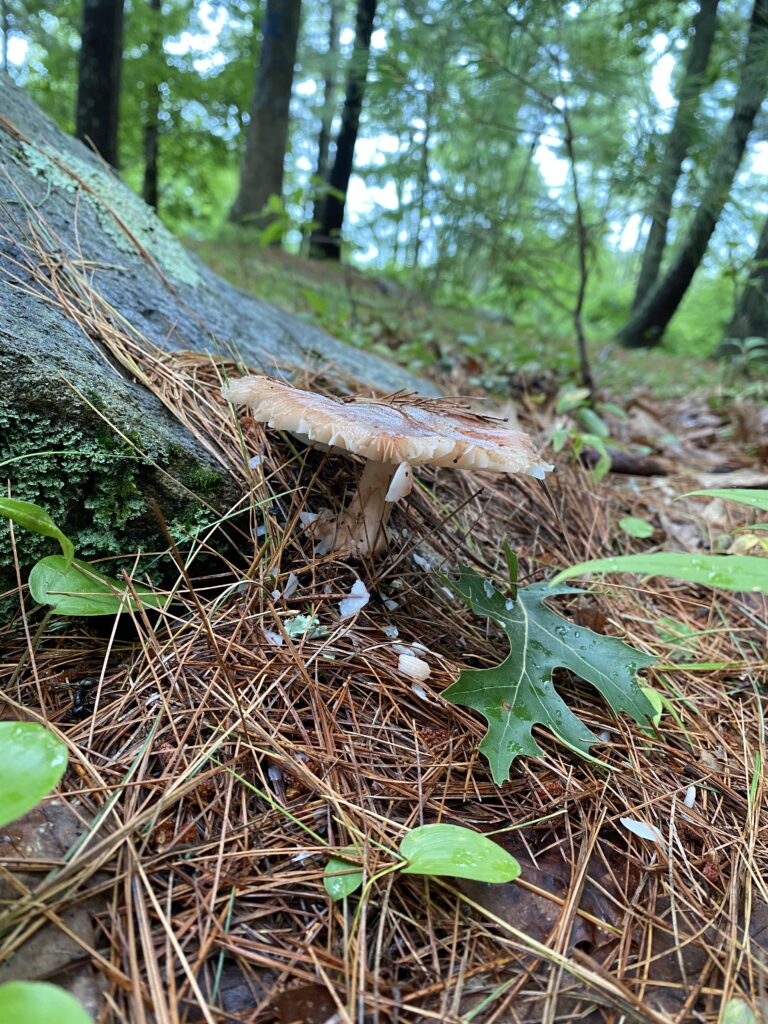
Base of stem broken off 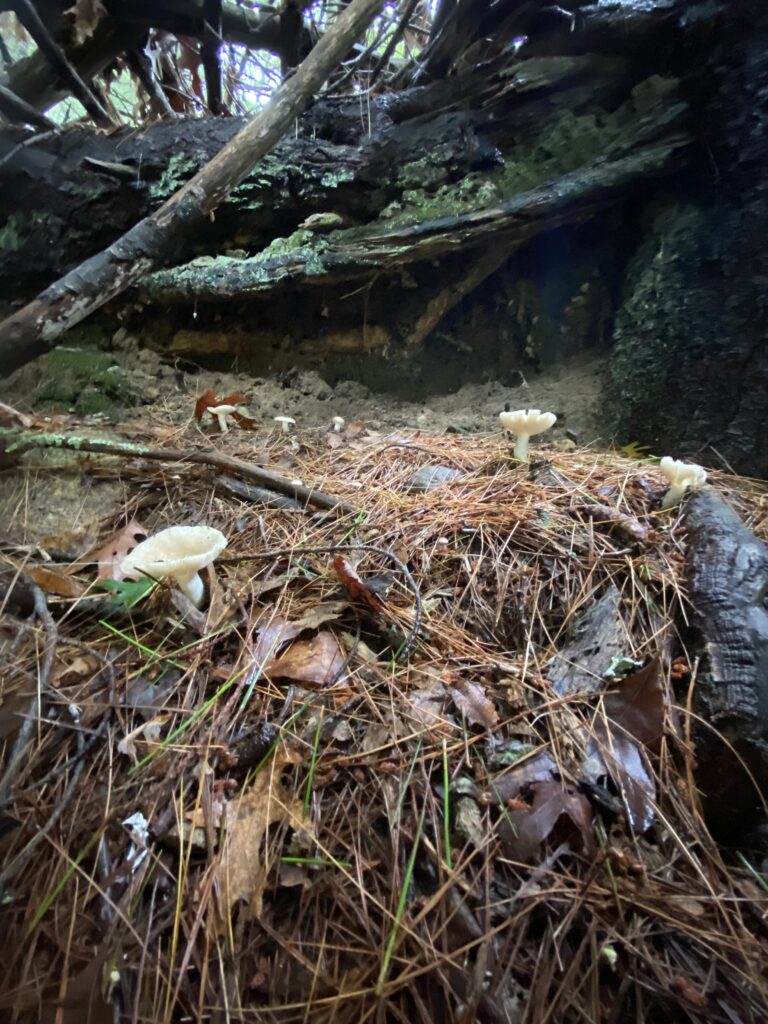
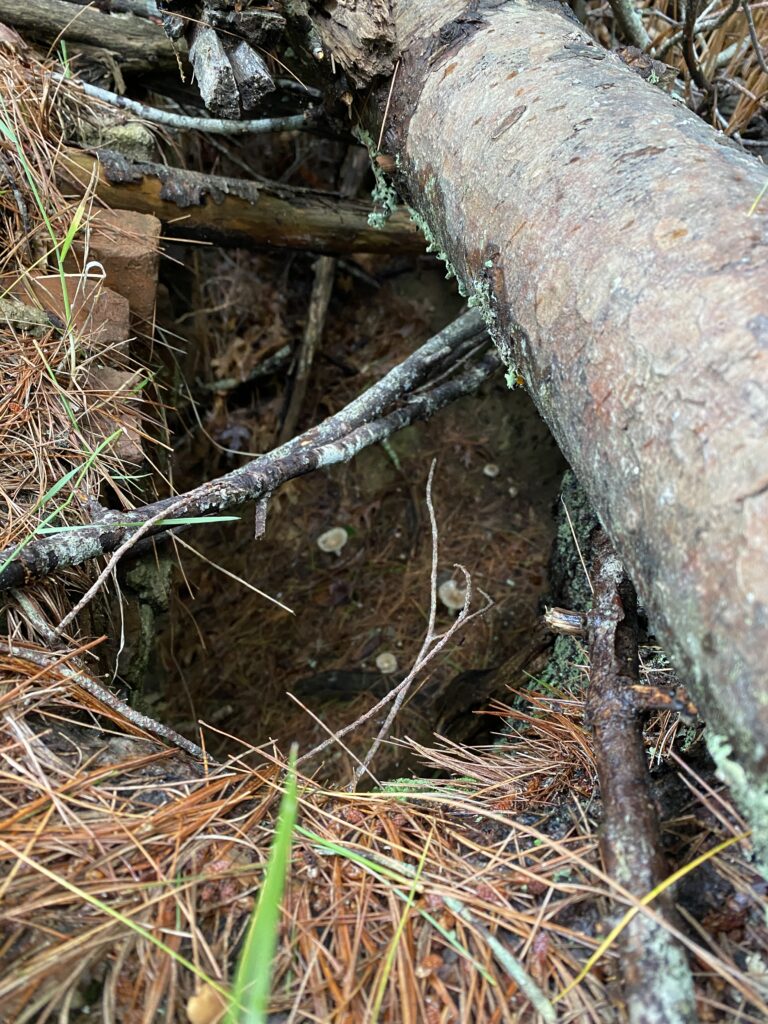
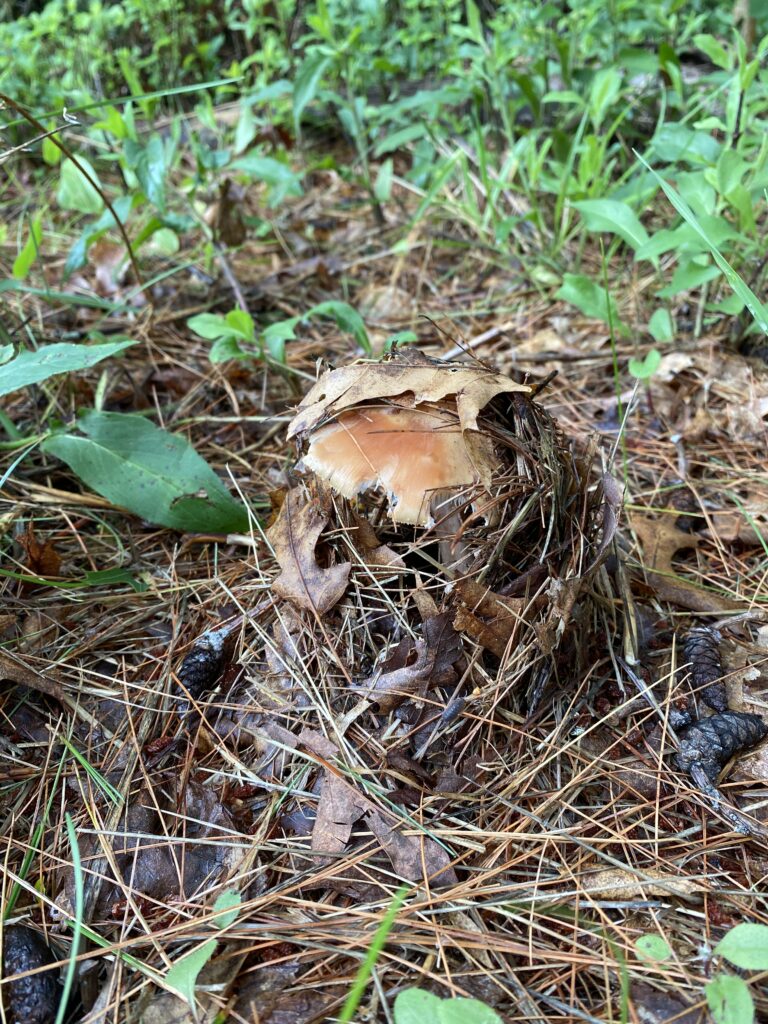
Mushrooms in root system from above 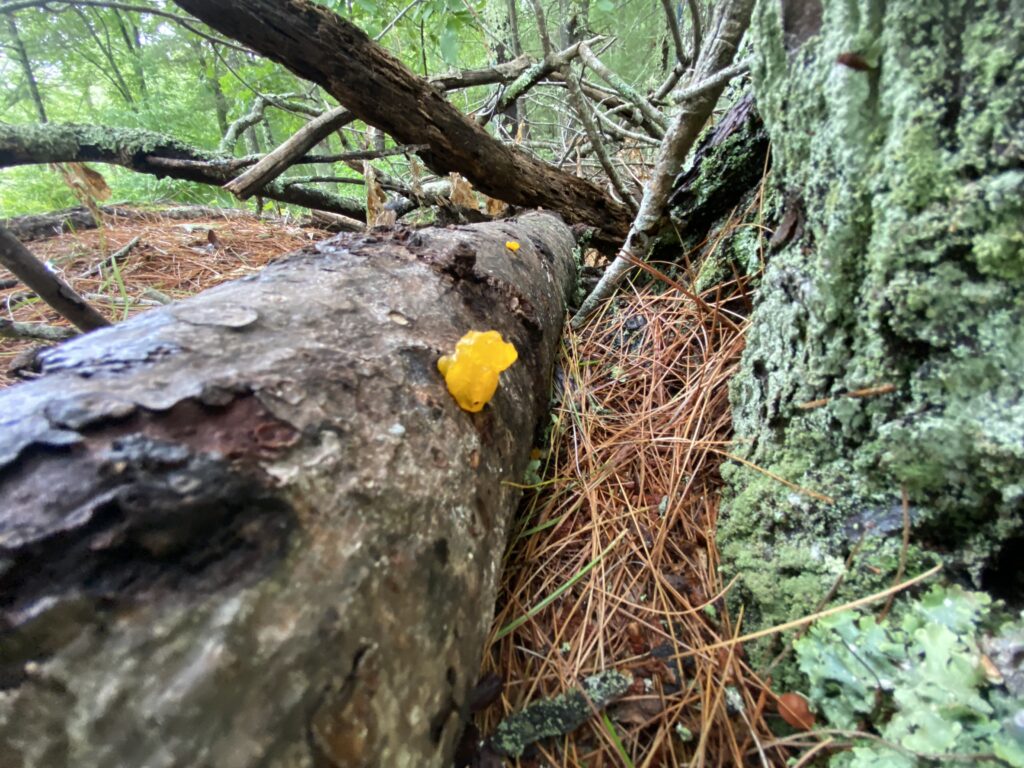
Dacrymyces palmatus or Orange Jelly 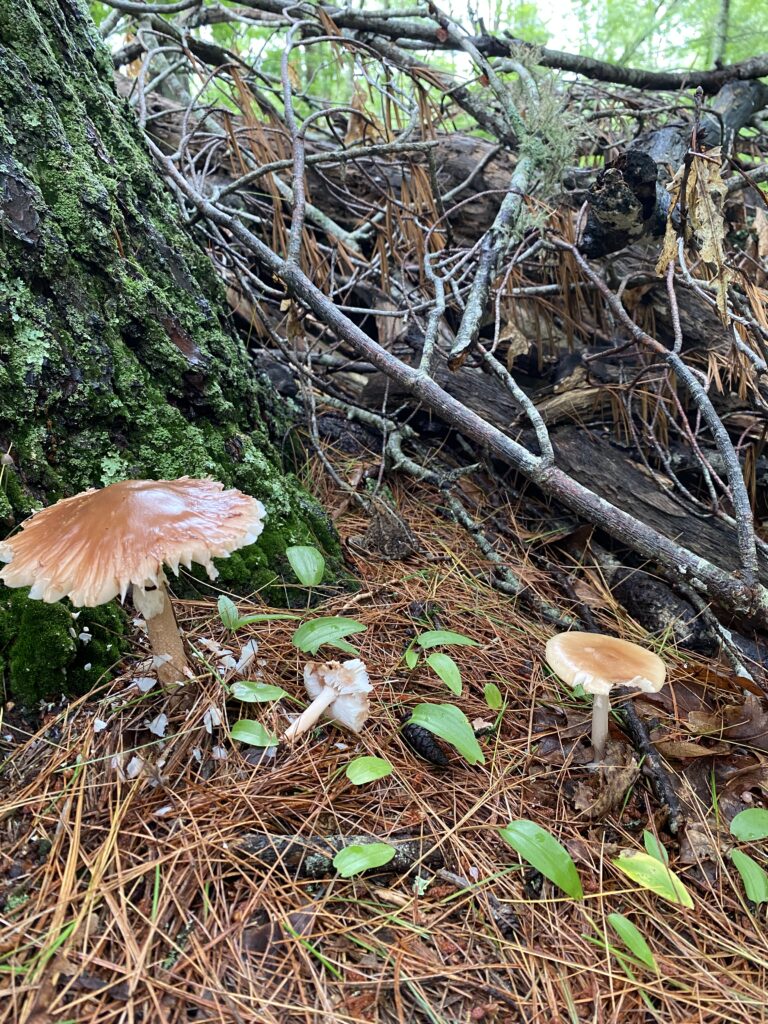
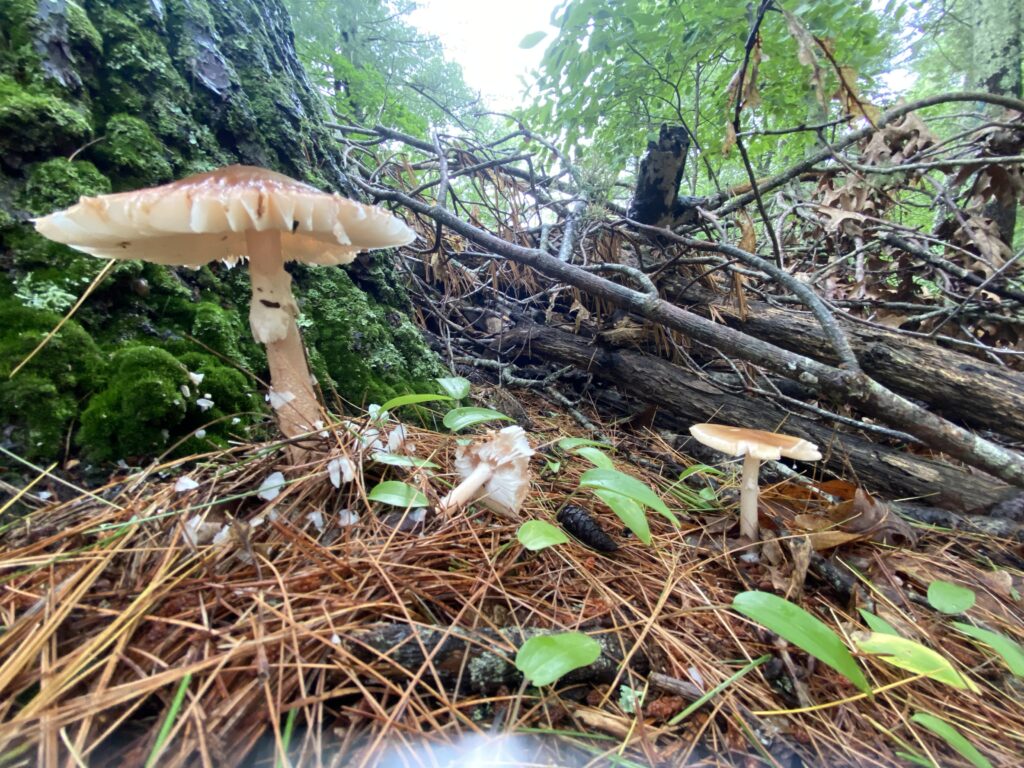
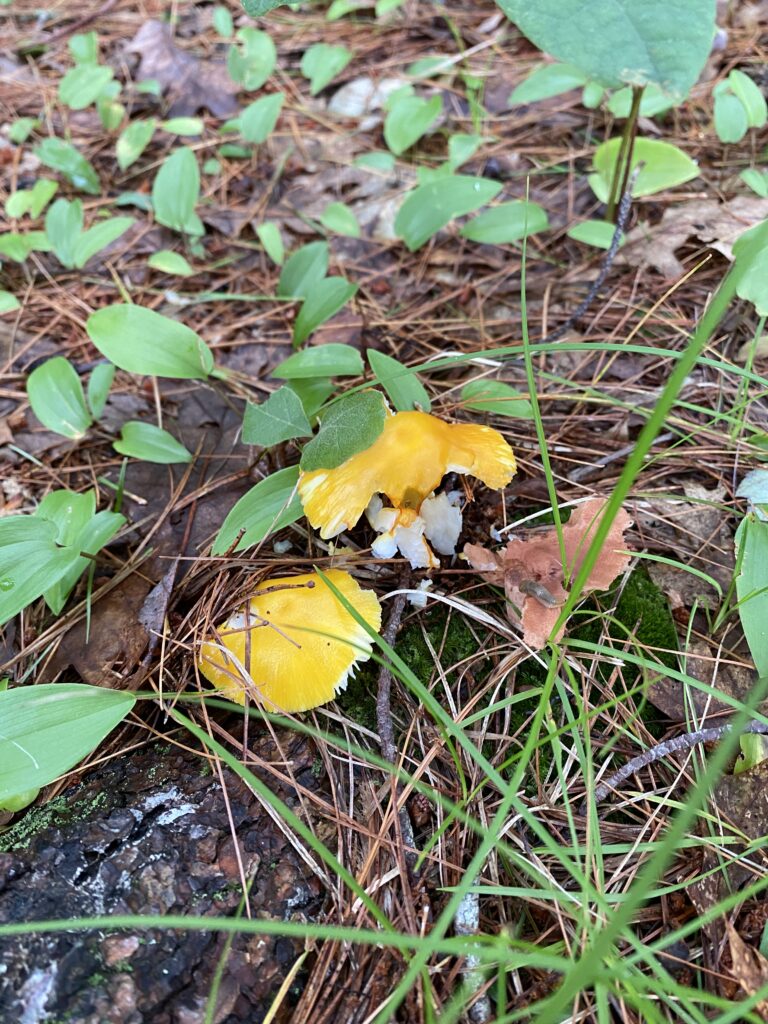
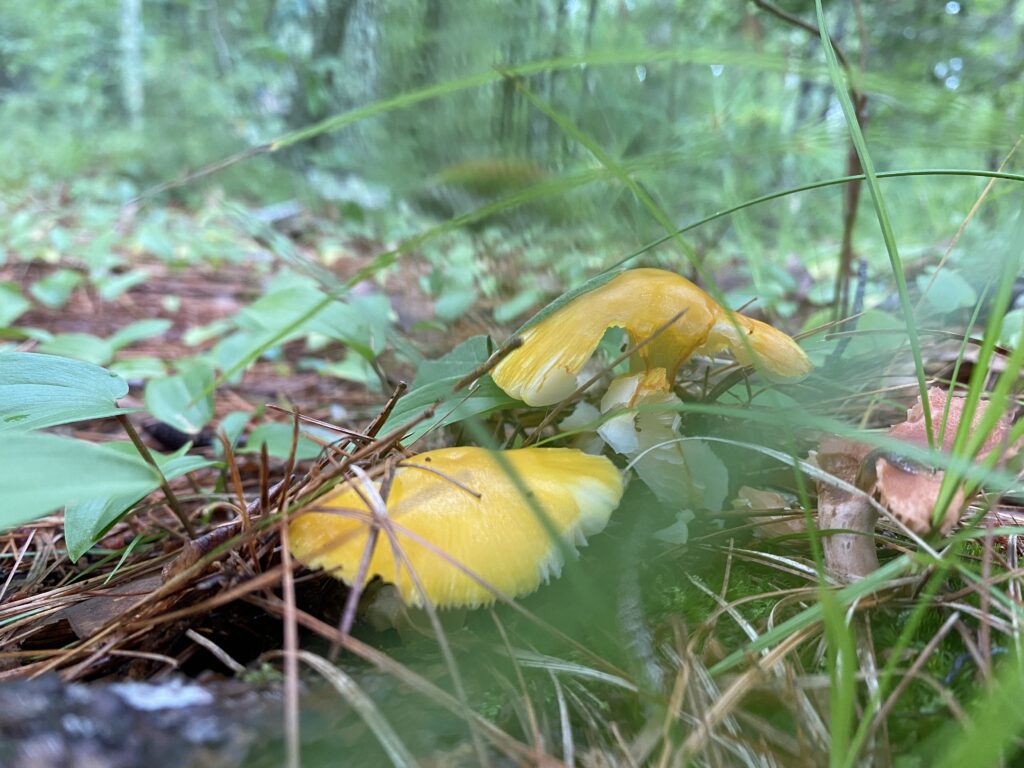
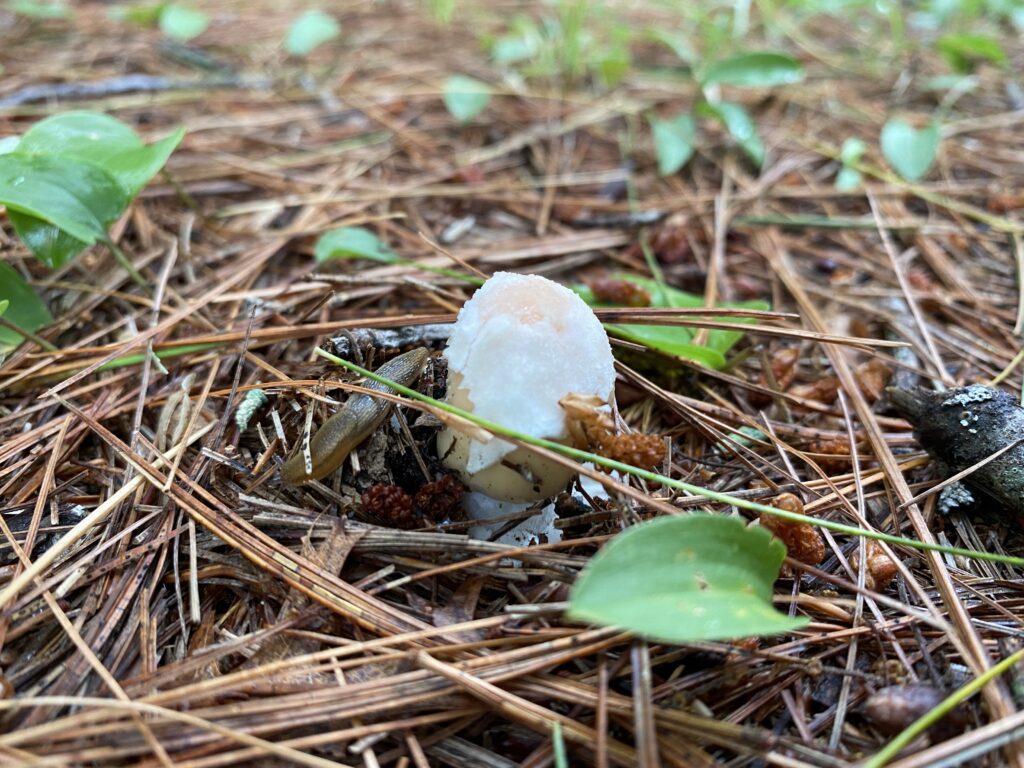
Marasmius capillaris 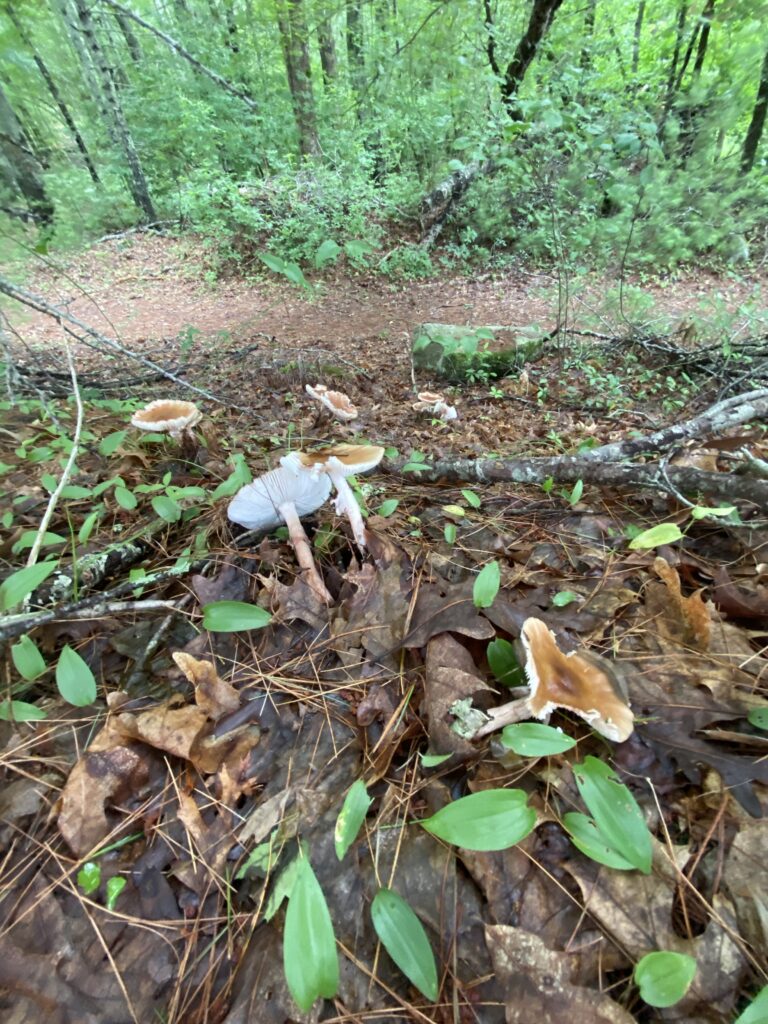
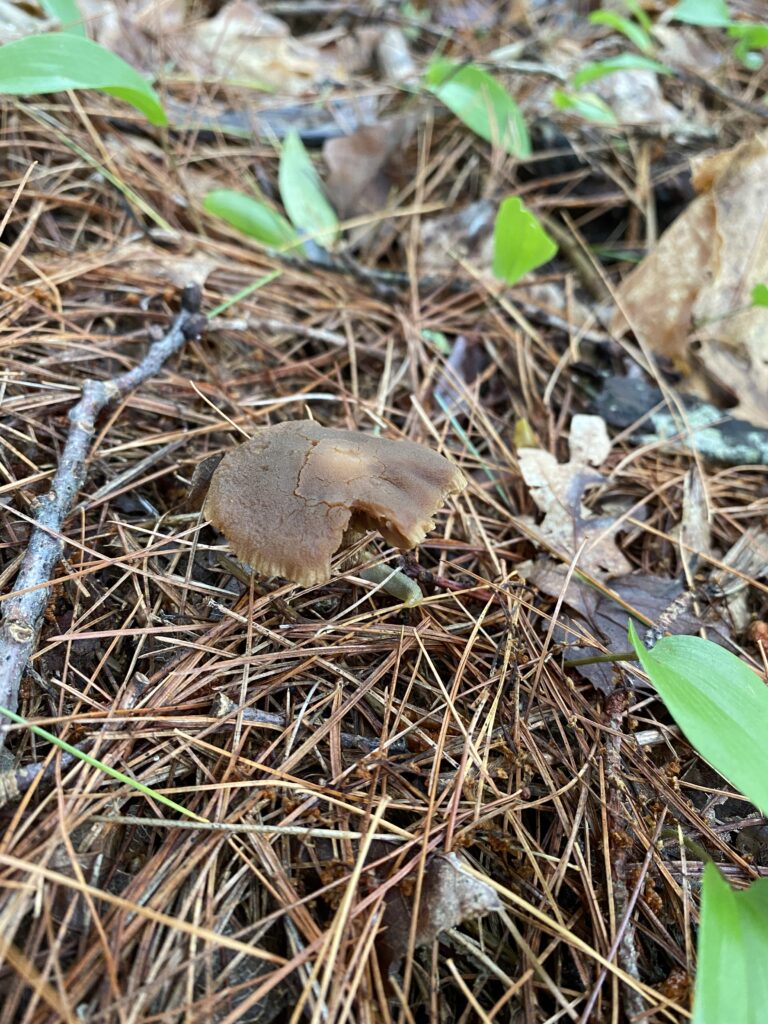
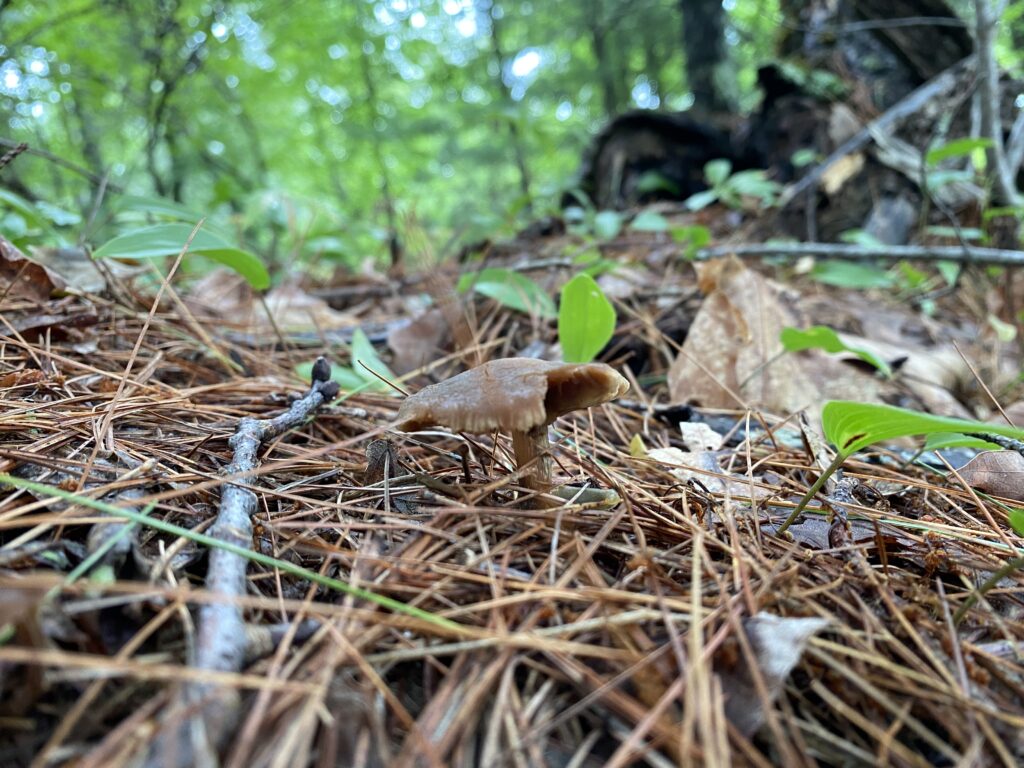
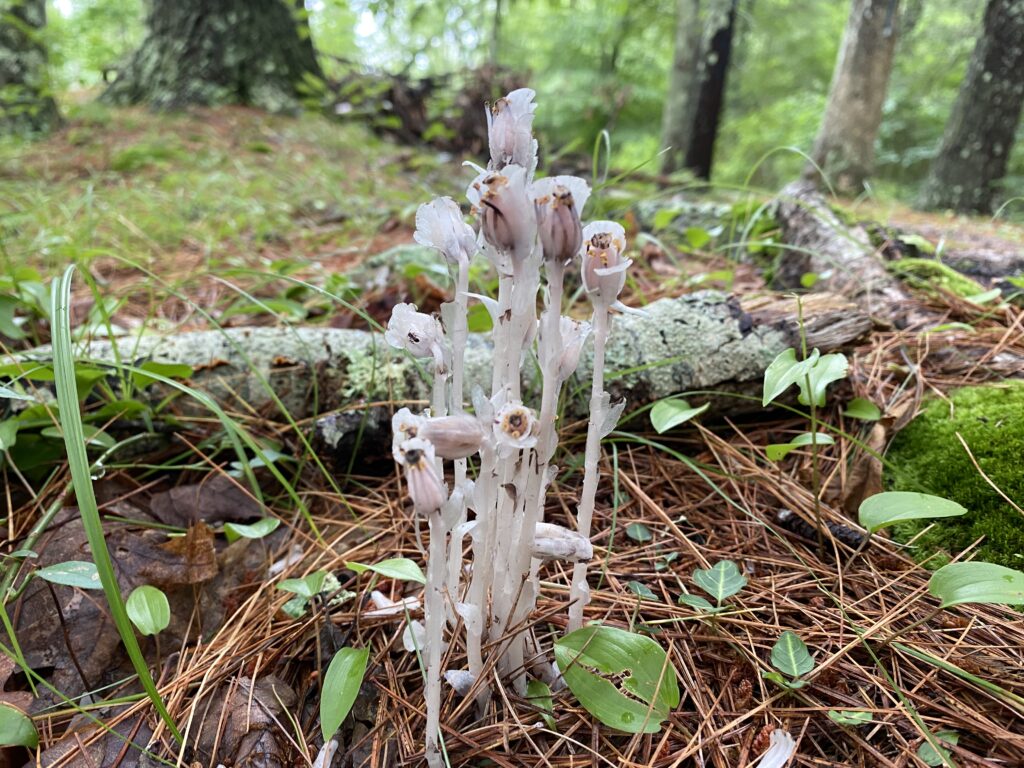
Indian Pipe 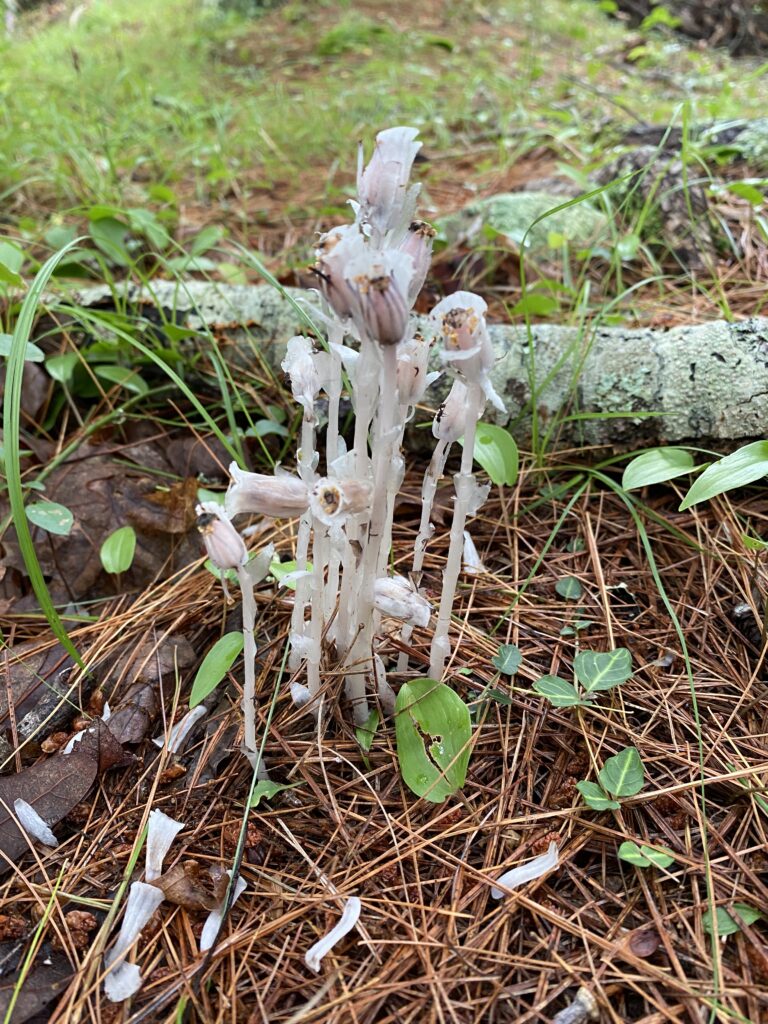
Indian Pipe 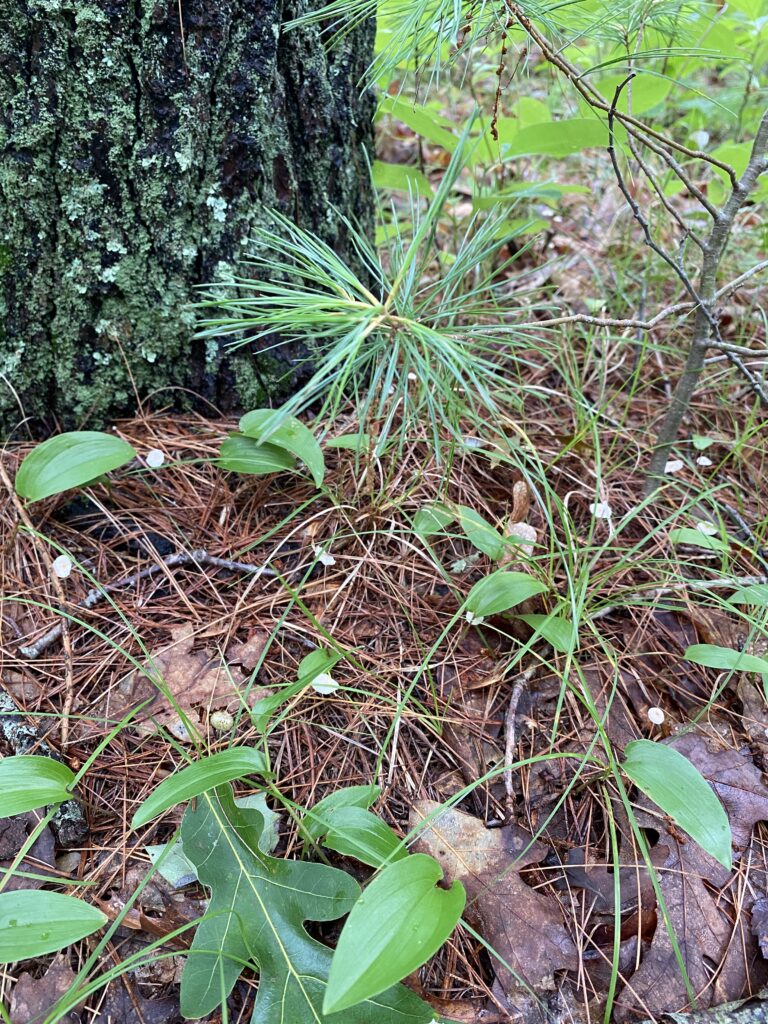
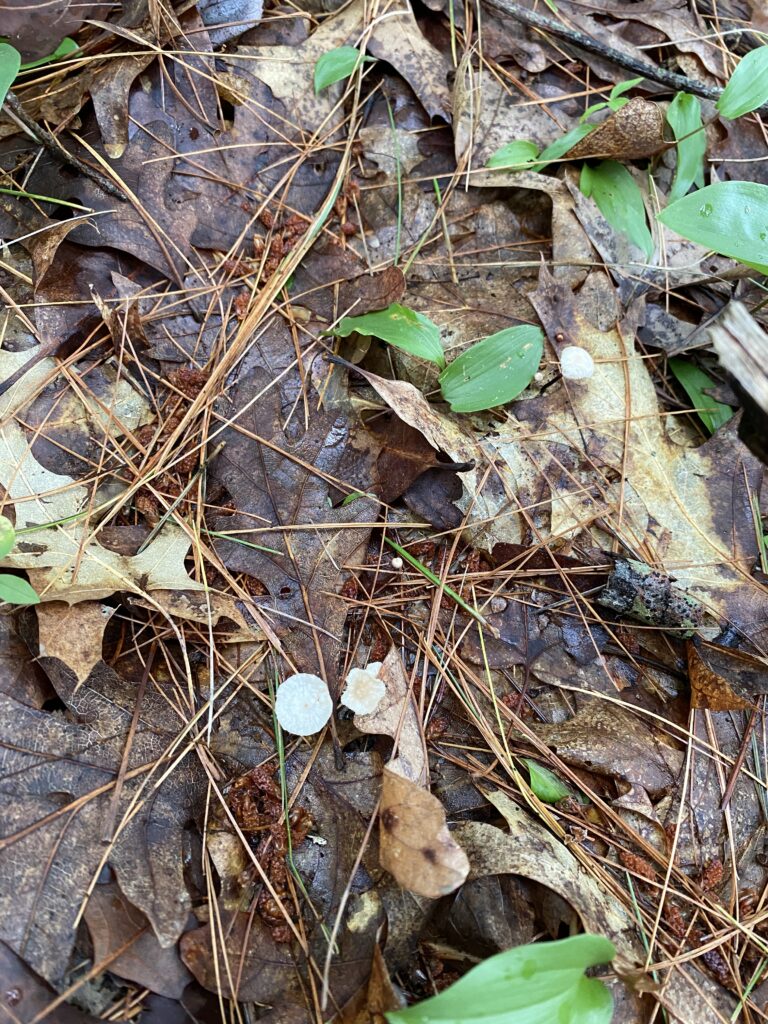
Marasmius capillaris patch 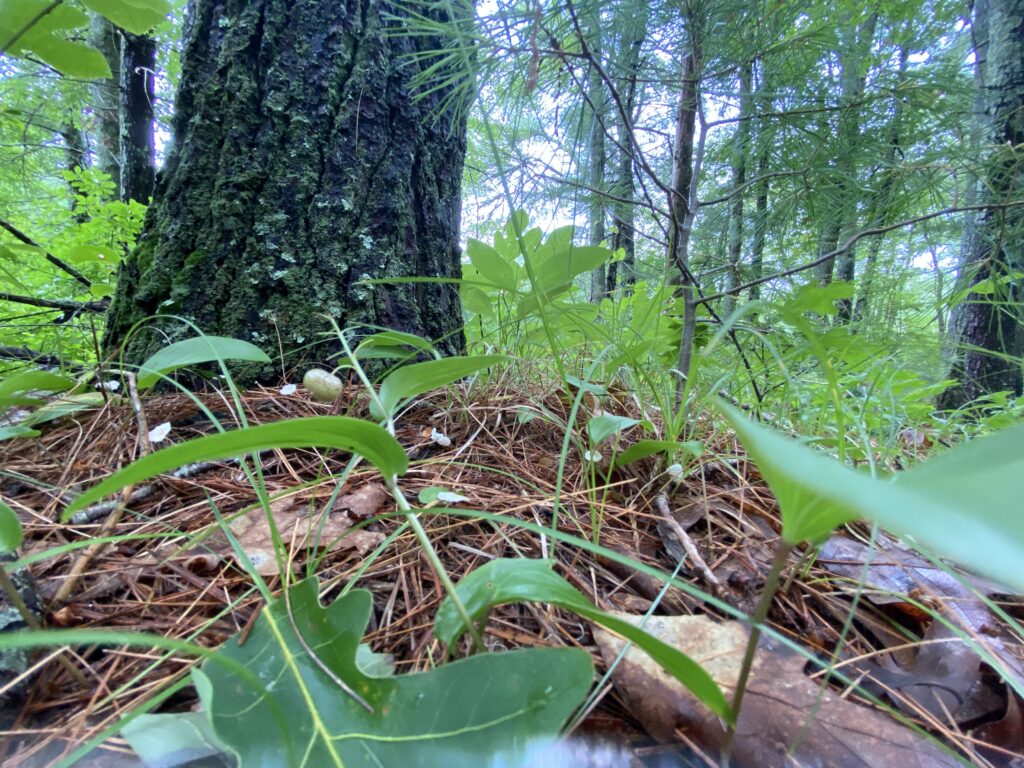
Marasmius capillaris patch 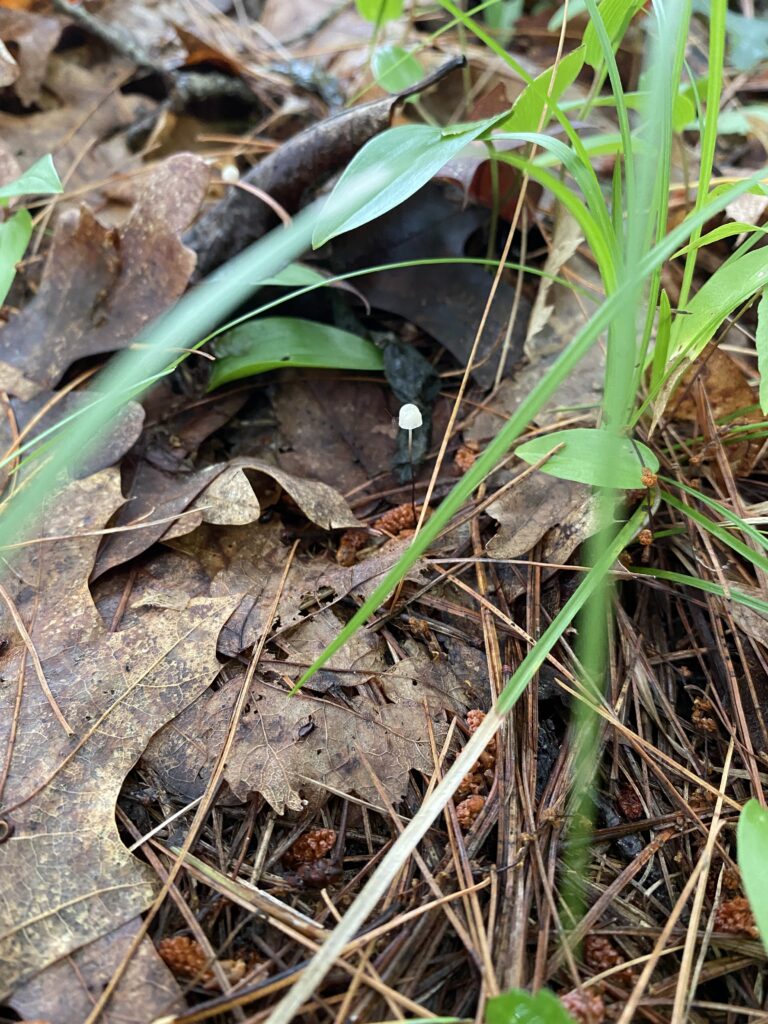
Marasmius capillaris 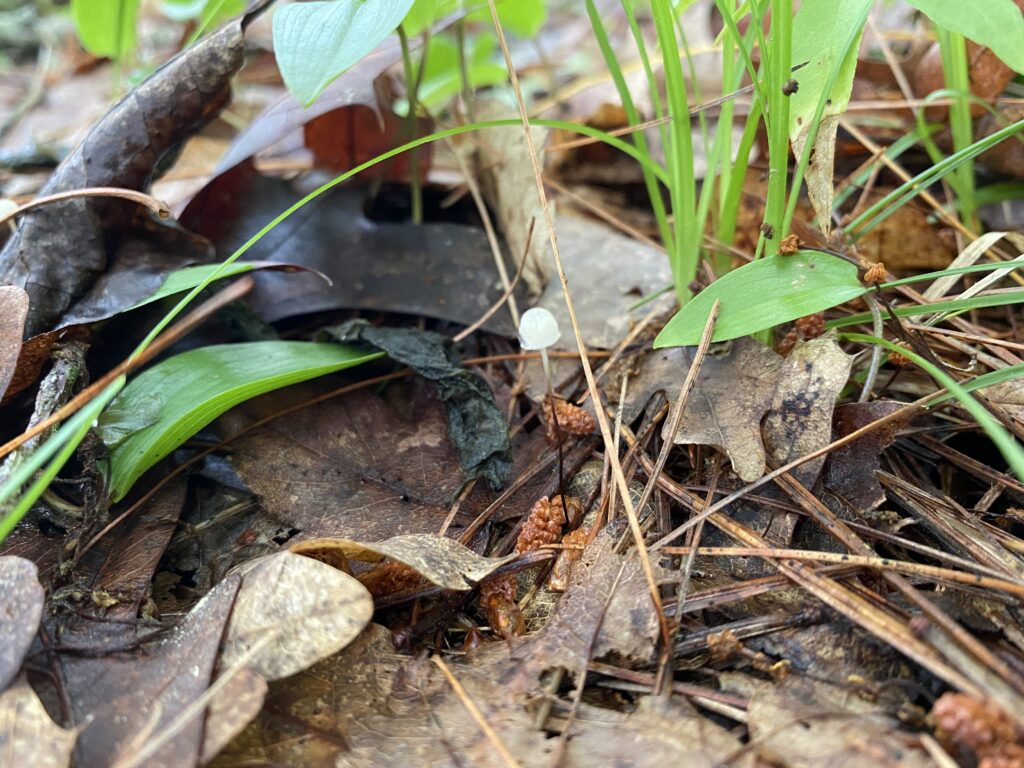
Marasmius capillaris 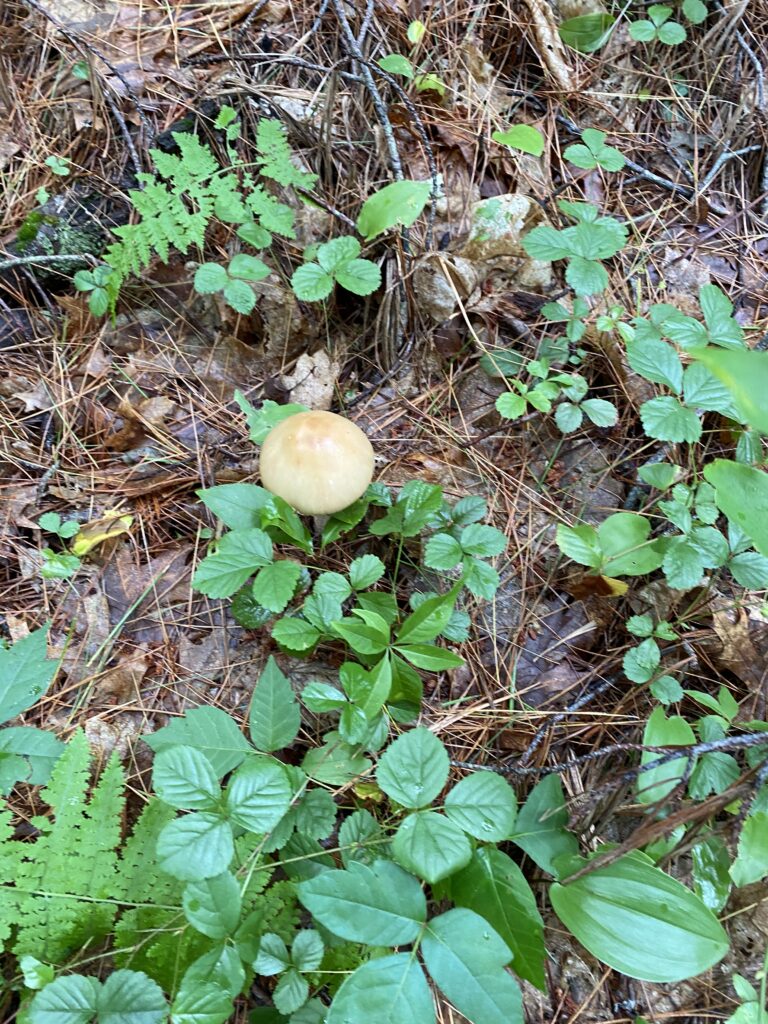
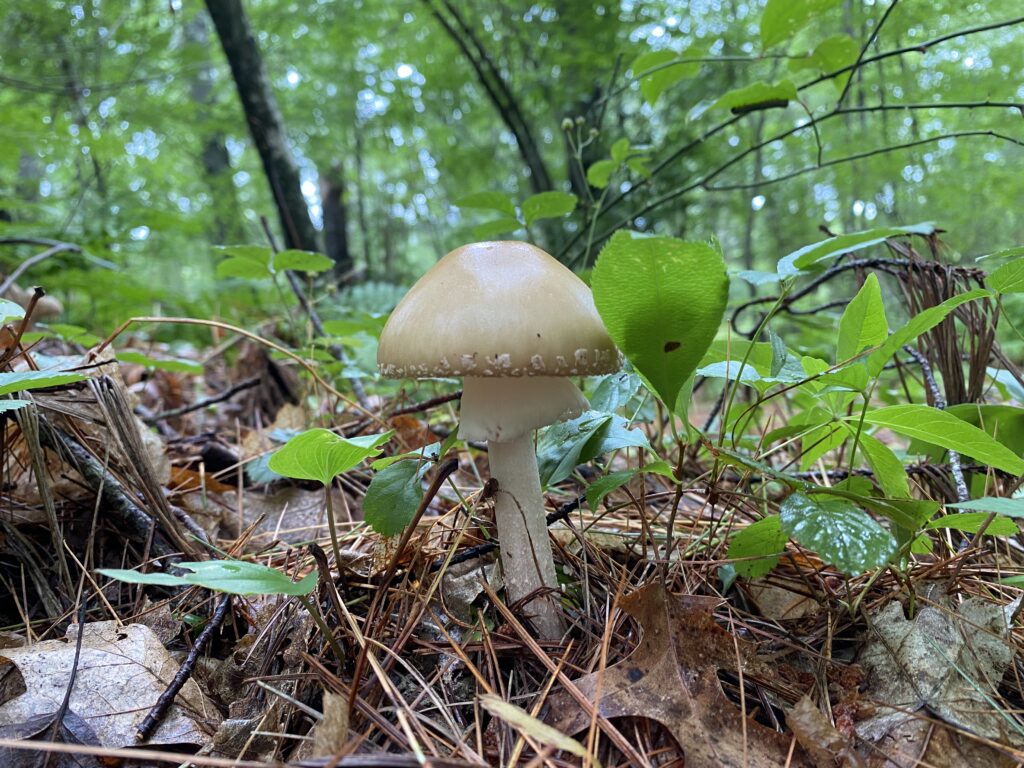
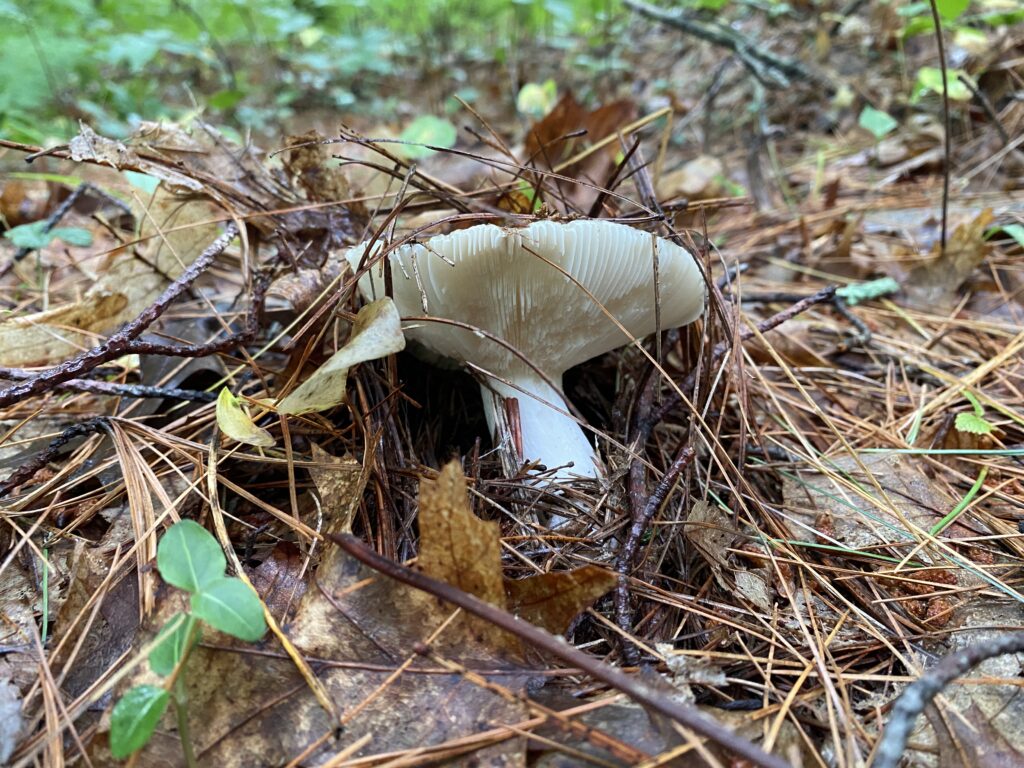
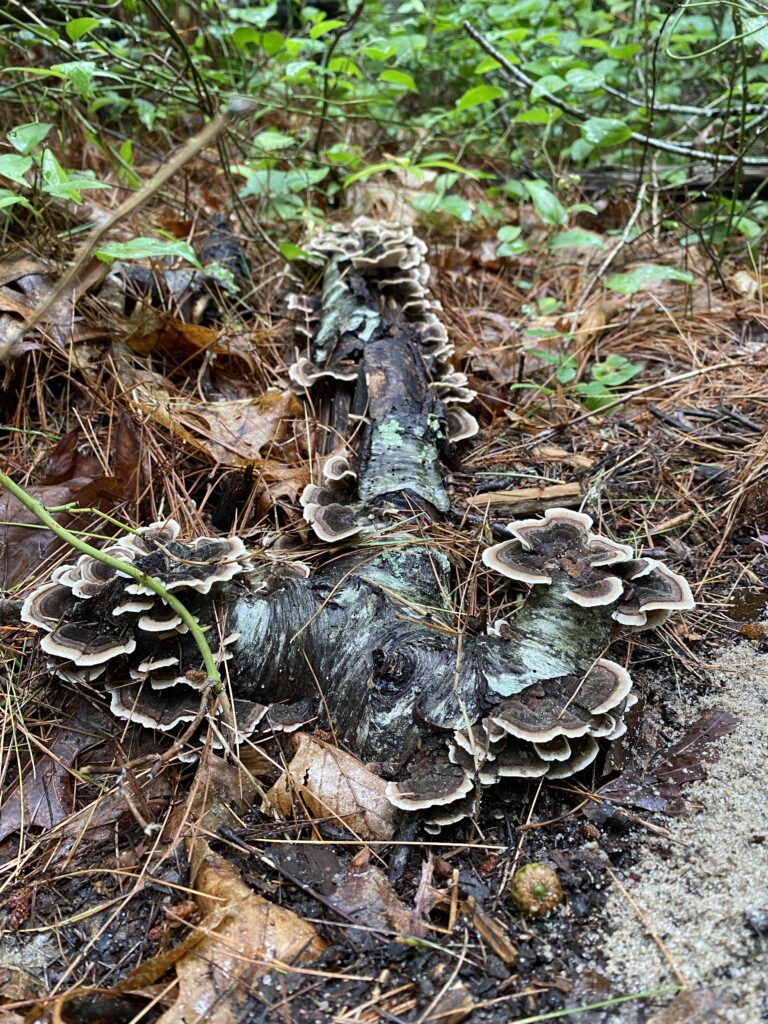
Stereum ostrea or False Turkey Tail 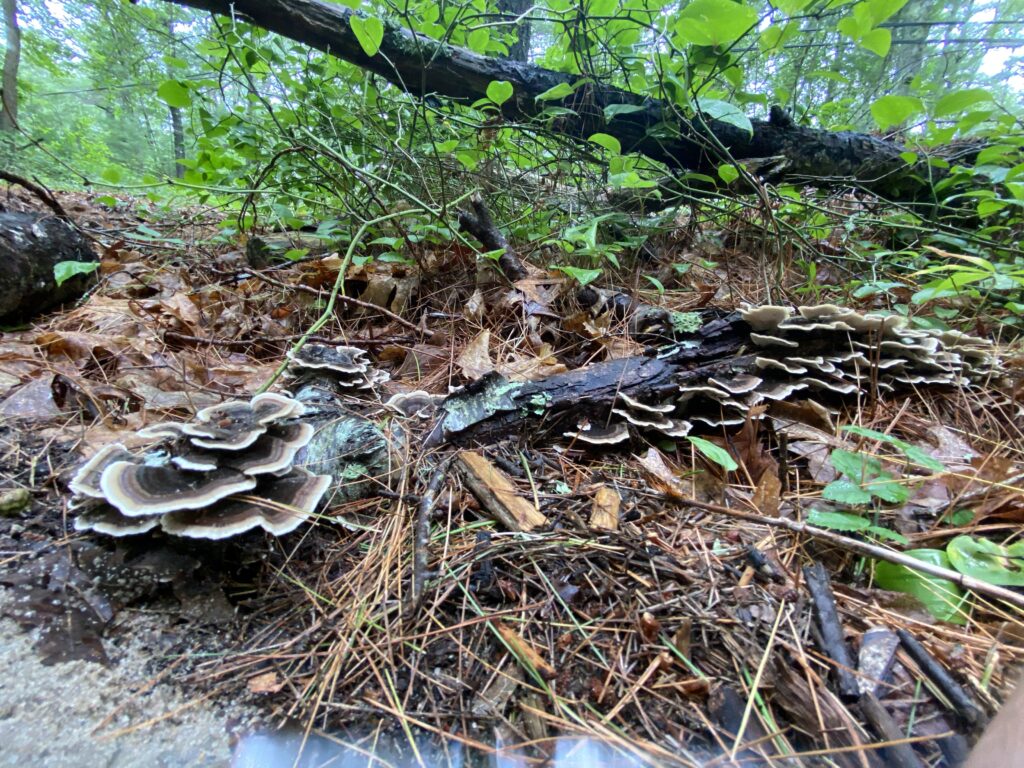
Stereum ostrea or False Turkey Tail 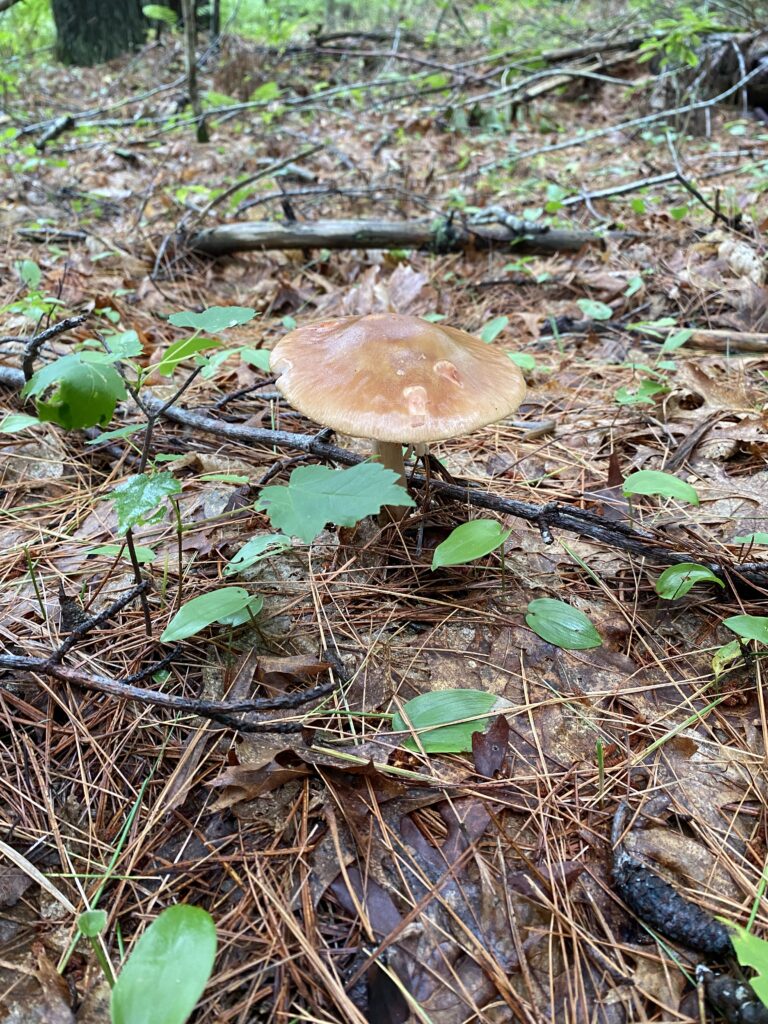
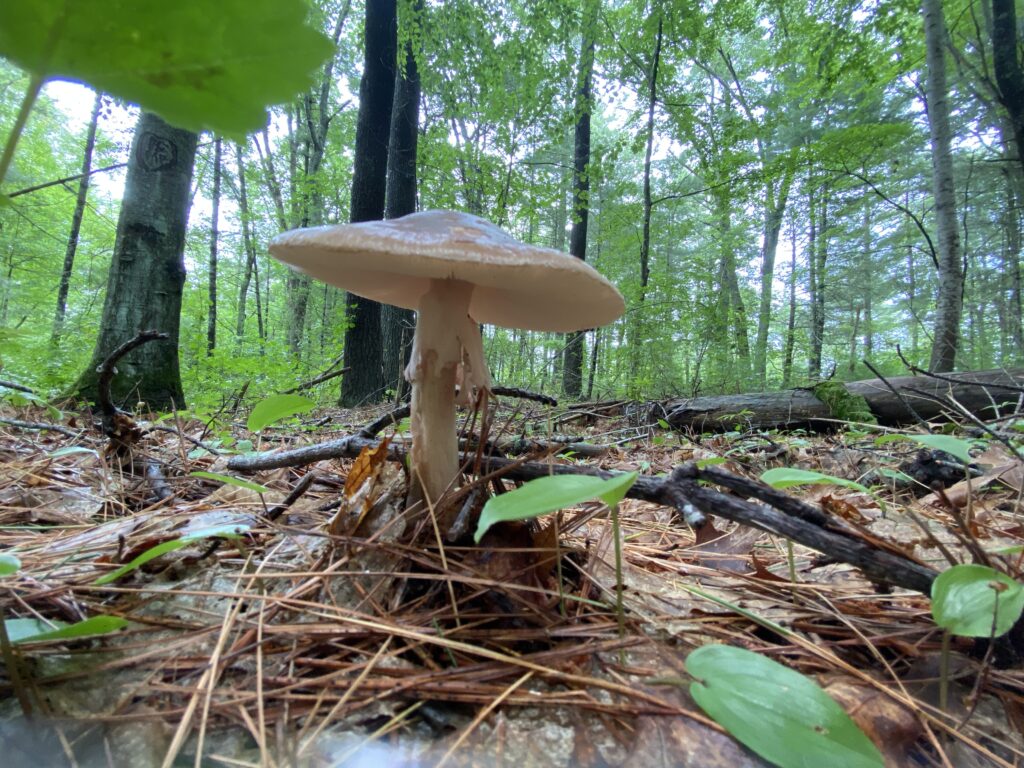
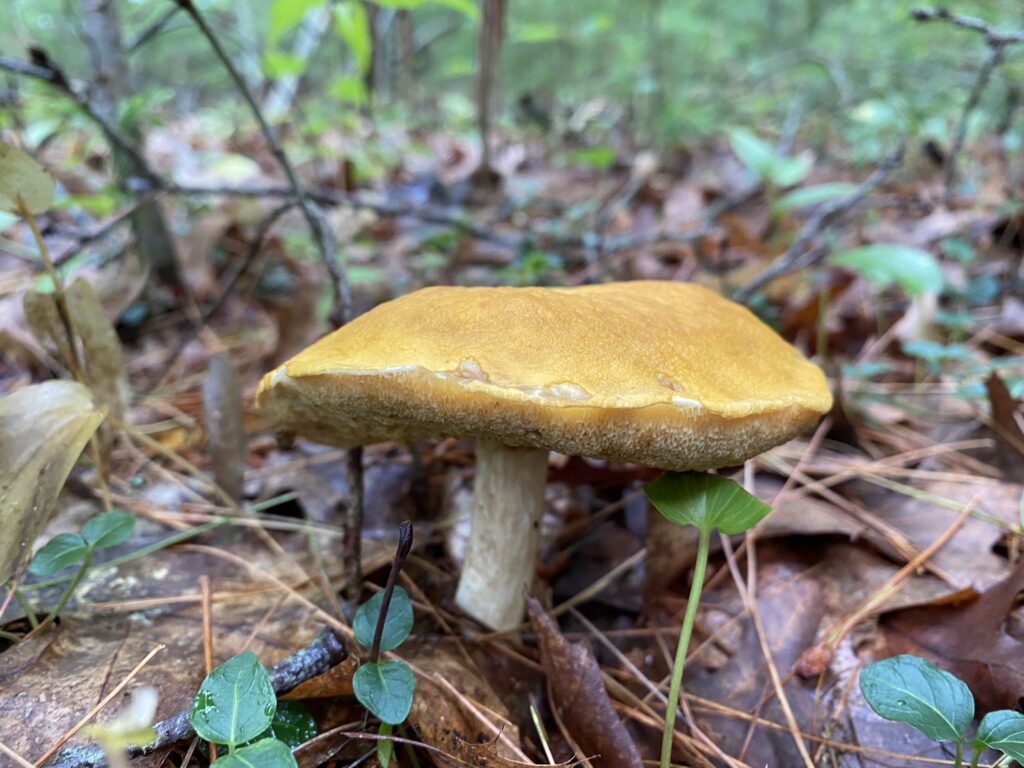
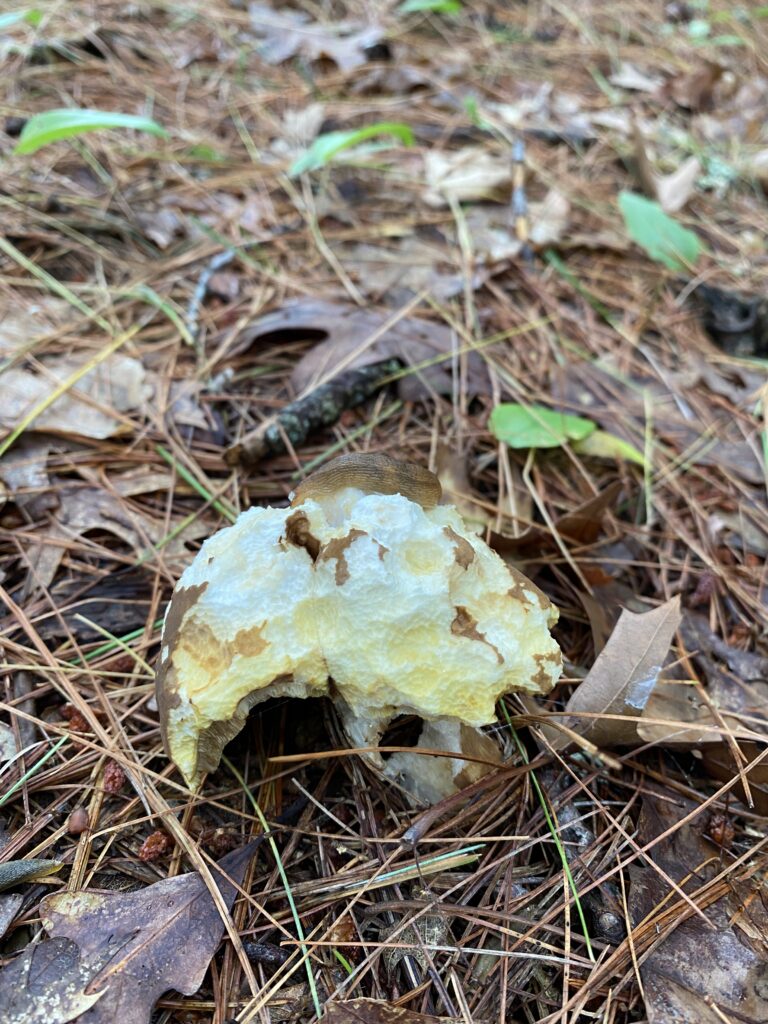
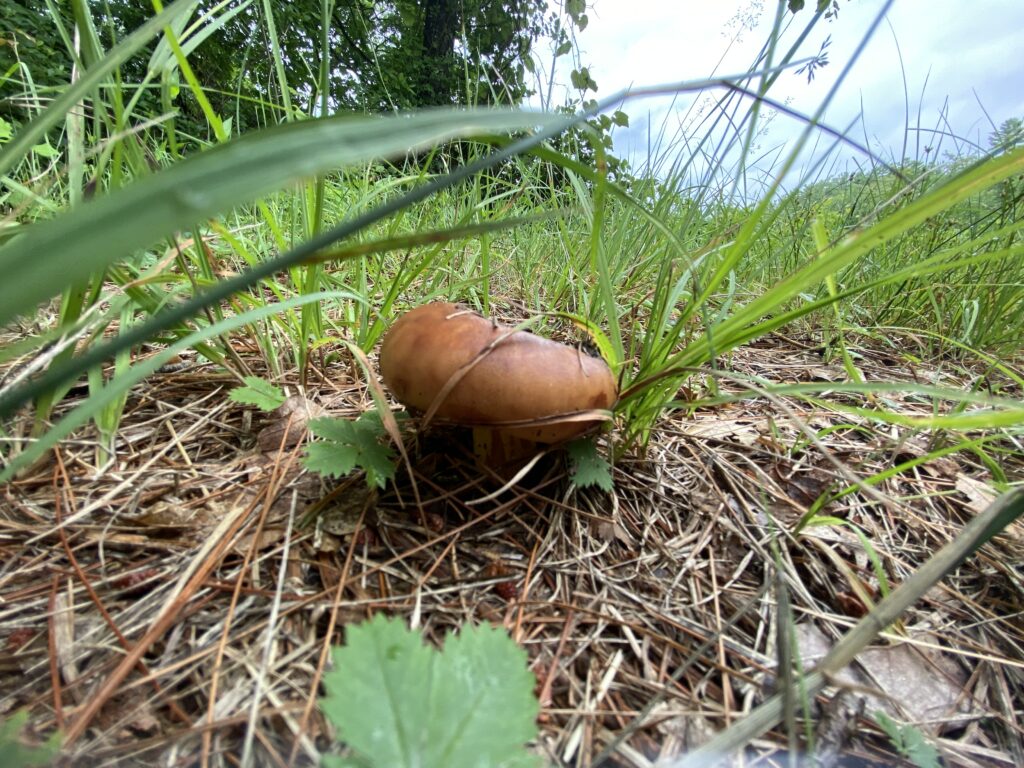
Suillus lactifluu 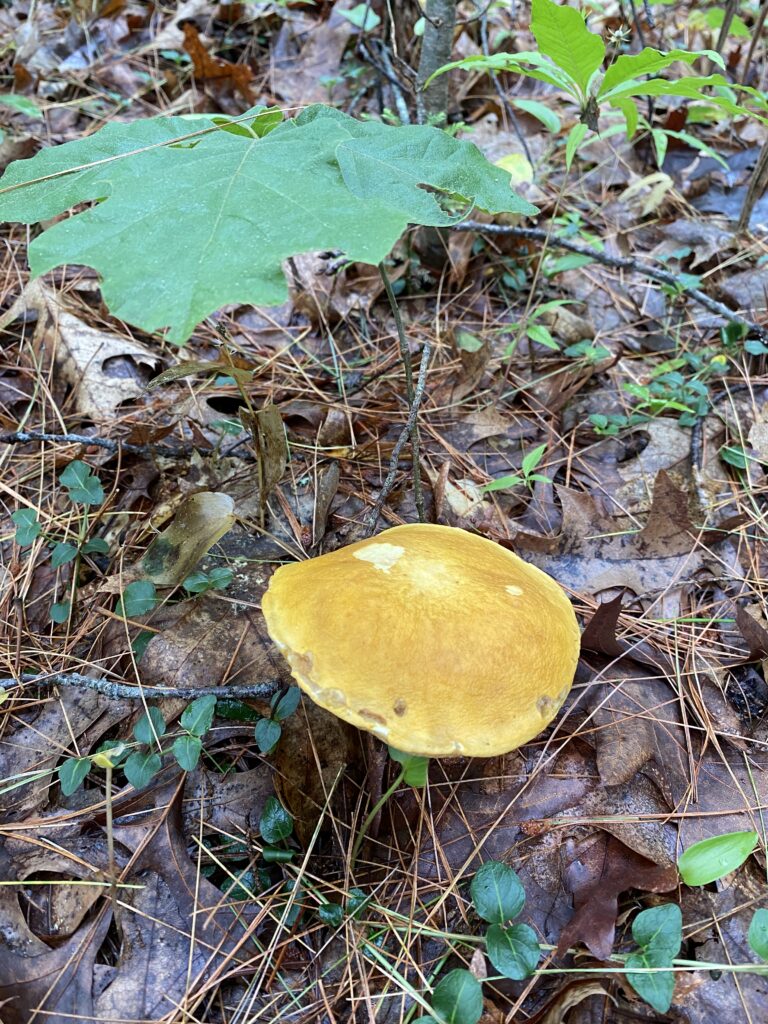
Suillus lactifluu 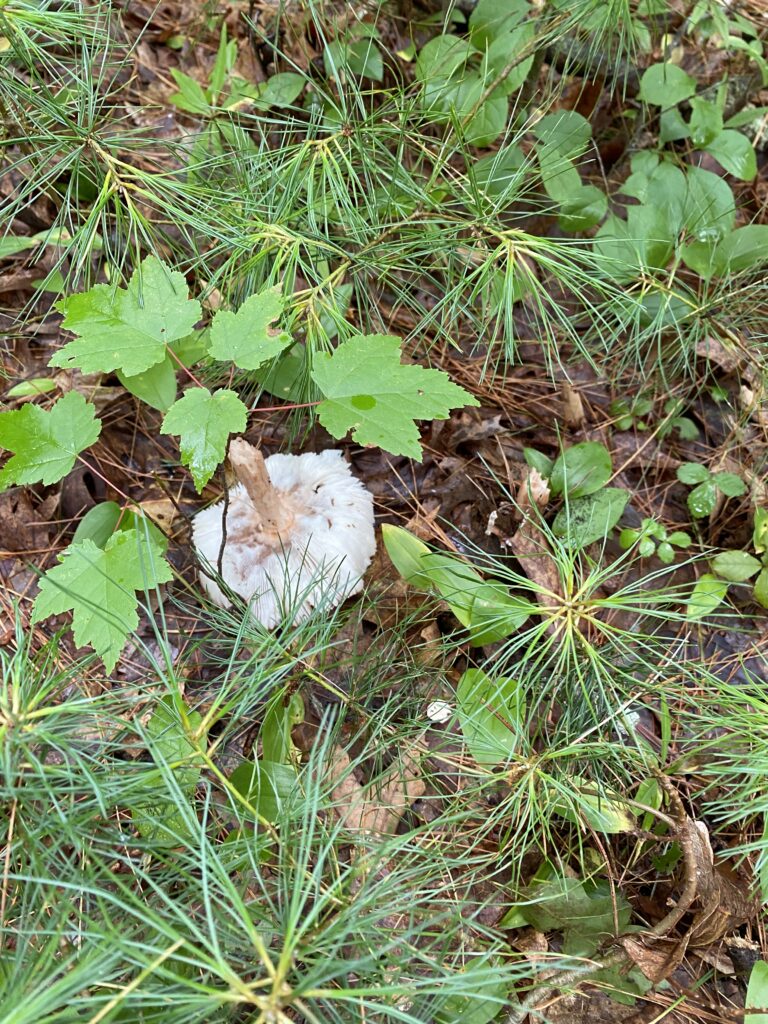
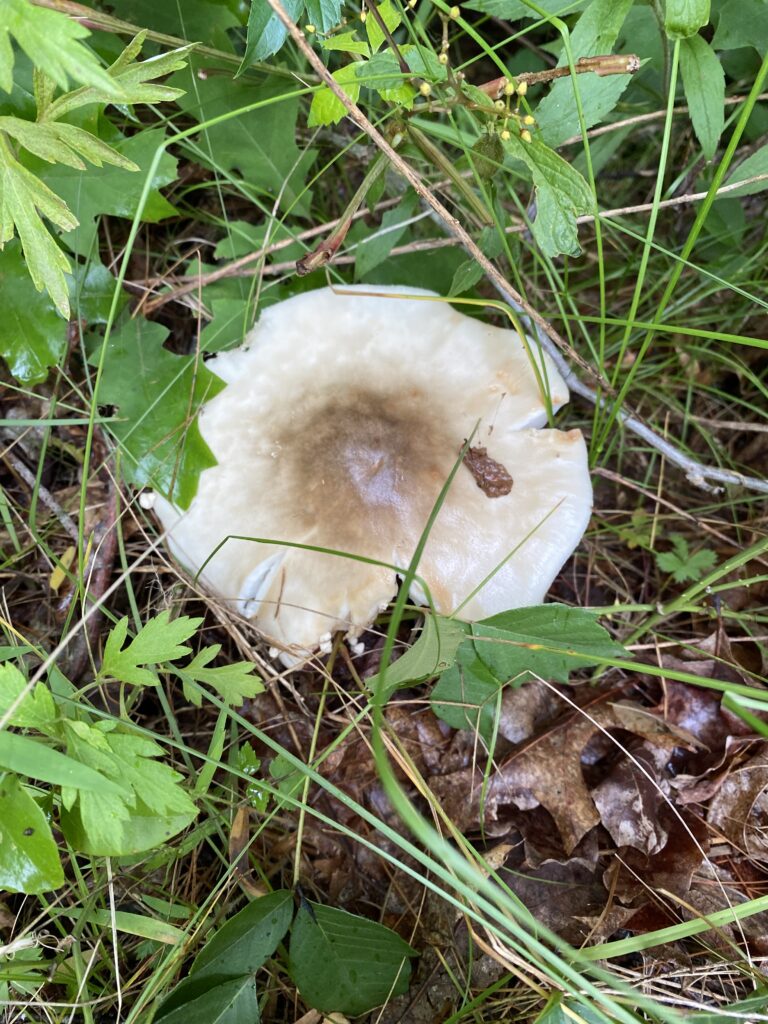
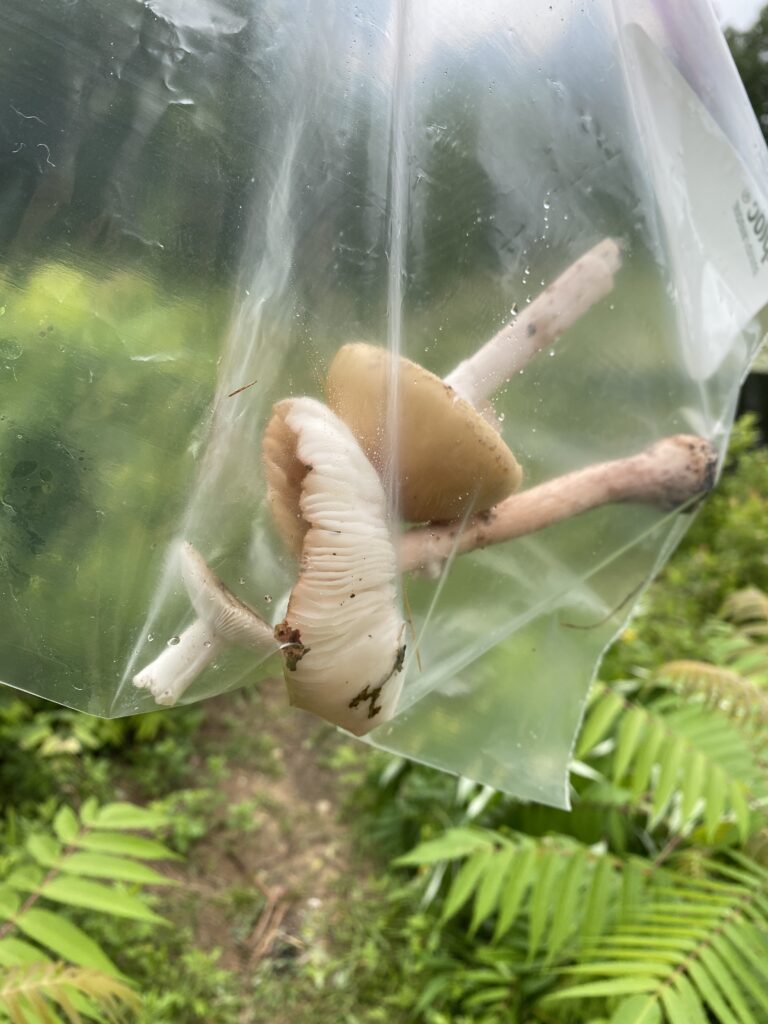
Mushrooms to bring home and spore print 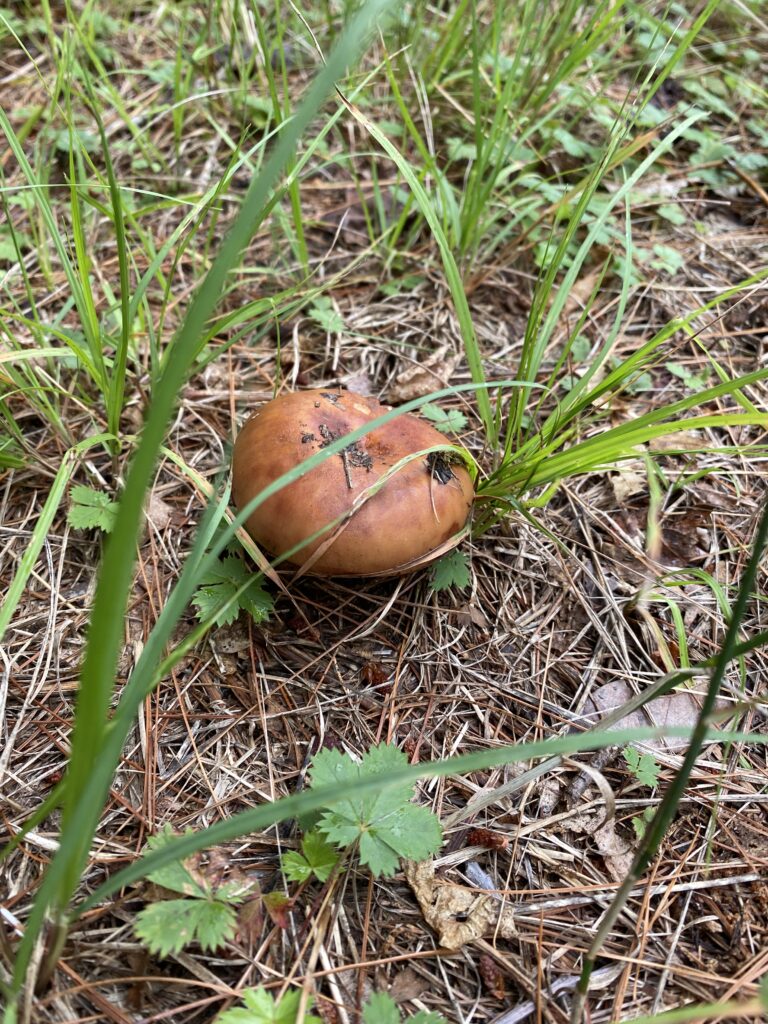
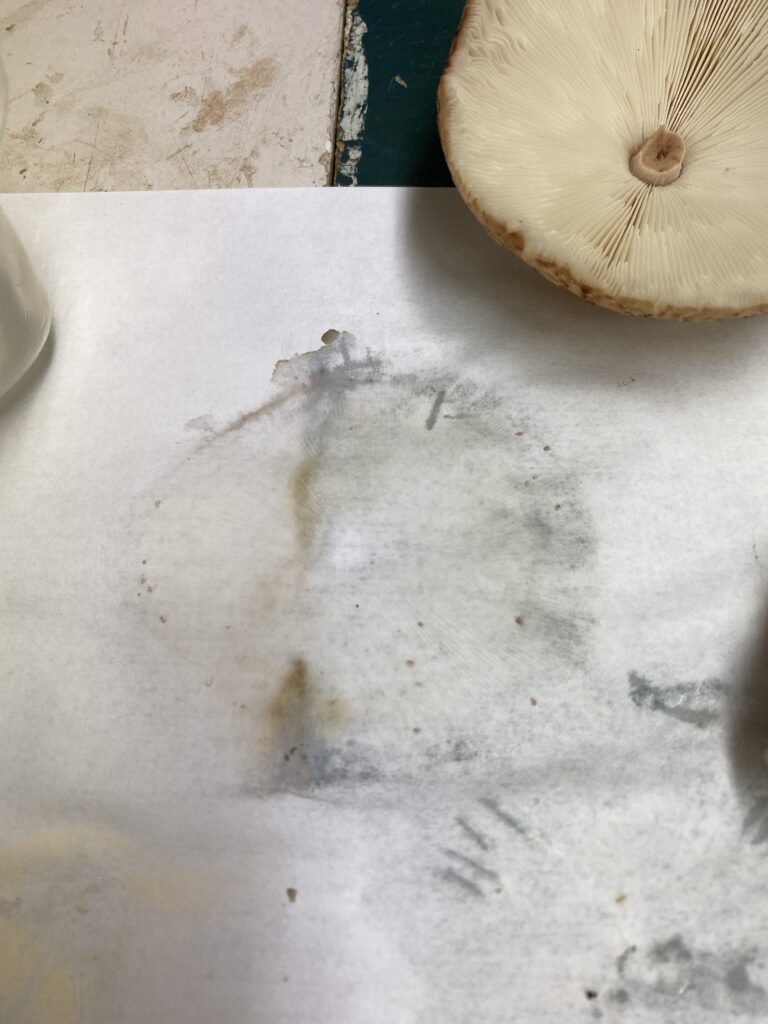
Spore print 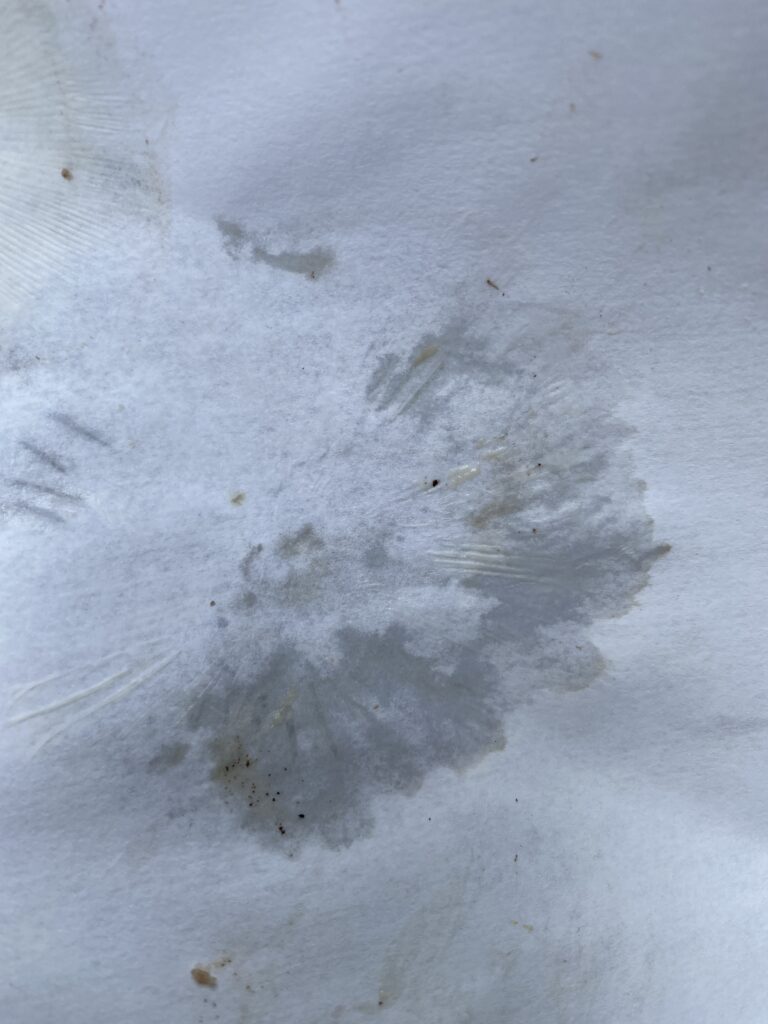
Slight Spore print 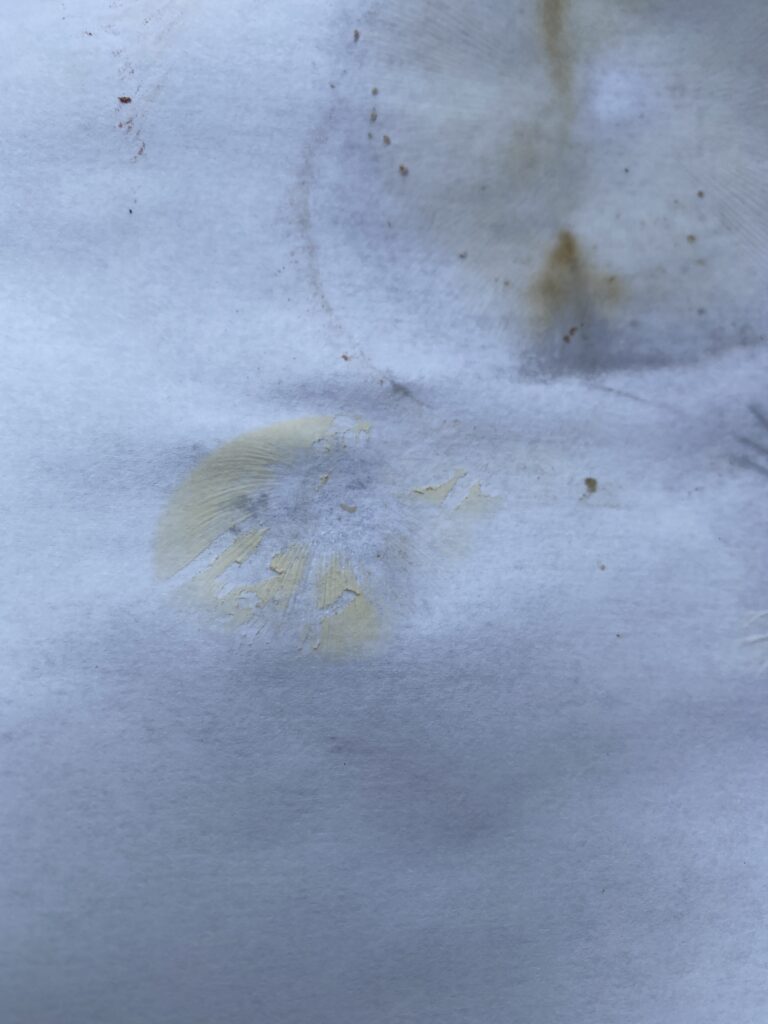
Spore Print
Conclusion
Two of the mushrooms I attempted to spore print were successful and one was not, I believe I picked it after it had already released it’s spores as it was in the process of decaying when I picked it off the ground. I also took photos of the small white flowers I saw in this location believing that they might be a mushroom due to their color or lack of it, what I found is commonly known as Indian Pipe or Ghost flower and is a parasitic species of flower that takes its carbon from mycelium in the soil below. I was able to identify a few of the mushrooms I found, mostly because they are quite distinct. The majority of the mushrooms I had a hard time even starting to identify as I couldn’t find examples in iNaturalist or in Massachusetts mushroom guides. The first I did identify was the small orange blobs on a log which are named Dacrymyces palmatus or commonly as Orange Jelly. Another mushroom I saw was Suillus lactifluu a bolete mushroom that I have seen here before in patches but today there was only the one, I knew as it looked the same, was under pine trees, and seams to be the only pored mushroom that grows here as far as I’ve seen. The tiny mushrooms I seamed to find all over the forest are what I believe to be Marasmius capillaris as they appear after a summer rain and grow out of leafs on the forest floor, instead of downed hard woods which their look alike Marasmius rotula or Pinwheel mushroom grows out of. There were many patches of these and they are quite hard to see, it took me a few minutes before finding each patch of them. The other mushroom I tried identified was turkey tail a common shelf like mushroom that grows on downed hardwoods like the shelf like fungus I found. I found out after further research that it is false turkey tail or Stereum ostrea which is generally seen growing with algea like the mushrooms I found. One of my favorite pictures I took was of the broken off stem of the mushroom that could be seen in the ground, knowing that in a matter of days something could grow such a thick stock only for it to be gone in just as long as it took to appear interest me very much. This experience was very interesting as I had to both look at the mushrooms in an artistic way to get satisfying photos of them while also trying to expand my library of reference for the future to learn how to distinguish mushrooms to the point in which I can comfortably eat them without any fear of getting sick.
Citations
Kuo, Michael. Marasmius capillaris (MushroomExpert.Com), January 2013. https://www.mushroomexpert.com/marasmius_capillaris.html.
Kuo, Michael. Stereum ostrea (MushroomExpert.Com), November 2008. https://www.mushroomexpert.com/stereum_ostrea.html.
Kuo, Michael. Trametes versicolor: The Turkey Tail (MushroomExpert.Com), November 2017. https://www.mushroomexpert.com/trametes_versicolor.html.
Williamson, Gerald C. “US Wildflower – Indian Pipe, Ghost Flower, Ghost Plant – Monotropa Uniflora.” USWildflowers.com. Accessed July 13, 2021. https://uswildflowers.com/detail.php? SName=Monotropa+uniflora.