Posts

Final Blog, July,11-12, 2021, Duxbury, MA

Introduction

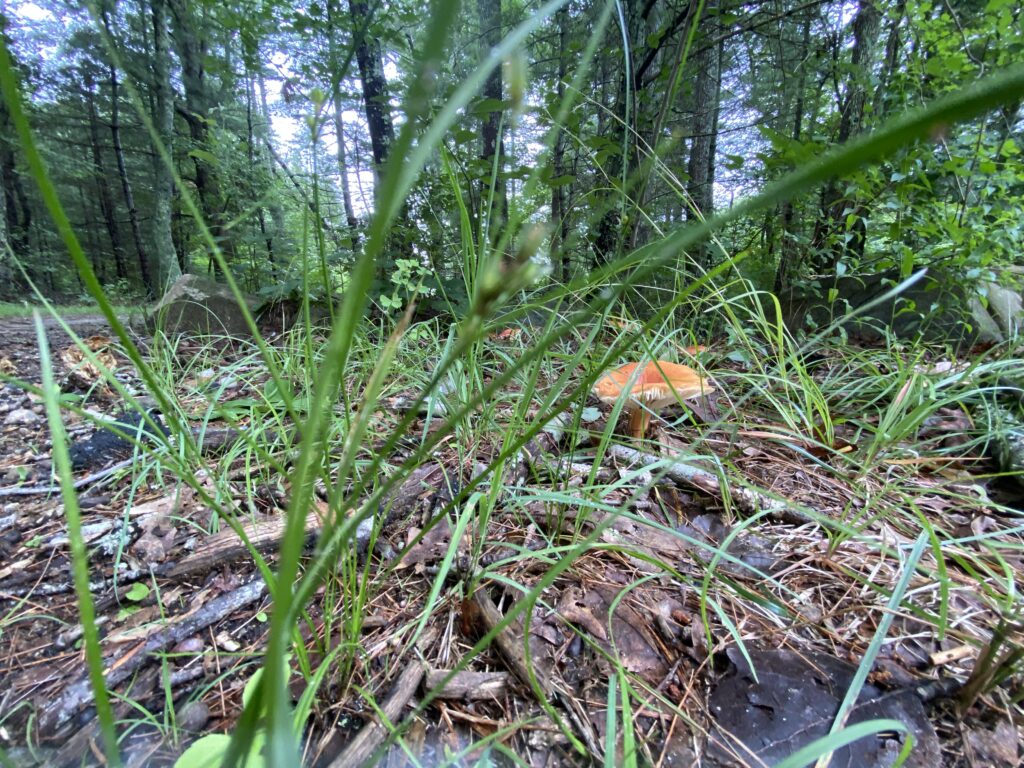
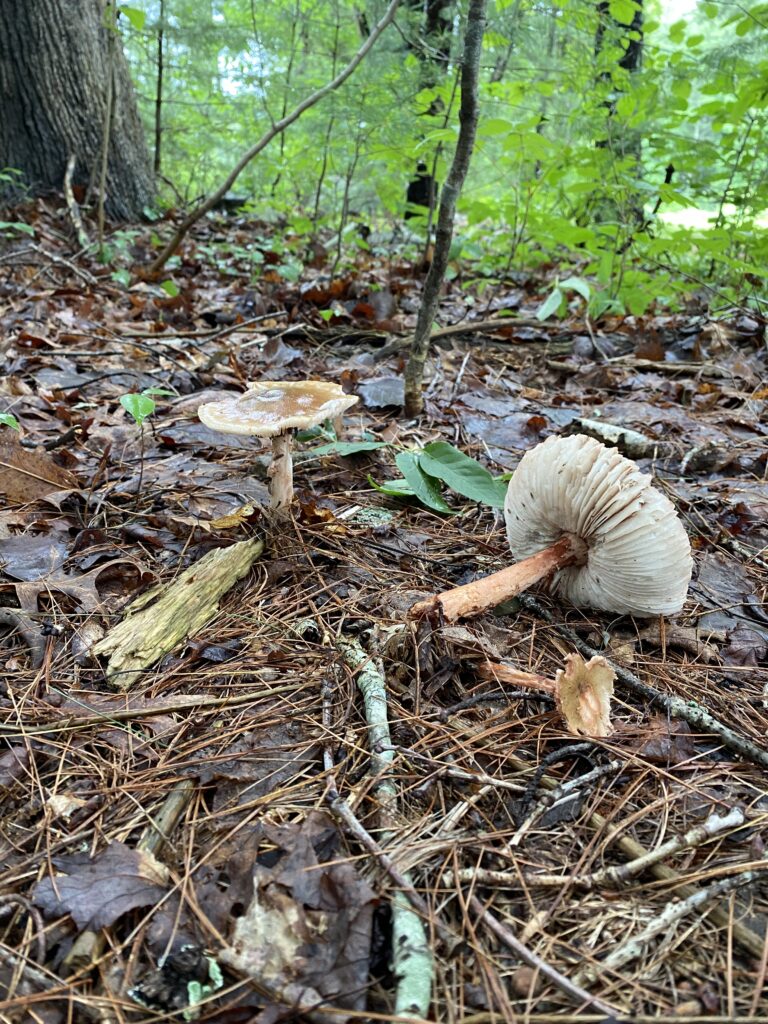
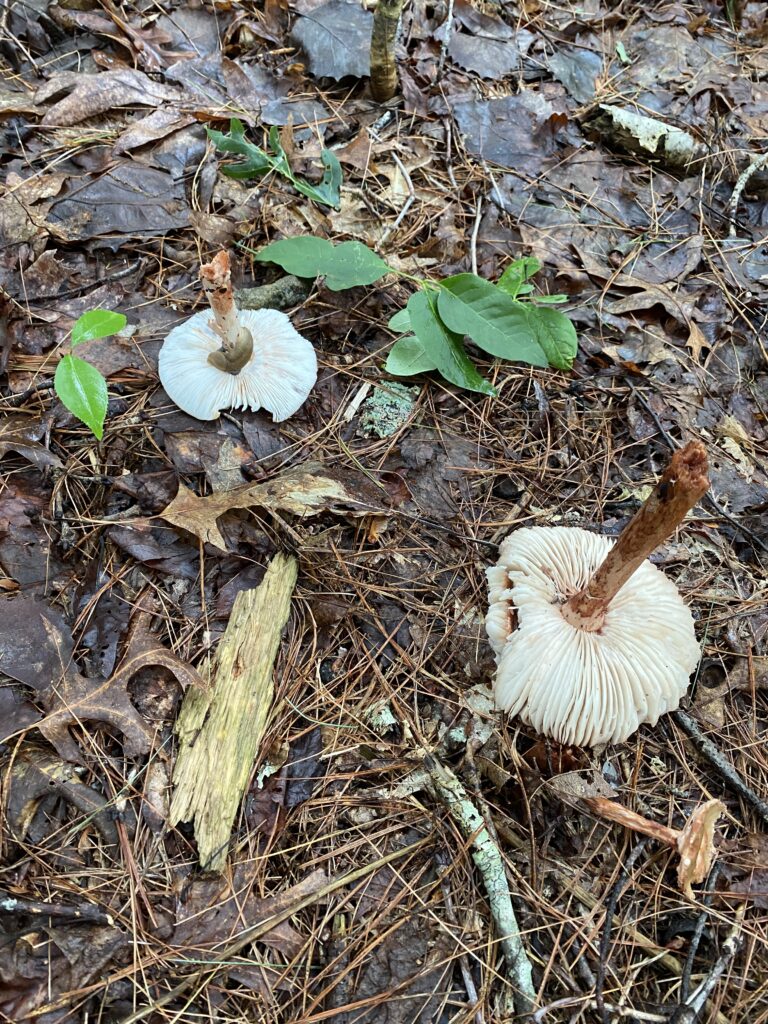
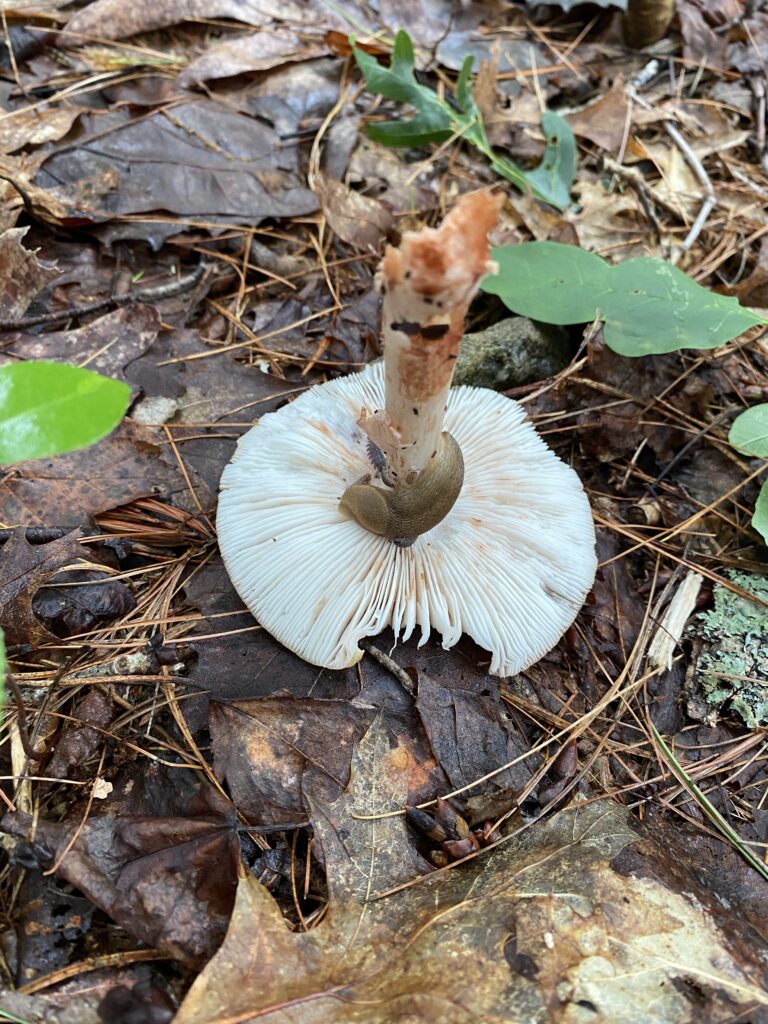
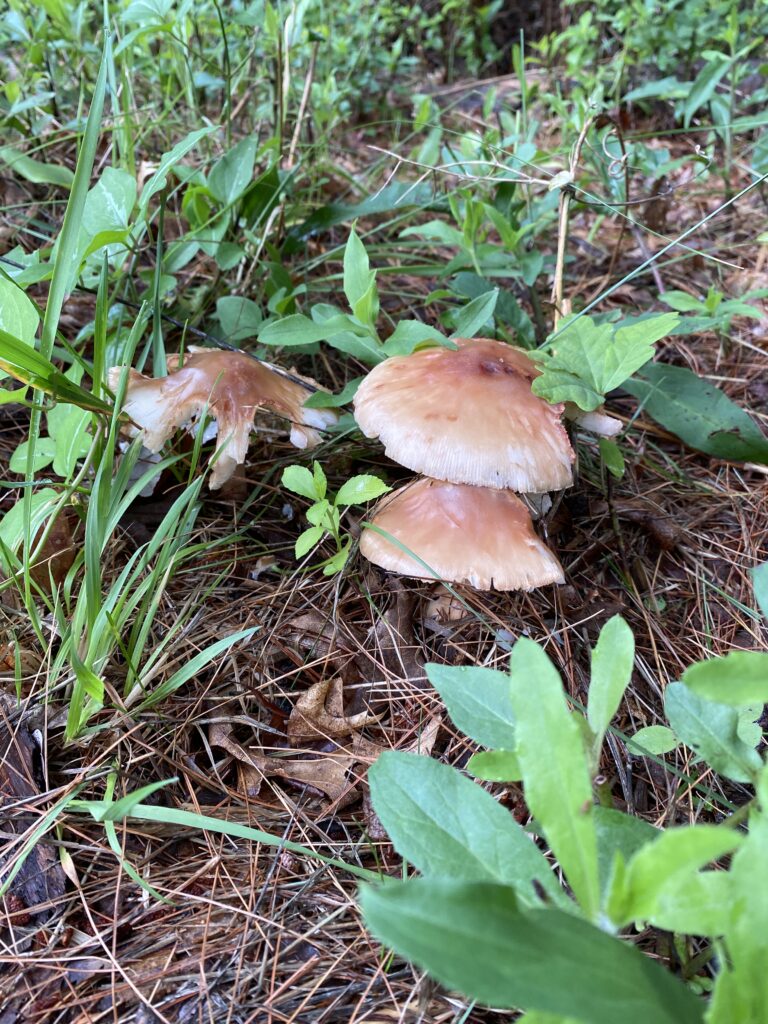
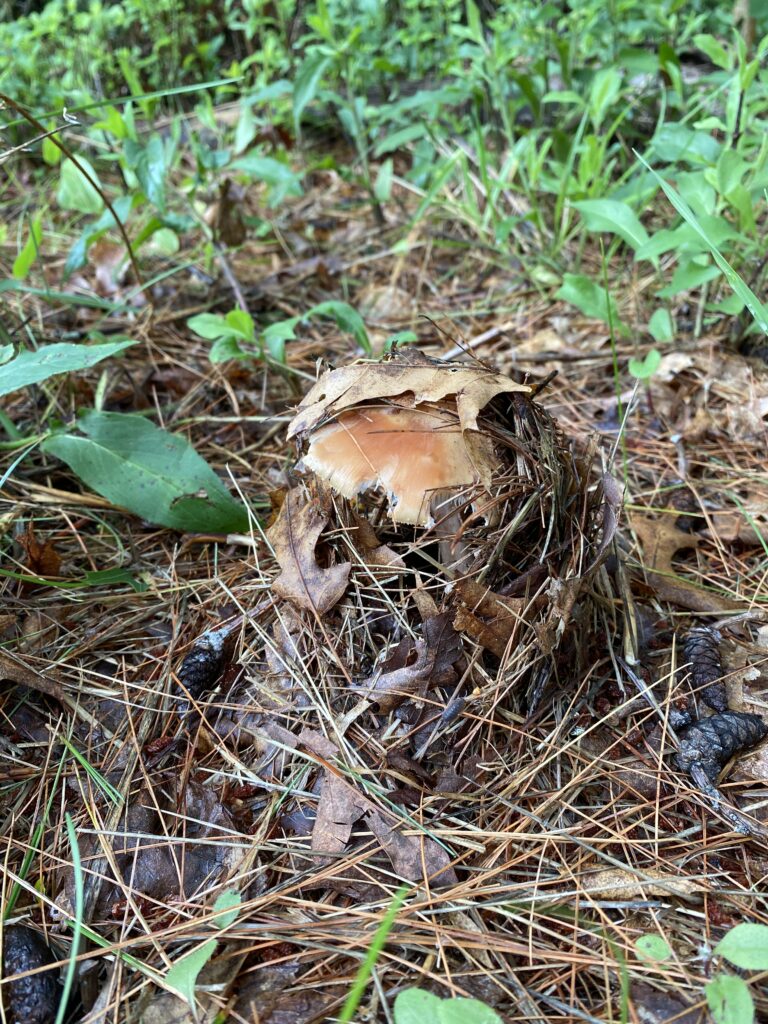
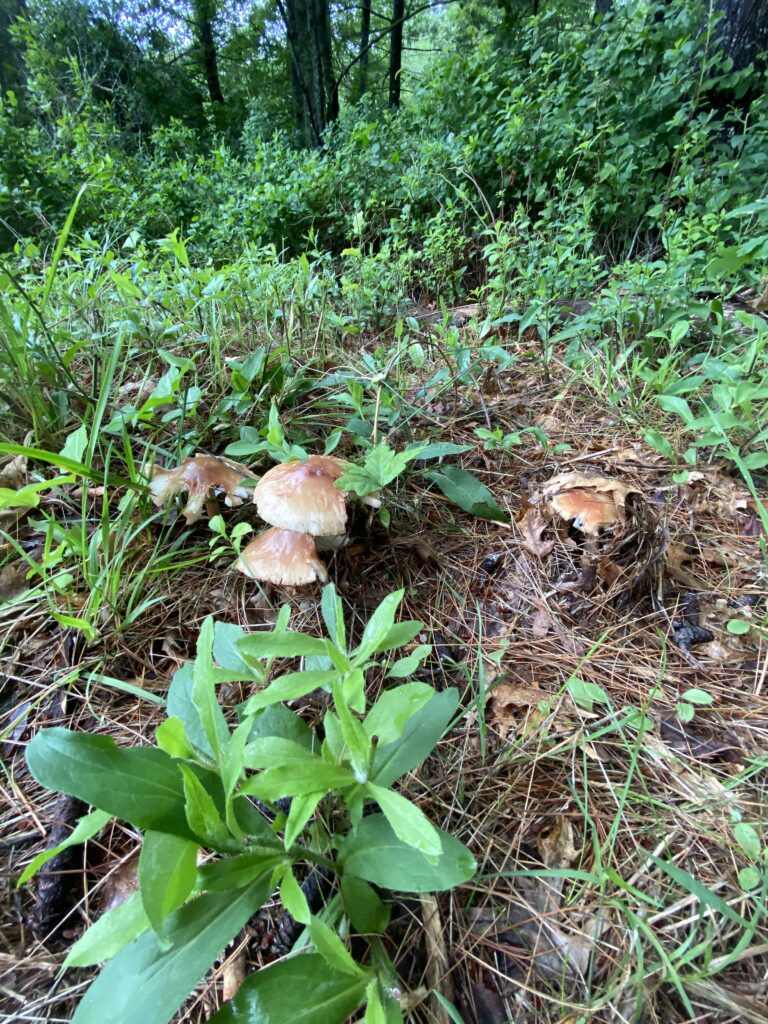
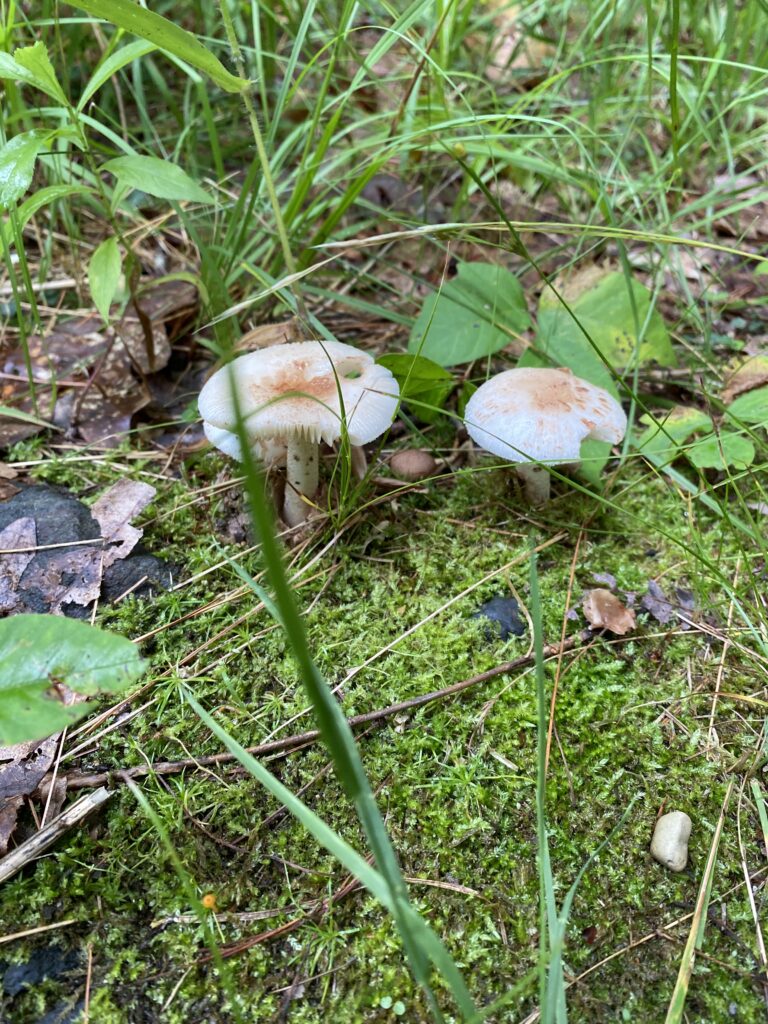
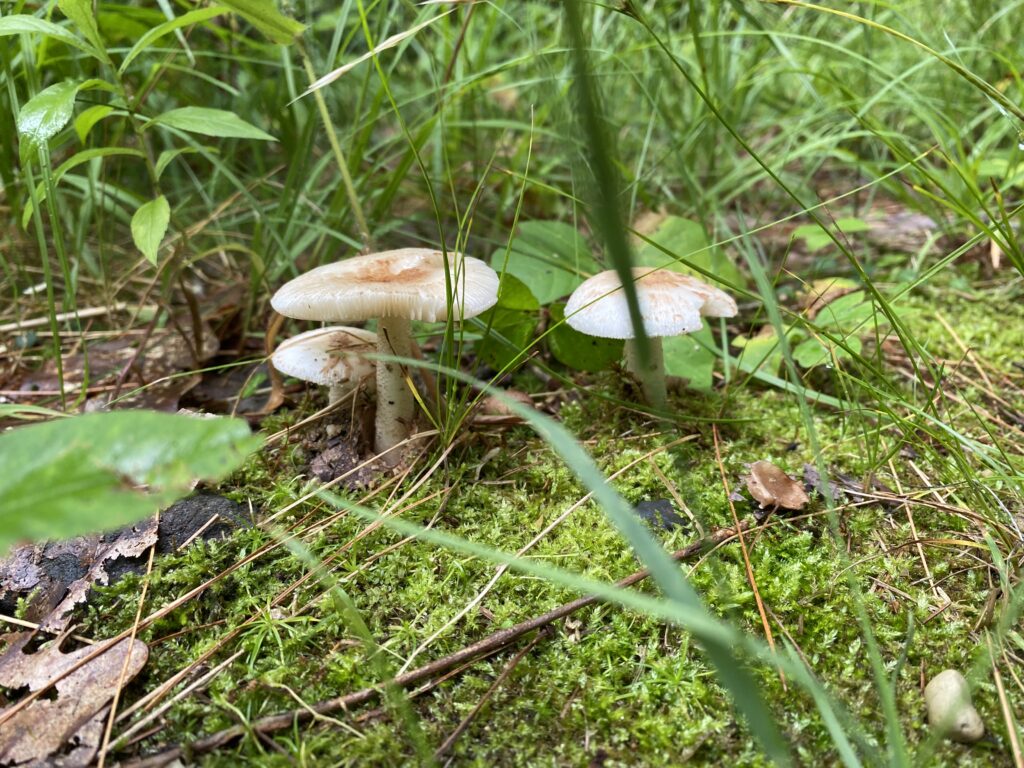
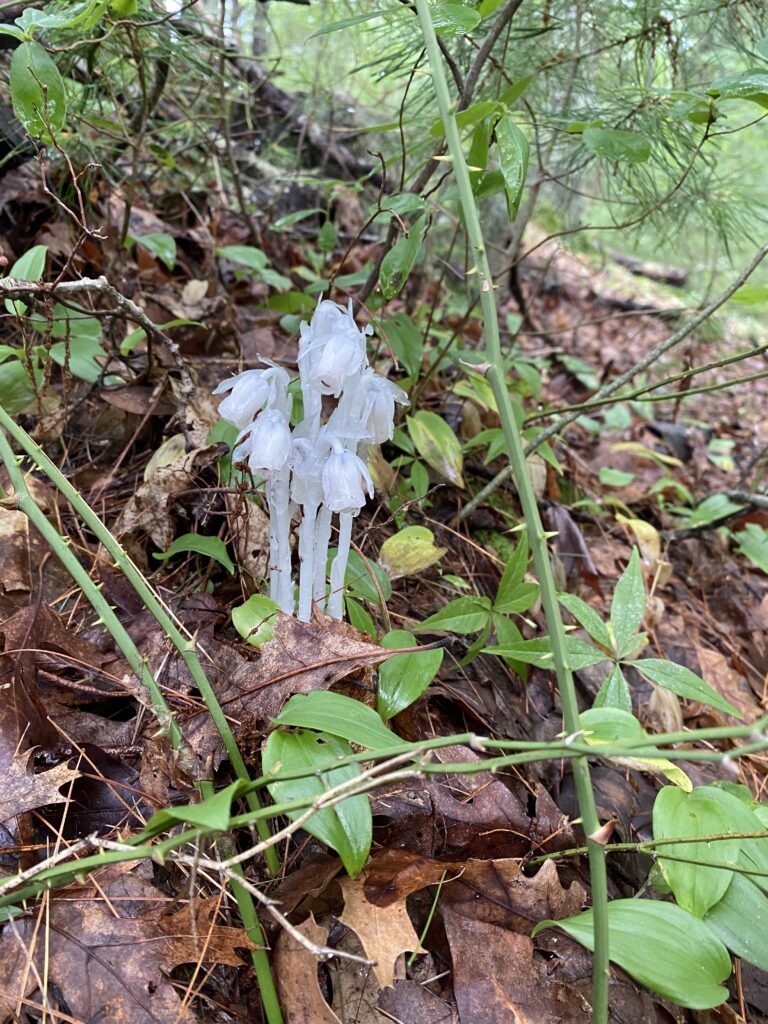
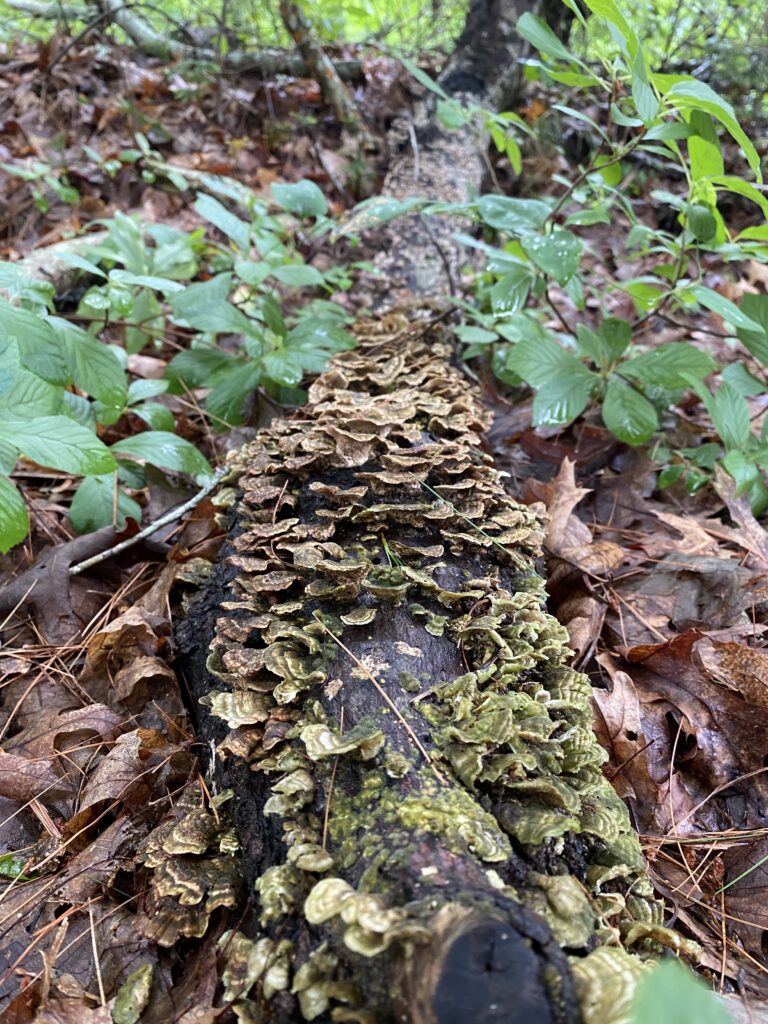
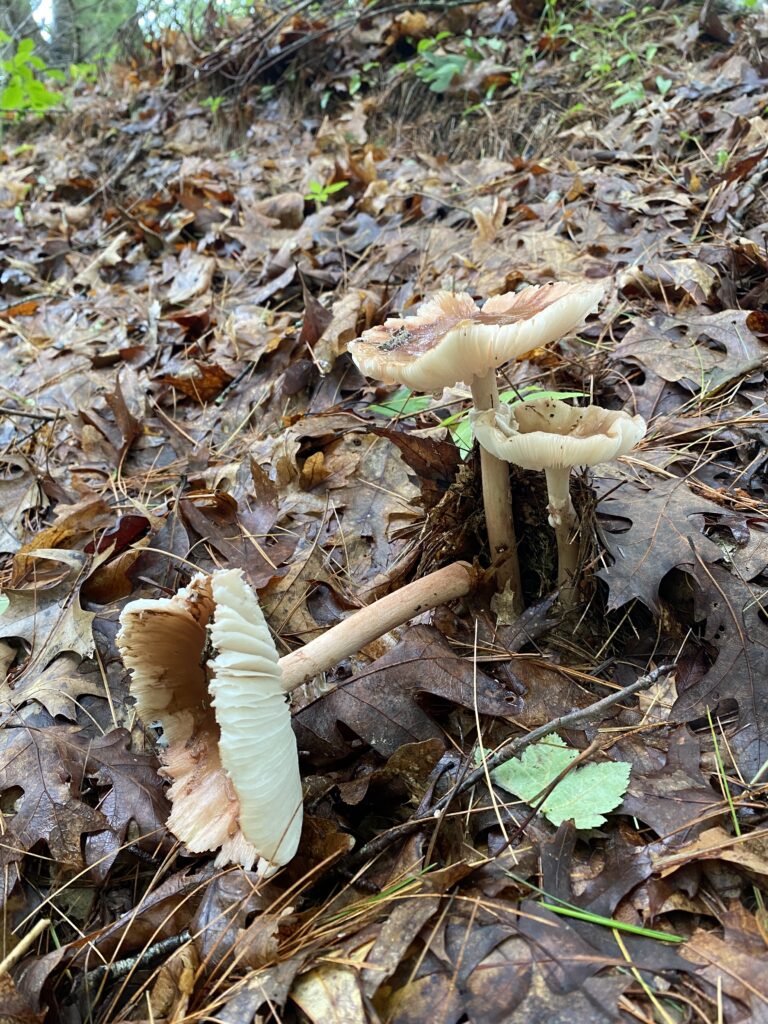
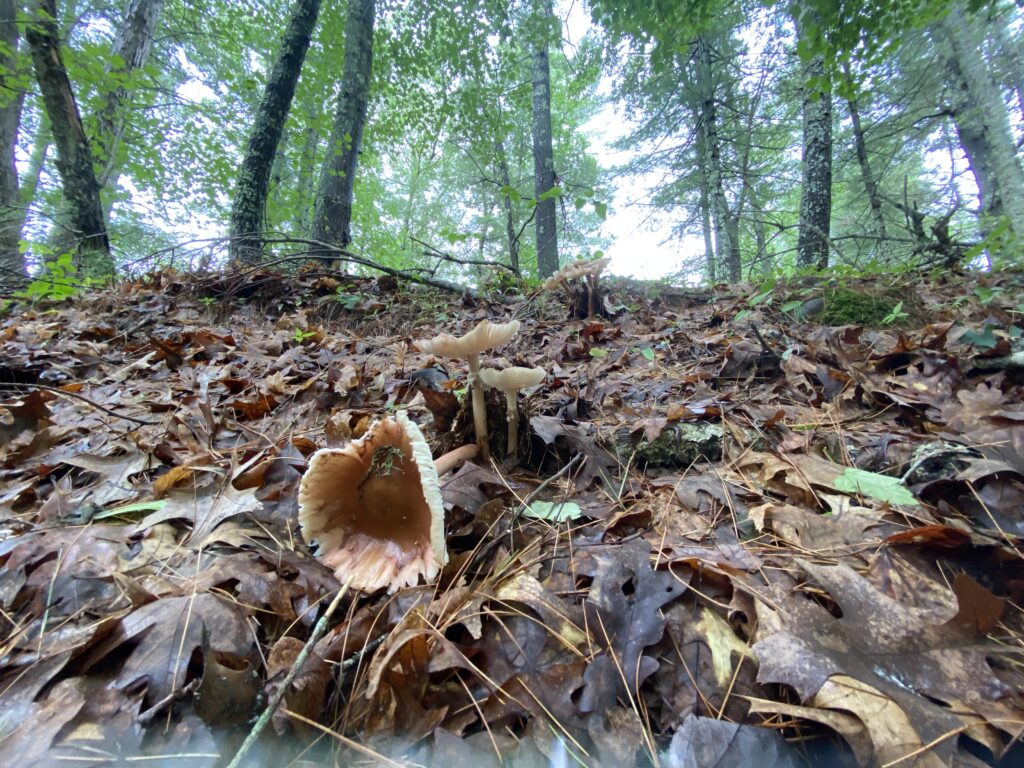
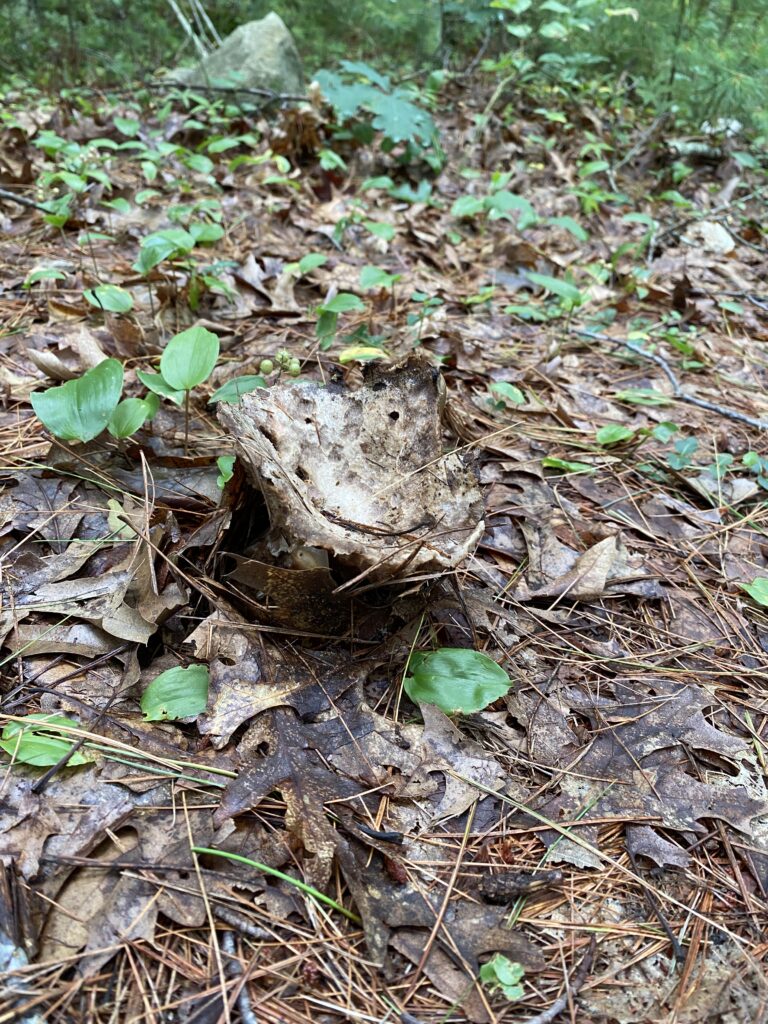
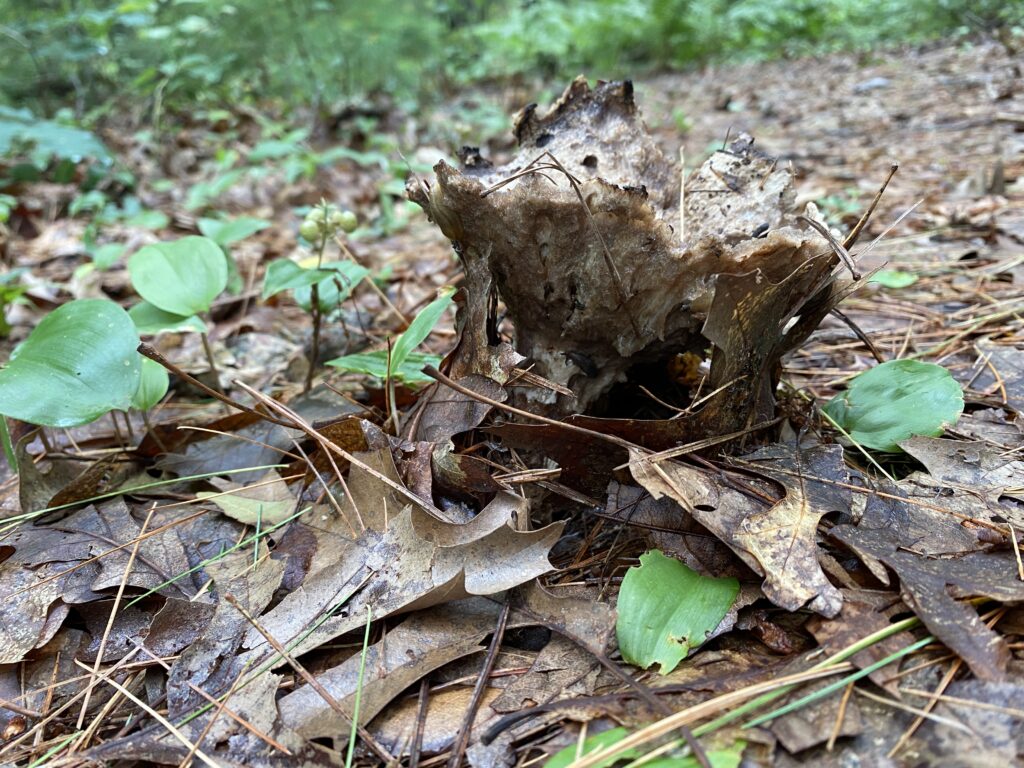
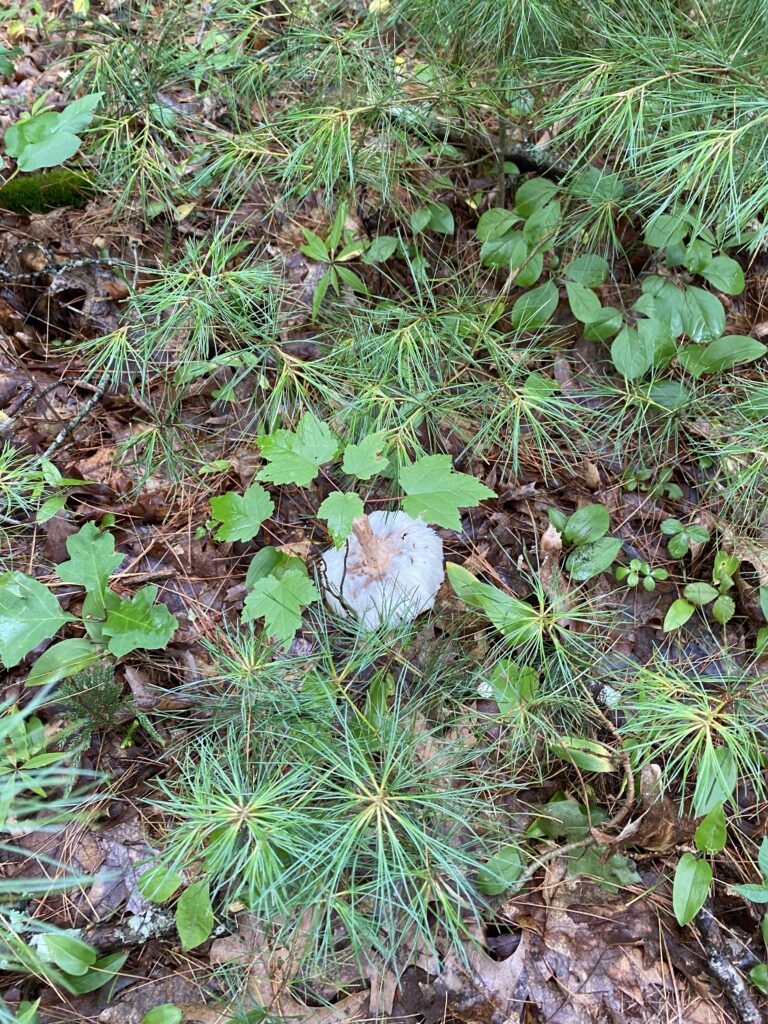
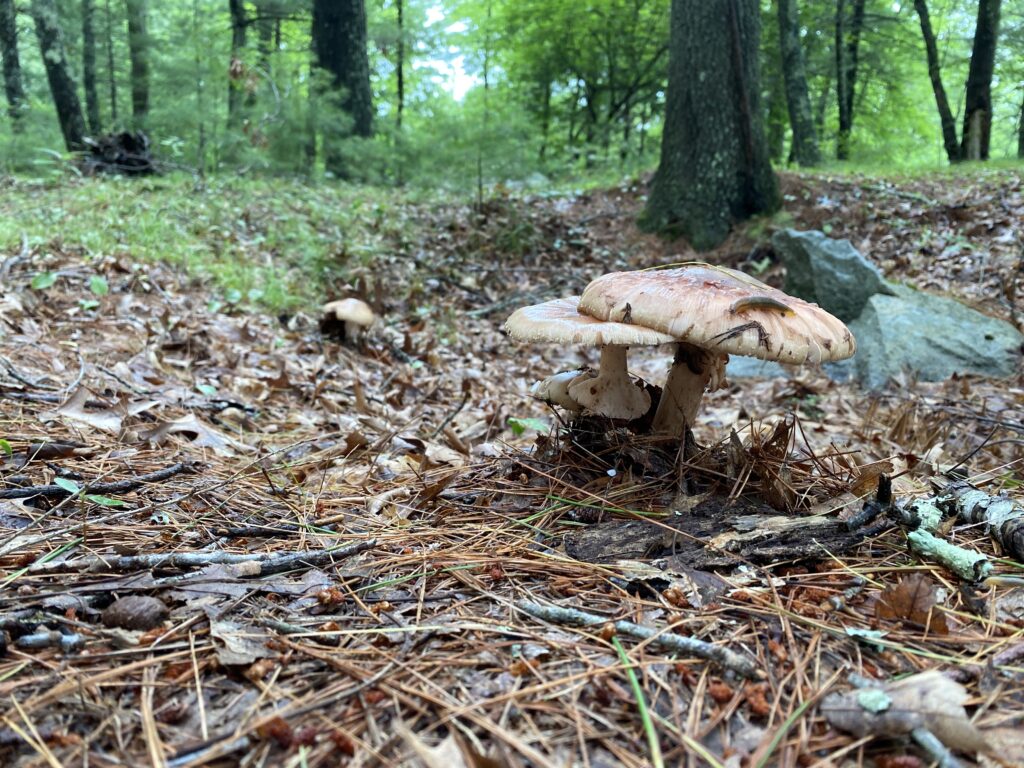
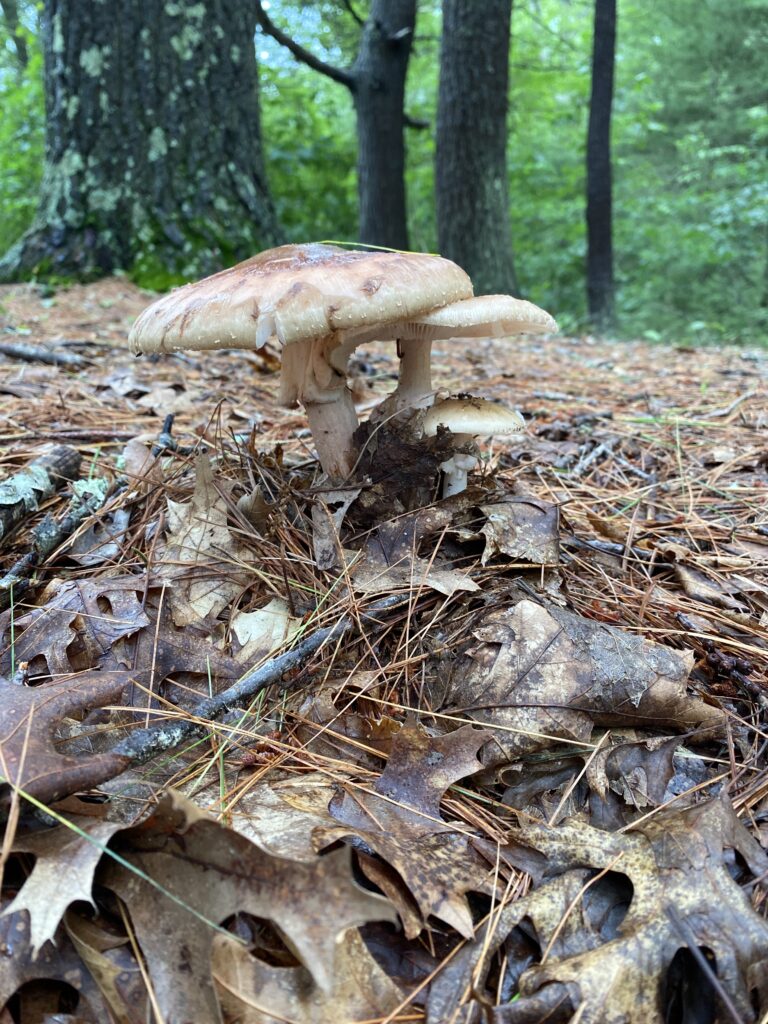
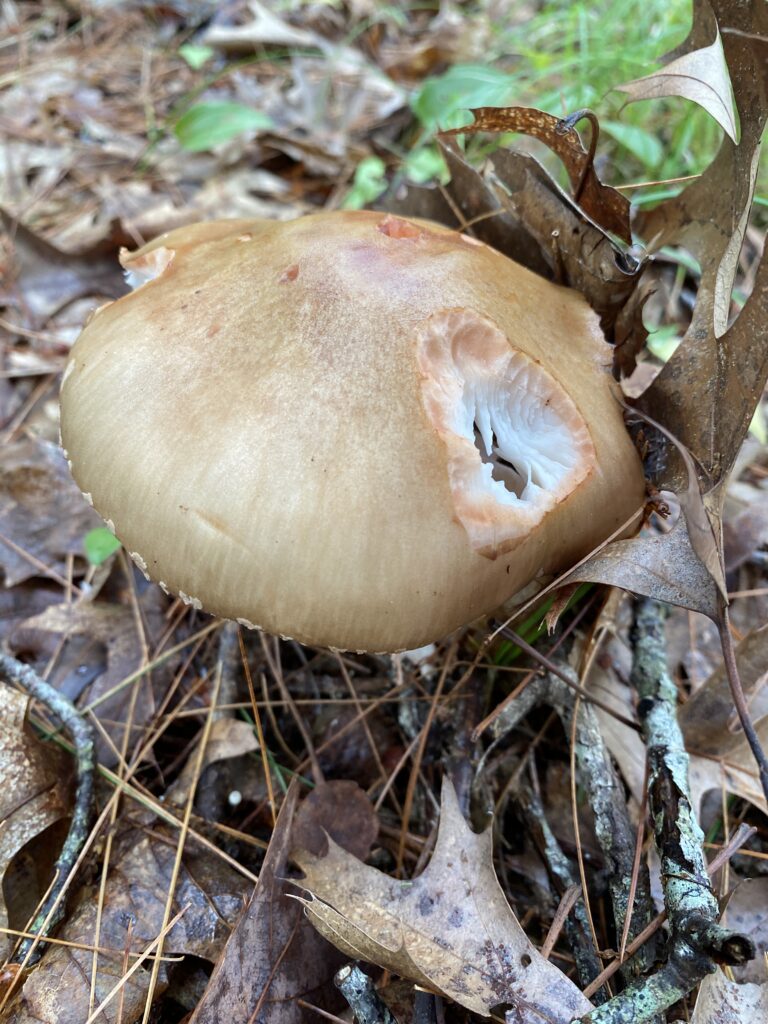
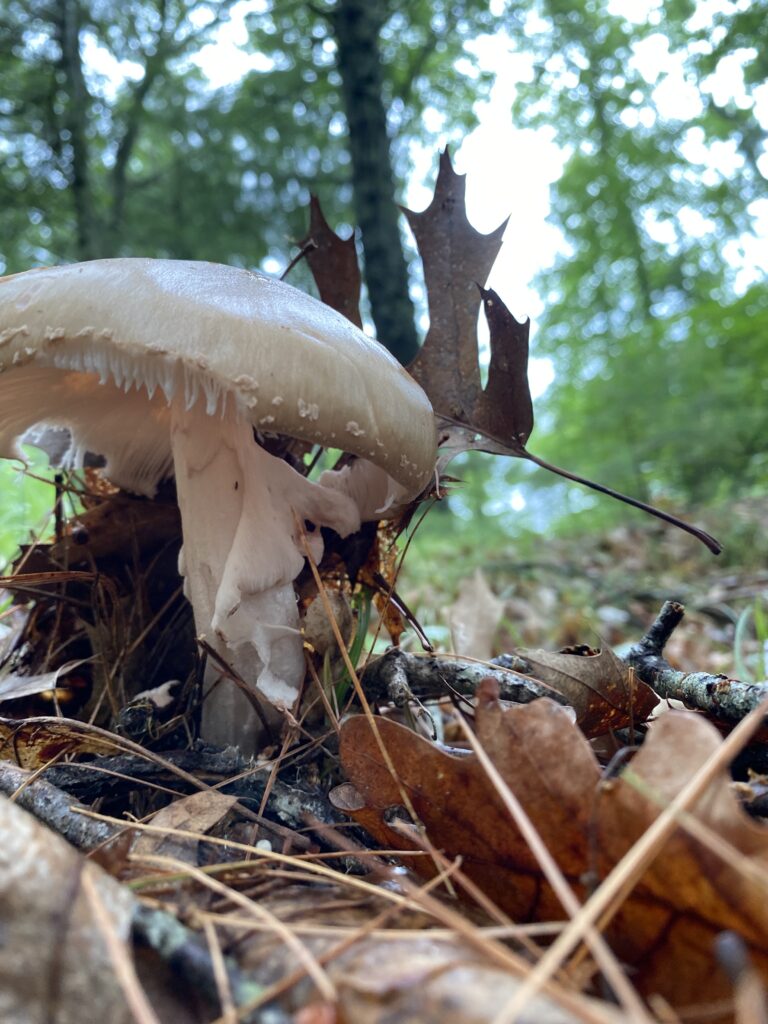
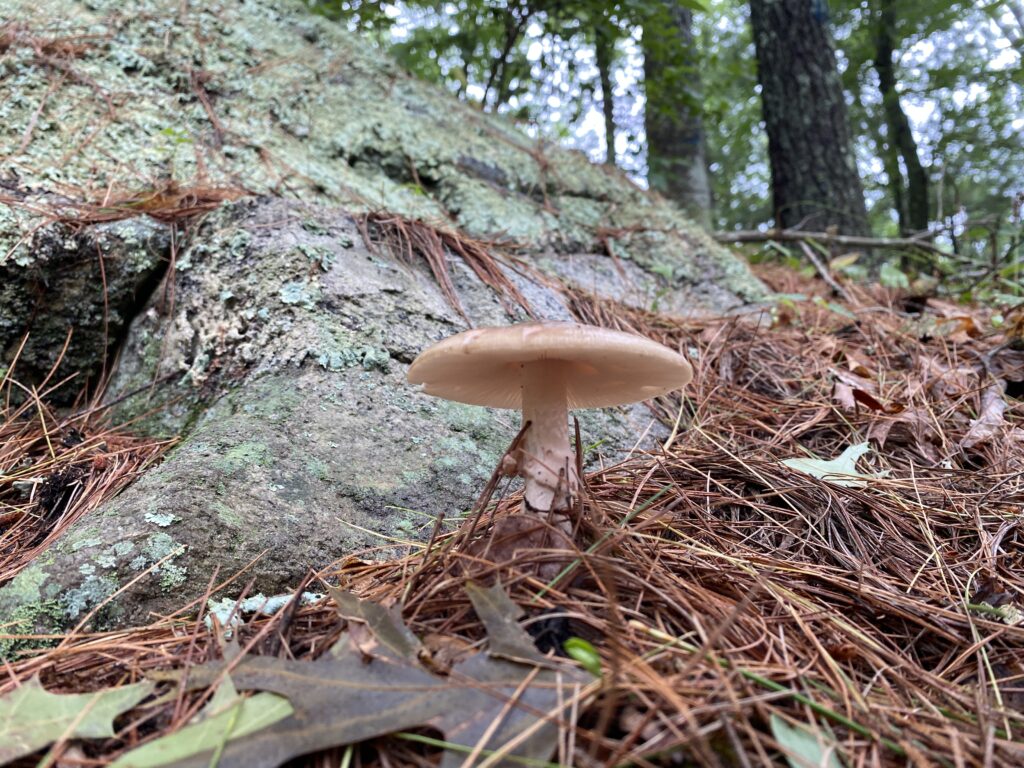
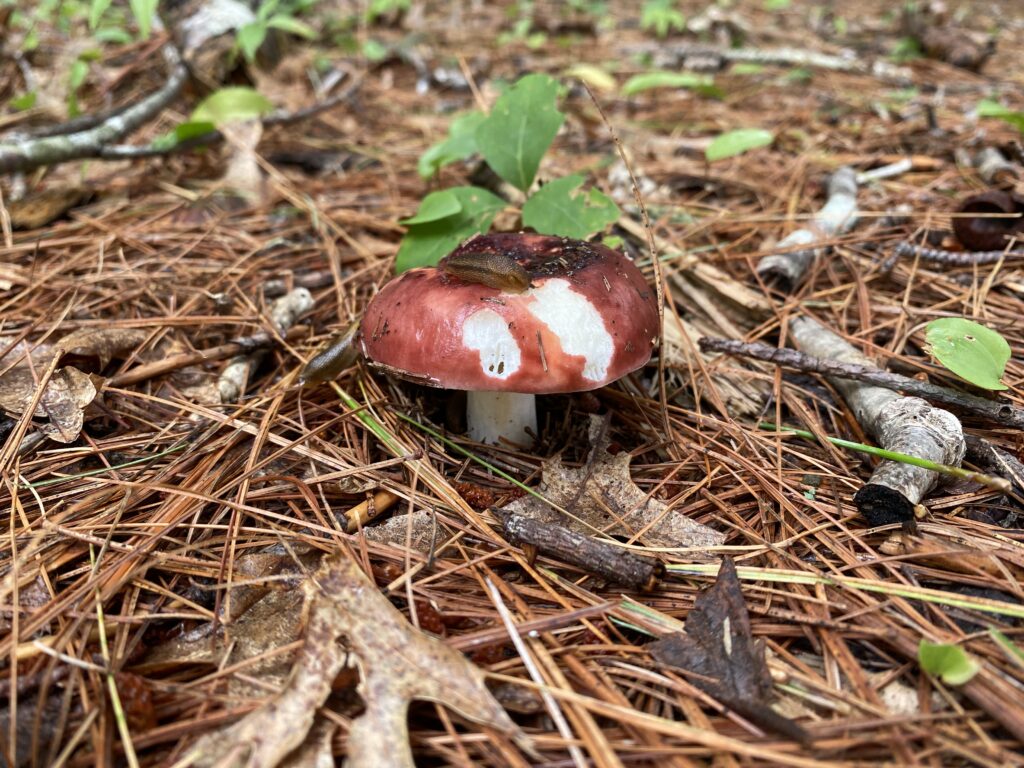
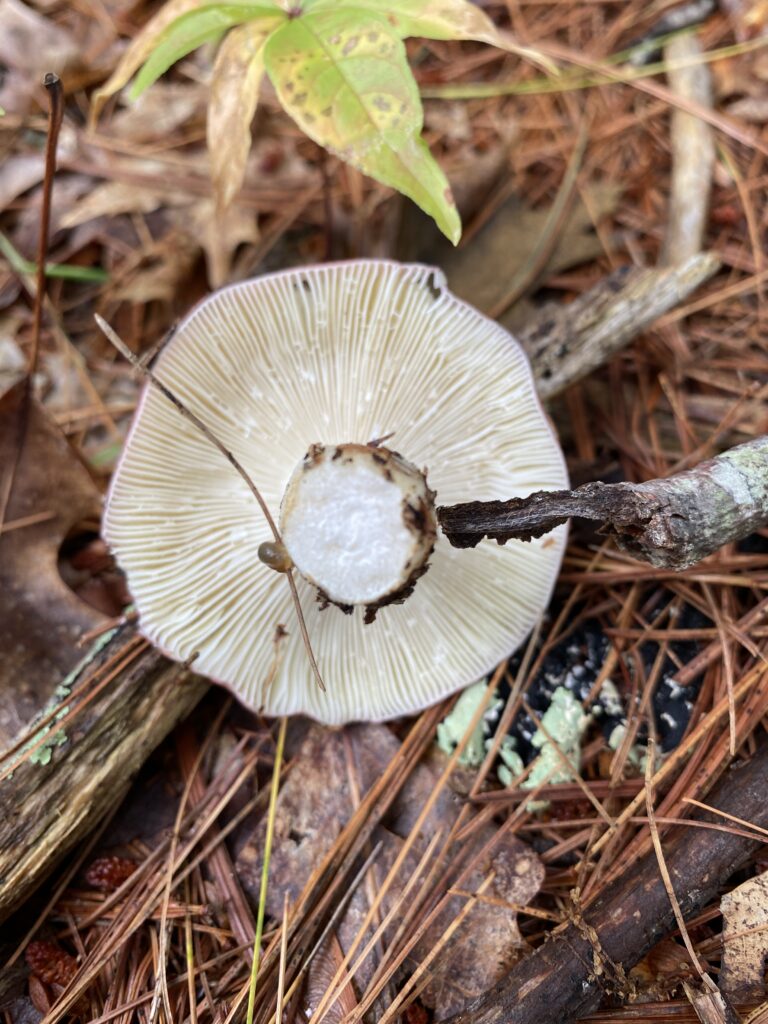
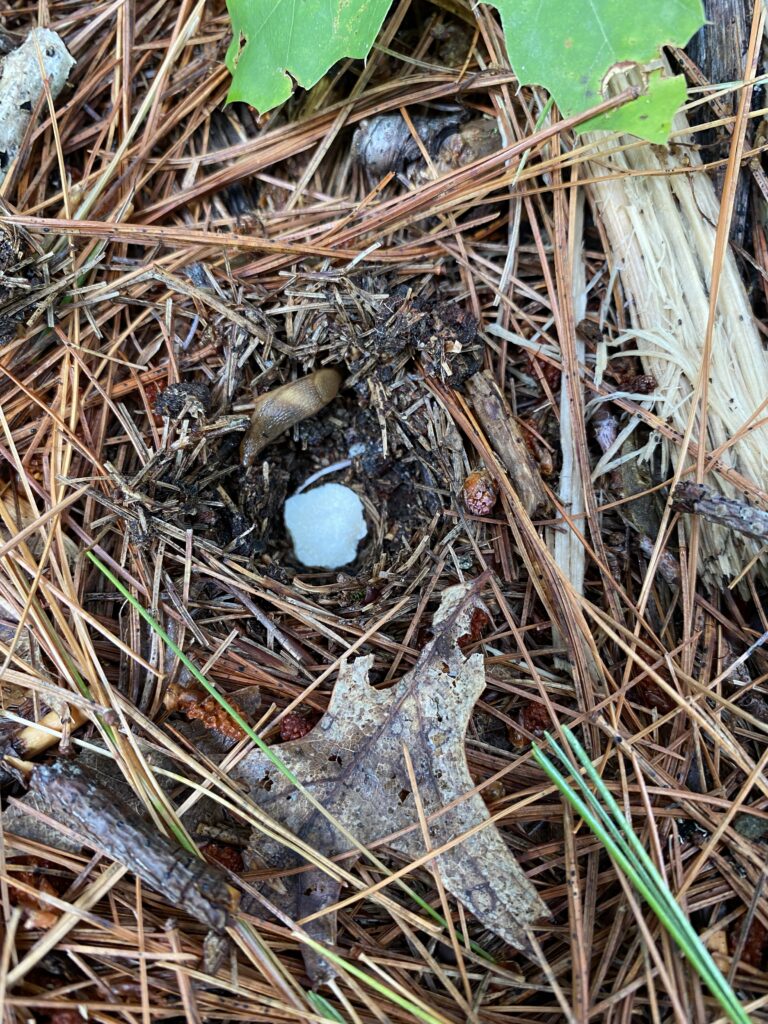
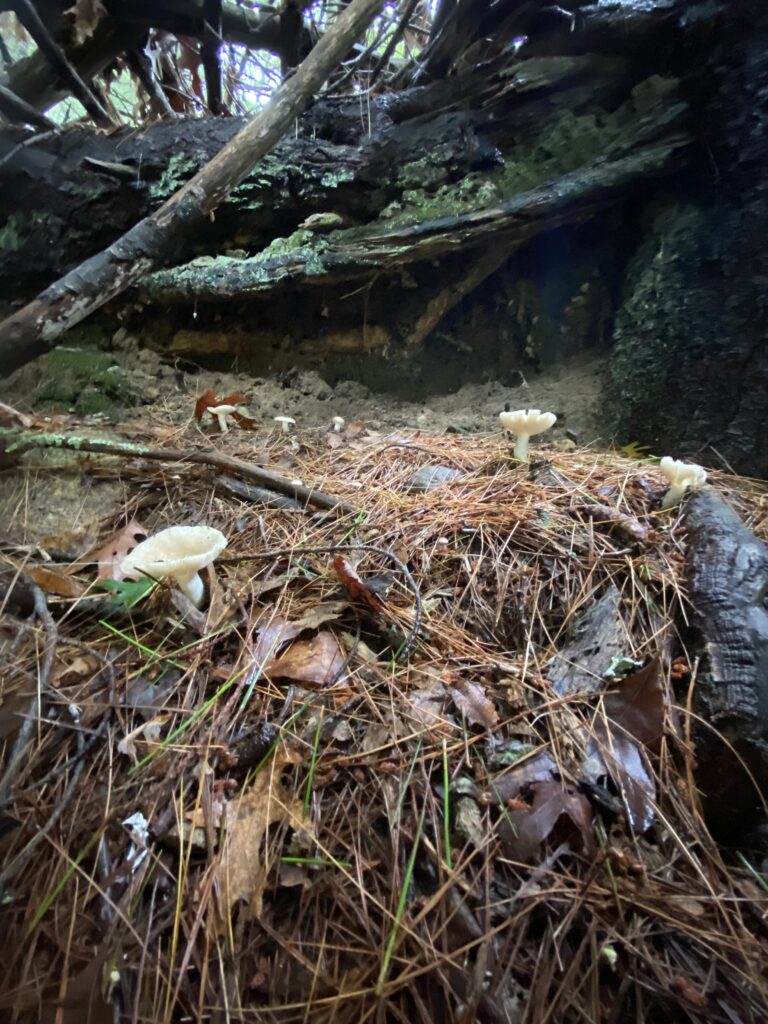
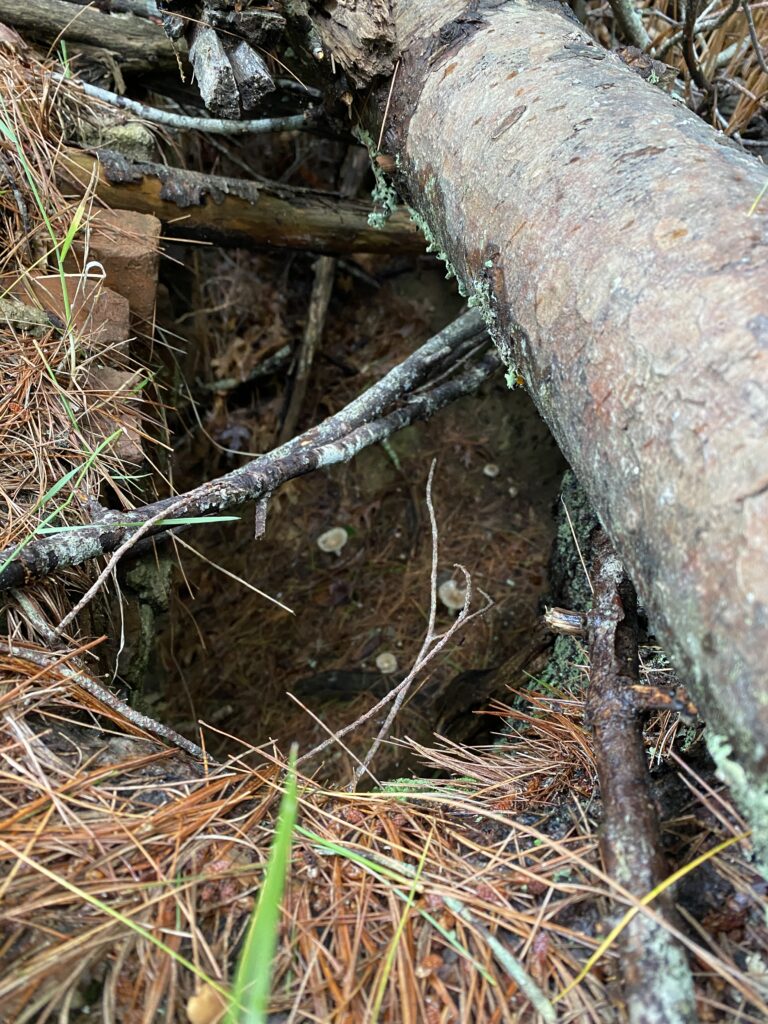
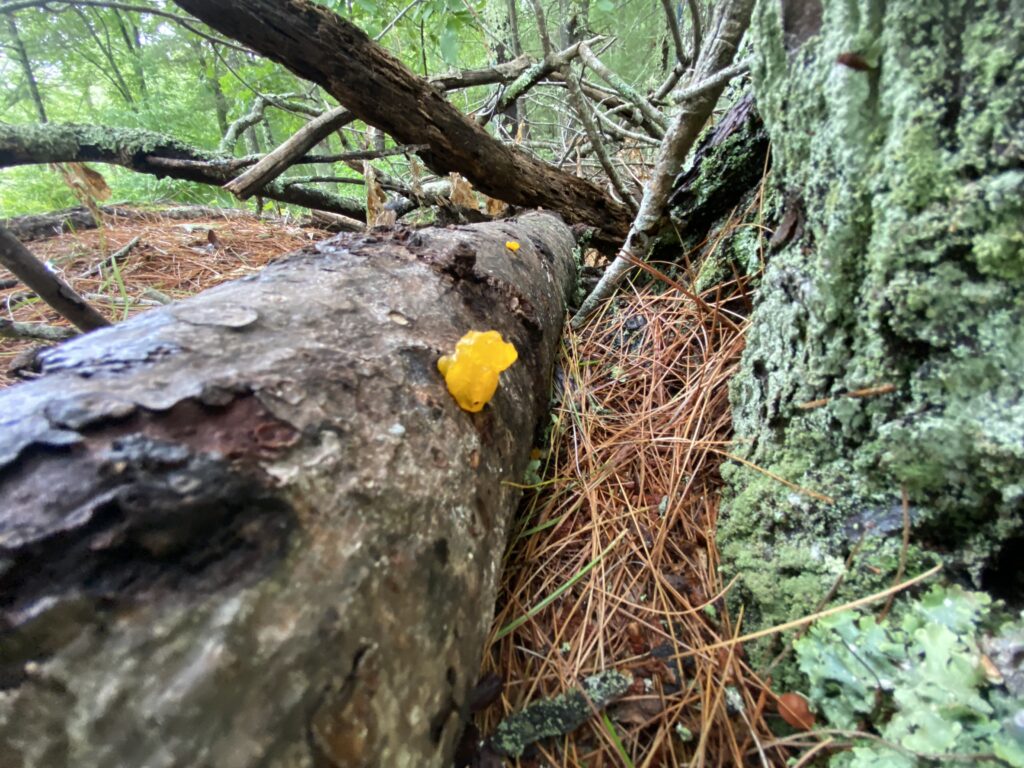
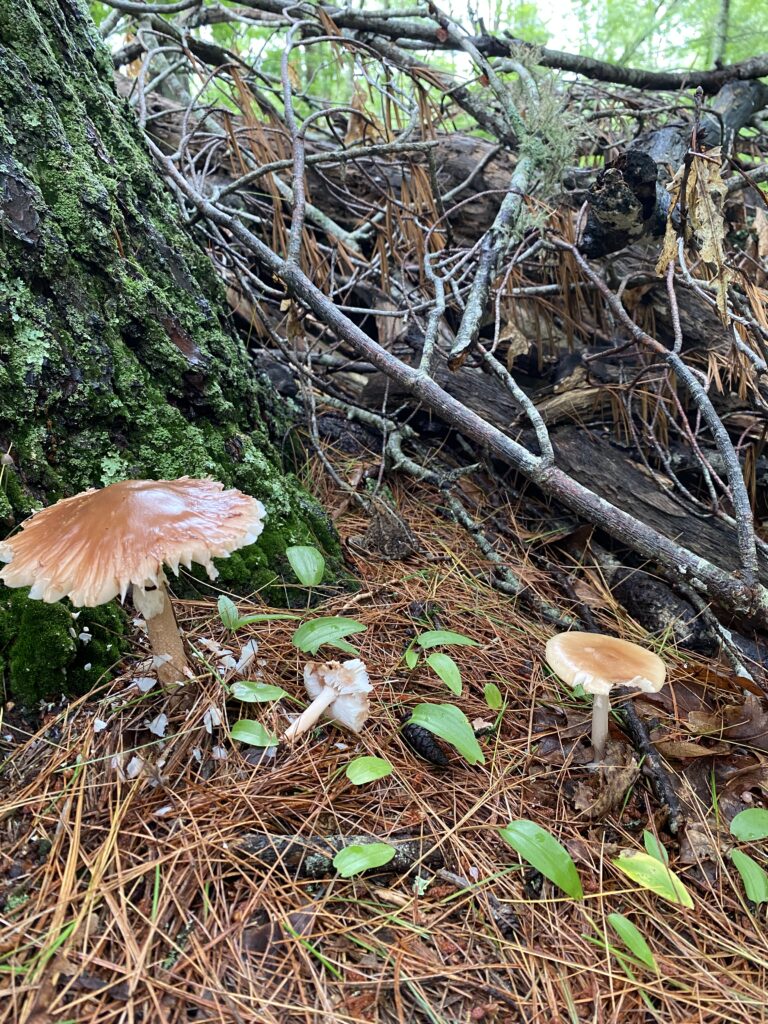
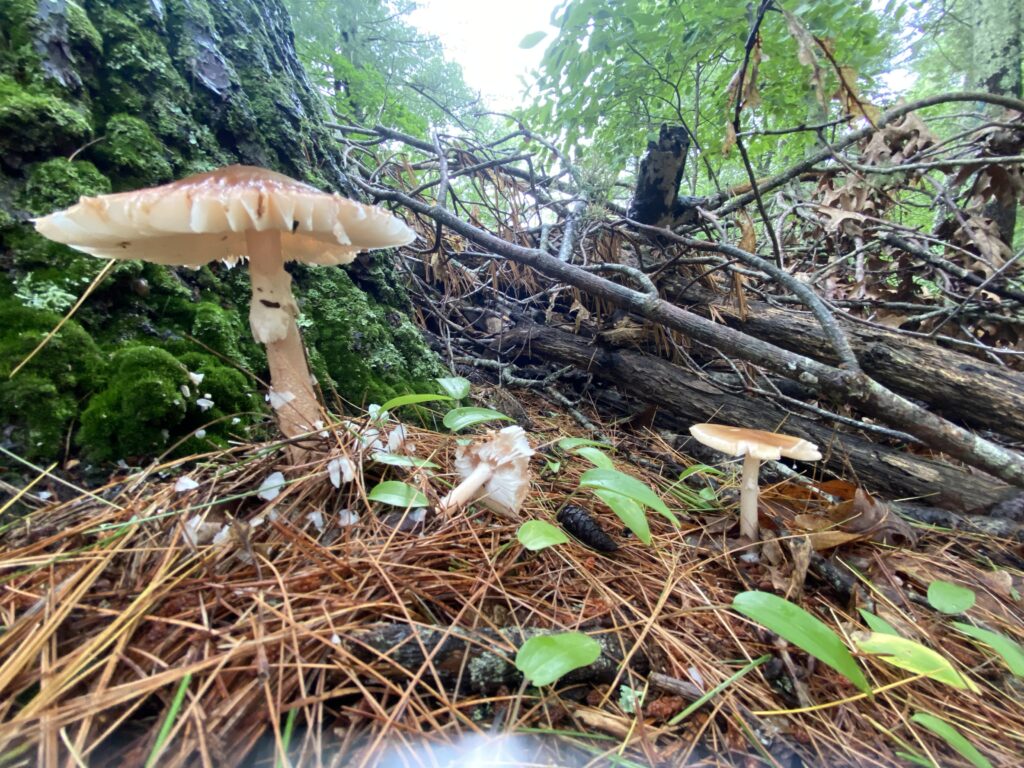
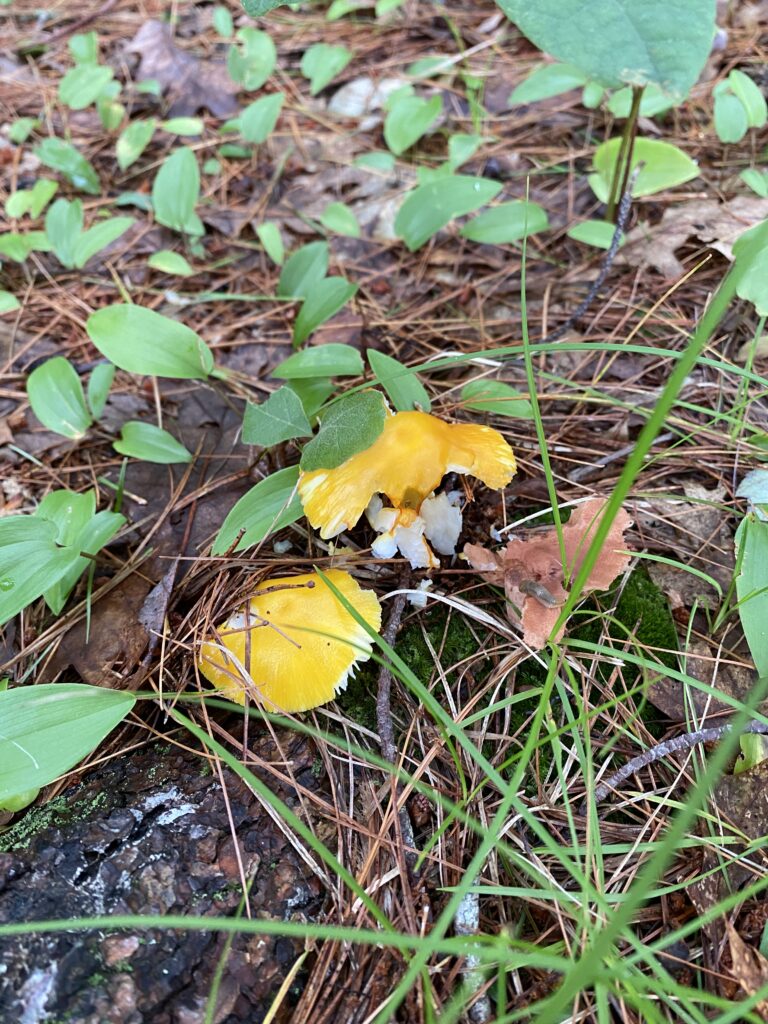
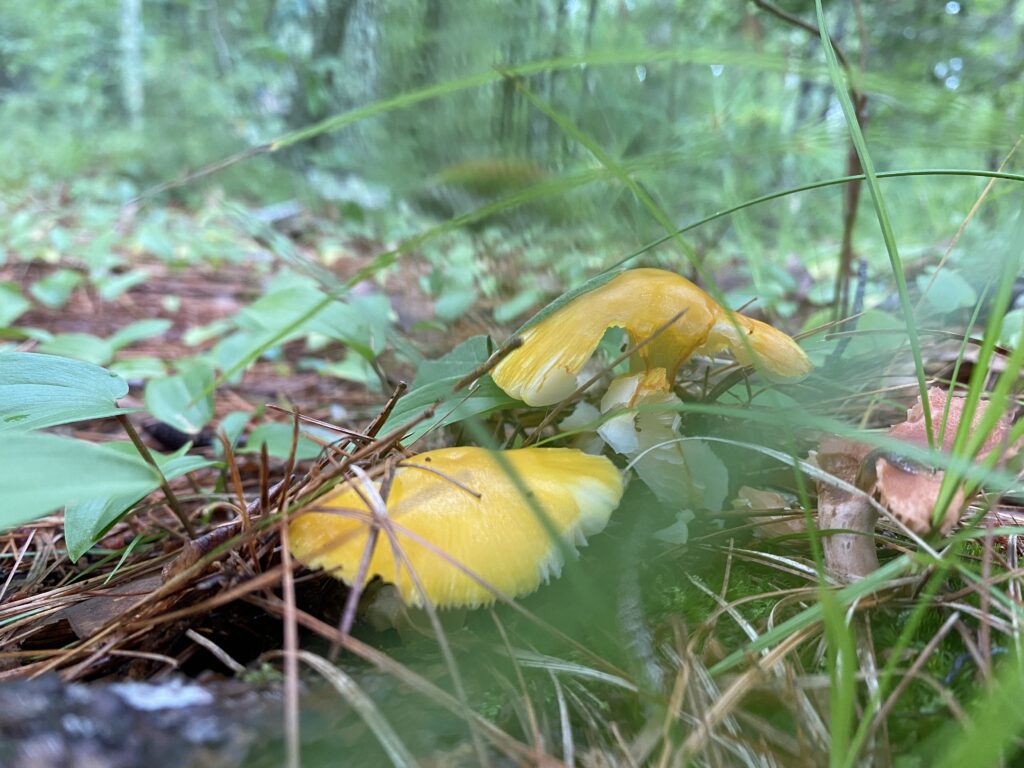
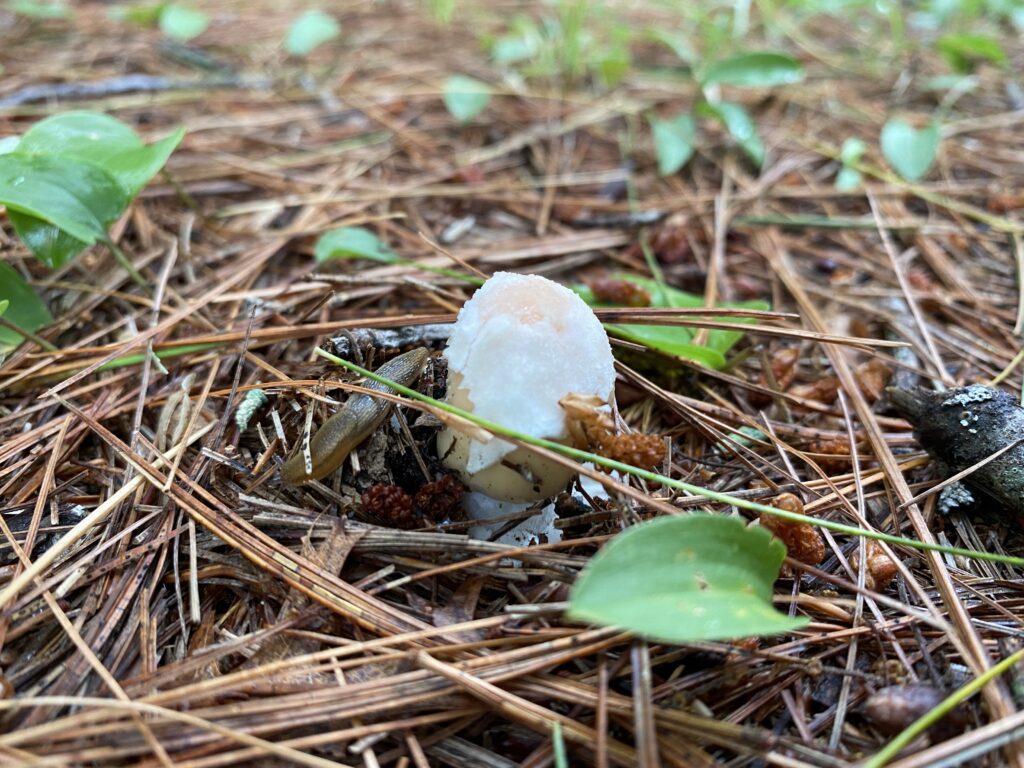
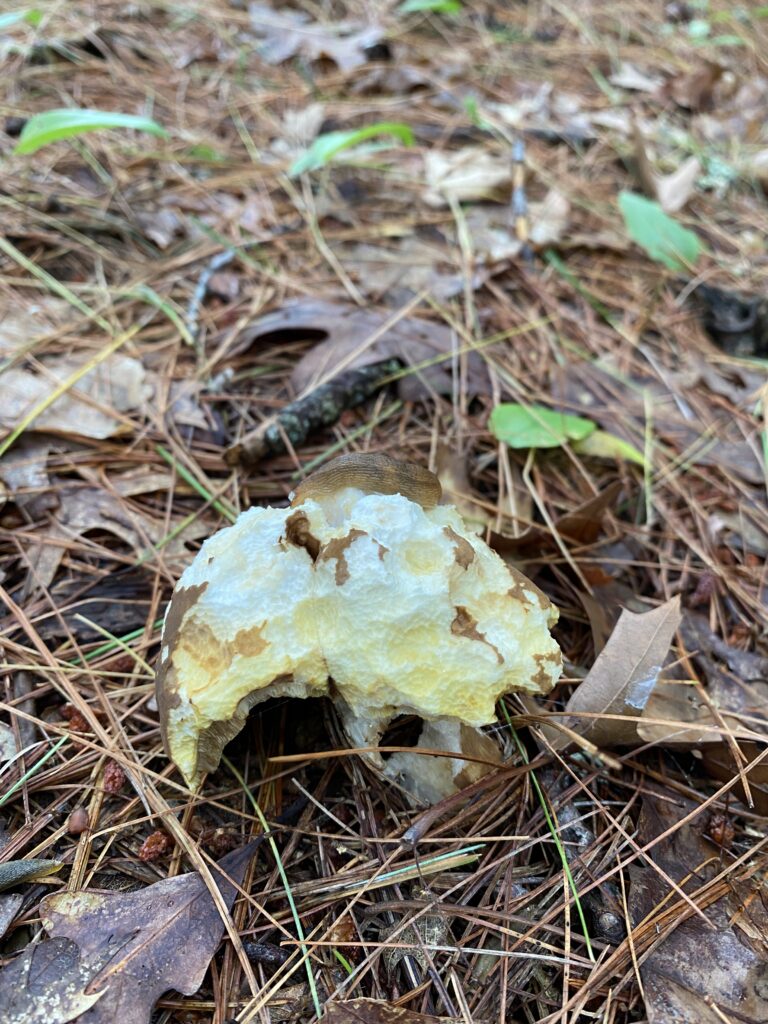
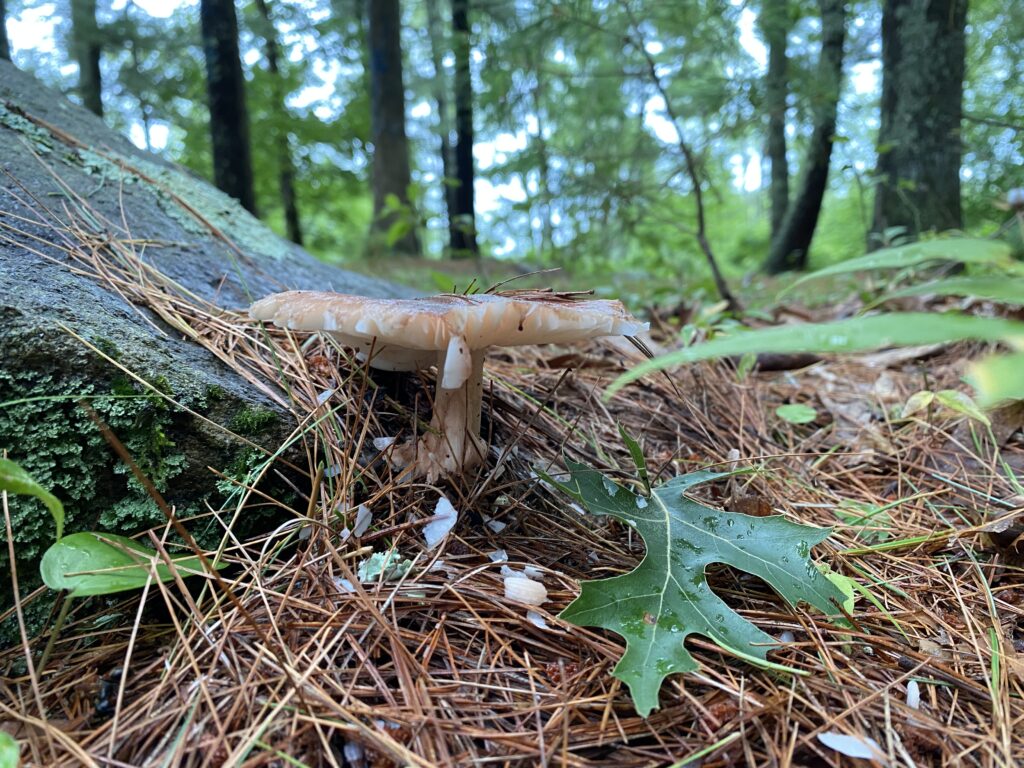
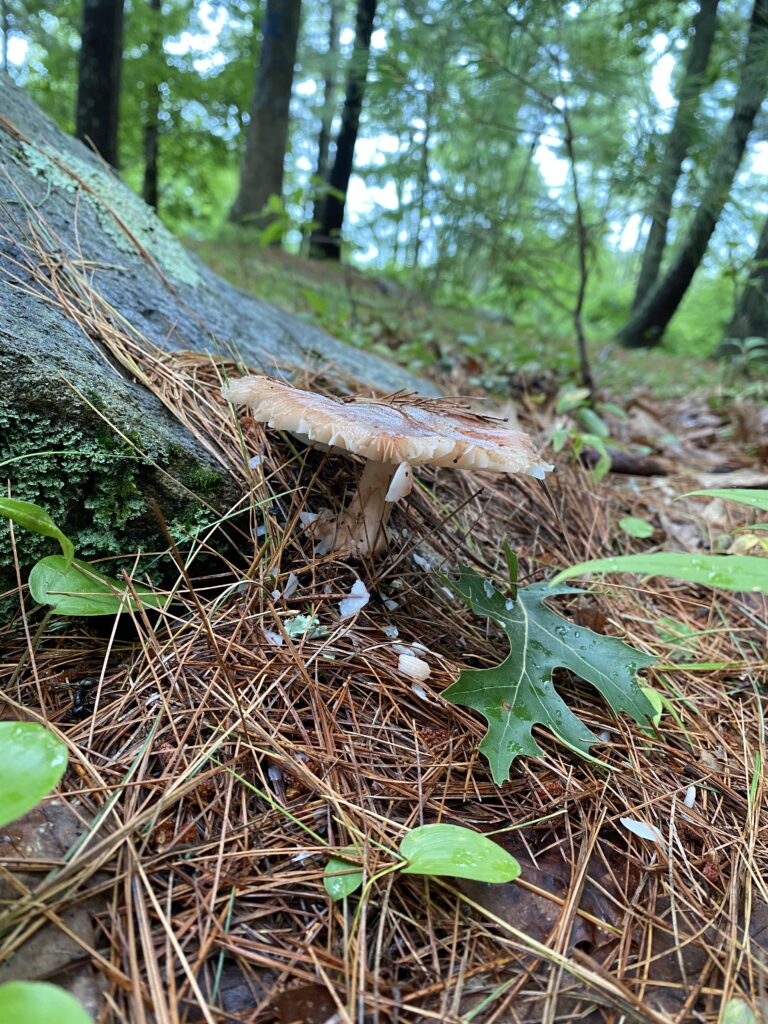
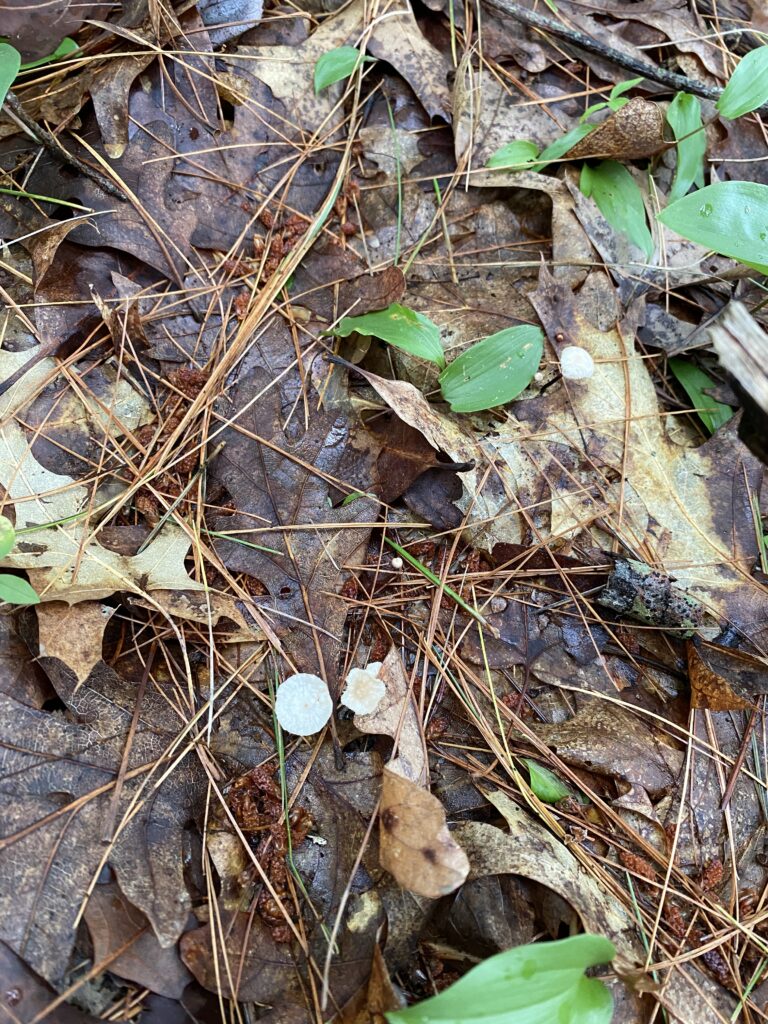
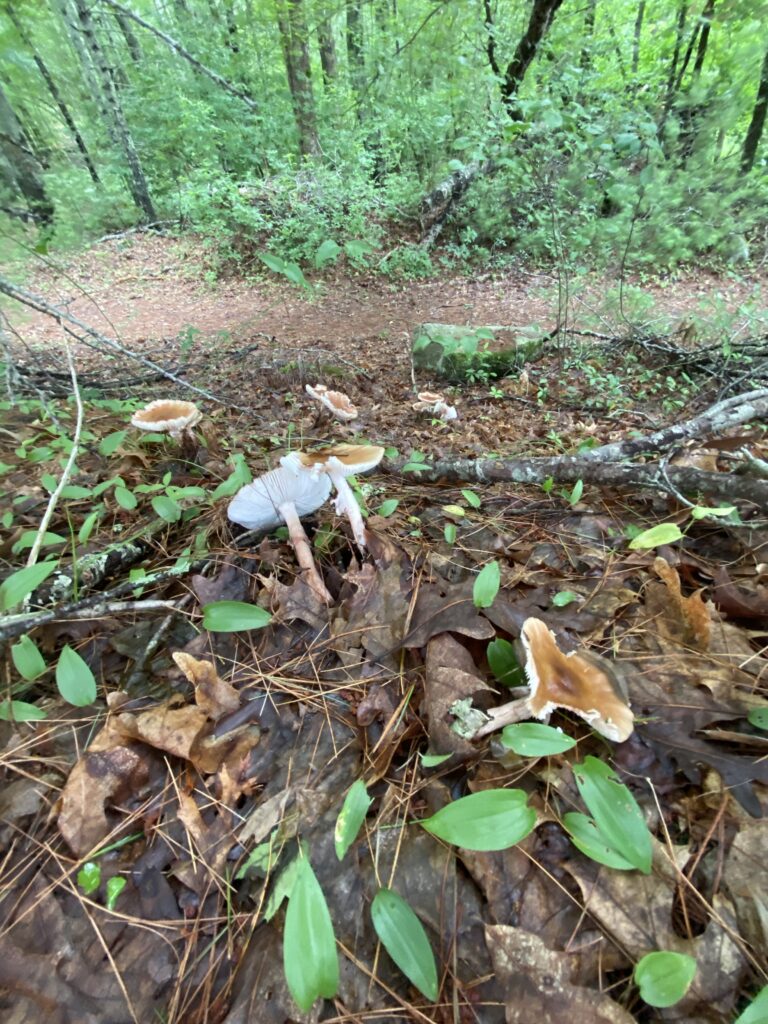
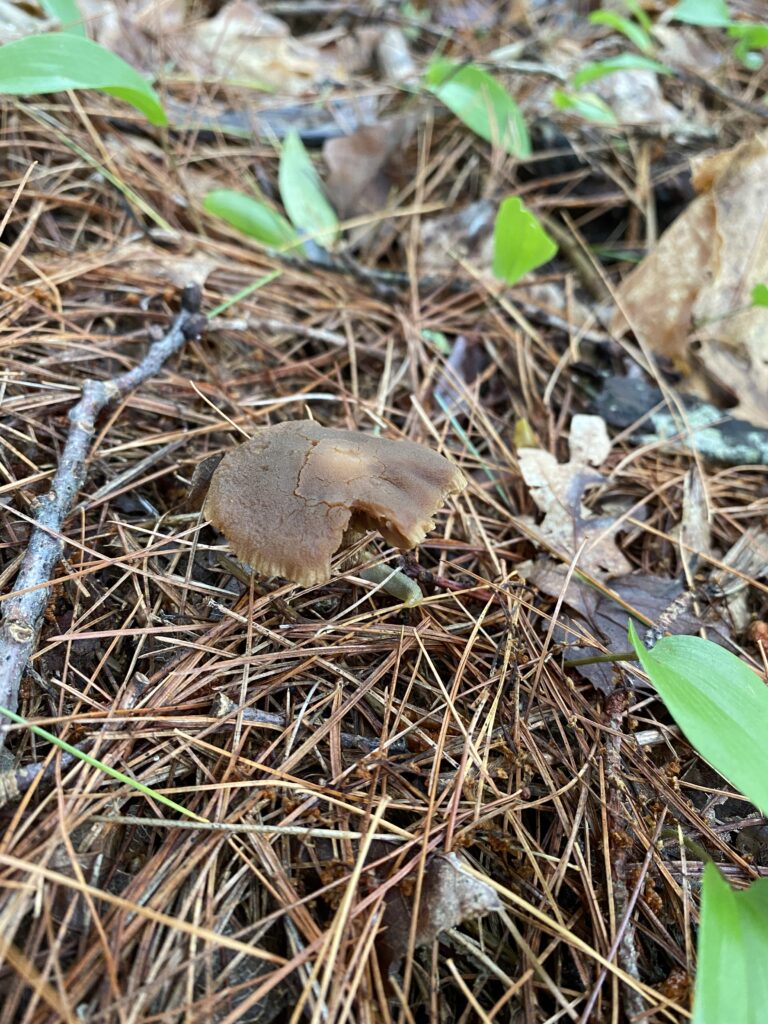
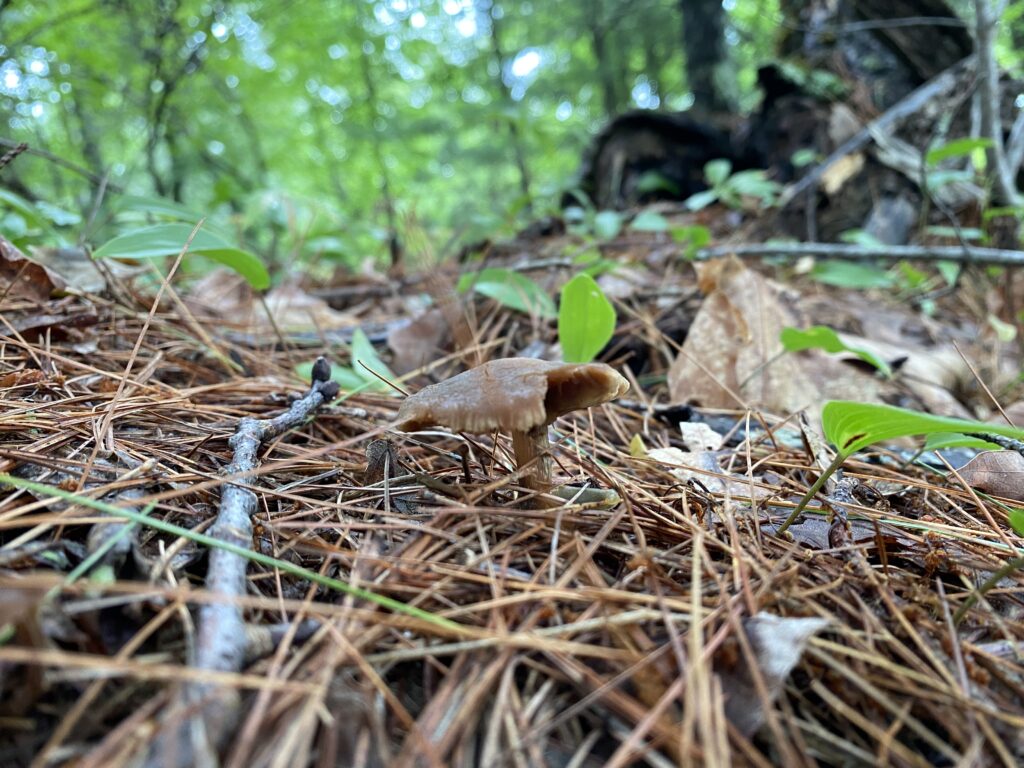
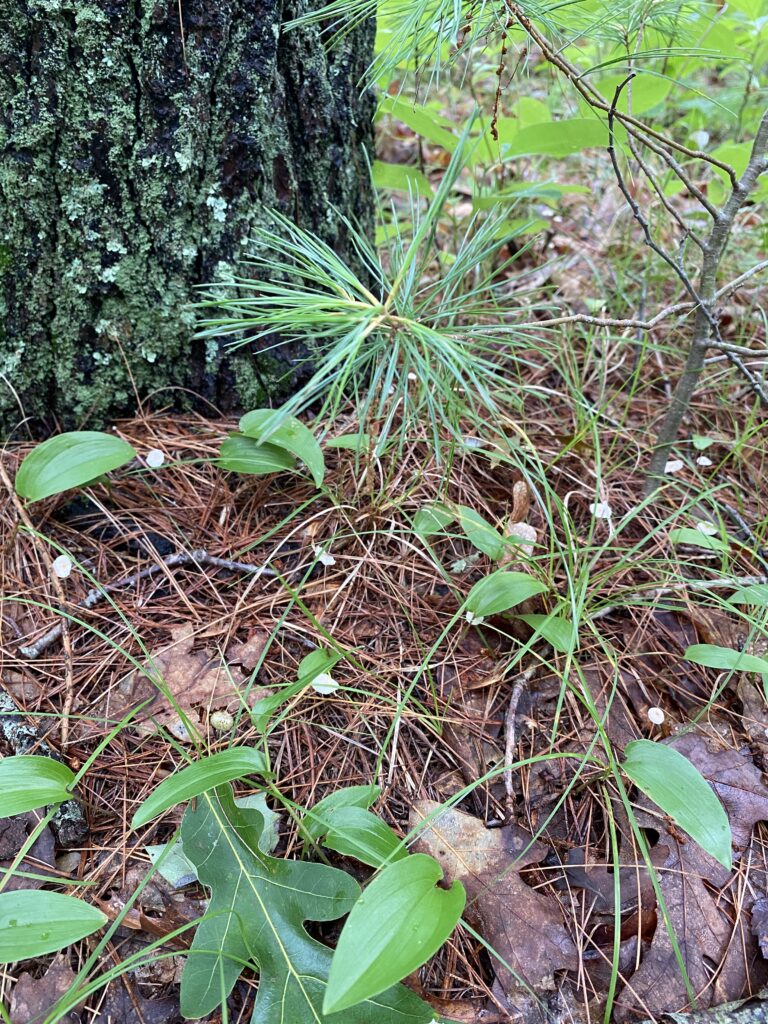
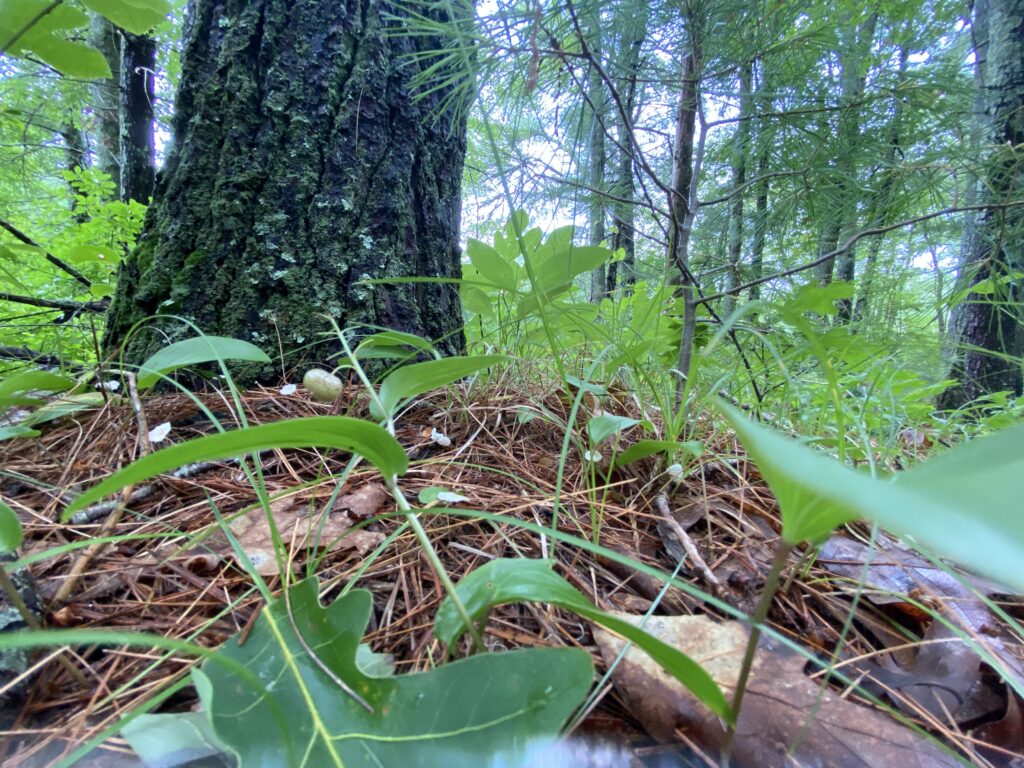
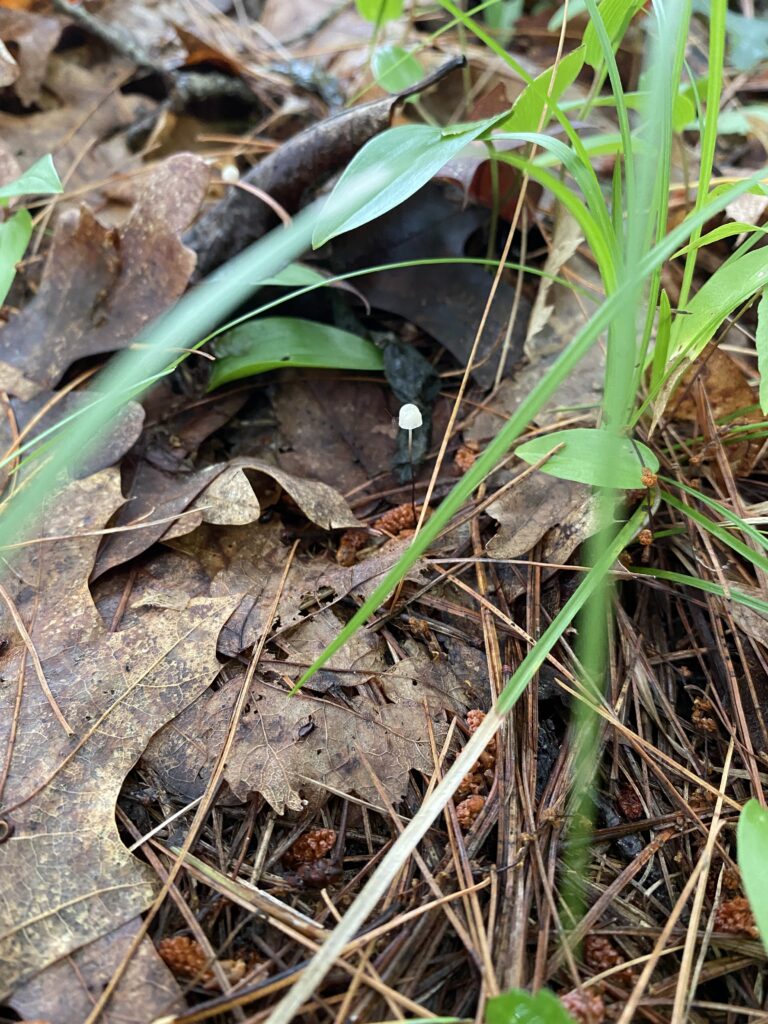
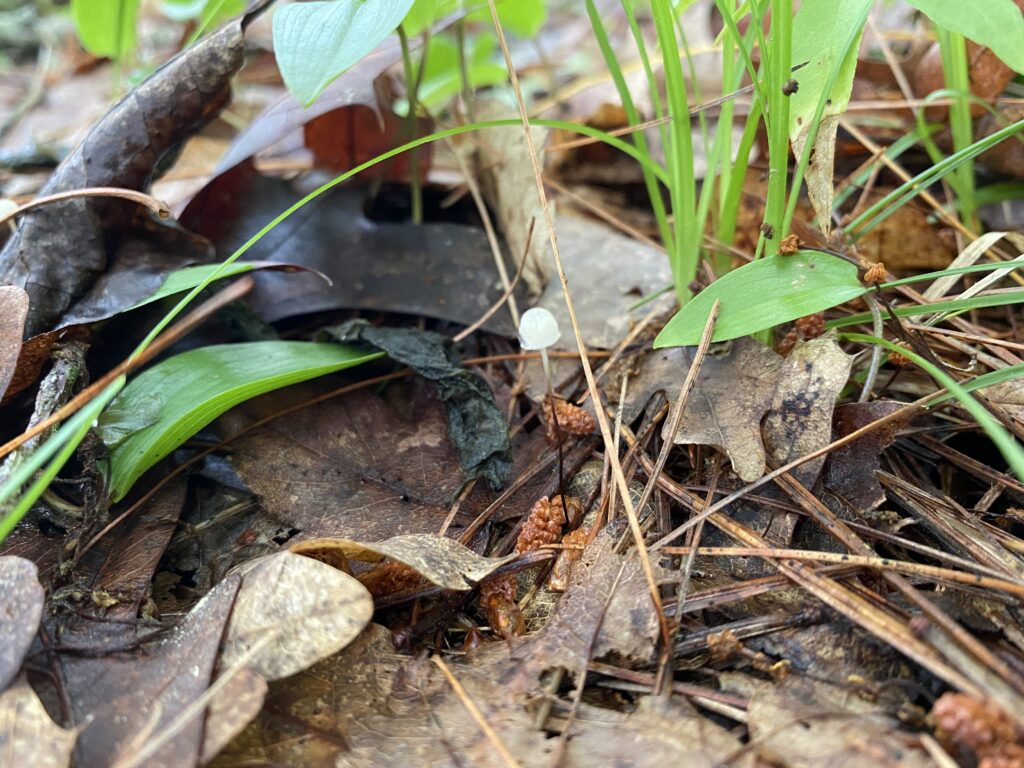
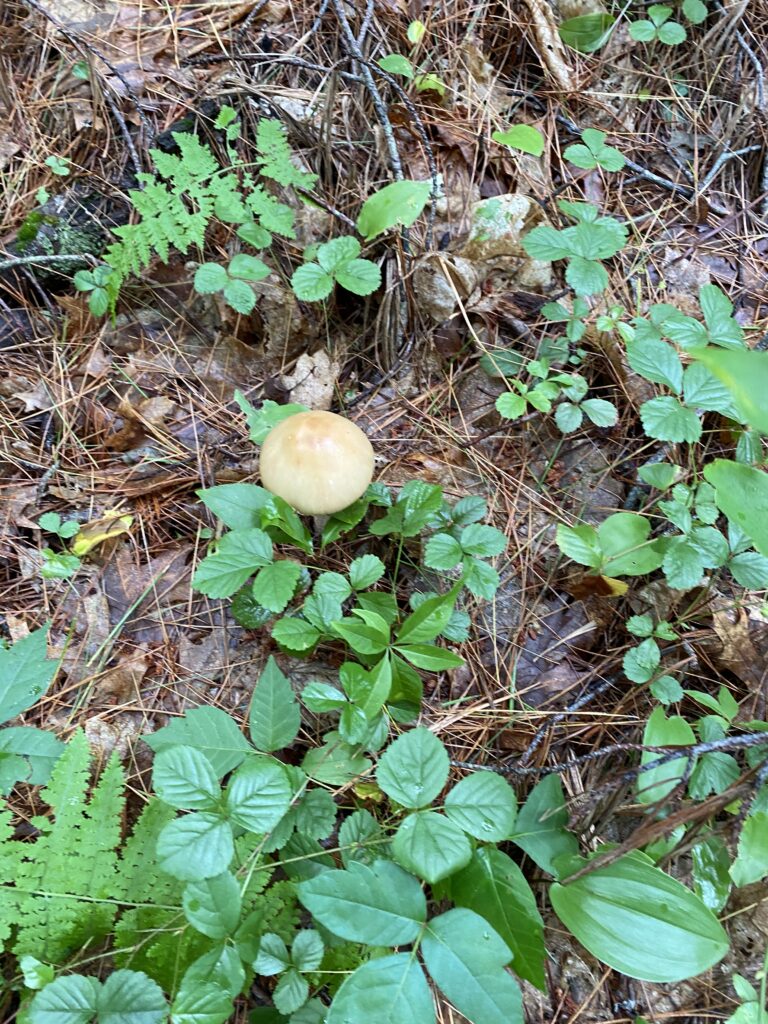
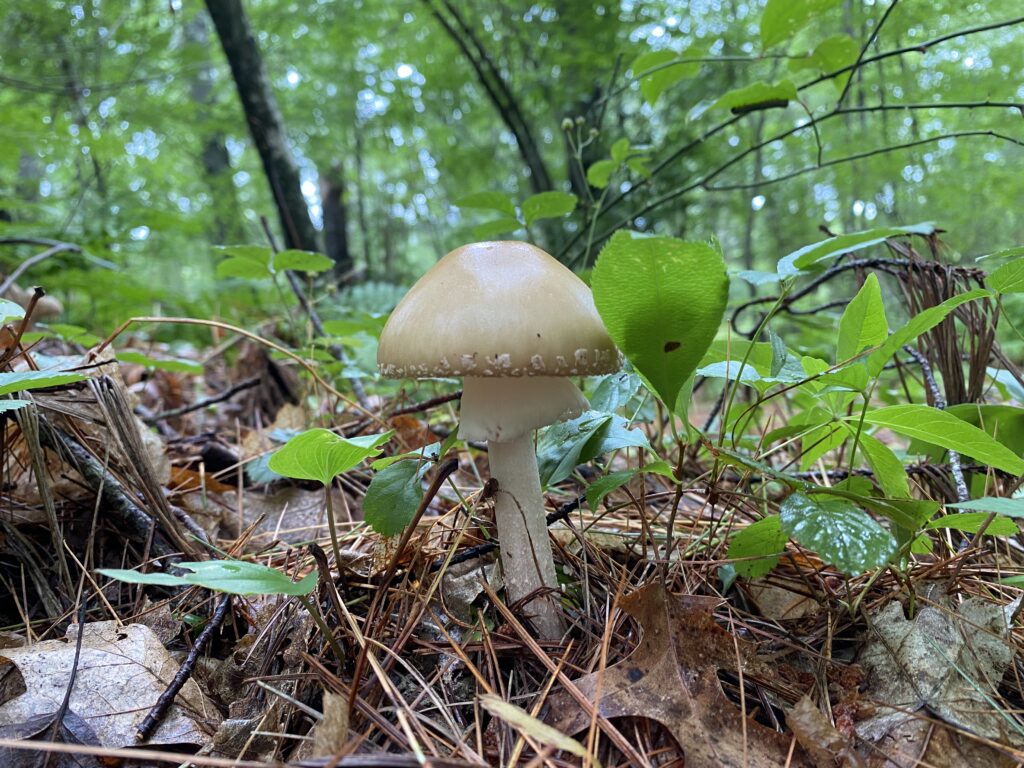
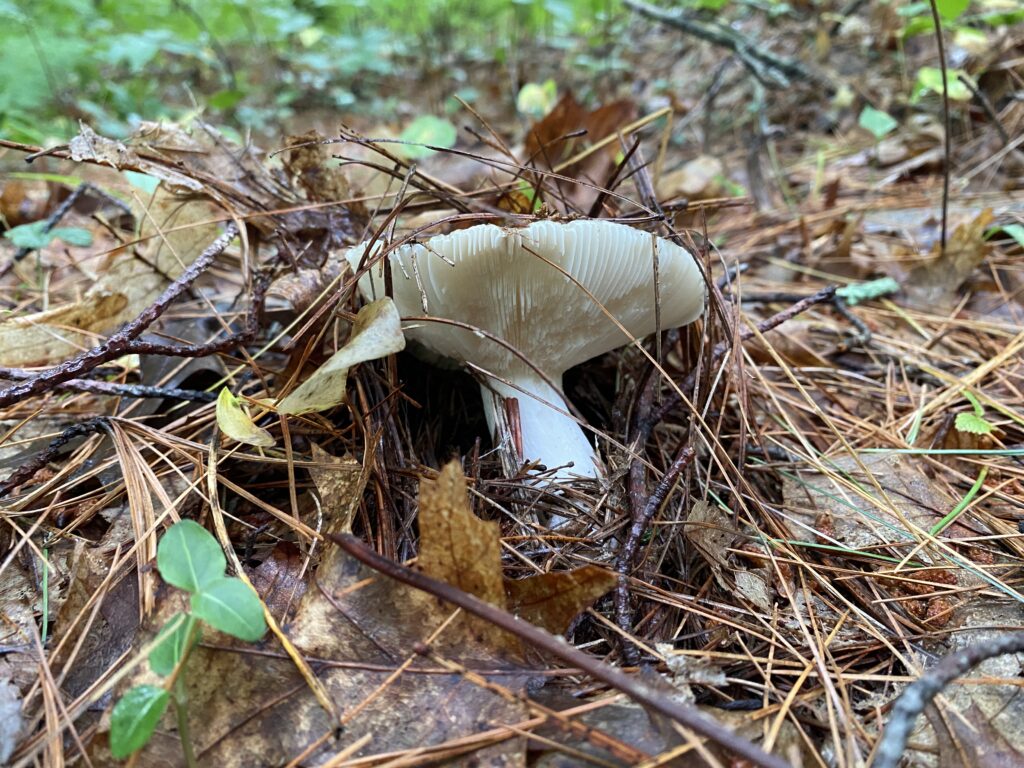
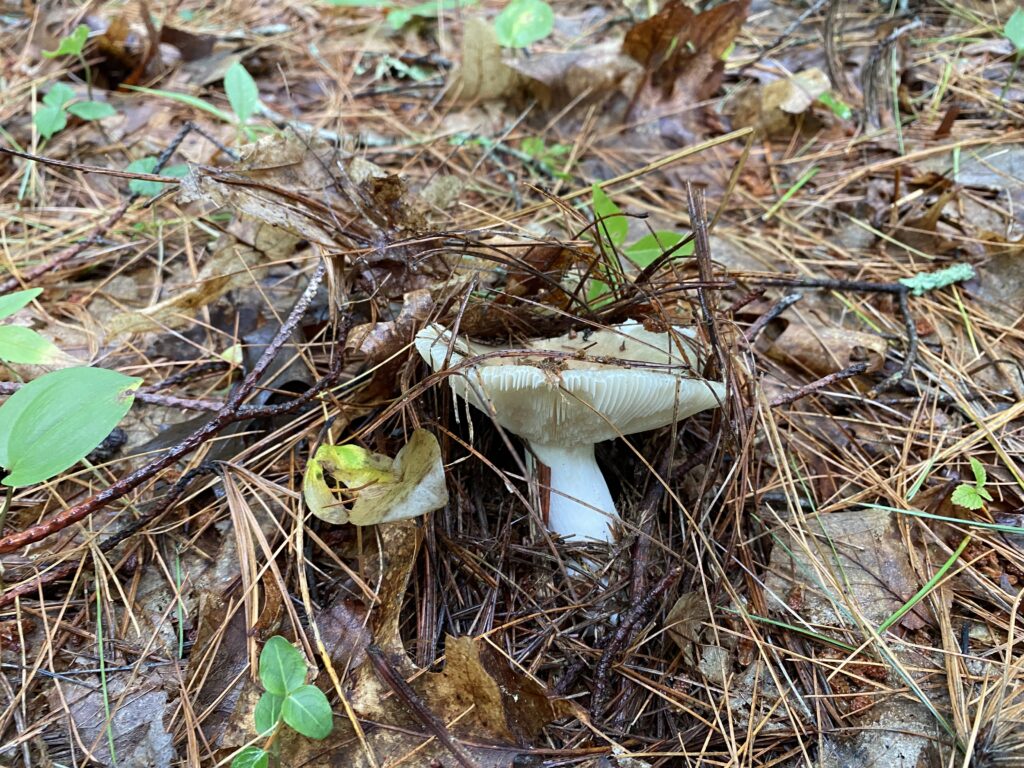
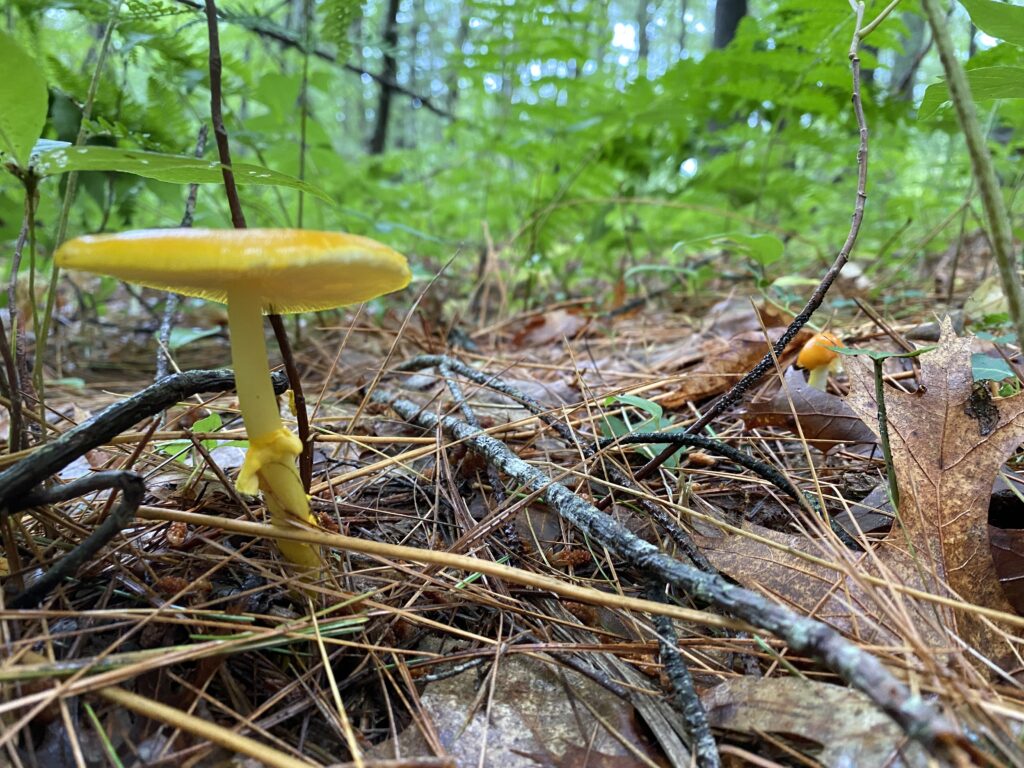
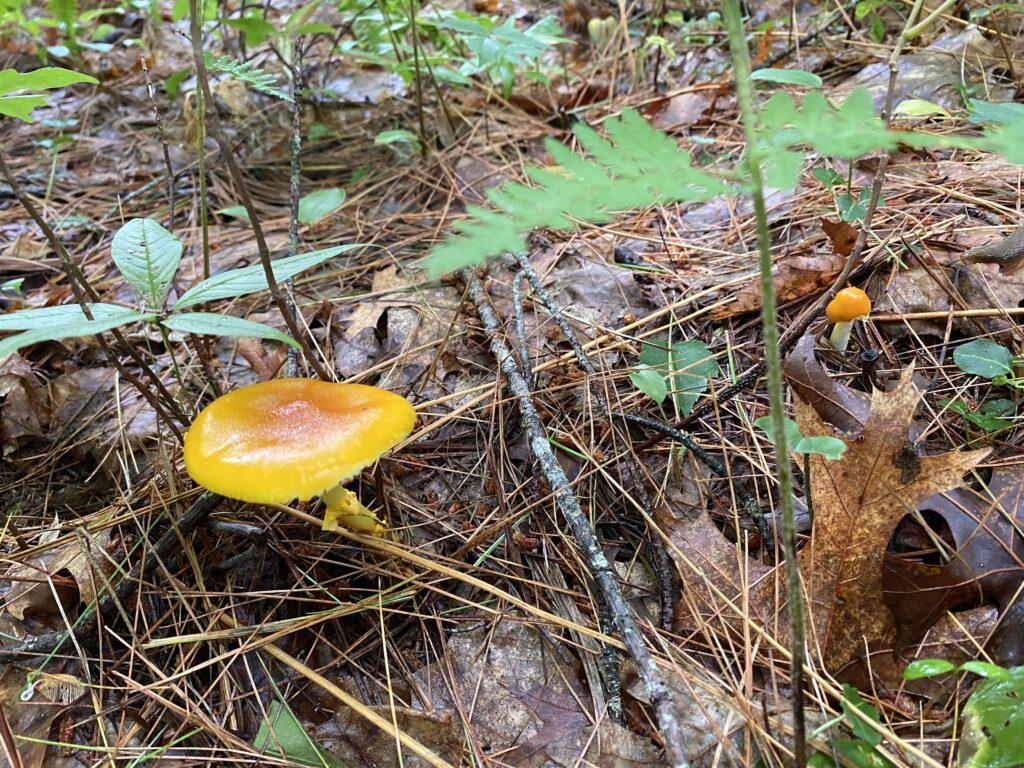
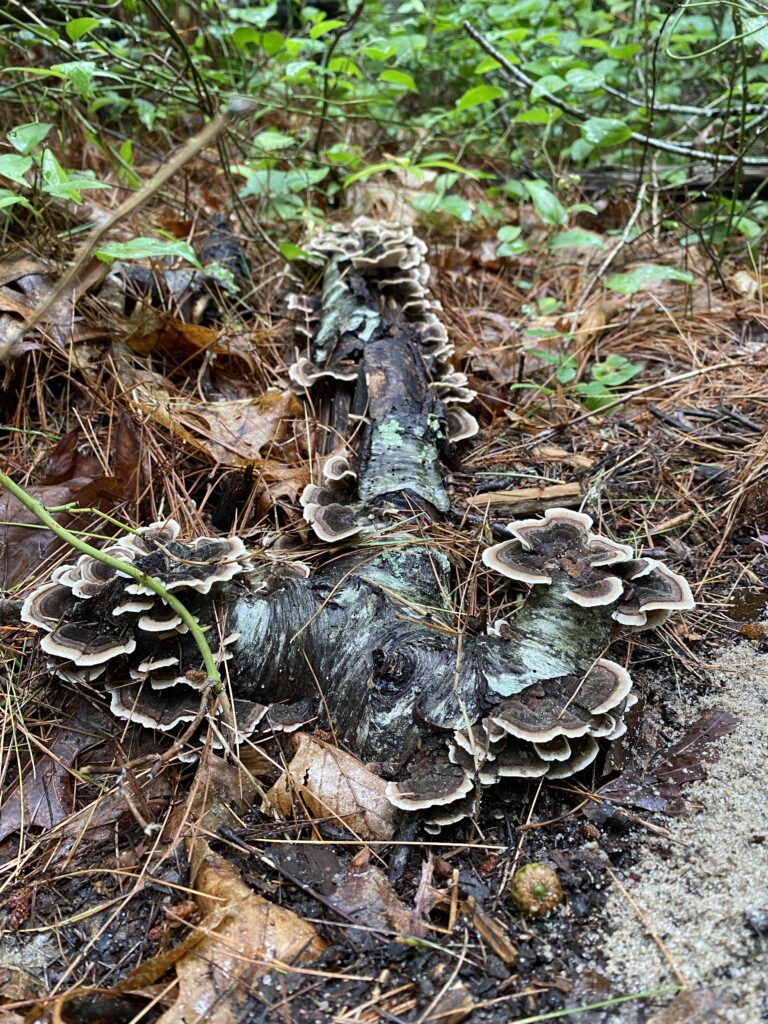
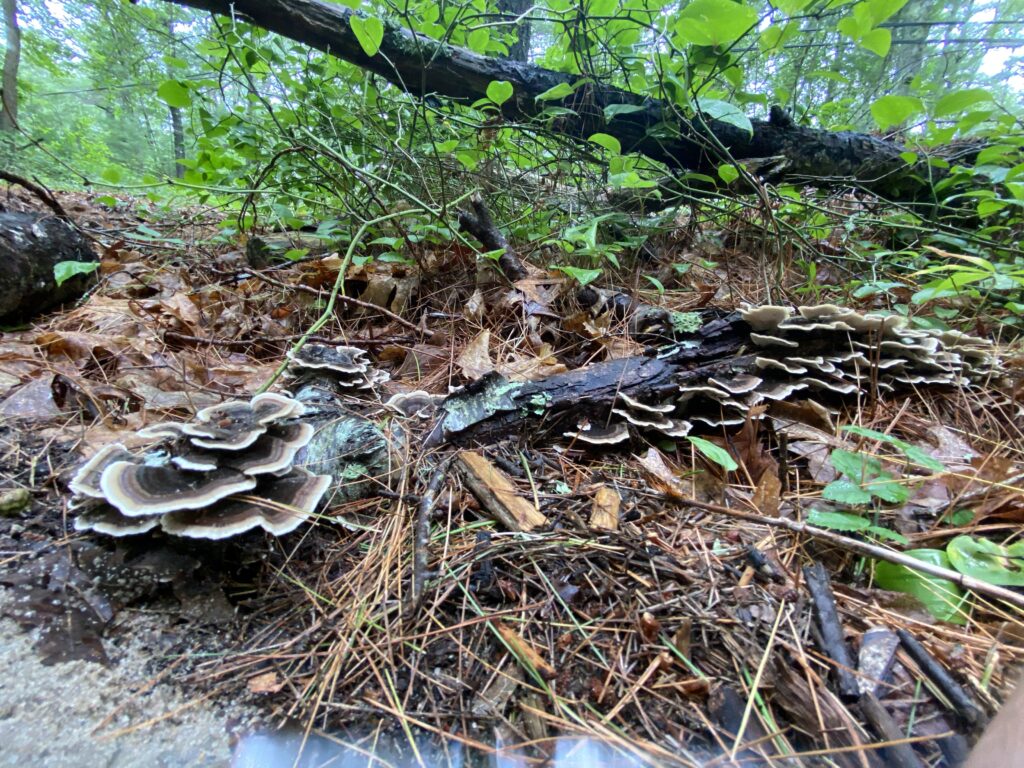
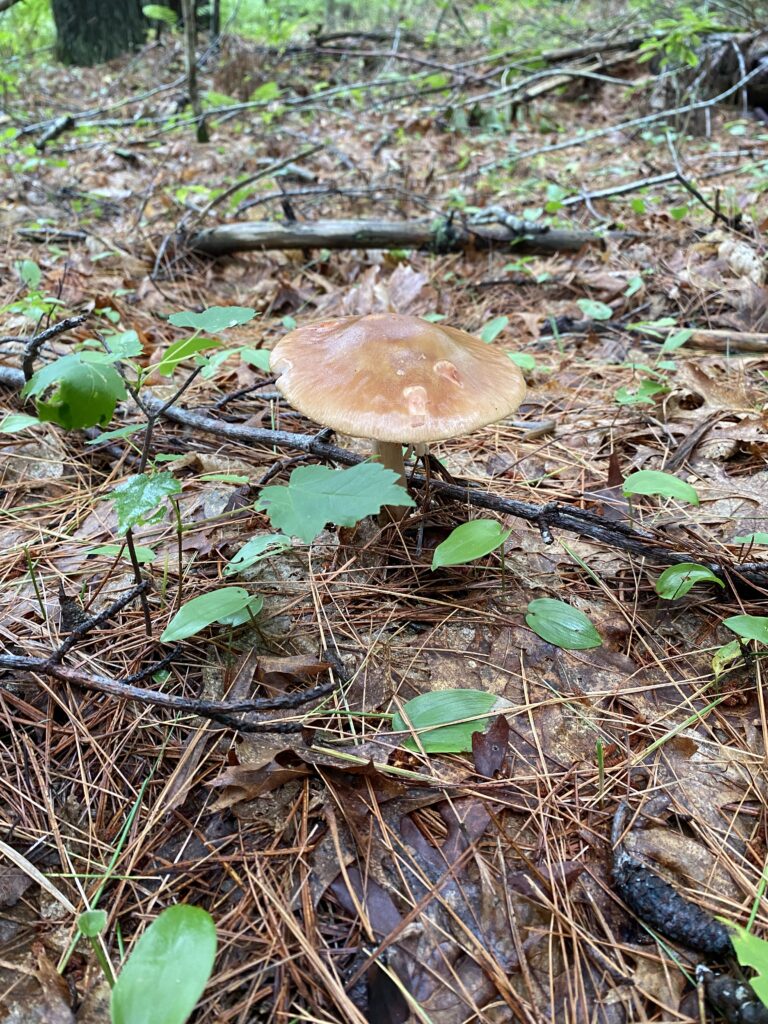
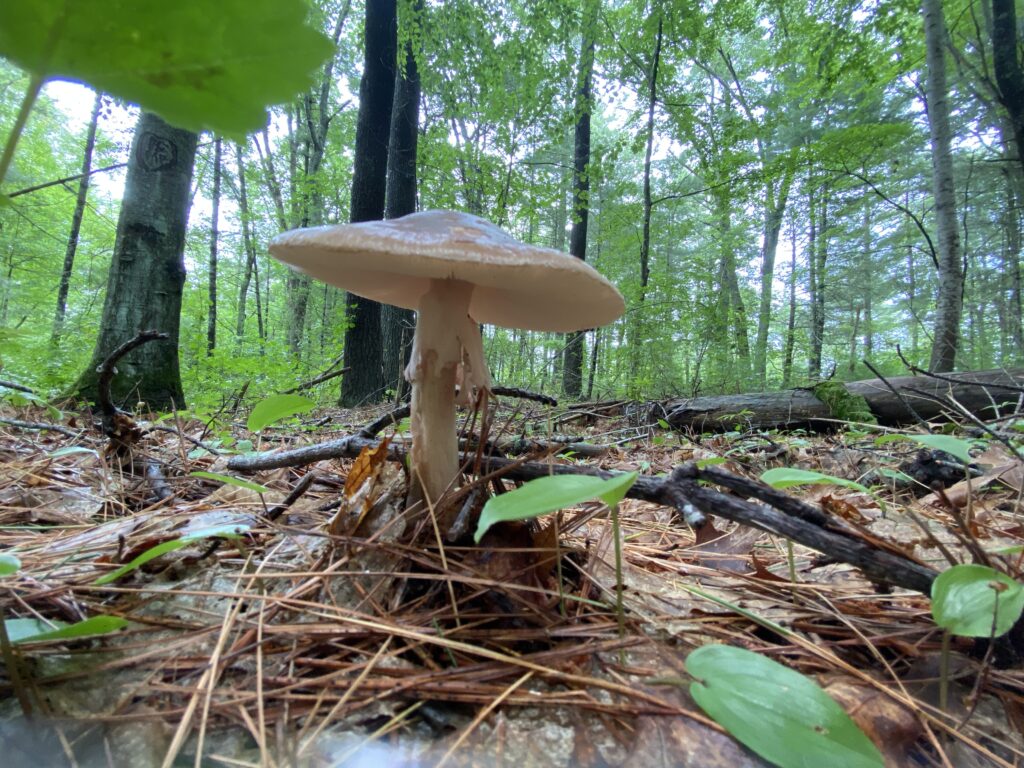
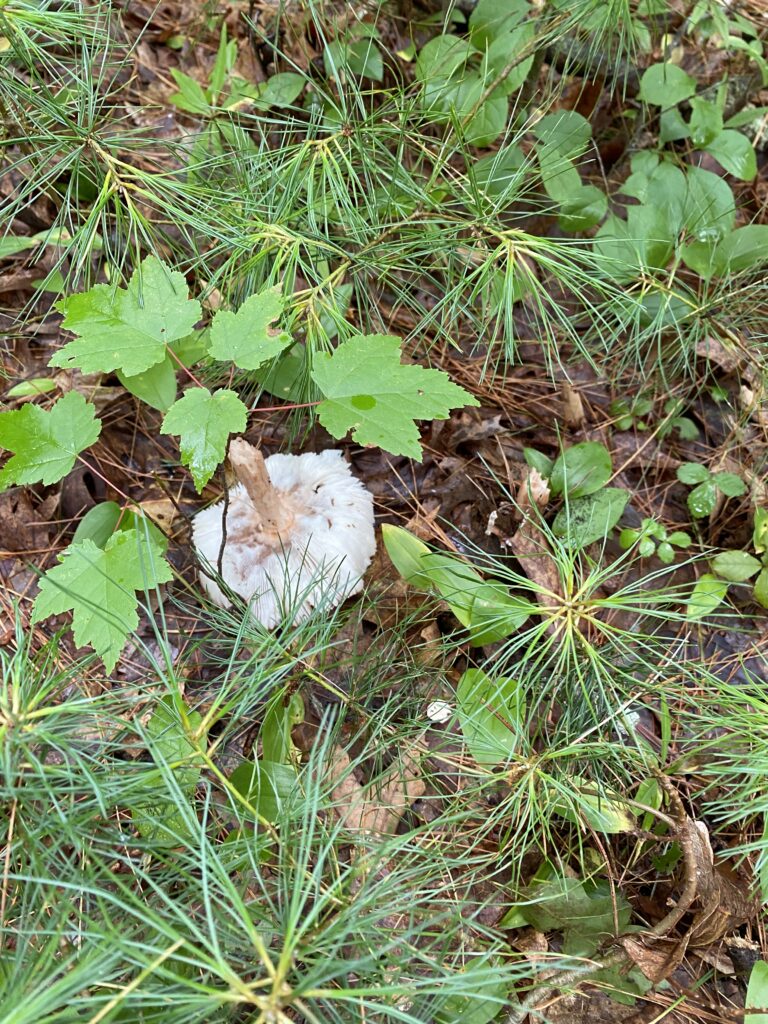
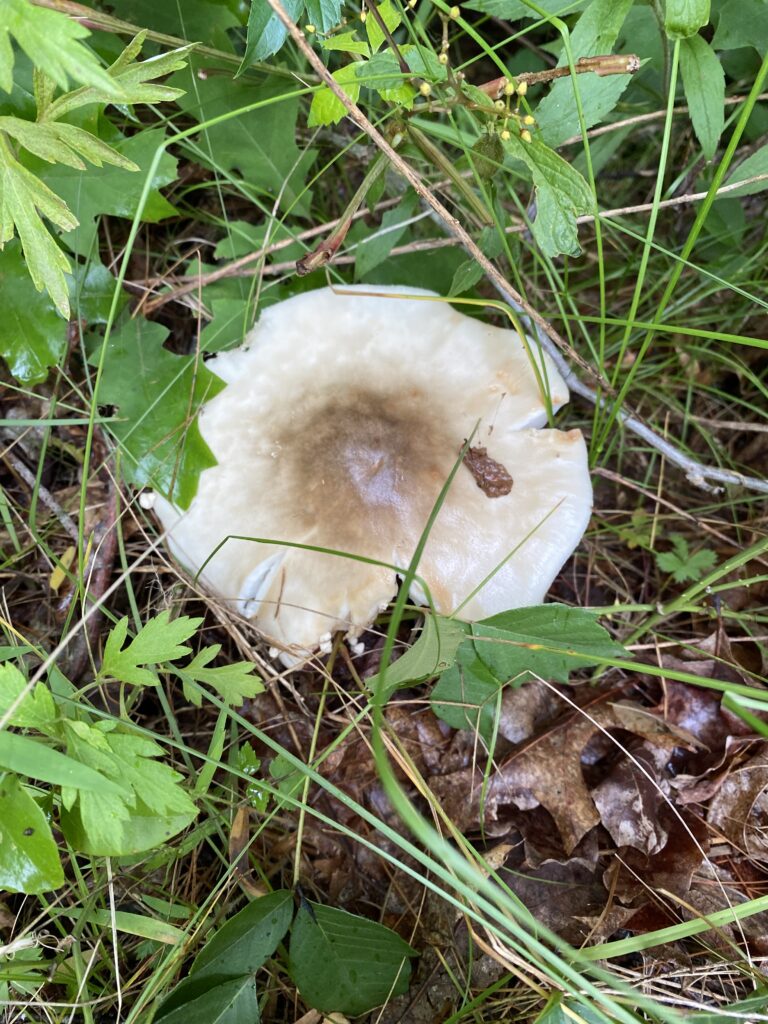
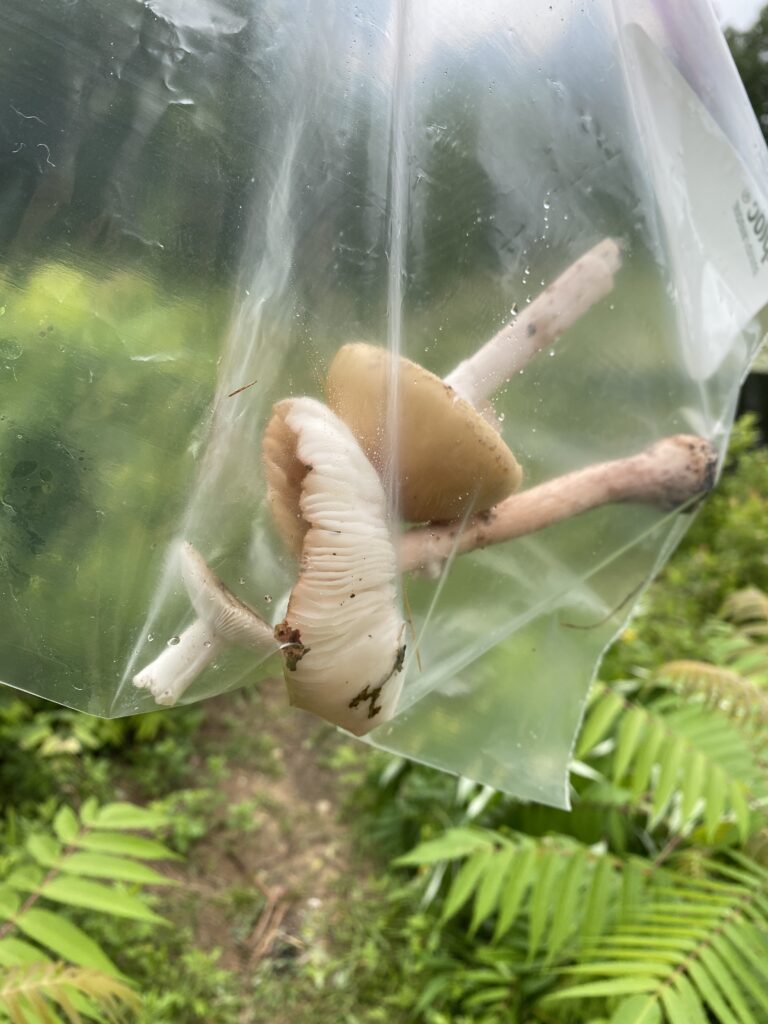
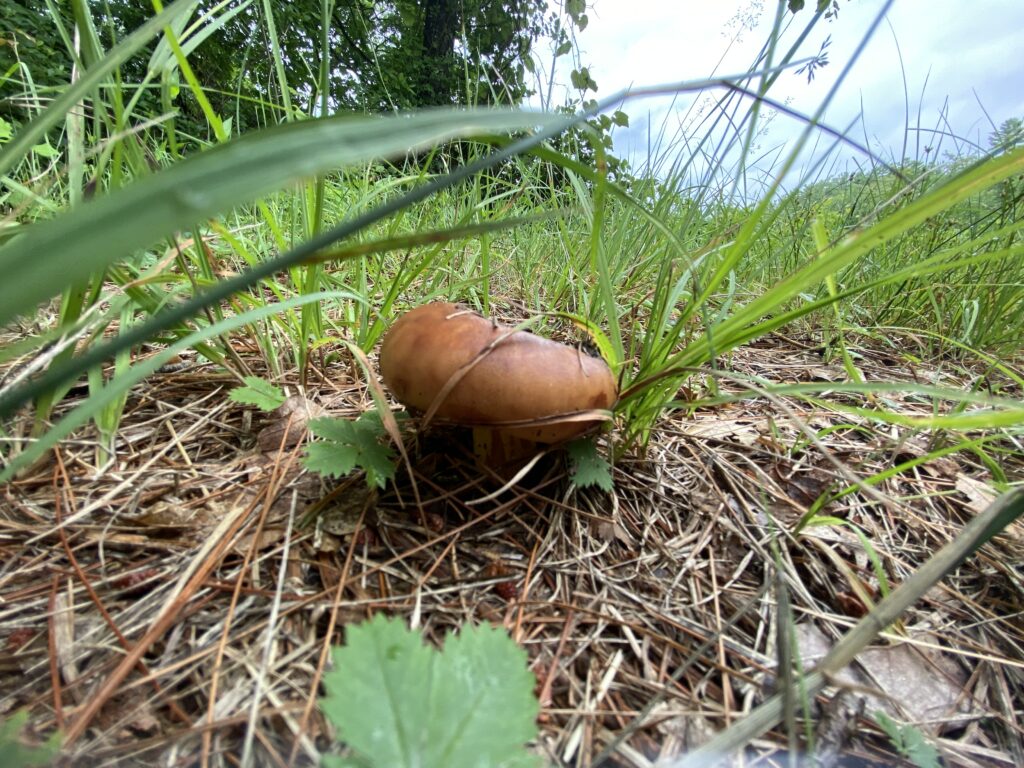
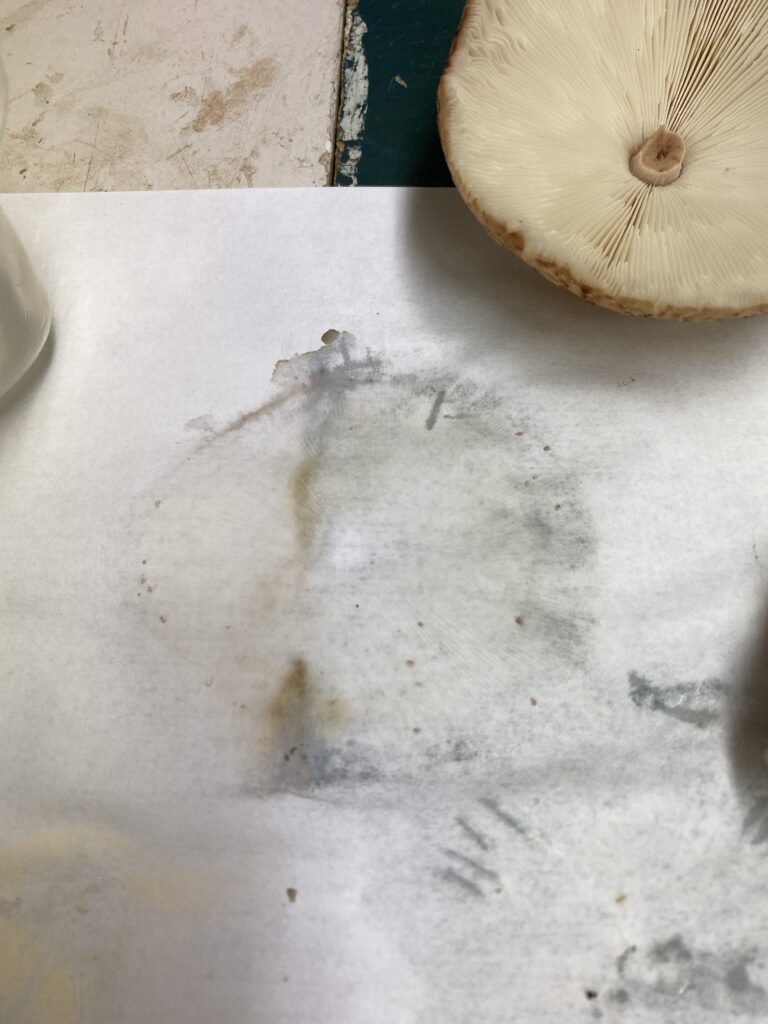
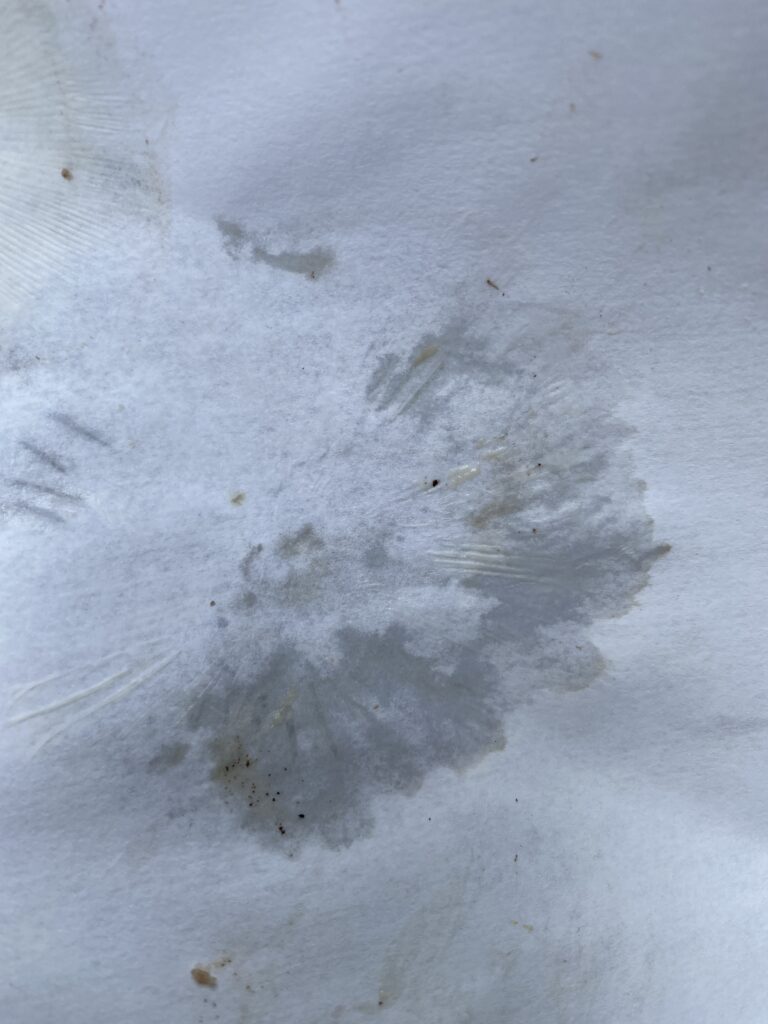
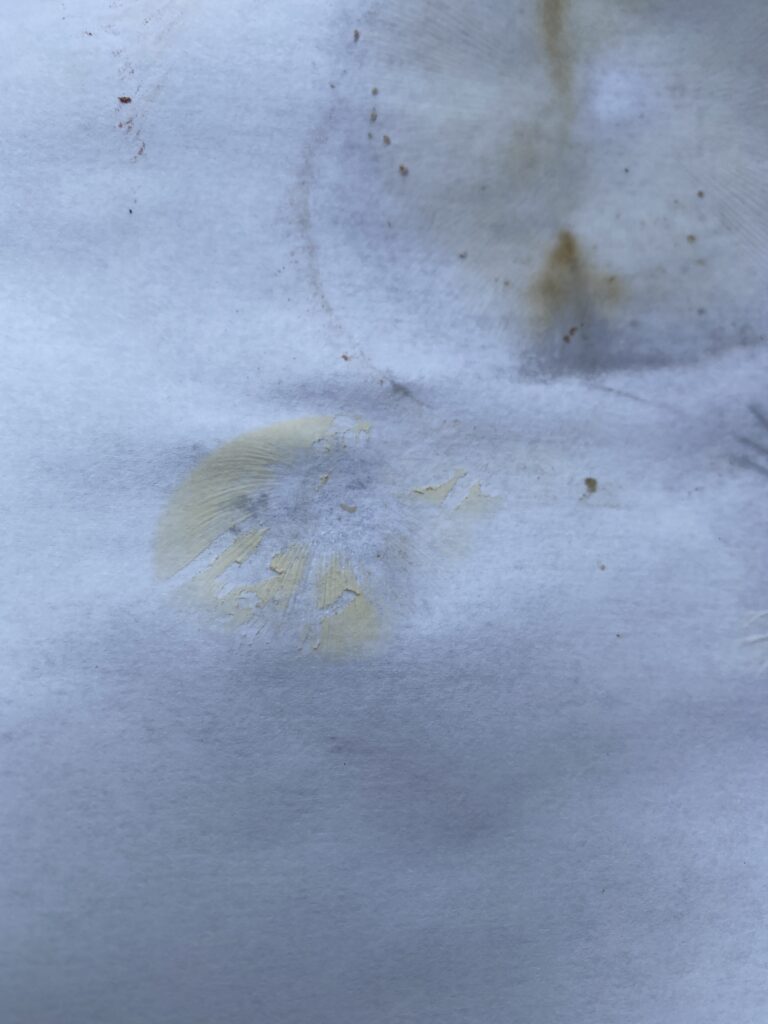
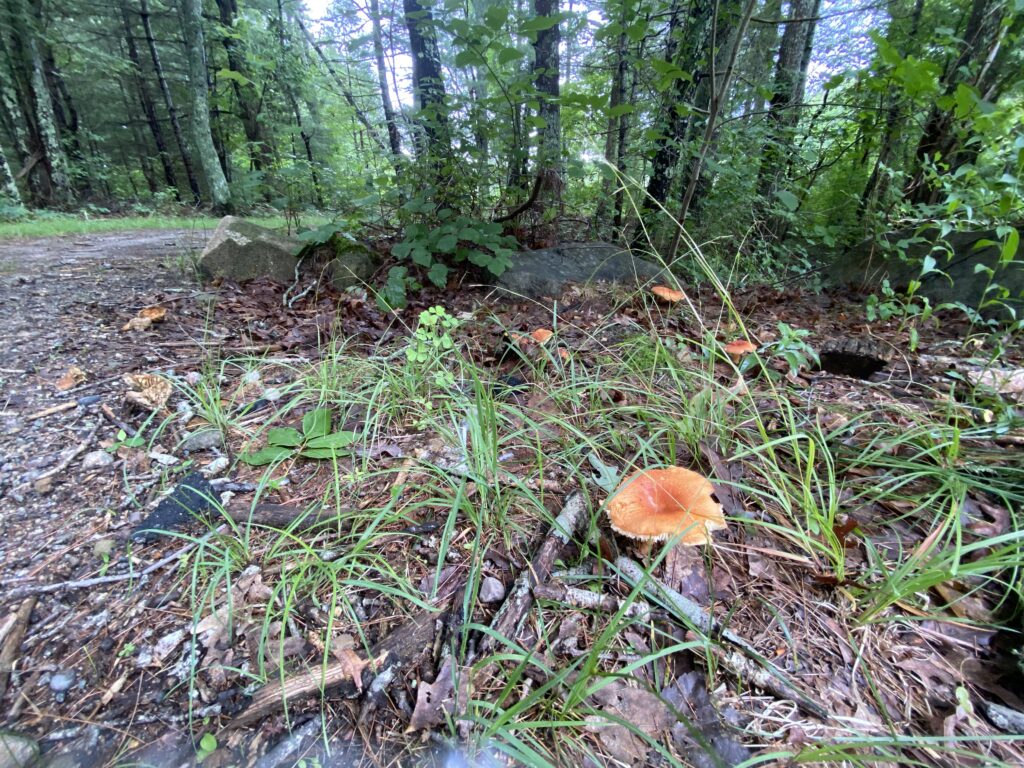
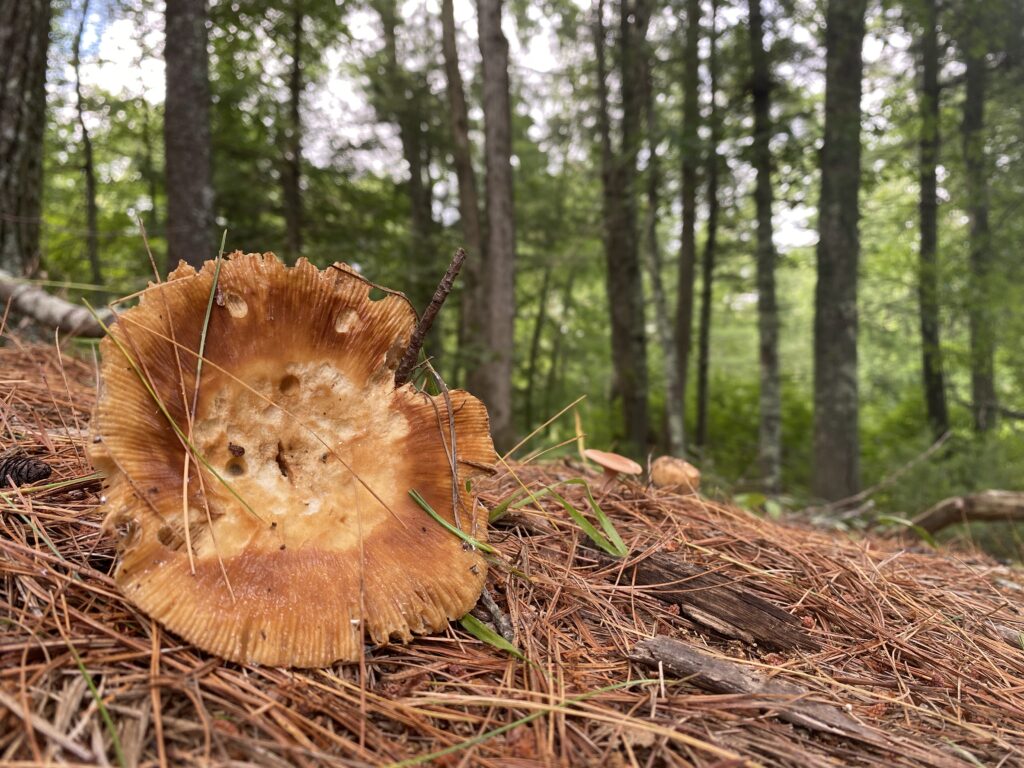
This week for two days in a row I walked through the location of my wonder blog, which is located down the road from my house next to a reservoir. The first day of my walk I attempted to search for mushrooms to take pictures of with my friends, as it has rained the past few days. On this day I was unable to take as many pictures as I wished whether it was because I was distracted by conversation with my friends or a drive to do something as a group I don’t know. On the next day I returned alone after a morning and night rain to take pictures of every mushroom I could find. The sky was dark with a very slight drizzle coming down, it was 68 degrees out according to the thermometer in my car, and the ground was very damp from the tropical storm that passed through a few days ago and the rain I was currently experiencing. At first I was walking and found the large mushrooms right off of the path which gave me a decent amount of photos but it wasn’t enough, I felt like after all the rain in the past week the wetlands back here would be producing vast amounts of mushrooms. It took me a second to slow down and stare at the woods beyond the path to find all the mushrooms hidden under leaves, on downed trees, or to small to see by a glance. After taking a picture or two of every mushroom I could find I took a few home to spore print them. I have no experience identifying mushrooms but taking a proper spore print Is required if I want to get to the point where I can forage for my own food. I would some day like to look around me and know what is growing out of the ground and this is the first step in understanding the steps to that process. Being able to look at different mushrooms and distinguish their notable features from cap patterns, vails, excretions, spore prints, textures, underbelly structures, and ground conditions will be very important in learning to forage safely. Below is a gallery of all of the mushrooms I could find on July 12th, 2021. 

Photo Gallery
Conclusion

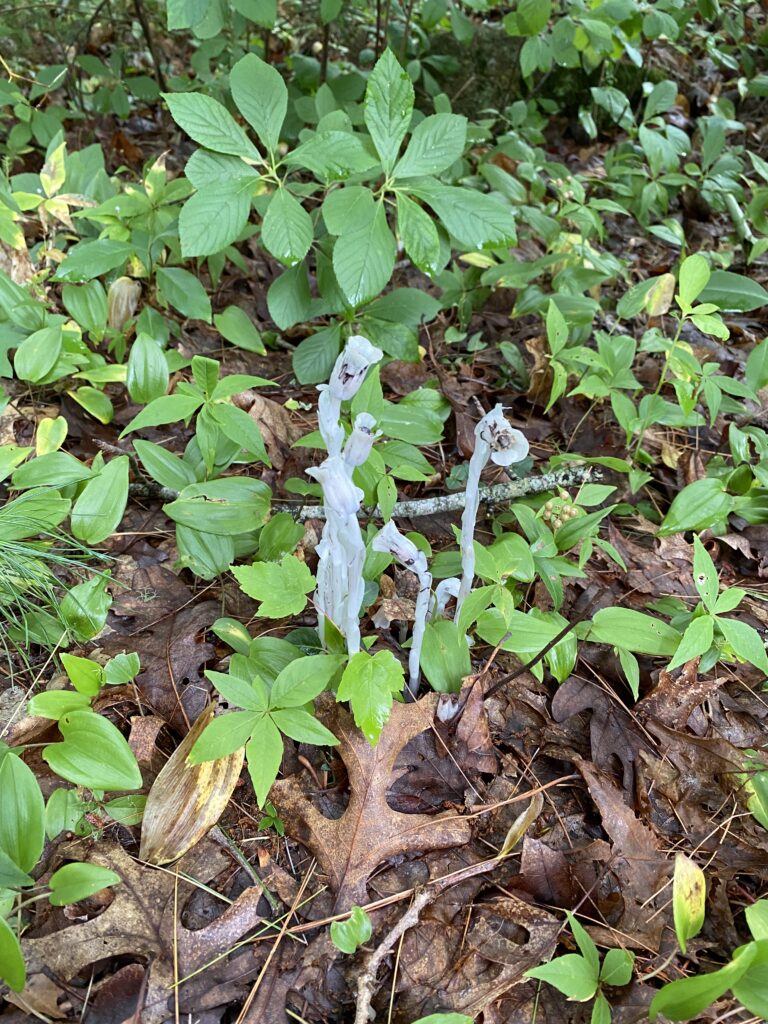
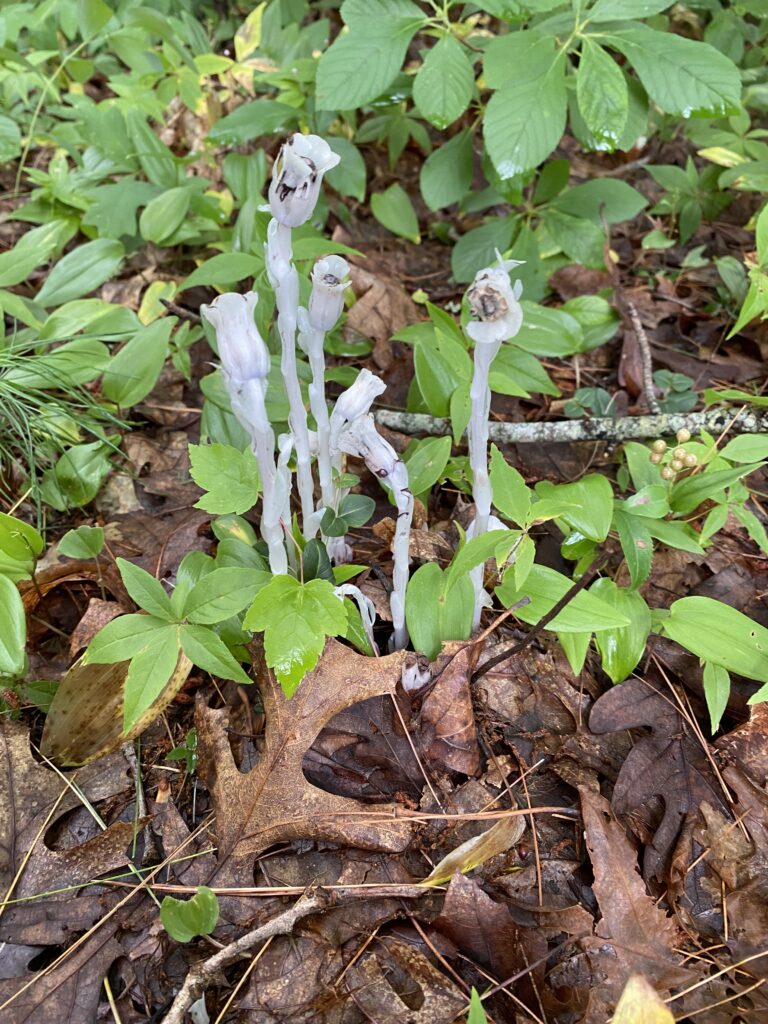
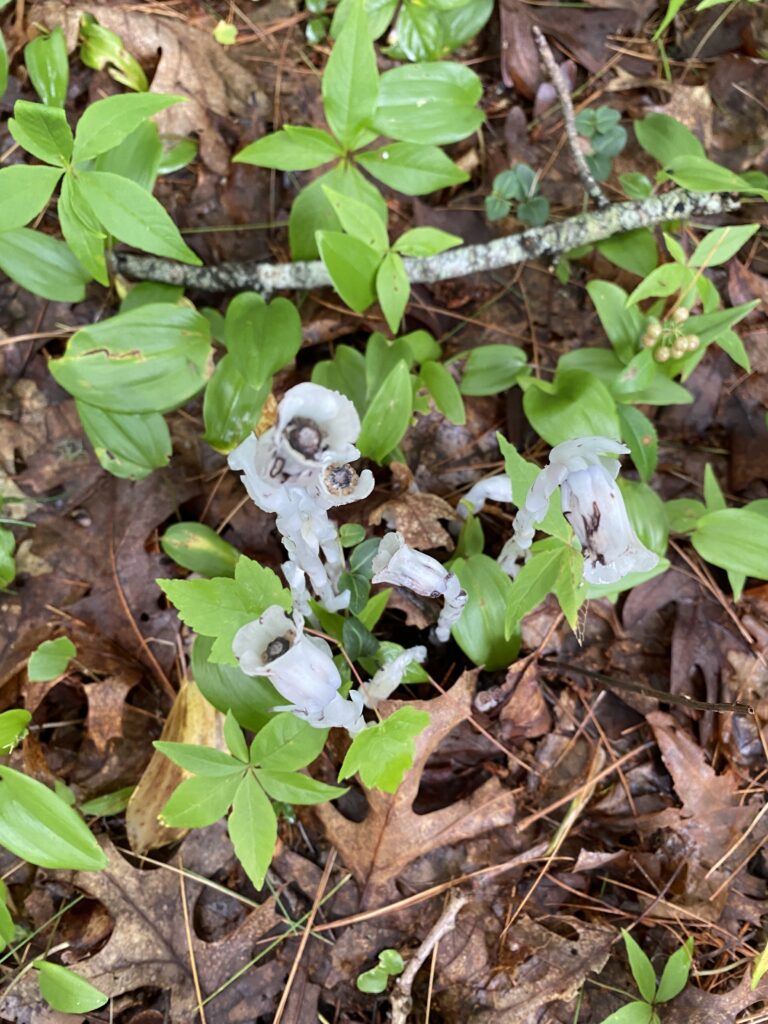
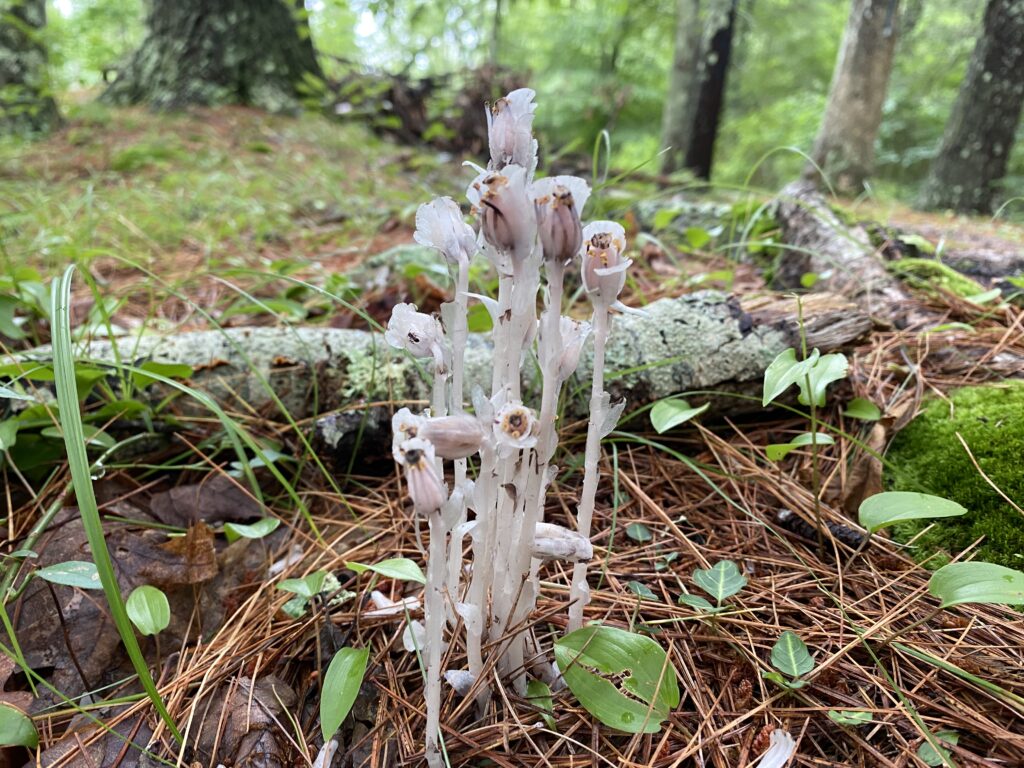
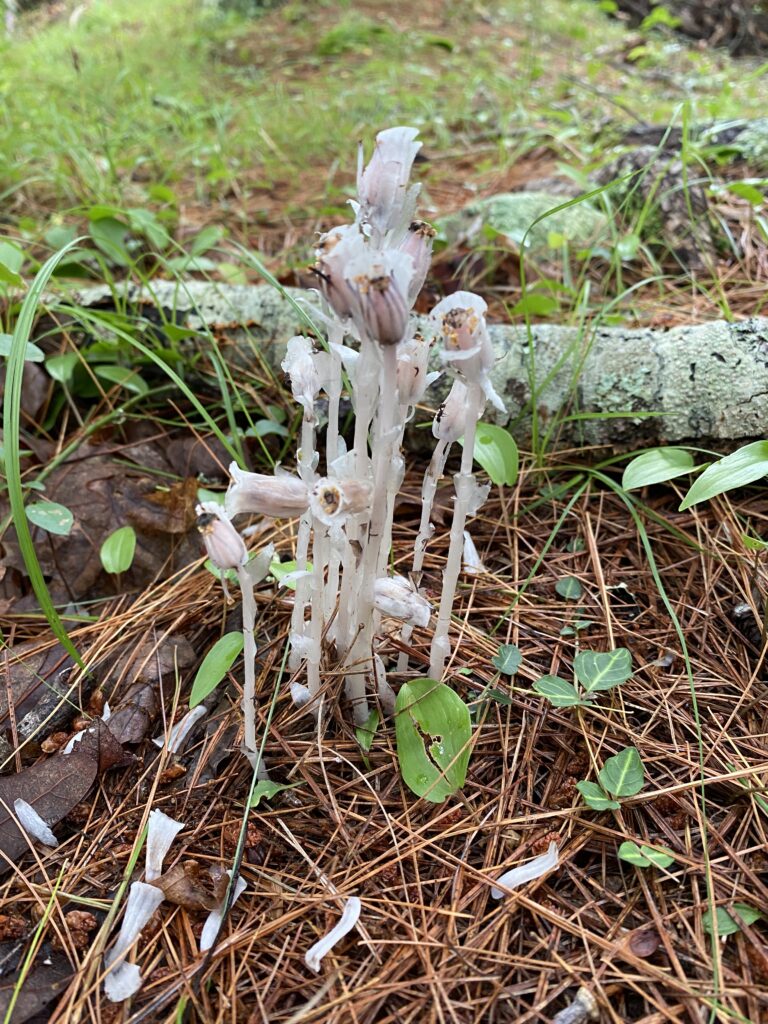
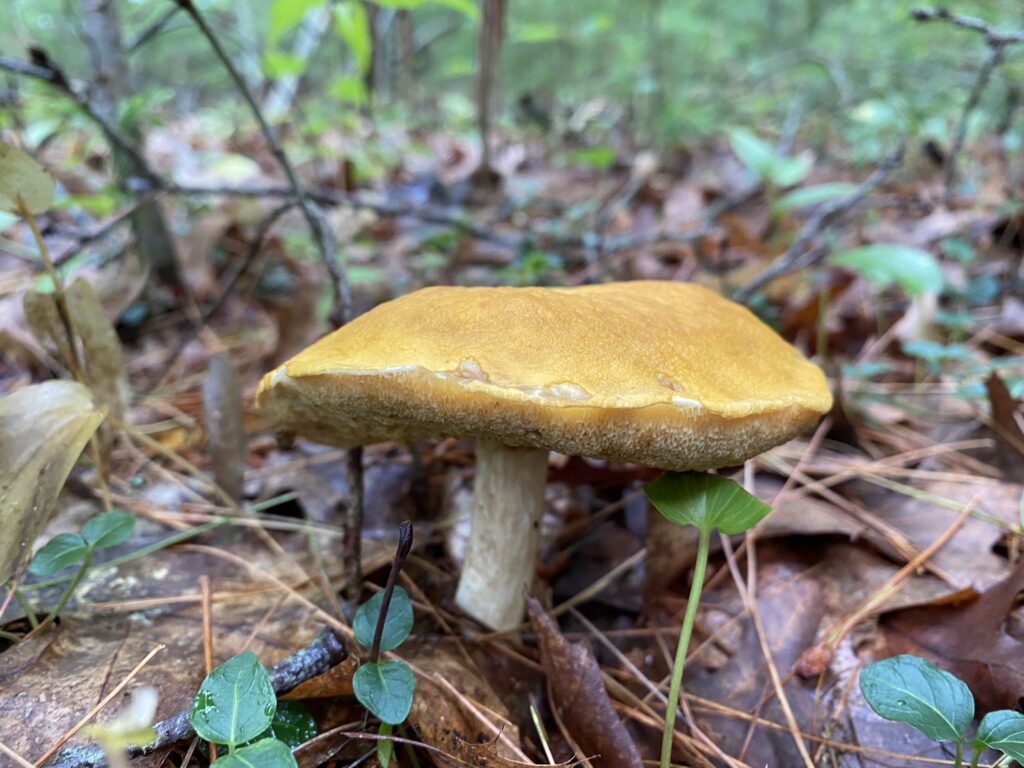
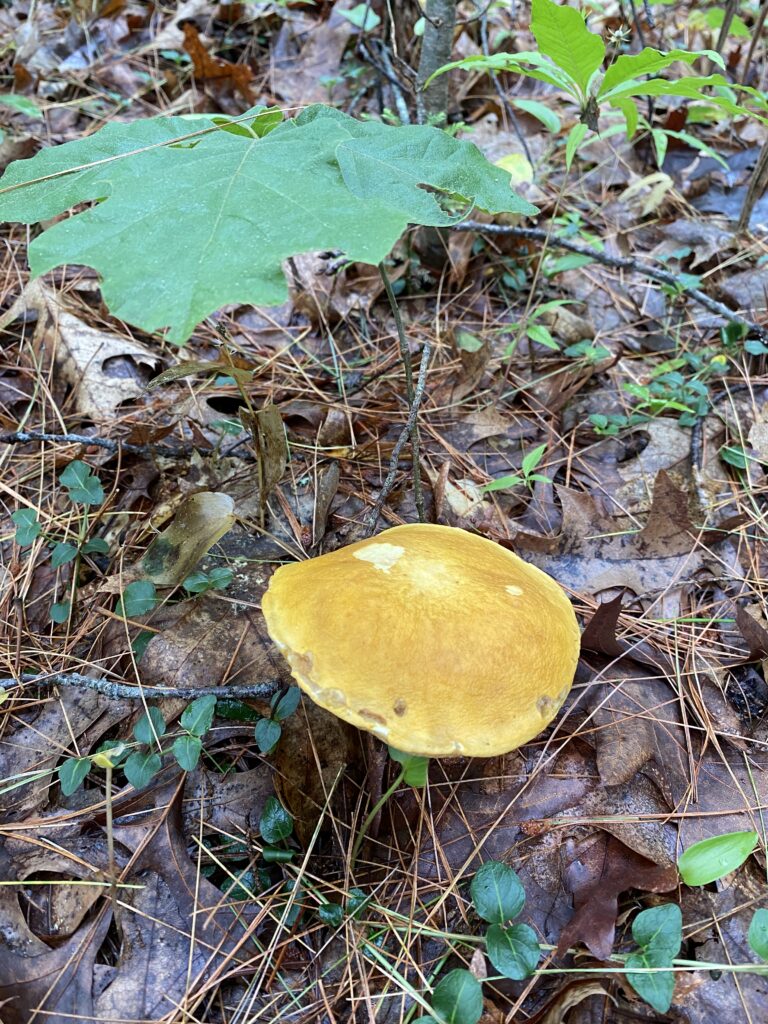
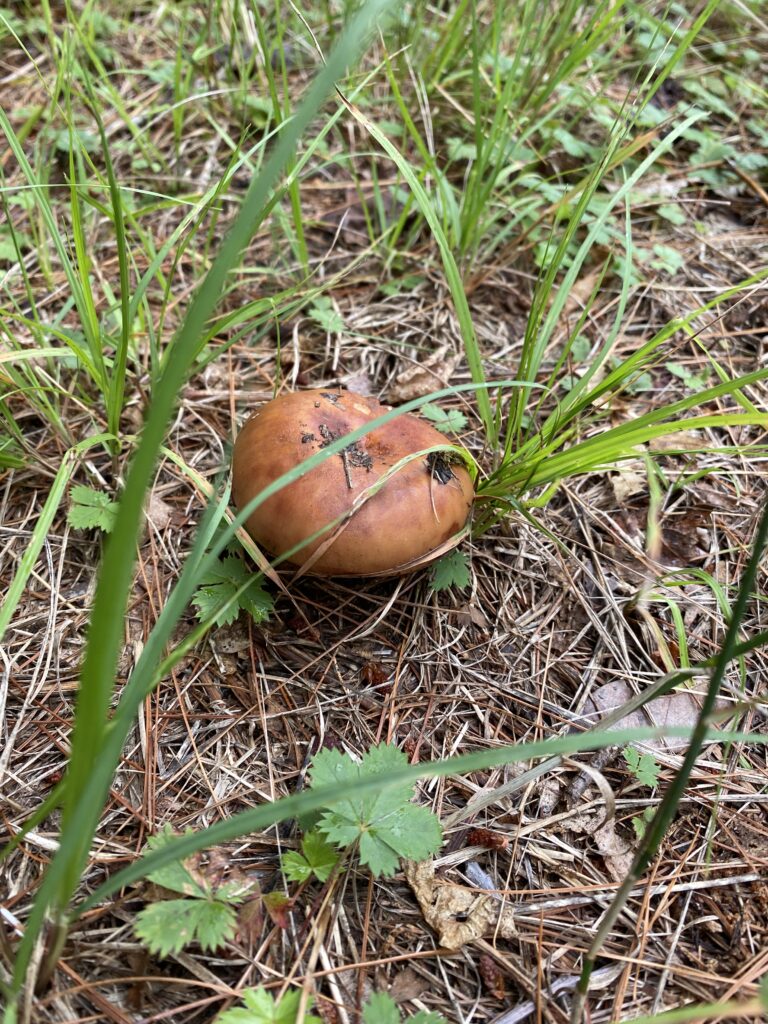
Two of the mushrooms I attempted to spore print were successful and one was not, I believe I picked it after it had already released it’s spores as it was in the process of decaying when I picked it off the ground. I also took photos of the small white flowers I saw in this location believing that they might be a mushroom due to their color or lack of it, what I found is commonly known as Indian Pipe or Ghost flower and is a parasitic species of flower that takes its carbon from mycelium in the soil below. I was able to identify a few of the mushrooms I found, mostly because they are quite distinct. The majority of the mushrooms I had a hard time even starting to identify as I couldn’t find examples in iNaturalist or in Massachusetts mushroom guides. The first I did identify was the small orange blobs on a log which are named Dacrymyces palmatus or commonly as Orange Jelly. Another mushroom I saw was Suillus lactifluu a bolete mushroom that I have seen here before in patches but today there was only the one, I knew as it looked the same, was under pine trees, and seams to be the only pored mushroom that grows here as far as I’ve seen. The tiny mushrooms I seamed to find all over the forest are what I believe to be Marasmius capillaris as they appear after a summer rain and grow out of leafs on the forest floor, instead of downed hard woods which their look alike Marasmius rotula or Pinwheel mushroom grows out of. There were many patches of these and they are quite hard to see, it took me a few minutes before finding each patch of them. The other mushroom I tried identified was turkey tail a common shelf like mushroom that grows on downed hardwoods like the shelf like fungus I found. I found out after further research that it is false turkey tail or Stereum ostrea which is generally seen growing with algea like the mushrooms I found. One of my favorite pictures I took was of the broken off stem of the mushroom that could be seen in the ground, knowing that in a matter of days something could grow such a thick stock only for it to be gone in just as long as it took to appear interest me very much. This experience was very interesting as I had to both look at the mushrooms in an artistic way to get satisfying photos of them while also trying to expand my library of reference for the future to learn how to distinguish mushrooms to the point in which I can comfortably eat them without any fear of getting sick. 

Citations

Kuo, Michael. Marasmius capillaris (MushroomExpert.Com), January 2013.                                                                         https://www.mushroomexpert.com/marasmius_capillaris.html.

Kuo, Michael. Stereum ostrea (MushroomExpert.Com), November 2008.                                                                               https://www.mushroomexpert.com/stereum_ostrea.html.

Kuo, Michael. Trametes versicolor: The Turkey Tail (MushroomExpert.Com), November 2017.                                         https://www.mushroomexpert.com/trametes_versicolor.html.

Williamson, Gerald C. “US Wildflower – Indian Pipe, Ghost Flower, Ghost Plant – Monotropa Uniflora.”                               USWildflowers.com. Accessed July 13, 2021. https://uswildflowers.com/detail.php?                                                 SName=Monotropa+uniflora.
Blog #3, Duxbury, MA, 7/5/2021

Introduction

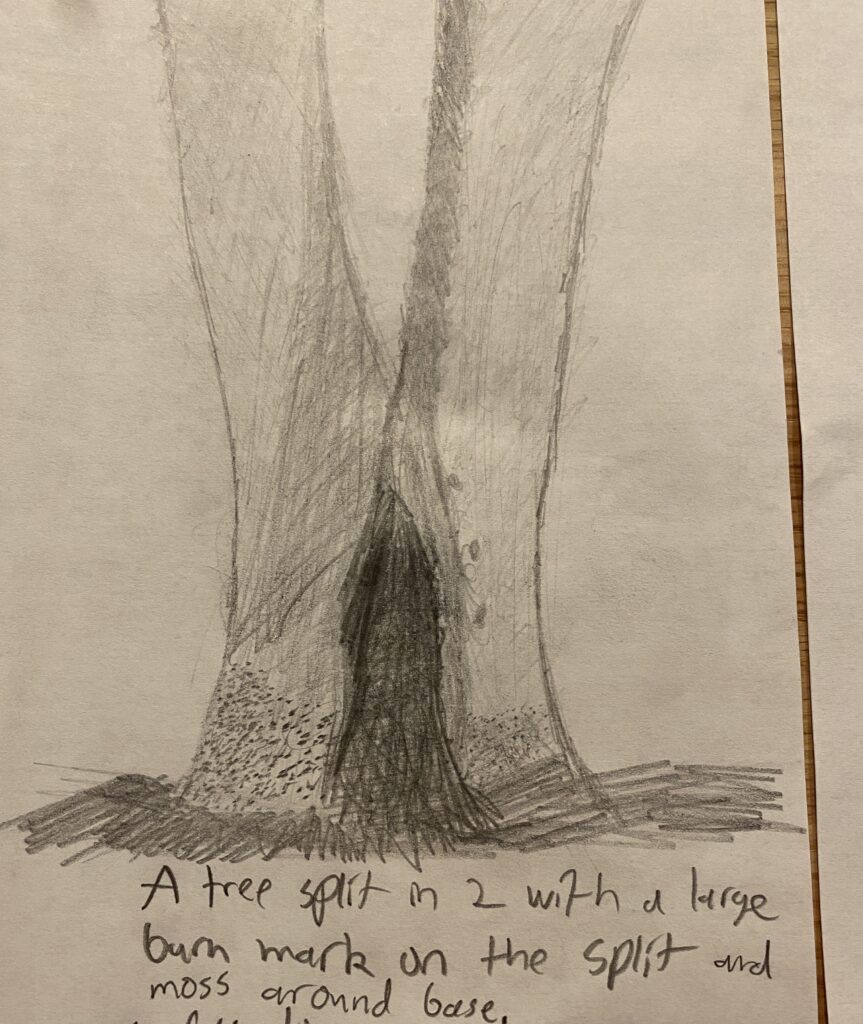
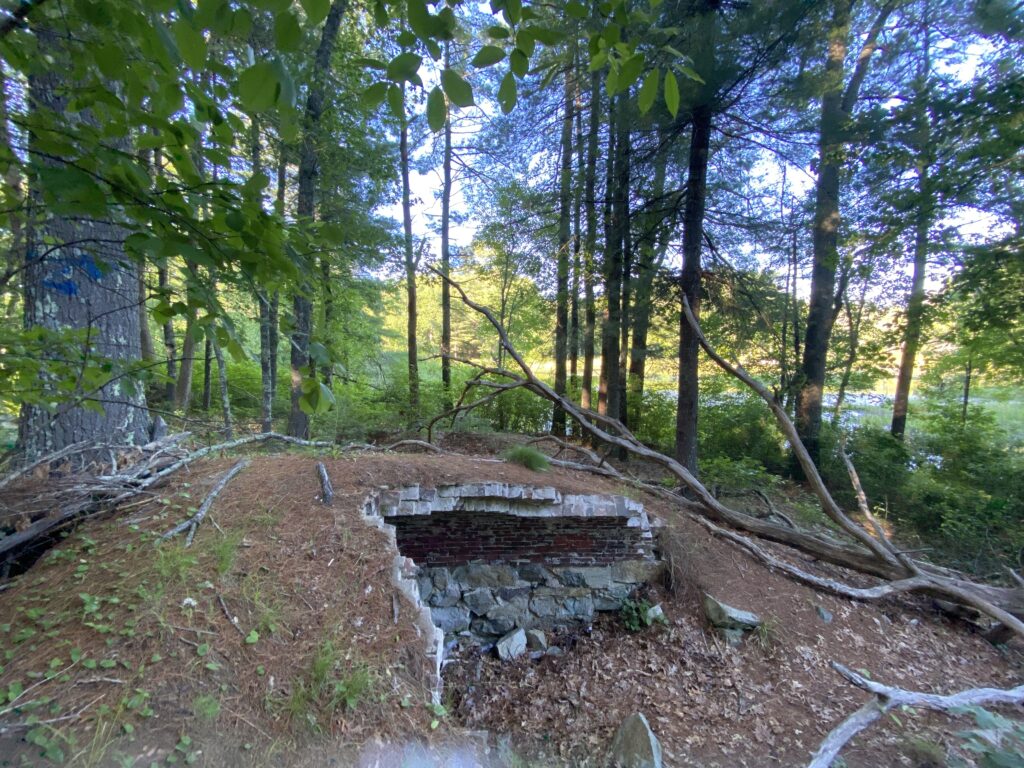
July 5th, 2021, at 6:00 a blue sky with dense gray clouds cover the sky, it as cool 75 degrees with little to no wind. The foliage even denser than the last time as it usually is, new purple flowers surround the outskirts of the reservoir, and new mushrooms seem to be poking out of the dead trees on the side of the trail. The water calm with almost no noticeable flow toward the dam. Small birds chirp and fly around the top of the pond sweeping low almost hitting the water. The clearing in the back of the reservoir harder to see into then ever as the over growth in the path continue to spread. On the side of the brick arch in the clearing is a large crater that has small trees springing up in it, this appears like the site of a fell tree, but it may not be as there appears to be stacked rock in one of the crevices open to the bottom of the crater. Whether these rocks are exposed shale rocks peaking out due to the loss of roots or if they are more evidence of human buildings once being here intrigues me. The crater is surrounded by large rocks poking out and there is no apparent mound from a tree depositing the earth it brought up in its fall, but there is an indent in the ground that goes into the forest from the bottom of the crater that is about 6 feet wide and could be from the trunk of a large tree. Many of the trees around here have fallen as the water rises and causes the trees to slant into the reservoir, just beyond this crater two pines slant at a 45-degree angle over the reservoir which has risen to right next to their roots. Deeper in the clearing two pine trees 50 feet apart are bowed out of the ground at their base in the same direction at about the same angle the ground. One of them seeming to be at a higher elevation, but that might not be so as there is a mound around the other. The reason why they both grew out the ground like this eludes me, there is a rock bed behind in one that could make it hard to grow straight down and no apparent rock bed in the ground under the other one. Why two pine trees of seemingly the same age would both grow bowed in the same direction at about the same angle intrigues me as there could be a growing condition in this line that would cause for both trees to grow in such a way. There are a few other trees here that grow out of the ground in an arc that follows the same direction as the other arced trees arcing to the northwest it appears. The split tree with the burn mark appears to be wet as if sap is leaking out of the intersection of the two trunks, this may not be a burn mark but just sap flowing from the tree giving it extremely dark burnt appearance, the sap seems to be more prevalent on one side with little black and much moss growing on the other side of the tree. What is going on with this tree is something that I’ve been wondering and not gotten around to researching.

The large orange mushrooms that were here last week have disappeared and new small red mushrooms have arisen in the place the old stocks base’s still stand, with their destroyed bodies on the ground next to them, this could have been due to people knocking them over or maybe even animals. Other than the small red mushroom the only one that remains in a lone pure white mushroom growing up in the center of the clearing. Numerous dark red gilled mushrooms with a convex cap have popped up at the head of the trail what they are eludes me as there are a few small brown bolete appearing mushrooms scattered about that are very different looking making me think they are not also boletes. There is also a large dark brown peaked mushroom, that fades to white on the rest with many veils running down it’s stock and thin gills hidden under the cap, sitting alone in the woods off from the head of the trail that caught my eye as I left.

Natural History Mystery

This week I was very intrigued as to why there are trees growing out of the ground bowed only to grow straight up from then on, there are multiple trees like this all bowed in the same general direction. The only similar evidence of trees growing crooked at the base and straight the rest of the way is the Crooked forested in Gryfino, Poland where there are is a forest of about 400 pine trees growing with a near 90 degree bend in the base and a relatively straight trunk. The explanation given for why the pines grow like this is said to most likely be that they were bent as saplings for curved timber to help with building boats or furniture, this would make sense in my location as the site of an old saw mill is a few hundred yards away but my trees are relatively young unlike the large bent pines in Poland. Another plausible explanation would be a snow fall when they were young that caused all of the trees to grow crooked out of the snow as pines being evergreens would still try to grow to sunlight in the winter. It is common for trees to grow crooked to find sunlight but in these trees they grow straight up to get sunlight except for the very bottom. The exact cause of this curvature in the tree is unknown to me but it is probably due to something causing them to bend not the tree wanting to grow that way.

The large split tree that I initially believed to be burnt is actually infected. An infection in trees called Wetwood or slime flux causes trees to leak a wet slimy liquid at cracks in bark or wounds. The origin of the wound that leaks this liquid is still foreign to me but the reason why it is so dark and appears burnt from a distance is the slime flux. This is not curable in trees and is a very widely known conditions in trees.  

Photos

An old mushroom with two new ones growing behind it. I chose this as it shows one mushroom decaying and starting to return into the ground as two more pop up behind it.
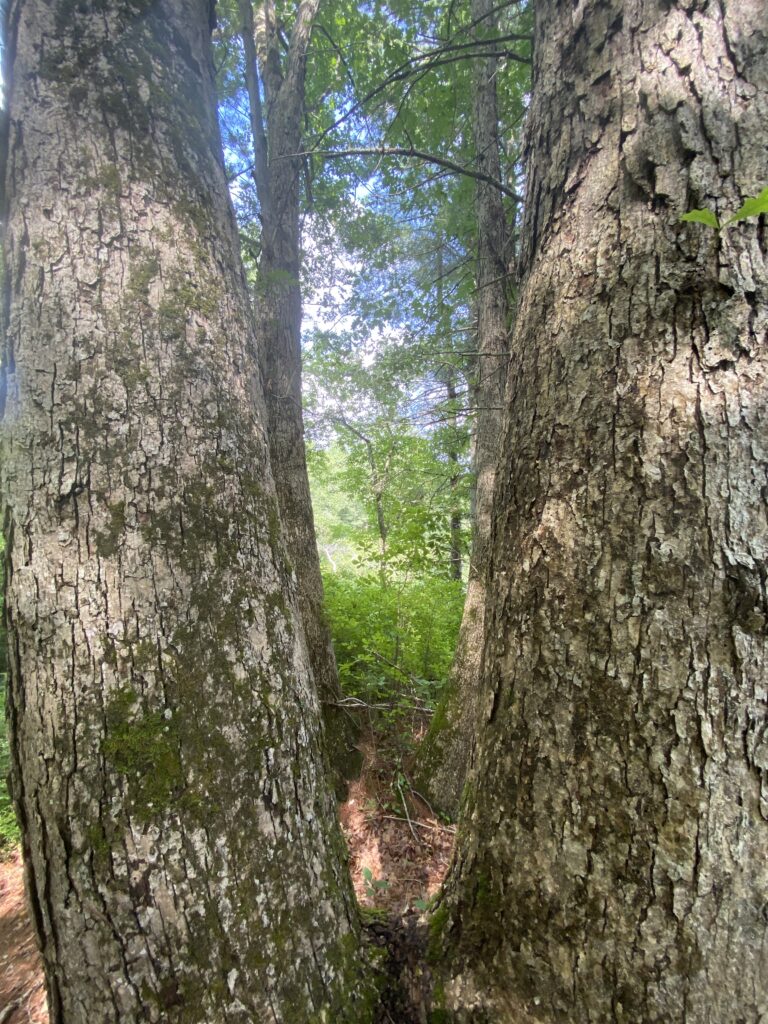
Two trees in a row both with roots connecting and trucks growing off in different directions. I chose this as it could potentially be evidence of an event, like a tree fall, that would have caused for these two trees in a row to split in the same way.
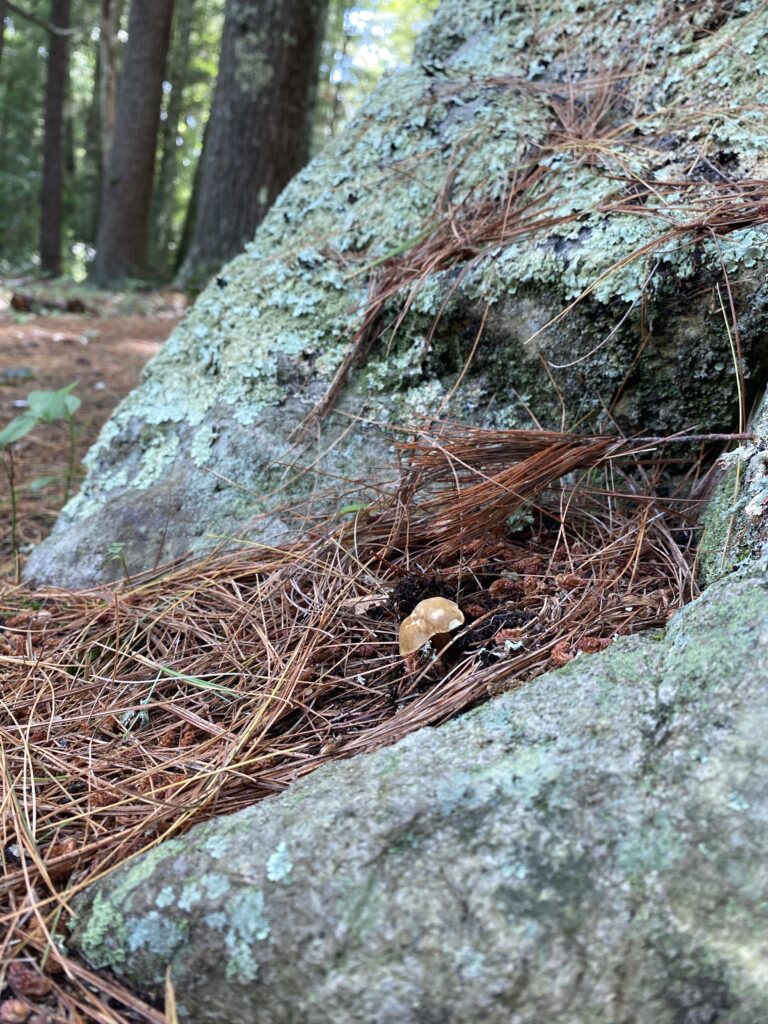
A small lone mushroom growing out of a dirt pile on a rock. I chose this as the rock makes a small nook that has different life in it then out side. I liked how in this little bed of needles on a rock the mycelium has grown under the little soil and started to produce a mushroom.
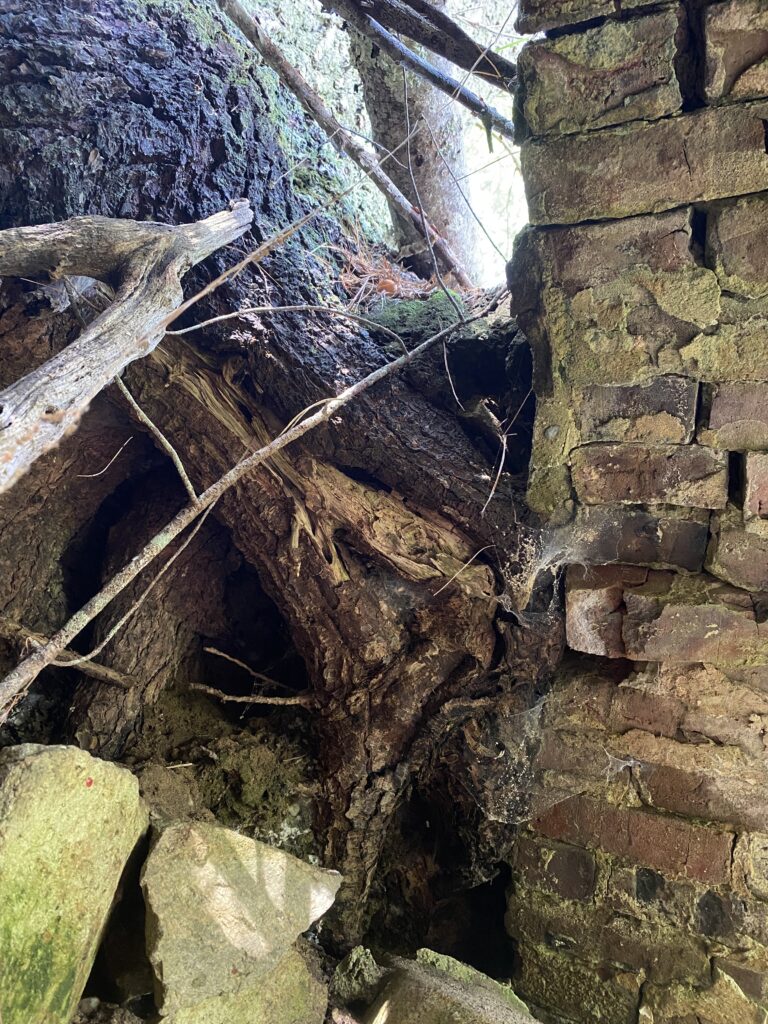
The intersection of the stone arch way and the tree it is butting up against that seams to hold it in place. I liked the intersection of the large tree and a manmade structure that uses the tree to support its self.
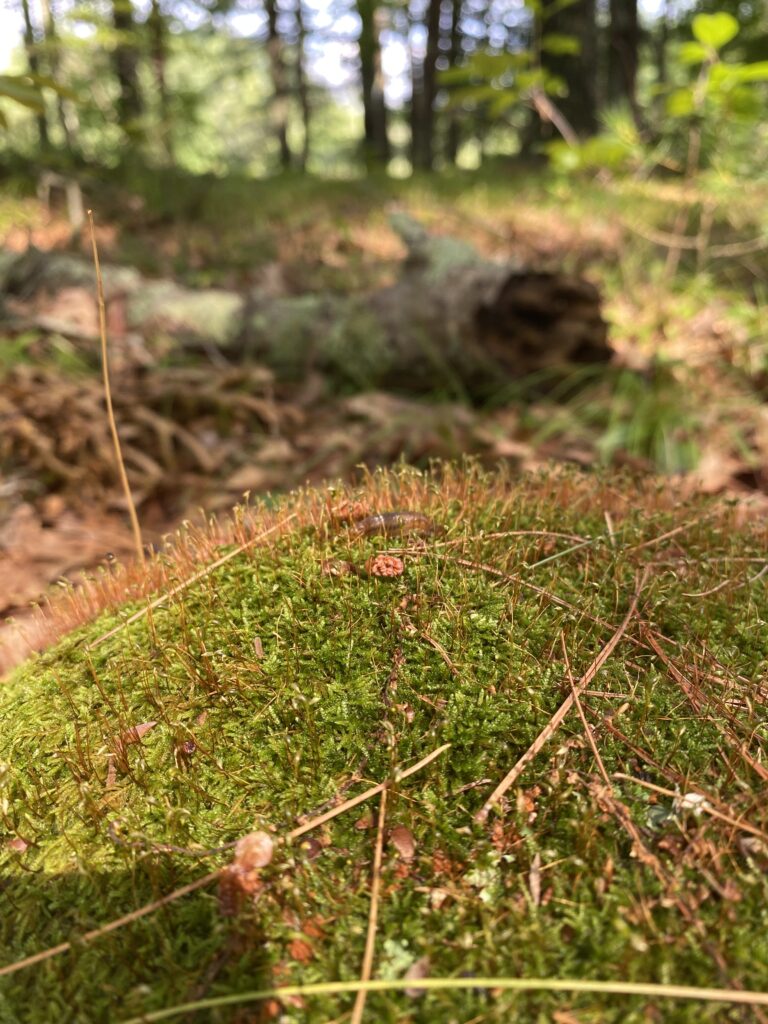
A lone slug on top of a moss covered rock. I liked how on top of the mossy rock a tiny slug had found somewhere to search for food making a tiny ecosystem on a small rock.

Conclusion 

The process of taking photos made me look at my site in a very different lens. To get a photo that captures a process, event, or concept playing out in the site is very hard with a large land scape picture as there is too much going on to take any meaningful information out of it. Trying to find something that captured an idea with a photo made me look at the area in a very fine lens as I must be able to get close enough to take a picture up close as well as getting a picture that is framed to show what I want to show. One of the challenges I had was trying to show the inside of the brick arch being held up by the tree as just a picture into the tunnel it makes would be to large and a picture in the inside is hard to frame, for this reason I tried to take a picture of the inside seam of the intersection looking out to show how the brick and roots meet. An easier picture to capture was the fallen mushroom and the small mushrooms behind it as the picture almost framed its self. It was on top of the arch and the top of the fallen cap was facing out with the new mushrooms’ right behind it, I could get down on the ground level very easily and take a picture as the objects I was trying to capture were small so there is not much background interference. It was similar to sketching in the way that finding the right angle to draw at effectively and finding the right angle to take a picture that captures what you want are essentially the same process but give a different outcome. The angle you sketch something from would most likely be to capture the most of that object without drawing the background, the angle you take a picture at something from is more about capturing something so it stand out in its’ surrounding making finding the right background part of the process. The process of taking photos at my site made me look at my sight not as a whole place but as a collection of tiny environments that I need to look into. The breaking down of my site into what is going on on top of a rock, in the back corner of the arch way, in the needles and soil in a pocket of rock, or just at the site of a fallen mushroom made me see my site as a whole of much smaller interactions that made this place come to be.

Blog #2, Duxbury, MA, 7/1/2021

Introduction

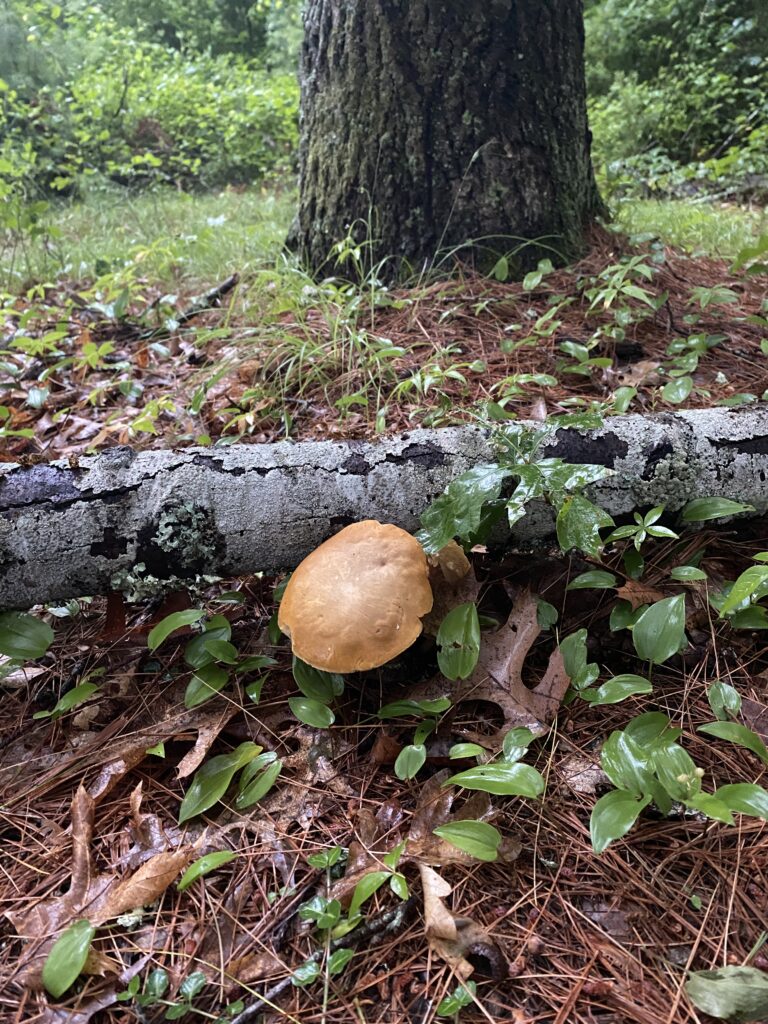
July 1st 2021, the sky is dark white with gray patchy clouds. Rain is drizzling down lightly and a haze covers the reservoir. The over growth around my feet seems to be larger than it was up on my last visit and upon entrance I saw a heron fly from the entrance to the reservoir to deep in the woods behind it. The water is now stiller then when I last visited as the only motion is from the drops of rain making ripples in the water, compared to the flow of water that travelled only threw the center of the reservoir the last time I was here. I wonder why on a rainy day the water would be calmer than a sunny day, I could be from the water level being lowered due to the three days in a row over 90 degrees and the evaporation the heat and sun would cause. The path into the woods even more congested than last time, from just one week of growth. I walked around the clearing in the woods behind the reservoir which seams to be the same as last time. As I walked around I heard more birds and was almost hit by one swooping into the path, a welcomed encounter as I didn’t see any animals last time I was here. As I walked around there were many new mushrooms that had popped out of the ground, these interested me as they are the only visually new thing I noticed. The mushrooms were a golden brown with bright white stems and a spongey like under belly on the cap, there were three one with a deformed cap, a large oval cap, and a small oval cap on top of the brick arch allowing me to look at one at eye level without touching it. 

Species Identification

This week I tried to identify a mushroom growing out of the ground, there were a few of this mushroom and all appeared to be the same. I believe that I came across Bolete mushrooms, more commonly known as a Porcini mushroom. I believe that its exact name is Suillus lactifluus, I came to this conclusion after going threw a guide to identifying Bolete mushroom on mushroomexpert.com. This mushroom grows under Eastern White Pines which helps as the mushroom was found growing out of pine needles. I began my search on iNaturalist where I saw a similar mushroom labeled as just a Bolete mushroom and upon further search there are many kinds of these mushroom as Boletales are an order of mushroom. The guide to Botales asked questions about the presence of small pores instead of gills on the bottom, the color of the cap, the features of the stem, the region it was found, the properties of the cap, discolorations due to cutting or touching it, and spore pattern. I was able to come to my conclusion without observing the spore pattern or cutting up the mushroom as I didn’t have a knife with me and I didn’t want to bring a potentially poisonous mushroom home as I didn’t know truly what it was. My guess could be wrong as I didn’t examine it in the lens of a mycologist and looked at the apparent properties that anyone might observe. With further research and the help of the identification guide I was able to make my most educated guess as to this specie, the discerning factors that seamed to help eliminate other mushroom was the lack of vail and lack of noticeable features on the stem. This Mushroom is an edible variant that grows in the summer and has a symbiotic mycorrhizal relationship with pine trees by attaching to the roots in the ground and helping supply them with water and nutrients in exchange for sugars and amino acids from the tree.

Sketches

I chose this one due to the uniform color of the same shade and the irregular shape of the cap.
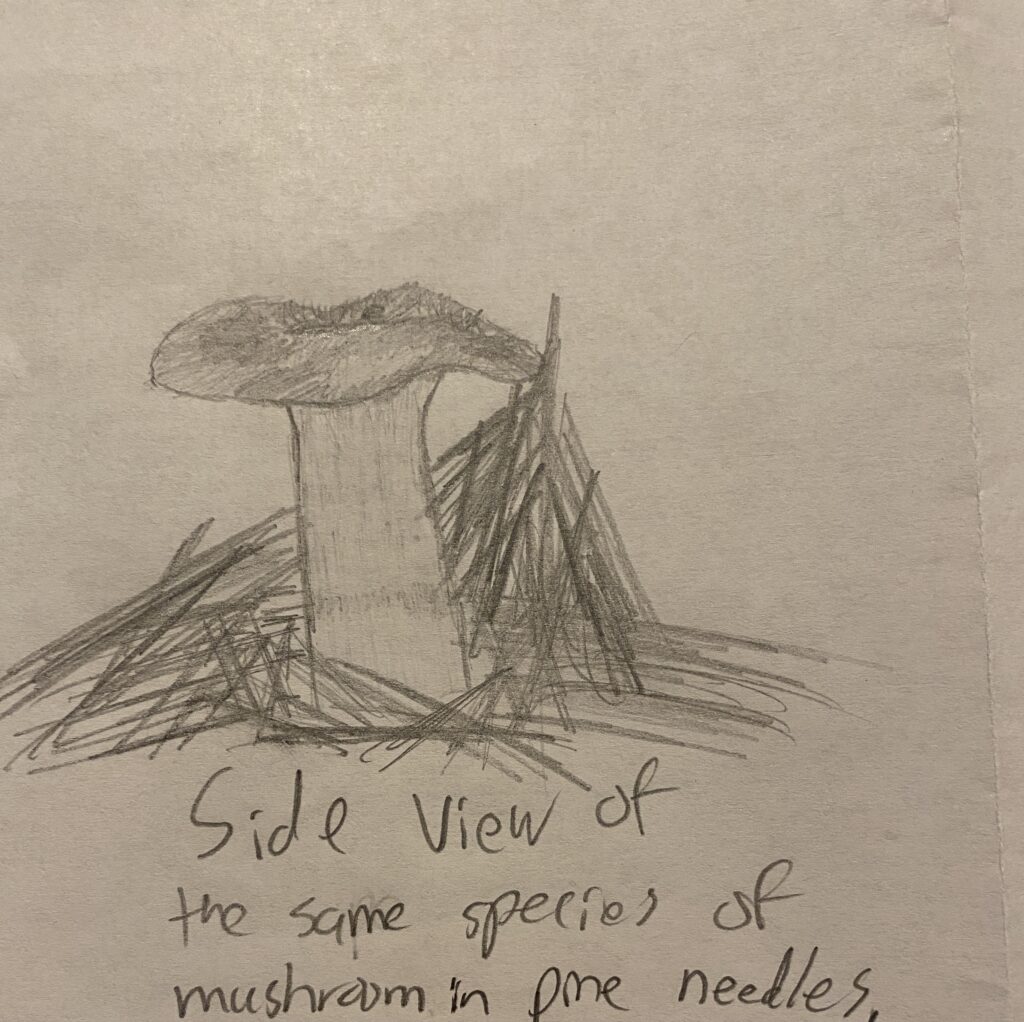
I chose this mushroom as it was easily seen at eye level as it was on top of a brick arch and it was another sketch of a mushroom as my previous sketch was of the same species but from above.
It seamed like a challenge to draw this tree has it had dark bark, white lichen all over it, moss on the base, and a large burn at the split between the trees making the shading of the tree very hard to distinguish the change in color. This tree was also very interesting as it was burned and had charcoal in the black spot making me think it was struck by lightning when it was young.
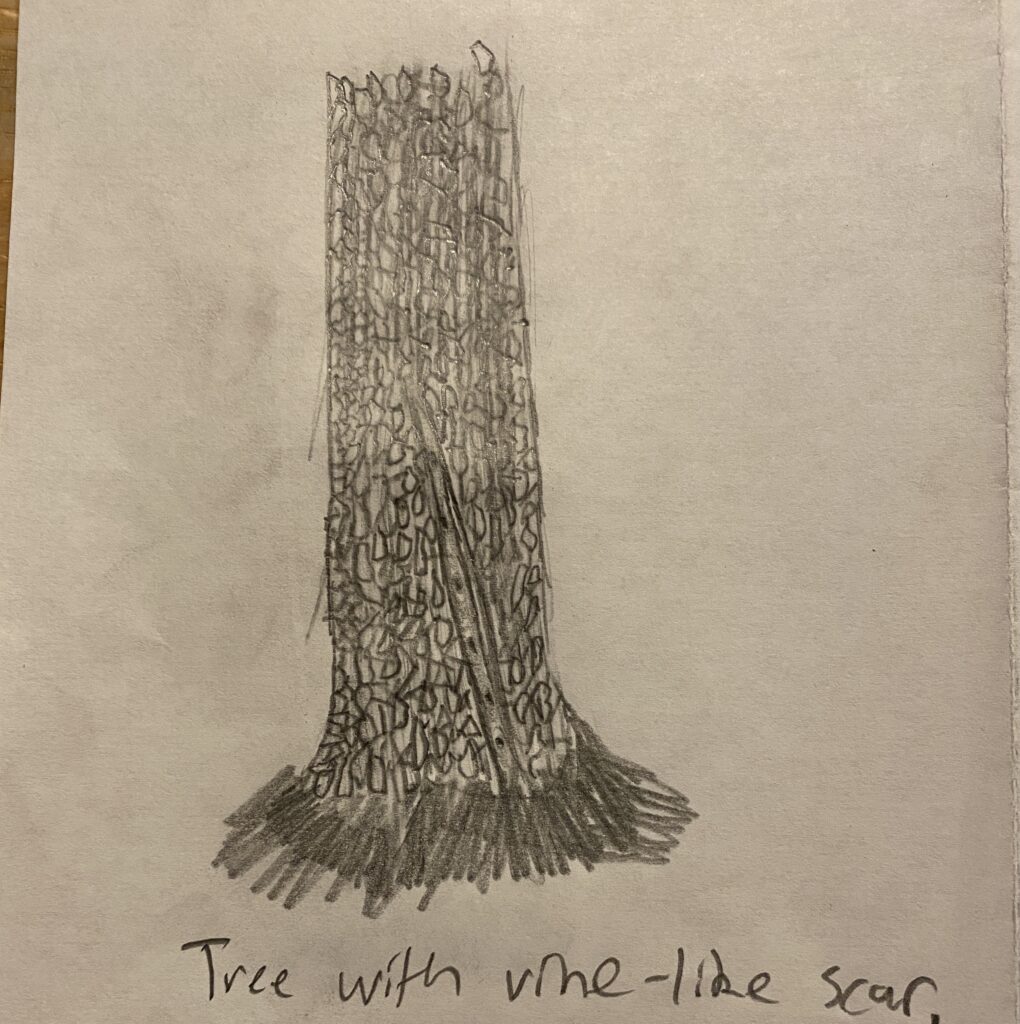
I chose this tree as it was all a uniform color and had a interesting vine-like scar in the lower trunk. I seamed like a challenge to capture the intricacies of the bark in a sketch. This took the longest of the sketches to get right and be able to distinguish the features.

Conclusion

The sketching process was interesting as I had to do it below an umbrella on a clip board because it has been drizzling raining for the last few days. Having to sit on the ground and sketch was quite annoying but when I gave into being wet I was able to sit and draw. Trying to give all the wanted details became challenging when I got to the trees as the two mushrooms are the same color all around, so shades of grey can be used to show different color, but for the trees this was a challenge. The tree with the burn mark had green moss and white lichen on the sides as well as the burned black patch and brown bark making up most of the tree making differentiating the colors quite hard when sketching. The tree with the vine like scar was easier in term of color to sketch as it was mostly just brown bark but the texture of the bark was much more defined making giving it a proper bark patter on the sketch very hard as it was very intricate. I noticed I was more frustrated drawing the individual bark pattern from small odd shapes as it took much more time and attention than shading with lines for changes in color. I feel like I should try to focus on creating texture by using different line patterns and densities then actually trying to draw something close to the pattern piece by piece. Having both nature and my own attention span against me sketching in the woods I think I learned that I have to make the way I sketch more general in the patterns I use as it is both easier and faster. The ability to sketch relatively fast is useful for recording things found outside as it helps you observe the object better and get a useful picture of it for later reference.

Blog #1, Duxbury, MA, 6/24/2021

 Introduction

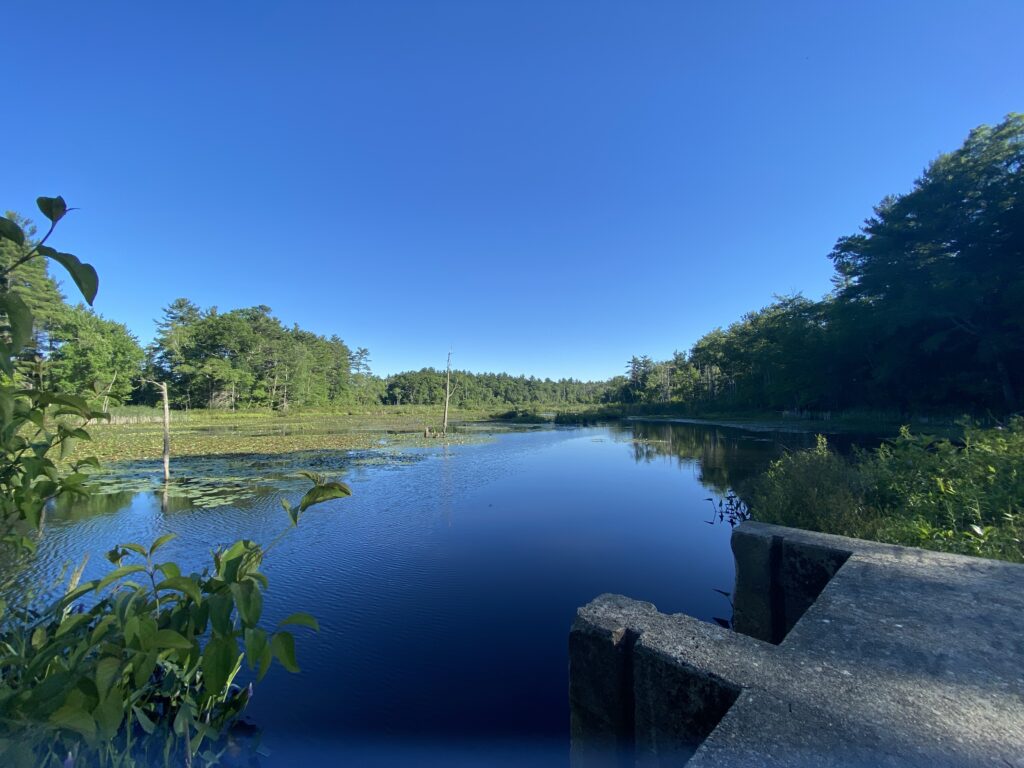
June 24th, 2021, at 5:30 the sky was clear, and a cool breeze was blowing, it was 69 degrees out. My site is a reservoir near the site of an old sawmill surrounded by dense woods with a stream running out of it controlled by a small dam. The reservoir has dead trees sticking out of it that are white with age and seam to shrink every time I see them. Lily pads with withered white flowers cover half of the water and cattails and tall reeds surround the reservoir with only an opening for the dam amongst the foliage. The water flows through the reservoir relatively fast making it seam like the end of a much larger body of water that cannot be seen, the water ripples in a current threw the center leaving extremely calm water around it, it is almost strange as there fast current sounded by flats. The dam lies along a path with thick and untamed bush on the edges and trees poking out into the path. A large tree recently fell and lies just beyond the thickest of the foliage on the path leaving a large hole where its roots once were. In the woods just down the path, witch uses the dam as a bridge, a clearing in the woods lies with an old brick arced tunnel that backs into the root system of a large tree, open on the other end to the woods. There is evidence of partying here as there a cigarette butts, plastic bags, beer cans, and senseless spray paint on trees. Other than this opening the surrounding woods are too dense to see very far into. The area is very flat except for the small hill that contains the tree and old brick arch.

Question Marathon 

  1. How long will it take for the dead trees to disappear into the water?
  2. Why is the water so dark here?
  3. What kind of trees would grow in the water?
  4. There are many pine trees around, is that normal for wetlands?
  5. There are small birds flying but the lone Heron has left, are there no fish here?
  6. What causes the water to ripple and flow the path it has chosen, which leaves extremely calm water around it?
  7. Few flowers seam to grow here it is mostly small green plants, is there a reason for this, is there a lack of bees in this area?
  8. Why is this brick structure here, what was it?
  9. Why are there so many little different plants here?
  10. There appears to be evidence of teens partying here, has that effected the wildlife?
  11. There are few flowers here and the ones that are here are white, is there a reason for only white flowers growing here?
  12. This is conservation land, but it looks over grown, when was the last time it was maintained?
  13. Would constant maintenance effect the ecology? 
  14. Does the lack of slope in the land effect the ecology?
  15. How far back does this water way go?
  16. Why do the trees along the edge of the water look so dead?
  17. Does constant water around a tree cause it to die?
  18. If water around the base of a tree kill it then, is this body of water new?
  19. Why are there no animal tracks here?
  20. Why is there an open area in the middle of such dense woods?
  21. Why is there so much spray paint?
  22. Where the sunlight breaks threw the canopy there is a path of moss, does this only happen around this time of day or is the moss here as it is the only place with sufficient sun light? 
  23. What is causing this trees vine like scar?
  24. Why is the ground right next to trees exceptionally soft?
  25. Why are there so many boulders peaking out of the ground?
  26. What kind of erosion has happened here?
  27. What kind of rocks are these boulders?

Why do the trees along the edge of the water look so dead?

In researching this question I found something I never knew had a name, ghost forest. I was searching for an answer about if trees can live in tall water, I found that most trees can not survive with standing water above their roots as they get over watered all day long. Having to much water around a tree doesn’t allow it to breath oxygen giving it to much water1. I initially thought trees did not need oxygen, but to convert sugar into energy oxygen is needed2, but trees get oxygen from the ground so too much water would interfere with this. In my searching I came across ghost forest which are forest that have been covered by new salt-water and results in a forest of dead trees with tall water at the base3 like the tree observed in my local reservoir. This area seamed to have once been all forest but something happened that caused a water way to form here as a reservoir for a river running threw my town. While my reservoir is not salt-water it still stands to reason that this is new water as a tree wouldn’t grow right out of the reservoir. Even if it is not the exact same thing researching this has brought Ghost forest to my attention, just one more thing global warming is doing to the environment. 

Conclusion 

On future visits I would like to monitor the trash in the area to see how often it is disturbed as well as watching the dead trees in the water to see if they get any smaller. The lack of evidence of wildlife in the area is something that concerns me, as I didn’t even see as much as a squirrel. I want to know if the use of this area by people to party has effected the wildlife’s relationship with the area. I would also like to know if the reason for this clearing in dense woods is due to people, as the foot traffic might have not allowed the dense foliage to grow back. Human interference seams to be prevalent in this location as there is a new body of water that has killed the trees that once use to be there and an apparent lack of evidence of wildlife like tracks or scat. I wonder if this is just because of it being my first time here in years or if this location is severely lacking large animals and interference has actually damaged this areas eco system.

Citation

1. Presley, Beth Hyatt. “Over and Underwatering Warning Signs with Trees.” Total Landscape Care, 28 July 2017, www.totallandscapecare.com/business/article/15040947/over-and-underwatering-warning-signs-with-trees.

2. Root, Tik. “Ghost Forests Are Visceral Examples of the Advance of Climate Change.” Time, 8 Oct. 2019, time.com/5694648/ghost-forests-climate-change.

3. “Tree Physiology Primer – All About Roots!” Portland.Gov, 30 Mar. 2021, www.portland.gov/trees/get-involved/news/2021/3/30/tree-physiology-primer-all-about-roots.

Skip to toolbar