Posts

Industry in Costa Rica

The Coca-Cola company

The Coca-Cola company produces concentrates and syrups that are bottled and distributed by regional bottling plants around the world. Coca-Cola boasts a selection of thousands of beverage types making up 200 different brands. According to infobae and The Costa Rica Star, the 34,000 square meter Coca-Cola plant in Guanacaste, Costa Rica produces 164 different formulas for distribution across Central America and the Caribbean, and employs 130 workers.
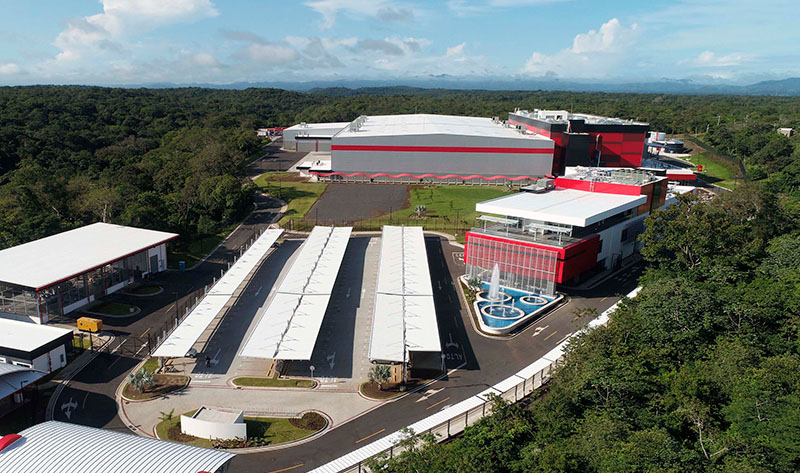
https://seppelec.com/new-cc-concentrate-plant-in-costa-rica-liberia/

Local Impacts

William Segura, the Public Affairs and Communications Manager for Coca-Cola for Central America, told interviewers, “A large part of the human resources that we employ is primarily from the area. We use that to generate a series of skills for people who are originally from Guanacaste, who in the future may turn into leaders of one of the 18 concentrate plants that Coca-Cola has in the world.” The plant also maintains a near 50-50 split on male and female employees (CINDE). The location was chosen due to its proximity to international ports and the international airport in San Jose, theoretically cutting down on unnecessary carbon emissions. President Carlos Alvarado spoke highly of the company’s decision to invest in Costa Rica, stating that it will significantly impact local economic development. Dyalá Jiménez, The Minister of Foreign Trade, shared her excitement for the project saying that it will create high quality formal jobs outside of the Greater Metropolitan Area, something that is often lacking (The Costa Rica Star). Additionally, the Coca-Cola company promises a LEED Silver certification for their plant as well as the construction of an on site waste water treatment facility with the goal of recycling its water.

https://thecostaricanews.com/construction-of-new-coca-cola-plant-in-liberia-will-generate-250-jobs/

Global Economic Framework

To me, this move and investment by Coca-Cola best exemplifies a neoliberal framework. The company is utilizing global markets and proximity to ports to expand its reach and efficiency. The plant is limited in size and is not dominating the local economy in the way that an extractive and resource/labor intensive neocolonialistic operation would. Rather than a foreign entity extracting and exporting natural capital, or dominating particular public service, the Coca-Cola plant is manufacturing a product that is to be distributed locally and regionally.
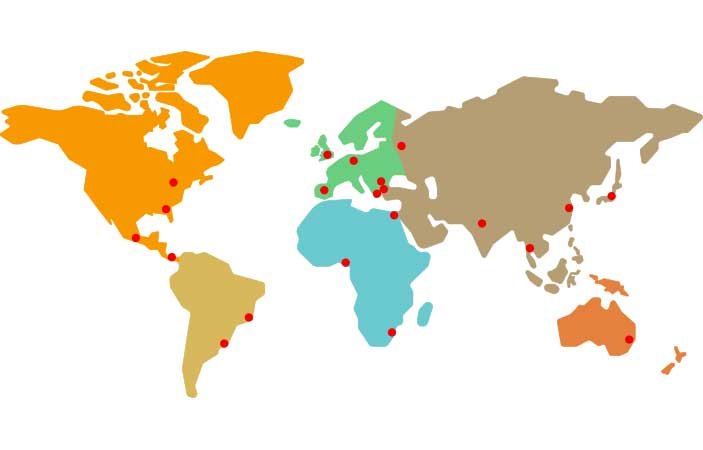
https://www.coca-colacompany.com/careers/location

The Portuguese Colonization of Angola

Portuguese explorer Diogo Cão landed on the southwestern African shores of present day Angola in the late 1400s. The Portuguese economy was primarily based on the slave trade, they sent an astonishing 4,000,000 slaves to Brazil, accounting for 40% of all slaves shipped to the Americas, most of them coming from Angola.

Within Angola, the laborers consisted mostly of the indigenous population as well. The forced labor systems didn’t look exactly like slavery in the Americas, in fact the justifications changed many times over Portugal’s 500 year rule, but the outcome was very much the same. Sometimes it was “rebel groups” worked to death in concentration camps, other times it was state mandated work programs paying the equivalent of $1.25 a month.

Over the 500 year occupation, the government systems and relationships varied greatly as well. Initially, the Portuguese presence was relatively unintrusive towards the rulers of existing kingdoms and tribal groups. Trade between the groups was established (slave trade) and the king of the Kongo kingdom accepted a western education from the Portuguese. These alliances eventually crumbled and although Portugal was able to hold onto the territory for several hundred more years, conflict and pushback from various indigenous groups was almost constant. For this time, the Portuguese military maintained a presence, fighting wars and attempting to maintain the colony.

Portugal’s original push into Africa began as a quest for gold, trying to bypass Moroccan trade and gather it at its source. Once there, and introduced to the slave trade, their intentions shifted focus. The Justification for the plundering and enslaving they took part in came straight from Pope Nicolas V, telling the Portuguese king that he had the right to conquer pagans, enslave them, and take their lands and goods.

https://www.enjoytravel.com/en/travel-news/interesting-facts/7-interesting-facts-about-angola

https://www.sahistory.org.za/place/angola

https://furtherafrica.com/2022/04/18/why-angola-is-africas-next-mining-powerhouse/

https://academic-accelerator.com/encyclopedia/portuguese-colonial-architecture

https://en.wikipedia.org/wiki/Languages_of_Angola

Popular exports from the Osa Peninsula

Bananas

One of Costa Rica’s most popular and recognizable exports are bananas. A report from 2015 stated that 2/3rds of the bananas consumed globally were grown in Costa Rica at one of the many plantations that, in total, employ over 100,000 Costa Ricans. Costa Rica’s affinity for bananas come from the perfect mix of tropical climate and rich volcanic soil that can be hard to find elsewhere. The banana industry in Costa Rica consists of a number of large industrial scale plantations, run by banana giants such as Dole, Chiquita, and Del Monte. Many small scale operations that use sustainable practices such as organic farming and permaculture are also quite prevalent, they are the main type of operation in the Osa. Due to it’s rural nature, much of the Osa’s bananas are distributed locally to the ecotourism industry, restaurants, and sold at markets.

https://www.tripadvisor.com/Hotel_Review-g2054962-d2054549-Reviews-Finca_Kobo-Palo_Seco_Province_of_Puntarenas.html

Palm Oil

The African palm was first introduced to Costa Rica amid the banana plight in the 1940s as a way to offset the decline in banana production. Palm oil was quickly becoming in high demand due to its versatility and relatively high yield compared to many other vegetable oils, making it very lucrative. Costa Rica has the advantage of incredibly fertile soils and favorable climates for many tropical crops, this can be beneficial as it gives many people economic opportunity, however it also makes the country susceptible to the negative impacts of industrial farming and monocropping. In the Osa, many farmers are converting old pasture land to palm plantations due to its status as a global export. Compañía Industrial Aceitera Coto Cincuenta y Cuatro S.A is a processing company that many local farmers in the region sell their produce to to distribute internationally.

https://inogo.stanford.edu/sites/default/files/African%20palm%20social%20landscape%20INOGO%20June%202013.pdf

https://www.storyblocks.com/video/stock/palm-trees-palms-plantation-for-production-of-oil-costa-rica-iepnrbn

Vanilla

Vanilla is one of the worlds most expensive commodities by weight, much due to the fact that it has a very limited natural range and has proved difficult to cultivate. Vanilla belongs to the orchid family which is known for its complicated pollination processes, many of which are specially adapted to a single species of pollinator. Vanilla production soared in the mid 1800s when an advancement in manual pollination was made. However, this advancement has sadly led to vanilla being placed on the IUCNs redlist of critically endangered species due to extensive genetic bottlenecking from vegetative reproduction (essentially cloning) and limited cross pollination. Given that Costa Rica is within the native range of vanilla, many local farmers grow this valuable crop. Researchers are even testing creating hybrids between the widely cultivated vanilla and some of the wild ancestral vanilla to diversify the gene pool, a lot of which is happening in Costa Rica. Much of the vanilla produced, even at the small plantations and haciendas in the Osa, get sold to larger processing plants and exported world wide, similar to palm oil.

https://www.sciencedirect.com/science/article/abs/pii/S0959652621040051

https://www.porvenirdesign.com/blog/2018/11/27/vanilla-cultivation-a-practical-guide-for-the-tropical-homestead

Timber

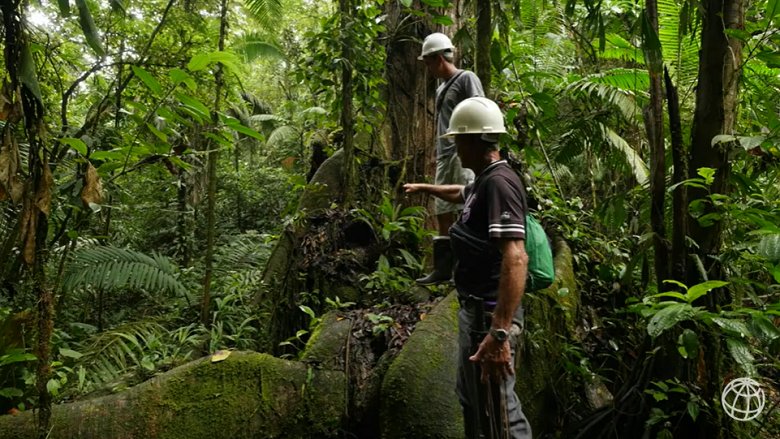
Like any country covered in tropical forests, the timber industry as played a large role in Costa Rica’s economy for centuries. Tropical hardwoods are some of the most sought after wood types for many applications such as furniture, flooring, cabinetry, and other wood detailing. Teak, mahogany, and rosewood are just 3 of the approximately 1,300 (estimates vary) tree species present in the country. In many places across the globe, deforestation for wood products such as these have been ecologically devastating. Costa Rica has had a history of this, however, the industry of sustainable forestry has taken a stronghold in the country as well. With Costa Rica’s strong emphasis on environmental protection, exemplified by the forest law 7575 introduced in 1996 that calls for “rational use” of natural resources and prohibits practices that will result in land cover change in the country’s forests, as well as the consumer shift toward more sustainable products, Costa Rica has made a name for itself in the industry of sustainable timber.

https://www.gaprealestate.com/about-costa-rican-trees-and-wood/

https://www.worldbank.org/en/news/feature/2022/11/16/costa-rica-s-forest-conservation-pays-off

Cattle/Beef

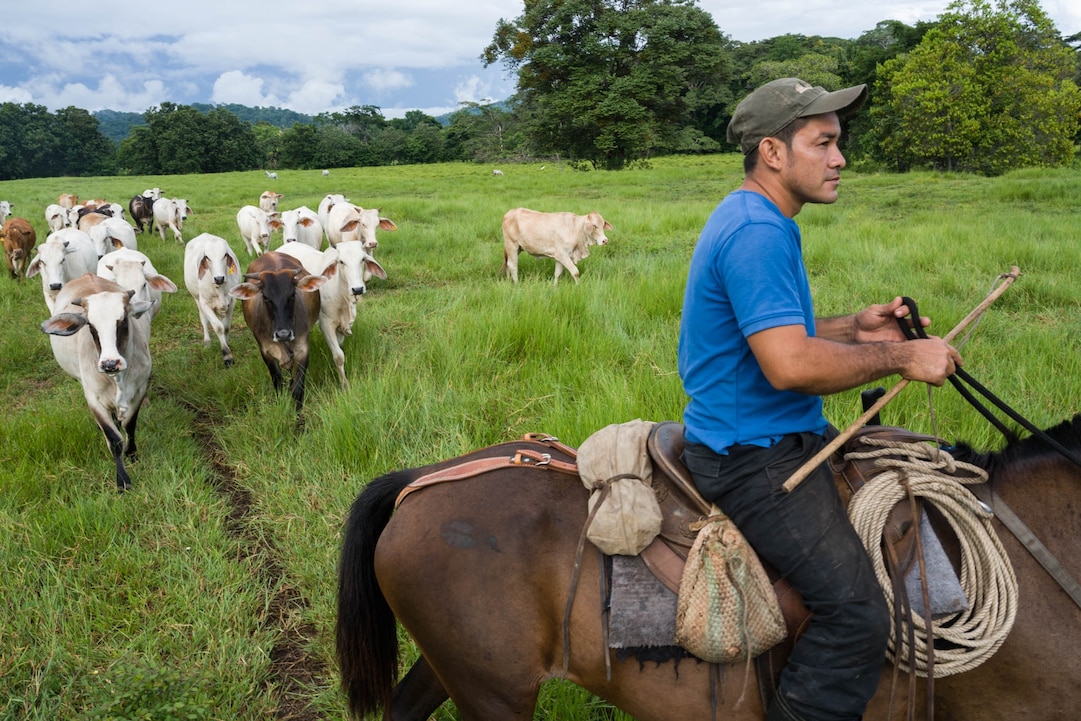
In the costal lowlands of the Osa Peninsula, cattle ranching has long been an important piece of the rural economy. Many ranches have been in operation for generations and are passed down within a family. Many small scale ranches are merely subsistence operations, producing a small excess to sell locally. Given the rise of ecotourism in the country, it has been popular for these and other agricultural operations to double as bed and breakfasts or eco vacation destinations, using the ranch as an appeal for those looking for an authentic experience. Rancho Raices de Osa is an example of a ranch that has transitioned into ecotourism, offering tours and chocolate making workshops alongside their operating ranch.

https://www.facebook.com/RanchoRaices/?locale=es_LA

https://www.nationalgeographic.com/magazine/article/tourism-loss-threatens-osa-peninsula-in-costa-rica-feature

Skip to toolbar