Feeds:
Posts
Comments

I was in Waitsfield Friday and Saturday this week, but I was still able to engage in the City Nature Challenge when I returned to Burlington. I observed a lot of species on campus, in addition to in Centennial Woods. I observed a total of 22 species! The actual number might be higher because I couldn’t identify all of my observations.
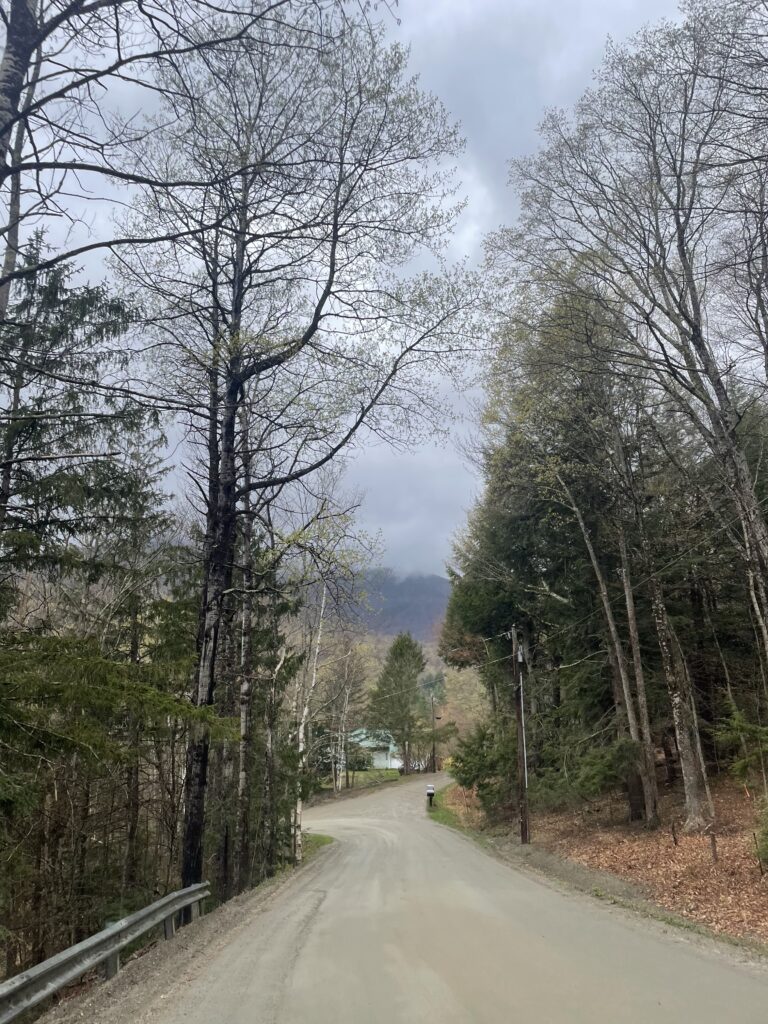
Waitsfield, VT

We also found A TON of frog eggs in a pond while we were here. I wasn’t able to log it in the City Nature Challenge, but it was still incredibly cool.
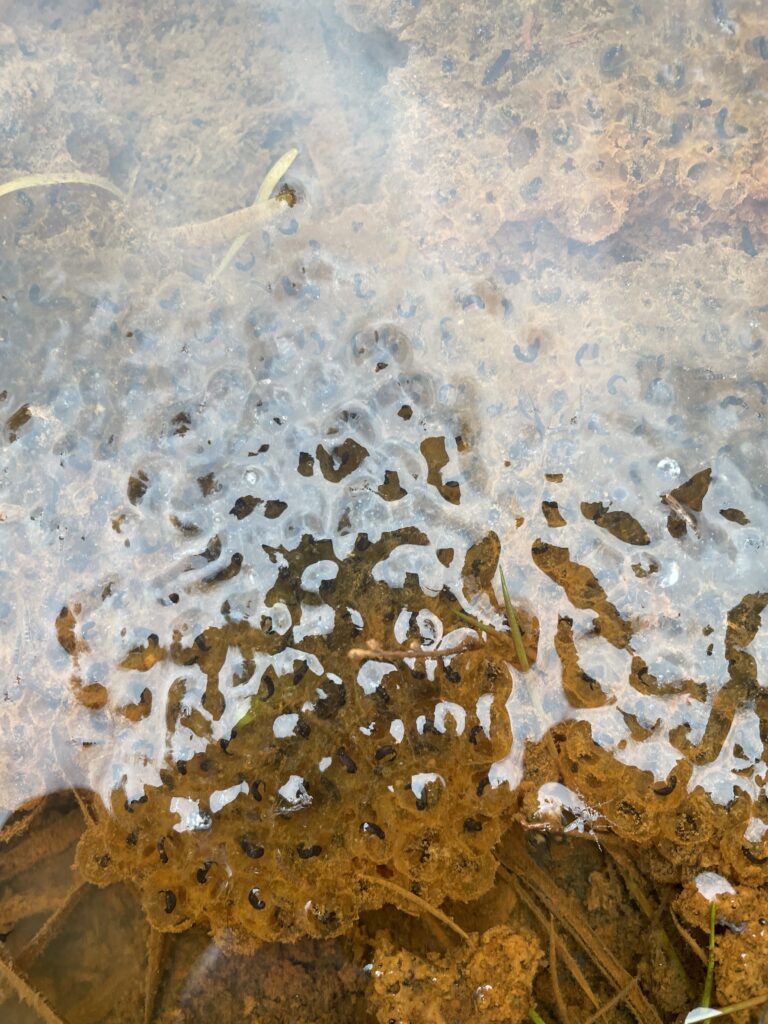
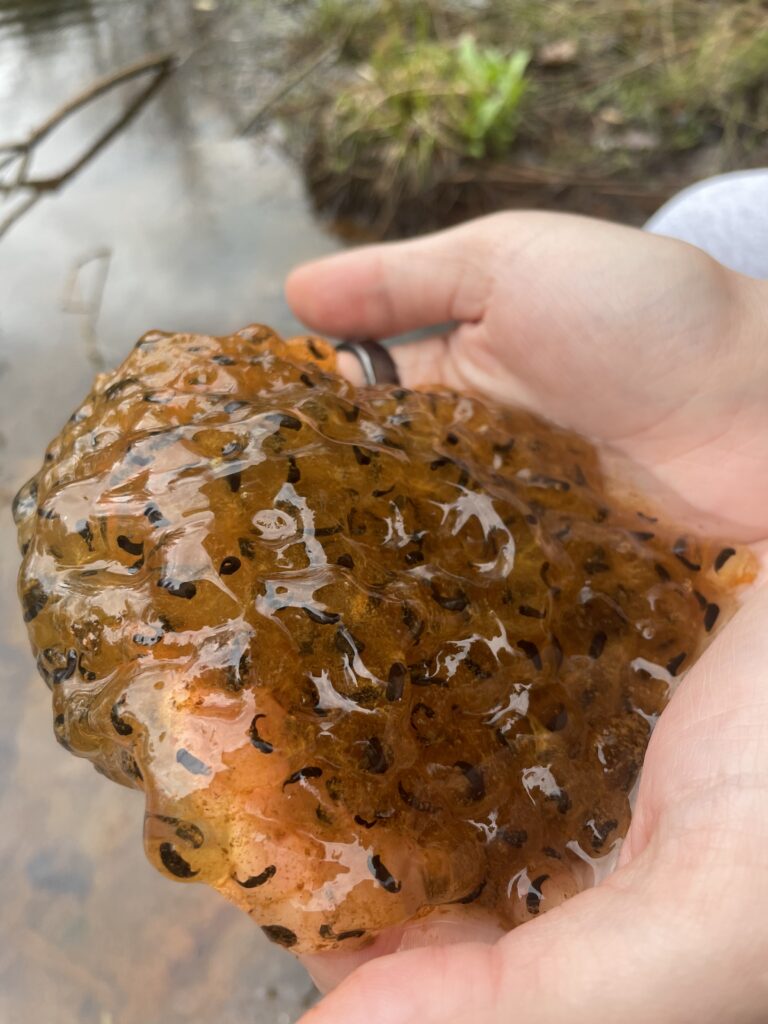
The frog eggs

When I returned to Burlington, I went on a few walks with friends to observe species! It was really fun to include other people in this experience.

A rainy campus observations walk!

I took some cool pictures during this challenge! I liked using inaturalist because my identifications got confirmed by experts.
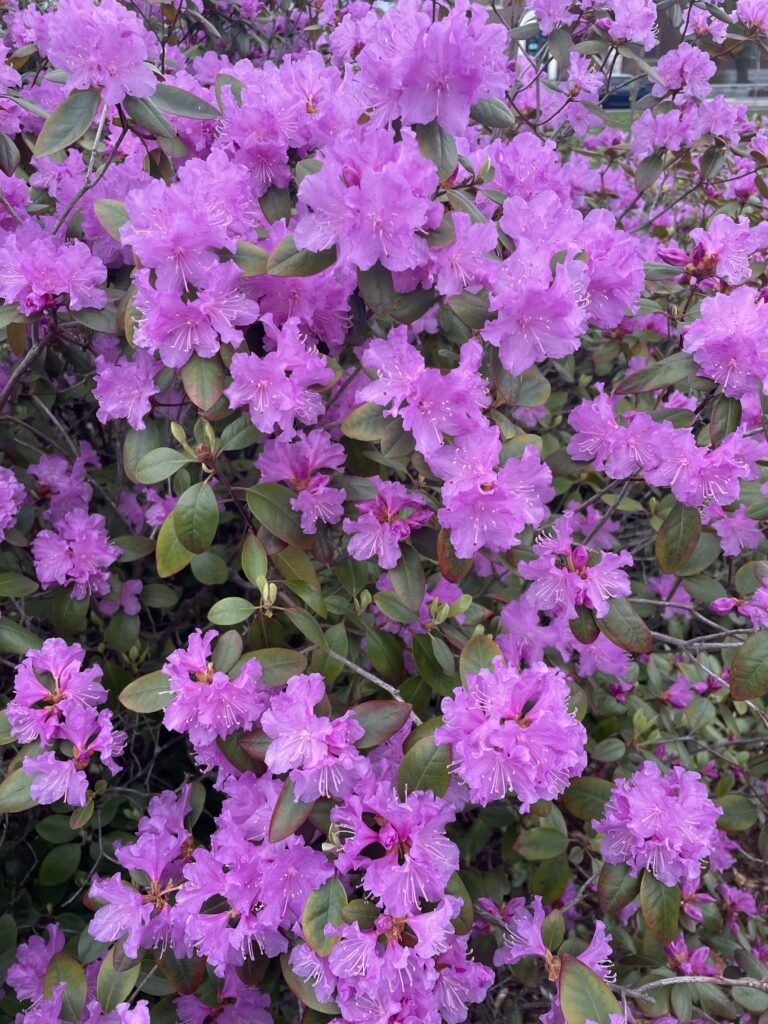
Rhododendrons!
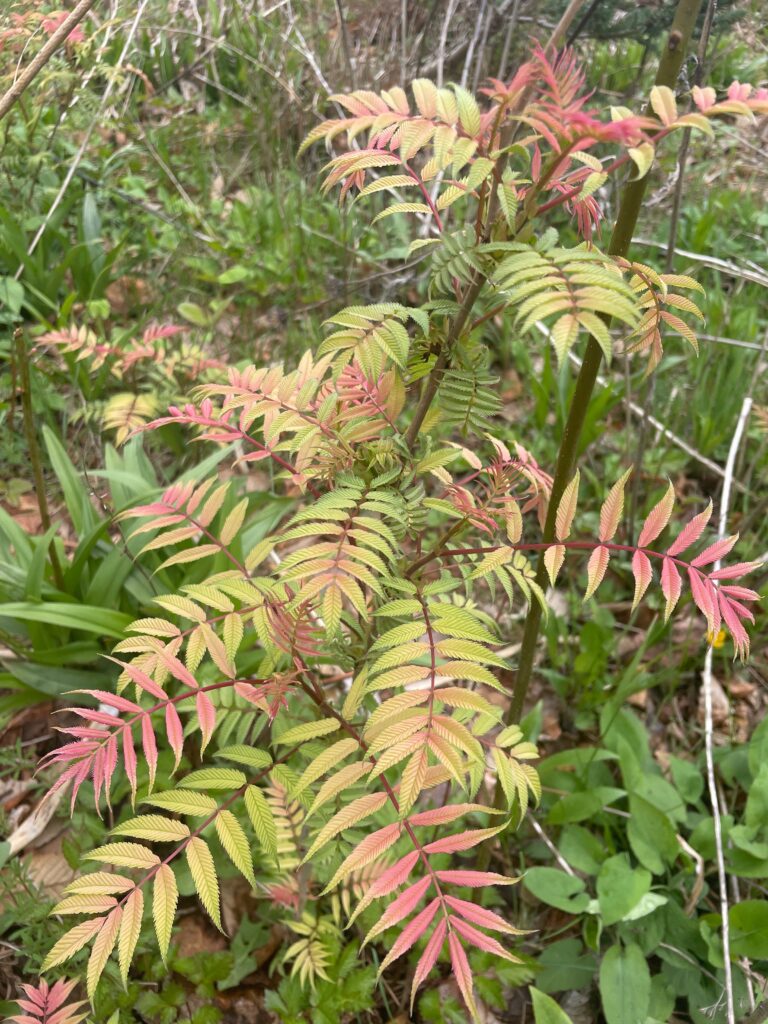
This photo got research grade 🙂

Another thing I really enjoyed was looking at the observations in all of the other cities. Seeing the amount of biodiversity and cool new species was very special. I also got to check in on my home town and discover species I didn’t know existed there! I really enjoyed participating in this and I’d like to do it again next year. I will definitely be using inaturalist more after this as well.
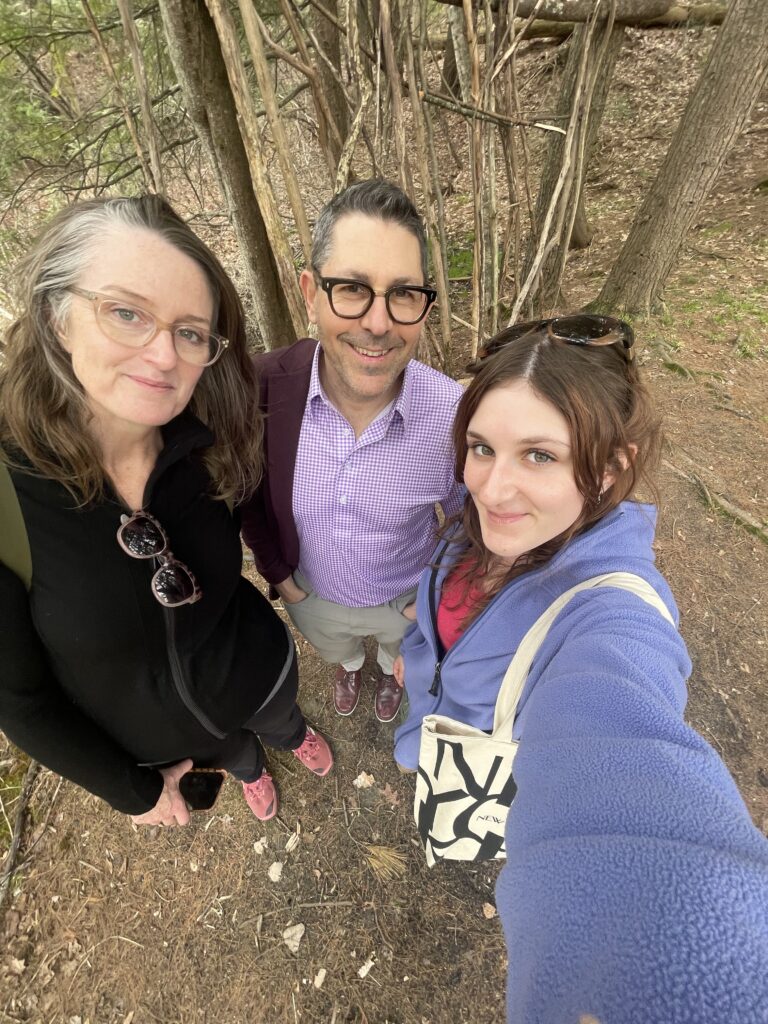
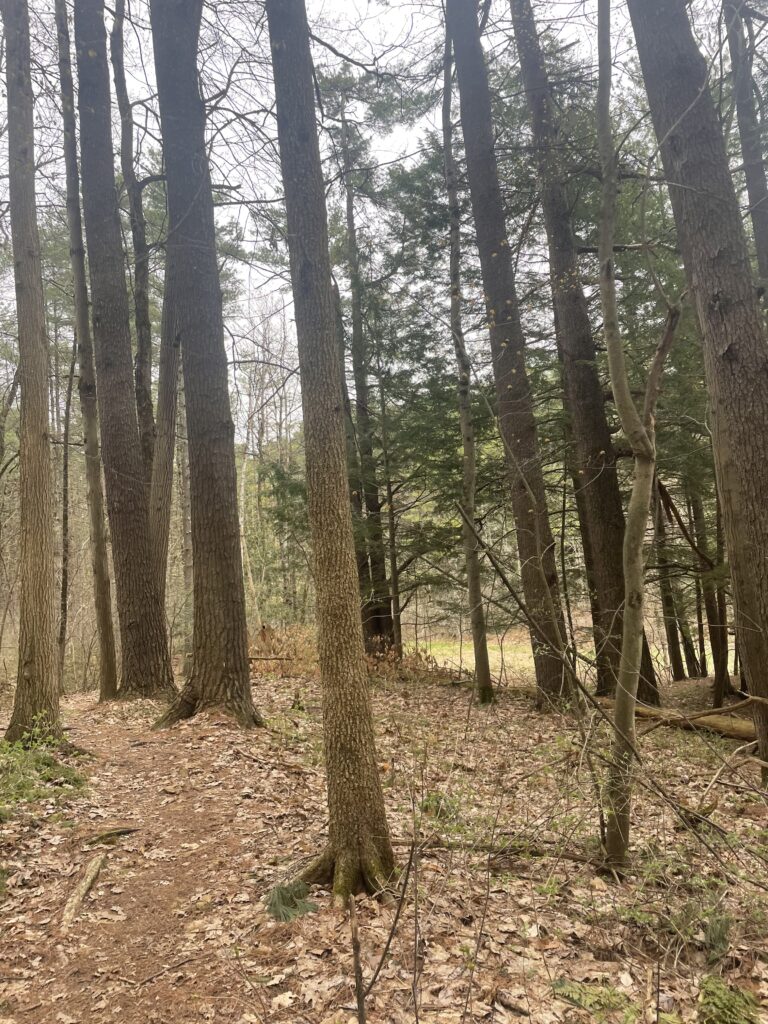
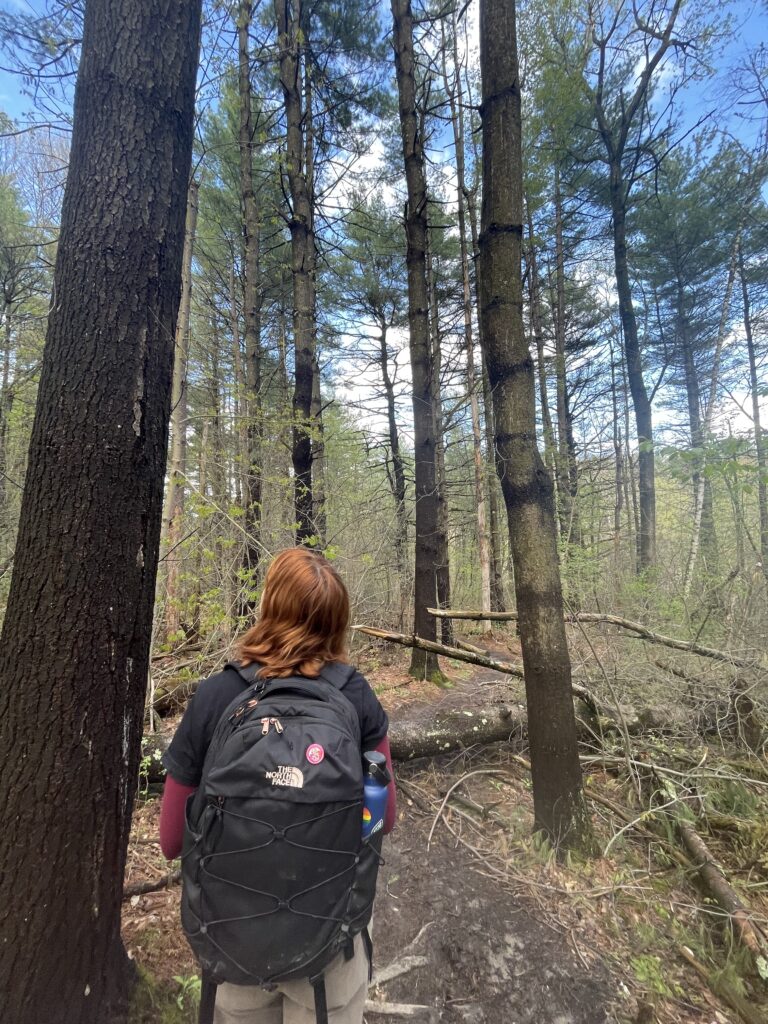
On a lovely warm Saturday afternoon I headed back to my spot in Centennial. I also dragged my parents along because they were in town.

I really could not tell you why my Dad wore a blazer and nice shoes to the woods.
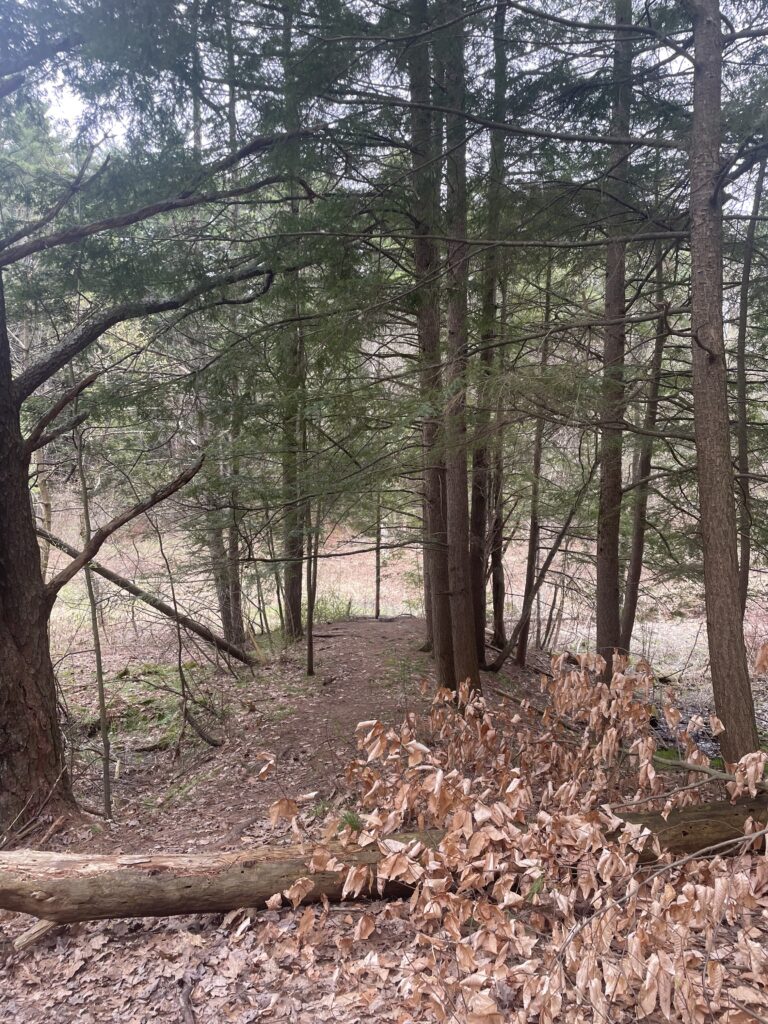
The forest is definitely greener than the last time I was here.

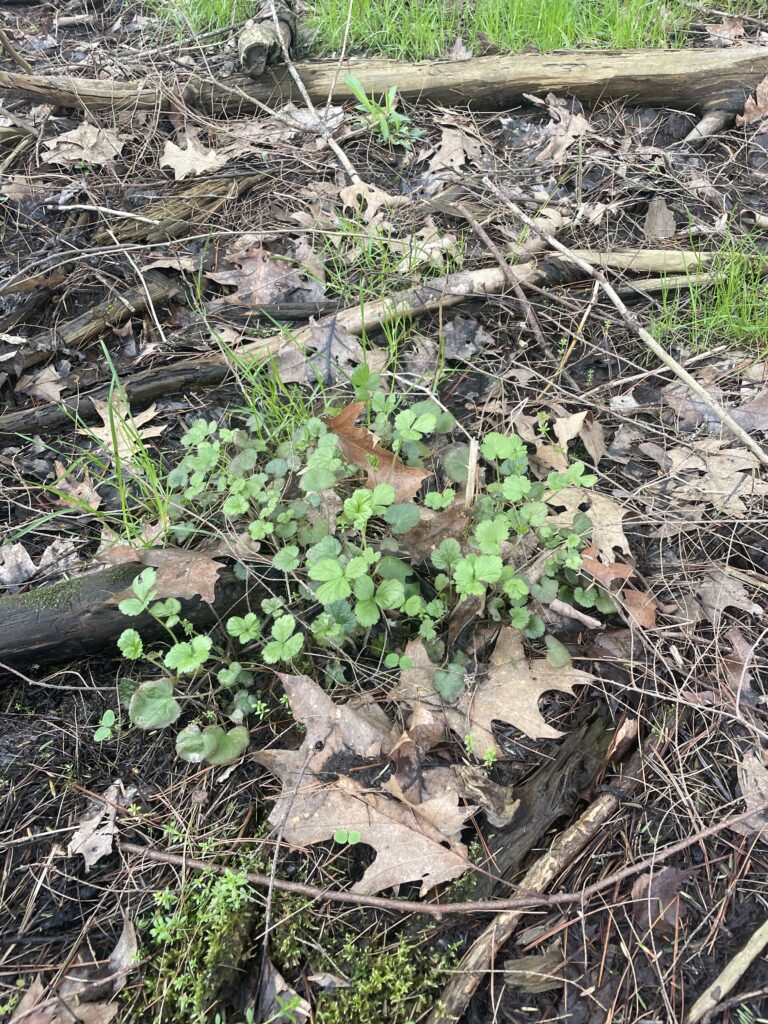
Over time, my site has changed a lot phenologically and also because of human impacts. I’ve seen how my site changed during the winter, as most of the trees lost their leaves and the ferns and other shrubs became hidden under the snow. It was cool to see these plants reemerge and to see buds on the maples and birch trees near my spot.

Some plants emerging from the tree litter and mud!

Additionally, I have been documenting the human caused changes in my spot. The things that interested me initially were remnants of fire pits and the sticks people were lining up along the tree circle. They progressed a bit throughout the year, but never completed the “shelter” I was imagining. In terms of storms, there are also more fallen trees and snags surrounding my spot now than there were initially.

This tree circle and fallen tree are some of the major landmarks I use to identify my spot.
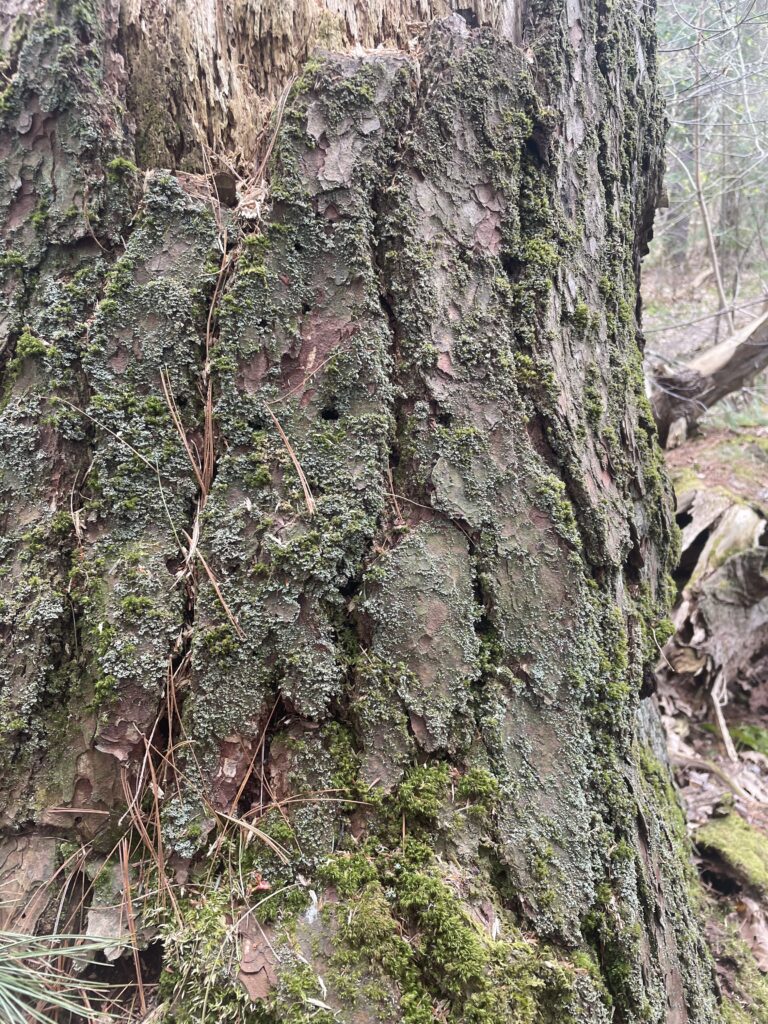
This mossy tree trunk is also a landmark I recognize.

Nature and culture intertwine in many ways in this spot. There’s evidence of human socializing (fire pits and footprints), which demonstrate that this place is a meeting ground for people. As I have spent more time in my spot, I have felt more connected to it and wondered how it has evolved in the past. While I don’t have a personal cultural connection to it, I would guess other people have in the past or currently have one now.

I definitely feel like I am a part of this place now.

I think I have spent enough time connecting with this place to consider myself a part of it. It has brought me comfort and forced me to slow down even on my busiest weeks. I might not be leaving a mark on it, but I don’t think that is important. It is leaving a mark on me.

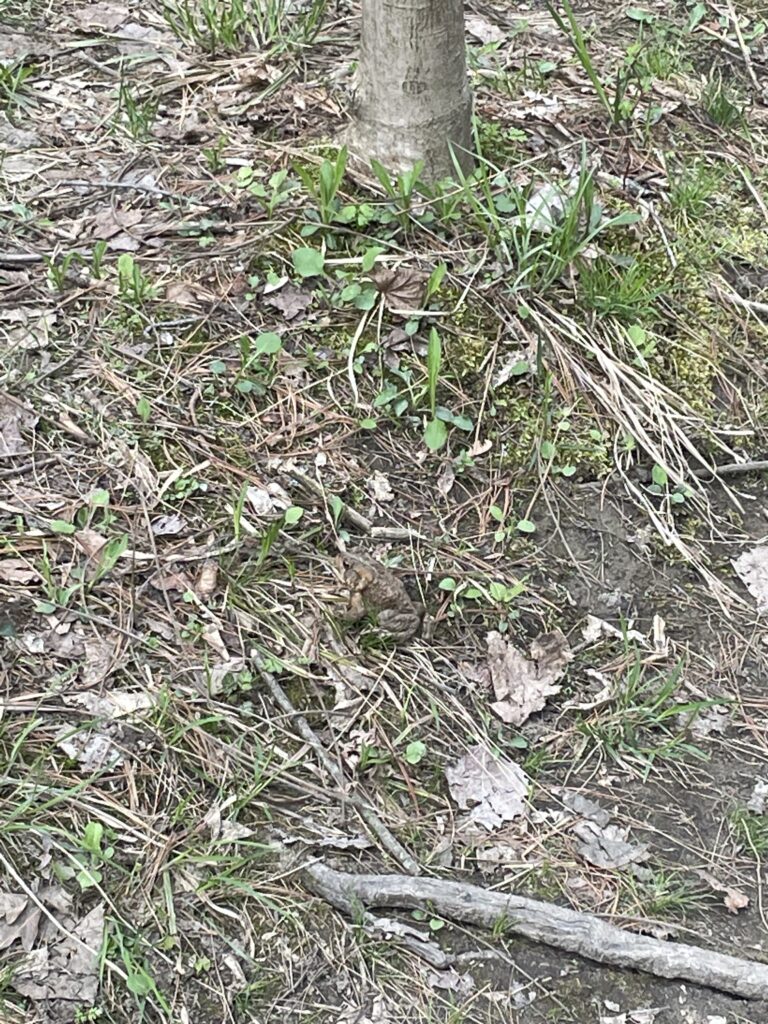
I also saw a wood frog (?) in Centennial today which was very exciting! He is so cute.
All of the ice and snow was gone, which was a nice surprise!

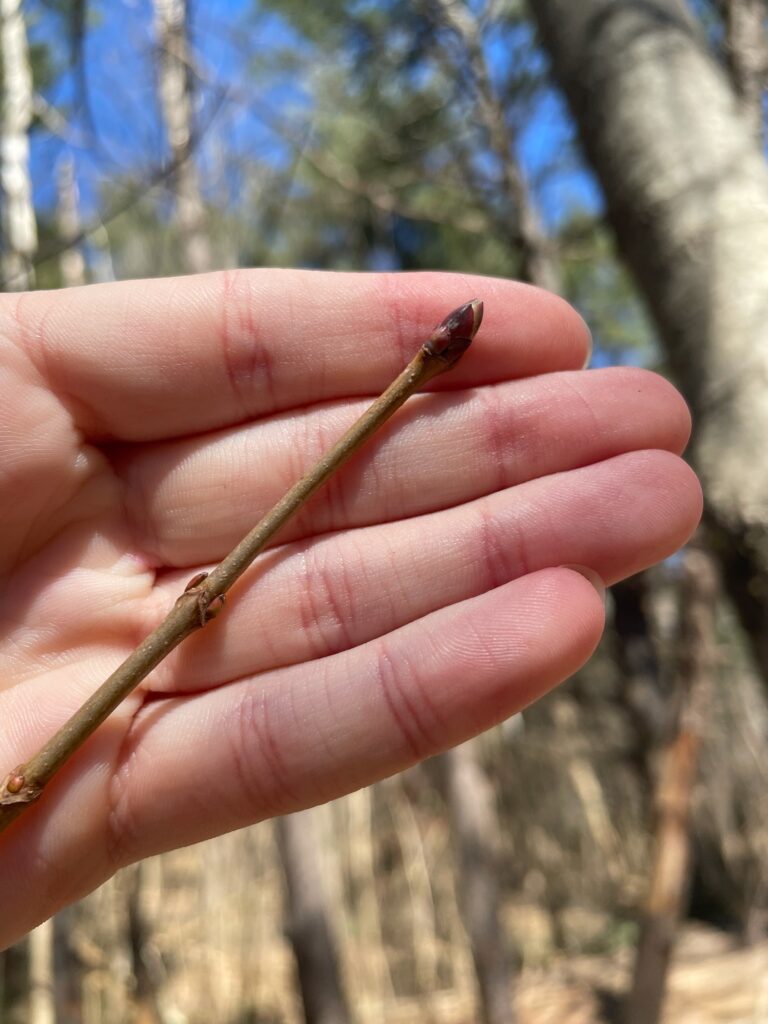
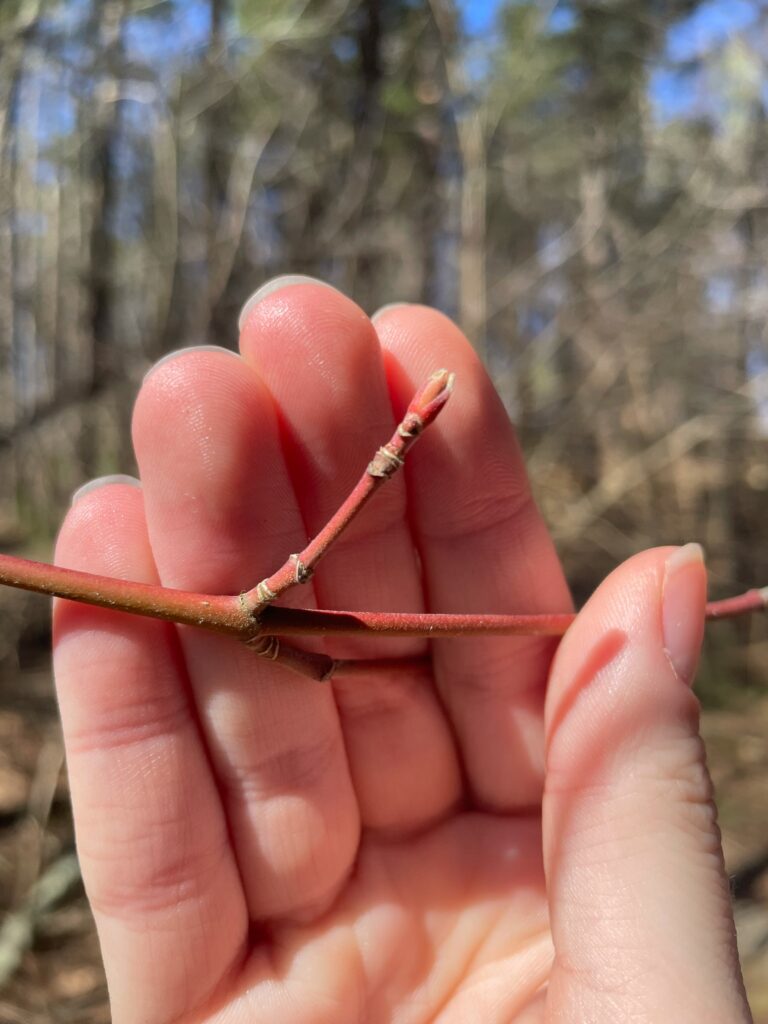
My tree didn’t have any buds, which was sad, but I found some on a few other trees!

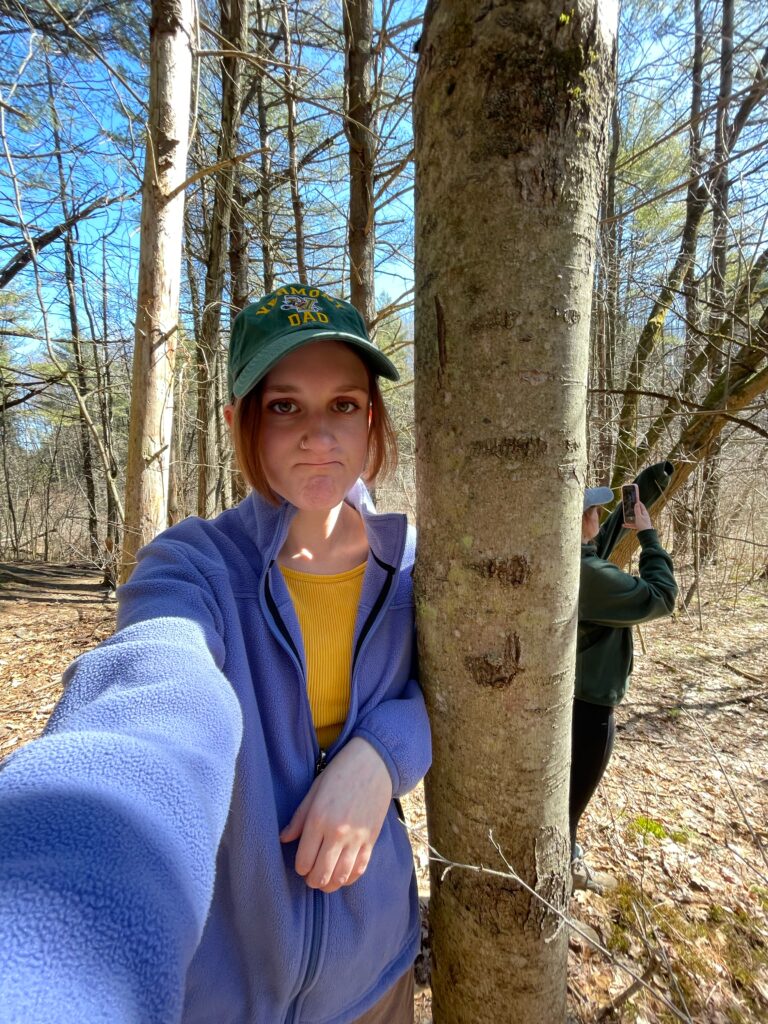
Me with my sad non budding tree 🙁
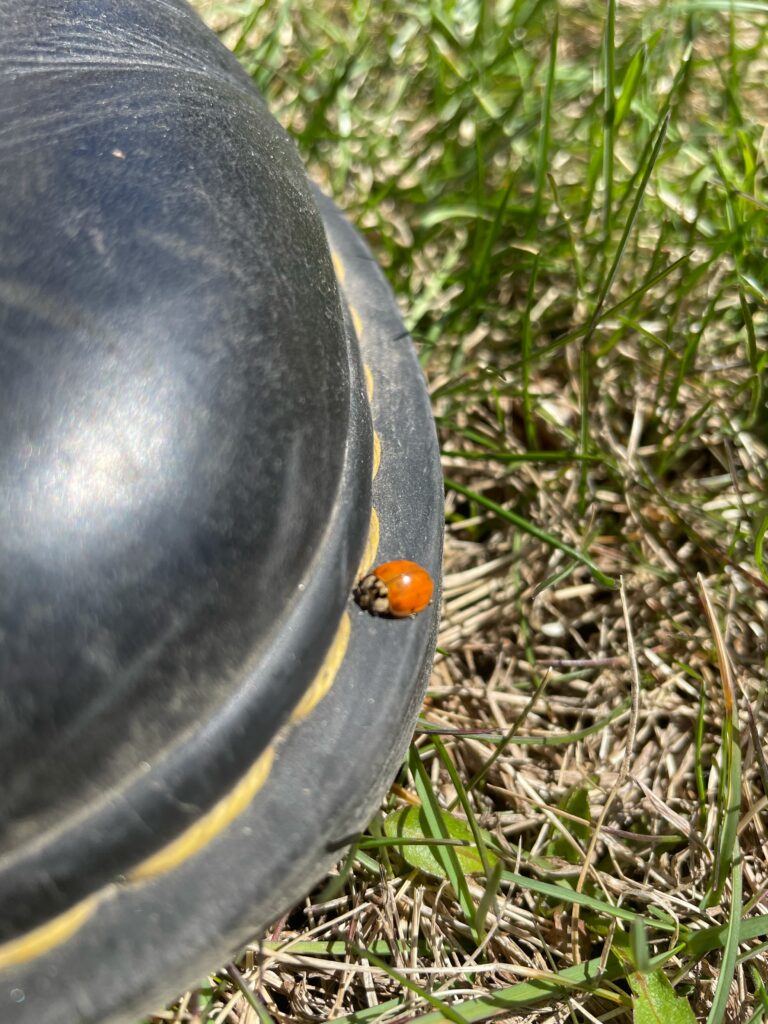
A little ladybug (or ladybug adjacent creature) on my shoe!

Today we headed back to Centennial Woods, which was (shockingly?) still icy! We saw more green on the ground (moss and ferns!!) which was exciting.

My tree, looks pretty similar to last time. It does have more moss growing on it!

It didn’t really seem like the tree buds had changed much yet.

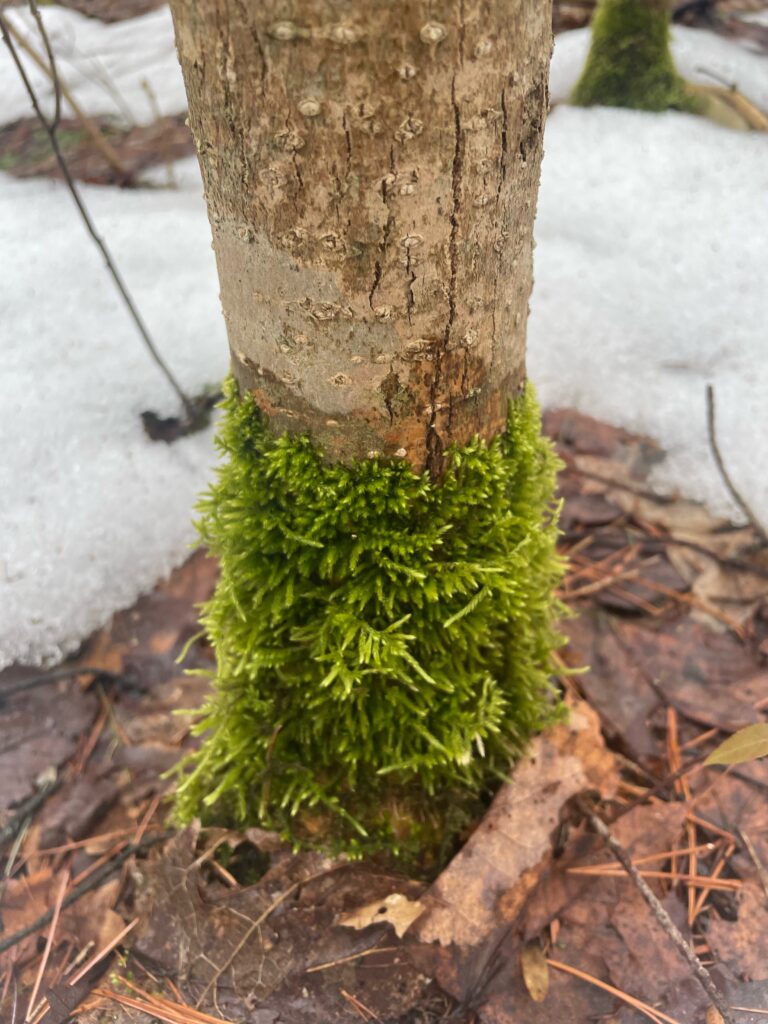
Fun moss growing on the base of the tree!
iNaturalist post!!

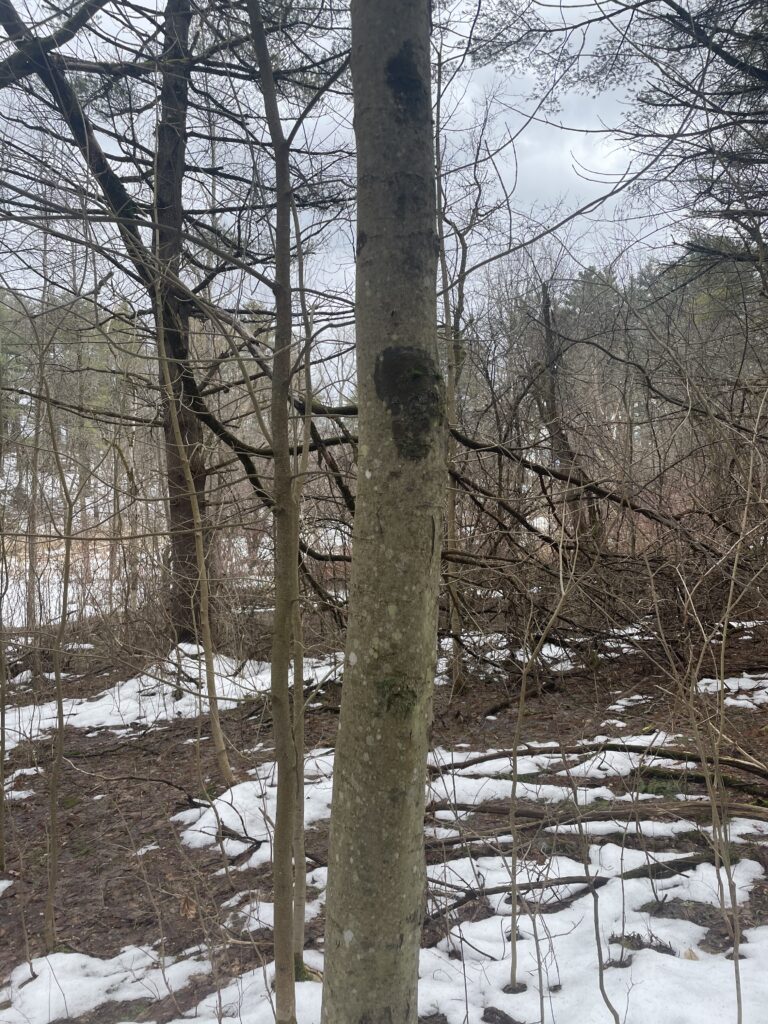
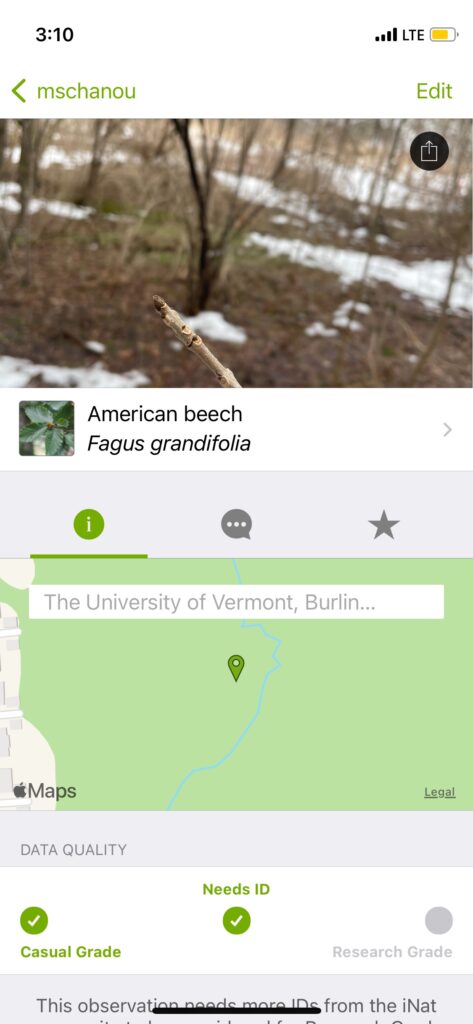
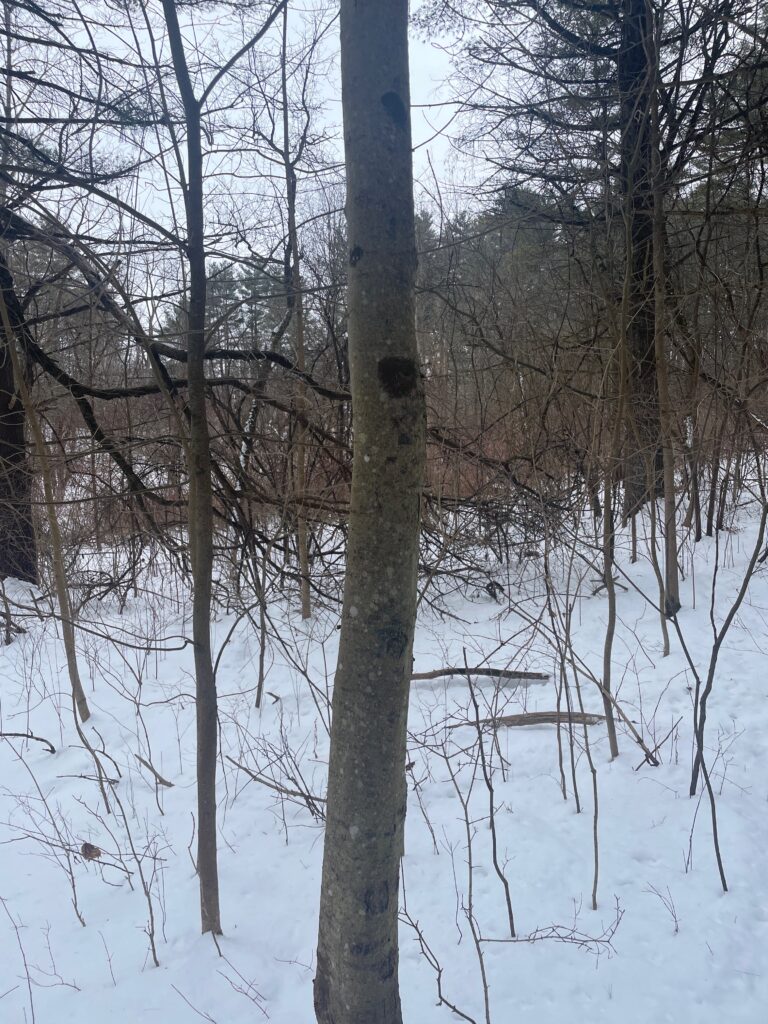
Today I headed back to Centennial Woods to identify a tree. The ground was deceptively slippery and I did slide down into the woods, but I made it to a tree which I identified as American Beech.

The American Beech in question

One thing that made this tree immediately identifiable was its bark: it had the beech bark disease that we used to identify them in the past. Its bark was also smooth and grey, which we also used to identify it. We knew it wasn’t a young maple because of these factors.

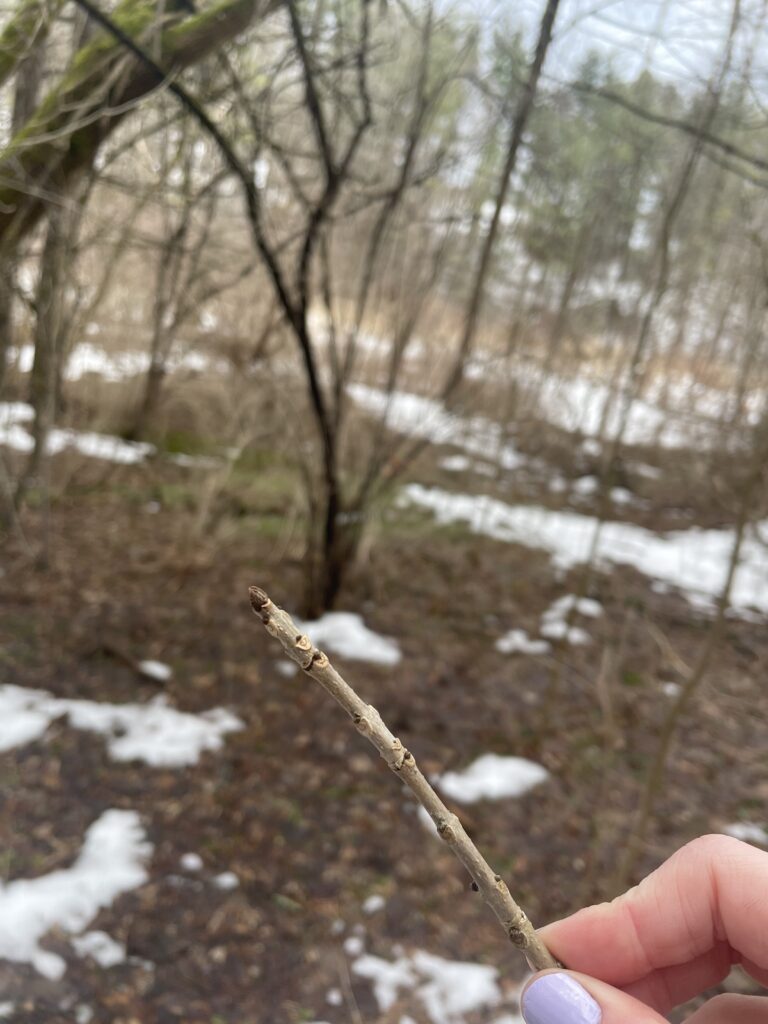
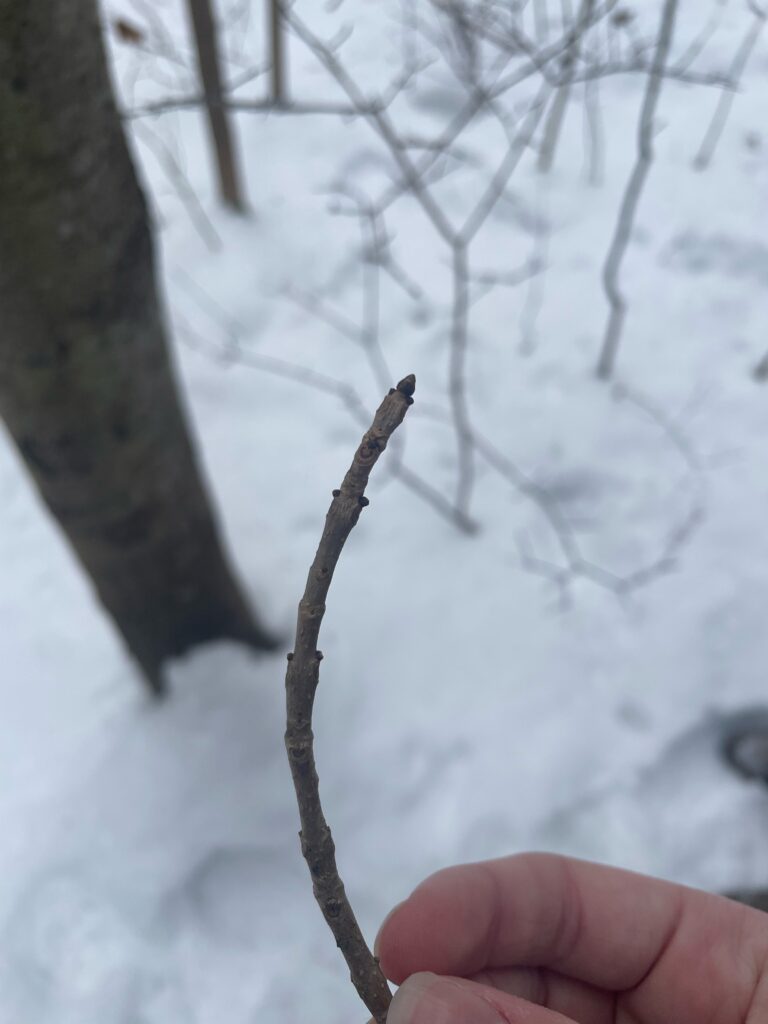
A fallen twig I think came from the beech.
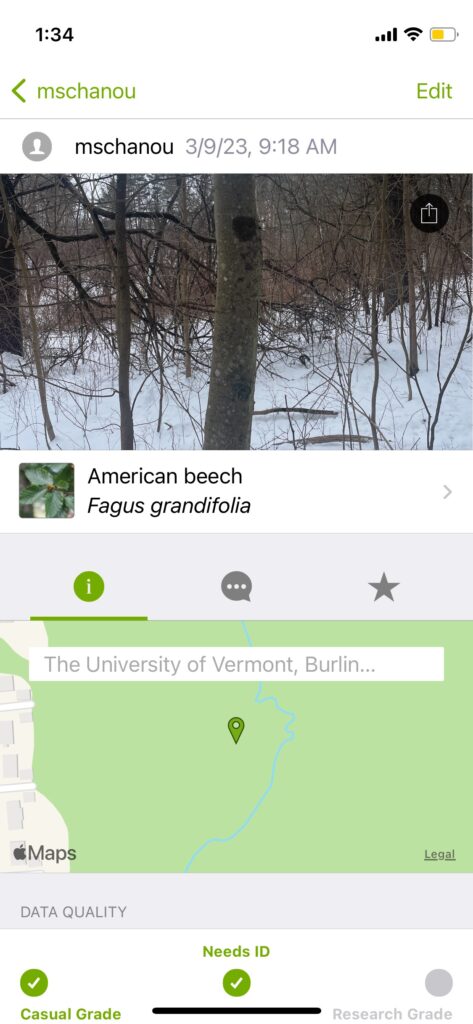
My inaturalist post.

Another successful tromp in the woods! I am excited to see when this tree develops buds and blooms.

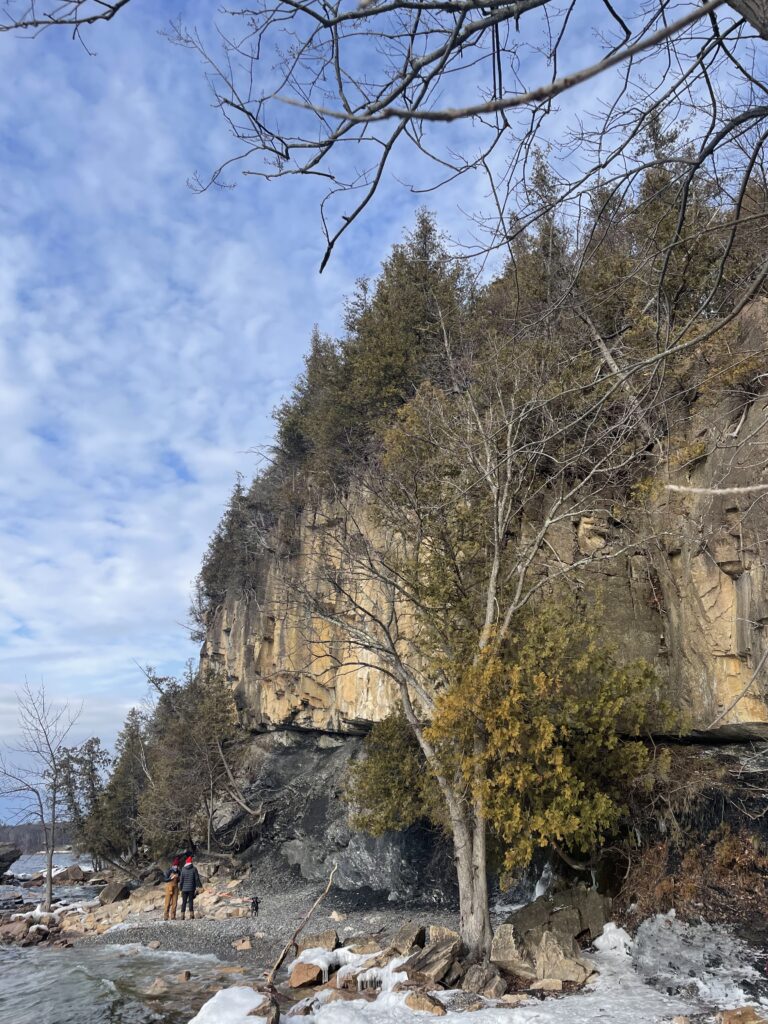
Today my friends and I headed to Rock Point, which was very cool to see since I didn’t get to go on our Rock Point lab first semester. We walked on a few paths, stopping to note tracks and bird noises, and also saw the water!

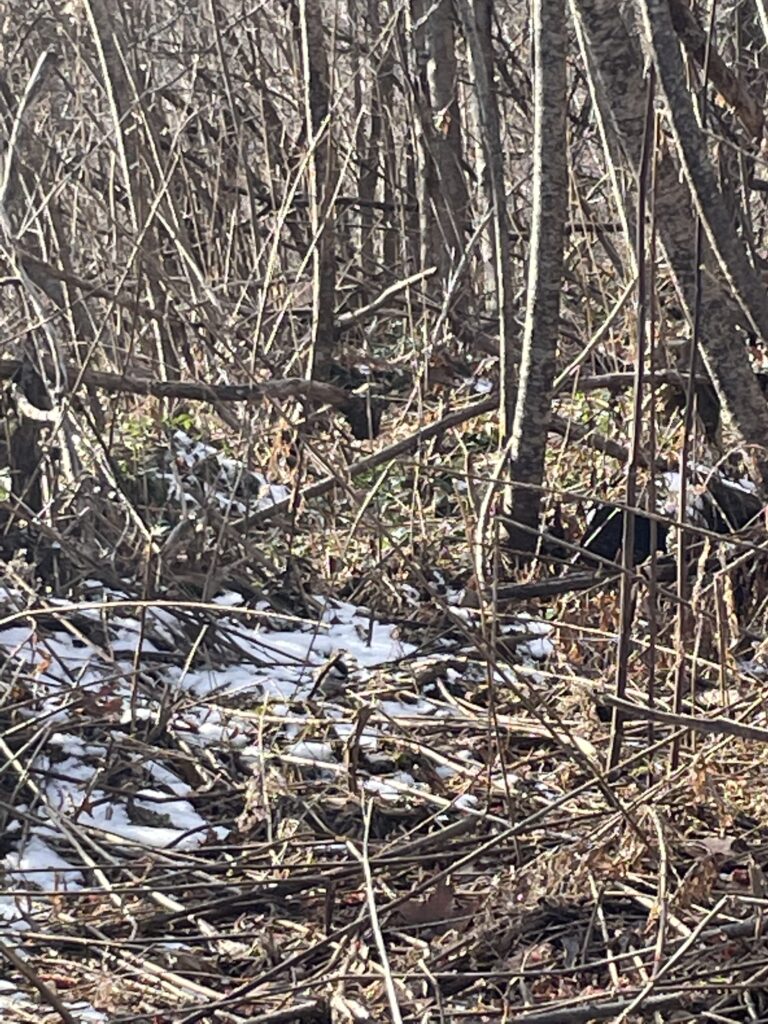
I learned today that it is very difficult to take pictures of birds. You might not be able to see it, but there is a Chickadee sitting on a stick in the bottom middle of this photo!

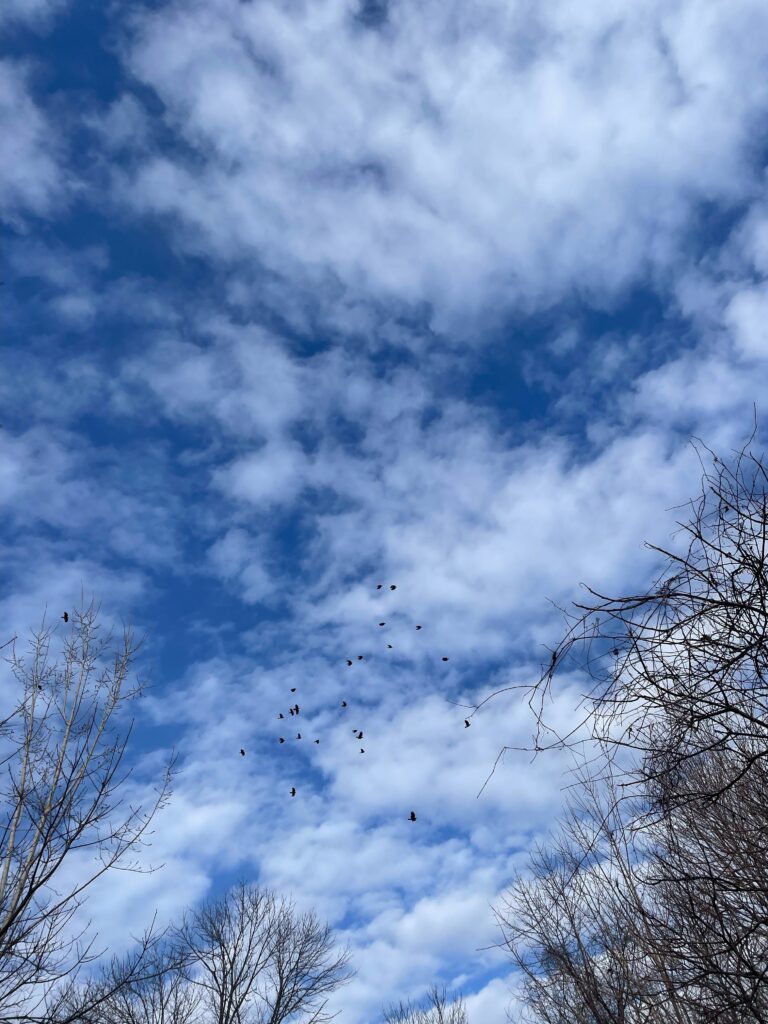
We identified birds mostly by their calls, as we had heard Chickadees and crows before.

Crows!!

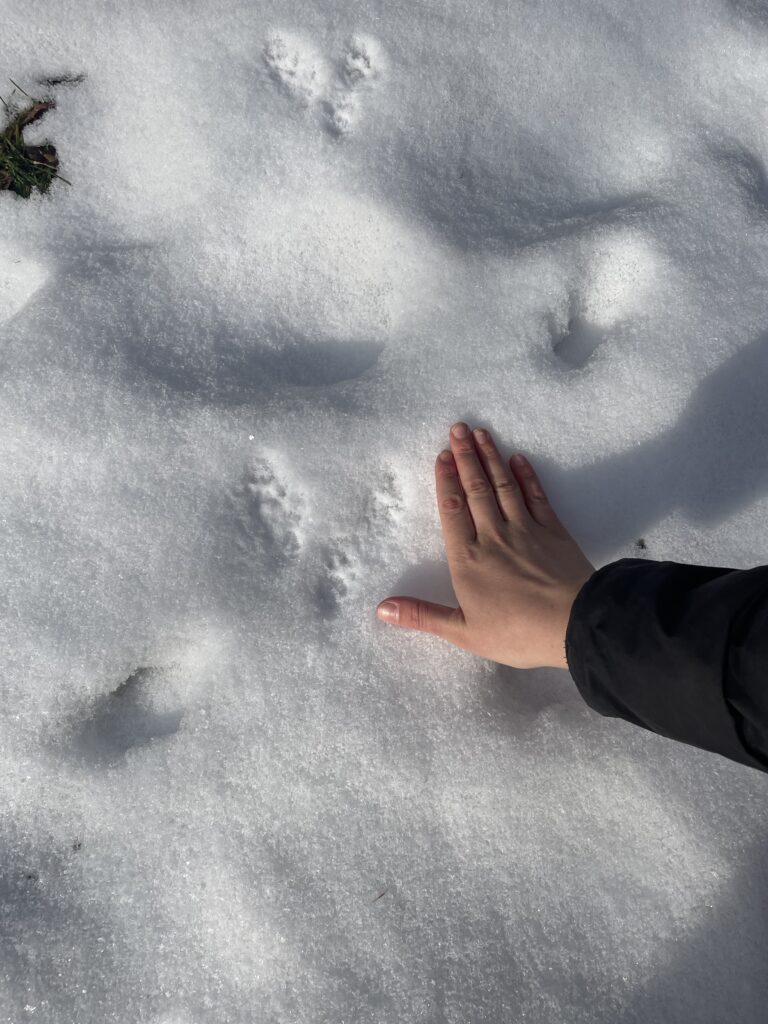
We didn’t encounter any mammals (except for some really cute dogs), but we saw quite a few tracks!

Tracks we think were from a cottontail rabbit (or a really big squirrel?)
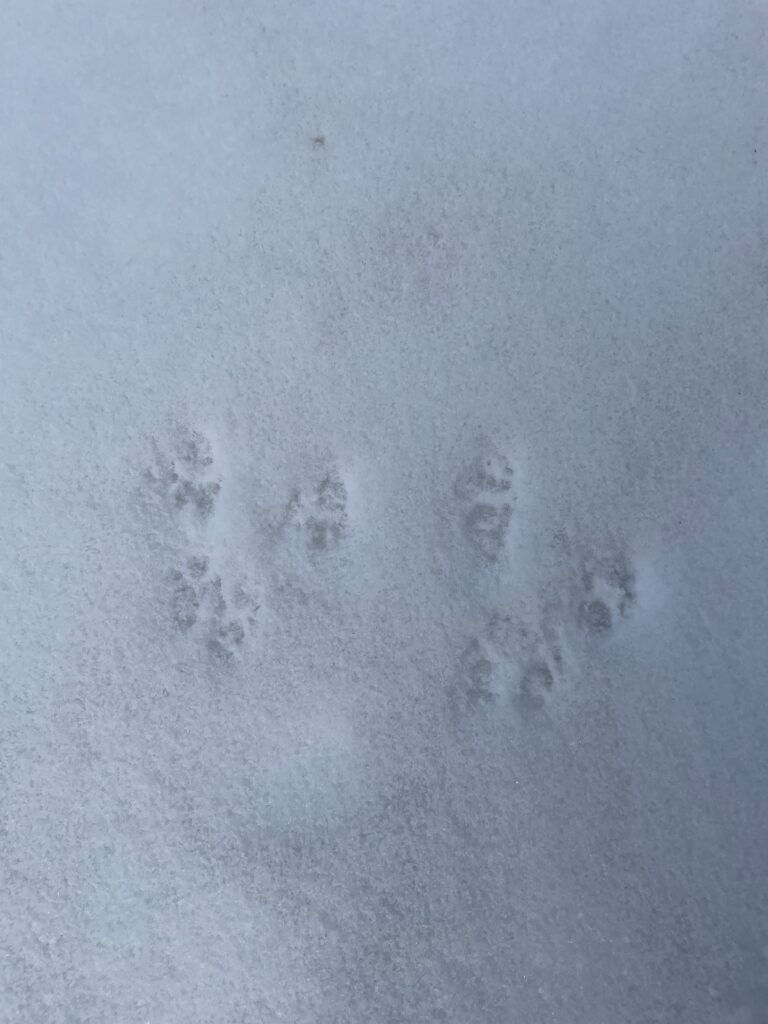
We saw two sets of tracks running parallel to each other–two rabbits?

We identified tracks mostly based on size, walking pattern, and paw shape. We saw a lot of canine tracks, but were able to rule out coyote because the toes didn’t point straight forward.

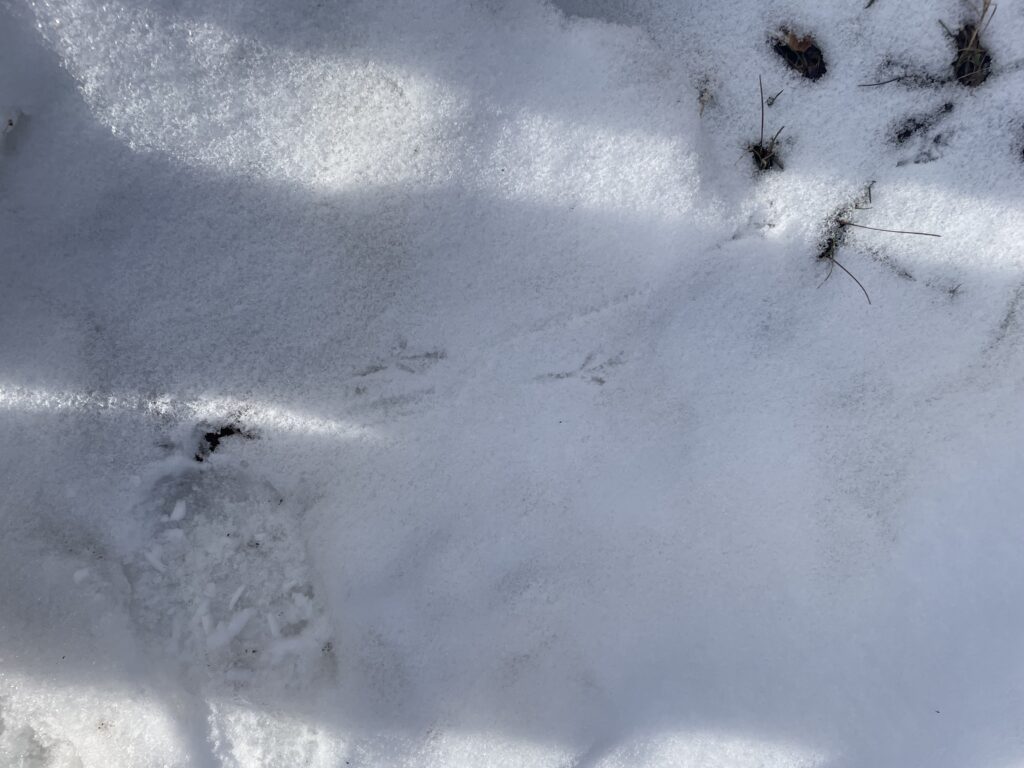
We also saw really tiny bird prints in the snow!!

I enjoyed using iNaturalist for the first time. Recording bird sounds was a great way to record an observation without struggling to take a picture of a moving target.

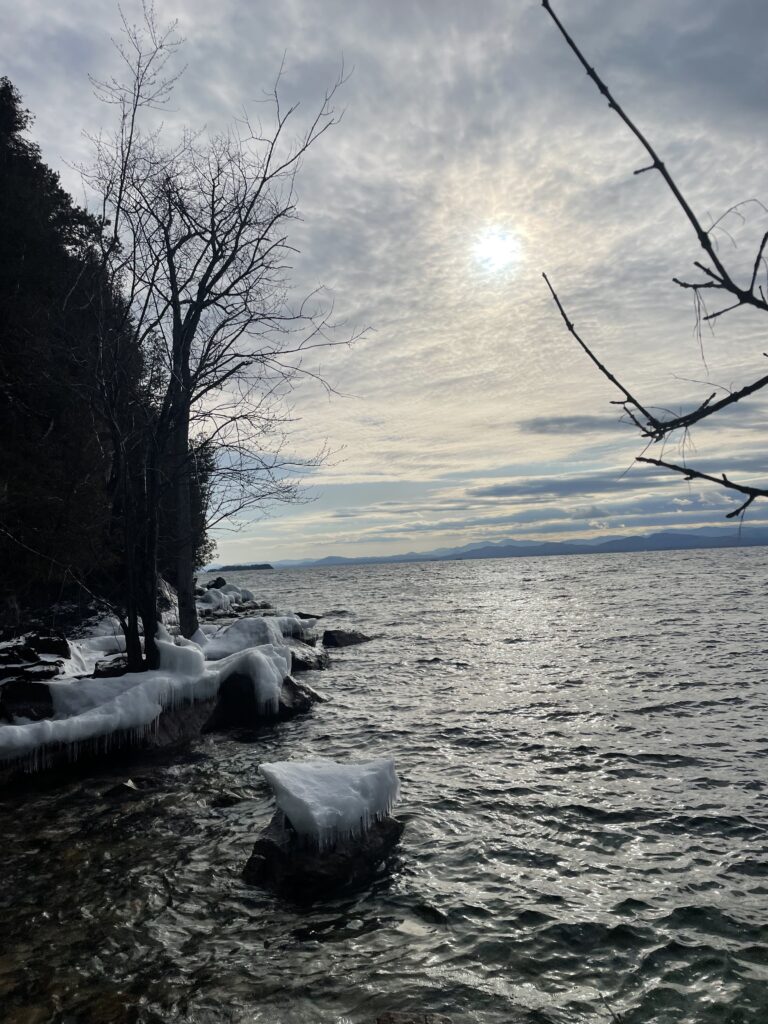
Rock point in the winter is insane. There were huge chunks of ice and icicles hanging off of the rocks!
That little dog over there was named Lucy–so sweet and friendly! 🙂

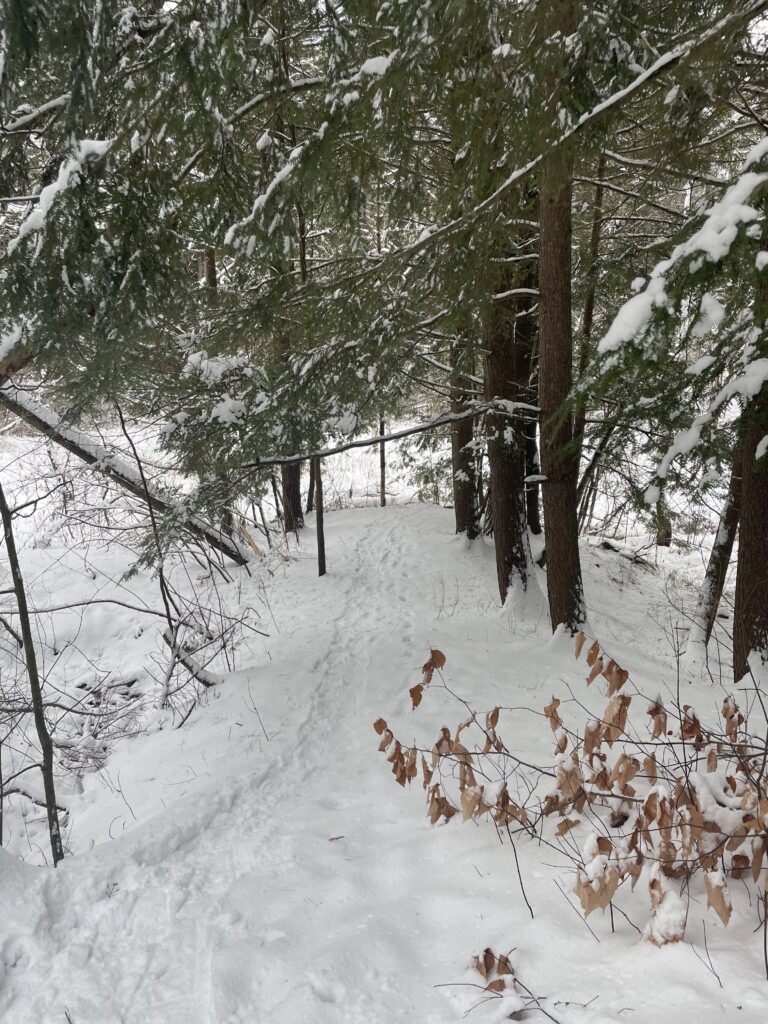
Today I tromped around in the snow in Centennial Woods and visited my phenology spot for the first time this year! Since my last visit, there has been a decent amount of snowfall. I’d estimate there was 8-12 inches on the ground (but who knows). My spot looked similar to last time, apart from that. All of the deciduous trees had finally shed their leaves.
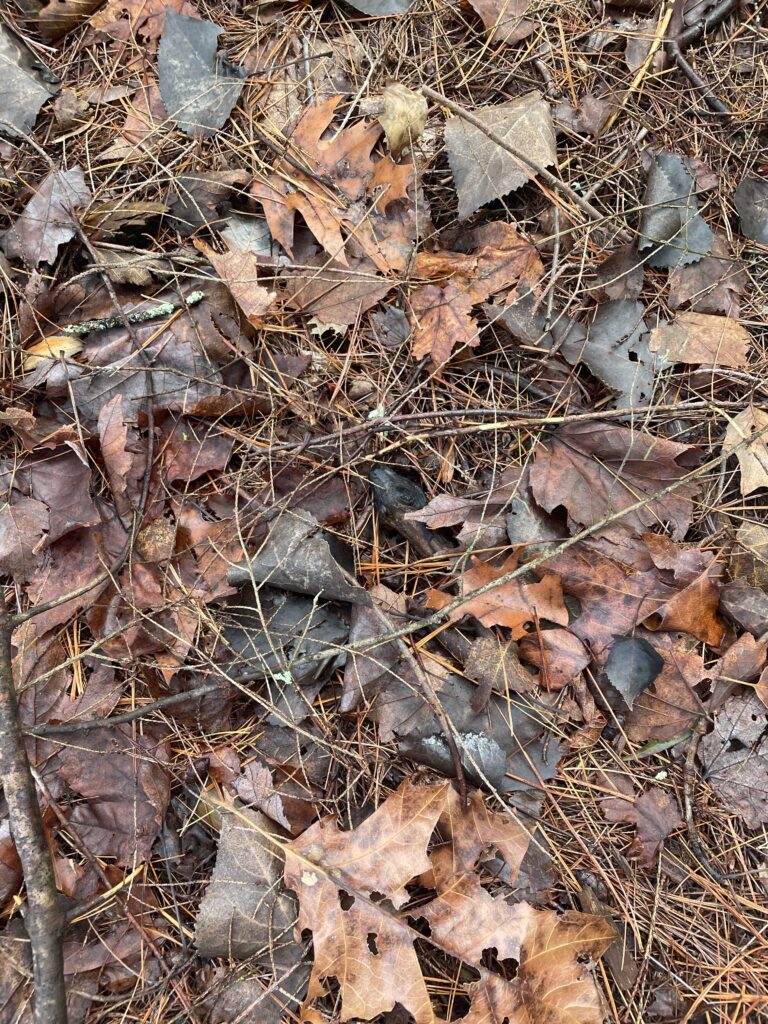
The path down to my spot. Clearly other people come down here!
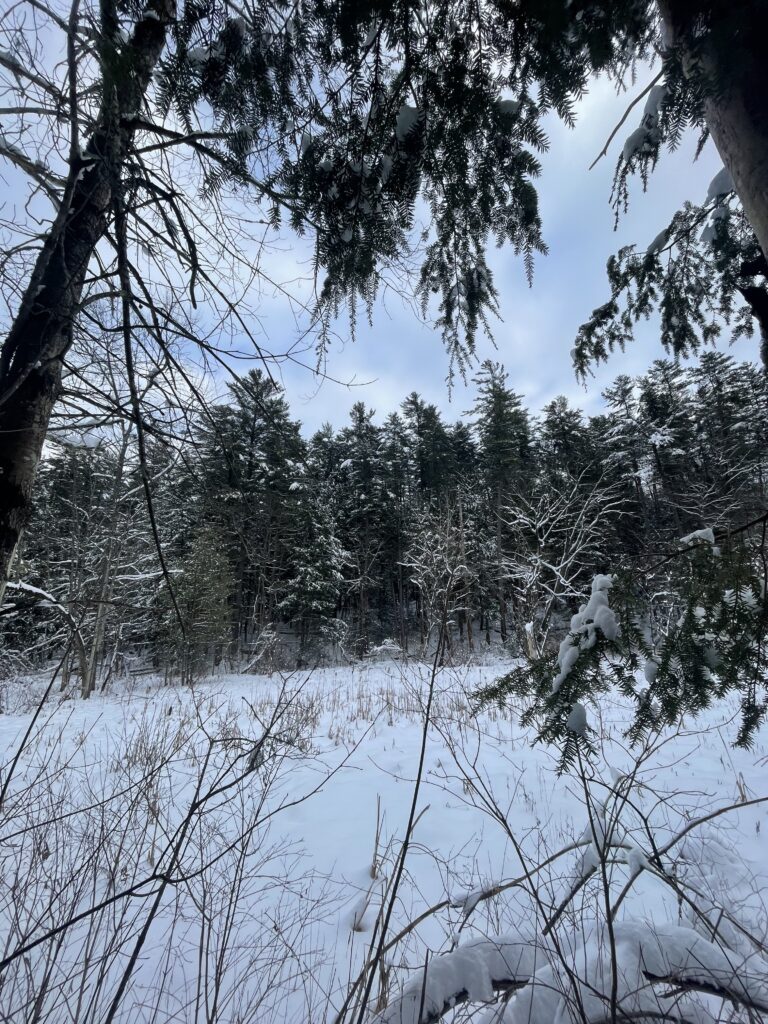
The view across the marsh. You can see a lot more of the other side now!

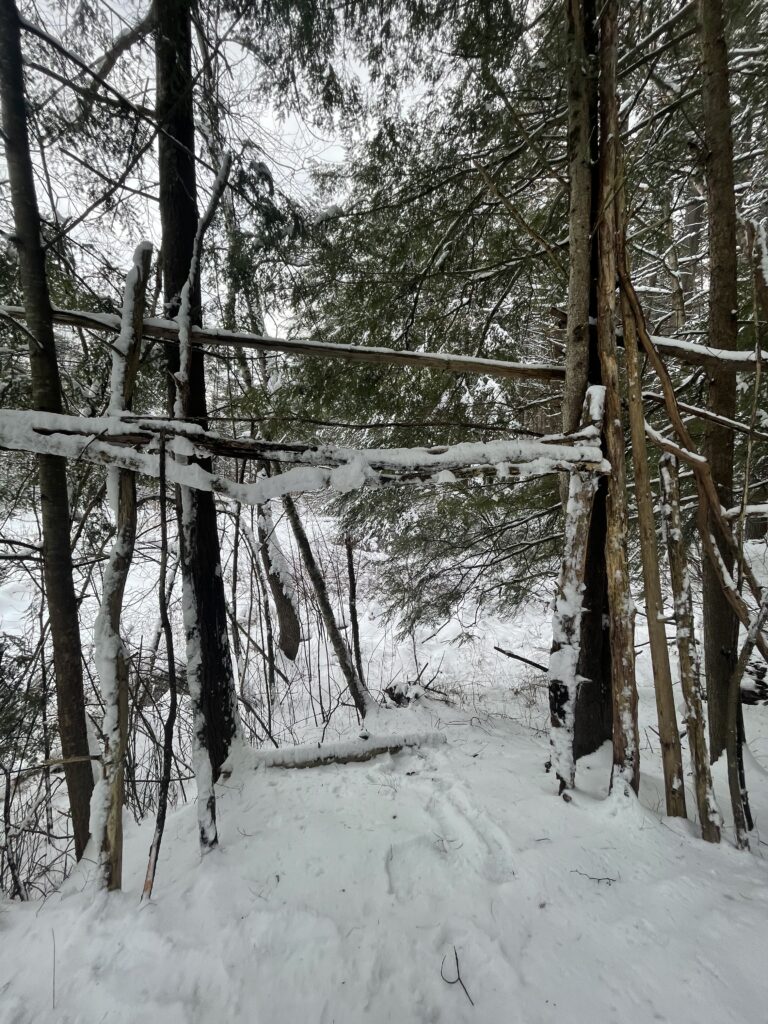
There was also more development on the little hut someone is building! There is now a little gate.

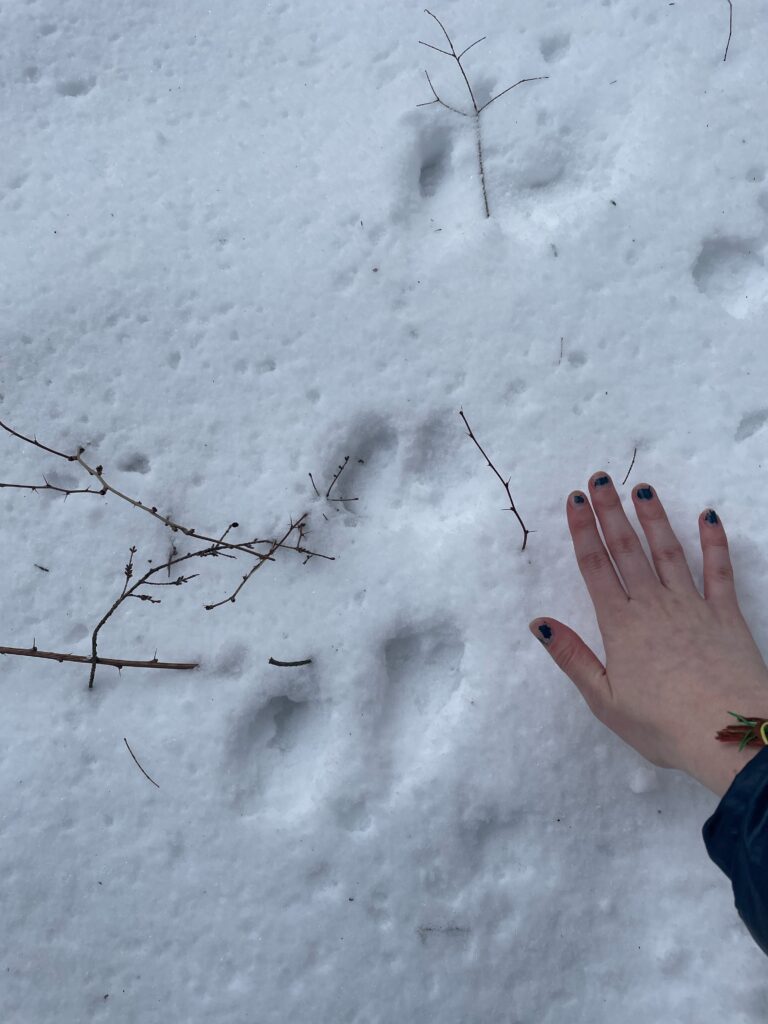
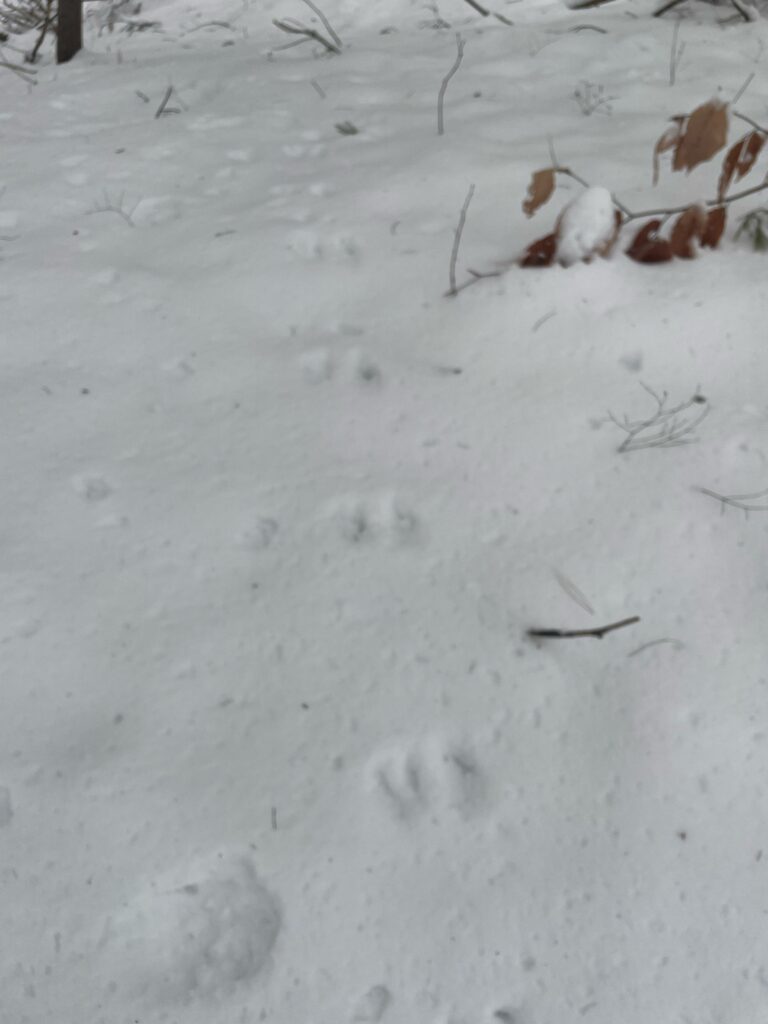
In terms of tracks, I found a few.

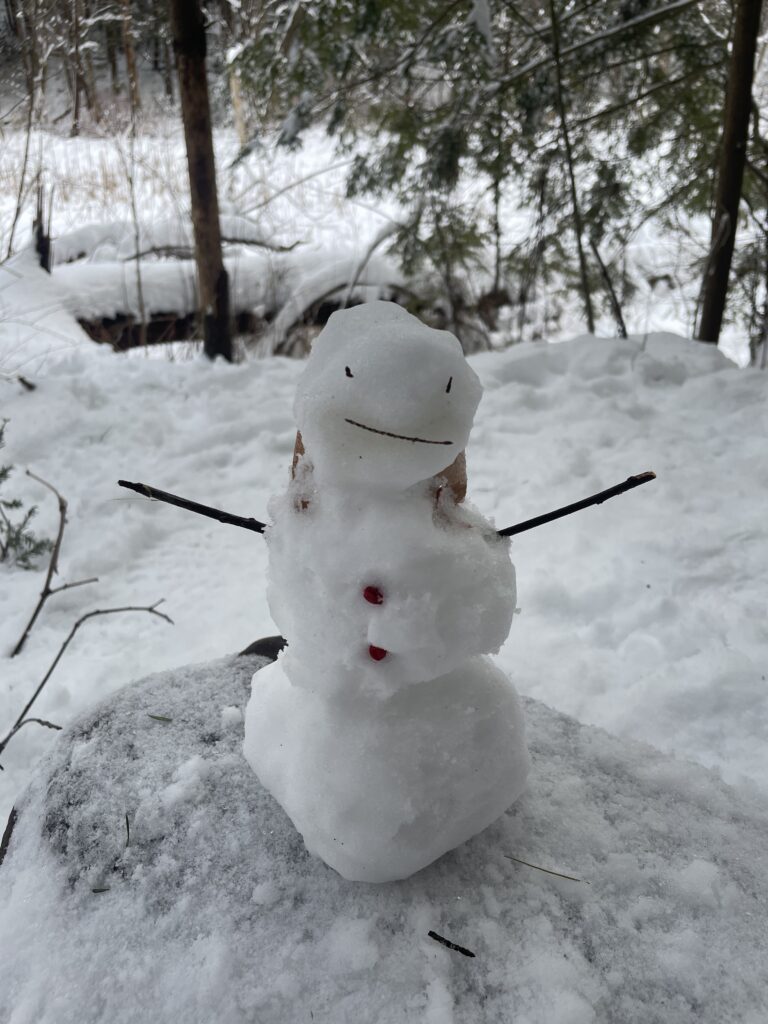
My guess is that these are from a rabbit or a red squirrel. I loved visiting my spot in the winter, it was so beautiful!! I made a little snowman 🙂
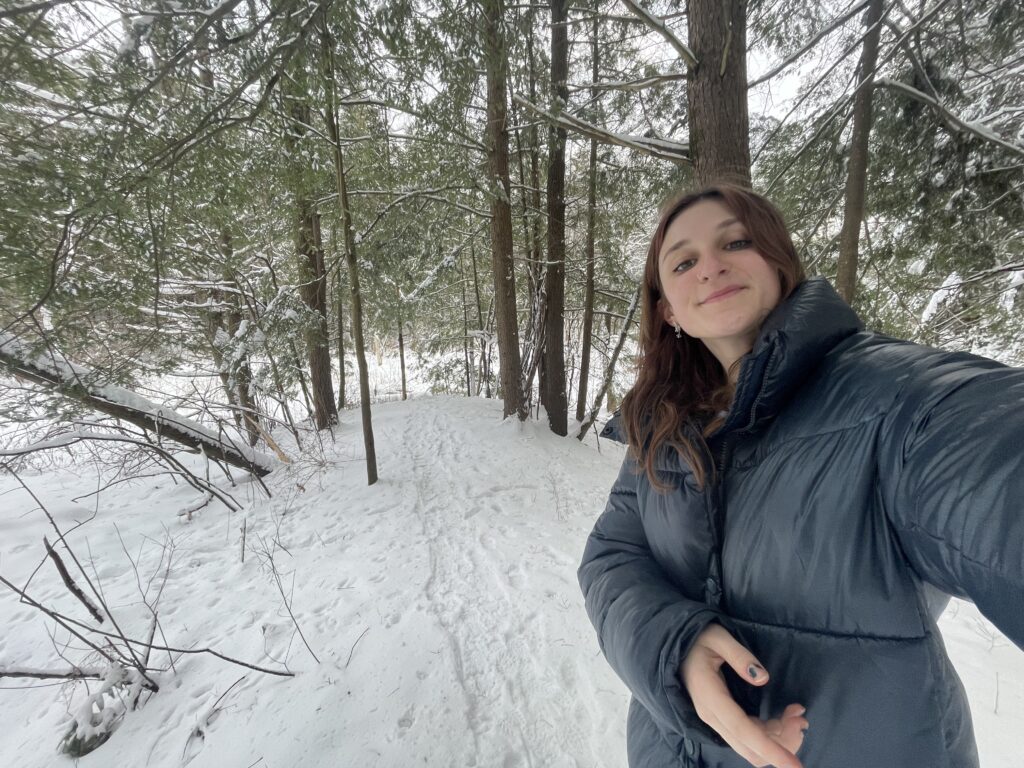
Me in my spot!

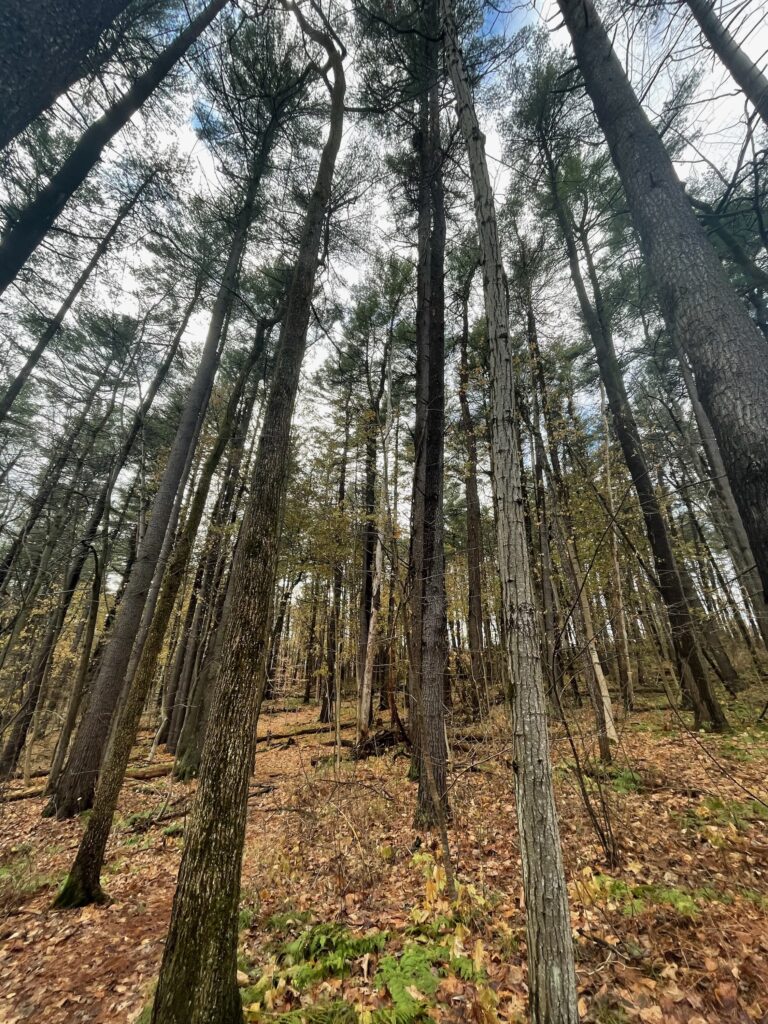
When visiting my phenology place for the first time in a month, I was expecting the trees that still had leaves at my last visit to have dropped them, but a few were still hanging on. There were some American Beech surrounding my spot that held onto a few green and yellow leaves, but it is much less lush than it was in the fall.
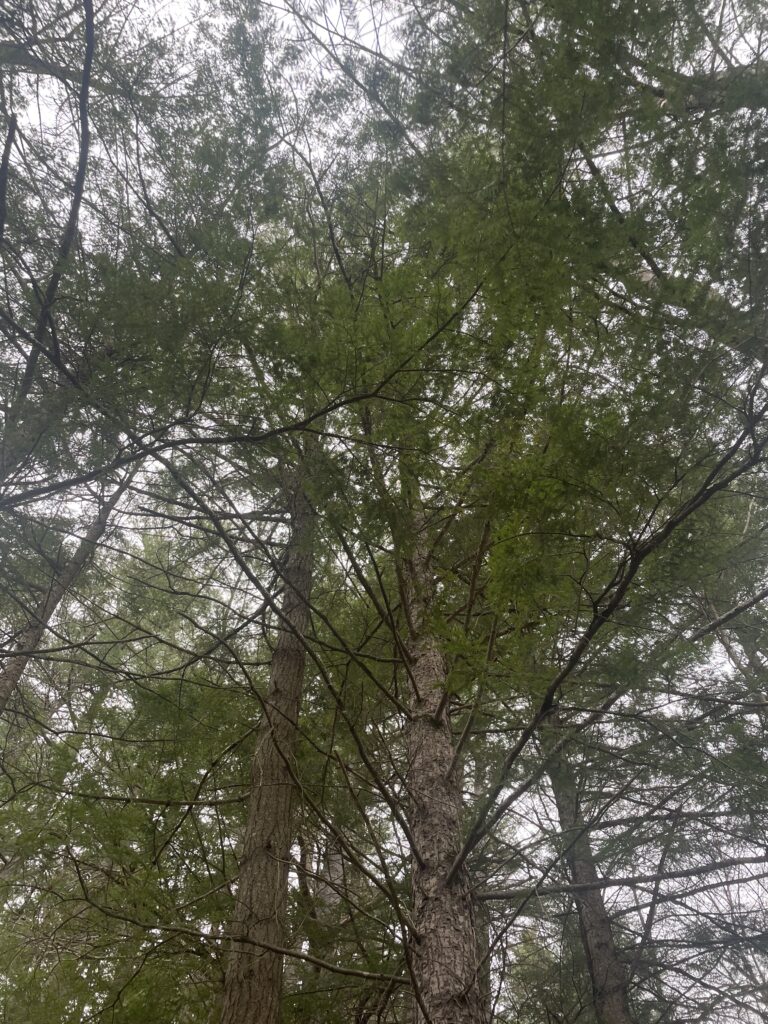
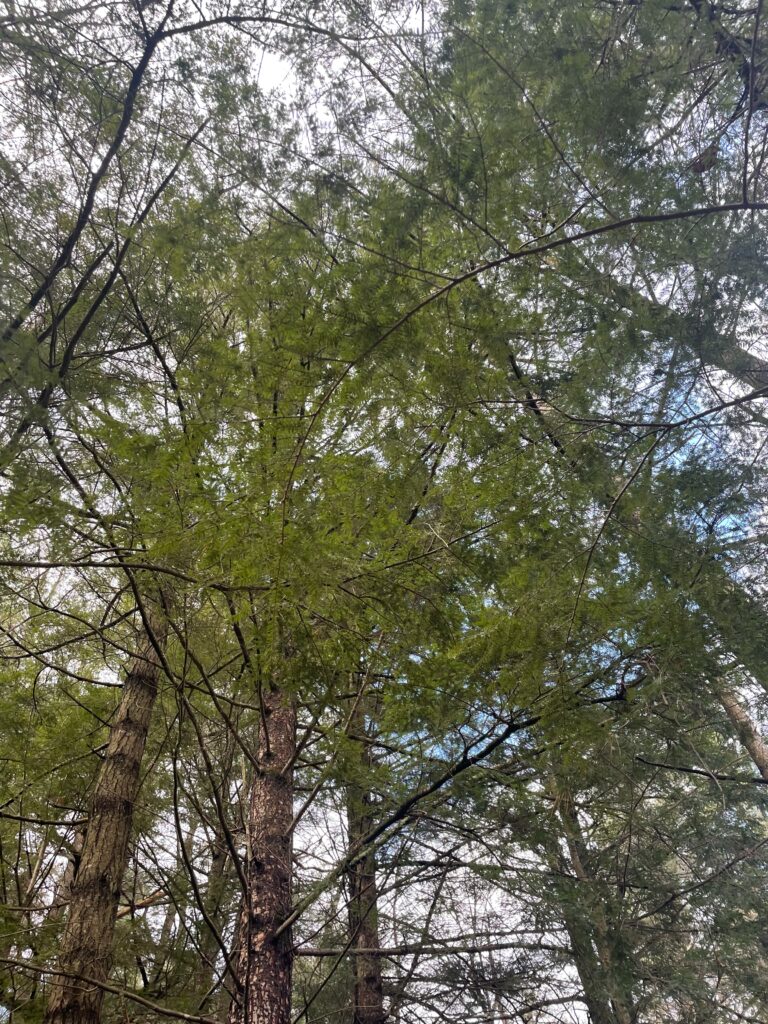
The Eastern Hemlock trees in my tree circle also continue to hold onto their leaves, providing a pop of green in an otherwise pretty colorless spot.

As a lot more of the trees lost their leaves in the last month, there was a significant increase in leaf litter on the ground. It had also just rained when I went to visit my spot, so a lot of the leaves were damp and had been pressed into the ground.

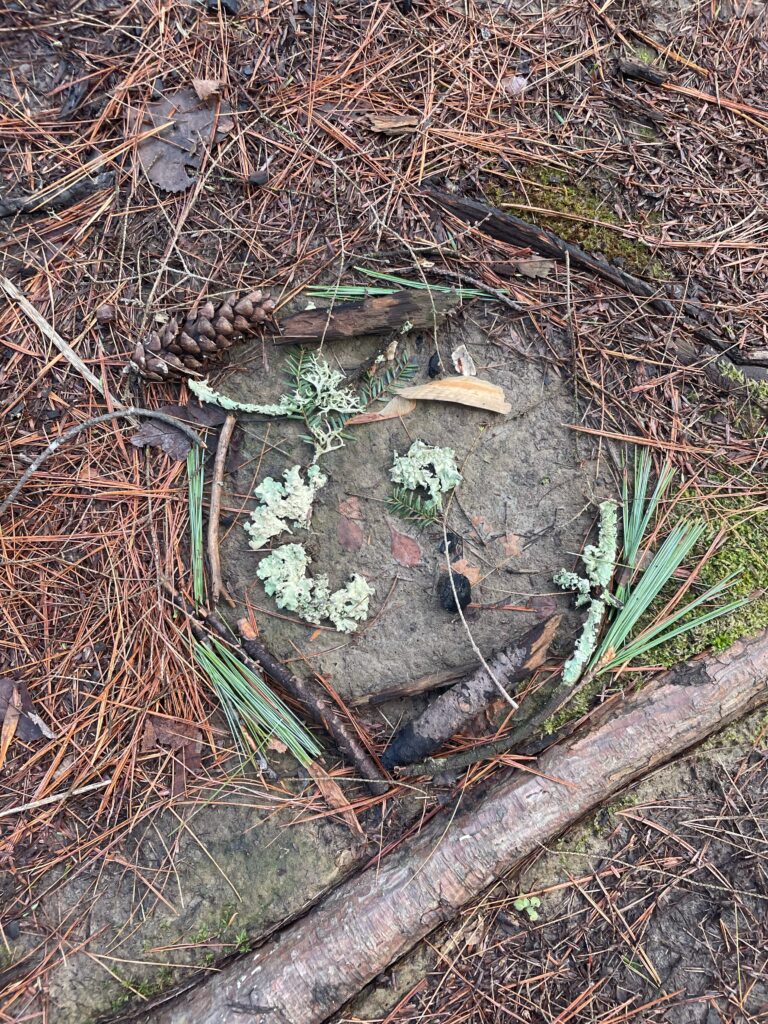
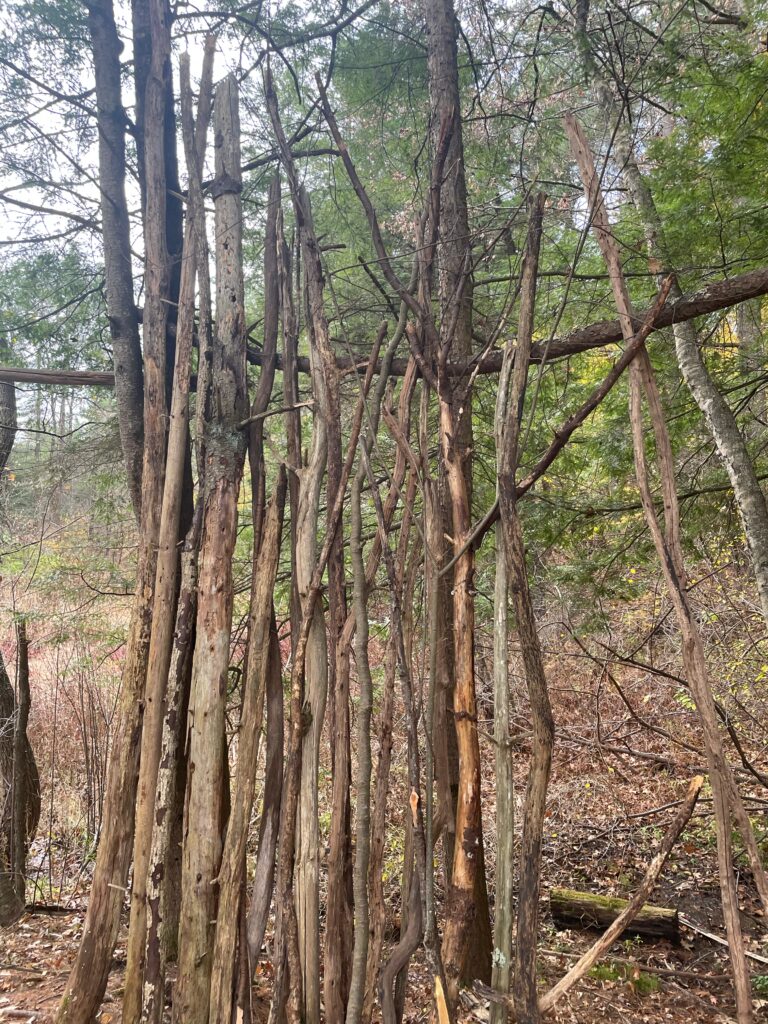
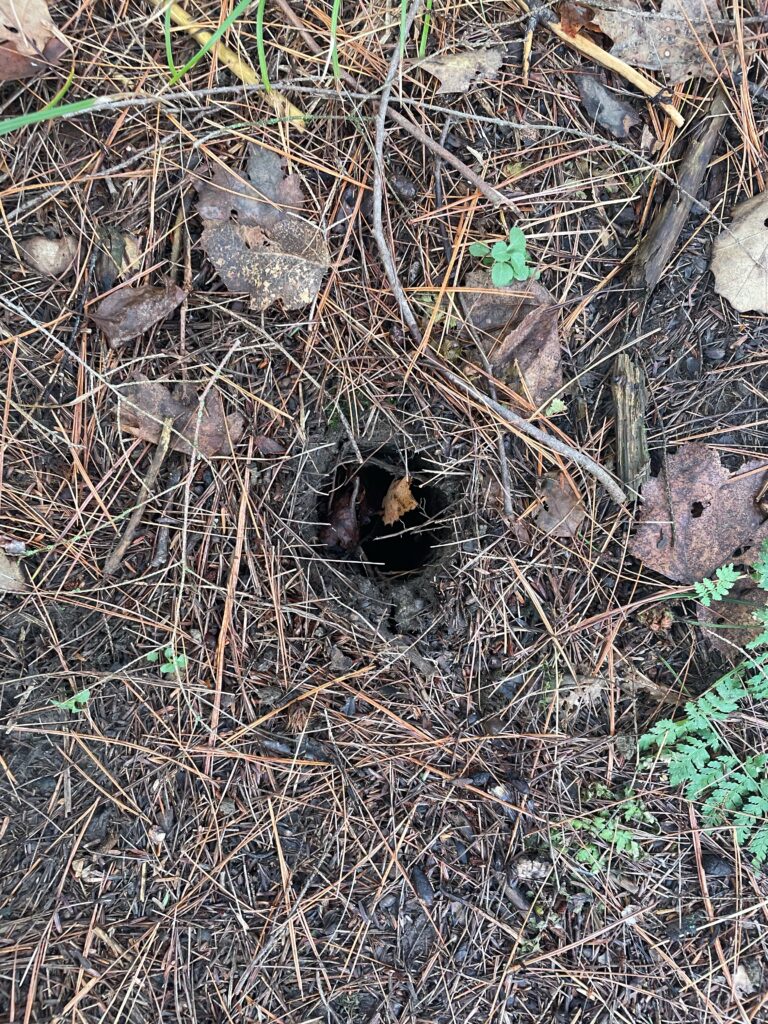
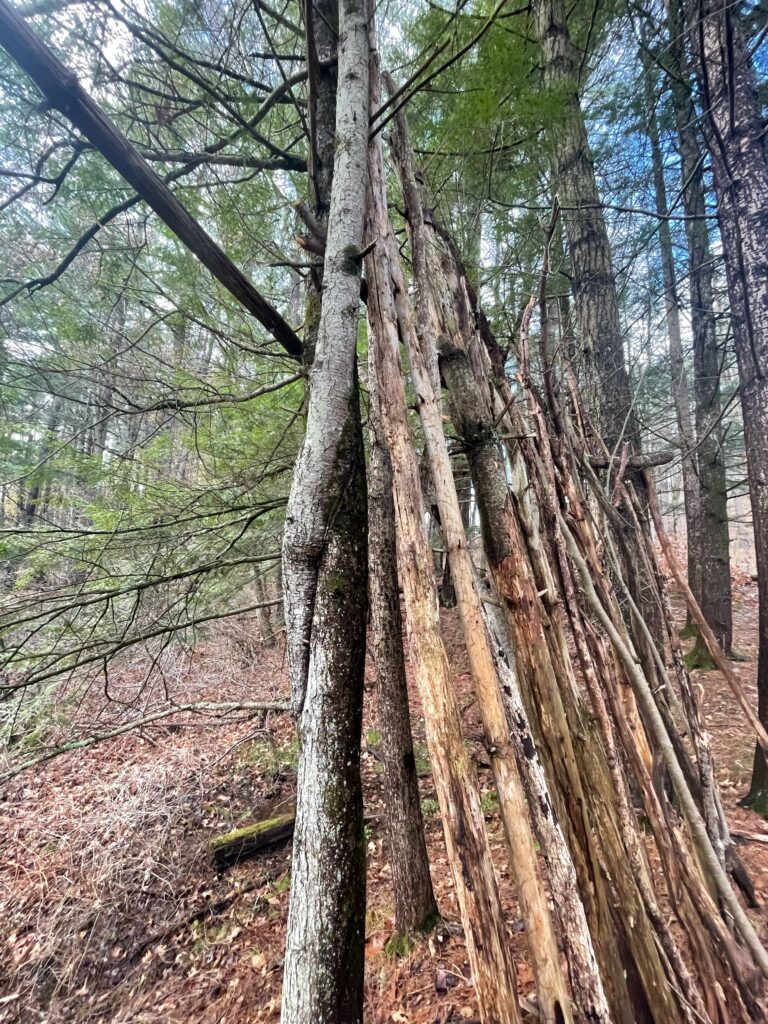
I hadn’t previously observed animal activity in my spot, but I paid close attention this time and noticed a few things that could be related to animal activity. There was a circular hole in the ground about the size of a baseball that could be shelter for an animal. I also noticed potential signs of human activity, like large sticks being set up on the trees in the circle and some lichen and moss arranged in a particular way.

I have really enjoyed coming back to my spot every few months and seeing how it changes. One of my favorite things about it is that it is off the main path a bit, so it’s very quiet. There is a rock in the middle of the tree circle that is perfect to sit on and you can observe multiple parts of the woods from there. I’m excited to see how it changes once we get more snow and colder temperatures. Till next year!

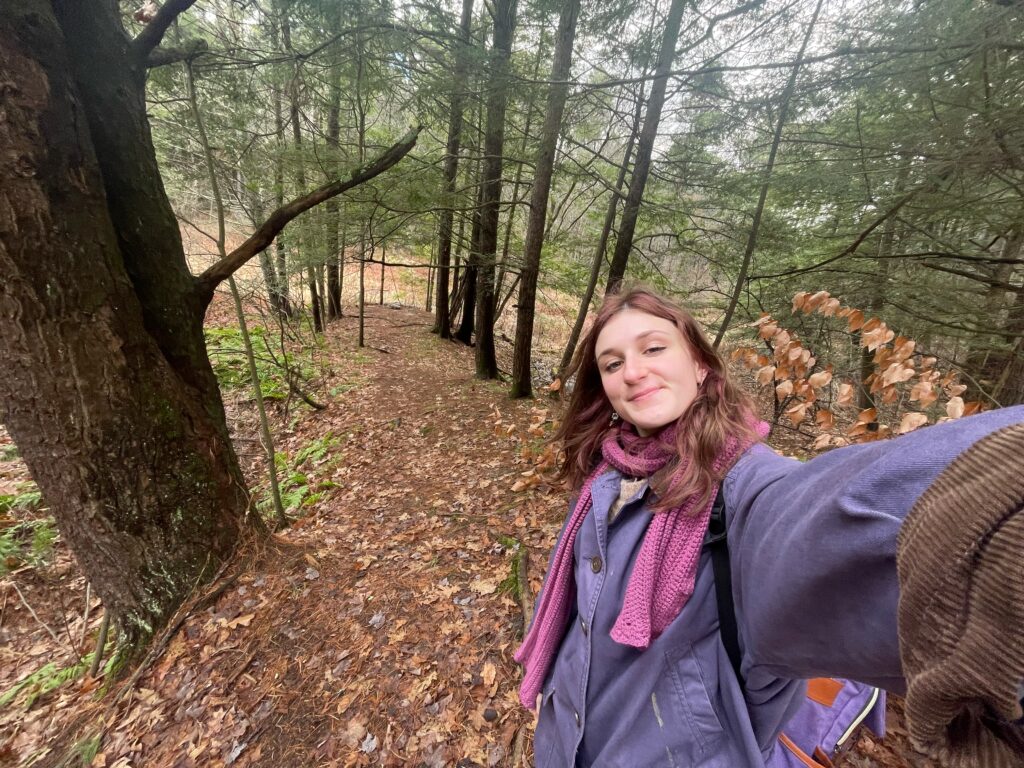
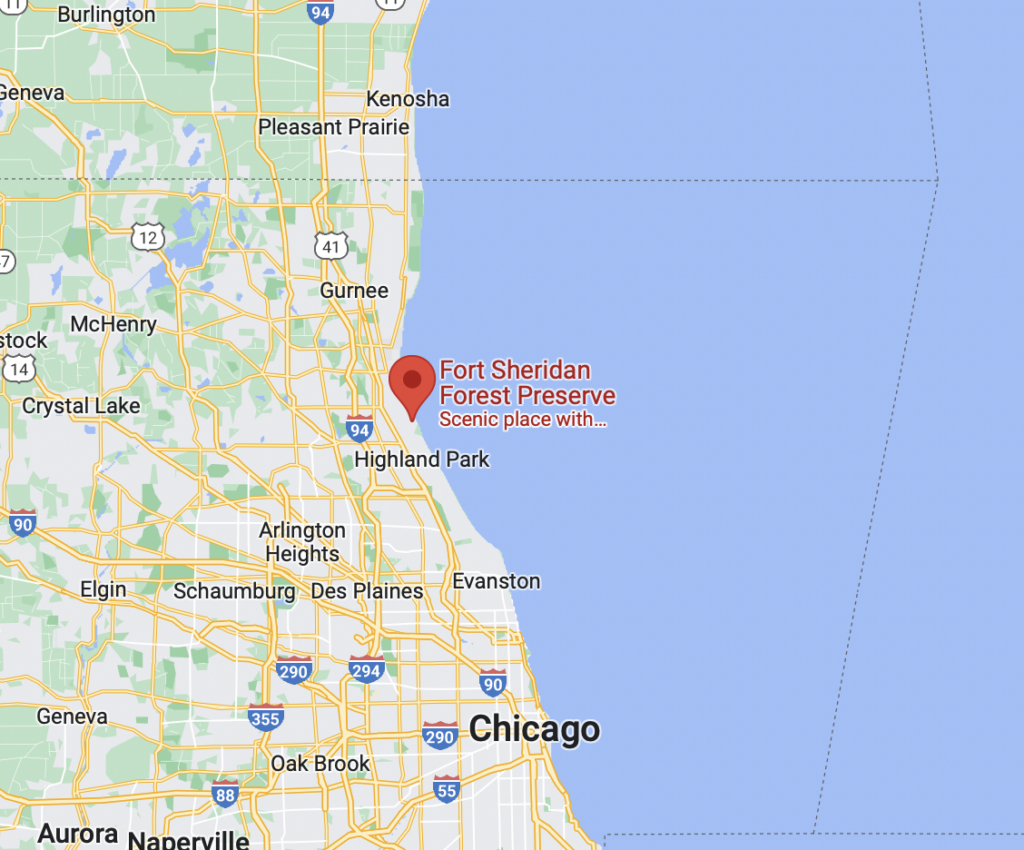
Today I headed to Fort Sheridan Forest Preserve in Lake Forest, Illinois.

Fort Sheridan has a rocky beach with a great view of Lake Michigan.

It also offers a variety of short hiking trails: my favorite one goes right along the water. My pup Mochi also enjoys this trail 🙂

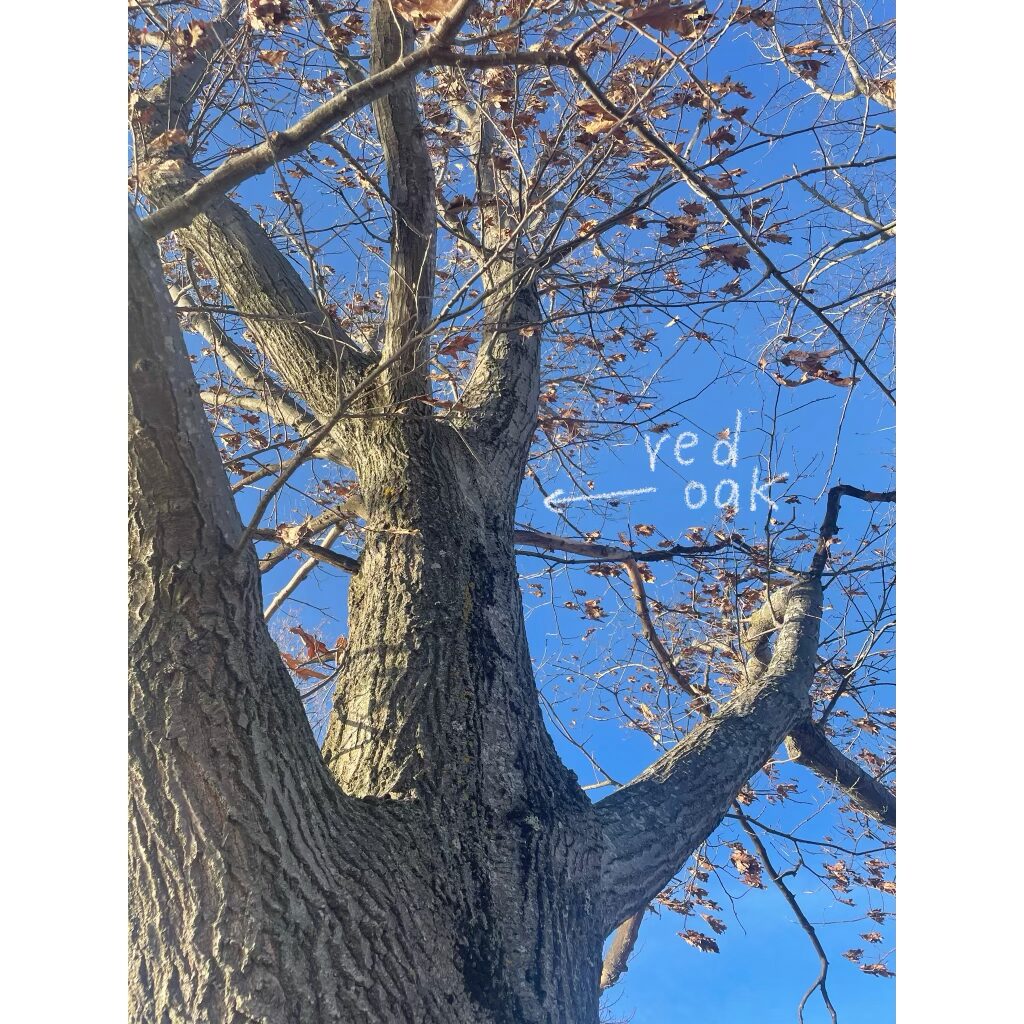
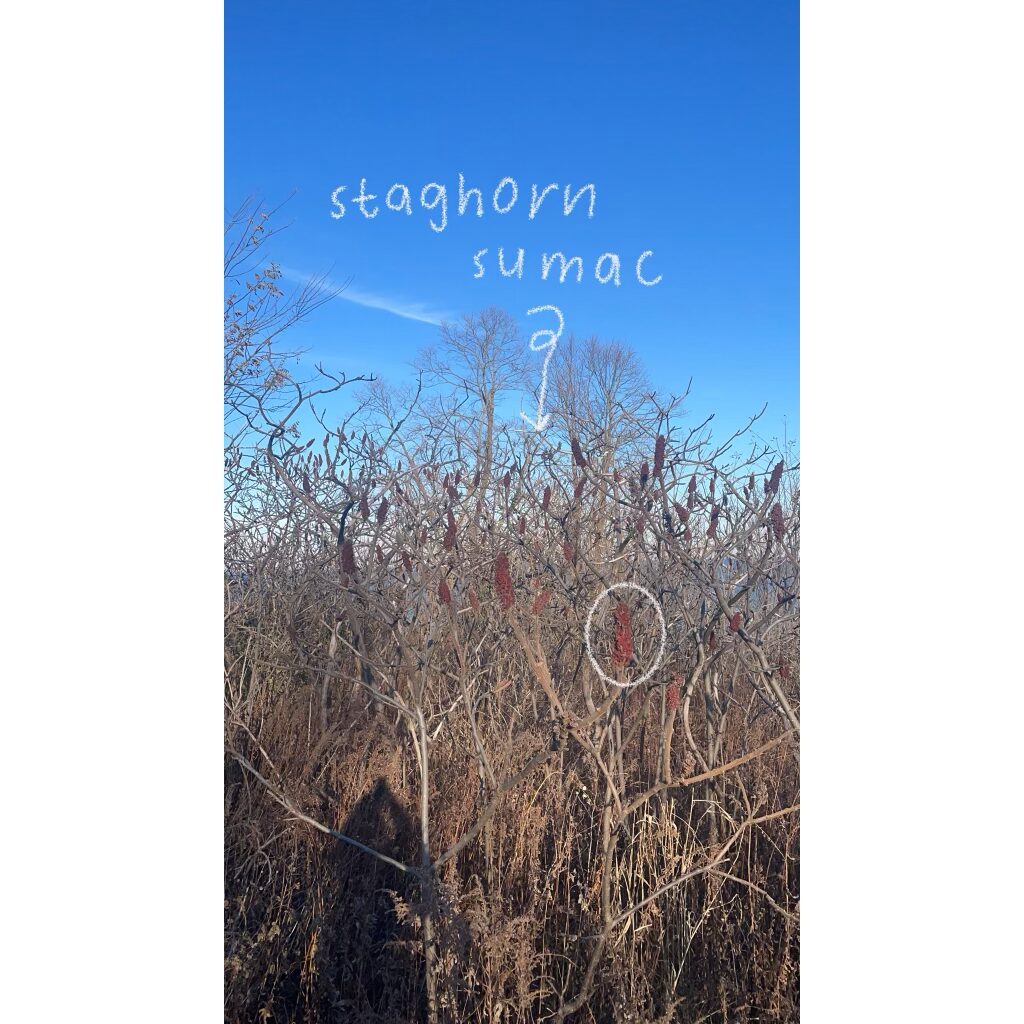
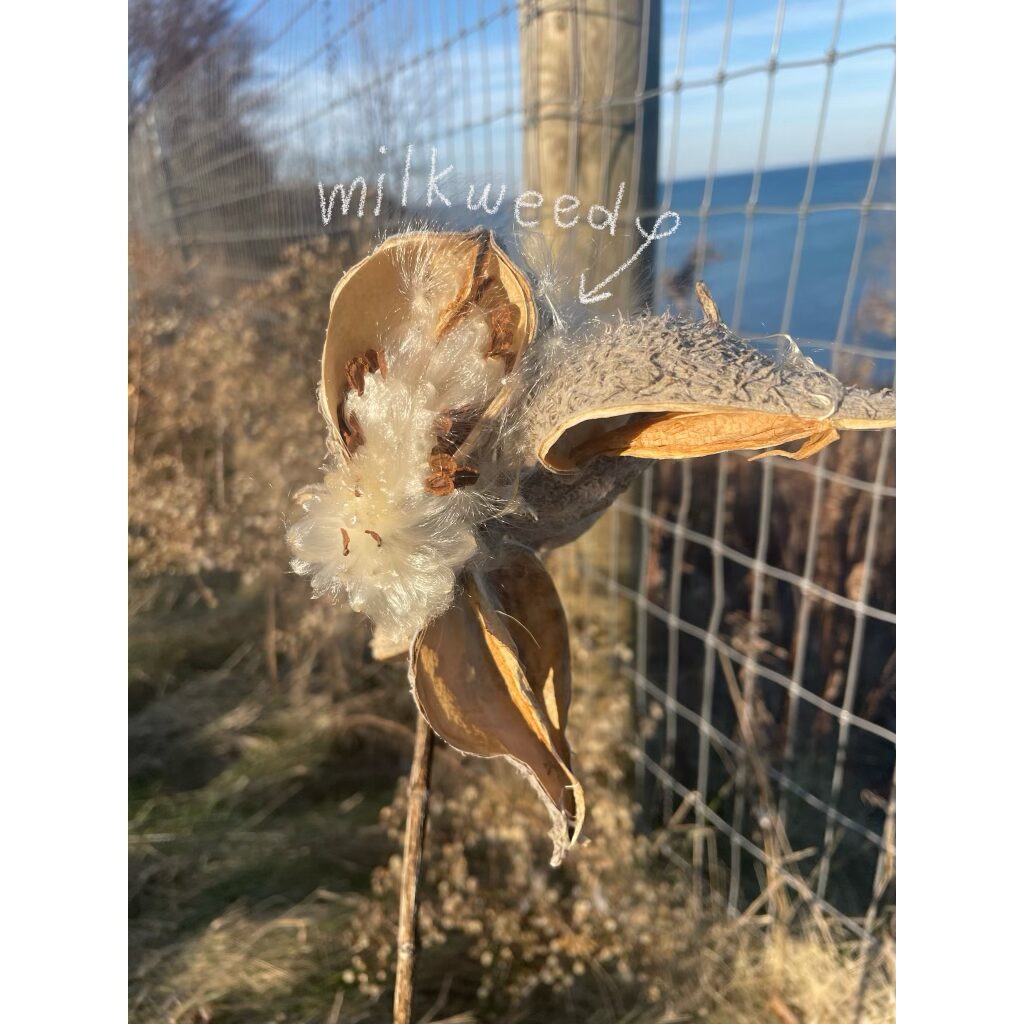
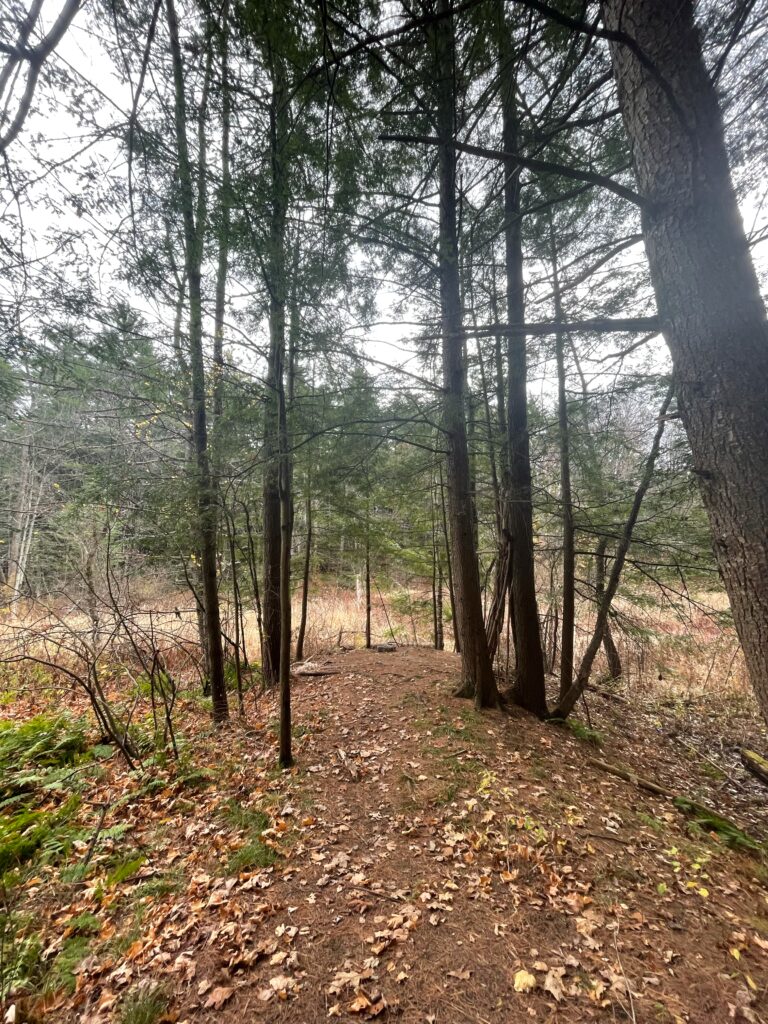
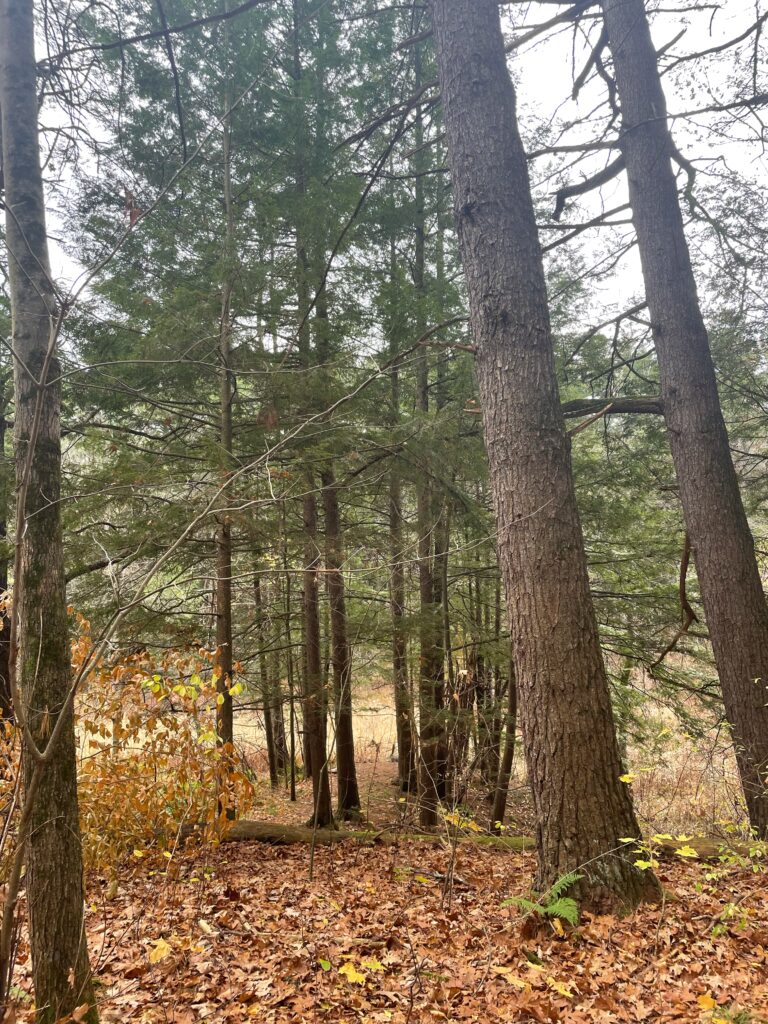
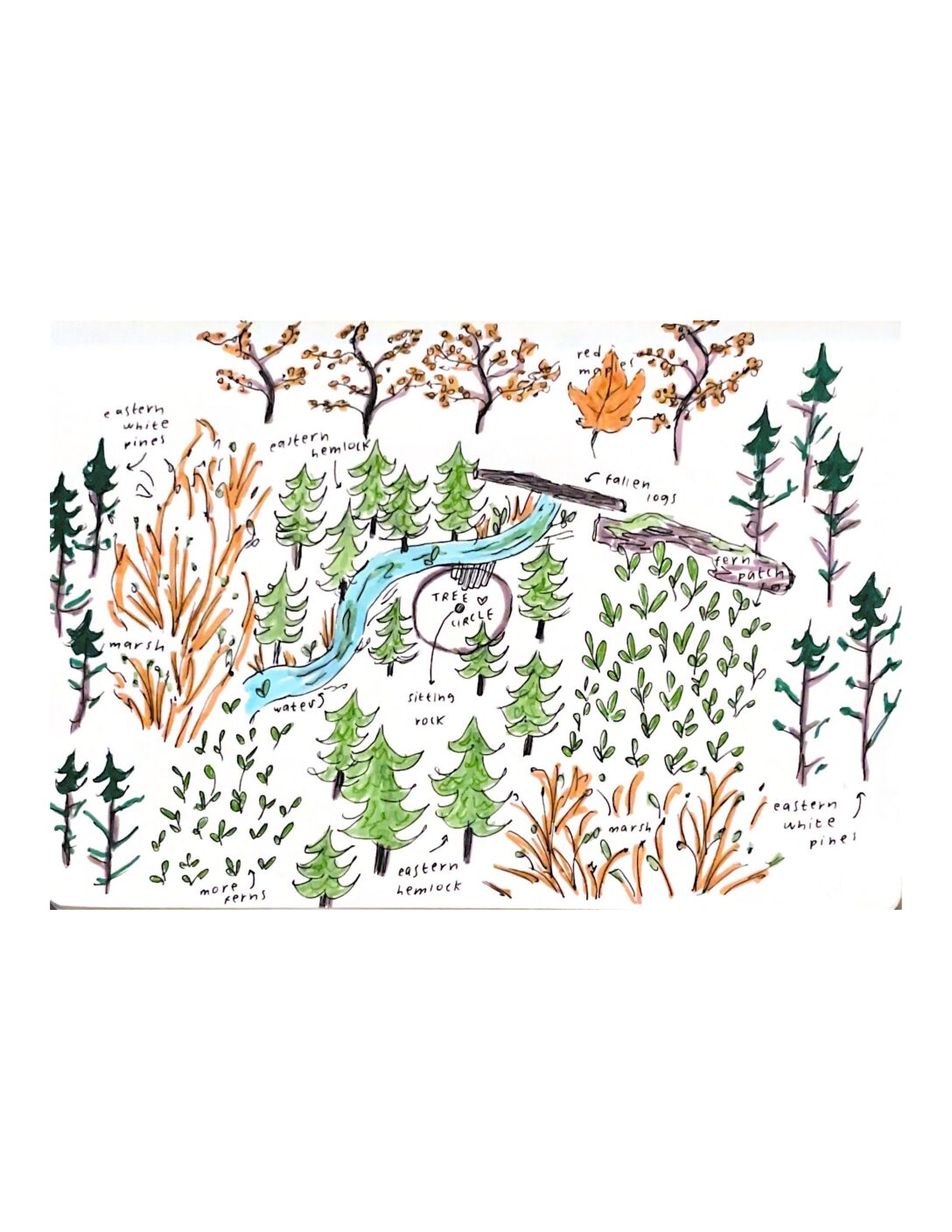
It was a bit warmer at this spot then at my spot in Vermont. About 55 degrees and sunny, which is pretty warm for Illinois in late November. My spot in Burlington had a variety of tree species including Eastern Hemlock, Paper Birch, Eastern White Pines, and Red Maples. Comparatively, my spot in Lake Forest had mostly smaller plants with a few Red Oak trees surrounding a pond. I also identified Staghorn Sumac and Milkweed around the prairie in Fort Sheridan.

Coming back to my spot almost a month later, I was expecting a completely different forest. To my surprise, quite a few maples were hanging onto their yellow leaves.

There were a few fallen trees around my spot, as well as many crunchy leaves on the ground. There is also the beginning of a man-made shelter in the circle. I’m interested to see how this progresses, and if the people that started it continue to come back.

I had a very nice experience sitting in my spot and observing the nature. Because lots of trees had dropped their leaves, I could see across the marsh area into the Eastern White Pines. It was a balmy day for November, almost 72 degrees, and very windy.

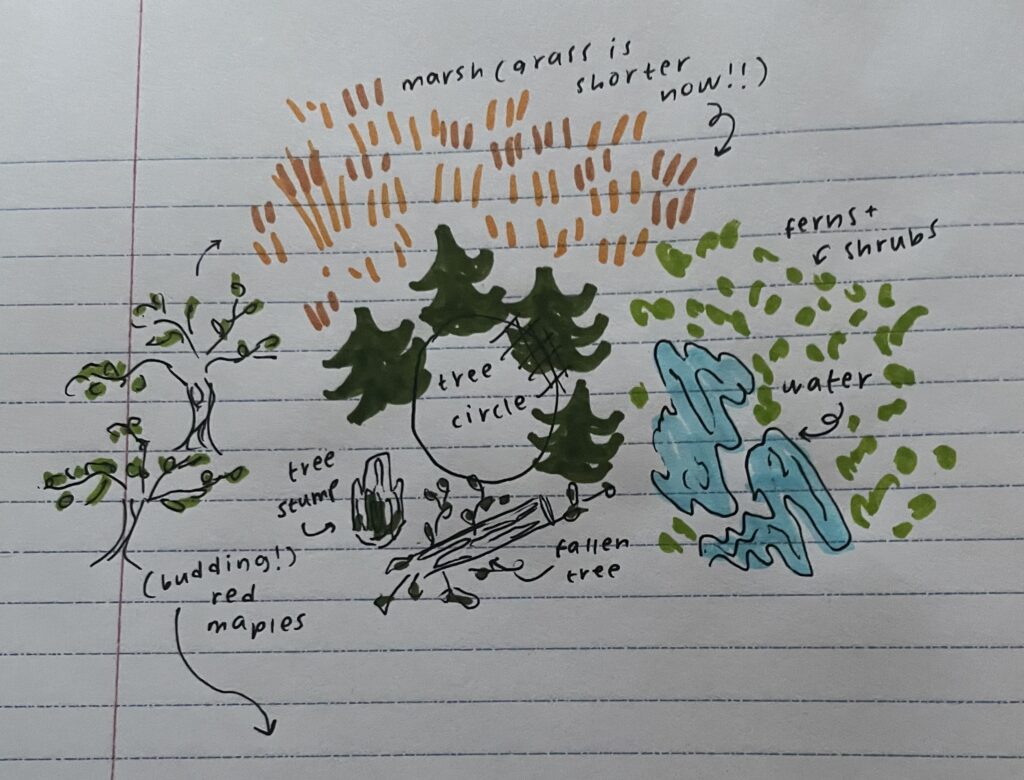
For my map, I highlighted important vegetation like types of trees and large areas of smaller plants. There is also a small area of water running through my area.

Older Posts »

Skip to toolbar